by the El Reportero staff
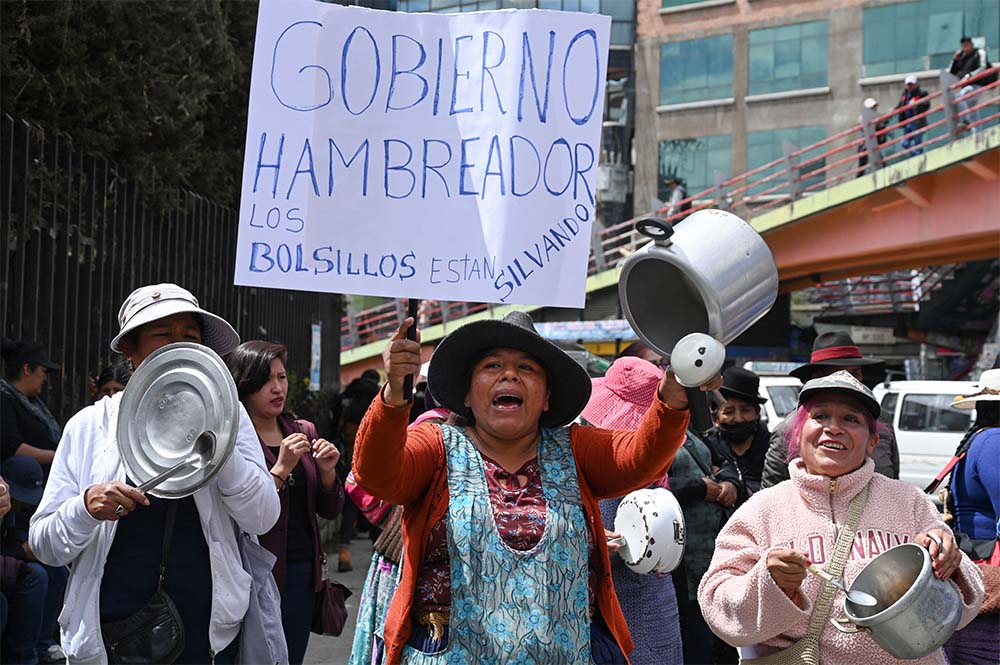
Bolivia is experiencing growing political unrest as protests, strikes and road blockades spread across several regions of the country amid worsening economic conditions and increasing dissatisfaction with President Rodrigo Paz’s government.
Over the past several days, labor groups, miners, transportation workers and rural organizations have participated in demonstrations demanding solutions to fuel shortages, rising prices and unemployment. In some areas, protesters clashed with police, while major highways were temporarily blocked, affecting transportation and commerce nationwide.
The protests intensified after shortages of gasoline and diesel caused long lines at service stations and disrupted agricultural and mining activities. Bolivia, once praised for economic stability fueled by natural gas exports, has struggled in recent years with declining foreign currency reserves, inflationary pressures and slower economic growth.
Government officials accuse opposition groups of attempting to destabilize the country politically, while critics say the administration has failed to address the economic crisis before it reached a critical point. Authorities deployed additional security forces to maintain order and reopen blocked routes.
Social media videos and political commentators have described the demonstrations as a “popular rebellion” led by workers and peasants united against the government. However, analysts caution that some of those descriptions may exaggerate the level of national unity behind the protests.
Although many sectors are clearly dissatisfied, Bolivia remains politically divided. Some demonstrations are driven by unions and leftist organizations, while others involve independent transport workers, civic groups or regional movements with different demands and priorities. Several observers note that presenting the unrest as a completely unified workers’ uprising reflects more ideological interpretation than fully verified facts on the ground.
Political tensions in Bolivia have remained high since the turbulent years following the resignation of former President Evo Morales in 2019. Deep divisions between conservative, socialist and indigenous political movements continue shaping the country’s political landscape.
As protests continue, many Bolivians are watching closely to see whether the government can stabilize the economy and calm public frustration before the crisis deepens further.
With reports from Reuters and international media sources.