by MND Staff
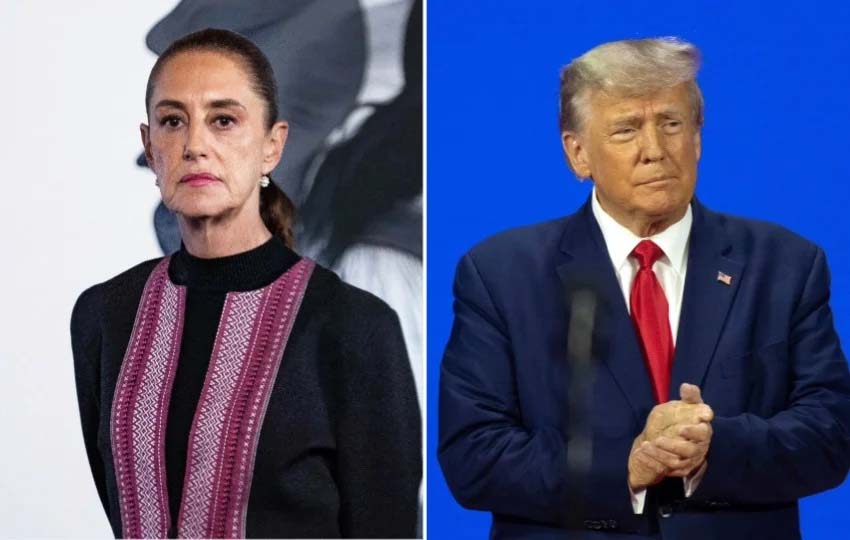
President Donald Trump has pressured Mexico to pursue energy agreements with American companies, complicating trade negotiations between the two countries, according to a report by the British newspaper Financial Times.
The report, citing three people familiar with a September telephone conversation between Trump and Mexican President Claudia Sheinbaum, said Washington’s new energy demands contributed to postponing formal trade talks scheduled for that month. No new date has been announced.
According to one source, Trump initially raised the possibility of selling Mexican energy assets to the United States, a proposal seemingly at odds with Sheinbaum’s policy of strengthening national energy sovereignty.
The leaders also reportedly discussed an arrangement resembling a South Korean agreement to purchase $100 billion in American energy products and invest additional billions in the United States.
A U.S. official told the Financial Times that the conversation included increased Mexican purchases of American natural gas, which already supplies approximately three quarters of Mexico’s demand. Washington also wants to reduce its trade deficit with Mexico.
Mexico’s trade surplus with the United States climbed more than 20 percent during the first eight months of 2026, reaching nearly $156 billion. Trump has repeatedly criticized trade imbalances with major partners.
Energy sovereignty and commercial pressure
The Financial Times did not report Sheinbaum’s response to the proposals. Her governing Morena party has emphasized public control of the energy sector, particularly through state companies Pemex and the Federal Electricity Commission, known as CFE.
Energy Minister Luz Elena González recently said Mexico aims for public companies to generate 60 percent of its electricity, exceeding the 54 percent required by law. The government has also invested heavily in Pemex, while reversing elements of the 2014 reforms that encouraged private and foreign participation.
Nevertheless, Sheinbaum is cautiously seeking some private investment as domestic oil production declines and electricity infrastructure faces growing pressure. Pemex and CFE would remain dominant.
The energy dispute comes amid broader uncertainty surrounding the United States Mexico Canada Agreement, or USMCA. Washington announced July 1 that it would not renew the agreement in its existing form. The pact remains effective, and most Mexican exports continue entering the United States without tariffs.
Mexico is seeking reductions in American tariffs on steel, aluminum and automobiles. The Financial Times suggested that Washington’s energy requests could be linked to those negotiations, although no explicit condition was confirmed.
Growing dependence on American gas
Despite Mexico’s sovereignty goals, its imports of U.S. natural gas reached a record 6.8 billion cubic feet daily during January through July 2026, according to the U.S. Energy Information Administration, an increase of 1.8 percent from the previous year.
Imports exceeded 7 billion cubic feet daily in May, June and July, the first three consecutive months above that level, according to El Economista.
Sheinbaum has reconsidered her opposition to hydraulic fracturing, or fracking, suggesting the technique could be used safely. However, no projects have been authorized in northern Mexico, and expanding domestic production would take years.
Meanwhile, New Mexico Governor Michelle Lujan Grisham visited Mexico City in September to explore potential natural gas export agreements.
– With reports from Financial Times and El Economista.