by the El Reportero staff
Today in Mexico, the word mitote is commonly used to describe a noisy gathering, a lively party or even a dramatic commotion. Long before it entered everyday language with those meanings, however, the term referred to one of the most significant ceremonial traditions practiced by Indigenous peoples throughout Mesoamerica.
The mitote was far more than a celebration. It was a sacred communal ritual in which music, dance and fire strengthened social bonds while expressing the relationship between people, nature, the spiritual world and the cosmos.
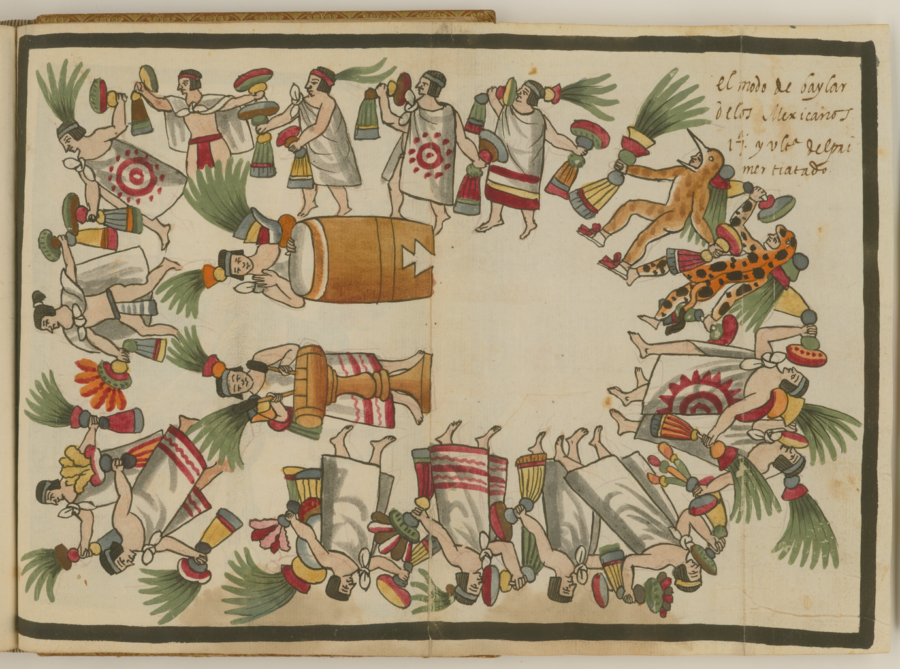
Several Indigenous communities, including the Cora, Huichol and Tepehuán peoples, performed these ceremonies during key moments of the agricultural calendar. They gathered to give thanks for successful harvests, pray for rain and seek blessings for future planting seasons. Other groups, particularly some Chichimeca communities, held mitotes before going to war, asking for courage, protection and victory in battle.
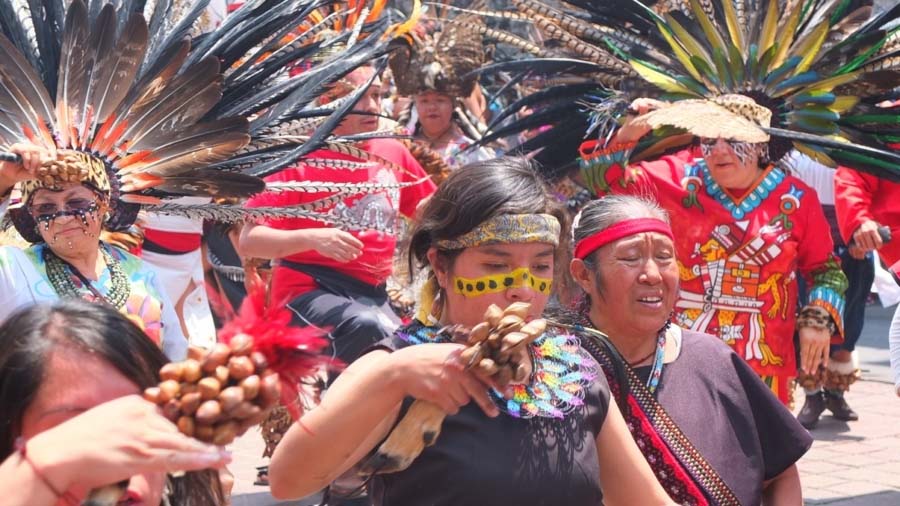
The ceremonies typically took place around large bonfires. Participants formed circles while dancing to the steady rhythm of drums and traditional chants that often continued throughout the night. Every movement, song and beat carried ceremonial meaning that had been preserved through generations.
Spanish chroniclers of the 16th century recorded these gatherings with amazement because of the large crowds and the intensity of the rituals. To outside observers, the celebrations appeared chaotic, filled with music, constant movement and participants entering deep spiritual trances. For the Indigenous communities themselves, however, the ceremonies followed a precise spiritual order in which every action held symbolic significance.
Some oral traditions also connect the mitote to creation stories. In one version, the gods created humanity from corn, regarded as a sacred gift. To prevent humans from possessing unlimited divine knowledge, they surrounded them with a symbolic mist—known as the mitote—that clouded their vision. In this tradition, the mitote represents both the boundary between humanity and the divine and the spiritual journey to understand what lies beyond it.
Over the centuries, the meaning of the word gradually evolved. While remnants of the original ceremonies still survive in some Indigenous communities, mitote entered everyday Mexican Spanish as a way to describe noisy celebrations, gossip, excitement or public drama.
Expressions such as “There’s quite a mitote,” “Don’t make such a mitote,” or “You’re a real mitotero” have become common throughout Mexico, reflecting how the word adapted to modern life while retaining its association with collective gatherings and shared experiences.
Although its everyday meaning has changed dramatically, the essence of the mitote remains remarkably similar. Whether around a ceremonial fire centuries ago or amid the lively bustle of a modern city, the mitote continues to symbolize community, shared energy and the enduring tradition of people coming together to celebrate, express themselves and preserve their cultural identity.
Source: Based on reporting by México Desconocido, adapted by the El Reportero staff.