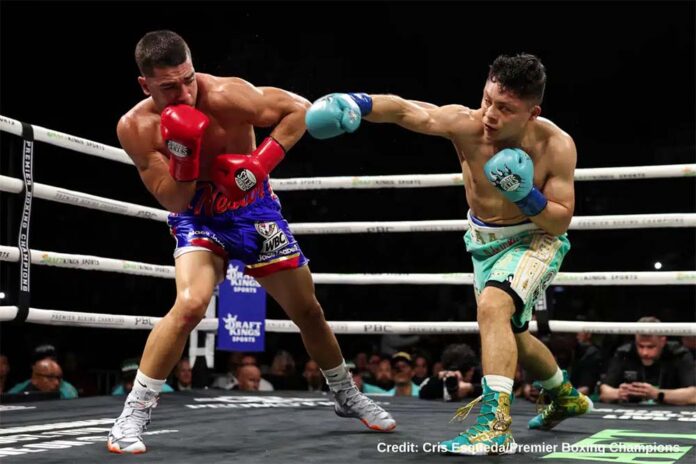
Isaac “Pitbull” Cruz conecta un golpe contra Néstor Bravo durante su combate. Isaac “Pitbull” Cruz lands a punch against Nestor Bravo during their bout. Photo: Cris Esqueda/Premier Boxing Champions
by the El Reportero staff
Nestor Bravo was stopped by Isaac “Pitbull” Cruz, but left Pechanga Arena unconvinced that Cruz possesses the punching power needed to trouble Ryan Garcia at welterweight.
Bravo said Cruz’s awkward delivery, rather than raw strength, caused trouble. Cruz’s short stature, sudden lunges and unusual angles kept Bravo from seeing several punches that landed cleanly.
“He’s not the heaviest hitter. He’s just a little uncomfortable with his height,” Bravo said after the fight. “There were a couple of shots I really didn’t see coming. It’s not that his hands are heavy. It’s the shots you don’t see coming that hurt you.”
Cruz dropped Bravo and stopped him in the sixth round. Bravo also said an accidental clash of heads affected him from the opening round, although he credited Cruz as the better fighter.
That distinction could matter if Cruz moves up from junior welterweight to face Garcia. Cruz generates force by dipping low and springing upward with hooks and overhand rights. Opponents look down to locate him, then lose sight of punches arriving below their normal line of vision.
Garcia’s upright stance presents opportunities for both fighters. His tendency to pull straight back can leave his chin exposed to Cruz’s leaping right hand. However, Garcia’s height may allow him to see Cruz dipping before attacking and respond with a left hook or uppercut.
Bravo lacked the hand speed to punish those entries consistently. Garcia does not. Cruz cannot repeatedly leap from long range without first distracting Garcia with jabs or feints.
Charging into a counter could increase the damage because Cruz’s momentum would carry him into the punch.
Physical exchanges could also prove important. Cruz uses his low center of gravity to push opponents off balance and create openings for body shots. Garcia is taller, broader and accustomed to carrying more weight. He could lean on Cruz in clinches and make his repeated lunges exhausting.
Cruz’s best chance would be to survive the early counters, crowd Garcia’s arms and force him against the ropes. But if Bravo truly felt little welterweight power, Garcia may attack confidently without fearing what comes back.
With their ruby-red seeds, sweet-tart flavor and long history as a prized fruit, pomegranates have earned a place on many lists of so-called superfoods. But beyond their distinctive appearance, researchers say the fruit contains an unusual combination of nutrients and plant compounds that may benefit the heart, digestive system and even the brain.
A cup of pomegranate seeds, known as arils, provides nearly seven grams of fiber along with vitamin C, folate, vitamin K, potassium and other nutrients. The fiber helps support healthy digestion and beneficial gut bacteria, while vitamin C contributes to immune function and collagen production.
Much of the scientific interest in pomegranates, however, centers on their antioxidants.
The fruit contains compounds including ellagitannins, anthocyanins and flavonoids, which help defend cells against oxidative stress. That process occurs when unstable molecules known as free radicals accumulate faster than the body can neutralize them, potentially contributing to inflammation and cellular damage.
The deep red color of pomegranate seeds is itself a clue to some of that chemistry. Anthocyanins, also found in berries and other deeply colored fruits, are among the plant pigments being studied for their antioxidant and anti-inflammatory properties.
Scientists have found that the concentration of these compounds can vary considerably among different varieties of pomegranates.
Heart health has become another major area of research.
Studies examining pomegranate juice and extracts have suggested possible reductions in blood pressure and other cardiovascular risk factors. A recent analysis of multiple studies found an association between pomegranate supplementation and lower blood pressure, although researchers cautioned that larger and more standardized clinical trials are still needed.
Another intriguing line of research involves urolithin A, a substance produced after certain pomegranate compounds are processed by bacteria in the digestive system.
Researchers have investigated whether urolithin A could help improve the way heart muscle functions. Experimental research involving heart tissue and animal models has produced promising results, particularly in studying heart failure with preserved ejection fraction, a condition in which the heart pumps normally but has difficulty relaxing and filling properly.
The same family of compounds is also attracting attention from scientists studying the brain.
When ellagitannins from foods such as pomegranates reach the digestive system, gut bacteria can transform them into substances called urolithins. Some research suggests these metabolites may cross the blood-brain barrier and could help protect nerve cells from damage.
That has prompted investigation into whether pomegranates and other polyphenol-rich foods might play a role in maintaining memory and cognitive health as people age.
The evidence, however, is not strong enough to say that eating pomegranates can prevent dementia, Alzheimer’s disease or heart disease. Most researchers emphasize that promising laboratory findings do not necessarily translate into the same effects in humans.
There is also an important difference between eating the whole fruit and drinking its juice.
Whole pomegranate seeds contain fiber, which slows digestion and helps moderate the absorption of naturally occurring sugars. Juice removes much of that fiber and makes it easier to consume a large amount of sugar quickly. People with diabetes or prediabetes should therefore be particularly cautious about portions.
Pomegranate products may also interact with certain medications, making it advisable for people taking prescription drugs to discuss significant dietary changes with their healthcare provider.
For most people, however, pomegranates can be a colorful and nutritious addition to a balanced diet.
Scientists may still be determining exactly how powerful their individual compounds are, but the broader lesson is already familiar: fruits rich in fiber, vitamins and naturally occurring plant compounds are most beneficial when they are part of a diet built around whole foods rather than viewed as miracle cures. Food.news.
– Editor’s Note: This article has been edited for length, while preserving the author’s information and original meaning.
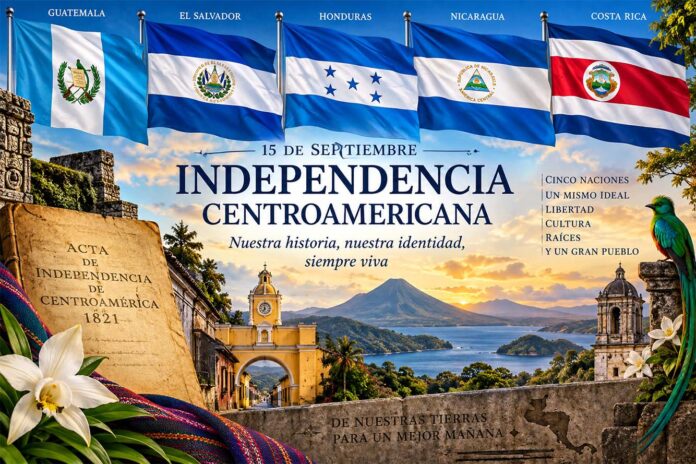
Every Sept. 15, Central Americans throughout the United States celebrate the independence of their homelands, carrying on traditions that have survived distance, migration and generations.
For Guatemala, El Salvador, Honduras, Nicaragua and Costa Rica, the date commemorates the 1821 declaration of independence from Spain. It marked the beginning of political self-determination and, eventually, the development of the separate republics we know today.
Yet independence did not erase the cultural inheritance of the centuries that came before it. The identity of our nations grew from the encounter — sometimes peaceful and often painful — between the Indigenous civilizations already established in the Americas and the language, religion, institutions and traditions brought from Spain. From those histories emerged distinct peoples who eventually claimed the right to govern themselves.
That is also what the Fiestas Patrias celebrate: not only independence, but the right of nations to determine their own destiny while remembering the history and culture from which they came.
For Central Americans living in the United States, that meaning takes on another dimension. Independence Day becomes an opportunity to remember where they came from and to pass that history and identity to children and grandchildren born far from their ancestral homelands.
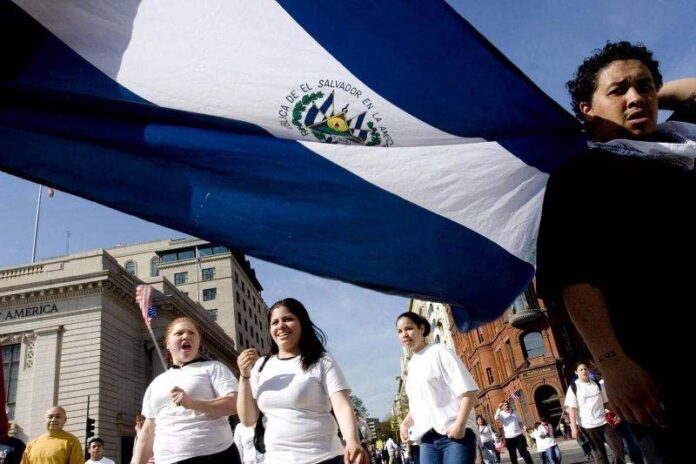
Across American cities with large Latino communities, families celebrate through music, food, traditional dress, flags and memories of home. Some arrived recently; others have lived here for decades. Their children and grandchildren may know Central America mainly through family stories, but these celebrations keep that connection alive.
Remembering one’s roots does not diminish the love immigrants can develop for the nation that welcomed them. The United States has become home to generations of Central Americans who have worked, raised families and contributed to their communities while preserving traditions inherited from their parents and grandparents.
For many of us, these identities coexist naturally: gratitude and love for the United States, the nation that opened its doors and became our home, alongside an enduring affection for the lands of our birth and our ancestors.
This is perhaps the most lasting message of the Fiestas Patrias: celebrate the freedom and self-determination of our nations, appreciate the country that became our home, and never forget where we came from.
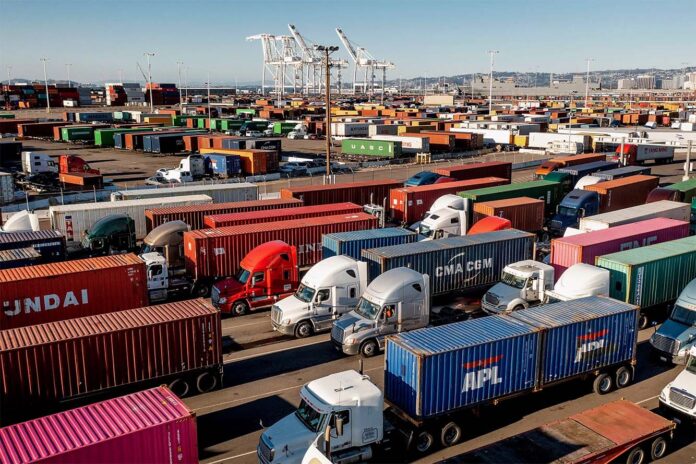
Camiones hacen fila para entrar a una terminal de carga del Puerto de Oakland, en Oakland, el 10 de noviembre de 2021. Trucks line up to enter a Port of Oakland shipping terminal in Oakland on Nov. 10, 2021. Photo by Noah Berger, AP
by Wendy Fry and Khari Johnson
CalMatters
Privacy advocates are urging California to reconsider plans to share millions of driver records with a database after the Trump administration sought commercial driver’s license information for immigration enforcement.
California lawmakers debated whether the Department of Motor Vehicles could safely share driver’s license information with the American Association of Motor Vehicle Administrators (AAMVA), a nonprofit clearinghouse. State officials argued that participating was necessary to comply with federal REAL ID requirements and protect acceptance of California IDs at airports and federal buildings.
Lawmakers approved funding for the DMV to begin sharing non-commercial driver information with AAMVA. But at the time of the vote, they did not know federal agencies were already seeking bulk driver information from the organization.
Federal agencies first requested and later subpoenaed information covering about 17 million commercial driver’s license holders. An Aug. 11 subpoena from the Department of Homeland Security said the information was sought for “civil immigration enforcement.” It requested names, dates of birth, states of record, license numbers and Social Security numbers for drivers in AAMVA’s commercial database going back five years.
The dispute has intensified concerns because California plans to begin uploading information on all non-commercial license holders, including more than 1 million immigrants who obtained licenses under a 2013 California law allowing undocumented residents to be licensed.
AAMVA initially considered complying with an earlier June 25 federal request. State officials objected, arguing that bulk disclosure could violate agreements between AAMVA and state DMVs as well as privacy laws. California officials say an agreement with AAMVA prohibits sharing the state’s commercial driver information without written permission.
The California DMV did not learn about the federal request until July 23, according to a sworn declaration by Kristin Triepke, chief of the DMV’s Licensing Policy branch. That was 10 days after Gov. Gavin Newsom signed legislation enabling the data-sharing plan.
Triepke warned that federal access to driver information could discourage noncitizens from obtaining licenses, leading more people to drive unlicensed and creating public-safety concerns.
AAMVA later proposed allowing states to decide whether their commercial driver data could be provided in bulk. The federal government responded by threatening grants and contracts and DHS subsequently issued its subpoena.
Twenty-two state attorneys general, including California’s, sued to block the demand. On Aug. 21, U.S. District Judge Anthony Trenga temporarily prevented AAMVA from complying, calling the demand “unlawful.” A hearing on whether to issue a preliminary injunction was scheduled for Sept. 10.
The Newsom administration maintains that the commercial-license system involved in the subpoena is separate from the system California intends to use for non-commercial records. Spokesperson Diana Crofts-Pelayo said the systems are governed by different rules and legal authorities, and that California has not supplied the requested bulk data.
Privacy advocates remain deeply unconvinced. They argue that the subpoena demonstrates how information held by a national clearinghouse can become a target for federal demands. They are especially concerned that records for non-commercial drivers without conventional Social Security numbers could be used for immigration enforcement.
Saira Hussain of the Electronic Frontier Foundation said AAMVA’s response to the federal request was insufficient because the organization waited weeks to notify states and considered complying. She called on California to delay transferring non-commercial driver information while the case proceeds.
The DMV says it takes its responsibility to protect Californians’ personal information seriously and opposes releasing bulk commercial driver information.
DHS, meanwhile, argues that access to commercial-license records is connected to highway safety and enforcement of federal immigration law.
The legal fight now raises a broader question for California: whether privacy protections promised by the state can remain effective once driver information is placed in a national system subject to federal demands. Critics say the subpoena confirms the risks they warned lawmakers about before the Legislature approved the data-sharing plan.
Editor’s note: This article has been edited for length to fit available print space.
As of press time on Thursday, September 10, no official decision had been announced regarding whether Temporary Protected Status (TPS) for El Salvador would be extended or terminated. The critical September 9 deadline passed without the Trump administration announcing a decision.
Meanwhile, approximately 170,000 to 200,000 Salvadorans living in the United States under TPS remain protected from deportation and authorized to work. They are awaiting a decision from the Department of Homeland Security (DHS).
The DHS confirmed on Thursday, September 10, that these protections remain in effect while the government considers its next step.
“An announcement regarding TPS for El Salvador will be made at the appropriate time,” the DHS stated. Until that announcement is made, beneficiaries retain their protection, including employment authorization.
This clarification is significant because the most recent TPS designation for El Salvador was scheduled to expire on September 9, creating considerable uncertainty among Salvadoran families, employers, and immigrant advocates.
Under federal immigration law, if the Secretary of Homeland Security does not make the required determination regarding a TPS designation, it can be automatically extended for six months. The Associated Press reported on Thursday that the administration’s failure to make a public announcement before the expiration has raised hopes that TPS for Salvadorans will be extended for that period.
However, immigration lawyers caution that the DHS has not formally announced a six-month extension. The administration could still issue a decision regarding the program. For the moment, the most important practical fact for beneficiaries is that the federal government maintains that their protection and work authorization remain in effect.
El Salvador has one of the longest-standing TPS populations in the United States. The designation dates back to 2001, when devastating earthquakes struck the Central American country. As a result, many Salvadoran beneficiaries have lived legally in the United States for more than two decades, forming families, buying homes, opening businesses, and raising U.S.-born children.The number of Salvadorans currently protected is estimated at about 170,000 by some organizations, while other estimates place the population closer to 200,000.
Their situation has attracted particular attention because the Trump administration has moved to terminate TPS protections for numerous other countries as part of its broader immigration policy. Administration officials have repeatedly emphasized that Temporary Protected Status was created as a temporary humanitarian program rather than a permanent immigration status.
El Salvador, however, presents an unusual political situation.
President Nayib Bukele has developed a close relationship with President Donald Trump and has cooperated with the United States on immigration and deportation policies. The Salvadoran government has accepted deportees from the United States, while Bukele’s aggressive crackdown on gangs has dramatically changed security conditions inside El Salvador — a factor that could be cited by the U.S. government in evaluating whether TPS remains necessary.
Those developments have also fueled speculation over whether the political relationship between Washington and San Salvador could influence the final decision.
For Salvadoran TPS holders, however, Thursday’s development provides immediate relief but not permanent certainty.
USCIS has made clear that beneficiaries should continue to be considered protected while DHS prepares its announcement. Their TPS-related employment authorization also remains in effect during this period.
The government has not announced when the final decision will be released or whether El Salvador’s designation ultimately will be extended or terminated.
That means thousands of Salvadoran families remain in a period of uncertainty despite having received an important temporary reprieve.
For now, however, the feared Sept. 9 deadline has passed without the immediate loss of legal protection.
Salvadorans covered by TPS remain protected from deportation and may continue working legally in the United States while awaiting the administration’s final decision.
Sources: U.S. Department of Homeland Security; U.S. Citizenship and Immigration Services; Associated Press; Reuters.
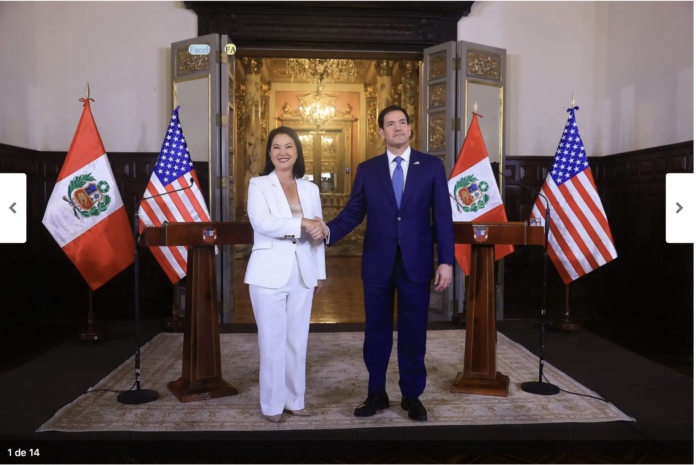
La presidenta Keiko Fujimori se reúne con el secretario de Estado Marco Rubio. President Keiko Fujimori meets U.S. Secretary of State Marco Rubio in Lima.
Peru’s president is asking Congress for legislative powers to extend detention periods and expedite the removal of immigrants who are in the country illegally
by the El Reportero wire services
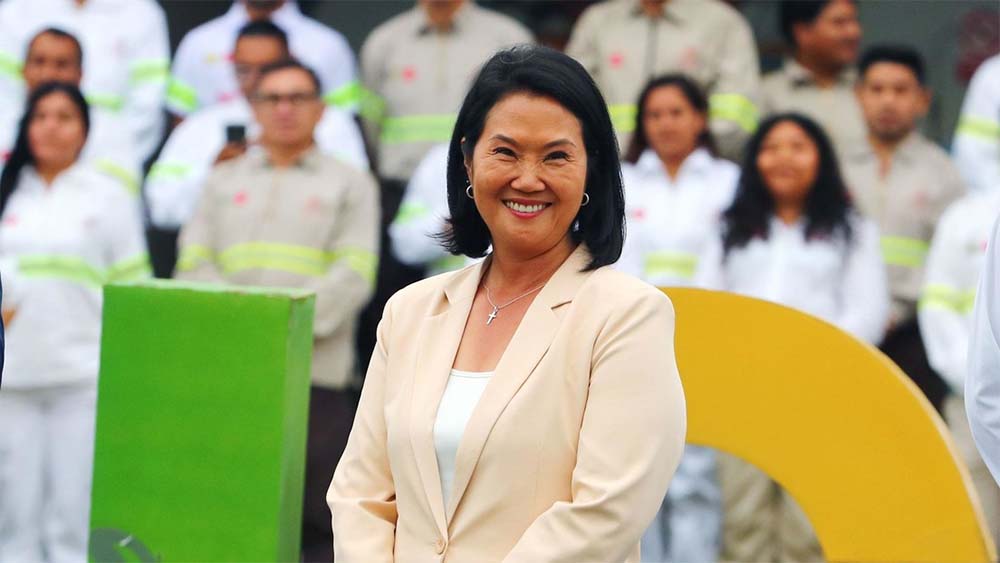
Peruvian President Keiko Fujimori has asked Congress to expand the executive branch’s authority to strengthen the country’s immigration enforcement measures, including extending certain detention periods and facilitating the deportation of foreign nationals who are in Peru illegally.
Keiki Fujimori
Fujimori defended her government’s request for legislative powers on Friday, saying some measures can be implemented under existing authority, while others require authorization from the legislative branch.
“To be able to extend these periods during which they are detained, and then deport them,” Fujimori said, explaining one of the changes her administration wants to implement. “Everything we can move forward with without [special] powers, we are doing, but we need the additional tools through Congress,” she added.
The president argued that the number of undocumented immigrants makes it necessary to strengthen existing enforcement mechanisms. One proposal would extend the detention period for foreign nationals in the country illegally who are linked to criminal activity while authorities complete the procedures necessary for their deportation.
Fujimori also said U.S. Secretary of State Marco Rubio supported the initiative during a recent visit to Lima. The U.S. official traveled to Peru as the country joins the so-called Shield of the Americas, a regional initiative focused on security cooperation.
At the same time, the Peruvian government is planning a restructuring of the National Police of Peru. According to Fujimori, the goal is to strengthen authorities’ ability to combat organized crime and remove officers involved in misconduct from the force.
The president said the process could receive international cooperation from the FBI, the U.S. Drug Enforcement Administration (DEA) and Interpol, particularly through technical assistance and information sharing.
Peru maintains ties with Washington and Beijing
Fujimori also addressed Peru’s international relations amid growing U.S. interest in the country and China’s significant economic presence.
The president rejected the idea that Peru must choose between Washington and Beijing, saying her government intends to maintain commercial relations with countries belonging to the Asia-Pacific Economic Cooperation forum (APEC).
Fujimori hopes to receive authorization from Congress to attend the next APEC summit, where she could meet with U.S. President Donald Trump and Chinese President Xi Jinping.
“Peru will continue to be a trading partner of those who are part of the Asia-Pacific forum,” Fujimori said.
Twenty-five years ago, on the morning of September 11, 2001, America was wounded in a way that an entire generation will never forget.
Nearly 3,000 innocent people were killed. Families went to work that morning expecting an ordinary Tuesday and never returned home. Firefighters, police officers, emergency workers and ordinary citizens ran toward danger while thousands desperately tried to escape it.
The attacks struck New York, the Pentagon and a field near Shanksville, Pennsylvania. But the wound belonged to the entire nation.
For immigrants especially, America has represented something extraordinary: a country where millions from virtually every corner of the world have arrived seeking freedom, opportunity and the possibility of building a better life for their children.
On September 11, that country was attacked.
But something else happened afterward that deserves reflection 25 years later.
America became afraid.
Airports changed. Security checkpoints expanded. Surveillance increased. Government acquired new investigative powers. The USA PATRIOT Act was enacted within weeks of the attacks, dramatically expanding federal authorities in the name of preventing another catastrophe.
Many Americans accepted those changes because another attack seemed possible at any moment.
Perhaps some measures were necessary. Government has a fundamental responsibility to protect its people.
But September 11 taught us another lesson that we should never forget: fear can change a free society.
Once citizens surrender a freedom during an emergency, recovering it can be extraordinarily difficult.
The years following 9/11 produced intense debates over government surveillance, privacy, searches, intelligence gathering and the proper limits of state power. Those debates continue today.
There have also been countless theories questioning aspects of the attacks and the government’s explanations. Americans have the constitutional right to question their government, examine evidence and disagree. That freedom itself is part of what distinguishes this country.
But whatever anyone believes about those controversies, one historical fact cannot reasonably be disputed:
September 11 changed America.
Its victims also did not end with those who died that morning.
The enormous cloud created by the collapse of the World Trade Center exposed responders, workers, residents and survivors to hazardous dust and contaminants. Years later, firefighters, police officers, cleanup workers and civilians have suffered respiratory diseases, cancers and other illnesses associated with those exposures.
Today, the federal World Trade Center Health Program serves nearly 150,000 responders and survivors across the United States.
They are living reminders that for thousands of Americans, September 11 never completely ended.
So on this 25th anniversary, we should remember more than collapsing buildings.
Remember the firefighters climbing the stairs while everyone else was coming down.
Remember the police officers and paramedics.
Remember the passengers of Flight 93.
Remember the workers covered in dust searching through the ruins.
Remember those who became sick years afterward.
Remember the families who still look at an empty chair.
And remember something else.
America’s greatest strength is not its skyscrapers, military power or wealth. It is an idea written into a constitutional system that recognizes that government exists to protect the liberties of the people — not that people exist to serve the government.
Security matters. But so does liberty.
A terrorist attack should never be allowed to accomplish indirectly what terrorists could never accomplish militarily: making Americans permanently surrender the freedoms that define their nation.
For the millions of immigrants whom America welcomed and who made this country their home, the wound of September 11 was also ours.
We mourned together.
We rebuilt together.
And 25 years later, we should stand together again — remembering those who died, caring for those who still suffer, defending this nation and preserving the freedom that made it worth coming to in the first place.
We will remember September 11. And we must also remember the America we are determined to preserve.
Creo que “September 11: The Wound That Changed America” tiene el tono correcto: patriótico, solemne, pero también muy propio de una página editorial que defiende las libertades constitucionales.
Rafael Márquez, one of the most accomplished players in Mexican soccer history, has officially begun a new chapter — this time from the sidelines.
The former Mexico captain and Barcelona defender was formally presented Thursday as head coach of the Mexican national team, taking command of El Tri as it begins the road toward the 2030 World Cup.
Márquez, 47, succeeds Javier Aguirre, under whom he served as an assistant during the 2026 World Cup. Rather than rebuilding the national team from the ground up, Márquez said he intends to continue developing the foundation established during the previous cycle.
“The way I finished working with Javier gives me a great deal of confidence to continue this process,” Márquez said. “I know the players quite well, I know the environment.”
His appointment carries special significance because of his long history with El Tri. Márquez represented Mexico at five consecutive World Cups — 2002, 2006, 2010, 2014 and 2018 — but each campaign ended in the round of 16.
Now he has an opportunity to accomplish from the bench what eluded him as a player.
“It did not happen for me as a player in those five World Cups; unfortunately, we always reached the same point,” Márquez said. “Today, I have this opportunity.”
Mexico showed progress at the 2026 World Cup, recording a perfect group stage and winning a knockout match for the first time in 40 years before being eliminated by England in the round of 16.
Márquez also brings extensive international experience. During his celebrated playing career, he won four Spanish league championships and two UEFA Champions League titles with Barcelona. He later coached Barça Atlètic before joining Aguirre’s Mexican national team staff.
His first test will come Sept. 26, when Mexico faces Colombia at M&T Bank Stadium in Baltimore. El Tri will then face Peru on Sept. 29, the United States on Oct. 3 and Chile in Los Angeles on Oct. 6.
For Márquez, however, success will involve more than victories.
“We want people to feel proud of their national team,” he said, emphasizing his goal of creating a team that competes regardless of the opponent.
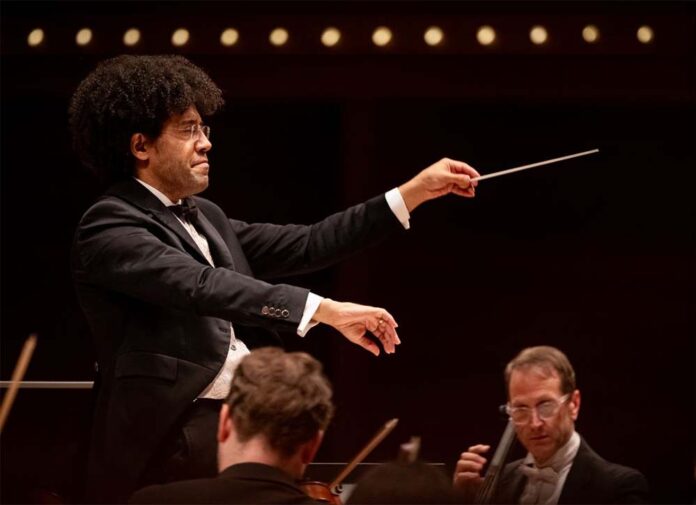
El director venezolano Rafael Payare dirige la Sinfónica de Montreal y regresa a SF el 25 de octubre. Venezuelan conductor Rafael Payare leads Montreal Symphony, returning to SF October 25.
by the El Reportero staff
Three years after making his San Francisco Symphony debut, Venezuelan conductor Rafael Payare is returning to Davies Symphony Hall, this time at the helm of one of Canada’s most celebrated orchestras, the Orchestre symphonique de Montréal.
Payare will lead the Montreal Symphony on Sunday, Oct. 25, as part of the San Francisco Symphony’s 2026–27 season. Acclaimed Greek violinist Leonidas Kavakos will join the orchestra for Tchaikovsky’s Violin Concerto, while Payare will also conduct Shostakovich’s powerful Symphony No. 10.
The appearance marks another chapter in a remarkable international career that El Reportero followed when Payare made his San Francisco Symphony debut in May 2023.
Born in Barcelona, Venezuela, Payare entered the world of classical music through El Sistema, Venezuela’s internationally recognized music education program. He began studying the French horn at age 14 and eventually became principal horn of the Simón Bolívar Symphony Orchestra, performing under some of the world’s most distinguished conductors.
His path eventually moved from playing in the orchestra to standing in front of it.
Payare studied conducting with El Sistema founder José Antonio Abreu and attracted international attention after winning first prize at Denmark’s Malko Competition for Young Conductors in 2012. Since then, his career has taken him to major concert halls and orchestras throughout Europe and North America.
Today, Payare serves as Music and Artistic Director of the Orchestre symphonique de Montréal and Music Director of the San Diego Symphony. His work has placed the Venezuelan musician among a prominent generation of Latin American conductors who have achieved international recognition in classical music.
His October visit also brings Payare back to a hall where Bay Area audiences have already seen him at work. In 2023, he conducted the San Francisco Symphony in Richard Strauss’ Ein Heldenleben during his debut engagement with the orchestra.
This time, however, he arrives with his own Montreal ensemble, giving local audiences an opportunity to hear the musical partnership he has developed with the orchestra he has led since 2022.
For Bay Area Latino audiences, Payare’s return carries an additional connection: a Venezuelan musician whose beginnings in a publicly supported youth music program ultimately led to the podiums of some of the world’s leading orchestras.
The Orchestre symphonique de Montréal, conducted by Rafael Payare, performs Sunday, Oct. 25, at Davies Symphony Hall, 201 Van Ness Ave., San Francisco.
Photo caption: Venezuelan conductor Rafael Payare returns to Davies Symphony Hall Oct. 25 leading the Orchestre symphonique de Montréal. Photo courtesy of OSM.
San Mateo County election officials have announced the opening of the write-in candidate filing period for the Nov. 3 Statewide General Election, offering eligible residents another opportunity to seek public office and become directly involved in serving their communities.
The San Mateo County Registration & Elections Division announced that the filing period opened Sept. 8 and will continue through 5 p.m. Tuesday, Oct. 20.
For residents who may not have entered a race during the regular candidate filing period, the write-in process provides another path to becoming a candidate for an eligible public office. It also gives community members interested in public service an opportunity to participate in the electoral process as candidates rather than only as voters.
Candidates who successfully complete the process can receive write-in votes in the November election even though their names will not appear on the printed ballot.
To qualify, prospective candidates must submit a Statement of Write-In Candidacy along with all other required documentation to the San Mateo County Registration & Elections Division at 40 Tower Road in San Mateo.
The statement must include the candidate’s name and residential address, the specific public office being sought and the date of the election. Depending on the office, candidates may also be required to submit a Statement of Economic Interests, known as Form 700. All required documents must be filed at the same time, and there is no filing fee.
Residents interested in running can begin the process by requesting a registration form by email at CandidateServices@smcacre.gov. The completed form can also be returned by email. Elections staff will then contact the prospective candidate to arrange an electronic or in-person appointment to complete the filing process.
Although qualified write-in candidates will not appear on the Official Ballot or in the Sample Ballot and Official Voter Information Pamphlet, voters can find them through the county’s Roster of Candidates, which is updated daily. A list of qualified write-in candidates will also be available at Vote Centers beginning Oct. 23.
Meanwhile, the county is preparing for early voting. Vote-by-mail ballots will begin going to registered San Mateo County voters in October. Three Vote Centers will open Oct. 5, with additional centers opening throughout the early voting period leading up to Election Day on Nov. 3.
For information about the write-in candidate process, residents may contact San Mateo County Elections at (650) 312-5222.