Monday, August 3, 2026
Home Blog Page 310

The individual, his freedom and victory

by Jon Rappoport

The State, as now constituted, pretends it favors giving away the farm for nothing “to those in need.” What they really mean is: they steal the farm, and then they give a few pieces away on their terms.

There are people who don’t understand what a FREE INDIVIDUAL is. They want a world of Central Planning. They feel a welter of emotions, all negative, when they contemplate THE FREE INDIVIDUAL.

For the free individual, “the highest work possible” doesn’t involve leaving one’s desires behind, in order to become the abject servant of a Cause. He doesn’t suddenly develop an egoless and empty personality in order to “connect” with a goal that floats in an abstract realm.
The free individual isn’t shaped. He shapes.

He doesn’t fall on his knees and grovel to seek public acceptance.

The mob, the herd operates on debt, obligation, guilt, and the pretense of admiration for idols. These are its currencies.

The herd, seeking some reflection of its unformed desire, constructs a social order based on need—and the substance of that need will be extracted through coercion, if necessary, from those who already have More.

This need, and the proposition that the mob deserves its satisfaction, creates a worldwide industry.

Among the industry’s most passionate and venal supporters are those who are quite certain that the human being is a tainted vile creature. Such supporters, of course, are sensing their own reflections.

The great psychological factor in any life is THE DESERTION OF INDIVIDUAL FREEDOM. Afterward, the individual creates shadows and monsters and fears around that crossroad.

Freedom is the space and the setting, from which the individual can generate the thought and the energy-pulse of a great self-chosen objective.

In that place, there is no crowding or oppressive necessity. There is choice. There is desire. There is thought.

“Being absorbed in a greater whole” isn’t an ambition or philosophical prospect for the free individual. He sees that fixation as a surrender of self.

The Collective, whether envisioned as a down-to-earth or mystical group, promises a release from self. This grand solution to problems is a ruse designed to keep humans in a corral, a prison. After all, how are you going to control and eventually enslave people if you promote the notion that each individual has freedom and free choice? The abnegation of self is a workable tactic, as long as it is dressed up with false idols and perverted ideals.

Self is fundamentally creative, dynamic, forward-looking, energetic, powerful, engaged. The Collective looks for shadows of those qualities in the government as its source of survival.
The free individual certainly helps others, but he is against a culture that is so preoccupied with “raising up the lowest” that it nurtures a hatred of liberty. And this is a crux, because growing millions of people are all too eager to shed the last fragments of Self to join in a fantasy of “everybody gets everything.”

The fantasy doesn’t work. The melting down of all of humanity into a mystical goo is an illusion that can’t stand the test of time. Eventually, a person falls out of that construct and remembers he must depend, to an alarming degree, on his own inner resources.

The free individual doesn’t act in ways that limit the freedom of others.

Self-sufficiency is both an essence and outcome for the free individual.

The free individual discovers his way through imagination and creative power, because that is the answer to the question: what is freedom for?

Without exercising imagination and creative power, freedom withers and dies. It becomes an empty slogan. It becomes an empty stage.

We are told, in a thousand ways, that the free individual is the personification of greed and theft and crime. That is false.

The free individual imagines and creates on a scale that supersedes and ignores the Collective. His work naturally spills over and benefits others.

Advocates of the Collective falsely claim the free individual is cold and uncaring and remote and “without humanity.” Meanwhile, their picture of a society based on need is a poisonous affectation; it is constructed because these advocates are walled off from their own power. Therefore, they substitute endless entitlement.

Their only nod of acknowledgment to the individual has been to propagandize him as an outsider, a potential danger, a lurking menace, a person waiting to be diagnosed with a mental disorder.
These days, it is the Group that is elevated. We must absorb the individual in the system so the Group is protected and safe.

Even accepting Mill’s specious pronouncement that society should be organized on the basis of the greatest good for greatest number, the questions remains: what is the greatest good? Is it that which makes us, more and more, into a Group? Or is it that which liberates the individual to pursue his highest aspirations?

The greatest good liberates the individual, and then the door is open. Who will walk through it? Every person who has divested himself of the collective mindset.

The titanic myths that have been foisted on humanity and the titanic acceptance of those myths by humanity are all focused on one lie: the individual cannot stand on his own; he must subjugate himself to a system.

I don’t care what form that higher system takes. It’s a lie. It’s all geared to promoting slavery. It’s all geared to allowing the few to control the many.

And the few WILL control the many, until the day comes when enough individuals throw off ALL the deceptions that permitted them to think The Individual was less than he is.

The day will dawn when the individual knows he is greater than any and all groups and collectives by any name flying under any flag, espousing any gibberish, elevating any fairy tale, seducing with any promise, hypnotizing with any idol or misbegotten legend.

That day will dawn.

But why wait?

Why not act now?

Why not launch your greatest dream?

spot_img

Health warnings in fingernails

by Ben Fuchs

We humans love our nails. We spend nearly 8 billion dollars a year on those hard dead shell like materials on the tips of our fingers and toes. While adorning them with polish, varnish and even art may imply “cosmetic” and “superficial”, as it turns out, their condition, for better or worse, is a function of the entire body, and if you’re observant you can tell a lot about overall physical health by looking at the nails.

Technically speaking, nails are an extension of the skin. They’re a modified version of the epidermis, the top layer that composes about 10 percent of the body’s largest organ. Although it may look like one uniform structure, in reality, the nail (like the skin) is composed of numerous layers lying atop of each other. In fact, the average fingernail is composed of 25 of these ultra-thin slices that fuse into a firm, slightly elastic form by the action of microscopic threads called keratin. This is what gives them remarkable resilience and horse-hoof like strength. Keratin is a hard, flexible protein substance that is a common feature of hooves, horns, antlers, as well as the outer sheath that coats human hair. In addition to keratin, nails contain lots of minerals too, including: Iron, Carbon, Magnesium, Selenium, Silica, Calcium, Potassium, Phosphorus, Sulfur and Oxygen, all of which contribute to their characteristic qualities. Interestingly the nail appendage (technically called the “nail organ”) also contains small amounts of the well-known cosmetic ingredient called glycolic acid, which acts to trap water and assure hydration.

Because of their rapid growth (healthy fingernails grow up to 4mm a month) the nails are an accurate portal into the inside of the body. While the eyes may be the window to the soul, the nails can be thought of as windows to your biochemistry. There’s a lot of information a good health care professional can glean from their appearance.

As they are part of the skin, most nail conditions are assessed by dermatologists. Nail disorders account for 10 percent of all dermatological conditions.

Patients with soft, flaky nails that are prone to splitting may be missing minerals, particularly selenium and magnesium. “Terry Nails”, which are white nails with an opaque, “ground glass” look that occasionally have brown to pink bands, are associated with chronic liver disease. And spoon shaped nails, the mark of a condition called Koilonychia (pronounced: “coyl-oni-kia”), are classically a sign of iron deficiency.

While normal nails exhibit a pink color, which indicates healthy blood flow underneath, nails that are pale or white may indicate circulatory problems such as a low red blood cell count, anemia, and perhaps kidney disease. On the other hand, nails that have a beet red hue may point towards heart disease. Nails that are white and grainy with a rosy red strip can be indicative of liver cirrhosis, hyperthyroidism, diabetes, or HIV. Sometimes, abnormal circulation in the nail bed creates the appearance of horizontal white lines, most often in the middle three fingers. Because this problem occurs in the nail bed, it will not progress up as the nail grows.

This condition which dermatologists call “Muehrcke’s Nails”, can be caused by liver disease and chemotherapy. Other causes of horizontal white lines include Hodgkin disease, kidney failure, system-wide infection, or poisoning by arsenic, thallium, or other heavy metals.

Nutritional status also plays an important role in nail health. Because of their rapid growth, shortages in key nutrients will show up in the nails before any other part of the body. As mentioned above a lack of magnesium can lead to nail softening and shortages of iron can cause them to spoon becoming concave, rather than convex.

Other minerals like calcium, sulfur, zinc and silica are critical for nail strength and resilience. Vitamin D is essential for calcium absorption and a dearth can also have an impact. A lack of the B-vitamins (especially B-12) and Vitamins A and C can affect nail shape and create both horizontal and vertical ridges, and because the nail is mostly made up of protein both lack of intake as well as digestive impairment can lead to nail thinness and fragility. Essential Fatty Acids are important and nail cracking and splitting can result under conditions of Omega-6 deficiency. Low levels of digestive juice (i.e. enzymes and stomach acid) can compromise the absorption of minerals even when they’re present in the diet. Likewise, in the case of gall bladder disease or its removal, mineral absorption can be compromised resulting in unhealthy nails.

Did you know…
Nail biting which affects one out of three children between the ages of 7 and 10 and nearly half of all teenagers is considered to be a mental health issue and is classified as a type of Obsessive Compulsive Disorder.

Nails grow faster in the summer than the winter, grow faster after illnesses and grow faster on the fingers of your dominant hand. The nails of the middle finger exhibit the most rapid growth and the thumbnail grows the slowest.

According to the Guinness Book of World Records, the longest fingernails ever recorded on a woman measured over 28 feet. The nails were on the hand of a California woman named Lee Redmond who started manicuring them in 1979 until she lost them in an automobile accident in 2009.

spot_img

The true causes of eczema

by Ben Fuchs

One of the most interesting aspects of the cells that make up the surface of the skin is their multi-functionality. While mostly known for their protective barrier properties, the living beings colloquially known as “skin cells” (and more technically as “keratinocytes” in honor of their most prolific extrusion, the fingernail like protein called keratin) are much more than a cellular shield. “Skin cells” are biochemical dynamos, each one producing, secreting and becoming ultimately a wide range of very functional chemicals.

“Skin cells” make vitamin D, they produce prodigious quantities of skin fats (lipids), and they are also the source of many hormone chemicals. Some, like cortisol, are involved in obvious skin functions like protection. Others, like the nervous system’s serotonin and dopamine, make the skin a type of brain appendage. Not to forget pheromones, which are involved in less obvious skin functions, like signaling, sexual attraction and fertility.

One of the less apparent roles of keratinocytes (“skin cells”) involves the production of inflammatory chemicals known as prostaglandins and cytokines. Although these chemicals are supposed help keep local invaders sequestered, they also can be produced and activated in a less specific way by systemic immune responses to foods or other ingested substances. When this occurs, regulation and control of skin cell production and development can be impaired. They can cause cells to grow in a messed up, chaotic, out-of-control fashion. This is at least partially the genesis of many skin health issues, including acne and psoriasis.

One of the more troubling inflammatory skin health issues is eczema, an itchy, unpleasant condition that affects tens of millions of people worldwide. Here in the USA, a substantial proportion of the population suffers from the uncomfortable and sometimes unattractive symptoms of eczema. According to the American Eczema Association, one out of ten (nearly 32 million people) have the disease, which is characterized by defects in the development of the skin surface barrier. It’s most notably caused by the inflammation associated with the secretion of defensive prostaglandins and cytokines, stimulated by perceived threats, whether introduced to the skin internally from the food toxicity and digestive difficulties via the blood or occasionally by topical contact.

Although eczema has been a recognized skin disease for millennia, (ancient Egyptian recommendations recorded on papyrus suggest honey salves as a treatment), the medical model remains so mystified by how to address it, that most modern treatments available today (typically steroid creams) haven’t substantially changed in decades.

The inflammatory aspect of eczema makes it a classic type defensive skin disease. Inflammation is the calling card of the immune system, and eczematous skin is a sign that the body is protecting itself. This protective response is what we call inflammation, and it affects how skin cells grow and ultimately how surface barrier is formed. The end result is the raw, rashy symptomology of eczema.

While the dermatologist strategy for dealing with this distress and discomfort involves suppression of the defenses with steroid creams and ointments, at best this can only give temporary and symptomatic relief. The most effective, intelligent and non-medical way to address eczema is to eliminate the stimulus of the defensive response by first asking the logical question: what is the offending agent? Food and digestion are almost always involved, and yes, gluten is a possible suspect. But there’s no way of knowing what you are reacting to without linking skin flare-ups and digestive symptoms (like gas, constipation or heartburn) to specific foods.

Nutritional supplements can be helpful too. Essential fatty acids, fatty vitamins, especially A, (20, 000 iu daily), D (5000 iu daily), lots of sunshine exposure are important. While minerals like zinc picolinate (50mg daily) and selenium Monomethionine or chelate (400 mcg daily) can be helpful too. I hope that helps. Also, it’s important to keep in mind: It’s not just what you “take,” it’s also what you absorb. Digestive distress and malabsorbtion (especially fat mal-absorption) often accompany eczema as well as other skin conditions. (Critical Health News).

spot_img

Processed food is fueling the obesity epidemic: study

People are at increased risk of heart disease and stroke

by Frances Bloomfield

Eating too many processed foods will make you fat; this in turn makes you more susceptible to a plethora of diseases. We know that to be the case here in the U.S. But this seems to be happening in the U.K. as well. According to a team of researchers from the University of São Paulo, British people have the unhealthiest diet in all of Europe. Because of this, they’re also at the highest risk of obesity, heart, and strokes.

For their study, the researchers examined 19 countries across the continent. They used surveys carried out between 1991 to 2008 to determine the amount of ultra-processed foods that was being consumed by each region. Foods and beverages such as ice cream, carbonated drinks, ready meals, and pastries were included under the study’s definition of ultra-processed foods. Moreover, the researchers also utilized surveys to evaluate the prevalence of obesity.

Out of all the countries, Portugal was found to have the healthiest diet. Only 10.2 percent of the average Portuguese diet was composed of ultra-processed foods. Italy, Greece, and France were just as healthy, with ultra-processed foods making up 13.4 percent, 13.7 percent, and 14.2 percent of their diets, respectively. By contrast, Britons consumed five times more ultra-processed foods than the Portuguese did. These types of foods accounted for 50.4 percent of the British diet. Following close behind were Germany (46.2 percent), Ireland (45.9 percent), and Belgium (40.9 percent).

In addition, the researchers discovered that upping the dietary ratio of ultra-processed foods by one percent increased the chances of obesity by 0.25 percent. The investigative team believed this to be the explanation behind the radically different obesity rates between the U.K. (24.5 percent) and Portugal (15.2 percent).

Lead study author, Carlos Monteiro, has called the British diet a “serious problem.” The growing obesity rate, in particular, he pointed out as being highly concerning. (Related: Great Britain sees spike in heart disease, cancer and stroke as two-thirds of nation is now obese).

Monteiro’s sentiments are shared by dietitians and by food researchers. Tim Lang, a professor of food policy at City, University of London and unaffiliated with the study, said of the results: “The British diet in general is a public health disaster zone. We have a terrible problem with diet-related ill health.”

British Heart Foundation Senior Dietitian, Victoria Taylor, concurred with: “The problem with ultra-processed foods is that they are high in saturated fat, salt and sugars. Too much of these can seriously impact our health, putting us at greater risk of heart attack and stroke. As a nation, we should be making a greater effort to eat less of these types of processed foods, like sweet treats, chocolate and sugary drinks.”

To that end, Monteiro has suggested that the British government step in to curb the consumption of processed foods. One way this could be done is by making these kinds of foods less readily available and more difficult to acquire by adding extra taxes. Another idea was to put health warnings on the labels, just like how many cigarette companies do for their wares.

How to eat less-processed foods

Until that happens, it’s up to the people to make smarter food choices. These include:

• Having healthy snacks on hand: When no food is around, people are more likely to go out and buy processed foods. Get around this by packing low-sugar, high-nutrient snacks such as fresh or dried fruit and raw nuts.

• Meal prepping in batches: Preparing healthy meals for an entire week is a surefire way to avoid the temptation of eating out. Plus, it saves on time and energy that most people don’t have. Stocking up on healthy breakfast meals, lunches, dinners, and snacks all ready to go in the refrigerator can do wonders.

• Making homemade salads: Fresh just can’t be beat, especially when it comes to salads. Rather than relying on expensive salads that may contain less-than-healthy dressing, go down the DIY route. (Natural News).

spot_img

With each attack, life itself is attacked, advocates say

Immigration is not a political problem, it is a human problem

by Fernando A. Torres

While the Senate rejected four immigration proposals last Thursday, a group of experts discussed in a national conference the effects that the issue and the actions are having on the diverse communities of the country. The panelists agreed that the problem of immigration is a problem of flesh and blood that is being used to satisfy political ambitions and an agenda of nationalist targets.

Angelica Salas said that the administration’s attacks against immigrants and refugees are part of the objectives with which Trump came to power: “the strictest vigilance against undocumented communities in collaboration with local police.”

Salas, Executive Director of the Coalition for Human Rights of Immigrants (CHIRLA) in Los Angeles, added that “the most important thing is to understand” that with each attack on different programs, “life itself is attacked; to individuals that we see every day. They fear their future, for the protection of their families, the lack of work and the uncertainty of their status, “he said.

Among the proposals that were not approved by the Senate were the end of the lottery program for visas for ethnic diversity, a solution for the citizenship of Los Soñadores, the term of immigration based on family reunification and 25 billion dollars for the Trump wall.

Salas added that the programs for refugees are ending and for more than a year “we are seeing vigilance and indiscriminate attacks”, the annulment of the legal process that must be followed to detain and deport a person … The dreamers are treated differently; with them a class of second category is being created, “he said.

CHIRLA has different support programs for immigrants, one of which is the California Dream Network, which has a youth presence in 33 state colleges and universities.

Salas also warned that these attacks are based on the “white nationalist” agenda that says that – based simply on the countries where they were born and their religion – “certain individuals are not qualified to enter the United States.”

The speakers stressed that all immigration in general is being attacked and it is very likely that the United States will stop receiving refugees altogether. They also agreed that Trump’s wall is a kind of ideological and populist flag; a “racist symbol”.

Salas called the wall “Trump’s ego project” because “it was something he based his entire campaign on. It became a symbol of racism that is being used against the Mexican community; of Mexicans in Mexico and the United States. “ Trump’s agenda “is an attack on refugees, on individuals who seek refuge by escaping violence, war and political persecution,” he said.

The national conference was organized by the Ethnic Media Services, an organization that brings together media from the so-called minority groups, and moderated by its director, Sandy Close.

From Washington, DC, lawyer Sameera Hafiz said that “Trump’s decision in September to cancel the DACA program” put “the lives of 800 young people in chaos and uncertainty.”

But analysts also agreed to analyze immigration not as a police issue but as a social issue that has to do with racism and classism; how we relate to communities of other colors, that look different, with different religions and that come from poor countries.

Zahra Billoo said that Trump’s attack on the Muslim community has been constant and does not seem to subside soon. Apart from physical attacks and the constant denigration they are suffering, there have been three specific entry bans against Muslims and another against refugees from poor countries. “In total there have been 4 bans on this administration to try to keep the Muslim community and other immigrants out of this country,” said Billo, who is the Executive Director of the Council of American Islamic Relations.

“Trump has taken a very tough position … eliminating diversity in visa programs

severely cutting the visa program for families and increasing surveillance on the border … Today it is more important than ever to have plans that protect our loved ones and continue to resist this agenda that is attacking all the people we defend. “ said Hafiz, who is a lawyer with the Legal Resources Center for Immigrants in the capital.

Adoubou Traore, is the executive director of the African Defense Network in San Francisco. Traore said it was essential to look at this problem from “the perspective of black immigrants. What does it mean when we can not request?

Adoubou Traore, is the executive director of the African Defense Network in San Francisco. Traore said it was essential to look at this problem from “the perspective of black immigrants. What does it mean when we can not petition for our families? What is the experience of black immigrants in America? How much do we know what it means to be black in America?

“What does it mean when you escape persecution, violence, discrimination and come here to America looking for a safe haven to face the greatest fears? Traore, who is originally from the Ivory Coast, concluded: “this has nothing to do with immigration, it has to do with being black in America.”

spot_img

Is gun control really the answer? The bic picture might surprise you

by Emma Fiala
Analysis

While the outrage and horror being expressed about the most recent mass school shooting that took place on Valentine’s Day in Florida is certainly warranted, the anger is incredibly displaced. Anger, disappointment, fear and sadness are all acceptable and understandable emotions to experience after an event such as this takes place in the United States or elsewhere. But it is the elsewhere that I want to focus on right now.

We get upset, rightfully so, when a mass school shooting occurs. We get upset when a black man is murdered by police. We get upset at the opioid crisis and the consequences of a pharmaceutical industry operating for profit seemingly unchecked. We get upset about food boxes and walls and bans. But we get upset at each of these things individually when, in fact, each of these things are actually connected. Each of these things are symptoms of a problem.

Thus far in 2018, there have been 18 school shootings. We are only halfway through the second month of the year and numerous children have lost their lives due to gun violence while in school, where their parents send them with the expectation that they will learn, grow, and be safe.

In 2018, there have been 30 known mass shootings. A mass shooting is defined as a shooting in which four or more people were shot during a single event, not including the shooter.

Why is this a phenomenon that we see and have become sickeningly used to in the United States? Our mental health statistics are comparable to many other nations. And we are certainly not the only nation on the planet in which everyday citizens have access to firearms. So why are we the only country mourning the loss of young lives who were murdered in cold blood while at school 18 times so far this year?

Our efforts to grasp at ideas and policies to curb control won’t solve the problem of school shootings. Universal healthcare won’t solve it. Nor will open borders or a living wage or abolishing the NRA. So what will?

The answers to these questions are simple but multifaceted. The answer is obvious if you’re able to step back and look at the big picture of this nation and the culture it has cultivated. But most of us don’t. Most of us react to each individual issue or event as if there is no correlation between them and anything else. We look at the issues on the surface and we grasp for a bandage for temporary relief.

School shootings are a symptom of a very large, very dangerous problem. They are not simply a symptom of a need for gun control, or a symptom of a lack of accessible mental health services, or a symptom of an over-medicated, desensitized youth population.

Our problem, a problem that has bled into every level of our society, is simple. We are a nation that does not value life.

This country was built on the genocide of its native inhabitants and not long after we bought and sold humans as if they were commodities. We have occupied nations and murdered their inhabitants for years. We have been at war with the idea of terror for 16 years. And we wholeheartedly support a nation actively engaged in apartheid.

Each one of these things is woven into the fabric of our very beings. Each one of these things is connected to our identity as citizens of the United States. And each one of these things influences the actions of our nation today. On our own soil there continues to be a race and class struggle that results in the ruining of lives and actual loss of life. Halfway around the world our nation is responsible for the murder of innocent lives. Every single day children die at the hands of the United States or because of something our nation had its hands in. There is no ignoring this and there is no way to gloss it over.

The United States is directly responsible for the deaths of over 4 million Muslims. Four million. Pause for a moment and let that number sit in your mind. Picture it and then try to picture 4 million people. Do you even know what 4 million people looks like? That’s the population of Los Angeles.

And who bats an eye? Hardly anyone. Collateral damage. Consequences. We make excuses daily. But every time we allow more death and destruction in our names, we allow that death and destruction to seep into the fabric of who we are.

The children who are dying at the hands of their classmates have lived in a world in which their nation has been at war for their entire lives. They see it on the news, they see television shows and movies that glorify the war on terror, and they play video games set in actual war zones. Most of us cannot even begin to imagine how this might influence development or perception of the world, reality, and understanding of the role we play the greater collective of humanity. They have grown up with a constant enemy, a constant vibration of unrest and violence in their universe.

So we find ourselves angry and saddened when these lives are lost. And we are understandably eager to solve the problem so we bark out our idea of solutions on social media, we cry, and we find ourselves glued to the news for the latest culprit of what went wrong that allowed this young person to purchase a weapon and to have such hate in their heart.

But the problem is us. The problem is our culture. As long as we praise a former president who carried out hundreds of drone strikes, as long as we idly sit by while we provide the means for deadly famine in Yemen, as long as we refuse to aid victims of natural disasters, continue to spend $8.3 million per hour on war and perpetuate a culture of sexual exploitation of minors, school shootings, mass shootings, and other untold violence will continue on our soil.

It’s high time we remove the bandages and repair the underlying disease and decay that is embedded in the flesh of our nation. We must fully grasp our place in the universal collective of the human race and act with love, compassion and caring toward our physical neighbors as well as our brothers and sisters across the globe. We are one. And until we act like it our nation will continue to crumble, and reports of school shootings and violence will continue to flash across television screens across the country and on smart phones in the hands of Americans.

Emma Fiala is MPN’s Editorial Assistant and social media guru. She is also a documentary photographer, mom of two, and an independent journalist. Her stories have been featured on MintPress News, the Anti-Media, Media Roots, and Steemit. Find her on Twitter.

spot_img

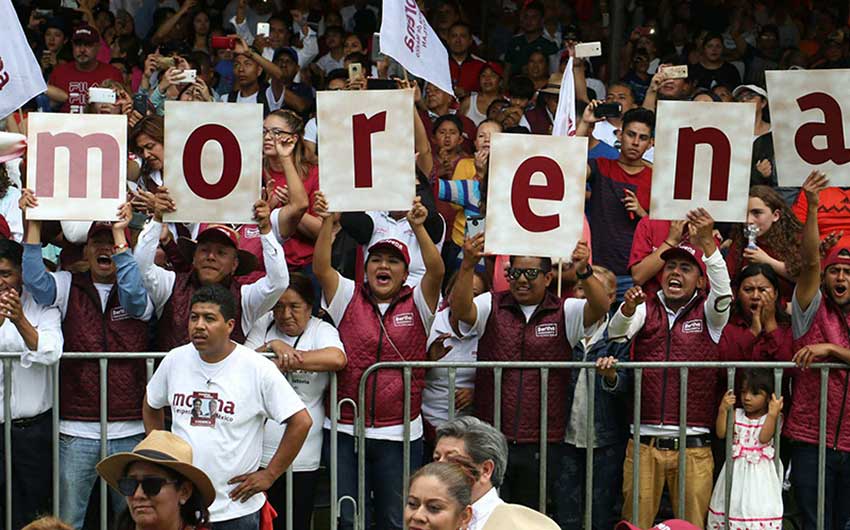
MORENA gains more Mexican politicians

by the El Reportero’s wire services

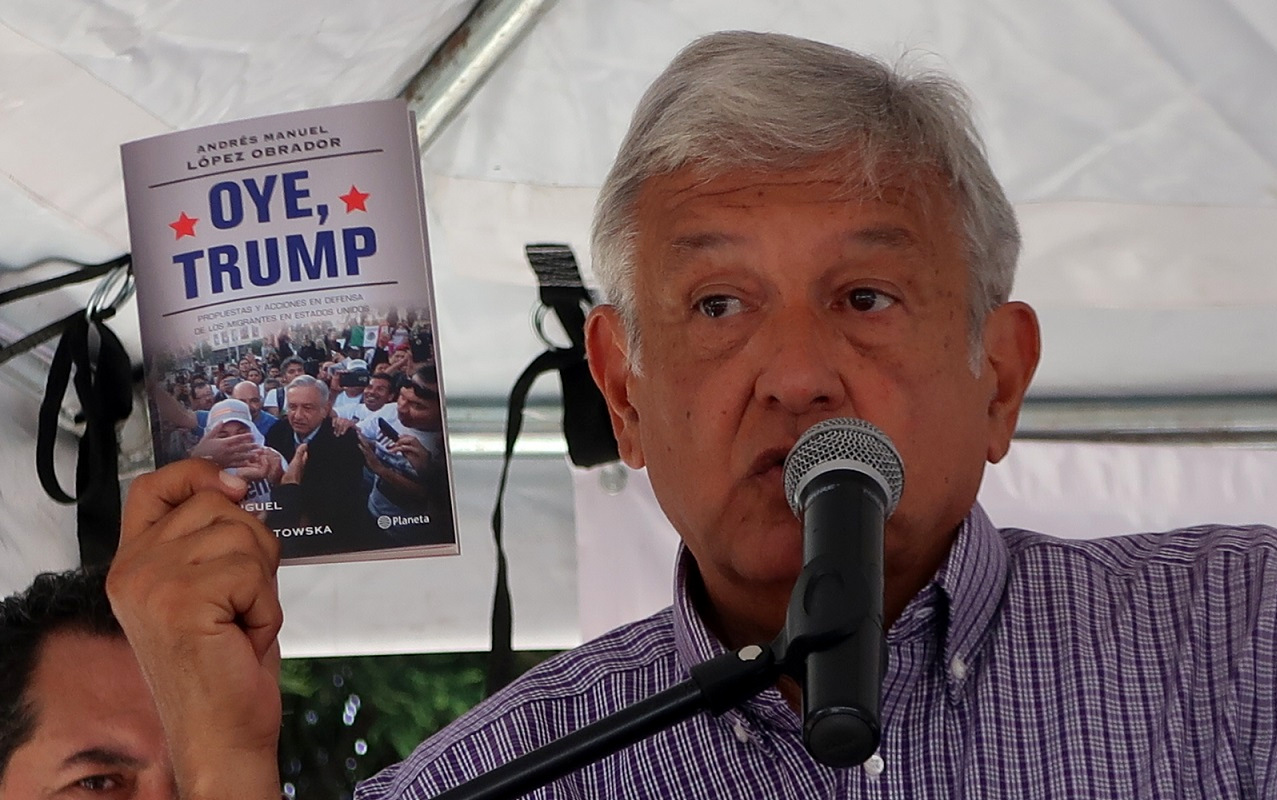
The exodus of politicians and legislators from various Mexican parties to the Movement of National Regeneration (MORENA) continues today, when that organization will proclaim the candidacy for the Presidency of Andrés Manuel López Obrador.

The last of a long list that changed party was senator Miguel Ángel Chico Herrera, who resigned from the Institutional Revolutionary Party (PRI, in the government), after over 40 years of political militancy.

Chico Herrera decided to join MORENA and support López Obrador’s project, amidst criticism of the PRI’s national leader, Enrique Ochoa, whom he accused of privileging ‘simulation and personal interests’

The legislator had expressed for several weeks his dissatisfaction with the way in which the internal process was carried out in the PRI to elect the candidate of such party to the governorship of Guanajuato in the elections of July 1, when there will also be elected President of the Republic and other positions of popular election.

MORENA’s number has grown up with legislators and politicians from the PRI, National Action Party, Citizen Movement and most of all from the Party of the Democratic Revolution.

Agri-food trade grows between Mexico and China

Agricultural exports from Mexico to China has reached a commercial value of $321 million USD in 2017, according to the Customs of the Asian country consigned by the Secretariat of Agriculture.

Exports from that sector increased 54 percent compared to 2016, as part of the diversification policy of the Mexican government, said a statement from the Secretariat of Agriculture, Livestock, Rural Development, Fisheries and Food (SAGARPA).

The best conditions to have access to Mexican products in the market of the Asian nation took place in 2017, thanks to the early negotiation of several health protocols including blackberries and raspberries, beef, white corn, dairy products (milk powder and milk-based infant formula), tobacco leaves, blueberry, fish meal and pork by-products, the statement said.

Imports of agricultural products from China to Mexico increased nine percent in 2017, representing a 19.6 percent advance in the bilateral agro-food trade.

Freedom for Argentinean Milagro Sala demanded on her birthday

Political figures and social organizations demanded through the social network Twitter the freedom of Argentinean social leader Milagro Sala, who turns 55 today in preventive detention.

Under the hashtag #3ercumplepresa, ordinary citizens also demanded her immediate release while unions such as the Association of State Workers (ATE) pay tribute to the also member of Parlasur.

‘Today is Milagro’s birthday. It is the third she passes deprived of her freedom. While there are prisoners and political prisoners in Argentina there will be nothing to celebrate. We demand the state to comply with the ruling of the Supreme Court of Justice of the Nation,’ published on social networks the committee for her release, which convened a national tweet in her honor.

The Jujeña leader was arrested on Jan. 16, 2016, on the alleged incitement to violence for leading a protest in Jujuy against the changes imposed by Governor Gerardo Morales in the cooperative system and program.

During the subsequent months to that cause, there were added others such as the alleged irregularity of administration of funds destined to housing construction and also the authorship of the crimes of illicit association, fraud to the public administration and extortion.

Five international organizations, including the Working Group on Arbitrary Detention of the United Nations and the Organization of American States, have asked the government for her release.

Violence and quakes affected tourism in Mexico

The consumption of both foreign and domestic tourists in Mexico fell 1.9 % from July to September 2017, reported today the National Institute of Statistics and Geography (INEGI).

The organization also indicated that the Quarterly Indicator of Tourism Gross Domestic Product decreased by 2.23 percent, the most pronounced drop since the second quarter of 2009.

These indicators were caused by the wave of violence generated in Mexico last year along with the September earthquakes, which provoked that tourism, one of the three main economic activities and source of currencies of the country, decreased in the third quarter of 2017.

In August, the US Department of State updated the Travel Alert for its citizens and added restrictions regarding security conditions in Baja California, Baja California Sur, Chiapas, Colima, Guerrero, Quintana Roo and Veracruz.

The year 2017 was the most violent in Mexico in a decade, according to data from the Executive Secretariat of the National Public Security System.

However, Mexico is currently the eighth most visited country to register 35,000,000 international travelers in 2016, according to the list of the World Tourism Organization.

In terms of foreign exchange tourism entered 19,571,000,000 dollars, according to official data.

spot_img

Venezuela watching US military deployment

by Luis Beatón

The recent visit of Kurt Tidd, head of the Southern Command of the United States, to Colombia, arouses suspicions and leads some to think that the order to attack Venezuela has already been given.

General Tidd said that Bogota and Washington must continue working to overcome ‘security threats’ that require mutual work to overcome them, according to reports in the newspaper El Espectador, in Colombia.

The high-ranking US officer said that ‘Colombians have much to be proud of and we join other democratic nations in expressing admiration for their firm commitment to the values we share’, a statement that apparently refers to that country becoming a large base for the deployment of Washington’s war machine.

International commentators believe that the fight against drug trafficking hides plans against Venezuela, something perhaps behind the deployment of Operation Atlas, the largest in recent years, which added almost 10,000 men from the military and police forces to face the networks of drug traffickers in Tumaco and its surrounding areas.

On the morning of February 10, the US admiral met behind closed doors with Colombian Defense Minister Luis Carlos Villegas and other senior officials, with whom he tried to coordinate efforts in the ‘construction of peace and security in the region.’

General Tidd arrived in Colombia just two days after the US Secretary of State, Rex Tillerson, met with President Juan Manuel Santos in New Granada, to adjust plans against the authorities of Caracas, including ordering the Venezuelan opposition to abort the dialogue that should conclude with the signing agreement in Santo Domingo of a peaceful coexistence.

In this meeting, the Colombian president emphasized the importance for the region of what he worded as ‘restoring the democratic channel in Venezuela’, that is why the visit of the commander of the Southern Command of the United States could be linked with plans to continue the destabilization campaign of the government of Nicolas Maduro.

Regarding this situation, the Venezuelan academic and analyst Sergio Rodríguez Gelfestein wrote: If we accept the well-known maxim of Von Clausewitz that ‘war is the continuation of politics by other means,’ then, ‘the combat order was already given.’

The Venezuelan scholar affirms that ‘the preparation of the war has already begun. In Catatumbo, region of the Department of Norte de Santander, bordering Venezuela, specifically in the towns of Tibú and Tarra, the illegal armed groups have taken control of security, an advance of what may be in progress against Caracas.

He points out that in Villa del Rosario, in the same department, the armed group ‘Los Pelusos’ and the self-appointed ‘Autodefensa Gaitánista de Colombia’ (AGC) fight to take control of six neighborhoods (Galán, La Palmita, Pueblito Español, Montevideo, Primero de Mayo and San José) of this city of 90,000 inhabitants, where they have been deployed to prepare the invasion of Venezuela under the watch of the army and the authorities of Bogotá.

In the area of Cucuta, on the border with Venezuela, paramilitaries operate under the command of ‘Cochas’, alias of Luis Jesús Escamilla Melo, head of the Paramilitary Army of North Santander (EPN) and in Venezuela they are already operating in Llano Jorge and San Antonio del Táchira, says the source.

There are also demonstrations at the US military bases in Colombia and the arrival of a contingent of 415 members of the United States air force to Panama, who arrived illegally in the country, even before that government authorized their presence, states Rodríguez.

Also, among those preparations should also be mentioned the completion of the Tradewinds 2017 naval maneuvers in June last year in Barbados, less than 685 miles from the Venezuelan coast and the AmazonLog17 military exercises, in the Brazilian Amazon, with the participation of troops from that country, in addition to Colombia and Peru, in November of last year, only 435 miles from the border with Venezuela.

On the other hand, the presence of the US military in Tumaco is striking, according to General Tidd to ‘counteract the security threats’ although they are evidently part of the plan of aggression against Venezuela.

Also the arrival in Panama of the 415 members of the US Armed Forces is seen as part of the creation of support and logistics bases for the operation to put an end to the Government of President Nicolas Maduro.

Undoubtedly, the Southern Command of the United States participates in these preparations in the first place, providing a joint military force of more than 1,201 people, including military and civilians, with personnel of the Army, the Navy, the Air Force, the Marines, the Coastal Guard and other federal agencies.

A prominent place appears to be assigned to two fast-acting US military bases installed in the communities of Vichada and Leticia, in the Colombian department of Amazonas, bordering Venezuela in the southwest of the country, according to reports.

These bases, which are added to those already existing, represent an important step in the military occupation of Colombia, considered by the late US Senator Paul Coverdell as a necessary preliminary action to invade Venezuela.

Also, the 2009 military agreement between Washington and Bogota allows Americans greater access to military bases, including Palanquero, considered strategic because of its position in the Americas.

In the siege of Venezuela, the US assault troops stationed in the ‘control and monitoring’ bases of Reina Sofía, in Aruba, and Hato Rey, in Curaçao, and the operations center would have a seat in the base of Palmerola, in Honduras, the largest foreign installation of that nature in Latin American territory.

The alerts expressed by different media and experts do not seem unfounded, and to give certainty Tillerson and Tidd visits the region, and especially Colombia, without doubt the spearhead against Venezuela.

spot_img

Mexico: the volcano of resistence is about to explode

Mexico is a volcano, and the beauty and frailty of the snow gracing its peaks hide a scalding reality. An instability that at any given moment could explode

by Geoffrey Pleyers and Manuel Garza Zepeda
Analysis

For those interested in social movements, the 21st century began in Mexico with the uprising of the indigenous Zapatista rebellion in Chiapas. Their fight has been a source of inspiration for many other revolutionary movements around the world.

During the following years, Mexican civil society acquired a certain prominence in the so-called “transition to democracy”. After more than seventy years of electoral domination by one party, the Partido Revolucionario Institucional (PRI), a contender won the seat of Mexico City in 1997 and the presidency of the republic in 2000.

Faced with the Zapatista threat and an opposition triumph in the presidential elections, it appeared as though the country was going through a profound process of renovation. There were huge expectations for change.

Two decades later, this hope had entirely faded. The PRI recovered the presidency in 2012, the country continues to draw blood due to high levels of violence and organized crime, and the actions of the military continue violating human rights.

Poverty has reached terrifying levels, corruption is increasingly unashamed, and access to healthcare is difficult for huge sectors of the population.

The gap between the rich and the poor continues to grow. Meanwhile, budget cuts to public spending are announced, particularly in education, science and technology, and health and social services, the National Electoral Institute (INE) declared a historic budget of more than 1 billion of euros for funding of political parties and the organization of the ballots in June.

In view of this situation, questions regarding the results of the so-called ‘democratic transition’ and the expectations it awakened have emerged.

Faced with the Zapatista threat and an opposition triumph in the presidential elections, it appeared as though the country was going through a profound process of renovation.

What happened to that social energy that the Zapatistas provoked almost a quarter of a century ago? Where are the reactions of the citizens that usually mobilize themselves against injustice and impunity?

At a quick glance, it appears that a type of drastic conformity reigns over the country when things fall apart. The media show is focused on the political campaigns through the lens of the republic, violence, or worries regarding the NAFTA negotiations.

John Holloway [1], author of the preface of the book Teoría volcánica, describes it in the form of a metaphor: the country is a volcano and the beauty and frailty of the snow that graces its peaks hides a scalding reality of rejection, fury, and a search for alternatives, an instability that in any given moment could explode.

 It would be an error to search for movements and mobilizations in the forms in which they appeared 20 years ago in the age of the so-called ‘democratic transition.’

The context in which movements and social resistance are coming to life today is very different from 25 years ago, and therefore so are the actors driving them. These differences impose the necessity to explore in new spaces the shifts that are occurring.

The chapters of the book “Mexico in Motion” [2] (Mexico en movimientos) point to several fundamental transformations in social movements in Mexico during the last decade:

1. The explosion of the internet and social networks provoked changes in the culture of and the organization of many social movements. Social networks allowed for the development of interpersonal and collective organizations that are more flexible in nature. At the same time, new channels of information and communication are opening up among citizens. However, it is important to recognize the limitations of these open possibilities. Internet access is still somewhat limited throughout the country, thus problems regarding misinformation have yet to cease.

The “battle of information” has become an all-out war, with a death toll of 35 Mexican journalists murdered from January of 2016.

The main television channels still retain a wide influence over public opinion. What’s more, Mexico is among the countries in the world with the highest spend on government and political propaganda. The relevance of this field is clear when warnings that the “battle of information” has become an all-out war, with a death toll of 35 Mexican journalists murdered from January of 2016.

2. In the last decade, violence has flared up in Mexico and has become a structural problem, with deep roots in every sector of the economy and public life, including the state and its own institutions. Journalism, defense of human rights and activism have become extremely dangerous activities in the country. The disappearance of 43 students from the Rural School of Ayotzinapa, in the south-east of the state of Guerrero, indicates the peak of a process of criminalizing social movements in general, and youths and students.

3. Attacks on the territory of indigenous communities can be added to the long list of general aggressions experienced by the population due to the development of mining megaprojects, the installation of Aeolic energy companies, the construction of roads, pipelines, and dams. On the other hand, attempts to privatize resources such as water have recently unfolded.

4. In comparison with the actors of the previous decades, one of the most profound transformations that affected social movements in Mexico is the loss of the prospect for democratization and the questioning of prospects for emancipation. Almost 20 years ago, the so-called ‘democratic transition’ generated hopes that political alternation would open up new political, economic, and social horizons, that it would put an end to corruption and impose a respect for human rights. Eighteen years later, and few expectations remain. The possible arrival to the presidency of a candidate that embodies honesty and strives to combat corruption could improve the situation, but it will not resolve the structural problems of the country.

5. A growing number of Mexicans consider the state to be part of their problem rather than the solution to it. What the experiences from this book show us is that resistance movements are not detached from alternatives. Citizens decide themselves who undertakes the construction of their lives, in limited, experimental and contradictory ways. As well as demanding that decisions be made among the most powerful, as a means of defense against attacks, the experiences transcend protest and assume new methods of communication. Many social and resistance movements were created to search for solutions at a local level beyond national reform.

6. The movements that arise currently do not do so with an institutional-political agenda in mind, but in lieu of the daily problems they experience: violence and aggressions towards women, the search for disappeared family members without the support of the state, the destruction of the Cherán forest, the environmental devastation caused by mining companies, the rise in petrol prices, the lack of resources going towards education. (This article was cut to fit space in the printed edition).

(Geoffrey Pleyers is FNRS researcher and professor at the Université de Louvain, Belgium and associate researcher at the Collège d’Etudes Mondiales.
Manuel Garza Zepeda holds a PhD in Sociology from the Autonomous University of Puebla, México).

spot_img

Mexico: The security forces in Baja California Sur were not prepared, and still are not prepared

In State defenseless against violent crime

by Mexico News Daily

When violent crime began to increase in Baja California Sur in 2014, the state’s security forces were hopelessly unprepared to combat it, leaving them virtually defenseless against the scourge.

That’s the view shared by security analysts, civil society and both state and federal authorities, all of whom recognize that the same security shortcomings also made it easy for criminal gangs to establish a presence in the state.

A security official from state capital La Paz who spoke to the newspaper El Universal on condition of anonymity said that the state’s police remain both ineffective and unresponsive to violent crime.

“Our police don’t know how to handle a confrontation. Police from La Paz don’t know what to shoot at, how to hide, how to protect people or how to cordon off an area to provide support,” he said.

“If there is a clash . . . the police are simply not going to arrive, they’ll leave them, because they don’t know [what to do], they haven’t had any ongoing training program in [crime] response, prevention and investigation,” he added.

According to the non-governmental organization Causa en Común, police in Baja California Sur lag behind forces in every other state in the country in terms of training and professionalism.

In a study published in November, the organization pointed to shortcomings of the state’s police academy including the absence of a shooting range, driving track and facilities to carry out tactical training.

State governor Carlos Mendoza committed to having a new facility completed by the end of last year but it has not yet materialized.

In addition, Causa en Común said that police recruits had revealed that they had to pay for their uniforms and other expenses out of their own pockets and that their superiors often sent them on personal errands.

After two criminal groups faced off in a shootout in the state that left three people dead in July 2014, two things became immediately clear to the local population: organized crime had infiltrated the state and municipal and state police were not prepared to deal with it.

Statistics from the National Public Security System confirm those initial fears.

There were 126 homicides in the state in 2014 but that number almost doubled to 226 the following year. The figure reached 281 in 2016 before surging to a total of 701 murders last year. Only Colima recorded a higher per-capita homicide rate in 2017.

The number of homicides has increased so dramatically since 2014 that a new cemetery had to be built in La Paz.

But although the growing violence problem was clear to citizens, authorities were slow to react and it wasn’t until November 2016 that the first federal tactical and intelligence forces arrived in La Paz.

During a visit to Baja California Sur the same month, then interior secretary Miguel Ángel Osorio Chong said the state had practically started from zero in terms of its response to increasing levels of violent crime.

“There was no anti-kidnapping agency, there was nowhere to train police, it was thought that nothing ever happened in La Paz and nothing was ever going to happen,” he said at the time.

Finally, last month National Security Commissioner Renato Sales announced that 5,000 additional Federal Police officers would be deployed to “key cities” in the country including the popular tourism destinations of Los Cabos and La Paz.

However, the director of the National Citizens’ Observatory stressed that the presence of federal forces would not alone solve the problem.

Francisco Rivas also said that the organization had warned authorities since 2014 of an imminent security crisis but they failed to heed the warning and implement a security strategy that works.

Adding to Baja California Sur’s problems, there is a shortage of crime scene investigators to solve cases and the state’s medical emergency services are also severely inadequate.

Groups of volunteers or private companies respond to 90% of emergency calls that are made in the state and the state government only has one rescue aircraft and just five Civil Protection ambulances.

The leader of one group of volunteers that has been responding to emergencies in La Paz since 1999 attributed the situation to inaction and apathy on the part of successive governments.

“No government has been concerned about emergency attention,” Juan Alfonso Lamarque said, adding that the group has to do its own fundraising to cover the majority of its costs.

All of the state’s morgues — with the exception of the one in Los Cabos which was built last year — are also outdated and lack the space required to cope with the increasing number of bodies they are receiving.

Faced with the threat crime poses to the tourism-oriented state’s economy, the business community in Los Cabos last month pledged 140 million pesos to build new military barracks in the popular tourism destination.

Source: El Universal (sp)

In other Mexico news:

Nayarit gas station is community-owned
Indigenous community gets into the retail fuel market

It’s not just foreign oil companies that have jumped on the opportunity to enter Mexico’s retail fuel market.

At least 1,500 residents of an indigenous community in Nayarit pooled their resources to open Mexico’s first community-owned gas station.

The Wixáritari indigenous community of Santiago Pochotitán, Tepic, began the project in 2012 and initiated construction of the gas station in 2015. But funds ran out, delaying its opening until last Friday.

The 11-million-peso (US $590,000) investment was shared with the federal National Commission for the Development of Indigenous Peoples, which ponied up 6 million pesos, and the community put up the rest.

Commission head Roberto Serrano said the project will benefit 15,000 people in the area, while Nayarit Governor Antonio Echevarría García forecast it would help boost the local economy.

The station will employ 15 people.

Source: El Financiero (sp)

spot_img