Wednesday, August 5, 2026
Home Blog Page 286

Don’t miss grupo Nuevo Caní at Blondie’s in SF

Members of the Nuevo Caní group. From left to right (seated) Emilio Pérez, congas; back: Junior Ecuador, bass; Ted, bongo; the ‘Cat’ Edgar Aguilar; and on the Dan Neville vibraphone. Come enjoy the Caní group at the Blondie’s club, at 540 Valencia St, San Francisco.

Good music for the soul. Latin jazz and salsa. On the last Wednesday of each month. Nuevo Caní is a local Latin band composed of professional musicians that will make your night a special moment. At 540 Valencia St, San Francisco.

spot_img

Mexico will invest US $30 billion in development plan to curb migration

Details regarding the source of the funds and how they will be spent have not been revealed

by Mexico News Daily

The federal government will invest more than US $30 billion over the next five years on a Comprehensive Development Plan with Guatemala, Honduras and El Salvador aimed at curbing migration to the United States, the foreign secretary said yesterday.

Speaking at a United Nations (UN) migration conference in Marrakech, Morocco, Marcelo Ebrard said that Mexico has made a commitment to cooperate closely with Central American countries and expressed confidence that the plan would be feasible and effective.

Ebrard said he expected that the plan, which will seek to develop Mexico’s poor southern states, would curb migration better than “containment measures.”

However, he didn’t explain exactly how the US $30 billion investment will be used or where the money would come from.

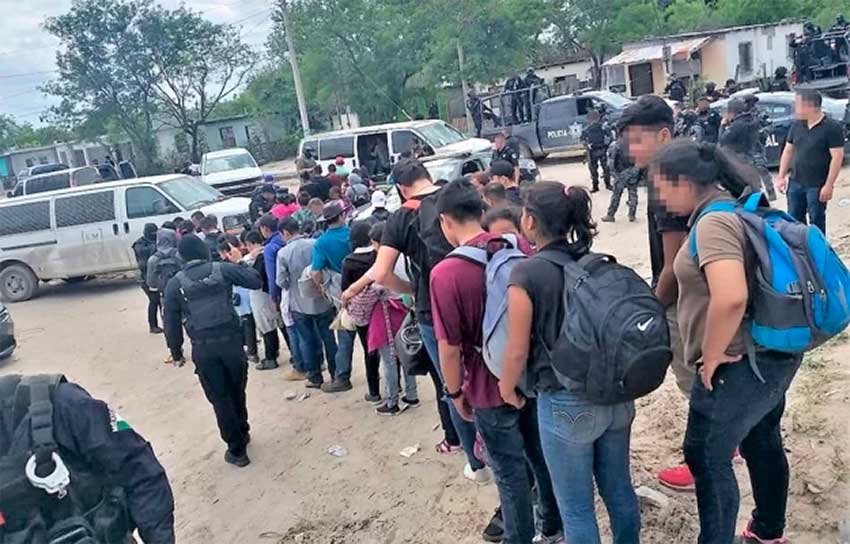
Thousands of Central American migrants have traveled through Mexico as part of several caravans during the past two months, leaving the authorities of the past and current federal government to grapple with finding a way to stem migration under increasing pressure to do so from the United States government.

Accompanied by his counterparts from the three “northern triangle” Central American countries, Ebrard said that “what happens to a migrant today in our country is a disgrace” and stressed that the new government would change Mexico’s approach to dealing with them.

“Mexico is going to change its migration policy, Mexico is going to make you feel proud about the pact we’ve adopted for safe, orderly and regular migration. We’re going to change things and it will be our actions that speak for us,” he said.

The foreign secretary said the aim of the development plan was to reduce poverty and thus address one of the key factors behind migration.

But Ebrard didn’t offer specific details about how money spent in southern Mexico would contribute to development in Central America. Mexican authorities said that specific details would be available in the coming weeks.

President López Obrador has said that Central Americans will be offered Mexican work visas and has also vowed to respect the human rights of migrants.

But he has also pushed for the United States to contribute to a plan to develop Central America that would reduce the root causes of migration.

In a letter to United States President Donald Trump shortly after his victory in the July 1 election, López Obrador proposed that Mexico, the U.S. and each Central American country contribute resources according to the size of its economy and that 75 percent of the collective funds be allocated to finance projects that create jobs and combat poverty, while the other 25 percent would go to border control and security.

“At the same time, every government, from Panama to the Rio Grande, would work to make the migration of its citizens economically unnecessary and take care of their borders to avoid the illegal transit of merchandise, weapons and drug trafficking which, we believe, would be the most humane and effective way to guarantee peace, tranquility, and security for our peoples and nations,” he wrote.

On the day of his inauguration, the new president agreed with his Honduran and Guatemalan counterparts as well as the vice-president of El Salvador to create a fund to stem the flow of migrants bound for the United States.

That country’s use of tear gas against a group of around 500 migrants who rushed the Mexico-United States border last month prompted a formal request from the former Mexican government for U.S. authorities to conduct a full investigation into the use of what it described as non-lethal weapons.

Trump threatened to close the United States southern border permanently in response to the attempted encroachment and is also reportedly pushing for a plan for migrants to stay in Mexico while their asylum requests are processed.

Ebrard met United States Secretary of State Mike Pompeo and Homeland Security Secretary Kirstjen Nielsen in Washington earlier this month but no agreement on the so-called “Remain in Mexico” plan has been announced.

Meanwhile, an increasing number of the thousands of migrants stranded in Tijuana are crossing or attempting to cross the border fence illegally to hand themselves into United States border patrol agents in order to circumvent a lengthy wait to apply for asylum from Mexico.

Source: El Financiero (sp), Reuters (en), The Los Angeles Times (en).

spot_img

AMLO creates super-commission to investigate missing 43 of Ayotzinapa

There will be no barriers against finding the truth, president tells parents

by Mexico News Daily

President López Obrador signed his first presidential decree yesterday, creating a super commission that will conduct a new investigation into the case of the 43 students who disappeared in Guerrero more than four years ago.

Just two days after he was sworn in as president, López Obrador told parents of the missing students gathered at the National Palace that “there will be no barriers, no obstacles to arriving at the truth” about what happened to their sons.

The 43 young men, who were studying to become teachers at the Ayotzinapa Rural Teachers’ College, disappeared in Iguala in September 2014 and were presumably killed.
The case precipitated the worst crisis of former president Enrique Peña Nieto’s administration, triggered mass demonstrations in Mexico City and became representative of other disappearances and rampant violence and corruption.

The new commission, whose creation was ordered by a federal court in June, will have no limits to its investigation, complete access to existing information about the case and will offer protection to witnesses so that they can tell their stories without fear of repercussions.

Alejandro Encinas, deputy interior secretary for human rights, will head the commission, which will be funded by the Secretariat of Finance but could also receive monetary contributions from national and international organizations.

Family members of the victims, their lawyers and representatives of the secretariats of the Interior, Foreign Relations and Finance will all be part of the commission.

The Inter-American Commission on Human Rights, the Office of the United Nations High Commissioner for Human Rights and other international organizations, authorities and experts will also be permitted to “assist and cooperate” with the truth commission’s investigation.

López Obrador declared that his government will not be an accomplice to human rights violations, explaining that all lines of investigations will be pursued, including any role that the army may have played in the students’ disappearance.

“I believe that the investigation has to include the whole government, all the people involved,” he said, charging that an army probe would not inflict any damage, reputational or otherwise, on the military.

“Arriving at the truth and delivering justice doesn’t weaken institutions, it strengthens them. In this new government, the truth must reign above all else, it’s the truth that is revolutionary [and] Christian. Lying is reactionary, it’s of the devil,” López Obrador said.

According to the former government’s “historical truth,” the 43 students were intercepted by corrupt municipal police in Iguala on Sept. 26, 2014 while traveling on buses they had commandeered to travel to a protest march in Mexico City.

The police then handed them over to members of the Guerrero Unidos gang who killed the students, burned their bodies in a municipal dump and scattered their ashes in a nearby river.

However, the former government’s conclusion was widely questioned both within Mexico and internationally and authorities were heavily criticized for their handling of the case.

Many people suspected that the army played a role in the students’ disappearance but it was never subjected to investigation.

Deputy secretary Encinas said at the National Palace yesterday that members of the new commission and other government investigators would have “free access” to all facilities where “due to the circumstances of the case it is presumed that the missing persons or remains corresponding to them may have been present.”

Questioned whether the “free access” would extend to military barracks, Encinas responded that it would because “they are the only [facilities] that haven’t been opened [to investigators].”

Scores of people have been arrested for their alleged involvement in the students’ disappearance but both the United Nations and the National Human Rights Commission have said that there is evidence that many of them were tortured by authorities and likely forced into making admissions of guilt.

A federal court judge ruled late last month that 83 statements made by people accused of involvement in the crime must be omitted from the Ayotzinapa investigation due to evidence that their human rights were violated.

Three men who had been identified as actual perpetrators of the crime and who had supported the past government’s official version of events were consequently released from custody.

Parents of the missing students have always rejected the past government’s “historical truth” but are now placing their faith in the new administration to deliver answers – and their sons – to them.

“We ask you [López Obrador], as a father, to help us, to pull us out of this dumpster where Peña Nieto left us, and for you to gain the trust of all Mexicans, because we don’t trust anyone anymore,” pleaded María Martínez, the mother of one of the missing students.

spot_img

An Interview with Oscar-Winning Director Alfonso Cuarón

With a new film on Netflix this week, the iconoclastic auteur opens up about facing his insecurities in the latest edition of The Red Bulletin – a monthly magazine produced by Red Bull Media House.

by Marco Payán

The Mexican film director has no fear of the unknown. Upon the release of his new film, “Roma,” the Oscar winner shares how he overcame feelings of insecurity and why his curiosity to explore uncharted territory is what challenges him to unlock new levels of creative freedom.

Alfonso Cuarón does not like to repeat himself

Over the course of his nearly 30-year career, the acclaimed director has created eight distinctive universes, an octet of films not bound by genre or geography — from the enchanting fairy tale “A Little Princess” and the coming-of-age road trip “Y Tu Mamá También” to the apocalyptic nightmare of “Children of Men” and his Oscar-winning turn in space with “Gravity.” But despite all the obvious differences, Cuarón’s entire body of work is connected by a sense of exploration, one that pushes his creative boundaries, both technically and personally. In his follow-up to 2013’s “Gravity” — the box office smash starring Sandra Bullock and George Clooney — Cuarón decided to make “Roma,” a black-and-white film rooted in 1970s Mexico City featuring a largely unknown cast (available on Netflix December 14). It’s a deeply personal story for the 57-year-old, who has said that 90 percent of the scenes came from his memory. Set during a time of political unrest, the film is a snapshot of one middle-class family told through the perspective of their housekeeper. Although it is not another technical marvel set in space, “Roma” still posed challenges for Cuarón. But as he explains, without challenging yourself, there is no payoff. There are no discoveries unless you have the courage to explore the unknown.
The Red Bulletin: You’ve said in past interviews that you burned your bridges in Mexico. That’s obviously not something you’d recommend?
Alfonso Cuarón: It is so exhausting, and it’s not good for business. The way I produced my first film, “Sólo con Tu Pareja,” wasn’t looked upon terribly well. I had a lot of support from the Mexican government, but their investment was minor. I was adamant that they were not my bosses. The film was under my control and that didn’t seem to please everyone. I wanted to manage the movie the way I believed was best. I was aware that I would fall out of favor for any projects to come. So I ended up [taking the film to the] Toronto Film Festival, fully knowing what I had left behind, with the prospects of either going back or starting over. And then I began receiving offers from the United States.

How was your first experience working in the States?

I remember directing an episode of “Fallen Angels” for Showtime. I was full of insecurities and feeling numb. Besides, I was the only unknown director in the series. The other directors included Steven Soderbergh, Jonathan Kaplan, Phil Joanou — even Tom Cruise and Tom Hanks directed an episode. If Tom Hanks’s project needed a couple more days, those were taken away from me. I felt ignored. That’s why I’m so grateful to my actors, Alan Rickman and Laura Dern, because when they saw me paralyzed like that they told me, “Relax, we are here for you. We want you to direct us and we are going to do whatever you tell us to do.” At that point I finally began to let go. And then my episode, “Murder, Obliquely,” won all these awards. It was then and there that a friendship with Alan Rickman and Laura Dern was born.
Where did those insecurities come from?

When I first came to Hollywood, it wasn’t about being Mexican but about being from a Mexican generation so different from today’s Mexico. It used to be a closed-tight Mexico, oblivious to the world. It was a Mexico where looking for international impact was seen as a sign of arrogance. It was almost considered a lack of nationalism. I grew up in Mexico during the height of the PRI [Institutional Revolutionary Party], in the age of revolutionary nationalist ideology and closed markets, of repression and an enormous control over information, both incoming and outgoing. What movies were shown and what kind of music was played. Rock concerts were strictly forbidden. Then the first rock concert was the band Chicago at the Auditorio Nacional. There was so much repression that the moment it opened up a bit for a little concert, people destroyed the doors. That was our “being young” attitude. That was our outlet. When I came to the States in the early ’90s, I was still living with the ghost of that sick perception Mexico has of Hollywood — too romanticized and idealized.

How have your perceptions changed?

Those insecurities at the beginning of my career were not because of being Mexican but because there was an ideology. Now there’s a new generation that has no borders or limits. This is natural for them. I admire them because of that. They have no complex. From then on, my insecurities were no longer creative.

You’ve been open about your disappointment with “Great Expectations,” your second U.S.-produced film after “The Little Princess.” What did you learn from that process?

With “Great Expectations,” I was seduced by the machinery, and I had to pay the price. It was a movie I didn’t fully understand. I thought something I didn’t understand would work if I used visual tools. I was overcompensating. Once I became aware of that problem — that’s the reason I made “Y Tu Mamá También.” With that project I developed a whole new point of view about filming. Even in “Great Expectations” I wanted to do something technically polished and clean. El Chivo [cinematographer Emmanuel Lubezki] and I came from a cine Mexicano that wasn’t crafted with excellence. Except for a couple of directors, the cinematographic language was poor. Photography wasn’t done properly. We were trying to shake things up. It wasn’t until “Y Tu Mamá También” that technique ceased to matter — what really mattered was the subject and the concept. The special thing about “Roma” is that it’s the first film where I feel completely liberated, completely free of insecurities. I had the certainty I didn’t know how to make it but I had no fear to explore. To give in completely to the idea I had of the movie I wanted to make.
You didn’t know how you were going to make the film, but you proceeded anyway?

I am inclined to try to imagine how I’d film a certain movie, but if I know how to do it I lose interest. If I know how to do it I get bored with the idea. More than the challenge, it’s curiosity for the unknown that drives me. It’s curiosity for knowing I have a perspective about the film I want to make, but I have no idea about how to do it. The process itself doesn’t let me lower my guard. That’s why I believe all the movies I have made are so different from each other.

Where does that sense of exploration come from?

It might have to do with being a film buff since my childhood and watching how big the universe known as cinema is, and admiring how the language of movies developed, from silent film, the birth of the cinema, to these days. There’s something that overwhelms me from time to time — the idea of not exploring languages. Or of not pushing the limits of certain languages. I believe that’s what attracts me the most.

Your latest film, “Roma,” was a rather large production, even though the story revolves around a more intimate family drama. Would you be interested in making a “simpler” movie?

More than just the plot, I see it as the whole cinematic experience. Indeed, it was what the cinematic experience demanded. Every time I begin a new project I say, “This is a simple film; this one’s going to be simple. I’ll make it fast and that’s it.” My producer always tells me that. For “Gravity,” I said to Chivo, “Let’s make a film the fast and easy way. This is about a woman in space — so we’ll just film her against black backgrounds and that’s it. [Laughs.] Some visual effects and we’re done.” When I began talking to my producer about “Roma,” I insisted, “This is a smaller, more intimate film.” And it’s no lie. But whenever I begin to prepare [for a project], reality starts to show up.

It’s also a chance to watch a big production that really reflects Mexico City.

I would expect that the production doesn’t become the focus, though. The universe within the movie should be the focus. The whole idea is to confront you with a universe.

You’ve been wanting to make a film based on El Halconazo — a massacre of student demonstrators in Mexico City in 1971 — for quite some time, correct?

Yes, I was planning on doing this movie 12 years ago. But because life happens and there are things you can’t control, I wasn’t able to make it back then. I believe it was for the best, though, because I was not mature enough for it. But a lot of the content in “Roma” was already in that early version.

I’m aware of your love for the 1976 Felipe Cazals film, “Canoa,” which also addresses the student protests during that period.

That was shot not long after [the Tlatelolco student massacre in] ’68, when it was off-limits to talk about that. What Felipe did was talk about that subject obliquely, indirectly. He also talked about the whole Mexican sociopolitical context.

Is Roma indebted to “Canoa” at all?

For “Roma,” I tried consciously to avoid influences and references. It was hard, because I have always thought about other movies while filming. I even watch some movies as inspiration, even if they are completely different, as long as I find an emotional connection or a shared language with whatever I am doing. In “Roma,” I didn’t want any of these influences, because I needed to be faithful and pure to the idea of re-creating memories. I remember whistling a melody while framing a shot. I noticed it was a Bach tune that was used in a movie I really love. And when I saw my scene, I discovered that it was also referential of that movie. Then I thought that was not what I wanted. [Roma’s production designer] Eugenio Caballero told me it was a beautiful scene. “Yes, it’s beautiful because it’s someone else’s, not this movie’s,” I told him. The other one is more beautiful, but this is the right one. It doesn’t mean there are no references at all, because, just as in our lives, you are what you’ve been. In filming, you are what you’ve watched and read and listened to — and not just from movies.

You’ve said before that “Roma” is also loosely based on your childhood. Were you able to exorcize any inner demons while making the film?
Every human experience related to a long-lasting project always is going to have a transformative part. When you start a job that takes longer than the average task, you go into a parallel reality. An abstraction begins, and everything outside your project seems to flow at a different pace. It flows differently. And when you reconnect with that reality, you feel the difference. Sometimes that difference creates transformations. Sometimes it’s kind of a shock, but that’s it. In “Roma,” specifically, any human experience focused on its own memory will inevitably have emotional consequences.

But you’re the one who is changing, right?

No, the universe is the one changing! [Laughs.] That’s not true — of course we’re changing. What changes in the universe is your perception about it. The universe doesn’t give a damn about you. In “Roma,” every person willing to focus on their memories is going to discover something. Those might be joyful or unpleasant discoveries. To face your memory is to face what you were back then that still lives inside your subconscious. “Roma” was a three-year process of living in memories, and not only living, but opening doors from the memory labyrinth. And as soon as you open a door, you find new corridors with new doors, and then every time you open a new door you find new corridors. The more you focus on this labyrinth, the more you get lost in it.
“Roma” is in theaters and on Netflix in December. Instagram: @alfonsocuaron.

spot_img

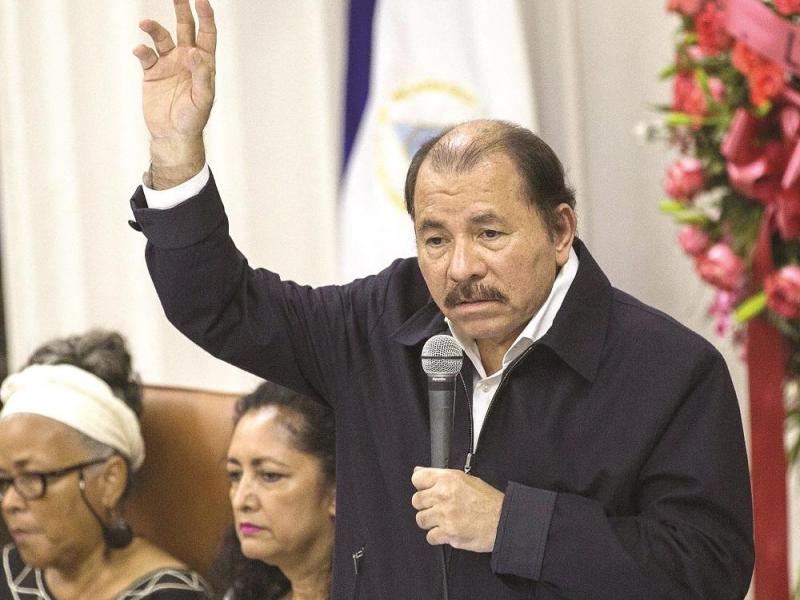
‘We’re going to kill you’: Nicaragua’s brutal crackdown on press freedom

Journalists have been beaten, arrested, and robbed in the wake of the civil revolt that paralyzed the country earlier in the year

Toby Stirling Hill
in Managua

MANAGUA, Nicaragua, Mon 10 Dec 2018 – Nicaraguan TV journalist Miguel Mora was driving home from work when he was pulled over by armed police.

“They ordered me take off my glasses and put a hood over my head,” says Mora, who directs the 100% Noticias news channel. “Then they took me by the neck and forced me into a pickup, where an officer told me: ‘You’re responsible for the death of police. If you keep fucking around, we’re going to kill you and your whole family.’”

It was the sixth time Mora had been detained by police in the space of a week. He also faces criminal charges of “inciting hate”, while drones have filmed his house and armed men on motorbikes track his movements.

Such intimidation is part of an escalating assault on press freedoms in Nicaragua, unleashed in the wake of the civil revolt that paralyzed the country earlier in the year.

Journalists have been beaten, arrested and robbed; radio stations raided by police. Last week, both the UN and the IACHR condemned the intensifying harassment.

“This government has banned protest, captured opposition leaders, and now the only thing preventing a totalitarian dictatorship is the independent media,” says Mora. “This is the stage where they try to silence us.”

Anti-government protests broke out in April, sparked by the mismanagement of fires in a protected reserve and fuelled by fiscal reforms that slashed social security. They spread after police used live ammunition on demonstrators, killing dozens.

As the crisis worsened, 100 % Noticias beamed police and paramilitary violence into homes across the country. Newspapers exposed the state’s lethal tactics: one investigation drew on radiographic evidence to show that many of the deaths were the result of a single gunshot to the head, neck or chest – proof that state forces were shooting to kill.

From the start of the unrest, the government tried to control coverage, pressuring media bosses to self-censor. Journalists at Channel 10 – owned by the Mexican tycoon Remigio Ángel González – were initially barred from reporting on demonstrations.

“It was absurd: historic events were unfolding and we were ignoring them,” says Mauricio Madrigal, the station’s news editor. He and others threatened to resign, and the prohibition was dropped.

After that approach failed, officials turned to more direct tactics. Twelve members of Madrigal’s team have since quit, fearing for their family’s safety. Two 100% Noticias journalists have fled the country; on Saturday, a cameraman was seized by gunmen in civilian clothes as he left the channel’s headquarters, and thrown in jail.

“Every independent journalist has received death threats,” says Gerall Chávez, a reporter with VosTV, whose house was vandalized in August. One journalist has been killed during the violence; in total, more than 490 violations of press freedom have been documented in the course of the crisis. Now, having regained control of the streets, the government is determined to impose control over the narrative. In doing so, it aims to ensure impunity for the state forces that slaughtered hundreds of protesters.

“It’s an Orwellian strategy, to falsify the reality of the repression,” says Sofía Montenegro, a journalist and former Sandinista guerrilla who fought alongside President Daniel Ortega in the 1970s.

The official version of events is disseminated through a media empire built by Rosario Murillo, Nicaragua’s first lady and, since 2017, vice-president.
In 2007, shortly after her husband returned to power, Murillo published an ominous communication strategy, outlining plans to prevent critical media “contaminating” public perception of his administration.

Through the next decade, Murillo spent millions of dollars of Venezuelan cooperation funds – ostensibly destined for poverty reduction – on buying up Nicaragua’s media.

TV channels 4, 8, 9 and 13 are now owned by her children; also under the family’s control are Radio Ya, Radio Nicaragua and Radio Sandino, state broadcaster Channel 6, and the online news service El 19 Digital.

From April, this media apparatus worked to whitewash the government’s deadly response to the protests.

“We presented an alternative reality, where protesters were rightwing extremists killing Sandinistas,” says Carlos Mikel Espinoza, who was editor of El 19 Digital when protests broke out. “It was fascistic, an attempt to infuse hatred into government supporters and police.” Espinoza quit and fled to Costa Rica in June, after police and militants burned alive a family of six in their own home.

Murillo’s strategy has failed. Polls show that just one in five Nicaraguans believe the official line that “those who participated in roadblocks and marches are terrorists”. But this hasn’t stopped the Ortega-controlled courts prosecuting protesters as if they were the violent extremists government propaganda claims.

“We challenge this fantasy reality every day,” Miguel Mora concludes. “The logical next step – which I fully expect them to take – is to send their paramilitaries to close us down altogether.

“That would leave only their version of events: a pure, uncontaminated discourse.” – (the Bay Guardian).

spot_img

Brain Peptides

by Ben Fuchs

Human beings love to be stoned. Despite police and prison and pecuniary penalties, the human intoxication impulse is apparently insatiable. And, as it turns out, there’s a biochemical basis to our brain’s desires for deliriousness.

In many ways human neurology is literally hardwired to be high. For example, our brains make chemicals called peptides that activate the same cells that marijuana does. Essentially, we make our own pot. We’re all literally pot heads.

And that’s not all. Our brains make peptides that activate the same cells as amphetamine and cocaine too. In other words, in addition to making our own marijuana we make our coke and speed. We make our own valium and Vicodin too. Endogenous human peptides it seems are also behind lots of drug effects and drug addictions.

One of the most famous of the drug-like brain peptides are the natural heroin like ones. They’re called endorphins which is a chemical way of saying, natural morphine like substances. “End-orphins” are internal morphine like substances. Some of these peptides that activate the opiate receptors that cause pain relief and relaxation effects are found in grains and flour. These are called exorphins and you can think of them as external opiates as opposed to end-orphins. Nonetheless they are a peptide and they can induce relaxing effect. This is one reason why these foods are called “comfort foods”.

At least one of these bread- brain peptides has a troubling nature. By now everyone has heard of gluten, which is a particularly problematic peptide complex that’s found in flour. Although most people are aware of how gluten can impact their intestines, constipation, loose stools, cramping and bloating are all common effects of gluten intolerance, what is less well-known what the toxic grain chemical can do the brain. In fact, as it turns out, our cranial computers are the organs most likely to be effected by gluten intolerance.

In his new book, Dr. David Pelmutter flatly states that “Grain Brain” the apt title of his expose on the brain busting effects of bread and other floury foods, can affect the formation of nerve cells and increase the risk of cognitive difficulties that can become progressively worse over time.

According to Dr. Pelmutter a diet heavy in these types of carbohydrate comestibles can increase risks for dementia, ADHD, anxiety, Tourette’s syndrome, mental illness, migraines and autism. And, Dr. Russell Blaylock, author of “Excitotoxins, the Taste That Kills” considers, gluten containing grains to be a primary source of excitotoxicity, a particularly pathological process where brain cells are excessively stimulated and ultimately damaged and killed. The most likely gluten containing grains and the ones best avoided, according to Dr. Blaylock are: wheat, rye, bulgur, couscous, spelt, kamut, semolina, triticale and einkorn.

spot_img

International Latino Business Award recognizes work of LIBA-TV

Compiled by the El Reportero’s staff

The Third Annual Latin International Business Awards (LIBA) that recognizes Latino entrepreneurs took place in Hayward on Dec. 18, 2018.

On this occasion the winners of the evening were the team of the television program LIBA-TV, whose founder, writer and film producer Vicky Contreras, spoke about this new project dedicated to Latin entrepreneurs, institutions and agencies that support business development.

The annual delivery, LIBY Awards is a recognition of the work and effort of Latin American entrepreneurs in this country and it highlights that the good work done in your business will be valued and rewarded.

Ray Cepeda and José “Chepito” Aréas group

Everybody has been asking about the new Ray Cepeda and José “Chepito” Aréas single. “Mi Gloria” is a Latin Rock ballad that features Rock and Roll Hall of Fame inductee, José “Chepito” Aréas from the original Santana Band. Solid Latin Rock at its best. Great vocals and dual guitar leads. It’s available exclusively at cdbaby.

Saturday, Dec. 29, 2018 at 7 – 10 p.m. Hosted by Ray Cepeda/Musical Artist and Art House Gallery & Cultural Center, Art House Gallery & Cultural Center 2905 Shattuck Ave, Berkeley


ANNOUNCEMENT – Recruiting Bay Area High School Students: Apply Now for Paid MTC Summer Internship

Do the teens in your life have some extra time over the winter holidays to think about summer internships? If so, let them know that the Metropolitan Transportation Commission (MTC) is offering high school students around the Bay Area the opportunity to gain professional experience in transportation planning, engineering and related fields through its 2019 High School Internship Program. The internship program, now celebrating its 19th year, is now accepting applications for paid summer jobs with a variety of public transit agencies, city planning departments and public works agencies throughout the region. Internships are available in Alameda, Contra Costa, Marin, Napa, San Francisco, San Mateo, Santa Clara, Solano and Sonoma counties. A list of internship opportunities and the online application instructions are available at: https://jobs.mtc.ca.gov/internships.

Eligible students will be at least 16 years old and completing the 10th, 11th, or 12th grade by summer 2019. They will earn $15 per hour, with their wages paid by MTC, and can choose to work either full- or part-time, up to 250 hours. Students hired through the program are expected to attend an orientation session on June 18, 2019, as well as a closing forum in August, where they will present highlights of their work over the summer. Both events will take place at MTC’s offices at 375 Beale Street in San Francisco.
Students will work closely with mentors at host agencies to create rich summer experiences that foster connections for college recommendation letters and future job opportunities.

spot_img

An Interview with Oscar-Winning Director Alfonso Cuarón

With a new film on Netflix this week, the iconoclastic auteur opens up about facing his insecurities

by Marco Payán

The Mexican film director has no fear of the unknown. Upon the release of his new film, “Roma,” the Oscar winner shares how he overcame feelings of insecurity and why his curiosity to explore uncharted territory is what challenges him to unlock new levels of creative freedom.

Alfonso Cuarón does not like to repeat himself

Over the course of his nearly 30-year career, the acclaimed director has created eight distinctive universes, an octet of films not bound by genre or geography — from the enchanting fairy tale “A Little Princess” and the coming-of-age road trip “Y Tu Mamá También” to the apocalyptic nightmare of “Children of Men” and his Oscar-winning turn in space with “Gravity.” But despite all the obvious differences, Cuarón’s entire body of work is connected by a sense of exploration, one that pushes his creative boundaries, both technically and personally. In his follow-up to 2013’s “Gravity” — the box office smash starring Sandra Bullock and George Clooney — Cuarón decided to make “Roma,” a black-and-white film rooted in 1970s Mexico City featuring a largely unknown cast (available on Netflix December 14). It’s a deeply personal story for the 57-year-old, who has said that 90 percent of the scenes came from his memory. Set during a time of political unrest, the film is a snapshot of one middle-class family told through the perspective of their housekeeper. Although it is not another technical marvel set in space, “Roma” still posed challenges for Cuarón. But as he explains, without challenging yourself, there is no payoff. There are no discoveries unless you have the courage to explore the unknown.

The Red Bulletin: You’ve said in past interviews that you burned your bridges in Mexico. That’s obviously not something you’d recommend?

Alfonso Cuarón: It is so exhausting, and it’s not good for business. The way I produced my first film, “Sólo con Tu Pareja,” wasn’t looked upon terribly well. I had a lot of support from the Mexican government, but their investment was minor. I was adamant that they were not my bosses. The film was under my control and that didn’t seem to please everyone. I wanted to manage the movie the way I believed was best. I was aware that I would fall out of favor for any projects to come. So I ended up [taking the film to the] Toronto Film Festival, fully knowing what I had left behind, with the prospects of either going back or starting over. And then I began receiving offers from the United States.

How was your first experience working in the States?

I remember directing an episode of “Fallen Angels” for Showtime. I was full of insecurities and feeling numb. Besides, I was the only unknown director in the series. The other directors included Steven Soderbergh, Jonathan Kaplan, Phil Joanou — even Tom Cruise and Tom Hanks directed an episode. If Tom Hanks’s project needed a couple more days, those were taken away from me. I felt ignored. That’s why I’m so grateful to my actors, Alan Rickman and Laura Dern, because when they saw me paralyzed like that they told me, “Relax, we are here for you. We want you to direct us and we are going to do whatever you tell us to do.” At that point I finally began to let go. And then my episode, “Murder, Obliquely,” won all these awards. It was then and there that a friendship with Alan Rickman and Laura Dern was born.

Where did those insecurities come from?

When I first came to Hollywood, it wasn’t about being Mexican but about being from a Mexican generation so different from today’s Mexico. It used to be a closed-tight Mexico, oblivious to the world. It was a Mexico where looking for international impact was seen as a sign of arrogance. It was almost considered a lack of nationalism. I grew up in Mexico during the height of the PRI [Institutional Revolutionary Party], in the age of revolutionary nationalist ideology and closed markets, of repression and an enormous control over information, both incoming and outgoing. What movies were shown and what kind of music was played. Rock concerts were strictly forbidden. Then the first rock concert was the band Chicago at the Auditorio Nacional. There was so much repression that the moment it opened up a bit for a little concert, people destroyed the doors. That was our “being young” attitude. That was our outlet. When I came to the States in the early ’90s, I was still living with the ghost of that sick perception Mexico has of Hollywood — too romanticized and idealized.

How have your perceptions changed?

Those insecurities at the beginning of my career were not because of being Mexican but because there was an ideology. Now there’s a new generation that has no borders or limits. This is natural for them. I admire them because of that. They have no complex. From then on, my insecurities were no longer creative.

You’ve been open about your disappointment with “Great Expectations,” your second U.S.-produced film after “The Little Princess.” What did you learn from that process?

With “Great Expectations,” I was seduced by the machinery, and I had to pay the price. It was a movie I didn’t fully understand. I thought something I didn’t understand would work if I used visual tools. I was overcompensating. Once I became aware of that problem — that’s the reason I made “Y Tu Mamá También.” With that project I developed a whole new point of view about filming. Even in “Great Expectations” I wanted to do something technically polished and clean. El Chivo [cinematographer Emmanuel Lubezki] and I came from a cine Mexicano that wasn’t crafted with excellence. Except for a couple of directors, the cinematographic language was poor.
Photography wasn’t done properly. We were trying to shake things up. It wasn’t until “Y Tu Mamá También” that technique ceased to matter — what really mattered was the subject and the concept. The special thing about “Roma” is that it’s the first film where I feel completely liberated, completely free of insecurities. I had the certainty I didn’t know how to make it but I had no fear to explore. To give in completely to the idea I had of the movie I wanted to make.

You didn’t know how you were going to make the film, but you proceeded anyway?

I am inclined to try to imagine how I’d film a certain movie, but if I know how to do it I lose interest. If I know how to do it I get bored with the idea. More than the challenge, it’s curiosity for the unknown that drives me. It’s curiosity for knowing I have a perspective about the film I want to make, but I have no idea about how to do it. The process itself doesn’t let me lower my guard. That’s why I believe all the movies I have made are so different from each other.

Where does that sense of exploration come from?

It might have to do with being a film buff since my childhood and watching how big the universe known as cinema is, and admiring how the language of movies developed, from silent film, the birth of the cinema, to these days. There’s something that overwhelms me from time to time — the idea of not exploring languages. Or of not pushing the limits of certain languages. I believe that’s what attracts me the most.

Your latest film, “Roma,” was a rather large production, even though the story revolves around a more intimate family drama. Would you be interested in making a “simpler” movie?

More than just the plot, I see it as the whole cinematic experience. Indeed, it was what the cinematic experience demanded. Every time I begin a new project I say, “This is a simple film; this one’s going to be simple. I’ll make it fast and that’s it.” My producer always tells me that. For “Gravity,” I said to Chivo, “Let’s make a film the fast and easy way. This is about a woman in space — so we’ll just film her against black backgrounds and that’s it. [Laughs.] Some visual effects and we’re done.” When I began talking to my producer about “Roma,” I insisted, “This is a smaller, more intimate film.” And it’s no lie. But whenever I begin to prepare [for a project], reality starts to show up.

It’s also a chance to watch a big production that really reflects Mexico City.

I would expect that the production doesn’t become the focus, though. The universe within the movie should be the focus. The whole idea is to confront you with a universe.

You’ve been wanting to make a film based on El Halconazo — a massacre of student demonstrators in Mexico City in 1971 — for quite some time, correct?

Yes, I was planning on doing this movie 12 years ago. But because life happens and there are things you can’t control, I wasn’t able to make it back then. I believe it was for the best, though, because I was not mature enough for it. But a lot of the content in “Roma” was already in that early version.

I’m aware of your love for the 1976 Felipe Cazals film, “Canoa,” which also addresses the student protests during that period.

That was shot not long after [the Tlatelolco student massacre in] ’68, when it was off-limits to talk about that. What Felipe did was talk about that subject obliquely, indirectly. He also talked about the whole Mexican sociopolitical context.

Is Roma indebted to “Canoa” at all?

For “Roma,” I tried consciously to avoid influences and references. It was hard, because I have always thought about other movies while filming. I even watch some movies as inspiration, even if they are completely different, as long as I find an emotional connection or a shared language with whatever I am doing. In “Roma,” I didn’t want any of these influences, because I needed to be faithful and pure to the idea of re-creating memories. I remember whistling a melody while framing a shot. I noticed it was a Bach tune that was used in a movie I really love. And when I saw my scene, I discovered that it was also referential of that movie. Then I thought that was not what I wanted. [Roma’s production designer] Eugenio Caballero told me it was a beautiful scene. “Yes, it’s beautiful because it’s someone else’s, not this movie’s,” I told him. The other one is more beautiful, but this is the right one. It doesn’t mean there are no references at all, because, just as in our lives, you are what you’ve been. In filming, you are what you’ve watched and read and listened to — and not just from movies.

You’ve said before that “Roma” is also loosely based on your childhood. Were you able to exorcise any inner demons while making the film?

Every human experience related to a long-lasting project always is going to have a transformative part. When you start a job that takes longer than the average task, you go into a parallel reality. An abstraction begins, and everything outside your project seems to flow at a different pace. It flows differently. And when you reconnect with that reality, you feel the difference. Sometimes that difference creates transformations. Sometimes it’s kind of a shock, but that’s it. In “Roma,” specifically, any human experience focused on its own memory will inevitably have emotional consequences.

But you’re the one who is changing, right?
No, the universe is the one changing! [Laughs.] That’s not true — of course we’re changing. What changes in the universe is your perception about it. The universe doesn’t give a damn about you. In “Roma,” every person willing to focus on their memories is going to discover something. Those might be joyful or unpleasant discoveries. To face your memory is to face what you were back then that still lives inside your subconscious. “Roma” was a three-year process of living in memories, and not only living, but opening doors from the memory labyrinth. And as soon as you open a door, you find new corridors with new doors, and then every time you open a new door you find new corridors. The more you focus on this labyrinth, the more you get lost in it.

“Roma” is in theaters and on Netflix in December. Instagram: @alfonsocuaron.

spot_img

Actress with links to ‘El Chapo’ Guzmán suing Mexican officials for US $60 million

Kate del Castillo also said she would kick Sean Penn in the balls if she saw him again

by the El Reportero‘s news services

Actress Kate del Castillo is suing former Mexican officials for US $60 million for “moral and material damages” and implied that she would like to kick Oscar-winning actor Sean Penn in the balls.

Del Castillo, perhaps best known for arranging a secret meeting between Penn and former drug lord Joaquín “El Chapo” Guzmán in 2015, told a press conference in Mexico City yesterday that her treatment by the former “macho” federal government amounted to “political persecution” and was motivated by her gender.

Mexican authorities investigated del Castillo after she arranged the meeting between Penn and the former Sinaloa Cartel chief.

Penn wrote a 10,000-word account of the meeting for the magazine Rolling Stones that was published the day after Guzmán was captured in Los Mochis, Sinaloa, in January 2016.

Del Castillo is reportedly the favorite actress of El Chapo, who is currently on trial in New York.

She was never charged but del Castillo claims that her reputation was damaged by information leaked by prosecutors in the administration of former president Enrique Peña Nieto, including the possibility that she might be linked to drug trafficking and that she had a romantic relationship with Guzmán.

“The Mexican government chased me and attacked me for being critical of the government, or for interviewing the most wanted man in the world . . .” she said.

“If I had been a man, that would have been another story, we would not be here. It is a violation of my rights for being a woman and actress; it is sad that in this time we keep having to fight only because we are women.”

In January last year, the actress told the Associated Press: “It’s not been a good year. I couldn’t work because people didn’t want me, because they were afraid.”

Del Castillo explained that she arranged the meeting between Penn and Guzmán because she was considering making a documentary or film about the latter.

But she said yesterday that she now has no plans to work on such a project, adding that she is no longer in contact with Penn and believes that he betrayed her.

“Sean Penn apparently helped in the location and detention” of Guzmán, she said.

“I was not aware of that situation, and that it why I’ve always referred to it as a betrayal . . . I have not talked to him for a long time, but if I saw him face to face, I would kick him in his private parts.”

Del Castillo had not returned to Mexico for three years because of concerns about the past government’s investigation but explained that she was reassured by the December 1 change in government and decided to come home for Christmas.

“I hope that things go incredibly well for the administration headed by Andrés Manuel López Obrador,” she said.

The 46-year-old actress also said that she hadn’t been summoned to give evidence at Guzmán’s trial on trafficking and conspiracy charges and declared: “I have nothing to hide, I didn’t commit any crime.”

Source: Associated Press (en), The Telegraph (en), Animal Político (sp).

spot_img

The cross-border farmworker rebellion

Workers in the berry fields of the United States and Mexico have the same transnational employers. Now, farmworker unions in those two nations have begun to work together

by David Bacon

Surrounded by blueberry and alfalfa fields near Sumas, Washington, just a few miles from the Canadian border, a group of workers last week stood in a circle behind a trailer, itemizing a long list of complaints about the grower they work for. Lorenzo Sanchez, the oldest, pointed to the trailer his family rents for $800 a month. On one side, the wooden steps and porch have rotted through. “The toilet backs up,” he said. “Water leaks in when it rains.The stove doesn’t work.”

His wife, Felipa Lopez, described mistreatment in the fields. “The old man [the grower] sometimes walks behind us and makes fun of us,” she charged. “He yells at us to make us work faster.” Other workers in the circle nodded in agreement.

Ramón Torres, president of the farmworker union Familias Unidas por la Justicia, listened and then took union membership cards from the pocket of his jacket. “This is the first step,” he said. “Join the union. But you have to agree to support each other in this. If he fires any one of you, the others have to stop work to get the grower to give the job back. If he tries to evict you, you have to act then, too.”

Everyone signed the cards. They’d actually gone down to the union office in Bellingham two weeks earlier to ask for help-they’d had plenty of time to think about the consequences. After the cards were signed, they all agreed that the following Monday, instead of going into the field to work, they’d confront the grower and demand changes.

Two days later at sunrise, Torres and Edgar Franks, another union activist, joined the workers at the edge of a highway, next to the field where they’d been pruning blueberry bushes. Soon the grower, Gill Singh, drove up with his two sons. Torres gave him a letter from the union. “You don’t have the right to treat people like this,” he told the father. One son responded, “That’s true, they do have that right. But don’t we have the right to require them to work?”

Soon the workers were angrily recounting to Singh and his sons the pressure and the insults they’d endured, adding complaints about low wages and deteriorating housing. In the end, the grower agreed to fix some housing problems, to stop mistreatment in the fields, and not to retaliate against the workers for joining the union or stopping work over the problems. By then it was mid-morning, and the pruners went into the rows to begin their daily labor.

“This is how we’re building the union,” Torres says. “There are a lot of paros [small work stoppages] here all the time, and we come out to help the workers get organized.”

Familias Unidas Por La Justicia was born in 2013 out of a work stoppage like this one, when blueberry pickers refused to go into the fields of Sakuma Farms after one of them had been fired for asking for a wage increase. Workers then mounted a series of guerrilla work stoppages over the next four years to raise the piece-rate wages. At the same time, they organized boycott committees in cities up and down the West Coast to pressure Sakuma Farms’ main customer, the giant berry distributor Driscoll’s Inc. In 2017, Sakuma’s owners agreed to an election, which the union easily won. Familias Unidas then negotiated a two-year contract with Sakuma Farms.

Since then, work stoppages have hit many nearby ranches, and workers have successfully used them to win concessions from growers. Most of those workers are Mixtec and Triqui indigenous migrants from Oaxaca and Guerrero in southern Mexico, who now live permanently in rural Washington. In some cases, however, the paros have been organized by H-2A contract workers, brought to the United States under temporary work visas. In 2017, 70 H-2A workers refused to work at Sarbanand Farms after one of the fellow workers collapsed in the field, and later died.

A union contract has given Familias Unidas a support base for helping the workers in these spontaneous outbreaks. And because the piece rates for picking berries at Sakuma Farms has increased dramatically (allowing some workers to earn as much as $30 per hour) farmworkers at other farms have taken action to lift their own wages.

Job actions like these are not unique to U.S. farmworkers. In fact, the pruners’ job action seemed very familiar to two farmworker unionists from Mexico, who’d arrived in Bellingham to explore another way to give farmworkers more power: cooperation across the border. Their trip was organized by the Solidarity Center of the AFL-CIO and the UCLA Labor Center.

“We’re very similar,” says Lorenzo Rodríguez, the general secretary of a Mexican union, the National Independent Democratic Union of Farm Workers (SINDJA in its Spanish initials), “not just in using tactics like stopping work, but in the ways we recruit workers and organize them. The way Ramón and others lead these movements gives workers the message that we can make a change, that together we can organize, together we can walk out. Above all, that we can represent ourselves.”

According to Rodríguez, the giant ranches of the San Quintin Valley employ 50,000 laborers in over 150 companies. Most of the companies, especially all the biggest ones, have “protection contracts.”

Both in Washington and in Baja California, Familias Unidas and SINDJA have few legal protections, and rely more on action by workers to force changes.

Both Sindja and Familias Unidas are worried about the explosive growth of the H-2A temporary work visa program, which creates a pool of workers with virtually no rights. In 2017, Washington growers were given H-2A visas for 18,796 workers, and the number for 2018 will undoubtedly be much higher. Last year, about 200,000 H-2A workers were recruited nationwide and brought to the United States. This year, the number is expected to exceed 230,000.

spot_img