Saturday, September 5, 2026
Home Blog Page 285

Political correctness is much more harmful than people realize

by Amalric de Droevig

A recent poll found that Political Correctness is extremely unpopular in America, even amongst moderates and independents, which got me thinking on the subject. There exists an old quote from a famed British psychiatrist by the name of Anthony Daniels regarding Political Correctness. It is the best quote I know of on the subject, and I have been mulling it over for some time, considering its meaning and its implications. The quote reads:
“Political Correctness is communist propaganda writ small. In my study of communist societies, I came to the conclusion that the purpose of communist propaganda was not to persuade or convince, nor to inform, but to humiliate; and therefore, the less it corresponded to reality the better.

When people are forced to remain silent when they are being told the most obvious lies, or even worse when they are forced to repeat the lies themselves, they lose once and for all their sense of probity. To assent to obvious lies is to co-operate with evil, and in some small way to become evil oneself. One’s standing to resist anything is thus eroded, and even destroyed.

A society of emasculated liars is easy to control. I think if you examine Political Correctness, it has the same effect and is intended to.“

In this way, Political Correctness can be seen not only as a form of narrative control and truth suppression, but as a type of relentless bullying.
Speech codes and persistent propaganda no one is even allowed to object to (like diversity worship or the fictions we constantly hear about human equality), reinforce society’s sense of powerlessness. If you can get people to assent to obvious lies, or better yet to repeat them, or better still to absorb them, which is to say to lie to themselves, there is virtually nothing you can’t make them do. You have broken the seal, as drinkers say.

It is as if you have forced a man to murder an innocent, or to rape his own sister. You have destroyed a bit of his soul, you have forced him to surrender, to submit, to choose pragmatism over rectitude, to abandon his reason for the sake of social or professional survival. Once a man has lost his sense of shame, of pride, of agency, of integrity, once he must abandon his own conscience and put on a performance for all the world to see just so that he’ll be socially accepted, he’s a sheep being led to slaughter at that point. He has been subjugated completely. His heart is a gaping wound. He has been warped and debased to his core, to his essence.

We must see Political Correctness then as a very intense form of psychological and spiritual warfare. The goal of it is not just to censor ideas and words and keep people in the dark. The ultimate goal is to destroy the subject’s sense of right, and the subject’s sense of shame, and most importantly, the subject’s will to resist, to live a life of authenticity, of honor, of virtue. Once these dams are broken, vice flows effortlessly downhill for the individual, and for societies living in the shadow of these dams, known colloquially as principle, conscience, probity, integrity, honor and civic virtue— the things that uphold human civilization.

If people aren’t even willing to stand up and rebuff the most glaring of falsehoods, what will they stand up to? They will go along with most anything at that point. People conditioned to wear a mask every day of their lives, to present to the world a perfectly false self, to celebrate things no decent or sensible person could or would celebrate, have already assented to the intolerable.

When the most unthinkable atrocities arrive, they will be more than ready to tolerate them. They have had ample practice tolerating the unthinkable already. They have already assented many times to denying the reality right before their very eyes, and to countenancing what they know in their hearts to be pure evil.

If we understand Political Correctness this way, we must understand Political Correctness to not only be an assault on the truth, which it is of course, but as the main front of a war on human liberty itself, on free minds, on free peoples, on free nations. Political Correctness paves the way for the army of horribles behind it, by turning madness into gospel, meekness into fashion, and surrender into habit.

Vanquished, demoralized peoples do not fight back, they do not rise up and deliver themselves from Marxist tyranny. They applaud rather than cringe (as all people of sound mind would do) when their overlords trot out, on national television, an 11-year-old drag queen dressed up in the attire of a street hooker. They do nothing when told that 9-year-old boys are perfectly capable of deciding to start physically transitioning into girls via powerful, permanently mind-altering and body-altering pharmaceuticals.

They remain silent when they are told that East Asians and whites are the real racists for not wanting to be systematically racially discriminated against in hiring and university admissions countrywide. Because who would assent to absurdity is half-way to atrocity already. He has sacrificed a piece of his soul for security, but will not receive it. The universe never has and never will reward such a bargain.

spot_img

Drink more water. This simple and holistic advice is the best way to optimize urological health

by Zoey Sky

It’s a good thing that people are becoming more interested in natural remedies for various aches and pains, but it’s also important to stay hydrated. After all, not enough people understand how drinking enough water regularly is crucial to keeping your bladder, kidneys, and pelvic organs healthy.

Hydration and urological health

Urological health, which involves your bladder, kidneys, and pelvic organs, can be maintained with a free, holistic, and simple method: proper hydration. This might sound incredibly easy, but not everyone remembers to drink enough water every day. Since the human body is made up of more than 60 percent water, hydration is essential for the proper function of every organ system in your body.

Listed below are important facts about hydration and urological health that you need to keep in mind if you want to stay healthy.

Bladder

Urinary tract infections (UTIs) occur when urine has pooled in your bladder long enough to allow bacteria to grow. A person with UTI will suffer from symptoms such as burning, itchy, and painful sensations.

Other symptoms of a UTI may include:

– Bloody urine
– A burning sensation when urinating
– Cloudy urine
– Increased urgency of urination
– Increased frequency of urination without passing much urine
– Pelvic pain (in women)
– Rectal pain (in men)
– Urine that looks like cola or tea
– Urine with a strong odor

There are many risk factors that can cause UTI, such as an enlarged prostate and sexual activity. However, you can reduce your risk by emptying your bladder more frequently. If you’re hydrated, your bladder will tell you when it’s full and ready to be emptied, so always relieve yourself when you feel the urge to urinate. Urinating consistently throughout the day will help eliminate harmful bacteria from your body and prevent infections.

If you have an overactive bladder (OAB), restricting or reducing your fluid intake won’t solve the problem. In fact, not drinking enough water may cause an over-concentration of urine in the bladder, which can then result in irritation.

Irritation in the bladder can cause spasms or UTIs and aggravate OAB symptoms. Like maintaining a healthy weight, you need to find the right balance between over- and under-hydration to keep your bladder healthy.

Kidneys

Water is the “housekeeper” of the kidneys. It helps the kidneys eliminate waste from the bloodstream and it gets rid of the “trash” via urine. Drinking enough water keeps the blood vessels dilated so they can nourish the kidneys with essential nutrients.

Dehydration can impair kidney function and severe or prolonged dehydration may eventually result in kidney damage. Consistently low urinary volume is a significant risk factor for the development of painful kidney stones.

If you’re not drinking enough water, you produce less urine. When urine is in concentrated form and your water intake isn’t enough to dilute it, you may start to develop kidney stones. (Related: Why plenty of water is vital to optimum health.)

Pelvic organs

Water does more than keep your bladder and kidneys healthy. Staying hydrated is also linked to your sexual health.

Being properly hydrated helps promote efficient blood flow throughout the entire body. Optimal blood flow benefits men because it is necessary to achieve and maintain an erection. If you’re dehydrated, you can suffer from erectile dysfunction.

On the other hand, women need to stay hydrated because it helps keep the vagina lubricated during sex. Dehydration can reduce lubrication, which may result in painful intercourse.

Proper hydration may vary per person, especially since your water intake depends on your activity and personal needs. If you exercise regularly, you need to drink more water compared to a person who doesn’t go to the gym that frequently. Older adults need to stay hydrated throughout the day.

In general, the average healthy person should drink at least 30 to 50 ounces of water at consistent intervals throughout the day. Don’t chug too much water at once because over-hydration is also bad for you. If you don’t like drinking plain water, add fruit slices to your water and enjoy a zesty drink.

Always stay hydrated for better urological health. (Natural News).

spot_img

‘No more migrants:’ Coahuila at maximum capacity, governor says

They should go to other states because Coahuila’s border is overwhelmed, Riquelme said governador de Coahuila

by Mexico News Daily

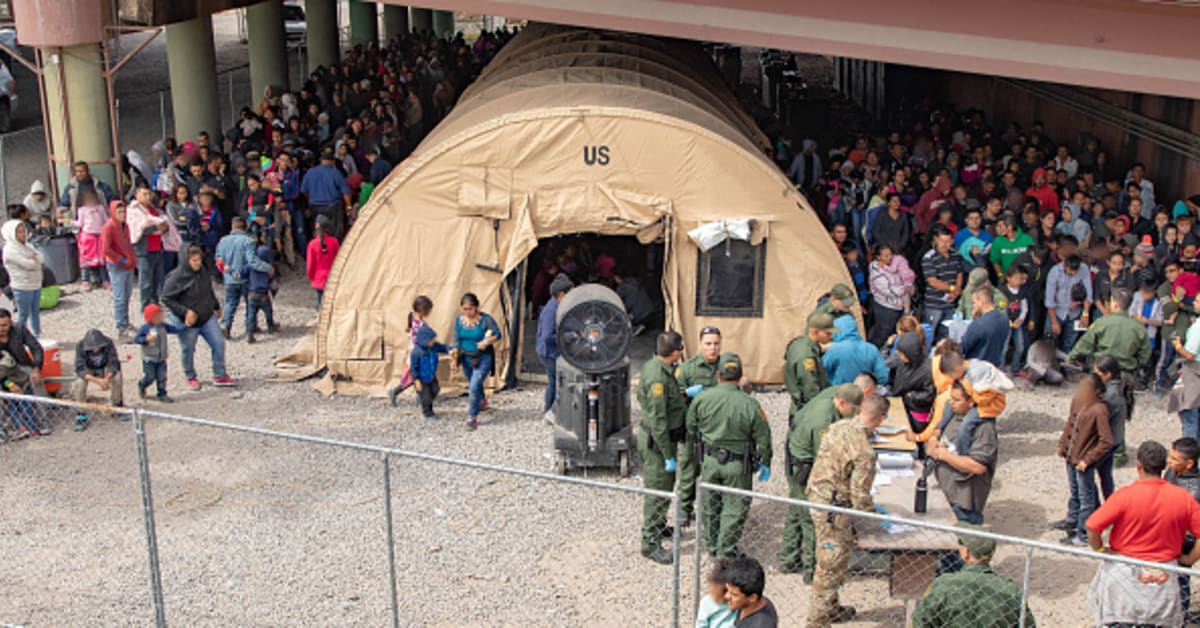
The governor of Coahuila has declared that no more migrants will be allowed into the state as thousands of Central Americans continue their journey through Mexico to the United States.

“We’re at maximum capacity,” Miguel Ángel Riquelme Solís said yesterday, referring to migrant shelters in the northern border city of Piedras Negras.

“We will not allow more migrants to travel through Coahuila because the border is overwhelmed, but neither will we invite chaos and therefore they should go to other states,” he said.

The governor said that providing accommodation, food and services to more than 1,600 migrants who arrived in Piedras Negras yesterday had stretched the capacity of authorities, explaining that as a consequence, “we’ll block the entry to Coahuila.”

The Central Americans, mainly from Honduras but also Guatemala and El Salvador, entered Mexico in the middle of last month as part of a larger caravan of around 2,200. Authorities in Piedras Negras converted several old factories into shelters to house them.

State news agency Notimex said that 51 other migrants had gone to Monterrey, Nuevo León, where authorities provided them with shelter in a gymnasium and humanitarian aid.

Manuel González Flores, general secretary for the state government, said that 35 of the migrants have family members in Nuevo León and intend to remain there, while the others are expected to continue their journey to the United States’ southern border.

At the other end of the country, around 3,800 migrants are currently traveling through Chiapas and yesterday reached Mapastepec, a municipality about 140 kilometers north of the Mexico-Guatemala border.

Hondurans also make up the bulk of that group but are joined by 500 Guatemalans, 300 Salvadorans and 50 Nicaraguans, caravan organizers told the news agency AFP.

The migrants plan to travel to Mexico City, where local authorities are preparing to receive them at the same sports stadium-cum-shelter that has housed previous groups.

From there, they will decide which section of the northern border they will travel to in the hope of claiming asylum in the United States, although U.S. President Donald Trump continues to maintain a hard line on immigration.

In his State of the Union address last night, Trump described the approach of migrants to the border as a “tremendous onslaught” of “large, organized caravans” and continued to press for funding for his long-promised wall.

“The lawless state of our southern border is a threat to the safety, security, and financial well-being of all Americans,” he said.

“We have a moral duty to create an immigration system that protects the lives and jobs of our citizens… In the past, most of us, the people in this room, voted for a wall. But the proper wall never got built. I will get it built.”

In a Twitter post earlier in the day, Trump wrote: “Tremendous numbers of people are coming up through Mexico in the hopes of flooding our southern border. We have sent additional military. We will build a human wall if necessary. If we had a real wall, this would be a non-event!”

As has become his trademark in assessing the U.S. president’s comments about Mexico and border security, President López Obrador said Trump’s address last night was respectful.

“…There were some remarks [I didn’t agree with] but that’s his right, that’s his vision … He was very respectful of our government and we thank him,” he said.

Asked specifically about Trump’s claim that Mexico allows migrant caravans to freely travel through the country, López Obrador simply responded: “We very much respect the point of view of the president, Donald Trump.”

(Source: El Universal (sp), Animal Político (sp), Excelsiór (sp), Noticieros Televisa (sp)).

In other news in Mexico:

AMLO enjoys 86 percent approval rating, strong support for fuel theft strategy

In baseball terminology, 34 percent said AMLO hit a home run. Just one in 10 said he struck out

Two months into his six-year term, President López Obrador enjoys an 86% approval rating, according to a new poll that also shows strong support for the government’s crackdown on fuel theft.

The survey, conducted by the newspaper El Financiero over two days last week, shows that just 13 percent of 410 people polled disapprove of the president’s performance while 1 percent of respondents were undecided.

In contrast, the highest rating ever earned by López Obrador’s predecessor, Enrique Peña Nieto, was just 57 percent, in May 2013, according to pollster Consulta Mitofsky. His lowest rating was 17 percent in February 2017 and he finished his term last November at 24 percent.

But AMLO, as Peña Nieto’s successor is commonly known, can do no wrong in the eyes of citizens.

Even though it caused widespread and prolonged gasoline shortages, the government’s anti-fuel theft strategy was very popular among poll respondents, with 80% saying they considered the move to be very good or good. Just 12% said that the strategy was very bad or bad.

López Obrador’s appearance at daily early-morning press conferences was considered very good or good by 72 percent of those polled, making them the second most popular measure implemented by the new government.

The response to the deadly petroleum pipeline explosion in Hidalgo, which 65% of respondents said was very good or good, was the next most popular government action followed by the decision to sell off government-owned armored vehicles, which garnered 64 percent support.

spot_img

El Chapo Guzmán found guilty after 3-month trial for drug trafficking

The jury deliberated for six days but reached a unanimous decision in the end

by Mexico News Daily

After six days of deliberations, the jury has found Joaquín “El Chapo” Guzmán, former leader of the notorious Sinaloa Cartel, guilty of drug trafficking.

The unanimous verdict was announced today, bringing to an end a three-month trial in which Guzmán’s defense team unsuccessfully attempted to persuade jurors that their client’s role in the cartel was exaggerated by witnesses for the prosecution who were seeking leniency in their own cases.

Held in New York, the trial heard tales of grisly killings, political payoffs, high living and a massive drug-smuggling operation that moved at least 180 tones of cocaine into the United States, along with heroin, methamphetamine and marijuana.

Fifty-six witnesses and hundreds of pieces of evidence — including a diamond-encrusted hand gun belonging to Guzmán — were presented by the prosecution to demonstrate that the former drug lord was indeed directly responsible for smuggling drugs, bribing officials, laundering money and murdering those who stood in his way.

The prosecution described the Sinaloa Cartel as “the world’s largest and most prolific drug trafficking organization.”

The defense, whose case lasted only half an hour, argued that Guzmán was made a scapegoat. The jury was asked to dismiss the testimony of the government’s witnesses, describing them as liars out to save themselves by making deals with authorities.

That reliance on cooperating witnesses “laid bare the corruption of the criminal justice system where freedom is traded by the government in exchange for testimony,” charged A. Eduardo Balarezo, one of Guzmán’s lawyers.

A former U.S. attorney found the case demonstrated a remarkable degree of penetration into the cartel’s activities. John Horn also said the conviction carries a deep meaning.

“There does need to be a conviction of somebody like Chapo Guzmán, both for the symbolism and the pure factor of justice being served,” Horn, who is now in private practice, said in an interview before the verdict.

“It does show that . . . for somebody at his level, justice will be done, it will be served. It’s an incredibly powerful victory . . . for law enforcement.”

As the verdict was delivered at 12:30 p.m. on Tuesday, Guzmán appeared horrified, reported the newspaper Reforma.

His wife’s eyes filled with tears on hearing the decision but Emma Coronel, who has been in the courtroom during most of the trial, gave her husband an optimistic thumbs up as he turned to look at her.
Guzmán, 61, was extradited to the U.S. in January 2017 after his capture in Sinaloa nearly a year earlier. His arrest came six months after a spectacular escape through a 1.5-kilometer tunnel under the Altiplano federal prison in México state.

Sentencing is scheduled for June 25.

Source: Reforma (sp), The Washington Post (en), CBS News (en).

AMLO announces plans for Badiraguato, El Chapo’s hometown

President will open new highway, announce new university and launch tree-planting program

President López Obrador will visit the hometown of convicted drug lord Joaquín “El Chapo” Guzmán tomorrow to inaugurate one government project and formally announce two more.

The president told reporters at his daily press conference that he will travel to the former Sinaloa Cartel chief’s native Badiraguato, a mountainous municipality 80 kilometers north of the Sinaloa capital Culiacán, to open a new stretch of highway that runs to Guadalupe y Calvo, a municipality in Chihuahua.

López Obrador said he will also announce the establishment of a new public university in Badiraguato that will specialize in forestry, explaining that the region has a lot of potential in the sector.
“Thirdly, the Sembrando Vida [Sowing Life] program is going to go ahead,” he added, referring to the government’s ambitious tree-planting project.

“We’re going to plant [trees] in the region, 50,000 hectares just next to Badiraguato…”

López Obrador said the program will create 20,000 permanent jobs in the sierra region of Sinaloa and Chihuahua.

Asked about Guzmán’s conviction on drug trafficking charges Tuesday in a New York federal court, López Obrador said yesterday that it was a lesson that a life of crime and easy money doesn’t bring happiness.
Today, he said, Badiraguato shouldn’t be stigmatized just because El Chapo grew up there.

“Towns mustn’t be stigmatized, you can’t stigmatize Atlacomulco because the so-called Atlacomulco group is from there,” López Obrador said, referring to Institutional Revolutionary Party (PRI) politicians, including former president Enrique Peña Nieto, who hail from the México state municipality.

“Badiraguato is a town with history, a lot of people who deserve respect live there,” he added.

The leftist political veteran, who last month said that the drug war is over and arresting drug lords is no longer a priority, explained that the aim of the new government projects and programs in Badiraguato and the country as a whole is to provide options for citizens – especially young people – to earn an honest living and not be tempted into a life of crime.

“We’re seeking to regenerate public life,” López Obrador said.

Source: Reforma (sp)

spot_img

US pulls out of Mexico tomato agreement over growers’ complaints

Mexico’s share of the US tomato market increased from 32 percent in 1996 to 54 percent in 2017

by Mexico News Daily

The United States intends to withdraw from a six-year-old trade agreement with Mexico on tomatoes, the U.S. government said yesterday, a move that clears the way for new tariffs to be imposed.

The United States Department of Commerce said in a statement that on Feb. 6 it notified the Mexican signatories to the 2013 Suspension Agreement on Fresh Tomatoes from Mexico of its plan to withdraw.

The agreement averted a trade war over tomatoes in 2013 by establishing a floor price for the Mexican product in the United States and barring U.S. producers from pursuing anti-dumping charges against Mexican exporters.

Once the 90-day notification period expires on May 7, the United States will resume an anti-dumping investigation into Mexican tomatoes, which could lead to new duties on the fruit, higher prices for U.S. consumers and possible retaliation from Mexico.

Secretary of Commerce Wilbur Ross said the withdrawal decision follows complaints from United States tomato producers, including the Florida Tomato Exchange, that they are being undercut by Mexican imports.

“We have heard the concerns of the American tomato producing industry and are taking action today to ensure they are protected from unfair trading practices,” Ross said.

“The Trump administration will continue to use every tool in our toolbox to ensure trade is free, fair, and reciprocal.”

Forty-six members of the United States Congress also wrote to Ross last week to urge him to withdraw from the agreement.

More than half are from Florida, a large tomato growing state and one that is politically important for U.S. President Donald Trump.

The lawmaker said that Mexico’s share of the United States tomato market increased from 32 percent in 1996 to 54 percent in 2017. In the same period, U.S. farmers’ market share declined from 65 percent to 40 percent.

The Congress members said that since the United States government first agreed to suspend anti-dumping cases in 1996, hundreds of U.S. tomato producers have been forced out of business.

“The industry will continue to shrink if the status quo is maintained,” the lawmakers wrote.

The U.S. Department of Commerce said that it started negotiations with Mexican signatories in January 2018 to revise the tomato agreement but “despite committed efforts from all sides, significant outstanding issues remained.”

The department said that if its anti-dumping investigation finds that tomatoes were sold at less than fair value, the United States International Trade Commission (ITC) will investigate to determine damage to the U.S. tomato industry.

“If both Commerce and the ITC issue affirmative final determinations, an anti-dumping duty order will be issued,” the statement said.

Mexican foreign trade undersecretary Luz María de la Mora said in a television interview that irrespective of the findings of the United States investigations, Mexico has the legal instruments – backed up by international agreements – to defend Mexican tomato growers and their exports.

Mexico exported just over US $2 million worth of tomatoes to its northern neighbor in the first 11 months of 2018 – around half of total production.

The possibility of the introduction of tomato tariffs later this year opens up a new source of trade conflict between Mexico and the United States.

When the latter country imposed tariffs on Mexican steel and aluminum last year, Mexico struck back swiftly by introducing duties on U.S. pork, apples, cheese, bourbon and steel flats, among other products.

Source: Politico (en), Reuters (en), Eje Central (sp)

Business groups say government inaction on metal tariffs a grave mistake

Safeguard duty on imports has not been renewed; steel industry unprotected

The federal government’s decision not to renew a 15 percent safeguard duty for imported steel and protect the Mexican industry is a grave mistake, two business groups have warned.

In a joint statement directed at President López Obrador and Economy Secretary Graciela Márquez, the National Chamber of the Iron and Steel Industry (Canacero) and the Confederation of Industrial Chambers (Concamin) said they were concerned about the Jan. 31 expiration of the 15 percent safeguard for steel imports from countries with which Mexico doesn’t have a trade agreement.

The safeguard measure was first put in place in October 2015 and was subsequently renewed every six months before the current government allowed it to lapse on Feb. 1.

Canacero and Concamin said the decision not to renew the safeguard measure could lead to Mexico being used as an interim destination for goods headed to the United States.

Its renewal, they said, is a fundamental factor in having the United States exclude Mexico from the tariffs on steel and aluminum that were imposed on June 1 last year.

Non-renewal will result in Mexico being seen as a “triangulation platform” and the respective 25 percent and 10 percent tariffs won’t be removed, the business groups said.

That would place the approval of the new United States-Mexico-Canada (USMCA) trade agreement at risk because the majority of members of the United States House of Representatives have placed the elimination of the measure in North America as a condition for their approval of the pact, Canacero and Concamin said.

Because there are no negotiations currently under way to have the tariffs removed, Canacero president Máximo Vedoya said, the Mexican steel industry is unprotected.

In contrast, other countries have put up adequate barriers to protect their steel sector, he said.

spot_img

EstrellaTV Opens Its Doors to Students

Empowering the community through education

by the El Reportero’s news services

EstrellaTV kicked off this year’s effort on Feb. 11 by hosting 13 young students from The Orange County Community Housing Corporation (OCCHC).

The students, who participate in the organization’s SteppingUp College Awareness Program, had an opportunity to get a behind the scenes glimpse of how television broadcasting is made and the many career opportunities available in the industry.

Students were able to interact with on-air talent, producers and technical personnel as they navigated master control rooms and various studio sets, and got to experience a live taping of a news promo segment.

The Orange County Community Housing Corporation (OCCHC) is a non-profit organization whose mission is to transition extremely low-income families to greater self-sufficiency by assisting with housing and education.

French fire fighters and police officers certified the security of the Museum of Visual Arts in Uruguay for an exhibition of the Spanish painter Pablo Picasso”s works, Culture Minister Maria Julio Muñoz confirmed.

The exhibition will take place from March 29 to June 30, as a result of an agreement signed on Feb. 14 between the Museum of Paris, which holds Picasso’s works, and the Uruguayan institution.

In order to reach the agreement, the two French agencies inspected the conditions of the museum that will exhibit Picasso’s paintings in Montevideo.

Muñoz made it clear that Montevideo will be only place in the Americas where the exhibition will take place, and it will tour other continents. She added that the museum was chosen because its director, Enrique Aguerre, enjoys great prestige among international artists.

Uruguayan Museum certified to host Picasso exhibition

French fire fighters and police officers certified the security of the Museum of Visual Arts in Uruguay for an exhibition of the Spanish painter Pablo Picasso”s works, Culture Minister Maria Julio Muñoz confirmed.

The exhibition will take place from March 29 to June 30, as a result of an agreement signed on Feb. 14 between the Museum of Paris, which holds Picasso’s works, and the Uruguayan institution.

In order to reach the agreement, the two French agencies inspected the conditions of the museum that will exhibit Picasso’s paintings in Montevideo.

Muñoz made it clear that Montevideo will be only place in the Americas where the exhibition will take place, and it will tour other continents. She added that the museum was chosen because its director, Enrique Aguerre, enjoys great prestige among international artists.

Also in Uruguay:

Uruguayan wins Best Director Award at Sundance

Uruguayan Lucia Garibaldi wins the award for best director at the prestigious Sundance International Film Festival with the film The Sharks, the first one representing her country in this contest.

The young actress Romina Bentancur stars the film in the role of a teenager who lives on the Uruguayan coast and gets ready to receive a flood of tourists while facing the vicissitudes of amorous awakening.

Before the competition, she said, she proposed to work with non-professional actors and before choosing her, she saw about 50 videos, and discovered in her ‘one of those faces, those voices, those ways of moving that are always finding something new.’

Garibaldi, graduated from the Uruguayan Film School, thanked the official support she received to finish the film and announced that she has her second feature film, to be called The Last Queen.

She received this award a day after her compatriot Alvaro Brechner won in Seville the Goya for Best Screen Adaptation in the Uruguayan-Argentinean-Spanish co-production A Twelve-Year Night.

The actor Robert Redford founded the Sundance Festival in Utah, United States to open doors to quality art productions lacking powerful commercial scaffolding.

spot_img

Children’s Concerts at Kohl Mansion

An interactive program for audiences of all ages

Compiled by the El Reportero’s staff

VNote Ensemble – Hailed for their spirited performances and fascinating fusion of jazz with Latin and folk rhythms, the VNote Ensemble gives voice to the hidden treasure that is Venezuelan music as they explore its connection to North American jazz.

Blending the infectious rhythms of joropo, swing, gaita, soul, be-bop, and calypso (among many others), the VNote Ensemble defiantly ignores musical boundaries. Exquisite arrangements and unique compositions, colors, and rhythms blend together to create a truly unique sound sure to make children of all ages sing and clap for joy!
Wednesday, Feb. 27, 2019 at Kohl Mansion. Two 45-minute shows: 10:25 a.m., repeats at 11:35 a.m.

Paintings by Beryl Landau & Anthony Holdsworth
Holdsworth features the start of a new series entitled “Day and Night in the Mission”. Using a LED lamp attached to his easel, he documents locations as they transition into night.

The Mission District offers a unique window on Latin America while simultaneously enriching the culture of San Francisco. He works on site to channel the unique energy of this community and also to bear witness to the changes that are being forced on it by gentrification.

Beryl Landau calls her work “symbolic landscape”. The acrylic paintings in this show depict geographical locations but evoke inner feelings. Each image draws the viewer into a particular space and mood. Landau’s clear colors range from high contrasts to subtle gradations.

Images of changing San Francisco are prevalent in her recent work. The paintings often convey the juxtaposition of nature and the modern world.

Alley Cat Gallery, 3036 24th Street, San Francisco. Exhibition from March 2 to 31
Reception: March 2, 7 to 9 p.m.

Abel Sanchez & the Song For Cesar Allstar Revue, introducing The Paper Thin Band
An event you can’t miss, on Saturday, March 2. Advance: $20/ Door: $25
Doors open 7 p.m. Show a 8 p.m. At Club Fox- 2209 Broadway, Redwood City. Call 415-285-7719 or write DrBGMalo@aol.com.

What’s New At The Presidio – Spring, 2019
March – May Events Announced

It’s not too early to plan a spring visit to the Presidio, San Francisco’s urban national park with nearly 1,500 acres of space in which to play, right at the foot of the Golden Gate Bridge. With two historic boutique hotels, Lodge at the Presidio and Inn at the Presidio, delicious restaurants and various activities, the Presidio can be a vacation destination in itself, or added to any San Francisco itinerary as a calm oasis close to the action of downtown.

Nature comes alive in the Presidio in springtime, and visitors are always welcome to stop by the Presidio Visitor Center to pick up a hiking map and suggestions for exploring the park’s free picnic areas, overlooks and trails

Transportation in the Park

The free PresidiGo Shuttle takes visitors from two locations in downtown San Francisco to the Presidio, and PresidiGo’s Around the Park service offers visitors two routes within the park. San Francisco MUNI buses access the Presidio as well. Options for bike rental include Sports Basement and Electric JUMP Bikes. See: https://www.presidio.gov/transportation

The popular Presidio Picnic mobile food extravaganza, sponsored by the Presidio Trust and Off the Grid, returns to the Main Post lawn each Sunday beginning March 31. Self-guided adventures in nature always await, especially in spring as the park’s flora and fauna awake to the season.

spot_img

Democracy vs. Republic

NOTE FROM THE EDITOR:

Dear readers:

A reply to a Facebook political posting regarding democracy and republic caused a small argument with another FB friend, which indicated to me that there is lack of information in many people regarding the difference between the two. Because I believe every citizen should know this, I went and found the article below, which I hope will bring some light to those who lack information about the difference between democracy and republic. – Marvin Ramírez

by unknown author

Nowadays, many people are not clear on the concepts “Democracy” and “Republic” and often confuse them.
The term “Democracy” refers to a form of government. Our country, adopted the Representative Democracy, by means of which, the authorities are elected by the direct vote of the citizens (articles 1 and 22 of the C.N.)
On the other hand, a “Republic” is a political system, based on the rule of law (Constitution) and the equality of all its inhabitants before the law (articles 15 and 16 of the C.N.)
In modern democracy, the so-called “rule of the majority” plays a decisive role, that is, the right of the majority to adopt its position when there are various proposals.
However, this position should never affect the fundamental rights of minorities or individuals.
For a true democracy to work, there must be (for example): periodicity in the positions, publicity of the acts of government, responsibility of politicians and public officials, sovereignty of the law, respect for opposing ideas, equality before the law, law, suitability as a condition of access to public office, etc.

For a true republic to work, there must be real independence and control among the powers that comprise it: The Executive (President), The Legislative Power (Deputies and Senators) and the Judiciary (Supreme Court and other lower courts).

This Division of Powers, emerged as a way to protect the citizen against the State.
In antiquity, these powers were monopolized by the absolutist monarchy which was attributed the abuse of power in dealing with people (despotism).

Some disturbing questions now arise.

A government can be democratically elected (by legitimately winning elections), but its exercise may not be elected if, for example, it does not meet the needs of the population.

Likewise, it can happen that a ruler is democratic in its origin and in its exercise, but not republican in its management if, for example, it does not ensure or ignore the division of powers.
In our daily reality, there is ample evidence to worry about the critical path our country has taken.
These are some of them: the Congress of the Nation delegates faculties to the president when this is expressly prohibited in the CN, the ruling party does not respect or heed the opinions of the opposition, the executive does not respect the judicial decisions and signs decrees being in functions the legislative chambers, subsidies and patronage are paid with the contribution of agonized retirees, the media are persecuted and freedom of expression is threatened (of those who think differently from the government), wills are bought, indices are falsified official, confidential information and public money are used for political purposes, confiscatory taxes, etc., etc. are applied.

It is regrettable to observe how institutions are despised and, at the same time, it is clear how justice is not willing to take action on these issues while the National Congress remains indifferent.

Can a government then be democratic and not republican?

We have contemporary examples such as Venezuela, Ecuador and Bolivia, where popular leaders who have come to power through the support of majorities in democratic processes, have ended the rule of law and have turned the judicial system and the forces of order into instruments of repression and political persecution.

Strictly speaking, these governments have not ceased to be democratic. After all, the abuses they have committed have had the tacit or explicit approval of the majority of their respective populations.

That is why, being despotic and antirepublicans boast of being democratic. And they use democracy as an argument, in the strict sense of support of the majorities through the ballot boxes, to put an end to the Republic.

So that our country does not follow this path, we must “educate the sovereign”, that is, the citizen.
The population should understand that democracy is not extinguished in the act of election of a majority, but must be practiced every day respecting the institutions and all sectors of the people, preventing circumstantial majorities from abusing minorities.

It is precisely to avoid these evils that the Republic and the Powers Division were created.
Currently the lack of knowledge is such that people do not know that the National Deputies and Senators represent the interests of the people of the provinces that elected them (articles 45 and 54 of the CN). An immense majority believes that the function of these delegates is to defend or oppose the government, by raising their hands and blindly obeying the bloc leader.

It is the Republic that gives the framework for democracy to really work and it is the division of powers that enables the rights and guarantees of citizens to be respected. It is in this way that Democracy can act correctly.

Nowadays, it seems that in practice there is no other power than the executive ruling at will by decree, and that the Republic is a simple euphemism that only serves to justify the excesses of the current government.

spot_img

A One-Day Festival Will Raise Funds for Undocumented Law Students

SAN FRANCISCO, CA – The Dreamer Fund, a Bay Area project focused on advocating for education equity and fundraising for undocumented law students, announced it would be launching its 2nd annual signature event, #UndocuFest in 2019. The Dreamer Fund, which prides itself on creative mobilizing and community engagement, will hold #UndocuFest for a second time in a row at El Rio in the Mission District of San Francisco, California on March 9, 2019 from 2:00 p.m. – 8:00 p.m. There will be a $5 cover charge to enter the festival, but attendees can also donate more to the cause. No one will be turned away for lack of funds!

The Dreamer Fund has a scholarship fund and 100% of the proceeds from #UndocuFest will go to undocumented law students, to help them with tuition-based scholarships, emergency-aid scholarships or bar scholarships. “We are absolutely overjoyed to be able to bring #UndocuFest 2019 to the San Francisco area for a second year in a row,” says Founder and Co-Director of the Dreamer Fund, Monica Valencia.

“Our inaugural event was such a huge success and our hope as a community organization is to be able to bring back that same energy to this event, as we celebrate the immigrant community – and more than that – as we stand together in solidarity for the refugee and asylum seekers that have been violently targeted at the U.S.-Mexico border.” The Dreamer Fund has been fundraising and creating a space for much needed dialogue surrounding the issues of immigration reform, immigrant rights, education equity, and the legal impacts of Deferred Action for Childhood Arrivals (DACA), since 2016. The Dreamer Fund also launched a mentorship program that will help undergraduate students in applying to law school and navigating their financial obligations.

More recently, Dreamer Fund members have been holding workshops, panels, and presentations at local organizations and educational institutions geared towards sharing personal narratives and experiences in navigating graduate-level education with other students who want to attend law school or graduate school. They also offer assistance with DACA renewals and “Know-Your-

Rights” training to communities, organizations, and educational institutions at no cost.

“It is so important to continue to build our own platforms of change in our communities,” says Gabriela García, Co-Director of the Dreamer Fund. “In our individual and collective fights for equity and justice,
we also need a time to celebrate and embrace one another for all that we give and all that we endure.

#UndocuFest is exactly that – a space to celebrate one another and to honor our most vulnerable communities. We hope to see you all there.”

To learn more about #UndocuFest or to book an interview with a Dreamer Fund executive board member, contact Zulma Muñoz at 415.741.3239 or by email at hello@dreamerfund.org. You can also
visit the Dreamer Fund at www.dreamerfund.org.

spot_img

Happy February! “Love is in the air”

Compiled by the El Reportero’s staff

Salsa Extra performs music from across Latin America. Eileen Torrez on vocals, Avo Chalaganyan on drums, Amy Levine on piano, Sean Norris on saxophone, Jules Anastasia on percussion, and Eli Torrez on bass.

At Cha Cha Cha, Tuesday, Feb. 12, 8 p.m. to 10 p.m., 2327 Mission Street at 19th, San Francisco.

SF Young Professionals organize fundraiser for Secretary Julián Castro

Julian Castro, who served as the mayor of his native San Antonio, Texas from 2009 until he joined President Obama’s cabinet in 2014 as the 16th United States Secretary of Housing and Urban Development, is running for president of the United States.

Castro, who grew up in an activist family in San Antonio, studied at Stanford University and Harvard Law School, and was elected to the San Antonio City Council when he was just 26.

Castro announced he is running in the 2020 presidential election.

The fundraiser will take place on Tuesday, Feb, 12, at 6:30 p.m,, at 111 Minna Street, San Francisco.

Paintings by Beryl Landau & Anthony Holdsworth

Holdsworth features the start of a new series entitled “Day and Night in the Mission”. Using a LED lamp attached to his easel, he documents locations as they transition into night.

The Mission District offers a unique window on Latin America while simultaneously enriching the culture of San Francisco. He works on site to channel the unique energy of this community and also to bear witness to the changes that are being forced on it by gentrification.

Beryl Landau calls her work “symbolic landscape”. The acrylic paintings in this show depict geographical locations but evoke inner feelings. Each image draws the viewer into a particular space and mood. Landau’s clear colors range from high contrasts to subtle gradations.

Images of changing San Francisco are prevalent in her recent work. The paintings often convey the juxtaposition of nature and the modern world.

Alley Cat Gallery, 3036 24th Street, San Francisco. Exhibition from March 2 to 31
Reception: March 2, 7 to 9 p.m.

Abel Sanchez & the Song For Cesar Allstar Revue, introducing The Paper Thin Band

An event you can’t miss, on Saturday, March 2. Advance: $20/ Door: $25

Doors open 7 p.m. Show a 8 p.m. At Club Fox-  2209 Broadway, Redwood City. Call 415-285-7719 or write DrBGMalo@aol.com.

What’s New At The Presidio – Spring, 2019

March – May Events Announced

It’s not too early to plan a spring visit to the Presidio, San Francisco’s urban national park with nearly 1,500 acres of space in which to play, right at the foot of the Golden Gate Bridge. With two historic boutique hotels, Lodge at the Presidio and Inn at the Presidio, delicious restaurants and various activities, the Presidio can be a vacation destination in itself, or added to any San Francisco itinerary as a calm oasis close to the action of downtown.

Nature comes alive in the Presidio in springtime, and visitors are always welcome to stop by the Presidio Visitor Center to pick up a hiking map and suggestions for exploring the park’s free picnic areas, overlooks and trails

Transportation in the Park

The free PresidiGo Shuttle takes visitors from two locations in downtown San Francisco to the Presidio, and PresidiGo’s Around the Park service offers visitors two routes within the park. San Francisco MUNI buses access the Presidio as well. Options for bike rental include Sports Basement and Electric JUMP Bikes. See: https://www.presidio.gov/transportation

The popular Presidio Picnic mobile food extravaganza, sponsored by the Presidio Trust and Off the Grid, returns to the Main Post lawn each Sunday beginning March 31. Self-guided adventures in nature always await, especially in spring as the park’s flora and fauna awake to the season.

spot_img