Tuesday, September 1, 2026
Home Blog Page 147

Journalist opens USB letter bomb in newsroom

Journalists across Ecuador have been targeted by explosive devices sent through the post


Shared from/by Antoinette Radford

BBC News


One presenter, Lenin Artieda, was injured when he opened the envelope in the middle of the newsroom.

He said the explosive device looked like a USB drive. He plugged it into his computer and it detonated.

The Ecuadorean attorney-general’s department confirmed it had opened a terrorism investigation into the letters on Monday.

It did not name the specific news outlets targeted. However, at least five different organizations across Ecuador were sent the letters.

The government has condemned the attacks, describing freedom of expression as “a right that must be respected”.

“Any attempt to intimidate journalism and freedom of expression is a loathsome action that should be punished with all the rigour of justice,” it said in a statement.

The interior minister, Juan Zapata, said the devices were all sent from the same town. Three were sent to media outlets in Guayaquil and two to the capital, Quito.

While Artieda was injured by the device, others sent through the post failed to explode or were never opened.

Police carried out a controlled detonation of one of the devices sent to TC Television, prosecutors confirmed.

Ecuador’s head of forensic science said they contained “military-type” explosives.

Ecuador has experienced an increase in violence, which its President, Guillermo Lasso, said is a result of competition between drug trafficking gangs for territory and control.

The Andean country, which is used as a cocaine-smuggling route from neighboring Peru and Colombia, has seen a sharp rise in murders and gang-related crime in recent months.

Guayaquil, Ecuador’s second-largest city, where three of the explosives were sent, has experienced dramatic levels of violence including decapitated bodies hanging from pedestrian bridges and deadly prison riots between rival gangs.


Gulf Clan: Colombia suspends ceasefire with drug cartel


Colombian President Gustavo Petro has suspended a ceasefire with the country’s main drug trafficking cartel, the Gulf Clan


by Vanessa Buschschlüter

BBC News


He accused it of “sowing anxiety and terror” and ordered the security forces to reactivate their military operations against the criminal gang.

The ceasefire had been agreed in December as part of the president’s plan for “total peace” in Colombia.

Its suspension is a major blow to Mr Petro’s attempt to end armed conflict.

His policy is radically different from that from his predecessor in office, Iván Duque, who tried to secure peace by stepping up military operations against Colombia’s illegal armed groups.

Mr Petro is instead trying to negotiate an end of hostilities with dozens of criminal organisations.

On 31 December 2022, the government had announced that it had reached a bilateral ceasefire with the Gulf Clan as well as rebels of the National Liberation Army (ELN) and dissidents from the Revolutionary Armed Forces of Colombia (Farc) among others.

But this past week, President Petro has accused the Gulf Clan of breaking the ceasefire, blaming it for an attack on an aqueduct and saying it had incited protests from informal gold miners.

In a tweet, he also accused Gulf Clan members of shooting at police officers.

“From this moment, there is no ceasefire with the Gulf Clan. The security forces need to act immediately against the structures of this mafia organisation,” he wrote.

The head of Colombia’s police force, Henry Sanabria, said that more officers would be mobilised and sent to the areas where the Gulf Clan is most active.

The cartel has a presence in many of Colombia’s provinces and has established international connections with other criminal organisations, with whom it collaborates to smuggle drugs from Colombia to the US and as far away as Russia.

It is also engaged in people-smuggling and illegal goldmining.

The capture of its leader, Dairo Antonio Úsuga, also known as Otoniel, in 2021 weakened the structure of Gulf Clan, but cells of the group of have continued to operate.

President Petro has said that there is “obviously no possibility of negotiation” while the Gulf Clan continues to engage in illegal activities and attacks.

spot_img

Amid border security tensions, AMLO hosts US lawmakers

photo: A U.S. congressional delegation led by Senator John Cornyn returned to the U.S. on Monday after meeting with President Andrés Manuel López Obrador and Mexican officials in Mexico City to discuss security and development cooperation, among other topics. (Twitter / @lopezobrador)


by Mexico News Daily


President López Obrador said Monday that migration, development cooperation and security were among the topics discussed at his meeting with 12 United States lawmakers in Mexico City on Sunday.

“The meeting was very good, very respectful, and we reached agreements to continue working together with respect for our sovereignties,” he told reporters at his regular morning news conference.

The U.S. delegation was led by Republican Senator John Cornyn and included Democratic Senator Chris Coons, Democratic Representative Veronica Escobar and Republican Representative María Elvira Salazar, among other legislators. U.S. Ambassador to Mexico Ken Salazar and other embassy officials were also in attendance.

López Obrador was accompanied by several of his cabinet ministers and other officials, including Pemex CEO Octavio Romero and National Water Commission chief Germán Martínez Santoyo.

According to a statement issued by the president’s office, López Obrador and the Republican and Democratic lawmakers held “an open and constructive dialogue to deal with common challenges that both countries face.”

The meeting came after some Republican lawmakers proposed the deployment of the United States military in Mexico to combat Mexican cartels and the flow of drugs, especially fentanyl, into the U.S. López Obrador has addressed these statements himself, calling them an offense to the Mexican people.

However, López Obrador said Monday that that proposal was not considered at Sunday’s meeting in the National Palace.

“It was an initiative of some legislators who think they can get votes in the United States with this, by blaming Mexico for what’s unfortunately happening in the United States,” he said.

“A lot of young people are dying due to the consumption of drugs, especially fentanyl. That’s something we regret, but it’s been explained to them that fentanyl isn’t produced in Mexico, this is a chemical that is brought in from Asia, that arrives in Mexico to be transported to the United States, but which also arrives directly to the United States,” López Obrador said, despite evidence that the synthetic opioid is indeed manufactured in Mexico.

At the meeting with the U.S. lawmakers, Mexican Security Minister Rosa Icela Rodríguez reported that 2,263 kilograms of fentanyl were seized in Mexico last year.

The statement by the president’s office also noted that Rodríguez highlighted that 6,115 kilograms of the drug have been confiscated since the current government took office. The figure has been mentioned frequently by federal officials in recent times as they seek to demonstrate that Mexico is serious about stopping the flow of the powerful narcotic to its northern neighbor.

Among the high-ranking Mexican officials at Sunday’s meeting was Navy Minister José Rafael Ojeda Durán, who “offered details on the strategy to strengthen customs and the maritime and ports protection that is being carried out in the country,” according to the president’s office.

The current government put Mexico’s ports and customs stations under the control of the military as part of efforts to stamp out corruption.

The statement added that López Obrador acknowledged U.S. President Joe Biden’s work on migration issues at Sunday’s meeting.

López Obrador praised his counterpart for opening up new legal pathways for Cubans, Haitians, Nicaraguans, and Venezuelans to enter the United States and “reaffirmed that Mexico will continue promoting development in Central America and the Caribbean with programs like Sembrando Vida [Sowing Life] and Jóvenes Construyendo el Futuro [Youths Building the Future].”

The former is a reforestation and employment program, while the latter is an apprenticeship program. Mexico has expanded both initiatives to northern countries in Central America.

López Obrador also highlighted the government’s investment in Mexico’s south and southeast through projects such as the Maya Train railroad, the new Pemex refinery on the Tabasco coast, and the Isthmus of Tehuantepec trade corridor.

He also spoke about “various projects of United States companies in the region, including energy ones,” according to the statement, which made no mention of the ongoing dispute between Mexico and the U.S. over the Mexican government’s energy policies, which the U.S. alleges violate the USMCA trade agreement by favoring state-owned energy companies.

According to a statement posted to Senator Cornyn’s website, the U.S. delegation “received briefings from U.S. intelligence officials, the U.S. Drug Enforcement Administration, and U.S. Ambassador to Mexico Ken Salazar on the United States’ security posture with regards to Mexico, recent killings of Americans in the country, efforts to stop drug trafficking, and illegal immigration at the U.S.-Mexico border.”

“The delegation shared their concerns with Mexico’s handling of these issues with President López Obrador and members of his administration,” the statement added.

Given that the United States and Mexico share a border, Cornyn said, the two countries “should have a shared interest in working together to address the security challenges that put American and Mexican lives at risk, including drugs, murderous cartels, and unchecked migration.”

“Our delegation made clear to President López Obrador that his administration must do more to address these issues so that we can maintain our historically strong economic and cultural partnership, and I am hopeful that our candid conversations will lead to collaborative solutions that make both countries safer and more prosperous,” the senator said.

López Obrador said Monday that “there is a framework of understanding in which there is cooperation on the issue of security” with the United States.

He stressed, however, that the bilateral security arrangement is “regulated so that agents of United States government agencies” — such as the Drug Enforcement Administration and the Federal Bureau of Investigation — cannot enter Mexico “without the knowledge of the Mexican government, … as previously happened.”


spot_img

“It is completely undemocratic”: López Obrador rejects the possible arrest of Trump

RT – Latin America


The former US president assured that he will be arrested this Tuesday and called on his followers to protest

The president of Mexico, Andrés Manuel López Obrador, spoke on Tuesday about the possible arrest of former US president Donald Trump, something he described as “undemocratic.”

“Former President Trump is declaring that they are going to arrest him, I think today, for a supposed love affair,” López Obrador said during his morning press conference.

For the Mexican president, if the arrest takes place, the reason for this process would be the Republican’s political ban: “We are not sucking our fingers, which is so that it does not appear on the ballot,” he said.

“If I say this it is because I suffered from the fabrication of a crime, because they did not want me to be a candidate and that is completely undemocratic, because the people are not allowed to be the ones to decide,” he commented.

What Trump assures

The Mexican president spoke about it, after Trump assured that he will be arrested this Tuesday and called on his followers to protest.

“The main Republican candidate and former president of the United States will be arrested on Tuesday of next week. Protest, take back our nation!” Trump said through his Truth Social social network last Saturday, after denouncing that “American patriots They are being arrested and held captive.”

Trump could be charged with alleged felony falsifying business records and violating campaign finance laws by arranging a $130,000 payment to adult film actress Stormy Daniels through her then-attorney, Michael Cohen, to change from his silence about alleged sexual encounters with the tycoon in 2006, which the former president denies.

Should he be indicted, it would be the first time a former US president has been charged and could turn his race upside down for the 2024 presidential election.

If he is charged, the way law enforcement prosecutes the former president could be unlike any other defendant in the country’s history. Although you may be fingerprinted and have a photo taken for police records, you will not be taken in handcuffs before TV cameras or placed in a cell. He will likely remain in the custody of Secret Service agents assigned to protect him, Bloomberg reported, citing a source familiar with the matter.

spot_img

San Francisco Public Library presents the play “Dancing at Home”                                                                              

by Magdy Zara


The San Francisco Public Library offers a series of fun and educational activities for this spring break, among which is the staging of the play Dancing at Home.

Dancing at Home is about two cousins: Margie and Lupe, both 5th grade students learning about family, dance, and themselves. Margie is proud to have been born in the United States. Her family is from Mexico and her cousin, Lupe, comes to California to live with them. Meanwhile, Lupe struggles with a new country and language.

This work will be exhibited next Tuesday, March 28, at the SF Main Library Children’s Center, at 2 p.m.; Wednesday, March 29, at 4 p.m., at the Bernal Heights branch; and on April 1 at the Portola branch, at 2 p.m.

To make reservations for school groups, call (415) 557-4554 in advance to reserve space.


Santos: Skin with Skin will be presented soon in California

Santos Piel con Piel, is a film production that seeks to recognize the life and work of John Santos, who is an excellent percussionist, a native of San Francisco, California, folklorist, community activist, and seven-time Grammy nominee.

This documentary will premiere at Sweetwater Music Hall in Mill Valley, next Wednesday, March 29, at 7 p.m. After the projection of this masterful work there will be a live musical show with Santos and Friends.

Tickets will cost $15, for people over 65 $13 and for young students under 21 $7.50.


MNC commemorates César Chávez’s birthday

This March 31 is the birthday of César Chávez, so the MNC invites the community in general to a breakfast and the screening of two films to commemorate this important date.

The films Si Se Puede and Fighting for Our Lives will be screened. Both powerful documentaries that captured the real story of the farm worker movement in the United States.

The activity will take place at 362 Capp Street, San Francisco, California, on Thursday, March 30, at 8:30 and 11:30 a.m.


Carmen & Frida: Folkloric Ballet

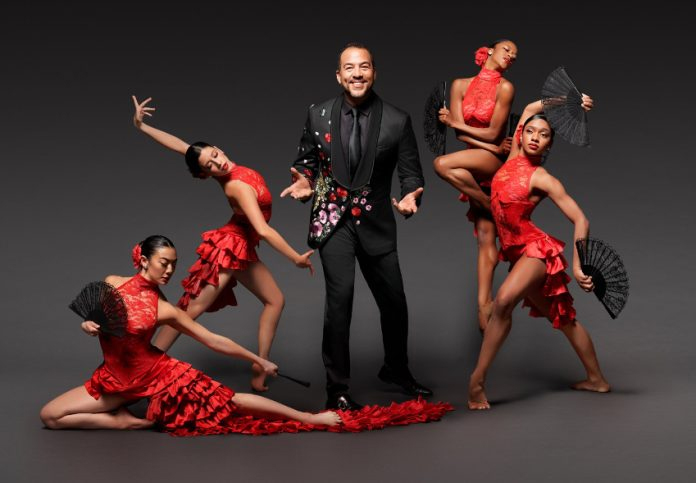
Within the framework of the 55th anniversary of the Peninsula Ballet Theatre, the Ensemble Ballet Folklorico de San Francisco of the artistic director, Zenón Barrón, presents two magnificent dance works, Carmen & Frida.

This is the story of two women, one fictional and one real, but both immortalized, told through dance and music that will awaken your passion, touch your heart and inspire your courage.

The act will be presented on April 1 and 2, at 7 and 3 p.m. respectively, at the San Mateo Performing Arts Center, located at 600 N Delaware St.San Mateo, CA. Tickets will start at $25 and are now available for purchase online at peninsulaballet.org.

spot_img

Few undocumented CA college students receive state aid

Happy, education and man with a laptop in class, learning scholarship and studying at university. Knowledge, smile and student with a computer at college for research, connection and project.

by Suzanne Potter

California News Service


Just 14 percent of California’s 94,000 undocumented college students receive some form of state financial aid, according to a new report.

Researchers from the California Student Aid Commission found that only half of the people who are eligible for state aid for higher education even apply.

Marlene García, the commission’s executive director, said a lot of community college undocumented students apply to get their fees waived for coursework, but don’t realize they could get a Cal Grant to help with living expenses.

Paperwork appears to be one of the issues.

“They may be applying for the College Promise, and they think that they’ve completed the financial aid application,” said García. “But then, they find out they have to complete the California Dream Act application. And sometimes, you’ll lose students in that process.”

Starting this year, state law requires all high school seniors to fill out the Free Application for Federal Student Aid or the California Dream Act application, so school counselors are going to have their hands full.

García said many steps could be taken at the federal level to help undocumented students, including making the Pell Grant available, or reviving the DACA program and extending its provisions to allow students to have the right to work.

“If you’re an undocumented student and you don’t have work authorization to get a job after you graduate from college,” said García, “that’s going to raise the question about where the value proposition is for a college degree for you.”

Another barrier is the requirement that undocumented students sign an affidavit that they attended at least three years of high school in California. A new bill now in the California Legislature would integrate that affidavit into the California Dream Act application.

Support for this reporting was provided by Lumina Foundation.


Advocates Launch Campaign to Prevent Harmful Health-Care Mergers

Billboards have gone up across California warning about the negative effects of unchecked mergers in the health-care system. The Protect California Patients campaign is a coalition of more than 30 organizations that support Assembly Bill 1091, which would give the attorney general more oversight on mergers worth more than $15-million.

Rachel Linn Gish is director of communications for Health Access California, which is helping lead the campaign.

“For 30 years, the Attorney General has successfully overseen many health-care mergers. That makes sure that patients are protected, that vital services are continued, and that prices don’t spike. And we want to extend that oversight to other entities in the market, like for-profit hospitals” she said.

The billboards are visible on roadways in Northern California, the Central Valley and in Los Angeles. Find out more about the campaign on the website at ProtectCAPatients.

In a statement, the California Hospital Association said the bill is unnecessary because the state already has an Office of Healthcare Affordability. The CHA also asserted AB 1091 would prohibit many arrangements between health-care providers and payers, making it more expensive and unpredictable to partner.

Gish said after a merger, however, companies often eliminate services they see as duplicative – which can force patients to travel farther to find a quality hospital.

“Health care is a business,” she said. “So, the bottom line is often to make money, and in order to do so, a lot of times that means increasing costs for patients or cutting vital access to services for patients, if they’re deemed not profitable. This could be things like labor and delivery rooms, emergency-room departments, and things like that.”

The new oversight would also cover future mergers of religiously affiliated health systems, which currently provide one in six hospital beds in California but often restrict reproductive services, including contraception, abortion, miscarriage management, tubal ligation and gender-affirming care.


spot_img

24th Street BART Plaza is a place to buy many stolen goods at a bargain price

The Mission District in San Francisco has been one of the most desired districts to live for many, including out-of-state and wealthy people, as it has one of the best climates in the city, grocery stores everywhere, food restaurants of many different cultures, and most of all, at very low prices compared to the rest of the city. SF is one of the most expensive cities to live in the United States. Its residential buildings are mostly Victorian-era architecture.

I remember what a real estate agent once told me several decades ago, when the district, or Latino barrio as it is known, was a very dangerous place to live due to violent gang activity. There were shootings in broad daylight. The taxi drivers did not want to go to pick up clients there, many corners were taken as territories of different gangs. Drug sales were rampant.

“I have a client from New York with a lot of money who needs me to find even a room for his daughter in the Mission District, and mostly on 24th Street,” the agent said. “I didn’t understand why this man wanted something so dangerous for his daughter.”

“But that’s where my daughter wants to live,” the prospective client told the agent.

However, thanks to the federal government, most of the gang members were gradually captured and sent -silently- to their respective countries in Central America. What now represents a serious headache for the governments that received them.

For many years this Latino district has become a jewel for non-Hispanic investors, as it also enjoys the best urban transportation in the city.

However, recently, things have not been going very well after the pandemic.

One block from the El Reportero office on Mission Street and 23er, there is a Walgreens store, very convenient for buying basic emergency items, including a pharmacy that opens until 12 at midnight.

One block away is the BART (subway) station.

Almost all day, all week, thieves enter the store with large bags and backpacks and fill them up. They leave without paying, walking in front of the employees and the private security hired by the store, since they calculate that what they steal does not exceed $1,000.

California Gov. Gavin Newsom signed a law mandating that violators – or thieves – not be arrested if what they steal is less than $1,000.

They rush to the BART station to sell their merchandize to the sidewalk vendors, and, of course, this has turned the BART plaza into a hub for thieves and buyers of stolen goods. The police have their hands tied with this law, and young people are licensed by the state to steal whatever they want.

_____________________________________________

elreporteroTV camera capture this young man putting merchandise in his bag and exiting the store without paying:

spot_img

‘Serial Filers’ — SF businesses still vulnerable to fraudulent ADA lawsuits

photo: Arriba: El Blue Danube Cafe de San Francisco fue uno de los cientos de negocios afectados por demandas fraudulentas bajo la ADA el año pasado.


by Selen Ozturk

Ethnic Media Services


Business owners in San Francisco say they remain vulnerable to fraudulent ADA lawsuits which have targeted more than 35,000 businesses statewide


March 14, 2023 – Last April, the San Francisco and Los Angeles District Attorneys sued San Diego law firm Potter Handy, LLC for filing allegedly fraudulent disability lawsuits with over 300 businessowners in SF and over 36,397 businessowners statewide since 2010.

Since SF Superior Court Judge Curtis Karnow dismissed the DA suit last August, however, nothing has changed to protect these businessowners from being fraudulently sued for millions more.

At least 20 businesses in the Inner Richmond neighborhood and over 100 in Chinatown were sued by Potter Handy around mid-2021 to mid-2022. Many of these businesses were not even certified as ADA compliant, or were sued over violations they could not possibly have committed.

For example, Amanda Yan — owner of Hon’s Wun-Tun House on Kearny Street in Chinatown — was sued in April 2021 for serving food at outdoor tables too low for wheelchairs, at a time when she only served takeout.

Targeting immigrant and minority owned businesses

To gain quick settlements of $10,000-$20,000, the law firm particularly pressured businesses owned by immigrants and minorities unable to afford legal defense. Under the joint DA lawsuit, the firm would have had to pay over $30 million to refund settlements made in the Northern District of California alone, by conservative estimates.

Filed by former SF District Attorney Chesa Boudin and George Gascón of LA, the 58-page document stated that over 800 federal cases statewide were filed by Potter Handy plaintiff Orlando Garcia; over 1,700 by Brian Whitaker; and thousands more by other “Serial Filers” — chiefly Scott Johnson, who filed over 4,000 since 2010.

Given that this averages to a case daily for 11 years, the DAs alleged that “it is literally impossible for the Serial Filers to have personally encountered each listed barrier, let alone to intend to return to hundreds of businesses located hundreds of miles away from their homes.”

A Potter Handy attorney accused the DAs of exploiting the situation while they both faced recall threats. In his dismissal, Judge Karnow said that California’s “litigation privilege” covered the firm, “irrespective of the maliciousness or untruthfulness.”

Morgan Mapes — president of the Clement Street Merchants Association; secretary of the citywide Council of District Merchants Associations; and owner of Clement Street vintage shop Golden Hour — had her shop sued by Garcia for $40,000 in November 2021.

Mapes said Garcia “was quadriplegic with cerebral palsy. All pictures and information were scrubbed from the internet. About seven months later we settled for $20,000, maybe $25,000 with lawyer’s fees … We were holding on by a thread already, coming out of the pandemic.”

ADA compliance

The Potter Handy suits were filed under the Americans with Disabilities Act, which protects disabled people from discrimination, including prevention of access to publicly open facilities. Passed under George H.W. Bush in 1990, no agency (and no new tax) was created for the act; per Congress, ADA enforcement remained with individuals “acting as private attorneys general” and imposed no financial penalty for violations, only injunctive relief.

However, Potter Handy often paired its federal claims with state claims under California’s 1959 Unruh Civil Rights Act, which prohibits disability-based discrimination and allows plaintiffs to sue for a minimum of $4,000 per violation.

“You can’t have a city with infrastructure built before these civil laws were put into place and expect tenants to bear the weight,” said Mapes. “I think it should be common practice for landlords to take more infrastructural responsibility. If I put in a table that’s too tall or my fitting rooms aren’t up to code, that’s on me, but stairs or an entry ramp on the landlord.”

“The city needs to subsidize some accessibility costs,” she said. “As a queer black woman, it’s a prickly situation rallying against a civil rights issue, but this seems extortive. The vast majority of these businesses are minority-owned.”

‘They’ll keep suing’

Jimmy Hsu, who owns four businesses on Clement Street by Fourth Avenue — The Wishing Well Workshop (with his partner Jake Savas); So Fresh So Clean Laundry; Kinship Salon & Barber (with his wife); and Blue Danube Coffee House — had his salon and cafe sued.

Hsu said “Brian Whitaker complained that the salon’s doorknob was ADA noncompliant. I don’t even have a doorknob, it’s a push door! I split that $10,000 settlement with my landlord since they sued him too. I paid $10,000 myself with the cafe; they said our moveable A-frame sign was blocking the door. I posted handicap inspection signs on my businesses because they tried to sue all four and settle for $4,000 each.”

Another store on his block, Home Hardware True Value, nearly closed when they were sued in 2022 for closely-packed aisles that were impossible to properly widen.

“I had to tell to hire a lawyer,” said Hsu. “It’s the only deterrent you have, otherwise they’ll keep suing. I’m an Asian immigrant too — most of the mom ‘n’ pops here are run by those without the time or resources to defend themselves, so they settle.”

Nor did this pattern begin, for Hsu, with Potter Handy. In 2005, Patrick Connally — a disabled man who was president of San Rafael-based nonprofit DREES (Disability Rights, Enforcement, Education, Services) and, later, a KUSF radio host — threatened to sue Blue Danube for bathroom violations.

“That building was built in 1934,” said Hsu. “I did all I could with my money and space — door adjustments, handlebars — and paid an attorney to use his letterhead for a reply thanking .”

Hsu said “I think the city, state, or federal government should have some oversight body to disbar these firms from making so many fraudulent accusations. If you settle with 100 stores in Chinatown for a low $10,000, you make a clean million. What’s the downside?”

While this wave of fraudulent lawsuits remains unresolved, SF small businessowners already face another.

Between last November and February 23, 179 businesses received Department of Building Inspection complaints — particularly minority-owned shops in Chinatown, the Tenderloin, and the Inner Richmond, including Mapes’ Golden Hour — regarding unpermitted awnings or storefront gates. Over that period the previous year, five complaints were filed.

Mayor Breed has been working with the Board of Supervisors to write a law which would deprioritize non-urgent enforcement and create an amnesty program for awning owners who don’t have a permit, which can cost up to $3,000.

Nevertheless, Hsu remains skeptical: “The fault’s with a judicial system that allows this greed, but it’s just part of running a business in San Francisco now, isn’t it?”

Above: The Blue Danube Cafe in San Francisco was one of hundreds of businesses hit by fraudulent ADA lawsuits last year.


spot_img

The US has the world setup for a worse financial crisis than in 2008

by Paul Craig Roberts

Interview of Paul Craig Roberts by the Russian Geopolitical institute GEOFOR.

https://geofor.ru/ru/news/486/

https://geofor.ru/en/news/486/ 


There are two main avenues to a potential US financial crisis. Such a crisis, because of US financial dominance and because of the interconnections of globalism, which was a huge mistake for humanity, would be international.

One avenue to crisis is the Federal Reserve’s current policy of raising interest rates. This policy follows many years of nearly zero interest rates in nominal terms, and negative interest rates in real terms. During these many years the financial assets banks accumulated on their balance sheets, such as bonds, pay a low rate of interest. When the central bank (Federal Reserve) raises interest rates, the values of the lower interest rate financial instruments fall, thus shrinking the asset side of banks’ balance sheets but not the liabilities side. Thus the central bank’s policy is pushing banks toward insolvency. When depositors realize that their deposits could be frozen for some time or lost if over $250,000 in size, as many corporation payrolls and some individual accounts are, they withdraw their deposits. The banks cannot meet the withdrawals because their assets have shrunk in value relative to deposits and because as they sell the depreciated assets to meet the withdrawals the prices of the troubled assets fall further. Silicon Valley Bank had assets heavily weighted with low interest rate US Treasury bonds, the value of which was driven down by the Federal Reserve raising interest rates. The other two banks were victims of crypto-currency which is too volatile for a bank’s balance sheet.

To prevent the failure of the three US banks from causing a general panic, it was announced that the central bank would provide all banks with sufficient cash to meet withdrawals and that all deposits were insured even if they were higher than the insured amount. This should prevent panic.

However, if the central bank continues to raise interest rates, the higher rates will push more banks into insolvency. Central banks make mistakes just like everyone else. In Europe Credit Suisse, a large international bank, is in trouble, yet the European Central Bank just announced a rise in interest rates.

The second avenue to crisis is the trillions of dollars in derivatives held by the five large US banks, which are international in their transactions. According to published reports, the five largest banks have $188 trillion in derivative exposure. This sum is vastly greater than the banks’ capital base. No one knows what the risk is in these derivatives. But the dollar amount is much higher than in 2008, so the potential for a worse crisis exists. A crisis only takes one mistake by one bond trader at a large institution to ignite a crisis.

The derivative crisis that occurred in 2008 (slowly building during 2006 and 2007) resulted from the repeal in 1999 of the Glass-Steagall Act which had prevented financial crisis for 66 years since its passage in 1933. Advocates of repeal claimed that “financial markets are self-regulating and do not need regulators setting rules.” They were wrong as became clear nine years later.

The Glass-Steagall Act separated commercial from investment banking. Commercial banks that take in deposits and lend on that basis were not permitted to undertake more risky and speculative ventures as investment banks that at that time were capitalized by the personal fortunes of their partners. This prevented commercial banks from speculating with depositors’ money. The repeal of Glass-Steagall let commercial banks use depositors’ deposits, not the banks’ own money, to behave like investment banks. This is how the large commercial “banks too big to fail” acquired massive derivative exposure. The derivative risks were not understood either by the banks, the rating agencies, or the regulators and exploded into the 2008 crisis resulting in taxpayer bailouts of banks and a decade of low interest rate policy in order to rebuild the asset side of banks’ balance sheets.

The public was annoyed by the bailout. The result was the Dodd-Frank Act which was misrepresented by politicians, economists, and financial media as a fix of the problem caused by the repeal of Glass-Steagall. But it was not a fix. Dodd-Frank created a new problem. What the Dodd-Frank Act “fixed” was to prevent taxpayer bailouts. Instead, there would be “bail-ins.” What this means is that banks in trouble would bail themselves out by being permitted to seize depositors’ money. In other words, the Dodd-Frank Act created a powerful incentive for runs on troubled banks. A troubled bank doesn’t necessarily mean, or result in, the bank’s failure. But because of the Dodd-Frank Act the depositors cannot take the risk, so they withdraw their funds and cause the bank to fail.

To summarize, smaller conservative and prudent banks that invested in “safe” assets such as US Treasury bonds face bank runs. Larger banks with massive derivative risks are one bond trader’s mistake away from exploding the financial system. The 2008 crisis and the potential for more crises rests entirely on the repeal of Glass-Steagall and the enactment of Frank-Dodd. We are looking at the total, complete failure of intelligence on the part of the US government and economists. Their handiwork has the capability of collapsing the existing financial system of the world. It was the work of total idiots.

There is, of course, the question: Is this real stupidity or is a plot unfolding to collapse the financial system as we have known it in order to “save” us with the introduction of central bank digital currency? Are we passing from the remnants of democracy and self-government into total tyranny?

A study finds that 200 US banks face the same risk as those that destroyed Silicon Valley Bank. The Federal Reserve’s higher interest rates are destroying the banks’ solvency. Yet the Federal Reserve has not backed off its disastrous policy, and with Credit Suisse’s failure looming, the EU central bank raised interest rates! Yes, people are stupid. But are they this stupid? Could this be intentional with a secret agenda in mind such as digital currency? https://www.rt.com/business/573181-us-banks-risk-svb-collapse/

spot_img

How to Manage and Reduce Inflation-Related Stress

Latino couple

Content sponsored by JP Morgan Chase


Inflation may continue to show signs of slowing, however businesses nationwide are still grappling with increasing expenses, passing costs onto consumers, while over half (68%) have raised prices on select or all products and services, according to JPMorgan Chase’s 2023 annual Business Leaders Outlook. Nearly all small business leaders (94%) say inflation has impacted expenses, with almost four in 10 noting that expenses have increased by more than 10% in the last 12 months.

While you may already be cutting back on spending due to rising costs and an uncertain economic environment, it’s important to evaluate your financial situation and consider implementing these lifestyle changes to help reduce inflation-related stress.

  1. Save for an emergency fund.

Getting in a habit of saving is key, and how much you should save for an emergency fund will depend on your income and spending habits. Setting aside cash – ideally between three and six months of living expenses – will help prepare you for unexpected expenses. Consider anticipated expenses like rent, utilities, debts and food. Having an emergency fund will help ease stressful situations that can arise without warning.

  1. Spend with intention.

Instability in the market can make your finances feel equally unstable, so it’s important to set a budget and identify where your money is going each month. Financial tracking tools like a monthly budget worksheet or digital tools like Budget, in the Chase Mobile® app, will help track your spending, allowing you to review and adjust your budget as needed. You also can set alerts to determine how you’re doing throughout the month. Having a deeper level of insight will also show you where to consider cutting unnecessary expenses or allocate additional funds.

  1. Search for investments with better returns.

The uncertain global economy has created pronounced peaks and valleys in the market over the last year. Now is a good time to reevaluate your asset mix and search for options that can protect your wealth from inflation. Consider consulting a financial advisor to create a personalized financial strategy that may include investments in things like savings bonds and commodities.

  1. Take advantage of credit card rewards.

Many credit cards offer new cardmember bonuses, cash back and rewards that can help you earn more for spending on everyday items like groceries and travel. Look for credit cards that essentially pay you back by earning more when you spend on eligible categories, including gas, groceries and utilities.

Visit chase.com/personal/financial-goals to learn more about how JPMorgan Chase can help you combat inflation-related stress.

Sponsored content from JPMorgan Chase & Co.

spot_img

CLAIM: Commercial, heavily processed almond “milk” is an unhealthy, processed junk food item

The homemade raw version is healthy and delicious


by Ethan Huff

This article may contain statements that reflect the opinion of the author


March 20, 2023 – As lactose intolerance and other aversions to processed milk spread, many are turning to nut “milks” such as those made from almonds, believing these to be natural, healthy alternatives to real milk – but are they?

The Sydney Morning Herald put out a report about commercial almond “milk” – we will call it almond beverage for the rest of this article because “milk” is not an accurate term to describe the stuff – that reveals some ugly truths about this processed food that is not actually healthy as many people believe it is.

In a best-case scenario, your box or carton of almond beverage has trace levels of vitamin E and perhaps some omega-3 fatty acids. At worst, you are drinking cardboard-flavored water filled with heavily processed ingredients (and very likely calcium carbonate).

(Related: Another unsavory truth about commercial almond beverage is that most of it contains only trace amounts of actual almonds – the rest is water and fillers.)

In about 98 percent of cases, the more expensive almond beverages contain strange emulsifiers and odd sweeteners, as well as a few extra nutrients such as vitamin A and D. This is a far cry from real milk drunk raw, straight from the animal, which is loaded with protein, probiotics, and other nutrients.

Almond beverage purchased at the store contains almost no protein, is “dead” (not raw) and devoid of probiotics, and is basically nutrient-free, comparatively.

If you’re going to drink almond beverage, be sure to make it yourself at home

To be clear, nutritious almond beverage can be made at home using real almonds, preferably raw and not steam “pasteurized.” These are blended with water, vanilla, dates, and a little salt to produce a nutritious drink that is both creamy and refreshing.

The boxed stuff, on the other hand, is basically slightly almond-flavored water with added chemicals. It provides very little in the way of actual nutrition, truth be told.

Contrary to popular belief, real milk is not necessarily unhealthy, unless you have a casein allergy. If you are lactose intolerant, raw milk contains lactase enzymes that break it all down – these lactase enzymes are missing from commercial milk because pasteurization destroys them.

Another thing to look out for with real milk is homogenization, a chemical process that you would do best to avoid. Real milk has a cream layer, unless it comes from goats in which case the protein molecules are so small as to remain naturally emulsified and evenly distributed throughout the liquid.

Cow’s milk, comparatively, will have a cream layer at the top – and depending on the breed, it will have a lot of cream relative to the milk portion, which is the case with Jersey milk, as one example.

Just be sure to choose varieties that are either certified organic or come from cows raised in an organic or regenerative way. Some smaller farmers will skip the official certification process in order to keep their costs lower, but still feed their cattle clean, GMO-free grains and grass.

“I made my first batch of Almond milk today,” commented one Natural News reader. “Absolutely delicious, and much cheaper and more nutritious than any shop-purchased almond milk available down under in New Zealand. No more water with almond flavour for our family.”

“Almonds are pasteurized with a fuel ppo (too toxic for even drag racers and motorcycle people to use),” warned another about how true domestic “raw” almonds no longer exist, thanks to corrupt regulators. “Unless labeled organic or steam pasteurized, don’t buy them.”

spot_img