Saturday, July 25, 2026
Home Blog Page 14

CIA director holds unusual meeting in Havana Amid Cuban crisis

by the El Reportero wire services

CIA Director John Ratcliffe held a surprise meeting in Havana on Thursday, May 14, 2026, sparking new speculation about the future of relations between the United States and Cuba as the island faces one of its worst economic and energy crises in decades.

The meeting, confirmed by both Cuban authorities and U.S. officials, included talks with senior representatives of Cuba’s Interior Ministry and members of the island’s intelligence services. Among those attending was Raúl Guillermo Rodríguez Castro, grandson of former Cuban leader Raúl Castro.

According to international reports, Ratcliffe personally delivered a message from President Donald Trump indicating that Washington would be willing to discuss economic and security cooperation, although conditioned on “fundamental changes” within the Cuban system.

The visit comes amid growing tensions between the two countries and a severe fuel shortage in Cuba that has caused prolonged blackouts, protests, and major difficulties for transportation and food production. The U.S. administration has tightened energy restrictions and economic sanctions against the Cuban government in recent months.

The Cuban government, meanwhile, stated during the meeting that the island “does not represent a threat to the national security of the United States” and again denied harboring terrorist groups or foreign military bases. Cuban officials also expressed interest in maintaining bilateral cooperation on regional security and law enforcement matters.

Although secret or discreet meetings between intelligence agencies from both countries have occurred at different moments since the Cold War, the public presence of a CIA director in Havana represents a rare and politically sensitive event. Analysts believe the contact could reflect Washington’s concerns about regional stability, migration, and Caribbean security.

The meeting also coincided with reports about the release and exile departure of a Cuban opposition activist imprisoned since the July 2021 protests, as well as discussions regarding possible U.S. humanitarian aid to address the crisis on the island.

So far, neither side has announced concrete agreements. However, the meeting has attracted international attention because of the historical symbolism of direct dialogue between Washington and Havana during one of the most tense moments in recent years.

With reports from international media and wire services.

spot_img

Did Newsom’s $3.8 billion hotels-to-housing program pay off? We filed 100 records requests to find out

El edificio del Quality Inn & Suites, situado a lo largo de Conejo Boulevard, permanece vacío en Thousand Oaks el 26 de febrero de 2026. The Quality Inn & Suites building, located along Conejo Boulevard, stands empty in Thousand Oaks on February 26, 2026. Photo by Julie Leopo-Bermudez for CalMatters.

by Lauren Hepler and Marisa Kendall

CalMatters

Gov. Gavin Newsom launched California’s Homekey program during the height of the COVID-19 pandemic as an emergency effort to quickly convert hotels, motels and other buildings into housing for homeless residents. State officials described the initiative as one of the largest homelessness housing investments in California history, eventually committing more than $3.8 billion to the effort.

The program aimed to move people indoors rapidly while bypassing many of the delays and regulations that typically slow affordable housing construction. Local governments received upfront funding to acquire and convert properties, often completing projects in months rather than years. Supporters argued the urgency of the homelessness crisis required faster action and fewer bureaucratic barriers.

To examine the results of the massive state investment, CalMatters filed more than 100 public records requests with cities and counties that received Homekey funding. Reporters reviewed records involving roughly 250 projects announced through the end of 2024, visited sites across California and interviewed residents, developers and public officials involved in the program.

The findings revealed mixed results.

In many cases, Homekey succeeded in creating housing far faster than traditional affordable housing programs. According to the California Department of Housing and Community Development, nearly 13,500 people now live in Homekey sites statewide. Smaller rural communities that previously lacked homeless housing infrastructure were able to establish long-term housing programs for the first time. Counties including Mendocino and Ventura reported that residents were able to stabilize their lives through access to counseling, health services and supportive programs connected to the new housing developments.

But the investigation also uncovered serious problems.

Some projects experienced significant delays, cost overruns or operational failures after rapid approvals and limited oversight. Thousands of promised housing units remain unfinished or stalled. In several cases, grants announced publicly by the state were later canceled or abandoned after developers or local governments backed out. One developer reportedly collapsed financially under the weight of a difficult Homekey project, while another is now facing fraud charges connected to program operations.

Critics say the program’s rushed structure reduced accountability. Earlier this year, California lawmakers rejected legislation that would have ordered a formal audit of Homekey spending and outcomes. No state agency has yet produced a comprehensive public evaluation detailing how many projects ultimately succeeded, stalled or failed altogether.

State housing officials defend the initiative, arguing that emergency conditions during the pandemic demanded unprecedented speed. Officials also say the state has adjusted the program over time by extending construction timelines and modifying funding requirements for newer phases of the effort.

The debate over Homekey comes as California prepares to invest billions more into homelessness and mental health housing through voter-approved Proposition 1 funding. Supporters view Homekey as proof that governments can create housing rapidly when political will and funding align. Critics argue the experience demonstrates the risks of spending large amounts of public money without stronger oversight and long-term operational planning.

Background: California’s homelessness crisis continues

California continues to face the nation’s largest homeless population, with more than 180,000 people estimated to be unhoused statewide in recent years. Rising housing costs, shortages of affordable apartments, mental health struggles and substance abuse have all contributed to the crisis, especially in major urban areas such as Los Angeles, San Francisco, Oakland and San Diego.

State leaders have increasingly turned toward hotel and motel conversions as a faster alternative to building affordable housing from the ground up, a process that can take years because of environmental reviews, zoning regulations and financing requirements. During the pandemic, empty hotels provided an opportunity for governments to quickly create shelter and permanent housing units while tourism activity slowed dramatically.

Supporters of the Homekey model argue that many formerly homeless residents benefit from having private rooms, bathrooms and on-site supportive services instead of living in crowded shelters or encampments. Housing advocates say stable housing often improves access to medical care, employment opportunities and mental health treatment.

However, critics continue questioning whether California’s homelessness spending is producing measurable long-term reductions in street homelessness. Several cities that received major homelessness funding still struggle with visible encampments, public safety concerns and growing pressure from residents and businesses demanding faster results.

The future of programs like Homekey may influence how California addresses homelessness for years to come, especially as state and local governments continue debating whether emergency housing strategies should replace or supplement traditional affordable housing development.

Source: CalMatters

spot_img

San Francisco’s permanent political class

Marvin Ramírez, editor

by Marvin Ramírez

San Francisco was once governed largely by citizens who temporarily stepped into public office, served their communities, and eventually returned to private life. Today, many residents increasingly feel they are watching something very different: the emergence of a permanent political class that circulates power within the same interconnected circles year after year.

The names may change, but often the faces remain familiar. One official leaves a position for higher office, and another from the same political network rises to replace them. Staffers become commissioners. Commissioners become supervisors. Supervisors move into state offices or other influential positions, while allies and protégés inherit the vacancies left behind. The process repeats itself so frequently that many voters have begun questioning whether San Francisco’s government still functions as a system of citizen representation or whether it has evolved into a self-sustaining political ecosystem.

This concern is not limited to one ideology or one faction. Political machines have existed throughout American history in both liberal and conservative cities alike. The issue is not whether politicians are progressive or moderate, but whether public office slowly becomes detached from ordinary life and transformed into a professional governing career.

San Francisco’s Board of Supervisors itself reflects part of this transformation. Decades ago, the position was generally viewed closer to part-time public service. Supervisors maintained stronger connections to private-sector employment and everyday life outside City Hall. Over time, however, the role evolved into a fully professionalized, full-time political career with significantly higher salaries, larger staffs, and expanded political influence.

Supporters argue that complex modern government requires full-time leadership and experienced officials. There is truth to that argument. Running a major city requires knowledge, organization, and long-term planning. Institutional experience can help maintain continuity in policy and administration.

But there is also a growing public concern that professionalized politics creates unintended consequences. When governing becomes a long-term career path, incentives begin to change. Public office risks becoming less about temporary civic duty and more about maintaining political influence, building alliances, protecting networks, and securing future advancement within government itself.

For ordinary residents, this can create a sense of distance from the people elected to represent them. A working-class resident, small-business owner, teacher, mechanic, immigrant parent, or independent community advocate may look at City Hall and feel that entering public office without insider connections has become increasingly difficult. Campaigns are expensive. Endorsement systems are powerful. Political consultants, nonprofit organizations, donor networks, and institutional alliances often shape who becomes “viable” long before voters cast ballots.

The result is a growing perception that political succession is increasingly managed from within the same circles of influence.

That perception alone is dangerous for democracy.

Public trust depends not only on elections, but on the belief that government remains genuinely open to new voices and independent leadership. When residents begin to feel that offices are passed from one insider to another, confidence in democratic institutions slowly erodes.

Recent debates surrounding proposed term-limit measures and veteran political figures have once again exposed this broader frustration. While disagreements over specific politicians may dominate headlines, the deeper issue extends beyond any individual officeholder. Many voters are questioning whether San Francisco’s political culture has become too insulated, too interconnected, and too resistant to renewal.

This does not mean experience has no value. Cities benefit from knowledgeable leadership. But democratic systems also require healthy turnover, fresh perspectives, and leaders whose lives remain rooted in experiences outside government institutions.

Public office was never intended to become an exclusive professional ladder climbed by the same interconnected networks for decades. The purpose of local government is not to create a permanent governing class. It is to administer services, protect public safety, maintain infrastructure, and responsibly manage taxpayer resources on behalf of residents.

Government functions best when elected officials remain closely connected to the realities faced by ordinary people who live outside political circles.

San Francisco still possesses extraordinary civic energy, creativity, and public engagement. But preserving that democratic spirit requires more than elections alone. It requires openness. It requires political humility. And it requires recognizing that no city benefits when power becomes concentrated within a small and recurring governing establishment.

The city does not belong to political insiders. It belongs to its residents.

Democracy renews itself when leadership remains accessible to citizens from all walks of life — not only to those already standing inside the halls of power.

-With references to recent public reporting on San Francisco term-limit proposals.

spot_img

Supporting local restaurants: PG&E Corporation Foundation funds resilience grants to help restaurants

Local restaurants can apply for more than 200 grants of $5,000 each starting June 1.

Oakland, California — For the sixth consecutive year, the PG&E Corporation Foundation (PG&E Foundation) will fund grants to support independent restaurant owners and their staff through the California Restaurant Foundation (CRF) Restaurant Support Resilience Fund. The grants will support a record number of restaurants in Northern and Central California this year.

The announcement comes during National Small Business Week, May 3-9.

Applications for the Resilience Fund will be accepted at www.restaurantscare.org/resilience from June 1 to 30, 2026.

The PG&E Foundation will contribute nearly $1.3 million to the program this year, more than in any previous year. The grants will help local businesses become more resilient in the long term. A total of 213 restaurants and food service providers in the Pacific Gas and Electric Company (PG&E) service area will receive $5,000 grants. This number surpasses the 188 grant recipients last year.

Since 2021, PG&E and the PG&E Foundation have contributed nearly $5.6 million to the CRF’s Restaurant Care Resilience Fund. Grants have been awarded to 863 local restaurants within PG&E’s service area. With this year’s contribution, the total number of grants awarded to restaurants in PG&E’s service area will exceed 1,000.

“Our local restaurants—many of them family-owned—are true examples of hard work and perseverance. They are the places where we gather and connect with friends and family to create memories. We are proud to continue partnering with the CRF on this program to support local restaurants as they face significant challenges during this time of economic uncertainty. Our communities are stronger when small businesses thrive,” said Carla Peterman, President of PG&E Corporation, Executive Vice President of Corporate and Customer Affairs, and Chair of the PG&E Corporation Foundation Board of Trustees.

By donating locally, we benefit our cities.

Grants can be used to cover vital business needs, such as technology and equipment upgrades. They can also help with employee training and retention, as well as unforeseen difficulties. One of last year’s grant recipients was Town’s End Brunch in San Francisco.

This family-owned restaurant specializes in classic American dishes. “It was a huge help and came at just the right time,” said Sam Elbandak, who runs the restaurant with his wife, Nazeira.

The grant helped us replace a 30-year-old refrigerator that leaked, used a lot of energy, and required expensive maintenance.

With his new refrigerator, Elbandak says he can focus on what matters most to him: his employees and customers. “We take care of them, and they take care of us… we’re like a family.”

Watch a video about one of our recent grant recipients: Torches in Petaluma.

The California Restaurant Foundation (CRF) created the Resilience Fund in 2021 to help restaurants recover from the economic impacts of the COVID-19 pandemic. Since then, the fund has awarded more than $11 million in grants to restaurants and foodservice businesses across California.

PG&E and the PG&E Corporation Foundation have supported the program since its inception. The company has maintained its support as restaurants continue to navigate economic fluctuations.

“For six years, the Resilience Fund has helped independent California restaurants address their immediate challenges while investing in stronger operations to build more sustainable businesses,” said Alycia Harshfield, president of the California Restaurant Foundation. “With PG&E’s continued partnership, we can further expand that positive impact, ensuring more California restaurants have the resources they need to adapt, grow, and continue serving as essential pillars of their communities.” PG&E Foundation funding for these charitable grants comes from PG&E shareholders, not PG&E customers.

Grant Eligibility: California-based restaurant and commercial foodservice business owners in the PG&E service area are eligible to apply.

Applicants may have up to five locations (though only one can apply). Annual revenue cannot exceed $3 million at any one location. The restaurant must have been in operation for a full year to qualify, and previous grant recipients may apply for support for a different location or concept. Mobile food businesses looking to expand to a physical location may also apply.

For more information about the California Restaurant Foundation, Restaurants Care, or the Restaurant Support Resilience Fund, visit restaurantscare.org.

We help restaurants and small and medium-sized businesses.

PG&E remains committed to helping its small and medium-sized business customers save energy and money, especially during times of economic hardship. Here are some of the ways PG&E is helping its customers:

• Bill financing. PG&E offers 0% interest loans to replace old, worn-out equipment with more energy-efficient models. Watch this video to learn how energy savings are reinvested in your business to help improve your bottom line.

• Foodservice equipment rebates. PG&E offers several rebate programs to help you save money and improve productivity when you upgrade your foodservice equipment.

• Foodservice technology center. Access key training programs, design consultants, and pilot kitchen plans to improve your operations and energy efficiency.

• Budget billing. If you own a small business, you can have a predictable bill each month by enrolling in the Budget Billing program. The program averages bills to calculate monthly payments, instead of unpredictable bills in the summer. Energy efficiency programs.

• PG&E partners with third-party companies to provide customized solutions for different business sectors.
• Find your best rate plan. Customers can use this online tool to conduct a rate analysis to see if they are on the best rate plan for their operations. The tool is projected to save customers more than $5 million this year.

• Local Energy Advisor. Contact your local small business energy advisor to find cost-saving solutions.

For more information about support for PG&E small and medium-sized business customers, visit pge.com/smbsupport.

About PG&E Corporation Foundation:

The PG&E Corporation Foundation is an independent 501(c)(3) nonprofit organization, separate from PG&E and sponsored by PG&E Corporation.

About PG&E Pacific Gas and Electric Company: A subsidiary of PG&E Corporation (NYSE:PCG), PG&E is a combined natural gas and electric utility serving more than 16 million people in a 70,000-square-mile area in Northern and Central California. For more information, visit pge.com and pge.com/news.

spot_img

‘A betrayal:’ California to share data on immigrant drivers nationally

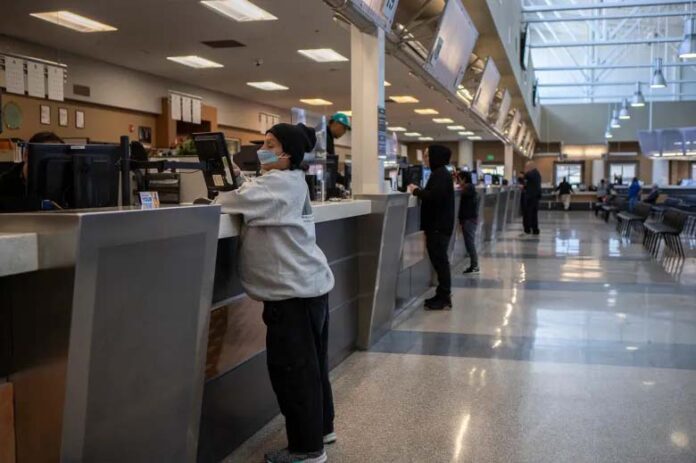
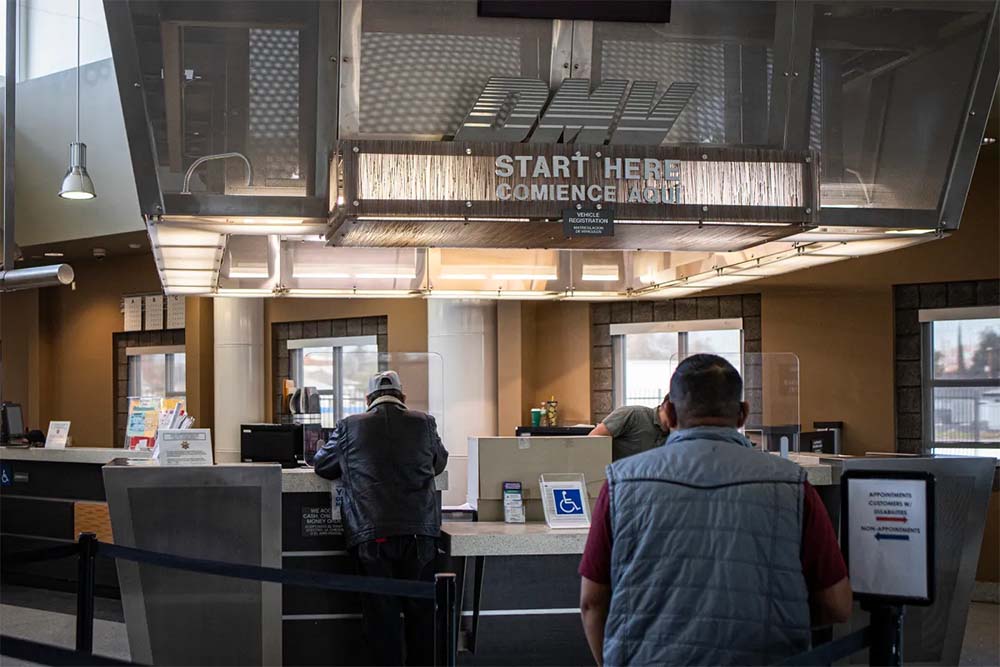
Funcionarios planean compartir datos del DMV, alarmando defensores de inmigrantes indocumentados en toda California. Officials plan to share DMV data, alarming advocates for undocumented immigrants across California. (Photo online.)

Advocates say 1 million unauthorized immigrants with California driver’s licenses are at risk under a state plan to share license information to a national database

by Khari Johnson and Wendy Fry

CalMatters

California is preparing to share with an outside organization detailed information about driver’s license holders, including immigrants who do not have legal authorization to live in the U.S.

That breaks a promise the state made a decade ago when it began issuing licenses to unauthorized immigrants, advocates say, and it means more than 1 million people may face higher risk of deportation.

But if state officials don’t turn over the data, the Department of Homeland Security may refuse to accept California licenses and IDs at airports, the advocates believe, following a briefing with the California Department of Motor Vehicles and the office of Gov. Gavin Newsom earlier this month. State authorities confirmed they plan to share the data to comply with the Real ID Act of 2005, which set requirements for accepting state identification in federal facilities like airports.

Representatives from four advocacy groups who participated in the briefing told CalMatters the shared information will show whether a person has a Social Security number, meaning it could be used to identify people in the country without authorization.

The state plans to provide the information to the American Association of Motor Vehicle Administrators, a nonprofit organization whose governing board is made up of DMV officials from across the country.

The information given to the association will go into the group’s State-to-State Verification system and its platform, known as SPEXS, which allows DMVs and contractors that work with them to verify if someone has more than one license issued in their name. Sharing that data allows agencies that issue driver’s licenses to verify that a person doesn’t have duplicate licenses in multiple states.

In the future, an ID database like the one the association maintains could be used to support mobile licenses people can use on their iPhones or online age verification for access to mature content or chatbots.

But advocates fear that federal immigration officials will try to gain bulk access to the data and use the fact that a person doesn’t have a Social Security number as a signal that they’re deportable.

The state received assurances from the association that safeguards will be added to prevent bulk searches for unauthorized immigrant license holders in the database and to prevent access by the Border Patrol and Immigration and Customs Enforcement, according to people who joined the briefing with the DMV and governor’s office. But they remain skeptical.

“Once this data is uploaded to AAMVA, it’s out of California’s control, no matter what California wants, no matter what protests we may make,” said Ed Hasbrouck with San Francisco civil liberties group The Identity Project, who was on the briefing call.

To carry out the plan to share data with the association the California Legislature will need to approve $55 million to cover the DMV’s costs. It may also need to amend existing law, which states that a Social Security number obtained by the DMV cannot be shared for any other purpose than to address unpaid taxes, parking tickets, or child support.

A spokesperson for the governor’s office declined to confirm details of the call or respond to specific concerns from advocates.

“California continues to lead in supporting immigrant families and protecting personal data from federal overreach,” the spokesperson, Diana Crofts-Pelayo, wrote in an email. “The state has taken the same approach to protect Californians’ data during the Real ID implementation, while maintaining Real ID compliance for the benefit of all Californians.”

Ian Grossman, the chief executive of the American Association of Motor Vehicle Administrators, told CalMatters that participation in the verification system is voluntary and that only authorized state employees or contractors have access to the system, that bulk searches of the system are not currently allowed, and all searches must contain specific information about an individual like their name and date of birth.

Social security number ‘99999’

For more than a decade, California and 18 other states invited undocumented people to obtain driver’s licenses in order to support public safety and the economy. Economists say that such laws improve economic activity, drive billions of dollars in taxes into state coffers, and benefit public safety because people who lack federal authorization to be in the country can feel more comfortable reporting criminal activity.

More than 1 million people have obtained driver’s licenses in California under Assembly Bill 60, a law passed in 2013. The law prohibits the state from using information obtained in the licensure process to consider an individual’s citizenship.

But the multistate verification system can reveal whether a person is an undocumented immigrant. According to an association manual obtained by CalMatters, the database will include the last five digits of a person’s Social Security number, and if that person has no Social Security number, the association allows states to use the placeholder “99999.”

Advocates fear that federal immigration officials could gain access to information in the database, including on undocumented Californians, by asking local officials to make requests on their behalf.

That sort of end run would not be without precedent.

CalMatters reported on instances last year and this year where local law enforcement agencies broke state law and shared information gathered by automated license plate readers with ICE or Border Patrol agents.

The DMV and the governor’s office say the association will notify California of requests from any entity other than a participating state, including attempts to subpoena the database for information about California license holders, providing them with the opportunity to challenge subpoenas or intervene in other requests. But if a subpoena is accompanied by a gag order the association could not deliver any such notification. An agreement between the association and the California DMV obtained by CalMatters states that the association will inform California “if legally permitted” if it receives a subpoena “to release, disclose, discuss, or obtain access to S2S information.”

Hasbrouck believes the DMV and governor’s office “must have known” the reassurances they got from the association were “hollow given the possibility of gag orders.”

He also said that, as a private entity, the association has less protection from court orders or subpoenas than a government agency. Its data sharing is also more easily hidden, since the association is not subject to Freedom of Information Act requests or open meeting laws.

Advocates see ‘a direct betrayal’

Advocates who spoke with CalMatters said sharing the driver’s license information with the association sells out immigrant license holders. The law that created the program prohibits the state from using information the program gathers to determine citizenship.

“It’s unclear how extreme the danger people are being put into by this decision but there ’s no doubt we told people with AB 60 licenses this would never happen, but it’s happening, and that’s a direct betrayal,” said Tracy Rosenberg, head of advocacy at Oakland Privacy, who was on the call.

Linda Nguy, an associate director at the Western Center on Law and Poverty, compared the disclosure to a move last summer by Health and Human Services Secretary Robert F. Kennedy to share data about millions of non-citizens with federal immigration agencies. That was a violation of federal law, department officials concluded, according to a memo obtained by  the Associated Press.

Pedro Rios, director of the U.S.-Mexico Border Program at the American Friends Service Committee, was not on the call, but echoed Rosenberg and Nguy, calling the data sharing plan “a betrayal of California’s commitment to protect and defend all its residents, especially those who have an AB 60 driver’s license.”

Becca Cramer, who works with privacy and civil liberties groups, questioned why the governor’s office and DMV are in a rush to comply with the Real ID Act two decades after it passed at a time of increased pressure from the Trump administration.

“It just seems like we’re missing the bigger picture of this moment in time,” she said

The plan to share license information with the database depends on the state budget process because the DMV is requesting $55 million to move the data over to the association’s systems.

At a state Senate budget hearing last month to approve the funding, lawmakers questioned why the state should follow a timeline set by a private organization and share part of Californians’ Social Security numbers. They also asked the DMV to explore the reasoning behind a lawsuit filed by Oklahoma lawmakers in January to block data sharing with the association, in which they argued that sharing personal data collected for driver’s licenses violates state law there.

DMV director Steve Gordon told them that California unsuccessfully tried to convince the motor vehicle association to consider a unique identifier other than a social security number and “anybody who has a social security number that’s sharing information of course would have a concern” but told lawmakers “we need to go. We need to go now.”

DMV spokesperson Jaime Garza said that Californians can submit a request to surrender or cancel a driver’s license but that driving without a license is illegal.

Nick Miller, a spokesperson for Assembly Speaker Robert Rivas, told CalMatters lawmakers continue to work on the policy issue.

“Protecting immigrant communities from the Trump administration’s relentless attacks — and ensuring Californians are empowered and defended — continues to be a top priority for the Speaker,” he said in an email.

Rosenberg with Oakland Privacy suggested that the state might be better off opting out of the Real ID system than sharing information about its license holders, noting that more than 60 percent of Californians already have passports.

“I just wonder what would happen if the state asked Californians to get a passport in order to fly for a couple of years in order to protect 1 million Californians with AB 60 licenses. Maybe we should give people that opportunity.”

spot_img

Bay Area Events – celebrating Mothers’ Day

Calito Franco

by the El Reportero staff

Mother’s Day Mariachi Brunch at Puerto Alegre (Live Mariachi)

A popular Mission District restaurant hosts a special Mother’s Day brunch with live mariachi performers, offering classic Mexican dishes alongside traditional music in a lively and festive setting ideal for families celebrating together. Sunday, May 10, late morning–early afternoon, Puerto Alegre, 546 Valencia St., San Francisco, CA 94110

Mother’s Day Latin Boat Party (DJs – Latin & Dance Music)

Celebrate Mother’s Day on the water with a festive boat party featuring live DJs spinning Latin hits, reggaeton, cumbia and dance music. The event combines music, dancing and panoramic views of the San Francisco skyline, offering a unique experience for families and adults alike. Sunday, May 10, afternoon–evening (check boarding time). Departure from San Francisco waterfront (Pier area). Info/Tickets: Eventbrite (search “Mother’s Day Boat Party San Francisco”) or contact organizer at info@sfboatparties.com.

Community Cultural Event in San Mateo (Local Artists)

A cultural gathering showcasing local Latino artists, musicians, and performers, highlighting community talent and creating a space for cultural expression on the Peninsula. Wednesday, May 13, 5 p.m. Downtown San Mateo, San Mateo, CA

Live Latin Jazz at The Chapel (Bay Area Musicians)

The Chapel presents an evening of Latin jazz featuring local ensembles that fuse Afro-Caribbean rhythms with modern improvisation in an intimate setting. Friday, May 15, 8 p.m., The Chapel, 777 Valencia St., San Francisco.

Tony Vega in live concert (Salsa Legend)

Puerto Rican salsa star Tony Vega performs live, bringing classic hits and dance favorites to Bay Area audiences in a high-energy concert. Saturday, May 16, 9 p.m., Roccapulco, 3140 Mission St., San Francisco.

Salsa Wednesdays at Blondie’s Bar (Calito Franco & Live Bands)

A popular weekly salsa night continues through Mother’s Day week, featuring Calito Franco y Su Tumbao Añejo and rotating bands such as Guajirón and Son Sabroso. The event blends live music with social dancing in the Mission District. Wednesday, May 20 and 27, 8:30 p.m.–12:30 a.m., Blondie’s Bar, 540 Valencia St., San Francisco.

Carnaval San Francisco Grand Parade (Live Music, Dance & Comparsas)

The 48th annual Carnaval San Francisco Grand Parade brings together live music groups, dance troupes and cultural performers, including comparsas such as Karibbean Vibrationz, celebrating Latin American and Caribbean traditions. The parade features vibrant costumes, drumming, dance and community participation, attracting thousands of spectators each year.

Sunday, May 24 – Parade route from 24th & Bryant St. to Mission St., continuing north to 15th St. Grandstand: 2665 Mission St., San Francisco.

spot_img

Refinancing readiness and navigating the process in today’s market

Sponsored by JPMorganChase

Depending on where you are in your homeownership journey, refinancing your mortgage can be an effective strategy to help you meet your financial goals. Refinancing may help you save money over time or add money back to your monthly budget if you score a lower interest rate. And depending on the type of refinance you choose, you could also borrow against your home’s equity to pay down debt or make a major purchase.

Understanding when and why a refinance might make sense is the first step toward getting the most from this financial tool. There are also different types of refinances to consider, and one might work better for your goals than another.

What is refinancing?

Refinancing replaces your current mortgage with a new one—usually with a new rate and/or terms. It can often also come with a new set of closing costs. It may also come with a new lender.

So when does it make sense to refinance? You might want to consider a refinance if you want to:

  • Change the loan length or lower your monthly payments
  • Secure a better or lower interest rate to save on monthly payments
  • Switch from an adjustable-rate mortgage to a fixed-rate one.
  • Change the loan type to remove mortgage insurance costs
  • Access your home equity to fund home improvements, buying another property, or consolidate debt.

How does refinancing work?
Much like your original mortgage, the refinancing process involves a thorough review of your current financial status to determine if you qualify.

Here’s an example of what a lender may review:

  • Credit score and history: Score requirements vary by lender and loan type; 620 is a general minimum for conventional mortgages. Lenders want to see responsible credit use, such as a positive payment history on your debt.
  • Debt-to-income (DTI) ratio: This metric shows how much debt you have in relation to your income. To calculate your DTI, add up your monthly debt payments and divide by your gross monthly income. Then multiply by 100 to get a percentage. A low DTI lets lenders know you’ll likely be able to manage your monthly payments with minimal issues.
  • Property value and equity: Many homeowners have built equity over time, and the real estate market can cause property values to appreciate as well. When refinancing, your current loan balance and market value of the property will help the lender calculate a loan-to-value (LTV) ratio. Refinancing qualifications usually prefer lower LTVs.

What are my refinancing options and how do I choose the right one?

Let’s break down a few commonly offered types of refinancing:

  • Rate-and-term refinance: This option allows you to replace your current loan with a new one with a different interest rate, different term or both. The primary aim is to secure terms that better suit your current financial situation, while the principal balance remains the same.
  • Cash-out refinance: A cash-out refinance allows you to replace your existing mortgage with a new loan for more than you currently owe, leveraging equity you’ve built up in your home. This type of mortgage refinance might be more suited for those who need funds for significant expenses, such as home renovations or debt consolidation.
  • No closing cost refinance: no closing cost refinance allows borrowers to refinance without paying the upfront fees usually required. The lender may charge a slightly higher interest rate or fold the closing costs into the total loan amount.

Understanding your current financial goals and needs can help you decide which option works best.

The bottom line

Refinancing can be a smart financial move for many people. You may be able to save money in the long term, and you also have options to take cash out if that’s what would support your goals. A qualified mortgage professional or home lending advisor can help clarify whether a mortgage refinance makes sense for you and ensure you’re on the right path to achieving your financial goals.

For more information, visit chase.com/afford.

For informational/educational purposes only: Views and strategies described in this article or provided via links may not be appropriate for everyone and are not intended as specific advice/recommendation for any business. Information has been obtained from sources believed to be reliable, but JPMorgan Chase & Co. or its affiliates and/or subsidiaries do not warrant its completeness or accuracy. The material is not intended to provide legal, tax, or financial advice or to indicate the availability or suitability of any JPMorgan Chase Bank, N.A. product or service. You should carefully consider your needs and objectives before making any decisions and consult the appropriate professional(s). Outlooks and past performance are not guarantees of future results. JPMorgan Chase & Co. and its affiliates are not responsible for, and do not provide or endorse third party products, services, or other content.

Deposit products provided by JPMorgan Chase Bank, N.A. Member FDIC. Equal Opportunity Lender.

 © 2026 JPMorgan Chase & Co.


spot_img

6 Powerful spices to boost iron naturally and defy mainstream deficiency narratives

The Truth about iron: Why this essential mineral is a foundation of true health

by Coco Somers

Iron is not just a lab value; it is essential for oxygen transport, energy production and cognitive function. It supports hemoglobin and myoglobin, helping deliver oxygen throughout the body. However, modern approaches often reduce iron to supplements rather than addressing absorption and overall health.

A broader perspective emphasizes whole foods and natural sources that provide iron alongside supportive compounds like vitamin C and anti-inflammatory nutrients. Instead of focusing solely on supplementation, improving digestion, gut health and nutrient balance is key to maintaining healthy iron levels.

Why conventional iron approaches can fall short

Standard iron supplementation may not work effectively for everyone. Some forms are poorly absorbed and can cause digestive discomfort or imbalance with other minerals. Iron metabolism is complex and influenced by nutrients such as copper and magnesium, meaning a one-size-fits-all solution is often insufficient.

A more complete strategy focuses on improving absorption and supporting the body’s natural processes through diet and lifestyle rather than relying only on isolated supplements.

The 6 iron-rich spice powerhouses: Nature’s forgotten medicine

Spices can provide small but meaningful amounts of iron while also supporting digestion, reducing inflammation and improving metabolic function. Quality matters—choosing clean, minimally processed spices helps preserve their nutritional value.

Cumin and turmeric: The anti-inflammatory iron duo

Cumin provides about 3.2 mg of iron per tablespoon and supports digestion, which is essential for nutrient absorption. Turmeric offers about 5.17 mg per tablespoon and contains curcumin, known for its anti-inflammatory properties. Using turmeric in whole form with vitamin C-rich foods may help improve iron uptake.

Ginger and fenugreek: Metabolic support and cleansing

Ginger contains about 1.03 mg of iron per tablespoon and supports digestion and nausea relief. Fenugreek provides around 3.72 mg per tablespoon and may help regulate blood sugar levels. Together, they support metabolic balance and help the body better utilize nutrients.

Cinnamon and anise seed: Sweet defense against processed foods

Cinnamon offers about 1.3 mg of iron per two tablespoons and may support cholesterol and blood sugar levels. Anise seed provides about 2.48 mg per tablespoon and can be used as a natural sweetener alternative. Both contribute iron while enhancing flavor and reducing reliance on processed sugars.

Maximizing your iron: A holistic strategy

To improve iron levels effectively, combine spices with iron-rich whole foods such as meats, fish, lentils and beans. Pair plant-based iron sources with vitamin C-rich foods like citrus or peppers to enhance absorption.

Equally important is reducing intake of highly processed foods that may impair nutrient absorption and gut health. Supporting digestion and overall nutrition helps ensure the body can use the iron consumed.

Reclaim your health with nature’s iron arsenal

The kitchen can play a key role in maintaining health. Incorporating spices like cumin, turmeric, ginger, fenugreek, cinnamon and anise seed into a balanced diet supports iron intake while addressing broader factors such as digestion and inflammation. A whole-food, nutrient-focused approach offers a practical path to maintaining healthy iron levels.

spot_img

A mission at risk — why San Francisco must honor the spirit of Proposition J

San Francisco voters approved PROP. J in 1994 to protect four historic communities — Asian, Latino, African American and LGBTQ+ — allocating 10% of the city’s official advertising to their community newspapers to ensure their survival. -- Los votantes de San Francisco aprobaron la PROP. J en 1994 para proteger a cuatro comunidades históricas — asiática, latina, afroamericana y LGBTQ+ — asignando el 10% de la publicidad oficial a sus periódicos comunitarios para asegurar su supervivencia.
Marvin Ramírez, editor

by Marvin Ramírez

As El Reportero marks its 36th anniversary, it is impossible not to reflect on a defining moment in its history — and in the history of community journalism in San Francisco.

In 1994, what became known as San Francisco Proposition J was more than legislation. It was a mission. City leaders recognized that ethnic and community newspapers were not simply businesses; they were essential bridges between government and underserved communities. Proposition J mandated that a portion of the City’s official advertising budget be allocated to publications serving African American, Latino, Asian, and LGBTQ communities.

At the time, the Bay Area was home to a vibrant ecosystem of community newspapers. Many were weeklies, like El Reportero, printed locally in San Francisco, supported by multiple commercial printers and a steady pipeline of young journalists, interns, and contributors. Proposition J did not just provide advertising revenue; it provided stability, legitimacy, and growth. It allowed small publications to hire staff, expand coverage, and deepen their role as trusted voices within their communities.

El Reportero itself grew into a newsroom of more than a dozen contributors, many of them volunteers driven by a passion for storytelling and public service. Students, aspiring journalists, and seasoned writers alike found a platform in community media that mainstream outlets often overlooked.

Then came disruption.

The aftermath of the September 11 attacks brought economic shockwaves that devastated small businesses — the very advertisers who sustained local newspapers. Many closed their doors. Advertising declined sharply. Community publications struggled to survive.

Yet El Reportero endured.

Over the decades, it weathered economic downturns, the rise of the internet, and the transformation of the media landscape. Today, it stands as one of the last bilingual weekly newspapers serving the Latino community in the Bay Area — a testament to resilience, commitment, and the enduring need for culturally relevant journalism.

But now, the very mission that once sustained community media is at risk of being undermined — not by economic collapse, but by bureaucracy.

In the latest City contracting cycle, El Reportero was deemed “non-responsive” due to a submission arriving two minutes past the deadline — despite documented efforts to comply and a long-standing history of service. This technicality, while procedurally defensible, raises a fundamental question: is the City honoring the spirit of Proposition J, or merely its most rigid interpretation?

Proposition J was never intended to exclude community newspapers over minor procedural issues. Its purpose was to ensure inclusion — to guarantee that vital public information reaches communities that might otherwise be left out of civic discourse.

To deny participation based on a two-minute delay is to lose sight of that purpose.

The consequences extend beyond a single publication. The decline of community newspapers has already narrowed the channels through which local governments communicate with diverse populations. When these outlets disappear, so too does access — to public notices, health information, legal changes, and civic opportunities.

Contrary to common assumptions, print still matters. Official notices, including legal announcements, are required to be published in newspapers. A physical paper placed in a neighborhood café, grocery store, or community center reaches readers who may not seek out information online. It creates visibility, permanence, and trust.

Digital media has expanded access, but it has not replaced the role of trusted community publications.

If Proposition J is to remain meaningful, it must evolve without abandoning its core mission. The City should examine whether outdated requirements — such as rigid printing rules or overly complex application processes — are unintentionally excluding the very outlets the law was designed to support.

A process that requires dozens of pages of documentation for modest advertising contracts is not only inefficient; it is discouraging participation. Community publishers, often operating with limited resources, should not face barriers that undermine their ability to serve the public.

Flexibility is not a weakness. It is a recognition of reality.

San Francisco has long prided itself on diversity, inclusion, and equity. Upholding those values means ensuring that policies like Proposition J function as intended — not as gatekeeping mechanisms, but as bridges.

As the City’s Budget and Finance Committee prepares to consider this matter — and then forward it to the full Board of Supervisors for final approval — the decision before it is not simply procedural. It is philosophical.

Will San Francisco reaffirm its commitment to community media, or allow a technicality to erode a decades-old promise?

The answer will determine not only the future of one newspaper, but the strength of the connection between City Hall and the communities it serves.

El Reportero has carried that connection for 36 years.

It deserves more than a closed door.


spot_img

When conservative Lucas Alamán hid Hernán Cortés’ bones

Hernan Cortez

Did you know that conservative politician Lucas Alamán hid the remains of Hernán Cortés so they would not be destroyed by a popular uprising during September 15, 1823?

by México Desconocido

Hernán Cortés, the conqueror of Mexico-Tenochtitlan, is a controversial figure. During his lifetime, as a hidalgo, he provoked the disdain of several of his contemporaries, including his own monarch, Emperor Charles V. One could say that he was never truly able to fully enjoy the recognition he believed he deserved for his military campaigns. After his death, his remains underwent several itinerant burials between Spain and New Spain over the course of many decades. Thus, shortly after the consummation of Mexico’s independence, conservative historian Lucas Alamán hid the remains of Hernán Cortés so they would not be destroyed by popular anger.

A Death in Dishonor

The Extremaduran Hernán Cortés was in Spain around the year 1540. In Iberian lands, he was trying to resolve the legal disputes against him, the famous residency trials, opened in 1526 by order of Emperor Charles V himself. Although all of his military enterprises had been carried out in the name of the Crown and the emperor, the scandals surrounding him were enormous. Therefore, the monarch wanted Cortés’ administration as governor of New Spain to be judicially reviewed.

The Marquis of the Valley of Oaxaca had lost the favor of the imperial court, which always considered him untrustworthy for being a hidalgo, that is, a member of the lower nobility. In 1541, during the disastrous Algiers campaign in which he participated, he was even ignored by Emperor Charles. Without prestige, dishonored and financially ruined, the conqueror of Mexico-Tenochtitlan died on December 2, 1547. His death occurred in the palace of Alonso Rodríguez, a friend of his, in Castilleja de la Cuesta, Seville. Immediately afterward, his body was placed in the Monastery of San Isidoro del Campo, in the crypt of the family of the Duke of Medina Sidonia.

A Conqueror in Constant Relocation

However, during his lifetime Hernán Cortés had designated different destinations for his burial. First, he wished to be buried in the church of the Hospital de Jesús Nazareno in Mexico City; afterward, he wanted his remains to rest in the town of Coyoacán. Finally, shortly before his death, he instructed that he be buried wherever he happened to die. It appears that his final wish was to be buried in a convent in Coyoacán, but that never happened. All of this explains why his body traveled from one place to another.

Cortés’ remains were moved to a nearby altar only a few years after his burial, in 1550. However, in 1566, his family had them transferred to New Spain and deposited in what is now the Cathedral of Texcoco. Later, following the death of Pedro Cortés, the conqueror’s last descendant, in 1629 the remains were moved to the church of the Great Convent of San Francisco in Mexico City. There they rested until 1794, when they were transferred to the main altar of the church of the Hospital de Jesús Nazareno, the site that Cortés himself founded in 1524 and where he first met the huey-tlatoani Moctezuma Xocoyotzin in 1519.

Lucas Alamán Hid Hernán Cortés’ Remains

Nevertheless, the remains of the former Marquis of the Valley of Oaxaca would not find rest. In 1810, Mexico’s War of Independence began. By 1821, the struggle had finally concluded and the historical process had been completed, freeing the young nation from Spanish rule. Amid the turbulence of that era, a historian began to stand out: Lucas Alamán. Besides being a great scholar, he was also a prominent conservative politician. Born in Guanajuato in 1792, he witnessed the storming of the Alhóndiga de Granaditas in 1810, a reason why he always opposed the ideas of Miguel Hidalgo.

By 1823, Alamán was the administrator of the Mexican assets of Hernán Cortés’ heirs, who lived in Italy. At that time, the atmosphere throughout the country, particularly in Mexico City, was hostile toward the former Spanish authority and its symbols. This was reason enough for Cortés’ heirs to take the conqueror’s monument to Palermo. This sculpture served as the tomb in the church of the Hospital de Jesús.

During several disturbances that took place in the nation’s capital, it was believed that the conqueror’s bones rested in the aforementioned Italian city. However, in reality they remained in Mexico City. In fact, they never left the church of the Hospital de Jesús. Secretly, Lucas Alamán hid the remains of Hernán Cortés with the help of the chapel’s priest. He carried this out on the night of September 15, 1823, just as the Independence celebrations were turning into genuine popular uprisings. The historian hid the funerary urn beneath the platform of the main altar of that religious site.

The Zeal of a Conservative Historian

Thanks to the actions of Lucas Alamán, Hernán Cortés’ remains managed to escape popular fury. They remained hidden for 13 long years. Once tensions began to subside, the conservative historian arranged for them to be placed in a niche in the church in 1836. Because he served as minister in several republican governments, he managed to secretly protect the funerary urn. Likewise, he kept the Spanish embassy informed of the exact location where it was kept.

However, with Alamán’s death in 1853, the trail of Cortés’ remains was lost. It would not be until 1946 that they were located again, thanks to the efforts of a group of Mexican scholars.


spot_img