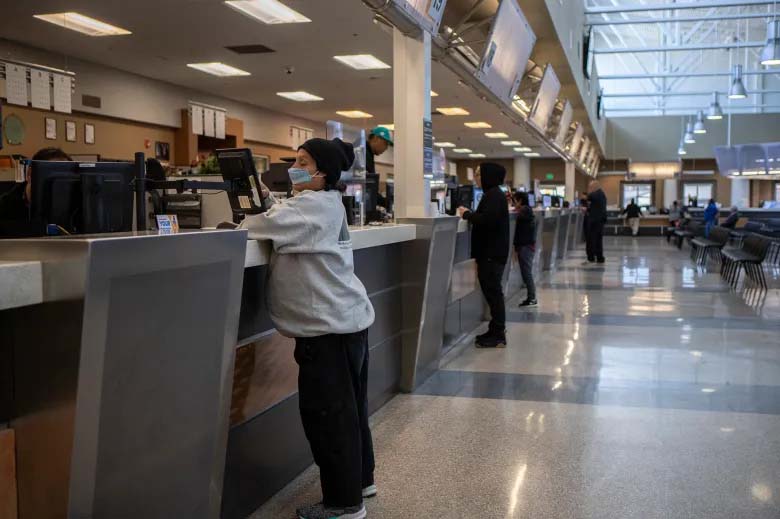
by Khari Johnson, Wendy Fry and Yue Stella Yu,
CalMatters
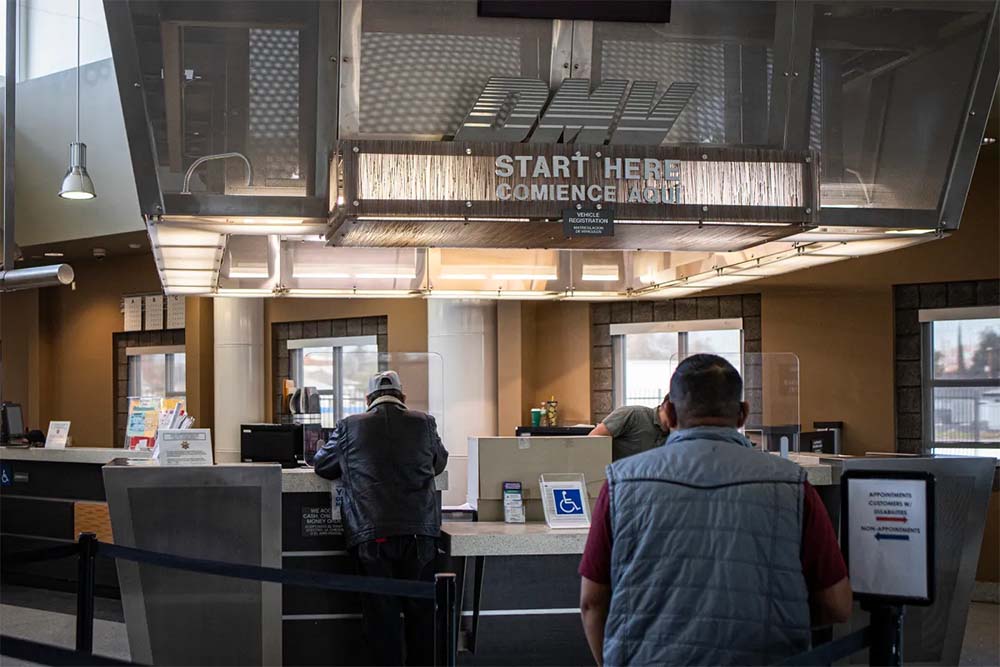
California lawmakers have approved a plan allowing the Department of Motor Vehicles (DMV) to share driver’s license and identification records with a national verification network, despite ongoing concerns from immigrant advocates that the move could expose undocumented residents to federal immigration enforcement.
The Legislature authorized the data-sharing program as part of the state budget passed Monday, alongside a separate transportation measure establishing oversight and privacy protections. Gov. Gavin Newsom has signed the budget and is expected to approve the companion legislation.
Lawmakers had delayed approval until additional safeguards were negotiated late last week.
The issue affects more than 1 million immigrants with California driver’s licenses. The DMV system stores the last five digits of a driver’s Social Security number and uses the placeholder “99999” for applicants who do not have one. Advocacy groups warn that including this information in a national database could make undocumented Californians more vulnerable to deportation.
Earlier this year, immigrant advocates described the proposal as “a betrayal,” while the governor’s office dismissed concerns, accusing critics of creating unnecessary fear.
The budget allocates $55 million for the DMV to connect California records to the State-to-State Verification Service and the SPEX database, both operated by the nonprofit American Association of Motor Vehicle Administrators (AAMVA).
State officials argue the program is necessary to comply with the federal REAL ID Act. They warn that failure to participate could lead the U.S. Department of Homeland Security to reject California-issued identification for airport security and other federal purposes. Officials also maintain that the system only allows one-record-at-a-time searches using applicant information, making bulk searches impossible.
The companion legislation introduces several privacy protections. It authorizes the California attorney general to sue the nonprofit or participating states if they violate the data-sharing agreement, requires annual public reports detailing database requests and unusual usage patterns, and directs the DMV to develop a monitoring plan, with a draft due by February 2027 and a final version by July 2027. The state auditor is also required to review compliance beginning in 2030.
“The established safeguards limit the information shared to the minimum necessary,” said H.D. Palmer, spokesperson for Newsom’s Department of Finance.
However, some privacy advocates argue the protections remain insufficient.
Ed Hasbrouck of the Identity Project said the safeguards would not prevent federal authorities or other states from obtaining court orders requiring the disclosure of data, potentially including large-scale requests, without notifying California.
Immigrant rights organizations welcomed the added protections but continued to express concern.
Ronald Coleman Baeza, speaking for the Coalition for Humane Immigrant Rights, thanked lawmakers for adopting safeguards while urging them to require an audit before 2030.
“We are disappointed that Social Security numbers will continue to be shared,” he said. “But we appreciate that there will be a monitoring plan, a stakeholder process, enforcement provisions and an audit. There’s definitely going to be more work to do to make sure we protect Californians’ information.”
Representatives from the ACLU Cal Action and the California Immigrant Policy Center also praised lawmakers for strengthening privacy protections but warned that sharing sensitive personal information with an out-of-state system still carries significant risks for undocumented immigrants.
State Sen. Laura Richardson, a Democrat from Inglewood who questioned the proposal earlier this year, supported the revised legislation during Monday’s Senate budget hearing. While endorsing the new safeguards, she urged the state auditor to review the system before 2030, citing California’s vulnerability once sensitive data is shared beyond state control.