Tuesday, October 13, 2026
spot_img
Home Blog Page 11

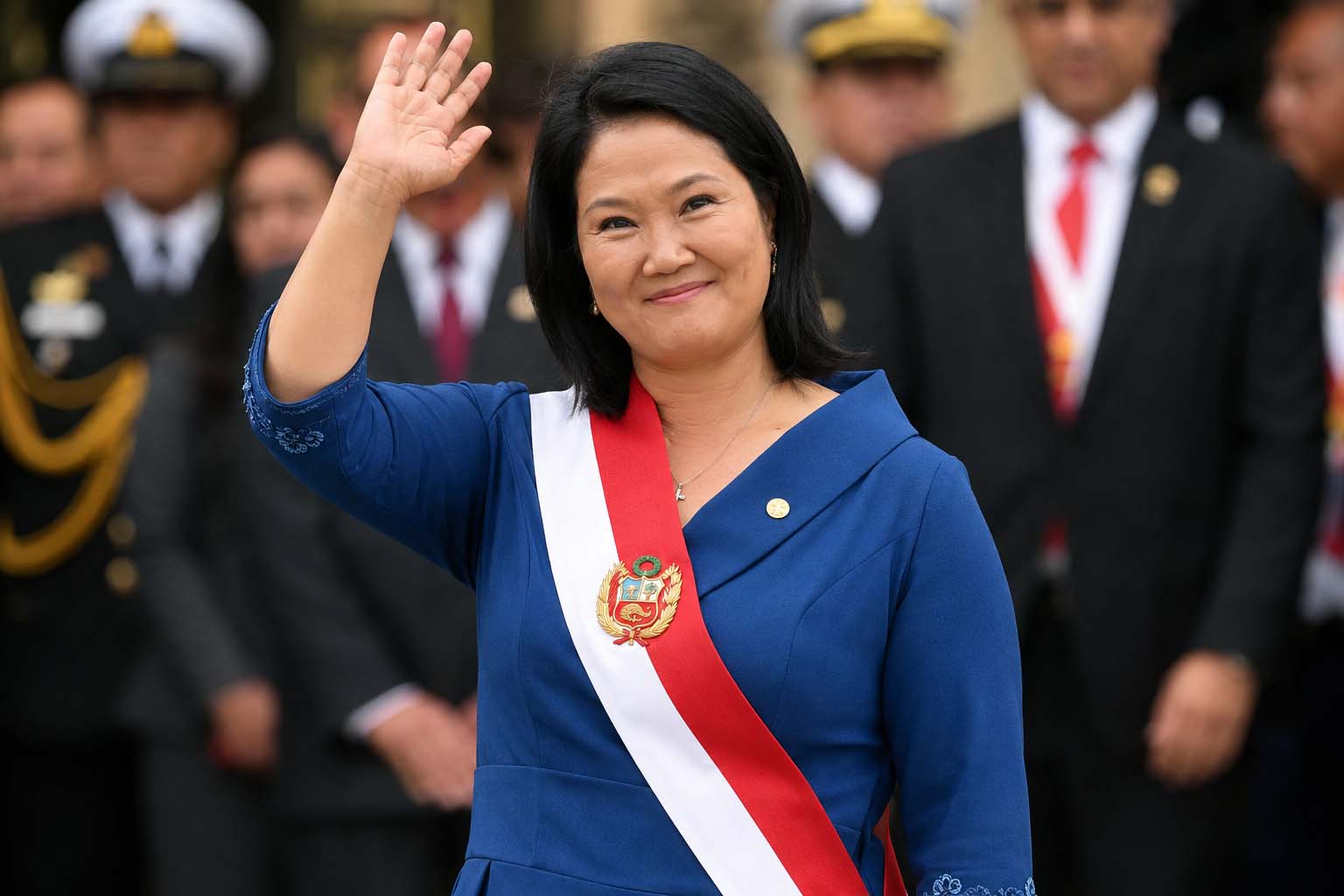
On Peru’s Independence Day, Keiko Fujimori becomes nation’s first elected woman president

Keiko Fujimori waves after taking office as Peru's president during the official July 28, 2026 inauguration ceremony. En el Día de la Independencia, Keiko Fujimori asume como la primera presidenta elegida del Perú

by the El Reportero staff

LIMA — Keiko Fujimori was sworn in July 28 as Peru’s first popularly elected woman president, promising to restore stability after years of political turmoil and confront the country’s growing security, economic and social challenges.

In her inaugural address before Congress, Fujimori called for national unity and said Peruvians had chosen “hope over fear.” She pledged to defend democracy, strengthen public institutions and govern for all citizens after narrowly winning the June runoff election.
“Our commitment is to rebuild confidence in Peru,” Fujimori said, adding that her administration would focus on public safety, job creation and economic growth while protecting democratic freedoms. She also vowed to defend freedom of expression and respect constitutional institutions.

Fujimori took office on Peru’s Independence Day, celebrated every July 28 to commemorate General José de San Martín’s proclamation of independence from Spain in 1821. Under Peru’s Constitution, presidents are inaugurated on that date, linking each transfer of power with one of the nation’s most important civic celebrations.

The new president inherits a nation marked by nearly a decade of political instability. Peru has had about 10 presidents since 2016, while repeated confrontations between the executive and Congress have deepened public distrust and slowed reforms. Crime, extortion and illegal mining have also become growing concerns across the country.

Fujimori announced plans to strengthen police and military cooperation against organized crime, reform the prison system, increase the minimum wage by 15 percent, encourage private investment and improve government efficiency. She said economic stability and fiscal discipline would remain priorities while expanding opportunities for Peru’s poorest communities.

Her presidency also marks the return of the Fujimori political movement to Peru’s highest office. Supporters credit the movement with restoring economic stability during the 1990s, while critics continue to associate it with the human rights abuses and corruption convictions linked to the government of her late father, former President Alberto Fujimori.

Several opposition lawmakers walked out during her inaugural speech, highlighting the political divisions that remain despite the peaceful transfer of power. Analysts say Fujimori’s greatest challenge will be building consensus while delivering on promises to improve security, strengthen democratic institutions and revive the economy.

– Read a more in-depth analysis of Peru’s new government, its political challenges and what Keiko Fujimori’s presidency could mean for Latin America online at ElReporteroSF.com under Latin Briefs.

References: Associated Press, Reuters, Al Jazeera.

 

spot_img

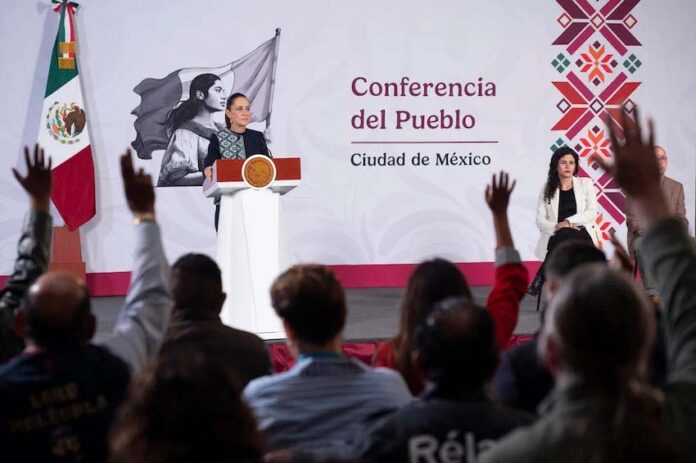
Sheinbaum hits back at Miller’s ‘Mexico’s systems don’t work’ claim: Tuesday’s mañanera recapped

También en la mañanera del martes, Sheinbaum brindó una actualización sobre la evaluación de un grupo de expertos sobre la viabilidad del “fracking sustentable” en México. Also at Tuesday’s mañanera, Sheinbaum provided an update on an expert group’s assessment of the feasibility of “sustainable fracking” in Mexico. (Saúl López Escorcia/Presidencia)

by Mexico News Daily staff

President Claudia Sheinbaum used her Tuesday morning press conference to respond to pointed remarks made by White House deputy chief of staff Stephen Miller about Mexico’s justice system, security and bilateral relations.

Sheinbaum also addressed the feasibility of “sustainable fracking” in Mexico, political accusations against former Security Minister Genaro García Luna, and reaffirmed that Mexico would not be defined by foreign criticism.

Sheinbaum’s mañanera in 60 seconds

  • Miller, White House deputy chief of staff, claimed that Mexico’s justice, political and legal systems “don’t work” because parts of the country are controlled and occupied by terrorist organizations that “kill or kidnap anybody who gets in their way.” Sheinbaum rejected his remarks and defended Mexico’s institutions.
  • She also responded to comments made by U.S. officials regarding Mexican elections, saying Mexico should not be defined by outside criticism.
  • Referring to former Security Minister Genaro García Luna, Sheinbaum said the accusations against him were politically motivated and reiterated that justice should prevail.
  • The president also provided an update on an expert committee studying the feasibility of “sustainable fracking” in Mexico, saying the group expects to deliver recommendations soon.

Why today’s mañanera matters

Tuesday’s morning press conference was significant because President Claudia Sheinbaum responded directly to provocative remarks by senior Trump administration official Stephen Miller. The exchange comes as relations between Mexico and the United States remain focused on security, migration and trade.

The president also addressed recent political developments related to Genaro García Luna and updated the public on an energy assessment examining the feasibility of sustainable fracking in Mexico.

Sheinbaum responds to Stephen Miller’s remarks about Mexico

A reporter asked the president about comments made by Stephen Miller during a recent appearance on U.S. media.

Miller argued that Mexico’s justice system, political system and legal system “don’t work” because criminal organizations allegedly control territory and use violence against civilians.

He also claimed that Mexican criminal organizations “not only export massive death in the form of narcotics to our country, but they also export sophisticated criminal enterprises whose objective is to destabilize our democracy and end the rule of law in our country.”

Sheinbaum dismissed the criticism and defended Mexico’s institutions.

She said there is good coordination between Mexico and the United States and emphasized that cooperation between the two countries benefits both nations.

“We govern for the people,” Sheinbaum said. “We work every day for security and peace in our country, and there are results.”

She also criticized comments by U.S. officials suggesting Mexico should not be considered a democracy, saying Mexico should not be defined by foreign political rhetoric.

Sheinbaum: Ruffo case is a “criminal issue, not a political one”

A reporter noted that a group of former Spanish and Latin American political leaders had issued a statement supporting former presidential candidate Edmundo González and criticizing Venezuelan President Nicolás Maduro.

The conversation shifted to former Mexican security official Genaro García Luna and businessman Eduardo Ruffo.

Sheinbaum said the accusations against Ruffo are based on evidence presented by authorities and stressed that the matter should be resolved through the justice system, not politics.

“I repeat, it has nothing to do with a political issue. It is a criminal issue,” she said.

Sheinbaum provides an update on the fracking feasibility assessment

The president also gave an update on the government-commissioned assessment studying the feasibility of “sustainable fracking” in Mexico.

She said the committee has made significant progress and expects to complete its work soon.

According to Sheinbaum, experts from academic institutions and the energy sector are evaluating whether the technology can be used while minimizing environmental impacts.

She said the assessment will likely be completed next week.

Once the study is finished, the government will announce its conclusions and determine whether changes to public policy are warranted.

The president reiterated that the experts will decide what actions are necessary and that any future decisions will be based on scientific evidence.

A previous administration had promoted hydraulic fracturing as a way to increase domestic natural gas production, but Sheinbaum has maintained that environmental protection remains a priority while the review is underway.

spot_img

UCSF doctors launch historic unionization campaign across the UC system.

Médicos de la UCSF anuncian una iniciativa de sindicalización con el SEIU en una conferencia de prensa en el Hospital General Zuckerberg de San Francisco. UCSF doctors announce SEIU unionization effort at Zuckerberg San Francisco General Hospital press conference.

by the El Reportero staff

More than 100 physicians gathered outside Zuckerberg San Francisco General Hospital on July 23 to launch what organizers describe as the largest unionization effort by attending physicians in U.S. history, announcing a campaign to organize nearly 10,000 University of California doctors under SEIU Doctors United.

The San Francisco press conference, originally announced in a media advisory before the event, featured UCSF physicians alongside Assemblymember Matt Haney and other supporters. Doctors said they are seeking a stronger voice in decisions affecting patient care, staffing, workloads, medical education and research throughout the UC system.

The campaign comes just one week after the University of California reached a tentative statewide contract agreement with approximately 6,400 resident physicians and fellows represented by the Committee of Interns and Residents/SEIU. Organizers said that agreement demonstrated the growing momentum for physician organizing across UC hospitals and clinics.

At the July 23 event, physicians described growing concerns over heavy patient loads, administrative burdens, burnout and what they characterized as declining physician autonomy. They argued that improving doctors’ working conditions would ultimately benefit patients by allowing physicians to spend more time delivering care and participating in decisions that affect clinical practice.

“Sometimes I do feel, especially as a primary care physician, overwhelmed,” one UCSF physician said, describing increasing demands on doctors within the health system. Other speakers said they believe collective bargaining would help physicians advocate more effectively for staffing levels, patient safety and quality of care.

The organizing effort reflects a broader shift within the medical profession. While attending physicians have historically been less likely to unionize than nurses or other healthcare workers, organizers say consolidation in healthcare, rising administrative demands and post-pandemic workplace pressures have prompted more doctors to consider collective bargaining.

The union campaign does not automatically create a bargaining unit. Organizers must first gather sufficient support from eligible physicians before seeking formal recognition through the federal labor relations process. University officials have not announced a position on the organizing drive itself, although UC recently praised collaborative labor negotiations following its tentative agreement with resident physicians.

If successful, the campaign would establish one of the nation’s largest unions representing attending physicians and could influence labor organizing efforts at academic medical centers across the country.

– Sources: KQED; University of California; SEIU Doctors United.

spot_img

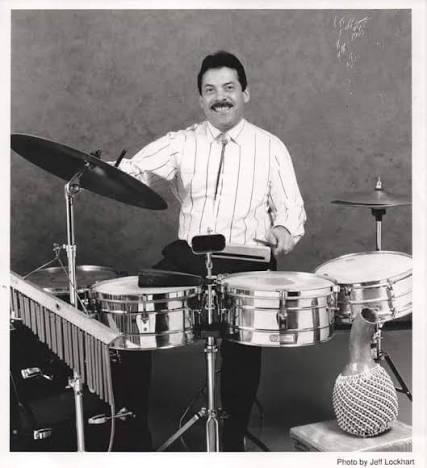
Louie Romero, Bay Area salsa legend and founder of Mazacote, dies

Louie Romero, fundador de Mazacote, ayudó a forjar el legado salsero y del jazz latino del Área de la Bahía. Louie Romero, founder of Mazacote, helped shape the Bay Area’s salsa and Latin jazz legacy.

by the El Reportero staff

The Bay Area Latin music community is mourning the loss of master percussionist Louie Romero, founder and leader of the San Francisco salsa orchestra Mazacote and a musician whose career spanned the golden era of Fania Records through more than five decades of performing, recording and mentoring younger artists.

Romero died July 24 in San Francisco, leaving behind a legacy that reached from New York’s legendary salsa scene to stages throughout Northern California. Affectionately known as “El Timbalero de Fania,” he earned the respect of fellow musicians for his extraordinary talent, professionalism and generosity.

Born in Brooklyn, New York, to a Puerto Rican family, Romero began playing percussion at age seven. His professional breakthrough came in 1967 when bandleader Willie Colón invited the young timbalero to join his orchestra after hearing him perform in New York. During his career, Romero performed and recorded with some of the biggest names in Latin music, including Héctor Lavoe, Celia Cruz, Willie Colón, Rubén Blades, Pete “El Conde” Rodríguez, Ismael Miranda, Tito Puente Jr. and many others.

After moving to California in the 1980s, Romero became a cornerstone of the Bay Area salsa community. In 1994 he founded Mazacote, an orchestra that blended classic salsa, Latin jazz and Afro-Caribbean rhythms while earning recognition as one of Northern California’s premier salsa ensembles. Beyond the stage, he became a mentor who encouraged and inspired generations of local musicians.

Tributes poured in across social media following news of his passing. Annie Rodríguez remembered Romero as someone who “never knew a stranger” and “treated everyone like family,” adding that his love for music and people touched countless lives. Other musicians recalled his willingness to share his knowledge, describing him as a humble bandleader who helped younger performers find opportunities and confidence in their own careers.

Romero’s influence extended far beyond his performances. Whether appearing alongside salsa legends or leading Mazacote before Bay Area audiences, he remained dedicated to preserving the rich traditions of Afro-Caribbean music while welcoming new generations into the culture.

His passing marks the end of an extraordinary chapter in Latin music, but the rhythms he created, the musicians he mentored and the community he helped build will continue to resonate for years to come. – https://youtu.be/njr_nXPdP3I.

References: Mazacote official biography; World Music Central interview with Louie Romero; Annie Rodríguez Facebook tribute; tributes from Bay Area musicians and Latin music community.

The staff of El Reportero and editor Marvin Ramírez extend their heartfelt condolences to Louie Romero’s wife, family and friends. His music and legacy will live on.

– Read the complete story about Louie Romero’s life and musical legacy online at elreporteroSF.com in the Arts & Entertainment section.

spot_img

At the Central American and Caribbean Games, powerhouse Mexico builds for the 2028 Olympics

México dominó la natación en aguas abiertas con el oro de Dalia Moreno, la plata de Yuritzi Salgado y el bronce de Paola Pérez, de Venezuela. Mexico dominated open-water swimming as Dalia Moreno won gold, Yuritzi Salgado silver, and Venezuela’s Paola Pérez bronze overall.

by MND staff

Mexico is off to a commanding start at the 2026 Central American and Caribbean Games in the Dominican Republic, reinforcing its status as the region’s powerhouse as the centennial competition progresses.

The Games opened at Félix Sánchez Olympic Stadium in Santo Domingo. Recognized by the International Olympic Committee, they are the oldest regional multi-sports competition in the world. Running through August 8, the event marks the centennial of the Games, which debuted in Mexico City in 1926. Over 6,000 athletes from 37 countries and territories are competing across 40 sports.

Screenshot

Mexico remains the only nation to appear in all 25 editions and is the two-time defending champion, holding 13 titles overall. Past dominant runs include:

  • 2018 (Barranquilla): 132 golds and 341 total medals.
  • 2023 (San Salvador): 145 golds and 353 total medals.
  • All-time best haul: 375 medals at the 2010 Games in Mayagüez.

Dominating the competition

Mexico sits comfortably atop the medal table well ahead of competitors like Colombia, Cuba, the Dominican Republic, and Venezuela. Early success relies heavily on familiar strengths:

  • Taekwondo: Secured 14 podium finishes, featuring gold medals for Daniela Souza and Iker Casas.
  • Shooting: Flag bearer Gabriela Rodríguez took the women’s skeet crown, while Luis Gallardo won the men’s event.
  • Open water swimming: Paulo Strehlke captured gold in the 10-kilometer race.
  • Other disciplines: Rowers Melissa Márquez and Aylin Ibarra each claimed three gold medals, alongside finishes in badminton and rhythmic gymnastics.

The program also features basketball, soccer, baseball, cycling, diving, and esports making their debut.

A stepping stone to Los Angeles 2028

Mexico views its strong performances in Santo Domingo as a vital stepping stone toward the Los Angeles Summer Games in 2028. To help achieve this, the country sent a delegation of over 600 athletes, deploying their top teams in key sports like diving, open water swimming, cycling, and taekwondo.

Ahead of the event, the Mexican delegation participated in a send-off ceremony led by President Claudia Sheinbaum. The nation’s next major multi-sport test will follow at the Pan American Games in Lima, Peru, in July 2027.

spot_img

California climate credit helps lower PG&E customers’ summer bills

A total of $72 in residential electricity credits will be applied to August and September bills

Oakland, California — Over the next two months, millions of Pacific Gas and Electric Company (PG&E) residential customers will see two California Climate Credits automatically applied to their summer energy bills.

Residential households with an active electricity account will receive credits of $36.18 on their August and September statements, totaling $72.36 for the summer. Eligible small business customers received a $36.18 electricity credit in April and will receive the same credit in October.

Last year, the California legislature directed the California Public Utilities Commission (CPUC) to shift the timing of the credits to months of higher usage to make energy bills more manageable. In April, the CPUC approved changes to the timing of the California Climate Credit. This year, residential electricity climate credits are being issued during the high-consumption summer months, while the residential natural gas credit will shift to February starting in 2027, when winter heating demand is typically highest.

“Adjusting the timing of the electricity credits helps families manage seasonal spikes in energy bills while continuing to drive California toward a cleaner, more reliable energy future,” said Vincent Davis, Senior Vice President of Customer Experience and Chief Customer Officer.

The California Climate Credit represents the public’s share of the state’s efforts to reduce carbon emissions through the Cap-and-Invest program, overseen by the California Air Resources Board. PG&E distributes the credit to customers as directed by the CPUC.

Since 2014, PG&E households have received a total of nearly $1,200 in California Climate Credits on their energy bills, contributing to nearly $15.2 billion in cumulative benefits from the Cap-and-Invest program statewide.

Stabilizing customer bills

In March, PG&E lowered electricity rates for the fifth time since January 2024. With that reduction, combined electricity bills for residential customers—based on typical monthly usage—are approximately $25 lower per month than they were two years ago, and $30 lower per month for customers receiving the CARE discount.

While bills are stabilizing, customers may still see higher bills during the summer months if they use more energy to cool their homes.

Energy efficiency support programs

Energy efficiency plays an important role in California’s clean energy future. Using less energy helps reduce emissions, supports the state’s climate goals, and can help customers manage their energy bills. The following programs can help customers save energy and money:

  • The Switch Is On: A statewide online resource designed to help tenants and homeowners interested in switching from gas options to electric appliances by connecting them with available incentives and qualified contractors.
  • GoGreen Home Financing: A state program offering affordable financing for energy-efficiency upgrades and helping homeowners and tenants reduce their energy consumption.
    Customers can explore more ways to improve energy efficiency by checking if they are on the lowest-cost rate plan using the rate comparison tool in their PG&E online account, completing a home energy usage review, enrolling in the HomeIntel program, and visiting pge.com/summer. | Integrated Multicultural Communications | Pacific Gas and Electric Company
spot_img

Community Calendar July – August

Las familias celebran la cultura latina durante Fiesta en el Parque en Presidio Tunnel Tops, SF. Families celebrate Latin culture during Fiesta en el Parque at Presidio Tunnel Tops, SF.

by the El Reportero staff

Summer brings new opportunities for Bay Area residents to enjoy Latino culture, support local artists and students, strengthen business connections and participate in community events across the region.

Fiesta en el Parque

Free family festival celebrates Latino culture at the Presidio

Celebrate Latino culture during the fourth annual Fiesta en el Parque, featuring live music, salsa, merengue and cumbia dance lessons, arts and crafts, face painting, lawn games and food with spectacular views of the Golden Gate Bridge. Presented by Telemundo 48 and NBC Bay Area in partnership with the Presidio Trust, the festival welcomes families of all ages.

Saturday, Aug. 1, 1–4 p.m., Presidio Tunnel Tops, East Meadow, 210 Lincoln Blvd., San Francisco. Free admission. Information: presidio.gov.

MJ Santos Scholarship Fund All-Star Benefit Concert

Bay Area musicians unite to support young percussionist

Destani Wolf

Top Bay Area musicians will perform in a benefit concert to help percussionist MJ Santos continue his studies at The New School in New York. Featured performers include John Santos, Destani Wolf, Saul Sierra, John Calloway, Dan Parenti, Anthony Blea, Javier Navarrette, Miles Turk, Joaquín Ortiz, Lucca Parenti and special guests. Proceeds will support the MJ Santos Scholarship Fund.

Saturday, Aug. 1, 7 p.m. (doors open at 6:30 p.m.), Piedmont Piano Company, 1728 San Pablo Ave., Oakland. Tickets available at the door and online.

CHCC 47th Annual Statewide Convention

Latino business leaders gather in Oakland

The California Hispanic Chambers of Commerce will host its 47th Annual Statewide Convention, bringing together entrepreneurs, business owners, elected officials and community leaders for networking, workshops and discussions on economic development, leadership and innovation.

Wednesday through Friday, Aug. 19–21, Oakland Marriott City Center, 1001 Broadway, Oakland. Registration required. Information: CHCC2026.com.

Beyond the Latino Community

San Francisco International Week promotes global partnerships

San Francisco International Week features international networking receptions, business forums and multicultural programs organized by chambers of commerce, consulates and global organizations, offering valuable opportunities for entrepreneurs and professionals.

Monday through Friday, Aug. 10–14. Opening Night Reception: Monday, Aug. 10, 5:30–8:30 p.m., Rincon Center, 101 Spear St., San Francisco. Additional events will take place throughout the city. Registration required. Information: sfcentered.org.

Visit ElReporteroSF.com and click on the Calendar section for more upcoming Bay Area events.

Community organizations, artists and event organizers are invited to submit upcoming events by emailing elreportero@aol.com.

spot_img

These California Republicans have one advantage in the race for Congress: Money

De izquierda a derecha, Randy Villegas y el representante estadounidense David Valadao, candidatos por el 22.º Distrito Congresional de California. From left, Randy Villegas and U.S. Rep. David Valadao, candidates for California’s 22nd Congressional District. Photos by Larry Valenzuela, CalMatters, and Bill Clark, via Getty Images.

A clear primary field and a favorable U.S. Supreme Court ruling could help these California Republicans eke out wins in the state’s remaining swing districts

by Maya C. Miller

It’s a rough year to be a Republican running for Congress, especially in California, where voters greenlit new maps designed to oust five GOP incumbents in favor of Democrats.

Three were doomed after being drawn into solidly Democratic districts. But there’s one bright spot for Republicans: campaign cash.

In the state’s two remaining competitive districts, seats that Democrats gerrymandered in their favor and now consider must-wins to flip the House, bruising and costly primary battles have put Democratic candidates at a financial disadvantage as campaigns gear up for the sprint to Election Day.

In the Central Valley, Republican Rep. David Valadao has a warchest of more than $3.3 million in cash, according to the latest federal report filed Wednesday. His Democratic opponent, progressive professor and school board trustee Randy Villegas, only has a fraction of that — about $571,000 in cash on hand.

Unlike Valadao, Villegas had to win an intra-party battle against Assemblymember Jasmeet Bains, the establishment-backed candidate and heavy favorite. His campaign spent more than $1.45 million in the two months leading up to the June 2 primary. Valadao’s team spent less than $280,000 during that same period.

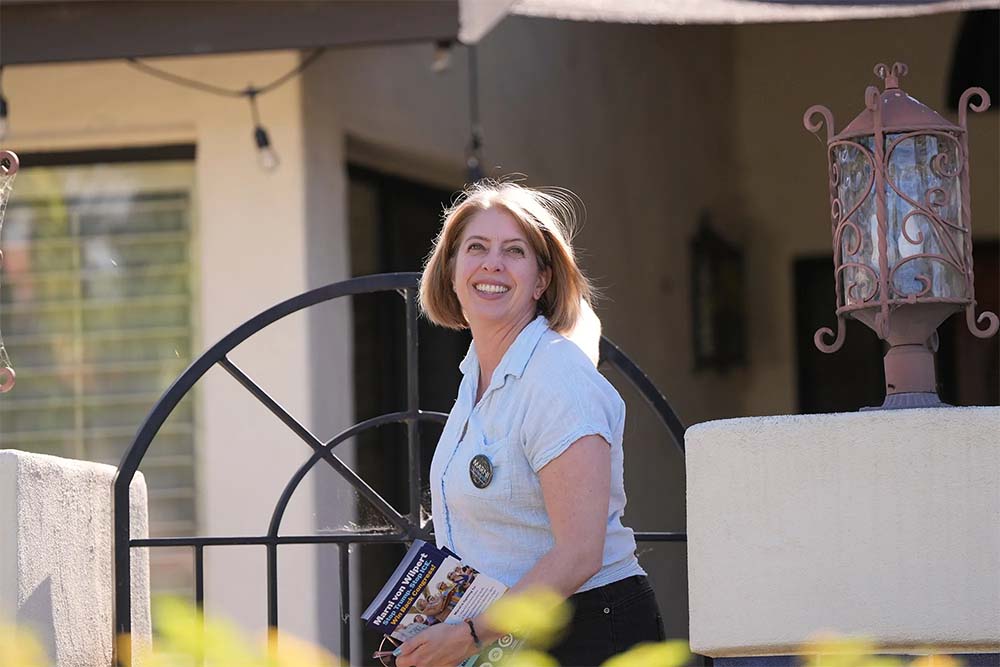
Further south in the 48th District, Republican San Diego County Supervisor Jim Desmond is sitting on more than $1.2 million in cash, federal filings show. His Democratic opponent, San Diego City Councilmember Marni von Wilpert, is further behind with $825,000 after fending off fellow Democrat Amar Campa-Najjar in the primary.

And in the Sacramento suburbs, the $2.1 million in Republican-turned-independent Rep. Kevin Kiley’s account dwarfs the $359,000 that Democratic former state Sen. Richard Pan has available.

Magnifying that GOP financial edge is a ruling from the U.S. Supreme Court last month, which eliminated decades-old limits on how much political parties could spend in direct coordination with the candidates they support.

Under federal law, broadcasters must offer candidates the lowest available rate. But political committees, such as parties or super PACs, have had to pay much more for the same advertising time. This primarily benefited Democrats, whose candidates are typically stronger fundraisers thanks to vast small-dollar donor networks.

The new ruling essentially gives political parties access to that lower TV ad rate as well — and the Republican National Committee is flush with cash this year.

It had more than $125 million on hand at the end of May, according to the most recent federal filing, compared to the Democratic National Committee, which records show is more than $3 million in debt. Similarly, the House GOP’s campaign arm, the National Republican Congressional Committee, has more than $81 million at its disposal, more than twice as much as its Democratic counterpart.

Despite being saddled with an unpopular president and an unpopular war that has increased the cost of living, Republicans are bullish that the court’s decision will help enough of their candidates in swing districts to keep the party in control of Congress.

“While California Democrats are licking their wounds following messy D vs D primaries, we will continue working with our partners at the RNC to strengthen investments already in place across California,” California Republican Party Chair Corrin Rankin said in a written statement through a spokesperson.

Marni von Wilpert, candidata demócrata, hace campaña puerta a puerta en San Marcos, el 29 de mayo de 2026. Marni von Wilpert, Democratic candidate for California’s 48th Congressional District, campaigns door-to-door in San Marcos on May 29, 2026. Foto de Gregory Bull, AP Photo.

Ruling will force campaign choices

Democrats aren’t ringing the alarm bells just yet.

“I don’t see this as being, like, the biggest unlock,” said Paul Mitchell, the Democratic vice president of a California political data firm and a redistricting expert, of the Supreme Court’s ruling. “That money would have found its way to the right candidates that the Republicans wanted to spend money on.”

Mitchell argued that the ruling will force Democrats to evaluate which money is best spent by which parts of the campaign — the candidate, the parties, super PACs or other outside groups. For instance, instead of the candidate reserving TV ads, the party could focus on buying ads and the candidate could work on building a strong team of on-the-ground volunteers.

Democratic candidates in the swing congressional districts still held a significant fundraising advantage last quarter before the June primary.

In the 22nd District, Villegas outraised the incumbent Republican Valadao nearly 2-to-1 in the last filing period that ended June 30, according to campaign reports submitted Wednesday. In the 48th District, von Wilpert lapped Desmond by more than 3-to-1, raking in $871,000 compared to his roughly $272,000.

It’s still unclear whether the national Republican Party committees will choose to spend their windfall in California, though. While the national Republican committees could theoretically stretch their dollars by spending more in districts across the country, they may not choose to prioritize California with its more expensive media markets. The nonpartisan Cook Political Report classifies only 18 of the U.S. House’s 435 seats as “toss-ups.” Another 10 races lean toward Democrats winning, while nine lean toward Republicans.

“They want to play where they can win seats,” said Rob Stutzman, a longtime California Republican consultant. “Money doesn’t solve everything, and they’re on defense in a lot of places.”

spot_img

California launches its biggest crackdown on the sale of personal data: Here’s how you can protect your privacy

El portal DROP de California verifica la identidad antes de procesar las solicitudes para eliminar información personal. California’s DROP portal verifies identity before processing requests to delete personal information.

Beginning August 1, hundreds of companies will be required to start deleting Californians’ personal information when requested through a new statewide system

by the El Reportero Staff

For years, thousands of companies have made money collecting, buying and selling the personal information of millions of Americans. In many cases, consumers never knew who had their data, how it was obtained or with whom it was shared.

Now California is putting into motion one of the most ambitious privacy laws in the nation.

Although the Delete Act (SB 362) was signed by Gov. Gavin Newsom in 2023 and the state’s DROP (Delete Request and Opt-out Platform) began accepting requests earlier this year, the law is now entering its most important stage of implementation. Beginning Aug. 1, data brokers registered in California will be required to begin processing consumer requests to delete personal information, turning what had been a preparatory phase into a legal obligation.

The measure could benefit millions of residents who want to reduce the amount of personal information circulating in the vast data marketplace, where it is used for targeted advertising, commercial profiling and other marketing activities.

A business few people know about

So-called data brokers are companies that specialize in collecting information about individuals and selling it to other businesses.

Most consumers have never done business directly with them, but that does not mean these companies do not have information about their lives.

Data brokers obtain information from multiple sources, including public records, retail loyalty programs, mobile apps, websites, social media, shopping histories, commercial databases and exchanges with other companies in the data industry.

The information they collect may include names, home addresses, phone numbers, email addresses, age, approximate location, purchase histories, personal interests and even inferred consumer habits.

One request reaches hundreds of companies

Until recently, consumers who wanted their information removed had to locate each data broker individually and submit separate requests.

The process could take hours or even days.

With the state’s DROP platform, California has centralized that process.

Now consumers need only complete a single request, which is automatically sent to registered data brokers across the state, eliminating the need to contact hundreds of companies one by one.

Before submitting a request, users must verify their identity through methods approved by the California Privacy Protection Agency to prevent unauthorized individuals from deleting someone else’s information.

What really changes in August

The launch of the platform in January was only the first step.

The real change begins Aug. 1, when compliance becomes mandatory for data brokers.

Starting that day, registered companies must regularly review incoming requests, delete information when required under the law and report their compliance to state authorities within established deadlines.

Companies that fail to comply may face administrative investigations and financial penalties.

It won’t erase everything from the internet

The new tool does not erase all information about an individual.

News articles, court records, public documents and other information that must legally remain available will not disappear.

Nor does it automatically delete information maintained by businesses with which consumers have an ongoing relationship.

Its purpose is much more specific: reducing the collection, sharing and sale of personal information among California’s registered data brokers.

An added layer of protection

Privacy advocates say the law may be especially valuable for people concerned about their safety, including victims of domestic violence, journalists, public officials, activists and anyone who wants to limit the distribution of personal information.

The law also represents an important step toward giving consumers greater control over data that has circulated among companies for years without many people realizing it.

California already has some of the nation’s strongest privacy protections, and the Delete Act expands those rights by making it significantly easier for residents to exercise them.

How to submit a request

Residents may access the official DROP portal, verify their identity and complete a single deletion request.

Once submitted, the system automatically distributes the request to registered data brokers, which must respond within the timeframes established by law.

State officials recommend keeping the tracking number to monitor the status of the request and updating contact information whenever necessary.

While no system can completely erase a person’s digital footprint, privacy advocates believe this new tool represents one of the most significant advances in the United States for limiting the commercial trade of personal information and giving individuals greater control over their personal data.

Sources: California Privacy Protection Agency (CPPA); CalMatters; California Legislature (Delete Act, SB 362); California Civil Code.

spot_img

When culture enters the sanctuary

Danzantes aztecas participan durante la controvertida presentación de la Misa Azteca en Los Ángeles. Aztec dancers perform during the controversial Misa Azteca presentation in Los Angeles.

by the El Reportero staff

The recent “Misa Azteca” performed inside the Cathedral of Our Lady of the Angels in Los Angeles has reignited a debate that reaches far beyond one concert. It raises an important question Christians have wrestled with for centuries: How far can the Church go in embracing local cultures without compromising the integrity of its faith?

On June 27, the cathedral hosted a musical performance that blended traditional Catholic liturgical music—including the Kyrie and Ite, Missa Est—with Aztec rhythms, indigenous instruments, Nahua poetry, and ceremonial dances performed near the altar. Composer Joseph Julián González said the work was inspired by his devotion to Our Lady of Guadalupe and described it as an expression of faith celebrating the Indigenous roots of Mexican Catholicism.

To many in attendance, the event was a beautiful tribute to culture, history, and diversity.

To others, it crossed a line.

The controversy is not about whether Indigenous cultures deserve respect. They certainly do. Nor is it about denying the contributions Native peoples have made to Christianity in the Americas. The question is whether practices that originated as religious ceremonies honoring pre-Christian deities belong inside a Catholic cathedral, particularly in the sanctuary where the Eucharist is celebrated.

Understanding the debate requires looking back in history.

Before the arrival of the Spanish in the sixteenth century, the Aztec civilization practiced a religion centered on gods associated with war, fertility, agriculture, and nature. Dance was not merely entertainment but part of ceremonies and rituals honoring these deities. While modern Aztec dance groups vary in belief, some present their dances as cultural heritage, while others continue to describe them as spiritual practices rooted in Indigenous traditions.

The Catholic Church has long distinguished between inculturation and syncretism. Inculturation expresses the Christian faith through the language, music, art, and customs of different peoples while preserving Catholic doctrine. Syncretism, by contrast, blends Christianity with religious beliefs or rituals originating outside the faith.

That distinction lies at the heart of the controversy.

Supporters argue the Los Angeles performance reflected the cultural identity of Indigenous Catholics rather than a revival of the ancient Aztec religion. They note that Christianity has long embraced local artistic traditions. Gregorian chant, African rhythms, European architecture, and Asian sacred art demonstrate how the Church has incorporated cultural expression without abandoning its essential beliefs.

Critics respond that dances rooted in pre-Christian worship belong in a different category. They argue that performing them near the altar risks confusing Christian worship with practices the Church has historically rejected. Inside a cathedral, they say, every gesture carries theological meaning.

The debate also recalls the controversy surrounding the 2019 Amazon Synod, when ceremonies involving the figure known as Pachamama took place in the Vatican Gardens. For many Catholics, those events raised similar concerns about whether respect for Indigenous cultures had crossed into religious ambiguity.

History offers another perspective through the story of Our Lady of Guadalupe. According to Catholic tradition, her appearance to St. Juan Diego in 1531 inspired the conversion of millions of Indigenous people to Christianity. The image of Guadalupe incorporated symbols familiar to native peoples while remaining unmistakably centered on Christ rather than the religion that preceded Him.

Perhaps that remains the enduring lesson.

The Church has always welcomed every people, language, and nation. Cultural diversity has enriched Christianity throughout history. Yet diversity alone cannot answer every theological question. As societies become increasingly multicultural, the Church must continue asking where cultural expression ends and sacred worship begins.

That conversation deserves more than slogans. It deserves careful history, mutual respect, and fidelity to the faith the Church has been entrusted to preserve.

Editor’s Note: This article was prepared by the El Reportero staff with reporting by Antonino Cambria of LifeSiteNews and additional historical context and analysis.


spot_img