by Peter Davies, MND
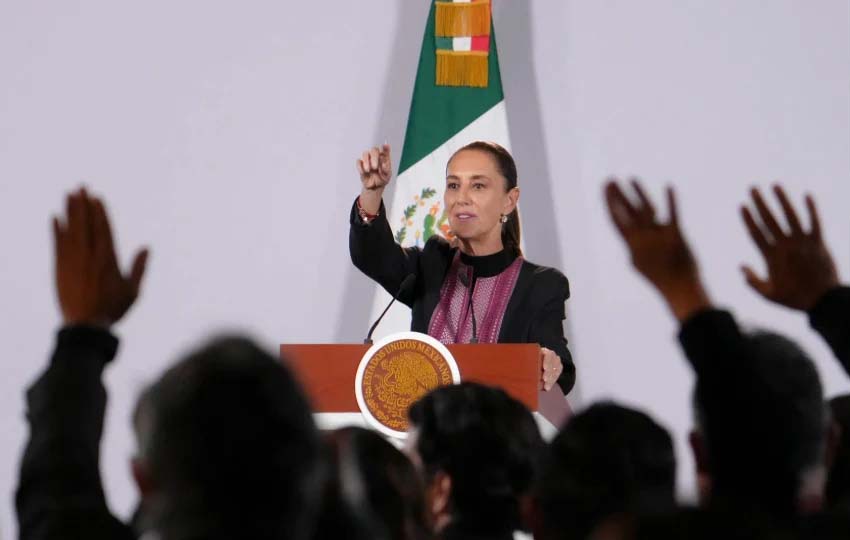
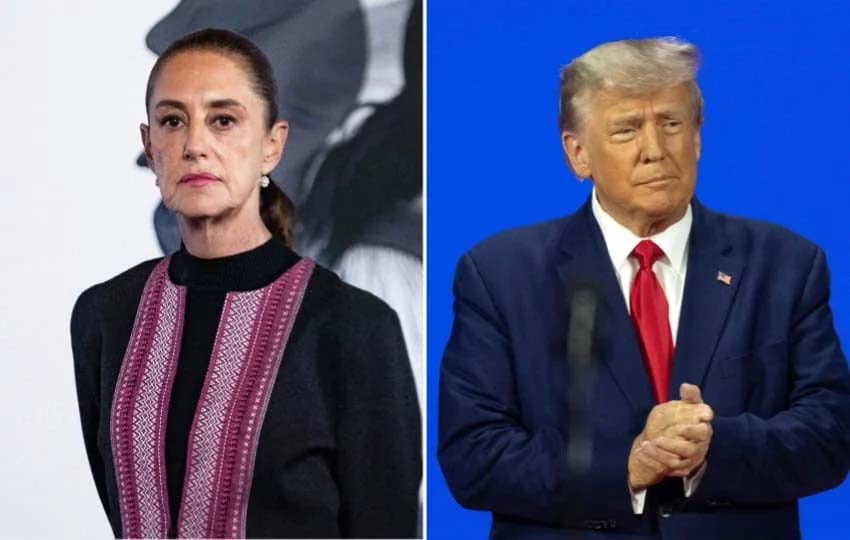
Mexico doesn’t need to be judged “from the outside,” President Claudia Sheinbaum declared Thursday, two days after U.S. President Donald Trump said Mexico must take additional action against drug cartels and arrest corrupt public officials who have colluded with them.
Responding to a “presidential determination” submitted to the U.S. Congress Tuesday, Sheinbaum said she would like to see “a report about what the U.S. government is doing in the United States” to reduce drug use and combat trafficking.
Trump’s remarks, contained in the “Presidential Determination on Major Drug Transit or Major Illicit Drug Producing Countries for Fiscal Year 2027,” are part of continuing U.S. pressure on Mexico to intensify its fight against cartels.
Last week, U.S. Secretary of State Marco Rubio said Mexico wasn’t doing “nearly enough” against cartels, while acknowledging that Mexican authorities “have done more than they’ve ever done before to go after these groups.” Rubio also suggested the United States could act unilaterally against criminal organizations operating in Mexican territory.
Since Trump began his second term in January 2025, his administration has designated eight Mexican cartels as foreign terrorist organizations. Sheinbaum has repeatedly rejected any U.S. military intervention in Mexico.
Trump calls for additional action
In his determination, Trump identified 23 nations as major drug transit or illicit drug-producing countries, including Mexico, China, Colombia, India, Panama and Venezuela.
Trump said that although his administration had secured the U.S. border, “Canada and Mexico need to do far more to stop the flows of deadly drugs into our country.”
He recognized the Sheinbaum administration for seizing larger quantities of drugs, dismantling clandestine laboratories and deploying additional security forces along the border. Trump also said U.S.-Mexico cooperation had helped eliminate notorious cartel leaders.
“However,” Trump wrote, “Mexico must take additional action against the narcoterrorist organizations that dominate vast areas of its territory and continue to threaten the American people.”
Trump also called for increased inspections at Mexican ports of entry, including Pacific coast seaports through which precursor chemicals used to manufacture fentanyl have entered the country.
He said Mexico’s investments in security forces were insufficient to sustain and expand operations against cartels, their finances and criminal networks.
“This includes exposing, arresting, and prosecuting the many corrupt public officials that have aided and abetted the cartels and betrayed their own country’s security and sovereignty,” Trump wrote.
Sheinbaum: What is happening in the U.S.?
Asked about Trump’s determination Thursday, Sheinbaum shifted attention to the American side of the drug problem.
“What’s being done about [drug] use?” she asked, describing addiction as a public health issue.
Sheinbaum acknowledged Mexico’s responsibility to combat drug production and trafficking but said U.S. authorities also have a responsibility to reduce drug consumption and pursue distributors operating within the United States.
“Where is the effort being made to stop drug cartels and distributors in the United States? What’s going on with money laundering in the United States?” she asked.
“In Mexico, we’re acting,” Sheinbaum said. “But what’s happening on the other side?”
She also raised the longstanding issue of firearms illegally entering Mexico from the United States, arguing that the firepower possessed by organized crime cannot be understood without considering cross-border weapons trafficking.
“We don’t need to be judged from the outside,” Sheinbaum said. “We know what Mexico’s problems are and we act [against them] every day.”
She said her government is subject to public scrutiny and regularly reports results from its security operations.
“But what’s happening over there?” Sheinbaum asked. “I would like to see a report from the [U.S.] government itself about the results over there and what they’re doing.”
The United States has also pursued anti-fentanyl public awareness efforts. In late 2025, the U.S. Drug Enforcement Administration launched its “Fentanyl Free America” initiative, combining enforcement with a campaign aimed at reducing both fentanyl supply and demand.
By Mexico News Daily chief staff writer Peter Davies.