by the El Reportero staff
Analysis
As the 2026 FIFA World Cup unfolds across North America, Mexico City has become far more than a host venue. It has emerged as one of the tournament’s emotional centers, where soccer, history and culture converge to create an experience that extends well beyond the matches themselves.
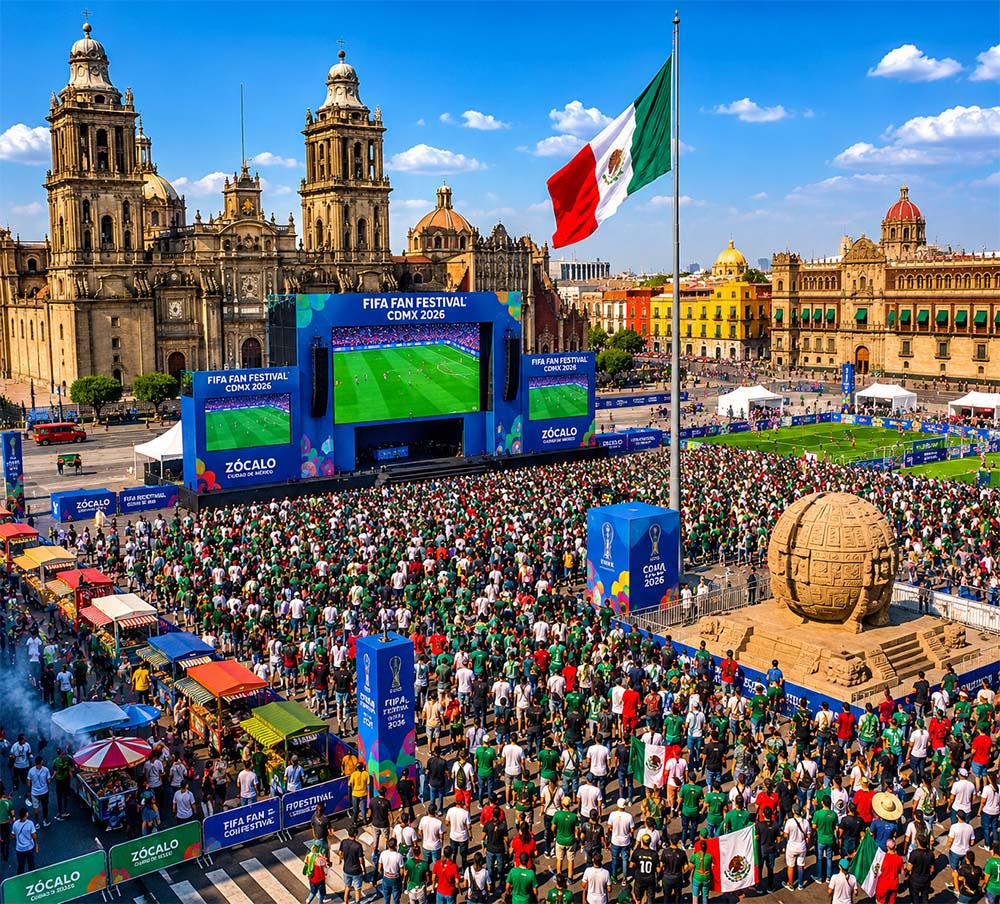
Long before kickoff, thousands of fans filled the city’s plazas, parks, restaurants and public squares. Visitors from dozens of countries gathered alongside Mexican supporters, transforming neighborhoods into lively meeting places where cultures, traditions and a shared passion for soccer came together.
The tournament marks another milestone in Mexico’s rich soccer history. After hosting the FIFA World Cup in 1970 and 1986, the country once again welcomes the world’s most popular sporting event, becoming the first nation to stage World Cup matches in three different editions. The achievement reinforces Mexico’s place among the sport’s most passionate and influential hosts.
At the center of that legacy stands the iconic Estadio Azteca, one of the most celebrated venues in international soccer. Fans remember it as the stadium where Pelé lifted the World Cup trophy in 1970 and where Diego Maradona produced both the legendary “Goal of the Century” and the controversial “Hand of God” goal in 1986. For many visitors, stepping inside the stadium is an opportunity to connect with some of the game’s greatest moments.
Beyond the stadium, Mexico City offers an experience that few host cities can match. Visitors have explored museums, colonial architecture, archaeological landmarks, public parks and vibrant neighborhoods such as Centro Histórico, Coyoacán and Roma. Together, these attractions provide an authentic look at one of Latin America’s largest and most culturally diverse capitals.
The city’s celebrated culinary scene has also become part of the World Cup experience. Restaurants, neighborhood eateries and traditional markets have welcomed visitors eager to sample authentic Mexican cuisine while enjoying the festive atmosphere. Local musicians, artisans and street performers have added to the celebration, giving fans an opportunity to experience the country’s cultural traditions firsthand.
The tournament has delivered a significant economic boost to the capital. Hotels have reported strong occupancy, restaurants have extended operating hours and transportation systems have adjusted to accommodate increased demand. Thousands of temporary jobs have been created in tourism, hospitality, security and event services, providing additional income for local workers and businesses.
Years of preparation also helped position Mexico City for the global spotlight. Investments in transportation, visitor services and public safety have allowed millions of guests to move throughout the city more efficiently while improving the experience for residents and tourists alike. Many of those improvements are expected to continue benefiting the city long after the tournament ends.
Equally memorable has been the hospitality shown by local residents. Visitors frequently describe Mexicans as welcoming hosts who gladly offer directions, recommend neighborhood restaurants and share their enthusiasm for the sport. Those personal encounters often become lasting memories that reflect the warmth for which the country is widely known.
International television coverage has introduced millions of viewers not only to packed stadiums but also to Mexico City’s historic landmarks, modern skyline and thriving cultural life. The images have presented a broader picture of the capital, highlighting a city that successfully blends centuries of history with contemporary energy and creativity.
Every World Cup creates unforgettable moments on the field, but many visitors say their favorite memories are being made away from the stadium. Conversations in neighborhood cafés, celebrations in public squares and the friendships formed among supporters from different nations have become part of the tournament’s unique character.
When the final match is over, the goals and championships will become part of soccer history. For Mexico City, however, the greatest legacy may be the opportunity to remind the world that it is not only one of football’s historic homes, but also one of the world’s most welcoming and culturally vibrant destinations.
Sources: FIFA, Mexico News Daily, Mexico City tourism authorities.
Mexican fans continue to celebrate on the light rail. pic.twitter.com/mikIfiJ4Iu
— Mexico News Daily (@mexicond) June 25, 2026