Friday, October 16, 2026
spot_img
Home Blog Page 91

Let’s defend our “Merry Christmas”: A cry for our culture and faith

por Marvin Ramírez

During this December season, it is impossible to ignore a phenomenon that has gained strength in recent years: the transformation of “Merry Christmas” into the generic “Happy Holidays” or “Felices Fiestas.” This seemingly inclusive practice has been driven by an agenda that seeks to dilute Christian values and reduce Christmas to a mere commercial event, stripping it of its divine essence. This change is not accidental; it reflects a society that, under the influence of atheistic revolution and materialism, attempts to erase our cultural and religious roots. Now more than ever, we must reclaim the greeting “Merry Christmas” as a declaration of faith, identity, and cultural resistance.

Christmas, as its name indicates, was conceived to commemorate the birth of Jesus Christ, the foundation of the Christian faith. Saying “Merry Christmas” is not just a greeting; it is an acknowledgment of that historical and spiritual event that has profoundly marked our Western civilization. By replacing it with a generic term like “Happy Holidays,” we are conceding ground to a narrative that seeks to strip this holiday of its original meaning, reducing it to a period of shopping, lights, and empty parties.

How did we get to this point? The answer lies in an agenda promoted by various sectors, especially governmental and educational, advocating for the absence of God in the public sphere. In many schools, for instance, it is prohibited to speak openly about Jesus Christ or about Christmas in its religious sense. This silencing is not innocent; it is part of a movement that seeks to replace spiritual values with superficial materialism. We are taught that there is no supreme being, that everything is the result of chance, and that happiness is found in consumption and possessions.

This narrative has also generated a feeling of fear or shame in openly expressing our faith. Saying “Merry Christmas” has become, for some, an almost subversive act, as if we were imposing our beliefs on others. But who is really bothered by such a greeting, full of good wishes and meaning? The answer is clear: those who seek to erase our roots and confuse us with ideologies foreign to our culture.

Western civilization, to which we belong as Hispanics, is grounded in Christian culture. It was Christianity that shaped our laws, our morals, and our sense of community. Through the centuries, this faith became integrated into our identity as a people, giving us a unique language and a sense of belonging. Today, that identity is being attacked by an entertainment industry that promotes empty values and a television that glorifies the superficial and ephemeral. Hollywood, with its productions, sells us a distorted version of reality, where what matters is not the soul, but the appearance and consumption.

In this context, the greeting “Merry Christmas” becomes an act of resistance. It is a reminder of who we are and where we come from. It is a declaration that we are not willing to abandon our faith or our cultural identity. By saying “Merry Christmas,” we are affirming our connection with our roots, with our parents and grandparents, who professed this faith with pride and passed it on as a precious legacy.

As Hispanics, we have a special responsibility in this regard. We are a great family, united by language, culture, and faith. If we allow these values to be taken from us, we will be letting them weaken us as a people. We cannot allow external ideologies to divide us or social pressure to make us ashamed of our faith. On the contrary, we must strengthen our traditions and pass them on with pride to future generations.

It is true that we live in a diverse society, where people of different creeds and cultures coexist. This diversity is a richness, but it should not be an excuse to dilute our own beliefs. Respecting others does not mean renouncing who we are. We can live in harmony, recognizing and celebrating our differences, without needing to erase our identity. Saying “Merry Christmas” is not an act of exclusion; it is an expression of our faith and our sincere desire to share the joy of this holiday.

“Merry Christmas” is more than a greeting; it is an affirmation of faith, culture, and identity. It is a reminder of our roots and an act of resistance against a society that tries to empty our traditions of meaning. I urge all Hispanics to say “Merry Christmas” with pride and courage. Let’s not allow them to steal this cultural and spiritual treasure from us. Let’s defend our faith, our history, and our identity, and celebrate together the birth of Jesus Christ, the true reason for this beautiful holiday. Merry Christmas to all.

spot_img

Col. Macgregor: Trump should not let Israel lead the US into war with Iran after Syria’s fall

by Col. Douglas Macgregor and James W. Carden

Fri Dec 20, 2024 – 1:56 pm EST (The American Conservative) — Peace is not at hand in the Middle East, and Israel’s Prime Minister Benjamin Netanyahu remains determined to expand the war.

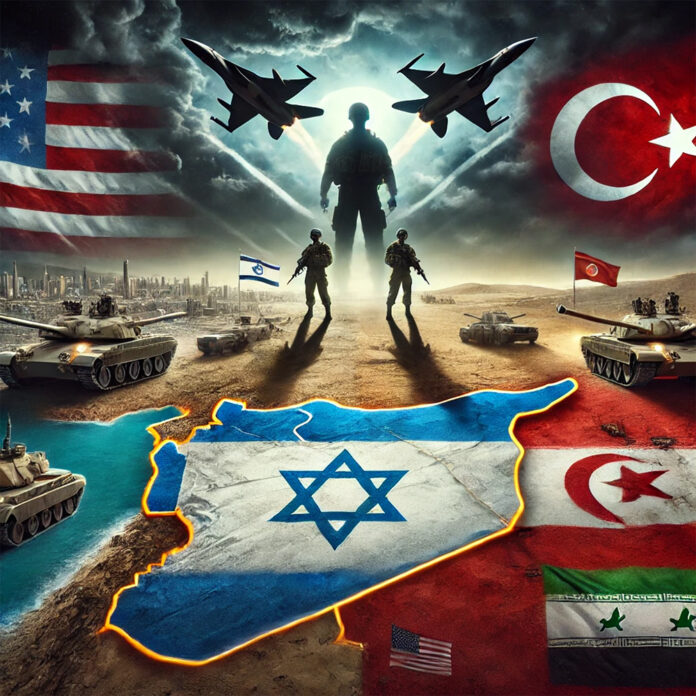
Syria’s de facto partition into Israeli and Turkish territories is the prelude to wider war with Iran. As the Times of Israel reported last week, the Israeli Air Force (IAF) has “continued to increase its readiness and preparations” for “potential strikes in Iran.”

Netanyahu’s top priority is the destruction of Iran before Russia wraps up its victory in Ukraine and Syria becomes a new battleground for Turks and Israelis. It’s not simply the end of Washington’s “rules-based international order.” It’s the onset of chaos.

Israeli forces and Turkish auxiliaries (i.e. the Islamist terrorists who sacked Syria) are already staring at each other across a demarcation line that runs east–west just south of Damascus. Netanyahu harbors no illusions about the conflict between Ankara’s long-term strategic aims in the region and Jerusalem’s determination to claim the Syrian spoils of war.

In addition to serious financial trouble and societal discontent on the home front, President-elect Donald Trump now confronts the dangerous distraction of wars he did not start, wars that will bring his administration and his country no strategic benefit. America’s underwriting of Netanyahu’s expanding war in the Middle East will endanger U.S. national security and guarantee that Washington, its armed forces, and the U.S. economy will be hostage to whatever strategic direction Netanyahu decides to take.

Starting the war sooner, rather than later, is critical for Netanyahu. War with Iran presents Trump with a strategic fait accompli. In case Trump decides to distance the United States from another bloodbath in the Middle East, Israel’s ongoing conflict with Iran and Turkey’s potential confrontation with Israel will make disengagement impossible.

American policy planners need to understand the larger context in which this is all unfolding – and why a war on Iran will ultimately bring us and our alleged Israeli friends to grief. The principal aim of U.S. foreign policy planners ought to be the adaptation of the American economy and military establishment to the multipolar world and the development of new markets, not new enemies. Washington’s refusal to acknowledge the fundamental shifts in power and wealth lie at the heart of much of the Biden administration’s foreign policy failure.

A successful management of change would avoid a conflict with Iran; it would peacefully reconcile competing claims to regional hegemony, as the Chinese recently did with their brokering of the historic rapprochement between the Kingdom of Saudi Arabia and the Islamic Republic of Iran. It would revitalize such multilateral organizations as the U.N. Security Council and the Organization for Security and Co-operation in Europe.

These actions would cultivate the emergence of new constellations of power along the lines of Metternich and Castlereagh’s 1815 Concert of Europe. Just as no question of strategic security in Europe can be solved without Russian participation, Washington cannot create stability in the Middle East by unconditionally backing Israel’s territorial ambitions.

Netanyahu believes he has the wind at his back: emboldened by the collapse of the Assad regime, he will turn his attention to Lebanon, southern Syria, and the West Bank. One predictable consequence of an attack on Iran will be a solidifying of the Chinese-brokered Iran-Saudi rapprochement – and a hardening of the blocs in the Greater Middle East, which will see Iran, backed by Russia, China, Saudi Arabia, set against a temporary Israel-Turkish bloc backed by Washington and its European vassals.

Iran is not Iraq: at 90 million people, it is double Iraq’s population, has a more developed economy, and has more powerful allies than Saddam Hussein ever did. Contrary to neoconservative expectations, there are no cake-walks in the greater Middle East.

The only certainty amid the chaos is that, thanks to the connivance of Biden, Netanyahu, and Erdogan, a wider war in the greater Middle East is only just beginning. It is one we will come to regret.

Reprinted with permission from Col. Douglas Macgregor.

spot_img

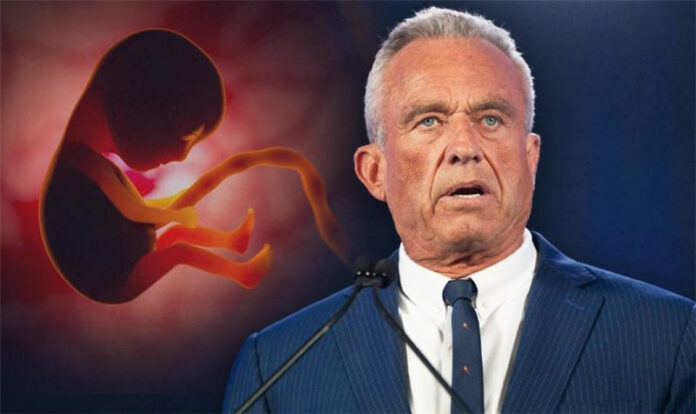
RFK Jr. says there are ‘too many abortions’ during meeting with Republican senators

RFK Jr. made promises to reenact several positive pro-life policies from the first Trump term, while also picking pro-life deputies to assist him at Health and Human Services

by Matt Lamb

Robert F. Kennedy Jr. reportedly said he believes there are “too many abortions in the world,” while meeting with Republican Senators as he works to build support for his nomination to lead the Department of Health and Human Services.

He also reportedly made promises that the Trump administration would reinstate pro-life policies from its first term and suggested he opposes efforts to include “gender identity” in federal healthcare law and mandate medical professionals provide transgender drugs and surgeries.

“I think there’s too many abortions in the world, let’s just start there,” he reportedly said. The quotes come from Senator Markwayne Mullin (R-OK) who rehashed the conversation to The Daily Wire.

“It’s not that I don’t value life, I value life, I just look at it a little bit different in certain circumstances, what we’ve been through as a family,” Mullin reported RFK Jr. saying.

RFK Jr. has drawn interest from some conservatives for his support for medical freedom when it comes to vaccines, his criticism of Big Pharma, and his pledge to “Make America Healthy Again” by taking on unsafe foods and chronic diseases. At the same time, he has held a variety of positions on abortion, most recently settling on what he called the “emerging consensus” that killing babies should be limited to the first 15 weeks or so. This would only protect about 7 percent of babies from abortion, according to Centers for Disease Control and Prevention data.

Sen. Mullin, recounting his conversation, asked RFK Jr. specifically for his position, saying he had been “all over the map on it.”

President Donald Trump has also signaled he does not see a role for the federal government in enacting legislative protections for preborn life. He also recently reiterated that he supports keeping in place President Joe Biden’s policy of allowing dangerous chemical abortion drugs to be mailed across the country with minimal oversight. The abortion drugs are responsible for about 60 percent of abortions today.

However, he reportedly plans to defund Planned Parenthood, reinstate a ban on taxpayer funding of foreign abortions (the Mexico City Policy), and ensure conscience protections for pro-life medical professionals. Defunding Planned Parenthood has been endorsed by both Vice President-elect JD Vance and Speaker of the House Mike Johnson.

RFK also “supports reinstating the bar on Title X funds going to organizations that promote abortion,” according to Sen. Josh Hawley (R-MO), who laid out the HHS secretary’s promises in a thread on X (formerly Twitter).

“He pledged to reverse the Biden Admin’s Section 1557 rule and also said all of his deputies at HHS would be prolife,” Hawley wrote. Section 1557 is an Obamacare regulation that would force healthcare providers to go along with a gender-confused person’s declared gender, despite it being incongruent with biological sex.

The Missouri Senator also reiterated the comments the nominee gave to Sen. Mullin. “He told me he believes there are far too many abortions in the US and that we cannot be the moral leader of the free world with abortion rates so high.”

Kennedy also reportedly told Mullin:

I’m serving at the will of the President of the United States, and it’s his policies that I will put forth. And so we may not agree on every single issue, but we agree 100 percent, we shouldn’t even be having abortions in this world anyways. But my policies are not what I’m pushing forward, it’s the president’s, and I think the country knows where the president is on that, and so therefore, that’s my position.

Sen. James Lankford (R-OK) said Kennedy “was very clear, President Trump is pro-life, and he’s gonna have this as a pro-life HHS.” He mentioned Trump’s “three exceptions” for rape, incest, and life of the mother, a view Trump mistakenly attributes to President Ronald Reagan.

Pro-lifers, however, stress that each child is deserving of protection from abortion, no matter their circumstances of conception or potential health problems. Furthermore, medical experts have confirmed that direct abortion is never necessary to save the life of a mother.

Some pro-life groups responded positively to the news of Kennedy meeting with Republican senators.

“There is ample room for the incoming administration to advance the pro-life movement incrementally over the next four years!” Americans United for Life CEO John Mize wrote on X.

“The next administration is poised to be the most protective and compassionate for pregnant women and their children in history,” Chelsey Youman, public policy director for Human Life Coalition, wrote on X.

However, commentator David Harsanyi criticized Hawley for supporting Kennedy, saying the HHS nominee “has a record of supporting [abortion] without any restriction until crowning,” alluding to his past opposition to any federal limits on abortion.

spot_img

California launches $4B youth mental health initiative

by Selen Ozturk

With youth mental health worsening, California has launched a new initiative to help kids access free treatment.

The over $4 billion Children and Youth Behavioral Health Initiative (CYBHI), part of Governor Newsom’s Master Plan For Kids’ Mental Health announced in 2022, aims to fight the youth mental health crisis through free telehealth apps offering peer support, health care system navigation aid and connection to local providers.

Between 2019 and 2021, about 1 in 3 California adolescents aged 12 to 17 reported symptoms that met the criteria for serious psychological distress, according to a statewide survey.

National estimates suggest that 1 in 2 adolescents are affected by a mental health disorder, with nearly half of these first appearing before 14 years of age.

As these numbers rise, youth statewide are not getting the care they need.

Of the 284,000 youth diagnosed with depression in California, for instance, 66% did not receive treatment during adolescence.

Meanwhile, suicide rates for Californian youth aged 10 to 18 increased 20% between 2019 and 2020.

The initiative

“To help kids get the help they need — and to address a nationwide shortage of providers that often cause long wait times — we’ve launched two mental health apps, BrightLife Kids and Soluna, offering free support to parents, caregivers and kids living in California, regardless of insurance status,” said Autumn Boylan, Deputy Director of the Office of Strategic Partnerships at the California Department of Health Care Services (DHCS), at a Tuesday, December 10 state-held briefing on the initiative.

BrightLife Kids offers free support to families with kids up to age 12 including coaching for sleep issues, anxiety, social skills and family caregiving coordination through live one-on-one video chats, direct messaging and on-demand content.

Coaches are bilingual in English and Spanish, and caregiver users have access to translation up to over 17 languages.

For Californians aged 13 to 25, Soluna offers multilingual one-on-one text and video chats with user-selected coaches, with a one-minute average wait time; peer discussion forums; interactive journaling, breathwork, mood log and goal-setting tools; mental health quizzes, videos and articles; health care system navigation support, including dental and vision; and even help in finding other resources like local food banks, housing aid, transportation and even cooling centers.

The free resources are currently state-funded through June 30, 2027 and available for download on the App Store and Google Play, requiring an in-state zip code for signup.

“When my own child was experiencing mental health challenges, it was tricky navigating a complicated health system alone,” said Boylan. “And when we were talking to young people leading up to the launch of these apps, we heard clearly that they don’t necessarily want to talk to a licensed practitioner right away, but to peers and near-peers that can understand their lived experience.”

“So it made sense to offer upstream, early-intervention support to youth who may not necessarily have a mental health diagnosis, but who need skills to cope with everyday-life stressors and let them know they’re not alone … which would also take some pressures off understaffed practitioners statewide. Then, for kids who need more support, we connect them to these practitioners through these apps,” she added.

Community stories

“I’ve worked with Dr. Diana, a family physician and mother who was completely skeptical about this program, but signed up because her child was dealing with tantrums and aggressive behavior like biting,” said Brando Menjivar, a senior coach for BrightLife Kids. “Through coaching to support her child, not only did his behavior improve, but so did communication with her husband about their best parenting approach.”

“The more I work with caregivers and kids, the more I realize that sometimes we fight our emotions. The first step is labeling these emotions so we can be aware of them and identify their triggers … and accept that experiencing, say, grief or stress isn’t bad. It becomes bad when we don’t manage it, and it just sits there and turns into something worse,” he continued.

Most standard medical textbooks attribute 50% to 80% of disease to stress-related origins.

“The concept I love to teach kids dealing with big emotions is of being the surfer who swims toward the big wave to ride it, rather than swimming away,” Menjivar added. “Toward the end of our coaching, Dr. Diana said ‘Nobody teaches you how to be a parent in med school.’ She had all this physical knowledge, but didn’t know how to connect the dots so she and her child could make space to accept their emotions.”

“I grew up in a pretty traditional Latino household, so mental health was a taboo subject. It was rarely talked about,” said Yasmin, a Soluna coach. “And as a teenager, I experienced a lot of traumatic events and felt really alone in my suffering. For the longest time, I just questioned why I was going through it. It wasn’t until I learned about the peer support model in college when it clicked — all the emotional challenges I went through were so that I could help other people.”

“I share my story because it’s one that all our peer support specialists have. We all have lived mental health struggles that fuel us to support other people,” she continued. “And our coaching sessions are goal-based, so whether our users want to have 10 sessions, or just come in for one single session, all our coaches have a solution-focused approach to help create actionable steps for change.”

Describing the need for these services, Moa Kim, a counselor at Koreatown Youth Community Center in Los Angeles, said “I have a Korean American fifth grade student, born and raised in Koreatown, who comes for rehab services, and he and his mom come in for therapy as their relationship has been strained, because they feel like they can’t communicate well with each other, especially when they’re angry.”

“She’s very overworked from her job, and her husband is often unavailable due to his job, and he expects her to be the primary caretaker for their son, so she’s struggling with their child’s emotional outbursts, and then she frequently loses her temper, which only worsens the situation, and she feels too drained to practice peaceful parenting or prioritize self-care,” she continued.

“So her son, who is very sensitive and bright, has turned to gaming as a coping skill. So now, every time he and his mom fight, he shuts himself in his room. And his mom recognizes the need to spend more quality time with her son, but feels too overwhelmed to make those changes,” Kim explained. “We’ve been providing help and parenting tips, but can only meet them once a week — so she feels unsupported.”

“This is just one example of countless youth and families with similar struggles throughout California that this initiative is going a long way to help,” she added. “To deal with these mental health issues, kids need help learning to communicate them … that’s what these apps are here for.”

spot_img

Rediscovering happiness: The truth behind artificial stimulants

by Marvin Ramírez

Alcohol and drugs have historically been associated with fun and happiness. For many, consuming them at social events seems to be the only way to enjoy life. However, that happiness is based on an illusion created by substances that alter perception. The question is: is it really the only way to be happy? The answer is no.

The cycle of the search for artificial happiness
From a young age, many people believe that the only way to experience a “good time” is through alcohol, marijuana, or stronger drugs. At first, it seems harmless: a marijuana joint, a few drinks with friends. What begins as a fleeting experience slowly turns into a repeated habit every time they socialize. The brain becomes conditioned to associate fun with the effects of substances, transforming what was once a form of enjoyment into a constant need to rely on an external stimulant.

The Trap of the subconscious
The real danger lies in how the brain adapts. Every time a “good time” is sought, substances are automatically turned to. This behavior becomes an alteration of emotional balance, where the body’s natural energy is replaced by an external impulse. Activities like dancing, listening to music, or having conversations become difficult without the help of a stimulant. What seems like empowerment is, in reality, an illusion, as the substances mask true emotions. Those who depend on them do not realize that they are no longer genuinely enjoying the experiences.

The destruction of natural happiness
Substances not only affect the body physically but also destroy the ability to enjoy life naturally. Alcohol, for example, has devastating effects on the body: it dehydrates the brain, affects memory, reduces decision-making ability, and, over time, destroys vital organs. The most dangerous part is that it robs a person of their ability to generate happiness from within. Life becomes an empty cycle, where emotions are perceived as fleeting, and people become slaves to the need for an artificial “high.”

Breaking the cycle: Reclaiming control
Breaking this cycle requires awareness. The happiness provided by substances is false and fleeting. True joy comes from connecting with oneself and the environment in an authentic way. It is possible to break free from dependence with determination and support. A first step is to seek professional help or join support groups. There are many ways to experience happiness without resorting to drugs or alcohol: meditation, exercise, music, art, or a sincere conversation with a friend.

The Power of will: Living fully
Breaking free from stimulant dependence requires willpower. It is not just a matter of abstaining but restructuring the way life is lived, focusing on genuine sources of pleasure that can be found in the simplest aspects of life. Living without dependence allows one to experience true happiness, which comes from inner connection and not from a temporary “high.”

It is time to free ourselves from the trap that has made us believe happiness depends on the artificial. True freedom and well-being lie in living naturally, harnessing our internal energy to fully enjoy life.

spot_img

How to lose weight quickly and comfortably with smart habits

by Marvin Ramírez and the El Reportero‘s staff

Losing weight quickly, comfortably and effectively is the goal of many people who want to improve their health and physical appearance. To achieve this, it is essential to combine smart strategies that integrate balanced nutrition, specific exercises and complementary tools such as shaping belts. Next, we will explore how to optimize these elements to achieve long-lasting results.

When the body accumulates fat, especially in the abdominal area, the underlying muscles are subjected to constant stretching. This process can cause the tissue to lose elasticity, making it difficult to recover once weight loss begins. Therefore, in addition to reducing fat, it is essential to actively work on muscle toning.

The first step towards effective weight loss is to adjust the diet. This does not mean going on extreme diets, but rather focusing on foods rich in nutrients and low in calories. Eating lean proteins, fruits, vegetables and complex carbohydrates helps maintain energy levels while promoting fat burning.

Avoiding processed foods, sugary drinks, and trans fats is equally crucial. Replacing these with healthier options, such as water, green tea, or natural snacks, can make a big difference. Additionally, maintaining a moderate calorie deficit—consuming fewer calories than you burn daily—is the key to consistent, sustainable weight loss.

As belly fat decreases, belly-specific exercises are essential to firm skin and muscles. The abdomen is made up of different muscle groups that must be worked comprehensively.

For the upper abdomen, exercises such as crunches and leg raises are highly effective. On the other hand, for the lower abdomen, planks and movements such as the mountain climber offer excellent results. These exercises not only tone, but also strengthen the core, improving posture and preventing injuries.

Shapewear has gained popularity as an additional weight loss tool, especially in the abdominal area. While they do not burn fat directly, they can offer significant secondary benefits.

First, by wearing a shapewear, the abdominal muscles receive additional support that helps keep them in a more compact position. This can help “train” muscle memory and promote a more streamlined appearance. Second, some thermal girdles are designed to increase the temperature in the abdominal area, which can promote sweating and, with it, the temporary elimination of retained fluids.

It is important, however, not to rely exclusively on girdles. These should be complementary to an exercise routine and a proper diet. Wearing them for prolonged periods or incorrectly can cause discomfort or even health problems, such as breathing difficulties.

The weight loss process requires a balance between physical effort and recovery. Drinking enough water not only helps keep the metabolism active, but is also essential to eliminate toxins and prevent fluid retention. Likewise, sleep plays a critical role. During rest, the body regulates appetite hormones and repairs muscle tissue, which maximizes the results of exercise and prevents fat accumulation.

Setting realistic goals is key to avoiding frustration and maintaining long-term motivation. In addition to abdominal exercises, cardiovascular activities such as running, swimming or dancing are essential for burning calories. High levels of stress can trigger emotional eating, so techniques such as yoga or meditation are useful.

Eating only two meals a day can definitely help decrease food addiction, which will consequently make the person lose fat and weight in the body. For those who really want to lose weight, it is recommended not to eat after 4 pm, which allows the body to optimize fat burning during the night’s rest. To tame the munchies, the stomach can be distracted with some fruit, which helps keep cravings under control without breaking the eating plan.

Losing weight quickly and comfortably requires a comprehensive approach that combines healthy eating, exercise, tools such as shapewear, and positive habits such as adequate rest. Although the process can present challenges, maintaining consistency and a positive mindset will make the results easier to achieve. With patience and dedication, it is possible to achieve a healthier, fitter body.

spot_img

Mexican christmas show at Santana Row Park in San Jose

by Magdy Zara

Every Tuesday in December is a family-friendly event at Santana Row Park, with Christmas shows being organized, where you can also enjoy snow showers at Park Valencia, photos of Santa Claus at Oak Tree Lounge, balloons and much more.

This week, the presentation of the new ballet “The Nutcracker of San Jose” is scheduled, as well as Nor Cal Dance Arts, Sarah Bylsma Holiday Vocalist PNC

Music Co, the Los Laureles Folk Group, among others.

This Tuesday, Dec. 17, the activities will take place from 6 to 8 p.m., on the main stage of the Park, admission is free.

For more information, call 408-551-4611.

Enjoy Latin nights at El Infierno nightclub

El Infierno nightclub offers flavorful nights with Latin music and dance classes.

Dance classes are with Antonio and Isamar, followed by a social dance with DJ Bongo playing the best bachata, salsa, cha cha cha and cumbia.

You can’t miss the opportunity to immerse yourself in rhythms like salsa and bachata, in a fun and attractive environment.

The date is this Thursday, Dec. 19, dance classes are scheduled starting at 7 p.m., Tickets are $15.

El Infierno Nightclub is located at 120 Fifth Street, Santa Rosa.

Vacations with the Symphony: Elf in Concert

A unique opportunity for the little ones in the house to learn about and love classical music is what the San Francisco Symphony Orchestra is offering with its Vacations with the Symphony program, which projects popular film productions accompanied by a concert by the orchestra.

This Christmas you can experience your favorite holiday movie transformed with the music of the live symphony orchestra Elf in Concert, for the first time.

Elf in Concert will be available to families on Dec. 19, 20, and 21 of this year starting at 7 p.m., at the Davies Symphony Hall, located at 201 Van Ness Avenue, in San Francisco.

2025 Social and Economic Justice Music Festival

Everything is set for The Congress of the People and the Social and Economic Justice Music Festival that will bring together a wide range of activists, and artists in a call to fight against social and economic injustices.

The Social and Economic Justice Music Festival will feature all genres and styles of music, as well as other art forms besides music. On Saturday there will be three workshop sessions on various topics and on Sunday there will be three sessions of song sharing and shared performances. Both days end with an evening concert.

The Music Festival for Social and Economic Justice is scheduled for Saturday, January 25 and Sunday, Jan. 26, starting at 9 a.m., at Mission High School, 3750 – 18th Street, between Dolores and Church streets.

spot_img

When the Catholic clergy tried to eliminate the Virgin of Guadalupe

When the Zapatista troops entered Mexico City on December 6, 1914, they raised the flag of the Virgin of Guadalupe as a symbol of their struggle.

In the beginning, the Virgin of Guadalupe was not well received by the institutional religion because she was considered too indigenous. Only ten years after her birth, the Catholic clergy tried to suppress the cult

by México Desconocido

The history of religious phenomena is certainly very complex. Periods such as the conquest and evangelization in Mexico in the 16th century are a faithful testimony to all this. And it is that, although it may seem extraordinary to us, at that time the Catholic clergy tried to eliminate the Virgin of Guadalupe, only ten years after her appearances on the Tepeyac hill. With this in mind, can we say that the Guadalupana was really a symbol of religious imposition? Let’s learn more about it.

Evangelization. Veneration by substitution

After the fall of Mexico-Tenochtitlan, the Franciscans were the first religious order to arrive in New Spain. With their early arrival in May 1524, they were in charge of beginning the evangelization of the Mesoamerican peoples. After the destruction of the effigies and temples of the ancient gods (such as in Texcoco in 1525), the flogging and imprisonment of people reluctant to be baptized, Friar Pedro de Gante decided to introduce pre-Hispanic practices into the Catholic cult. With this, they managed to begin to attract the indigenous people to Christianity, and begin their indoctrination.

Also for this purpose, they promoted what the historian Edmundo O’Gorman called “substitution cults.” That is, the religious replaced the ancient deities with Marian advocations or saints, in order to direct indigenous devotion towards them. It is in this context that, according to what is related in the Nican Mopohua, the miraculous apparitions of the Virgin of Guadalupe began in December of the year 1531.

Although there is no evidence of these portents, there is evidence of the early Marian cult in Tepeyac. Chroniclers such as Bernal Díaz del Castillo or Friar Bernardino de Sahagún left notice of it in their writings.

Idolatry and Franciscan fury. The Catholic clergy tried to suppress the Virgin of Guadalupe

However, by the year 1540, the evangelizers were fighting what they had previously promoted. The native peoples had developed a cult centered on images, particularly those of Mary. The intricate religious syncretism that the Mesoamericans had practiced with Christianity and their ancient faith, revealed a devotion different from what the friars knew in Europe. The Franciscans, who were and continue to be Christocentric, saw this as an uncontrolled and massive idolatry. In places like Tlaxcala, they destroyed all the effigies of saints and virgins.

The main point of this type of heterodox cult was the hill of Tepeyac, where the veneration for the Virgin of Guadalupe had become strong. This fact had as a background the fervor in that place for the ancient goddess Cihuacóatl. Sahagún himself never looked favorably on the new Virgin. In his famous Historia general de las cosas de la Nueva España, he left evidence that it was known that in ancient times, Tonantzin Cihuacóatl was venerated in that place. The censorship exercised by these religious people was openly hostile to the Guadalupana, turning her devotion into an informal matter without full ecclesiastical recognition.

Archbishop Montúfar against the Franciscans. The triumph of the Guadalupana

Later, in 1554, the new archbishop of Mexico arrived: the Dominican Alonso de Montúfar. He decided to centralize the power of the archbishopric. To do this, in 1556, he wanted to subordinate the Franciscan autonomy and begin collecting tithes from the indigenous people. In addition, having learned of the stories of the apparitions at Tepeyac, he began to promote the formal worship of this Marian devotion. Faced with this, the Franciscans accused him of instigating idolatry towards a painted image, of which there was no evidence of its miracles.

It is in the midst of all this that historians such as Edmundo O’Gorman or Rodrigo Martínez Baracs have proposed that thanks to the advice of the humanist Francisco Cervantes de Salazar, the archbishop summoned Antonio Valeriano and other scholars from the College of Santa Cruz Tlatelolco, to collect testimonies about the apparitions of the Virgin of Tepeyac. The purpose was to give it legitimacy and diffusion through what would become the Nican Mopohua. It is not a question of one Juan Diego, but of several “Juan Diegos”, anonymous informants, who told Valeriano what they had seen. Their stories seem to be reminiscent of the appearances of the Mexica deity Cihuacóatl in pre-Hispanic times. Thanks to all this, a formal cult of the Virgin of Guadalupe was established around 1556, officially recognized by the Catholic Church.

The Virgin of Guadalupe: the triumph of the conquered

Thus, the various historical investigations and hypotheses point to the fact that, contrary to what some believe, the Virgin of Guadalupe is rather an original religious expression of the indigenous peoples subjected to Spanish power. These communities, encouraged by the violence and oppression committed against them in this period, built a figure of legitimacy in the new political, social and religious order imposed by the Europeans.

Even her iconographic attributes seem to be an amalgam of features of ancient Mexican deities together with those of the Immaculate Conception. Although the name Guadalupe comes from the homonymous Virgin of Extremadura, in Castile, Spain, it was not taken directly from her, but from the mountain range where Tepeyac is located. As Dr. Miguel León-Portilla pointed out, it seems that the mountain range to which the famous hill belongs was called “de Guadalupe” (as it is still known) by the conquerors, some time before the apparitions. This is because most of them came from the Castilian region; to commemorate their place of origin, they named the Mexican mountain range after their patron saint. The name “Sierra de Guadalupe” was already included in the first minutes of the Mexico City council.

As the Mexican philosopher Luis Villoro commented in the documentary El pueblo que caminando (1995), the conquered managed to resist and conquer their conquerors through the Virgin of Guadalupe. To protect them and overcome Spanish domination, to legitimize the right they had to exist in the nascent New Spain, the Guadalupana successfully broke into the hegemony of Catholic Christianity. As a social, historical and anthropological phenomenon, the Virgin became a continuous symbol of resistance and social justice.

spot_img

The dark side of gaming addiction: Violence and manipulation

by the El Reportero staff

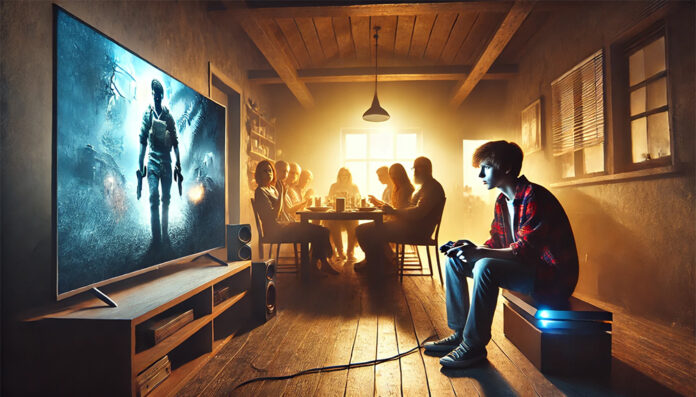
The tragic story of the Voigt family exposes a chilling reality: unchecked video game addiction can lead to unimaginable violence. What began as an obsession with gaming ended with a father dead, a mother critically injured, and a community shaken. The case is a stark reminder of how addiction can spiral into destructive behavior if left unaddressed.

Experts warn that video game addiction is not just a harmless pastime. For some, it becomes a psychological dependency that alters brain chemistry, blurs the line between reality and fantasy, and provokes extreme reactions. “Video games are designed to be addictive,” explains Dr. Angela Rhodes, a psychologist specializing in behavioral disorders. “The reward systems built into these games can manipulate players into seeking endless gratification, often at the expense of their mental health.”

The gaming industry’s profit-driven strategies play a major role in this issue. Developers design games to hook players with features like endless progression, microtransactions, and immersive storylines. These tactics create armies of addicts who spend countless hours and dollars on their products. Meanwhile, the financial rewards for these companies soar, leaving addicts and their families to deal with the fallout.

Research highlights the severity of the problem. According to a 2023 study by the American Psychiatric Association, 8.5 percent of young gamers exhibit signs of gaming disorder, a condition recognized by the World Health Organization. These individuals often display withdrawal symptoms, aggressive behavior, and difficulty functioning in daily life. For families, the consequences can be devastating.

Joseph Voigt, 23, serves as a tragic example of how addiction can escalate. His compulsive gaming habits led to repeated conflicts with his father, Marvin Voigt, who urged him to take responsibility for his life. On a fateful Saturday night, this tension exploded into violence. Joseph fatally shot his father and critically injured his mother, Susan Voigt, 58, when confronted about his gaming obsession.

“It’s heartbreaking to see how addiction can push someone to such extremes,” Dr. Rhodes remarked. “This tragedy could have been avoided with earlier intervention and support.”

The societal cost of gaming addiction is immense. Families often struggle to recognize the signs until it’s too late. The immersive nature of gaming can isolate individuals, making it harder for loved ones to intervene. Experts emphasize the importance of setting boundaries and monitoring gaming habits, especially among young people.

Joseph Voigt’s history illustrates the cascading effects of addiction. Prior to the shooting, he had a record of violent behavior, including arrests for battery and discharging a firearm. His addiction likely exacerbated underlying issues, creating a storm that culminated in tragedy.

The Voigt case highlights the urgent need for awareness and action. Parents and caregivers are encouraged to stay vigilant for warning signs of addiction, such as excessive gaming, social withdrawal, and heightened irritability. “Ignoring these red flags can have dire consequences,” Dr. Rhodes cautioned.

Regulation of the gaming industry also plays a crucial role. Advocates argue that developers should take greater responsibility for the psychological impact of their products. Measures such as transparency about addictive features, time limits, and parental controls could mitigate some of the harm caused by excessive gaming.

Meanwhile, Susan Voigt remains hospitalized, her recovery uncertain. The community has rallied around her, but the emotional scars left by this tragedy will take much longer to heal. Joseph awaits trial, facing charges of murder and attempted murder. His case serves as a grim warning of what can happen when addiction is allowed to fester.

The story of the Voigt family underscores the high stakes of gaming addiction. It is a call to action for families, educators, and policymakers to recognize the dangers and take steps to address them. As Dr. Rhodes concluded, “This is not just about video games; it’s about protecting lives.”

– FoxNews reports contributed to this article.

spot_img

“We are coming out of the desert”: Milei takes stock of the first year of his government

Mandararios del bloque de Mercosur junto a la presidenta de la Comisión EuropeaSantiago Mazzarovich / Gettyimages.ru

The Argentine president assured that the objective is to make 3,200 more structural reforms before finishing his government

by the El Reportero wire services

The president of Argentina, Javier Milei, offered a message on national television this Tuesday, December 10, on the occasion of the first year of his administration.

The president recorded his speech this afternoon from the white room of Casa Rosada, the headquarters of the Executive in Buenos Aires, to point out the achievements of his administration 365 days after assuming power, and to advance the measures of what he called “the deep chainsaw.”

At the beginning of his speech, Milei thanked the “ordinary” Argentines who endured the governments of “the caste,” as he usually calls the traditional political parties, and who with their vote were willing to resist the strong adjustment applied by the libertarian government.

“The sacrifice they have made is moving. I assure you that it will not be in vain,” he said. And he added that, due to the situation inherited, “getting the country out of misery would require going through a painful impasse.”

“Whether you like it or not, Argentina has emerged from the hole into which politicians sank us. And today, for the first time in decades, the sun of hope is shining,” he said.

“Happy times are coming”

For Milei, the country is heading towards a future of prosperity that for many is “unimaginable.” “We have overcome the test of fire. We are emerging from the desert. The recession is over and happy times are coming,” said the president. However, he clarified: “We have not reached port, but we can end the year with relief, and with the certainty that next year will be better.”

According to Milei, the future objective is to make 3,200 more structural reforms before finishing his government. Meanwhile, for next year, the head of State assured that there will be “sustained growth” thanks to the “cyclical recovery”, the recovery of salaries and pensions, due to the fall in inflation.

In addition, he promised the end of the so-called ‘cepo’ exchange rate, an economic measure that restricts the purchase of foreign currency, and it will be “forever”. According to Milei, soon Argentines will be able to make their transactions in the currency they wish.

Free trade

When mentioning Mercosur, the president said that the South American bloc must “increase the autonomy” of its members, so that each country can trade with whomever it wants. In that sense, he anticipated that Argentina’s objective for next year is to promote a free trade agreement with the US.

He also mentioned that he will apply an “anti-mafia law, in the image and likeness of the RICO law, which liquidated organized crime” in the North American country 50 years ago. He also said that the project to lower the age of criminal responsibility for minors who commit crimes will become a reality.

Management summary

After having applied drastic measures to cut public spending, which he symbolized under his proclaimed “chainsaw”, the economist who defines himself as a “libertarian liberal” has managed to contain the high rates of inflation.

The consumer price index fell from 25.5 percent in December 2023 to 2.7 percent in October of this year, while the year-on-year measurement fell from 211.4 percent to 193 percent, although it is estimated that it will be lower at the end of 2024.

Along the way, consumption and industrial production suffered sharp declines, driven by a deep recession and its consequent layoffs.

Meanwhile, under the premise of reducing the State to a minimum, 13 Ministries were eliminated, state agencies were closed and budgets for Science, Culture and Education, among other areas, were cut. There was also a sharp cut in the salaries of retirees, and all public works with national financing were suspended.

In Milei’s first year as president of the country, it can be said that there are certain economic parameters that have stabilized. In addition to controlling inflationary tension, he managed to break through and lower the country risk barrier, managed to keep the value of the dollar at bay, and achieved fiscal and trade surpluses.

However, the social consequences are overwhelming. Poverty rose from 40.1 percent to 52.9 percent in the first 6 months of Milei’s government. And unemployment rose 1.4 percent year-on-year and reached 7.6 percent of the population in the second quarter of 2024.

– With reports by RT.

spot_img