Sunday, June 28, 2026
Home Blog Page 85

The celebration of Hispanic Heritage and October 12: A bridge between cultures in Latin America and the U.S.

by El Reportero News Services

Every October 12, we commemorate Hispanic Heritage Day or the Day of the Discovery of America, a milestone that marked the beginning of an unprecedented cultural exchange between the Old World and the New World. This crucial event in global history not only signaled Europe’s expansion into unknown lands but also laid the foundations for what we now know as the Hispanic-American world. This celebration holds particular significance for Latin America and the United States, regions that, despite sharing common cultural roots, have followed different historical and social trajectories.

The Meaning of October 12

On October 12, 1492, Christopher Columbus arrived at what we now know as the Americas, in an encounter between two worlds that would transform the history of both. This day marks the beginning of European colonization in the Americas, which brought with it a complex and multifaceted legacy, full of both light and shadows. On the one hand, European colonization led to the establishment of new cities, the exchange of technologies, and cultural intermingling. On the other hand, it also imposed a dominant culture on pre-existing indigenous societies, exploited their resources, and initiated a long history of conflicts and inequalities that persist to this day.

Hispanic Heritage in Latin America

In Latin America, October 12 is commemorated under various names and with diverse approaches. In countries like Mexico, Chile, and Argentina, the day is known as “Día de la Raza” (Day of the Race), highlighting the mix of cultures that emerged following the arrival of Europeans. It is a day for reflecting on the blending of races, customs, and beliefs that gave rise to the rich cultural diversity of Latin America. This celebration also seeks to acknowledge the indigenous and Afro-descendant heritage, which is an essential part of Latin American identity.

For many, this day is an opportunity to highlight the cultural, social, and economic achievements of Latin American countries, which have forged their own identity over the centuries. However, it is also a moment to remember the devastating effects of colonization, such as the loss of millions of indigenous lives and the imposition of power structures that still affect the region today.

Hispanic Heritage in the United States

In the United States, October 12 has traditionally been celebrated as Columbus Day. However, this commemoration has been the subject of controversy in recent years. While some view it as a celebration of the discovery of the New World and the beginning of European settlement in America, others see it as the start of the oppression and exploitation of indigenous peoples.

Due to this growing historical awareness, many U.S. states and cities have begun to replace Columbus Day with Indigenous Peoples’ Day, to honor the cultures and contributions of the native peoples who inhabited these lands long before the Europeans arrived. Despite these debates, the Hispanic legacy remains strong in the U.S., especially in states like California, Texas, and Florida, where the Latino presence has left an indelible cultural mark.

A bridge between two worlds

October 12 symbolizes a bridge between cultures, both in Latin America and the United States. Hispanic Heritage, in all its forms, serves as a reminder of the power of diversity and cultural exchange. In Latin America, the blending of cultures has created a vibrant region with a rich artistic, literary, and musical heritage. In the U.S., the growing Hispanic influence is reflected in all aspects of society, from politics to entertainment.

The commemoration of this day invites reflection on how the encounter between two worlds has shaped the Americas we know today. By recognizing both the positive and negative aspects of this legacy, we open the door to a future where cultures can coexist and enrich one another. Thus, October 12 is more than just a historical commemoration; it is a call to build a shared identity where diversity is celebrated, and the past serves as a lesson for a more inclusive future.

spot_img

As election nears, experts explore issues uniting rural, urban voters

by Suzanne Potter, Producer

During this contentious election season, people may think rural and urban voters are hopelessly divided but experts said it is largely a myth.

The University of Southern California Sol Price School of Public Policy is hosting a webinar two weeks from today on understanding rural voters.

Elizabeth Currid-Halkett, professor of public policy at the university, said urban and rural voters actually have quite a bit in common.

“Their values are very much aligned on the basics,” Currid-Halkett reported. “We all care about the environment. We care about our families. We hope for a better future for our country. We believe in democracy.”

The University of Chicago’s General Social Survey found rural and urban Americans share the same basic values when it comes to their belief in God, environmentalism and social policy. But she observed you would never know it from the false stereotypes permeating cable news and talk radio.

Currid-Halkett noted most high-quality journalism these days is hidden behind paywalls, making it hard to access for the average voter.

“I think if we had easier access to understand varying political perspectives, we might, one, realize we aren’t so divided,” Currid-Halkett contended. “And two, we might get a sense of why people think differently than us, but it’s very hard to do that in the current way we get media.”

The webinar will also feature speakers from Colby College, the Center for Sustainable Development, the Brookings Institution, and the Unruh Institute of Politics at USC Dornsife.

During Hispanic Heritage Month, tips on financial literacy

During National Hispanic American Heritage Month, financial experts are speaking out to help Latino families build wealth.

Federal data show that more than a quarter of Latino consumers in the U.S. have no recent credit history, making them “credit invisible” and unlikely to qualify for a loan.

Jorge López Colunga, business development officer in commercial lending for Self-Help Federal Credit Union in San Francisco, said some Latinos are unaccustomed to using credit.

“In Mexico, Latin America, it’s either you pay cash or you just don’t buy it because you cannot afford it,” López Colunga explained. “Here you have to learn how to use credit and leverage it, because it’s crucial in order for them to afford something bigger in the future.”

López Colunga pointed out many Latinos are self-employed and may operate on a cash basis. He advised people to keep meticulous records and hire an accountant because accurate business income and tax records will help them qualify for business, home and car loans down the line.

María Ramos Cuaya, racial wealth gap coordinator at Self-Help Federal Credit Union, encouraged people to seek financial counseling.

“We always try to connect our members with the proper resources for them to understand how to create a spending plan, how to manage their finances, how to access credit without having to get into so much debt,” Ramos Cuaya outlined.

Ramos Cuaya noted many banks and credit unions offer “credit builder” loans to help people establish or build new credit using their own money.

spot_img

Petro calls for a “generalized mobilization” after denouncing the beginning of a “coup d’état”

Gustavo Petro, president of Colombia

The president of Colombia asked security forces “not to raise a single weapon against the people”

by El Reportero news services

The president of Colombia, Gustavo Petro, called on Tuesday for citizens to mobilize against the decision of the National Electoral Council (CNE) to press charges against him for alleged irregularities in the financing of his electoral campaign.

After claiming that the investigation marks the beginning of an attempt at a “coup d’état,” the president asserted that “the people” would take to the streets in his favor.

“All popular organizations in the country must enter into a permanent assembly. The time for the generalized mobilization of the Colombian people has come,” Petro stated on his X social media account.

He added, “The constitutional president of Colombia, elected by popular vote, orders the public forces not to raise a single weapon against the people.”

“A time for decisions”

This Tuesday, during a speech from Carmen de Viboral, in the Antioquia department, Petro said that the CNE has placed the government of Colombia “in a difficult, grave moment.”

“We are not fools. What they are after is a coup d’état, not like those of the past, with soldiers, cannons, and tanks,” he said, adding that he had ordered the Army and public forces not to react against the population.

“Their enemies are the criminals, not the people. And there will be mobilization of the people, of course, large and immense, because this people is tired of indignity and injustice. It is a time for decisions,” the president declared.

“The president’s immunity has been broken”

“Today, the comprehensive immunity of the president of the Republic of Colombia, who defends the Constitution, has been broken. Today, the first step of a coup d’état against me, as the constitutional president, has been taken,” Petro stated in another address, affirming that, if this act materializes, it would be the “greatest affront” to democracy in the country’s history.

In this regard, he indicated that the National Electoral Council has filed charges against him, which “clearly violates” the Constitution and his immunity, while also “endangering the institutional framework” that he represents.

“The charges brought by the National Electoral Council are unfounded, and if my rights had been respected, the public would know that my actions were not only entirely honorable, but that I am facing an administrative authority captured by the opposition, which seeks at all costs to cast doubt on my integrity,” he continued.

Additionally, he once again called for a generalized mobilization of the Colombian people for the “unrestricted defense” of democracy and urged the world to pay attention to Colombia.

“I order all public forces not to raise a single weapon against the people. The times of inequality and violence must come to an end in Colombia. Today’s decision marks the beginning of an attack on the president’s comprehensive immunity and on the eleven million people who voted for this progressive project. This is a crude and undeniable fracture of the Constitution itself,” he concluded.

– On the morning of that same Tuesday, the Colombian National Electoral Council voted in favor of launching an investigation and opening charges against the president, which extends to three members of his campaign, due to their apparent responsibility in violating the spending limits established for the 2022 election.

spot_img

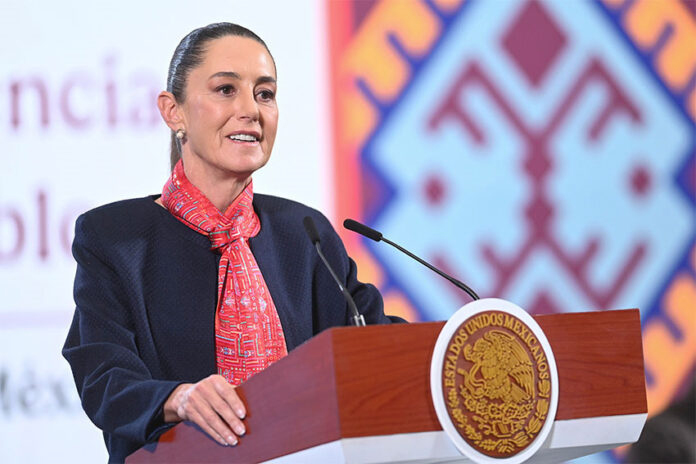
Response from the Government of Tabarnia to the statement from the Excellency President Dr. Claudia Sheinbaum

Claudia Sheinbaum
Marvin Ramírez, editor

EDITOR’S NOTE:

Dear readers, this article is crucial in combating the extremists who distort the history of the Conquest. They have fostered resentment towards our Spanish brothers, almost turning it into hatred. It is vital to remember the truth of what happened, as history is full of nuances that deserve recognition. Vale, Marvin Ramírez.

Dear President Dr. Claudia Sheinbaum, we would like to clarify a few points:

No, Tenochtitlan was not founded almost two centuries ago; Tenochtitlan is approximately seven centuries old. It is at least surprising that we have to explain this from Spain to an entire president of Mexico.

In 1839, the highest authorities of Mexico and Spain signed a treaty of peace and friendship, swearing to forget forever any grievances between the two countries. You are not only being untruthful in your statement, but you are also breaking the promise made by the Government of Mexico at that time.

When Spain left Mexico, this country was much larger, richer, and more populated than the United States. The current situation in Mexico is in no way the responsibility of the Kingdom of Spain.

Mexico was not of Spain; it was Spain. Mexico was never a colony; it was a viceroyalty and very advanced for its time. For example, the University of Mexico was founded in 1551, almost a century before the first university in the United States. Spain also founded the first university in the Americas (Santo Domingo, 1538) and the first university in Asia (San Ignacio in Manila, 1590), as well as dozens of universities across the continent where both Spaniards and indigenous people could study without distinction. In fact, at the University of Salamanca in 1556, there was even a black professor.

Marriage between Spaniards and indigenous people was legal from the very beginning of the conquest. To make a comparison: in the United States, interracial marriage was not legal in all states until 1967. It is questionable for England, the United States, or the Excellency President Dr. Claudia Sheinbaum to give us lessons regarding the treatment of indigenous people.

The most optimistic estimates say that only 1.5 percent of the attackers in the final assault on Tenochtitlan were Spaniards. The rest were indigenous peoples allied with the Spaniards who had been massacred by the Mexicas for decades. It is well-known and recognized that the Spaniards wanted to preserve the city while their indigenous allies tried to raze it to the ground. It is very bold of you to speak on their behalf, President Sheinbaum, just as it is of López Obrador, who has no indigenous ancestry but does have a grandfather from Santander (Spain) and a grandmother who is the daughter of Asturians.

After the conquest of Mexico, several direct descendants of Isabel Moctezuma, daughter of Moctezuma II, moved to Spain. Many of them received noble titles in recognition of their lineage. They were received with respect and all honors. Today, more than 350 descendants of Moctezuma live in Spain. They have already “forgiven” Spain for everything they had to “forgive” centuries ago.

The most reputable historians and archaeologists have proven beyond a reasonable doubt that the flowery wars were basically genocides, not to mention cannibalism and pedophilia, which were common practices in the pre-Hispanic period. It is estimated that more than 50,000 people were sacrificed at the main temple of Tenochtitlan. In fact, hundreds of skulls from child sacrifices have been found in Tzompantli in Mexico City. Andrés de Tapia, a Spanish soldier who accompanied Cortés in the conquest of Mexico in 1521, spoke of seeing a gigantic tower made entirely of the heads of men, women, and children who were sacrificed. In 2015, this tower was found in the temple of Huey Tzompantli in Mexico City. This is just one example of a brutality that has been silenced for centuries and for which no one has ever asked for forgiveness. Although honestly, we are not sure who should be asking for forgiveness, to whom, and for what. Do you see the absurdity of this?

Mexico cannot apologize to Spain for the conquest of Mexico for the simple reason that Spain and Mexico did not exist 500 years ago. Be that as it may, the descendants of the Spanish conquerors are not the Spaniards living in Spain; they are the Mexicans living in Mexico. It sounds ridiculous to have to explain something so obvious.

Since the independence of Mexico, we all know the treatment that indigenous people and indigenous languages have received. The living conditions, rights, and proportion of speakers of indigenous peoples were infinitely greater then than they are now. Do not blame the Spaniards in 2024 for this.

We believe that the request for an apology from the Mexican government to the King of Spain is nothing more than a smokescreen to divert attention from more important issues. For example, in the last 10 years, an average of between 40,000 and 50,000 people are murdered in Mexico each year (and rising). Just to compare, in Spain during the same period, there are fewer than 300 murders per year (and falling). During López Obrador’s government, from December 1, 2018, to September 24, 2024, approximately 198,640 murders have been recorded.

For all the above, we support the Spanish Government’s decision not to send any representative to the inauguration of Claudia Sheinbaum, and we suggest to all Spaniards and to all neighbors and allies of the European Union that they consider choosing other destinations for their vacations and investments in the coming years if this woman remains in government in Mexico. It is unfortunate that a brotherly people like the Mexicans allow their president to humiliate the head of the Spanish State in this way, a friendly and allied country.

spot_img

Melania’s pro-abortion memoir reveals the courage of Donald Trump’s pro-life presidency 

As president, Donald Trump took bold action for the unborn that resulted in the overturning of Roe v. Wade. The fact that his policy positions conflicted with his wife’s beliefs makes his stand even more courageous

by R. Timothy McCrum

Readers were no doubt dismayed to discover the pro-abortion views of Melania Trump, expected to be published soon in her upcoming autobiography. According to the memoir excerpts, first leaked by the U.K.’s Guardian, Melania has held strong pro-abortion views throughout her “entire adult life,” and she believes that it is a “fundamental right” of a woman to “terminate her pregnancy if she wishes.” But is this evidence Donald Trump himself was never pro-life?

A quick review of the bold actions of President Donald J. Trump demonstrates that Melania’s views on the issue of abortion are not his views. Melania said as much herself in a recent interview. After defending her pro-abortion views, Melania insisted that her husband “has different beliefs.”

Indeed, with the unexpected release of Melania’s apparently longstanding abortion boosterism, it is more remarkable that President Trump’s courageous actions in office so greatly advanced the pro-life cause, establishing him as the most pro-life president in U.S. history. Yes, readers may have also been disturbed by some of Trump’s recent statements, but they must be seen in the context of what he has done for the unborn.

President Trump campaigned openly as a pro-life presidential candidate in 2016. In his debate with Hillary Clinton, he unflinchingly declared that the gruesome practices of late-term, partial-birth abortion were “not okay” with him, whereas Hillary passionately defended women’s so-called “right” to obtain abortions without any government restrictions.

After his election, President Trump became the first U.S. president to make a special appearance and speak during the March for Life in the nation’s capital. Yes, that is correct: President Reagan never did so in his eight years in office, nor did Presidents George H.W. Bush and George W. Bush in their combined 12 years in office. And the National March for Life had taken place every January since 1973.

When President Trump participated in the 2020 March for Life, he spoke about the “eternal truth” that “every child is a precious and sacred gift from God.” He added that “unborn children have never had a stronger defender in the White House.” He strongly opposed the Democrat views supporting “taxpayer-funded abortion all the way up until the moment of birth.” Finally, he declared, “every human life, born and unborn, is made in the holy image of Almighty God.”

Most importantly, in the 2016 campaign, Donald Trump promised to select any future Supreme Court appointments from a list of prominent judges with a track record of following the U.S. Constitution from an originalist perspective, following the plain text and historical context of the Constitution. Notably, the word abortion is not mentioned in the Constitution, though the murderous practice has existed as far back as antiquity. Then, during his presidential term, he filled three successive Supreme Court vacancies with the more originalist Justices Neil Gorsuch, Brett Kavanaugh and Amy Coney Barrett, who have largely shown fidelity to our Constitution, as President Trump had promised.

These bold actions by President Trump resulted in the U.S. Supreme Court overruling Roe v. Wade on June 24, 2022 – an event most pro-lifers wondered if they would ever see in their lifetimes. Thank you, President Trump! Thank you, Justices Samuel Alito, Clarence Thomas, Gorsuch, Kavanaugh, and Barrett!

The abortion issue now can be decided by the people at the level of our states, and our church pastors and pro-life organizations are free to actively persuade the people to follow the truths of the pro-life positions. We can even hope to persuade Melania Trump! But that conservative majority in the U.S. Supreme Court is truly on the line in this 2024 election, along with the rest of the future judicial vacancies in the lower federal courts.

Now we have learned that as President Trump carried out this landmark fight, it seems that he did not have his beloved wife, Melania, at his side on this issue. He was advocating for major policy positions which conflicted with his own wife’s strongly-held personal views – and she is reportedly the Catholic in the family! That, arguably, makes President’s Trump’s bold actions even more courageous. It’s true that it has never been more important than it is now to pray for Donald and Melania Trump, and we also shouldn’t forget to be thankful for the many actions President Trump took to defend unborn children. LifeSiteNews.

spot_img

Hugs or bullets? Sheinbaum begins to define her security strategy

by Mexico News Daily

In the first 100 days of the new federal government, President Claudia Sheinbaum’s security strategy will focus on combating violence in Mexico’s 10 deadliest cities, according to a plan seen by media outlets.

Sheinbaum, who was sworn in as Mexico’s first female president last Tuesday, said last week that she would present the government’s National Security Plan this Tuesday.

Ahead of that presentation, The Wall Street Journal (WSJ) and Mexican news website Animal Político reported separately on the government’s security plan for its first 100 days in office, a period that extends until Jan. 8, 2025.

Animal Político reported that the main “emerging strategy” to be implemented by the federal government will focus on reducing crime and violence in the 10 municipalities with the highest homicide rates in the country.

According to official data, those municipalities are Colima city, Tijuana, Acapulco, Celaya, Cajeme, Ciudad Juárez, Tlajomulco de Zúñiga, León and Benito Juárez (Cancún). One-quarter of all murders in Mexico linked to organized crime occur in those cities, where the government will “push to slash killings,” according to the WSJ.

The new security strategy will first be rolled out in six cities in five states: Tijuana (Baja California); León and Celaya (Guanajuato); Acapulco (Guerrero); Benito Juárez (Quintana Roo); and Colima city (Colima).

The Wall Street Journal, which saw a “presentation” outlining the federal government’s security strategy, said that Sheinbaum “is using her first 100 days in office to try to lower homicides and loosen the grip of organized crime groups that control swaths of the country, extort businesses, smuggle drugs and kill with impunity.”

The Journal also reported that the new president is “planning new efforts to combat the smuggling of the deadly drug fentanyl.”

Drug cartels in Mexico manufacture fentanyl with precursor chemicals sourced from China before shipping large quantities of the powerful synthetic opioid to the United States, where tens of thousands of people die from drug overdoses every year.

Sheinbaum revealed last week that combating crime in Mexico’s most violent cities would be a priority, saying that her government was “developing a program for the municipalities that at this moment have the largest number of homicides.”

She has also said that federal and state prosecutors and security forces will increase their coordination in Mexico’s most violent areas.

John Creamer, a former senior U.S. diplomat in Mexico, told the WSJ that “the identification of 10 priority municipalities is very good.”

However, it remains to be seen whether the government will provide adequate funding and security personnel to the task of reducing violence in those municipalities, he said.

The government’s security strategy will be led by Security Minister Omar García Harfuch, who served as Mexico City security minister while Sheinbaum was mayor of the capital.

Homicide numbers almost halved during Sheinbaum’s mayorship, according to official data.

President inherits a complicated security situation 

Homicide numbers declined in the latter half of Andrés Manuel López Obrador’s six-year term as president, but remain very high. According to data published by the national statistics agency INEGI in August, there were 31,062 homicides in 2023, a 6.7% decline compared to the previous year.

Mexico’s five most violent states in 2023 in terms of total homicides were Guanajuato, México state, Baja California, Chihuahua and Michoacán. The sixth most violent state last year was Guerrero, where the mayor of Chilpancingo, the capital, was murdered on Sunday just six days after he was sworn in.

The WSJ said that Sheinbaum’s security plan includes a focus on Guanajuato, “which has the highest rate of organized-crime killings of any Mexican state.”

“Located in central Mexico, the state is a battleground for the lucrative black-market fuel controlled by the Jalisco cartel, one of Mexico’s most powerful organized crime groups, and the local Santa Rosa de Lima gang,” the Journal said.

Sheinbaum also faces precarious security situations in other states, including Sinaloa, where a war between the “Los Chapitos” and “Los Mayos” factions of the Sinaloa Cartel has intensified in recent weeks, and Chiapas, where the Sinaloa Cartel is fighting the Jalisco New Generation Cartel in the border region of the southern state.

Animal Político, which reported on a document entitled “Security Strategy for the First 100 Days,” and The WSJ said that Chiapas is also a focus of the government’s plan.

In the state, where six migrants were killed by the Mexican army on the day Sheinbaum was sworn in, the new government plans to “carry out operational tasks” and implement programs “focused on attention to the causes [of crime],” Animal Político said.

The WSJ said that “another city getting the new government’s attention is Culiacán,” the capital of Sinaloa.

However, the Journal didn’t detail any specific security plans for the city where the fighting between the rival Sinaloa Cartel factions has been centered.

In Michoacán, “Sheinbaum’s plan calls for the government to end the extortion in the lime industry,” the newspaper said, noting that “a dozen gangs prey on growers, packers and distributors.”

Animal Político said that the government’s efforts in the state will focus on the municipalities of Nueva Italia, Antúnez, Buenavista, Tepalcatepec, Aguililla and Apatzingán.

‘Intensive’ use of intelligence key to security plan 

The WSJ reported that Sheinbaum’s security strategy “calls for the intensive use of intelligence to assess the structure of criminal groups, and finding ways to use police intelligence to make cases at trial.”

For its part, Animal Político said that the new government will aim to “strengthen the intelligence work of the country’s main intelligence institutions.”

An ‘alternative’ security cabinet to be created 

Animal Político also reported that the federal government will create an “alternative” security cabinet made up of officials from the Finance Ministry’s Financial Intelligence Unit, the Federal Tax Prosecutor’s Office, the state oil company Pemex, the federal tax agency SAT, and other government entities focused on combating the illicit financing of crime and money laundering.

The government’s primary security cabinet is made up of the president, the security minister, the interior minister and other officials. It meets daily at 6 a.m. to assess the prevailing security situation across Mexico and determine what specific strategies and resources are required to remedy problems.

Animal Político said that the government will also have a specific security strategy for the nation’s highways, on which truck robberies and hijackings are a major problem.

The WSJ said that Sheinbaum’s security plan “envisions a greater role for the federal government, with its national-security cabinet vetting state security chiefs appointed by governors.”

“The federal government would also establish nationwide standards for Mexico’s 32 state-police forces, state prosecutors and prison systems,” the Journal said.

Will Sheinbaum’s security strategy be a success? 

While the answer to that question won’t come immediately, history suggests that curtailing violence in any significant way will be no easy feat.

López Obrador’s six-year term in office was the most violent on record in terms of homicides, with close to 200,000 murders.

Homicides increased sharply in Mexico after former president Felipe Calderón (2006-12) launched a militarized war on drug cartels. They continued to go up during the six-year term of Enrique Peña Nieto (2012-18).

The WSJ reported that “for decades, every Mexican president has made targeting the country’s transnational criminal organizations a priority, but these gangs have proved resilient to efforts to dislodge them from lucrative drug smuggling amid endemic corruption.”

“… Conservative president Felipe Calderón declared war on the cartels, ushering in a period of violent conflict between gangs and government forces, while Sheinbaum’s mentor, former nationalist president Andrés Manuel López Obrador, tried a softer approach dubbed ‘hugs not bullets.’ Neither worked,” the newspaper said.

Sheinbaum, who was mayor of Mexico City between late 2018 and mid 2023, is committed to continuing López Obrador’s strategy, which favored addressing the root causes of crime through government welfare and social programs over combating criminals with force.

The new president and García Harfuch will be hoping they can replicate the success they had in the capital, where homicides declined to 747 in 2022 from 1469 in 2018, a 49% reduction.

García, the WSJ reported, “worked closely with U.S. law-enforcement agencies and boosted intelligence gathering, police training and salaries,” during his tenure as security minister in Mexico City.

“U.S. officials say they expect security cooperation to increase in a Sheinbaum presidency,” the newspaper added.

Although López Obrador made combating impunity a priority for his government, the vast majority of serious crimes committed in Mexico, including homicides, still go unpunished.

Reducing impunity rates will be another major challenge for Sheinbaum, who will serve a six-year term that concludes in 2030.

With reports from The Wall Street Journal and Animal Político.

spot_img

Immigration misinformation targets decisive U.S. Latino vote

by Selen Ozturk

If not countered, misinformation targeting immigrants and Latinos will be make-or-break this election year

If not countered, misinformation targeting immigrants and Latinos will be make-or-break this election year.

Although the political use of immigration as a scapegoat for hate is nothing new, the Latino vote — the largest-growing U.S. voter demographic, with currently 36.2 million Latinos representing 15 percent of all eligible voters — able to decide elections in large states like California, Texas and Florida, and swing states like Nevada, Arizona, Georgia, Wisconsin and North Carolina.

At a Thursday, September 26 panel held by CALÓ News and the Latino Media Collaborative, ethnic media leaders explained the trending misinformation tactics used to undermine electoral trust among Latinos, and discussed ways to fight this misinformation.

‘Undermining the voice of a decisive vote’

“Millions of immigrants are living quietly in harmony with native-born residents. We’re neighbors, co-workers and friends, and we’re caring for each other across racial, ethnic and bipartisan lines — yet we rarely see those stories on the front page,” said Jessica González, co-CEO of Free Press.

“Instead, we see stories that exploit and demonize immigrants. We see the lie that non-citizen immigrants are voting in droves, fabrications about Haitian immigrants, false claims such as that the U.S. election will be extended this year,” she continued. “The intent is to scare voters of color from the polls, to pander to anti-immigrant sentiment by stirring up fear … and to legitimize authoritarian power-grabs by sowing distrust in our electoral process.”

A 2024 Free Press poll of 3,000 Americans found that 79 percent were “concerned that the information they see online is fake, false or a deliberate attempt to confuse people,” while 76 percent were concerned about 2024 presidential election misinformation.

“I became politically active organizing 10,000 students to march out of LAUSD schools during the ’90s in California’s Prop 187 era,” said Jennie Carreón, principal of public affairs firm Carreón Group. “It’s hard to believe that it passed. It denied undocumented immigrants access to public education and social services, and it also required police to report and verify the immigration status of all individuals.”

“Thankfully, Prop 187 was struck down by the courts, but 30 years later, here we are hearing the same anti-immigration stories, but this time it’s at a national level,” she added. “Latino voter misinformation is undermining the voice of a decisive vote in 2024 … and we need to show its impact in a digestible way, so that a generation of new voters doesn’t feel so apprehensive.”

Trending misinformation

“These messages with the purpose of creating hate and fear are no longer just about undocumented immigrants. We’re now seeing attacks on legal immigrants — such as DACA and other legal pathway programs, and recently the Springfield, Ohio Haitian community, most of whom had Temporary Protected Status,” said Vanessa Cárdenas, executive director of America’s Voice.

In tracking media coverage of immigration reform, America’s Voice found two common ideas behind these attacks, she explained, the first being a “replacement theory … that immigrants are here to replace ‘real’ Americans and ineligible immigrants are going to vote in our election, seeding doubt as to whether we can trust the outcome.”

State-led investigations by Republican and Democratic officials, news organizations, law enforcement and universities have found that noncitizen voting is extraordinarily rare.

For instance, a 2016 Brennan Center survey of 44 election administrators overseeing 23.5 million votes across 42 states saw 30 incidents of suspected noncitizen voting — or .0001 percent of all votes.

A state-led audit of 1.1 million ballots in Nevada that same year identified three noncitizens who had voted, amounting to .0003 percent of all votes.

A 2020 state investigation in Ohio referred 104 cases of alleged noncitizen voter registration and 13 cases of alleged noncitizen voting for prosecution; because the latter would amount to .00016 percent of all votes, Ohio’s own secretary of state said“voter fraud is exceedingly rare.”

The second idea behind trending misinformation “pits Latinos who’ve been in the U.S. for generations against new migrants … through a notion of scarcity, crime and racial tensions, particularly in communities in blue cities, like New York, where migrants were sent from Texas,” Cárdenas explained. “These narratives are setting the stage for the idea that it is okay to deport people en masse because these folks are not desirable, not American.”

Economists estimate that a mass deportation of undocumented immigrants, of the kind proposed by Donald Trump’s 2024 presidential campaign, would entail economic losses between $711 billion and $1.7 trillion, at 2023 levels.

Given a removal of 11 million people, this would entail a shrinking of the U.S. economy between 2.6 percent and 6 percent.

“The reason why so many undocumented immigrants are coming to the U.S. is because the U.S. has destabilized their economy and governments,” added Anshantia Oso, senior director of Black history project Media 2070. “U.S. foreign policy is a pull factor for immigrants to come to the U.S., and our political candidates are manipulating ideas of scarcity to keep the population scared and divided.”

Fighting misinformation

“In having conversation with folks who may be repeating this misinformation, it’s important to understand what their concerns actually are,” Oso continued. “Often, political rhetoric plays on valid concerns around housing, jobs or finances … and it’s not about being anti-immigrant, but having a government that’s actually going to work for us. We need to speak to those concerns and point towards actual solutions.”

A demographically representative Harvard Kennedy School poll found that 49 percent of Americans were exposed to some form of misinformation intervention, like social media fact-checking.

However, these interventions triggered significantly polarized responses between Democrats, who supported the intervention overall, and Republicans, who opposed content evaluation on the grounds that it was biased.

“One approach to countering disinformation is not getting bogged down in tackling specific claims, but rather exposing their motives of division,” said Roberta Braga, founder and executive director of Digital Democracy Institute of the Americas (DDIA).

“We don’t have to correct the record on every single thing we see. Instead, we should focus on changing the conversation by telling real stories about the impact of deportation policies,” she continued, “and by telling stories about what a functional migration system would look like by telling immigrant success stories.”

“The issue is that fighting misinformation doesn’t work the same way for everyone,” said Braga. “Someone who believes one in 15 lies may need a fact check, but someone who believes 14 out of 15 lies, that’s not what they’ll respond to. Beyond content-oriented factors, we need to consider the real day-to-day concerns that people have.”

A June 2024 DDIA poll found that most Latinos targeted by misinformation don’t outright believe it. Among the 3,000 Latino adults polled, 62 percent were either unsure of, or rejected, media misinformation claims.

Although the DDIA findings, like the Harvard Kennedy School poll, saw consistent correlation of Republican party affiliation with “lower levels of trust and confidence that one’s vote will count,” low trust in the system wasn’t correlated with voter turnout for Latinos.

In other words, many Latinos less likely to perceive their vote to matter would still vote despite this ambivalence.

“There’s a large group of Latino voters out there that are undecided or ambivalent, and I think that’s where we should be spending most of our time sharing our information and ideas,” Cárdenas said. “These are people that we could really move to our side.”

This resource is supported in whole or in part by funding provided by the State of California, administered by the California State Library in partnership with the California Department of Social Services and the California Commission on Asian and Pacific Islander American Affairs as part of the Stop the Hate program. To report a hate incident or hate crime and get support, go to CA vs Hate.

spot_img

Mortgage rates are dropping: what it means for California homeowners and homebuyers

Sponsored by JPMorganChase

Homeownership is more than just a lofty American dream—it’s how many can build generational wealth. For the Black community, 90% of wealth gains come from homeownership, meaning that owning a home continues to be a crucial method for Black and Latino households to build and accumulate wealth.

The Federal Reserve (the Fed), the U.S.’ central bank that dictates interest rates, continues to indicate that a potential rate cut is on the horizon. Not only can this impact affordability for prospective buyers, but it could be advantageous for current homeowners that are locked into higher interest rates.

But, what does this all mean? Chase Bank answers some of your questions as it relates to prospective homebuyers and homeowners:

What role do interest rates play in buying a home?
Mortgages respond to market conditions, including the Fed’s monetary policy. As interest rates climb, so do the interest on new mortgages and mortgage payments. Conversely, if rates fall, so does the interest on mortgages. So, buying at a lower rate can save you money in mortgage payments.

Should I wait to buy a home once interest rates fall?
Timing the market perfectly is not only challenging, but near impossible to do. While we hope the Fed will cut rates this year, it’s never guaranteed. Lower interest rates can save you money, but they’re not the only factor affecting affordability. So, instead of focusing on perfectly timing the market, we recommend leaning into what you can control: being financially prepared to buy a home.

Outside of readying your finances for homeownership, you can look for options that can lower costs and promote savings such as low down payment mortgages, down payment assistance programs and  grants. And don’t forget you always can buy a home now and refinance in the future once rates drop.

How do I prepare myself to buy a home in this current environment?

We not only want consumers to attain homeownership but to sustain it. That’s why it’s important to understand what exactly you can afford before getting into the market. There are a variety of resources to help you prepare financially for buying a home to see how much you can afford in the areas you’re looking to buy, compare loan options and obtain a free credit score. You’ll also want to start compiling all of your necessary documents for pre-approval, such as W2s, bank statements, income documentation, etc.

What about the down payment? Do I need to have 20% of the home cost saved up?

Most first-time home buyers are singularly focused on saving for a down payment. However, long gone are the days of putting down 20% of the purchase price – low down payment loan options are available with some requiring as low as 3% down. Plus, there are a variety of incentives and grants that can lower your costs. For instance, Chase offers a homebuyer grant of up to $7,500, where eligible, to help with the interest rate, closing costs, and the down payment. These grants are offered in low- to moderate-income communities and neighborhoods that are designated by the U.S. Census as majority-Black, Hispanic and/or Latino.

Should I only work with one lender for my mortgage?

Studies show that 45% of borrowers who shopped around for mortgages received lower offers. Make lenders compete for your business – many have varying fees and closing costs that can add up. Also, interest rates can fluctuate daily, so lock in your rate with your lender if they offer that option for extra peace of mind.

I’m an existing homebuyer. How does a rate cut impact my situation?

It can be a good time to refinance when interest rates are going down, especially for those with rates above or at 7%.  For current homeowners looking to refinance, we advise them to keep their end goal in mind as they consider whether refinancing makes sense for their personal situation. Work with your local advisor or using a Refinance Savings Calculator to understand when it makes sense for your specific situation to refinance.

Why should I refinance when rates are lower?

When interest rates are lower, you may be able to refinance your loan for a shorter term without seeing much of a change in your monthly payment. Even if your payments are higher, you may see significant savings over the life of your loan by making fewer interest payments. For example, you may decide to refinance a 30-year loan into a 15-year loan. While it has higher monthly payments, you’ll pay the loan down faster and pay less in interest.

Whether we’ll see a rate cut or not, there are many tools for first-time homebuyers and experienced owners to keep homeownership affordable and sustainable. For more information visit Chase.com/afford to start your journey, invest in your future and save in the long run.

For informational/educational purposes only: Views and strategies described may not be appropriate for everyone and are not intended as specific advice/recommendation for any individual. Information has been obtained from sources believed to be reliable, but JPMorgan Chase & Co. or its affiliates and/or subsidiaries do not warrant its completeness or accuracy.

Deposit products provided JPMorgan Chase Bank, N.A. Member FDIC

 © 2024 JPMorgan Chase & Co.


spot_img

Nick Ball faces tough challenge in Liverpool title defense against Ronny Ríos

by the El Reportero‘s staff

Nick Ball, the newly crowned WBA featherweight champion, is set for a much-anticipated “homecoming fight” this Saturday, October 5 night in Liverpool. However, the 27-year-old fighter isn’t taking the easy road for his first title defense. Instead, he will square off against the seasoned and resilient Ronny Ríos from Santa Ana, California. Fans can expect an exhilarating bout, as Ball’s fights are renowned for their excitement and entertainment value, and this match promises to be no exception.

That said, Ball may have a challenging evening ahead against Ríos. Known for his incredible stamina, Ball can unleash a barrage of punches throughout the rounds without showing signs of fatigue. Currently boasting a record of 20 wins, 0 losses, and 1 draw, with 11 knockouts, Ball’s remarkable endurance and relentless style may well make him the top contender at 126 pounds. He claimed the WBA title in June after a hard-fought victory over Raymond Ford, which came on the heels of a controversial draw against defending WBC featherweight champion Rey Vargas. With aspirations for unification bouts, Ball is clearly on the rise.

However, Ríos, now 34, is not one to overlook. A former challenger for the WBA and IBF super-bantamweight titles, he faced a late stoppage at the hands of Murodjon Akhmadaliev. Many boxing insiders believe Ríos could be a formidable opponent, especially considering he is often mentioned as someone “Monster” Inoue is avoiding. Ríos also faced Vargas in 2017, ultimately losing by decision to a common opponent. With this being his third attempt at a world title in different weight classes, Ríos is eager to upset Ball’s homecoming.

Throughout his lengthy career since debuting in 2008, Ríos has faced setbacks, suffering three stoppage losses but only managing to win one fight since falling to Akhmadaliev. He has made it clear that his trip to Liverpool is not merely for sightseeing or a paycheck; he intends to make a statement.

From the opening bell, fans can expect Ball to aggressively pursue victory, while Ríos, who will enjoy notable height and reach advantages over Ball, must devise a strategy to counteract his opponent’s relentless attack. It’s a daunting task for Ríos, but both fighters will have their work cut out for them in the ring.

As Ball continues to solidify his status as a must-watch fighter, many anticipate he will secure the win, potentially by late stoppage. Nevertheless, Ríos remains a live underdog, eager to seize this opportunity outside of the United States.

– With reports by james Slater from Boxing News 24/7.

spot_img

Sermon 12: Mike Adams discusses the use of apricot kernels as an anti-cancer treatment

by Kevin Hughes

The Health Ranger Mike Adams talked about the use of the apricot kernel as an anti-cancer treatment during his 12th sermon on the “Health Ranger Report,” part of his 100 Sermons series.

The Bible nutrition educator’s sermon was based on a verse from the book of Deuteronomy in the Old Testament. The verse reads: “He found him in a desert land. And in a wasteland, a howling wilderness; He encircled him, he instructed him, He kept him as the apple of his eye.” (Deuteronomy 32:10)

According to Adams, the late author and botanist Dr. James A. Duke wrote that apricots were actually not indigenous to the Mediterranean region, especially during the time of the Old Testament.

“They were not there. They didn’t have apples, and so they referred to apricots as apples – and apricots are native to China. Apricot seeds were, of course, transported to the Mediterranean,” Adams said. “Apricots have long been abundant in Israel and were most probably introduced in biblical times.”

Adams mentioned that apricot is relevant to God’s medicine because it has a kernel, which contains a compound called laetrile or vitamin B17.

However, Duke reportedly warned that the apricot kernel contains a toxic compound called hydrogen cyanide – commonly called prussic acid. He noted that laetrile is a compound that can either cure or kill depending on the dosage.

Duke also mentioned that the kernel produces an edible oil that is sometimes used as an almond oil substitute. Apricot seeds are also used like almonds in Afghanistan, while the apricot kernels are used to make almond cookies or ground into flour in China.

Adams shared that there are many drink mixes in Taiwan, China and Hong Kong that rely on either a combination of almond seed, almond flour or apricot seed flour. Some of these instant drink mixes are marketed for good health, he added.

Laetrile in apricot kernels selectively destroys cancer cells in the body

According to the Health Ranger, the laetrile story picked up in the 1950s and 1960s in the U.S. when San Francisco-based physician Dr. John A. Richardson began using laetrile to address cancer. Richardson’s 1977 book titled “Laetrile Case Histories: The Richardson Cancer Clinic Experience” documented this use of laetrile from apricot kernels.

  1. Edward Griffin, one of Richardson’s friends, also wrote about laetrile in his work titled “World Without Cancer.” With the help of Richardson, Griffin laid out in the book the very compelling case that laetrile in apricot seeds selectively destroys cancer tumors. (Related: Apricot Seeds Kill Cancer Cells without Side Effects.)

The Natural News and Brighteon.com founder added that many people have used apricot kernels as a form of natural medicine in order to prevent or treat cancer with the help of naturopathic physicians. According to him, there is something about laetrile that attracts it to cancer tumors.

“They have treated various diagnoses of cancer and laetrile has been described as a kind of naturopathic chemotherapy. It is apparently very toxic, or cytotoxic to cancer cells. But at the proper dose, it is not toxic to the rest of the body,” Adams said.

“The cells take up the toxic components of the laetrile compounds. And then those cells end up killing themselves off while the rest of the cells in the body are okay. But then again, if someone were to take in a massive dose of this [laetrile], they could actually kill themselves. They could kill the whole body.”

Adams stressed that laetrile is toxic at high doses, citing Duke’s warning that a double apricot kernel is enough to kill a man. If eaten in excess the apricot fruit is believed to harm the bones and muscles, promote blindness and falling hair, numb mental facilities and injure pregnant women.

Ultimately, the Bible nutrition educator issued a disclaimer that he wasn’t offering medical advice or intending to replace a naturopathic physician. He advised people to research on their medical situation if they have one. Food.news.

spot_img