Thursday, October 15, 2026
spot_img
Home Blog Page 67

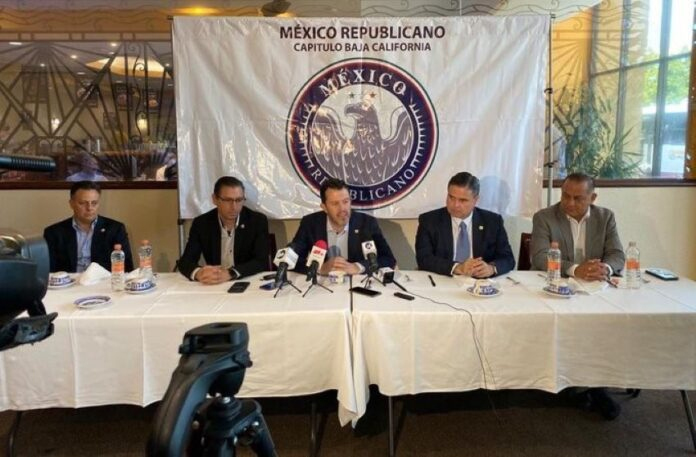
Political group aligned with Trump, GOP seeks official party status in Mexico

by the El Reportero‘s wire services

A political group professedly aligned with U.S. President Donald Trump and the Republican Party is seeking to register as an official party in Mexico.

The self-styled conservative political association known informally as the Mexican Republican Party has expressed support for Trump’s immigration raids while criticizing the Mexican government for not engaging in similar actions.

Juan Iván Peña Neder, president of the association, has decried what he considers the government’s failure to address the root causes of illegal migration to and from Mexico.

“Lamentably, … the [Mexican government] has eluded responsibility by relying on empty rhetoric not translated into concrete policies, thus perpetuating the conditions that lead to migration,” he said.

México Republicano, the formal name of the organization that has been described as “ultra-right [and] … confessional,” announced over the weekend that it would soon begin recruiting and registering members in order to become an official national party.

The organization must hold assemblies in at least 20 states and sign up at least 60,000 registered voters in order to join the federal registry of political parties. It was authorized to pursue official party status by the National Electoral Institute (INE) in January.

In a statement issued in February, México Republicano declared itself “the only republican and conservative political organization willing to take on the existing statist and clientelistic model of government” in Mexico.

It also said it will fight to promote economic growth, to support the free market and to consolidate a strong and independent middle class.

In April, Peña Neder further outlined his organization’s ideology: “I believe our sympathy with President Trump and our ideological identification with the Republican Party makes us distinct in this hemisphere,” he said.

Even as Trump’s tariff policies were causing turmoil in Mexico, Peña Neder said his organization would not distance itself from its ideological ties to Trump, saying the alignment positioned his group as the only genuine opposition to Mexico’s government.

Earlier this month, México Republicano reiterated its ideological concurrence with Trump in a statement posted on social media. The statement criticized the violence associated with the anti-ICE protests in Los Angeles which have resulted in the arrests of dozens of Mexican nationals.

“We strongly condemn all acts of violence disguised as protest in countries that have provided opportunities for Mexicans,” the statement reads. “Gratitude and respect for the law must guide our actions, both at home and abroad.”

The statement urged Mexico and the United States “to strengthen agreements for dignified and orderly labor migration.”

The strongly anti-abortion organization, which originated as a local party in the northern state of Chihuahua, was formed in 2022 with support from evangelical groups and conservative businessmen, according to the newspaper La Jornada.

Larry Rubin, a former CEO of the American Chamber of Commerce of Mexico, president of the American Society of Mexico and official representative of the U.S. Republican Party in Mexico, is among the group’s advisers.

With reports from La Jornada, Excelsior, Milenio and Infobae

spot_img

Homelessness is top of mind for many Californians. Why does the proposed budget eliminate funding for it?

California’s main source of homelessness funding would drop from $1 billion last year to $0 this year in the proposed state budget

by Marisa Kendall

CalMatters

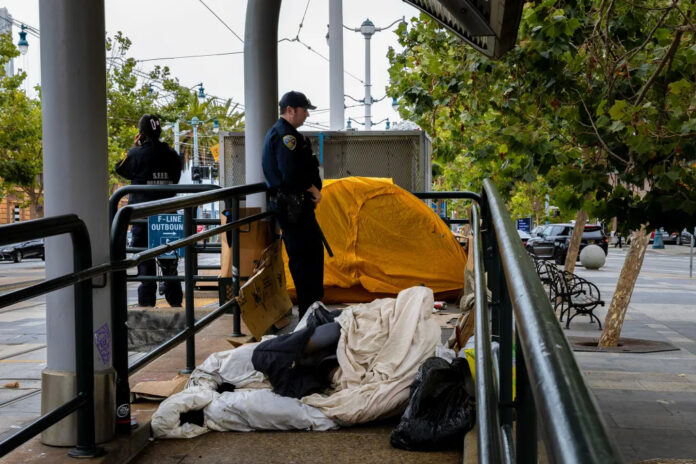
State leaders have been talking a lot lately about cleaning up California’s homeless encampments and moving people indoors. But the tentative budget they’ve drawn up for the upcoming year has many asking: With what money?

Both Gov. Gavin Newsom and the Legislature have proposed gutting the state’s main source of homelessness funding in the 2025-26 budget, sending a wave of panic through the cities, counties and service providers that have been relying on that money for years. Now, those critics warn that thousands of Californians could end up back on the streets, undoing the tenuous progress the state has made in addressing the problem.

“It’s extremely frustrating,” said San Jose Mayor Matt Mahan, whose city had been receiving about $30 million a year from that pot of homelessness funding — enough to pay for about 1,000 interim housing placements. “Residents of California tell us consistently that ending unsheltered homelessness is one of their very top priorities…So the idea that the state can’t make a substantial, consistent investment in residents’ top priority makes me question whether or not they’re really listening to the people of California.”

The Homeless Housing, Assistance and Prevention program has doled out funds for cities and counties to spend on everything from temporary shelter to services to permanent housing since its creation six years ago. It started with $650 million in the 2019-20 budget, and has since grown to $1 billion last year.

Since 2023, the program has provided housing for more than 57,000 Californians, according to the Bring California Home Coalition, made up of affordable housing providers, advocates for homeless individuals and government staff.

But with the state facing an expected deficit of $12 billion this year, those funds ended up on the chopping block. The 2025-26 budget proposed by the Legislature June 9 allocates $0. Lawmakers passed a placeholder Friday, but the budget still has to undergo additional negotiations between Newsom and lawmakers before it becomes final. Even so, the governor already has indicated he’s fine with stripping homelessness funding.

At the same time, California could soon also be reeling from federal cuts. President Donald Trump’s proposed budget would reduce funding to the Housing and Urban Development department by 44 percent, slashing the rental subsidies and federal homelessness funding that flows to California.

Newsom has, in a sense, been preparing cities and counties for a blow to state funds. He has for years resisted calls to make homelessness money permanent, instead preferring to dole it out year by year in a one-time grant — making it easier to cut in a tough budget year.

Despite ramping up spending on the issue to unprecedented levels after taking office (last year the Legislative Analyst’s Office found the administration had spent $24 billion on housing and homelessness), the governor changed his tune in recent months. His message now is more along the lines of: I’ve done my part, now cities need to step up and take care of the crisis on their streets.

Newsom recently suggested cities do that by passing ordinances banning encampments.

“I’m not interested anymore, period full stop, in funding failure,” Newsom said last month,  a refrain he’s been repeating often.

But the cities and service providers that rely on those funds say it appears he’s no longer interested in funding success, either: While California’s homeless population remains the biggest in the nation — with more than 187,000 people sleeping on the street and in shelters — it increased just 3 percent last year, compared to a nationwide increase of about 18 percent.

Critics worry gutting funding will erode that modicum of progress.

“Simply put, this choice will lead to more people moving onto California’s streets and fewer avenues off the streets,” the Bring California Home Coalition said in a statement.

In San Jose, the state homelessness funding has been crucial in the city’s push to move people out of encampments and into temporary placements in tiny homes and converted motels. Like other cities, San Jose still is waiting to receive its homelessness allocation from the last budget. But once that money is spent, probably by next summer, San Jose will feel the hit, Mahan said. When that happens, the city probably won’t have to close existing programs, because it’s lucky enough to have other funding sources, he said. But it won’t be able to build new units, effectively stalling the city’s plan to get everyone off its streets.

Mahan and other California mayors have for months been urging state leaders to reconsider ever since Newsom’s initial January budget proposal zeroed out the homelessness funds.

Instead, the Legislature suggested adding $500 million back into the state homeless funding program — but not until in the 2026-27 fiscal year. That would be a 50 percent reduction from last year’s allocation. And there’s no guarantee that money will come through at all. In addition, lawmakers proposed reducing another, smaller homelessness program — which provides money to cities specifically for cleaning up encampments and moving occupants indoors — by $100 million.

It’s not all bad news, pointed out Ben Metcalf, managing director of UC Berkeley’s Terner Center for Housing Innovation. The Legislature’s budget includes $500 million in low-income housing tax credits to fund the construction of new affordable housing, and $120 million for the Multifamily Housing Program, which provides loans for low-income housing.

But the Homeless Housing, Assistance and Prevention program may have been politically easier to gut, Metcalf said. That program doesn’t benefit from deep-pocketed lobbyists defending it in Sacramento.

And because of the complex, intractable nature of the homelessness crisis, the money hasn’t produced the kind of tangible, grand-slam results voters want to see on their streets. Instead, homelessness remains a persistent problem, and encampments still dot California’s cities.

But without that money, some shelters and housing programs are likely to close, Metcalf said. Others could simply become less effective. The state program provided funding for the types of counseling, case workers and other services that help people transition from shelters into permanent housing, he said. Without that extra help, people often languish in shelters.

“So what you end up with, probably, is more Band-Aids,” Metcalf said, “or patchworks of systems that are providing some modest amount of (improvement in) the quality of life but not really helping transition people permanently out of homelessness.”


spot_img

The opera Cuentos is presented in San José

Composer and librettist Héctor Armienta presents Cuentos, an opera that showcases the most heartbreaking and real stories of Mexican immigrants in the United States and farmworkers who continued their work during the pandemic.

Directed by Rodrigo García and conducted by Temirzhan Yerzhanov, the cast includes three professional opera singers: tenor Sergio González, soprano Stephanie Ortiz, and mezzo-soprano Rosa Aranda, as well as musicians, actors, and community members.

This wonderful event will take place at the Plaza de la Herencia Mexicana Theater, located at 1700 Alum Rock Ave in San José, on June 28th, starting at 3 p.m.; tickets range from $17 to $32.

Photography Workshop with Liam Clickenger

If you’d like some tips and insights on how to further your career in photography, whether as a freelancer, in your artistic practice, or in the industry, renowned photographer Liam Clickenger shares insights from his journey.

In his talk, he’ll explore the essential steps for starting a photography career, choosing the right equipment, leveraging technology for creative expression, and maintaining a long-term artistic trajectory.

A photographer, educator, and business leader with over 20 years of experience, Clickenger’s work spans fine art, commercial advertising, industrial, aerial, and scientific photography.

This program is part of the Career Insights series, facilitated by the San Francisco Public Library, and will be held virtually next Tuesday, July 1, from 2 to 3 p.m.

Salsa Sundays at El Río

To end the week on a high note, don’t miss the salsa Sundays with Ritmos Latinos Fiesta, which even includes a salsa class.

Guajiron Orqueta and Ritmos Latinos Fiesta are a fusion of alternative Latin and Cuban music, offering salsa, merengue, cumbia, and much more. Along with DJs @clave420_ and @franchutes3000, they will liven up the party between sets.

Immerse yourself in the rich culture and unforgettable rhythms that will transport you across the Americas and the Caribbean.

The event is this Sunday, July 6th, starting at 3 p.m. Tickets are $15 and $20. El Rio Terraza, located at 3158 Mission Street, San Francisco.

spot_img

Bay Area cities target drivers as new buildings rise without enough parking

New buildings in Hunter's Point, such as Innes and Friedell, offer some parking spaces, but not enough, forcing many tenants to rely on increasingly limited public space. -- Los edificios nuevos en Hunter's Point, como Innes y Friedell, ofrecen algunos espacios de estacionamiento, pero no suficientes, lo que obliga a muchos inquilinos a depender de un espacio público cada vez más limitado.

Analysis | By Marvin Ramírez

In San Francisco and across the Bay Area, city policies are increasingly hostile to private drivers. Red zones are expanding, curbside parking is vanishing, and parking enforcement is intensifying. At the same time, a surge in new apartment construction is bringing hundreds of new housing units—without providing enough parking for all the people who live in them.

The outcome is frustratingly familiar: working residents return home after long days only to find no place to park. Forced to gamble on restricted zones, many end up with tickets that eat into already tight budgets.

This isn’t accidental—it appears intentional.

A clear example is found in Hunter’s Point, a rapidly changing neighborhood in the southeastern corner of San Francisco. Part of the larger Bayview–Hunters Point district, this area is experiencing major redevelopment, with new residential buildings rising on sites once used for industry and shipping. Many of these buildings do include parking—but not enough to meet demand, leaving many tenants dependent on public streets.

The neighborhood covers ZIP code 94124, with streets like Friedell, Innes, and Quesada now dotted with new developments. It’s bounded by Third Street to the west, the Bayshore Freeway and Candlestick Point to the east, and the bay to the south. Though marketed as “transit-oriented,” many residents find public transportation too limited—especially at night or for those juggling multiple jobs.

“My building has 45 units and maybe 18 parking spaces,” said Rosa Aguilar, a tenant on Innes Avenue. “If you don’t get one, good luck. You’re out on the street hunting for a spot every night—and they’ve added more red and white zones where you used to be able to park.”

State laws like AB 2097, passed in 2022, prevent cities from requiring parking minimums for buildings near transit. This has encouraged developers to reduce or limit garage space to save costs, often under the logic that fewer parking spots will encourage greener habits. In reality, it just shifts the pressure to street parking—and then fines people for using it.

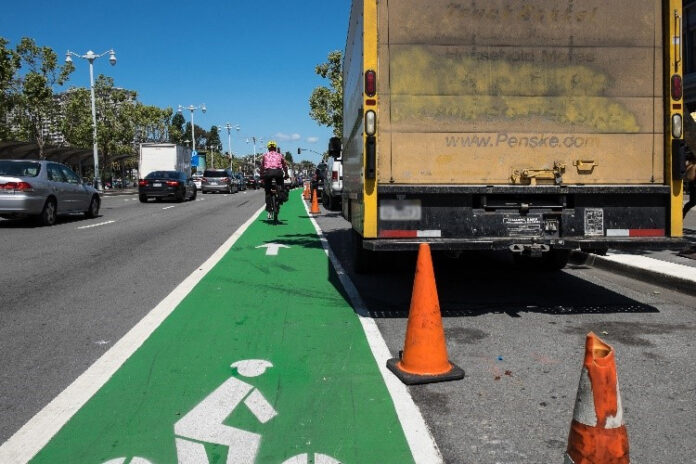
The San Francisco Municipal Transportation Agency (SFMTA) has painted more curbs red, turned former meter spots into loading zones, and increased enforcement citywide. New daylighting rules under AB 413 are removing thousands of legal spaces by banning parking near crosswalks. Officials estimate 13,775 spaces may be eliminated citywide.

Red-zone violations alone now average 1,200 tickets per month—and climbing.

“They know people have no choice,” said Ángel Méndez, who lives near Quesada Street. “Not everyone got a garage spot, and now even the corners where we used to park are off-limits. But if you park there, it’s a $108 ticket. Every week.”

City planners, including SFMTA Director Jeffrey Tumlin, insist these changes are about safety and long-term sustainability. “We’re redesigning our streets to support alternatives to car dependency,” he’s said. But many residents argue that those alternatives don’t yet exist—or don’t work for people with real-world schedules and responsibilities.

On Zillow, housing.sfgov.org, and PropertyShark, listings in Hunter’s Point proudly advertise “limited parking” while highlighting modern amenities and waterfront views. But tenants who didn’t win a garage spot face a daily battle for curb space that’s becoming more restricted—and more expensive.

What’s emerging is a troubling pattern: build housing, provide partial parking, then redesign the curb so that remaining options disappear—only to enforce them aggressively.

“We thought we were getting affordable housing,” said Aguilar. “Instead, we’re paying with stress and citations.”

Unless the city addresses the gap between planning theory and the daily needs of its residents, its current approach risks deepening inequality. Drivers aren’t being pushed toward better choices—they’re being pushed into a trap.

spot_img

Traditional Tarahumara Medicine: Plants, Rituals, and Ancestral Wisdom

Traditional Tarahumara Medicine: Learn about the plants, rituals, and ancestral knowledge with which the Rarámuri have healed for generations

Traditional Tarahumara medicine is protected deep in Mexico’s Sierra Madre Occidental, among towering mountains and winding roads, an ancestral knowledge that has guided the Rarámuri for generations. In a world rapidly moving toward digital and instant access, this tradition reminds us that health begins with listening to the body and the environment.

The Tarahumara, also known as the Rarámuri, built their history in close connection with the land. Over time, this indigenous people have developed a healing system that combines medicinal plants, spiritual rituals, and a deep understanding of the balance between body, mind, and spirit. For them, healing is not only curing physical illness, but restoring harmony at all levels of being.

Balance in Traditional Tarahumara Medicine

For the Tarahumara, health is a state of balance between the individual, the community, and the natural world. Therefore, it is understood that illnesses do not arise on their own, but rather as a result of imbalances: from spiritual disharmony to the evil eye or poor nutrition.

Therefore, the wise men—known as medicines—not only prescribe plants, they also perform healing rituals, sweat lodges, cleansings, and ceremonial dances. Each act has a profound intention: to restore lost harmony.

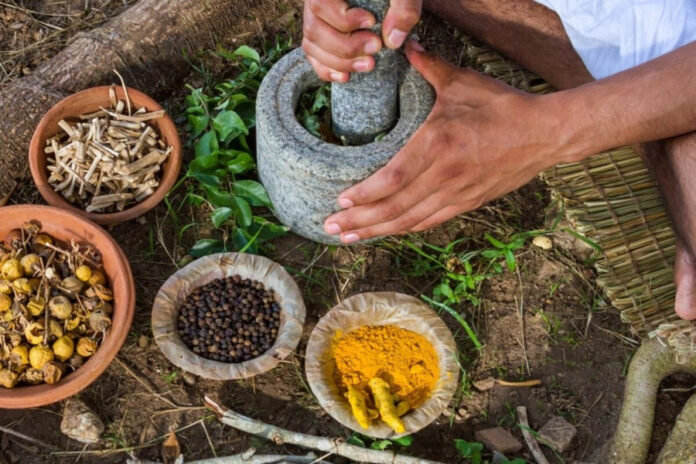
This healing system not only soothes the body; it also embraces the soul. Medicinal plants occupy a central place in this practice. Among the most commonly used are:

  • Arizona (Rattlesnake): with anti-inflammatory and analgesic properties, it is used for muscle and joint pain.
  • Jicama: its leaves and roots are boiled to relieve digestive problems.
  • Mullein: effective for treating respiratory conditions thanks to its expectorant properties.
  • Aloe vera: used to treat burns and wounds for its healing properties.
  • Chamomile: a natural sedative, ideal for insomnia and anxiety.
  • Sweet wood: with antimicrobial effects, it is used against intestinal infections.

In addition to the plants themselves, application methods have also been refined over the years. These are some of the most common:

  • Infusions with dried leaves for digestive and nervous ailments.
  • Decoctions of boiled roots to extract active compounds.
  • Poultices applied directly to the skin.
  • Ointments made with herbs and fats to relieve pain.
  • Tinctures that preserve the properties of plants in alcoholic solutions.

The preparation of these remedies is not only a technical process; it is also an act of cultural transmission. In every blend, in every infusion, the elders teach the younger generation how to care for their health without breaking their bond with nature.

What risks does it face?

Traditional Tarahumara medicine faces major challenges today. The migration of young people, the loss of biodiversity, the advancement of modern medicine, and the lack of educational programs have created a break in the chain of knowledge transmission. Many young people no longer recognize plants or know how to use them. The tradition is at risk of being diluted.

But there is also hope. Community workshops, documentation projects, and new ways of valuing Indigenous knowledge are helping to revitalize these practices. Integrating traditional medicine with certain modern scientific approaches does not mean losing its identity, but rather strengthening it through collaboration.

Preservation of Traditional Medicine

Preserving traditional Tarahumara medicine is much more than protecting a healing method: it is preserving a worldview in which health is connected to the land, the cycles of life, and the community. Each plant, each ritual, and each shared story represents centuries of observation, respect, and wisdom. In these times, when we are seeking new forms of well-being, the legacy of the Rarámuri offers us a profoundly human response: healing is also remembering who we are and where we come from.

Healers play an essential role in Indigenous communities.

spot_img

Claudia Sheinbaum versus Mexico’s cartels: A perspective

by Travis Bembenek

The issue that most captures our readers’ attention is the power and violence of the cartels in Mexico. Many say Mexico will never reach its full potential until it brings them under control. I wholeheartedly agree. Corruption, threats, extortion, and violence not only damage Mexico’s economic prospects but deeply harm its people. Around 20,000 Mexicans die annually due to cartel violence, and over 80,000 in the U.S. from drug overdoses — a devastating toll on both nations.

Some Americans argue that Claudia Sheinbaum should step aside and let the U.S. military handle the cartels. But this view overlooks how complicated such interventions are. Look at the outcomes in Colombia, Iraq, and Afghanistan. Foreign military intervention in a country’s internal matters rarely produces lasting success.

There’s also the faulty assumption that the U.S. can easily fix the supply side of the drug problem in Mexico while failing to curb demand at home. Focusing on Mexico’s side of the border ignores how the U.S. itself contributes to the issue through domestic consumption and lax control of supply chains.

Another common claim is that Claudia is afraid of the cartels and incapable of tackling them seriously.

So where are we now, about eight months into Sheinbaum’s presidency and nearly five months into Trump’s return to the White House? Are we making progress?

Let’s examine six key areas:

  1. Increased troop presence at the border?
    Yes. The U.S. has over 10,000 troops and National Guard members at the border, with 1,000 more recently approved. Mexico has deployed 10,000 National Guard troops to border areas under Sheinbaum’s orders. These numbers represent a notable increase in military focus.
  2. Improved surveillance cooperation?
    Despite initial controversy, Sheinbaum acknowledged that the Mexican military is working with the U.S. on surveillance. Covert CIA drone flights have begun over Mexico to locate fentanyl labs, and U.S. spy planes have flown missions near Baja. While no strikes have been authorized, these efforts show growing bilateral coordination.
  3. Record drug seizures?
    Yes. Seizures of fentanyl and cocaine have hit historic levels. U.S. authorities in Arizona confiscated over 4 million fentanyl pills — quadrupling their previous record. Texas saw the seizure of over 1,500 kilograms of methamphetamine. Mexico’s Navy recently intercepted 1.28 tonnes of cocaine, and in Sinaloa, over 1,000 kilograms of fentanyl were seized, with an estimated street value of $400 million. These are major operational hits to traffickers.
  4. Major cartel leader arrests?
    Recent arrests have struck at cartel leadership structures. Among them:
  • MS-13’s senior figure Francisco Román (arrested in Mexico)
  • Ismael “El Mayo” Zambada (arrested in the U.S.)
  • Ovidio Guzmán (son of ‘El Chapo’) preparing to plead guilty
  • Sinaloa Cartel members José Ángel Canobbio and Kevin Alonso Gil Acosta
  • Carlos Treviño of the Northeast Cartel

Mexico also extradited 29 cartel figures to the U.S., including Rafael Caro Quintero. Most recently, 17 of El Chapo’s relatives surrendered at the U.S.-Mexico border — possibly linked to a plea deal. These arrests signal deeper coordination and greater pressure on cartel networks.

  1. Has violence declined overall?
    The Sheinbaum government reports an 11% nationwide drop in homicides year-to-date. Security Minister Omar García Harfuch noted over 20,000 arrests for high-impact crimes and the seizure of 10,000 firearms. However, high-profile killings — such as the murder of two aides to Mexico City mayor Clara Brugada — keep concerns high. Incidents in Jalisco, Guanajuato, and Baja California Sur further illustrate the persistent threat.
  2. What are U.S. officials saying?
    Trump has offered both praise and critique. On March 6, he posted, “Our relationship has been a very good one, and we are working hard… stopping Fentanyl.” But in an interview with Fox News, he remarked, “Mexico is… afraid of the cartels… they run large sections of Mexico.” Still, he said he is “dealing very nicely” with Sheinbaum, calling her “a very fine woman.”

Homeland Security head Kristy Noem visited Sheinbaum in Mexico City, calling Mexico’s National Guard deployment and cooperation on deportation flights “a positive step,” though she added there’s still “much work to be done.”

Secretary of State Marco Rubio stated, “They have been very responsive on our security concerns… productive cooperation.” He plans to visit Mexico soon with other cabinet members to deepen bilateral efforts.

My take:
Although it’s still early in both presidencies, we are witnessing a higher level of coordination and commitment from the U.S. and Mexican governments. This momentum is unique and promising. Surveillance, enforcement, arrests, and diplomacy are all progressing.

The cartel problem won’t be resolved overnight — nor solely through force. But we’re seeing signs of a real effort to disrupt their operations more aggressively than in years past. The challenge ahead is to sustain and expand this progress.

What do you think?

Stay tune as we continue to follow this critical issue, one that deeply affects not just Mexico and the U.S., but the future of their bilateral relationship.

Travis Bembenek is the CEO of Mexico News Daily and has been living, working or playing in Mexico for nearly 30 years.

spot_img

Reclaiming the curb: Time to reverse San Francisco’s mass parking elimination

Marvin Ramírez, editor

by Marvin Ramírez

San Francisco’s parking crisis has moved from downtown into the heart of our neighborhoods. In residential areas across the city, formerly available curb space is disappearing under freshly painted red and white zones—often justified with vague “safety” or “emergency access” arguments that lack public explanation or measurable justification.

Residents who once relied on street parking outside their homes now circle their blocks for up to 40 minutes. In many cases, curbside space has been restricted for hypothetical scenarios that never materialize—like an ambulance that might need to park there someday, even when there’s no history of emergencies on that street.

These decisions feel arbitrary and top-down, and they’re creating real hardship for working families, seniors, and renters who don’t have private garages.

The San Francisco Municipal Transportation Agency (SFMTA), already facing a projected $322 million budget deficit by 2026, has eliminated thousands of curbside spots across the city. Though this is often framed as a move toward sustainability or public safety, the truth is messier. In residential zones especially, red and white zones now dominate curb space—without community input, data transparency, or clear benefit.

To make matters worse, while parking spots vanish, the city keeps raising fees. Street-cleaning tickets are up 5 percent, and residential parking permits are set to rise to $215 per car by 2025. These increases are sold as minor adjustments, yet they disproportionately hit low- and middle-income residents—especially those who have no choice but to drive because they live in transit deserts or work odd hours.

City officials continue to use “safety” as a blanket excuse for parking restrictions, but data often fails to support their claims. For example, Ocean Beach will soon lose 90 free parking spaces in the name of park access—despite no history of fatalities there. Similar logic is being used in quiet residential blocks where emergency response times haven’t changed in decades. Why take away a family’s only realistic parking option based on a hypothetical?

In response to this creeping curb seizure, some citizens are considering the ballot initiative process. The idea is simple: draft a measure to restore parking in residential areas where no evidence of danger exists, collect the required 10,000 signatures, and place the issue on the 2026 ballot. The goal isn’t to halt all changes, but to bring balance, transparency, and public accountability to the curb management process—especially in neighborhoods where people live, raise families, and grow old.

This initiative would empower voters to challenge bureaucratic overreach and prevent the quiet erosion of one of the few public goods that still serve everyday San Franciscans: residential street parking.

Community organizations—neighborhood councils, religious groups, senior associations, youth sports clubs—can and should get involved. So should small businesses and delivery workers who also depend on predictable curbside access. Even rideshare drivers suffer from these new restrictions, now forced to stop in the middle of the street where white zones once gave them safe, legal loading areas.

The media, including this newspaper, must help reframe the debate. This is not about cars versus bikes. It’s about the right to live in a city that listens to its residents, uses data to justify changes, and values basic daily functions—like parking near your home or unloading groceries—just as much as it values visionary urban design.

There are smart, modern solutions that don’t pit one group against another: shared-use curb zones that function differently by time of day, or residential permits that offer priority in high-impact areas. European cities like Paris and Amsterdam are pioneering these approaches. Why not San Francisco?

Meanwhile, SFMTA’s plans to convert many two-hour zones into “pay or permit” areas won’t solve anything. They simply extract more money from residents while offering no guarantee of available parking. It feels less like policy and more like punishment.

A successful initiative would establish a few key principles:

  • Restore residential parking where there’s no record of safety hazards.
  • Require public hearings and data before eliminating more consecutive spaces.
  • Make city audits on curb policy public and easy to understand.

This wouldn’t stop the creation of safe bike lanes or improved transit—but it would restore fairness and transparency to the way the city manages its residential curb space.

A livable city works for everyone. If San Francisco wants to lead on climate, it must also lead on equity. That means ensuring working people, seniors, and families can still park near their homes—without being priced out or pushed aside in the name of abstract policy goals.

It’s time to get informed, get involved, and reclaim the curb. When someone offers you a petition on your street corner—sign it. You’re not just fighting for parking. You’re voting for common sense, transparency, and the right to live with dignity in your own neighborhood.

spot_img

“San Juan Day” Salsa Festival

by Magdy Zara

Salsa once again invades Newark with its 45th Annual “San Juan Day” Salsa Festival in its 2025 edition.

The “San Juan Day” Salsa Festival is a cultural event organized annually by the Puerto Rican Council of the Western Region, with the main objective of raising scholarship funds for students pursuing higher education.

This event is full of exciting entertainment for the entire family, offering a wide variety of live salsa bands, DJs, authentic Puerto Rican food, merchandise vendors, a children’s play area, and much more.

The Latino community is invited to enjoy this festival and support this worthy cause. It is a family-friendly event, with free admission for children under 12.

The “San Juan Day” Salsa Festival will be this Saturday, June 21, starting at 11 a.m. until 7 p.m., at Swiss Park, located at 1 Mowry Ave, Newark.

Tickets are $25 online and $35 at the door on the day of the event. Tickets can be purchased at https://www.purplepass.com/ddsjfestival

Salsa in the Plaza is now in the Streets

If you’re looking for a unique day and you like to dance, you won’t want to miss this series of events where music is the star.

If you like Cuban salsa, you’re in for a fantastic experience with the music of DJ Juan Love, who, along with Pablo Dinámico, will bring their electrifying, fun, and contagious energy.

Dinámico will also teach a short Rumba, Timba, and Reparto dance class to familiarize people with the music and dance style. He will also lead the Ruedas (dance circles) and Reparto, which the crowd loves.

This event will take place on the fourth Friday of every month, from June through September.

This Friday, June 27th, it will be at Union Square, 350 Powell Street, San Francisco, starting at 5 p.m., completely free.

Calito Franco and his Tumbáo Añejo in concert

Everything is ready for the performance of Carlito Franco and his Tumbao Añejo, who masterfully interprets Caribbean music. He has been closely associated with this musical style since the 1970s, along with his Franco Brothers and their Actualidad Orchestra.

Calito toured with the original Latin rock band “MALO,” and from 2019 to October 2022, he was recruited by the late musical director and leader of Malo. He also recorded and shared the stage with many other internationally renowned artists.

Originally from San Francisco, with Latin roots such as cumbia, salsa, bachata, cha cha, merengue, and bolero, and a masterful blender of soul, pop, and Latin jazz, Carlito performs on Sunday, July 6th, starting at 3 p.m., at Vino Godfather, located at 1005 Walnut Ave, Vallejo. Tickets start at $17.

spot_img

Tehuana Hairstyle, a Zapotec Braid That Encapsulates Centuries of Oaxacan Pride

by Mexico Desconocido

The Tehuana hairstyle is an ancestral art form from the Isthmus of Tehuantepec that blends beauty, identity, and Indigenous memory.

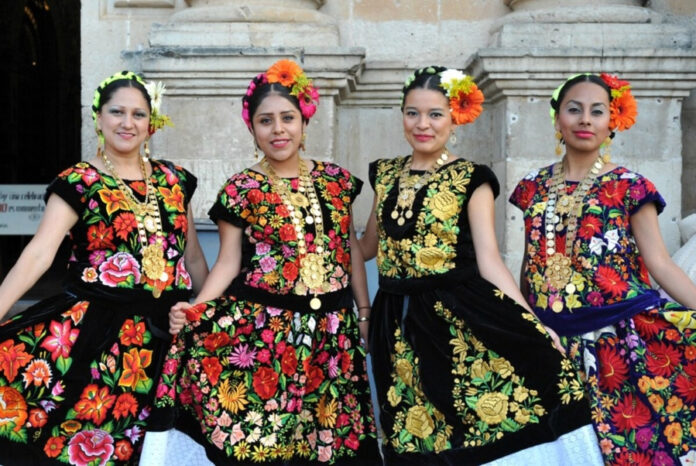
The Tehuana hairstyle is not just a way of styling hair. It is a profound expression of identity, cultural heritage, and Zapotec pride. Originating from the Isthmus of Tehuantepec in Oaxaca, this elaborate hairstyle represents centuries of history, community symbolism, and Indigenous resistance, which is still present today in Mexican festivals, rituals, and art.

An Ancestral Legacy Woven with Pride

The Tehuana hairstyle has its roots in the pre-Hispanic world, when women from the Isthmus already elegantly wore ornate braids as part of their ceremonial attire. However, its current form emerged during the viceregal period, when Zapotec women incorporated elements of European dress into their own aesthetic, achieving a balance between indigenous heritage and cultural adaptation.

Unlike other styles that change with fashion, the Tehuana hairstyle remains relevant because it expresses something deeper than mere appearance: it speaks of belonging. By wearing it, Zapotec women communicate their identity, their commitment to their community, and their respect for the generations that preceded them.

The Tehuana hairstyle is a social narrative

Hair styling is not an individual act. In the Isthmus, hairstyling is done in a community: mothers, daughters, sisters, and friends collaborate to braid and adorn hair, especially during festivals such as velas, weddings, or religious processions. Each occasion requires a particular style, and the complexity of the hairstyle often reflects the social status, marital status, or maturity of the wearer.

For example, married women or women of higher social standing often wear taller and more ornate hairstyles. On the other hand, single young women can wear simpler, yet equally beautiful, versions.

Two styles that embody the same tradition

There are two main forms of the Tehuana hairstyle:

  • Updo or bun: The braids, intertwined with colorful ribbons, are wrapped around the head, forming a sort of crown. Natural flowers such as bougainvillea, marigolds, or sunflowers are often placed on this arrangement, giving it a majestic character. This style is often worn at the most important candles and during patron saint festivals.
  • Side-swept or loose: This is a simpler version, where the braids fall to one side and the adornments are more discreet. This style is common at more informal events or for everyday wear.

Both versions are often accompanied by traditional attire: huipiles embroidered with flowers, full skirts, and, on special occasions, a sash. The latter is a circular headdress that frames the face and is made of lace or tulle, completing the imposing image of the Tehuana woman.

Tehuana Hairstyle, Oaxacan Heritage for the World

The symbolic power of the Tehuana hairstyle has transcended its original context. Frida Kahlo, an icon of Mexican art, adopted this aesthetic to emphasize her mestizo and indigenous identity, turning it into a symbol of national pride. Artists such as Graciela Iturbide have immortalized Tehuanas in photographs that attest to their dignity, elegance, and power.

On stage, the Ballet Folklórico de México has brought the hairstyle—along with traditional costumes—to theaters around the world, showcasing the cultural richness of the Isthmus of Tehuantepec with each performance.

Today, in a context of globalization and cultural hybridization, the Tehuana hairstyle endures as a living manifestation of Zapotec identity. It is neither a museum piece nor a passing fad. It is the result of centuries of tradition, passed down from generation to generation, and continues to be part of the daily and festive life of many women in Oaxaca.

Each intertwined braid, each carefully placed ribbon and flower, tells the story of a people who have never stopped looking back with pride at their past, while continuing to embroider their present with dignity and beauty. Anyone who contemplates a Tehuana hairstyle doesn’t just see a hairstyle: they witness a living history.

spot_img

CA colleges and universities take food pantries to the next level

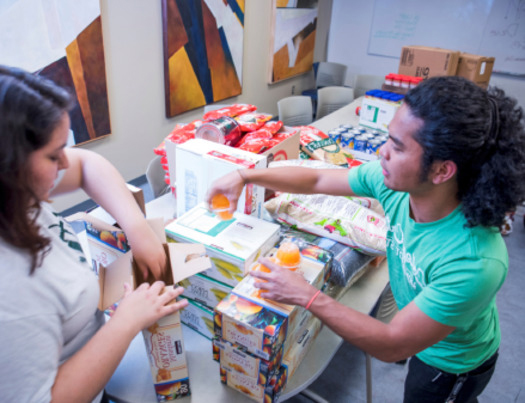
Universidades y colegios de California llevan las despensas de alimentos al siguiente nivel -- Student workers help distribute food as part of the "Oh SNAP!" program at Cal Poly Humboldt. (Kellie Brown)

by Suzanne Potter

Hunger among college students in California has jumped dramatically since the pandemic, yet Cal-Fresh — a statewide low-income food assistance program — fails to reach more than 70 percent of eligible students.

So, food pantries at colleges and universities are finding creative ways to meet student needs.

In the 2023-24 school year, 46 percent of students at Cal Poly Humboldt used the school’s Oh-SNAP! food pantry, 4 percent more than the year before.

Mira Friedman – lead for health education and clinic support services there, who coordinates the program – said people may think that if students can afford tuition, they can afford food.

But that’s often untrue.

“It’s a misconception, because oftentimes financial aid is not significant enough to pay for all the expenses,” said Friedman. “Food is very expensive, housing insecurity is very real, and food insecurity is very real for our students.”

Data from the California Student Aid Commission found that more than two-thirds of college students surveyed were food insecure in 2023.

Humboldt’s Oh-SNAP! program offers cooking and gardening classes, sponsors a weekly farm stand with organic fruits and vegetables, and even has a pop-up thrift store with furniture and kitchen items.

Students are also notified to pick up extra food from dining halls.

Contra Costa College, a 2-year school in San Pablo, recently launched a pilot program with 20 refrigerated lockers where students can pick up groceries they order online.

Basic needs coordinator Hope Dixon said the program also helps students with Cal-Fresh applications.

“The eligibility requirements around CalFresh are incredibly challenging,” said Dixon. “I have a flow chart that helps students pre-review if they have some eligibility. In order to apply, there’s an interview, and students are often in classes. If they miss the call, it’s very, very hard.”

Students who are on a school food plan only qualify for Cal Fresh if it is the most minimal plan.

Support for this reporting was provided by Lumina Foundation.

spot_img