Wednesday, October 14, 2026
spot_img
Home Blog Page 667

SFPD seize vehicle for using out-of-state driver’s license

by Rómulo Hernández

Is inconstitutional to confiscate the autos of the undocumented.: Janitorial workers look for a place to put their work tools after the SFPD impounded their car despite of carrying a driver's license from Washington. (photos by Marvin J. Ramirez)Is unconstitutional to confiscate the autos of the undocumented. Janitorial workers look for a place to put their work tools after the SFPD impounded their car despite of carrying a driver’s license from Washington. (photos by Marvin J. Ramírez)

“Pedro” was driving on Mission Street on Saturday, June 21st at 7:30 p.m. along with two co-workers “Maria” and “Rafael” (fictitious names for a real case).

At 22nd Street, they turned to the right. At approximately 20 meters while they were getting in position to park, they were surprised by several police agents who stopped him and asked him for his driver’s license. The officer said (as he wrote a traffic ticket) that the car had a hanging object in the inside mirror, which is “not allowed by the law.”

The three, obviously in fear, pulled over and got out of the van. Pedro showed his driver’s license and this motivated a second scolding. The agent informed him that he had to impound the car because the license was from Washington and that when a driver moves from another state he had between 10 to 21 days to get a new license, since every state has its own forms for a license or identification. According to the agents earlier Pedro, had confessed to them, that he had been in San Francisco for a long time.

Maria and Rafael did not have the strength to say anything. Pedro was almost babbling to respond to the agents. The three passengers in the car just stared. Pedro’s feet seemed not to obey him. Some neighbors, mostly Hispanics, surrounded the van and the police officers. At the arrival of the tow truck, the passengers proceeded to vacate the van: a mop, a vacuum cleaner, sweeping brushes and cleaning liquids.

While the confiscation victims showed a visible sadness, to the arresting cops was like a motive of laughter.: In the photo, the arresting officer (left) and a sergent who legitimized the confiscation, laught and asked to be photographed next to the impounded vehicle.While the confiscation victims showed visible sadness, to the arresting cops was like a motive of laughter. In the photo, the arresting officer (left) and a sargeant who legitimized the confiscation, laugh and asked to be photographed next to the impounded vehicle.

Those were their work tools of the trio who, every Saturday, from 8 p.m. to 3 a.m. at dawn, while most part of the city party, they devote themselves to deodorize bathrooms, vacuum carpets and clean up commercial building in the area of Mission, the Hispanic quarter of San Francisco.

The incident was reported as case #080650233. The date hearing to try to rescue the vehicle is July 15.

How much will he have pay for rescuing his automobile?

Even if it is unknown how much,”Pedro ” will have to pay to rescue his car from the same city sanctuary that the Mayor of San Francisco so much promotes, which protects undocumented immigrants.

El Reportero consulted with social worker Erika Correa, who experienced a similar situation nearby a couple of months ago.

“My husband was driving without a license for approximately a block, and I was going next to him. We were going to our work here in the Mission. I showed the officer the car registration, proof of insurance and my driver’s license, but because the driver didn’t have a license, I should hand in the keys to the car. They told me I could get the car back on the following day.

It was not like that. They impounded the car for one month. They said generally the fine was approximately $1,600. In my case it was double, about $3,000.

This is unconstitutional, according to California Sen. Gil Cedilla.

Cedillo has become a reference when it comes to matters related to this topic. Precisely on his internet portal, he offers the following information.

Legal counseling

If your car is confiscated:

  1. You have right to a hearing on the confiscation [CVC Section 14602.6 (b)]. Contact immediately by phone, letter or in person, the agency that ordered the confiscation and ask for a hearing.
  2. Unless the tow company contact the legal owner of the vehicle within two working days via registered mail, the owner cannot be charged for more than 15 days of storage and towing charges [CVC Section 14602.6 (a) (2)].
  3. You might have the right to legal recource. The city, county or state might be responsible legally for violating your constitutional rights. Look for legal counsel.

spot_img

Tarija votes for autonomy in Bolivia

by the El Reportero’s news services

Nicanor DuarteNicanor Duarte

On 22 June preliminary results showed that around 80 percent of voters backed the vote on autonomy in Tarija.

Home to 85 percent of Bolivia’s natural gas reserves, Tarija is the fourth and final department to hold a vote on autonomy. The support for autonomy is not a surprise. Final results are scheduled to be released on 25 June, but two TV channels, ATB and Unitel put the “yes” vote at between 79 percent and 80 percent and the “no” vote at between 19.7 percent and 21 percent.

The TV channels reckoned that abstention at 34.8 percent, was the lowest registered in the four departments that have held autonomy referendums. The other three departments to hold referendums were Santa Cruz, Beni and Pando.

Together with Tarija, these departments form the Media Luna bloc.

Paraguay President resigns

Asuncion, Jun 23 Paraguayan President Nicanor Duarte resigned to run for the Senate.

In his last message to the nation as head of state he reminded that Paraguay surmounted years of stagnation to achieve economic stability and sustained growth (6.8 points in 2007).

Exports also rose 193 per cent in 2007 above its neighbors, not just with soy, meat, software, plastic items, all products with value added.

Duarte admitted to trouble in land distribution and mentioned $150 million investments on urban landless, admitting to failure to meet housing demands as well.

President elect Fernando Lugo will assume offi ce August 15.

The Paraguayan Congress will discuss the resignation Tuesday but several legislators’ decision not to attend may lead to poor quorum.

Government Colorado Party Legislator Candido Aguilera said that if the resignation is rejected they will try next week again.

‘Parapolítica’ purge bill is killed as Uribe gears up for new term

On 10 June an adverse vote in the senate’s fi rst committee buried the government’s ‘political reform’ bill, which despite its grandiose title was chiefl y designed to purge congress of legislators linked to paramilitary organisations. Already, 32 legislators have been jailed on charges of paramilitary connections, and another 30 are under investigation. Most of these belong to parties that supported the constitutional reform that allowed Uribe’s reelection.

Binational indigenous front meets in oaxaca

SANTIAGO DE JUXT-LAHUACA, OAXACA, MEXICO – The assembly of the Indigenous Front of Binational Organizations in the Mixteca region of Oaxaca, one of the poorest areas in Mexico. A large percentage of the indigenous population of Oaxaca and other states has left to work in northern Mexico and in the United States.

The FIOB is a political organization of indigenous communities and migrants, with chapters in Mexico and the U.S. It advocates for the rights of migrants, and for the right not to migrate for economic development which would enable people to stay home.

Delegates discuss FIOB’s bylaws and political positions, vote to adopt them, and then elect new binational leadership in a democratic and open process. Julio Sandoval, a delegate from Baja California, recounts his experience as a political prisoner in the penitentiary of Ensenaada, where he was held for three years after leading a fight for housing for indigenous migrants. At the end of the assembly, Gaspar Rivera Salgado, newly elected as FIOB’s binational coordinator, addresses the delegates, and a group of Triqui women rise to their feet with a clenched-fist salute.

(Prensa Latina, Latin news contributed to this report.)

spot_img

Mexico relations not likely to be priority with next president

by Alex Meneses Miyashita

Andrés RozentalAndrés Rozental

Foreign policy analysts say it’s not clear yet which presidential candidate Boliviawould try to strengthen more the bilateral relationship between the United States and Mexico.

They generally agreed that Mexico will not be a priority during the campaign and it will take some time before the elected candidate will act upon the bilateral relationship, as he will focus on domestic issues first.

Andres Rozental, Mexico ambassador to the United Kingdom from 1995 to 1997 and a current fellow at the Brookings Institution, said that until now neither candidate has talked about Mexico in concrete terms.

Both Barack Obama and John McCain have expressed their intent to visit Mexico at some point during their campaigns.

“Obama evidently arouses a lot of sympathy in Mexico,” Rozental said, because of his biracial background, young age and his underdog status against Hillary Clinton.

But, he said, neither candidate has expressed at length a position on issues of mutual interest or beneficial to Mexico.

Mexicans who follow the U.S. elections say they have more confidence in Democrat Barack Obama than Republican John McCain to address foreign-policy, 30 percent to 19 percent, according to a Pew Research Center survey released June 12.

This trend favoring Obama by considerable margins was seen in the majority of the 24 countries surveyed by the Center.

Rozental said that on the outset, McCain might be more in tune with the bilateral agenda as he might be more familiar with the country’s southern neighbor.

At the same time, he said, McCain’s switch of position on immigration during the campaign is viewed unfavorably in Mexico and will likely dent his support among U.S. Hispanic voters.

Jim Jones, U.S. Ambassador to Mexico during the Bill Clinton Administration, predicted that both candidates, in spite of policy differences on bilateral issues, would not be too far apart on their positions regarding them.

On trade, McCain supports NAFTA while Obama has called for renegotiation on labor and environmental concerns. Jones said those can be addressed without renegotiating the treaty.

On immigration, both candidates will likely emphasize border security fi rst, a guest worker program and eventually the status of the undocumented population, Jones said. He added that both candidates would talk about cooperating with Mexico to stem border violence.

But, he emphasized, the greatest debate during the campaign will not be on these, but issues such as Iraq and the economy.

Rozental said the huge challenge both candidates face in moving the bilateral relationship forward is changing what he called a strong “anti-immigrant” atmosphere in the country that blames domestic problems on external factors.

“If Obama or McCain can mobilize the population of this country to change that focus, then there would be a substantive change in the relationship with Mexico,” he said, adding that if this doesn’t happen, ‘’I think either of the candidates is the same.” Hispanic Link.

spot_img

Frida Kahlo at SF-MOMA

by Rómulo Hernández

Exhibición de Frida KahloExhibición de Frida Kahlo

Museum of Modern Art presents a major exhibition of stunning portraits & photographs of Frida Kahlo, providing an intimate look at her hauntingly evocative paintings and her revolutionary life. SFMOMA, 151 – 3rd St, SF @ Mission St. Special timed ticket required. Advance ticket purchase recommended. Info: www.sfmoma.org/kahlo. Sat. 14 June, show runs until Sept 28.

Concert: Elio Villafranca/John Santos Quartet

An engaging evening of Afro-Caribbean Jazz with Elio Villafranca/John Santos Quartet. They will present original compositions and standards with creative arrangements derived from the rich African Diaspora of Cuba and the Americas. Sunday June 29, 2008. $14 adv. $16 dr. – 7 p.m. At La Peña Cultural Center, Berkeley.

Queer Latino Arts Festival’s 1st Exhibition

The opening reception of Maria: Politics. Sex. Death. Men was on June 6th as part of the 10th Annual Queer Latino Arts Festival’s 1st Exhibition. Partipating Artists: Keith Aguiar, Robert Guzman, Allan Herrera, Jody Jock, Jonathan Solo, Ernesto Soprani and Leo Herrera. (*** ADULT CONTENT. PARENTAL DISCRECTION ADVISED). Curated by Leonardo Herrera was the winning proposal of a call to curators, and was selected from seven curatorial proposals submitted to a Review Panel composed by John Blanco (artist), Raquel de Anda (Curator), Carolina Ponce de León (Curator), Alberto Rangel (artist), and Rebeka Rodriguez (artist/educator). Exhibition Dates:Friday, June 6th – Friday, July 4th La Raza Gallery.

Summer School 2008 at MCCLA

Multicultural Arts Education For Youth Ages 7 – 17

  • Session #1: June 23 – July 18.
  • Session #2: July 21 – August 15.
  • $185 each session.
  • All fees are non-refundable.
  • Mission Cultural Center for Latino Arts, 2868 Mission St, SF.
  • Info at: www.missionculturalcenter.org.

Report ‘Return from El Salvador ’ in Berkeley

It is about the report that medical and university students from Merritt and Laney College offering and the Refugees’ Committee of Central Americans, about their experience giving out medical and school equipment at towns devastated by the civil war suffered in El Salvador. On Thursday, July 10 at 7 p.m. La Peña Cultural Center in Berkeley. (Donations are accepted).

LGBT FEST: “Alondra, A Transsexual Diary”

This documentary (Alondra: Historia de una transexual ) comes from Spain and approach the discrimination of a transsexual immigrant (Male to Female). co-presented by CUAV – Community United Against Violence and Programa para Trans-Latinas. Roxie Cinema: 3117 16th Street between Valencia and Guerrero. Rated: NR Runtime: 78 mins. Saturday, June 28, 5:00 p.m.

Celebrating the Day of Saint John in Roccapulco

A warm salsa night with Anthony Cruz will take place at Club Roccapulco on Saturday, the June 28, at 3140 Mission Street, SF. For more information call 415-648-6611.

spot_img

Visa requirement to visit Ecuador suspended

by the El Reportero’s staff

The Ecuadorian government suspended requirements to acquire visas to all individuals of all nationalities that wish to visit this South American country beginning June 20 2008, announced the Ecuadorian consulate in San Francisco.

Last week it was noted that Ecuador seeks to improve its relationship with other countries around the world and to promote truism.

Visitors who wish to remain in Ecuador for more that 90 days, due to tourism, commerce, business, inversions, studies and voluntary work, etc. should seek their visas in the normal fashion, through their closest consulate agency.

Recycling and newspaper law

The development and investment committee in the Senate approved a new proposal by assemblywoman Fiona Ma (D- San Francisco) to stop what is considered an attack on privacy and organized theft across the cities and at late hours of the night thieves rummaging through recycled material to sell at high prices.

Legislation AB 1778 will stop this from occurring due to the identifying requirements that recyclers will be required to provide for anything worth over 50.00 involving aluminum cans, glass bottles and newspapers.

There should be a halt to these actions,” stated representative Ma.

AB 1778 will reinforce and restore order in our neighborhoods that are raided in the middle of the night.”

Sacramento officials stated that “theft” of recycled material increases the cost of garbage and the risk of identity theft.

Now you can file your complaints against Muni online

If you ride Muni and the driver misbehave in his or her manners, and you think it will be hard to complaint, now you have an option.

A new online technology can track and manage service requests to 311, a phone line that allows passenger to file their grievances.

­The San Francisco Municipal Transportation Agency (SFMTA) is the first to benefit from 311’s new Customer Relationship Management (CRM) technology. The website allows customers to file complaints, compliments, and report lost and found items online using the CRM tool.

“Continuous improvements and necessary additions to the 311 service mean time and money saved across departments. We are making city government more efficient and accountable for all residents,” Mayor Gavin Newsom said.

SEI partners with Skyline College to Provide Solar Training

For the first time Skyline College with offer a certificate program for solar training. This will include installation, industry and community. The extended campus in San Bruno will evaluate the results of the program and will formulate societies that will allow for the expansion of the program in the future.

spot_img

Obama faces major task in mobilizing Hispanics

by Alejandro Meneses

Alex MenesesAlex Meneses

Hispanic leaders and analysts are expressing enthusiasm over the Democratic presidential nomination of Barack Obama but maintain he has yet to win over the Latino vote.

This, they claim, will be critical for him — or John McCain — to reach the presidency.

Generally, Latino leaders hailed the nomination of the first black presidential candidate of a major party as a historic national milestone.

Obama gained the 2,118 delegates needed to clinch his party’s nomination in the Montana and South Dakota primaries June 4. Several super delegates endorsed him that day. His delegate count is 2187.5 to Hillary Clinton’s 1927.

“He will need the Hispanic vote to win. He’s going to have to work hard for it. One cannot take it for granted,” said Andrés Ramírez, vice president for Hispanic programs of the pro-Democrat think tank NDN. Most Latino support in the primaries went to Clinton. In California and New York, Latinos backed her by about a 2 to 1 margin.

Analysts stress Hispanics will be critical in November in swing states such as Colorado, Florida, Nevada and New Mexico.

Ramírez credited Obama with showing much initiative in reaching out to Hispanics. He maintained both Democratic candidates set records in Spanish-language advertising expenditures during the primaries.

The NDN hailed as “landmark” a 30-second ad Obama delivered in flawless Spanish during the Puerto Rico primary.

But Los Angeles’ La Opinión, the country’s largest Spanish-language daily, criticized his campaign for not communicating enough with the Spanish-language media.

Columnist Pilar Marrero wrote May 31, “The Barack Obama presidential campaign’s indifference to the Latino press has been a problem since the beginning of the race. The people surrounding the candidate don’t seem too aware or concerned about maintaining communication with the media that informs the Spanish-speaking community.”

La Opinión had endorsed Obama. Obama supporter Juan José Gutiérrez, director of the Los Angeles-based Latino Movement USA, concurred that until now Obama has not mobilized the Latino community as he has done with blacks and youth, proposing, “We have to start pressing right away and make sure we are visible in this campaign.”

But, he added, with what Latinos know of Obama now, they would not choose Hillary Clinton “the same way they did in the beginning.”

U.S. Rep. Luis Gutiérrez of Illinois has been a leader in rallying Hispanics and immigrants to press federal offi cials to pass immigration reform that offers legalization to the undocumented. He helped organize the massive 2006 pro-immigrant demonstrations in Chicago and elsewhere.

At a December 2007 meeting with Gutiérrez and several grassroots leaders, Obama promised, if elected president, he would push hard for immigration reform in his first year.

Gutiérrez points out that Obama stated his commitment to address the issue before Clinton did. “No more than 15 of us met with him,” he said. “Now it will be necessary for him to fi ll up a stadium of Latinos.”

The meeting convinced Gutiérrez that Obama was the right candidate. He says Obama’s goals on a wide range of issues from comprehensive immigration reform to ending the war in Iraq resonate strongly with the Latino community.

“I haven’t met a politician in my life who makes me feel that with this person things can get done, that there is sincerity, openness and originality. He’s genuine,” he said. “It’s not easy to fi nd this type of politician, especially at those political levels.”

Analyst José de la Isla explained Obama represents the political “change” that the U.S. public was demanding when they gave Democrats the majority in Congress in 2006.

He said the 2006 Latino mobilization was an expression of this call for change and a major agent that made it happen. He added the Democratic leadership, however, failed to bring about much promised reforms.

“(Obama) is the change that people were talking about,” he said. “He was very adroit, sharp in perceiving what the public was saying and the rest of the Democratic Party was not.”

Gutiérrez said Obama has offered fresh policy views on a variety of issues, including his approach to Latin America, especially as it refers to speaking, “without preconditions,” to Cuba.

Republican National Committee spokesperson Hessy Fernández said Obama’s willingness to talk to “hostile leaders” while turning his back to “friends” like Colombia through his opposition of a free trade agreement speaks to his “inexperience.”

Gutiérrez responded, “It indicates that with Barack Obama there will be a different dynamic of doing politics,” but he added that as in all politics, “there will be possibilities, but no guarantees.”

He said, “The fact that we support Senator Obama doesn’t mean we’re giving him a blank check, and that once he reaches power he can do whatever because we’ll be satisfied history was made.” Hispanic Link.

(Alex Meneses Miyashita, based in Washington, D.C.. is a correspondent with the Mexico City daily El Universal. Email: alexm377@hotmail.com). ©2008

spot_img

Adding a second Hispanic district in L.A. could eliminate Black representation

by Dana Guest

Gloria MolinaGloria Molina

Gloria Molina, the lone Hispanic serving on the Los Angeles County Board of Supervisors, voiced reservations to Hispanic Link News Service in a June 4 interview about the advisability of reshaping the Board’s district lines to create a second “Hispanic-majority” seat. A request to do so is now under consideration by the U.S. Department of Justice.

Presently, in a county where nearly 50 percent of the 10 million residents are Hispanic, the board includes Molina, Yvonne Burke, who is African American, and three white males.

Blacks, who made up 12.4% of the county’s population in 1980, now stand at 9.8%, according to the Census Bureau figures.

Responding to Hispanic Link reporters following her address to 175 guests attending a “Latino Leaders” luncheon in Washington, D.C., Molina expressed concern that shifting district lines could eliminate black representation on the board.

“One of the most dangerous things to us would be to exclude the African-American community,” said Molina.

The board manages an annual budget of $22 billion, larger than that of about 80 percent of U.S. states. Each of the five districts contains more than two million residents.

Molina’s concern is challenged by Alan Clayton, equal opportunity director for the Los Angeles County Chicano Employees Association, which has filed a federal voting rights complaint with the U.S. Department of Justice.

“We enhance the ability of Latinos, but we do not undercut the ability of African Americans to elect candidates where they currently have electoral power,” Clayton stated.

Supervisorial District #2, now served by Burke, who is retiring this year, has a black voting-age population of 29.5 percent. Two other African Americans who are competing in a November runoff to replace her.

Among those supporting the administrative complaint are redistricting expert Leo Estrada, associate professor of Urban Planning at UCLA, and Attorney Armando Durón, who had served back in 1991 on the county board’s redistricting committee as an appointee of Molina. Now a co-counsel in the administrative complaint, he said he was “shocked” by Molina’s comments. The proposed districts have carefully avoided reducing black infl uence in District 2, he said.

A pair of demonstration maps proposed by the LACCEA offer a 30.9 percent and a 30.5 percent black voting-age population in the reshaped district, according to Clayton.

“Alan Clayton has made a compelling case to show that African Americans are not affected by the proposal presented,” Joaquín Avila, a national expert on voting rights and redistricting who fi led a 68-page legal brief on behalf of the administrative complaint, told Hispanic Link.

Clayton and the LAC-CEA submitted their intervention request to the Department of Justice in February of 2003 and, in spite of repeated status requests, are still waiting for an answer.

Molina called another proposal to expand the Board of Supervisors to nine members “a good idea because it would allow for better representation of the entire community.”

The majority of board members opposed it, claiming it would be too costly. Board members like the power they have, Clayton responded. “They don’t want to give it up.”

(Dana Guest is a reporter with Hispanic Link News Service in Washington, D.C. Reach her care of ­editor@hispaniclink.org).

spot_img

Remembering my father, probably the founder of the first Spanish newspaper in SF

by Marvin J. Ramírez

For most of us, perhaps there aren’t more important and impacting dates like the ones when a very loved one passes away, to continue the journey we all will take sooner or later.

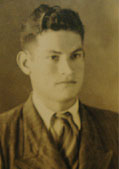
José Santos Ramírez Calero (1916-2004)


To me, this memorable date is June 12, when my father José Santos Ramírez Calero, a warrior of letters succumbed to his dead after a short but fast illness of cancer, and Alzheimer. It happened just a few days before Father’s Day on June 15. And as this month of June is almost history, and my father has been gone since 2004, I can only remember and share with you my readers, what a great guy was Ramírez Nieto, as he used to sign his name in El Nuevo Demócrata, his twice-a-month newspaper he started in 1938 in Nicaragua.

He republished it for a few years when migrated to San Francisco in 1945, and stopped publishing it when he returned to his country, where he resumed his work at the daily, La Noticia. He worked there for 45 years.

When I am writing and putting together every edition El Reportero every week, I feel the pain of not having him with me, watching me write, checking the spelling or correcting the style, as he did in the beginning when I started the paper. But soon he started to complain that he forgot things, so he didn’t want to do a bad job. So he quit helping me.

Ramírez Nieto, which means grandson, was the son of José Santos Ramírez Estrada, a U.S.-graduated electrical engineer who became famous and wealthy in Managua, when he brought from the U.S., giant and loud speakers that he placed on top of his car, which helped him grow a very profitable advertising business. People in Nicaragua still call the whole ensemble, “barata,” which means bargain, cheap, big sale. It’s used to announce sales or events in the absence of radio or television, as was the case in the 1920s.

My dad, Ramírez Nieto, however, left his own legacy, and Nicaraguan people in this part of the world, San Francisco, should have good reasons to remember him.

A journalist since he was 10 years old – he published the first newspaper in Spanish in this city, unless there is evidence to proof the contrary.

El Nuevo Demócrata, of similar tabloid-size as El Reportero, so far it’s the only known first newspaper published in Spanish in San Francisco .

I hope some day be able to erect a statue of José Santos Ramírez Calero in his honor to commemorate his work on behalf of the freedom of the press and his contribution to Spanish-language journalism in San Francisco.

­

spot_img

Hopes high that new ‘Free hands’ law will save lives

by Margine Quintanilla Romero

Ley "Manos Libres" toma efecto: Hablar con el celular en una mano y con la otra conducir podría convertirse en cosa del pasado o una fuente de ingresos para el gobierno si los conductores no cambian sus hábitos.Free Hands law takes effect Driving while holding the cell with one hand, and with the other the wheel could become a thing of the past, or income for the government if drivers don’t change their habits.

The new “free hands” law that restricts the use of cell phones while driving, might save thousands of lives, said a study published by Public Policy Institute of California (PPIC).

According to this information it is expected that of 4,000 deaths that the state of California registers at present, there should be 300 deceases less when this law takes effect on July 1.

The New York experience, which in the year 2001 became the first state with a ¯free hands” law, it indicated that the deaths in adverse conditions remained in a level more under several years after the law entered into effect, especially when there is bad weather or the highways are wetted, says the study.

Likewise, it reaffirms that the laws that demand “ free hands ” have limited the deaths in 30 to 60 percent.

These conclusions differ from previous studies that said that motorists who were  free hands ” were so distracted as those who were using the hand phones. These investigations are based on motorists’ polls, laboratory simulations and remarks on vehicles equipped with devices to record the behavior and the distractions of a motorist.

Un celular podría destruír su auto y su vida tambiénA cell could destroy you auto and also your life

On this topic Jed Kolko, attached investigator of PPIC, declared that it is possible that the motorists consider the technology “ free hands ” bothersome, and use the phone with less frequency. “Or they might change the minutes of conversation to moments when the conditions to drive are less dangerous ”, he said.

Nevertheless, for Kolko, the fact itself of having this law might serve as an educational function, a warning on the dangers of speaking while driving.

In spite of the questions without response on the way in which the cell phones affect the deaths toll when driving, and the motive of these, the results of the study suggest strategies to guide public policy. ¯Since the benefi ts of the laws ‘ free hands ’ depend on the conditions of conduction, it is logical to apply with more force the laws when the above mentioned conditions of conduction are more diffi cult. That can save lives ”, pointed out Kolko.

In the United States, the “free hands¯ laws are in effect in New York, New Jersey, Connecticut and in the District of Columbia, as well as in several cities, among then Chicago and Santa Fe, New Mexico. The state of Washington also will have a ¯free hands¯ law that will take effect on July 1.


spot_img

Argentina turns against goverment

by los servicios de noticias de El Reportero

Cristina Fernández de KirchnerCristina Fernández de Kirchner

Thousands of people took to the streets in several cities around Argentina on 16 June to protest against President Cristina Fernández de Kirchner’s refusal to negotiate with the farmers.

The nationwide protests were the largest since the meltdown of the economy in 2001. They indicated that Fernández has completely lost the population’s support during her dispute with the rural sector, which has now lasted more than three months.

The Farc’s four disasters

The Fuerzas Armadas Revolucionarias de Colombia (Farc) is reeling from four hammer blows. The guerrilla group’s two most senior leaders – Manuel Marulanda and Raúl Reyes – died in March. Moreover, the Farc’s most powerful international supporter, Venezuelan President Hugo Chávez, has turned his back on the group, while the Farc’s most prominent defender in Colombia Senator Piedad Córdoba has been totally discredited.

The defeat of the Farc, Latin America’s oldest and most resilient guerrilla group, for the fi rst time appears to be a genuine possibility.

Fury of Opus Dei in Latin America

Lawyer Ives Gandra Martins da Silva, the principal exponent of the fascist sect Opus Dei in Brazil, is concerned about the advancement of the left in Latin America. In an angry article in the column Trends / Debates of Folha de Sao Paulo, he distilled hatred and prejudice against Hugo Chavez, Evo Morales, Fidel Castro and Lula.

He took advantage to also criticize a “lack of preparation” of governments in the outside world and to offer his courses to a new generation of political leaders. “In this world plagued by false leaders and fantastic mediocrity, I think it is worth the idea, as I proposed in my book, a ‘school of government’ Funded by governments.

“ In the environment of right-wing defense, a merchandising for his lucrative business!

In his elitist point of view, “the world reaps, at present, a remarkable harvest of pseudo leaders, populist and unprepared, leading more or less developed nations exclusively based on the power of communication with the people, especially with the design less favored”. This harvest, according to the leader of the sect, would include “the histrionic Venezuelan president – capable of creating unnecessary resistance by being unable to control his sudden offenses – which transforms the Colombian drug traffi cking industry of kidnappings into ‘idealistic’ guerrillas. The same can be said of Morales, who also wants to perpetuate in the power that begins with his encyclopedic and truculent ignorance, to divide the nation.”

The influence of the fascist sect

After criticizing President Lula for raising taxes affecting mainly banks, Ives Gandra closed the Latin American harvest with another fascistic schizophrenia. “It is to remind you that the three presidents are friends of a dictator who was shot without trial – the homicides perpetrated in the famous’ paredóns’ – far more people than Pinochet.” Besides lying about the reality of human rights in Cuba, he cannot hide his sympathy for the dictatorial regime of Chile, which has always had the active support of Opus Dei. Even when he criticizes the “disaster-prone presidency of George W. Bush,” Ives Gandra alerts about “the risk of voting in another populist unprepared to carry out their objective”- perhaps in a sickly reference to Barack Obama.

­

spot_img