Thursday, October 15, 2026
spot_img
Home Blog Page 65

The Five Most Expensive Cities in Latin America and the Caribbean

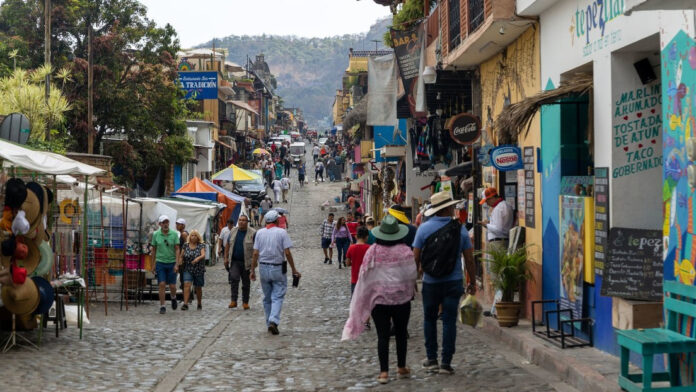
Tourists walk down a shopping street with mountains in the distance, in Tepoztlán, Morelos, Mexico. Geographic photos / Gettyimages.ru-- Turistas caminan por una calle comercial con montañas a lo lejos, en Tepoztlán, Morelos, México.

Some of these cities also appear among those that offer the best quality of life despite the high cost of living

by the ElRreportero’s wire services

A silent and even overwhelming trend for many of its residents is consolidating in the most striking urban centers of Latin America and the Caribbean: the continued increase in the cost of living in cities where not everyone can stay and which are increasingly coveted by locals and foreigners alike.

According to various portals that have compiled information on this topic, the global political and economic climate, international conflicts, and the aftermath of the coronavirus pandemic have made living in certain cities in the region increasingly difficult due to the high cost of living. According to an assessment reported by Statista, the five most expensive cities in Latin America and the Caribbean are: Mexico City, San José (Costa Rica), Montevideo (Uruguay), San Juan (Puerto Rico), and Buenos Aires (Argentina).

An interesting fact, the aforementioned website highlights, is that Mexico, Costa Rica, and Uruguay, where the most expensive cities to live are located, are also the countries in the region that offer the best quality of life in Latin America, referring to issues such as employment, salaries, transportation, food, and entertainment.

However, other information sites include the tourist resort of Nassau, Bahamas, above Buenos Aires. Below the top five are other cities such as: Santiago de Chile, Panama City, Guatemala City, Monterrey (Mexico), Sao Paulo (Brazil), Caracas (Venezuela); Bogotá (Colombia), among others. According to media reports, regarding home purchases, the average square meter in Mexico City is $3,533; followed by Buenos Aires with an average of $2,699; Santiago, $2,633; Sao Paulo, $2,604; Rio de Janeiro, $1,984; and Bogotá, $1,781.

Regarding monthly rent for a three-bedroom apartment, Mexico City remains in first place with an average of $2,121; Sao Paulo, $1,291; Buenos Aires, $1,166; Santiago, $989; Rio de Janeiro, $852; and Bogotá, $815. For one-bedroom apartment rent, Mexico City leads the way at $1,002; followed by Sao Paulo with $668; Buenos Aires, $648; Santiago, $509; Bogotá, $451; and Rio de Janeiro, $438.

spot_img

Where are the ombudsmen when they are most needed?

Marvin Ramírez, editor

by Marvin Ramírez

A great contradiction runs through our streets: community organizations, activists, and leaders who claim to fight for the interests of the most vulnerable—working families, small businesses, longtime residents—speak out at rallies, marches, and press conferences. But when push comes to shove, when the polls open, they support the same politicians who are bleeding our community dry with unpopular, insensitive, and often deliberately hostile policies.

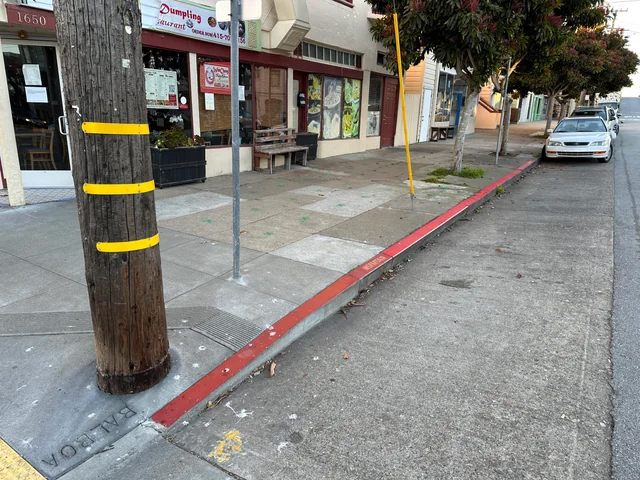
San Francisco, and particularly the historic Mission District, witnesses this outrage daily. Every week, without consultation or public discussion, authorities change parking spaces that once served customers, families, residents, and workers, turning them into yellow loading zones or, worse yet, simply eliminating them by painting them red or yellow. They’re doing it so quickly that it’s hard to believe there isn’t a hidden agenda behind it: to continue making access to our city more expensive, to continue fining those least able to pay, to continue pushing working people out of the urban center.

What’s happening in the Mission, near 24th and Mission Streets, in front of iconic locations like McDonald’s, Café La Bohème, or on Bartlett Street, is a clear example of how local business is being stifled. In front of McDonald’s, for example, where until recently there were about eight or ten parking spaces, today there aren’t even one left. They’ve all been eliminated: they’ve been painted red, prohibiting any stopping or parking. And on the other side, on 24th Street toward Bartlett, the same thing is happening. How can a family come to eat, shop, or simply visit the area if they have nowhere to park their car?

The worst part is that many of the community leaders who should be denouncing this injustice are now silent. Many of them work for publicly funded organizations. Have they become silent accomplices for fear of losing that funding? Have they become cheerleaders for the same officials who don’t bother to consult the community before imposing these measures? It’s disturbing that, during recent election campaigns, none of the candidates for public office have spoken about the parking problem. Not a single mention. Why? Because they know their allies in the “organized community” won’t challenge them. Because they know no one will hold them accountable.

What’s happening today is no coincidence. It’s a systematic policy of harassment of working motorists. Instead of building an accessible city, we’re building one where anyone who can’t afford an Uber or a $110 ticket for parking illegally for five minutes is excluded. Today we saw a dramatic example: a large food delivery truck, forced to double park due to lack of available spaces, received not one, but two tickets. What choice does that driver have? Return to the warehouse with the groceries because the city won’t let him stop?

It’s time to wake up. It’s time for true people’s organizations—if they still exist—to stop pandering to the officials in power and start genuinely representing the interests they claim to defend. It’s not enough to post smiling photos at cultural events. The community needs action. A citizen initiative is needed to stop this wave of repression over parking. This issue needs to be put on the ballot.

Urban policy must serve the people, not a handful of bureaucrats out of touch with reality or commercial interests that want a city empty of the poor. And that will only be achieved if the community truly organizes. Enough with the speeches. Enough with surrendering to the convenience of subsidies. The people deserve walkable, accessible streets and a city that doesn’t punish them for trying to live and work with dignity.

We call on all leaders, residents, business owners, and conscientious citizens to raise their voices, not just with signs, but with concrete proposals to change this reality. Because if we don’t do it, no one will do it for us.

spot_img

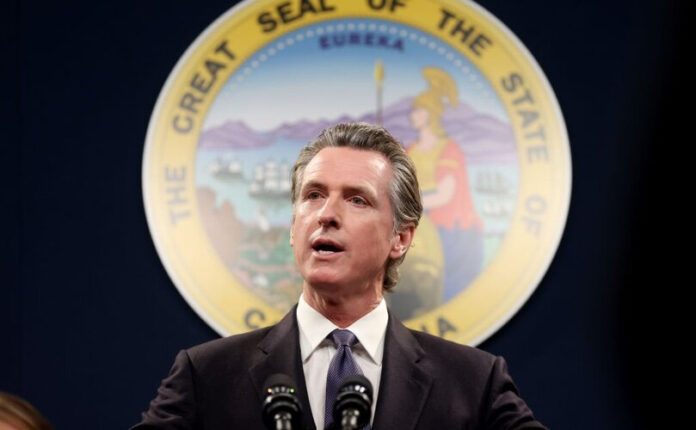
Gavin Newsom’s transgender tightrope — and the political cost of his extremism

by Jonathon Van Maren of LifeSite, edited by the El Reportero staffe

California Governor Gavin Newsom wants to appear like a man of nuance and balance. He wants voters — especially those outside the Golden State — to see him as a thoughtful progressive who listens, adapts, and leads with empathy. But when it comes to the transgender issue, particularly involving children, the governor’s act is becoming harder to maintain. The facts simply don’t support the performance.

Earlier this month, The New York Times acknowledged the obvious: Democratic leaders are in disarray over how to handle an issue that is wildly unpopular with voters — the party’s unwavering support for extreme transgender policies. That very stance may have helped swing key votes toward Donald Trump in 2016 and 2020. For any Democrat with presidential ambitions in 2028, this is no small matter.

Newsom knows this well. That’s why he’s trying — awkwardly — to soften his image. In March, he sat down with conservative activist Charlie Kirk on his podcast This is Gavin Newsom and sounded like a concerned father. On the issue of biological males competing in girls’ sports, he told Kirk, “I completely agree with you on that. It is an issue of fairness. It’s deeply unfair.” He cited his wife and daughters, and the importance of protecting women’s spaces.

Predictably, LGBT activists were outraged. But they needn’t have been. Newsom’s record remains one of the most aggressive in America in pushing the transgender agenda — especially onto children.

Last week, he was confronted more directly. Appearing on The Shawn Ryan Show, Newsom was asked whether, in his view, eight years old is too young for sex-change treatments. His response was painful to watch. He stammered, meandered, brought up his own 9-year-old child, and admitted that even he was still trying to “understand all of that” — the pronouns, the procedures, the cultural shift.

It was a revealing moment. Not because Newsom was honest, but because he was evasive. A man who has signed bill after bill making California a legal sanctuary for child sex changes could not bring himself to say that eight years old is too young for gender-altering interventions.

But his legislative record speaks louder than his podcast. Consider just a few of the laws he’s championed:

  • In July 2024, he signed AB 1955, which prohibits school districts from notifying parents if their child identifies as transgender at school. Teachers are even protected if they socially transition children without informing families.
  • In September 2023, he signed AB 223, mandating secrecy for minors who petition to change their legal sex markers.
  • In September 2022, he approved SB 107, effectively making California a “trans sanctuary state.” The law prohibits state officials from cooperating with other states seeking to protect children from sterilizing surgeries or hormone treatments.
  • The same year, he also signed SB 923, requiring healthcare providers to undergo “gender-affirming care” training.
  • In 2023, he signed AB 5, forcing LGBTQ+ cultural training on public school teachers, and SB 857, creating a state task force to promote transgender policies in schools.
  • And back in 2020, he approved SB 123, allowing trans-identifying inmates to choose their prison based on their gender identity.

Taken together, these laws build a wall of protection — not around children, but around an ideology. Parents are sidelined. Doctors are muzzled. Teachers are deputized. And minors are given the tools and legal cover to pursue life-altering changes in secret.

So when Newsom tries to sound hesitant, confused, or open-minded on these issues, it rings hollow. He has already acted — aggressively, and repeatedly — to enshrine the most radical elements of gender ideology into law.

Why the sudden squirming on camera? Because Gavin Newsom knows that what plays well in progressive enclaves might not survive a general election. He knows that Middle America — and much of California — is not on board with secret sex changes for children, or with stripping parents of their right to be involved in the most personal aspects of their kids’ lives.

That’s why he dodged Shawn Ryan’s question. That’s why he tries to sound like he’s “still learning.” Because he knows the truth: His record is indefensible to the vast majority of voters. And it may well be his undoing.

If conservatives are smart, they will remind voters of that record at every opportunity. Let Gavin Newsom run from his legacy. But don’t let him hide it.


spot_img

Experience Morgan Freeman’s Symphonic Blues

by Magdy Zara

As part of its summer activities, the San Francisco Symphony Orchestra has scheduled a series of events, including the “Morgan Freeman Symphonic Blues Experience,” which aims to take audiences on a journey through the moving history of Delta Blues, fusing the pure emotion of the blues with the expressive depth of the orchestra.

Symphonic Blues is an unforgettable celebration of music, culture, and storytelling.

This will be a live performance featuring multimedia narration by Morgan Freeman, Hollywood icon and son of Mississippi. It will also feature performances by respected Delta Blues musicians from Ground Zero Blues.

The event is on July 25th, starting at 7 p.m., in Davies Symphony Hall, located at 201 Van Ness Avenue, San Francisco.

Del Sol Quartet in Concert

Led by violist Charlton Lee, cellist Kathryn Bates, and violinists Hyeyung Sol Yoon and Benjamin Kreith, the Del Sol Quartet shines brightly on the Bay Area music scene every time they perform.

Del Sol Quartet is eager to bring music to any setting, from the shops of the Mission District and the parks of the East Bay to the august concert halls and the hallowed grounds of the Angel Island immigration depot.

This concert is one of the events you can’t miss this summer. It will take place next Thursday, July 31st, starting at 12:30 p.m., on the Great Lawn of Yerba Buena Gardens, located on Mission Street between 3rd and 4th Streets in San Francisco.

Musical Medicine for the Children of UCSF Benioff Children’s Hospital in Oakland

The children at UCSF Benioff Children’s Hospital in Oakland need your support to continue receiving medical care and treatment, so the Bay Area community is invited to attend this benefit concert.

The Musical Medicine concert series is an initiative of Bay Area composer and producer Mickel London, who was inspired to create this type of concert to raise funds and awareness for the plight of children suffering from sickle cell anemia, as well as other life-threatening diseases, at Children’s Hospital in Oakland.

Musical Medicine features some of the Bay Area’s finest talent and is a great opportunity to enjoy and contribute to this worthy cause. All proceeds from this concert will directly benefit the patients and the Patient Care Fund at UCSF Benioff Children’s Hospital in Oakland.

Tickets range from $45-$65. It will take place next Sunday, August 3, 2025, starting at 6 p.m., at Yohi’s, located at 510 Embarcadero West, Oakland.

spot_img

Peru’s cultural treasures shine in July: From sacred peaks to national pride

by the El Reportero‘s staff

Peru’s cultural richness comes alive every July, with festivals that celebrate the nation’s spiritual, historical, and patriotic heritage. Among the most anticipated are the Machu Picchu Anniversary on July 7, the Virgen del Carmen Festival from July 15 to 17 in Paucartambo, and Fiestas Patrias, Peru’s Independence Day celebrations on July 28 and 29.

On July 7, Peru honors the global recognition of its most iconic site, Machu Picchu, declared a Wonder of the Modern World in 2007. This majestic Inca citadel nestled high in the Andes is celebrated with cultural ceremonies in Aguas Calientes and Cusco. Pachamama rituals led by Andean priests honor Mother Earth, while guided tours, music concerts, and local dances pay tribute to the site’s enduring legacy. For Peruvians, this day affirms both their indigenous heritage and the global admiration Machu Picchu commands.

Mid-July brings one of the country’s most colorful and spiritual spectacles: the Virgen del Carmen Festival, held in Paucartambo, Cusco, from July 15 to 17. Revered as “Mamacha Carmen,” the Virgin is honored through a blend of Catholic devotion and vibrant Andean performance. On July 16, locals carry the Virgin in a grand procession while dancers in elaborate costumes perform traditional roles such as Qhapaq Qolla and Chunchachas. Mischievous figures called saqras dance on rooftops, teasing the crowd in a spectacle filled with fireworks and joy. The festival climaxes on July 17 with a powerful theatrical re-enactment of the battle between angels and demons—symbolizing the struggle between good and evil, heaven and earth. It’s a living testimony of Peru’s syncretic soul.

Closing out the month are the Fiestas Patrias on July 28 and 29, commemorating Peru’s independence from Spain. Cities across the country erupt in patriotic pride with military parades, flag ceremonies, folk music, and regional food fairs. July 28 is marked by the President’s annual address and the traditional Te Deum Mass, while July 29 honors Peru’s Armed Forces and National Police. For many, it’s not just a holiday—it’s a nationwide celebration of identity, resilience, and unity.

Together, these three events showcase Peru’s enduring blend of ancestral memory, colonial history, and vibrant national pride—making July a powerful month of cultural expression.


spot_img

Mexican cycling star Isaac del Toro conquers Tour of Austria

Thanks to Del Toro’s hat trick at the Tour of Austria, UAE leads all racing teams with 61 stage wins this season. (Isaac del Toro/Instagram) -- Gracias al triplete de Del Toro en el Giro de Austria, los Emiratos Árabes Unidos lideran la clasificación de equipos de carreras con 61 victorias de etapa esta temporada.

by the El Reportero‘s staff

Mexico’s newest sports hero — 21-year-old cyclist Isaac del Toro — rode to victory in Austria on Sunday, adding gold to the silver he collected in his impressive Giro d’Italia debut.

The Baja California native won three of the five stages at the 74th Tour of Austria, finishing first with a time of 17 hours, 51 minutes and 18 seconds. Del Toro took home 7,650 euros (US $8,930) in prize money.

“I’m very happy,” Del Toro said, “[and grateful] for all the support the team provided to help me win this Tour.”

Del Toro, a member of the celebrated UAE Emirates road bicycle racing team, completed the 714.2-kilometer race with a 29-second lead over Ireland’s Archie Ryan. UAE teammate Rafael Majka finished third, another 18 seconds back.

Thanks to Del Toro’s hat trick, UAE leads all racing teams with 61 stage wins this season. That’s almost double the 33 wins of the second-placed team, Lidl-Trek, while Soudal-QuickStep is third with 26 victories.

Cycling News called Del Toro a “rising star” after he powered to victory in Stage 4, a 117.3-km ride through the Alps from Innsbruck to Kühtai that featured climbs equivalent to 3,500 meters (11,483 feet).

“The Mexican is already a stage racing force to be reckoned with, and he’s proving that at the lower-ranked Tour of Austria, where he and UAE have totally dominated the race so far,” wrote Cycling News’ Dani Ostanek.

Sunday’s victory was his third stage win in a row after Del Toro broke the tape five seconds ahead of Andrew August of Ineos Grenadiers on Friday. He won Stage 2 when he pipped August to the line after a 142.1-km climb from Bischofshofen to St. Johann Alpendorf.

Del Toro, who made his professional debut in January 2024, made headlines in mid-May when he took the lead of the Giro d’Italia, wearing the pink jersey from Stage 9 through Stage 19.

The youngster faltered on Stage 20, outgunned by Simon Yates of Visma Lease-a-bike, finishing 3 minutes, 56 seconds back. Still, Del Toro, the youngest rider to finish on the podium since 1940, completed the race wearing the white jersey awarded to the top young rider (25 or younger).

Though the Tour of Austria lacks the global spotlight of the Tour de France, Del Toro’s triumph there, combined with his victory at Milano-Torino in March, has set the bar high

“He is a phenomenon and that’s for sure,” said UAE team manager Mauro Gianetti in May. UAE has Del Toro under contract through 2029.

With reports from Infobae, El Imparcial, El Universal and IDL Pro Cycling

spot_img

US announces 30 percent tariff on Mexican goods as bilateral talks continue

by the El Reportero‘s wire services

On Friday, President of the United States Donald Trump informed Mexican President Claudia Sheinbaum in a letter that he would impose a 30 percent tariff on Mexican imports beginning Aug. 1.

“Mexico has been helping me secure the border, BUT, what Mexico has done, is not enough,” the letter states. “Mexico still has not stopped the Cartels who are trying to turn all of North America into a Narco-Trafficking Playground.” Trump also announced a 30 percent tariff on imports from the European Union, due to “persistent, trade deficits, engendered by your tariff, and non-tariff, policies and trade barriers,” the president said in a separate letter.

On Monday, Sheinbaum announced that the concerns cited in the letter would be addressed in ongoing bilateral talks, particularly the significant U.S. trade deficit with Mexico. She expressed confidence that Mexico would be able to negotiate a deal to reduce, if not eliminate, the tariff.

The new tariffs were a blow to Sheinbaum’s cabinet, which has made numerous trips to Washington to ensure Trump’s advisors that Mexico is making progress on the issues identified as priorities by the U.S. president.

In recent weeks, U.S. Secretary of State Marco Rubio praised Mexico for being “very responsive” to Washington’s demands and U.S. Treasury Secretary Scott Bessent called Mexico’s proposals “positive.”

Mexico was informed that the letter was coming during high-level talks with U.S. State Department officials on Friday. The Mexican delegation expressed disagreement with the decision and considered it “unfair treatment,” according to a joint statement of the Economy Ministry and the Foreign Affairs Ministry.

Sheinbaum, who has avoided directly criticizing  Trump, voiced confidence that the U.S. and Mexico will be able to discuss the matter diplomatically.

“I’ve always said that in these cases, you need a cool head to face any problem,” Sheinbaum said on Saturday.

The tariff, if it goes into effect, could cause massive upheaval between the United States and its biggest trade partner.

The 30 percent rate would effectively replace the 25 percent tariffs currently levied on Mexican goods that do not comply with the existing U.S.-Mexico-Canada free trade agreement (USMCA).

The letter did not address whether USMCA-compliant goods would still be exempt from the new tariffs after Aug. 1.

Columnist for the newspaper El Financiero Enrique Quintana estimated that approximately US $150 billion worth of Mexican goods would be subject to the new 30 percent import tax.

In the joint statement, Mexico said “the first major task of the permanent binational committee will be to conduct the work so that, before [the tariffs take effect], we have an alternative that will protect businesses and jobs on both sides of the border.”

The bilateral talks involve Ebrard’s Economy Ministry along with the foreign relations, finance, security and energy ministries.

On its side of the table, the U.S. State Department is joined by the Commerce and Energy departments, Homeland Security and the U.S. Trade Representative.

Sheinbaum said Mexico’s negotiators will emphasize the progress her administration has made in the fight against organized crime, while also seeking to gain greater cooperation from U.S. counterparts.

“We have insisted that controlling the flow of weapons from the United States to Mexico, and arresting individuals involved in drug trafficking in the United States [requires] collaboration,” she said on Monday. “Yes, there is coordination, but part of [the responsibility] falls on us to prevent drugs from passing from here to there, but part of it also falls on them.”

Sheinbaum said her administration will continue working to reach a satisfactory agreement. “The most important thing for us is to ensure that employment is not affected and that cooperation between our countries is maintained,” she said.

As has been the case since Trump imposed the first of a string of tariffs on Mexico, Sheinbaum has declined to discuss retaliatory tariffs. In his letter, Trump included a threat to raise the tariffs should Mexico opt to retaliate.

With reports from The Associated Press, El Economista, El Financiero, Reuters and The Guardian


spot_img

Compare and Save: Changing Rate Plans Can Lower PG&E Customer Bills

Customers Don’t Have to Change Their Energy Use to Save

Oakland, California — A simple change could make a big difference in their energy bill. Pacific Gas and Electric Company (PG&E) is encouraging consumers to check that they are on the lowest-cost rate plan for their home or business.

Customers can find their lowest rate simply by logging into their PG&E account online and using the rate comparison tool.

PG&E does not anticipate any further electricity rate increases for the remainder of 2025. The company expects combined residential gas and electric bills to remain essentially flat for the remainder of this year and to decrease in 2026.

While bills have been stabilizing since early 2024, customers may see higher bills during the summer months when they use more energy to cool their homes and businesses.

Ensuring customers are on the lowest-cost rate for their home or business can help them manage energy costs if they use more during the warmer summer months.

“Sharing simple solutions can help our customers manage their energy use and save money,” explained Vincent Davis, senior vice president of Customer Experience at PG&E. “Switching to the lowest-cost rate plan is as easy as counting to three.” Log in to your online account, compare rate plans using the online tool, and select the lowest-cost plan for you.”

Customers who switch to a lower-cost rate don’t have to change their energy usage to save money. That’s because PG&E’s Rate Comparison Tool analyzes their past 12 months of energy usage to determine the lowest-cost rate for them.

However, customers can save even more money by switching to a time-of-use rate and making some adjustments to use energy during lower-priced off-peak hours, when energy demand is lower.

Savings for Customers in Fresno County

PG&E analyzed the accounts of residential customers in Fresno County, which has some of the hottest climates in our service area, to see how much money customers could save on their lowest-cost rate.

Reviewing 12 months of previous usage, PG&E found that more than 24,800 households could potentially save a total of $13.4 million annually if they switched to the lowest-cost rate. Most Fresno County accounts analyzed could save more than $300 annually, and some could save much more: up to $1,000 annually.

About 70% of customers could generate annual savings by switching to the E-1 tiered rate. This rate has two price levels based on energy usage. The more energy you use, the higher the price per unit of energy. By switching to time-of-use rates, customers could save money. These rates vary in price based on the time of day, week, and season of use.

While Fresno County customers could save without changing their usage, those savings could be even greater if they used energy during off-peak hours.

PG&E also provides all eligible residential customers with an annual rate comparison during their service anniversary month.

Other ways to save this Summer

PG&E offers low-cost or free tools to help customers save energy and money. Check out these options to see how you can manage your energy use and bills.

Budget Billing averages your energy costs from the past 12 months to determine your monthly payment and avoid seasonal spikes and bill surprises.

Home Energy Checkup is a free online tool that helps customers assess their energy use and offers personalized savings tips.

HomeIntel is a free energy-saving program that includes a Smart Audit and a personal energy advisor. Customers who have lived in their home for more than a year and have a smart meter installed are eligible to participate.

Savings Finder is a free online tool that provides personalized recommendations for financial assistance, bill management programs, and other resources to ease monthly energy costs.

Customers who are struggling to pay their energy bills may also be eligible for financial assistance. Find out if you qualify here:

  • California Alternate Rates for Energy (CARE) Program: Offers a 20% monthly discount on gas bills and an average of about 35% on electric bills (compared to customers not in the CARE program).
  • Family Electric Rate Assistance (FERA) Program: New guidelines offer an 18% monthly discount on electricity, regardless of the number of people in the household.
  • Energy Savings Assistance (ESA) Program: Offers certain energy-saving upgrades free of charge.
  • PG&E Relief for Energy Assistance through Community Help (REACH) Program: A program that provides a bill credit of up to $300 to help income-eligible customers with past-due balances avoid service disconnections.
  • PG&E Match My Payment: Offers the same match amount, up to a maximum of $1,000, to help qualified low- to moderate-income customers pay their past-due energy bills and avoid service disconnection. Customers must make a payment of at least $50 of their past-due bill each time to receive the match.
  • Low-Income Home Energy Assistance Program (LIHEAP): A federally funded, state-supervised assistance program that offers a one-time payment of up to $1,500 on past-due bills to help low-income households pay for heating or cooling their homes.
spot_img

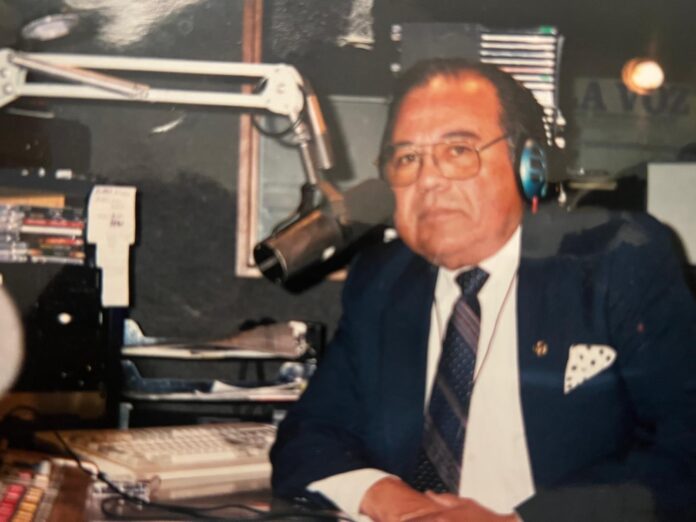
With marimba and tradition: farewell to Mario Palacios, Nicaraguan voice in San Francisco

by Marvin Ramírez

With a live marimba and the sound of the Monimbó and the garañon, musical emblems of Nicaraguan folklore, the body of Mario Jorge Palacios Alvarado—known as Mario Palacios—was carried to heaven in his coffin, placed in the crypt of Cypress Cemetery in Colma. The ceremony was a tribute to his life, marked by music, faith, baseball, and community.

Mario Palacios passed away on June 2, 2025, at the age of 84, following health complications aggravated by Alzheimer’s. Born on July 11, 1940, in Nicaragua, he left a deep mark on the Nicaraguan diaspora in San Francisco, especially among the generations who arrived between the 1960s and 1970s.

He was a multifaceted figure: a fervent Catholic and, for years, the organizer of the traditional Men’s Procession, Viva Cristo Rey, a celebration originating in his native Nicaragua that he managed to replicate here in the neighborhood. His voice echoed through the loudspeaker during the procession: “Let us sing to the Love of Loves, let us sing to the Lord. God is here, come, let us adore Christ the Redeemer.”

In the years when his health permitted, his presence was constant. Although this procession was canceled—according to his daughter Yuffita, due to internal conflicts—his spirit and memory live on in the community’s memory.

A passionate baseball fan, Mario cultivated friendships with great Nicaraguan baseball players and boxing figures. At his funeral, dozens of photographs with baseball legends decorated the room where he lay in state, surrounded by friends and admirers who came to bid him farewell with affection.

However, his most lasting legacy was his radio show, Aquí Nicaragua, which he hosted for 45 years on La Grande 1010 AM KIQI in San Francisco, and which closed a year ago. With a warm voice and enthusiasm, he broadcast Nicaraguan music, congratulations, and other events weekly. Family greetings and memories of the homeland. It was a beloved space for the community, where immigrants found a echo of their nostalgia and a bridge to their roots. His connection, especially among older Nicaraguans, remained faithful until his final days on the air.

The news of his death was first shared on social media, and although it was released early in the month, his burial took place weeks later. The ceremony, held amid traditional marimba, country guitar, and songs, was as emotional as it was festive. “It wasn’t a sad farewell, but a celebration of life,” commented several of those present. As the coffin was carried to its final resting place, the music continued, in a gesture that combined mourning with the joy of having shared life with such a significant man.

“It was a day that left a void,” commented a close friend, “but also a legacy that continues to resonate among those who heard and knew him. It’s not until a person passes away that one realizes how much he meant.” That’s life.”

Carlos Solórzano, president of the Hispanic Chamber of Commerce, also expressed his sorrow for Palacios’s loss: “Don Mario was a true icon of our community. His voice and his love for Nicaragua accompanied us for decades. He was a bridge between generations and a defender of our roots. His passing leaves a void, but he also leaves us with an example of a life dedicated to service and culture.”

Solórzano was accompanied by Chamber of Commerce members Frank Ayala and Alex Maltez.

Mario Palacios is survived by two children, Mario and Yuffita, his sister Acuzena and eight grandchildren. His wife, Yuffa Palacios, with whom he shared 60 years of marriage,

Long-standing sponsors of the program are expected to continue supporting the program.

El Reportero newspaper and its editor, Marvin Ramírez, offer their sincere condolences to the grieving family.

spot_img

Federal Judge Freezes Trump’s Ban on Asylum Requests at the Border

Interior of the BYD Song Pro DM-i, on display at the Guangzhou Motor Show, Guangdong Province, China. Mark Andrews / Legion-Media -- Juez federal congela veto de Trump a peticiones de asilo en la frontera

via El Reportero‘s wire services

A district judge suspended President Donald Trump’s executive order seeking to prevent asylum seekers from applying for asylum. In his ruling, cited by Reuters, the judge stated that the president “exceeded his authority” by declaring illegal immigration an emergency and disregarding existing legal procedures. The measure was part of a series of actions Trump signed at the beginning of his second term.

The ruling follows one issued last week in San Diego, where another judge prohibited the deportation of thousands of families already separated by the “zero tolerance” policy, Democracy Now reported.

American Civil Liberties Union (ACLU) attorney Lee Gelernt noted that the government has not disclosed the whereabouts of many detained or expelled asylum seekers and confirmed that at least one separated minor was deported without their parents. Judge Dana Sabraw added that the executive branch violated the law by failing to reunite more than 1,000 children with their families and announced that she will continue to monitor reunifications.

Human rights organizations welcomed the judicial setback and highlighted that the courts are blocking the former president’s attempts to redefine the asylum system by decree.

In other unrelated news:

BYD postpones plant in Mexico due to US-China tensions

China’s largest electric vehicle manufacturer, BYD, indefinitely postponed the installation of a production plant in Mexico due to the trade uncertainty generated by disputes between Washington and Beijing. The company’s executive vice president, Stella Li, confirmed the decision during a conference in Salvador de Bahia, Brazil, according to Bloomberg.

“The geopolitical landscape has a major impact on the automotive industry,” Li explained. In her opinion, companies are rethinking their strategies in light of the new tariffs announced by US President Donald Trump.

BYD insists its expansion into North America is still on track, but without a date. In November, Mexican President Claudia Sheinbaum had said there was no firm plan for 2024, and last March, the Financial Times reported that Beijing was delaying the permit for fear of leaks of smart vehicle technology.

This setback comes as the firm consolidates its leadership: in 2024, it manufactured 4.3 million “new energy vehicles,” 41 percent more than in 2023. In electric cars alone, it produced 1,777,965 units, surpassing Tesla.

Mexican analysts warn that the delay complicates the country’s goal of making it a hub for electric car exports to the United States as demand for zero-emission models grows.


spot_img