Wednesday, October 14, 2026
spot_img
Home Blog Page 63

France must not legislate death: Cardinal Sarah’s wake-up call to a nation losing its soul

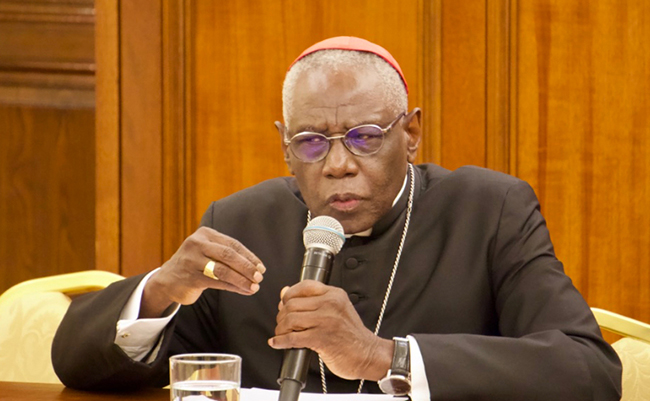
Cardinal Sarah, at an event in Rome: Oct 2023. -- Cardenal Sarah, en un evento en Roma: octubre de 2023.

by Michael Haynes | Senior Vatican Correspondent

In a time when Western nations increasingly define compassion as the legal facilitation of death, Cardinal Robert Sarah has sounded an unflinching alarm — one that France, and indeed the world, must heed.

Preaching to some 30,000 faithful at the Shrine of Sainte-Anne-d’Auray in Brittany, the former prefect of the Congregation for Divine Worship denounced the French government’s push to legalize assisted suicide. In no uncertain terms, he called it what it is: “barbaric and inhuman.”

This wasn’t merely a political commentary disguised as a homily. It was a prophetic rebuke delivered at a sacred celebration — the 400th anniversary of Saint Anne’s apparitions to Breton farmer Yvon Nicolazic. And it was a rebuke meant to stir the soul of a nation with Catholic roots now drying out under the sun of secularism.

“In our Western societies, God has been relegated,” lamented Sarah. “Religion is presented as emotional well-being, a philanthropy for migrants or homeless people, a spirituality of personal development. But that is not faith.”

France is on the verge of making legal what ought to remain unthinkable: the state-sanctioned ending of human life under the guise of mercy. On May 27, its National Assembly voted 305 to 199 in favor of a bill that would enshrine a “right to assisted dying.” The legislation is still winding its way through the Senate, but the momentum — and the president’s endorsement — make its passage likely.

Under the bill, adults with an “incurable condition” that causes “unbearable” physical or psychological suffering could choose to die with medical assistance. It sounds clean, even humane. But as Cardinal Sarah implied, it cloaks a moral abdication — a betrayal of human dignity under the guise of compassion.

“Do not desecrate France with laws that promote death where God wants life,” Sarah declared. “This nation is a holy land, reserved for God.”

His words were not just theological sentiment. They were a challenge: to remember who we are, to see the divine image in every suffering person, and to resist the seductive call to eliminate pain by eliminating the person.

Even Pope Leo XIV, though more reserved, made his concerns known. Addressing French pilgrims in June, he called on the Spirit to “enlighten our minds, so that we know how to defend the intrinsic dignity of every human person.” The message was clear: the Church will not be silent as France contemplates legislating away life.

But Sarah didn’t stop at life issues. He reminded the faithful of what it means to worship — and what the Church must look like if she is to lead in this time of moral confusion. Liturgy, for him, is not a matter of taste but of truth. It must be reverent, centered on God, and guarded from secular dilution.

“Our churches are not performance halls, nor concert halls or cultural or entertainment activities,” he said. “The church is the house of God… We enter with respect and reverence, properly dressed because we tremble before the greatness of God.”

This insistence on sacredness — in worship and in life — is no accident. It reflects a coherent worldview, one in which beauty, suffering, sacrifice, and redemption are all intertwined. A worldview where even suffering has meaning and life is always worth living.

At 80, Cardinal Sarah may no longer vote in future conclaves, but he is far from retreating into silence. On social media, he shared the Vatican’s coverage of the Pope’s remarks — amplifying Leo XIV’s subtle but unmistakable resistance to the euthanasia agenda.

More than a homily, Sarah’s message was a call to conversion. He urged the pilgrims to “rebuild the church of our soul… confess the sins you have committed in word or deed, night or day… and receive the heavenly treasure.”

This is the kind of conversion that must happen not only in individuals but in cultures — especially those like France that once lit the flame of Catholic civilization. France was not made for death, but for life. And unless her leaders remember that, they risk leading their people down a path of no return.

The time to speak is now. The time to act is now. France — and the world — must choose between the Gospel of life or the counterfeit gospel of death. Cardinal Sarah has made his choice unmistakably clear.

Will France listen?

With some edition by the El Reportero‘s staff.

 

spot_img

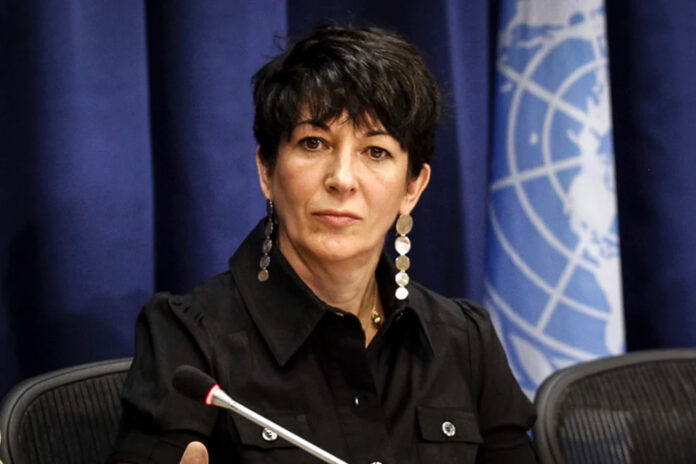
The unfinished justice of Epstein’s crimes — Let Ghislaine Maxwell speak freely

The unfinished justice of Epstein’s crimes — Let Ghislaine Maxwell speak freely -- Ghislaine Maxwell asiste a una conferencia de prensa sobre la cuestión de los océanos en los Objetivos de Desarrollo Sostenible, en la sede de las Naciones Unidas, el 25 de junio de 2013. Rick Bajornas / Archivo AP
Marvin Ramírez, editor

by Marvin Ramírez

The saga of Jeffrey Epstein is not just about a disgraced financier or a sex trafficking ring — it is about a justice system that stopped short of true accountability. Years after Epstein’s mysterious death in a New York jail cell, the only person serving time for his vast web of exploitation is not one of the many powerful men who participated in his crimes, but a woman: Ghislaine Maxwell.

That’s not justice. That’s a cover-up.

Maxwell, sentenced to 20 years in federal prison for aiding Epstein in the grooming and trafficking of underage girls, certainly bears responsibility for her actions. But it defies all logic — and all notions of fairness — that none of the wealthy and influential men who allegedly took part in abusing young victims on Epstein’s private island and elsewhere have faced the same fate. Not one has stood trial. Not one has gone to prison.

The message this sends is as chilling as it is clear: if you are rich, male, and powerful, you are untouchable — even when children are the victims.

Now, members of Congress are beginning to challenge this silence. There is growing pressure to allow Maxwell to testify publicly, under oath, before congressional committees. But here’s the catch: without immunity from further prosecution, she cannot speak freely. If she testifies without legal protection, any self-incriminating detail could extend her sentence or lead to new charges. Her silence would be understandable — even expected — under such threat.

That is why granting Maxwell limited immunity is not about excusing her crimes. It’s about exposing the full network behind Epstein’s operation. It’s about giving the public the truth — not just a scapegoat.

If Maxwell is the only one who pays the price, the system has not only failed the victims — it has also shielded the abusers. Many of those victims, now adults, are still waiting to see the men who violated them held accountable. They deserve to know who these men were, what they did, and why they’ve been protected for so long.

Some members of Congress are pushing for transparency. Others appear frightened by what a full testimony might reveal — especially if it names names. But no political discomfort can outweigh the moral necessity of bringing these abusers into the light. That process must begin with giving Maxwell a chance to tell the full story.

Critics may say she doesn’t deserve any leniency. That’s a fair point — she played a critical role in one of the most grotesque sex trafficking scandals in modern history. But withholding immunity from her testimony ensures one thing: the silence continues, and the real power players walk free.

What kind of system punishes the accomplice while shielding the perpetrators? What kind of country allows wealth and connections to bury truth and protect predators?

This is not about Ghislaine Maxwell’s redemption. It’s about justice. And justice, in its true form, demands full disclosure. It demands that all guilty parties — not just one — be exposed and held to account.

If Congress truly wishes to restore faith in our institutions, it must give Maxwell the immunity she needs to testify without fear. Not to protect her, but to finally expose the men who believed they were beyond the reach of the law.

The victims deserve closure. The public deserves the truth. And those responsible — no matter how powerful — must face justice.

– With reports contributed by independent sources.


spot_img

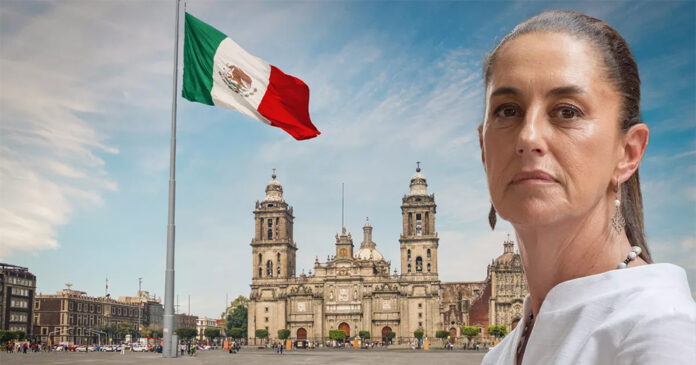
U.S. remittance tax sparks outrage in Mexico, Sheinbaum urges protest

by the El Reportero staff

Mexico City—A firestorm of controversy has erupted following the U.S. House of Representatives’ approval of the “One Big Beautiful Bill Act,” which proposes a 3.5% federal tax on remittances sent by noncitizens to their home countries, including Mexico. The measure, now awaiting Senate consideration, has drawn fierce condemnation from Mexican President Claudia Sheinbaum, who has called on Mexicans living in the United States to publicly oppose the tax.

Speaking at a press conference this week, Sheinbaum urged Mexican migrants to mobilize by contacting senators through letters, emails, and social media. “It is unjust to penalize those who contribute so much to both economies,” she said, denouncing the bill as discriminatory and harmful to Mexican families.

Last year alone, Mexican migrants in the U.S. sent a record-breaking $62.5 billion to relatives back home, making remittances the nation’s largest single source of foreign income. The proposed tax could mean billions of dollars in new federal revenue—but at a significant cost to low-income families in Mexico.

What President Sheinbaum has not addressed, critics note, is that the U.S. government has long subsidized remittances through the Federal Reserve’s “Directo a México” program. For nearly two decades, this initiative has allowed low-cost money transfers from U.S. banks directly into Mexican bank accounts.

Supporters of the tax argue it is a fair contribution from undocumented migrants who utilize U.S. infrastructure and public services without paying federal income tax. Others see the measure as politically motivated and potentially harmful to U.S.–Mexico relations.

Mexican officials have signaled diplomatic pushback if the Senate passes the measure. Some U.S. lawmakers, however, say the tax could help fund immigration enforcement and border security.

For now, all eyes are on the U.S. Senate, where the bill’s fate remains uncertain. Meanwhile, migrant advocacy groups and Mexican consulates across the U.S. are bracing for growing protests—and the political ripples they may cause on both sides of the border.


spot_img

Dragon fruit: A vibrant superfood packed with nutrients and health benefits

by Laura Harris |

Dragon fruit, also known as pitaya or pitahaya, is a tropical fruit known for its eye-catching pink or yellow skin and speckled white or magenta flesh. Native to Central and South America, it now grows in tropical and subtropical regions around the world, including Southeast Asia, Australia, Israel and parts of the U.S.

This colorful fruit comes from climbing cacti in the Hylocereus and Selenicereus genera. Its name is inspired by its scaly, dragon-like exterior. Although it has been consumed by indigenous cultures for centuries, dragon fruit gained global popularity in recent decades as interest in exotic superfoods increased.

Dragon fruit’s appeal goes beyond looks—it is low in calories but rich in nutrients, offering many health benefits. It is packed with vitamin C, dietary fiber, magnesium, iron, antioxidants, and prebiotics. Its mild, kiwi-like flavor and creamy texture make it easy to enjoy in a variety of dishes.

Nutritional highlights and health benefits

Dragon fruit is a nutrient-dense food that supports overall wellness. Each cup offers about 7 grams of dietary fiber and essential minerals like magnesium and iron. It also contains polyphenols, carotenoids and betalains, all powerful antioxidants.

Combats chronic diseases
Dragon fruit’s antioxidants, including vitamin C, help neutralize free radicals and reduce oxidative stress, a factor linked to conditions such as heart disease, diabetes, cancer and arthritis. Regular consumption may help reduce inflammation and protect long-term health.

Aids digestion and gut health
The high fiber content promotes digestive regularity, helps prevent constipation and supports weight management by promoting a feeling of fullness. The prebiotics in dragon fruit also nourish beneficial gut bacteria, enhancing digestion and nutrient absorption.

Strengthens immunity
A healthy gut is closely tied to immune function. By supporting the gut microbiome, dragon fruit indirectly strengthens the immune system. Its vitamin C content also directly boosts immune defenses.

Helps regulate blood sugar
Preliminary studies suggest dragon fruit may benefit people with insulin resistance or diabetes. Its fiber and antioxidant content may help stabilize blood sugar levels.

Hydrating and low in calories
Made up mostly of water, dragon fruit is an excellent hydration option. Its natural sweetness satisfies sugar cravings without added fat or calories, making it ideal for those watching their weight.

Safe and clean—when organic
Dragon fruit is generally safe when consumed in moderation. However, some conventionally grown varieties may contain pesticide residues and heavy metals like cadmium and lead, common in tropical agriculture. Even though the thick peel offers some protection, opting for organic varieties is best. Always wash the fruit thoroughly before eating to reduce any remaining residues.

How to enjoy dragon fruit

Its vibrant color and subtle flavor make dragon fruit a versatile ingredient in both sweet and savory dishes. Here are a few simple ways to include it in your diet:

  • Eat it fresh: Scoop out the flesh and enjoy it raw as a cooling snack.
  • Blend into smoothies: Combine with mango, banana or coconut milk for a nutrient-rich smoothie or acai bowl topping.
  • Toss into salads: Adds texture and color to green salads or fruit salads with citrus or mint dressing.
  • Use in desserts: Works beautifully in sorbets, puddings, or as a garnish for tarts and cakes.
  • Try in savory recipes: Pairs well with seafood, like in ceviche, or in spicy salsas with lime and jalapeño.

Whether sliced into a salad, blended into a smoothie or served as a standalone snack, dragon fruit offers a delicious and health-conscious addition to any diet. For maximum benefit, choose organic when possible and enjoy this tropical fruit as part of a varied and balanced lifestyle.

This article is for informational purposes only and does not constitute medical advice. Always consult a qualified healthcare professional for personalized guidance about your health.

spot_img

Court blocks ammunition background checks in new blow to California’s gun control framework

Box of ammo on display at a gun shop in Fresno County on July 12, 2022. Photo by Larry Valenzuela, CalMatters/CatchLight Local -- Un tribunal bloquea la verificación de antecedentes para la compra de municiones, un nuevo golpe al marco de control de armas de California

California voters in 2016 passed a ballot initiative championed by Gov. Gavin Newsom that in part required background checks for ammunition purchases. The 9th Circuit Court of Appeals found that provision violates the 2nd Amendment

by Nigel Duara

The 9th U.S. Circuit Court of Appeals struck down California’s first-in-the-nation law requiring background checks for ammunition purchases, another blow to the state’s gun control framework that has been pared down, case by case, since the U.S. Supreme Court dramatically expanded gun rights in a monumental 2022 decision.

The California law that forced ammunition purchasers to pass a background check was passed by voters in 2016. Gov. Gavin Newsom, at the time the state’s lieutenant governor, championed the initiative and was its primary advocate.

In 2018, before the law went into effect, a group of gun rights advocates and ammunition vendors sued to block the law.

They were successful – in 2020, a federal district court judge handed down an injunction against the background checks of ammunition purchasers. But at the time, the 9th Circuit paused that order and allowed the law to take effect.

Two years later, the U.S. Supreme Court ruled in New York State Rifle & Pistol Association, Inc. v. Bruen that a New York concealed-carry law unfairly constrained people’s right to carry a gun, and California’s gun control regime was thrown into chaos.

The 9th Circuit then sent the case on background checks for ammunition purchases back down to the federal district court. That court again ruled against the background checks.

Today’s ruling helped clarify what a post-Bruen future could look like.

“Given the fees and delays associated with California’s ammunition background check regime, and the wide range of transactions to which it applies, we conclude that, in all applications, the regime meaningfully constrains California residents’ right to keep and bear arms,” Justice Sandra Segal Ikuta wrote in the 2-1 majority opinion.

Newsom in a written statement criticized the decision. “Strong gun laws save lives – and today’s decision is a slap in the face to the progress California has made in recent years to keep its communities safer from gun violence. Californians voted to require background checks on ammunition and their voices should matter,” he said.

The law required face-to-face transactions from a licensed dealer. That effectively banned internet sales of ammunition, and any ammunition purchased out of state required that it be delivered from that state to a licensed dealer in California

Purchasers would swipe a government ID and their information would be run through four databases, which searched for their criminal histories, any firearm prohibitions for mental health, restraining orders and whether they were on a wanted persons list. They would also have to pay a fee to have their information run through the state Justice Department’s firearms data repository.

The question posed by the Supreme Court in the Bruen decision is whether a law “meaningfully constrains the right to keep and bear arms,” as specified in the Second Amendment, and whether it is consistent with the country’s “historical tradition of firearm regulation.”

Using that test, the 9th Circuit previously agreed with California that an Alameda County zoning law prohibiting gun stores within 500 feet of a residential area, or a law that bans firearm sales on state property, are both constitutional. The reasoning behind those decisions was that people could still buy guns in Alameda County, or somewhere besides state property.

The background check law is different, the appellate court ruled, because it meaningfully constrains people’s ability to purchase ammunition, which previous 9th Circuit decisions have found is foundational to a person’s ability to own guns.

In court, the state’s attorneys also proposed that California’s ammunition sales law conformed to the United States’ historical tradition of regulating guns, citing colonial-era laws or laws written after the Civil War.

The court dismissed those arguments.

“Because none of the historical analogues proffered by California is within the relevant time frame, or is relevantly similar to California’s ammunition background check regime, California’s ammunition background check regime does not survive scrutiny under the two-step Bruen analysis,” Ikuta wrote.

In a fiery dissent, Judge Jay Bybee said the decision failed to correctly apply the Bruen test, and that using the logic of the decision, any firearms regulation could be interpreted as a violation of the Second Amendment.

“It is difficult to imagine a regulation on the acquisition of ammunition or firearms that would not ‘meaningfully constrain’ the right to keep and bear arms under the majority’s new general applicability standard,” Bybee wrote in the disse

spot_img

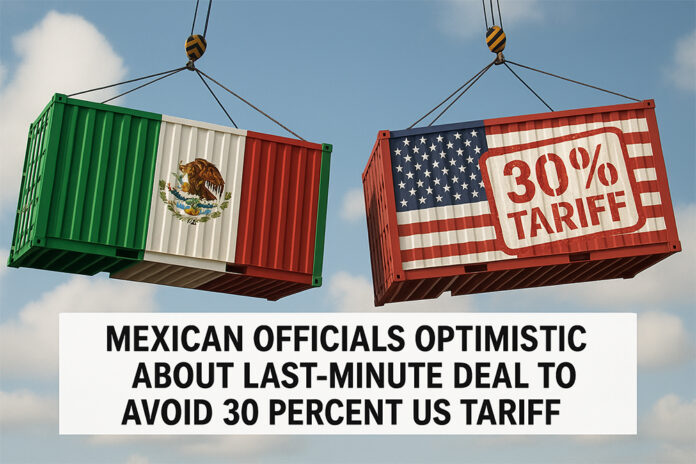
Mexican officials optimistic about last-minute deal to avoid 30 percent US tariff

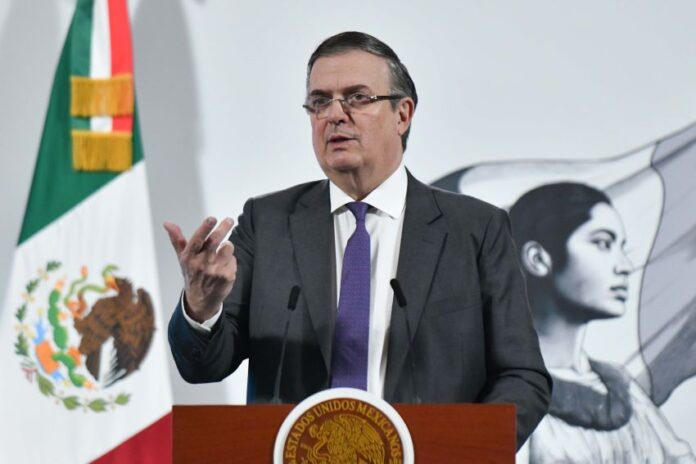
Everything Mexico had to do [to avoid a new tariff] has already been done,” Economy Secretary Marcelo Ebrard declared Tuesday. (Mario Jasso/Cuartoscuro)
by Mexico News Daily

Economy Minister Marcelo Ebrard said Tuesday that the Mexican government has made every possible effort to stave off the 30 percent tariff the United States intends to impose on imports from Mexico starting this Friday.

He expressed optimism that Mexico will reach a deal with its northern neighbor to stop the duty from taking effect.

“[The negotiations] have been very intense, complex. We’re hours away from knowing how this stage will conclude. My perspective is optimistic, but we have to wait for the decisions President Trump takes with his team,” Ebrard said at a press conference.

“Everything that Mexico had to do is already done,” he said.

Ebrard said that “the results” of Mexico’s negotiations with the United States over the 30 percent tariff will be known on Friday.

The Mexican government has spent much of 2025 attempting to negotiate relief from tariffs imposed by Donald Trump.

The latest trade negotiations came after the U.S. president informed President Claudia Sheinbaum in a July 11 letter that the United States, starting Aug. 1, would “charge Mexico a tariff of 30 percent on Mexican products sent into the United States, separate from all sectoral tariffs.”

Trump didn’t specify whether the 30 percent tariff would be added to — or replace — the existing 25 percent tariff that applies to Mexican goods that don’t comply with the USMCA free trade agreement.

Although the U.S. president appeared to imply that all Mexican goods would be subject to the 30 percent tariff, a common interpretation of his letter was that the new duty would only apply to non-USMCA compliant products, and would increase the current rate by five percentage points.

“The market so far has interpreted that the new tariff on Mexico represents only a marginal change from the status quo,” Ernesto Revilla, managing director and head of Latin America economics at Citigroup, wrote in Americas Quarterly on July 14.

“That is, it is a five-percentage-point increase in a tariff that applies to less than 20 percent of total trade between Mexico and the U.S. that is non-USMCA compliant,” he said.

The United States has not publicly clarified whether the 30 percent tariff will apply to all imports from Mexico or just those that don’t comply with the USMCA. However, an unnamed White House official told The New York Times that the exemption for USMCA-compliant goods would most likely continue.

“The official also said the 30 percent rate would replace the previous 25 percent levies that Mr. Trump imposed on the country,” the Times reported.

Trump explained the rationale for the 30 percent tariff in his letter to Sheinbaum.

“Despite our strong relationship, you will recall, the United States imposed tariffs on Mexico to deal with our nation’s fentanyl crisis, which is caused, in part, by Mexico’s failure to stop the cartels, who are made up of the most despicable people who have ever walked the earth, from pouring these drugs into our country. Mexico has been helping me secure the border, BUT, what Mexico has done, is not enough,” he wrote.

“Mexico still has not stopped the cartels who are trying to turn all of North America into a narco-trafficking playground. Obviously, I cannot let that happen!” Trump said.

Despite United States Commerce Secretary Howard Lutnick saying on Sunday that there would be “no extensions” or “grace periods” for U.S trade partners, Sheinbaum has also expressed optimism that Mexico will reach a deal to ward off the 30 percent tariff. She said last Thursday that her government was doing everything it could to stop the new duty from taking effect.

“There is a team working in the United States with the [U.S.] commerce secretary and the treasury secretary,” Sheinbaum told her morning press conference on Thursday.

“We made a series of proposals that have to do with Plan México and also reducing the trade deficit [with the United States], which is one of the concerns of President Trump,” she said.

“The trade deficit can be reduced through different mechanisms that don’t affect the economy of Mexico. So we’ve been making a series of proposals and we’ll present them here [at a later time], hoping that we reach an agreement.”

Sheinbaum also pointed out that fentanyl seizures at the Mexico-U.S. border have significantly declined since she took office last October.

What US tariffs currently apply to imports from Mexico?

These are the tariffs that are currently in effect for imports from Mexico.

More than 80 percent of Mexico’s trade with US is tariff-free, says Ebrard 

Although the United States currently imposes a range of tariffs on imports from Mexico, Ebrard said that 84 percent of Mexico’s trade with its northern neighbor complies with the USMCA and is therefore tariff-free.

The economy minister asserted that Mexico is in a good position in its trade relationship with the United States “if you compare the country’s situation to the rest of the world.”

Mexico was the top exporter to the United States in 2023 and 2024, and Ebrard asserted that it will retain that position “despite the tariffs.”


With reports from El Economista, El Financiero and Reforma

spot_img

Scammers are targeting PG&E customers at alarming rates; here’s what you need to know to avoid becoming a victim.

Customers report losses of more than $190,000 through 2025

OAKLAND, California — Utility scams have continued at an alarming rate through 2025, with Pacific Gas and Electric Company (PG&E) customers reporting more than $190,000 in losses to scammers. To stem this trend, PG&E is committed to helping customers recognize the signs of a scam and avoid falling victim.

A typical sign of a scam targeting a utility customer may be a caller claiming to be from PG&E and threatening to disconnect service if immediate payment is not made via a prepaid debit card, digital mobile payment app, or other money transfer methods. As a reminder, PG&E will never send a notification to a customer less than one hour before a service outage and will never ask the customer to make a payment with a prepaid debit card, gift card, any form of cryptocurrency, or instant mobile payment apps like Zelle® or Venmo.

“Scammers seek to create panic by threatening to turn off utilities if immediate payment is not made. If you receive a phone call, a visit to your home, or an email that doesn’t sound right to you, don’t fall for it. Hang up, close the door, and don’t respond to the email,” said Amy Lucido, Cybersecurity Risk Manager at PG&E. “Remember, PG&E will never ask for your financial information over the phone or email, nor will we solicit payments via prepaid debit cards or other money transfer methods, including mobile apps.”

This year, PG&E has received nearly 10,000 reports of scams targeting residential and business customers, with customers reporting losses of more than $190,000. The average scam victim lost more than $900, and more than 200 customers have reported being victims. However, this number is likely just the tip of the iceberg, as many scams go unreported.

Business customers are also not immune to scam attempts. In fact, PG&E has received 250 reports of scams targeting small and medium-sized businesses this year. These attempts frequently occur during busy business hours, when scammers hope to trap unsuspecting victims while they are distracted or stressed.

Scammers can be persuasive and often target the most vulnerable, such as the elderly or low-income individuals. They also attempt to defraud small business owners during peak customer hours. However, with the right information, customers can learn to spot and report these predatory scams by visiting www.pge.com/scams or calling 1-833-500-SCAM.

Signs of a Possible Scam

  • Threat of Disconnection: Scammers may aggressively demand immediate payment of a supposedly overdue bill.
  • Request for Immediate Payment: Scammers may instruct the customer to purchase a prepaid card and then call them back, supposedly to make a bill payment.
  • Request for a Prepaid Card: When the customer returns the call, the caller asks for the customer’s prepaid card number, which will give the scammer instant access to the funds on the card.
  • Offers of Refunds or Discounts: Scammers may claim that their utility company overbilled them and they owe them a refund, or that they are entitled to a refund or discount, and then request their personal financial information.
  • Scammers posing as trusted phone numbers: Scammers can now create seemingly authentic 800 numbers that appear on your phone screen. However, the numbers don’t lead to PG&E if the call is returned, so if in doubt, hang up and log in to your pge.com account to confirm your bill details, or call PG&E at 1-833-500-SCAM. If customers feel in physical danger, they should call 911.

Customer Self-Protection Measures

  • Customers should never purchase a prepaid card to avoid service disconnection or shutoff. PG&E does not specify how customers should pay their bills, and instead offers a variety of bill payment methods, including online, phone, automatic bank drafts, mail, or in-person payments.
  • If a scammer threatens immediate service disconnection or shutoff without warning, the customer should hang up, delete the email, or lock the door. Customers with past-due accounts receive advance notice of disconnection, usually by mail and included with their regular monthly bill.
  • Signing up for an online account at pge.com is another protection. Customers can not only log in to check their balance and payment history, but can also register to set up recurring payments, paperless billing, and helpful alerts. Customers can also call PG&E Customer Service at 800-743-5000 to confirm their bill details and the current amount due.
  • Customers who suspect they have been victims of fraud, or who feel threatened during contact with one of these scammers, should contact local law enforcement authorities. We also recommend the Federal Trade Commission’s website as a reliable source on how to protect personal information.

For more information about scams, visit pge.com/scams or consumer.ftc.gov. About PG&E Pacific Gas and Electric Company, a subsidiary of PG&E Corporation (NYSE:PCG), is a combined natural gas and electric utility serving more than 16 million people across a 70,000-square-mile area in Northern and Central California. For more information, visit pge.com and pge.com/news.

spot_img

We are witnessing the fruit of a culture that has rejected God’s law and desecrated His image in the womb

Obispo Joseph E. Strickland

To the faithful and to all people of good will:

With grave concern and unwavering conviction, I write in response to the National Right to Life Committee’s (NRLC) latest report, titled “The Status of Abortion in the United States: 2025 Edition,” published in June 2025. This report offers a clear and sobering assessment of the national abortion landscape in the post-Dobbs era — and its findings should awaken every conscience in America.

According to the report, chemical abortions now account for over 60% of all abortions performed in the United States. These drugs are increasingly accessible online, with dangerous consequences for both unborn children and vulnerable women. The report also highlights the surge of abortion “shield laws” — state measures designed to protect abortion providers from prosecution and obstruct interstate enforcement of pro-life laws.

Even more troubling is the report’s documentation of the rise in state constitutional amendments that enshrine abortion as a fundamental right — including efforts in Michigan, California, and Vermont, and similar movements now underway in several more states. Meanwhile, at the federal level, legislation like the Women’s Health Protection Act threatens to erase all state-level pro-life protections, while conscience protections for medical professionals and religious institutions face increasing hostility.

The NRLC rightly names this moment for what it is: a critical battle in the defense of human life.

But as a Catholic bishop, I must speak plainly and go further still. This is not merely a policy crisis — it is a spiritual revolt against the Author of Life. We are not simply witnessing legal maneuvering or partisan division. We are witnessing the fruit of a culture that has rejected God’s law and desecrated His image in the womb.

“No circumstance, no purpose, no law whatsoever can ever make licit an act which is intrinsically illicit… such as abortion.”
— Pope St. John Paul II, Evangelium Vitae, 62

“Every human being, even the child in the womb, has the right to life immediately from God, not from the parents, nor from any human society or authority.”
— Pope Pius XII

The NRLC’s report is invaluable in detailing where we are. But as the Church, we must proclaim where we must go: toward the total abolition of abortion, without exception, without compromise.

We must not become content with “reducing” abortions or regulating the methods by which they are committed. Every single abortion is an act of murder. Every abortion kills a child. And every law that permits it offends divine justice.

To Catholic legislators: you cannot cooperate in any law or vote that expands or protects abortion — to do so is gravely sinful.

To Catholic voters: support for abortion is a non-negotiable disqualifier. No cause, no party, no personality can justify complicity in the culture of death.

To Catholic hospitals, schools, and institutions: do not cower before government threats. Stand firm. Refuse cooperation. Bear witness.

To every mother who has suffered the pain of abortion: come home. The mercy of Christ awaits you. There is healing. There is hope.

This report makes it clear: the fight is not over. It has simply moved into new terrain. Shield laws, pills by mail, and constitutional amendments are the latest weapons. But our response must remain the same: truth without fear, mercy without compromise, and a Gospel of Life proclaimed without apology.

We entrust this work to Our Lady of Guadalupe, who carried the Christ child in her womb and appeared in defense of the unborn. May she intercede for our nation, that we may rise from this culture of death and become once again a people who choose life.

In Christ the King of Life,

Bishop Joseph E. Strickland

This pastoral letter was originally published on Bishop Strickland’s X account.

spot_img

CA immigrants weigh health coverage against deportation risk

Online study session. Confident gen z female remote student wearing portable headphones looking at notebook screen speaking at virtual class workshop presenting idea on webinar answer teacher question

By Claudia Boyd-Barrett for KFF Health News.

Broadcast version by Suzanne Potter for California News Service reporting for the KFF Health News-Public News Service Collaboration

For months, Maria, 55, a caregiver to older adults in California’s Orange County, has been trying not to smile.

If she opens her mouth too wide, she worries, people will see her chipped, plaque-covered front teeth. An immigrant without legal status, Maria doesn’t have health or dental insurance. When her teeth start to throb, she swallows pain pills. Last summer, a dentist said it would cost $2,400 to fix her teeth. That’s more than she can afford.

“It’s so expensive,” said Maria, who often works 12-hour days lifting clients in and out of bed and helping them with hygiene, medication management, and housework. “I need money for my kids, for my rent, for transport, for food. Sometimes, there’s nothing left for me.”

KFF Health News connected with Maria through an advocacy organization for immigrant workers. Fearing deportation, she asked that only her first name be used.

Maria is among what the federal government estimates are 2.6 million immigrants living in California without legal status. The state had gradually sought to bring these immigrants into its Medicaid program, known as Medi-Cal. But now, facing a state enrollment freeze, low-income California residents in the U.S. without legal permission — along with the providers and community workers that help them — are anxiously weighing the benefits of pushing forward with Medi-Cal applications against the risks of discovery and deportation by the federal government.

Seeking to close a projected $12 billion budget deficit, California Gov. Gavin Newsom, a Democrat, signed a balanced state budget on June 27 that will end new Medi-Cal enrollment in January 2026 for those over 19 without legal status.

Meanwhile, federal immigration raids — which appear to have targeted at least one health clinic in the state — are already making some people afraid to seek medical care, say immigrant advocates and health providers. And the recent news that Trump administration officials are sharing Medicaid enrollee data, including immigration status, with deportation authorities is expected to further erode trust in the program.

U.S. Department of Health and Human Services spokesperson Andrew Nixon said the agency, which oversees the Centers for Medicare & Medicaid Services, had the legal authority to share the data to address “unprecedented systemic neglect under the Biden-Harris administration that allowed illegal immigrants to exploit Medicaid while millions of Americans struggle to access care, particularly in states like California.”

Further complicating matters, the Trump administration has threatened to withhold funds from states that provide health coverage to people without legal status. Currently, about 1.6 million people in the country without authorization are enrolled in Medi-Cal.

In 2016, California began opening Medi-Cal to low-income people lacking legal status, starting with children, then gradually expanded it to young people, older adults, and — in January 2024 — those ages 26 to 49. The state Department of Health Care Services, which oversees Medi-Cal, partnered with community health clinics to help get eligible people enrolled.

It’s too early to tell what impact the latest state and federal developments are having on enrollment numbers, since data is available only through March. But many health care providers and advocates said they expect a chilling effect on immigrant enrollment.

Seciah Aquino is executive director of the Latino Coalition for a Healthy California, which supports community health workers — also called promotores — who help spread awareness about Medi-Cal’s expansion to adults lacking legal status. Just over half of public health insurance recipients in California are Latino, compared with just 30% of Medicaid enrollees nationwide.

Aquino said her coalition will tell promotores to disclose data-sharing risks so community members can make informed decisions.

“They take it very personally that advice that they provided to a fellow community member could now hurt them,” Aquino said.

Newsom condemned the data sharing, calling the move “legally dubious,” while U.S. Sens. Adam Schiff and Alex Padilla, both Democrats, have demanded that the Department of Homeland Security destroy any data shared.

California’s Department of Health Care Services announced June 13 that it is seeking more information from the federal government. The agency said it submitted monthly reports to CMS with demographic and eligibility information, including name and address, as required by law.

Medicaid enrollee data from Illinois, Washington state, and Washington, D.C., was also reportedly shared with DHS. Jamie Munks, a spokesperson for the Illinois Department of Healthcare and Family Services, the state’s Medicaid agency, said the department was “deeply concerned” by the news and that the data was regularly passed along to CMS with the understanding that it was protected.

In Sacramento, Democratic lawmakers found themselves in the uncomfortable position of rolling back health benefits for low-income residents with unsatisfactory immigration status, including people without legal status, people who’ve held green cards for under five years, and some others who are in the process of applying for legal status or have statuses meant to protect them from deportation. In addition to the Medi-Cal enrollment freeze for immigrants 19 and older in the country without authorization, all enrolled residents with unsatisfactory immigration status from 19 to 59 years old will be charged $30 monthly premiums starting in July 2027.

“What I’m hearing on the ground is folks are telling me they’re going to have a really hard time making these premium payments,” said Carlos Alarcon, health and public benefits policy analyst with the California Immigrant Policy Center, an advocacy group. “The reality is most people already have limited budgets.”

The legislature rejected a proposal from the governor to bar immigrants with unsatisfactory immigration status from receiving long-term nursing home and in-home care through Medi-Cal but went along with eliminating dental benefits starting in July 2026.

Health care providers said that without Medi-Cal coverage, many immigrants will be forced to seek emergency care, which is more expensive for taxpayers than preventive and primary-level care. Sepideh Taghvaei, chief dental officer at Santa Cruz County’s Dientes Community Dental Care, saw this play out in 2009 when the state cut adult Medi-Cal dental benefits. Patients came in with swollen faces and excruciating pain, with conditions so advanced that they required hospital treatment. “It’s not cost-effective,” she said.

State Sen. Roger Niello, a Republican who serves as vice chair of the Senate budget committee, said he believes California shouldn’t be funding Medi-Cal for people who lack legal status, particularly given the state’s fiscal challenges. He also said he worries that coverage of people in the country without authorization could encourage others to move to California.

“If we maintain that expense to the noncitizen,” he said, “we’re going to have to cut someplace else, and that’s undoubtedly going to affect citizens.”

Californians, too, are going through a change of heart. In a May poll conducted by the Public Policy Institute of California, 58% of adults opposed the benefit.

For Maria, shifting health care policies have left her feeling paralyzed. Since she arrived here five years ago, the caregiver’s focus has been on earning money to support her three children, whom she left with her parents in her home country, she said.

Maria didn’t learn she might be eligible for Medi-Cal until earlier this year and hadn’t yet found time to complete the paperwork. After a friend told her that the state could freeze enrollment in January, she began rushing to finish the sign-up process. But then she learned that Medi-Cal data had been shared with immigration authorities.

“Disappointed and scared” was how she described her reaction.

Suddenly, she said, enrolling in Medi-Cal doesn’t seem like a good idea.

spot_img

Financial aid fraud is on the rise in California. How federal officials plan to crack down

Laney College in Oakland on Aug. 30, 2023. Photo by Semantha Norris, CalMatters.-- Laney College en Oakland el 30 de agosto de 2023.

The U.S. Department of Education will begin more rigorous screening of financial aid applicants, citing instances of fraud at California’s community colleges

by Adam Echelman

CalMatters

Faced with growing reports of fraud, the U.S. Department of Education will make it harder for certain students to access financial aid, including some who could see delays of weeks or even months before cash is disbursed.

This month the department announced it would begin a new “screening process” for all financial aid applicants starting this fall. While that process is developed, the department will require colleges to do additional vetting of applicants this summer, which will place more of a burden on California’s community colleges.

Unlike four-year universities, such as the University of California system, the state’s community colleges are designed to accept everyone, and they use a simple application process. But as classes moved online during the COVID-19 pandemic, fraud rings increasingly exploited that process by posing as students to steal financial aid.

Kevin Harral, financial aid director at Las Positas College in Livermore, said he’s already “bracing for what’s to come.” He said the education department could force his team to spend hours of additional work double-checking students’ identification this summer. While those students wait for verification, they may see long delays before they can access their financial aid.

Some students may decide to forego financial aid altogether, Harral said. “There’s some people who may not have the documents, may not have the ID, but there’s also the students where this is another barrier, maybe a psychological barrier, particularly if they have undocumented parents.”

In April, CalMatters reported that financial aid fraud was growing and that fake students stole more than $10 million in federal aid and more than $3 million in state aid from California’s community colleges in the prior 12 months — more than twice as much as the year before that.

In response to CalMatters’ reporting, college officials and federal and state lawmakers sprang into action this spring.

Anyone with a high school diploma or equivalent — and some without that — can apply to community college and enroll in classes, at which point they are eligible to receive federal Pell grants if they meet the income requirements. These grants, sometimes up to nearly $7,400 a year, cover tuition first, but for low-income students at a community college, whose tuition is free, the money goes directly into their pockets, covering other expenses, such as rent or food.

For scammers — who pretend to be low-income community college students — that’s a gold mine.

Many college officials are optimistic that by the fall, the education department’s new screening process, likely fraud-detection software, could stem the onslaught of financial aid abuse in California, which has burdened administrators and shut real students out of classes they need to graduate. The education department has said it will focus on screening first-time applicants but has not provided more details, such as what software it will use.

The California Community Colleges Chancellor’s Office, which oversees the state’s 116 community colleges, has said that fraud represents less than 1% of the billions in federal and state financial aid that go to its students each year. Asked by CalMatters about the education department’s new identity screening, Melissa Villarin, a spokesperson for the office, said she’s “waiting for more information.”

‘I’ll believe it when I see it.’

The federal aid application process, known as the Free Application for Federal Student Aid, or FAFSA, already has a number of ways to vet students. It requires applicants to submit their Social Security number, date of birth, and details about their income, which are verified by the Social Security Administration and the Internal Revenue Service. Scammers get through that process by submitting personal information they have stolen from other people.

A small subset of applicants are also required to prove their identity, either because they are randomly selected or because their applications are suspicious. Those applicants have to submit a notarized document or show up to the college’s aid office with an ID in hand.

“The fraudsters, they won’t show up,” said Harral, leaving the legitimate students with the burden to verify themselves.

Under the new policy many more students will need to prove their identity this summer by presenting identification to their college. Starting in the fall, the new screening process will ultimately minimize the amount of work that colleges have to do, according to the department’s announcement.

“Do we support this or do we have concerns? Yes and yes,” said Karen McCarthy, vice president of public policy for the National Association of Student Financial Aid Administrators. She said she supports the federal government “taking on a stronger role in fraud detection” but is worried that the new policy will mean more work for college aid officers this summer.

For Harral, and many other financial aid directors, any changes to the federal financial aid system are nerve-wracking. In 2023 the education department created a new version of the FAFSA, which it was supposed to release on its usual October date. But it delayed the release until the end of December, sending students scrambling to submit their applications before the deadline. A glitch also prevented thousands of California students whose parents don’t have Social Security numbers from initially applying. The FAFSA was delayed once again this year to avoid “the kind of system errors that can derail millions of students,” according to a statement by the department.

Harral said he’s worried that the new screening process won’t be ready this fall, forcing his staff to continue verifying many students’ identities manually.

“The recent track record of our education department is them not delivering things on schedule,” said Harral. “I’ll believe it when I see it.”

Has fraud really gone ‘unaddressed’?

While California’s colleges control which students they accept, they rely on the U.S. Education Department to help determine who is eligible for financial aid. Even California’s state financial aid program, Cal Grant, vets applicants using FAFSA. However, the Trump administration has cut staffing at the education department, hindering its ability to administer aid and investigate abuses.

In April, Republican Congress members wrote to U.S. Education Secretary Linda McMahon and U.S. Attorney General Pam Bondi, citing CalMatters’ reporting and asking for a federal investigation of the financial aid process for California’s community colleges. The Congress members accused the community college system of allowing fraud “to go unaddressed.”

The U.S. Education Department referred to the Republicans’ letter when justifying its new screening policy.

California’s community colleges have acknowledged the financial aid problem and spent roughly $150 million since 2021 boosting their fraud prevention and cybersecurity. Last month, the board of governors for California’s community college system agreed that it will eventually require all applicants to verify their identities.

The board also considered charging an application fee, which could disincentivize fraud rings from submitting hundreds of fake applications at a time. Students opposed that policy, saying the harm outweighs the benefit, and the board delayed a decision on the matter.

Speaking about the new screening policy, Daisy Gonzales, the executive director of the California Student Aid Commission, which oversees the Cal Grant program, said she’s concerned that eliminating fraud might complicate the financial aid process for students. “Over-compensating for the actions of bad actors cannot be solved by penalizing low-income students who rely on financial aid to pursue higher education.”

spot_img