Saturday, July 25, 2026
Home Blog Page 6

Venezuela government and opposition launch new dialogue initiative

Dinorah Figuera and National Assembly President Jorge Rodríguez agreed to establish a joint technical and political committee to discuss democratic and institutional reforms. (Photo courtesy of the National Assembly of Venezuela). Dinorah Figuera y el presidente de la Asamblea Nacional, Jorge Rodríguez, acordaron establecer una comisión conjunta, técnica y política, para discutir reformas democráticas e institucionales.
Dinorah Figuera, president of Venezuela’s opposition-led 2015 National Assembly, has joined a new dialogue initiative with government representatives. (Photo courtesy of Dinorah Figuera’s office) Dinorah Figuera, presidenta de la Asamblea Nacional de 2015 de Venezuela —controlada por la oposición—, se ha sumado a una nueva iniciativa de diálogo con representantes del gobierno.

by the El Reportero staff

A new political dialogue effort is underway in Venezuela after government and opposition representatives agreed to establish a joint technical and political working group aimed at strengthening democratic institutions and rebuilding national consensus.

The initiative emerged from a meeting in Caracas between Jorge Rodríguez, president of Venezuela’s National Assembly, and Dinorah Figuera, president of the opposition-led legislature elected in 2015, which many opposition groups continue to regard as the country’s last democratically elected parliament. The meeting marked one of the most significant public contacts between the ruling movement and opposition representatives in recent years.

Following the meeting, both sides announced the creation of a parity-based technical and political committee that will develop an agenda with specific objectives and timelines.

According to a statement released after the meeting, the new body will work toward the strengthening of democracy, the consolidation of peace, and the search for a future of well-being and prosperity for Venezuelans.

Figuera, who recently returned to Venezuela after several years in exile in Spain, said her goal is to help address key institutional challenges facing the country. Upon arriving in Caracas, she stated that the process seeks to achieve “a credible National Electoral Council (CNE)” and conditions that would allow broader political participation.

The United States welcomed the meeting, describing it as an important step toward rebuilding democratic institutions. State Department spokesman Tommy Pigott said Washington understands that the agenda includes priorities such as strengthening the electoral authority, restoring guarantees for political participation, and protecting civic freedoms necessary for open political debate.

Figuera also held talks with U.S. chargé d’affaires John Barrett, who has participated in international efforts aimed at supporting a negotiated political solution in Venezuela.

Despite the announcement, many Venezuelans remain skeptical. Previous rounds of negotiations between the government and opposition have often produced limited results. Critics argue that similar initiatives in the past have failed to bring meaningful political change. Supporters, however, maintain that keeping communication channels open is essential to achieving long-term stability and creating conditions for future electoral reforms.

Whether the new committee will produce significant results remains uncertain, but the agreement represents a rare moment of cooperation in Venezuela’s deeply polarized political landscape.

– Sources: Reuters, Venezuela National Assembly, El País.

spot_img

Grocery Outlet launches annual campaign to fight hunger and support Bay Area food banks

Grocery Outlet employees promote anti-hunger campaign through community donations supporting local families. Empleados de Grocery Outlet promueven campaña contra el hambre con donaciones comunitarias.

One in four Latinos faces food insecurity as the campaign benefits Bay Area food banks and communities nationwide.

by the El Reportero staff

EMERYVILLE, Calif. — Grocery Outlet has launched its 16th annual Independence from Hunger campaign, a nationwide effort to raise food and monetary donations to help combat food insecurity. The campaign runs through July 31 and will benefit San Francisco-Marin Food Bank, Food Bank of Contra Costa and Solano, Alameda Community Food Bank, and other local hunger relief organizations.

Customers can support the campaign by making donations at checkout, purchasing pre-packed bags of nonperishable groceries, or contributing online. Food and funds collected at each Grocery Outlet location will support the food bank partnered with that store, helping provide meals to families struggling with rising food costs.

This year’s campaign expands through a new partnership with Feeding America, allowing customers to make online donations supporting hunger relief efforts nationwide while continuing to benefit local food banks through in-store contributions.

Grocery Outlet will also introduce a four-day national livestream designed to increase awareness and encourage participation. The event will feature donation challenges, stories from independent store operators, community highlights, and personal accounts showing how contributions help families facing food insecurity.

Food insecurity continues to affect millions of Americans. According to the latest figures from the U.S. Department of Agriculture, nearly 48 million people, including 14.1 million children, experienced food insecurity in 2024. That represents roughly one in seven people and one in five children nationwide.

The problem remains especially severe within the Latino community. Data from 2023 show that one in four Latinos experiences food insecurity, affecting approximately 14 million people across the United States. Rising housing costs, inflation, and higher grocery prices continue to increase financial pressure on many working families.

Since launching the Independence from Hunger campaign in 2011, Grocery Outlet and its independent operators have raised more than $30 million to support local food banks and community organizations dedicated to reducing hunger.

Customers may donate $5 or more during a purchase and receive a $5 coupon toward a future qualifying purchase. They may also buy pre-packed food bags, contribute at checkout, or make online donations through the company’s partnership with Feeding America. Organizers hope this year’s campaign will provide additional support as many families continue facing economic challenges.

Update: Grocery Outlet also announced that some participating stores will raffle $25 gift cards as part of this year’s Independence from Hunger campaign to encourage community participation. The campaign benefits local nonprofit organizations, including the San Francisco-Marin Food Bank, Alameda Community Food Bank, and other hunger relief agencies serving Bay Area families.


spot_img

The Court ruled. Congress must act

Justices issued a landmark decision on immigration policy. Magistrados emitieron decisión trascendental sobre política migratoria.
Marvin Ramírez, editor

America has the right to secure its borders, but it also needs a permanent immigration solution

by the El Reportero staff

The U.S. Supreme Court delivered two significant immigration victories to President Donald Trump this week, reinforcing his administration’s authority to tighten asylum rules and move forward with ending Temporary Protected Status (TPS) for certain groups while legal challenges continue. Legally, the Court answered two important questions. Politically and economically, however, the larger debate remains unresolved.

No nation can function without secure borders. Every sovereign country has both the right and the responsibility to determine who may enter its territory and under what conditions. Immigration laws are meaningful only if they are enforced consistently, and it is understandable that many Americans expect their government to maintain an orderly immigration system.

The Court’s decision on asylum reflects that principle. By ruling that migrants who remain outside the United States have not legally “arrived” in the country, the Court gave the federal government greater authority to limit asylum processing before individuals cross the border. Whether one agrees with the policy or not, the ruling rests on the government’s longstanding authority to control entry into the country.

At the same time, the Court allowed the administration to move forward with ending TPS protections for certain groups while litigation continues. Again, the legal question before the Court was relatively narrow. TPS was created as a temporary humanitarian measure for people whose home countries faced war, natural disasters, or other extraordinary conditions. It was never intended to become permanent immigration status.

Yet the practical reality is far more complicated than the legal definition.

For more than two decades, Congress has repeatedly failed to modernize America’s immigration system. Instead of creating permanent solutions, successive administrations from both political parties simply renewed temporary protections again and again. As a result, many TPS recipients have spent twenty or even thirty years living legally in the United States.

During those years, they have done what America has traditionally encouraged immigrants to do. They have worked, paid taxes, purchased homes, started businesses, raised children, and become active members of their communities. Many now have children and grandchildren who are American citizens. They are no longer simply temporary visitors waiting for conditions to improve in their home countries. They have built lives here.

This is where the immigration debate becomes more than a legal issue. It becomes an economic one.

American businesses, particularly small and medium-sized companies, depend heavily on immigrant workers. Agriculture, construction, hospitality, food processing, health care support, maintenance, landscaping, and countless service industries rely on employees willing to perform demanding jobs that are increasingly difficult to fill.

If large numbers of long-term TPS holders were suddenly forced to leave, employers across many industries could face serious labor shortages. The consequences would not be limited to immigrant families. Businesses would struggle to replace experienced workers, production costs could rise, and consumers would likely feel the impact through higher prices and reduced services.

None of this suggests that immigration laws should simply be ignored. It means that immigration policy must recognize economic reality alongside legal principles.

The asylum system also deserves thoughtful reform. The United States has experienced a dramatic increase in asylum applications over the past decade, placing enormous pressure on immigration courts already burdened by years of backlogs. Many applicants ultimately do not qualify under the legal standards established by U.S. law, while others present legitimate claims of persecution that deserve careful consideration. Distinguishing between those cases requires an efficient system capable of making timely decisions, not one that leaves families waiting for years.

America should continue to offer protection to those genuinely fleeing persecution while discouraging abuse of the asylum process. Those two objectives are not mutually exclusive.

The Supreme Court has now clarified important questions about existing law. But courts cannot solve problems that belong to Congress.

Only Congress can enact comprehensive immigration reform that strengthens border security, modernizes the asylum process, meets the nation’s workforce needs, and provides a fair, permanent solution for people who have lived responsibly in this country for decades under temporary programs.

The Court has spoken. Now lawmakers must do what they have postponed for far too long.

America deserves an immigration system that is lawful, orderly, economically sound, and faithful to both its security interests and its long tradition as a nation of opportunity.

spot_img

Equal justice cannot depend on race

The Constitution should protect every American under the same standard of justice

 by the El Reportero staff

The U.S. Supreme Court’s recent decision not to hear U.S. v. Donte J. Carter may appear, at first glance, to be just another procedural action. In reality, the refusal to review the case prompted a powerful dissent from Justices Samuel Alito and Clarence Thomas that raises an important constitutional question: Should the law apply differently depending on a person’s race?

That question deserves careful consideration because the answer affects every American, regardless of political beliefs or ethnic background.

The case involved a police encounter in Washington, D.C., during which officers eventually discovered a stolen handgun after stopping Donte J. Carter. The D.C. Court of Appeals ruled that Carter had been unlawfully seized before police had reasonable suspicion to detain him. In reaching that conclusion, the court reasoned that Carter’s race was relevant because Black Americans, based on historical experiences with law enforcement, may reasonably perceive police encounters differently than members of other racial groups.

The Supreme Court declined to review that ruling. However, Justices Alito and Thomas strongly disagreed with allowing that reasoning to stand without further examination.

Their concern extends beyond one defendant or one criminal case. It centers on a much larger constitutional principle.

America’s legal system has long been built upon the belief that justice should be impartial. Courtrooms display symbols reminding judges, juries, and citizens that justice is blind. The ideal has always been that the law evaluates facts and conduct—not race, ethnicity, religion, wealth, or political affiliation.

That principle has never been perfectly achieved. Our nation’s history contains undeniable examples of discrimination, unequal treatment, and shameful abuses of constitutional rights. Those injustices should neither be ignored nor forgotten.

But acknowledging history does not necessarily require creating different constitutional standards for different racial groups.

Supporters of the D.C. court’s reasoning argue that courts cannot ignore the reality that many Black Americans have experienced difficult relationships with law enforcement. They believe judges should recognize those experiences when determining whether a reasonable person would have felt free to leave during a police encounter.

Yet recognizing history is different from allowing race itself to alter constitutional protections.

The Constitution promises equal protection of the laws to every citizen. That promise loses much of its meaning if identical police conduct is judged by different legal standards depending on the race of the individual involved.

The danger identified by Justices Alito and Thomas is that once courts begin creating race-based constitutional rules, there is no obvious stopping point.

If one rule applies to Black Americans, should another apply to Hispanic Americans?

Should there be different standards for Asian Americans, Native Americans, Middle Eastern Americans, Pacific Islanders, or individuals of mixed heritage?

Would police officers be expected to determine a person’s racial identity before deciding whether ordinary constitutional standards apply?

Such a system would create uncertainty not only for law enforcement officers but also for judges, prosecutors, defense attorneys, and citizens themselves.

Perhaps most importantly, it risks moving the nation away from treating individuals as individuals.

Every person is unique. Two people of the same race may have very different life experiences and attitudes toward law enforcement. Assuming that all members of a racial group think or react alike replaces individual judgment with broad generalizations.

Ironically, America’s civil rights movement fought for decades to eliminate exactly those kinds of assumptions.

The objective was not to create separate legal standards for different races but to ensure equal treatment under one Constitution.

The phrase “equal justice under law,” engraved on the front of the Supreme Court building, reflects that aspiration. It does not promise different justice depending upon race or ethnicity. It promises that every citizen stands equally before the law.

This does not mean courts should ignore genuine discrimination or tolerate unconstitutional police conduct. When officers violate constitutional rights, they should be held accountable regardless of the race of the victim. Likewise, every person accused of a crime deserves the full protection of the Constitution.

Those protections belong equally to everyone.

A legal system that begins dividing constitutional protections according to race, even with good intentions, risks creating new forms of unequal treatment while attempting to correct old ones.

The goal should never be preferential treatment for one group or diminished protection for another. The goal should be equal justice for all Americans.

Our country is strongest when constitutional rights are universal rather than conditional.

The law should neither favor nor disadvantage anyone because of race. It should judge citizens according to their actions, protect their constitutional rights equally, and hold government officials to the same legal standards in every case.

America’s diversity is one of its strengths. Our legal system should protect every citizen equally—not by creating different constitutional rules for different groups.

Equal justice under law remains one of the nation’s highest ideals. It is an ideal worth preserving, not only for today’s generation, but for every American who will depend upon the Constitution in the years ahead.

– Sources: Supreme Court filings in U.S. v. Donte J. Carter; dissent by Justices Samuel Alito and Clarence Thomas; public court records.

spot_img

Mexico leads Latin American charge as World Cup enters decisive stage

Erik Chávez battles for the ball and builds the play; in the inset, the ball crosses the line for Mexico's opening goal against the Czech Republic. Video capture: El Reportero/Fox Sports/FIFA. México encabeza el avance latinoamericano mientras el Mundial entra en etapa decisiva

by the El Reportero staff

The FIFA World Cup 2026 has reached a turning point, and for millions of Hispanic fans, the tournament is delivering drama, pride and a clear reason to keep watching.

Host nation Mexico has become one of the tournament’s biggest stories. El Tri opened the World Cup on June 11 in Mexico City with a 2-0 victory over South Africa, then defeated South Korea 1-0 on June 18 before closing Group A with a 3-0 win over the Czech Republic on June 24. Mateo Chávez opened the scoring in the 55th minute, Julián Quiñones doubled the lead in the 61st minute, and Álvaro Fidalgo added a stoppage-time goal to complete Mexico’s perfect group-stage campaign. The unbeaten run sent El Tri into the Round of 32 without conceding a goal and revived national hopes that this team can finally break its long “fifth game” barrier.

Colombia has also given its fans plenty to celebrate. Los Cafeteros opened Group K with a 3-1 victory over Uzbekistan on June 17 at Mexico City Stadium, then secured its place in the last 32 by beating DR Congo 1-0 on June 23 in Guadalajara, with Daniel Muñoz scoring the decisive goal in the 76th minute.

Julián Quiñones (16) taps the ball into the net for Mexico’s second goal as Mateo Chávez (2), who scored the opener, follows the play against Czechia at Estadio Azteca.

Argentina, the defending champion, advanced after defeating Austria 2-0 on June 22 at Dallas Stadium, where Lionel Messi again became the center of attention with another historic performance. Brazil, after a slow start, responded with authority, beating Haiti 3-0 on June 19 and Scotland 3-0 on June 24 to finish first in Group C.

One of the most emotional Latin American moments came June 25, when Ecuador stunned Germany 2-1 at the New York/New Jersey stadium. After falling behind in the second minute, Ecuador answered through Nilson Angulo and won it with a late goal from Gonzalo Plata, earning a place in the knockout stage as one of the best third-place teams.

The tournament now moves from survival to elimination. Mexico, Argentina, Brazil, Colombia and Ecuador remain alive, while Uruguay faces Spain on June 26 (when this edition is published) and Colombia meets Portugal on June 27 in matches that could reshape the bracket.

For Hispanic fans across the Americas, the World Cup has become more than a scoreboard. It is a rolling celebration of identity, rivalry and hope — with Latin America still very much in the fight.

spot_img

Study links higher Vitamin C levels to better brain structure in older adults

by Coco Somers

A study published in PLOS ONE has identified an association between higher blood levels of vitamin C and healthier brain structure in older adults, according to researchers. The observational study, led by Tomohiro Shintaku of Hirosaki University, examined 2,044 participants in Hirosaki City, Japan, with an average age of 69.

Researchers measured vitamin C concentrations from blood samples taken after an overnight fast, then used MRI scans to assess gray matter volume and structural connectivity of the default mode network, a brain system involved in memory and cognitive function. The analysis adjusted for age, sex, smoking, diabetes, and other lifestyle variables.

Methods and key findings

The data came from the Iki-Iki Health Promotion Project, a community-based study of dementia and heart disease risk factors in Hirosaki City, according to the report. Participants were 61 percent female, and the final sample included just over 2,000 residents who met all criteria.

The researchers found that lower vitamin C levels correlated with lower brain tissue volumes and weaker structural network patterns, even after controlling for potential confounders. The study reported that older adults with higher vitamin C levels had greater gray matter volume and stronger connectivity in the default mode network.

The association remained significant after accounting for factors such as age, smoking habits, and diabetes, according to the report. The researchers noted that measuring vitamin C in blood provided a more accurate assessment than relying on dietary surveys.

Limitations and expert caution

The study is observational and cross-sectional, meaning it cannot establish cause and effect, Shintaku noted. Limitations include reliance on a single blood measurement per participant and the potential influence of unmeasured factors such as body mass index and socioeconomic status.

Dung Trinh, an internal medicine physician and founder of the Healthy Brain Clinic, commented to Medical News Today that the study “does not prove that vitamin C prevents cognitive decline or that taking supplements will improve brain health.” He said it is “best viewed as a signal that vitamin C status may be one piece of a much larger brain-health picture.”

Broader context and dietary implications

The researchers emphasized that humans cannot synthesize vitamin C and must obtain it from diet. Foods rich in vitamin C include citrus fruits, berries, tomatoes, and leafy green vegetables, according to the study authors. Previous research has linked dietary patterns to brain health. The MIND diet, which combines elements of the Mediterranean and DASH diets, emphasizes such foods and has been associated with reduced dementia risk.

Other studies have examined individual nutrients. One large UK Biobank analysis with over 9,000 participants suggested vitamin C is one of several factors influencing brain health, according to the researchers. Additionally, research on mushrooms has found that older adults who consume more mushrooms have a significantly lower risk of mild cognitive impairment.

Lifestyle factors such as meditation have also been associated with preserved gray matter volume, according to research cited in the book 100 Simple Things You Can Do to Prevent Alzheimer’s and Age-Related Memory Loss. Similarly, UCLA researchers have reported that people who meditated regularly had larger volumes of gray matter in brain regions related to memory and emotions. The reviewers of the current study cautioned that the findings may not generalize to other populations because the participants were almost all older Japanese adults.

The study adds to a growing body of evidence linking nutrition to brain aging, but further research is needed to clarify any causal role. The study authors indicated that maintaining adequate vitamin C intake through diet may support brain health in older age. The researchers suggested that maintaining optimal vitamin C levels through consumption of fruits and vegetables could be a simple yet powerful way to support brain health as we age.

Source: Food.news


spot_img

A timeless bolero: How “Sabor a Mí” became a Latin American classic

Álvaro Carrillo toasts with singer Eydie Gormé. The performer helped popularize the bolero “Sabor a mí” internationally. Álvaro Carrillo brinda junto a la cantante Eydie Gormé. La intérprete ayudó a popularizar internacionalmente el bolero “Sabor a mí."

The romantic song written by Mexican composer Álvaro Carrillo continues to captivate audiences more than six decades after its creation

by the El Reportero staff

Few songs have achieved the enduring popularity of “Sabor a Mí” the celebrated bolero composed by Mexican songwriter Álvaro Carrillo. More than 65 years after it was first written, the song remains one of the most recognized and beloved pieces in the Latin American musical repertoire.

Born in Oaxaca, Mexico, Carrillo was not only a gifted composer but also an agricultural engineer who eventually dedicated his life to music. During his career, he wrote more than 300 songs, many of which became standards of the bolero genre. Yet none reached the international acclaim of “Sabor a Mí,” a romantic ballad that has been recorded by hundreds of artists around the world.

The song was registered in 1958 and released in 1959. According to accounts shared by Carrillo’s family, the title originated during a conversation with his fiancée, Ana María Incháustegui. After a series of affectionate kisses during a social gathering, she reportedly joked that she could still taste the liquor he had been drinking. Carrillo responded that what she tasted was not whiskey, but “sabor a mí” — “a taste of me.” The phrase inspired one of the most memorable songs in Latin music history.

The bolero quickly became a sensation throughout Mexico and Latin America. Early recordings by artists such as Los Tres Ases helped popularize the song, while later versions by Los Panchos and Eydie Gormé introduced it to international audiences. In subsequent decades, performers including Luis Miguel, José José, Javier Solís, José Feliciano, Los Lobos and many others recorded their own interpretations.

What makes “Sabor a Mí” endure is its poetic expression of love and emotional connection. Rather than focusing on possession or jealousy, the lyrics celebrate the lasting imprint one person leaves on another. Its message has resonated across generations, languages and cultures.

The song’s cultural impact was so significant that it inspired the 1988 Mexican biographical film Sabor a Mí, starring the late singer José José as Carrillo. Today, the bolero continues to be performed by trios, mariachi groups, jazz ensembles and contemporary artists, proving that true classics never fade.

Sources: México Desconocido; UCLA Frontera Collection; Wikipedia; historical music archives.

spot_img

PG&E warns customers about a new “barcode scam.” Here’s what you need to know

Scam Victims Have Lost an Average of $969 So Far This Year

OAKLAND, California — So far this year, monetary losses from scams affecting Pacific Gas and Electric Company (PG&E) customers are on track to surpass those of 2025, with customers having suffered losses exceeding $211,000 by mid-year. To help customers spot the signs of a scam and avoid falling for it, PG&E is sharing important tips and warning customers about an emerging scam that may be contributing to this increase.

The most common scam continues to involve fraudsters calling PG&E customers and demanding immediate payment to avoid service disconnection. In 2026, that scam has evolved: Now, scammers call customers to threaten service disconnection and then send them a barcode or QR code via text message or email. The customer is then instructed to take the barcode or QR code to a store or business to present it to a cashier and make the payment.

“Scammers are constantly evolving their tactics to defraud customers, and the latest ‘barcode scam’ is a prime example. What hasn’t changed is that they still demand immediate payment of your bill to avoid disconnection. If you receive a call of this nature, hang up. If someone at your door asks to see your utility bill, close the door. Then, call our toll-free number or log in to your PGE.com account to verify your billing information,” said Matt Foley, director of fraud research at PG&E.

“Remember, PG&E will never ask for your financial information over the phone, request payments via barcode, QR code, prepaid debit card, or money transfer services like Zelle, and we will never ask you to show us your bill at your doorstep,” he added.

In Numbers
In 2025, PG&E received nearly 24,000 reports from customers who were targeted by scammers impersonating PG&E, resulting in losses of more than $301,000 in fraudulent payments, with an average loss of $590.

By mid-2026, customers had already reported more than $211,000 in losses due to utility scams, representing a nearly 30% increase in financial losses by year-end, with an average loss of $969.

Unfortunately, this amount is likely just the tip of the iceberg for overall scams, as many go unreported.

Small and medium-sized businesses are also targeted. Scammers concentrate their efforts during peak business hours, taking advantage of business owners’ sense of urgency to keep their doors open and lights on. In 2026, in less than six months, PG&E received nearly 656 reports of attempted scams targeting business customers. That’s on track to easily surpass 2025, which saw 846 reports of scammers targeting businesses.

Signs of a Potential Scam

  • Threat of Disconnection: Scammers may aggressively demand immediate payment of a supposedly overdue bill.
  • Asking to See Your Bill: If someone shows up at your home and asks to see your bill, they are not PG&E staff.
  • Demanding Immediate Payment via Prepaid Debit Card or Money Transfer Service: Scammers may instruct you to purchase a prepaid debit card and call them later to arrange payment, or request payment via a money transfer service like Zelle.
  • Offers of Refunds or Discounts: Scammers may tell you that the utility company overcharged you and owes you a refund or that you are entitled to a discount, and then ask for your banking information.

Customer Self-Protection Measures

Customers should never purchase a prepaid card to avoid service disconnection or termination. PG&E does not specify how customers should pay their bills and instead offers a variety of bill payment options, including online, telephone, automatic bank drafts, mail, or in person.

If a scammer threatens immediate service disconnection or termination without prior notice, customers should hang up, delete the email, or close the door. Customers with past-due accounts receive advance disconnection notice, usually by mail and included with their regular monthly bill.

If someone knocks on your door claiming to represent PG&E, it is important to know that PG&E personnel always carry identification and are willing to show it upon request. If you still have doubts, you can call 800-743-5000 to confirm whether the person is indeed an official company representative. And remember: if someone asks to see your bill, they do not represent PG&E and you must refuse them entry.

Please note that PG&E will never notify a customer less than one hour before a service interruption, and will never ask a customer to make a payment with a prepaid debit card, gift card, any form of cryptocurrency, or third-party digital payment apps such as Zelle or Venmo.

Signing up for an online account at PGE.com is another form of protection. Customers can not only log in to check their balance and payment history, but they can also sign up for recurring payments and receive e-bills and helpful alerts.

Scammers impersonating trusted phone numbers: Scammers can now create seemingly authentic 800 numbers that will appear on your phone screen. However, these numbers do not connect to PG&E if you return the call, so if you have any doubts, hang up and call PG&E at 1-833-500-SCAM. If customers feel they are in physical danger, they should call 911.

Customers who suspect they have been victims of fraud, or who feel threatened during contact with one of these scammers, should contact local law enforcement. The Federal Trade Commission website is also a good source of information on how to protect your personal information.

For more information about scams, visit pge.com/scams or consumer.ftc.gov.

You can read about PG&E’s data privacy practices at PGE.com/privacy.

spot_img

Powerful earthquake strikes Venezuela; buildings collapse as rescue efforts continue

Two powerful earthquakes measuring 7.2 and 7.5 struck north-central Venezuela just 39 seconds apart, causing building collapses, trapping people beneath the rubble, disrupting electricity and communications, while authorities continue to assess the scale of the disaster.

by the El Reportero staff

CARACAS, Venezuela — Venezuela experienced one of the most dramatic days in its recent history on Wednesday after two powerful earthquakes struck the country’s north-central region just 39 seconds apart, causing buildings to collapse, damaging public infrastructure, triggering widespread power outages and communication failures, and prompting a massive emergency response.

According to the U.S. Geological Survey (USGS), the first earthquake registered a magnitude of 7.2 and was followed just 39 seconds later by a second, even stronger quake measuring 7.5. Both earthquakes were centered near Morón, in Carabobo state, west of Caracas.

The earthquakes were felt across much of Venezuela as well as throughout the Caribbean, including Colombia, Trinidad and Tobago, and other parts of northern South America.

Panic in Caracas

In Caracas, thousands of residents evacuated apartment buildings, office towers, hospitals, shopping centers and Metro stations as structures swayed violently for several long seconds.

Videos shared across social media showed residents rushing into the streets, families embracing in open spaces and bystanders attempting to help those trapped inside damaged buildings.

One of the most significant incidents occurred in the Los Palos Grandes neighborhood in eastern Caracas, where a residential building partially collapsed. Images distributed by Getty Images showed firefighters, rescue crews and police officers searching through the rubble for survivors.

Structural damage was also reported in Altamira, another Caracas neighborhood historically affected by seismic activity.

People trapped beneath the rubble

Within hours of the earthquakes, reports began emerging of people trapped inside collapsed buildings.

Firefighters, Civil Protection personnel, police officers and volunteers launched search-and-rescue operations while heavy equipment was brought into the hardest-hit areas.

As of publication time, Venezuelan authorities had not released an official death toll or casualty figures because rescue operations remained underway and several affected areas were still difficult to reach.

Airport, power and communications affected

Among the reported damage were impacts at Simón Bolívar International Airport in Maiquetía, where part of a roof structure was reportedly damaged during the earthquake.

Several Venezuelan states experienced widespread power outages, internet disruptions and cellular service failures, making it difficult for families to contact one another during the hours following the disaster.

Authorities also began inspecting highways, bridges and other infrastructure for possible structural damage.

Authorities warn of aftershocks

Venezuela’s Interior Ministry urged residents to leave buildings showing visible structural damage and remain in open areas because of the continuing risk of powerful aftershocks.

The USGS warned that additional earthquakes could continue over the coming hours and even days.

The agency also cautioned that there is a significant risk of landslides and soil liquefaction in some areas. Liquefaction occurs when water-saturated sediments temporarily lose their strength during an earthquake, causing the ground to behave like a liquid and increasing the risk of structural collapse.

Tsunami warning canceled

Shortly after the earthquakes, the U.S. Tsunami Warning System issued precautionary alerts for parts of Venezuela, Aruba, Bonaire, Puerto Rico and the British Virgin Islands.

After analyzing seismic and ocean monitoring data, however, officials canceled all tsunami alerts, concluding that there was no longer any threat to the region.

Even so, several coastal residents reported seeing what appeared to be an unusual retreat of the sea immediately following the earthquake, raising fears of a possible tsunami.

Memories of the 1967 earthquake

Wednesday’s disaster revived memories of one of Venezuela’s deadliest earthquakes.

The July 29, 1967 earthquake, which measured 6.6 in magnitude, killed more than 200 people and injured approximately 2,000 others while destroying numerous buildings in Los Palos Grandes and Altamira.

Following that tragedy, Venezuela strengthened its building codes to improve earthquake resistance.

Many Caracas residents compared Wednesday’s earthquake with the devastating 1967 disaster.

A national holiday

The earthquakes occurred on Venezuela’s national holiday commemorating the Battle of Carabobo, fought on June 24, 1821, under the leadership of Simón Bolívar.

Because it was a public holiday, many more people than usual were at home with their families when the earthquakes struck.

Eyewitness account

Katty Arangua, graphic designer for El Reportero and a resident of Venezuela, experienced the earthquake firsthand.

“Thank God nothing happened to us. We were in the backyard, but the house moved like it was made of paper. It lasted a long time. It was horrible. The walls, the roof… everything was moving.”

Later she described the conditions facing many communities.

“Buildings also collapsed here. Part of the roof at Maiquetía airport collapsed. We still have no electricity in several states, there is no local cell phone service, and then an aftershock came. We were terrified.”

Arangua added that she was only able to remain online because she had an uninterruptible power supply (UPS) keeping her internet connection operating.

She also said many residents remained outside their homes for fear of additional aftershocks and that reports of a possible tsunami circulated during the first few minutes after the earthquakes.

An unfolding emergency

The USGS said that, because of the earthquakes’ intensity and the dense urban population near the epicenter, there is a significant probability of widespread damage and numerous casualties. However, the agency emphasized that these are scientific estimates based on preliminary modeling and do not replace official casualty reports.

As rescue efforts continue, Venezuelan authorities are urging residents to rely only on official information, avoid spreading rumors and follow instructions from Civil Protection and other emergency agencies.

The full extent of the damage has yet to be determined. Nevertheless, images emerging from Caracas and other affected cities suggest that Venezuela is facing one of its most serious natural disasters in decades.

Sources: U.S. Geological Survey (USGS), U.S. Tsunami Warning System, Reuters, Associated Press, BBC News Mundo and eyewitness testimony collected by El Reportero.

spot_img

Fresno authorities seek relatives of man who died in hospital

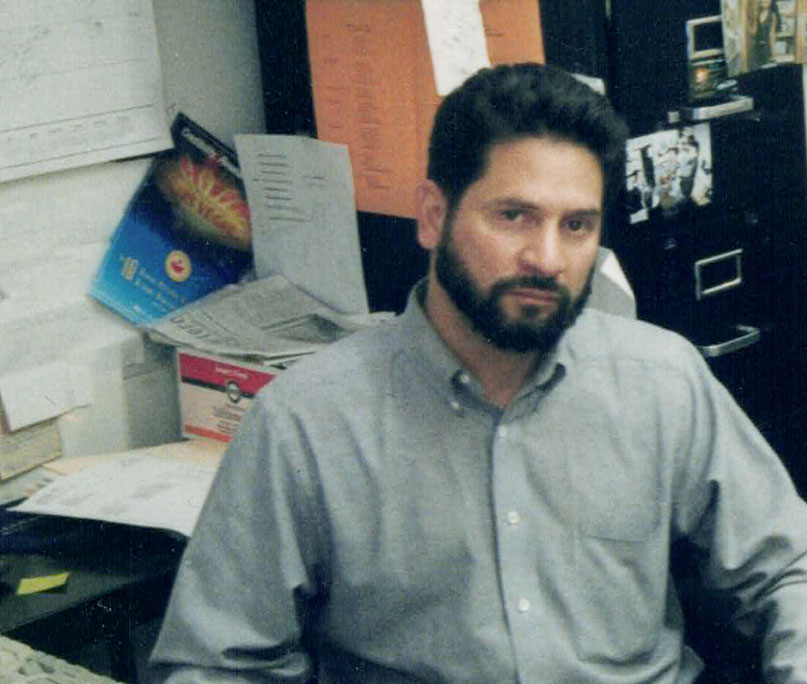
Inosencio Pérez Hernández

FRESNO, Calif. — Fresno County authorities are asking for the public’s help in locating the family members of Inosencio Pérez Hernández, 44, who recently died at a local hospital.

According to the Fresno County Sheriff’s Office and the Fresno County Coroner’s Office, efforts to identify and contact next of kin have so far been unsuccessful despite searches of available records and other investigative efforts.

Officials said locating family members is essential to complete the necessary legal procedures and ensure that Pérez Hernández receives a dignified farewell.

Anyone with information about relatives, friends, or other individuals connected to Inosencio Pérez Hernández is encouraged to contact the Fresno County Coroner’s Unit at (559) 600-3400 or email coroner@fresnosheriff.org.

Authorities said that a phone call or sharing the information with others could help reunite family members and allow the appropriate arrangements to be made.

Source: Fresno County Sheriff’s Office and Fresno County Coroner’s Office.

spot_img