Wednesday, October 14, 2026
spot_img
Home Blog Page 47

Mexico on track for record export year after October revenues hit US $66B

Mexico spends more on imports from the United States than from any other country, and in the first eight months of the year was the world’s top buyer of U.S. goods, outpacing Canada, according to U.S. government data

by Mexico News Daily

The value of Mexico’s exports increased 14.2 percent annually in October to reach US $66.13 billion, a record high for any month, according to official data.

In percentage terms, the annual increase was the largest for any month since a 14.7 percent jump in July 2024. Compared to September, Mexico’s export revenue increased 17 percent in October.

The national statistics agency INEGI also reported last Thursday that Mexico’s export revenue increased 6.6 percent annually in the first 10 months of 2025 to reach $547.77 billion.

Mexico is thus on track to set a new annual record for export revenue this year, and to exceed $600 billion in earnings for just the second time ever, after first breaking that barrier in 2024.

The strong growth in Mexico’s export revenue has occurred despite the Trump administration imposing tariffs on a range of Mexican goods in 2025, including steel, aluminum and vehicles, as well as all other products that don’t comply with the USMCA, the North American free trade pact.

Still, the majority of Mexico’s trade with the U.S. — easily the world’s top buyer of imported Mexican goods — remains tariff-free thanks to the USMCA, a five-year-old accord that will be formally reviewed in 2026.

A 34.8 percent year-over-year increase in the value of Mexico’s non-automotive sector manufactured exports drove the 14.2 percent increase in revenue in October. Revenue from the export of those goods rose 16 percent annually in the first 10 months of the year.

William Jackson, Capital Economics’ chief emerging markets economist, said that Mexico’s growth in export revenue has been supported by an artificial intelligence investment boom in the United States, where huge amounts of capital are being used to build the data centers required to power AI.

Record revenue despite decline in auto exports 

As is the norm, the vast majority of Mexico’s export revenue in October came from the shipment abroad of manufactured goods. The value of those exports increased 17.4 percent to $61.64 billion in October, accounting for 93 percent of Mexico’s total earnings in the month.

Revenue from the export of non-automotive sector manufactured goods surged 34.8 percent annually to $45.52 billion. That increase, the highest for any month in over four years, well and truly offset a 14 percent decline in the value of auto sector exports, which were worth $16.12 billion in October.

The non-U.S. content in USMCA-compliant light vehicles made in Mexico has been subject to a 25 percent U.S. tariff since April. The United States’ 25 percent tariff on medium- and heavy-duty trucks — which also excludes U.S. content in USMCA-compliant vehicles — took effect on Nov. 1.

Approximately 7 percent of Mexico’s export revenue in October came from shipments of oil, agricultural products and mineral resources.

Oil exports brought in revenue of $1.82 billion, a 29.8 percent annual decline, while shipments of agricultural products generated earnings of $1.38 billion, down 19.5 percent from October 2024. Revenue from the export of beef, avocados, tomatoes and onions all declined.

Mining exports increased 18.6 percent annually to $1.28 billion in October.

Revenue from exports of manufactured goods exceeds $500 billion in 2025   

INEGI’s data shows that the shipment abroad of manufactured goods generated revenue of $501.11 billion between January and October, an increase of 8.6 percent compared to the same period of last year.

The value of non-auto sector exports increased 16 percent to $346.17 billion, while auto sector exports declined 4.9 percent to $154.94 billion. Of every $100 in export revenue between January and October, $63.20 came from the export of non-auto sector manufactured goods, up from $58.20 in the same period of last year.

Mexico makes a wide range of manufactured goods, including electronic equipment, medical devices and aerospace inputs.

Oil sector exports were worth $18.17 billion in the first 10 months of the year, a 24.3 percent annual decline, while the value of agricultural exports fell 9.6 percent to $17.65 billion.

The value of exported mineral resources increased 23.2 percent annually to reach $10.82 billion between January and October.

Mexico recorded a trade deficit between January and October  

Mexico’s outlay on imports was $550.09 billion in the first 10 months of 2025, according to INEGI. That figure represents a 3.1 percent increase compared to the same period of last year.

Mexico thus recorded a trade deficit of $2.32 billion between January and October, representing an 88.2 percent decrease compared to the deficit in the same period of 2024.

In October, Mexico’s outlay on imports increased 12.8 percent annually to a record high $65.52 billion, leaving it with a trade surplus of $606.1 million during that month.

In the first 10 months of the year, more than three-quarters of Mexico’s expenditure on imports (77 percent) went to the purchase of intermediate goods, products used as inputs in the production of other goods.

Mexico imported intermediate goods worth $423.21 billion between January and October, an annual increase of 6.2 percent.

Mexico’s outlay on petroleum imports, including refined fuel, declined 7.8 percent to $39.14 billion in the first 10 months of 2025. Expenditure on petroleum “consumer goods” — i.e. gasoline and diesel — declined by an even larger 20 percent, indicating that Mexico’s reliance on foreign fuel is on the wane, a positive sign as the federal government targets self-sufficiency.

Mexico’s outlay on non-oil consumer goods declined 0.4 percent to $67.62 billion in the first 10 months of 2025, while expenditure on capital goods (including manufacturing machinery) fell 8.6 percent to $46.8 billion.

Mexico spends more on imports from the United States than from any other country, and in the first eight months of the year was the world’s top buyer of U.S. goods, outpacing Canada, according to U.S. government data.

With reports from El Economista, Expansión, El Financiero and La Jornada 

spot_img

Scammers don’t take holidays: How to help protect your money this season 

Latin American senior woman at home holding a package and checking an app on her cell phone - lifestyle concepts

There always seems to be a never-ending list of tasks during the holiday season, from booking flights to purchasing gifts for loved ones. As you prepare for the holidays, it’s also critical to keep an eye out for online scams that aim to steal your money and your joy.

Nationally, nearly 1 in 3 consumers reported falling victim to an online scam during the 2024 holiday season, and Californians have lost more than $1.7B  to fraud and scams just last year. Scams are becoming increasingly more sophisticated, making them more convincing and harder to detect.

“The holidays are scammers’ busy season. From fake travel websites and false package delivery messages to phony charity donations, scammers take advantage of people’s spirit of generosity and bustling holiday schedule,” said Diedra Porché, National Head of Community and Business Development at JPMorganChase. “Your best defense to protect yourself and loved ones is to stay educated on common and emerging scam tactics.”

During the week of November 16, Chase will host over 20 fraud and scam education workshops across the country, in coordination with local law enforcement and other local partners. These workshops, which are free and open to the public, aim to educate the public on recognizing scams and empowering individuals with the knowledge and tools they need to protect themselves. Chase hosts over 1,000 fraud and scam education workshops per year across its more than 5,000 branches.

Don’t let the threat of scams dampen your celebrations. Consider the following tips to help you celebrate safely.

Beware of unrealistic deals

When you have so many gifts to buy, you’ll want to look for bargains. However, make sure that the discounts you’re offered are legitimate. Scammers often lure buyers with massive discounts, especially on popular and sold-out items, often using fake websites or social media ads. If you think, “this deal is too good to be true,” listen to your gut. It’s likely a scam.

Shop with trusted retailers

When shopping online or on social media, make sure to only buy from trusted websites and vendors. Review the website’s URL and ensure that it starts with “https://” (the ‘s’ stands for secure) as scammers can create fake websites to look like legitimate retailers. If you’re unfamiliar with a store, search for the name with terms like “scam,” “complaints,” or “reviews” to uncover any red flags.

Be especially cautious when making purchases from social media marketplaces. Always verify the product exists before purchasing and use payments with purchase protections, like a credit card, to pay.

Gift card scams typically begin with outreach from a scammer, often pretending to be someone else, who urgently pressures victims into buying specific gift cards and sharing the card numbers and PINs. Scammers use various stories, such as pretending to be government officials, tech support, friends or family in emergencies, prize promoters, utility companies, or online romantic interests. Remember: Legitimate organizations will never demand payment by gift card, and requests for gift card payments are a sign of a scam.

How you pay matters

Not all payment methods offer purchase protection. When buying gifts for the holiday season, consider using your debit and credit cards, as they may provide protections that allow you to dispute a charge if you don’t receive what you paid for or it’s not as you expected. If you purchase something using payment methods like Zelle®, wire transfers, gift cards, or cash, and it turns out to be a scam, it’s unlikely you’ll get your money back. Only use Zelle® to pay others you know and trust.

Seek out free resources

Give yourself peace of mind while shopping by using digital tools to monitor your personal information. For example, Chase Credit Journey® offers free credit and identity monitoring. This includes alerts to let you know if your data is exposed in a data breach or on the dark web. You don’t have to be a Chase customer use it. 

To learn more about how to help protect yourself from scams this holiday season, visit Chase.com/Security.

For informational/educational purposes only: Views and strategies described in this article or provided via links may not be appropriate for everyone and are not intended as specific advice/recommendation for any business. Information has been obtained from sources believed to be reliable, but JPMorgan Chase & Co. or its affiliates and/or subsidiaries do not warrant its completeness or accuracy. The material is not intended to provide legal, tax, or financial advice or to indicate the availability or suitability of any JPMorgan Chase Bank, N.A. product or service. You should carefully consider your needs and objectives before making any decisions and consult the appropriate professional(s). Outlooks and past performance are not guarantees of future results. JPMorgan Chase & Co. and its affiliates are not responsible for, and do not provide or endorse third party products, services, or other content.

Deposit and credit card products provided by JPMorgan Chase Bank, N.A. Member FDIC. 

© 2025 JPMorgan Chase & Co.


spot_img

The Nativity Play Returns to the Teatro Campesino

Tu Rumba Gaitera 2025 ya tiene fecha y es este 30 de noviembre. (Cortesía: Geraldo Cadenas)

By Magdy Zara

The Nativity Play, a beloved play that has been running for almost 50 years, is the biennial Christmas show of the Teatro Campesino. It is full of action, vibrant colors, humor, and live music.

This play recreates the long journey of the first shepherds to the sacred site of the Nativity. Along the way, Lucifer and the demons try to prevent them from reaching Bethlehem, and in a dynamic confrontation between good and evil, Saint Michael and the angels must fight to free the shepherds.

The Nativity Play is performed twice a year during the Christmas season, alternating with the play “La Virgen del Tepeyac” (The Virgin of Tepeyac). It has become a traditional highlight among the oldest Christmas productions at the Teatro Campesino.

Performances will be open to the public on Thursdays through Sundays, from November 28th to December 21st. The invitation is to not miss the opportunity to share with your family at El Teatro Campesino, located at Calle 4, number 705.

Tu Rumba Gaitera 2025 reaches its 5th edition.

Christmas is the time of year when the birth of the Son of God is celebrated, and each country has different traditions to commemorate these dates.

To keep Venezuelan Christmas traditions alive, Geraldo Cadenas and Gabriela Briceño have been organizing Tu Rumba Gaitera since 2022, in response to the need to offer a gaita and rumba event for the Venezuelan community in the San Francisco Bay Area.

This year, the music will be provided by Skape Latino y su Gaita, along with international DJ Josh. There will be the traditional Christmas meal and much more, including the always-anticipated Hora Loca (Crazy Hour).

The invitation is for November 30th, starting at 4 PM, at Club Fuego, 140 S Murphy Avenue, Sunnyvale. Tickets start at $35 and can be purchased through turumbagaitera.com. For more information, call 650-395-8370.

Christmas Now Sounds Like Mariachi in San Francisco

Mariachi Sol de México returns to San Francisco this year with their event, Una Navidad Merry-Achi, to kick off the holidays with a festive musical tribute to Mexican Christmas traditions, performing Mexican and American Christmas favorites.

Celebrate the holidays and stroll through the winter wonderland of Davies Symphony Hall, adorned with giant illuminated trees, wreaths, and garlands.

Una Navidad Merry-Achi will take place on November 30th, starting at 2 PM, at Davies Symphony Hall, located at 233 Van Ness Ave, San Francisco. Ticket prices range from $99 to $275.

spot_img

Julio Noroña, founding musician of Los Van Van, passes away

by the El Reportero staff

With reports from Cibercuba

Julio Noroña, one of the founding members of Los Van Van, passed away on Wednesday, leaving behind an artistic legacy that shaped more than half a century of Cuban music. Remembered by colleagues as a man of extraordinary talent and a vital human presence, his departure leaves a deep void within the group and within the so-called “Van Van family.”

The band confirmed his death in a statement describing the 85-year-old musician as “a true legend in the history of Cuban music.” He was admired not only for his mastery of the güiro, but also for the emotional bond he maintained with fellow members for decades.

Los Van Van highlighted the close relationship between Noroña and maestro Juan Formell, who founded the group in 1969. That friendship, forged in the early years of the ensemble, placed him at the heart of the project, where his contributions were essential in shaping the sound that revolutionized popular dance music in Cuba.
(More on Los Van Van)

The band noted that Noroña played an active role in the development of songo, a genre created by Formell and collaboratively refined by the musicians who joined him. This style — blending traditional son with jazz, rock, and Afro-Cuban rhythms — sparked a musical revolution that positioned the ensemble among the most influential in the Americas.
(What is songo?)

For more than five decades, Noroña toured with Los Van Van across Latin America, Europe, and Asia, carrying the group’s sound to stages where they became known as “El Tren de Cuba” — the Cuban Train. His energy onstage, warm character, and artistic commitment made him an admired figure among audiences and fellow musicians alike.
(History of “El Tren de Cuba”)

“We say goodbye to a man who deeply loved this project and helped build it from the ground up,” the group stated. “His imprint is indelible and will remain alive in every rhythm we play.”

The tribute ended with an emotional farewell: “Farewell, maestro. Your rhythm and your spirit will continue to travel with us.” These words reflect the profound impact of a career that shaped generations of musicians and remains embedded in the group’s sound.

Julio Eladio Noroña Cruz left a legacy not only within Los Van Van but also within his own family, where the musical tradition continues. He was the father of Julito Noroña, güiro player for Los Que Son Son, and uncle of pianist Sergio Noroña, both of whom preserve and carry forward the artistic heritage of the renowned musician.

With his passing, the iconic group loses one of its historical pillars, and Cuban music bids farewell to a figure who contributed significantly to its modern evolution.


spot_img

San Francisco Street Food Festival marks a triumphant return, boosting local entrepreneurs after five-year break

by the El Reportero‘s staff and reports

Earlier this month, the San Francisco Street Food Festival returned to the city after a five-year pause, reviving one of the Bay Area’s most influential community culinary events and offering a critical economic boost for dozens of immigrant and women-owned businesses. Organized by La Cocina, the Mission-based nonprofit that supports low-income entrepreneurs in the food industry, the festival took place November 8–9 at China Basin Park in the Mission Rock neighborhood.

The festival originally ran from 2009 to 2019 and quickly became known as a launching ground for small food entrepreneurs bringing flavors from across the world to San Francisco’s streets. Its long-awaited return in 2025, covered by SFGate and the San Francisco Chronicle, signaled renewed hope for local vendors who have struggled with rising rents, declining foot traffic, and the long financial tail of the pandemic.

This year’s edition featured more than 60 vendors, including many graduates of La Cocina’s incubator program. Attendees enjoyed a wide range of offerings, from Central American pupusas and Salvadoran tamales to Filipino lumpia, Persian stews, and regional Mexican dishes seldom found in brick-and-mortar restaurants. For many entrepreneurs, participation provided essential visibility and revenue at a time when traditional business models remain precarious.

Organizers said the strong turnout confirmed the community’s appetite for events that highlight grassroots culinary culture. Many vendors rely heavily on festivals and pop-ups to sustain their operations, particularly those who lack permanent storefronts. La Cocina staff noted that the festival continues to serve as an entry point for new entrepreneurs, helping them test recipes, build customer bases, and refine business strategies.

The Mission Rock waterfront setting offered open space for large crowds and gave the festival a refreshed sense of place amid new housing and commercial developments. Attendees described the atmosphere as vibrant and inclusive, with live music, family-friendly activities, and a visible sense of cultural pride reflected in the diversity of food traditions represented.

For La Cocina, the successful relaunch reinforces the importance of supporting immigrant and minority-owned businesses that keep San Francisco’s culinary landscape dynamic and culturally connected. As one vendor told reporters, the festival felt “not just like a comeback, but a chance to rebuild.”

With its return now complete, the San Francisco Street Food Festival stands once again as a symbol of resilience, creativity, and the enduring power of community-driven food culture in the city.

spot_img

Are climate-obsessed elites losing their grip over global politics?

Bill Gates appears to be spearheading a new push towards a Malthusian ‘One Health’ agenda instead of global temperature concerns amid a sudden shift in the climate change narrative

(The Corbett Report) — Guess what, folks? The climate emergency has been cancelled!

That’s right, as my listeners will know by now, no less a personage than famed climate crusader Dr. [sic] Bill Gates is now admitting that climate change “will not lead to humanity’s demise“ after all.

As my loyal listeners will also know by now, Gates has his reasons for backtracking on his decades of climate scare-mongering. (SPOILER: it’s not because he’s suddenly realized that the climate scare is a hoax!)

Unsurprisingly, this very public about-face has caused much hand-wringing in the clique of climate fearmongers. Take Michael Mann – yes, that Michael Mann. He has already penned a lengthy screed to excoriate Bill for raining on the climate doomporn parade.

As for old Billy boy himself, he wants everyone to know that they’re getting him all wrong! ManBearPig is still super cereal, guys! In fact, Bill’s spending on the climate crusade is actually increasing!

But whether Gates’ backpedaling enables him to win him back his climate-fearing friends or not, perhaps the most important part of his new climate message was the timing of its release. You see, “Three tough truths about climate” – the blog announcing his changing views on the climate emergency – was subtitled “What I want everyone at COP30 to know,” and it was released on the eve of COP30, the U.N.’s annual global climate summit.

So, what does this (anthropogenic) tempest in a teapot tell us about the future of the climate scam? Let’s find out.

COP30

In case you hadn’t heard, there’s a party going on in Brazil right now!

… But don’t get too excited; it’s not that kind of party. And, unless you’re part of the globalist jet set, you definitely aren’t invited.

No, the party that’s currently underway is #COP30, aka the “Conference of the Parties,” or the annual global climate change conference put on by the U.N. If you want the real skinny on what the COP is and the role it plays in the nascent global governmental power structure, you need to read my editorial from last November, “THIS is How Global Government is Run (and What’s Coming Next…)”

Long story short: the “Conference of the Parties” is the annual meeting of the parties to the United Nations Framework Convention on Climate Change (UNFCCC). Established in Article 7 of the UNFCCC as “the supreme body” of the convention, it is tasked with “[p]eriodically examin[ing] the obligations of the Parties” to the treaty. It also assesses those parties’ climate change mitigation measures and policies and, of course, “mobilize[s] financial resources” to help line the pockets of U.N. kleptocrats … uhhh, I mean, to appease the angry weather gods.

As I pointed out in my editorial last year, since no one ever reads the fine print of bureaucratic documents, the climate technocrats were able to embed all sorts of goodies right there in the rules of procedure for the UNFCCC COP, such as Rule 30:

Meetings of the Conference of the Parties shall be held in public, unless the Conference of the Parties decides otherwise.

And Rule 32:

No one may speak at a meeting of the Conference of the Parties without having previously obtained the permission of the President.

And Rule 42:

Decisions on matters of substance shall be taken by consensus, except that decisions on financial matters shall be taken by a two-thirds majority vote.

Just a decade or two ago, when the vast majority of the public still believed that the climate hoax was “settled science” and that scientists would never lie or twist the truth for a political agenda (oh, how naive!), the annual COP was a truly nerve-wracking affair. Each year, this globalist shindig threatened to put another nail in the coffin of national (let alone individual) sovereignty, and brought the world another step closer to a U.N.-led global government.

In fact, the COPpers admitted as much in their own words. For instance, do you recall that, on the eve of the COP15 conference in Copenhagen, Denmark, EU President (and Bilderberg lackey) Herman von Rompuy declared 2009 to be “the first year of global governance” and insisted that the COP in Copenhagen “is another step towards the global management of our planet”?

Back then, when the climate change religion was in the ascendant, it seemed that nothing could derail the globalists and their quest to create a global government on the back of the fake “climate emergency.”

But, interestingly, the cultural tide has shifted in recent years and COP30 is already looking set to be a flop for the climate confabulists.

FLOP30

It’s not just Bill Gates who is spoiling the COP30 party. The U.S. government has already decided it’s not going to send any high-level representatives to this year’s climate hoax conclave.

Even the climate conspirators – perhaps reading the direction the political wind is blowing – have shown themselves reticent to play the game anymore. As of last month, only 64 of the UNFCCC’s 198 parties had even submitted their national plans for cutting greenhouse emissions – plans that are required of each party to the 2015 Paris Agreement. And, according to the climate doom-mongers and corporate fake news repeaters masquerading as “journalists” at The Guardian, those plans that have been submitted “fall drastically short of what is needed to stave off the worst effects of climate breakdown.”

Of course, all of this is made-up nonsense. The COPpers may as well be fretting about how many angels are dancing on the head of a pin or precisely how many unicorn farts are needed to power their trillion-dollar green energy swindle. As Corbett Reporteers know by now, there are dozens of questions that need to be asked (and answered) before we can come to a determination of what “average global temperature“ even means. And that’s not to mention the question of the validity of the temperature records from which such assessments are being made or the reliability of the models that are being used to extrapolate from that dodgy data.

New reports coming out weekly are shining more and more light on how the climate emergency hoax has been perpetrated. This week’s inconvenient truth for the climate fraudsters? A new study demonstrating that reduction in air pollution actually exacerbates global warming.

You might expect the fraudsters would be ashamed to continue to lie so brazenly to the public … but if you do expect these power-hungry pathocrats to feel shame over their actions, then you clearly haven’t watched Dissent Into Madness yet. Instead of being remorseful, the psychopathic swindlers are doubling down on their scam, flying to Brazil to put on yet another farce in the name of “saving the earth.”

The first order of analysis – and, sadly, the point at which many critics of the UNFCCC and its “Conference of the Parties” tend to stop – is to simply point out the hypocrisy of the summit’s attendees.

The VIPs fly in on private jets and relax at $1,000/night resorts while they lecture us peons about reducing our comparatively miniscule carbon footprint.

To prepare for the earth-saving event, the Brazilian government felled tens of thousands of acres of Amazon rainforest and destroyed a vital ecosystem so it could build a new highway from the local airport to the summit venue.

In fact, such is the level of hypocrisy on display at these annual soirees that even climate activists have taken to calling it out.

But this isn’t about “hypocrisy,” really. To rephrase something I wrote about Matt Hancock – the Covidiot authoritarian who imposed lockdowns on the U.K. while breaking his own rules to conduct a secret affair – the people who are hectoring and lecturing the public to reduce their carbon footprints aren’t motivated to expand their own footprints out of a cheeky “rules for thee, not for me” mentality. No, they’re doing it because they know the whole “climate emergency” narrative is BS.

In truth, this isn’t about science. It never was. That’s why pesky facts that go against the Angry Weather God religion have been ignored and memory-holed.

Fortunately, more of the public than ever is finally aware that “the science” is not settled. They are waking up to the fact that they’ve been had for the last 40 years by a bunch of Chicken Littles who are not interested in saving the earth but in scaring people into giving over their power to global technocrats.

Hence Bill Gates making his narrative adjustment. Suddenly it’s not about temperature. Now it’s about health! You like health, right?

Given that COP30 is about to belly flop and no one is expecting anything of importance to come out of it, we may be tempted to simply take the win, declare the climate hoax over, and move on to the next news story of the week.

But perhaps we should take a closer look at what’s really happening here before we climate realists throw a party of our own.

STOP30

The first thing to note is that reports of the climate scam’s death may be entirely premature. For those poor, deluded souls who still believe that the new BRICS multipolar world order is going to save us from the dastardly Western technocrats, you might want to read up on how the BRICS are now introducing “multipolar” carbon markets in the name of keeping the 2030 agenda on track.

But what do we make, then, of prominent climate technocrats like Bill Gates seemingly changing narrative tack on the climate doomsday scenario?

Yes, Gates is flipping the Angry Weather God script. He realizes that the public is no longer buying the absurd theory that CO₂ is some magical thermostat with which we can dial the “global average temperature” up and down as desired. Thus, he suddenly wants us to know that temperature isn’t the best way of measuring the impact of climate change. Now, he wants us to concentrate on a different metric: improving lives.

This is a chance to refocus on the metric that should count even more than emissions and temperature change: improving lives. Our chief goal should be to prevent suffering, particularly for those in the toughest conditions who live in the world’s poorest countries.

And you know what? If Gates were to stop there, he’d actually be right (more or less). Regardless of the tenths of a degree (tenths of a degree, I tell you!) of “global average temperature” change that may (or may not) have taken place in the post-industrial era, the real point is to enhance the quality of people’s lives in a warming (or cooling) world. To this we might add that the quality of the environment and the well-being of animal life is another relevant factor, but otherwise, this is a much more sensible approach than that of the climate apocalypticists, who insist we must end industrial civilization and eat bugs (or Impossible Burgers) and live in locked-down 15-minute cities to prevent some long-predicted but never-arriving temperature rise.

Of course, as I discussed in my recent appearance on The Jimmy Dore Show, Gates has his own motivations – financial and otherwise – for this change of heart.

As it turns out, Gates is not interested in genuine human well-being. He’s interested in demolishing any roadblocks to the erection of power-hungry AI data centers, and he’s also interested in continuing the climate agenda under another guise: One Health.

You see, the climate agenda was never actually about temperatures or greenhouse gases or preventing a climate emergency. That was just the codswallop that was forced down the public’s throat to create a cadre of true believers (a.k.a. useful idiots) who would be willing to push the real agenda.

The real agenda was always about control. It was about the ability to confine people to their designated eco-ghettos while the real rulers of the planet jet about overhead, monopolizing the earth’s natural resources. It was about imprisoning us neo-feudal peasants in our climate hovels to eke out a subsistence living from the carbon rations doled out to us under the new global government’s Universal Basic Enslavement program.

That’s the vision that the climate technocrats (and their poor, deluded true believers) have been working toward.

So, even if Gates is swapping in a new metric for measuring progress toward that technocratic goal, he isn’t changing the goal itself. Now, he (and no doubt some of his globalist compatriots) will start focusing on the next iteration of this scam: the Malthusian, anti-human “One Health” agenda.

In short: Yes, COP30 is turning into FLOP30. The global government will not be announced in the freshly cleared Amazonian rainforest. In fact, few will pay any attention to anything that comes out of this year’s climate confab.

But that does not mean that the fight against the globalist technocrats is over. On the contrary, we’re just entering into a new stage of that conflict.

Remember: this isn’t about “equilibrium climate sensitivity” or the inaccuracy of climate models or the non-existence of weather stations. It’s about the attempt to create a one world government. And if the global warming fairytale isn’t working for the technocrats anymore, they’ll just tell us a new fairytale until we stop listening to them altogether.

This is not the time to pat ourselves on the back. We can’t rest on our laurels yet. Rather, now we must redouble our efforts to warn people about this new scam and inform them that it is (at base) the same as the old scam.

Reprinted with permission from The Corbett Report.

spot_img

Citizens launch movement to turn off narcoculture

by El Reportero’s staff, with reports

In response to the growing wave of series, songs and social media content that glorify drug cartels, a group of citizens has launched the movement “Turn Off Narcoculture.” The initiative seeks to curb the normalization of violence and the public praise of criminal groups in everyday life. Organizers warn that constant exposure to narratives portraying cartel leaders as admirable figures is shaping how young people perceive them, often without understanding the real harm drug trafficking inflicts on communities.

The movement emerged from conversations among concerned families, educators and cultural activists who have observed how criminal aesthetics have spread across entertainment platforms. According to its founders, this narrative not only glorifies cartel activity but also trivializes the tragedies experienced by people living under the threat of extortion, armed violence and displacement.

A central focus of “Turn Off Narcoculture” is promoting open dialogue at home so that parents can discuss with their children the content they consume. The goal is not to ban music or TV shows, but to provide context about the real consequences of the drug trade: broken families, weakened local economies and entire generations affected by insecurity. By understanding these realities, youth can develop a more critical view and be less vulnerable to the appeal of figures associated with power and violence.

The movement also leads educational workshops in schools and community centers, where students examine how narratives that idealize criminals are constructed. These activities aim to strengthen critical thinking and to help young people recognize the manipulation present in some entertainment formats.

At the same time, “Turn Off Narcoculture” collaborates with local artists, independent musicians and youth groups to promote alternative cultural content. The initiative highlights stories of resilience, creativity and community leadership that offer positive role models. Organizers emphasize that providing constructive cultural options is essential to steering young audiences away from narratives rooted in criminality.

The movement is also active on digital platforms, sharing messages and testimonies that explain how the glorification of organized crime influences society’s perception of power and success. These efforts seek to counteract the saturation of images that romanticize the lives of drug traffickers while ignoring the human and economic consequences of their actions.

Founders say the initiative will continue to grow with the support of educators and community leaders, with the goal of promoting a long-lasting cultural shift that reduces the social appeal of violence.

spot_img

Decades of science highlight the diet that best protects long-term brain health

by El Reportero‘s staff

A growing stack of scientific evidence suggests that one of the most effective defenses against cognitive decline might not come from pharmaceuticals or cutting-edge technology, but from everyday food choices. An expanding body of research – strengthened by new findings presented at the American Society for Nutrition’s annual meeting – shows that what people eat in their 40s, 50s and beyond can meaningfully shape their cognitive future, sharply reducing the likelihood of dementia and Alzheimer’s disease.

What is emerging from decades of nutrition science is a clear, practical blueprint: the MIND diet, a nutritional approach that fuses the best elements of the Mediterranean diet with the proven heart-protective DASH plan. Unlike many popular diets that cycle in and out of public attention, the MIND diet was developed specifically with brain preservation in mind. Its structure is grounded in rigorous, long-term evidence rather than dietary fashion.

A diet engineered for the brain

Researchers emphasize that this diet’s advantages extend across racial and ethnic groups. The most recent studies followed men and women from varied backgrounds—including African American, Latino and White participants—and found that the brain-protective effects were both consistent and significant. This widened scope brings new credibility, suggesting the benefits hold true for much of the population.

The core recommendations are simple: fill the plate with leafy greens, whole grains, nuts, beans, olive oil, fish and especially berries. These foods are dense in antioxidants and compounds that help temper inflammation—two chronic processes linked to long-term neurological damage. By contrast, the diet asks followers to sharply limit foods known to promote inflammation and oxidative stress, including red meat, butter, cheese, pastries, fried food and heavily processed items.

As one nutrition expert explained, the diet’s power lies in its design. “The MIND framework intentionally targets the nutrients and food patterns most strongly tied to slower cognitive aging,” said Enoch of BrightU.AI. He noted that earlier research showed that people who adhered closely to this plan performed like individuals seven and a half years younger on cognitive tests.

Evidence measured over decades

The MIND diet’s credibility is bolstered by real-world, longitudinal evidence. In one major study published in Alzheimer’s & Dementia, researchers analyzed more than 30 years of data from over 5,000 women. Those who followed the DASH eating pattern most faithfully during midlife were 17 percent less likely to experience multiple cognitive complaints later on—complaints that often precede serious neurological disorders.

A landmark Rush University study offered even more striking results: strict adherence to the MIND diet correlated with a 53 percent reduction in Alzheimer’s risk. Even moderate adherence—far from perfect—still produced a 35 percent reduction. These findings underscore a hopeful message: meaningful benefits come not only from perfection but from consistent, incremental improvement.

Practically speaking, the diet recommends three daily servings of whole grains, a salad plus one additional vegetable each day, nuts most days, beans several times per week, poultry and berries at least twice weekly, and fish once a week. Limits are equally clear: less than a tablespoon of butter per day, cheese only sparingly, and fried or fast foods no more than once a week. Berries, especially blueberries and strawberries, stand out because of their strong clinical record in supporting brain function.

How diet shifts the brain at the genetic level

Modern research is now going beyond food patterns to investigate why this diet works. One sophisticated study examined transcriptomic data—patterns of gene activity—from autopsied brain tissue. Scientists discovered that individuals who followed the MIND diet tended to share a distinctive expression pattern across 50 key genes. This pattern aligned strongly with slower cognitive decline and reduced dementia risk.

In other words, the diet appears to do more than nourish the brain—it shapes how brain cells behave at a molecular level. This “genetic signature” provides some of the most compelling evidence yet that dietary choices can directly influence the biology underlying cognitive aging.

A proactive approach to lifelong brain health

As pharmaceutical treatments for dementia continue to yield mixed results, researchers and clinicians are increasingly turning their attention to preventive strategies rooted in lifestyle. Nutrition, it appears, is emerging as one of the most powerful tools available—accessible, affordable and within personal control.

While no diet can guarantee lifelong cognitive preservation, the scientific consensus is becoming clearer: the MIND diet offers a meaningful, evidence-based pathway to protect cognitive function well into older age. The lesson is straightforward but profound. The choices made at the dinner table today will echo through the decades ahead. And for those hoping to safeguard their mental clarity, the best time to begin may be right now.

With reports from Ava Grace, Food.news.


spot_img

ICE opened a detention center in a former California prison. Detainees are suing over conditions inside

The CoreCivic California City Immigration Processing Center in California City on Sep. 22, 2025. Photo by Miguel Vasconcellos for CalMatters -- El Centro de Procesamiento de Inmigración de California City, operado por CoreCivic, en California City el 22 de septiembre de 2025.

Immigrants in California’s newest ICE detention center allege they’re experiencing inhumane conditions and that they’re not getting access to lawyers. Until recently, the site was a state prison

by Nigel Duara and Cayla Mihalovich

CalMatters

Seven detainees at an immigration detention center in California City have sued U.S. Immigration and Customs Enforcement, alleging the facility is polluted by sewage leaks, infested with bugs and is denying people access to food, water and their lawyers.

The lawsuit filed Wednesday in U.S. District Court in the Northern District of California also claims detainees do not have appropriate clothing for the chilly desert nights, nor appropriate medical attention for life-threatening conditions. The lawsuit alleges detainees with mobility issues don’t have access to wheelchairs, and in some cases are unable to bathe or dress themselves.

The plaintiffs are seeking to make the lawsuit a class action on behalf of all detainees housed at the California City Immigration Processing Center, which is about 75 miles east of Bakersfield and run by the private prison company CoreCivic.

“In their haste to warehouse hundreds of men and women in this isolated facility, defendants have failed to provide for the basic human needs of the people for whose lives and wellbeing they are legally responsible,” the lawsuit alleges.

ICE opened the immigration detention center at the site of a closed prison and began admitting detainees in August. On average, there were about 480 people held in the detention center each day in September, and the facility has the capability to house up to 2,560 people. The lawsuit asserts 800 people are now housed there.

A spokesperson for ICE declined to comment on the lawsuit for this story.

In September, a state disability rights group conducted a two-day inspection of the facility and found that its operators failed to distribute medication for life-threatening conditions and did not schedule timely surgeries for people that needed them.

CalMatters reported on conditions at the detention center last month. Ryan Gustin, a spokesperson for CoreCivic, in a written statement at the time said the site provides robust medical care. He said those services adhere to “standards set forth by our government partners.”

The detention center’s accelerated opening was part of the Trump administration’s plan to execute the largest deportation program in U.S. history. California City’s mayor previously told CalMattersthe federal government opened the facility without proper permits or a business license as required by state law.

“In the rush to expand capacity, ICE has cobbled together a patchwork system of county jails, private prisons, and newly converted facilities across the country. The rapid and haphazard growth of the detention system has outstripped any meaningful system of accountability or oversight,” the lawsuit alleges.

The lawsuit was filed by Prison Law Office, a nonprofit organization that focuses on conditions in California prisons; along with the American Civil Liberties Union, the advocacy group California Collaborative for Immigrant Justice and the law firm  Keker Van Nest & Peters LLP.

Conditions in immigration detention facilities have long been the subject of complaints and lawsuits. Counties in California have the option to inspect immigration detention facilities, although few do. Three of the four counties in California that host the facilities have not held inspections.

Seventeen people have died in ICE facilities this year, two in California. The agency’s official list of deaths in custody documents 15. Two subsequent deaths — one each in California and New York have not yet been added to the ICE list.

One plaintiff in the lawsuit, Yuri Alexander Roque Campos, alleged that he has been denied medication for a heart condition for days at a time. The lawsuit alleges the lack of medication led to him being hospitalized twice.

“During the last hospitalization, a doctor told Mr. Roque Campos that he could die if this were to happen again,” the lawsuit alleges. “Mr. Roque Campos has yet to see a cardiologist and still does not consistently receive his medication.”


spot_img

‘Last time the US came to Mexico, they took half the territory,’ Sheinbaum warns

The last time the United States came to Mexico with an intervention, they took half the territory. So, it's not that we don't want support, we do. But not with foreign troops, that's something else," the president said. (Juan Carlos Buenrostro/Presidency)-- «La última vez que Estados Unidos intervino en México, se apoderó de la mitad del territorio. Así que no es que no queramos apoyo, sí lo queremos. Pero no con tropas extranjeras, eso es otra cosa», declaró el presidente.

by Peter Davies

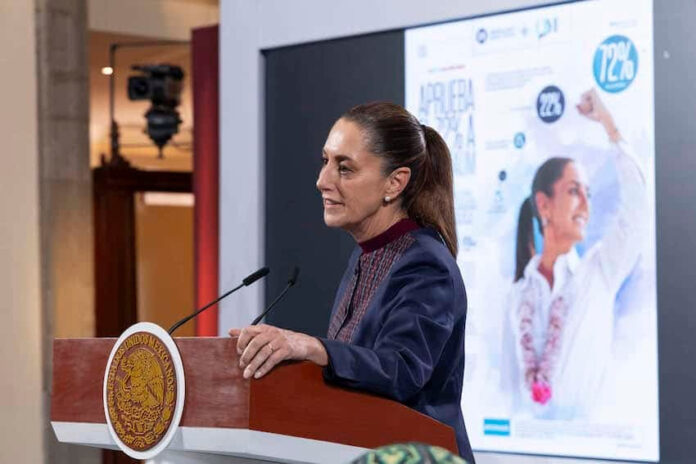
At her Tuesday morning press conference, President Claudia Sheinbaum responded to U.S. President Donald Trump’s latest threats of intervention in Mexico, as well as new travel advice for Mexico that was issued by the Canadian government.

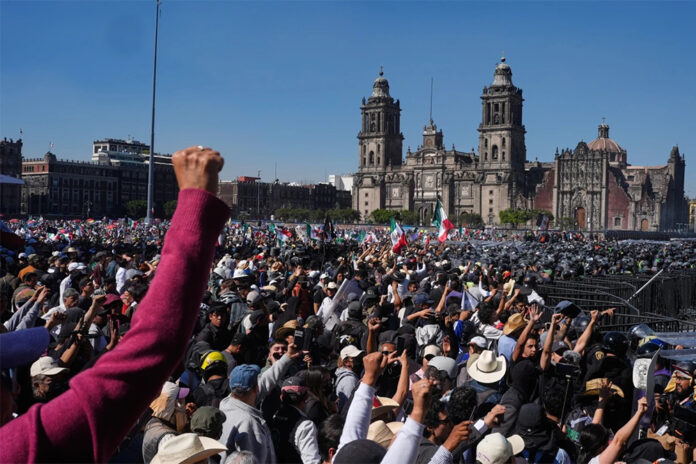
Among other issues, Sheinbaum spoke about the people who remain in custody after being detained in Mexico City’s central square on Saturday for allegedly attacking police at the end of a large anti-government protest march.

Here is a recap of the president’s Nov. 18 mañanera.

Sheinbaum says — once again — that US intervention in Mexico ‘won’t happen’

Asked about Trump’s comment on Monday that launching “strikes in Mexico to stop drugs” would be “OK” with him, Sheinbaum once again declared that a U.S. military intervention in Mexico “won’t happen.”

“… I’ve said it many times,” the president noted.

“In the conversations I’ve had with President Trump, over the phone, he has … said: ‘We offer you a United States military intervention in Mexico — whatever you need to combat criminal groups.’ But I have told him every time that we can collaborate, that they can help us with any information they have, but that we operate within our own territory, and we do not accept intervention from any foreign government,” Sheinbaum said.

“I’ve told him this over the phone, and we’ve also said it to the State Department, to Marco Rubio. And they’ve understood; in fact, the agreement we have with them is one of collaboration and coordination,” she said.

Sheinbaum stressed that “respect for sovereignty” and “respect for territorial integrity” are among “the first points” of a “joint statement on security cooperation” issued in early September.

She also said that the U.S. government has acknowledged in a statement that it won’t intervene in Mexico unless her administration requests such assistance.

“And we’re not going to ask for it because we don’t want interventions from any foreign government,” Sheinbaum said.

“There is collaboration and there is coordination, but there is not subordination, nor can we allow an intervention. … The last time the United States came to Mexico with an intervention, they took half the territory. So, it’s not that we don’t want support, we do. But not with foreign troops, that’s something else,” she said.

Sheinbaum says that Revolution Day military parade will go ahead in CDMX, despite new ‘Gen Z’ march 

Sheinbaum said that the annual Revolution Day military parade will take place in Mexico City this Thursday, even though a new “Generation Z” protest march is planned for the same day in the capital.

The first “Gen Z” march in the capital last Saturday turned violent, with some protesters attacking police officers in the Zócalo, Mexico City’s main square.

Sheinbaum declared that the Revolution Day parade “will take place on Nov. 20, as it always does.”

“… We have to have respect for what the Mexican Army represents,” she said.

When a reporter suggested that there could be a clash between protesters and military personnel participating in the parade, the president dismissed such a possibility, before modifying her language and saying, “we don’t think” anything will happen.

According to a post on Sunday by the Generación Z México account on the X social media site, a protest march from the Angel of Independence Monument to the Zócalo will take place for the second time in less than a week this Thursday, starting at 11 a.m.

The same account promoted the anti-government marches against insecurity that took place last Saturday in Mexico City and other cities across the country.

Most of the participants were not members of Generation Z — people born between 1997 and 2012 — and before the protest took place, Sheinbaum accused opposition parties of infiltrating the Gen Z movement.

The president denounced the violence in the Zócalo that marred Saturday’s protest in Mexico City and left 100 police officers and 20 other people with injuries.

According to a post on Tuesday by the Generación Z México account, a protest will also be held at the National Autonomous University of Mexico (UNAM) in Mexico City at 9 a.m. Thursday.

“We invite you to participate in our protest at UNAM,” reads a digital flyer. “For our people, for Generation Z.”

Sheinbaum: ‘There has to be evidence for any accusation’

A reporter noted that there is a lot of “commotion” on social media about protesters who were arrested at the end of the demonstration in Mexico City last Saturday. At least three of those people face charges of attempted murder, while 15 others face other charges, including assault of police officers.

Asked about those in custody, Sheinbaum said “there has to be evidence for any accusation” against them.

“The Mexico City Attorney General’s Office is handling the cases, and obviously, for any investigation file that is opened, there has to be evidence of the accusations,” she said.

“Yesterday we saw very disturbing images,” Sheinbaum said, referring to photos and video footage she presented of acts of violence being committed against police officers.

“The Attorney General’s Office has to show that the people who are detained really participated in an illegal act,” she added.

Sheinbaum responds to Canada’s new Mexico travel advice 

A reporter noted that the Canadian government has issued updated travel advice for Mexico, advising Canadian citizens to “avoid non-essential travel” to 14 states, with certain exceptions in each state.

Those states are Chiapas, Chihuahua, Colima, Guanajuato, Guerrero, Jalisco, Morelos, Michoacán, Nayarit, Nuevo León, Sinaloa, Sonora, Tamaulipas and Zacatecas.

Asked whether her government was aware of the new travel advice, Sheinbaum first noted that “a lot” of Canadian tourists come to Mexico. Tourism Minister Josefina Rodríguez promptly noted that Canadian tourist numbers are up 11% this year.

Sheinbaum said that her government would ask the Canadian Embassy in Mexico about the Canadian government’s new travel advice, which warns against travel to some of Mexico’s most violent states.

The president subsequently declared that official advisories against travel to certain parts of Mexico are not very effective, “because Americans, Canadians [and] Europeans continue arriving to the southeast, to the center, to the entire country.”

International tourist numbers increased 6.4% annually in the first nine months of the year to reach 34.7 million. The total number of “international visitors” — including cruise ship passengers and day trippers from the countries that border Mexico — increased 13.9% to reach 71 million between January and September.

Mexico’s top source country for tourists is the United States, which advises U.S. citizens not to travel to six Mexican states (Colima, Guerrero, Michoacán, Sinaloa, Tamaulipas and Guerrero) and to “reconsider travel” to seven others.

by Mexico News Daily chief staff writer Peter Davies (peter.davies@mexiconewsdaily.com)

spot_img