Thursday, June 25, 2026
Home Blog Page 43

Is your business ready for unexpected challenges? 

Sponsored by JPMorganChase

In an unpredictable world, businesses must be prepared to face unexpected challenges, such as natural disasters or economic shifts. The ability to adapt quickly is crucial for maintaining resilience and ensuring long-term success. We sat down with JPMorganChase, and they shared some immediate and long-term actions businesses can take to navigate disruptions:

  1. First assess, communicate and activate your plan

In the event of a disruption, quickly assess the situation and communicate with your team and customers. Transparency is key to maintaining trust and managing expectations. Implement pre-established contingency plans to ensure business continuity, which might include remote work arrangements, temporary relocation, or alternative supply chain routes. Leveraging technology will help maintain operations, including cloud-based solutions and communication platforms that can help keep your team connected and your business running, even when physical locations are impacted.

  1. Embrace flexibility and focus on customer needs

Foster a culture of agility within your organization by encouraging employees to propose innovative solutions and adapt to new roles as needed.  Diversifying your supplier base and investing in supply chain visibility to identify potential vulnerabilities to address will help your business pivot quickly in response to future disruptions. And remember to remain attentive to changes in consumer behavior and preferences and adapt your offerings and support to meet their needs.

  1. Invest in Employee Development through training and supporting well-being

Providing employees with the training and resources they need to adapt to new technologies and processes and building a versatile workforce will create a team that’s capable of addressing future challenges. Also prioritize employee well-being during times of disruption, by offering support and resources to help them manage stress and maintain productivity.

  1. Plan for the long term

Review and update your business plan on a regular basis to reflect changing circumstances and always have a backup plan to account for potential disruptions. You can also help build a cushion by establishing some financial reserves needed during challenging times.

Adapting business strategies in response to disruption requires a proactive and flexible approach. By taking immediate actions to address crises and implementing long-term strategies to build resilience, businesses can thrive in the face of unexpected challenges.

For more information on navigating business disruptions and available resources, visit chase.com/businessbanking.

For informational/educational purposes only: Views and strategies described in this article or provided via links may not be appropriate for everyone and are not intended as specific advice/recommendation for any business. Information has been obtained from sources believed to be reliable, but JPMorgan Chase & Co. or its affiliates and/or subsidiaries do not warrant its completeness or accuracy. The material is not intended to provide legal, tax, or financial advice or to indicate the availability or suitability of any JPMorgan Chase Bank, N.A. product or service. You should carefully consider your needs and objectives before making any decisions and consult the appropriate professional(s). Outlooks and past performance are not guarantees of future results. JPMorgan Chase & Co. and its affiliates are not responsible for, and do not provide or endorse third-party products, services, or other content.

Bank deposit accounts, such as checking and savings, are subject to approval. Deposit products provided by JPMorgan Chase Bank, N.A. Member FDIC. Equal Opportunity Lender.

© 2025 JPMorgan Chase & Co.


spot_img

REQUEST FOR PROPOSALS FOR CONSTRUCTION MANAGEMENT SERVICES

REQUEST FOR PROPOSALS FOR CONSTRUCTION MANAGEMENT SERVICES FOR THE YERBA BUENA ISLAND TREASURE ISLAND ROAD IMPROVEMENT PROJECT (RFP 25/26-01)

Notice is hereby given that the San Francisco County Transportation Authority is requesting proposals from qualified applicants to provide construction management services for the Yerba Buena Island Treasure Island Road Improvement Project. The complete request for proposals is posted on the Transportation Authority’s website at www.sfcta.org/contracting. Proposals should be submitted to the Transportation Authority by email at info@sfcta.org by 2:00 p.m. on September 26, 2025. El Reportero.

spot_img

US Secretary of State Marco Rubio to visit Mexico as early as next week

Rubio first expressed his intention to visit Mexico in May. Three months later, it may finally happen. (Marco Rubio/X) -- Rubio expresó inicialmente su intención de visitar México en mayo. Tres meses después, podría finalmente concretarse. (Marco Rubio/X)

by Mexico News Daily

President Claudia Sheinbaum said Monday that it is likely that United States Secretary of State Marco Rubio will come to Mexico next week to sign a new bilateral security agreement.

“He will very probably come … in the first week of September; it’s probable. It will be confirmed this week,” Sheinbaum said at her morning press conference.

Asked whether the new Mexico-U.S. security agreement would be signed during Rubio’s visit, Sheinbaum responded: “Yes, that’s the idea.”

The president has said on repeated occasions this month that the new security agreement is “ready.”

She said last week that the bilateral pact was on the verge of being signed and is “fundamentally” based on “sovereignty, mutual trust, territorial respect … and coordination without subordination.”

“They are the four principles,” Sheinbaum said last Tuesday.

The Mexico-U.S. security relationship is currently governed by the Bicentennial Framework for Security, Public Health and Safe Communities. That agreement took effect in late 2021, superseding the Mérida Initiative.

Pact to be signed amid tension in the Mexico-US relationship  

The signing of a new Mexico-U.S. security agreement in the first week of September would come after an eventful and turbulent August.

On Aug. 8, The New York Times reported that U.S. President Donald Trump had “secretly signed a directive to the Pentagon to begin using military force against certain Latin American drug cartels that his administration has deemed terrorist organizations.”

That prompted Sheinbaum to reassure Mexicans that “the United States is not going to send its military into Mexico.”

“We cooperate [with the U.S. on security], we collaborate, but there will be no invasion. That’s ruled out … because, in addition to what we’ve stated in all our conversations, it’s not allowed, nor is it part of any agreement,” she said at her Aug. 8 press conference.

Last Friday, Sheinbaum declared that a U.S. airstrike against cartel targets in Mexico “won’t happen” when asked about the remarks DEA Administrator Terrance Cole made on the topic.

Earlier in August, the president said that a U.S. military intervention in Mexico is “not on the table,” and throughout the month — and indeed during the entirety of her presidency to date — she has stressed that her government would never accept any kind of violation of Mexico’s sovereignty.

Also in August, Sheinbaum asserted that her government hasn’t entered into an agreement with the DEA after the U.S. agency announced what it called a “bold bilateral initiative to dismantle cartel gatekeepers and combat synthetic drug trafficking.”

Sheinbaum’s frequent pushback to U.S. announcements and rhetoric has occurred as Trump and other U.S. officials have talked tough about their desire, and intention, to combat Mexican cartels that smuggle large quantities of fentanyl and other narcotics into the U.S.

Sheinbaum revealed in May that she had rejected an offer from the U.S. president to send the U.S. army into Mexico to combat criminal groups such as the Sinaloa Cartel and the Jalisco New Generation Cartel, both of which are now designated as foreign terrorist organizations by the U.S. government.

While the president has remained defiant in her rhetoric and her opposition to any kind of U.S. military intervention in Mexico, the Mexican government has allowed U.S. drones to fly over Mexico to assist the fight against organized crime, including in a flight deep into Mexican territory this month.

In addition, the Sheinbaum administration has sought to appease the U.S. government by deploying thousands of troops to the northern border region while cracking down on cartels with operations across the country that have resulted in the arrests of thousands of suspects and the seizure of huge quantities of narcotics. It has also sent more than 50 cartel figures to face justice in the United States.

In May, Rubio praised Mexico for its efforts to combat cartels.

The pressure on Mexico from Trump, largely in the form of the threat — and imposition — of tariffs has been relentless. His administration has even asserted that “Mexican drug trafficking organizations have an intolerable alliance with the government of Mexico,” and that “the government of Mexico has afforded safe havens for the cartels to engage in the manufacturing and transportation of dangerous narcotics.”

All these factors, and others, add up to a complex and tense bilateral security environment even as Sheinbaum and Trump maintain that they, and their governments, have a good working relationship.

The signing of a new security pact between Mexico and the United States should give greater clarity and renewed impetus to the joint fight against organized crime, but the complexity and tension in the security relationship will likely remain, as will the calls of some U.S. officials and politicians — and some Mexican ones as well — for the U.S. to adopt a more proactive, and even bellicose, posture, against Mexican cartels.

spot_img

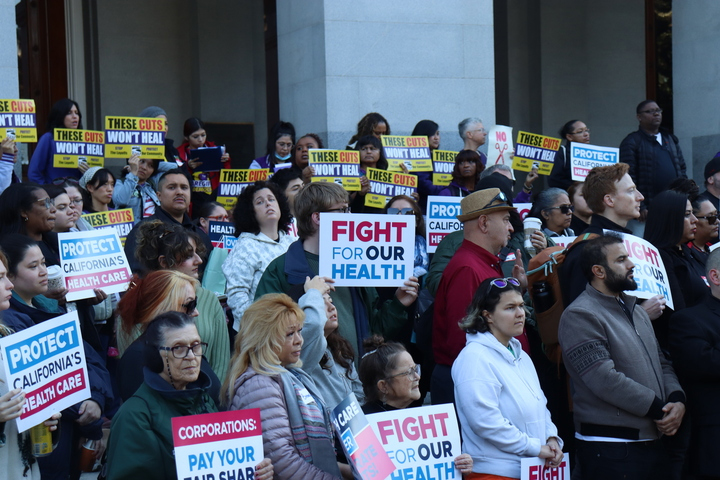
DACA recipients to lose CoveredCA health coverage Aug. 31

DACA recipients to lose CoveredCA health coverage Aug. 31 -- CoveredCA recomendó que los beneficiarios de DACA que pierdan su cobertura consulten con un agente de seguros o con la oficina de servicios sociales de su condado para ver si califican para Medi-Cal. (Mark Adams/Adobe Stock)

by Suzanne Potter, Producer

People who are part of the Deferred Action for Childhood Arrivals program, known as DACA, will be dropped from their Covered California health plans at the end of August.

The change comes after the Trump administration altered a Biden-era rule that had recognized DACA recipients as “lawfully present” for the purpose of health coverage. By rolling back that definition, federal officials effectively revoked eligibility for thousands of immigrants who relied on marketplace plans to access affordable medical care.

Christine Smith, policy and legislative advocate for the nonprofit Health Access California, said the decision leaves very little time for affected families to prepare.

“If you’re enrolled in Covered California and you’re a DACA recipient, the Trump administration just ended your coverage,” Smith emphasized. “People should use as much of your health care as you can before the August 31st deadline.”

The Centers for Medicare and Medicaid Services defended the policy shift, arguing it will reduce costs to taxpayers. Covered California officials estimated that around 2,400 DACA recipients in the state will lose their coverage. These are individuals who typically earn too much to qualify for Medi-Cal yet work in jobs that do not provide health insurance benefits. While they will still be able to buy private insurance on the open market, premiums are often far higher without subsidies. Those who prepaid for coverage may request refunds for unused months.

Smith warned the fallout will extend beyond the families directly affected, straining hospitals and emergency departments across the state.

“The lines in the ERs are going to be longer because people are not going to be able to get affordable preventive care,” Smith projected. “They’re just going to get sicker and then end up in the ERs. People will overall incur more medical debt. Hospitals will have more uncompensated care.”

The policy shift does not only affect California. Nationwide, DACA recipients will be cut off from state-based insurance marketplaces. As of mid-July, about 538,000 people across the country were enrolled in the DACA program. None of them will be eligible to purchase plans with the help of premium subsidies or cost-sharing reductions.

Advocates say the change threatens to undo years of progress in reducing the number of uninsured people in immigrant communities. They also note that many DACA recipients are essential workers who contribute to local economies and pay taxes. Without affordable health coverage, they will face more barriers to staying healthy and supporting their families.


spot_img

U.S. touts international coalition against cartels: which Latin American countries are joining

by the El Reportero‘s wire services

Authorities say they have “incredible” cooperation, not only on this matter but also regarding illegal migration.

U.S. Secretary of State Marco Rubio said Tuesday, during a meeting of the Trump Administration’s cabinet, that for the first time “in the modern era,” the United States is taking the offensive against drug cartels.

“We are truly on the offensive against organized cartels that are pumping deadly poison into our cities. And this is a team effort,” Rubio stated.

The official highlighted that they have built an “international coalition” with “incredible” cooperation. He named some Latin American and Caribbean countries that have joined this policy.

According to Rubio, “just in the past week,” Ecuador, Paraguay, Guyana, Trinidad and Tobago, and Argentina have joined. “All joining us or trying to be helpful in advancing this,” he added. He stressed that Washington no longer acts alone in the anti-drug fight but seeks regional allies to curb the production and export of illegal drugs to the United States.

These remarks come amid escalating tensions between Venezuela and the U.S. Rubio confirmed the deployment of naval and air forces in the southern Caribbean Sea and off the Venezuelan coast to combat drug trafficking, according to Washington.

Reuters reported that additional vessels would be deployed, including the guided-missile cruiser Lake Erie and the nuclear-powered fast-attack submarine USS Newport News. Analysts view the military presence as an effort to pressure Caracas. Washington has accused Venezuelan officials of links to drug networks, which Caracas denies.

Also on migration

Rubio said international collaboration is not only in the anti-drug field but also regarding “mass illegal migration.”

“We have countries helping us, either through third-country safe agreements or stopping the flow of migrants before they reach here. Incredible international cooperation,” he said.

He praised Trump for “redefining” the U.S. border. “It’s no longer just our physical border. We are taking action in advance and securing cooperation from countries we’ve never seen before,” he emphasized.

Rubio concluded that the strategy aims to anticipate migration flows by establishing agreements requiring migrants to seek asylum in third countries before reaching the U.S. This approach is intended to reduce pressure on the southern border while reinforcing the narrative that Washington is leading a coordinated international effort in both security and migration.


spot_img

Tyrosol: The unsung antioxidant powerhouse in olive oil and wine

by Ava Grace

  • Tyrosol is a phenolic compound found in olive oil, wine and various herbs, known for its antioxidant and anti-inflammatory properties. It’s synthesized in nature from the amino acid tyrosine and is soluble in both water and fat.
  • Used since ancient times and prevalent in the Mediterranean diet, tyrosol-rich foods like olive oil and wine had been valued for their health benefits long before modern science confirmed tyrosol’s biological activities.
  • Tyrosol protects against oxidative stress, supports heart and brain health, reduces inflammation and promotes longevity by activating sirtuins — the signaling proteins involved in regulating aging.
  • Extra virgin olive oil is the richest source of tyrosol, followed by wine and certain herbs. While tyrosol supplements exist, getting this compound directly from whole foods is recommended for synergistic nutrient benefits.
  • Tyrosol exemplifies the link between traditional diets and disease prevention, highlighting the importance of food quality over fat avoidance. Research continues to validate tyrosol’s role in promoting longevity.
  • Tyrosol is a naturally occurring phenolic compound — classified as a phenylethanoid — celebrated for its antioxidant and anti-inflammatory properties. Found abundantly in olive oil, wine and certain herbs, this bioactive molecule has quietly played a role in human health for centuries, particularly within Mediterranean diets. As modern science unravels its benefits, tyrosol is gaining recognition as a key player in promoting longevity and assisting disease prevention.

Brief history of tyrosol

Tyrosol 2-(4-hydroxyphenylethanol) is a simple phenolic compound derived from the amino acid tyrosine. It belongs to a family of polyphenols, which are plant-based compounds known for their health-promoting effects. Structurally, tyrosol consists of a phenol ring attached to an ethanol group, making it soluble in both water and fats. This dual solubility allows tyrosol to interact with various biological systems, enhancing its bioavailability and effectiveness.

The presence of tyrosol-rich foods in traditional diets like the Mediterranean diet dates back millennia. Olive oil, a primary source of tyrosol, was revered in ancient Greece and Rome not only as a culinary staple but also as a natural remedy. Hippocrates reportedly prescribed olive oil for wound healing and digestive ailments, unknowingly harnessing tyrosol’s benefits. Similarly, wine — another tyrosol source — was consumed in moderation for its perceived health benefits.

Tyrosol piqued scientific interest in the late 20th century. During this time, modern researchers had begun isolating phenolic compounds to understand their mechanisms of action. Studies have linked the Mediterranean diet, which include high olive oil and moderate wine consumption, to reduced cardiovascular disease risk, sparking investigations into tyrosol’s role.

Health benefits and natural sources

Tyrosol’s primary benefits stem from its antioxidant and anti-inflammatory properties. Research suggests it can:

  • Protect against oxidative stress: By neutralizing free radicals, tyrosol helps prevent cellular damage linked to aging and chronic diseases.
  • Support heart health: Studies indicate tyrosol may improve endothelial function and reduce LDL cholesterol oxidation, lowering atherosclerosis risk.
  • Promote longevity: Animal studies suggest tyrosol activates sirtuins, the proteins associated with lifespan extension.
  • Reduce inflammation: Tyrosol inhibits pro-inflammatory cytokines, showing potential as a natural treatment for inflammatory conditions like arthritis.
  • Protect brain cells: Preliminary research suggests tyrosol exerts neuroprotective effects against Alzheimer’s and Parkinson’s disease.

Tyrosol is found in several plant-based foods, such as:

  • Olive oil: Extra virgin olive oil is the richest source of tyrosol, with concentrations varying by processing methods.
  • Wine: Red and white wines contain tyrosol, though levels differ depending on grape variety and fermentation.
  • Herbs: Certain medicinal herbs, such as verbena and sage, contain measurable amounts of tyrosol.
  • Green tea: This popular beverage contains related phenolics, though tyrosol itself is less prominent.

While tyrosol supplements exist, most experts recommend obtaining the compound through whole foods like olive oil, which provide synergistic nutrients. For people considering taking tyrosol supplements, typical doses range from five to 25 milligrams (mg) daily, though clinical guidelines remain limited. Consulting a healthcare provider is advised before starting a new regimen.

Foods featuring tyrosol-rich ingredients

Pure tyrosol appears as a white crystalline powder with a slightly bitter taste. In foods, tyrosol’s presence is subtle, contributing to the complex flavors of olive oil and wine without dominating their profiles.

Try making the following dishes to enjoy the benefits of tyrosol:

Mediterranean olive oil-drizzled salad: Combine fresh greens, tomatoes and feta, then drizzle with extra virgin olive oil (high in tyrosol) and lemon.

Red wine-braised short ribs: Slow-cook ribs to leverage tyrosol from both the wine and accompanying olive oil.

Herb-infused olive oil dip: Blend rosemary, thyme and sage with olive oil for a tyrosol-packed appetizer.

Tyrosol represents a bridge between ancient wisdom and modern nutrition science. Its presence in Mediterranean staples offers a dietary blueprint for longevity, reinforcing the idea that some of the best medicines come not from a pill but from nature itself.

By incorporating tyrosol-rich foods into your daily meals, you can tap into a centuries-old tradition of wellness — one that science is only beginning to fully appreciate.

This story is not medical advice and is not intended to treat or cure any disease. Always consult a qualified healthcare professional for personalized guidance.

spot_img

How immigration levels in the U.S. changed since President Trump’s second term

A man is detained by immigration agents at a car wash in Montebello on August 15, 2025. -- Un hombre es detenido por agentes de inmigración en un lavado de autos en Montebello el 15 de agosto de 2025.

California is at the center of President Donald Trump’s aggressive deportation campaign for unauthorized immigrants. Now, the population of immigrants is decreasing across the U.S.

by Wendy Fry

For the first time in more than 50 years, the U.S. immigrant population is declining, with foreign-born residents either choosing to leave the country or being deported, according to the latest data from the Pew Research Center.

In January 2025, the immigrant population in the United States topped out at 53.3 million. That number shrank 2.6 percent to 51.9 million as of June 2025, marking the first decline in the U.S. immigrant population since the 1960s.

Put another way: There are now 1.4 million fewer immigrants living in the country just months after President Donald Trump took office again, according to the new report from Pew, a nonpartisan fact tank.

Mark Hugo Lopez, the director of race and ethnicity research at Pew Research Center, said a several factors may be contributing to the decline in population, including policy changes starting with the Biden administration, who put in new restrictions on asylum in mid-2024.

“There are a number of possible reasons from the natural ebb and flow of immigrants, but also policy, which has made it harder to cross the border and also increased enforcement in the U.S., all of which could be shaping the immigrant population and whether or not it grows or declines,” said Lopez.

An unprecedented number of immigrants — more than 11 million — arrived in the U.S. between 2020 and 2025, Pew researchers found. That included more than 3 million in 2023 alone, the largest annual total ever recorded, according to the Pew analysis of government data sources.

The unauthorized immigrant population, or those who lack full legal permission to be in the U.S., reached a record high of 14 million in 2023, the data show.

The organization gathered and analyzed data from the Census Bureau’s monthly Current Population Surveys. The recent downward trend in the estimated total U.S. immigrant population may be in part because fewer immigrants are participating in the survey, researchers noted.

California has the largest share of immigrants in the nation. In 2023, California was home to 11.3 million immigrants or 28.4 percent of the national total. Texas had the second-largest immigrant population with over 6 million foreign-born residents, followed by Florida and New York.

California also has the largest number of unauthorized immigrants, with 2.3 million. The state is ground zero for Trump’s crackdown, where his administration is leading high-profile raids in Los Angeles and issuing orders that target the state’s protections and benefits for immigrants.

Earlier this week, his administration took aim at a state law that allows undocumented immigrants to obtain driver’s licenses, accusing California politicians of responsibility for a fatal crash in Florida allegedly caused by a semitruck driver who lacked legal status. The driver had a federal work permit.

In the first 100 days of Trump’s second administration, the president took more than 100 executive actions on immigration, aiming to block the arrival of new migrants and refugees at the border, strip those who entered legally of their temporary protections, and deport unauthorized immigrants.

Trump has made some of the most significant changes to U.S. immigration policy in the nation’s history, vowing a massive deportation campaign with a reported goal of 1 million deportations in the first year.

The Pew research did not reveal the most recent numbers of deportations, and its report notes some immigrants may have left the country voluntarily as a result of the Trump administration’s crackdown. His administration has sent people to an El Salvadoran supermax prison where inmates claim they were tortured. Authorities have removed people to other countries where they have never lived, such as Panama and South Sudan, a country considered dangerous by the U.S. Department of State. Federal immigration agents in Los Angeles and other parts of California have aggressively detained immigrants and U.S. citizens, throwing people to the ground and smashing car windows.

Pew found that the policy and enforcement changes contributed to the decline in the immigrant population between January and June. Unauthorized border crossings fell to levels not seen since the 1960s. Arrests of migrants at the U.S.-Mexico border fell to just under 8,000  in July, compared to about 96,000 in December, the last full month of the Biden presidency, according to U.S. government statistics.

This time around, Trump has focused his enforcement efforts more in the interior of the country, leaning on the military and surveillance technology to reinforce the border and moving Border Patrol agents away from it.

Inside the U.S., a large portion of immigrants, about 75 percent, are here legally, the Pew report says.

As of 2023, 46 percent of immigrants were naturalized U.S. citizens. Nearly a quarter were lawful permanent residents, or “green card holders,” and another 4 percent were lawful temporary residents who were permitted to stay in the U.S. for a limited period of time, usually for work or study.

The remaining immigrants in the U.S. fell into the “unauthorized” category and constituted 27 percent of all U.S. immigrants.

About 40 percent of unauthorized immigrants —  about 6 million people —  have some form of temporary protection from deportation, with some also having a permit to work in the United States legally.

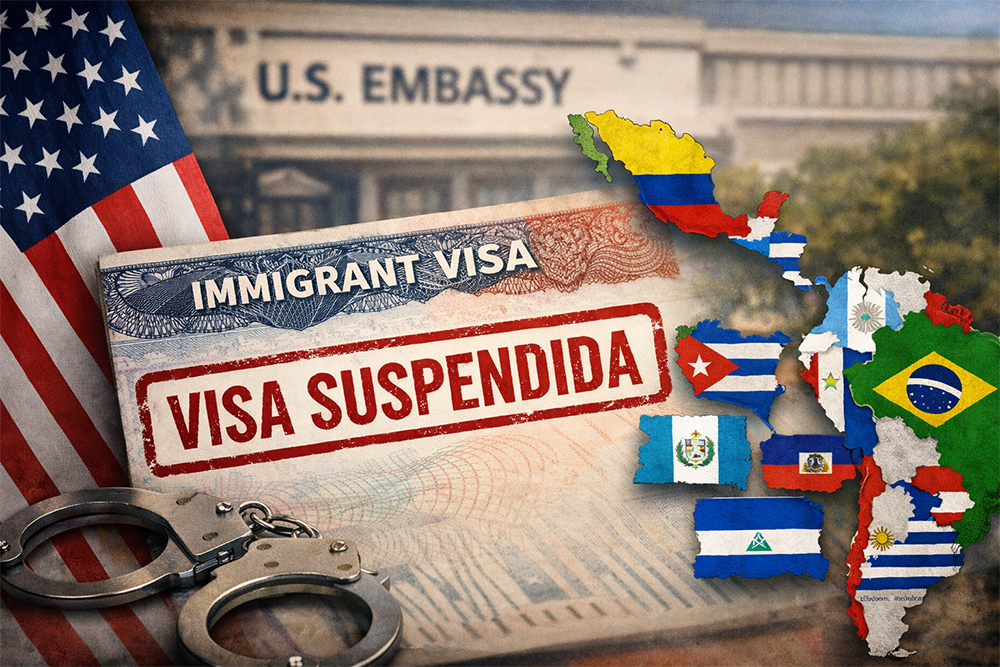
The Trump administration has rescinded those deportation protections and work permits for about 500,000 immigrants from Cuba, Haiti, Nicaragua, and Venezuela who entered the U.S. legally.

The countries where immigrants are coming from has also shifted in recent years. A growing share is coming from South America and Europe, and a declining share arrived from Asia and sub-Saharan Africa. Still, nearly a quarter, 24 percent, of the new arrivals between 2021 and 2023 were from South and East Asia.

The top countries for immigrants who arrived between 2021 and 2023 were: Mexico (11 percent), India (8 percent), Venezuela (7 percent), Cuba (6 percent), and Colombia (5 percent).

spot_img

Trapped by the system: How local governance prioritizes revenue over citizens

photo credit: KQED
Marvin Ramírez, editor

by Marvin Ramirez

In cities across the United States, particularly San Francisco, residents increasingly live under a governance more focused on extracting revenue than public welfare. Citizens, especially those who commute by car, face a growing number of fines and taxes, implemented through mechanisms that target everyday life in ways that feel oppressive rather than protective.

Surveillance cameras have become one of the most tangible symbols of this approach. Installed in locations where people routinely drive five or ten miles over the posted speed limits, these cameras generate revenue for the city while creating a constant state of psychological stress for drivers. Often, these zones are empty at night, and there are no traffic studies justifying the cameras’ locations. The purpose is clear: to catch ordinary people in the act of minor infractions and extract money from them. Citizens become trapped in a network of “invisible cells” designed by bureaucrats and technocrats who profit from enforcing compliance. These officials are paid to ensure the system works, yet few consider the broader consequences of cultivating fear and mistrust among the population.

Parking, too, has been transformed from a convenience into a minefield. Parking meters, once simple tools to regulate short-term parking, are now mechanisms to squeeze additional revenue. Increasingly, entire parking zones are being converted into commercial parking only, restricting access for residents and forcing them to pay higher fees or park farther from their destinations. Citizens pay for parking, only to find they may be fined later for minor overages, even when they are home resting after a long day at work. Sundays and evenings, traditionally considered low-risk times, have now been threatened, as extended parking enforcement continues to penalize residents quietly, almost invisibly.

Other cities, including San Bruno, have experimented with similar strategies, and the cumulative effect is that people gradually lose freedom and convenience in their daily routines without noticing until it is too late.

One can liken this approach to a parable: a man wanting to catch wild pigs scattered small amounts of corn. Over time, the pigs returned repeatedly, drawn by the reward. The man added fences incrementally, and the pigs continued coming, unaware of the eventual trap. This is a metaphor for urban regulations and municipal revenue strategies. Incremental fines, restrictions, and surveillance condition citizens to comply while eroding autonomy and security.

The city’s tactics extend beyond cameras and meters. Red-painted streets, designated for buses and taxis, were justified as a means to reduce congestion. Initial studies show such changes saved drivers a mere three minutes—hardly transformative. Yet restrictions remain, limiting flexibility even during low traffic. Prohibitions against left turns, enforced at night when streets are empty, highlight how regulations increasingly serve bureaucratic control rather than practical necessity.

Local community political leaders often turn the other way, benefiting from city revenues, and avoid acknowledging that the only way to change course is through the ballot. This reluctance to confront higher authorities leaves citizens vulnerable to a cycle in which daily life is regulated and monetized without meaningful oversight or recourse. This is not governance—it is exploitation disguised as civic planning.

The problem is not the need for public services or infrastructure but the prioritization of revenue over citizen well-being. Rules intended to improve safety and efficiency often serve as traps, leaving citizens to bear the burden while the state and its technocrats profit. The cumulative effect is a subtle but pervasive erosion of personal freedom: psychological stress imposed by cameras, fines, restricted movement, and commercial-only parking zones; an invisible net that limits navigation of one’s city; and a growing sense that ordinary residents are merely a revenue source rather than a constituency whose welfare matters.

Ultimately, these changes occur through the electoral process, yet voters may not recognize gradual restrictions until it is too late. It is essential to hold policymakers accountable, question regulations that prioritize revenue over public interest, and demand transparency in decisions affecting daily life. Without vigilance, the city risks creating a population perpetually constrained by rules designed less to protect and more to profit, leaving freedom and trust as the real casualties.

spot_img

Famous health expert highlights major problem with child vaccines

Dr. Eric Berg noted that childhood vaccines are not tested with placebos like other drugs, meaning that people can’t trust claims by the CDC and others that vaccines are ‘safe and effective’

by Andreas Wailzer

Aug 25, 2025  – (LifeSiteNews) — Health and nutrition expert and famous YouTuber Dr. Eric Berg has pointed out a major problem with childhood vaccines.

In a recent video on his YouTube channel with over 13.7 million subscribers, he argued that childhood vaccines are not tested like other drugs. Typically, studies use a placebo group, i.e., a group of people who do not receive the drug, to compare the outcomes of those given the drug with those who did not receive it. However, childhood vaccine studies do not use a placebo group.

“Normally, when you study a drug, you compare it with a placebo, so that way you can truly test the side effects of something, but that is not how they test children’s vaccines,” Berg explained.

”What they’ll do is they’ll test an active vaccine with another active vaccine,” he continued. “So this so-called placebo control is not really a true placebo control because it’s not inert.”

“ It’s an active vaccine with something called an adjuvant. This is something they add to vaccines to create more of an immune reaction. And the big one that they’ve been using for a long time is aluminum.”

To illustrate the issue, Berg compared the vaccine studies with a fictional whiskey study: “ If I were to test the safety studies on whiskey, of course I’d want to test that against water, right?”

“ But what if I tested whiskey against bourbon?”

“ I look at the side effects of each. So whiskey will create a fatty liver, inflammation, liver cirrhosis, all sorts of other problems like dementia, etc.”

“ So if I were to tell you, ‘Well, the bourbon had roughly about the same side effects as the whiskey, so it’s not any worse.’ That would be considered safe.”

Accordingly, Berg warned that when you hear childhood vaccines have been “tested for safety” and they are “safe and effective,” it may be misleading, considering the testing process.

The argument that pharmaceutical companies and regulators make to justify not giving a placebo is that it would be harmful to deprive children of something that could save their lives.

“ My question is: How can you really, truly test the safety and effectiveness of something if you are looking at the relative safety of an active vaccine to another active vaccine with adjuvants?”

“That just muddies the water to this whole ‘safe and effective’ claim that you keep hearing over and over and over again,” he stated.

Berg criticized the World Health Organization and the Centers for Disease Control (CDC) for claiming to be the purveyors of “the truth” on health-related issues while they have “potential conflicts of interest” and are influenced by Big Pharma.

“ The CDC actually has patents and certain vaccines; they get royalties,” he noted.

Berg noted that several drugs deemed “safe and effective” later turned out to have very severe side effects.

”I’ll give you a few Vioxx: 60,000 excess deaths. Paxil was considered safe and effective until they found out it really spiked self-harm incidents, and that company who actually had Paxil was sued for $3 billion,” he noted.

Berg said that the raw data of many studies commissioned by Big Pharma is often kept confidential and only the summaries are published, showing a lack of transparency.

He also said that “87 percent of all Big Pharma-sponsored studies are unpublished.”

“ If a study doesn’t turn out the way they want it, they don’t have to publish it,” he said. “Potentially, they could actually just publish the positive studies, the ones that turn out good for that particular drug.”

“New health guidelines are based on that; how doctors perform medicine is based on that data,” he noted.

Berg did not cite his source for the statement that 87 percent of Big Pharma-sponsored studies remain unpublished, but his statement might be based on a 2015 article published in the New England Journal of Medicine that states only 13.4 percent of drug trials reported results within a year after trial completion, meaning that almost 87 percent of trials did not report results. According to the article, 38.3 percent of the trials reported results within the five-year study period. Regardless of the exact number, it appears that the majority of drug trials that are commissioned never get published.

Berg said that many of the organizations attacking Health and Human Services Secretary Robert F. Kennedy Jr. are “astro-turfed” organizations, i.e., groups that appear to be grassroots movements but are really founded by big business or political interest groups.

He named “Citizens for Patient Safety,” “Partnership to Protect Patient Health,” “America’s Action Network,” and “Doctors for America” as examples of these astro-turfed organizations.

“They will say that ‘RFK is not a doctor. He’s not fit to be in charge of HHS.’”

“He’s just an attorney that went after corrupt Big Pharma corporations and sued them for billions of dollars.”

“Hello? Uh, isn’t that what we need?” Berg asked.

“So my viewpoint is we don’t really have a science problem. We never did. We have an ethics problem,” he concluded.

Berg has a doctorate in chiropractic studies and has maintained a private practice for over 30 years. Later in life, he started focusing on public health education and became an associate professor at Howard University. He launched his YouTube channel in 2008 and has published more than 6,000 videos on various health-related topics. LifeSite.

spot_img

The Cultural Center for Latino Arts organizes the 39th edition of the Day of the Dead

by Magdy Zara

The Misión Cultural Center for Latino Arts is organizing the 39th edition of the Day of the Dead festival, inviting local artists to submit their proposals and be part of some of the most anticipated events of the year.

The invitation is open to fashion designers, filmmakers, photographers, musicians, sculptors, poets, chefs, organizations, and businesses who wish to participate in this celebration.

The Day of the Dead is a Mexican tradition that believes in the temporary return of the souls of the deceased, who return home to the world of the living to spend time with their families and nourish themselves with the essence of the food offered on the altars set up in their honor.

The deadline for submitting submissions is August 29th; The presentation date is September 16th, and participants will be notified on September 23rd.

For more information, please contact info@missionculturalcenter.org

Latin Music by the River

If you’re looking for a unique evening, Edú Bega and his band are returning to perform their original songs, as well as fresh versions of classics perfect for singing and dancing.

The location is ideal, as you’ll find live music, good vibes, and an unparalleled Latin-Caribbean flavor by the river.

The invitation is for this Saturday, August 30th, at the Grand Central Café in Petaluma, starting at 5 p.m. Don’t forget to bring a group of friends and comfortable dancing shoes.

Bayview 2025 Business Summit

The Bayview 2025 Business Summit is a knowledge-building event that will feature high-impact workshops that will drive business success in San Francisco.

This will be a day filled with learning, opportunities, and connections, honoring 100 years of supporting Bayview businesses and boldly looking to the future.

The morning session will feature keynote speakers, while the BMA Centennial Awards will be presented during lunch.

The goal of the Summit is to provide information and a forum to help address the persistent challenges facing our commercial corridor and all other businesses operating in this area of ​​San Francisco.

These businesses provide access to essential goods and services, generate jobs and economic opportunities, and contribute significantly to the vitality and distinctiveness of San Francisco.

The Bayview is synonymous with business, so the call is to participate, learn, and lead.

The event is free but requires pre-registration; two free tickets are available for members of the Bayview Merchants Association. The event is next Thursday, September 18, starting at 9 a.m. until 5 p.m., at the Southeast Community Center 1550 Evans Ave, San Francisco.

spot_img