Wednesday, October 14, 2026
spot_img
Home Blog Page 39

Sheinbaum promises continued humanitarian aid for Cuba — just not oil

Mexico's oil supplies to Cuba — provided both through Pemex contracts and as humanitarian aid — came into conflict with the Trump administration last week, prompting the state oil company to suspend a scheduled shipment. (Presidencia/Cuartoscuro) -- Los suministros de petróleo de México a Cuba, proporcionados tanto a través de contratos con Pemex como en forma de ayuda humanitaria, entraron en conflicto con la administración Trump la semana pasada, lo que llevó a la compañía petrolera estatal a suspender un envío programado.

by the El Reportero‘s staff

President Claudia Sheinbaum on Sunday denied that she had spoken to U.S. President Donald Trump about cutting off Mexico’s oil shipments to Cuba, and announced that her government is preparing a consignment of food and other non-oil supplies for the Caribbean island nation.

Sheinbaum’s remarks in Guaymas, Sonora, came after Trump asserted on Saturday that he had told the Mexican president not to send oil to Cuba.

While speaking to reporters on Air Force One, Trump was asked what his response was to Sheinbaum’s claim on Friday that the United States’ application of tariffs on countries that supply oil to Cuba could trigger a humanitarian crisis in the island nation.

“Well, it doesn’t have to be a humanitarian crisis. I think they would probably come to us and want to make a deal,” said the U.S. president, who on Thursday issued an executive order paving the way for the United States to impose tariffs on imports from countries that supply oil to Cuba.

“So Cuba would be free again. They’ll come to us, they’ll make a deal. But Cuba, really, they’ve got a problem. … They have no money, they have no oil. … They lived off Venezuela money and oil, and none of that’s coming now. And then the president of Mexico, President Sheinbaum, was very good. I said, ‘Look, we don’t want you sending oil there,’ and she’s not sending oil there,” Trump said.

Indeed, Mexico’s state oil company, Pemex, canceled plans to send a shipment of crude to Cuba this month. However, Sheinbaum asserted that Pemex’s decision was not influenced by pressure from the United States, which is pressing for regime change on the communist-run Caribbean island.

Sheinbaum asserts she has never spoken to Trump about oil shipments to Cuba 

Speaking at an event in Guaymas at which she announced a plan to expand the port in the city, Sheinbaum declared that “we never spoke with President Trump about the issue of oil with Cuba.”

The Mexican and U.S. presidents spoke by telephone on Thursday morning, just hours before Trump issued an executive order announcing the United States’ intention to impose tariffs on goods from countries that supply oil to Cuba.

After the call, Sheinbaum said that “the issue of Cuba” wasn’t discussed in her 40-minute call with the U.S. president.

On Sunday, she said that she hasn’t discussed Cuba and Mexico’s oil shipments to the country in any of the numerous telephone conversations she has had with Trump.

“When the issue was discussed was in the conversation that the Minister of Foreign Affairs [Juan Ramón de la Fuente] had with Secretary [of State] Marco Rubio [in January],” Sheinbaum said.

“… We are exploring all diplomatic avenues to be able to send fuel to the Cuban people, because this isn’t a matter between governments, but rather a matter of support to prevent a humanitarian crisis in Cuba,” she added.

“And in the meantime, we’re going to send food and other important aid to the island,” Sheinbaum said.

She said on Friday that she didn’t want to risk additional tariffs being imposed on Mexican goods, but stressed that “there are other ways to support” the people of Cuba apart from with oil, and declared that Mexico “will always show solidarity” with the island nation.

In 2025, Mexico became the top oil supplier to Cuba, an energy-strapped country that has long relied on imports to meet demand for petroleum products.

Mexican Navy to send humanitarian aid to Cuba

Sheinbaum said that the federal government, “this week,” is preparing to send a shipment of humanitarian aid to Cuba.

It’s aid that the Ministry of the Navy will provide, of food and other products,” she said.

“… We’re already doing all the work to be able to send … humanitarian aid that the people of Cuba need,” Sheinbaum said, explaining that the shipment would be made up of “essential supplies,” excluding oil.

She said that the supply of oil is a “fundamental” form of humanitarian aid for Cuba, but while Mexico can’t send crude to the island without running the risk of having additional tariffs imposed on its exports to the United States, “we’re going to send other products that are indispensable for the Cuban people.”

Mexico has supplied oil to Cuba both through Pemex contracts and as humanitarian aid.

Sheinbaum told reporters on Friday that Mexico has only sent a minimal amount of oil to Cuba, although the exact quantities shipped to the Communist-run island in recent times are disputed.

With reports from La Jornada and Reforma 

spot_img

Bachelor’s degrees at community colleges: Lawmakers say yes, UC and CSU say slow down

A graduating student walks back to their seat after receiving their diploma during a commencement ceremony at Southwestern College in Chula Vista on May 24, 2024. Adriana Heldiz / CalMatters -- Un estudiante recién graduado regresa a su asiento tras recibir su diploma durante la ceremonia de graduación en Southwestern College en Chula Vista, el 24 de mayo de 2024.

by Mikhail Zinshteyn

In the past two years, Gov. Gavin Newsom has vetoed three bills that would have expanded the number of bachelor’s degrees community colleges can award. Lawmakers are now backing a fourth effort, Assembly Bill 664, which passed the Assembly on Jan. 26, setting up another possible clash with the governor.

Newsom supports expanding access to bachelor’s degrees but has opposed adding community college baccalaureate programs outside the process set in a 2021 law he signed with lawmakers. That law allows community colleges to develop up to 30 bachelor’s degree programs per academic year, as long as the degrees do not duplicate programs offered by the University of California and California State University.

Since the law passed, disputes over what counts as duplication have stalled more than a dozen proposed community college bachelor’s programs because of Cal State opposition. Both UC and CSU oppose AB 664, arguing it could weaken the 2021 framework and lead to duplication of university programs. University officials say the review process is meant to prevent inefficient use of public resources and unnecessary overlap across systems.

University leaders say they are the traditional providers of bachelor’s degrees. Community colleges counter that California’s size and regional inequalities make it unrealistic to rely only on UC and CSU for four-year public options. Supporters argue students should not have to travel long distances when nearby community colleges could offer workforce-focused bachelor’s programs aligned with local employer needs. Advocates also note that many adult learners balance work and family responsibilities that make relocation or long commutes impractical.

Assemblymember David Alvarez, a Democrat from Chula Vista, said AB 664 would allow Southwestern College to create up to four additional bachelor’s programs in applied fields such as teaching English to speakers of other languages and web design. He stressed the proposal avoids traditional majors common at universities and instead targets programs tied to local labor demand. Although the bill applies only to Southwestern, Alvarez urged lawmakers to consider similar efforts where regional workforce shortages persist.

Former community college chancellor Eloy Ortiz Oakley said expanding bachelor’s degrees at community colleges is the wrong approach. He favors sending faculty from under-enrolled Cal State campuses to teach bachelor’s programs at community college sites. Creating new programs, he said, raises costs during projected state budget deficits and can take years to launch, while employers are seeking workers now. He added that closer intersegmental collaboration could deliver degrees faster without duplicating infrastructure.

Community college bachelor’s degrees cost about $10,000 for four years, far less than UC and CSU programs. Supporters say affordability benefits students who may not qualify for tuition waivers. About 300 students earn these degrees annually, compared with roughly 160,000 graduates from UC and CSU. Research suggests community college bachelor’s degrees raise earnings compared with associate degrees but may yield slightly lower wages than university bachelor’s degrees, depending on the field. Long-term outcomes remain under study as the programs mature.

UC and CSU argue AB 664 circumvents the 2021 law by removing their ability to appeal Southwestern’s proposed programs. Since that law passed, more than 50 community college bachelor’s programs have been approved at about 40 colleges, while 16 remain pending because of duplication concerns raised by Cal State. University leaders worry the bill could set a precedent for carving out exceptions that weaken statewide coordination.

Disputes have become a flashpoint. Southwestern has sought a binational environmental architecture degree disputed by Cal Poly Pomona, which offers a similar program without a binational focus. College leaders say duplication reviews do not consider whether universities have the capacity to enroll all interested students in high-demand fields.

Geography compounds the issue. Twenty-nine of California’s 116 community colleges are at least 25 miles from a public university, serving about 150,000 students. Transfer rates are lower at these colleges, fueling arguments that community college bachelor’s programs could close access gaps. Critics counter that low completion and transfer rates point to systemic challenges that need attention regardless of degree level.

Both Alvarez and Oakley also point to Cal State’s enrollment struggles. Thirteen of its 23 campuses missed enrollment targets last year, while for-profit colleges continue enrolling tens of thousands of California students. Researcher Davis Jenkins of Columbia University said even a tenfold increase in community college bachelor’s degrees would not threaten CSU. The debate, he said, is less about competition and more about how California expands access to opportunity.

– The original text was edited to fit the space available in this edition.

spot_img

Fuel your workout: The best pre-exercise snacks for peak performance

by Patrick Lewis

Eating the right snack before a workout can make all the difference in your energy levels, endurance and recovery. Whether you’re hitting the gym in the morning or squeezing in a session after work, choosing foods that provide quick-digesting carbohydrates and muscle-supporting protein helps you perform at your best while avoiding fatigue and muscle breakdown. The timing of your snack matters just as much as what you eat, because digestion speed affects how quickly fuel becomes available to working muscles.

Quick energy boosters: fast-digesting carbohydrates

When you need fuel fast—especially if you’re exercising within 30 minutes—simple carbohydrates are your best bet. A medium banana delivers about 27 grams of easily digestible carbs, the primary fuel source for muscles during activity. Because bananas are low in fat and fiber, they’re less likely to cause bloating or stomach discomfort. They also provide potassium, an important electrolyte that supports muscle contractions and fluid balance.

Applesauce is another easy option, providing roughly 16 grams of carbohydrates per pouch. Unsweetened varieties are best to avoid unnecessary added sugars. Whole fruits like apples, grapes or peeled oranges can also work for short notice workouts, offering quick energy without heaviness.

For convenience, many people reach for granola or energy bars. When choosing one close to exercise, look for bars that are primarily carbohydrate-based and low in fat and fiber to speed digestion. Some bars offer 25 to 33 grams of carbs, which can be helpful before longer or more intense sessions.

Balanced pre-workout snacks: carbohydrates plus protein

If you have one to two hours before exercising, pairing carbohydrates with protein helps sustain energy while supporting muscle tissue. Greek yogurt with berries is a practical option: nonfat Greek yogurt provides around 12 to 15 grams of protein, while berries add quick-digesting carbohydrates and antioxidants that may help reduce exercise-related inflammation.

Toast with nut butter is another popular combination. One slice of whole-grain toast with a tablespoon of peanut butter provides roughly 17 grams of carbohydrates and 6 to 8 grams of protein. Research suggests that consuming some protein before a workout can support muscle repair and strength gains. Because nut butter contains fat, this snack is best eaten at least an hour before exercise to reduce the risk of sluggishness.

Smoothies are also useful for pre-workout fueling, especially for people who struggle to eat solid foods beforehand. A simple fruit-and-liquid blend offers fast-digesting carbohydrates and hydration. Adding yogurt or protein powder can increase protein content when there is enough time for digestion.

Longer-lasting fuel: balanced meals two to three hours before exercise

When your workout is scheduled a few hours after a meal, aim for a balanced mix of carbohydrates, protein and healthy fats to provide sustained energy. Oatmeal with fruit and a small portion of nuts is a reliable choice. One cup of cooked oats supplies about 27 grams of carbohydrates, while nuts add protein and fats that help keep you satisfied.

Other balanced options include an apple with string cheese, pretzels with hummus, or whole-grain toast with eggs. These combinations deliver steady energy for both endurance activities and strength training. Eating too close to exercise, however, can cause gastrointestinal discomfort, so allow enough time for digestion.

Protein-forward options for muscle support

For those prioritizing muscle growth, higher-protein snacks can be helpful when timed properly. Cottage cheese with berries provides a mix of protein and carbohydrates while remaining relatively easy to digest. Low-fat versions are often better tolerated before workouts.

Hydration matters

Food alone isn’t enough to support performance. Drinking 5 to 10 ounces of water or a sports drink before exercise helps maintain hydration and electrolyte balance, particularly for longer or sweat-heavy workouts. Dehydration, even mild, can reduce strength, endurance and focus.

Choosing the right snack for you

The best pre-workout choice depends on timing, workout intensity and individual digestion. For workouts within 30 minutes, stick with fast-digesting carbohydrates. With one to two hours, combine carbs and protein. For meals two to three hours prior, include a balanced mix of carbohydrates, protein and healthy fats. Adjust portion sizes if you feel bloated, and tailor intake to goals: muscle building benefits from adequate protein, while weight loss efforts may call for more controlled carbohydrate portions.

Finding the right pre-exercise routine takes some trial and error. Paying attention to how different foods make you feel during training can help you fine-tune your choices. Prioritizing simple carbohydrates for energy, protein for muscle support, and fluids for hydration can keep workouts productive and consistent over time.


spot_img

The 2026 World Baseball Classic will bring together the biggest stars in Global Baseball

by the El Reportero staff

With information from MOVI Communications

FOX Deportes is kicking off the celebration of its 30th anniversary with the 2026 World Baseball Classic, which will mark a new edition of one of the most important international tournaments in contemporary baseball. The event continues to consolidate itself as a global showcase that combines elite-level competition, national identity, and cultural projection. With national teams made up of star players and emerging talents, the tournament once again places baseball at the center of the international sports conversation.

The competition will be held from March 4 to March 17, 2026, with venues at the Tokyo Dome, San Juan, Houston, and Miami—cities that represent key regions in the history and development of baseball. The opening game will take place in Tokyo, featuring Chinese Taipei versus Australia, kicking off nearly two weeks of continuous competition.

Since its creation, the World Baseball Classic has sought to differentiate itself from other tournaments by allowing professional players to represent their countries of origin. This feature has turned the event into a stage where national pride, cultural heritage, and sporting rivalry intersect, attracting diverse, multigenerational audiences.

The 2026 edition will feature the confirmed participation of some of the most influential figures in today’s baseball world. Among them are Shohei Ohtani, who will lead Japan; Aaron Judge with the United States; Ronald Acuña Jr. representing Venezuela; Randy Arozarena with Mexico; and Yoshinobu Yamamoto, also with Japan. The presence of these players raises the competitive level and generates strong expectations among fans and analysts.

The tournament’s growth has been evident in recent editions. In 2023, the final between Japan and the United States recorded record viewership and broad digital impact, confirming global interest in the format and the event’s ability to spark conversation beyond the sports world.

Beyond the numbers and results, the World Baseball Classic has become a space for cultural representation. For many Latino, Caribbean, and Asian communities, the tournament serves as a point of connection that reinforces the link between sport and collective identity. In cities such as San Juan and Miami, the competition is often accompanied by community celebrations, family gatherings, and renewed visibility of baseball as a central element of social life.

With international venues, top-tier stars, and a steadily expanding audience, the 2026 World Baseball Classic is shaping up to be one of the year’s most significant sporting events, reaffirming baseball’s role as a common language that crosses borders, generations, and cultures.


spot_img

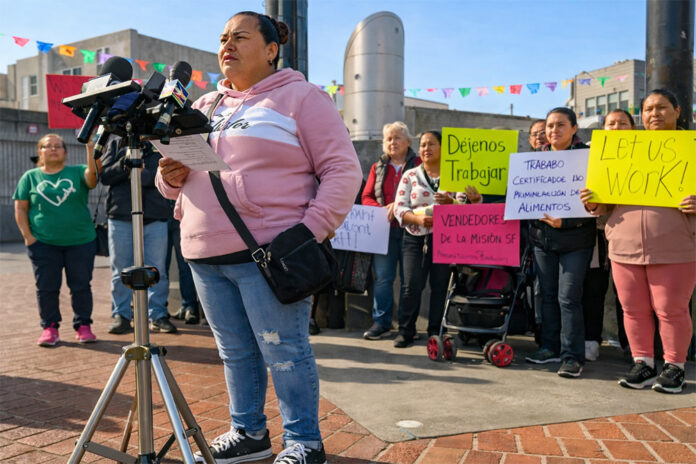
Latino street vendors and restaurant owners clash over regulations in the Mission District

by the El Reportero staff

In recent days, street vendors in the Mission District and community activists have mobilized around Mission Street and 24th Street, as well as at city hall, to express their concerns about proposed regulations that—they say—could increase their operating costs and jeopardize their livelihoods. Organizations working with informal vendors have warned that new requirements for equipment, permits, and access to commercial kitchens would raise entry costs to levels difficult for small entrepreneurs to afford.

The vendors’ advocates point out that they are not opposed to regulation, but they are asking for realistic pathways and financial support that would allow them to formalize their businesses without being forced out of the market. They propose gradual schemes, accessible health and safety training, and micro-enterprise options that reduce economic barriers, especially for immigrant families who depend on these sales as their primary income.

However, Latino restaurant owners in the Mission and surrounding areas have expressed a different concern: the direct impact on their sales. “It’s not fair competition; they don’t pay rent or taxes like we do,” said a restaurant owner on the 24th Street commercial corridor, who asked not to be identified. Formal businesses say they comply with high rents, payroll, licenses, and strict health regulations, while watching street vendors attract customers in the immediate vicinity of their establishments.

This clash of interests has reignited a fundamental debate in the neighborhood: how to balance the vitality of street commerce with fair competition and public health standards. For some community leaders, the challenge is not to choose between vendors and restaurants, but to design rules that allow for coexistence: defined zones and hours, low-cost permits with a gradual transition to formality, and support programs so that street vendors can integrate into the regulated economy without disappearing.

City officials have indicated that any regulatory updates aim to protect public health and regulate the use of public space, but activists are demanding that decisions be made with the direct participation of those who depend on street vending for their livelihood. At the same time, restaurant owners are requesting consistent enforcement of the rules to avoid competitive disadvantages compared to businesses operating outside the formal framework.

While discussions continue, the issue remains sensitive in the Mission District, a neighborhood where street food is part of the cultural identity and livelihood of many families. The discussion aims to find a middle ground that preserves this tradition without jeopardizing established businesses or consumer safety.

spot_img

Venezuela fuel shipments to Cuba remain uncertain under U.S. oversight

by the El Reportero wire services

A tanker that has operated on the Venezuela-to-Cuba route since April 2025 completed loading roughly 150,000 barrels of gasoline this week, according to maritime tracking data cited by Reuters. The activity renewed speculation that Caracas may be preparing another fuel delivery to the island, at a time when Washington is closely overseeing Venezuelan energy exports.

As of press time, it was unclear whether the vessel had departed Venezuelan waters or where it would ultimately head. Under the current framework, any shipment of crude or refined products leaving Venezuelan ports requires U.S. authorization, reflecting heightened monitoring in the Caribbean and tighter controls over Venezuelan oil flows.

Energy crunch on the island

Venezuela served for more than two decades as Cuba’s main supplier of oil and fuels. Recent disruptions, however, have deepened the island’s energy crisis. Power generation has been curtailed, public transportation strained and essential services forced to operate under emergency plans, according to energy-sector sources and residents.

Long lines at gas stations and recurring power outages have become routine in several provinces. Small businesses report losses tied to fuel shortages, while hospitals and factories ration consumption to keep basic operations running.

Regional response and limited options

Cuban authorities said they will roll out an emergency plan to address the shortfall. President Miguel Díaz-Canel has signaled openness to diplomatic channels to ease the crisis. “We are willing to engage in dialogue, as long as our sovereignty is respected,” he said in public remarks on the energy situation.

Elsewhere in the region, governments have weighed limited assistance to Cuba, though sanctions risks constrain options. Energy analysts caution that even if a new Venezuelan shipment moves forward, volumes would likely fall short of stabilizing electricity generation and transportation in the near term.

Experts say the episode underscores Cuba’s structural vulnerability and reliance on external suppliers. Without a steady flow of fuel or a significant boost in domestic generation, disruptions and economic strain are expected to persist.

– With reports.

spot_img

France moves closer to banning social media for minors under 15

France is one of several countries considering banning social media for minors, including Spain and the UK

by the El Reportero staff

with writing by Antonino Cambria

France is about to test a question many countries are quietly asking but rarely confront head-on: Is social media too dangerous to leave in the hands of children?

Last week, the French National Assembly overwhelmingly approved legislation that would bar children under 15 from accessing social media. The vote, 130–21 on January 26, now sends the bill to the Senate. If it becomes law, France would move from warning labels and parental controls to a hard legal line. The message is blunt: childhood and algorithm-driven platforms do not mix.

The proposal would restrict nearly all social media access for children under 15, with carve-outs for educational platforms. It would also ban mobile phone use in high schools, a decision likely to resonate with teachers and parents who have watched classrooms compete with notifications, scrolling, and viral distractions.

MP Laure Miller, who authored the bill, framed the issue in moral terms rather than technical ones. Social media, she argued, has not merely failed to live up to its promises; it has actively distorted them. Platforms claimed to connect people, inform the public, and entertain users. Instead, Miller said, they fragment attention, flood young minds with content, and trap users in loops of compulsion. That framing captures a growing European frustration: the sense that digital platforms have quietly reshaped childhood without democratic consent.

The bill follows a 2025 parliamentary report examining TikTok’s impact on children. The findings were grim: addictive design, exposure to harmful content, and links to depression, self-harm, and suicidal ideation, combined with weak content moderation. The report recommended a ban for under-15s. Lawmakers appear to have taken the warning seriously, choosing prohibition over incremental reform.

If enacted, the law would force platforms to implement age verification systems and limit minors’ access to certain features on messaging apps and popular gaming platforms like Roblox and Fortnite. One amendment would make companies liable when algorithms target minors, though penalties remain vague. The exemptions—educational platforms, online encyclopedias, scientific directories, and open-source software communities—are loosely defined, leaving future regulators to draw the lines. That ambiguity could become a legal battlefield between governments and tech firms.

The mobile phone ban on school property reflects a parallel concern: attention itself has become a scarce resource. Education Minister Edouard Geffray’s remark that students cannot learn calmly while notifications buzz in their pockets feels less like moral panic and more like lived reality in modern classrooms. The allowance for school-level exceptions suggests the government is aware that rigid bans often collide with practical needs.

President Emmanuel Macron has embraced the bill as a defense of children’s cognitive freedom. His rhetoric frames social media platforms not just as businesses but as foreign interests shaping young minds. Whether one agrees with the nationalist undertone, the core argument resonates: children’s development is being outsourced to engagement-maximizing algorithms designed in corporate boardrooms thousands of miles away.

Support for the bill cuts across party lines, an increasingly rare phenomenon. Conservatives frame it as a public health intervention. Liberals and leftists warn of digital paternalism, privacy risks, and government overreach. Critics like Jon De Lorraine argue that age verification could normalize digital ID systems, quietly expanding state surveillance in the name of child protection. These concerns are not frivolous. A policy meant to protect children could easily become infrastructure for broader monitoring if safeguards are weak.

Macron’s decision to fast-track the bill signals urgency—and political calculation. The government appears eager to act before public momentum fades or another scandal forces reactive policymaking. France would not be alone. Australia has already passed a sweeping ban for minors under 16, imposing heavy penalties on tech companies that fail to enforce it. Britain is consulting on similar measures. Spain is moving toward age verification requirements, though political hurdles remain.

What ties these efforts together is a shared admission: the old compromise—“let kids use these platforms, but try to be careful”—has failed. Parental controls, content moderation promises, and digital literacy campaigns have not kept pace with the velocity and scale of algorithmic influence. Governments are now choosing blunt instruments because fine tools proved ineffective.

The deeper question is whether bans will actually protect children or merely push their online lives further into unregulated corners of the internet. Laws can restrict access, but they cannot eliminate curiosity, peer pressure, or the social gravity of digital spaces. Still, France’s move suggests a shift in the global conversation. The default assumption—that children must adapt to technology—may be giving way to a new one: that technology should be forced to adapt to children.

spot_img

Screening of “Between Rivers and Deserts”

The Coffee Tour is an experience you can't miss.(www.eventbrite.com/e/cafecito) -- Proyección de  “Entre Ríos y Desiertos”

By Magdy Zara

To learn the details of an excursion to Big Bend National Park, don’t miss “I Tell My Story: Between Rivers and Deserts,” a short documentary that presents voices and visions from beyond the rivers and deserts.

A group of Latino Outdoors leaders from across the country gathered in the park for a week of storytelling, community development, reflection, and landscape exploration. This is their story.

With your ticket purchase, you will support Latino Outdoors’ vital mission of creating inclusive and equitable outdoor experiences, amplifying the diverse voices of nature, and cultivating a culture of conservation.

The evening begins with a brief gathering accompanied by complimentary drinks and appetizers, followed by a screening of the film: “I Tell My Story: Between Rivers and Deserts.” A Q&A session with the LO leaders follows.

The venue chosen for this occasion is the Sports Basement Presidio, located at 610 Old Mason Street, in San Francisco, on February 12th from 6 p.m. to 8 p.m.

Ballet of Lights presents “Sleeping Beauty”: a dazzling spectacle

Enter a world where light and dance intertwine in this breathtaking version of Sleeping Beauty.

As the dancers glide across the stage, their illuminated costumes create a dazzling display of color and light, making every turn and leap seem otherworldly. This is not just a ballet performance: it is a magical experience that brings a beloved classic to life in a way never seen before.

Most impressive are the six incredible local dancers who light up the stage, their costumes glowing in the dark, transforming every movement into a radiant display.

This adaptation is the work of María Farelo and Cristian Pérez, who reinvented Sleeping Beauty through ballet. The event will take place on February 14, 2026, starting at 5 p.m., at the Brava Theater Center, located at 2781 24th St, San Francisco.

“Cafecito” Coffee Tour

Want to spend a different kind of morning and discover the most special places to enjoy a good cup of coffee? This is the perfect opportunity to take a guided tour to discover new cafes and bakeries, including a tasting.

The “Cafecito” Coffee Tour is being organized by Misión Lotería and is part of the Tours collection by Café Excelsior San Francisco.

Several dates have been scheduled for this tour, starting on February 15, followed by others on March 1 and 15 of this year.

The schedule is as follows: it begins at 10 a.m. with the meeting and introductions; 1st stop, Café Excelsior; 2nd stop, Panadería Andrea; 3rd stop, Cumaica; The tour will conclude at Oasis Fusion Kitchen with breakfast (tour participants will receive a 10% discount).

The meeting point is Café Excelsior, located at 4495 Calle Misión San Francisco.

spot_img

Latin America lights up with cultural festivals and celebrations this February

Dancers in colorful traditional costumes perform during the Carnaval de Barranquilla in Colombia, one of Latin America’s largest and most iconic cultural celebrations, drawing thousands of spectators each year. Illustration generated by AI for El Reportero-- Bailarines con coloridos trajes tradicionales actúan durante el Carnaval de Barranquilla en Colombia, una de las celebraciones culturales más grandes e icónicas de América Latina, que atrae a miles de espectadores cada año.

by the El Reportero‘s news services

Latin America is buzzing with vibrant cultural activity as February unfolds, offering visitors and locals alike rich experiences in art, literature, music and tradition. From Argentina to Mexico and beyond, the region’s dynamic cultural calendar has something for everyone this week and into the coming days.

In Godoy Cruz, Argentina, the Festival Bodoc 2026 is taking place from February 6 to 8 at the Biblioteca Manuel Belgrano. This free event honors the legacy of beloved fantasy author Liliana Bodoc, featuring immersive talks, creative workshops and gatherings inspired by her imaginative literary worlds. Fans of literature and storytelling can engage with authors, participate in workshops and explore the influence of Bodoc’s work on contemporary fantasy writing in Spanish.

Meanwhile in Mexico City, art lovers have one of the most important cultural fixtures in Latin America happening right now — Zona Maco 2026. This international contemporary art fair, held at the Citibanamex Center, showcases a breathtaking range of works from galleries across the continent and beyond. Painting, sculpture, installation, photography and cutting-edge media installations converge in one place, cementing Mexico City’s status as a central hub for the art world in Latin America.

Beyond these, February is traditionally one of the busiest months for cultural celebrations across the region. One of the most iconic annual events is the Carnaval de Barranquilla in Colombia — a UNESCO-recognized spectacle set to take place February 14–17 this year. This massive carnival blends indigenous, African and Spanish traditions into a kaleidoscope of colour and sound, with parades, traditional music, dance and elaborate costumes that transform the Caribbean city into a nonstop celebration.

Brazil is also preparing for festivities with the Carnaval in Rio de Janeiro — widely considered among the world’s largest cultural parties. From samba school parades in the Sambódromo to thousands of “blocos” (street parties) happening across the city, the event is a cauldron of rhythm and joy running February 13–21.

Looking ahead, Chile’s Viña del Mar International Song Festival is scheduled February 22–27. This renowned music festival draws artists from all over Latin America and beyond, blending musical competition, star performances and cultural pride at the historic Quinta Vergara amphitheatre.

Whether through literature, contemporary art, traditional carnival or international music showcases, Latin America ensures there’s never a dull moment for culture seekers this February.

spot_img

5 Tips for San Francisco solopreneurs to grow their businesses in 2026

AZMANL/E+ VIA GETTY IMAGES

Sponsored by JPMorganChase

You’ve put in the late nights, the weekends and the hustle. What may have started as a way to earn extra income has grown into something with real potential. If you handle everything on your own — logistics, production, marketing, finances and more — you’re part of a growing group of entrepreneurs known as “solopreneurs.”

While the traditional image of a small business includes an owner and a staff, many entrepreneurs find that solopreneurship best fits their goals, flexibility and business model. If you’re considering the solopreneur path, or already running your own operation, JPMorganChase offers five practical tips to help you grow your business in 2026.

  1. Identify or solidify your business opportunity

Whether you’re launching a new venture or refining an existing one, start by identifying a clear need in San Francisco or developing an idea that offers real value. This might be a service that helps people save time or a product that simplifies daily life.

Once you have a concept, preparation is key. Research industry trends to determine whether your idea fills a niche or meets a growing demand. Focus on long-term potential by understanding your total addressable market, not just short-term or seasonal success.

  1. Create or refine your business plan

A business plan doesn’t have to be lengthy, but it should be clear. Start with a concise business description that outlines your mission, goals and strategy. Include a competitive analysis, marketing approach and basic financial projections.

If you’re already operating, evaluate your customer base. Do customers return? Do they refer others? A steady and growing audience is a strong indicator that your business is ready to scale beyond a side hustle.

  1. Maximize savings to support growth

Many solopreneurs use personal savings to get started, while others rely on business lines of credit or small business loans to fund equipment, marketing or expansion. Regardless of how you begin, consistent saving can help create long-term stability.

One option for self-employed business owners is the Solo 401(k) from JPMorganChase, designed for owners without full-time employees other than a spouse. This plan allows high annual contributions — up to $72,000 for yourself and your spouse — with both pre-tax and Roth options.

Consistency matters. Chase data shows that while Solo 401(k)s are popular among self-employed individuals, about 70% didn’t contribute in the past year. Setting up automatic monthly contributions or scheduling regular check-ins with a financial advisor can help build sustainable habits that strengthen long-term results.

Additional funding options may include angel investors, who often provide early-stage capital in exchange for ownership, or crowdfunding. With the right product and strategy, crowdfunding can generate smaller contributions from a large audience while helping you connect with potential customers early.

  1. Develop your marketing and brand strategy

A strong brand helps customers understand who you are and why you matter. Define your brand voice, value proposition and ideal audience. Then choose marketing channels that align with your goals, such as social media, email marketing or paid advertising.

As you build a marketing budget, consider costs for tools, ads and outsourced services like graphic design or content creation. Start small, track results and invest more in what works. Networking is also essential. Building relationships with mentors and other entrepreneurs can provide guidance, referrals and new opportunities.

  1. Plan for growth and operations

Growth requires planning beyond sales. Consider logistics such as order fulfillment, customer service, scheduling and project management. Investing in the right tools can streamline operations, save time and improve the customer experience.

Self-employment also brings new tax responsibilities, including quarterly estimated taxes and self-employment tax. Depending on your industry, you may need to collect and remit sales tax, sometimes across multiple states.

While many solopreneurs operate as sole proprietors, scaling up may mean exploring a more formal business structure. An LLC is common, but the best choice depends on your long-term goals, liability concerns and compliance requirements. You may also need licenses, permits, insurance or contracts before expanding.

If you’re ready to take your solo business to the next level, your local financial institution can offer guidance and resources. You can also connect with a Chase business banker for personalized support.

Disclosure

This article is for informational and educational purposes only. The opinions expressed may differ from the official policies or positions of JPMorgan Chase & Co. or its affiliates and do not constitute legal, tax or financial advice. Products and strategies described may not be suitable for everyone. Consult appropriate professionals before making business or financial decisions. Past performance is not indicative of future results.

Deposit products are provided by JPMorgan Chase Bank, N.A., Member FDIC. Equal Opportunity Lender.

© 2026 JPMorgan Chase & Co.

spot_img