The classic play Don Quixote returns to the stage after several years. (Courtesy: dancetabs.com/2012/05/san-francisco) -- La Fiesta del flamenco llegó al Área de la Bahía
By Magdy Zara
Featuring top singers, guitarists, and dancers, Flamenco Life has arrived in the Bay Area, ready to ignite the stage with the fury and passion of the legendary Spanish Gypsies in a unique, intimate setting.
According to its organizers, the goal is to offer top-tier instruction and performances to local flamenco students, dreamers, and talents.
This week’s performance will feature Yaelisa and Carola Zertuche, both dancers; Pirouz “de Caspio,” a singer; and Jesse Torres on guitar.
Don’t miss this event! It’s this Saturday, March 14, starting at 5 p.m., at The Big Easy, Club and Restaurant, located at 128 American Alley, Petaluma. Tickets are $30.
Don Quixote Returns to the Stage
Inspired by Miguel de Cervantes’ classic novel, Don Quixote returns to the San Francisco stage. This comedy, a rare addition to the classical repertoire, was last seen by San Francisco audiences during the San Francisco Ballet’s 2022 season.
The work blends Spanish culture with classical ballet, weaving guitars and castanets into the orchestral music, and the passion and precision of flamenco into the choreography.
All evening performances will include an immersive activity in the Opera House lobby featuring live flamenco by Teatro Flamenco de San Francisco, with dancer and Teatro Flamenco Artistic Director Carola Zertuche, guitarist Jesse Torres, and singer Clara Rodríguez.
Don Quixote runs from March 19 to 29 at the War Memorial Opera House in San Francisco, located at 301 Van Ness Ave, San Francisco.
Tickets can be purchased online at sfballet.org
San Francisco hosts the 16th Annual Salsa Festival
Don’t miss the opportunity to enjoy a unique weekend with live music, dance classes, competitions, and workshops led by top salsa instructors at the 16th Annual Salsa Festival, which will also feature a stellar performance by Charlie Aponte, former lead singer of El Gran Combo de Puerto Rico.
For three days, you’ll enjoy workshops and performances by world-class dancers, the San Francisco Festival Competition, the best DJs in the Bay Area, a salsa room, and a bachata room.
The 16th San Francisco Salsa Festival will take place from March 26-28, 2026. This year’s festival venue is the Marriott Waterfront at San Francisco International Airport, 1800 Old Bayshore Highway, Burligame, California.
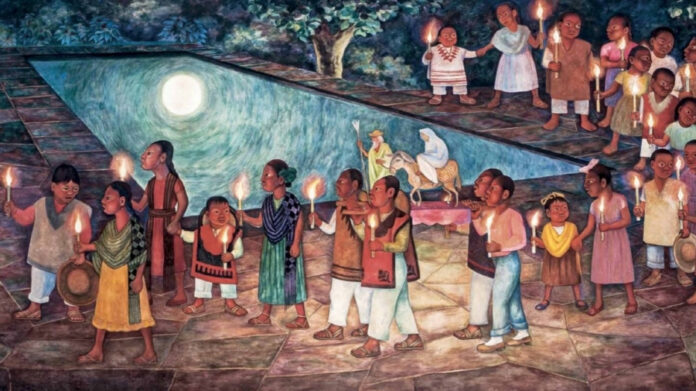
"The Children Asking for Lodging" was one of Diego Rivera's last works. It was financed with money from the U.S. -- "Los niños pidiendo posada", fue una de las últimas obras de Diego Rivera. Fue financiada con dinero procedente de EE.UU.
by México Desconocido
It depicts a line of 26 dark-skinned children, barefoot, some wearing sandals, and a few wearing shoes. Each one carries a candle in their right hand, and although the night seems rather cold, they cover their bodies only with ponchos, shawls, or simple traditional garments. Four of them, the oldest, are responsible for carrying the manger of Joseph and Mary, who, pregnant, carries the baby Jesus. This is the mural “The Children Asking for Lodging.”
It shows a row of 26 dark-skinned children, barefoot, some wearing sandals, and a few wearing shoes. Contemplating this work by Diego Rivera, created between 1953 and 1954, during a period when the painter had already established himself as one of the greatest exponents of Mexican muralism and was about to receive his cancer diagnosis, inevitably leads to reflection on our origins, our race, the fusion of our pre-Hispanic and Spanish cultures, and to consider the fragility of childhood.
Children Seeking Lodging, a work funded by McAshan Educational and Charitable.
In Children Seeking Lodging, Rivera depicts a procession of humble children carrying lit candles and pilgrims. Their expressions, illuminated by the candlelight, evoke the hope and spirituality that accompanies this celebration. As a complement, Rivera also painted The Piñata, where a scalloped paper pot falls to pieces, releasing fruit and surprises as the children enjoy the moment.
If you are interested in seeing the murals “Children Asking for Lodging” and “The Piñata,” you can do so at the Federico Gómez Children’s Hospital in Mexico City. Both works were commissioned by the McAshan Educational and Charitable Association, which takes its name from the American Susan McAshan, daughter of cotton magnate Will Clayton.
“Children Asking for Lodging” and its appearance in film
However, as far as we know, Diego Rivera didn’t leave many comments about the themes of his work “Children Asking for Lodging,” but its influence is present in books, culture, and even film. Perhaps the best-known example is “My Child Tizoc.”
In that film, starring Alberto Vázquez, the main character, a widower named Carmelo, takes his sick son to the Children’s Hospital in Mexico City. The murals, shown in the film, awaken in Carmelo a profound reflection on the fragility of life and the power of paternal love.
Children Asking for Lodging, one of Rivera’s last works
When Rivera painted Children Asking for Lodging, he had just received a tribute for his 50-year career with a major exhibition at the Palace of Fine Arts. Despite his diagnosis, his creativity did not diminish. Shortly after these works, supported by the architect Juan O’Gorman, he focused on the construction of the Anahuacalli.
Newsom amenaza a los condados de California por no utilizar su nuevo tribunal de salud mental.
Newsom threatens California counties for failing to use his new mental health court.
Far fewer people with mental illness are getting help in Gov. Gavin Newsom’s CARE Court program than expected. This week, he blamed local governments for shortcomings
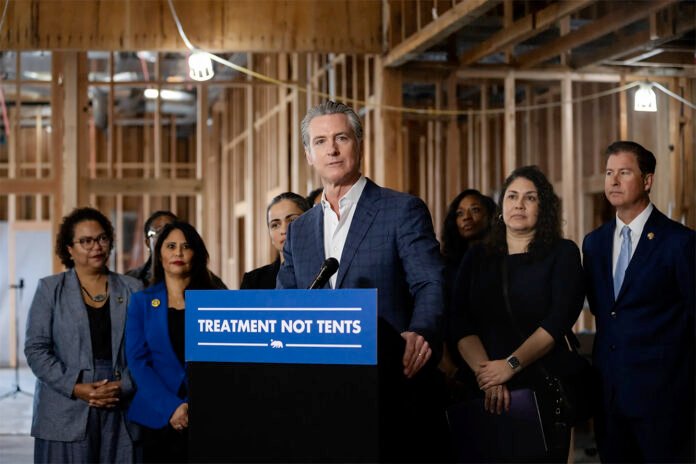
Frustrated by the slow adoption of one of his signature efforts to get Californians with severe mental illness off the streets, Gov. Gavin Newsom on Monday threatened to take funding from counties he said aren’t doing enough.
Newsom called out 10 counties that he said are underperforming when it comes to CARE Court – a program he launched in 2023 that uses the courts to get people into mental health treatment. Counties that “haven’t gotten it done” in his view are: Los Angeles, Orange, San Francisco, Santa Clara, San Bernardino, Kern, Riverside, Yolo, Monterey and Fresno.
“I’m happy to redirect every damn penny in these programs to the counties that are getting things done, period, full stop,” Newsom said during a news conference. “Unless they stop doing what they’ve done. Don’t make any more excuses.”
Orange County was quick to dispute Newsom’s assertion that it was lagging on CARE Court. “Orange County is utilizing the CARE intervention fully,” the OC Health Care Agency, which leads mental health treatment for the county, said in an email to CalMatters.
CARE Court rolled out in eight counties at the end of 2023, and was adopted across the entire state by December 2024. The idea was to help some of the most vulnerable Californians – people who are in the grip of psychosis, languishing on sidewalks and unable to take care of themselves because all other treatment programs have failed them.
But a CalMatters investigation found CARE Court has served far fewer Californians than initially anticipated, and many families who had counted on the program to help loved ones with a severe mental illness have been disappointed. The program also has faced challenges in moving people off the streets and into housing, CalMatters found.
Through January, the state has received 3,817 petitions for care on behalf of someone with mental illness. The petitions can come from a person’s family.a first responder or a behavioral health provider. Judges have approved just 893 treatment agreements, Kim Johnson, secretary of the California Health and Human Services Agency, said during the news conference.
Judges have ordered 32 people into CARE plans, which can happen if a participant won’t agree to or doesn’t follow a voluntary treatment agreement.
Newsom’s administration initially estimated between 7,000 and 12,000 Californians would qualify for CARE Court.
More than 4,000 people were diverted away from the CARE program and got services in another way, Johnson said.
The governor also highlighted counties he said are doing a good job using CARE Court to connect people with treatment: Alameda, Humboldt, Santa Barbara, Tuolumne, Marin, Napa, Merced, Sutter, San Mateo and Imperial. He spoke from inside an under-construction wing of Regis Village in Hayward, a mental health campus that has, among other services, 44 beds prioritized for people in CARE Court.
“There are a number of counties that get it and are getting things done, proving it can be done when you have leadership that cares enough to get it done,” Newsom said.
The administration calculated the number of CARE Court petitions received per capita to determine success, dubbing the 10 counties with the highest number as “CARE champions,” and relegating the 10 with the lowest to the “CARE ICU.”
But that data doesn’t take other important measures into account, such as the number of CARE agreements reached in each county, the number of petitions that are dismissed without someone getting treatment, or the number of people who have graduated from CARE Court. San Diego County, for instance, didn’t make the “CARE champion” list, even though, as of last summer, it had the most graduations of any county in the state, with 10. Riverside, which was a close second with seven graduations, was on the governor’s “CARE ICU” list.
Newsom promised that counties on his “CARE ICU” list would get extra help through the state’s CARE Improvement and Coordination Unit. He didn’t specify what that help would look like, but said the state already is working with some communities to provide technical support and training.
San Francisco, which landed on Newsom’s “CARE ICU” list, welcomes support from the state to strengthen its CARE Court program, Charles Lutvak, a spokesman for Mayor Daniel Lurie, said in an email to CalMatters.
“Since day one, our administration has been using every tool in our toolbox to address the crisis on our streets — reimagining street outreach and adding recovery and treatment resources so we can get people off the street and connected to the support they need,” he said.
Orange County has received 231 CARE Court petitions and has 79 participants who have agreed to treatment and are receiving housing, medication and other services, according to the OC Health Care Agency.
“Orange County has utilized this effective treatment option for those adults who meet the requirements of the program itself,” the agency wrote in an email. “It’s not just about how many petitions you have, which we have the fifth highest in the state, it’s about the services provided helping change the trajectory of untreated disease.
Newsom didn’t specify specify what funding might be at risk in communities that don’t step up their CARE Court game. But he gave some ideas when he said new money would be going toward programs that can support CARE Court participants. That includes $131.8 million in Homekey+ awards, funded by Proposition 1, to create 443 homes for people who need substance use and mental health services. The administration also rolled out another $159 million in Homeless Housing, Assistance and Prevention dollars – part of the $1 billion allocated in the 2024-25 budget.
In highlighting counties that he says have made good use of state funds so far, the administration invited Alameda County Judge Sandra Bean, who oversees the county’s CARE Court program, to share success stories.
The judge described one woman who lives with a developmental disability, a substance use disorder and a significant mental illness, who now has her own apartment and is taking medication.
“We’ve had a number of people who have done really, really well,” she said.
Edgar Agustín Montenegro, a Bay Area musician and San Francisco State University graduate remembered for his talent and resilience.
by Marvin Ramírez
La comunidad latina del Área de la Bahía lamenta la muerte de Edgar Agustín Montenegro, músico, graduado de San Francisco State University y ex conductor de autobuses de Muni, recordado por su inteligencia, su talento musical y su perseverancia frente a una vida marcada por grandes dificultades. Montenegro falleció el miércoles 5 de marzo, dejando un profundo vacío entre familiares, amigos y quienes lo conocieron desde sus años de juventud en San Francisco.
Montenegro nació en Granada, Nicaragua, hijo de Delia Bustamante Montenegro. Tras la muerte de su madre, su padre posteriormente contrajo matrimonio con María Montenegro, quien figura entre los familiares que hoy le sobreviven.
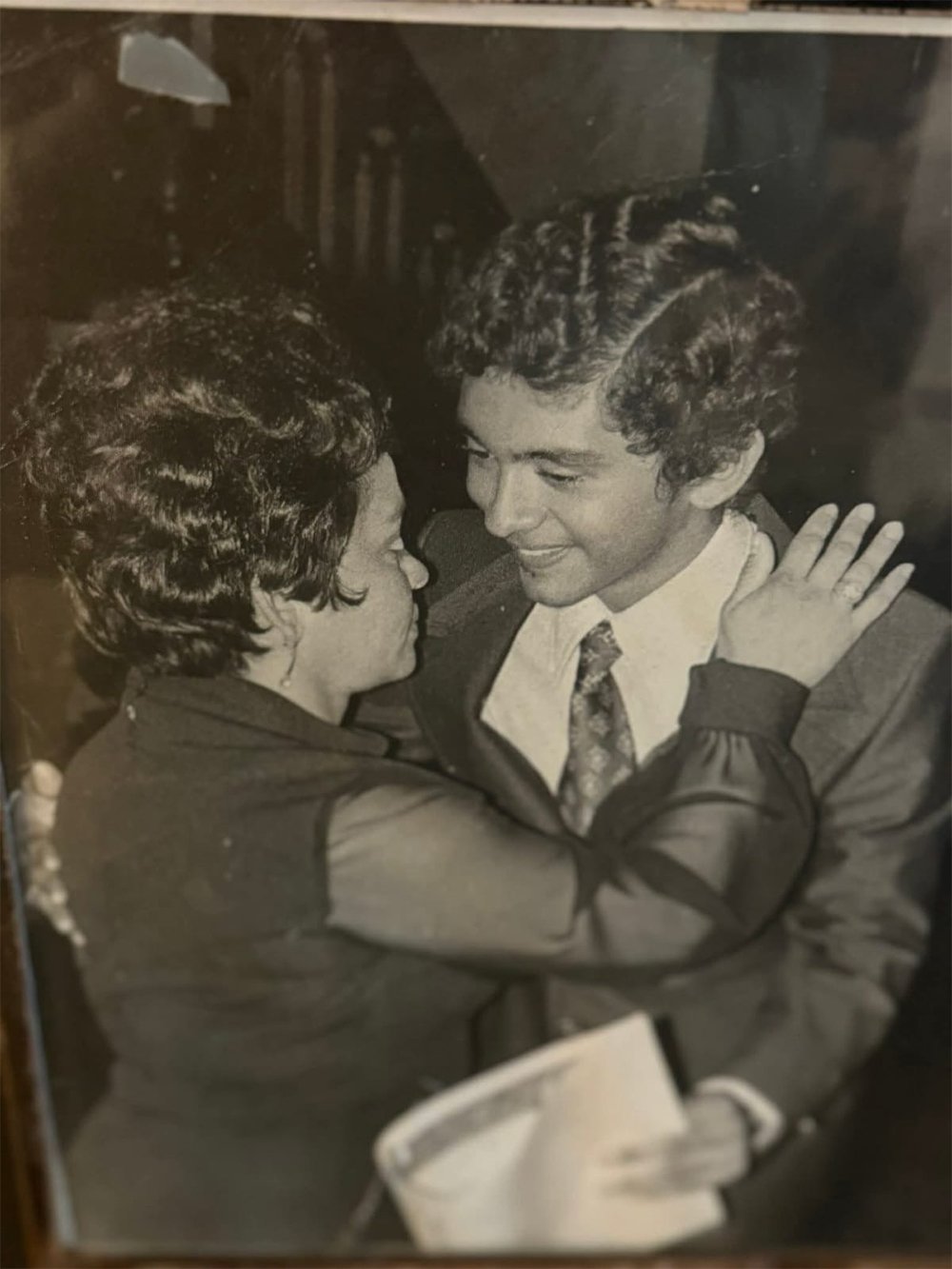
Edgar Montenegro con su madre Delia Bustamante Montenegro durante su gradución de secundaria. Edgar Montenegro con su madre Delia Bustamante Montenegro durante su graduación de secundaria.
Desde joven mostró interés por la música y los medios de comunicación. Durante su adolescencia estudió en Mission High School en San Francisco, donde, según recuerda su familia, comenzó a desarrollar su entusiasmo por la música y su sueño de trabajar algún día en radio o televisión.
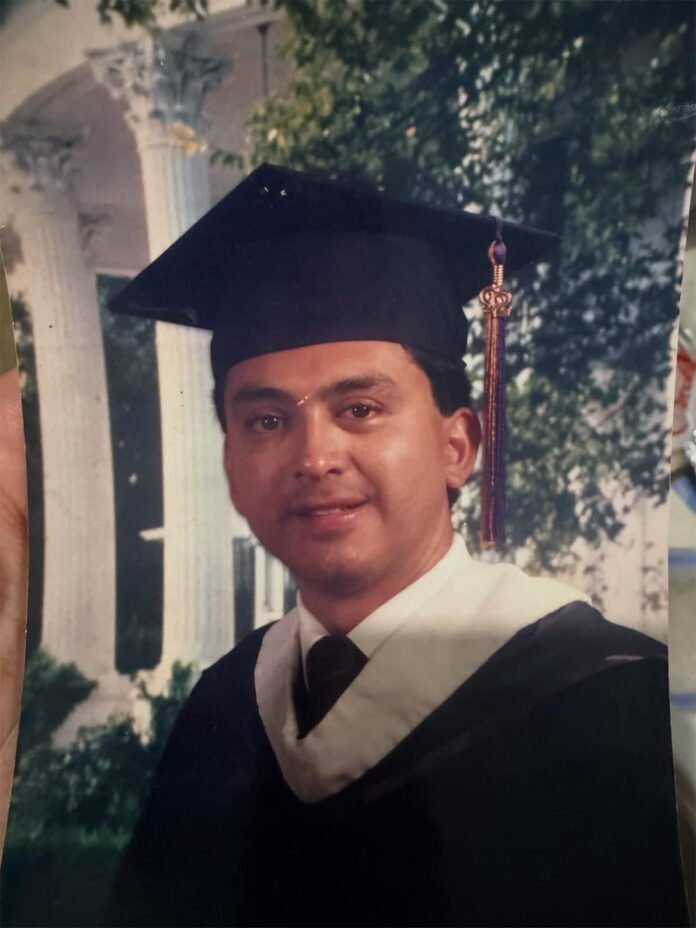
Ese interés lo llevó a continuar sus estudios en San Francisco State University, donde obtuvo una maestría en radio y televisión. Quienes lo conocieron durante esos años lo recuerdan como una persona brillante y entusiasta, con grandes aspiraciones de desarrollar una carrera en los medios de comunicación.
Sin embargo, la vida tomó un rumbo muy distinto al que había imaginado.
Según relataba el propio Montenegro a amigos cercanos, perdió una oportunidad clave al inicio de su carrera cuando buscaba ingresar a la entonces estación Canal 14, que más tarde se convertiría en Univisión. Para poder realizar una pasantía necesitaba una carta de recomendación que le permitiera adquirir experiencia profesional.
De acuerdo con recuerdos que compartía con amigos, Montenegro pidió una carta de recomendación al conocido productor y administrador radial Marcos Gutiérrez, pero la recomendación nunca llegó.
“Le pedí una carta de recomendación y no me la quiso dar”, recordaba Montenegro con tristeza, según contaba a personas cercanas. Aquella oportunidad perdida, decía, marcó un punto de inflexión en su vida profesional.
Al mismo tiempo, un divorcio ocurrido poco después de graduarse lo enfrentó a fuertes presiones económicas. Amigos recuerdan que durante esos años trabajó en lo que fuera necesario para poder sostenerse y cumplir con sus responsabilidades familiares.
Al mismo tiempo, un divorcio ocurrido poco después de graduarse lo enfrentó a fuertes presiones económicas. Amigos recuerdan que durante esos años trabajó en lo que fuera necesario para poder sostenerse y cumplir con sus responsabilidades familiares.
A pesar de las dificultades económicas, quienes lo conocieron dicen que nunca dejó de trabajar ni de mantener una actitud humilde y amable.
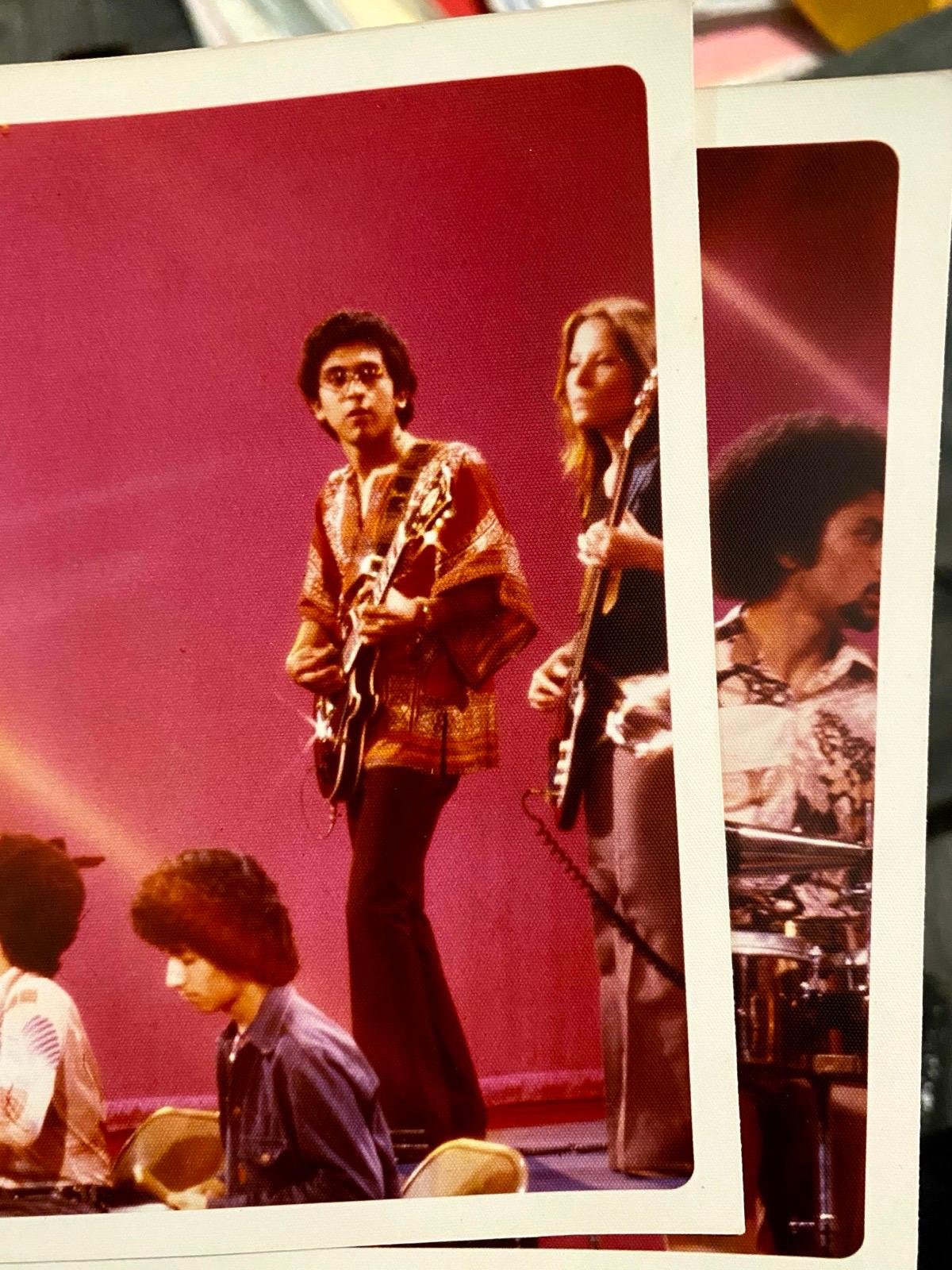
Edgar tocando guitarra. Edgar playing the guitar.
“Edgar was an extremely intelligent person with a noble heart,” recalled his longtime friend Marvin Ramírez, editor of El Reportero and author of this report. “He went through very hard moments, but he was never ashamed of working hard to survive.”
A lifelong passion for music
Alongside his interest in broadcasting, Montenegro developed a deep love for music. He played several instruments, including guitar, bass and piano.
For several years he was part of the group Scorpio and also worked as a resident musician at the now-defunct Transfer Club, once owned by businessman Walter Castillo.
The club hosted the group Actualidad, which later became Franco Brothers, featuring musicians Carlito and Bismark Franco. Montenegro played guitar and bass with the band, earning the respect of fellow musicians for his versatility and musical ability.
Friends say he had a natural ear for music and could easily adapt to different instruments and styles.
Edgar, fue un gran amigo de mi hermano Bismarck y yo, un músico talentoso con mucho ambición de salir adelante. Toco un buen rato con Actualidad de los Hermano Franco, y con Ciencia Latina grupo de mi Tío Walter Castillo”. dijo a El Reportero, el veterano bajista Calito Franco.
“Montenegro era un gran musico, con bastante experiencia en acompañamiento de cantantes y como pianista tenia un repertoire extensivo como solista, dijo a El Reportero Patricia Thumas, una pianista veterana de San Francisco y de descendencia nicaragüense. “Siento mucho de saber de su partida, pues tenia muchos años de no verlo, pero su musicalidad siempre fue de alta categoria y su comunidad lo queria mucho. Que Dios lo tenga en su Gloria, y siempre lo recordamos con mucho cariño”.
Years at Muni
Later in life Montenegro found greater stability working for 14 years as a bus driver for Muni, San Francisco’s public transportation system.
That job allowed him to improve his financial situation and eventually keep the family home after his mother’s death, something that represented an important personal achievement after years of struggle.
But his life changed again after he lost his Muni job. According to friends and family members, the situation had a profound impact on his mental health.
After the accident he suffered neurological problems and long periods of depression. Over the years he underwent extensive medical treatments and medications that significantly altered his life and emotional state.
His final months
In recent months, friends noticed that his emotional condition had become increasingly difficult.
Days before his death Montenegro sent a brief message to this reporter reflecting the pain he was experiencing. In the message he wrote simply: “My son Felix died.”
Edgar fue un ferviente católico, en la foto dando su Primera Comunión. Edgar was a fervent Catholic; in the photo, he is making his First Communion.
He did not provide further details, and when asked about it he did not respond.
Weeks earlier, on January 19, he had also written seeking help.
“Marvin, thank you for helping me last time,” he wrote. “The problems got worse. Please help me again because I even ended up in the hospital. I felt like I almost died.”
Friends say those difficulties deepened the depression he had struggled with for years.
On March 4, people living in the house became concerned when Montenegro did not respond to calls or knocks on his bedroom door. Fearing something was wrong, they entered the house through a bathroom window.
Inside the room they found Edgar lying down with headphones on in front of his computer.
Remembered by his family
Montenegro is survived by his partner, Elsy Hernández, the mother of his three youngest children, Delia, Ernesto and Veronica; his stepmother, María Montenegro; his children Carole, Tony, Edgar, Carlos, Felix (rip), Delia, Ernesto, Veronica; five grandchildren; and his siblings Jimmy Bustamante, Sandra Montenegro, Katy Montenegro, Tracy Montenegro and Gina Montenegro. His brother Marvin Montenegro preceded him in death.
His daughter Delia Montenegro remembered her father with a message filled with love:
“Our dad will forever live in our hearts and the knowledge that he instilled in us will be enough to last a lifetime.”
For those who knew him since his youth in San Francisco, Montenegro’s death represents the loss of a man who, despite the adversities he faced throughout his life, always maintained his love for music, his humility, his affection for others and a deep love for his family. His children, born from three different relationships over the course of his life, were at the center of that family.
Invitation to the community
Family members and friends invite the community to say goodbye to Edgar Montenegro.
The viewing will take place on March 21 and tentatively from 4:00 p.m. to 8:00 p.m. at Duggan’s Funeral Home in Daly City. The family is planning a reception around that time.
Those who knew him are invited to accompany the family, share memories and offer condolences.
Friends say Edgar Montenegro will be remembered for his sensitivity, his musical talent and his perseverance in the face of a life filled with challenges.
resolves legal and appraisal issues between the Appraiser’s Office and property owners. Hearings are quasi-judicial, conducted similarly to a courtroom, with evidence and testimony presented by the parties. The Board evaluates the evidence and testimony and issues its decision. To be eligible for a position, you must have a minimum of five years of professional experience in California as: (1) a certified public accountant; (2) a real estate broker; (3) an attorney; or (4) a property appraiser accredited by a nationally recognized organization or certified by the Bureau of Realtors or the State Board of Equalization.
For a complete list of current and future boards, commissions, and task forces,
Want to work for the city? Visit https://careers.sf.gov/ and find the right job for you!
Child Support Services Department Announcements
Department of Child Support Services Announcements:
Child support issues can be complicated, stressful, and confusing. The Department of Child Support Services helps parents understand the process so they know their rights and options for making and receiving support payments. We are available to help you in person or by phone. We also offer virtual services. Call us today at (866) 901-3212 to learn more. Register online or schedule an appointment at sf.gov/dcss to find out how we can help you.
Count on WIC for healthy families!
WIC is a federally funded nutrition program for women, infants, and children.
You may qualify if you:
● Are pregnant, breastfeeding, or have recently given birth;
● Have children under 5 years old; and
● Have a low or middle income; and/or
● Receive Medi-Cal, CalFresh (Food Stamps), or CalWORKS (TANF) benefits; and
● Live in California
WIC offers:
● Nutrition education and health information
● Breastfeeding support
● Food benefits for healthy foods (such as fruits and vegetables)
● Referrals to medical providers and community services
You may qualify:
● If your family’s income falls within the WIC limits.
Learn more at: MyFamily.wic.ca.gov or www.wicworks.ca.gov.
Enroll soon! Call today to see if you qualify and schedule an appointment.
Newly pregnant women, migrant workers, and working families are encouraged to apply.
Fire Department
The San Francisco Fire Department (SFFD) is actively recruiting emergency medical technicians, paramedics, and firefighters to serve the City and County of San Francisco. With a legacy dating back to 1866, the SFFD is one of the nation’s most respected and progressive all-hazard fire departments. We protect the city, its coastline, the San Francisco Bay, and San Francisco International Airport.
The SFFD operates California’s largest Community Paramedic program, providing compassionate care to all communities, especially our most vulnerable residents, regardless of socioeconomic status. Our highly qualified and diverse staff reflects the communities we serve through firefighting, emergency medical services (EMS), multilingual public education, and disaster training in English, Cantonese, and Spanish.
We are currently recruiting for Firefighter H2, Emergency Medical Technician (EMT) H3 Level 1, and Paramedic H3 Level 2. Bilingual candidates are encouraged to apply. Join a department with a long tradition, driven by innovation and committed to equity and public safety. Apply today at sf-fire.org/join.
Apply to Join the Civil Grand Jury.
Volunteer to make a difference for all San Francisco residents.
We are accepting applications for the 2026-2027 Civil Grand Jury from now until May 1, 2026.
The Civil Grand Jury consists of 19 members randomly selected from a pool of applicants who volunteer to serve for a one-year term, from July 1 to June 30 of the following year.
Qualified applicants will be invited to participate in the selection process. During this process, a panel of Superior Court judges will interview each applicant and recommend the most qualified to join the pool of candidates, from which the 19 Civil Grand Jury members will be randomly selected.
For more information and to apply, please visit our website: https://www.sf.gov/apply-join-civil-grand-jury
The City and County of San Francisco encourage public outreach. Articles are translated into multiple languages to provide better public access. The newspaper makes every effort to accurately translate articles of general interest. The City and County of San Francisco and the newspapers assume no responsibility for errors and omissions.
Los canales de protesta iraníes están publicando esta caricatura con este título: “Lo que los izquierdistas y los liberales están haciendo en el mundo occidental”. Iranian protest channels are publishing this cartoon with this caption: “What the leftists and liberals are doing in the Western World.”
Marvin Ramírez, editor
by Marvin Ramírez
The modern world often claims to stand firmly for human rights, justice and compassion. Yet recent events across the Middle East reveal something deeply troubling about today’s global activism: outrage frequently appears selective.
Over the past months, massive protests have erupted across Western cities over the war in Gaza. Demonstrators have filled the streets of New York, London, Paris and even San Francisco carrying banners demanding an end to the violence and calling for justice for Palestinian civilians. The images coming out of Gaza—destroyed neighborhoods, displaced families and civilian casualties—are tragic. No decent person can watch those scenes without feeling sorrow and concern.
But a difficult question increasingly emerges: why do some tragedies ignite worldwide protests while others receive far less attention?
Take Iran.
For years, millions of Iranians have lived under a political system where basic freedoms are severely restricted. Protests demanding reform have repeatedly been met with violent repression. Demonstrators have been arrested, beaten, imprisoned and in many cases killed. Various human rights organizations and reports from inside Iran have documented large numbers of deaths during government crackdowns on dissent.
In some of the most severe waves of repression, estimates suggested that thousands of protesters were killed within short periods as authorities attempted to silence nationwide demonstrations. These were not foreign wars. These were citizens confronting their own government.
Yet outside Iran, the global response was comparatively limited.
Inside the country, the danger of protesting is very real. Citizens who challenge the government risk imprisonment—or worse. In such situations, the outside world becomes the only voice for those who cannot safely speak. That is when international solidarity is supposed to matter most.
Now the situation has taken another dramatic turn.
Ayatollah Ali Khamenei, Iran’s Supreme Leader for more than three decades, was recently killed amid escalating conflict involving the United States and Israel. His rule, which began in 1989, was marked by strong hostility toward Western powers and strict control over political life inside Iran. His government oversaw repeated crackdowns against protest movements demanding greater freedoms and economic reform.
Following his death and the intensification of regional tensions, demonstrations have suddenly appeared again across many Western cities—this time protesting military action against Iran.
For many observers, the contradiction is difficult to ignore.
When Iranian protesters were being arrested, beaten or killed by their own government, large international demonstrations were relatively rare. But when outside powers confront the regime responsible for those crackdowns, protests quickly multiply.
This raises an uncomfortable question: what exactly is the principle guiding these movements?
If the purpose of activism is to defend human rights and protect innocent lives, then the standard must be universal. The suffering of civilians in Gaza deserves attention. But so does the suffering of Iranians facing repression from their own government.
Justice cannot depend on who the perpetrator happens to be.
Otherwise, activism begins to resemble political alignment rather than a consistent defense of human dignity.
This does not mean protests against war are illegitimate. War is always tragic. Civilians are always the first to suffer. It is natural for citizens to demand peaceful solutions whenever possible.
But protest also carries responsibility.
When movements claim to speak in the name of humanity, their moral vision must include all victims—not only those whose suffering fits a particular political narrative.
If civilians die in Gaza, it matters.
If protesters are killed in Iran, it matters.
If children are abused or exploited anywhere in the world, it matters.
And if authoritarian governments silence dissent through violence, the world should respond with the same urgency.
Justice that appears loudly for some victims but remains quiet for others risks becoming hollow justice.
Human rights cannot be selective. Compassion cannot depend on ideology or politics.
The world does not need louder slogans.
It needs moral consistency.
Only when global activism applies the same moral standard everywhere—regardless of geography, ideology or political convenience—can the call for justice carry real legitimacy.
Otherwise, the silence surrounding some victims will continue to speak louder than the protests for others.
Sources: Reports and background information from Associated Press, Reuters, BBC News, Amnesty International and Human Rights Watch.
The United States Supreme Court (George Wirt/Shutterstock) -- La Corte Suprema de los Estados Unidos
The landmark 6-3 decision issued on Monday is the ‘most significant parental rights ruling in a generation’ and sets a major nationwide precedent, declared the Thomas More Society
In what is being hailed as an “historic” victory for parental rights, the United States Supreme Court ruled against California’s policy of hiding children’s “gender transitioning” while at school from their parents.
California had required school teachers and staff to secretly facilitate children’s “gender transitions” behind their parents’ backs. One family found out that their daughter had been “transitioning” at school with the support of school staff only after she had attempted suicide.
In the case, known as Mirabelli v. Bonta, parents and teachers had asked the Court to intervene after a federal appeals court paused a lower court ruling and reinstated the secret “transitions” policy.
The landmark 6-3 decision issued on Monday is “the most significant parental rights ruling in a generation,” declared a statement from the Thomas More Society (TMS), the attorney organization that represented parents and teachers against the state. “The Court found that California’s secret transition regime likely violates parents’ rights under both the Free Exercise Clause of the First Amendment and the Due Process Clause of the Fourteenth Amendment, holding that the state ‘cut out the primary protectors of children’s best interests: their parents.’”
“The Court’s forceful reaffirmation of substantive due process sets a landmark precedent for parental rights nationwide, holding that parents, not the state, hold primary authority over ‘the upbringing and education of children,’ including the right not to be ‘shut out of participation in decisions regarding their children’s mental health,’” explained TMS.
“This is a watershed moment for parental rights in America,” asserted Paul M. Jonna, special counsel at Thomas More Society and Partner at LiMandri and Jonna LLP.
“The Supreme Court has told California and every state in the nation in no uncertain terms: you cannot secretly transition a child behind a parent’s back,” said Jonna.
“Gender dysphoria is a condition that has an important bearing on a child’s mental health, but when a child exhibits symptoms of gender dysphoria at school, California’s policies conceal that information from parents and facilitate a degree of gender transitioning during school hours,” wrote the court in its majority opinion. “These policies likely violate parents’ rights to direct the upbringing and education of their children.”
The majority concluded that “the parents who seek religious exemptions are likely to succeed on the merits of their Free Exercise Clause claim. California’s policies likely trigger strict scrutiny under that provision because they substantially interfere with the right of parents to guide the religious development of their children.”
Citing last year’s landmark Mahmoud decision, which ruled in favor of parents who had unsuccessfully sought to opt their children out of school lessons featuring pro-LGBT indoctrination, the court found:
The parents who assert a free exercise claim have sincere religious beliefs about sex and gender, and they feel a religious obligation to raise their children in accordance with those beliefs. California’s policies violate those beliefs and “impos[e] the kind of burden on religious exercise that [have previously been] found unacceptable.
Indeed, the intrusion on parents’ free exercise rights here—unconsented facilitation of a child’s gender transition—is greater than the introduction of LGBTQ storybooks we considered sufficient to trigger strict scrutiny in Mahmoud.
California’s policies will likely not survive the strict scrutiny that Mahmoud demands.
“No more can bureaucrats secretly facilitate a child’s gender transition while shutting out parents. California built a wall of secrecy between parents and their own children, and the Supreme Court just tore it down,” said Peter Breen, executive vice president and head of litigation at Thomas More Society. “This groundbreaking ruling will protect parents’ rights to raise their children as they see fit for years to come.”
“California’s policy of hiding a child’s gender transition from mom and dad was not only unconstitutional, but it was also dangerous,” said Greg Burt, vice president of the California Family Council. “No school should ever place ideology above a child’s well-being or a parent’s God-given authority.”
“This decision sends a powerful message: the Constitution still protects families, and California schools are not above the law,” said Burt.
The court’s decision split conservative and liberal judges, with Justices Sonia Sotomayor, Elena Kagan, and Ketanji Brown Jackson dissenting.
The case now returns to the Ninth Circuit for further consideration.
Con el Festival de Cine se intentan promover las tradiciones culturales latinas con eventos gratuitos para la comunidad a lo largo del año. The Film Festival aims to promote Latino cultural traditions with free events for the community throughout the year.
By Magdy Zara
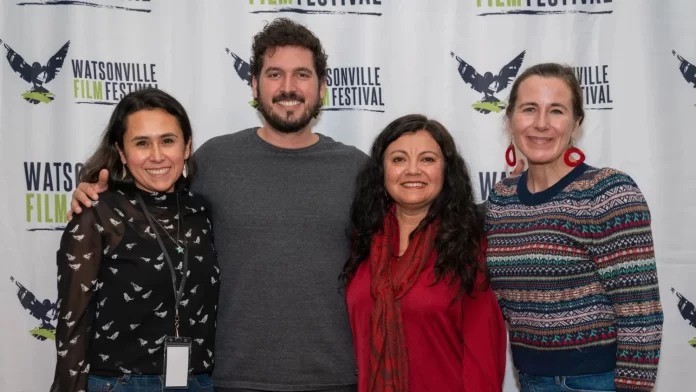
Under the theme “Art as Resistance,” the 14th Annual Watsonville Film Festival will take place, featuring film screenings, live music, after-parties, artist talks, and other events.
For 10 days, more than 50 films will be screened across more than 20 events in three different cities simultaneously.
With this year’s theme, “Art as Resistance,” the goal is to celebrate storytelling as culture, joy, and community power.
In its 14 years, this film festival has been more than just a series of screenings; it’s a cultural movement that elevates filmmakers and Latinx, Indigenous, and underrepresented voices, while creating spaces for audiences to connect, reflect, and take social action.
Some of the feature films selected for this year are:
“Disgust: Without Permission” by Travis Gutierrez Senger
“Freedom” by Brenda Avila-Hanna
“Following Harry” by Susanne Rostock
“Traces of Home” by Colette Ghunim
“Between the Sun and the Sidewalk” by Helen De Michiel
To view the complete program and reserve your tickets, please visit 2026wff.eventive.org/Schedule
The 14th Annual Watsonville Film Festival will take place from March 12-21, 2026, in Watsonville, Santa Cruz, and Salinas, starting at 5 p.m.
28th Annual Mexican New Year Festival in San Jose
The Annual Mexican New Year (also known as Mexica New Year) is considered the oldest and largest Aztec New Year ceremony in the United States.
San José will be the location for the ceremony celebrating Yancuic Xihuitl (New Year) Ce Tochtli. Efforts have been made to ensure this is a special event for all visitors and the community at large.
“This is an important shift in the signs and the beginning of a new era, a time of unity, abundance, and creativity,” stated the event organizers.
March 12th at dawn marks the beginning of Yancuic Xihuitl (New Year) Ce Tochtli; the ceremony will take place in the beautiful Emma Prusch Park on the weekend of March 13th-15th, 2026, starting at 4:30 p.m. Admission is free.
Live Salsa with La Rampa and Borinquen Orchestras
Want to dance all night? Then get ready to enjoy the fiery live salsa rhythms of La Rampa and Borinquen Orchestras all night long.
This promises to be an unforgettable night filled with vibrant rhythms. Feel the energy of Orquesta Borinquen as salsa comes alive live. Whether you’re a salsa pro or simply love to dance, this event is the perfect way to relax and enjoy an authentic atmosphere.
Don’t miss this live salsa experience at 855 Terry A. Francois Blvd., San Francisco, next Saturday, March 14, starting at 4 p.m.
La superestrella argentina Lionel Messi celebra durante un partido de la Copa Mundial, símbolo de la influencia duradera de los jugadores latinos en el torneo de fútbol más importante del planeta. Argentine superstar Lionel Messi celebrates during a World Cup match, a symbol of the enduring influence of Latin players on the world’s most important football tournament.
por el equipo de El Reportero
As the World Cup captures the attention of millions around the globe, Latino players are once again among the tournament’s most electrifying figures, carrying both the hopes of their nations and the pride of a vast international community.
From South America to Europe, Latin stars have delivered some of the tournament’s most dramatic moments—goals, assists and leadership that define the spectacle of the world’s most watched sporting event.
One of the most recognizable figures remains Lionel Messi, whose influence on the field continues to inspire younger generations of players throughout Latin America. Even after years at the top of world football, Messi’s vision and composure remain unmatched.
“Messi represents the passion of our continent,” said Argentine sports commentator Martín Liberman during a recent broadcast. “When he plays, millions of children across Latin America see what is possible.”
Brazilian forward Vinícius Júnior has also emerged as one of the tournament’s most dynamic attackers. Known for his speed and creativity, the young star symbolizes the new generation of Latin talent that is redefining the global game.
Meanwhile, Colombian winger Luis Díaz has become a symbol of resilience and determination, representing not only Colombia but also the growing impact of Latin players across Europe’s top leagues.
And on the global stage, French superstar Kylian Mbappé, who has strong ties to diverse cultural roots, has continued to demonstrate the explosive talent that makes the World Cup unforgettable.
Soccer analyst Ana María Navarro noted that Latino players bring a distinctive style to the tournament. “There is creativity, improvisation and joy in the Latin game,” she said. “It’s a style that connects with fans everywhere.”
Beyond statistics and victories, these athletes embody stories of perseverance—from humble neighborhoods to the brightest stadiums in the world.
For millions of Latino fans in the United States, including the large community in the San Francisco Bay Area, the World Cup is more than a sporting event. It is a celebration of identity, culture and pride.
As the tournament unfolds, one thing remains clear: the spirit of Latin football continues to shape the World Cup, reminding the world that the beautiful game speaks many languages—but its heart often beats in Spanish and Portuguese.
Apoyo a la iniciativa de identificación de votantes (Ilustración genérica)
by the El Reportero staff
A proposal that would require California voters to show identification before casting a ballot could appear on the statewide ballot this November if supporters gather enough verified signatures.
Organizers behind the initiative say they have submitted roughly 1.3 million signatures in an effort to qualify the measure for the ballot. Boxes containing petitions were delivered Monday to the Riverside County Registrar of Voters as part of a coordinated statewide filing.
Election officials will now review and verify the signatures to determine whether the initiative meets the legal threshold required to move forward.
Supporters of the proposal held a rally outside the elections office as the petitions were delivered, arguing that the measure would strengthen election integrity and restore confidence in the voting process.
“When voters are given the opportunity this November, I believe Californians will support voter identification and stronger safeguards for elections,” said State Sen. Tony Strickland, a Republican from Huntington Beach who supports the measure.
The proposed constitutional amendment would require voters to present government-issued identification before casting a ballot and direct election officials to verify the citizenship status of registered voters while maintaining accurate voter rolls.
U.S. Rep. Ken Calvert, a Republican representing Corona, attended the rally and voiced support for the initiative.
“If we had voter ID requirements, it would increase confidence in election outcomes and strengthen trust in our electoral system,” Calvert said.
Opponents, however, argue that voter fraud is extremely rare and warn that strict identification laws could create obstacles for some voters.
According to research from the Brennan Center for Justice, among roughly 250 million mail-in ballots cast nationwide between 2000 and 2020, there were 193 criminal convictions for voter fraud.
“It’s actually more likely that someone will be struck by lightning than impersonate another voter and illegally cast a ballot,” said Jenny Farrell, executive director of the League of Women Voters of California.
Critics say voter ID laws could disproportionately affect seniors, low-income residents, people with disabilities and individuals whose identification may not match their voter registration records.
Thirty-six states already require some form of voter identification, although the strictness of those laws varies widely and remains the subject of ongoing political debate.
County officials will now review the submitted signatures. If enough are validated, the proposal could appear before California voters on the November ballot.