Monday, August 3, 2026
Home Blog Page 327

NAFTA partners agree to accelerate talks

by the El Reportero’s wire services

Anti-US rhetoric predicted to accompany Mexico’s presidential election campaign

Five days of trade talks wrapped up Sunday with a commitment by all three NAFTA partners to accelerate the process in the coming months.

An early finish to negotiating the North American Free Trade Agreement will benefit Mexico, which would prefer to see it done before campaigning begins for next year’s presidential election.

In a joint press release on Sunday, representatives of Mexico, the United States and Canada said last week’s meetings covered more than two dozen different negotiating topics.
“Negotiators from each country will continue domestic consultations and work to advance negotiating text through the end of August, and will reconvene in Mexico for a second round of talks from Sept. 1-5,” the statement said.

The three parties have agreed that negotiations will continue “at a rapid pace,” moving to Canada in late September and returning to the U.S. in October. Additional rounds are being planned for the remainder of the year.

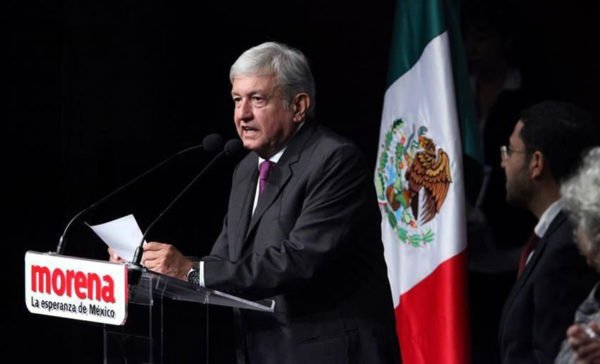
Mexico Economy Secretary Ildefonso Guajardo said the idea is to conclude the negotiations at the end of the year or in early 2018 before election campaigns begin for the Mexican presidency and U.S. Congress.

According to a Canadian analyst, accelerating the talks has turned the process around, putting the tougher issues on the table — including automobiles and rules of origin — first rather than waiting till the end.

That, says public policy analyst Meredith Lilly, is a sign that “the Americans realize that they could be put in a [difficult] position because of the Mexican calendar.”

That calendar means anti-U.S. political posturing could begin early in the new year as parties and candidates come out hard against U.S. President Donald Trump as an election tactic, said Lilly.

But an unnamed source told Reuters the schedule was exceedingly fast, given that past trade deals took years to negotiate.

One of the stickier issues in the talks will be rules of origin for the automotive industry. U.S. Trade Representative Robert Lighthizer has made it clear that strengthening those rules was a priority. They are also the main factor behind U.S. trade deficits, an issue deemed critical by President Trump.

Source: El Universal (sp), CBC (en), Reuters (en).

Differences emerge in trade negotiations

Neither Mexico nor Canada support changes to rules of origin in auto industry

Rules of origin in the automotive industry have emerged as the biggest sticking point among other differences between Mexico and the United States in talks to renegotiate the North American Free Trade Agreement (NAFTA).

The United States is demanding higher U.S. content in auto manufacturing but Mexican Economy Secretary Ildefonso Guajardo said he doesn’t support the implementation of specific national rules of origin into a renegotiated NAFTA.

His position is shared by Canada’s Minister of Foreign Affairs, Chrystia Freeland.

In his opening statement, United States trade representative Robert Lighthizer said “Rules of origin, particularly on autos and auto parts, must require higher NAFTA content and substantial U.S. content. Country of origin should be verified, not deemed.”

However, automotive groups from all three countries are urging negotiators not to change rules of origin to avoid upsetting complex supply chains.

Industry sources say the U.S. also pushed for the establishment of a wage system in the manufacturing industry, an issue that had not previously been publicly raised by the U.S. government.

Both Mexico and Canada sought instead to formalize international wage mechanisms in the agreement such as those provided by the International Labor Organization (ILO).

The U.S. has also made it clear that it wants to restore what it perceives as an imbalance in the agreement with Lighthizer saying, “We need to assure that huge trade deficits do not continue.”

However, Mexican foreign trade undersecretary Juan Carlos Baker said, “I would strongly contest whether emphasizing trade deficits is the real metric for how our relationship should be measured” and both Mexico and Canada have argued that the deficit is due to a low U.S. domestic savings rate.

Another clash came on the issue of intellectual property. Mexico wants to grant eight years patent protection while the U.S. wants 12.

More differences are likely to arise with talks scheduled on a dispute settlement system for anti-dumping and anti-subsidy cases. The U.S. wants to eliminate the system while Mexico and Canada want it maintained.

Mexico and the U.S. clashed earlier this year over subsidies and dumping in the sugar industry.

Guajardo played down any suggestion that NAFTA was wavering due to difficult issues or differences. He said that after two days of talks, progress has been made and that there are issues that have benefits for all parties.

Common ground has been found on not using currency manipulation to make markets more competitive and a desire to reduce Asian imports in the textile industry.

The first round of talks started in Washington on Wednesday and will run until Sunday. The second round is scheduled for Mexico in early September.

Source: El Universal (sp), Milenio (sp), Reuters (en).

US warns of violence in tourist destinations

Increased criminal activity, more homicides bring new travel alert

Crime increases in five Mexican states have triggered a new travel warning for Mexico by the United States Department of State, which offers a new caution about several tourist destinations.

The alert cites increased criminal activity in Baja California, Baja California Sur, Chiapas, Colima, Guerrero, Quintana Roo and Veracruz, warning U.S. citizens about gun battles between rival criminal organizations or with authorities on the streets and in public places during broad daylight.

Caution is urged in Baja California, including Tijuana, Rosarito, Ensenada, Tecate and Mexicali, particularly at night.

As with several other state-specific warnings, that for Baja California says most homicides appear to be targeted, criminal organization assassinations, but turf battles have resulted in violent crime in areas frequented by U.S. visitors.

The warning announced that U.S. government personnel are only allowed to travel on the Mexicali-Tijuana toll highway during daylight hours.

Criminal activity and violence remain an issue throughout Baja California Sur, said the State Department, which included Los Cabos and La Paz in its warning, making the same caution about violence in tourist areas.

In Chiapas, including Palenque and San Cristóbal de las Casas, U.S. officials must now remain in tourist areas and are not permitted to use public transportation.

Inter-city travel at night is prohibited for government personnel in Colima, as is traveling within 19 kilometers of the border with Michoacán and traveling on highway 110 between La Tecomaca and the Jalisco border.

Source: El Universal (sp), CBC (en), Reuters (en).

spot_img

12,000 child porn sites identified in Mexico

by the El Reportero’s wire services

Mexico has been the world’s largest distributor and the second-largest producer of child pornography for at least half a decade, and a new report on the situation suggests nothing has changed.

The federal Congress called on state governments to strengthen their efforts against it after a report by the federal Attorney General’s office (PGR) revealed it had detected over 12,300 Mexican internet accounts that distribute photographs and videos of children being sexually abused.

According to data gathered by the Federal Police’s Center of Cybercrime against Minors, Veracruz is one of the states where the crime has noticeably increased in recent years, targeting girls aged between 11 and 15.

The United Nations Children’s Fund (UNICEF) has estimated that there are 16,700 websites worldwide dedicated to distributing child pornography, and that 73% of the victims appear to be younger than 10 “in pictures that are increasingly graphic and violent.”

Congress has also asked the Veracruz government for a detailed report on the measures it has set in place to combat child pornography.

The governor himself, Miguel Ángel Yunes Linares, has been accused of links to a child pornography scandal in which businessman Jean Succar Kuri has already been convicted and sentenced in 2011 to 112 years in prison.

Journalist Lydia Cacho described the Cancún-based child exploitation and pornography network led by Succar in her 2005 book Los demonios del edén (The Demons of Eden), in which Yunes Linares is mentioned.

He has labeled the accusations as a part of a politically motivated “dirty war” against him.

While the United Nations Office on Drugs and Crime (UNODC) has stated that on a global scale organized crime is not involved in child pornography, the same might not be said for Mexico, where criminal organizations have been involved in human trafficking and linked to underage prostitution.

Estimates made early in the decade suggested that 20,000 children are victims of human trafficking for sexual exploitation annually in Mexico, and there was a high probability that some of them become part of the country’s large child pornography industry.

Source: El Financiero (sp)

Mexico: Tragic results after ten years fighting drug trafficking

Ten years after the beginning of the war against drug trafficking in Mexico, results are tragic and alarming, said Erika Llanos, coordinator of Red Retoño to prevent organized crime.

She noted that the campaign has resulted in 160,000 deaths, 200,000 displaced people, 30,000 missing persons and countless attacks on human rights advocates and journalists.

Speaking at the 2nd Forum Security without War, she commented that the magnitude of the humanitarian crisis in the country can only be understood due to political corruption, impunity and lack of justice.

The only way that organized crime can be installed in a nation is through an alliance with the structures of the State, the police, judges, prosecutors, governors and officials at all levels, she stressed.

She pointed out that the assets confiscated from criminals should be given a social use to solve the great damage caused to families and society.

Llanos noted that in light of the State’s absence to search for missing people, relatives organize brigades to look for them, even if they find their bones, in an effort to find peace.

Mexico is living difficult times, she noted, because traffic not only involves drugs, but also migrants, children, girls and adolescents to exploit them sexually.

spot_img

Muni Art launches the Art of Poetry contest in SF – Mexican artist asks for your vote

by the El Reportero’s news service

Now Muni urban transport users can enjoy the magic of art instead of seeing the usual commercials on the way to work or home. The buses will become galleries on the wheels.
This is what moved Mara Patricia Hernández, a local artist, and multimedia coordinator for the Mission Cultural Center, to enter the contest, and of course, to be among the five finalists to make her work part of the Muni project Art 2018.

For that she has worked tirelessly in the development of her work, which she hopes will be among the finalists, who are only eligible if they are from the SF Bay area.
The five artists with the most votes will each have their art displayed on Muni Buses from January to April of 2018 along with five short-listed poems, from local poets of the SF Bay Area.

This year, Muni Art 2018 seeks together with Poetry Society of America and Supervisor London Breed, for the first time to include local poetry.
The new element of poetry is a contribution of Poetry in Motion, a division of the poetry Society of America that places poetry in public transportation systems throughout the country.

A hundred buses will showcase this year’s theme, “The Art of Poetry in San Francisco,” where five pre-selected poems will be visually interpreted by this year’s winners.
This year more than 40 local artists competed for the five seats available. Ten finalists, selected by a local committee representing galleries, artists and arts institutions are now moving to a public vote.

In addition to having their art exhibited on buses, the artist receiving the most votes will receive $ 2,000 and each of the remaining four will receive $1,250.
The visual proposal of Hernández, a Mexican-American visual poet, creator of a multifaceted visual poetry, is based on a series of visual poems where the visual language is the essence; and verbal language works as a complement to the image.

She combines digital and traditional techniques, her attention to the form of a letter or the form of a word places the language and text in the tactile and metaphorical center of her work. Much of her visual poetry has been published and exhibited around the world.

Review the proposal and vote by visiting https://neighborland.com/ideas/sf-words-

Unfold until Monday, Aug. 28 at 6 p.m., the last day to vote.

The Bolivian film Dark Skull, among the favorites of Fenix ​​Awards

After winning achievements at festivals in Switzerland, Spain, Italy, Chile and Brazil, the Bolivian film Dark Skull or Viejo Calavera, is among the favorites in the fourth version of Fenix ​​Awards, local press reported today.

Dark Skull recognized with special mention of the jury of version 69 of the Locarno International Film Festival, obtained the bronze statuette for the best film at the International Film Festival of Cartagena de Indias, Colombia.

The film tells the story of Elder, a young man who has no responsibilities and his only option is to replace his late father in the mines of Huanuni, in the department of Oruro.

Some other pre-selected films for the event are April’s Daughter by Michel Franco (Mexico); The Distinguished Citizen by Mariano Cohn (Argentina-Spain), and Bad Influence by Claudia Huaiquimilla (Chile). TV series also compite in this international event, among them Red Eagle (Spain), Ingobernable (Mexico), Feriados (Uruguay) and Magnifica 70 (Brazil).
His discontent with such reality and the risks of extracting minerals will lead the protagonist through dark and painful ways.

Founded four years ago, the Ibero-American Fenix ​​Award recognizes and celebrates the work done by those who dedicate their lives to films in Latin America, Spain and Portugal.

spot_img

Marijuana associated with three-fold risk of death from hypertension

by the European Society of Cardiology

Marijuana use is associated with a three-fold risk of death from hypertension, according to research published today in the European Journal of Preventive Cardiology.

“Steps are being taken towards legalization and decriminalization of marijuana in the United States, and rates of recreational marijuana use may increase substantially as a result,” said lead author Barbara A Yankey, a PhD student in the School of Public Health, Georgia State University, Atlanta, US. “However, there is little research on the impact of marijuana use on cardiovascular and cerebrovascular mortality.”

In the absence of longitudinal data on marijuana use, the researchers designed a retrospective follow-up study of NHANES (National Health and Nutrition Examination Survey) participants aged 20 years and above. In 2005-2006, participants were asked if they had ever used marijuana. Those who answered “yes” were considered marijuana users. Participants reported the age when they first tried marijuana and this was subtracted from their current age to calculate the duration of use.

Information on marijuana use was merged with mortality data in 2011 from the National Centre for Health Statistics. The researchers estimated the associations of marijuana use, and duration of use, with death from hypertension, heart disease, and cerebrovascular disease, controlling for cigarette use and demographic variables including sex, age, and ethnicity. Death from hypertension included multiple causes such as primary hypertension and hypertensive renal disease.

Among a total of 1,213 participants, 34 percent used neither marijuana nor cigarettes, 21 percent used only marijuana, 20 percent used marijuana and smoked cigarettes, 16 percent used marijuana and were past-smokers, 5 percent were past-smokers and 4 percent only smoked cigarettes. The average duration of marijuana use was 11.5 years.

Marijuana users had a higher risk of dying from hypertension. Compared to non-users, marijuana users had a 3.42-times higher risk of death from hypertension and a 1.04 greater risk for each year of use. There was no association between marijuana use and death from heart disease or cerebrovascular disease.

Ms Yankey said: “We found that marijuana users had a greater than three-fold risk of death from hypertension and the risk increased with each additional year of use.”

Ms Yankey pointed out that there were limitations to the way marijuana use was estimated. For example, it cannot be certain that participants used marijuana continuously since they first tried it.

She said: “Our results suggest a possible risk of hypertension mortality from marijuana use. This is not surprising since marijuana is known to have a number of effects on the cardiovascular system. Marijuana stimulates the sympathetic nervous system, leading to increases in heart rate, blood pressure and oxygen demand. Emergency rooms have reported cases of angina and heart attacks after marijuana use.”

The authors stated that the cardiovascular risk associated with marijuana use may be greater than the cardiovascular risk already established for cigarette smoking.

“We found higher estimated cardiovascular risks associated with marijuana use than cigarette smoking,” said Ms Yankey. “This indicates that marijuana use may carry even heavier consequences on the cardiovascular system than that already established for cigarette smoking. However, the number of smokers in our study was small and this needs to be examined in a larger study.”

“Needless to say, the detrimental effects of marijuana on brain function far exceed that of cigarette smoking,” she added.

Ms Yankey said it was crucial to understand the effects of marijuana on health so that policy makers and individuals could make informed decisions.

She said: “Support for liberal marijuana use is partly due to claims that it is beneficial and possibly not harmful to health. With the impending increase in recreational marijuana use it is important to establish whether any health benefits outweigh the potential health, social and economic risks. If marijuana use is implicated in cardiovascular diseases and deaths, then it rests on the health community and policy makers to protect the public.”

spot_img

Nicaraguan breaks ground with new salsa music video in the SF Bay Area

por Marvin Ramírez

Nicaraguan artist Roger ‘Danilo’ Pérez Paiz has just produced this music video, which in addition to being an excellent piece of Latin music and being accompanied by really professional musicians, is really a historical work, by including many of the artists – some still Live and others already dead – who circled with him in the spread of salsa music in the early 70s, when it was still in diapers in this part of USA.

“I wrote this song as a tribute to the musicians in the early days of the San Francisco Bay Area salsa in the 70s, 80s and 90s. Some of these talented musicians were my partners and some were my mentors, but all They were part of my growth and maturation as a percussionist, singer, composer and band director of my own salsa band, Universal Orchestra.”

The musical trajectory that Danilo navigated through to create his own music, which goes back to the beginning of the Salsa boom in the Bay Area, is worthy of being considered an excellent musical work both for those who lived that boom Salsero, as well as for those who were not yet born and who now make it part of their culture.

He has performed with legends such as Tito Puente, Chucho Valdez, Ray Barretto, Rubén Blades, and Poncho Sánchez.

Congratulations to Danilo for such an excellent job from Marvin Ramírez, editor of El Reportero, the bilingual newspaper in SF.

To all my Facebook friends I ask you to pay tribute to this great musician who was formed by himself, by giving him a great LIKE in Facebook and sharing it with all you friends in social media.

But most importantly is that you should buy his song to help him compensate the expenses that generated the production.

Buy here it:  https://store.cdbaby.com/cd/danilopaiz

—————————————

Leonardo Di Caprio to play Da Vinci in Biopic, says Paramount

by the El Reportero’s news services

Paramount Pictures confirmed that actor Leonardo Di Caprio will be the star of a new film about the life of Italian genius Leonardo Da Vinci, after winning the rights to the novel, said today the media.

The film will be adapted for the screen from the biography on painter, engineer, architect, sculptor and writer Da Vinci, written by US novelist Walter Isaacson, famous for his books on the life of Benjamin Franklin and other politicians.

Paramount Pictures beat out Universal Pictures in the bidding for the rights to the novel, which will be launched October 17th, while the film is already envisaged as another opportunity for Di Caprio to showcase his skills as actor playing Da Vinci.

The film about Da Vinci would be the third adaptation to the screen of a book by Isaacson, the first one was his biography on Steve Jobs, founder of Apple, and the second one was based on Albert Einstein, on the TV series Genius.

The beneficiaries of three special prizes of “Premios Tu Mundo” were announced

Miguel Bosé, Olga Tañón and María Celeste Arrarás will be honored during the “Tu Mundo Awards”.

Telemundo announced the beneficiaries of three special prizes that will be delivered during the 6th annual version of “Premios Tu Mundo”. The great tropical singer Olga Tañón will be honored with the Legacy Jenni Rivera, while the famous television presenter María Celeste Arrarás will be awarded the Star of Your World award, and the iconic singer Miguel Bosé will be distinguished with the prize The Power in You.

Tropical music singer Olga Tañón will receive the Legacy Jenni Rivera Award.

Miguel Bosé is the Founder and Honorary President of the Indigenous Heritage Foundation MX, which has launched 10 homes for indigenous children, offering a school education as well as extracurricular activities and workshops that strengthen their life skills.

This year, María Celeste Arrarás will be awarded the “Estrella de Tu Mundo” award to celebrate her 15 years as host of the successful news magazine, Al Rojo Vivo con María Celeste. Celeste Arrarás, an Emmy-winning journalist and investigative reporter, is one of the most prolific news personalities on Spanish-language television.

Bolivia Hosts Puka Ñawi International Human Rights Film Festival

The 13th Puka Ñawi International Human Rights Film Festival is beginning on Aug. 14 in the Bolivian city of Sucre with the screening of the film La mujer del animal (The Animal’s Wife) by Colombian director Víctor Gaviria.

The opening of the event, to be run until Aug. 20, will feature the presence of Gaviria to bring viewers closer to the plot of the film, focused on Amparo, who after fleeing a convent will have to face the roughness of men.

The feature films ‘Alas de mar’ (Ocean Wings), by Chilean Hans Mulchi; ‘Semillas de Guamuchil’ (Guamuchil Seeds) by Mexican Carolina Corral and ‘Willakuyqunata Awaspa – Tejiendo relatos’ (Willakuyqunata Awaspa – Weaving Stories), by Bolivian Clara Calvet, were screened Aug. 14.

Based in the city of Sucre, Chuquisaca department, the festival brings together professionals of the seventh art from Ecuador, Argentina, Mexico, Colombia, Chile, Guatemala, Spain, United States, Germany, Switzerland, United Kingdom, Sweden, Greece and the host country.

Dedicated to Colombia in this edition, the festival seeks to encourage the production of works related to human rights.

Founded in the 80s of last century, the film event has its genesis in the communicative processes of Quechua communities in the Bolivian departments of Chuquisaca and Potosi.

Under the premise of strengthening the culture of democracy and peace through films, the Puka Ñawi festival promotes intercultural dialogue between Bolivia and other Latin American countries.

spot_img

They got hurt at work and then they got deported

How insurance companies use a Florida law to get undocumented immigrants arrested and deported when they get injured on the job — and what it means in Trump’s America

by Michael Grabell, ProPublica, and Howard Berkes, NPR

At age 31, Nixon Arias cut a profile similar to many unauthorized immigrants in the United States. A native of Honduras, he’d been in the country for more than a decade and had worked off and on for a landscaping company for nine years. The money he earned went to building a future for his family in Pensacola, Florida. His Facebook page was filled with photos of fishing and other moments with his three boys, ages 3, 7 and 8.

But in November 2013, that life began to unravel.

The previous year, Arias had been mowing the median of Highway 59 just over the Alabama line when his riding lawnmower hit a hole, throwing him into the air. He slammed back in his seat, landing hard on his lower back.

Arias received pain medication, physical therapy and steroid injections through his employer’s workers’ compensation insurance. But the pain in his back made even walking or sitting a struggle. So his doctor recommended an expensive surgery to implant a device that sends electrical pulses to the spinal cord to relieve chronic pain. Six days after that appointment, the insurance company suddenly discovered that Arias had been using a deceased man’s Social Security number and rejected not only the surgery, but all of his past and future care.

Desperate, Arias hired an attorney to help him pursue the injury benefits that Florida law says all employees, including unauthorized immigrants, are entitled to receive. Then one morning after he dropped two of his boys off at school, Arias was pulled over and arrested, while his toddler watched from his car seat.

Arias was charged with using a false Social Security number to get a job and to file for workers’ comp. The state insurance fraud unit had been tipped off by a private investigator hired by his employer’s insurance company.

With his back still in pain from three herniated or damaged discs, Arias spent a year and a half in jail and immigration detention before he was deported.

One of SouthEast’s first cases involved a hotel housekeeper at the Comfort Suites in Vero Beach. Yuliana Rocha Zamarripa was cleaning a hotel room in 2010 when she slipped on a bathroom floor and slammed her knee on the bathtub, leaving her with pain and swelling so severe she was unable to walk.

Lion sent her to a doctor, but quickly denied her claim based on a false Social Security number.

Rocha’s mother had brought her to the United States from Mexico when she was 13, and when she turned 17, her father bought her the fake ID so she could work.

With few options, Rocha, now 32, settled her workers’ comp case for less than $6,000 plus attorney fees. But she never got the medical care she needed. The week before she was to receive the check, she was arrested while making breakfast for her 4-year-old son.

Rocha spent the next year cycling through jail and immigration detention, separated from her three children. She couldn’t sleep, worrying what would happen to them if she were deported.

“I said the Lord’s Prayer all the time, and I would end by asking, ‘God, give me a chance to return to my children. Don’t let anything bad happen to them,’” she said. “I had a feeling that something was not right.”

Rocha’s instincts were correct. While she was in jail, the father of her children started sexually assaulting their 10-year-old daughter, according to his arrest warrant. “I was left shattered,” Rocha said tearfully, “because I didn’t know what was happening.”

With the help of an attorney, Rocha pleaded to a lesser charge — “perjury not in an official proceeding” — and was finally released. Because of what happened to Rocha’s daughter, the attorney was able to get Rocha’s deportation canceled and help her obtain a green card.

Rocha eventually received her settlement but had to spend all of it securing her release and dealing with immigration. She now walks with a limp because her injury didn’t heal correctly.

“I think it’s an injustice what happened to me,” she said. “All because I fell, I slipped.”

However people feel about immigration, judges and lawmakers nationwide have long acknowledged that the employment of unauthorized workers is a reality of the American economy. From nailing shingles on roofs to cleaning hotel rooms, some 8 million immigrants work with false or no papers nationwide, and studies show they’re more likely to get hurt or killed on the job than other workers. So over the years, nearly all 50 states, including Florida, have given these workers the right to receive workers’ comp.

But in 2003, Florida’s lawmakers added a catch, making it a crime to file a workers’ comp claim using false identification. Since then, insurers have avoided paying for injured immigrant workers’ lost wages and medical care by repeatedly turning them in to the state.

Workers like Arias have been charged with felony workers’ comp fraud even though their injuries are real and happened on the job. And in a challenging twist of logic, immigrants can be charged with workers’ comp fraud even if they’ve never been injured or filed a claim because legislators also made it illegal to use a fake ID to get a job. In many cases, the state’s insurance fraud unit has conducted unusual sweeps of worksites, arresting a dozen employees for workers’ comp fraud after merely checking their Social Security numbers.
What’s quietly been happening to workers in Florida, unnoticed even by immigrant advocates, could be a harbinger of the future as immigration enforcement expands under President Donald Trump.

One of Trump’s first executive orders broadened Immigration and Customs Enforcement’s priorities to include not just those convicted of or charged with a crime, but any immigrant suspected of one. The order also targets anyone who has “engaged in fraud or willful misrepresentation in connection with any official matter or application before a governmental agency.” That language could sweep in countless injured unauthorized workers because state workers’ comp bureaus and medical facilities typically request Social Security numbers as part of the claims process.

(This story was shorten to fit space).

spot_img

Trade wars lead to world wars

History shows there is a repeating, almost natural progression from currency wars to trade wars to shooting wars

by Paul Goncharoff
Analysis

What does the future hold?

For those that dig into and analyze the history of humankind there has been a repeating, almost natural progression from currency wars to trade wars to shooting wars. In basic terms, the yeast that gives rise to currency wars are: too much debt and too little growth. Hence, countries steal growth from trading partners by cheapening their currencies to promote exports and create export-related jobs. Short-term relief at best as in every case eventually currency balances reassert, it is therefore a zero-sum exercise.

This no-win situation eventually becomes obvious to those countries involved and they move on to trade wars or in today’s popular parlance – sanctions. This is expressed through punishing tariffs, export subsidies and nontariff impediments to free trade. The same dynamics apply as in currency wars and both sides null themselves out of play. Meanwhile the difficulties that started these chain of events has not gone away: too much debt and too little growth never goes away by avoiding the hard nationally responsible internal fixes needed – politically painful as they might be.

After the Crimean’s voted to again reunify with Russia, President Obama imposed economic sanctions on Russia’s major banks and corporations, and certain political figures and oligarchs. The EU joined these sanctions. Russia responded by imposing its own sanctions on Europe and the U.S., by banning certain imports. These and the several sanctions that were added on have been a failure. They did not succeed in changing Russian beliefs. They have had no impact on forcing any imposed changes on Russian national interests. This failure was as predictable as the spin of the earth.

The benefits to Europe by removing sanctions would help prop up and ensure the beginnings of growth noticed among a few of the member nations.

Russia’s reserves nosedived beginning in mid-2014 due to the global collapse of oil prices, which fell from $100 per barrel to $24 per barrel by 2016, together with the onset of imposed sanctions. The Russian reserve position fell to a low of $350 billion by mid-2015, about where they were at the depths of the 2008 crisis.

When U.S.-led sanctions forbade Russian multinationals, such as Gazprom and Rosneft, from refinancing in 2015 any dollar- and euro-denominated debt in western capital markets, those companies turned to the Russian Central Bank. They beseeched the head of the CB Ms. Nabiullina to permit them to dip into Russia’s remaining hard currency reserves to pay off maturing corporate debt.

She took her role seriously, and in the national interest, and for the most part, she refused these requests, insisting that Russian reserves were for the benefit of the Russian people and the Russian economy and were not a slush fund for corporations or oligarchs.

By doing her job a-politically, she forced the Russian energy companies to make alternative arrangements including equity sales, joint ventures, and yuan loans from China to pay their bills. As a result, Russia’s credit was not impaired and its reserve position has gradually recovered. The strong position taken by the head of Russia’s Central Bank was not the response planned for or expected by the host of prestigious ‘expert’ think tanks between Washington and Brussels. Perhaps because it beggars belief that in this day and age any Central Bank could take the firm and necessary common sense steps that serve their citizens interests.

A further side to Russia’s reserve management under Nabiullina was evident during the panic days of the oil-related drawdown during mid-2015. The Central Bank of Russia never sold its gold. In fact, it continued to add to its gold reserves.

It is worthwhile having a glance at gold reserves as a percentage of GDP. In short let us use GDP as a measure for the economy, and gold as a measure for real money, and then the gold-to-GDP ratio tells us how much real money backs the real economy. This is the opposite of heightened leverage through increased government debt, which has become the new normal in our ‘developed’ world.

The ratio for United States weighs in at 1.8 percent. China is estimated by some to be at 2.2 percent. The EU shows 3.6 percent which is double that of the US. Russia comes in at an audited 5.6 percent (and growing), which is over three times the United States ratio.

Russia’s solid gold position combined with today’s low external debt puts Russia in a comparatively strong position to weather economic distress without default, or to face unknown geopolitical black swan events in the future.

This chain of escalation only solidifies positions if nobody believes in common sense, tensions increase, rival blocs and alliances based on perceived greater self-interests are formed. Shooting wars then start in an attempt to terminate outstanding debt and re-balance the books unilaterally. The direct and collateral damage is always far worse that fixing internal problems at the outset.

What have we seen in the past few years that looks fishy? In 2010, the new phase of this currency war began with efforts by the Obama administration to promote U.S. growth through a weak dollar. By 2011, the U.S. dollar reached an all-time low on the Fed’s broad real index. Countries understandably responded, and the period of the “cheap dollar” was replaced by “cheap euro” and “cheap yuan”. One more time currency wars proved themselves a zero-sum-game by 2012.

Now the trade wars with sanctions have begun in 2014. This past July 2017 the U.S. Congress passed one of the toughest veto-immune economic sanctions bills ever and sent it to President Trump for his now token signature. The new sanctions law is directed against North Korea, Iran, and Russia.

This new law says that U.S. companies cannot participate in any Russian project in oil and gas exploration in the Arctic. It restricts even foreign companies that do business with Russia in Arctic exploration by banning them from U.S. markets and U.S. contracts. This approach places diplomacy on a shelf as it takes on the form of an existential threat to Russia. This not only is a threat to Russia’s national interests, but also threatens many countries that comprise the EU by choking off an independently reliable source of energy to Europe. I have doubts that even previously staunch trading partners will stand idly by as the US one-sidedly dismantles what remain of bilateral trading relations. Retaliation is to be expected. We are now in a no holds barred trade war. What can we expect to follow?

Despite what is tensioning between the US and Russia, or between the US and Iran, the sharp end of the stick today is between the US and North Korea with escalating threats being exchanged on an almost daily basis. This has moved significantly farther than any currency or trade war and seems likely to end badly. In an editorial this past Aug. 11, China’s Global Times newspaper warned that China won’t come to North Korea’s aid if it launches missiles threatening U.S. soil and there is retaliation — but that China would intervene if Washington strikes first. “China should also make clear that if North Korea launches missiles that threaten U.S. soil first and the U.S. retaliates, China will stay neutral,” furthermore “If the U.S. and South Korea carry out strikes and try to overthrow the North Korean regime and change the political pattern of the Korean Peninsula, China will prevent them from doing so.”

It would seem that we’re all heading to experience the historical third stage, maybe assisted by Ukrainian rocket engines to Pyongyang. What irony. Not a happy prospect. (by Russian Insider).

spot_img

Mayors, local officials ask Trump to defend DACA

Editor’s Note: San Francisco is part of a coalition that signed onto a letter to President Trump, asking him to defend the Deferred Action for Childhood Arrivals (DACA) program from a potential court challenge led by Texas.

by Rafael Bernal,
The Hill

WASHINGTON – Over 100 mayors and county officials from 35 states issued a letter today to President Trump calling on him to continue the Deferred Action for Childhood Arrivals (DACA) program until a legislative solution is enacted for all undocumented immigrant youth, otherwise referred to as Dreamers. Our cities have embraced the DACA program, and DACA has in turn provided thousands of our residents with the opportunity to pursue higher education, career goals, and give back to the country they call home. Cities and counties have supported DACA applicants and recipients through investments in legal services, outreach efforts to eligible youth, and easing access to school records and public documents for prospective applicants. These contributions have helped nearly 800,000 individuals obtain DACA and give back to their communities:

• DACA recipients serve our localities in all kinds of critical roles—including medical professionals, teachers, and even municipal employees.  

• 1.3 million young undocumented immigrants enrolled or immediately eligible for DACA contribute an estimated $2 billion a year in state and local taxes.

• This includes personal income, property, and sales and excise taxes. DACA-eligible individuals pay on average 8.9 percent of their income in state and local taxes.

The mayors who have signed on to today’s letter to the President are part of Cities for Action, a coalition of over 150 cities and counties, representing over 55 million residents, leading on immigration action through federal advocacy and local programs.

A group of mayors and county officials from around the country wrote to President Trump Tuesday, asking him to defend the Deferred Action for Childhood Arrivals (DACA) program from a potential court challenge led by Texas.

Under DACA, nearly 800,000 undocumented immigrants brought to the country as children received work permits and deferral from deportation.

Texas Attorney General Ken Paxton (R) is leading a group of 10 states that have threatened to challenge the program in court unless the Trump administration rescinds it by Sept. 5.

Cities for Action — a coalition of counties and cities representing more than 55 million residents — asked Trump in the letter to defend the program against the challenge.

Neither the White House nor the Justice Department have said whether the administration will defend the program if Paxton follows through on his threat.

In their letter, the coalition touted the economic benefits of the program and the importance of integrating recipients of DACA into the nation.

“You have singular power and influence to shape this moment in American history, and ‘show great heart’ — as well as pragmatism and economic sense — in your decision about how to protect our young, undocumented immigrants who have relied on the U.S. government’s word for security and stability,” read the letter to Trump.

Trump has said he supports DACA recipients but hasn’t said whether he believes in the legality of the program. In February, he said he would “show great heart” in finding a permanent solution for the group’s migratory status.

Although different bills have been presented in Congress that would make permanent the benefits awarded to DACA recipients, the White House has refused to support any of those initiatives.

Still, the co-signers of the letter appealed to Trump’s sense of pragmatism.

This article was originally published in The Hill. Follow the conversation at #DefendDACA.

spot_img

Singer Juan Luis Guerra takes again the ‘Bilirrubina’ to Nicaragua

by the El Reportero’s news service

Dominican singer Juan Luis Guerra will offer a concert in Nicaragua on October 20, four years later of his previous performance in that nation.

The popular musician and producer will kick off his tour in Nicaragua in the National Stadium of soccer in Managua, as part of ‘Todo Tiene Su Hora Tour’.

Such event is inspired on the homonymous album from which Guerra already conquered important international awards, besides the recognition in Sovereigns Awards in his country.

The tour promotes a repertoire in which the popular artist combines hits of his career like La bilirrubina, Ojalá que llueva café, A pedir su mano and Bachata Rosa, with more current themes like Tus besos, Todo tiene su hora and El capitán.

Deserver of three Grammy Awards and 21 Latin Grammies, Juan Luis Guerra has sold over 30 million albums and he is considered one of the most recognized Latin American artists worldwide.

Before being in Nicaragua, the tour ‘Todo Tiene Su Hora Tour’ was enjoyed by over a million people since the beginning in Dominican Republic, Europe, USA, Canadá, Puerto Rico, Colombia, Costa Rica, Panamá, El Salvador, Perú, México and Ecuador.

Bolivian Film Dark Skull, Among the Favorites to Fenix Awards

After conquering achievements in festivals at Switzerland, Spain, Italy, Chile and Brazil, Bolivian film Dark Skull or Viejo Calavera, is among the favorites in the fourth version of Fenix Awards, local media reported today.

Dark Skull recognized with jury’s special mention of 69 version of Locarno International Film Festival, obtained bronze statuette for best film in Cartagena de Indias International Film Festival, in Colombia.

The film narrates the story of Elder, a youngster who does not have responsibilities and his only option is to substitute his deceased father on Huanuni mines, in the Oruro’s department.

His discontent to such reality and the risks of extracting minerals will take the protagonist through shadow and painful paths.

Some other pre-selected films for the event are April’s Daughter by Michel Franco (Mexico); The Distinguished Citizen by Mariano Cohn (Argentina-Spain), and Bad Influence by Claudia Huaiquimilla (Chile). TV series also compite in this international event, among them Red Eagle (Spain), Ingobernable (Mexico), Feriados (Uruguay) and Magnifica 70 (Brazil).

Founded 4 years ago the Ibero-American Fenix Award recognizes and celebrates the work done by those who dedicate their lives to films in Latin America, Spain and Portugal.

Cadena hispana dona 57 obras al Museo de Arte

La exposición Reflejos de las Américas: Nuevas Adquisiciones de la Colección de Univision se incluirá durante la temporada de Art Basel en Miami del Museo de Arte Patricia & Phillip Frost de FIU.

El Museo de Arte Patricia & Phillip Frost de FIU anuncia la importante donación por Univision Communications Inc. (UCI) de 57 obras de arte de su colección, que incluye serigrafías, pinturas y obras de técnica mixta de 40 artistas y maestros de toda Latinoamérica y Estados Unidos, entre ellos: Cundo Bermúdez, Coqui Calderón, Humberto Calzada, Antonia Guzmán, Wifredo Lam, Rafael Soriano y Fernando de Szyszlo. Los artistas de la colección son de Argentina, Bolivia, Chile, Colombia, Costa Rica, Cuba, Guatemala, México, Nicaragua, Panamá, Perú, Puerto Rico, República Dominicana, Estados Unidos, Uruguay y Venezuela.

El museo presentará muchas de las obras donadas en la nueva exhibición Reflejos de las Américas: Nuevas Adquisiciones de la Colección de Univisiondel 23 de setiembre hasta el 3 de enero, periodo que incluye la temporada de Art Basel en Miami. La recepción inaugural es gratis, y el público está invitado el sábado, 23 de setiembre de 4:00-7:00 p.m. El museo está ubicado en el campus de Florida International University, 10975 S.W. 17 Street (indicaciones sobre cómo llegar y mapa).


spot_img

The California Museum announces new partnerships for the Unity Center

Compiled by the El Reportero’s staff

The California Museum announced new partnerships with corporate leaders in diversity for the Unity Center today. The Museum will open the all-new long-term exhibition inspiring community activism to the public.

On Sat., Aug. 26, 2017, the Museum will open the Unity Center to the public at the Unity Center Block Party from 10 a.m. to 4 p.m. Featuring free admission to the all-new installation plus all current exhibitions, the event features a civil rights panel discussion from 10:30 to 11:30 a.m. with Dolores Huerta of the Dolores Huerta among other leaders.

Additional festivities include hands-on activities for all ages; music and dance performances by regional cultural organizations; food trucks, beer garden and more.

Art Exhibition MONTARlaBestia (Riding the Beast”) at UC Berkeley

MONTARlaBestia (“Riding the Beast”), art exhibition is on display at the Center for Latin American Studies (CLAS) at the University of California, Berkeley, 2334 Bowditch St., in Berkeley, CA. The exhibition is open to the public through September 29, Tuesdays through Fridays from 1 p.m.- 5 p.m., MONTARlaBestia/Riding the Beast will be part of a larger CLAS program in Fall 2017 focusing on important themes involving the U.S. and Mexico.

Presented by the Colectivo de Artistas Contra la Discriminación (Artist Collective Against Discrimination), MONTARlaBestia/Riding the Beast is a moving, visually stunning exhibition that uses art and poetry to describe “La Bestia” – a train that carries up to 500,000 Central American migrants each year on a dangerous journey across Mexico towards the hope of a new life in the U.S. Walls and deportations, often presented in a context of xenophobic rhetoric, have focused national and international attention on the southern border of the U.S. CLAS feels this is a critical moment to engage in dialogue with people from both sides of the border.

MONTARlaBestia/Riding the Beast is underwritten by Andrew M. Kluger, Chairman of the Board of Trustees of The Mexican Museum, in collaboration with the museum, Richard A. Levy, M.D., the Mexican Consulate General of San Francisco, and the Mexican Agency for International Development Cooperation.

Artists explore Italy

Beryl Landau and Anthony Holdsworth have been traveling and painting in Italy for thirty years.

This exhibition features watercolors and small oil paintings created onsite from Lake Como and Venice in the north to Palermo and Catania in the south.

It also includes larger works created in their studios after their return from these journeys.

From Sept. 14 – Oct. 13, at Istituto Italiano di Cultura
601 Van Ness Avenue, Opera Plaza. Opening Reception, Thurs., Sept.14, 6:30-8:30 p.m.

Video Screening and Talk  on Thursday, Sept. 28, 6:30

The artists will screen a 38 minute video about their last journey from Sicily to Emilia-Romagna. Afterwards they will talk with the audience.


spot_img