Monday, August 3, 2026
Home Blog Page 307

Trump condemns Mexico for migrants ‘caravan’

Mexico not a piñata for foreign governments, presidential candidate replies

by Mexico News Daily

In his first Twitter post yesterday morning, United States President Donald Trump wished his almost 50 million followers a happy Easter.

But soon after the president shifted his tone dramatically to take aim at one of his favorite and most frequent targets: Mexico.

“Mexico is doing very little, if not NOTHING, at stopping people from flowing into Mexico through their Southern Border, and then into the U.S.,” Trump wrote.

“They laugh at our dumb immigration laws. They must stop the big drug and people flows, or I will stop their cash cow, NAFTA. NEED WALL!”

In an earlier tweet, Trump said that “caravans” of migrants were coming and declared that “Republicans must go to Nuclear Option to pass tough laws NOW.”

The president was apparently referring to a large contingent of Central American migrants who are currently traveling through Mexico on their way to the United States as part of an annual campaign organized by the migrant advocacy group Pueblo Sin Fronteras (People Without Borders).

The group’s aim is to raise awareness about migrants’ rights and the situations they face in their countries of origin that force them to leave.

Mexico: ‘We don’t encourage illegal immigration’

Mexico responds to Trump’s tweets, sparked by a large caravan of migrants

The Mexican government has strongly rejected United States President Donald Trump’s accusations that it does little to stop illegal migration on its southern and northern borders.

In a joint statement issued yesterday, the Secretariat of Foreign Affairs (SRE) and the Secretariat of the Interior (Segob) asserted that “under no circumstances does the government of Mexico promote irregular migration.”

The press release came after two days of tweets from the U.S. president in which he criticized Mexico’s efforts to curb illegal migration, threatened to terminate the North American Free Trade Agreement (NAFTA) if it did not “stop the big drug and people flows” and railed against a migrant “caravan” currently traveling through the country.

The statement reiterated Mexico’s commitment to cooperate on migration issues but stressed that “migration policy is decided in a sovereign manner that seeks to ensure that migration occurs in a legal, safe and orderly manner with full respect for people’s rights.”

It also stated that the federal government considers the migrant “caravan” made up of more than 1,000 Central American migrants “a public protest that seeks to draw attention to the migration phenomenon and the importance of respect for Central American migrants’ rights.”

The caravan, called “The Migrant’s Way of the Cross,” is part of an annual Easter campaign organized since 2010 by the migrant advocacy group Pueblo Sin Fronteras (People Without Borders). This year’s caravan has attracted a larger number of participants than it has in past years.

In another Twitter post this morning, Trump wrote “the big caravan of people from Honduras, now coming across Mexico and heading to our ‘Weak Laws’ border, had better be stopped before it gets there.”

In the same tweet, he reiterated that “cash cow NAFTA is in play, as is foreign aid to Honduras and the countries that allow this to happen.”

He previously charged that “Mexico has the absolute power not to let these large ‘Caravans’ of people enter their country.”

In yesterday’s statement, the government said the caravan is mainly made up of migrants from Honduras, Guatemala and El Salvador, adding that about 400 have already been “repatriated to their countries of origin with strict adherence to the legal framework” because they didn’t enter Mexico lawfully.

Some of the migrants are expected to arrive at the Mexico-United States border in about three weeks where, according to a Pueblo Sin Fronteras project coordinator, they will seek asylum at legal entry points.

Other members of the contingent are expected to seek legal protection in Mexico. Refuge has already been offered to some migrants.

The SRE/Segob statement also made it clear that the government does not sanction entering the United States, or any other country, without going through official channels.

“…In accordance with Article 47 of the Migration Law, all nationals and foreigners who decide to leave Mexico’s national territory must do so exclusively at the places designated for the international transit of people and they are obliged to comply with the requirements for their entry, stipulated by the country they intend to enter,” it said.

For migrants hoping to enter the United States, the statement added that Mexico would not seek to intervene in any way in the process to decide if entry is granted.

“…It is not up to this government to make immigration decisions for the United States or any other nation, it will be the appropriate United States authorities who decide to authorize or not authorize entry to their territory to members of the caravan who seek [to enter] through authorized entry and exit points.”

In addition, the statement said that, as in previous years, Mexican authorities have kept the United States fully informed through its embassy in Mexico City about the progress of the caravan.

Speaking to reporters yesterday, Interior Secretary Alfonso Navarrete Prida said that “it’s completely inaccurate to say that there is no effort from Mexico to regulate, support [and] manage migration processes.”

In Mexico City, President Enrique Peña Nieto responded to Trump’s most recent threats to pull out of NAFTA by saying that he hoped that a spirit of “mutual respect and cordiality” could be maintained to reach an agreement that “benefits the development of the three [NAFTA] countries”

Source: Milenio (sp)

spot_img

Costa Ricans preferred continuity rather than an evangelist

by the El Reportero’s wire services

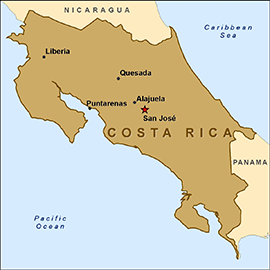
Costa Ricans preferred to give a second chance to the Citizens Action Party (PAC) by electing Carlos Alvarado as the country’s president for the next four years, over Evangelical preacher Fabricio Alvarado.

In elections marked by the polarization of society, Costa Ricans on Sunday voted for the nation’s traditional values and against the ultraconservative discourse of Fabricio, the former candidate from the National Restoration Party.

Fabricio won the first round of general elections thanks to his strong opposition to same-gender marriage, the gender ideology and sex education, as well as his fanatical defense of the Christian concept of family, overcome by the one that prevails today in a more modern, inclusive and tolerant society.

Carlos’ overwhelming victory at the polls contradicted previous surveys, save for the one carried out by the National University that gave him the victory, while other allegedly more recognized firms predicted a tight victory by Fabricio and even an overwhelming win by the preacher.

After the first irreversible results in the elections were announced, the Supreme Electoral Court passed the test with flying colors, because it counted 90.6 percent of 6,612 Voting Boards in two hours and five minutes.

That way, Carlos was proclaimed the president-elect and he will take office on May 8 as the 48th head of State of the 2nd Republic (since 1953).

After 95.58 percent of all 6,612 Voting Boards were counted, Carlos Alvarado had won 1,281,292 valid votes, accounting for 60.74 percent, with participation of 66.99 percent of registered voters and an abstention of 33.01 percent.

Narcos promise not to kill more candidates

Guerrero bishop gets commitment from cartel boss

Narcos in Guerrero have agreed not to kill any more candidates for election after meeting with the bishop of Chilpancingo.

Bishop Salvador Rangel Mendoza, who has previously encouraged dialogue with drug cartels as a means of reducing violence, said he met Friday with a gang leader during a visit to Heliodoro Castillo in the state’s Sierra region.

After raising the issue of the assassination of candidates, he said, the gangster “promised to try to prevent it and allow a free election to take place in which the choice of the people would prevail…”

The cartel insisted on two conditions: that those running for office not give away money in an attempt to buy votes, and that once the election was over the candidates must fulfill all their promises.

“What they ask for is a free, just and secret vote, nothing more,” the bishop declared.

Bishop Rangel had traveled to the town of Pueblo Viejo where criminal elements had cut off electricity and water in an attempt to flush out a number of rivals.

“I explained to them that while some of their enemies might have been there it was also true that there were old people, children and pregnant women, and all of them needed those services,” he said.

Rangel’s intercession succeeded and the gang yielded, reconnecting the utilities.

The bishop refused to identify the criminals with whom he spoke or provide any other information regarding the gang to which they belong.

Relations between Rangel and criminal organizations went awry two months ago when two priests and the relatives of a nun were murdered in two different incidents.

Of the 42 politically-related assassinations in Mexico since September, 12 were in Guerrero. Oaxaca was next with eight.

Source: Milenio (sp), El Universal (sp)

Indigenous people claim rights in Guatemala

Six meetings to be followed by the High Authority Meeting for Ibero-American Indigenous Communities, to be held on April 5th and 6th, began in the city of Antigua Guatemala. More than 250 representatives from indigenous people and governments will draft the Political Declaration to be passed during the 26th Ibero-American Summit of Heads of State and Government, to be held in November also in Antigua Guatemala.

This will be the first time that the indigenous issues and contributions reach directly the policies of the decision-makers in an Action Plan for the implementation of their rights.

The meetings of indigenous youth and women leaders began Monday to foster a regional platform for dialogue with the high authorities outlined as the closing period of a broad meeting of discussions.

A meeting will take place between high authorities and indigenous youth and women on April 3rd and another of the Regional Indigenous Consultative Body and the Intergovernmental Meeting on April 4th.

Many of these initiatives are still dead letters for some indigenous peoples of Latin America and the Caribbean, usually victims of discrimination, marginalization, exclusion, poverty and the inexorable climate change, according to experts.

spot_img

A special celebration show with Tortilla Soup band

Compiled by the El Reportero’s staff

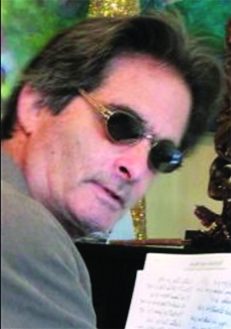
Please join Latin Rock, Inc. and Tortilla Soup in celebrating recently retired San Jose

Police Officer and leader of Tortilla Soup, Robert Payne as he celebrates his birthday at this special show.

Among the special guests will be bare-sax player Johnny Bamonte, from Huey Lewis & The News. The band alone is full of extraordinary players!

Recently ex-Malo bass player Joaquín Solórzano has received an award from the Christian Film Festival in Newport News for his Faith based music and videos which you can view and listen to at https://www.youtube.com/watch?v=qC2xmvkgk-8 or click on the video here.

Family and friends will be gathering at this show as they did last year for this special occasion not to be missed.

April 7, 2018. Saturday, at t Club Fox, on 2209 Broadway Street, Redwood City. Doors 7 p.m. / Show 8:00 p.m. This event is 21 and over.

Uncommon Law presents, Crime After Crime

Crime After Crime is the story of the battle to free Debbie Peagler, an incarcerated survivor of brutal domestic violence.

Over 26 years in prison cannot crush the spirit of this determined woman, despite the injustices she has experienced, first at the hands of a boyfriend who beat her and forced her into prostitution, and later by prosecutors who cornered her into a life behind bars for her connection to the murder of her abuser.

Her story takes an unexpected turn two decades later when a pair of volunteer attorneys take on her case, and attract global attention to the troubled intersection of domestic violence and criminal justice.

After the film, stay to hear from award winning filmmaker Yoav Potash, former UnCommon Law client Alicia Nolan and UnCommon Law attorney Lilli Paratore, whose Equal Justice Works Fellowship is focused on parole policy change that recognizes the experience of gendered trauma and abuse.

Tuesday, April 10, 6:50 p.m., at The New Parkway Theater, 474 24th St. Oakland.

César Chávez Parade and Festival

The annual César Chávez Festival will feature a tribute to the Mission’s own sound of the streets created by Santana as performed by Zebop, one of the best Santana Tribute’s around. Zeboprecently celebrated their 12th Anniversary with their show at Club Fox coupled with a sold out crowd and they are ready to bring their spot on Santana sounds for this Cesar Chavez Festival.

And what better way to pay tribute to César Chávez, Carlos Santana and Dolores Huerta than with Carlos Santana’s recently producing the documentary “Dolores.”

Special guest former Santana lead vocalist Tony Lindsay will also be on hand for this event. There will also be other Mission District musicians there that day for a final jam to honor the sound that exploded on these streets and now shared around the world.

Saturday, April 14, 2018. Parade starts at 11 a.m. at Dolores Park. Street Fair runs from 11-6 at 24th Street, from Folsom to Bryant.

Cinco de Mayo with Third Sol & Camino

Third Sol makes a return to Club Fox to celebrate this big day of music at the annual celebration of Mexican Independence Day, Cinco de Mayo!

Third Sol, known for their original soul music and many favorite tribute renditions, will fill the dance floor with their brand of East Bay sounds.

Also making a return themselves as the openers of the show will be Camino who have been making waves in the bay area performing movement through many venues across the peninsula and San Francisco area.

Camino brings a Latin smoky flavor with their original music and captivating sounds. This band is to become an immediate favorite of anyone who hears them.

At Club Fox – Sat May 5. For reserved seating (limited) call the LRI office at 415-285-7719.

Tickets also available through PayPal on LRI website. Be sure to make your purchase through link for each band on the page.

http://www.latinrockinc.net/events/2018-05-05-camino.aspx


spot_img

Celebration of the opening day of Mission Community Market La Placita

Compiled by the El Reportero’s staff

Mission Community Market returns. Join your favorite farmers market sellers and the Mission community in celebrating the first market of the spring season with a fun evening of good food, free family activities, live music, and more. Opening Day Festivities:

• Kids’ activities and tissue paper flower making with Casa Bonampak
• Live music by La Gente (4-6 pm) and Muchacho Mandanga (6-8 pm), brought to you in partnership with Little Mission Studio
• Market to Table Demo with chefs Alejandro Morgan and Juan Torres of Lolinda
•Seasonal Market Tasting: Spring Greens

Starting on April 5, the Mission Community Market will be operated by CUESA on Thursdays, 4 to 8 p.m.

Uncommon Law presents, Crime After Crime

Crime After Crime is the story of the battle to free Debbie Peagler, an incarcerated survivor of brutal domestic violence.

Over 26 years in prison cannot crush the spirit of this determined woman, despite the injustices she has experienced, first at the hands of a boyfriend who beat her and forced her into prostitution, and later by prosecutors who cornered her into a life behind bars for her connection to the murder of her abuser.

Her story takes an unexpected turn two decades later when a pair of volunteer attorneys take on her case, and attract global attention to the troubled intersection of domestic violence and criminal justice.

After the film, stay to hear from award winning filmmaker Yoav Potash, former UnCommon Law client Alicia Nolan and UnCommon Law attorney Lilli Paratore, whose Equal Justice Works Fellowship is focused on parole policy change that recognizes the experience of gendered trauma and abuse.

Tuesday, April 10th, 6:50 p.m., at The New Parkway Theater, 474 24th St. Oakland.

Cinco de Mayo with Third Sol & Camino

Third Sol makes a return to Club Fox to celebrate this big day of music at the annual celebration of Mexican Independence Day, Cinco de Mayo! 

Third Sol, known for their original soul music and many favorite tribute renditions, will fill the dance floor with their brand of East Bay sounds. 

Also making a return themselves as the openers of the show will be Camino who have been making waves in the bay area performing movement through many venues across the peninsula and San Francisco area.

Camino brings a Latin smoky flavor with their original music and captivating sounds. This band is to become an immediate favorite of anyone who hears them. 

At Club Fox – Sat May 5. For reserved seating (limited) call the LRI office at 415-285-7719. 

Tickets also available through PayPal on LRI website. Be sure to make your purchase through link for each band on the page.

http://www.latinrockinc.net/events/2018-05-05-camino.aspx 

At the SF Public Library: The Imagination of American Poets

San Francisco Public Library celebrates San Francisco’s literary cultural heritage and National Poetry Month, presenting more than 50 portraits of local and national poets accompanied by their handwritten work selected from photographer Christopher Felver’s publications Tending The Fire: Native Voices and The Poet Exposed.

The exhibition features cultural luminaries Allen Ginsberg, Billy Collins, Louise Erdrich, U.S. Poet Laureates W.S. Merwin, Robert Hass and Kay Ryan. The exhibition also presents first San Francisco Poet Laureate, Lawrence Ferlinghetti and current laureate Kim Shuck.

 Christopher Felver: The Imagination of American Poets opens on March 24 in the Main Library’s Jewett Gallery with the opening event featuring the first Poet Laureate of San Francisco, Lawrence Ferlinghetti, San Francisco’s current Poet Laureate, Kim Shuck, and U.S. Poet Laureate, Robert Hass. The exhibition will be enhanced by artist talks, film screenings and other related programs through June. The exhibition is curated by Sue Kubly and Dr. Peter Selz, noted art historian, and sponsored by Friends of the San Francisco Public Library.

March 24 – June 24, at the SF Main Library, Jewett Gallery, 100 Larkin Street, San Francisco

spot_img

Honduras: Arrest in Cáceres murder a feeble attempt at image rehab

El comportamiento del régimen de Hernández es en muchos sentidos similar al de las dictaduras violentas que existieron en toda la región en el siglo XX – regímenes que se mantuvieron en el poder a través del terror

por José Luis Granados Ceja

TEGUCIGALPA, HONDURAS – Según un activista, el arresto el 3 de marzo de un ejecutivo comercial hondureño, por presuntamente orquestar el asesinato en 2016 de la reconocida ambientalista Berta Cáceres, no ha inspirado la confianza pública generalizada en la aplicación de la ley. Por el contrario, Karen Spring, coordinadora de la Red de Solidaridad Hondureña, dijo a MintPress News que el arresto, dos años después de la muerte de Cáceres, se ha debido principalmente al cinismo de la clase trabajadora y pobre del país centroamericano.

La sospecha que prevalece es que la medida tenía como objetivo reparar la maltratada reputación internacional del gobierno y apaciguar a los votantes enojados por las políticas corporativas del partido político en el poder, las acusaciones de fraude electoral y una represión cada vez más violenta contra los disidentes.

Una mujer indígena lenca, Cáceres ganó el prestigioso Premio Ambiental Goldman en 2015 por liderar una exitosa campaña popular para bloquear la construcción de una presa hidroeléctrica a lo largo de las orillas del río Gualcarque en el oeste de Honduras. Fue asesinada el 2 de marzo de 2016 por una banda de intrusos armados, lo que llevó a ocho arrestos. A principios de este mes, la policía arrestó a un noveno: Roberto David Castillo Mejía, presidente del constructor de represas, Desarrollos Energeticos, que se conoce con el acrónimo DESA.

Un vocero del Ministerio Público hondureño dijo a Reuters que Castillo “estaba a cargo de proporcionar logística y otros recursos a uno de los perpetradores ya procesados por el crimen”. A través de intermediarios, Castillo ha negado cualquier participación en el asesinato.

Pero Spring, que había trabajado estrechamente con Cáceres desde que se mudó a Honduras desde Canadá en 2009, dijo que la participación de Castillo ha sido un secreto a voces. Los grupos que exigían justicia para Cáceres habían mantenido durante mucho tiempo que él era el autor intelectual detrás de su asesinato y pidieron su arresto. De hecho, la propia Cáceres había denunciado públicamente a Castillo en varias ocasiones, acusándolo de hostigamiento y amenazas.

“Creo que el estado ha sabido por mucho tiempo que David Castillo ha sido uno de los autores intelectuales de su asesinato”, dijo Spring a MintPress.

Desde el golpe de 2009, sucesivos gobiernos hondureños han sido sometidos a un intenso escrutinio por presuntas violaciones de los derechos humanos; Mientras tanto, el crimen violento se ha disparado, convirtiendo al país en uno de los más peligrosos del mundo.

Spring cree que el arresto de Castillo en relación con el asesinato de Cáceres fue solo el resultado de una intensa presión nacional e internacional y que no debe verse como una señal de que el gobierno de Hernández está interesado en mejorar su historial de derechos humanos.

Thousands of Honduras took to the streets to demonstrate against Hernandez’s disputed reelection. During those protests, eyewitnesses reported the use of live ammunition by state security forces against demonstrations. Human rights defenders allege that at least 38 people were killed by the Honduran police and armed forces in the weeks following the vote.

“In all those cases, the state hasn’t even lifted a finger,” stated Spring.

Meanwhile, dozens of pro-democracy activists and demonstrators have been detained.

Spring added:

“When you look at the lack of investigation into those 38-plus murders by state security forces and you look at the political will of the Honduran state to go after the 27 political prisoners who were jailed as a result of their involvement in the protests, it becomes very obvious that, in Honduras, the state lacks the will to really apply the rule of law.”

Both the U.S. and Canadian governments have justified sending millions of dollars in international aid into Honduras on the grounds that the country needs these funds to bring down the levels of violent crime and build a transparent justice system.

Spring contends that the U.S. and Canadian governments are not supporting human rights or the Honduran people at all, but instead are trying to advance their countries’ economic and geopolitical interests.

Both have long-running interests in Honduras. Many mining companies headquartered in Canada have operations in Honduras and the U.S. has long used the country as a staging point in its efforts to dominate the region. It thus follows that both were quick to legitimize the highly disputed presidential election.

“I think the only reason this government is in power is because of the U.S. government support,” argued Spring.
The Hernandez regime’s reliance on support from foreign governments serves, however, to further undermine its legitimacy inside the country and in the region.

The Honduran government finds itself mired in perpetual crisis and in an unstable situation.

It seeks greater legitimacy in the international community by moving to arrest a suspect in the murder of a prominent activist, but simultaneously it continues to detain a pro-democracy activist on spurious charges.

The arrest of David Castillo in connection to the murder of Berta Caceres was indeed due partially to the international pressure exerted on the government, a clear indication that solidarity can make an impact.

spot_img

Homemade bomb was cause of Mexico’s ferry blast

Federal investigators have found it was detonated by remote control – The United States embassy issued a security alert

by Mexico News Daily

The explosion on a passenger ferry in Playa del Carmen, Quintana Roo, Feb. 21 was caused by a homemade bomb, federal authorities have determined.

According to a joint investigation by the federal Attorney General’s office (PGR) and the Secretariat of the Navy, the explosive device was placed intentionally on the vessel operated by the company Barcos Caribe and detonated remotely.

The investigation file, seen by the newspaper El Universal, also said that the person who made the bomb had knowledge of materials used in the mining and construction industries.

Twenty-six people were injured in the blast that occurred shortly before 1:00pm when the ferry was docked in Playa del Carmen following a voyage from Cozumel.

The vessel was left with a gaping hole in its starboard side next to a passenger seating area. Authorities initially said the explosion was most likely caused by a technical failure.

However, criminal investigators who attended the scene found five cylindrical cardboard cartridges attached to fragments of copper wire with yellow covering among other debris from the ferry.

The cardboard cartridges were used as explosive charges that were activated by a remote control, the investigation established.

The remains of three rows of badly damaged seats located near the center of the blast were also taken to a laboratory for analysis where it was determined that dust impregnated in them had originated from an improvised explosive device.

Navy personnel found another more powerful homemade bomb March 1 on the hull of another Barcos Caribe ferry anchored off the coast of Cozumel.

Marines with special training in dismantling explosive devices determined that it had similar characteristics to the bomb that exploded February 21.

Both devices contained potassium perchlorate, aluminum and boric acid but the undetonated bomb had eight PVC tubing cartridges rather than five cardboard ones.

Given their similarity in structure and the substances used, investigators concluded that both devices were made by the same person.

The United States embassy issued a security alert following the explosion and the subsequent discovery of the second device, which prohibited government employees from using ferries between Playa del Carmen and Cozumel.

The Canadian government followed the lead of the United States, issuing its own alert cautioning travelers against using the ferry services in Quintana Roo.

The United States also closed its consular agency in Playa del Carmen and ordered government employees not to travel to the popular tourist destination but has now announced that the office will reopen on Monday.

One of the owners of Barcos Caribe is the father of former Quintana Roo governor Roberto Borge Angulo, currently in custody awaiting trial on corruption charges.

Roberto Borge Martín was on board the ferry when the explosion occurred but was uninjured. Barcos Caribe rejected a claim by the Quintana Roo government that the explosive devices were planted by the company.

But according to El Universal columnist Raúl Rodríguez Cortés, a security video from the company that has been reviewed by the PGR shows Borge boarding the vessel in Cozumel with an unidentified man carrying a backpack.

However, when the same man disembarked in Playa del Carmen he no longer had the backpack with him. In the footage, Rodríguez said that sources who have seen the video told him that Borge Martín “is seen leaving the ferry hastily.”
The journalist said that the video could be “the key evidence that it was a self-inflicted attack” designed for the purpose of collecting a large insurance payout and to destabilize the current Quintana Roo government led by Carlos Joaquín González.

Meanwhile, new security measures went into effect today.

The Federal Police announced in a statement that 60 tactical personnel have been deployed to mount a security operation in Quintana Roo, concentrating on the ferry terminals in Cozumel and Playa del Carmen.

The officers, accompanied by a canine unit trained in the detection of firearms, explosives and drugs, will conduct inspections of terminal buildings and vessels.

The state government announced it will invest 50 million pesos (US $2.68 million) to install new security equipment at the two terminals during the next two weeks.

Source: El Universal (sp), La Razón (sp)

spot_img

Mexican presidential candidate says PRI is behind attack

by he El Reportero’s wire services

Ricardo Anaya, presidential candidate from the coalition Por Mexico al Frente, accused the ruling party Institutional Revolutionary Party (PRI, in Spanish) of being behind the group that attacked him.

Anaya returned early this morning from Germany, where he held a meeting with Chancellor Angela Merkel, and on his arrival at the Mexican international airport was greeted by people that shouted him ‘corrupt’ and carried banners with messages against him.

On his Twitter account Anaya, from the National Action Party, posted a video of the incident, which he denounced as ‘the new chapter of the PRI’s dirty war’.

He also said that the Attorney General’s Office (PGR) and President Enrique Peña Nieto should ‘take their hands’ off the electoral campaign for the July 1st elections.

There are accusations of money laundering, embezzlement and use of ghost companies against Anaya and in this regard, PRI has presented documents to Luis Almagro, Secretary General of the Organization of American States (OAS).

Panama, country with less work opportunities in the region

After being leader in work opportunities in the last 10 years, today Panama emerges as the country with least possibility of finding jobs for the second quarter of 2018.

According to the survey of ManpowerGroup, the Central American nation is in the last place of the ranking in perspectives of employment in the region of a total of 10 Latin American countries analyzed, below Colombia and Costa Rica, fall also registered in the second quarter of 2017.

The study estimated the greatest possibilities of job offers for the second quarter of 2018 will again be located in the United States, Canada, Mexico, Guatemala, Peru, Brazil, Costa Rica, Argentina and Colombia in that order.

Such a situation does not mean that Panama is in crisis, but it does reflect the deceleration that affects it for the last two years, said the director for Central America and the Caribbean of Manpower, Alberto Alesi.

Despite Panama being one of the countries with highest economic growth in Latin America and the Caribbean, unemployment rose over the last four years, provoking a worsening of the relation between the relation of Non-Financial Public Sector Debt and the nominal Gross Domestic Product, said a recent study of Latin Consulting, AIH Capital and Aguaclara Consulting and Investments.

spot_img

Mexican director wins four Academy Awards

The Shape of Water wins best film and best director for Guillermo del Toro

by the El Reportero’s wire services

Mexican director Guillermo del Toro had a successful outing at last night’s 90th Academy Awards, taking home the coveted best director and best picture Oscars for his film The Shape of Water.

The dark fantasy drama also won the awards for best original score and best production design. The film had been nominated in 13 categories.

In his acceptance speech for the best director Oscar, del Toro began by recognizing his own background and that of other Mexicans who have forged highly successful careers in the United States film industry.

“I am an immigrant like Alfonso [Cuarón] and Alejandro [G. Iñárritu], my compadres, like Gael [García Bernal], like Salma [Hayek] and like many, many of you…” he said.

“In the last 25 years, I’ve been living in a country all of our own. Part of it is here, part of it is in Europe, part of it is everywhere. Because I think the greatest thing that art does, and that our industry does, is erase the lines in the sand . . . when the world tells us to make them deeper,” the Guadalajara-born director continued.

Both Cuarón and Iñárritu have previously won the best director Oscar, the former in 2014 for Gravity while the latter took home the award in 2015 for Birdman and then again in 2016 for The Revenant.

Del Toro’s win means that Mexican filmmakers have won the award four times in the last five years. The three directors are also close friends and are commonly referred to as the Three Amigos.

Their careers are now largely based in the U.S. but all three made their first films in Mexico, and Cuarón will release another made-in-Mexico movie later this year. Another of del Toro’s films, Pan’s Labyrinth, was nominated for best foreign language film in 2007.

Anna Marie de la Fuente, a journalist who writes about the Latin American film industry for the magazine Variety, said that “like many immigrants before them, they have been embraced by Hollywood thanks to their prodigious raw talent, perseverance, hard work and, in some measure, luck.”

She also said the directors were helped by initiatives designed to support the Mexican film industry, adding that the rise of another Mexican star in the mold of Guillermo del Toro, Salma Hayek or Gael García Bernal is quite possible.

“Mexico has been churning out more than a hundred films a year thanks to more tax incentives, in particular, one called Eficine which, since 2006, gives incentives to private investors in film. So there are many opportunities for new talent to emerge.”

Del Toro’s words upon receiving the best picture award may provide further impetus for the next generation of filmmakers.

“… Growing up in Mexico I thought this could never happen, it happens and I want to tell you, everyone that is dreaming of a parable, of using the genre fantasy to tell the stories about the things that are real in the world today, you can do it, this is a door. Kick it open and come in,” he said.

The Shape of Water, del Toro’s 10th feature film, tells the story of a mute woman who befriends and ultimately falls in love with a merman or “amphibian god” that is being kept at a top-secret United States government lab in Baltimore in 1962.

It was named best film at the Venice International Film Festival and won two Golden Globes and del Toro also won best director at this year’s British Academy Film Awards or BAFTAs.

Another movie with a connection to Mexico won two Oscars last night.

Coco, a film whose concept is based on the Day of the Dead, was named best animated feature and one of its tracks, Remember Me, won best original song.

Source: \ Milenio (sp), The Verge (en), The Guardian (en)

spot_img

A different theory of cancer

by Jon Rappoport

“The scrambling of chromosomes is so massive that no two cancer cells are identical. This means there is no typical cancer cell for vaccines or drugs to target and drug resistance is inevitable. All this without gene mutations.” (David Rasnick, PhD, former mainstream researcher, who has now become an outsider.)

A theory to explain the failure of the war on cancer? A theory that indicates in simple terms why mainstream treatments fail? A door that could open up on new alternative treatments?

There is a fascinating book-in-progress by chemist David Rasnick, PhD. It proposes a quite different view of cancer.

Here is an excerpt from David’s bio: “The past 21 years I have studied cancer from a completely new perspective. Prior to that, I worked in the pharmaceutical/biotech industries developing drugs against cancer, emphysema, arthritis, and parasites.”

“I…synthesized the first peptidyl-fluoromethanes. These molecules are…used around the world in the development of therapies for the tissue-destroying diseases of arthritis, cancer, and parasites, among others.”

David presents an explanation of cancer by tracing the cause to CHROMOSOME MALFUNCTION—which is a major departure from the current GENE-MUTATION hypothesis.

Merriam-Webster: “[A gene is] a unit of DNA that is usually located on a chromosome and that controls the development of one or more traits and is the basic unit by which genetic information is passed from parent to offspring.”

Vocabulary.com: “A chromosome is a strand of DNA that is encoded with genes. In most cells, humans have 22 pairs of these chromosomes plus the two sex chromosomes…”

David writes: “Cancer is a disease of the chromosomes! This simple understanding changes everything—from prevention to diagnosis to treatment. It explains spontaneous remission, inevitable drug resistance, and strongly supports alternatives to radiation and chemotherapy. It can help you and your family make better informed choices.”

David is raising funds for the purpose of completing his book. You can go to his Indiego site and watch David explain his cancer research, and if so moved, make a contribution.

I asked David to make a few comments about his new work—now that he has moved from the scientific mainstream to an “outsider” position. Here are his remarks:

“The biggest mark against [gene] mutations causing cancer is that every attempt to experimentally, or any other way, to prove it has failed. Second, basing diagnosis and treatment on the gene theory have failed to reduce the incidence of cancer and mortality. Third, theoretical and experimental proof that unbalanced chromosomes cause cancer continues to amass. So far, the chromosomal imbalance theory has successfully explained everything we know about cancer: how it starts and progresses over years to decades, its physical and behavioral characteristics, inevitable drug resistance, the impossibility of a vaccine against cancer…”

“Anything that becomes entrenched is difficult to replace. The trillion dollars spent on the gene centric war on cancer has created a mighty citadel. Huge egg in the face of government, drug companies, academics and opinion leaders to say whoops folks, sorry, we got it wrong.”

“Unbalanced chromosomes completely disrupt the species specific and tissue specific location of chromosomes. The chromosomes still orchestrate the production of proteins but in bizarre and uncoordinated ways. Again, without mutation of genes.”

“…there is an overall gain in chromosomes as…unbalanced cells divide over a period of years to decades. The amount of protein in a cell is proportional to the number of chromosomes, which means that cancer cells have considerably more protein than normal cells. The extra protein leads to the secretion of very dangerous digestive enzymes and other proteins responsible for invasion of adjacent tissues and metastasis.”

“The scrambling of chromosomes is so massive that no two cancer cells are identical. This means there is no typical cancer cell for vaccines or drugs to target and drug resistance is inevitable. All this without gene mutations.”

“The chromosomal imbalance theory changes everything about cancer. It offers young researches a very powerful and productive alternative to the hopelessly failed gene mutation theory.”

(Jon Rappoport is he author of three explosive collections, The Matrix Revealed, Exit From The Matrix, and Power Outside The Matrix).

spot_img

The wonders of cinnamon

byBen Fuchs

I love easy-to-use remedies for common health issues. Vitamin C powder is super effective for colds, drinking lots of water can ease hunger pangs while encouraging weight loss and deep breathing can lower blood pressure almost immediately.

One of my favorite simple strategies for improving health involves using spices. Not only can they have medicinal value, but spicing strategically will make foods taste better and you’ll find that if you’re eating generously spiced foods you’ll feel fuller faster.

One of the most helpful of spices is cinnamon. It’s tasty and can help enhance the sweetening powers of sugar and honey. And, as it turns out, cinnamon can also help lower blood sugar too!

While there are dozens of types of cinnamon, the most readily available are Ceylon cinnamon (also known as “true” cinnamon), which is valued for its gentle sweet taste and Cassia (Chinese) cinnamon which has a spicier, stronger and more intense flavor. You can tell the difference between the two forms by their appearance; Cassia cinnamon is dark/reddish brown with a thick hard texture while the Ceylon type is light tan and tends to be thin and brittle.

No matter what form of cinnamon you chose to use, all have therapeutic properties. According to the Mayo Clinic, a 2012 review of scientific research found that using cinnamon had a “potentially beneficial effect” for sugar control. And another study from 2009 found that a 500 mg capsule of cinnamon taken twice a day for 90 days improved sugar levels, as measured by hemoglobin A1C levels, in people with poorly controlled type 2 diabetes.

Dr. Richard Anderson of the Human Nutrition Research Center, a division of the US Department of Agriculture, says that cinnamon contains a nutritional compound called MHCP which makes fat cells more sensitive to insulin, thus improving the body’s sugar handling capacity. In addition, cinnamon can slow down stomach emptying time reducing dramatic changes in blood sugar, which can again improve the effectiveness of insulin.

And that’s not the only health benefits cinnamon can provide. Cinnamon is packed with anti-oxidant compounds that slow down the aging process. It may act as an anti-inflammatory reducing the pain and stiffness associated with arthritis. For those prone to sticky prone-to-clot blood, cinnamon contains a natural blood thinner called “coumarin”, which can help improve blood flow and circulation. For those on anti-coagulant medication who want to avoid coumarin’s blood thinning effects, best to lay off the Cassia cinnamon, which contains lots more of the clot busting phyto-nutrient than the less popular Ceylon version.

If you’re a diabetic or don’t want to be one, try adding ½ a teaspoonful to your breakfast and or dinner time dessert and see what happens. It can be especially tasty on savory veggies like onions and shallots.

spot_img