Saturday, October 17, 2026
spot_img
Home Blog Page 306

Electoral tribunal formalizes López Obrador as next Mexican president

por los servicios de cable de El Reportero

Aunque el mundo electoral lo reconoce como tal, Andrés Manuel López Obrador lo formalizó como el ganador de las elecciones del 1 de julio y el próximo presidente constitucional de México.

Por unanimidad, vindicando el carácter democrático y legítimo del proceso electoral, los magistrados del Tribunal Electoral del Poder Judicial de la Federación (Tepjf) aprobaron el informe en el que certificaron las elecciones presidenciales. También respaldaron la entrega del certificado del Presidente electo al candidato de la coalición Juntos Haremos Historia, Andrés Manuel López Obrador.


“Solo quienes han obtenido el poder a través del proceso electoral tienen el capital político y la moral para ejercer”, argumenta la magistrada del Tepjf, Janine Otalora.


Antes de este paso legal, López Obrador se abstuvo de participar en eventos oficiales, incluida la reciente Cumbre de las Américas, aunque fue invitado por el presidente Enrique Peña Nieto.


También prometió respetar el mandato de Peña Nieto hasta el último momento, aunque haya tenido que tomar medidas con las que cambiar el país, incluso pacificarlo en la actual ola de violencia y delincuencia, y reducir la pobreza.


El 1 de diciembre, López Obrador es juramentado por el Congreso de la Unión como Presidente de la República para el período 2018-2024.


Gracias a Amazon, el gobierno pronto poder rastrear tu rostro

Defensores de los derechos civiles preocupados por la tecnología de reconocimiento facial de Amazon

Washington, DC – Los miembros del Congreso dirigieron una carta bipartidista al presidente, presidente y CEO de Amazon, Jeff Bezos, solicitando una reunión sobre la nueva tecnología de reconocimiento facial de Amazon, marcada y vendida como “Amazon Rekognition”.

 La carta, firmada por 25 miembros del Congreso, la cual puede tener sobre los votantes de la ACLU, los resultados de su propia prueba y la de 28 miembros del Congreso fueron identificados erróneamente. como presuntos delincuentes. Entre los partidos se encontraban el representante Gómez, el representante Lewis y el representante Garrett. Según la ACLU, el 40 por ciento de los partidos falsos de Rekognition fueron de personas de color, un porcentaje del 20 por ciento del Congreso.


Guatemala establece una plataforma para encontrar mujeres desaparecidas

Guatemala ha establecido una plataforma para el tratamiento de mujeres denunciadas como desaparecidas, una cifra que permanece en rojo debido a su relación con la discriminación de género.


La procuradora general Consuelo Porras explicó que el mecanismo llamado Isabel Claudina es una alerta que los familiares pueden activar en la Fiscalía y la Policía cuando se sospecha un delito.


El nombre derivado de la unión de las adolescentes María Isabel Véliz Franco y Claudina Isabel Velásquez Paíz, que fueron encontradas muertas después de ser reportadas como desaparecidas en 2001 y 2015 respectivamente, en el municipio de Mixco y la capital.


Según Porras, en el caso de Claudina, los padres, al enterarse de que estaba perdida y en peligro, a la policía a la policía, pero la policía a la esperaban 24 horas para la denuncia que había desaparecido.


Su cuerpo fue encontrado un día después en la colonia Roosevelt por los Bomberos Voluntarios antes de una llamada anónima.


Las estadísticas del Ministerio Público informaron que en este país centroamericano dos mujeres desaparecen a diario por diferentes motivos, en su mayoría asociados a la violencia de género.

La Fiscalía informó 287 casos solo de enero a mayo, especialmente en la capital.


Las partes mexicanas serán disueltas

Los partidos mexicanos Social Encounter (PES) y New Alliance (PANAL) están a punto de perder su registro oficial después de caer por debajo del tres por ciento exigido por la ley en las elecciones del 1 de julio.

El Instituto Nacional Electoral (INE) espera que el Tribunal Electoral del Poder Judicial Federal notifique oficialmente el rechazo a los desafíos presentados por ambos grupos, para decidir sobre su disolución.


El PES y el PANAL no alcanzó el mínimo del tres por ciento en las elecciones federales, elecciones presidenciales, para senadores y diputados en el día en que Andrés Manuel López Obrador se convirtió en el presidente electo de México.

Obrador prevaleció con la coalición Juntos Haremos Historia, que integró el Movimiento Nacional de Regeneración, el Partido Laborista y el PSE.


El PANAL apoyó la candidatura presidencial de José Antonio Meade, del Partido Revolucionario Internacional, que fue el tercero en la votación para presidente.


spot_img

SAM-e the “Supernutrient” vital bio-chemical

by Ben Fuchs

Back in the 1990’s SAM-e was popular as an antidepressant and energizer. Although its effectiveness may have been overstated, the fact remains that SAM-e can be a very important nutritional supplement for a lot of mental health issues, anxiety, bipolar disorder and depression.   SAM-e, which was first discovered in the 1950’s, is involved in the production of the stress management hormone serotonin and the pleasure and reward brain chemical dopamine.

SAM-e, a derivative of the amino acid methionine, is a vital bio-chemical that’s involved in the healthy functioning of the brain and the nervous system.  SAM-e is also required for helping keep the insulation of nerves resilient and intact.  This insulation which is called myelin is required for keeping the conduction of electrical energy flowing smoothly.  Movement disorders, neuropathies, paralysis, impaired vision, numbness, muscle weakness, difficulties with speech or with hearing, even incontinence and weak bladder control can all be examples of health issues that can be associated with myelin defects.  SAM-e is made in the body so it’s not really technically “essential” but rather it is said to be “conditionally essential”.  That basically means you don’t absolutely have to be ingesting it on a regular basis, but doing so might not be a bad idea!

However, just because you have been making sure you’re eating lots of methionine doesn’t mean you’ll be making enough SAM-e.   SAM-e is an activatedversion of methionine.  That means that not only is the intake of plain old methionine required, but, because activation requires nutrition and cellular energy, adequate nourishment and a healthy biochemistry are necessary.  If the biochemical milieu in the body is disturbed in any way activation of SAM-e may not occur.  That’s why the American Journal of Clinical Nutrition (AJCN) has called SAM-e a “supernutrient”.  In other words it’s no mere nutrient, it’s an activated nutrient.   And, according to a 2002 article in the AJCN, supernutrients like SAM-e, while not themselves essential (the body can make them), they…

“…must be provided to meet the normal cellular requirements when its endogenous synthesis from a nutritional precursor becomes inefficient”.

In other words, according to the fine scientists at the AJCN,  if your body can’t make enough, you might want to consider supplementing!

And, SAM-e isn’t just important for mental health.  It also plays a part in improving the symptoms, the pain and inflammation associated with arthritis.  It has been shown to increase the productivity of cartilage making cells and also to upregulate the squishy, gummy proteins called proteoglycans that have protective and shock absorbing benefits for joints.  Proteoglycans conduct electrical energy and trap water which can make cartilage more effective.  Proteoglycans keep the skin thick and robust and also keep bones and blood vessels healthy too.  Because SAM-e upregulates proteoglycan synthesis, that makes it beneficial for the skeletal system and the circulatory system too.

SAM-e may also relieve the pain and inflammation associated with arthritis.  It has been shown to increase the productivity of cartilage making cells and also to upregulate the squishy, gummy protein-sugar complexes called “proteo-glycans” that have a protective and shock absorbing benefits for joints.  Proteoglycans conduct electrical energy and trap water and can make cartridge more effective.  Proteoglycans can also keep the skin thick and robust and stimulate the production of skin-firming collagen.   That makes it helpful for keeping the visage youthful and wrinkle-free.  And because SAM-e upregulates proteoglycan synthesis; in addition to helping keep smooth,  that makes it beneficial for the skeletal system and the circulatory system too, both of which depend on the gel like protein-sugars  for healthy functioning.

SAM-e’s fat metabolizing functions make it a very liver-friendly supplement.    The liver is the main fat processing organ in the body and when it’s working too hard or health is compromised it tends accumulate fat.  This buildup of fat in known as “Fatty Liver Disease” and it’s a serious health issue that affects one out of three Americans.  Alcoholics are at even higher risk for fatty liver disease as are patients on multiple prescription drugs.  And because a great deal of SAM-e production takes place in the liver, SAM-e deficiency can be both the cause and an effect of an unhealthy and/or fatty liver.

The best way to make sure you’re getting the benefits of SAM-e is to supplement.  You can take 400-800 a day.  It’s a little pricy, a month supply will cost you around 40-60 dollars, depending on how much you take.  But you’re not going to get SAM-e from food, so if your health is compromised in any way you might not be making enough of it adding a 200mg tablet or two to a daily supplement program might not be a bad idea.

spot_img

Kaiser hospital workers to stand up for patient care in labor day protest, civil disobedience

Compiled by the El Reportero’s staff

More than 1,000 healthcare workers and their allies will march and engage in civil disobedience and protest this Labor Day, Monday, Sept. 3, to protest the corporation’s plans that would undermine patients and the people who care for them.

The workers will be joined by U.S. Reps. Ro Khanna (D-San Jose) Mark DeSaulnier (D-Richmond).

Kaiser Permanente, which reported $29 billion in reserves in 2017 and whose CEO is paid $10 million a year, is seeking deep cuts that would harm patient care. It has refused to engage in bargaining over the issue, while becoming more strident in its attitude toward workers, deepening the rift between the corporation and its employees.

The march will kick off from Mosswood Park, 3612 Webster St., and continue to the Kaiser Permanente Medical Center, 275 W. MacArthur Blvd.

Job fair with many jobs oportunities

Bring 10-15 Resumes. Dress Business Professional. This is a free event for job seekers.

Job Opportunities include:

Inside Sales Reps, Outside Sales Reps, Account Executives, Retail Managers, Account Managers, Insurance Sales, Customer Service, Technical Sales, Sales Managers, Pharmaceutical Sales, Telesales, Sales Trainer, Merchandiser, Mortgage Brokers, Financial Planner, Route Sales, Retail Sales, Retail Management, Human Resources and much more!

In San Francisco, Thursday, Sept. 13, from 9 a.m. – 12:30 p.m., at the Grand Hyatt San Francisco, 345 Stockton Street, San Francisco.

Parking Sutter-Stockton Garage: $3/hr

VIVA! Celebrating Latin Hispanic Heritage

Concerts, Dance, Crafts, Food & Films at the San Francisco Public Library

Join the fiesta at the San Francisco Public Library this fall with ¡VIVA!, a citywide celebration of Latino Hispanic cultures with more than 80 music, food, film, dance, crafts and author talks happening mid-September through October.

Special ¡VIVA!  events include concerts with Grammy award winners Lucky Díaz and the Family Jam Band and Jose-Luis Orozco.  Attend a storytime with Caldecott Honor Award winner and Pura Belpré Award winner Yuyi Morales as she reads from her new book, Dreamers.  ¡VIVA!  kicks off on September 15 with a performance by legendary Bay Area band Mariachi Mexicanísimo.

Throughout the fall, take part in salsa and guacamole-making programs, workshops on Repujado, the craft of Mexican embossing, Mission mural tours, piñata workshops and multiple screenings of everyone’s favorite film, Coco. On October 13, in cooperation with San Francisco’s 2018 Litquake Literary Festival, ¡VIVA! welcomes National Book Award finalist author Cristina Garcia as she discusses her latest work Here in Berlin.

Participate in Día de los Muertos festivities by painting masks at North Beach, creating tissue paper marigolds at Richmond and decorating sugar skulls at Mission and Golden Gate Valley. Día de los Muertos altar workshops celebrate those who have passed on, and take place in library locations across the City. Contribute by visiting a participating branch to place an ofrenda (offering) at the altar.

Visit sfpl.org/VIVA for more details and to view the ¡VIVA! Program Guide. ¡VIVA! is funded in part by Friends of the San Francisco Public Library. All programs at the Library are free.

¡VIVA! Kickoff Event with Mariachi Mexicanisimo – Sept. 15, 1 p.m., Atrium of the SF Main Library.

spot_img

Nights with Platanito Premieres New Season

by the El Reportero’s news services

With almost five years of existence, Noches con Platanito (Nights with Platanito) is the critically acclaimed “late night” program and the only Spanish-language program of its kind during Prime Time in the American Union that has become an essential part of program circuit of “late night “and practically a mandatory publicity visit for any actor, singer or artist from Hollywood and Latin America who wants to promote his most recent work. “Many actors are super excited to be in Platanito’s chair,” said actor Curtis Lum of the hit series Sirens.

Recorded in the city of Burbank in front of a live audience and entertained by Mexican comedian Sergio Verduzco, also known as Platanito, and his buddy also actor and comedian David Villalpando, Nights with Platanito has been a continuous success and one of the favorites of the public of the EstrellaTV channel, and one of the most popular programs among the coveted demographic group of young Hispanics.

Spielberg’s Oscar-Winning ‘Schindler’s List’ Set For 25th Anniversary

To commemorate the 25th anniversary of Steven Spielberg’s Schindler’s List, Universal will be re-releasing the movie in a limited engagement on Dec. 7, with picture and sound digitally remastered as overseen by the filmmaker. This includes a release in formats such as 4K, Dolby Cinema and Dolby Atmos.

Schindler’s List was a very personal film for Spielberg and it went on to win seven Oscars including Best Picture and his first as Best Director. It also is one of the top-grossing black-and-white films at the domestic box office with $96M, part of its $321.3M worldwide take.

Schindler’s List tells the story of German industrialist Oskar Schindler (Liam Neeson), who saved the lives of more than 1,100 Jews during the Holocaust. The movie was released on Dec. 15, 1993, and played limited before breaking 1,000 theaters in the middle of March 1994.

Co-starring Ben Kingsley and Ralph Fiennes, the film also earned Oscars for composer John Williams, screenwriter Steven Zaillian and director of photography Janusz Kaminiski, as well as art directors Allan Starski and Ewa Braun, editor Michael Kahn and producers Spielberg, Gerald R. Molen and Branko Lustig.

Venice Film Festival Ready for 2018 Edition

The Venice International Film Festival continues the countdown for the inauguration of its 75th edition in which Mexican Alfonso Cuaron has a favorite place along with the Cohen brothers.

With Cuaron as the president, the organizers of the event predict a close contest for the precious Lion of Gold award, while the followers of filmmakers like Orson Welles await interesting proposals like ‘On the other side of the wind,’ an unfinished film of the emblematic director and actor whose shooting began in 1972.

The jury will be chaired this year by Mexican director Guillermo Del Toro, winner of the Golden Lion in the previous edition for ‘The Shape of Water,’ with which he accumulated 13 nominations and won prizes in the most important categories.

The list of competitors in the event includes Damien Chazelle’s First Man (‘La La Land,’ 2016), which will open the event with the main role of Ryan Gosling, as protagonist of the mission of American astronaut Neil Armstrong, the first man who walked on the surface of the Moon.

The film ‘No Country for Old Men’ by Joel David and Ethan Jesse Coen is considered among the most anticipated, while the Italian director Luca Guadagnino (‘Call Me By Your Name,’ 2017) presents in this edition the film ‘Suspiria,’ in the horror genre.

spot_img

5 examples showing America has become a state of undeclared martial law – Part 1

NOTE FROM THE EDITOR:

Dear reader, the following piece, published by The Free Thought Project, a website whose mission is to “foster the creation and expansion of liberty-minded solutions to modern day tyrannical oppression. It is a well-described article that details how our nation, the United States of America, has taken the wrong path in its mission to securing the real liberty dream that the Founding Fathers envisioned for this nation and its people, but greed and corruption sequestered that coveted American dream. THIS IS ONE Of A THREE-PART SERIES.

America has been turned into a state of undeclared martial law by an authoritarian federal government and their power hungry enforcers who see citizens as their enemies

by The Free Thought Project

“A government which will turn its tanks upon its people, for any reason, is a government with a taste of blood and a thirst for power and must either be smartly rebuked, or blindly obeyed in deadly fear.”—John Salter

Police in a small Georgia town tasered a 5-foot-2, 87-year-old woman who was using a kitchen knife to cut dandelions for use in a recipe. Police claim they had no choice but to taser the old woman, who does not speak English but was smiling at police to indicate she was friendly, because she failed to comply with orders to put down the knife.

Police in California are being sued for using excessive force against a deaf 76-year-old woman who was allegedly jaywalking and failed to halt when police yelled at her. According to the lawsuit, police searched the woman and her grocery bags. She was then slammed to the ground, had a foot or knee placed behind her neck or back, handcuffed, arrested and cited for jaywalking and resisting arrest.

In Alabama, police first tasered then shot and killed an unarmed man who refused to show his driver’s license after attempting to turn in a stray dog he’d found to the local dog shelter. The man’s girlfriend and their three children, all under the age of 10, witnessed the shooting.

In New York, Customs and Border Protection officers have come under fire for subjecting female travelers (including minors) to random body searches that include strip searches while menstruating, genital probing, and forced pelvic exams, X-rays and intravenous drugs at area hospitals.

At a California gas station, ICE agents surrounded a man who was taking his pregnant wife to the hospital to deliver their baby, demanding that he show identification. Having forgotten his documents at home in the rush to get to the hospital, the husband offered to go get them. Refusing to allow him to do so, ICE agents handcuffed and arrested the man for not having an ID with him, leaving his wife to find her way alone to the hospital. The father of five, including the newborn, has lived and worked in the U.S. for 12 years with his wife.

These are not isolated incidents.

These cases are legion.

This is what a state of undeclared martial law looks like, when you can be arrested, tasered, shot, brutalized and in some cases killed merely for not complying with a government agent’s order or not complying fast enough.

This isn’t just happening in crime-ridden inner cities.

It’s happening all across the country.

America has been locked down.

This is what it’s like to be a citizen of the American police state.

This is what it’s like to be an enemy combatant in your own country.

This is what it feels like to be a conquered people.

This is what it feels like to be an occupied nation.

This is what it feels like to live in fear of armed men crashing through your door in the middle of the night, or to be accused of doing something you never even knew was a crime, or to be watched all the time, your movements tracked, your motives questioned.

This is what it feels like to have your homeland transformed into a battlefield.

Mind you, in a war zone, there are no police—only soldiers. Thus, there is no more Posse Comitatus prohibiting the government from using the military in a law enforcement capacity. Not when the local police have, for all intents and purposes, already become the military.

In a war zone, the soldiers shoot to kill, as American police have now been trained to do. Whether the perceived “threat” is armed or unarmed no longer matters when police are authorized to shoot first and ask questions later.

In a war zone, even the youngest members of the community learn at an early age to accept and fear the soldier in their midst. Thanks to funding from the government, more schools are hiring armed police officers—some equipped with semi-automatic AR-15 rifles—to “secure” their campuses.

In a war zone, you have no rights. When you are staring down the end of a police rifle, there can be no free speech. When you’re being held at bay by a militarized, weaponized mine-resistant tank, there can be no freedom of assembly. When you’re being surveilled with thermal imaging devices, facial recognition software and full-body scanners and the like, there can be no privacy. When you’re charged with disorderly conduct simply for daring to question or photograph or document the injustices you see, with the blessing of the courts no less, there can be no freedom to petition the government for a redress of grievances.

And when you’re a prisoner in your own town, unable to move freely, kept off the streets, issued a curfew at night, there can be no mistaking the prison walls closing in.
This is happening and will happen anywhere and everywhere else in this country where law enforcement officials are given carte blanche to do what they like, when they like, how they like, with immunity from their superiors, the legislatures, and the courts.

(PART 2 WILL CONTINUE NEXT WEEK).

spot_img

Beyond an artificial world

Futurists are inclined to predict a world in which AI (artificial intelligence) will take over a major portion of what is now human activity.

In a matter of decades, for example, they say one computer will have more capacity than all the human brains on the planet put together.

Then, the prediction goes, AI will be virtually human, or more than human.

However, just because AI has greater computational skills than any person or group of persons, where is the quality that makes it human?

In order to answer that, you have to perform a little trick. You have to downgrade your assessment of humans. You have to say that humans are really only high-class machines.

Many pundits have no difficulty with this.

Consider their genes-cause-everything hypothesis: Since all existence is assumed to take place on a material level, on a physical level, it’s only a matter of time until we figure out which genes create which human qualities; eventually, we’ll have a complete map.

To change humans, we just fiddle with the genes.

Of course, this style of reasoning can be used to justify external control of Earth’s population. The assumption is: we are already living in a closed system of cause and effect, and that system IS controlling all human behavior. Gene tinkering and handing over immense decision-power to advanced computers is nothing more than re-arranging the closed system. It was closed and it is closed and it will be closed. No problem.

Right now, the system appears to dictate wars and pain and suffering, so won’t it be much better when the gene-reconfiguration and the AI computers-in-charge eliminate that aspect of things?

Believe me, many scientists are thinking along these lines, and they are serious about their goals.

They consider themselves humanitarians.

I bring all this up, because there is really only one way to defeat this kind of thinking.

YOU NEED TO ACKNOWLEDGE THAT A PRIME ASPECT OF EXISTENCE IS NON-MATERIAL.

Non-material means: without a rigid cause-and-effect structure.

To put it another way, the individual human being has freedom, and he also has imagination and creative power. These qualities are not material or physical in nature, they are not generated by the brain or by genes.

In all societies, past and present, those people who agree that these non-physical capacities are quite real explain them by opting for ORGANIZED religion, promoting one church or another.

Only a tiny number of people state that such non-material qualities and abilities are INHERENT in the human being and need no explanation or embroidery.

Believe me, this inability to put all life under the umbrella of science is frustrating to obsessed rationalists. They refuse to allow the possibility that imagination and freedom are outside the boundaries of physical cause-and-effect…and if they have to, they will try to prove their position by imposing one system after another on humans, in order to wipe out the freedom they claim doesn’t exist in the first place.

In every technological society, power is thought of as physical, and the greatest power is produced by machines. To say that human power is ultimately a non-material capacity, and is equal to or greater than what a machine can do…this is considered the height of absurdity.

Yet there are thousands, perhaps millions of artists all over the world who’ve glimpsed, or know deeply, what I’m talking about in this article. They know they’re creating beyond any closed system of cause and effect. Their problem, if they have one, stems from believing they have to be psychological underdogs, in order to invent their art. This is a cultural artifact, this belief, and it can be cast aside by nakedly comprehending the unlimited power of imagination they possess.

Imagination creates reality.

(Jon Rappoport is the author of three explosive collections, The Matrix Revealed, Exit From The Matrix, and Power Outside The Matrix).

spot_img

U.S. is denying passports to Hispanics, questioning citizenship

by the El Reportero’s wire services 


The Trump administration is accusing hundreds, and possibly thousands, of Latinos along the border of using fraudulent birth certificates since they were babies, and it is undertaking a widespread crackdown on their citizenship.  


In a statement, the State Department said that it ‘has not changed policy or practice regarding the adjudication of passport applications,’ adding that ‘the U.S.-Mexico border region happens to be an area of the country where there has been a significant incidence of citizenship fraud.’  


But cases identified by the Washington Post and interviews with immigration attorneys suggest a dramatic shift in both passport issuance and immigration enforcement. In some cases, passport applicants with official U.S. birth certificates are being jailed in immigration detention centers and entered into deportation proceedings. 


In others, they are stuck in Mexico, their passports suddenly revoked when they tried to reenter the United States. As the Trump administration attempts to reduce both legal and illegal immigration, the government’s treatment of passport applicants in south Texas shows how U.S. citizens are increasingly being swept up by immigration enforcement agencies. 


The government alleges that from the 1950s through the 1990s, some midwives and physicians along the Texas-Mexico border provided U.S. birth certificates to babies who were actually born in Mexico. 


Under President Trump, the passport denials and revocations appear to be surging, becoming part of a broader interrogation into the citizenship of people who have lived, voted and worked in the United States for their entire lives. 


In its statement, the State Department said that applicants ‘who have birth certificates filed by a midwife or other birth attendant suspected of having engaged in fraudulent activities, as well as applicants who have both a U.S. and foreign birth certificate, are asked to provide additional documentation establishing they were born in the United States.’  


“Individuals who are unable to demonstrate that they were born in the United States are denied issuance of a passport,” the statement said. The State Department says that even though it may deny someone a passport, that does not necessarily mean that the individual will be deported. But it leaves them in a legal limbo, with one arm of the U.S. government claiming they are not North Americans and the prospect that immigration agents could follow up on their case. 


It’s difficult to know where the crackdown fits into the Trump administration’s broader assaults on legal and illegal immigration. Over the last year, it has thrown legal permanent residents out of the military and formed a denaturalization task force that tries to identify people who might have lied on decades-old citizenship applications. 


Now, the administration appears to be taking aim at a broad group of North Americans along the stretch of the border where Trump has promised to build his wall, where he directed the deployment of national guardsmen, and where the majority of cases in which children were separated from their parents during the administration’s ‘zero tolerance’ policy occurred. 


The State Department would not say how many passports it has denied to people along the border because of concerns about fraudulent birth certificates. The government has also refused to provide a list of midwives who it considers to be suspicious. 


The denials are happening at a time when Trump has been lobbying for stricter federal voter identification rules, which would presumably affect the same people who are now being denied passports, almost all of them Latino, living in a heavily Democratic sliver of Texas. 


López Obrador meets with Latin American and Caribbean ambassadors 


President-elect Andrés Manuel López Obrador will hold a meeting today with ambassadors and consuls from Latin America and the Caribbean in Mexico.  


The meeting will take place at the transition house, located on Chihuahua Street in Colonia Roma, south of the capital, where access was restricted by fences. 


The next foreign minister, Marcelo Ebrard, said a few days ago that the meeting will address bilateral, multilateral and group agendas such as the Southern Common Market and the Pacific Alliance. 


He added the next administration will focus on relations with the countries of Central and South America and the Caribbean. 

spot_img

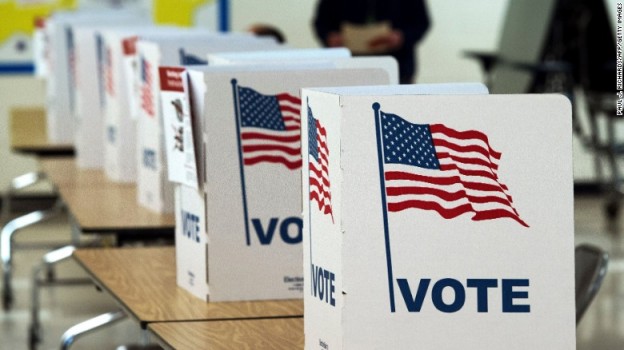
Check with Voter Registrar — are you still on the rolls?

by Mark Hedin

U.S. citizens across the country soon will vote on all 435 seats in the House of Representatives, for 35 U.S. senators and three-dozen governorships. The House of Representatives and possibly the Senate are up for grabs.

Given the high stakes, voters would do well to check at least a month ahead of time with their local board of elections to see if they’re still registered to vote. This is especially true for people of color.

The reason is that millions could find their right to vote challenged or taken away under suspicion that they’re trying to vote more than once, largely due to 26 states using the Interstate Voter Crosscheck system, which compares lists of voters in different states and challenges the registration of those whose names come up more than once.

For the 1,166,000 people in the country who share the surname García, this could be a problem. Likewise for the Rodriguezes (1,094,924), Jacksons (708,099), Washingtons (177,386), Kims (262,352), Patels (229,973), Lees (693,023) and Parks (106,696).

Crosscheck, developed in 2005 by Kansas Secretary of State Ron Thornburgh as a free service for participating states, promised to detect voter fraud by comparing people’s names, social security numbers and birthdates. Kansas, Nebraska, Iowa and Missouri first implemented it in 2006.

During his tenure as Kansas’ secretary of state, current GOP gubernatorial candidate Kris Kobach expanded Crosscheck to 15 states by 2012 and 29 by 2014 and in 2017 was appointed to a leading role in the White House’s short-lived Presidential Advisory Commission on Election Integrity.

In 2017, of 98 million voting records Crosscheck analyzed, it deemed 7.2 million potential duplicates, although Crosscheck has yet to produce its first voter fraud conviction. Eight states that originally signed on have since dropped out, citing unreliable data. Nonetheless, it’s still in use in dozens more. Eight of those state have Senate seats up for a vote this year in contests that are expected to be close: Arizona, Nevada, Indiana, Missouri, West Virginia, Tennessee, Ohio and Michigan. And 19 Crosscheck-using states are voting on their governor for the next four years.

In a 2015 named “The Health of State Democracies,” the Center for American Progress, a nonprofit funded in part by the Gates Foundation, Wal-Mart, Ford Foundation and many others, concluded that the voters Crosscheck tagged for review are disproportionately non-white.

“States participating in the Interstate Crosscheck system risk purging legally registered voters ꟷ with a significant oversampling from communities of color,” it said, citing the work of journalist Greg Palast, who’s been studying the U.S. voting system since 2000, for the BBC, al-Jazeera America, Rolling Stone magazine and others and produced a film about it, The Best Democracy Money Can Buy.

Working with data analyst Mark Swedlund, Palast found that among states using Crosscheck, one in six Hispanics, one in seven Asian Americans and one in nine African Americans landed on its list of suspect voters.

“The outcome is discriminatory against minorities,” Swedlund says.

The chief explanation for the racial inequity is that ethnic communities are more likely to share a surname, such as Washington, Lee, Patel or Kim, Palast told Ethnic Media Services.

Swedlund and Palast found that the Crosscheck system seems satisfied that if two people share a common first and last name, they’re suspect. Differences in their birthdate, middle initial, Social Security numbers or suffixes such as “Jr.” and “Sr.” don’t keep registered voters off Crosscheck’s lists.

Not all 7 million people whose names appear on Crosscheck’s lists will be denied a vote, though. For one thing, only 36.4 percent of the people who were registered to vote even showed up at the polls in 2014. In one survey of elections between 1960 and 1995, the United States ranks dead last in the democracies of the world, with an average turnout of 48 percent.

Would-be voters whose names are missing from the lists of registered voters will be given what’s called a “provisional ballot,” to be tallied if the voter is ultimately found to have been wrongly left off the lists. Palast, however, skeptical that many provisional ballots are ever counted, refers to them as “placebo ballots.”

Voters eager to cast genuine ballots, then, might want to call their local board of elections well in advance of Nov. 6 to be sure that they’ll be allowed to vote.

In 2018’s highly charged political environment, individual votes may count more than ever. Take, for example, the recent special election for the vacant seat representing Ohio’s 12th congressional district.

In that still undecided Aug. 7 race, 1,200 votes separate Republican Troy Balderson and Democrat Danny O’Connor at press time.

Ohio has removed almost 200,000 voters from the rolls because they appeared on the Crosscheck lists.

The margin of victory in the state’s 12th District race may ultimately be found among the 5,048 absentee ballots not yet tallied and the still uncounted 3,435 provisional ballots.

No matter which of the candidates is awarded Ohio’s vacant 12th District Congressional seat based on the August election, voters will get another chance to decide between Balderson and O’Connor in November.

That’s why voters who want to have their voices heard Nov. 6, in Ohio and elsewhere, should call local officials ahead of time to see if any problems have come up with their registration.

spot_img

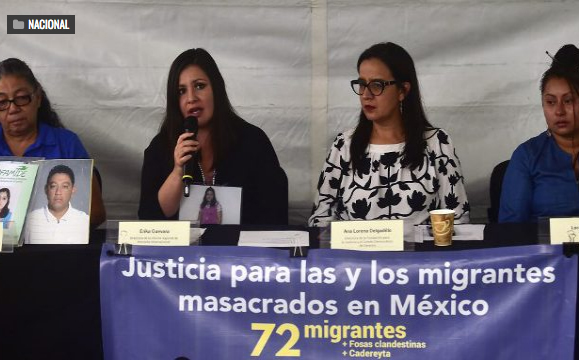
8 years after Los Zetas’ massacre of 72 migrants, ‘no real investigation’

11 have been charged in Tamaulipas mass murder, but no one sentenced

by Mexico Daily News

Eight years after 72 undocumented migrants were killed in a massacre in Tamaulipas, authorities still haven’t conducted a “real investigation” into the crime, charges the head of an NGO that represents the families of 10 victims.

Ana Lorena Delgadillo, director of the Foundation for Justice and the Democratic Rule of Law (Fundación Justicia), told the newspaper El Universal that despite 11 people being charged in connection with the San Fernando massacre, allegedly committed by the Zetas drug cartel in August 2010, not one person has been sentenced.

“To date, we don’t really know what the truth is. There is no real investigation of the state to find out to what extent there could have been complicity of authorities,” she said.

Documents made public by the federal Attorney General’s office (PGR) in 2014 revealed that local police had collaborated with organized crime in the murders.

At the time, Delgadillo said, the release of the information was an important step toward finding the truth, but lamented that the amount of information released was limited.

Now, she says, while the PGR has allowed Fundación Justicia to see its investigative file, it has repeatedly refused to furnish it with copies which, in turn, could be passed on to the families the NGO represents in El Salvador, Honduras, Guatemala and Brazil.

“For us it is very regrettable that this information doesn’t get to the families in Central America, they don’t have access to the information,” Delgadillo said.

One of the most recent developments in the case was the arrest of Martiniano de Jesús Jaramillo Silva, the presumed mastermind of the massacre, in Ciudad Victoria last November.

However, the regional leader of the Los Zetas Vieja Escuela criminal cell in Tamaulipas spent only two days behind bars before he died of kidney failure in a Mexico City hospital.

The massacre came to light when authorities found the bodies of the 58 male and 14 female victims on a farm in August 2010 after a survivor, a migrant from Ecuador, reported the incident.

He said they were offered work as gunmen for Los Zetas with a salary of US $1,000 every two weeks but were killed when they didn’t accept.

To mark the eighth anniversary of the massacre, representatives of Fundación Justicia along with human rights activists and priests yesterday participated in a ceremony to place memorial crosses on the ranch where the bodies were found.

Father Pedro Pantoja, an advisor at the Casa del Migrante (Migrant Shelter) in Saltillo, told El Universal that 72 crosses — one for each victim — were erected. He said a meeting with the wives of massacred migrants will be held at a later date in Guatemala.

“It wasn’t just a genocidal massacre . . . it was a cry of terror for all Central American migration,” he said.

“[Our] hearts are full of indignation, sadness and pain. As defenders [of human rights], we have to take on their pain, place ourselves in their flesh.”

In other criminal justice news in Mexico:

10 years on and Mexico’s justice system is not yet world class
Senior security official says better standards required

Ten years after the New Criminal Justice System (NSJP) was first introduced, the system is still not “world class,” a high-ranking government security official has acknowledged.

Álvaro Vizcaíno Zamora, executive secretary of the National Public Security System (SNSP), said yesterday that one of the system’s main shortcomings is that it has created a “revolving door,” with people detained and released time and time again.

“. . . We still need to achieve better standards in order to be able to offer Mexicans the justice they deserve,” he said.

Speaking at the second International Forensic Sciences Symposium in Mexico City, Vizcaíno added that building the system “is not easy” because it requires the political will of all three levels of government as well as money, which, he explained, is usually not enough.

The new accusatory system, which replaced a Napoleonic system based on written arguments with trials in which evidence was presented orally, was approved constitutionally in 2008 but states were given eight years — until June 2016 — to make the transition.

Under the new system judges have more leeway to release suspects pending trial and increased power to dismiss a case if they believe a suspect’s rights have been violated.

Vizcaíno said the solution to the “revolving door” problem is “pre-trial units,” whose role is to conduct a risk analysis for each person accused of a crime.

The analysis could subsequently be used as the basis for a prosecutor’s argument to a judge regarding what precautionary measures should be adopted as the accused awaits trial, he explained.

“. . . If its preventative prison, then let it be imposed,” Vizcaíno said.

He explained that the pre-trial units were not created in the first years of the implementation process and now more work needs to be done to make them more effective.

“. . . Two years ago, only four states had this piece of the justice system [in place] at intermediate to optimal [levels]. Now there are 32 units but they have to mature and continue to advance,” he said.

Vizcaíno also said those charged with implementing the new system — such as police and officials in security and justice institutions — needed more and better training.

Source: Milenio (sp)

spot_img

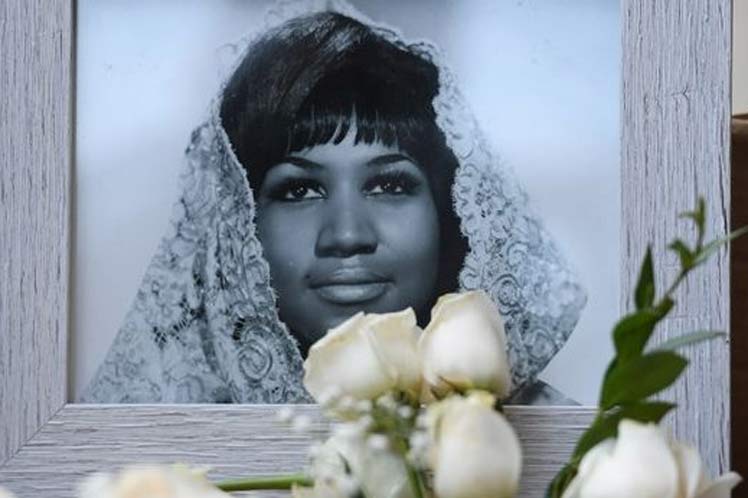
Aretha Franklin, queen of soul’s funeral set for Aug. 31

por los  servicios de noticias de El  Reportero 


El funeral de la cantante estadounidense Aretha Franklin, conocida mundialmente como la reina del soul, será el 31 de agosto en Detroit, confirmó su portavoz y representante, Gwendolyn Quinn.  


La vocalista también apodada Lady Soul y reconocida como una de las artistas más influyentes en la música contemporánea, murió el 16 de agosto, a sus 76 años, luego de una dura batalla contra el cáncer. 


Según el representante, el funeral tendrá lugar en el Gran Grace Temple, en Detroit, la ciudad en la que creció el artista, pero se limitará a la familia y sus amigos más cercanos. 


Sin embargo, el cuerpo de Franklin se exhibirá en el Museo de Historia Afroamericana Charles H. Wright, Detroit, el 28 y 29 de agosto, para todos los fanáticos que quieran despedirse de ella. 


Muchos artistas rinden homenaje a estas figuras icónicas de la música mundial que usaron su voz a favor de los derechos raciales en los Estados Unidos y la liberación de las mujeres. 


The last performances of the exceptional singer took place in 2017: a concert in Philadelphia, in August, and two months later it was presented in New York for the foundation of the British musician Elton John who fights against AIDS. 


Franklin developed an extensive musical career in which she accumulated a score of albums, 18 Grammy awards and 75 million albums sold. 


Cuban first ballet dancers invited to international gala in Chile 


The first dancers of the National Ballet of Cuba (BNC) Grettel Morejon and Dani Hernandez will share a gala in Chile with artists from more than 10 countries, the company, directed by prima ballerina assoluta Alicia Alonso, announced.  


The gala will take place at the Oriente Theater, in Santiago, on August 30 and 31, with the participation of 25 artists from 12 countries. 


Morejon and Hernandez will stage the pas de deux ‘Aguas Primaverales’ (Spring Waters), by the Russian choreographer Asaf Messerer, with music by Sergei Rachmaninov; and Nutcracker, in Alicia Alonso’s version of Lev Ivanov’s original, with music by Piotr Ilich Tchaikovsky. 


In addition to the Cuban pair, Natalia Berríos, Romina Contreras and Emmanuel Vásquez, from the Ballet of Santiago, will also be on stage, as well as Cesar Morales, from the Royal Ballet of Birmingham (United Kingdom), and Andrei Yermakov, from the company of the Mariinsky Theater (Russia). 


On behalf of another Russian group, from the Mikhailovsky Theater, the dancers Ekaterina Borchenko, Julian Mackay and Sabina Iapparova will travel to Chile, while Ketevan Papava and Denys Cherevychko will represent the Ballet of the State Opera of Vienna (Austria). 


SANFIC Film Festival opens in Chile 


The 14th edition of the Santiago International Film Festival (SANFIC) spread its red carpet on Sunday night to the Spanish actress Maribel Verdu and several Latin American movie stars.  


At the inauguration at the CorpArtes Theater, the Argentinean film ‘El Angel’ (The Angel), directed by Luis Ortega, was the colophon of the gala. 


Maribel Verdu, the guest of honor at SANFIC-14, who has been nominated 11 times to the Goya Awards and has won two in the Best Actress category in 2008 and 2013, made statements to reporters. 


‘It is wonderful to be in a festival that provides luxury opportunities to knowledge and sharing to the entire Hispanic American cinema. I have very close ties with this region and I wish new projects came, with Chile, for example,’ the Spanish actress said. 


SANFIC cubre tres segmentos competitivos: cine internacional, cine y cortometrajes chilenos y talento nacional. También tendrá las aclamadas secciones Visiones del mundo y Maestros del cine. 


spot_img