Sunday, September 6, 2026
Home Blog Page 296

Without accusing him of violence, the OAS asks Ortega for early elections in Nicaragua


by Beatriz Pascual Macías


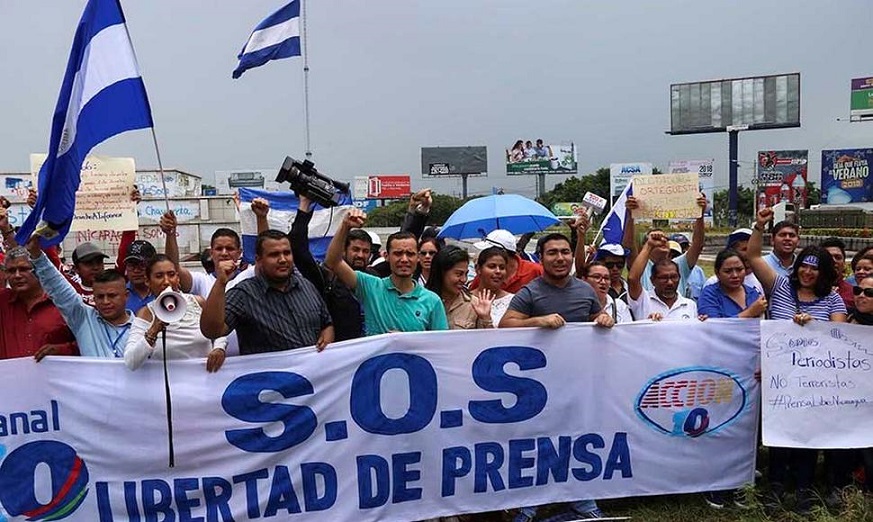
The OAS today asked the president of Nicaragua, Daniel Ortega, to “support an electoral calendar” agreed upon in the national dialogue, mediated by the Catholic Church, in a formula that seeks early elections as a way out of the crisis that has left more than 350 dead in three months.

The request for the elections was included in a resolution approved today at an extraordinary session of the Permanent Council of the Organization of American States (OAS), based in Washington.

The text, promoted by seven countries (Argentina, Canada, Chile, Colombia, Costa Rica, Peru and the US) and supported by Mexico, “urges” the Nicaraguan Executive to “support an electoral calendar agreed together in the context of the National Dialogue process. ”

The Nicaraguan Bishops’ Conference, mediator and witness of said dialogue, requested Ortega to advance the elections on March 7, 2019, on July 7, but on July 7, Ortega rejected it, considering that there would be “time for elections”, as mandated by law. ”

The resolution was approved with the vote in favor of 21 of the 34 countries that are active members of the OAS, while three (Nicaragua, Venezuela and Saint Vincent and the Grenadines) voted against and seven abstentions were registered, as well as three absentees, among them Bolivia.

The initiative does not point to Ortega for violence, but urges his government to participate “actively and in good faith” in the national dialogue, in which authorities and the opposition Civic Alliance, which brings together the private sector and society civil.

In the resolution, the OAS expressed its condemnation of the “harassment” of the bishops participating in the dialogue, as well as the “acts of violence” against Caritas offices that were set on fire and against the National Autonomous University of Nicaragua (UNAN, which became the center of the protests.

Hostilities have increased in recent days with attacks such as the UNAN and the one that occurred yesterday against the city of Masaya, which has led to the condemnation of countries such as the United States and organizations such as the European Union (EU).

In response to these criticisms, the Minister of Foreign Affairs of Nicaraagua, Denis Moncada, brought to the Permanent Council his own resolution, which called on the international community to respect their “self-determination” and blamed “international terrorist groups” for instigating violence .

That Nicaragua initiative failed with the vote against 20 states, eight abstentions, three absentees and the support of only three countries (Venezuela and Saint Vincent and the Grenadines).

The votes evidenced the solitude of Nicaragua in the OAS, which only obtained the support of Saint Vincent and the Grenadines, Venezuela and Bolivia, whose mission had proposed some amendments to modify the approved resolution but decided to leave the room abruptly due to disagreements in the procedure.

spot_img

Criticism of the gender perspective

by Josep Miró i Ardèvol

The gender perspective is a determining ideology in Spanish politics. In Catalonia it has managed to get the Comissió d’Estudi del Procés Constituent to impose it as a compulsory doctrine of the future Catalan constitution, even before debating it in a patchwork of the tied and well tied of Francoism.

Gender ideology spreads through extraordinary confusion about its meaning. Some understand it as an innocuous substitution of the grammatical concept of sex, masculine and feminine. It is a visible error in the presentation of statistical data. Quite a lot more they conceive it as the relationship of equality between men and women, and in this sense it is perceived as a feminism.

But in reality it is a political ideology, such as Marxism, or communism, which pursues power, and cultural and social hegemony. It arises from an approach that destroys the objective concept of human nature, substituting it for the subjective drive of sexual desire elevated to a political category. Denies all truth to other conceptions, which pursues through censorship, repression, personal and media disqualification. It promotes the camouflage of the economic causes of inequality, and by eroding the meaning of being human, prepares the mentalities for posthumanism.

It is not a feminism because it does not contemplate the real woman, nor does she worry about the equity situation of all of them. Thus, the two largest groups, mothers and widows, have never been part of their demands, but the equal proportion in the electoral lists, regardless of any other criteria. It is only interested in the woman as long as it fits in with its theory, which is based on the imitation of a heterosexual man, even if it means losing years of life expectancy, and conflict with him, in a patchwork of the class struggle.

The gender perspective is not interested in real equity. Manipulates reality to present our society as patriarchal, and phallocratic (sic), dominated by heterosexual males. But ignores aspects as decisive for the person as life expectancy and education, because there are many more female university graduates than men under 35 years, more male than female ninis, many more suicides, repeaters, abandonment and school failure among the guys, that in the girls. It introduces a distorted approach to equity by diluting the economic and educational causes of inequality in the “gender conflict”. The paradigm was the Ministry of Equality of Rodríguez Zapatero. A social democratic government that created a ministry for equality without any economic function, focused only on the conflict between the “woman class”, homosexuals, bisexuals, etc., against the “heterosexual male class”.

But it is not about opposing feminine inequalities (or) other masculine ones. The point is to overcome them in terms of people, of citizens, in each concrete objective situation. Everything else is playing the game of inequality, and the elite that lives installed in it.

But the gender perspective is something much more confusing and destructive than all that. This was exemplified by the ex Congresswoman of the United States Bella Abzug in 1995 at the Beijing Conference, when she affirmed that “the term gender has been differentiated from the word sex to express the reality that the situation and the roles of women and men are social constructions subject to change”. In this ideology there is no man and woman as a consequence of their nature. Only cultural construction counts, which gives rise to changing subjects at will. It is the empire of subjectivity, of untying. A person whose biology categorizes her as a woman may have a male gender identity and be attracted erotically and affectively by men. And conversely, and all the variations that are wanted, which can also be modified at will throughout life. All this results in a great fragmentation.

The unity of the human being in its specificity of man and woman has been transformed into a multitude of identities that demand its political recognition, and the existence of ¬specific rights and prerogatives along with heterosexuals: lesbian, gay, bisexual, transsexual, transgender , transvestite and intersexual, which can reach 31 according to the Human Rights Commission of the city of New York, or even 58 (or are only 50?) as Facebook offers. Confused? This is the gender perspective.

The ideology of the genre means the destruction of our civilization. A just society and its economy can not survive this confusion, disorder, arbitrariness and persecution of man because they destroy the foundations of nature, its anthropological understanding, its cultural manifestation, and with it the social institutions that, like the family, are necessary for our common life.

spot_img

Stem juice from bananas a potential natural cure for diabetes

by Ellaine Castillo

Bananas (Musa × paradisiaca L.) are some of the most common fruits in the world. Aside from its fruit, other parts of the banana plant, which are usually just thrown away or ignored, also have their own uses. In a study, published in Czech Journal of Food Sciences, they observed that juice extracted from banana stem contains antidiabetic compounds.

Diabetes is a metabolic condition wherein blood sugar levels are above what is considered normal. This is caused either by insufficient insulin production or reduced sensitivity to insulin. Insulin is the hormone responsible for keeping blood sugar levels in check and without its effects, blood sugar will build up.

In past studies, phytochemicals in bananas have been observed for their potential in treating diabetes. Some of the ways through which these phytochemicals work are by inhibiting carbohydrate-digesting enzymes and glucose adsorption, as well as promoting antioxidant activity. However, these phytochemicals have not been studied and developed into phytomedicines or products that possess antidiabetic activity. In addition to this, not all bananas are the same. This means that these phytochemicals and their corresponding bioactivities might not be present in all bananas. These variations can be attributed to factors, such as environmental conditions.

For this study, the researchers determined the effect of environmental conditions on antidiabetic compounds found in stem juice extracted from bananas planted either in Vietnam or a greenhouse in the Czech Republic. They performed metabolite profiling and discovered that there were variations in the compounds in the samples. It was observed that stem juice from bananas grown in the greenhouse only had nine out of the 17 compounds that were screened for, while stem juice from bananas grown in Vietnam had 12.

In addition to this, antidiabetic activity was also determined based on the inhibitory effect on alpha-amylase and alpha-glucosidase, which are carbohydrate-digesting enzymes, as well as their ability to inhibit cells from turning into adipocytes. Researchers observed that stem juice from both sources had the same level of inhibition for alpha-glucosidase. This inhibitory activity was also shown to follow a dose-dependent manner. Meanwhile, there was no significant inhibition of alpha-amylase for both samples, although stem juice from the bananas grown in Vietnam did have a slightly higher level of inhibition. Lastly, the researchers also saw that neither of the samples was able to prevent cells from turning into adipocytes.

The results of this study show that juice from the banana stem, which is typically considered waste, contains phytochemicals that exhibit antidiabetic potential. Although environmental conditions affect the phytochemicals that are present, the level of alpha-amylase inhibition remains constant regardless of where the banana was planted. These results show that bananas can also serve as a natural source for potential diabetes treatments, reducing the need for harmful antidiabetic drugs in the future. (Natural News).

spot_img

Louisiana’s undocumented seafood workers unite to fight workplace abuses

by Mike Elk

In the bayous of Louisiana, fear is running high for the thousands of guest workers that staff the state’s $2bn a year seafood industry.

Seafood work is so dangerous that workers often lose fingers and suffer debilitating carpal tunnel injuries on the industry’s high-speed assembly lines. Many Latinas working in the industry endure sexual harassment at the hand of white southerners.

“They stay quiet about [the harassment] because they know that the owner won’t bring them back if they speak up,” says Julia, who wished to use only her first name.

Worse, many recently-arrived guest workers find themselves in rural isolated parts of Louisiana where fear of law enforcement is compounded by the belief that police brutality against undocumented workers is commonplace. In many rural municipalities, the owners of large seafood processing companies often know the police on a personal level and workers live with the fear of owners calling the police to have them deported if they cause trouble.

In 2012, when the National Guestworker Alliance tried to organize seafood workers, the owner of crawfish supplier CJ’s Seafood even threatened workers with violence if they spoke up about poor conditions including sometimes locking workers in the plant and forcing them to work 24 hours straight to meet demand.

Now seafood workers in Louisiana are beginning to lose that fear as they organize under the banner of the Seafood Workers Alliance. “The company has all the power, but with organizing, we are going to attack their power,” said Jesus Andres, president of the Seafood Workers Alliance.

At a recent meeting of workers, Andres quickly slathered a thick coat of mayonnaise on a tortilla with fried shrimp and habanero sauce as he rushed to take his seat at the head of a table where three dozen seafood worker gathered in the community room of the Lafayette public library.

All of a sudden, 34-year-old Danilo Balladares, an organizer with the Seafood Workers Alliance, stood in front of the room and began to clap. Soon, the rest of the room, black, white and brown alike, joined in the clapping. Gradually the clap got louder and more upbeat as cries of “rrrrrr” broke out. Balladares stopped the clapping and called the meeting to attention.

“All the people here could be fired,” said Balladares, pointing to Andres and the leaders of Seafood Workers Alliance seated at the front of the room. “They could be fired and sent back to their country if their employer knew they were here.”

Formed in 2017 as an offshoot of organizing being done by the National Guestworker Alliance and the New Orleans Workers’ Center for Racial Justice the Seafood Workers Alliance has hundreds of members in 15 different plants throughout Louisiana.

The organization has focused heavily on suing employers and building alliances with local communities so that workers can help push back when they face abuses in the workplace. They’ve built deep ties in particular with the African American community. Often, low wage employers have attempted to pit low wage African American workers against Latino workers, who many saw as coming to Louisiana to take their jobs.

Through combined struggle, the workers have learned that, while their struggles are different, their problems both with local employers and enforcement are similar.

“Look, we understand now that when they say deportation that’s incarceration for black people,” said Alfred Marshall, a middle-aged African American activist with Stand with Dignity, also a project of the New Orleans Workers Center for Racial Justice.

“When they say undocumented, we know that there are over 50,000-60,000 people in New Orleans who have outstanding warrants on them that can’t even go get a job because of the fear they have,” said Marshall.

“The language they use is different, but the problems are the same and now we understand that better than ever.”

As a result of the growing solidarity and power of the Seafood Workers Alliance, the workers have been able to win the reinstatement of over a dozen workers who feared they would be blacklisted; creating a sense of momentum. In March, the union successfully won the reinstatement of seven workers at D & G Frey Crawfish in Iota, Louisiana.

At the catfish plant in Guidry’s Catfish in Breaux Bridge, Louisiana, many were fearful that Andres would not be allowed to come back for another season after he laid out a campaign to raise wages at the plant from $9 an hour to $12 an hour.

However, in March, Andres and his co-workers organized and forced their employer to agree to bring him back. This win, on the heels of winning other reinstatements, has given workers a new sense of power. Andres says that now he sees more and more of his co-workers overcoming their fears and putting pressure on the boss to improve their workplace.

“Through the Seafood Workers Alliance, we have learned how to assert our rights and take on the boss and its changed so much,” said Andres. (The Guardian).

spot_img

Premiere | The Man in the Mirror, a local Latino film


by the El Reportero’s news services and Marvin Ramírez


The man in the mirror is a short film with a social educational theme, entering the entrails of young people, who when experiencing life, face an endless number of problems.

Ivan is a young man from a dysfunctional family, his mother is an alcoholic and disobedient from the education of his son.

Samanta (Luz Cabrera) is a spoiled and capricious young woman, she is accustomed to all the people she meets to fulfill each one of her whims and tastes, her parents for wanting to pretend a status they do not have, they give their daughter everything she asks of them and so she can join the social club belonging to her friends.

In the end, the relationship between Ivan and Samanta has a surprise for all the spectators, where immaturity and irresponsibility sometimes lead us to make bad decisions.

In this short film, Luz Cabrera, based in San Leandro, California, gets an opportunity to show that ‘yes you can.’ In the real life, she is a young woman mother of a small son, who has fought tirelessly to enter the world of acting and modeling.

Just arrived a few days ago from a short tour of the beautiful city of Paris, France, following the world of modeling, Luz returns with a whole new perspective after seeing what there is in the Old World, and willing to overcome any obstacle that presents to her in her cinematic goal.

Do not miss this movie night, you will meet the stars of the movie, and of course support these Latino actors and cinema.

This Thursday, Oct. 18, 8 p.m. and 9 p.m., at the Landmark’s Albany Twin Theater, 1115 Solano Ave, Albany, California 94706. Organized by Anadfe Productions.

spot_img

“Imprisoned” benefit screening in support of Puerto Ricans in Action

by the El Reportero‘s news services

An Imprisoned Benefit Screening in support of Puerto Ricans in Action (PRiA) will take place, to raise funds for Hurricane Maria relief efforts through donations made at this star-studded, red carpet event.

The Imprisoned Benefit Screening presented by OPENING showcase, in association with the American Cinematheque, will be hosted by Esai Morales and Lisa Vidal and will take place on Thursday, Oct. 25, 2018 at the American Cinematheque’s historic Egyptian Theater.

A portion of the proceeds raised from the event will be donated to Puerto Ricans in Action, an organization formed in 2016 with the sole mission to ensure the vibrant future of the Puerto Rican people by strengthening Puerto Rican identity, communities, and connection with Puerto Rico .

Cuban musician Chucho Valdés to be honored at La Musa Awards

Cuban musician Jesus ” Chucho ” Valdés will be honored on Thursday at the 6th edition of the annual La Musa Award due to his career and contributions to that event throughout his 50-year career.

The awards, presented by Spotify and directed by American Broadway producer Richard Jay-Alexander, highlight the development of Latin music and the global association of composers who, as Valdés, contributes so much to contemporary music.

The renowned pianist will also receive the Latin Grammy Award for Musical Excellence 2018 during a gala on Nov. 13 in Las Vegas, the United States.

Neruda case awaits response from Chilean government

Highly revered in Madrid and Barcelona, Pablo Neruda is a prominent figure in the world of letters, but in his homeland, Chile, he still waiting for a more preponderant place in society.

There are many awards on his name, but there is no street named after him, or a memorial to remember his career, including a Nobel Prize for Literature. There are justified doubts about the true causes of his death.
On the 45th anniversary of his death on September 23, 1973, there were just a few tributes in Chile to remember Neruda. However, I was highly honored in other countries.

A few days ago, the Sweden-based Pablo Neruda Committee sent a letter to Chilean President Sebastian Piñera to express ‘deep concern’ about the government’s failure to pay the international laboratories that are investigating the writer’s death. Prestigious experts from Canada, France, the United States, Spain, Denmark and Chile are investigating the cause of death of Ricardo Eliecer Neftali Reyes Basoalto, his real name.

In the letter, the Committee said that it had learned that the Chilean State had informed Special Judge Mario Carroza that it lacks the funds to pay for the services from the laboratories.

The debt, which amounts to some 38,000 dollars, prevents Canada’s Mac Master Laboratories and Dr. Niels Morling, from Denmark, to continue the investigation, and the reports were already handed over to the panel that met here in 2017.

‘We consider that this situation should be resolved soon by the State of Chile in order to continue the progress of the investigation, whose expecting advance we observe from Europe,’ the letter said.

spot_img

Daddy Yankee to be honored with the icon award during the “Latin American Music Awards”

by the El Reportero’s news services

Daddy Yankee, who is up for six awards this year, will be the recipient of the special Icon Award at the upcoming “Latin American Music Awards” (Latin AMAs). The Latin AMA Icon Award is given to the most distinguished and beloved artist of the Hispanic world, who is recognized on every continent as the King or Queen of its music genre. The recipient of the Latin AMA Icon Award interprets our life in his songs, forms an important part of Latin America’s history and is considered a musical hero. Daddy Yankee will also be performing at the Latin AMAs, which will broadcast live from the prestigious Dolby Theatre in Hollywood, California, on Thursday October 25, 2018 at 8pm/7c, preceded by the one-hour carpet pre-show La Alfombra de Latin AMAs at 7pm/6c. The show will also air simultaneously on Spanish-language entertainment cable network, Universo.

Daddy Yankee will come to the Latin AMAs at the heels of his hugely successful world tour that recently took him to Shanghai, where fans welcomed him dancing to the tune of Dura. The Puerto Rican artist, who recently collaborated with Janet Jackson in her latest comeback “Made For Now,” triumphed in the world of reggaeton, but it was his album Barrio Fino with his international hit Gasolina that propelled him into international stardom, introducing audiences worldwide to the rhythm of this new genre.

U.S. Latin Songwriters Hall of Fame to Award Cuban Artists

The Latin Songwriters Hall of Fame announced that it will award the Cuban duo Gente de Zona (GZ) and composer Descemer Bueno during the 2018 annual La Musa Awards gala to honor the world”s greatest Latin music creators.

According to the announcement on its official website, the GZ binomial composed of Alexander Delgado and Randy Malcom will be honored with the Premio Triunfador Award, while Bueno will receive the Premio Conquistador Award, in tribute to his contributions to Cuban music.

During the ceremony, scheduled for Oct. 18 at the James L. Knight Center in the city of Miami, the special award ‘Legend in Life’ will be presented to Spanish singer Raphael and the iconic Puerto Rican salsa icon Victor Manuelle.

Likewise, Puerto Rican singer Ektor Rivera will be recognized with the Host Award and Colombian Karol G with the Musa Elena Casals, an award that highlights the performance of the women in the music industry.

As a highlight of the gala, there will be a tribute to Mexican Gloria Trevi, Cuban Chucho Valdes, Ecuadorian Carlos Rubio Infante and Venezuelan Fernando Osorio, who will enter the Latin Songwriters Hall of Fame this 2018.
Among the musicians already belonging to the Hall of Fame, Mexican Ana Gabriel, Spanish Camilo Sesto, Puerto Rican Jose Feliciano, Chilean Miriam Hernandez and Salvadoran Alvaro Torres standing out.

EstrellaTV reveals list of nominees for the 19thEdition of Premios de la Radio

EstrellaTV, announced today the list of nominees for its Premios de la Radio awards ceremony from Auditorio Telmex in the city of Guadalajara, Jalisco, Mexico.

For this year’s edition of Premios de la Radio, which will be held in Mexico for the first time in its history, the artists that garnered the highest number of nods include: Christian Nodal (5), followed by Alfredo Olivas (4), El Fantasma (4) and Virlán García (4); while superstars Julión Álvarez, Banda MS and Gerardo Ortiz obtained three nods each.

For the first time in the history of the awards ceremony, EstrellaTVwill broadcast the show live from Guadalajara, Jalisco as a sign of solidarity with those recording artists that have been denied visas to work in the United States.

By taking its music awards show to Mexico, the network is also standing firm with Latino immigrants who have been deported and whose families have been separated at the border.

Effective today, online voting is open to the public, so that they may vote for their favorite artists and bands on www.premiosdelaradio.com. The three-hour show will be broadcast live on November 8th on EstrellaTV from 8-11PM/7-10PM C and will also be live streamed simultaneously on the aforementioned web site.

spot_img

Public charge rule change not final—stay enrolled, advocates urge

by  Mark Hedin

Ethnic Media Services

The Department of Homeland Security on Sept. 22 announced plans to drastically change the terms under which it bars people it deems likely to depend on government support from entering the country or getting green cards.

The new proposal would expand the factors the government would use in deeming someone a public-charge risk, which are currently limited to those likely to need cash aid, defined as welfare or long-term institutionalized care.

Now, Homeland Security is proposing to also bar those likely to need housing assistance, non-emergency Medicaid, Medicare Part D – help with prescriptions – or nutritional aid such as food stamps, the Immigrant Legal Resource Center (ILRC) lawyer Erin Quinn said in San Francisco.

Word of the pending changes has rocked ahe immigrant community, with many considering quickly disenrolling from benefit programs to protect their green card applications or the prospects of family members who might be applying.

To address these concerns, the ILRC on Sept. 27 hosted a teleconference coordinated by Ethnic Media Services to discuss the proposed changes, who they are most likely to affect and what steps might be prudent ꟷ or imprudent ꟷ to take in anticipation.

Joining Quinn in the hour-long call were Wendy Cervantes of Washington, D.C.’s CLASP (Center for Law and Social Policy), Maria Gonzalez of Boston’s Health Care for All, Karlo Ng, of the National Housing Law Project in San Francisco, and Amanda Lugg of New York’s African Services Committee.

The impact of the proposed rule change would be significant. According to the Migration Policy Institute, 2.3 million of the 4 million legally present noncitizens who arrived during the past five years could be at risk of a public-charge determination ꟷ up from the current 3 percent, ILRC’s Sara Feldman said in opening remarks.

“Immigration laws are very complex. It’s best to think about it on a case-by-case basis,” Quinn said, and urged people to talk to an accredited immigration attorney before dropping any services.

“It’s really important that families get the services they need now and not worry about possible speculative impact about those use of benefits in the future.”

“Even if it’s enacted as written, we expect any changes will be way off in the future,” Quinn said. And even once they’re in place, if they ever are, they’ll be “forward looking,” not retroactive.  This means that people will be judged not on what benefits they may have received before the rules changed, but on their needs going forward.

Quinn said that the changes in policy will appear when trying to enter the United States and when applying for a green card.

“Permanent residents looking to naturalize will NOT be affected,” she said.

She recommended the ILRC web site resource “Ready California” (https://ready-california.org/#1) for those concerned about how to prepare for the new regulations.

Amanda Lugg, of the African Services Committee, also urged people to get professional legal advice before making any changes, and repeatedly counseled against taking action based only on the advice of neighbors or other nonprofessional casual acquaintances.

For example, the National Housing Law Project’s Ng, said, there are a variety of distinctions the law will make around the various forms of Section 8 housing vouchers. Those in the name of an immigration applicant’s dependent, for instance, won’t be counted against the applicant.

And some people fitting into certain particular categories, such as crime victims or those seeking to escape domestic violence, would be exempt from the changes.

The proposed rule changes give the administration “enormous discretion” in determining whether someone meets the public charge standard. Negative factors it could apply include being a senior or a juvenile, limited English proficiency, poor health, or having a family income below 250% of the poverty line ꟷ $63,000 annually for a family of four, a threshold 40% of U.S.-born people wouldn’t meet, Cervantes said.

“Millions of families would be impacted if this rule is finalized. … In fact, DHS and the rule itself point out that it would lead to increased poverty and worse health outcomes for certain families including U.S. children.”

“The proposed rule would have a detrimental impact on the housing stability of millions of immigrant families,” Ng said. Federal housing programs help immigrant families who are “one step away from homelessness.”

Immigrants with disabilities, chronic health conditions, a medical condition that requires extensive treatment, and no insurance would find those all heavily weighted negative factors according to the proposed new rules.

Fearful of impacting green card hopes, Lugg said her clients already are expressing a reluctance to accept housing vouchers or use anti-retroviral drugs to combat HIV.

The proposed rule changes threaten to reverse years of work and hard-won progress fighting AIDS and create a “backdoor reinstatement” of the “de-facto ban” of HIV-positive individuals that was overcome in 2010, Lugg said.

For the short term, nothing happens until the proposed changes are published in the Federal Register as a NPRM ꟷ notice of proposed rule making, which could happen in the next couple of weeks. Once it does, the public has 60 days to comment.

The Department of Homeland Security is obligated to consider those comments and include responses to those comments in its final wording of the rules. That process alone could take from months to years to finalize, Quinn said.

After that, there’s another 60 days before the rules would take effect.

Lugg said the Protecting Immigrant Families Campaign is hoping to see 100,000 public comments registered on the topic. Those comments must be made in English and should be one per person ꟷ writing something for others to sign onto would only count as one comment ꟷ Lugg said, and “you need to tell a story of how you or someone you know would be impacted.”

“We have an opportunity to fight back,” Lugg said, “and we’ll win. When this administration has gone too far, as it has before and as it has with this rule, we’ve seen the American people fight back. We’ve seen it with the travel ban. We’ve seen it with the child separation policy. And now we’ll see it with this public-charge draft rule.”

So, Quinn cautioned about disenrolling from benefits with the assurance that there would be enough time “to give members of our community notice if they need to disenroll from services.”

spot_img

Sinaloa becomes the 19th state of Mexico to “shield” life from conception

by David Ramos

ACI Press

With 32 votes in favor, one against and one abstention, this September 28 the Congress of the Mexican state of Sinaloa approved a constitutional reform that “shields” human life from conception.

Since 2007, when Mexico City under the government of the Party of the Democratic Revolution (PRD) legalized abortion, there have been 19 Mexican states that approved their local constitutions to defend human life from conception.

In a dialogue with ACI Prensa, Rodrigo Iván Cortés, president of the National Front for the Family (FNF), stressed that the approval of the constitutional reform came about with “a great consensus” and “in a forceful way”.

In the new article 4 of the Constitution of Sinaloa reads: “Everyone has the right to have their lives respected. The State protects the right to life from the moment an individual is conceived, enters under the protection of the Law and is considered as born for all legal purposes, until his natural death.

The constitutional reform approved by Congress must be ratified in the following weeks by the majority of municipalities in the state of Sinaloa.

Rodrigo Iván Cortés said that “this is made possible, on the one hand, by the leadership of the National Front of the Family in the state of Sinaloa,” and highlighted the work of Carmen Balcázar and her brother, the pro-life doctor Juan Carlos Balcázar.

He said that they joined the deputy Juan Pablo Yumani, National Action Party (PAN), which assumed “the commitment to present this initiative to amend Article 4, to put the defense of the right to life from its inception, and that is backed by many other legislators, including Tania Morgan, also a local deputy of the PAN. ”

For Cortés, this modification to the Sinaloa Constitution “is a ray of light in a very cloudy time”, because in these days several organizations celebrated the legalization of abortion in Mexico City and demanded that this condition be extended to the whole country.

Among these groups are the nearly 20 deputies of the National Regeneration Movement (Morena), of the elected president Andrés Manuel López Obrador, who announced at a press conference on September 27 that they will seek to legalize abortion throughout the country.

Days ago, recalled the president of the National Front for the Family, the parliamentary group of the PRD wanted to modify the Constitution of the country “to make legal at the national level what the PRD has been doing for several years in Mexico City.”

Cortés also referred to the manifestations of the “green scarves”, organized by groups financed “by international bodies such as the International Planned Parenthood Federation, the Ford Foundation and especially the Open Society of George Soros, which bring back the abortion business” .

It is estimated that around 200,000 abortions have been practiced in the public institutions of Mexico City since their legalization. However, some estimate that if those performed in private clinics, such as Marie Stopes, were included, the two million would be reached.

For the president of the National Front for the Family, “the people killed through this organized crime ‘legal’ in Mexico City, with the administration of the PRD, already exceed the victims of organized crime ‘illegal’, which total 200 thousand ”

Various international organizations have also been lobbying for months for the state of Veracruz to legalize abortion.

In this context, Cortés stressed, the news of the constitutional reform in Sinaloa underpins the call for the marches for life convened by the National Front for the Family throughout the country, for October 20.

“Throughout the Republic we will have marches and rallies. In Mexico City we will have a symbolic act, which will accompany the marches. ”

He said that this symbolic act is convened at 11:00 a.m. (local time) at the Monument to the Mother.

“There we are going to represent in a creative way what is the importance of motherhood, of welcoming life, and we are going to make a denunciation of what these transnationals of abortion, of the inhuman business of abortion, intend to do in all of Mexico,” he said.

spot_img

Now that it’s legal, governor signs law allowing people to wipe away marijuana charges

California has official signed into law a process to allow those who’ve been crushed by the war on marijuana to have a life again

by The Free Thought Project

On Sunday, California Gov. Jerry Brown signed a bill that creates a process to expunge or reduce the sentences of people charged under the state’s marijuana laws before recreational cannabis was legalized this year. Enactment of this law takes another step toward nullifying federal marijuana prohibition in effect in California.

Assm. Rob Bonta (D-Alameda) introduced Assembly Bill 1793 (AB1793) in January. Under the new law, the court will automatically reduce or dismiss marijuana convictions pursuant to the Adult Use of Marijuana Act (AUMA) unless prosecutors successfully challenge the dismissal of charges or sentence reduction.

In November 2016, voters in California approved a ballot measure legalizing marijuana for general use by adults. The law went into effect on Jan. 1. Under the AUMA, any person charged under previous California marijuana laws can petition for the recall or dismissal of a sentence, dismissal and sealing of a conviction, or redesignation of a conviction of an offense for which a lesser offense or no offense would be imposed under new law.

Under AB1793, expungement will instead happen automatically without any petition necessary, effective July 1, 2020. The bill creates a process to identify people eligible for expungement and for prosecutors to challenge the automatic dismissal or reduction of charges.

The California Senate passed AB1793 by a 28-10 vote. The Assembly approved the measure by a 43-28 vote.

In the past, we’ve seen some opposition to marijuana legalization bills because the new laws generally leave those previously charged and convicted unprotected. The passage of AB1793 demonstrates an important strategic point. Passing bills that take a step forward sets the stage, even if they aren’t perfect. Opening the door clears the way for additional steps. You can’t take the second step before you take the first.

Enactment of AB1793 not only helps those with prior marijuana arrests and convictions on their record get a new start, it will also further undermine federal marijuana prohibition. As marijuana becomes more accepted and more states simply ignore the feds, the federal government is less able to enforce its unconstitutional laws.
FEDERAL PROHIBITION

However, all of this remains prohibited under the 1970 federal Controlled Substances Act (CSA). Of course, the federal government lacks any constitutional authority to ban or regulate marijuana within the borders of a state, despite the opinion of the politically connected lawyers on the Supreme Court. If you doubt this, ask yourself why it took a constitutional amendment to institute federal alcohol prohibition.

Legalization of marijuana in California removed a huge layer of laws prohibiting the possession and use of marijuana in the world’s sixth largest economy, something that will be extremely difficult for federal prohibitionists to overcome. FBI statistics show that law enforcement makes approximately 99 of 100 marijuana arrests under state, not federal law. By legalizing cannabis, California essentially sweeps away the basis for 99 percent of marijuana arrests.

Furthermore, figures indicate it would take 40 percent of the DEA’s yearly-budget just to investigate and raid all of the dispensaries in Los Angeles – a single city in a single state. That doesn’t include the cost of prosecution. The lesson? The feds lack the resources to enforce marijuana prohibition without state assistance.

A GROWING MOVEMENT

Colorado, Washington state, Oregon and Alaska were the first states to legalize recreational cannabis, and California, Nevada, Maine and Massachusetts joined them after ballot initiatives in favor of legalization passed in November 2016. In January, Vermont became the first state to legalize marijuana through a legislative act.

With 32 states allowing cannabis for medical use as well, the feds find themselves in a position where they simply can’t enforce prohibition anymore.

“The lesson here is pretty straightforward. When enough people say, ‘No!’ to the federal government, and enough states pass laws backing those people up, there’s not much the feds can do to shove their so-called laws, regulations or mandates down our throats,” Tenth Amendment Center founder and executive director Michael Boldin said.

Efforts to expand California’s marijuana law demonstrates another important reality. Once a state puts laws in place legalizing marijuana, it tends to eventually expand. As the state tears down some barriers, markets develop and demand expands. That creates pressure to further relax state law. These bills represent more steps forward for patients seeking alternative treatments and a further erosion of unconstitutional federal marijuana prohibition.

(Michael Maharrey is the Communications Director for the Tenth Amendment Center. He proudly resides in the original home of the Principles of ’98 – Kentucky. He is the author of the book, Our Last Hope: Rediscovering the Lost Path to Liberty).

spot_img