Wednesday, August 5, 2026
Home Blog Page 291

Check with voter registrar for this big election — are you still on the rolls?

by Mark Hedin

U.S. citizens across the country soon will vote on all 435 seats in the House of Representatives, for 35 U.S. senators and three-dozen governorships. The House of Representatives and possibly the Senate are up for grabs.

Given the high stakes, voters would do well to check at least a month ahead of time with their local board of elections to see if they’re still registered to vote. This is especially true for people of color.

The reason is that millions could find their right to vote challenged or taken away under suspicion that they’re trying to vote more than once, largely due to 26 states using the Interstate Voter Crosscheck system, which compares lists of voters in different states and challenges the registration of those whose names come up more than once.

For the 1,166,000 people in the country who share the surname Garcia, this could be a problem. Likewise for the Rodriguezes (1,094,924), Jacksons (708,099), Washingtons (177,386), Kims (262,352), Patels (229,973), Lees (693,023) and Parks (106,696).

Crosscheck, developed in 2005 by Kansas Secretary of State Ron Thornburgh as a free service for participating states, promised to detect voter fraud by comparing people’s names, social security numbers and birthdates. Kansas, Nebraska, Iowa and Missouri first implemented it in 2006.

During his tenure as Kansas’ secretary of state, current GOP gubernatorial candidate Kris Kobach expanded Crosscheck to 15 states by 2012 and 29 by 2014 and in 2017 was appointed to a leading role in the White House’s short-lived Presidential Advisory Commission on Election Integrity.

In 2017, of 98 million voting records Crosscheck analyzed, it deemed 7.2 million potential duplicates, although Crosscheck has yet to produce its first voter fraud conviction. Eight states that originally signed on have since dropped out, citing unreliable data. Nonetheless, it’s still in use in dozens more. Eight of those state have Senate seats up for a vote this year in contests that are expected to be close: Arizona, Nevada, Indiana, Missouri, West Virginia, Tennessee, Ohio and Michigan. And 19 Crosscheck-using states are voting on their governor for the next four years.

In a 2015 named “The Health of State Democracies,” the Center for American Progress, a nonprofit funded in part by the Gates Foundation, Wal-Mart, Ford Foundation and many others, concluded that the voters Crosscheck tagged for review are disproportionately non-white.

“States participating in the Interstate Crosscheck system risk purging legally registered voters with a significant oversampling from communities of color,” it said, citing the work of journalist Greg Palast, who’s been studying the U.S. voting system since 2000, for the BBC, al-Jazeera America, Rolling Stone magazine and others and produced a film about it, “The Best Democracy Money Can Buy.”

Working with data analyst Mark Swedlund, Palast found that among states using Crosscheck, one in six Hispanics, one in seven Asian Americans and one in nine African Americans landed on its list of suspect voters.

“The outcome is discriminatory against minorities,” Swedlund says.

The chief explanation for the racial inequity is that ethnic communities are more likely to share a surname, such as Washington, Lee, Patel or Kim, Palast told Ethnic Media Services.

Swedlund and Palast found that the Crosscheck system seems satisfied that if two people share a common first and last name, they’re suspect. Differences in their birthdate, middle initial, Social Security numbers or suffixes such as “Jr.” and “Sr.” don’t keep registered voters off Crosscheck’s lists.

Not all 7 million people whose names appear on Crosscheck’s lists will be denied a vote, though. For one thing, only 36.4 percent of the people who were registered to vote even showed up at the polls in 2014. In one survey of elections between 1960 and 1995, the United States ranks dead last in the democracies of the world, with an average turnout of 48 percent.

Would-be voters whose names are missing from the lists of registered voters will be given what’s called a “provisional ballot,” to be tallied if the voter is ultimately found to have been wrongly left off the lists. Palast, however, skeptical that many provisional ballots are ever counted, refers to them as “placebo ballots.”

Voters eager to cast genuine ballots, then, might want to call their local board of elections well in advance of Nov. 6 to be sure that they’ll be allowed to vote.

In 2018’s highly charged political environment, individual votes may count more than ever. Take, for example, the recent special election for the vacant seat representing Ohio’s 12th congressional district.

In that still undecided Aug. 7 race, 1,200 votes separate Republican Troy Balderson and Democrat Danny O’Connor at press time.

Ohio has removed almost 200,000 voters from the rolls because they appeared on the Crosscheck lists.

The margin of victory in the state’s 12th District race may ultimately be found among the 5,048 absentee ballots not yet tallied and the still uncounted 3,435 provisional ballots.

No matter which of the candidates is awarded Ohio’s vacant 12th District Congressional seat based on the August election, voters will get another chance to decide between Balderson and O’Connor in November.

That’s why voters who want to have their voices heard Nov. 6, in Ohio and elsewhere, should call local officials ahead of time to see if any problems have come up with their registration.

spot_img

Trump may halt entry for nearly all migrants seeking asylum on southern border

by the El Reportero’s wire services

The Trump administration is drafting an executive action that would make it exceedingly difficult for Central American migrants seeking asylum at the U.S.-Mexico border to gain entry, according to three sources familiar with the proposed measures.

The exact details have not yet been finalized, the sources said, and some of the more extreme ideas are a source of internal debate within the administration.

They have been drafted as President Donald Trump and his National Security Adviser John Bolton have grown increasingly frustrated with the rising number of undocumented immigrants crossing the southern border and the Honduran migrant caravan currently making its way to the U.S.

The details are expected to be finalized by early next week, the three sources said, with plans for the proposals to be unveiled by Trump in a speech on immigration.
The proposed executive action was first reported by the San Francisco Chronicle.

A White House official said, “The administration is considering a wide range of administrative, legal and legislative options to address the Democrat-created crisis of mass illegal immigration. No decisions have been made at this time. Nor will we forecast to smugglers or caravans what precise strategies will be employed.” (Source: NBC News).

Thousands evacuated in Nayarit, Mexico, due to Hurricane Willa

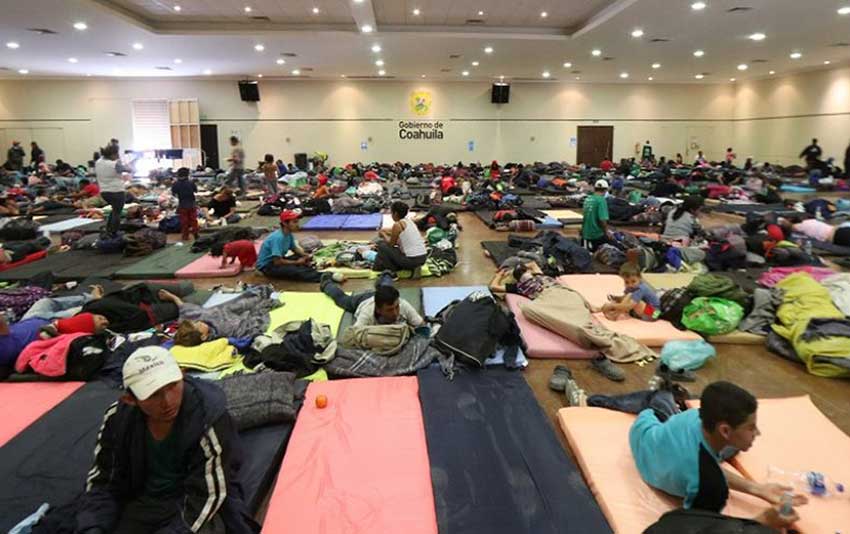
Some 10,000 people were evacuated from the municipalities of Tecuala and Acaponeta, in the north of Nayarit, to the threat on Tuesday of Hurricane Willa, category three, which must touch land in the Mexican Pacific this afternoon-night.

Wilma must penetrate the limits of Nayarit with Sinaloa, to the northwest of this capital, while in Michoacan the entrance of the tropical depression Sergio is expected today, which has already claimed the lives of 14 people in Oaxaca and Veracruz, as well as damages in many houses.

Nineteen shelters were installed in the north of Nayarit to serve the evacuated population.

Since yesterday in the afternoon most of the shops in Tecuala and Acaponeta closed.

The governor Antonio Echevarria made supervisory tours of the coastal area of the municipality of Tecuala, where the hurricane is expected to impact.

‘The most important thing at this time is to ensure the welfare of families living in the municipalities of the north coast of Nayarit, from San Blas to Tecuala, which is expected to have the greatest impact on Willa,” he said.

spot_img

Public charge rule change not final—stay enrolled, advocates urge

by Mark Hedin
Ethnic Media Services

The Department of Homeland Security on Sept. 22 announced plans to drastically change the terms under which it bars people it deems likely to depend on government support from entering the country or getting green cards.

The new proposal would expand the factors the government would use in deeming someone a public-charge risk, which are currently limited to those likely to need cash aid, defined as welfare or long-term institutionalized care.

Now, Homeland Security is proposing to also bar those likely to need housing assistance, non-emergency Medicaid, Medicare Part D – help with prescriptions – or nutritional aid such as food stamps, the Immigrant Legal Resource Center (ILRC) lawyer Erin Quinn said in San Francisco.

Word of the pending changes has rocked ahe immigrant community, with many considering quickly disenrolling from benefit programs to protect their green card applications or the prospects of family members who might be applying.

To address these concerns, the ILRC on Sept. 27 hosted a teleconference coordinated by Ethnic Media Services to discuss the proposed changes, who they are most likely to affect and what steps might be prudent ꟷ or imprudent ꟷ to take in anticipation.

Joining Quinn in the hour-long call were Wendy Cervantes of Washington, D.C.’s CLASP (Center for Law and Social Policy), Maria Gonzalez of Boston’s Health Care for All, Karlo Ng, of the National Housing Law Project in San Francisco, and Amanda Lugg of New York’s African Services Committee.

The impact of the proposed rule change would be significant. According to the Migration Policy Institute, 2.3 million of the 4 million legally present noncitizens who arrived during the past five years could be at risk of a public-charge determination ꟷ up from the current 3 percent, ILRC’s Sara Feldman said in opening remarks.

“Immigration laws are very complex. It’s best to think about it on a case-by-case basis,” Quinn said, and urged people to talk to an accredited immigration attorney before dropping any services.
“It’s really important that families get the services they need now and not worry about possible speculative impact about those use of benefits in the future.”

“Even if it’s enacted as written, we expect any changes will be way off in the future,” Quinn said. And even once they’re in place, if they ever are, they’ll be “forward looking,” not retroactive. This means that people will be judged not on what benefits they may have received before the rules changed, but on their needs going forward.

Quinn said that the changes in policy will appear when trying to enter the United States and when applying for a green card.

“Permanent residents looking to naturalize will NOT be affected,” she said.

She recommended the ILRC web site resource “Ready California” (https://ready-california.org/#1) for those concerned about how to prepare for the new regulations.

Amanda Lugg, of the African Services Committee, also urged people to get professional legal advice before making any changes, and repeatedly counseled against taking action based only on the advice of neighbors or other nonprofessional casual acquaintances.

For example, the National Housing Law Project’s Ng, said, there are a variety of distinctions the law will make around the various forms of Section 8 housing vouchers. Those in the name of an immigration applicant’s dependent, for instance, won’t be counted against the applicant.

And some people fitting into certain particular categories, such as crime victims or those seeking to escape domestic violence, would be exempt from the changes.

The proposed rule changes give the administration “enormous discretion” in determining whether someone meets the public charge standard. Negative factors it could apply include being a senior or a juvenile, limited English proficiency, poor health, or having a family income below 250% of the poverty line – $63,000 annually for a family of four, a threshold 40% of U.S.-born people wouldn’t meet, Cervantes said.

“Millions of families would be impacted if this rule is finalized. … In fact, DHS and the rule itself point out that it would lead to increased poverty and worse health outcomes for certain families including U.S. children.”

“The proposed rule would have a detrimental impact on the housing stability of millions of immigrant families,” Ng said. Federal housing programs help immigrant families who are “one step away from homelessness.”

Immigrants with disabilities, chronic health conditions, a medical condition that requires extensive treatment, and no insurance would find those all heavily weighted negative factors according to the proposed new rules.

Fearful of impacting green card hopes, Lugg said her clients already are expressing a reluctance to accept housing vouchers or use anti-retroviral drugs to combat HIV.

The proposed rule changes threaten to reverse years of work and hard-won progress fighting AIDS and create a “backdoor reinstatement” of the “de-facto ban” of HIV-positive individuals that was overcome in 2010, Lugg said.

For the short term, nothing happens until the proposed changes are published in the Federal Register as a NPRM ꟷ notice of proposed rule making, which could happen in the next couple of weeks. Once it does, the public has 60 days to comment.

The Department of Homeland Security is obligated to consider those comments and include responses to those comments in its final wording of the rules. That process alone could take from months to years to finalize, Quinn said.

After that, there’s another 60 days before the rules would take effect.

Lugg said the Protecting Immigrant Families Campaign is hoping to see 100,000 public comments registered on the topic. Those comments must be made in English and should be one per person ꟷ writing something for others to sign onto would only count as one comment – Lugg said, and “you need to tell a story of how you or someone you know would be impacted.”

“We have an opportunity to fight back,” Lugg said, “and we’ll win. When this administration has gone too far, as it has before and as it has with this rule, we’ve seen the American people fight back. We’ve seen it with the travel ban. We’ve seen it with the child separation policy. And now we’ll see it with this public-charge draft rule.”

So, Quinn cautioned about disenrolling from benefits with the assurance that there would be enough time “to give members of our community notice if they need to disenroll from services.”

spot_img

Civic Alliance documents Ortega’s mistakes to bring him before international justice

by EFE

The Civic Alliance for Justice and Democracy, said yesterday that the errors of justice during the socio-political crisis in Nicaragua are documented, to bring the Government of Daniel Ortega before international justice.

“All the errors that have been made in the rigged judicial system that exists in Nicaragua are being documented to take them first to the Inter-American Commission on Human Rights (IACHR), so that there is a judgment against the Government of Nicaragua for the mistreatment of people, “said the representative of entrepreneurs in the Alliance, Juan Sebastián Chamorro.

Both the Alliance and organizations defending local and international human rights point the Government to the death of between 325 and 528 people, due to acts of repression since the social outbreak last April 18. The Government has admitted 199 victims.

The agencies also affirm that in Nicaragua there are at least 558 “political prisoners” imprisoned after participating in protests against Ortega.

The government is also attributed “extrajudicial executions, torture, obstruction of medical care, arbitrary detentions, kidnappings and sexual violence, among other human rights violations.”

Among the international organizations that have made such statements are the office of the United Nations High Commissioner for Human Rights (Acnudh), the Inter-American Commission on Human Rights (CIDH), and Amnesty International (AI).

Ortega denies being responsible for the accusations and maintains that everything is due to an attempted “coup d’état”.

spot_img

Beware: that gift card can end up in the hands of a scammer

** FILE ** In this Jan. 10, 2008 file photo, a variety of retail gift cards are seen on a kiosk at a store in Santa Clara, Calif. Gift cards are once again expected to be the most-requested present for the season, the National Retail Federation said this week, even as total spending on them is expected to slip this year as shoppers search for better bargains among the deep discounts retailers are offering. People began spending their gift cards more on necessities last year, the group also said, a trend that is expected to intensify this year. (AP Photo/Tony Avelar, file) ORG XMIT: NYBZ172

by Mark Hedin

Ethnic Media Services

Gift cards – prepaid credit-card-like financial instruments – are for gifts. Just ask the government.

You can use them, perhaps, to give your style-conscious niece who lives far away the chance to shop for something she’ll actually wear. But DON’T use a gift card to help rescue that niece, or anyone else, from sudden misfortune or a mishap, and especially not because you got an urgent call from someone with surprising news, needs or an offer. You’re only being robbed.

That message was reinforced in a media teleconference Oct. 23 with Federal Trade Commission representatives Monica Vaca and Lois Greisman organized by Ethnic Media Services.

The FTC urges anyone contacted by a person who wants to be paid via a gift card – iTunes and Google Play are popular just now – to put down the phone, take a deep breath and call the law.

“Anyone who demands payment by gift card is always a scammer,” the FTC’s website Consumer Sentinel Program (FTC.gov/giftcards) says. Greisman and Vaca urged people to check it out.

“There is not a single legitimate merchant, government or agency that will ever ask for a payment in that way,” Greisman said.

With people becoming more cautious about sending money via wire transfers, gift-card scams are the latest thing in stealing people’s money, they said.

From an annual total of $20 million a few years ago, gift-card scams in the first nine months of this year already total $53.1 million (https://public.tableau.com/profile/federal.trade.commission#!/vizhome/ConsumerSentinelNetwork/AgeFraudLosses) – and those are just the ones reported to the agency. That $53.1 million is the haul from 30,309 different crimes. African American and Latino people are disproportionately victimized, the FTC officers said, and also the least likely to report the crimes, Vaca and Greisman said.

Often, when victims don’t report their losses, they said, it’s either out of shame and embarrassment or the belief that there’s nothing that can be done to help them anyway, so why bother?

And it’s true, getting people to buy a gift card is an effective way to steal their money, because currently there is no way to stop the payment, Vaca, associate director of the FTC’s Division of Consumer Response and Operations, said. “Gift cards are for gifts, not payment,” she emphasized.

“The money is gone, as soon as that pin number is provided,” Greisman, director of the Division of Marketing Practices, confirmed.

But it’s still a good idea to reach out to the gift card company for help, or to call the FTC at (877) FTC-HELP (382-4357), if you’ve given a stranger money that way. The agency is trying to work with gift-card sellers on ways to block frauds, she said, and the more they learn about the various ways people are being robbed, the more ability law enforcement may have to stop it.

“We’re going to continue to work with the issuers – Google Play, Amazon, Apple, Walgreen’s, CVS and others – to see what can be done to minimize the harm,” Greisman said.

Vaca and Greisman steered listeners to the Consumer Sentinel Program on government web sites FTC.gov/giftcards and also FTC.gov/data, where there’s advice, a trove of data on various ways people have been cheated and statistics showing that people of all ages are targeted and fall victim to the scams.

Younger people are statistically more likely to pay scammers, the speakers said. Older targets are more likely to blow the whistle.

The FTC website also lists contact information for some of the biggest card issuers (https://www.consumer.ftc.gov/articles/paying-scammers-gift-cards) for people to report suspicious transactions.

People can report crimes anonymously, Greisman said, even though the more information someone provides, the more helpful it is to the FTC and the 2,500 law-enforcement staff nationwide who can access the information FTC gets from victims.

The government is also working with law enforcement agencies overseas, such as in India, where many of these scams seem to originate, she said.

The FTC is not itself an enforcement agency, the speakers pointed out, but nonetheless, it initiated a process by which millions of dollars were eventually returned to people victimized in recent years by wire-transfer ripoffs.

spot_img

The Library Honors Native and Indigenous Cultures

Native people share culture, traditions, music, crafts, dance and ways of life

November is National American Indian Heritage Month, and San Francisco Public Library is excited to honor the voices of indigenous and native peoples with a month long celebration titled First Person: Honoring Native and Indigenous Cultures.

More than 80 programs for all ages, in all library locations provide a platform for native people to share culture, traditions, music, crafts, dance and ways of life. With First Person, there are opportunities to learn something new, have your curiosity stoked and enjoy the varied programs that honor and celebrate native people – all free at the library.

Learn about early contact between indigenous tribes and settlers of California by attending docent-led tours of the old Mission Dolores. Later in the month, author Elias Castillo discusses his book A Cross of Thorns: The Enslavement of California Indians by the Spanish Missions. Try your hand at traditional Navajo beading. Take part in an interactive presentation on the Indian Occupation of Alcatraz and view the VICE television series, Rise, about contemporary native and indigenous issues. Meet San Francisco Poet Laureate Kim Shuck (Cherokee/Euro-American) at special events that cover topics ranging from basket weaving to the debate around confederate monuments. View a rare collection of photographic prints of The North American Indian series by Edward S. Curtis.

Program highlights: When Art Is Racist with Kim Shuck & Andrew Jolivette Sewam Dance with Eddie MadrilFirst Nation Monuments & Funerary Places of the SF BayActivism & Aesthetics of the Indian Occupation of Alcatraz A Cross of Thorns with Elias CastilloExhibition: The North American Indian

For days and time, program guide visit: https://sfpl.org/uploads/files/1/4/first-person2018.pdKf.

Alameda County Board of Supervisors will vote to repeal criminal justice fees

The Alameda County Board of Supervisors will vote on a recommendation advanced in the enclosed white paper to repeal criminal justice fees in Alameda County, end collections, and discharge all outstanding debt. This vote is an important step by the Board to reinvest in families and move away from practices that harm marginalized communities in Alameda County.

On Tuesday Nov. 20, 2018 at 9:30 a.m., 1221 Oak Street, 5th Floor. Room 512.

Anunciando el Tour de la Paloma de la Paz del Ballet de Moscú en Cupertino

¡Tour de Paz Paloma! Las entradas estan a la venta en Cupertino.

Experimente el Tour de la Paloma de la Paz de Ballet de Moscú, extendiendo la buena voluntad en más de 100 ciudades de América del Norte en esta temporada de vacaciones, y presentando intérpretes de clase mundial.

Leyendas populares rusas Papá Noel y Snow Maiden, telones de fondo pintados a mano por maestros rusos; y una Paloma de la Paz con una envergadura de 20 pies: el Gran Cascanueces ruso hace que el espíritu navideño cobra vida para todas las edades.

El18 de diciembre. Visite www.nutcracker.com/your-city para obtener los mejores asientos.

spot_img

Carrots are the best veggies to eat for eye health

by Mary Miller

It’s no wonder carrots are a staple of most salads and dishes around the world, cakes included. Eating just one carrot a day can provide a person will multiple benefits, chief of which is maintaining excellent eye health.

The common carrot, also known by its scientific name of Daucus carota subsp. sativus, is a member of the carotenoid family. Like many other carotenoids, carrots contain beta-carotene, a powerful antioxidant which the body converts to vitamin A during digestion. The vitamin, in particular, is crucial to ocular health. Without it, a person is at risk of developing eye problems such as xerophthalmia, a progressive condition that can lead to impaired vision and night blindness. In small children, it could even result in possible blindness.

The average carrot has around 12,000 international units or IU of vitamin A or over 241 percent of what the body needs in a day. That means, that a cup of carrots has well over the recommended daily allowance of vitamin A for both men and women, both of whom only need 900 and 700 micrograms, respectively.

The uses of vitamin A

The vitamin A that’s found in carrots isn’t just limited to protecting your eyesight. It’s also beneficial to other parts of the body as well. For instance, vitamin A boosts the immune system and promotes cell growth. It is also necessary for the proper function of your heart, lungs, kidneys and other organs.

The peels of the carrot, which most people discard, is a treasure trove, especially when it comes to antioxidants. In particular, beta-carotene — as well as half of the carrot’s antioxidant contents — is found in the outer layer. These antioxidants prevent oxidation and fight the free radicals in the body, which cause tissue damage and oxidative stress. What’s more, antioxidants like beta-carotene reduce the risk of certain cancers, such as prostate and gastric cancer. In the U.S., the American Cancer Society estimates that over 160,000 cases of prostate cancer and 26,000 cases of stomach cancer will be diagnosed this year alone. It also could lower a person’s risk from coronary heart disease.

Other nutrients found in carrots

More than just vitamin A, carrots are loaded with many other nutrients. They are low in calories, saturated fat, and total fat, but rich in fiber. Fiber promotes healthy digestion and absorption. Soluble fibers help prevent the buildup of cholesterol in your blood vessels, additionally protecting you from high blood pressure and other heart diseases.

Other nutrients found in carrots are potassium, magnesium, vitamins A, E, K and vitamin C, which is also an antioxidant. Carrots also come in a variety of different colors other than orange, such as yellow, red, and purple carrots. These kinds of carrots contain amounts of lutein, lycopene, and anthocyanins, respectively. These nutrients all aid in combating a host of health problems and chronic diseases. (Related: Carrots over cough medicine! Discover why this veggie is a natural solution).

The humble carrot is truly a versatile vegetable. They complement nearly every meal without having an overpowering flavor. They can be chopped, shredded, steamed or boiled, and then some. Cooked or raw, the possibilities are endless. Even eaten on their own, they make the perfect healthy snack for kids and adults alike. (Natural News).

spot_img

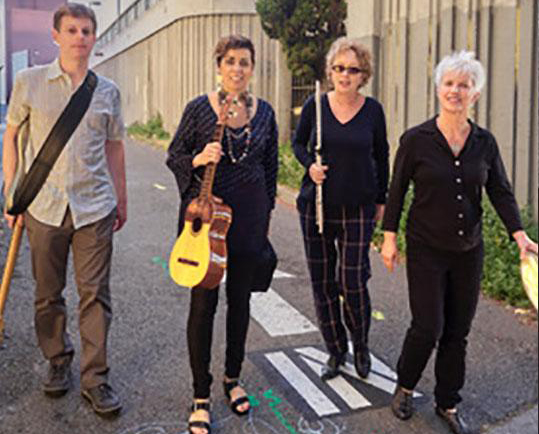
Opera singers to compete in Metropolitan Opera auditions in San Miguel

Up to four winners will advance to the next step in the auditions process

by the El Reportero’s news services

Classical music promoter Pro Musica of San Miguel de Allende, Guanajuato, has been named the Mexico organizer for the Metropolitan Opera National Council Auditions (MONCA).

The competition gives young opera singers the opportunity to launch major careers and ultimately win US $15,000 in cash prizes.

Auditions in San Miguel will take place on Nov. 8 and a public winners concert will be held two days after.

“Mexico has a vibrant opera history with Mexican stars like the late Oralia Domínguez, Javier Camarena and Ramón Vargas gracing the stage of the world’s great opera houses. That legacy continues today and Pro Musica is honored to be partnering with the Metropolitan Opera National Council Auditions in helping more talented young singers achieve their dreams,” added Michael Pearl, president of the organization.

More than 1,000 opera singers between the ages of 20 and 30 are expected to participate in the 2019 MONCA program, the longest-running singing competition in the United States.

Up to four winners of the San Miguel-Mexico district will each receive $1,500 in prize money and move on to the 2019 Gulf Coast Regional Finals to be held in January in New Orleans.

Past winners include some of the world’s best-known opera stars, among them Renée Fleming, Thomas Hampson, Jessye Norman, and Frederica von Stade. On average, nearly 100 alumni of the National Council Auditions are seen each season in Metropolitan Opera performances.

Throughout the four-stage competition process, members of the Met’s artistic staff and other professionals from the opera world judge the auditions, giving each singer feedback that includes career advice and ideas on future engagements. (Mexico News Daily).

ROMA will be available in theaters and on Netflix in December

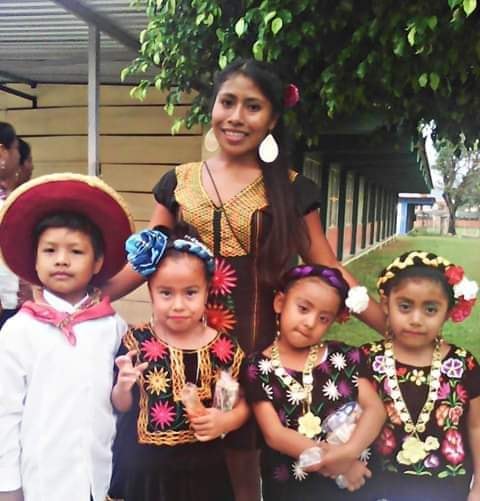
The most personal project to date from Academy Award®-winning director and writer Alfonso Cuarón (Gravity, Children of Men, Y Tu Mama Tambien), ROMA follows Cleo (Yalitza Aparicio), a young domestic worker for a family in the middle-class neighborhood of Roma in Mexico City. Delivering an artful love letter to the women who raised him, Cuarón draws on his own childhood to create a vivid and emotional portrait of domestic strife and social hierarchy amidst political turmoil of the 1970s. Cuarón’s first project since the groundbreaking Gravity in 2013, ROMA will be available in theaters and on Netflix in December.

Colorful carpets adorn the streets of Tlapa, Guerrero, for annual procession
Señor del Nicho is a fusion of religious traditions

Daily life in the streets of Tlapa de Comonfort, Guerrero, came to a standstill on Tuesday but not because of another wave of violence.

It was time for a yearly celebration dedicated to an image of Jesus Christ that mixes pre-Hispanic traditions with modern acts of faith.

Early in the morning on October 23 the main streets of the eastern Guerrero city are closed off to traffic and entire families begin working on what will become colorful and ephemeral sawdust carpets.

Each carpet will vary in design and intricacy, but all are dedicated as an offering to el Señor del Nicho.

Traditions in pre-Hispanic times called for the paths followed by dignitaries and other prominent citizens were to be adorned with intricate carpets made out of flowers and petals.

spot_img

Without accusing him of violence, the OAS asks Ortega for early elections in Nicaragua


by Beatriz Pascual Macías


The OAS today asked the president of Nicaragua, Daniel Ortega, to “support an electoral calendar” agreed upon in the national dialogue, mediated by the Catholic Church, in a formula that seeks early elections as a way out of the crisis that has left more than 350 dead in three months.

The request for the elections was included in a resolution approved today at an extraordinary session of the Permanent Council of the Organization of American States (OAS), based in Washington.

The text, promoted by seven countries (Argentina, Canada, Chile, Colombia, Costa Rica, Peru and the US) and supported by Mexico, “urges” the Nicaraguan Executive to “support an electoral calendar agreed together in the context of the National Dialogue process. ”

The Nicaraguan Bishops’ Conference, mediator and witness of said dialogue, requested Ortega to advance the elections on March 7, 2019, on July 7, but on July 7, Ortega rejected it, considering that there would be “time for elections”, as mandated by law. ”

The resolution was approved with the vote in favor of 21 of the 34 countries that are active members of the OAS, while three (Nicaragua, Venezuela and Saint Vincent and the Grenadines) voted against and seven abstentions were registered, as well as three absentees, among them Bolivia.

The initiative does not point to Ortega for violence, but urges his government to participate “actively and in good faith” in the national dialogue, in which authorities and the opposition Civic Alliance, which brings together the private sector and society civil.

In the resolution, the OAS expressed its condemnation of the “harassment” of the bishops participating in the dialogue, as well as the “acts of violence” against Caritas offices that were set on fire and against the National Autonomous University of Nicaragua (UNAN, which became the center of the protests.

Hostilities have increased in recent days with attacks such as the UNAN and the one that occurred yesterday against the city of Masaya, which has led to the condemnation of countries such as the United States and organizations such as the European Union (EU).

In response to these criticisms, the Minister of Foreign Affairs of Nicaraagua, Denis Moncada, brought to the Permanent Council his own resolution, which called on the international community to respect their “self-determination” and blamed “international terrorist groups” for instigating violence .

That Nicaragua initiative failed with the vote against 20 states, eight abstentions, three absentees and the support of only three countries (Venezuela and Saint Vincent and the Grenadines).

The votes evidenced the solitude of Nicaragua in the OAS, which only obtained the support of Saint Vincent and the Grenadines, Venezuela and Bolivia, whose mission had proposed some amendments to modify the approved resolution but decided to leave the room abruptly due to disagreements in the procedure.

spot_img

Criticism of the gender perspective

by Josep Miró i Ardèvol

The gender perspective is a determining ideology in Spanish politics. In Catalonia it has managed to get the Comissió d’Estudi del Procés Constituent to impose it as a compulsory doctrine of the future Catalan constitution, even before debating it in a patchwork of the tied and well tied of Francoism.

Gender ideology spreads through extraordinary confusion about its meaning. Some understand it as an innocuous substitution of the grammatical concept of sex, masculine and feminine. It is a visible error in the presentation of statistical data. Quite a lot more they conceive it as the relationship of equality between men and women, and in this sense it is perceived as a feminism.

But in reality it is a political ideology, such as Marxism, or communism, which pursues power, and cultural and social hegemony. It arises from an approach that destroys the objective concept of human nature, substituting it for the subjective drive of sexual desire elevated to a political category. Denies all truth to other conceptions, which pursues through censorship, repression, personal and media disqualification. It promotes the camouflage of the economic causes of inequality, and by eroding the meaning of being human, prepares the mentalities for posthumanism.

It is not a feminism because it does not contemplate the real woman, nor does she worry about the equity situation of all of them. Thus, the two largest groups, mothers and widows, have never been part of their demands, but the equal proportion in the electoral lists, regardless of any other criteria. It is only interested in the woman as long as it fits in with its theory, which is based on the imitation of a heterosexual man, even if it means losing years of life expectancy, and conflict with him, in a patchwork of the class struggle.

The gender perspective is not interested in real equity. Manipulates reality to present our society as patriarchal, and phallocratic (sic), dominated by heterosexual males. But ignores aspects as decisive for the person as life expectancy and education, because there are many more female university graduates than men under 35 years, more male than female ninis, many more suicides, repeaters, abandonment and school failure among the guys, that in the girls. It introduces a distorted approach to equity by diluting the economic and educational causes of inequality in the “gender conflict”. The paradigm was the Ministry of Equality of Rodríguez Zapatero. A social democratic government that created a ministry for equality without any economic function, focused only on the conflict between the “woman class”, homosexuals, bisexuals, etc., against the “heterosexual male class”.

But it is not about opposing feminine inequalities (or) other masculine ones. The point is to overcome them in terms of people, of citizens, in each concrete objective situation. Everything else is playing the game of inequality, and the elite that lives installed in it.

But the gender perspective is something much more confusing and destructive than all that. This was exemplified by the ex Congresswoman of the United States Bella Abzug in 1995 at the Beijing Conference, when she affirmed that “the term gender has been differentiated from the word sex to express the reality that the situation and the roles of women and men are social constructions subject to change”. In this ideology there is no man and woman as a consequence of their nature. Only cultural construction counts, which gives rise to changing subjects at will. It is the empire of subjectivity, of untying. A person whose biology categorizes her as a woman may have a male gender identity and be attracted erotically and affectively by men. And conversely, and all the variations that are wanted, which can also be modified at will throughout life. All this results in a great fragmentation.

The unity of the human being in its specificity of man and woman has been transformed into a multitude of identities that demand its political recognition, and the existence of ¬specific rights and prerogatives along with heterosexuals: lesbian, gay, bisexual, transsexual, transgender , transvestite and intersexual, which can reach 31 according to the Human Rights Commission of the city of New York, or even 58 (or are only 50?) as Facebook offers. Confused? This is the gender perspective.

The ideology of the genre means the destruction of our civilization. A just society and its economy can not survive this confusion, disorder, arbitrariness and persecution of man because they destroy the foundations of nature, its anthropological understanding, its cultural manifestation, and with it the social institutions that, like the family, are necessary for our common life.

spot_img