Wednesday, August 5, 2026
Home Blog Page 282

Live Latin Jazz @ Bird and Beckett

Hosted by Adrian Areas Latin Jazz Ensemble

Compiled by the El Reportero’s staff

Latin jazz and original compositions for your dancing and intellectual stimulation. New Music, new Energy, the new generation of Latin Jazz!!

The Adrian Areas Latin Jazz Ensemble will Be Performing Live. Cover Charge $5 Donation for Students/Musicians:$10-20 Donation for the Artists/Musicians

Musicians Line up: Adrián Aréas on the Moperc Tumbadoras, Dan Neville On Vibes, Jordan Brysk On Baby Bass, Brian Andres On Drums.

Sunday February 3rd 2019, Show Time 4:30 p.m. -6:30 p.m., at Bird and Beckett Books in San Francisco.

El Festival Anual de San Francisco Son Jarocho

Homenaje a Andrés Flores: Con Chuchumbé desde México, Los Hijos de José, Tarimba, e invitados especiales Quetzal Flores, Martha González y Amairani Flores

Aprenda sobre el estilo de música folklórica de Veracruz durante un festival de música en vivo, fandango comunitario, talleres con artistas maestros y una mesa redonda en la que Brava presenta el 7º Festival Anual de San Francisco Son Jarocho.

Ven al evento principal del Festival, un concierto en vivo con Chuchumbé desde México con los músicos Patricio Hidalgo, Yaratze Hidalgo Sandoval, Félix José Oseguera Rueda y Juan Francisco Galván, y Los Hijos de José con José Roberto Hernández, Federico Zuniga Jr. y Russell. C Rodríguez, con los invitados especiales Quetzal Flores y Martha González.

Del 6 al 10 de febrero de 2019, ata Brava Theatre Center, 2781 24th Street (en York), San Francisco.

Public Hearing on Monster in the Mission

Support the 100% community developed affordable housing!

Join us at Mission High School for and have the opportunity to speak directly to the Planning Commission and demand that they make the right choice and take a stand against the Monster in the Mission and support the 100 percent community developed affordable housing!

Thursday, Feb. 7, Rally at 2:30 p.m., at 18th & Dolores St. Hearing at 4 p.m. at Mission High School, 3750 18th Street, SF.

The Inaugural COVEN Film Festival brings world-class short films made by women to San Francisco 

Announcing the first-ever COVEN Film Festival, San Francisco’s new world-class short film festival featuring films made by women, for everyone. A full day of curated short film screenings, complete with filmmaker Q&A’s will take place Saturday, Feb. 9th, 2019 at the New People Cinema in San Francisco’s historic Japantown neighborhood. A private networking event will take place the evening before on Friday, Feb. 8 for filmmakers and sponsors.

More than 200 films were submitted from 19 countries. COVEN is dedicated to showcasing short films by underrepresented emerging women filmmakers with a lineup that includes work from creators of all ages and genres while spotlighting Bay Area artists.

On Feb. 9, at New People Cinema in San Francisco’s historic Japantown neighborhood, 1746 Post St, San Francisco. Tickets are limited and on sale now at covenfilmfest.com.

Dying in Vein, the Opiate Generation

Dying in Vein is an intimate and deeply personal exploration of opiate and heroin addiction. The film follows two young women trying to get clean, a 22-year-old in recovery, a family grieving the loss of their son, and a team of ER doctors trying to save their patients. Through these four stories, the film explores the pill to heroin pipeline and the shame and blame that surrounds the disease of addiction.

The film looks at the aftermath of death on loved ones, the daily commitment of sobriety, the reality of considering treatment after multiple relapses, and the culpability of our medical communities in the opiate crisis.

At the Tiburon Library located at 1501 Tiburon Boulevard in Tiburon, on Thursday, Feb. 14, 2019 at 6:30 p.m.

spot_img

Benicio del Toro returns to Cuba with ‘Sicario’

by the El Reportero’s news services

A new film about an old problem, brought Puerto Rican actor Benicio del Toro back to the New Latin American Film Festival of Havana, which space is considered today relevant for the regional movie.
The winner of the Oscar for ‘Traffic’ (2000) presented his most recent work in the Cuban capital: ‘Sicario: the Soldier’s Day’, saga of the 2015 film.

That is the world that once again seduces Del Toro who plays a vengeful mercenary who represents the anger and violence of the drug war and the evil that originated from it.

The war against drug trafficking from another point of view, this time from violence ‘in the best Hollywood western style,’ the versatile actor pointed out during a press briefing at the film event.

Del Toro has already become regular in this city. Between gestures and a particular way of speaking he feels and sees himself as just another Cuban. Part of this was due to the intense preparation process on the island for the film about the Cuban-Argentinean guerrilla Ernesto Che Guevara that he also produced in 2008.

Returning to Cuba is always a pleasure, noted the actor, pointing out that events like the Havana Film Festival are windows to show the best of the regional cinematography.

Wide repercussion by death of popular bolero singer Moncho

The death of popular Spanish bolero singer Ramon Calabuch (Moncho) has had a great repercussion in the international media.

Popular singer of boleros, Ramón Calabuch (Moncho), was known as ‘The Gypsy’ and King of Bolero. He sang boleros such as Llévatela written by Armando Manzanero, Voy, by Luis
Demetrio and Amor Fugaz, by Benny Moré, among others written or sung by several famous artists.

In Cuba, Moncho was a very famous singer, and cultivated professional relations with local bolero composers, such as José Antonio Méndez and César Portillo de La Luz. He started his artistic career in 1956 in Barcelona.

In more than 60 years of professional life, Moncho recorded 34 albums, most of them in Spanish, although he left songs in Catalan language.

Several artists such as Joan Manuel Serrat, Dyango and Diego El Cigala were preparing a tribute to him on Jan. 14.

Chucho Valdés and Orishas among Top 20 in Latin Music in 2018

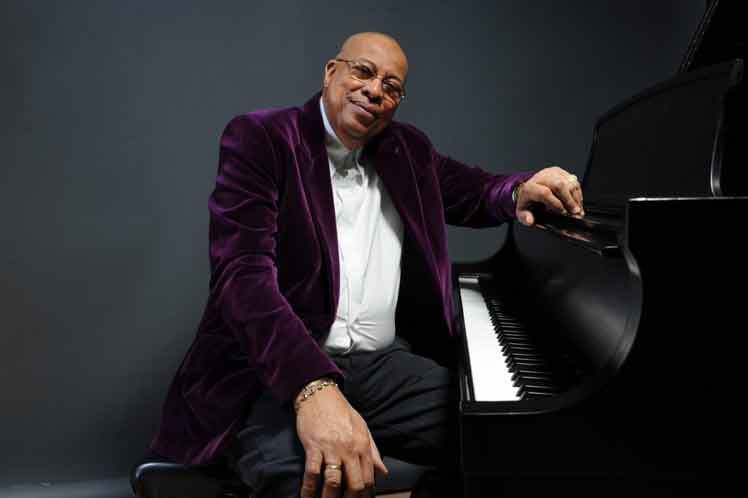
The albums Jazz Bata II by the Cuban jazz musician Chucho Valdes, and Gourmet by the hip hop group Orishas are among the top 20 Latin music made records on the Billboard.

The Cuban jazz musician and Orishas rank 10th and 12th, respectively, in the top 20 this year, according to the influential specialized publication.

In his record, Valdés, who has won six Grammy and three Latin Grammy awards, includes blends of African rhythms and classics of Cuban popular music as a tribute to his father and Irakere founder, Bebo Valdes.

For their part, Orishas returns to the stage with Gourmet, their fifth studio album in which they return to the Cuban roots that marked them as one of the most listened to hip hop groups.
The list is headed by El Mal Querer, the second record by the Spanish singer Rosalia, which was released on Nov. 2, 2018, by Sony Music.

Other musicians on the list include Gilberto Santa Rosa, Victor Manuel and Sonora Sanjuanera; Natalia Lafourcade, Mon Laferte and J Balvin.

spot_img

Organic strawberries found to stop the growth of cancer cells

by Michelle Simmons

Berries have been widely studied for their potential health benefits, particularly their anti-cancer properties. Various studies have provided evidence that among berries, strawberries, organic ones, in particular, can fight against cancer.

In a study conducted by researchers from Sweden, it was revealed that extract from organic strawberries are especially effective at inhibiting cancer cell growth as they contained more antioxidants and a higher ratio of ascorbate compared to dehydroascorbate, its oxidized form. Extracts from organic strawberries were also more significantly effective in stopping cancer cell proliferation compared to extracts from conventionally-grown ones. (Related: Strawberries contain powerful anti-cancer medicines and have now been scientifically shown to prevent breast cancer).

Berries are good dietary sources of vitamin C and fiber, and evidence shows that these two are the primary cancer-fighting components of berries. A report published in the American Institute for Cancer Research revealed that foods rich in vitamin C are likely to protect against esophageal cancer. On the other hand, foods rich in fiber have long been known to fight against colorectal cancer.

Strawberries are also particularly loaded with ellagic acid, a natural phenol antioxidant. Laboratory studies have shown that ellagic acid can help lower the risk of cancers of the bladder, breast, esophagus, lung, and skin.

Quercetin is another cancer-fighting component of strawberries. Research published in the Journal of Agriculture and Food Chemistry identified the means by which fruit extracts or their components work against human liver cancer cells. Out of all the compounds examined, quercetin was revealed to be the most active polyphenol, significantly decreasing cancer cell viability by up to 80 percent after only 18 hours of treatment. Additionally, effective cell death from strawberry extract was found to be dose- and time-dependent.

Quercetin is also a flavonoid that has anti-inflammatory, antiviral, and anti-cancer properties. Earlier research has associated this flavonoid to the prevention or slowing down of other forms of cancer, such as cancers of the ovaries, breast, colon, leukemia, and lung.

Moreover, strawberries and quercetin can decelerate the normal cell cycle before cell death, which suggests that these protective actions may take place together with the different phases of cancer cell development.

Why choose organic ones?

As you may have noticed, this article emphasized “organic” strawberries and not the conventionally-grown ones. Strawberries are naturally delicious and packed with antioxidants. However, if they are conventionally-grown, they may be actually harmful.

Strawberries may ward off cancer, but can be the cause of cancer if they are grown conventionally. This is because conventionally-grown strawberries are loaded with pesticides, which cancel out all the benefits you can get from eating strawberries. Furthermore, these pesticides are known carcinogens, or cancer-causing substances. A study published in the journal JAMA Network has also found a potentially harmful link between eating fruits and vegetables high in pesticides and having fertility problems.

In 2018, strawberries topped the Environmental Working Group’s (EWG) “Dirty Dozen” list of fruits and vegetables with the most pesticide residues for the third consecutive year. In the study, the EWG, a non-profit research group, reported that nearly a third of all strawberry samples had at least 10 pesticides. One sample even had 22 pesticide residues.

The study based its findings on almost 39,000 U.S. Department of Agriculture tests of 47 fruits and vegetables and found almost 70 percent of conventionally grown produce has pesticides and 98 percent of strawberries, peaches, nectarines, cherries, and apples have at least one pesticide.

Spinach ranked second on the list, followed by nectarines, apples, grapes, peaches, cherries, pears, tomatoes, celery, potatoes, and sweet bell peppers.

Read more news stories and studies on cancer prevention through healthy foods by going to PreventCancer.news. (Natural News).

Sources include:
NaturalHealth365.com
USAToday.com

spot_img

Banksters hate the free market

NOTE FROM THE EDITOR:

Dear readers,

Have you wondered what the government was created for and is it for? Phrases like this: “the very raison d’etre of the government is to undermine, skew and other things. The government, after all, is a claim of ownership over a geographical territory by a cartel of criminals, and gives them the right to impose restrictions on the inhabitants of the regions “, and below we can read for those who were created the government. Written by investigative journalist, James Corbett, this article describes many and other questions that perhaps had not yet been elaborated in our store of ideas. – Marvin R.

by James Corbett
corbettreport.com

It’s no secret that governments hate the free market. At its base, every single government tax, license, regulation and restriction is an implicit rebuke of the idea that humans should be able to interact freely with those around them.

This is old news to my long-term readers, but it bears repeating because many have been duped by the purveyors of socialist dogma to believe that free interactions between sovereign individuals is a scourge that must be eradicated. Because, you see, the fact that food, clothing, shelter, health care and the means of production don’t magically rain from the sky into the lap of every person on the planet means that any attempt to exchange your skills and services with another in return for compensation is slavery. (No, this is not an analogy, it’s LITERAL SLAVERY, guys!).

The words “free market” have become so tainted in modern economic discourse that their very mention tends to evoke a slew of supposedly related and equally hated terms. “Capitalism” and “big business” and “banker” are thrown together in a stew with “free market” so that anyone who talks positively about voluntary transactions between free people in a positive manner is obviously a poor-hating fat cat who lights his cigars with $100 bills and dines on the tears of beggars.

But here’s a puzzler for the socialists in the crowd: Why is it that the very banksters that they so rightfully rage against are in fact their biggest allies in the fight against the free market?
I know this perfectly straightforward observation will come as a shock to some of my readers, so let’s break it down.

As I’ve already stated, we know that the very raison d’être of government is to undermine, skew, and otherwise hamper free exchange among its citizens. Government, after all, is a claim of ownership over a geographical territory by a cartel of crooks. That claim (according to the cartel and its defenders) gives the mafia the right to set rules for and impose restrictions on the inhabitants of that region. To understand how the gang of crook wields this power over the free market, one merely has to examine the history of the creation of the FDA or the ugly truth about the minimum wage or the nitty gritty details of how the financial regulators really operate.

But it would be folly to conclude from the simple observation that government is put in place to fleece the public that the politicians are the ones who benefit from this extortion scheme. Quite the contrary. The politicians are the punching bags that are put out for the public to lay into, expendable fall guys who are put in place merely to allow an enraged populace to let off steam without ever threatening the real rulers of the system. As Quigley observed long ago:

The argument that the two parties should represent opposed ideals and policies, one, perhaps, of the Right and the other of the Left, is a foolish idea acceptable only to doctrinaire and academic thinkers. Instead, the two parties should be almost identical, so that the American people can “throw the rascals out” at any election without leading to any profound or extensive shifts in policy.
So if interventions in the free market aren’t merely about lining the pockets of the political puppets, then who does this system really benefit?

Well, the big business monopolists, of course. Not only do we have the examples cited above (the FDA, the minimum wage, etc.) of big businesses benefiting from governments regulating their competitors out of the marketplace, but my Big Oil documentary is a case study in how an entire industry can grow up in conjunction with governmental institutions whose function is to cement big businesses in place as ruling monopolists. Oh, how the Rockefellers fell when the Supreme Court split up Standard Oil, hey?

But more to the point, the foundation of our economy lies neither in the politicians nor in the big business monopolists whose back pocket they rest in. It’s in the bankster class that creates the money out of nothing and loans it out (at interest, of course) to those cronies they wish to succeed in the phony baloney economy. And it is for this very reason that the central bankers are always the ones arguing for greater “governmental” power over the economy. Because, in the end, the government is just the mask that they wear to conceal their true face from the public.

Viewers of my Century of Enslavement documentary will already know all about this. When Morgan and his fellow Wall Street moneylenders knew that the public was fed up with the amount of control that they wielded over the country, they willingly put on the “chains” of a centralized, governmental institution. Rather than chain them down, though, the Federal Reserve that they created in fact benefited the banksters class. With the imprimatur of “government” behind their owned and controlled Fed monstrosity, Morgan and the fat cats now had control of a privately-owned central bank that could effectively privatize their profits and socialize their losses.

In the early years, the Fed was used to underwrite the military racketeering of the First World War and oversee the expansion of the bubble that was the Roaring Twenties. But with the Great Depression (which they helped to engineer), the banksters now found a new rallying cry for even further intervention in the markets: Keynesian engineering of the economy! For, you see, it was “free markets” that failed in the 1930s, so the answer was only to be found by greater “governmental” (bankster) control. This fallacious argument continues to influence economists to this day, so that the crisis of 2008 was down to a “lack of government regulation” or “the demise of Glass-Steagal” or whatever other scapegoat could be found. But the idea that the crisis was caused by government interventions in the free market? Why, that’s unthinkable!

This mentality has now pervaded society to the point where the public simply accepts that there is a central bank whose very mandate is to “foster economic conditions that achieve both stable prices and maximum sustainable employment.” And the only way it can possibly live up to that mandate is by interfering in the markets with their magic money out of nothing. Trump knows this; that’s why he decried the banksters’ interventions in the markets before he was president and now muses about how nice it would be if they intervened more now that he’s the don of the governmental mafia.

Many, many other examples can be cited showing how the bankers love to hate the free market, but perhaps no more shocking example exists than that documented in Antony C. Sutton’s book, Wall Street and the Bolshevik Revolution. In that work, Sutton demonstrates in meticulous detail how the Wall Street financiers aided and abetted the Bolsheviks, not because they had particular affinity for the communists’ professed ideals of equality and well-being, but because both groups shared a hatred for free markets and free peoples. After laying out the documentation of Wall Street’s support for the Bolshevik Revolution of 1917 over the course of 11 scrupulously documented chapters, Sutton concludes:

The question now in the readers’ minds must be, were these bankers also secret Bolsheviks? No, of course not. The financiers were without ideology. It would be a gross misinterpretation to assume that assistance for the Bolshevists was ideologically motivated, in any narrow sense. The financiers were power-motivated and therefore assisted any political vehicle that would give them an entree to power: Trotsky, Lenin, the tsar, Kolchak, Denikin — all received aid, more or less. All, that is, but those who wanted a truly free individualist society.

This is the plain truth of the matter: The bankers love whatever ideas, systems, beliefs and revolutionary movements will allow them to have more power over the lives of others. Central banks, regulatory bodies, rules, regulations, taxes; all of these are meant to constrain the bankers’ competition, not the bankers themselves. Having been created by and for the benefit of the bankers on the beliefs of the naive socialists who think that they could create a utopia if only they were the ones making the rules and intervening in the voluntary interactions of others, how could these market manipulations do anything but line the pockets and increase the power of the monopolists?

It’s the oldest trick in the book, but it still works. Every. Single. Time. And that’s why the bankers continue to use it.

spot_img

Migrants’ caravan leaves Mexico City, bound for northern border

Nearly 2,400 left a temporary shelter, looking for rides to Querétaro

By the El Reportero’s wire services

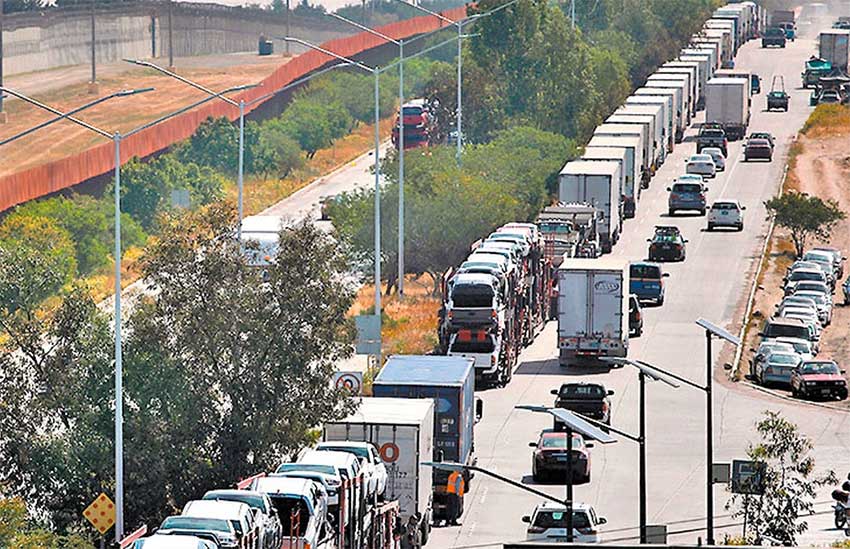
Thousands of Central Americans left Mexico City Thursday morning to continue their journey towards the United States border as President Donald Trump railed against past and present migrant caravans and continued to argue for his long-promised wall.

Authorities said that just under 2,400 migrants began leaving a sports stadium-cum-shelter at 4:30am to travel by subway to the north of the capital, where they were going to look for rides to Querétaro.

An additional 500 to 600 migrants remained in the shelter, waiting for humanitarian visas to be granted.

The National Immigration Institute (INM) said on Monday it had registered 15,582 requests for the visas and on Tuesday it reported that another 4,750 had been granted.

Since last October, thousands of Central Americans fleeing poverty and violence have entered Mexico as part of several migrant caravans, with most continuing to cities on the northern border, especially Tijuana.

There they remain stranded on the border, where they face long waits to lodge asylum requests with United States authorities.

Despite the likelihood that they too will have to wait for months or even years in cities with high rates of violent crime, members of the latest caravan are determined not to give up.

“I know it’s violent at the border, but I have to take that risk. I don’t have any more money and my family is waiting for me in the United States,” 27-year-old Honduran migrant María Murillo told the news agency Reuters.

Standing alongside her young son at the Mexico City shelter, she added: “Only God knows what we have gone through during all this time. I know that He is not going to abandon us.”
Another Honduran migrant, 33-year-old Óscar López, who is traveling with his wife and two children, said that he planned to go to Monterrey and then decide which section payof the border to travel to.

“I’m not thinking of going to Tijuana . . . I want to find a more accessible border to hand myself and my family in [to United States immigration authorities]. I don’t want to be returned to Mexico,” he said.

On Tuesday, the United States government returned the first Central American asylum seeker to Mexico since a hardened immigration policy known as “Remain in Mexico” was introduced by the Trump administration.

Many migrants have expressed their opposition to the U.S. policy because they say that it will expose them to the kind of violence they are trying to escape back home. Other say that they will try to cross the border illegally, even if that means paying a smuggler.

“I’m not thinking of returning to Honduras, and if it’s necessary I’ll pay to have a [smuggler] help me cross,” said Mauricio Gómez, a young Honduran man.

A few hours after the migrants left Mexico City this morning, Trump took to Twitter to announce that United States authorities are preparing for their arrival.

“More troops being sent to the southern border to stop the attempted invasion of illegals, through large caravans, into our country. We have stopped the previous caravans, and we will stop these also. With a wall it would be so much easier and less expensive. Being built!” he wrote.

In other tweets today, he cited Mexico’s record 2018 homicide numbers, charging “this is a big contributor to the humanitarian crisis taking place on our southern border” and that the situation was worse than Afghanistan.

“Why wouldn’t any sane person want to build a wall! Construction has started and will not stop until it is finished,” Trump wrote.

Asked about the tweets this morning, President López Obrador said he respected Trump’s right to say what he wished but added, “I don’t want to say anything about that.”

Source: Reuters (sp).

spot_img

US refuses to withdraw diplomats from Venezuela after Maduro breaks ties

“We call on the Venezuelan military and security forces to continue protecting the welfare and well-being of all Venezuelan citizens, as well as US and other foreign citizens in Venezuela”

by the El Reportero’s wire services

US Secretary of State Mike Pompeo has refused to pull diplomats from Caracas, arguing the government that severed diplomatic ties with the US is not legitimate and threatening ‘appropriate actions’ if anyone is endangered.

“We call on the Venezuelan military and security forces to continue protecting the welfare and well-being of all Venezuelan citizens, as well as US and other foreign citizens in Venezuela,” Pompeo said in a statement on Wednesday evening, adding the US “will take appropriate action to hold accountable anyone who endangers the safety and security of our mission and its personnel.”

Venezuela’s President Nicolas Maduro declared all US diplomats persona non grata on Wednesday, after Washington recognized opposition leader Juan Guaidó as the country’s president. Guaidó, however, said he wanted the US diplomats to stay, setting the stage for a potential diplomatic incident.

As the US does not recognize Maduro’s “regime,” his order for US diplomats to leave is not legitimate, Pompeo argued, adding that Washington will conduct diplomatic relations with Caracas solely through Guaidó’s government.

After the Trump administration recognized Guaidó’s government, a number of US allies followed suit, including most of the OAS countries and Canada. EU leaders also endorsed the rebel government.
Cuba and Bolivia have expressed support for Maduro, while Mexico has said it would continue to recognize Maduro’s legitimacy “for now.” Russian Foreign Ministry spokeswoman Maria Zakharova said the US “handpicking” of a government in Caracas perfectly illustrates the true Western sentiments toward international law, sovereignty and non-interference in internal affairs of states.

Prison’s former security chief recalls El Chapo’s perks and bribes
He provided El Chapo with shoes, a phone and secret visits with his wife

A former security chief at the Jalisco prison from which Joaquín “El Chapo” Guzmán escaped in 2001 testified yesterday that he and other prison officials took bribes from the former drug lord in exchange for providing him with a range of perks.
On his first day on the witness stand at the New York trial of the former Sinaloa Cartel chief, Dámaso López told jurors that among the privileges afforded to Guzmán while he was locked up in the Puente Grande maximum-security prison were new shoes, a mobile telephone and secret visits with his wife, brother and brother-in-law.

López, who joined the Sinaloa Cartel after resigning from his prison job, said that in exchange he received at least US $10,000, a house valued at 1.5 million pesos and assistance to pay medical expenses for one of his sons.

The witness told jurors that he quit his security job in September 2000 because the federal government was conducting an investigation into corruption at the prison.

However, López said that before he left he had a final meeting with Guzmán, who asked him to speak with the new security chief so that his perks would be preserved.

Known by the nickname “El Licenciado” (The Graduate), López later became a fixer and ultimately a leader in the Sinaloa Cartel. He is believed to have been chosen by Guzmán to be his successor.
However, “El Licenciado” was arrested in Mexico City in May 2017 and extradited last year to the United States, where he pleaded guilty to importing cocaine into the U.S and was sentenced to life in prison.

While López admitted to receiving bribes from Guzmán, he denied that he had anything to do with his escape from the prison in a laundry cart in 2001.

The sole accomplice to the escape was a guard known as “El Chito” who worked in the prison’s laundry section, he said, adding that Guzmán was later upset that other guards were falsely accused of aiding his breakout.

The 52-year-old witness also told the court about several executions that Guzmán allegedly ordered during his years at the helm of the cartel.

López is one of many cartel witnesses who have appeared over the past two months at Guzmán’s trial on charges of trafficking, conspiracy, money laundering and weapons offenses.

The former kingpin’s lawyers have attempted to portray the witnesses as unreliable “degenerates” who are speaking in the hope that their own prison sentences will be reduced.

If convicted, Guzmán faces probable life imprisonment.

Source: Reforma (sp).

spot_img

AMLO slams Fitch ratings agency ‘hypocrisy’ for Pemex downgrade

President says corruption is over and that investors with ethics know that Pemex is a solid company

by Mexico News Daily

President López Obrador has slammed the Fitch ratings agency after it downgraded the credit rating of the state oil company yesterday to just above junk status.

Fitch cut Pemex’s Issuer Default Ratings (IDRs) for foreign and local currencies to BBB- from BBB+ and national long-term ratings to AA (mex) from AAA (mex), stating that the “downgrades reflect the continued deterioration of Pemex’s standalone credit profile” and that the company “has been technically insolvent since 2009.”

Fitch also changed its outlook for the company to negative from stable.

Pemex has US $106 billion in debt, more than any other state oil company in Latin America, which both Fitch and Moody’s have said is a concern for the company’s investment grade rating.

Fitch said in a statement that its new “ratings are constrained by Pemex’s substantial tax burden, high leverage, significant unfunded pension liabilities, large capital investment requirements, negative equity and exposure to political interference risk.”

At his morning press conference today, López Obrador lambasted Fitch, without citing its name, and other credit ratings for their assessment of the state oil company.

“What these organizations do is very hypocritical… They allowed the looting [of Pemex], they endorsed the so-called energy reform, they knew that foreign investment didn’t arrive and investment in Pemex didn’t increase and that was what caused the decline in petroleum production. And they never said anything,” he said.

“They maintained a complicit silence and now that we’re rescuing Pemex, they come out with their recommendations and… ratings of the performance of Pemex,” López Obrador added.

Asked a specific question about Fitch’s ratings cuts, the president responded: “Investors with ethics know very well that Pemex is a solid company because now it’s being managed with honesty.”

López Obrador questioned whether Fitch had considered the government’s crackdown on fuel theft before it released its new assessment.

“Did the ratings agency take into account, as the technocrats say, this variable?… We’re going to strengthen Pemex; public finances are going to be strengthened. Of course, they don’t like it!” López Obrador said.

The veteran leftist, who took office on December 1, charged that the corruption that has plagued Pemex for more than 30 years has now come to an end.

“It was a company that was looted in the neoliberal period, it was among the most looted, most corrupt companies in the world, and these corrupt technocrats took great pains to destroy Pemex but fortunately… the people of Mexico decided to implement a change, to remove the country from crisis and corruption and to rescue Pemex,” López Obrador said.

“And we’re going to achieve it… Those greedy people didn’t manage to completely destroy Pemex… It’s like when a band of criminals goes into a bank and starts to steal the money from the vaults and an alarm goes off – that was the July 1 election. They take what they can but they flee. But they didn’t manage to take everything. What they left is enough to take Pemex and the country forward.”

But investors are worried that the federal government won’t provide support to Pemex through the injection of fresh funds, Bloomberg reported.

“Investors have AMLO’s policy process under a microscope,” said Michael Roche, a strategist at Seaport Global Holdings in New York. “If the expected capital injection is not forthcoming then the market will build a higher political risk premium into the Mexico sovereign spread.”

The downgrade was not unexpected by finance department officials. An undersecretary at the Finance Secretariat said it was worrying but came as no surprise.

Source: El Economista (sp), Reuters (en), Bloomberg (en).

In other Mexico related news:

Government to sell off 263 vehicles, 76 aircraft at two auctions

Sale of vehicles expected to generate over 100 million pesos, which will help fund new national guard

President López Obrador has announced that the federal government will sell off vehicles and aircraft in two auctions at the Santa Lucía Military Base in February and April.
He said proceeds from the sales will be used to fund the creation of the new security force, the national guard.

The government expects to generate more than 100 million pesos (US $5.26 million) at the first event, scheduled for February 23 and 24, with the sale of 263 vehicles.

Among them:

• 171 pickup trucks;
• Seven semi-tractors;
• 30 motorcycles;
• 12 trucks;
• Two farm tractors;
• Two buses;
• Five semi-trailers;
• One armored BMW;
• One armored Audi.

The second auction will take place April 26 and 27 and will see the sale of 76 airplanes and helicopters, including the presidential jet, a Boeing 787 Dreamliner.

With the sale of the presidential plane, López Obrador will fulfill one of his campaign promises. The aircraft was seen by many as a symbol of the excesses of previous administrations. However, some experts contend that the government might actually lose money on the sale because of the lack of demand for such aircraft and the high cost of reconverting the plane.

During his announcement, the president also addressed concerns regarding the future of the vehicles and aircraft. He said he would ask for thorough background checks on potential buyers to ensure that the items are not used in illicit activities.

Source: El Financiero (sp), El Universal (sp).

spot_img

Census 2020 – Continued dispute over legality of immigration status question

To erase our presence: the growing political force in this country

by Fernando A. Torres
Special for El Reportero

The incorporation of the question about the migratory status into the Census 2020 that the presidency is trying to impose is still in legal dispute. The first legal opinion in this regard was that of Jesse Furman, a federal judge in New York who rejected its inclusion. The appeal to this decision, from the Trump administration to the Supreme Court, has not yet been answered by the highest court.

To date, five additional lawsuits have been filed throughout the country, one in California where the attorney general, Xavier Becerra, described the question as not just a “bad idea” but “illegal. Obviously the interests of California and our entire country are interested in having a precise census,” said Becerra.

Due to this question, experts have estimated that hundreds of thousands of people will not respond to the census out of fear. “I am pleased that a federal judge rejected the Trump administration’s attempt to undermine the United States Constitution by discouraging whole communities from being included in the 2020 Census,” said State Senator Richard Pan. “The judicial ruling of today is a victory for all those who believe in democracy and the purpose of the founders of our country. Clearly, the interests of California and our entire country are interested in having a precise census, “he added.

In a recent national teleconference organized by Ethnic Media Services with leaders and experts from various social organizations at the national level, Angela Manso, Director of Political and Legislative Affairs of the National Association of Elected and Appointed Latino Officials, NALEO, Fund for Education , said that from the first moment of the announcement of the Secretary of Commerce Wilbur Ross about the inclusion of the question, it was seen as a “machination to hide a political intention, We believe that (the question) was designed to erase our presence, the growing political force in this country. ” Manso also warned that Congress should act to pass legislation and eliminate the question once and for all.”

Experts agreed that Commerce Minister Wilbur Ross “gave in to political pressure” and in March 2018 he ordered the question to be added to the census form. The secretary said that this was necessary to effectively enforce the Voting Rights Act “but we know that this is not true and Judge Furman also knows that,” said Beth Lynk, Director of the Census Campaign of the Leadership Conference.

In his decision of Jan. 15, the judge found that the real reason for adding the question about his immigration status was somewhat different from the reason given by Ross. Speaking by telephone with a group of mostly ethnic media journalists, Lynk said the judge came to the conclusion that the secretary’s decision was illegal and will reduce the participation of those who are not immigrant citizens and Hispanic communities.

Judge Furman wrote in his opinion that “if the question is included, hundreds of thousands, if not millions of people will not be counted in the census,” the data collected will be of lower quality and will damage the rights to federal funds, weaken representation in Congress and will undermine participation within the municipal political power. “The court could infer the various ways in which Minister Ross and his aides acted as people with something to hide, that they had something to hide,” Furman wrote.

Meanwhile, local leaders also rejected the inclusion of the question and some considered it as part of a campaign to exclude important political forces.

For university professor Rick Ayers the purpose of the Presidency is to crush the growing strength of the electorate of the various ethnic groups. “Many, if not most, of the Latino respondents, as well as those in Africa and Asia, probably do not respond to the census at all.” Therefore, these communities will not have a political representation according to the demographic reality.

And the numbers indicate that Latinos are becoming a powerful political force in the country. According to a report released last week by the PEW Research Center, Latinos will be the nation’s largest ethnic voting group qualified to vote in the presidential elections. For the 2020 election year, Latinos with the right to pay will be 32 million, African-Americans will be 30 and Asians 11 million, double the data for the year 2000.

Nearly two-thirds of Asian-Americans “express concern about the use of census data,” said John Yang, executive director of Asian-Americans Advancing in Justice (AAJC). The 41 percent was extremely worried. “There is great fear for anti-immigrant sentiment inside the country,” Yang concluded.

This is part of a “generalized Republican campaign to suppress African-American and Latino votes – a campaign that includes intimidation … is another racist initiative of the current offensive of white supremacy in the United States,” said Ayers, who works at San Francisco State University.

“I’m not surprised that they seek to change the parameters of one of the most impartial and economically significant institutions for all of society, such as the Census,” said Edgar Ayala, well-known graphic designer of the Bay Area. “A desperate gesture on the part of those who, from an Anglo-Saxon supremacy ideology, unsuccessfully try to tear down those social bridges that make us participate in the constant multicultural and radically diverse construction of this country, north of the American continent,” he added.

“For many immigrants, even those who enjoy the precious documents, the memory of state persecution is on the surface and any delivery of additional information is perceived with suspicion,” said the singer of the city of Richmond Marci Valdivieso.

Giving information “is not only scary but also a direct threat to the integrity of the family since any cross-cutting use of that information among government agencies can result in deportation. And we are not going to say that the line of legality is never crossed here when the xenophobic, racist and excluding perceptions of some people in positions of authority are at stake. For all this, I join the voices of those who insist that this question is unnecessary, “said Valdivieso.

“This country does not consult: it imposes. Inside and outside its borders “said theater actor Carlos Barón.
“What they are trying to do is to intimidate immigrants – whether they are documented or not – and thus manipulate the elections. Who are behind that move? Conservative political groups. Fear rules in this country, “Baron said.

spot_img

El tribunal se entera de la fuga de 3 días de El Chapo del ejército en las montañas

El Chapo estuvo tranquilo todo el tiempo, pero el testigo recuerda que estaba “muy asustado”

por el servicio de cable de El Reportero

Un ex gurú de la tecnología del Cartel de Sinaloa dijo a los jurados esta semana en el juicio de Joaquín “El Chapo” Guzmán en Nueva York que pasó tres días con el ex narcotraficante en las montañas de Sinaloa mientras huía del ejército mexicano.

Cristian Rodríguez, un experto en tecnología de la información colombiano que estableció un sistema de comunicaciones encriptado para Guzmán, dijo a la corte que en 2009, los militares allanaron el escondite secreto del rey en el estado del norte.

Rodríguez dijo que él, Guzmán, otros líderes del cartel y una banda de guardaespaldas fuertemente armados huyeron al terreno montañoso para evadir la captura.

El testigo dijo que los hombres armados portaban armas grandes y una enorme arma “capaz de derribar un helicóptero”.

Después de su primer día en la calle, los hombres dormían en una pequeña casa, dijo Rodríguez. La segunda noche la pasamos expuesta a los elementos.

“El chapo estaba muy tranquilo”, la especialista de I.T. le dijo a los jurados. “Siempre estuvo muy seguro, tranquilo, tranquilo”.

Preguntado por un fiscal cómo se sintió durante la prueba, Rodríguez respondió: “Muy asustado”.

En su tercer día en la carrera, dijo el testigo de 32 años, llegaron a otra casa donde se les dio una comida, después de lo cual llegaron a Culiacán, la capital del estado de Sinaloa.
Después de esa experiencia, dijo Rodríguez, trabajó para el cartel de forma remota desde Colombia.

Sin embargo, según el testimonio de la corte del martes por el agente especial de la Oficina Federal de Investigaciones, Stephen Marston, Rodríguez comenzó a cooperar con el FBI en 2011 ayudándolo a infiltrarse en el sistema de comunicaciones cifradas que desarrolló.

Envió grabaciones de las llamadas de Guzmán al FBI y también instaló un sistema de grabación automático que permitía a las autoridades de los Estados Unidos escuchar las conversaciones del peregrino casi en tiempo real.

Esta semana, los miembros del jurado escucharon extractos de llamadas telefónicas auto incriminatorias que el presunto jefe del Cártel de Sinaloa había hecho a socios comerciales, socios criminales, armas contratadas y funcionarios corruptos.

Marston dijo el martes que los agentes encubiertos del FBI se hicieron pasar por mafiosos rusos en una reunión con Rodríguez en un hotel de Nueva York en 2010, donde un agente le dijo que estaba interesado en adquirir un sistema de comunicaciones encriptado para poder hablar con asociados criminales sin que los agentes del gobierno escucharan.

Rodríguez dijo ayer que aceptó trabajar para el FBI después de que dos agentes federales se le acercaron en Bogotá, Colombia, al año siguiente, diciendo que sabían que trabajaba para Guzmán y que estaba “en serios problemas”.

Rodríguez también instaló un sistema GPS en el teléfono celular de Jorge Cifuentes, un asociado criminal de Guzmán que lo había recomendado para el puesto de TI. Cifuentes fue arrestado poco después. También ha testificado contra Guzmán.

El gurú de la tecnología le dijo a los jurados que después de que el Cartel de Sinaloa se dio cuenta de que estaba cooperando con el FBI, entró en pánico y huyó a los Estados Unidos, donde tuvo una “crisis nerviosa”.

Rodríguez no ha enfrentado cargos criminales y, según un informe de Associated Press, recibió US $480,000 del gobierno de los Estados Unidos a cambio de su cooperación.

Guzmán, quien fue extraditado a los Estados Unidos en enero de 2017, enfrenta múltiples cargos de narcotráfico, conspiración, lavado de dinero y delitos con armas.

Desde que comenzó su juicio a mediados de noviembre, varios testigos del cártel han testificado contra él, dando testimonio sobre los sobornos que el capricho pagó a los funcionarios corruptos, la vida de lujo que llevó, su primera fuga de prisión dentro de un carrito de lavandería, envíos de drogas de varias toneladas y Guerras de cárteles amargas, entre otros cuentos.

Si es declarado culpable, Guzmán enfrenta una posible cadena perpetua. El juicio se reanuda el lunes.

Fuente: The Associated Press (sp), The New York Times (en).

spot_img

Court hears of El Chapo’s 3-day escape from the army in the mountains

El Chapo was calm throughout but witness recalls he was ‘very afraid’

by the El Reportero‘s wire services

A former technology guru for the Sinaloa Cartel told jurors this week at the New York trial of Joaquín “El Chapo” Guzmán that he spent three days with the former drug lord in the Sinaloa mountains while on the run from the Mexican army.

Cristian Rodríguez, a Colombian info-tech expert who set up an encrypted communications system for Guzmán, told the court that in 2009, the military raided the kingpin’s secret hideout in the northern state.

Rodríguez said that he, Guzmán, other cartel leaders and a band of heavily armed bodyguards fled into the mountainous terrain to evade capture.

The witness said the gunmen carried both large weapons and one enormous weapon “capable of shooting down a helicopter.”

After their first day on the lam, the men slept in a small house, Rodríguez said. The second night was spent exposed to the elements.

“Chapo was very calm,” the I.T. specialist told jurors. “He was always very sure, calm, tranquil.”

Asked by a prosecutor how he felt during the ordeal, Rodríguez responded: “Very afraid.”

On their third day on the run, the 32-year-old witness said, they reached another house where they were given a meal, after which they got a lift to Culiacán, the Sinaloa state capital.

After that experience, Rodríguez said, he worked for the cartel remotely from Colombia.

However, according to court testimony Tuesday by Federal Bureau of Investigation special agent Stephen Marston, Rodríguez started cooperating with the FBI in 2011 by helping it to infiltrate the encrypted communications system he developed.

He sent recordings of Guzmán’s calls to the FBI and also installed an automatic recording system that allowed United States authorities to listen in to the kingpin’s conversations almost in real time.

This week, jurors heard excerpts of self-incriminating telephone calls the suspected former Sinaloa Cartel chief made to business partners, criminal associates, hired guns and corrupt officials.

Marston said Tuesday that undercover FBI agents had posed as Russian mobsters at a meeting with Rodríguez in a New York hotel in 2010, where one agent told him that he was interested in acquiring an encrypted communications system so that he could speak to criminal associates without law enforcement listening in.

Rodríguez said yesterday that he agreed to work for the FBI after two federal agents approached him in Bogotá, Colombia, the following year, saying that they knew he worked for Guzmán and that he was “in serious trouble.”

Rodríguez also installed a GPS system on the cell phone of Jorge Cifuentes, a criminal associate of Guzmán’s who had recommended him for the IT job. Cifuentes was arrested shortly after. He has also testified against Guzmán.

The tech guru told jurors that after the Sinaloa Cartel became aware that he was cooperating with the FBI, he panicked and fled to the United States, where he had a “nervous breakdown.”

Rodríguez has not faced any criminal charges and, according to a report by the Associated Press, has received US $480,000 from the United States government in exchange for his cooperation.

Guzmán, who was extradited to the United States in January 2017, is facing multiple charges of drug trafficking, conspiracy, money laundering and weapons offenses.

Since his trial started in mid-November, several cartel witnesses have testified against him, giving testimony about bribes the kingpin paid to corrupt officials, the life of luxury he led, his first prison break inside a laundry cart, multi-tonne drug shipments and bitter cartel wars, among other tales.

If convicted, Guzmán faces probable life imprisonment. The trial resumes Monday.

Source: The Associated Press (sp), The New York Times (en).

spot_img