Wednesday, October 14, 2026
spot_img
Home Blog Page 235

Designer offers compensation to indigenous

Zimmermann seeks agreement with members of the Mazatec community

An Australian fash­ion brand has offered to pay compensation to in­digenous artisans whose designs it was accused of plagiarizing and proposed negotiating an agreement to allow it to sell its cultur­ally “inspired” garments.

Zimmermann, a fash­ion house that has stores around the world, with­ drew a dress from its 2021 collection last month after facing accusations by mem­bers of the Mazatec com­munity in the Cañada region of Oaxaca that it plagiarized the design of a traditional huipil, a loose-fitting tunic commonly worn by both indigenous and non-indig­enous women in Mexico.

The cut of the compa­ny’s Riders Paneled tunic dress, the birds and flow­ers embroidered on it and its colors all resemble a traditional Mazatec huipil.

Zimmermann apologized for using the design “without [giving] appropriate credit to the cultural owners of this form of dress and for the offense this has caused.”

Days after the company issued its apology, members of the Oaxaca Institute of Crafts (IOA), a state government organization, spoke with Malcolm Carfrae, a fashion consultant hired by Zimmermann to liaise with Mexican artisans.

spot_img

Don’t you know what they are doing to us?

Who would have thought that the US would be about to collapse in a so short period of time, suddenly. That the great­est economic-military power would have been attacked in silence – not with nuclear bombs or military weapons, but with biological weap­ons, and traitors from within who would have sold them­selves for money and power to the enemies of freedom.

Who would have said that the Apocalypse that I have known in the Holy Scriptures as a child, which describes an end of times, where a satanic destruction takes over the world and a war between good and evil begins, would be witnessed now, in these moments.

That people without fac­es, with no direction other than that offered by a corrupt government run by ‘experts,’ a gagged press and social net­works that keep the popula­tion asleep and unconscious – would be walking without our freedoms guaranteed and protected by the Constitution.

Who would have said that the very rulers chosen by ourselves to protect us from external and domestic enemies, would have contributed to the destruction of the economy, taken away our popular power to govern ourselves, and have overshadowed the divine light that has shone on this blessed land called the United States, while the people did not real­ized what was being done to us.

Those powerful behind the visible power want to kill us, because they say that we are too many and we hinder them, therefore we must stop the births and convince the women of fertile bellies to kill the unborn and thus reduce our numbers, so that an idle and maliciously elite can take the planet for their own benefit.

If you have not noticed, we are about to lose the free­dom and the borders that serve us and each country in the world, that protect our cultures, histories, and an­cestral customs while many of us have not realized it…

They want to put poi­son in us to die gently and slowly, making us believe that it is for our own good; however, they do not tell us that with certain vitamins taken no virus can kill us.

It is time to wake up. Stop watching TV and the junk news where they offer us their violence and scan­dals to keep us scared and exalted. I assure you that they are trying to take God away from you so they can manipulate you and take over your minds more easily.

Freedom was given to us by God and not by the government, don’t forget.

spot_img

California passes statewide rent control despite a massive housing shortage

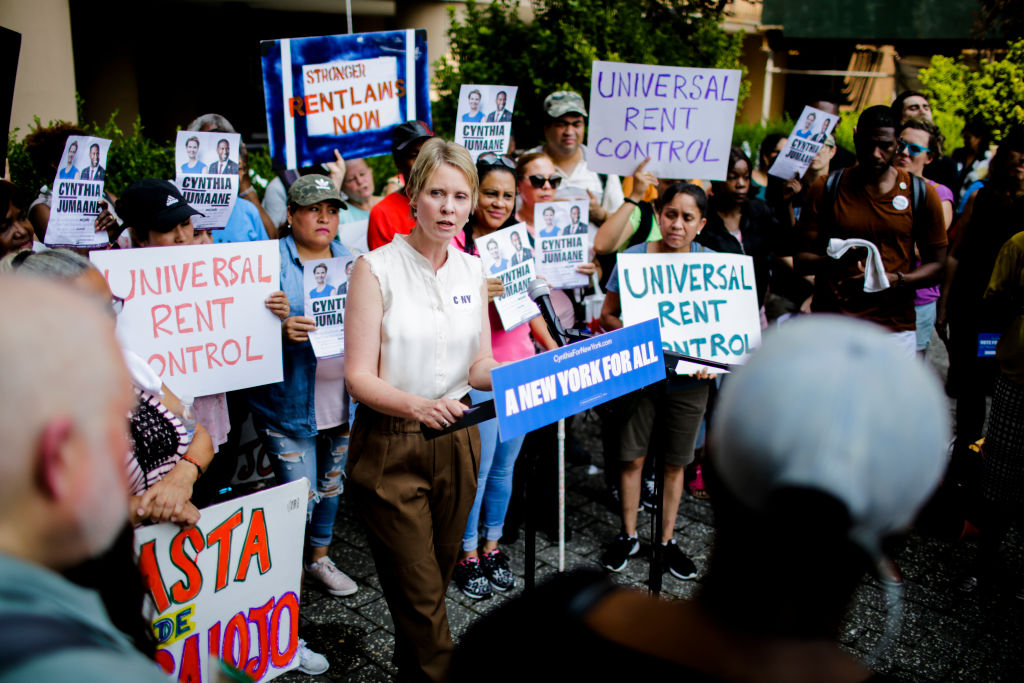
NEW YORK, NY - AUGUST 16: Democratic gubernatorial candidate Cynthia Nixon speaks to attendees during a rally for universal rent control on August 16, 2018 in New York City. Cynthia Nixon, who is running against Gov. Andrew M. Cuomo for the governor seat has pushed for a more response to high rents, also, Nixon has said that cities throughout the state should be allowed to impose it. Only NYC and some nearby areas are allowed to impose rent control, and only on apartments built before 1974. (Photo by Eduardo Munoz Alvarez/Getty Images)

Economists have long warned that rent control only limits housing supply and drives up prices in the long-run


by Christian Britschgi


On Wednesday, California lawmakers approved AB 1482, which caps rent increases at 5 percent per year plus inflation, and prevents landlords from evicting tenants without citing a government-approved reason.

Wednesday’s vote makes California the latest state to pass a rent control bill. Oregon passed a statewide cap on rents in February. In June, the New York legislature passed a bill strengthening existing rent controls in New York City while giving other cities in the state the ability to pass their own rent regulations.

Economists and other policy experts have long criticized rent control for reducing the supply and quality of rental housing in the long-run. California’s rent control bill is no exception says Michael Hendrix, state and local policy director at the Manhattan Institute.

“What we are going to get is a reason for landlords to convert apartments to condos,” says Hendrix. “The net result of that is potentially more units being taken off the market, and long-term this housing crisis getting worse, not better.”

Hendrix argues that landlords, when faced with limits on how much they can raise their rents, will simply take their rental units off the market, converting them into condominiums that can be sold at market price.

A study of rent control in San Francisco published in the journal American Economic Review this month found that “while rent control prevents displacement of incumbent renters in the short run, the lost rental housing supply likely drove up market rents in the long run, ultimately undermining the goals of the law.”

Supporters of rent control counter that they protect current tenants from rent spikes.

“These anti-gouging and eviction protections will help families afford to keep a roof over their heads, and they will provide California with important new tools to combat our state’s broader housing and affordability crisis,” said Democratic Governor Gavin Newsom in a statement following the bill’s passage.

Newsom’s support for AB 1482 appears to have been crucial in securing its passage, and in removing some amendments that would’ve lessened the impact of the bill.

Back in May, lawmakers agreed to raise the annual rent cap in AB 1482 to 7 percent plus inflation and to include a 2023 expiration date. Other amendments exempted housing newer than 15 years old and most single-family homes from its rent caps.

Those provisions were roughly in line with the rent control bill passed by Oregon early in the year and were enough to get the powerful California Realtors Association (CAR) to take a neutral stance on the bill.

In late August, however, Newsom announced that he had hashed out a deal with legislative leaders to lower annual allowable rent caps to 5 percent and extend the bill’s life to 2030.

That flipped the CAR back into opposition but proved to be enough to get AB 1482 passed just two days before the legislature’s deadline for passing legislation.

Members of California’s pro-development Yes in my backyard (YIMBY) faction also supported the bill which saw the bill, arguing that it, along with an increase in actual housing supply, would help address the state’s pressing housing affordability problems.

The California Apartment Association (CAA)—which represents landlords—was also convinced to drop their opposition to the bill in the final days of the legislative session.

The support from YIMBYs is both misguided and somewhat disappointing says the Manhattan Institute’s Hendrix, given that AB 1482, at best, does nothing to boost housing supply.

“One concern that YIMBYs in California should have is that we may very well find ourselves five or 10 years down the line with nothing to show for housing deregulation except more rent regulation,” he says.

Sen. Scott Weiner’s (D–San Francisco) promising, YIMBY-backed bill to upzone residential areas near transit and job centers stalled in the state senate earlier this year.

California’s housing crisis has been years in the making, and fixing it will require substantial deregulation of housing development. The rent control bill passed by legislators this week, while benefitting some current tenants, is ultimately a step in the wrong direction.


— More on rent control


California’s first-ever statewide rent cap prohibits landlords from raising rents by more than 5%, plus regional inflation, annually. AB1482 is retroactive to March, so any increases since then that exceeded the limit will have to be reduced. The law also prevents tenants who have been living in an apartment for more than a year from being evicted without a just cause, such as failing to pay rent or engaging in criminal activity.

These new protections are expected to cover millions of Californians, though they do not extend to apartments built within the past 15 years or to single-family homes, except those owned by corporations.

Homeowners who want to add an in-law unit to their properties should have an easier time: Five new laws aim to streamline the process for approving and building these projects, including SB13, which exempts them from most of the fees cities charge to offset the cost of providing services to secondary homes.

The changes are part of a state push to boost construction of much-needed new homes in California. So are the provisions of SB330, which places a five-year moratorium on local policies that make it harder to build in cities without enough housing. That means local governments could not limit the number of permits for new homes, add fees or rezone land to accommodate smaller projects.

spot_img

Farm Workers: “Essential” but living in fear

Pilar Marrero

Ethnic Media Services


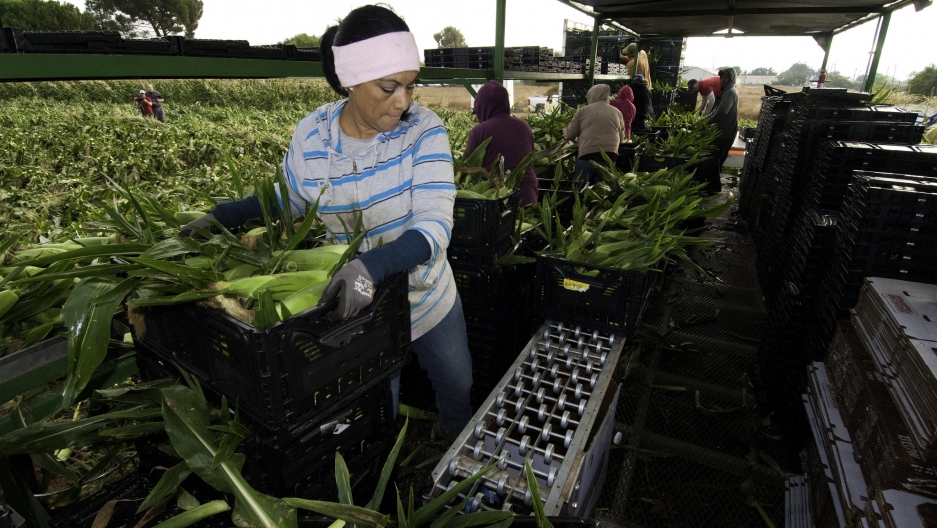
They have very low wages, few benefits, no health care coverage, and no sick days. About half are undocumented. Yet they are deemed “essential” workers who harvest and package vegetables and fruits, work in meat packing plants, pick up and transport the product.

They are farmworkers – so important to keeping the country fed and moving that they are exempt from ”stay at home” orders and even from the Trump administration’s recent two month ban on new immigrants. The rules for seasonal farmworkers have been relaxed and, if a recent proposal floated by the administration goes through, farmers may be allowed to “lower the wages” for them.

Now these workers work in fear of dying of Covid-19. So far very little has been done to stabilize their status, ensure they are protected and compensate them if they end of getting sick.

There is a growing push by legislators, trade unionists and advocacy groups “to protect farmworkers and the food supply chain,” Following reports in mid-April that 41 agricultural workers were diagnosed with Covid-19 in Monterey County, one of California’s key agricultural areas, California assemblymembers Robert Rivas (D-Hollister) and Eduardo Garcia (D-Coachella) introduced the first Covid-19 relief package in the nation focused on farmworkers.The proposed legislation includes expanded paid sick leave, supplemental hazard pay to cover increased health and childcare costs, and other measures.

Meanwhile, the Congressional Hispanic Caucus wrote a letter to the leaders of both houses of Congress, urging financial assistance, support for childcare needs and additional funding for community health centers and direct financial assistance for farm workers, reminding them that “our nation’s food security depends on the ability of farmworkers to continue to work safely to produce ourfood.”

Relief couldn’t come soon enough for the men and women in California’s fields.

Honduran Jose Ramos works at a vegetable packing house in Santa Maria near Santa Barbara. Ramos, a 41-year-old father of four, goes to work nervously because his company, he says, didn’t say anything about COVID-19 until a few days ago.

“Until recently they didn’t give us any guidance but many of us took our own measures, such as buying gel to bring in and making our own masks because the bosses didn’t give them to us,” Ramos explained.He noted that in his packing house social distancing was nearly impossible. “in the area where I work there are four packers, two cashiers and 8 to 10 cutters in a small space, forget about six feet.There are three feet at most between one person and the next.”

Armando Elenes, secretary-treasurer of the United Farm Workers, said 77 percent of workers in a recent survey reported that employers had not changed work practices or offered information on the pandemic.

“Now many are being told to go to work with a mask on, it’s like telling someone who has to dig holes in the ground to come with their own shovel.If you demand equipment to work, you must provide it,” said Elenes, who noted that there are individual farms that are improving their practices.

Cal OSHA regulations detail a prevention and safety program that all employers in the agricultural industry are required to implement, including worker training and information about what COVID-19 is and how it is spread, how to prevent it and what the symptoms are.

Employers are required to implement on-farm safety measures and provide cleaners and disinfectants and hand washing units as well as measures to increase physical distance.

However, farm workers, trade unionists and health activists point out this has not been consistently enforced.

“The California Rural Legal Assistance (CRLA) farmworker program receives numerous calls from workers,” says Estella M. Cisneros, regional director of the program.“They report that many companies have not taken any action.”

“They’re in a difficult situation,” Cisneros added.“If they work they can expose themselves and if they don’t work they have no income or help of any kind.”

Some farm workers also report that foremen or crew leaders spread misinformation and say the virus is not real.Most worried are those who work in meat or vegetable packing plants, since they work indoors and in air-conditioned environments, considered much more dangerous than working in the sun and outdoors, Cisneros added.

A new report by the Civic Capacity Research Initiative (CCRI) at University of California in Merced, estimates that 42% of the 250,000 farm workers in the San Joaquin Valley are undocumented.At least 112,000 won’t receive the federal stimulus payment.

The report highlights other vulnerabilities exacerbated by the pandemic, including food and housing insecurity, lack of health benefits, lack of sick days, poor access to safety equipment. CCRI recommends that cities and counties in the Valley undertake policies to protect these workers.

“Farm workers work under enormously unequal conditions,” said Genoveva Islas, director of Cultura Tu Salud, a public health advocacy organization in Fresno.

“I am proud that this community of farmworkers is recognized as essential workers, but that is why they also need essential protections. For too long they have not been paid a fair wage, have no retirement, and have no access to health insurance.

Now COVID-19 has magnified the inequalities that already existed.

“In the San Joaquin Valley we have one percent of the nation’s agricultural land and produce 25 percent of America’s table food,” Islas says. “Anything that impairs our ability to do so would be catastrophic for California and potentially for our nation.”


spot_img

COVID’s real-life ‘Romeo and Juliet’ engaged after falling in love from their balconies

by Elise Solé

Shared from Yahoo!


Sep 25th 2020 – An Italian couple nicknamed “Romeo and Juliet” who fell in love from their balconies during the coronavirus lockdown is engaged.

In March, neighbors Michele D’Alpaos and Paola Agnelli, created social media buzz for crushing on each other during lockdown from their respective balconies in Verona, Italy — the setting of the 1597 William Shakespeare play Romeo and Juliet — while the pandemic raged throughout their country.

Then, Italy had more than 53,000 COVID-19 infections and the highest death toll in the world.

During Italy’s eight-week lockdown, which began on March 9, locals utilized their balconies for fresh air, social interactions and nightly serenades with clapping, singing and musical instruments to honor health care workers. It was when Agnelli’s sister Lisa, a professional violinist, put on a 6:00 p.m. performance that the couple locked eyes.

“I was immediately struck by the beauty of this girl, by her smile,” D’Alpaos, who lives on the seventh floor of his apartment building, told the Washington Post. “I had to know her.”

D’Alpaos found his future bride on Instagram (thanks to his sister, who knew her name) but he didn’t have an account. So he created one to message Agnelli. “When he contacted me, I was happy, but I didn’t want to deceive myself,” she told the Washington Post.

Agnelli lives with her sister and mother in a sixth-floor apartment with a balcony that faces D’Alpaos’ apartment. He lives on the seventh floor with his parents, according to the Washington Post.

Over the next two months, the pair flirted over the phone and from each other’s balconies, even requesting that Lisa play songs for the other, Agnelli told the BBC in April. And D’Alpaos made grand gestures like sending Agnelli flowers and hanging a bedsheet from his apartment that read “Paola.”

“I could write a book: Love in the Time of Coronavirus,” D’Alpaos joked to the BBC.

In May, when lockdown conditions eased, they met at the park and shared their first kiss. “We were both nervous but it went really well — he was just like I imagined he would be,” she told The Times.

“He’s the love of my life,” Agnelli tells Yahoo Life, adding that the couple is getting to know each other better and plans to wed in about two years.

The pair, who still reside in their separate units, plan to move into a Verona apartment owned by D’Alpaos. The big day might also be close to home, says D’Alpaos. “it would be a dream to be able to do the wedding ceremony on the terrace of my building.”


spot_img

Trump wins court fight to deport Salvadorans with Temporary Protected Status

by Dave Goldiner

Shared from New York Daily News


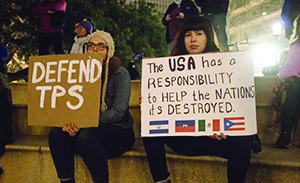
President Trump won a legal round Monday in his fight to deport hundreds of thousands of immigrants from El Salvador and other countries who came to the U.S. after disasters in their homelands.

A divided three-judge panel of the federal Ninth Circuit appeals court ruled that Trump was within his rights to revoke so-called Temporary Protected Status from Salvadoran immigrants.

Assuming the ruling withstands possible scrutiny from the Supreme Court, the ruling means Trump could deport more than 300,000 immigrants, many of whom have been living and working in the U.S. for years.

The ruling is also expected to affect the status of people from Honduras, Nicaragua, Sudan and Nepal, whose separate lawsuit is expected to be governed by the outcome of the Salvadoran case.

TPS beneficiaries from six countries in all have been granted legal authorization to live and work in the U.S. through Jan. 4.

The ruling means that those immigrants must find another way to remain in the United States legally or leave the country after a winddown period of six months or a year in the case of El Salvador.

The timing means that the fate of the immigrants would likely be determined by the results of the upcoming presidential election.

Haitian immigrants who obtained TPS after a massive 2010 earthquake wreaked havoc on the Caribbean nation filed a separate case that is being heard by the Second Circuit Court of Appeals in New York.

spot_img

The birth of the cashless society: Part two of a series of two

Marvin Ramírez, editor

In “The Birth of the Cashless Society, Party One,” James Corbett introduced us to his perspective on how the Battle of the Crypto-Currencies will end up just like the conclusion of George Orwell’s “Animal Farm”- the non-porcine farm animals will wake up and see the humans playing poker with the pigs, except that it is no longer possible to tell who is human and who is a pig.

In other words: in this transition to cashless society, the Federal Reserve Bank is going to move to a Federal Reserve Blockchain digital currency which will outlaw all other currencies, so that the triumph of the digital currency revolution will also be its final demise.

Investigative journalist, James Corbett, is publisher of “the Corbett Report, and graduated from the University of Calgary.

by James Corbett

But still, this may just seem like a technological upgrade to our payment systems. People increasingly pay with cards or payment apps anyway, so what difference does it make if we eliminate cash altogether?

I have done a lot of work on the cashless society over the years, but it’s one of those concepts that is so large and so difficult to envision in its entirety that it’s worth revisiting here. To get a sense of how the cashless society is not about payment convenience but about control over every aspect of your lives, watch this short video that the ACLU put out a decade and a half ago:

This video wasn’t even meant to warn about the cashless society. The hapless victim of this pizza transaction ends up being forced to pay in cash because his credit card is maxed out. But nonetheless, this is the vision of the cashless society in a nutshell. In the cashless society, your entire payment history and all of the information that is tied into that history will be plainly visible to those who have access to it. And if the government issues a decree about what you are or are not able to purchase, that decree will be enforced at the point of sale. At that point, freedom will only be found in the counter-economy.

If you want to get a handle on what such a future will look like, imagine the following scenario:

You are out for a walk late at night. You come to a red light, but there is no one around. You hesitate a moment, double-check that there is really no one in sight and then dash across the intersection. In the two seconds it takes you to cross the road, a large LED screen above the street lights up with your picture and your name. Two seconds after that you feel a buzz in your pocket. Taking out your phone you find a message from your bank informing you that you have been fined for jaywalking and that your social credit score has been reduced.

The next day, you find yourself at the airport, preparing to board a flight to visit your family on the other side of the country. When you go to check in you receive a message that your social credit score is too low and you will not be allowed to board the plane. Enraged, you curse the airline, the government’s social credit system, its jaywalking laws, and even the government itself.

Unbeknownst to you, someone has recorded your outburst and uploads it to social media, where you are quickly identified. The police come to your home the next day and take you downtown where you are shackled in a chair and made to recant your statements about the government.

Sound like something out of a dystopian sci-fi novel? Well, it’s not. It’s just a mundane portrayal of everyday life in current day China.

Facial recognition deployed to monitor the streets and automatically issue fines for jaywalking and other minor infractions? Check.

Social credit scores tied in to your ability to board public transportation or access government services? Check.

Police hauling people in for angrily ranting about the government and shackling them until they recant? Check.

The cashless society is about so much more than just how we pay for things at the store. Tied into a system of persistent technological surveillance, it represents the ultimate control over our lives. Can there be any doubt as to why the World Economic Forum and the Bank for International Settlements are working in concert with the central banks of the world and organizations like the Bill Gates-co-founded Better Than Cash Alliance to pave the way for this nightmare to become a reality.


spot_img

Online series on the rhythmic roots of Afro-Latin music

Compiled by the El Reportero‘s staff

Santos will be taking a deep dive every Wednesday evening Sept 23-Oct 14 from 6-8 p.m into a new aspect of the rhythmic roots of Afro-Latin music including Afro-Cuban, Afro-Puerto Rican, and Afro-Brazilian forms. Each live presentation will also feature selections from Santos’ legendary collection of audio and video recordings, including many early and rare recordings of the musicians and musical genres he’ll be discussing

The program is presented by the Museum of the African Diaspora in San Francisco together with the Yerba Buena Gardens Festival. Audiences pay what they can and should register on the Museum’s website for instructions on how to join the online audience at https://www.moadsf.org/calendar/

There is a week by week break down of the specific styles he’ll be covering on that page as well if you want more detail.

A 2012 San Francisco Latino Heritage Arts Awardee, born and raised in San Francisco’s Mission District amidst an extended family of Puerto Rican musicians, Santos has been at the center of the Bay Area’s Latin music scene for over forty five years.

He served on the Smithsonian Institution’s Latin Jazz Advisory Committee and has played an essential role in expanding Latin jazz’s rhythmic lexicon beyond the foundational Cuban grooves. He has produced a steady stream of critically-acclaimed, peer-respected recordings on his Machete Records label since 1984 and has travelled the world as a teacher and lecturer since the mid-eighties.

Known for his innovative use of traditional forms and instruments in combination with contemporary music, John has performed and/or recorded with masters such as Tito Puente, Dizzy Gillespie, Max Roach, Cachao, Eddie Palmieri, James Moody, Omar Sosa, McCoy Tyner, Giovanni Hidalgo, and Bebo Valdés. He is faculty at the California Jazz Conservatory, SF State University, College of San Mateo and Jazz Camp West and is an Advisory Board member of Oaktown Jazz, Living Jazz, and the Afro-Latin Jazz Alliance (NY), and a Trustee of SFJAZZ.

Celebrating our Community as Changemakers

¡VIVA MEDA! 47th Anniversary Celebration Please join us for a night of community and celebration at the 47th Annual ¡VIVA MEDA!

You’ll be treated to big-name speakers, messages of hope from community leaders, salsa music, a panel discussion … and so much more. There’s something for everyone!

We are proud to welcome two amazing Latina leaders for our FREE ¡VIVA MEDA! 47 Virtual Gala panel, “Joining the Movement as Changemakers: COVID-19 and Civil Rights in Communities of Color.” You’re sure to be inspired by Paola Mendoza and Mercedes Márquez. Our panel will be moderated by reporter Luz Peña of ABC News, KGO-TV San Francisco.

Remember to mark your calendars for Thursday, Oct. 1, at 6 p.m (Pacific time). That’s the night of our ¡

spot_img

Jennifer López shares teaser, release date of upcoming film ‘Marry Me’

by the El Reportero news services

Jennifer López won’t only be celebrating Valentine’s Day with her fiancé Alex Rodríguez, but also with the release of her new romantic comedy, Marry Me.

The multihyphenate tweeted the “Save the Date” on Monday (Sept. 14), along with a 15-second clip of López alongside co-stars Owen Wilson and Maluma. A teaser of an upcoming song from the film is also heard in the background.

“It’s about a pop star who winds up marrying a random fan from the audience,” López shared earlier this year on The Tonight Show Starring Jimmy Fallon. “She marries a math teacher in the audience. The math teacher is played by Owen Wilson.” Fallon, meanwhile, will make a cameo as himself, and Maluma will play López’s love interest-pre Wilson.

“I did an album with this movie, so there are all new songs, new music with it, so it’s exciting,” she added. “I have six to eight songs, and Maluma does two or three.”

Catch Marry Me in theaters on Valentine’s Day, 2021.

Chilean Raul Zurita wins the Ibero-American Poetry Prize

Madrid, Sep 8

Chilean Raul Zurita won on Tuesday the 29th Reina Sofia Prize for Ibero-American Poetry, one of the most important and prestigious of this genre awarded by Spain’s National Heritage and the University of Salamanca.

Zurita, author of works such as ‘Canto a su amor desaparecido’ (Song of his Missing Love), ‘Purgatorio’ (Purgatory), ‘La Nueva Vida’ (The New Life), ‘El paraiso esta vacio’ (Paradise is empty) or ‘Canto de los rios que se aman’ (Song of the loving rivers), was born in Santiago de Chile in 1950. He is deemed as one of the most outstanding Chilean poets of the 20th century along with Pablo Neruda and Vicente Huidobro.

‘The award recognizes his work, his poetic example of overcoming pain, with verses, with words committed to life, freedom and nature,’ stressed the president of National Heritage, Llanos Castellanos, announcing the ruling of the jury.

The Reina Sofia Prize joins the numerous awards received by Zurita, such as the Pablo Neruda Prize (1988), the National Prize for Literature (2000), both from Chile, the Casa de las Americas Prize for Poetry Jose Lezama Lima (Cuba, 2006) or the Ibero-American Poetry Pablo Neruda (Chile, 2016).


spot_img

SF – ANNOUNCEMENTS Next Phase of Reopening to Begin on Monday, September 14

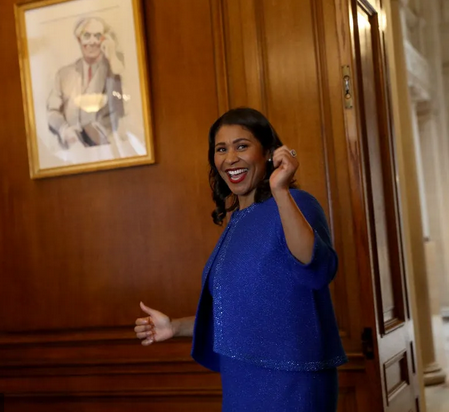
(Photo shared from Radio.com website)

Mayor London Breed, Dr. Grant Colfax, Director of Health, and Assessor-Recorder Carmen Chu, co-Chair of the City’s Economic Recovery Task Force, announced that San Francisco is moving forward with additional reopening on Monday, Sept. 14, 2020. In addition to the previously announced businesses and activities planned for mid-September, indoor personal services and indoor gyms will be permitted to reopen next week with limited capacity. Only those services where face coverings can be worn at all times by everyone involved will reopen at this time.

Businesses, all with limited capacity

  • Hair salons and barbershops, indoors
  • Nail salons, indoors
  • Massage establishments, indoors
  • Tattoos and piercings, indoors
  • Gyms and fitness centers, indoors
  • One-on-one personal training, indoors
  • Drive-in movies, outdoors
  • Family entertainment, outdoors (like mini-golf and batting cages, but does not include playgrounds)
  • Tour buses and boats
  • Hotels and short-term rentals, expanded for tourists
spot_img