Wednesday, October 14, 2026
spot_img
Home Blog Page 234

Union president: We will come out of it a stronger union

SAN FRANCISCO, CA - 12OCTOBER18 - After two weeks on strike against Marriott Hotels, hotel workers, members of Unite Here Local 2, march through downtown San Francisco, protesting low wages that force many workers to work an additional job besides their job at the hotel. Workers picketed the Palace, St. Regis, W and Marriott Marquis Hotels during the march, organized by the San Francisco Labor Council with other unions. Copyright David Bacon

by David Bacon


When the novel coronavirus crisis hit, hotel workers everywhere were among the first to feel the massive job losses that are now worse than the Great Depression of the 1930s. In city after city, the women and men who clean rooms, make beds and cook food found themselves wondering if they and their unions would survive. In April 2020, David Bacon interviewed Anand Singh, President of UNITE HERE Local 2 in San Francisco, about that question. Singh’s vision of the COVID crisis as a trial by fire, from which the labor movement can emerge stronger, is a welcome antidote to feeling powerless in the face of the virus.

An important force in San Francisco, UNITE HERE Local 2 has successfully organized almost all the city’s Class A hotels, through two decades of turbulent strikes and lockouts. Its diverse membership of African American, white, Latino and Asian-American workers has made noisy drum-banging picket lines a vital part of the city’s working-class culture. In 2018, UNITE HERE mounted a nationwide strike against the giant Marriott Corporation. Local 2 stayed out longest– 61 days–and achieved a contract setting a new standard for the city of San Francisco.

The strike won San Francisco hotel workers a dollar and a half wage increase each year for four years, with the employer continuing to pay for healthcare costs. Housekeepers won reductions in the number of rooms cleaned each day. The contract controls the introduction of technology in the workplace, and provides greater protection from sexual harassment and immigration-based discrimination. The strike stopped Marriott from contracting out room service and food service, and in San Francisco, laid-off workers can go into a pool for rehire at other hotels.

Striking Local 32 members, pictured here, remind us of the common struggles shared by workers, even in the time of COVID.

DB: When did the Union first realize what was going to happen with COVID-19?

We were tracking the news, seeing the events unfold in China late last year. A large portion of our membership emigrated from China, and they travel back and forth, so the virus was a topic of much discussion. It all came to a head in late January, when many of our members took their vacation and traveled back to China for the Lunar New Year celebrations.

Several members went to Wuhan. When one went back to work at the Marriott, there was an outcry -that she’d been allowed to work among everyone when she had just been there. I was poring over CDC guidelines on testing and quarantine, and Marriott ended up asking the worker to go home. The hotel paid her for 14 days, to shelter in place. I don’t believe she was ever tested, and once the 14 days were up, she came back to work.

As the crisis was worsening, we started to talk with our members about CDC guidelines and testing, which wasn’t available at that point.  We tried to impress early on that this is not specific to Chinese workers or Chinese people.  This is a global crisis.  Our members got it.  Many folks in San Francisco tried to get in front of that xenophobia and the backlash against the Chinese community.  I’m sure it exists here in the Bay Area, but we have experience talking about it here, and that made a difference.

Between reopening and our contract expiration in 2022, it’s going to be a period of protracted struggle. We’re going to have to fight day in and day out on the shop floor to get back what we had in years past. Workers everywhere will have to fight to get back what we’re losing. It can be a great opportunity if we come together.

Working people will be spoiling for the chance to fight back. The pandemic profiteers will overreach as they always do. That’s a moment for us. The power of working people in this country could grow in a way we haven’t seen in decades, if we seize it and organize and come together.



spot_img

Warrants issued for soldiers, police in connection with Ayotzinapa case

Those responsible in the case of 43 missing students have been identified: attorney general


by Mexico News Daily


For the first time, arrest warrants have been issued against soldiers and federal police in connection with the disappearance and presumed murder of 43 students in Guerrero in 2014.

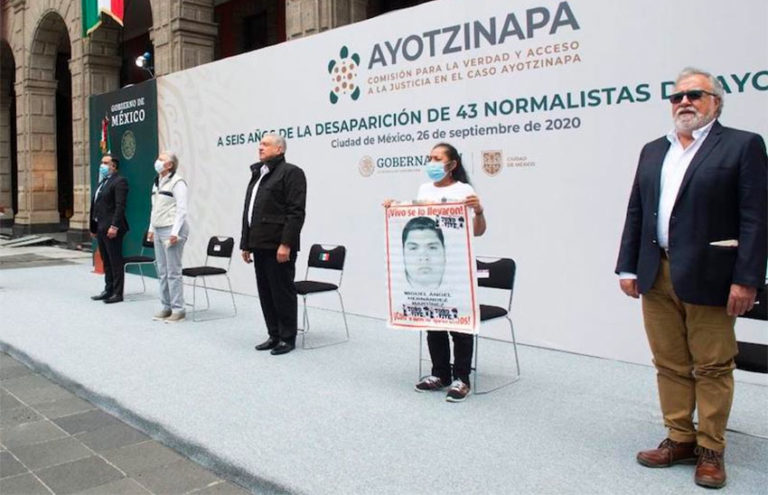
The Attorney General’s Office (FGR) announced Saturday – the sixth anniversary of the Ayotzinapa rural teachers college students’ disappearance in Iguala – that 25 new warrants had been issued for the arrest of people who participated in and/or knew about the abduction.

Attorney General Alejandro Gertz Manero said that “those responsible for the forced disappearance of the 43 students … are fully identified” and will be prosecuted.

In an address to parents of the missing students at an event on Saturday, President López Obrador also spoke of the arrest warrants against soldiers and police.

“He who participated and it is proven will be tried, this is an advance, there will be no cover-up,” he said.

“The truth, the authentic truth, has to be known. That’s the commitment,” López Obrador said, pledging that there will be zero impunity in the case.

He called on judges to act with rectitude and not release suspects, many of whom have already been set free.

“We need the judges to help to advance [in the case]. There are a lot of problems in the judicial branch, they release suspected culprits for any reason,” López Obrador said.

According to the previous government’s official version of events – the so-called “historic truth” – the students, who had commandeered buses to travel to a protest march in Mexico City, were intercepted by corrupt municipal police who handed them over to a local gang, the Guerreros Unidos.

Gang members then killed the students, burned their bodies in a dump in the municipality of Cocula and disposed of their remains in a nearby river, according to the version of events presented by former attorney general Jesús Murillo Karam in January 2015.

But the “historic truth” was widely questioned and rejected by the current government, which established a truth commission and launched a new investigation into the case.

The army has long been suspected of being involved in the students’ disappearance and parents of the victims have demanded it be investigated.

There is a large army base near where the students were abducted and independent investigations have found that members of the military were aware of the events of September 26, 2014. One theory is that the students’ bodies were burned in army incinerators after they were killed.

Omar Gómez Trejo, the special prosecutor in charge of the reexamination of the case, said that among the suspects currently being sought are “the intellectual and material authors of the disappearance.”

“These orders [arrest warrants] include police from various municipalities, federal police [and] members of the army,” he said.

Gómez said that current and former officials with the FGR and members of organized crime groups are also being sought. He didn’t reveal whether Murillo Karam was one of the officials authorities are seeking to arrest.

The motive for the students’ abduction and presumed murder has not been definitively established by the current government but Gertz Manero, who said earlier this year that the “historic truth” is over, said Saturday that the students were “victims who ended up in the middle of a battle of interests between drug trafficking forces.”

They were allegedly mistaken for members of a rival gang, Los Rojos, and there have been reports that there were drugs on the bus they commandeered. Heroin made with opium poppies grown in Guerrero has long been transported through Iguala en route to the United States.

Gertz Manero said the Ayotzinapa students were not the only people to have been killed in Iguala on the night of September 26.

“Nearly 80 people were massacred and hidden in Iguala by the different criminal groups and their official accomplices,” he said.

Of the 43 students who were presumably killed, the remains of just three have been found and identified.

One former official being sought by authorities is Tomás Zerón, who was head of the now-defunct Criminal Investigation Agency at the time of the students’ disappearance.

A warrant has been issued for his arrests on charges of torture – many suspects were found to have been tortured and were released from custody as a result – and covering up forced disappearances.

Gertz Manero said Saturday that Zerón was in Israel and that the Mexican government has asked Israeli authorities for help to arrest him.

The attorney general also accused Zerón of stealing more than 1 billion pesos (US $44.3 million at today’s exchange rate) from the budget of the PGR, the FGR’s predecessor.

“Last year, when we started this investigation and discovered this enormous embezzlement, this individual fled the country,” Gertz Manero said, adding that after authorities obtained a warrant for his arrest they lodged an application for his extradition with Canadian authorities.

“But he immediately fled to Israel, a country which has been asked for its complete support. … Its authorities know very well what human rights violations mean and the responsibilities that executioners and torturers [must face],” he said.

Gertz Manero asserted that the previous government was “deeply infiltrated by crime and corruption” and that Murillo Karam was involved in the cover-up of the Ayotzinapa case.

Gómez said that Zerón must face justice and reveal why he did what he did. He said that a total of 70 arrest warrants have been issued in connection with the students’ disappearance. One Federal Police officer is already in custody, he said.

Several suspected members of the Guerreros Unidos are also in custody, including alleged leaders José Ángel “El Mochomo” Cassarrubias Salgado and his brother Sidronio Cassarubias Salgado.

Former Iguala mayor José Luis Abarca and his wife, María de los Ángeles Pineda Villa – who have been accused of being the masterminds of the students’ abduction and complicit with the Guerreros Unidos – are also awaiting trial in prison as are at least two municipal security officials.

Source: Reforma (sp), AP (en)

spot_img

Catholic Amy Coney Barrett front-runner as Trump signals supreme court nomination plans

by ACI Press


WASHINGTON — President Donald Trump on Saturday signaled he would soon nominate a potential replacement to the late Supreme Court Justice Ruth Bader Ginsburg, who died Friday evening at 87. Judge Amy Coney Barrett, a Catholic mother of seven, is widely reported to be the front-runner in the president’s deliberations regarding a nominee.

In his Twitter account, the president wrote this Saturday that “we have been placed in this position of power and importance to make decisions for the people who so proudly elected us, the most important of which has been the election of judges for the Court. Supreme of the United States. We have this obligation, without delay! ”

Barrett, a federal judge on the 7th Circuit Court of Appeals, has been reported to lead the president’s short list, and was also a contender for Trump’s second Supreme Court nomination in 2018, before the president nominated Justice Brett Kavanaugh.

According to Axios, Trump reportedly in 2018 told confidantes of Barrett that he was “saving her for Ginsburg” in explanation of his decision not to appoint her to the Supreme Court seat vacated by Justice Anthony Kennedy.

Appointed a federal judge in 2017, Barrett had been a professor at Notre Dame’s law school and has twice been honored as “Distinguished Professor of the Year” at Notre Dame, and had clerked for Supreme Court Justice Antonin Scalia. She is married and has seven children.

As a nominee to the federal bench, Barrett was pointedly questioned by Democratic senators on the Judiciary Committee in 2017 on how her Catholic faith would influence her decisions as a judge on cases of abortion and same-sex marriage.

In Senate hearings, California Senator and Democratic Party member Dianne Feinstein called Barrett “controversial” because in analyzing his career he told her “you have a long history of thinking that religious beliefs should prevail” over law.

Her seven children include two adopted from Haiti; one of her children has special needs. She is also reportedly a member of the People of Praise charismatic community, which was criticized as a “cult” during her 2017 confirmation hearings.

Bishop Peter Smith, a member of a related association of priests, told CNA in 2018 that there is not anything unusual or out of the ordinary about the group, which is a “covenant community,” mostly of laity.

“We’re a lay movement in the Church,” Smith explained. “There are plenty of these. We continue to try and live out life and our calling as Catholics, as baptized Christians, in this particular way, as other people do in other callings or ways that God may lead them into the Church.”

Whether or not he selects Barrett, Trump’s likely nomination of a Supreme Court Justice to replace GInsburg has become a matter of serious political controversy, in an already fractious U.S. political and social context.

Republican Senate Majority Leader Mitch McConnell pledged Friday that a Trump Supreme Court nominee will be voted on for confirmation by the United States Senate, even while there are fewer than seven weeks until the Nov. 3 presidential election.

Democratic leaders have pushed back, and pointed to McConnell’s refusal to consider Obama Supreme Court nominee Merrick Garland in March 2016, seven months before that year’s presidential contest. At the time, Republicans said that it would be more appropriate to wait until after the November election to fill the Court vacancy.

McConnell defended his decision Friday night, saying that “in the last midterm election before Justice Scalia’s death in 2016, Americans elected a Republican Senate majority because we pledged to check and balance the last days of a lame-duck president’s second term. We kept our promise. Since the 1880s, no Senate has confirmed an opposite-party president’s Supreme Court nominee in a presidential election year.”

“By contrast, Americans reelected our majority in 2016 and expanded it in 2018 because we pledged to work with President Trump and support his agenda, particularly his outstanding appointments to the federal judiciary, we will keep our promise,” McConnell said.

Also reportedly on Trump’s short list are is 11th Circuit Court judge Britt Grant, 6th Circuit Court Judges Amul Thapar and Joan Larsen, and 10th Circuit Judge Allison Eid.

spot_img

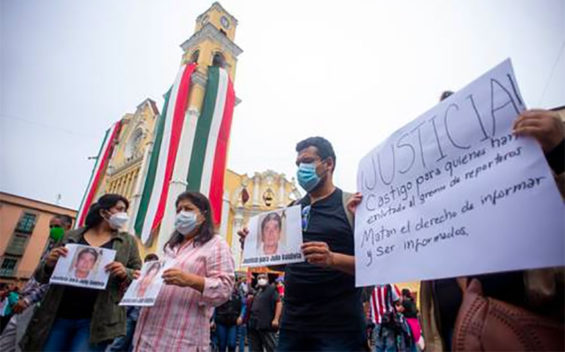
Aggression against journalists up 45 percent this year, says freedom watchdog

Most acts of aggression are threats of death or violence


by Mexico News Daily


For Mexico’s journalists 2020 will likely be the worst year for violence against them in a decade, according to a freedom of speech watchdog organization.

Article 19, which reports on violence and intimidation against members of the press in Mexico and Central America, said the first half of 2020 was 45 percent worse for such acts than during the same period in 2019.

In the first half of 2019, Mexican journalists reported 280 acts of violence or aggression, and so far, between January and June 2020, that number has nearly doubled to 406, averaging out to an act of aggression or violence against a journalist occurring every 10.75 hours.

This puts Mexico on track to surpass the 2019 total by at least 66 percent and be most the violent year since the organization started recording such data. In 2019, Article 19 reported 609 acts of violence or aggression, which it says was the highest number reported in a decade.

Four journalists have been murdered this year and physical attacks on journalists are up 80 percent at 47.

However, the majority of aggressive acts toward journalists this year has come in the form of threats of various kinds, including death threats and threats of violence which, in all, have totaled 96, a 26 percent increase.

The organization also recorded 91 cases of other kinds of intimidation or harassment, up 40 percent. This includes smear campaigns, which the organization said have doubled in 2020 as a tactic to silence reporting.

The organization also reported 61 cases of censorship or other alterations of journalistic content, which they said doubled compared to last year.

The states with the most acts of aggression toward journalists reported this year are Mexico City, Puebla, Oaxaca, Veracruz, and Quintana Roo. Together, these states represented nearly half the total number of recorded incidents in the country.

Mexico City topped the list with more than double the reported incidents from last year — rising from 27 incidents last year to 64 this year. However, the biggest change was in Puebla: Although the state recorded fewer incidents than Mexico City — only 49 cases — it rose from 10th to second place on Article 19’s list.

The organization said among the factors behind the growing cases of aggression was intolerance among officials for public scrutiny. It also said there has been a multiplier effect in which the strategy of media attacks by President López Obrador has been repeated by state governors.

Program helps thousands of small restaurants stay alive

Training in health measures and providing protective equipment boost confidence among customers


An initiative supported by the national restaurant association Canirac, Coca-Cola and others is helping thousands of small eateries survive the coronavirus-induced economic downturn.

Called Tu Cocina Local (Your Local Kitchen), the program provides training to staff at fondas (small, informal eateries), taquerías (taco restaurants) and torterías (sandwich shops) on the implementation of health measures that reduce the risk of coronavirus infection and make diners feel safe.

The idea is that the restaurants will attract more customers if they are seen to be taking people’s health and hygiene seriously.

The initiative has also provided social distancing screens, face shields and washable tablecloths to more than 50,000 small food businesses.

In addition, it has launched a digital campaign to encourage people to return to their local fondas, taquerías and torterías, which account for 95% of all restaurants in Mexico, according to Canirac.

More than 30,000 are at risk of closing permanently due to a downturn in sales, the restaurant association says. Tu Cocina Local aims to help as many as possible remain open and thus keep thousands of people in work.

One restaurant owner who has benefited from the program is Rocío González Díaz.

“El Volcancito is a family business. We’re the third generation. Approximately nine people work here and nine families depend on [their employment]. The pandemic has affected us in an economic sense,” she said.

González said sales fell and that she was unable to meet some costs but nevertheless she was able to keep her inexpensive eatery open.

“We didn’t have to close because the government allowed us to open at 30%. Tu Cocina Local has helped me a lot with tablecloths and partitions [to separate diners]. That’s helped a lot in terms of making customers feel safe,” she said.

In addition to Canirac and Coca-Cola, the companies Mondelēz México, Unilever, Kimberly Clark and Ragasa are supporting the initiative, which was launched in June.

Source: El Economista (sp)

spot_img

Salvadorian singer Álvaro Torres completes concert tour in Cuba

by the El Reportero’s wire services

Salvadoran singer and composer Álvaro Torres will conclude today, in this capital, his concert tour with the presentation of his most recent phonogram at the Karl Marx Theater.

Invited by the Company of Recordings and Musical Editions (Egrem), the artist starred in four concerts on the Caribbean island in which he presented the album Álvaro Torres and his good friends, which included important figures of Cuban music.

The album, recorded on the island in 2018, features the musical talent of the Diva of feeling, Omara Portuondo; Pancho Céspedes; Eliades Ochóa, Frank Fernández; Isaac Delgado, Buena Fe, the strings section of the National Symphony Orchestra and the Santiaguero Septet.

Member of the Hall of Fame of Latin Composers, Álvaro Torres acted, for the first time, in Cuba during 2011, returned in 2018 and again in February 2019, when he visited neighborhoods whipped by the tornado that affected the Cuban capital in January of this year.

Juan Luis Guerra’s Grammy nominated album “Literal” leads off “all music’s best of 2019”

Best Tropical Latin Album – Juan Luis Guerra is a musician, composer, arranger, producer, and songwriter from the Dominican Republic. He is one of the most internationally recognized Latin artists in recent decades. His popular style of merengue has garnered him considerable success around the world. He is also credited for popularizing bachata music on a global level and is often associated with the genre. A 23-time Latin GRAMMY® and three-time GRAMMY® winner, Guerra has recorded more than 15 albums and won numerous awards.

por los servicios de cable de El Reportero

El cantante y compositor salvadoreño Álvaro Torres concluyó el 30 de diciembre, en Cuba, su gira de conciertos con la presentación de su fonograma más reciente.

Invitado por la Compañía de Grabaciones y Ediciones Musicales (Egrem), el artista protagonizó cuatro conciertos en la isla caribeña en los que presentó el álbum Álvaro Torres y sus buenos amigos, que incluía importantes figuras de la música cubana.

El álbum, grabado en la isla en 2018, presenta el talento musical de la Diva del sentimiento, Omara Portuondo; Pancho Céspedes; Eliades Ochóa, Frank Fernández; Isaac Delgado, Buena Fe, la sección de cuerdas de la Orquesta Sinfónica Nacional y el Septeto de Santiaguero.

Miembro del Salón de la Fama de los Compositores Latinos, Álvaro Torres actuó, por primera vez, en Cuba durante 2011, regresó en 2018 y nuevamente en febrero de 2019, cuando visitó barrios azotados por el tornado que afectó a la capital cubana en enero de este. año.

El álbum nominado al Grammy de Juan Luis Guerra “Literal” lidera “todo lo mejor de la música de 2019”

Mejor álbum latino tropical: Juan Luis Guerra es un músico, compositor, arreglista, productor y compositor de la República Dominicana. Es uno de los artistas latinos más reconocidos internacionalmente en las últimas décadas. Su popular estilo de merengue le ha valido un éxito considerable en todo el mundo. También se le atribuye la popularización de la música bachata a nivel mundial y a menudo se asocia con el género. Guerra 23 veces ganador del Grammy® latino y tres veces ganador del Grammy®, Guerra ha grabado más de 15 álbumes y ganó numerosos premios.

Con unos 30 millones de álbumes vendidos en todo el mundo, Guerra es un pionero de la música latina cuyos primeros éxitos internacionales incluyeron el clásico “Ojalá Que Llueva Café”. La canción, que presagiaba el impacto global de las actuales estrellas urbanas tropicales, aún es reconocible al instante desde su primera aparición. notas

A lo largo de su prolífica carrera, Guerra ha reinventado los ritmos alegres de su República Dominicana natal con su banda 4.40 y ha escrito maravillosas letras extraídas de la vida cotidiana de las personas en América Latina y más allá, capacitando a los oyentes al mismo tiempo que bailan sus problemas. a sus mensajes de “paz, armonía y amor”.

El reinicio de “Party of Five” aborda la separación familiar

El muy esperado drama Party of Five se estrenará con dos episodios el miércoles 8 de enero. La serie

La Ronda Bogotá de Celso Piña en The New Parish

With some 30 million albums sold around the world, Guerra is a Latin music pioneer whose early international successes included the classic “Ojalá Que Llueva Café.” The track, which foreshadowed the global impact of current tropical urban stars is still instantly recognizable from its first notes.

Throughout his prolific career, Guerra has been reinventing the joyful rhythms of his native Dominican Republic with his band 4.40 and writing wonderful lyrics mined from the everyday lives of people in Latin America and beyond, empowering listeners at the same time as they dance their troubles away to his messages of “peace, harmony and love.”

The “Party of Five” restart addresses family separation

The highly anticipated drama Party of Five will premiere with two episodes on Wednesday, January 8. The original TV drama se­ries was released 25 years ago, and its updated ver­sion is politically temporary.

From Sony Pictures Television, the reinvention of the beloved series will follow the five children of Acosta as they navigate the difficulties of daily living to survive as a family unit after their parents are sud­denly deported to Mexico.

In a new version of the creators of the original series Amy Lippman and Christopher Keyser, this beloved story of a young family bound by adver­sity will be told through the lens of current issues and cultural conversations.

The series stars Brandon Larracuente as Emilio Acos­ta, Emily Tosta as Lucia Acosta, Niko Guardado as Beto Acosta and Elle Paris Legaspi as Valentina Acosta. Bruno Bichir and Fernanda Urrejola star in Acosta’s parents, Javier and Gloria.

The first episode of Party of Five, filmed in Echo Park, California, will be available for a special pre-linear preview on Hulu, Freeform.com, the Freeform app, and on demand start­ing Wednesday, January 1.

Young people learn to make guitars to help preserve the tradition­al music of Veracruz

Interest decreas­ing in traditional music known as son jarocho

If you heard the song La Bamba, you heard they are jarocho, a regional style of music from Vera­cruz, jarocho is a term used to describe someone or something from that state.

But despite the impor­tance of music for the tra­ditional culture of the state, transmitting it to the next generation is not an easy task.

However, musician An­astasio Martínez has taken on the challenge. In his case, it takes the form of an incipi­ent program in the southern municipality of Cosoleacaque to teach the manufacture of the traditional guitars that are used, called jaranas.

“We started the program because there was a certain level of disinterest in son ja­rocho. It was getting lost in the local culture, at least in southern Veracruz. The tradi­tion was dying because the children were not interested, “he was attracted to other at­tractions such as celebrating Halloween, Martínez said.

With only four months of existence, the program already has 30 participants between 7 and 17 years old. Even three of the mothers who accompany their children have begun to make jaranas.

Martínez is encouraged. “The response has been very good. They are enjoying how I work, and they like to draw the molds and design their own instruments, add a drawing or other detail.”

spot_img

El cantante salvadoreño Álvaro Torres completa gira de conciertos en Cuba

por los servicios de cable de El Reportero

El cantante y com­positor salvadoreño Ál­varo Torres concluyó el 30 de diciembre, en Cuba, su gira de conciertos con la presentación de su fonograma más reciente.

Invitado por la Compa­ñía de Grabaciones y Edi­ciones Musicales (Egrem), el artista protagonizó cuatro conciertos en la isla cari­beña en los que presentó el álbum Álvaro Torres y sus buenos amigos, que incluía importantes figu­ras de la música cubana.

El álbum, grabado en la isla en 2018, presenta el talento musical de la Diva del sentimiento, Omara Portuondo; Pancho Cés­pedes; Eliades Ochóa, Frank Fernández; Isaac Delgado, Buena Fe, la sec­ción de cuerdas de la Or­questa Sinfónica Nacional y el Septeto de Santiaguero.

Miembro del Salón de la Fama de los Composi­tores Latinos, Álvaro Torres actuó, por primera vez, en Cuba durante 2011, regresó en 2018 y nuevamente en fe­brero de 2019, cuando visitó barrios azotados por el tor­nado que afectó a la capital cubana en enero de este. año.

El álbum nomina­do al Grammy de Juan Luis Guerra “Literal” lidera “todo lo mejor de la música de 2019”

Mejor álbum latino tropical: Juan Luis Guerra es un músico, composi­tor, arreglista, productor y compositor de la República Dominicana. Es uno de los artistas latinos más recono­cidos internacionalmente en las últimas décadas. Su popular estilo de merengue le ha valido un éxito con­siderable en todo el mundo. También se le atribuye la popularización de la música bachata a nivel mundial y a menudo se asocia con el género. Guerra 23 veces ganador del Grammy® la­tino y tres veces ganador del Grammy®, Guerra ha grabado más de 15 álbumes y ganó numerosos premios.

Con unos 30 millones de álbumes vendidos en todo el mundo, Guerra es un pionero de la música la­tina cuyos primeros éxitos internacionales incluyeron el clásico “Ojalá Que Llueva Café”. La canción, que pre­sagiaba el impacto global de las actuales estrellas urbanas tropicales, aún es reconocible al instante desde su primera aparición. notas

A lo largo de su prolífica carrera, Guerra ha reinven­tado los ritmos alegres de su República Dominicana natal con su banda 4.40 y ha es­crito maravillosas letras ex­traídas de la vida cotidiana de las personas en América Latina y más allá, capaci­tando a los oyentes al mis­mo tiempo que bailan sus problemas. a sus mensajes de “paz, armonía y amor”.

El reinicio de “Par­ty of Five” aborda la separación familiar

El muy esperado drama Party of Five se estrenará con dos episodios el miér­coles 8 de enero. La serie dramática original de TV fue lanzada hace 25 años, y su versión actualizada es políticamente temporal.

Desde Sony Pictures Television, la reinvención de la querida serie seguirá a los cinco niños de Acosta mien­tras navegan por las dificul­tades de la vida diaria para sobrevivir como una uni­dad familiar después de que sus padres son deportados repentinamente a México.

En una nueva versión de los creadores de la se­rie original Amy Lippman y Christopher Keyser, esta querida historia de una fa­milia joven atada por la adversidad será contada a través de la lente de los temas actuales y las con­versaciones culturales.

La serie está protago­nizada por Brandon Lar­racuente como Emilio Acosta, Emily Tosta como Lucia Acosta, Niko Guar­dado como Beto Acosta y Elle Paris Legaspi como Valentina Acosta. Bruno Bichir y Fernanda Urrejola protagonizan a los padres de Acosta, Javier y Gloria.

El primer episodio de Party of Five, filmado en Echo Park, California, es­tará disponible para un ad­elanto especial pre-lineal en Hulu, Freeform.com, la aplicación Freeform, y bajo demanda a partir del miércoles 1 de enero.

Los jóvenes aprenden a hacer guitarras para ayu­dar a preservar la música tradicional de Veracruz

Interés menguando en la música tradicional con­ocida como son jarocho

Si escuchaste la canción La Bamba, escuchaste son jarocho, un estilo regional de música de Veracruz, jarocho es un término uti­lizado para describir a al­guien o algo de ese estado.

Pero a pesar de la im­portancia de la música para la cultura tradicional del estado, transmitirla a la próxima generación no es una tarea fácil.

Sin embargo, el músi­co Anastasio Martínez ha asumido el desafío. En su caso, toma la forma de un programa incipiente en el municipio sureño de Co­soleacaque para enseñar la fabricación de las gui­tarras tradicionales que se usan, llamadas jaranas.

“Comenzamos el pro­grama porque había un cierto nivel de desinterés en son jarocho. Se estaba perdiendo en la cultura lo­cal, al menos en el sur de Veracruz. La tradición se estaba muriendo porque los niños no estaban interesados “, se sintió atraído por otras atracciones como celebrar Halloween, dijo Martínez.

Con solo cuatro meses de existencia, el programa ya tiene 30 participantes de entre 7 y 17 años. In­cluso tres de las madres que acompañan a sus hijos han comenzado a hacer jaranas.

Martínez se anima. “La respuesta ha sido muy buena. Están disfru­tando de cómo trabajo, y les gusta dibujar los mol­des y diseñar sus propios instrumentos, agregar un dibujo u otro detalle”.

spot_img

Abortion is never an option, says young woman who became pregnant after rape

ACI Press Writing

When she was 17, Kristi Kollar became preg­nant as a result of rape. Af­ter battling the economic problems and criticism of those closest, she said yes to the life of little Ade­line, who is now “the light and purpose” of her life.

Through the proven platform Save The 1, Kristi says that the person who raped her was a friend of her. He was a “a manipula­tor that I couldn’t get rid of. He was the type of person who threatened to commit suicide” and blamed oth­ers for not supporting him, says the young mother.

She lived a horror sto­ry when her friend raped her. To commit his crime, the young man grabbed her neck in the back of his truck choking her, caus­ing her body to shiver completely out of control.

Kristi was in her se­nior year of high school in Montana (United States), “and had just been ac­cepted to the university of my dreams in New York.” A year earlier, she and her father had become homeless due to a fire and faced the death of people they loved.

“If there was a time that was the ‘wrong’ time to get pregnant, it was this. How could I put more burden on my dad when he was already dealing with so much? What would happen to the uni­versity?” Kristi wondered.

The young mother studied in a private Chris­tian school and was part of various extracurricular ac­tivities, where many young girls admired her. “What kind of example would it be for them?” she wondered.

These thoughts accom­panied her during the seven months in which she hid her pregnancy. But abor­tion was never an option, she knew that “I had a small person living in me. A life”, and nothing was his fault.

Kristi has always been provided, and despite the doubts that assaulted her, about her graduation and her studies at the univer­sity, she was sure that she could not kill a baby just because it was not part of the life plan she had.

“I remember writing a prolife essay (as I did ev­ery year) when I was 20 weeks pregnant. I remem­ber her little feet kicking me and his hiccups while writing. Suddenly I stopped and realized that at that point in my pregnancy it is still legal to end a life. I couldn’t imagine feeling such an active precious life within me and still denying its legitimacy,” says Kristi.

Thanks to her small complexion, it was simple to hide her pregnancy; How­ever, three weeks before graduation, the pastor of his church called his father to tell him his suspicions.

She remembers that her father entered her room “and started telling me how much he loved me and how proud he was of me. Then he asked me if I was pregnant and told him what happened. He immedi­ately requested an appoint­ment with the doctor and a meeting with my school and the church,” she said.

At school they were friendly, the doctor did the necessary check-ups and informed him that every­thing was fine with the girl in his belly, despite not having gone through all the prenatal appointments.

However, in the church it was not the same, they received it with confusion and rejection. The aggres­sor’s family also attended the same church, so the pas­tor decided to have a meet­ing with everyone involved.

“He (the aggressor) ad­mitted what he did in front of everyone. They did noth­ing. In fact, they tried to pressure us to get married. It was clear that they wanted to hide everything so as not to disturb the church. When I did not agree, they asked me to leave,” she lamented.

Fighting depression and spiritual confusion, because that church was her home for nine years, on July 27, 2018, Adeline Marie Kollar was born.

“The moment I saw her, all the previous pain of the nine months disappeared completely. I really believe that if I didn’t have Abby, I wouldn’t have been able to heal from the aggressions. She was and is the light and purpose of my life.”

Thank God, Adeline

was born well, and with her dad’s support, Kristi was able to follow her dream of going to college and having a life in New York.

Kristi is currently an acting student, single mother and a pro-life activ­ist. She leads a group that defends life at all stages, from conception to natu­ral death. She supports the pregnancy center, and gives talks at public events.

“I guide and attend young girls and I can help with more personal issues such as dealing with issues such as sexual abuse, sui­cide prevention and teen­age pregnancy,” he said.

Kristi is sure that moth­erhood does not kill dreams, and is not limited to age, “there is always support, even if it does not come from the family or from the closest ones. There are cen­ters, as well as other organi­zations and volunteers who want to do anything to help.”

“There doesn’t have to be perfect circumstances. Abortion is never the best option,” she concludes.

spot_img

The 2010s: The decade in review?

N O T E F R O M T H E E D I T O R

D e a r r e a d e r s :

In closing this 2010s decades, I bring to you a small farewell written by one of my favorites in­vestigative journalists, James Corbett, who give his last review for the last 10 years. But due to lack of space, I had to chop it.

by James Corbett

corbettreport.com

I t ’s December of 2019, so you know what that means: We’ve arrived at that special time when newsletter writers start pen­ning their “Decade in Re­view” articles and pedants vainly contend that, “aK­tUAlLy, the new decade doesn’t start until 2021!”

So let’s ignore the pedants and get to that moment you’ve all been waiting for: The moment when I reveal my choice for the story of the decade.

The 2010s were obvi­ously a rollercoaster of a ride, including everything from wars and riots to false flag terror events and geo­political upheaval (and even the occasional good news story!). But you may be sur­prised that I believe that the 2010s will go down in the books as “The Decade That America Lost Its Hegemon.”

This will be especially surprising if you watched New World Next Year 2020 and saw that I picked the USSA unilaterally re-as­serting its Monroe Doctrine dominance over the entire Western hemisphere as my choice for the news story of 2019. After all, doesn’t a story like that simply prove that America continues to see itself as the unchallenged (and unchallengeable) uni­tary world superpower?

No, not necessarily. In fact, I would say—echoing Ryan Christian in a recent edition of The Last Ameri­can Vagabond—”They [Uncle Sam & co.] are losing their influence, but that’s why they’re wield­ing what they have left.”

Don’t believe me? Let’s roll up our sleeves and take a look at some of the lowlights of the last 10 years, shall we?

Libya: Mis ­sion Accomp lished?

Libya marks the last clear-cut victory for the Old World Order. From the be­ginning, everyone with his head screwed on straight was calling the 2011 campaign to drop humanitarian love bombs on Libya for what it was: a naked money and resource grab and an attempt to re-closet some old skel­etons. And (¡spoiler alert!) documents later proved we in the reality-based community were right.

In the end, The as­sassination of Gaddafi marked the last time the NATO mobsters were able to exert their will on the global stage uncontested. In the infamous words of Hillary Clinton: “We came. We saw. He died.”

But even though Lib­ya was a “Mission Ac­complished” for Obama, Clinton, Sarkozy and the other psychopaths-in-chief, in some ways it gave rise to the problems that are now threatening to crum­ble the Old World Order.

Of the many interesting (and largely unexplored) as­pects of the Libya invasion, one of the most important was the fact that Libya rep­resented the opening salvo in a hidden (and still escalat­ing) proxy war in Africa be­tween Washington and Bei­jing. As I noted at the time, some of the first targets of the Libyan campaign were Chinese business interests in the oil rich Eastern parts of the country, a fact that was not lost on China (or Russia, for that matter). Never again would China and Russia rubber stamp the UN reso­lutions that would be used to steamroll over a country that they were invested in.

W h i c h b r i n g s us naturally to . . .

S y r i a : M i s ­sion unaccomplished

The campaign to top­ple the Syrian government seemed to be cast in the Libyan campaign mold. In fact, I was warning that Syr­ia was in danger of becom­ing Libya 2.0 before Gad­dafi had even been killed.

A years-long covert campaign to overthrow the Syrian government? Check.

Cries that a tyrant worse than Hitler (who is also a suicidal madman) is “brutally suppressing his own people” while they engaged in “peaceful demonstrations”? Check.

An “international coali­tion” willing to train, fund, arm and equip the “moder­ate rebels” who were try­ing to overthrow the Syr­ian government? Check.

In fact, all the dominos were in place, the red line was drawn, the false flags were flown and everything was set for another US-led NATO love bombing.

. . . But something happened. Or, more to the point, something didn’t hap­pen. The green light wasn’t given, the all-out assault didn’t start. Even the cre­ation of a new al-CIAda army, dubbed I-CIA-SIS was not enough to justify the lusted-after invasion.

Incredibly, here we are about to close out the decade and Assad is still in power.

Syria has been wracked by years of struggle against the foreign terrorist insur­gency, but the death blow has not been delivered. And now the Iranian bo­geymen—who was always the ostensible target of the Syrian operation—wields even more power than they did at the start of the decade. Russian anti-missile sys­tems now provide a power­ful shield against NATO and Israeli military aggression.

There is something to be said for the idea that destabilization itself was the goal in Syria all along, but even so, not even the agents of chaos expected that the Syrian government would still be standing by now. And yet they are.

So what went wrong for the agents of the Old World Order?

The decade ended with one political puppet-in-chief announcing the retirement of the Osama bin Laden character and ended with another puppet-in-chief an­nouncing the retirement of the Abu Bakr al-Baghdadi character. In between, there were no end of false flag events, from bombings and knifings to shootings and truck attacks. But in all this false flag chaos, one event in particular stands out: The creation of I-CIA-SIS, a new, improved al-CIAda 2.0 for the Millennials and Gen Zers who are too young to remember to be afraid of the 9/11 bogeymen.

From its inception, the alphabet soupers’ ISIS gam­bit reeked of desperation. A ragtag band of fighters sup­posedly rose up out of the sands of the desert to over­throw the Iraqi army, cap­tured a convenient cache of weapons and a bank, setting off on a convoy across the desert that could be seen by everyone . . . but seemingly not stopped by anyone.

Were we really ex­pected to swallow this cockamamie story?

The special forces agents caught dress­ing up as ISIS fighters?

The state-of-the-art ISIS media productions?

The time that ISIS got mad at 9/11 truthers (exactly as The Onion joked would happen)?

Well, we probably weren’t expected to be­lieve it, but as long as there were enough Joe Sixpacks and Jane Soccermoms willing to go along with it, then the strategy of ten­sion could be maintained and the globalists could

go on with their false flag business as usual.

But here we are in 2019 and no one is talk­ing ISIS anymore. They’re still trotted out every now and then to try to scare the public, but it’s a half-assed

effort at best these days. Besides, the public is too busy squabbling about im­peachment shenanigans to bother noticing what’s hap­pening in Syria and Iraq anyway. Even resurrecting Baghdadi’s corpse to make a dramatic announcement that he had been killed

(again) hardly registered as a blip on the news radar.

Yes, the propagandists and globalist planners hardly got any mileage out of their ISIS vehicle be­fore it crashed and burned in the sands of the desert.

I n t h e m e a n t i m e , have a Happy New Year!

spot_img

Is omega-3 supplementation an effective treatment for multiple sclerosis (MS)?

Omega-3 fatty acids may offer a natural approach to treat the symptoms of multiple sclerosis (MS). The nutrients may come from either health supple­ments or foods rich in fatty acids. Multiple sclerosis is a severe neurodegenerative disease. There is no cure, and no one knows what triggers the autoimmune response. Each patient with multiple sclerosis experi­ences different symptoms. Also, the disease progresses differently in individual pa­tients, making it hard to pick out a general pattern to it.

Researchers sought out alternative methods of treat­ing multiple sclerosis. They found exciting results with omega-3 fatty acids, and they believe that supple­menting with omega-3s may become standard practice for treating patients with the neurodegenerative disease.

Omega-3 fatty acids are polyunsaturated fats that naturally appear in certain types of foods. Whereas sat­urated and trans fats harm health, these healthy fats support the normal func­tions of the body. The three main types of omega-3s are ALA, DHA, and EPA. They are popular over-the-counter health supplements.

Plant-based foods that contain large amounts of omega-3 fatty acids include flaxseed and soybeans. The animal-based sources are certain fish such as her­ring, mackerel, salmon and sardines. (Related: Research suggests canna­bis can relieve symptoms, pain associated with MS.)

Omega-3 fatty acids may reduce the harmful effects of multiple sclero­sis on the patient’s health

Omega-3 fatty acids benefit the body in many ways. It enhances vision, regulates inflammation, and helps people sleep better.

The health benefits of omega-3 fatty acids may directly alleviate the symptoms caused by mul­tiple sclerosis. Taking the fatty acids may improve the conditions of patients with progressive MS or during a relapse of the disease.

Supports eye health — Patients with multiple scle­rosis often suffer from poor vision, such as blindness, blurred vision, double vi­sion, and painful eyes. Ome­ga-3 fatty acids improve the sight organ’s health and vision, which suggests that they may help protect the eyes of MS patients.

Fights inflammation — Multiple sclerosis causes inflammation in the brain and spinal cord that damages the nerve cells there. Omega-3s have an­ti-inflamatoary properties that reduce the immune re­sponse, making them good candidates for controlling the symptoms of a relapse.

Improves sleep — Pa­tients with multiple scle­rosis may find it hard to fall asleep, and the ensu­ing tiredness makes the other symptoms worse. By helping people sleep better and rest more fully, omega-3 health supple­ments help reduce or pre­vent MS-related fatigue.

The immunomodu­lating effects of omega

spot_img

US returns 3,500 copper coins to Mexico used more than 500 years ago

The United States re­turned a collection of over 3,500 pre-Hispanic cop­per coins to Mexican au­thorities in a ceremony in Miami on Monday.

The coins were used in what are now Michoacán and Guerrero between the years 1200 and 1500, ac­cording to Jessica Cascante, spokesperson for the Mexi­can Consulate in Miami. A U.S. collector ac­quired them in Texas at a numismatic fair in the 1960s, she said, but at that time neither Mexico nor the United States was part of a UNESCO convention that guarantees the return of such heritage artifacts to their countries of origin.  Cascante said the frag­ile, tongue-shaped coins, which are currently cov­ered in verdigris, will be sent to Mexico in January.

Agents of the U.S. Fed­eral Bureau of Investigations (FBI) who headed the op­eration to recover the coins attended the presentation ceremony along with the Consul General of Mexico in Miami, Jonathan Chait.  Mexican authorities notified the FBI of the existence of the coins in 2013 when they were taken to Spain for an auction. Mexico’s National Institute of Anthropology and His­tory (INAH) then began authenticating the coins in order to request their return.  As both countries were by then signatories to the UNESCO conven­tion (Mexico in 1972 and the United States in 1983), the return process was completed six years later.  Cascante did not di­vulge the name of the col­lector who obtained the coins in the 1960s, but said that he did so before it constituted a crime and turned them in voluntarily.  “Now we’re just wait­ing for the physical mate­rial to arrive [in Mexico],” she said, adding that they are currently being pack­aged with the support of specialists from his­tory museums in Florida. Source: El Universal (sp)

Argentina issues Treasury Bills, sub­scribed by the Central bank, to pay creditors

Argentina’s new gov­ernment announced the issuance of US$ 1.326 billion of dollar-denom­inated Treasury Bills, to be directly subscribed by the central bank, accord­ing to a decree in the Of­ficial Gazette on Thursday.  The issuance of the 10- year debt comes as the coun­try’s new Peronist President Alberto Fernandez looks to pay off creditors and stave off a damaging default.  Argentina, hit by a debt crisis since last year, is facing tough restructuring negotiations with creditors including the International Monetary Fund (IMF) over around US$ 100 billion in sovereign debt which it is struggling to service.  The Treasury Bills will expire on Dec. 30 2029 with interest payable semi-annually. The rate will depend on the inter­est accrued by the central bank’s foreign reserves and capped at the annual LIBOR rate minus one percent­age point, the decree said.  A recently passed law to help revive Argentina’s economy, Latin America’s third largest, allows the government to issue up to US$ 4.571 billion in simi­lar dollar denominated bills.

President of Pan­ama denies privatiza­tions in health and water

President of Panama Laurentino Cortizo de­nied last week the priva­tization of the Institute of National Aqueducts and Sewers (IDAAN) and the Social Security Fund (CSS).  In statements to the press, Cortizo assured that his administration is work­ing on the transformation and rescue of both public insti­tutions so that they provide an efficient and sustainable service to the population.

Panamanian govern­ment agrees to increase wages for banana growers. A resounding triumph is being celebrated by banana growers in Changuinola today, in the northwestern tip of Panama, who suspended an indefinite strike after negotiating a 28 percent staggered salary rise.

The initial demand was for an increase of 25 percent, but during the negotiations they agreed to receive eight percent from January 15, a further 13% in 2021 and another 7% by 2023, Liberto Becker of the Industrial Union of Banana Workers in Independent Banana Producers, SITRAPBI.

They also agreed that the company would not dock wages for the strike action, while the government committed to the delivery of school and Christmas bonuses, and scholarships for workers’ children.

A presidential decree issued on Tuesday had granted a pay rise of juse eight percent, the highest of those approved for all sectors, but not representing a solution to banana workers’ demands, which saw them continue their strike action until the new deal was reached in the early morning yesterday.

As additional help, the government undertook to build some 1,500 homes for workers, many of whom come from the distant Ngabe Buglé Region and must rent accomodation while they work in the fields, near the border with Costa Rica.

The 7,000 workers of the 29 plantations benefiting from the agreements will receive a visit from the President of the country, Laurentino Cortizo, who promised to continue the dialogue on the concerns and needs of workers and possible solutions, union sources revealed.

spot_img