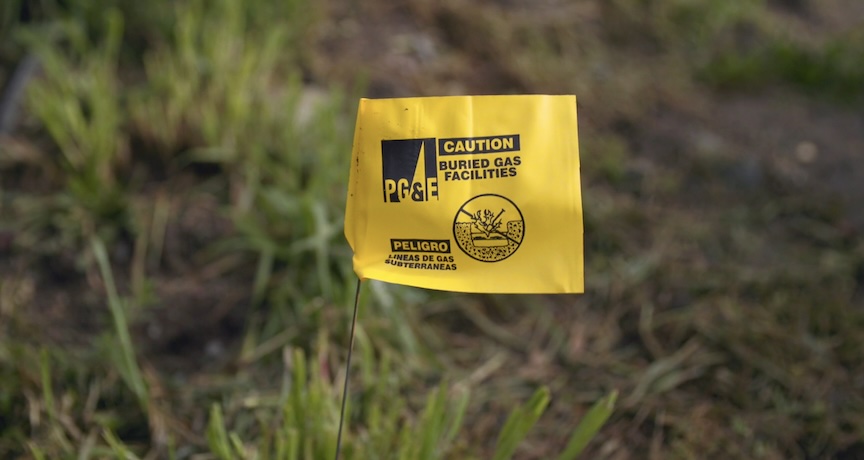
 A free call to 811 helps keep you safe and prevents costly repairs
OAKLAND, Calif. — Almost every day, somewhere in Northern and Central California, an underground utility line is damaged due to excavation. Each of these incidents poses a public safety risk requiring a 911 response and can result in repair bills averaging $3,500. To help prevent these incidents and raise awareness about the importance of calling 811 before any excavation project—large or small—Tuesday, August 11, is recognized as National 811 Day.
Failure to contact 811 before digging is the leading cause of underground utility damage each year. In PG&E’s service area alone, there were more than 1,200 incidents of line damage in 2025, and in 55% of those cases, 811 was not called.
Underground utility lines can be shallow—sometimes just a few inches below the surface—so it is important to call 811 before starting any project that involves digging, even seemingly small ones like building or replacing a fence, planting, or landscaping.
“With a quick, free call to 811, utility professionals will come to your home or worksite and mark the location of underground lines so you can dig safely and avoid costly repairs. Know what’s below before starting any excavation project—whether it’s planting, landscaping, or working on a fence—and call 811 two days before you dig. Remember: call 811 so you don’t have to call 911,” said Mitch Smith, PG&E’s Director of Damage Prevention.
By the Numbers
During warmer months, the number of excavation projects increases, and with that, so does the number of damages to unmarked underground lines. In fact, across PG&E’s service area in Northern and Central California:
- There were 1,247 incidents in 2025 within PG&E’s service area where underground utility lines were damaged due to excavation; in 55% of these incidents, 811 was not called.
- So far in 2026, there have been 561 incidents where underground utility lines were damaged due to excavation; in 57% of these incidents, 811 was not called.
- For homeowners specifically, that figure rises to 89%.
- The average cost to repair a damaged utility line is $3,500.
- Common causes of damage to underground utility lines during excavation include building or replacing a fence, gardening and landscaping, planting a tree or removing a stump, sewer and irrigation work, and building a deck or patio.
When you call 811 to request that lines be located and marked, a professional locator will visit your project site to mark the location of underground utility lines—including gas, electric, water, telecommunications, and sewer—at no cost. Knowing where underground lines are buried while you dig and following safe excavation practices will help keep you and your family safe and connected to essential services.
Calling 811 is quick and free.
- Customers should call 811 at least two business days before starting any project that involves digging, regardless of its size. Customers can also visit 811express.com to request that underground utility lines at their project site be marked.
- Professional utility workers from all utility companies (gas, electric, water, sewer, and telecommunications) will be dispatched to mark the location of all underground utility lines at the project site using flags, spray paint, or both.
- The 811 call center serving Northern and Central California—USA North—is staffed 24 hours a day, seven days a week, and offers translation services into Spanish and other languages.
PG&E tips for safe digging
Mark the project area in white: Identify the excavation site by drawing a box around the area using white paint, white stakes, white flags, white chalk, or even white baking flour.
- Call 811 or submit an online request at least two business days before digging: Be prepared to provide the project address and general location, the start date, and the type of excavation activity. PG&E and other utility companies will identify underground facilities in the area at no cost. Requests can be submitted up to 14 days before the project begins.
- Dig safely: Use hand tools when digging within 24 inches of the outer edge of underground lines. Leave utility flags, stakes, or paint marks in place until the project is complete. Backfill and compact the soil.
- Be alert for signs of a natural gas leak: Watch for the smell of “rotten eggs,” listen for whistling, hissing, or roaring sounds, and look for dirt blowing into the air, bubbling in a pond or stream, or dead or dying vegetation in an area that would otherwise be moist. If you smell gas, call 911 and then call G&E at 800-743-5000.
About PG&E:
Pacific Gas and Electric Company, a subsidiary of PG&E Corporation (NYSE: PCG), is a combined natural gas and electric utility serving more than 16 million people across 70,000 square miles in Northern and Central California. For more information, visit pge.com and pge.com/news.