Saturday, August 8, 2026
Home Blog Page 95

Petro attributes the attack on a military base to the ELN

Gustavo Petro

So far, the attack against a military installation in the Colombian department of Arauca has left a balance of two dead soldiers and 27 wounded

by the cable services of El Reportero

The president of Colombia, Gustavo Petro, announced this Tuesday what would be a drastic decision on the peace talks with the guerrilla of the National Liberation Army (ELN), after the attack on a military base located in Puerto Jordán, in the department of Arauca, El Tiempo reports.

During the inauguration of the magistrate of the Superior Council of the Judiciary, Claudia Expósito, the Colombian president blamed the ELN, with whom he assured that they were “talking about peace”, of perpetrating the attack against the military installation with a tractor-trailer loaded with explosives. So far, the attack left a balance of two dead soldiers and 27 wounded.

Petro also compared the recent attack with a similar one that took place in January 2019 at the Police Cadet School in Bogotá, which left 20 dead and 68 injured and caused the Colombian government to end the talks it was holding with the ELN.

For his part, the Minister of the Interior, Juan Fernando Cristo, said that this latest attack is an indication that the members of the guerrilla group “are definitely not interested in peace in Colombia.” “What the State has to do is pursue those authors of the attack and we are in a clear decision [to] fight against those violent people,” said Cristo, adding that “the ELN did not understand the message […] it has lost a historic opportunity to negotiate peace.”

Peace negotiations between Colombian authorities and the ELN have been at a standstill for around five months, while the ceasefire between the two sides ended on Aug. 3. According to local media, attacks by the ELN in the department of Arauca have increased in an attempt to force the Colombian government to accede to the guerrilla organization’s demands.

spot_img

Australian woman fired, dragged before tribunal for saying only women can breastfeed

Jasmine Sussex

In yet another blow to free speech in Australia, Jasmine Sussex, a Victorian breastfeeding expert, is being taken to the Queensland Civil and Administrative Tribunal for saying that only females can breastfeed their babies

by David James

In yet another blow to free speech in Australia, Jasmine Sussex, a Victorian breastfeeding expert, is being taken to the Queensland Civil and Administrative Tribunal for saying that only females can breastfeed their babies.

Sussex argued that males who take drugs to lactate should not be experimenting on children, describing it is a “dangerous fetish.”

Her tweets about an Australian male breastfeeding his infant with a cocktail of lactose-inducing drugs was removed by X (formerly Twitter) for Australian users, although it remained visible to overseas users. The move came after requests from a “government entity or law enforcement agency”, according to Twitter. Sussex was told she had “broken the law” although it was not made clear what law that was.

Sussex was also sacked from the Australian Breastfeeding Association (ABA) for refusing to use gender neutral language. She is one of seven counsellors to be formally investigated by the ABA leadership and one of five to be sacked.

The complaint against Sussex is being brought by Queenslander Jennifer Buckley in Queensland’s Civil and Administrative Tribunal. Buckley was born male and later identified as a woman and “transitioned.” Buckley acted after a transgender parent complained to the Queensland Human Rights Commission.

Buckley reportedly biologically fathered a baby through IVF and is raising the child with his wife. He posted on social media about taking hormones to grow breasts, explaining: “For the past six weeks I have been taking a drug called domperidone to increase prolactin in an attempt to be able to produce breast milk so that I can have the experience of breastfeeding.”

The case is not just about suppressing a person’s right to say what most would consider to be a statement of the obvious. It raises fundamental questions about how the law is to be crafted and applied.

A legal system depends on clear semantics, the definition of words. The potential confusion that can be created by not having a clear understanding of a person’s sex was exposed in the hearing for US Supreme Court applicant Judge Ketanji Brown Jackson. Asked to define what a “woman” is, Jackson replied: “I can’t,” adding that she was not a biologist.

The problem here is that, if you cannot define a word, then how can you use it properly in a court of law? For example, if you do not know what a “woman” is, then how can you be said to have transitioned from a man to a woman, as Buckley is claiming?

This definitional problem has been cynically fudged by mixing up the words “gender” and “sex.” It is claimed that there are 72 genders, by implication turning the question of physical sex into a matter of identity and personal psychology. There are presumably only two sexes.

That is the kind of rhetorical move made by Buckley, who said Sussex’s comments were “hurtful” because he was looking to have “the experience of breastfeeding.” This is analogous to saying that gender differences should be reduced to matters of personal perception, not observable physical characteristics.

In that sense, Sussex and Buckley are talking past each other; the words they use do not have the same meaning. Sussex is saying that objectively only “women” can lactate naturally. It is true that with drug assistance it is possible for “men” to mimic breast feeding to a limited degree. But that is artificial. It is not natural breast feeding. Sussex, who is an experienced consultant on breast feeding, also warns there may be medical issues with “male” breastfeeding that need further examination.

Buckley is arguing that her/his personal experience (of breastfeeding) is what matters and that anyone who questions that is infringing on his rights. He wants to be understood as a “woman” who was a “man”, although he reportedly still possesses male characteristics, such as being able to father a child. This is possible because he feels that way, it is how he “identifies”. But the fact that he has to undergo drug treatment indicates that in a physical sense he is a “man”.

In law, there is always a preference for physical evidence over what people say they are thinking or feeling. The latter is often changeable and difficult to demonstrate; it is poor quality evidence. There should also be an insistence on having an unambiguous understanding of the meaning of words.

On that basis Sussex, who is being represented by the Human Rights Law Alliance, should be able to defend herself effectively. But there is little reason to have confidence in the Australian legal system. It has shown itself to be highly susceptible to politics. The bullying of people who say things once thought to be self-evident may yet continue.

spot_img

Judicial reform takes effect after AMLO signs it into law

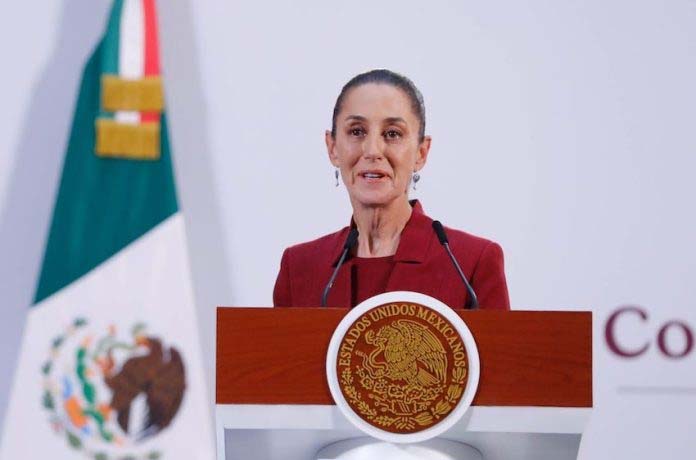
Claudia Sheinbaum has expressed full support for President López Obrador’s constitutional reforms. -- Claudia Sheinbaum has expressed full support for President López Obrador’s constitutional reforms. (Cuartoscuro)

by Mexico News Daily

President Andrés Manuel López Obrador on Sunday promulgated the federal government’s judicial reform, setting the stage for thousands of judges, including all Supreme Court justices, to be elected by Mexican citizens starting next year.

A decree signed by López Obrador in which various articles of the Mexican Constitution were declared to be “reformed, added to” or “repealed” was published in the government’s official gazette, four days after the Senate approved the judicial reform bill and three days after a majority of state legislatures ratified it. The reform takes effect Monday.

In a video posted to social media, the president, seated alongside President-elect Claudia Sheinbaum, said he was signing the reform into law “with the intent of improving the judicial power because we need justice to get to everyone.”

Among the other aims of the reform, he said, are to eliminate corruption in the judiciary and for judges, magistrates and Supreme Court justices to apply the law equally to all.

“We should have an authentic, a true rule of law, not a crooked one,” said López Obrador, who asserts that many judges are corrupt and has been angered by court decisions handed down against his government’s projects and policies.

“The simulation must end because it was said we lived in a democracy but we didn’t. An oligarchy dominated. Those right at the top were the ones who were in charge, a minority with the facade of democracy,” he said.

“There was simulation. Now it’s different, now it’s the people who rule, the people who decide,” López Obrador said.

He described Sunday — the eve of Mexico’s Independence Day — as an “historic day,” considering the publication of the judicial reform decree in the government’s gazette.

Sheinbaum, the president’s “witness of honor,” applauded the president after he uttered three words — “voy a firmar,” or “I’m going to sign” the decree.

She will be sworn in as Mexico’s first female president on Oct. 1, and will immediately have immense power as a coalition led by the ruling Morena party has a supermajority in the lower house of Congress and a near-supermajority in the Senate.

Many other constitutional reforms that López Obrador sent to Congress in February, and which Sheinbaum fully supports, could be approved in the coming months.

The president promulgated the judicial reform despite a court in Colima ruling against its publication in the government’s gazette.

Morena Senator Ernestina Godoy, who will serve as legal counsel to Sheinbaum, asserted Friday that the court order was not valid given that two-thirds of lawmakers in both houses of Congress had approved the judicial reform.

“One power can’t do that to another power,” she said.

The most controversial aspect of the judicial reform is the provision to allow citizens to directly elect all members of the judiciary, including Supreme Court justices and other federal judges.

In accordance with the reform, thousands of judges — approximately half of the nation’s judiciary — will be elected in “extraordinary elections” on June 1, 2025. Another round of elections will be held in 2027 at the same time midterm congressional elections take place.

The National Electoral Institute will be responsible for organizing the judicial elections.

Critics of the judicial reform argue that judges sympathetic to Morena will come to dominate the judiciary as the president and the Congress will nominate candidates.

There are also concerns that the reform will have a negative impact on foreign investment and Mexico’s trade relations, including those with its key regional partners, the United States and Canada.

López Obrador and Sheinbaum have dismissed all criticism of the reform, portraying concerns about it as unfounded.

What else does the judicial reform change?

Among the other changes in the judicial reform are:

  • The reduction of the number of Supreme Court justices to 9 from 11.
  • The reduction of justices’ terms to 12 years from 15.
  • The reduction of the experience required to serve as a justice and judge.
  • The adjustment of salaries so that no judge earns more than the president.
  • The elimination of the Federal Judiciary Council.
  • The creation of a Tribunal of Judicial Discipline that could sanction and fire judges found to have acted improperly or illegally.
  • The use of “faceless,” or unidentified judges, to preside over organized crime cases.
  • An expansion of the crimes for which pre-trial detention can be enforced.

With reports from El Financiero, Reforma, La Jornada and Aristegui Noticias

spot_img

Gen Z needs to look beyond the memes

by Jeannine Chiang

How can younger generations expect to uphold our nation’s fragile democracy if we’re disconnected from the conversations that matter most?

This morning in my United States Government and Politics class, a simple question from my teacher prompted an unexpectedly heavy silence: “Who watched the Presidential debate on Tuesday, Sept. 10th?”

One by one, my classmates responded, offering up reasons for why they hadn’t in fact watched the debate, whether because of soccer practice, or art class, or piles of homework — a snapshot of our busy teenage lives.

But the fact remains that very few of my fellow students, if any, had watched the debate, which drew an audience of some 67 million Americans. Not even the highlights.

As a senior, this realization hits hard.

Most of us will turn 18 this year, finally old enough to vote and, along with it, take on the responsibility to shape our future. But how can we expect to uphold our nation’s fragile democracy, or make decisions that will guide our country’s future course if we’re disconnected from the conversations that matter most?

It’s a scary thought, but it’s an increasingly common reality. Members of Gen Z — those of us born between 1996 and 2010 — rarely if at all consume the news even when we do bother to engage. Our sources aren’t The New York Times or The Washington Post; in fact, they aren’t news sites at all.

According to the Pew Research Center, about one-third of Americans aged 18 to 29 regularly get their news from TikTok. Social media offers quick, accessible snippets, but understanding the nuances of our political reality demands a critical eye and media literacy skills that many of us simply haven’t developed and that social media doesn’t offer.

The result? A generation consuming content curated by algorithms, designed not for accuracy but for engagement, clicks and likes.

Last night, after watching the Presidential debate on ABC News, I scrolled through TikTok to unwind. I was immediately bombarded by videos about Vice President and Democratic Nominee Kamala Harris. Accounts like @kamalahq, boasting over four million followers, churned out pro-Harris content set to trending music, complete with memes and jokes, often at the expense of Republican Nominee Donald Trump.

One video in particular stood out: a slide reading, “Tonight a convicted felon will debate,” alongside a photo of Trump, followed by another slide of Harris labeled “a prosecutor.” The comments were filled with mocking laughter and “LMAO,” reflecting a narrative aimed not at fostering understanding but promoting ridicule.

Politics, it seems, has become less about civic engagement and more about entertainment for many of my generation. We engage through the lens of celebrities and influencers rather than through direct involvement. Candidates gain support not because of their policies but because our favorite stars endorse them.

Taylor Swift’s endorsement of Harris, for example, dominated conversations among my friends, overshadowing any substantive discussion of the debate itself. My Instagram feed was filled with memes referencing Swift’s “Childless Cat Lady” comment — a playful jab at GOP VP Candidate JD Vance’s remarks deriding unmarried women.

Swift’s post displaced any discussion about Trump or Harris’ policy stances.

And it’s not just Harris or Swift — the broader conversation often drifts into the absurd. I saw more about Trump’s outlandish and false claims — like bizarre statements about “immigrants eating pets” or “executing babies” — than any real discussion of policy. It feels as if the genuine issues facing our country are buried beneath sensational sound bites and clickbait, reducing the serious business of democracy to a string of viral moments.

I’m worried we’re missing the point. In a world that increasingly values the quick hit of dopamine from a “like” or a share, what happens to our commitment to the slow, deliberate work of being informed citizens? Democracy isn’t just about casting a vote on election day. We must engage with the complex, often uncomfortable truths of our society that require more than just scrolling through social media.

As young people, we’re poised to inherit a world that needs thoughtful, informed leadership more than ever. But if we’re not even willing to watch a debate, how can we expect to take on that responsibility? We owe it to ourselves — and to each other — to do better, to look beyond influencers and viral videos, and to engage deeply with the issues that truly matter.

Even Taylor Swift, in her endorsement, urged us to “do your research.” If we don’t, we risk becoming not just uninformed voters, but a generation that’s lost sight of what it truly means to be part of a democracy.

Jeannine Chiang is an aspiring journalist and a senior at Burlingame High School in Burlingame, California where she is a reporter for the school paper, The Burlingame B.

spot_img

Anti-inflammatory diet helps with cardiovascular and metabolic diseases, cuts dementia risk by 31 percent

by Lance D Johnson

Adhering to an anti-inflammatory diet could reduce the risk of developing dementia by 31 percent. A recent study published in JAMA Open Network found that anti-inflammatory dietary choices can influence brain health into old age, particularly for individuals with existing cardiometabolic diseases.

Anti-inflammatory foods help with cardiovascular and metabolic conditions, reducing dementia risk

The current study examined over 80,000 adults aged 60 and older, utilizing data from the UK Biobank. Participants were monitored for up to 15 years, with a median follow-up period of 12.4 years. The research specifically focused on individuals with cardiometabolic diseases (CMDs), such as heart disease, Type 2 diabetes and stroke, which are known to increase dementia risk.

Individuals with CMDs who followed an anti-inflammatory diet experienced a significant 31 percent reduction in dementia risk. This suggests that dietary modifications could play a crucial role in managing dementia risk, especially for those already vulnerable due to other health conditions.

Dementia, characterized by a decline in memory and cognitive function, is often associated with damage to brain cells. Alzheimer’s disease is the most common form of dementia. Previous research has established a connection between diet and dementia risk, with certain dietary patterns potentially slowing Alzheimer’s progression. Cardiometabolic diseases are known to heighten the risk of dementia.

Inflammation can stifle blood flow to the brain, cutting off oxygen and important nutrients, thereby starving the brain. Abigail Dove, the lead author of the study, pointed out that CMDs such as Type 2 diabetes and heart disease are indicators of inflammation and both inflammatory conditions individually increase dementia risk by 1.5 to 2 times. This risk is compounded when individuals have multiple CMDs.

The study suggests that anti-inflammatory diets significantly mitigate the risk by reducing systemic inflammation within the cardiovascular system, which is common in individuals with CMDs. Dove explains that inflammation can accelerate brain cell damage, leading to cognitive decline. For instance, CMDs like diabetes and heart disease can disrupt blood flow to the brain and damage brain cells, contributing to the development of dementia. Dove said that Type 2 diabetes exhausts the normal functions of the brain. “When excess sugar from the blood enters the brain, it can break down the protective coating that surrounds brain cells, making them less efficient and more vulnerable to damage,” Dove said, “Stroke occurs when blood supply to a part of the brain is cut off, essentially suffocating brain cells and leaving severely damaged tissue behind.”

Anti-inflammatory foods should form the basis of government dietary guidelines

For individuals interested in adopting an anti-inflammatory diet, Dove and other experts recommend including foods such as berries, nuts, fatty fish, avocados, green tea, olive oil, vegetables, turmeric and mushrooms. Conversely, reducing intake of sugar, refined carbohydrates, fried foods and alcohol may also help manage inflammation.

In the study, researchers assessed participants’ diets using a detailed questionnaire, analyzing 206 foods and 32 drinks. Instead of focusing solely on specific foods, the study evaluated the inflammatory impact of nutrients and used this data to calculate an overall inflammation score for each diet.

Participants were divided into three groups based on their diet’s inflammatory impact: anti-inflammatory, pro-inflammatory and neutral. MRI scans were used to measure brain volume, revealing that lower systemic inflammation was associated with healthier brain markers and reduced dementia risk. The inflammatory diet was associated with neurodegeneration, loss of volume in the hippocampus region of the brain, which is responsible for memory processing.

Anti-inflammatory foods like fish, nuts, roots vegetables, berries, herbs and mushrooms improved cardiometabolic diseases; whereas, sugary foods, fried foods and refined carbohydrates worsened these health conditions. Studies like these can help pave the way for new dietary guidelines. The USDA food pyramid desperately needs an overhaul. Instead of including 12 servings of bread, cereal and pasta, it should include things like spirulina, beet root, turmeric, hawthorn berry, pomegranate, blueberries, lion’s mane mushroom, cinnamon and many other nutrient-dense foods. Anti-inflammatory foods should provide the basis of any diet, for longevity and healthy cardiovascular and brain function into old age. Food.news.

spot_img

CITY OF REDWOOD CITY CANDIDATES FOR PUBLIC OFFICE

CITY OF REDWOOD CITY
CANDIDATES FOR PUBLIC OFFICE

NOTICE IS HEREBY GIVEN that the following persons have been nominated for the offices appointed to be filled at the General Municipal Election to be held in the City of Redwood City on Tuesday, November 5, 2024.

List of nominees in order of appearance on the ballot according to the random alphabetical drawing by the Secretary of State (E.C. 13112).

City Council Member, District 1
1 seat for a 4-year term:
Jeff Gee
City Council Member, District 3
1 seat for a 4-year term:
Lissette Espinoza Garnica
Isabella Chu
City Council Member, District 4
1 seat for a 4-year term:
Elmer Martinez Saballos
City Council Member, District 7
1 seat for a 4-year term:
Diana Reddy
Marcella Padilla

NOTICE OF MEASURES TO BE VOTED ON

NOTICE IS HEREBY FURTHER GIVEN that the following measure will be voted on at the General Municipal Election to be held in the City of Redwood City on Tuesday, November 5, 2024.

MEASURE BB

City of Redwood City Business License Tax Measure: Shall the measure maintain local city services, such as: maintaining the 911 emergency response/neighborhood police patrols; fixing potholes, repairing streets and sidewalks, keeping firefighters and paramedics on duty and storm drains to prevent flooding; modernizing the City of Redwood City business license tax base and per-employee fees between $10 and $250, with the higher fee for larger businesses, for general government use, as outlined in the ordinance, providing approximately $7,000,000 annually, until finalized by voters, will it be adopted?

Yes ________ No _________

Yessika Castro, CMC, CPMC City Clerk/Election Official Posted: September 17, 2024 – The Reporter

spot_img

The Peralta Community College District is calling for sealed Bids

NOTICE INVITING BIDS

The Peralta Community College District is calling for sealed Bids to be delivered to the Purchasing Department electronically (via Vendor Registry), until 2:00 P.M., on December 12, 2024.

Bid 24-25/01 Laney College Library & Learning Resource Center Project. The project consists of construction of a new three story 75,622 sq. ft. building at 900 Fallon Street, Oakland, CA 94607

In order to perform the work, Bidders at the time of the Bid Opening and for the duration of the project shall possess a valid California Contractor’s license and certifications in order to qualify to perform the Work: Class A or B Contractors License. This is a Public Works project and will require payment of prevailing wages.  A Project Labor Agreement (PLA) is required for this project.  The successful Bidder will be required to sign a Letter of Assent agreeing to the terms and conditions of the District’s PLA in order to perform the work.

Three Pre-Bid Meetings will be held, via Zoom. Mandatory attendance by the bidding General Contractor is required at one of the three meetings in order to submit a bid.

  1. Pre- Bid Meeting #1 will be held on October 8, 2024 at 11:00 A.M.

To register in advance for this meeting:

https://peralta-edu.zoom.us/meeting/register/tZcofuuorzosG928-NcChVsU4KHp_hLfQ1tT

Meeting ID: 835 9201 1619

After registering, you will receive a confirmation email containing information about joining the meeting. No site visit will take place and only one meeting needs to be attended.

  1. Pre-Bid Meeting #2 will be held on October 24, 2024 at 1:00 P.M.

To register in advance for this meeting:

https://peralta-edu.zoom.us/meeting/register/tZwtceGvrTkvE9PwlJBexlqxTS9K-3BtaFTa

Meeting ID: 880 6873 2597

After registering, you will receive a confirmation email containing information about joining the meeting. No site visit will take place and only one meeting needs to be attended.

  1. Pre-Bid Meeting #3 will be held on October 29, 2024 at 11:00 A.M.

To register in advance for this meeting:

https://peralta-edu.zoom.us/meeting/register/tZ0tfuGurTIoE9YRbH3nSG90KvTMem6UDuYz

Meeting ID: 890 9863 9292

After registering, you will receive a confirmation email containing information about joining the meeting. No site visit will take place and only one meeting needs to be attended.

Copies of the Bid documents may be obtained by clicking on the following link: https://vrapp.vendorregistry.com/Bids/View/BidsList?BuyerId=4d041f6c-7568-4c8a-8878-c82684292a3c  or, by contacting the Peralta Community College District,  Purchasing Department, 501 5th Avenue, Oakland, California, 94606, Phone (510) 466-7225, Office Hours: 8:30 a.m. to 4:30 p.m.

Governing Codes:

GC 53068,

EC 81641


spot_img

Momotombo performs in concert in San Francisco

Grupo Momotombo

by Magdy Zara

Momotombo SF presents two shows this weekend, with which they seek to

keep the legacy of Latin rock alive by sharing their music in a live concert format.

As you may remember, Momotombo SF is a band of 10 outstanding musicians from the San Francisco Bay Area, composed mainly of notable alumni of Malo and Santana.

One of the characteristics of this group is their mastery in the interaction of Latin jazz with rock, driven by Latin and Afro-Cuban rhythms, which creates a powerful Latin rock sound.

These concerts feature the music of Malo and Santana, the iconic bands native to San Francisco.

Momotombo’s performances will be on Saturday, Sept. 14 and Sunday, Sept. 15, starting at 8 p.m., at Toot’s Tavern, located at 627 2nd Avenue, Crockett.

Tickets start at $20 in advance. For more information, visit https://mrhatpresents.com/momotombo/

Celebrate Mexico’s Independence with the Pozole Festival

In the framework of Mexico’s independence, the Pozole Festival has been organized, in which the protagonists will be chile and mole.

The invitation is to be part of the celebration and immerse yourself in a vibrant atmosphere full of traditional food, lively performances and local art.

The event is this Saturday, Sept. 14 from 12 noon to 5 p.m., at the San José School of Arts and Culture, located at 1700 Alum Rock Avenue San José. Tickets cost $10

for adults and $5 for children $5, chips are included with the ticket.

The Guardians of Corn Film Screening

The Guardians of Corn is a documentary that explores the fragility of an ecosystem threatened by climate change, migration, and the incursion of processed foods and beverages, which endangers the corn harvest as we know it.

This is a film by Gustavo Vázquez, which was produced by Jonathan Barbieri and Yira Vallejo.

Its screening will be accompanied by an unmissable round table discussion that will feature contributions from director Gustavo Vázquez and producers Jonathan Barbieri, Yira Vallejo, and Daniela Tabora.

Farmers, artisans, and indigenous cooks tell the story, in Spanish and in their native languages, of the origins of native corn and how their ancestors herded these seeds in constant evolution from the dawn of agriculture to the 21st century, a collective effort spanning more than 350 generations. Their voices are joined by community leaders, scientists, chefs, and others who advocate for food sovereignty, genetic integrity, diversity, and community ownership of native seeds. Together, they stand up for a lasting cultural legacy and a way of life.

Vásquez, Barbieri, and Vallejo began filming the documentary Guardians of Corn in 2017. The film shows the efforts of indigenous farmers in Oaxaca to conserve native corn in the face of an uncertain future.

Guardians of Corn will be screened this Saturday, Sept. 14, at the Choir Auditorium of the San Francisco Public Library, located at 100 Larkin Street, starting at 2 p.m.

Enjoy Nicaraguan culture with the Banda Gueguense

For the first time in San Francisco, the Banda Gueguense comes to offer music, theater, and dance in their performances, creating a truly immersive experience for all attendees.

La Banda Gueguense is a celebrated folk music band that incorporates traditional elements of Nicaraguan culture into their music, earning an impressive reputation for their authentic and passionate interpretation of traditional music, offering a unique insight into the region’s rich cultural history.

You can’t miss this opportunity to reconnect with your roots and delight in a medley of Nica songs, including palo de mayo, chichero, cumbias, merengue and much more.

The event is next Sunday, Sept. 22 at Roccapulco, located at 3140 Mission St, San Francisco, starting at 1:00 p.m., tickets are $30.

spot_img

Sergio Mendes, Brazilian singer-songwriter who brought bossa nova to a global audience, dies

Sergio Mendes

by Zurellys Villegas

Sergio Mendes, the legendary Brazilian musician who brought bossa nova music to a global audience in the 1960s with his group, Sergio Mendes & Brasil ’66, died last Thursday, September 5, at the age of 83.

The iconic producer, composer and pianist died at his home in Los Angeles surrounded by his family after failing to win the battle against complications from prolonged COVID.

“His wife and musical partner for the past 54 years, Gracinha Leporace Mendes, was by his side, as were his beloved children,” the musician’s family said in a statement announcing the death. “Mendes last performed in November 2023 to sold-out and enthusiastic venues in Paris, London and Barcelona.”

Trumpeter Herb Alpert, one of the first to publicly pay tribute to him, wrote on Facebook that “Sergio Mendes was my brother from another country,” attaching a photo from decades ago, sitting next to Mendes at the piano. He then added: “He was a true friend and an extremely talented musician who brought Brazilian music in all its forms to the entire world with elegance.”

https://www.youtube.com/watch?v=nVgcs7_gHcc

Mendes, one of the most internationally successful Brazilian artists

Mendes was born on February 11, 1941 in Niterói, Rio de Janeiro and established himself as a singer-songwriter, arranger and pianist. Throughout his outstanding career, which spanned more than six decades, he published more than 35 albums and became an international reference for Brazilian music.

The composition “Más que nada” (Mais que nada) was instrumental in helping to popularize the Brazilian musical genre bossa nova around the world in the 1960s. Mendes has two popular versions of this song, the first in 1966, with his band Sérgio Mendes & Brasil ’66 and the second in 2006, with the group The Black Eyed Peas.

This song reached the middle of the famous North American Billboard Hot 100 hit list, in an original composition performed by the Brazilian musician Jorge Ben on his first album, Samba Esquema Novo in 1963.

However, thanks to the version recorded in 2006 by Sérgio Mendes and the group The Black Eyed Peas, the song became popular for generations of the 2000s in the United States and Europe. In the United States, it is one of the most famous Brazilian songs. Currently, in the country, the 2006 version is mainly known and not the one by Jorge Ben; However, in Brazil, the first version is more popular. Experts point out that the original song contains salsa and lambada rhythms, while the 2006 version is more hip hop.

“It was the first time that a song sung entirely in Portuguese was a hit in the country and around the world,” Mendes said about this song in 2014. “People didn’t even know what we were saying, and it didn’t matter. It made them feel good,” he added.

Another of Sérgio Mendes’ big hits was “Magalenha,” a song composed by Brazilian musician Carlinhos Brown and recorded for the first time by Mendes with Brown’s participation for the 1992 studio album Brasileiro, which earned him his only Grammy Award in 1992 for this album in the World Music Album category.

The acclaimed Brazilian artist toured with great American artists such as Frank Sinatra, among others. He also explored and perfected captivating music, fusing the rhythm of samba, the groove of jazz, the refinement of California pop with the delicate vocal harmonies of bossa nova. The artist also composed the soundtrack for the film “Pelé,” with saxophonist Gerry Mulligan, and also produced an album recorded by the legendary Brazilian soccer player.

Mendes won the 1992 Grammy Award for Best World Music Album for “Brasileiro,” as well as two Latin Grammy Awards. He also received an Oscar nomination in 2012 for Best Original Song for “Real in Rio,” from the animated film “Rio.”

Sérgio Mendes left a vast legacy throughout his career and his work will undoubtedly continue to shape the world music scene for decades to come.

spot_img

Study: 40 percent of voters willing to cross party lines on local issues

Un nuevo estudio sugiere que el partidismo es menos pronunciado en las contiendas locales cuando los votantes sienten profundamente una cuestión local en particular. -- A new study suggests that partisanship is less pronounced in local races when a particular local issue is deeply felt by voters. (The Stock Photo Girl/Adobe Stock)

by Suzanne Potter

A common narrative suggests that deeply polarized American voters always support their party’s candidates, but a new study suggests otherwise in certain circumstances.

Researchers from Sacramento State and San Diego State universities asked more than 900 partisan voters about housing and homelessness – then asked them to choose, in a hypothetical local election – between a candidate from their party who disagreed with their views, or one from the opposite party who is aligned with them on policy.

Sacramento State Associate Professor of Political Science Danielle Martin co-authored the study.

“Overall, voters do support candidates from their own party – even when an opposite party candidate was closer to their views on one of those salient local issues,” said Martin. “But we also found that about 40% defected from their party.”

The study found that people with weak party loyalty were more likely to defect, as were people who are very invested in their policy position.

They also point out that in national and state-level races, people are much less likely to split their votes between parties.

Study co-author Professor of Public Policy and Administration Ted Lascher, also from Sacramento State, said the data show that voters are more flexible when an issue hits close to home.

“One of the implications is that somebody who’s running, who’s the out party, in terms of local party identification, may be able to win elections in city council and mayoral races,” said Lascher, “if they choose the issue very carefully. Because voters will sometimes cross party lines on particular local issues.”

San Diego State University Political Science Professor Brian Adams said this means that even though Democrats enjoy broad support in California, that support is more conditional than absolute in local races.

“A lot of this research suggests that if Republicans put forward candidates that actually agreed with some of the policy positions that Democratic voters have,” said Adams, “at least some Democratic voters would be willing to switch.”

About 96% of electoral contests in the U.S. are at the local level – for races such as the school board, the city council, and the county board of supervisors.

Support for this reporting was provided by the Carnegie Corporation of New York.

spot_img