Friday, August 7, 2026
Home Blog Page 81

Biden cancels Title IX rule on transgender sports

by Citizen Frank

The Biden administration has scrapped plans to prohibit states from banning transgender athletes from participating in school sports.

According to Reuters, Biden’s Department of Education withdrew the proposed rule from the federal register on Friday afternoon.

The rule, if it went into effect, would have barred schools from banning transgender athletes from participating in sports teams different from their sex assigned at birth.

According to Outkick, the Education Department explained its reasoning for withdrawing the proposed rule in a statement.

”The Department recognizes that there are multiple pending lawsuits related to the application of Title IX in the context of gender identity, including lawsuits related to Title IX’s application to athletic eligibility criteria in a variety of factual contexts. In light of the comments received and those various pending court cases, the Department has determined not to regulate on this issue at this time. Therefore, the Department hereby withdraws the Athletics NPRM and terminates this rulemaking proceeding,” the Education Department said.

The Alliance Defending Freedom, one of the organizations that sued the Biden administration over the rule, welcomed the move in a statement.

“Women and girls deserve to compete on a level playing field, and the U.S. Department of Education has taken a step in the right direction by withdrawing this proposed change. As the withdrawal admitted, many Americans voiced their opposition to the rule change and there are many pending lawsuits related to protecting women’s sports—including a comment submitted by Alliance Defending Freedom and multiple lawsuits brought by ADF to protect women’s sports. The decision to withdraw the proposed sports rule merely reflects the views of the vast majority of Americans who believe that women’s sports should remain reserved for female athletes,” said ADF Senior Counsel and Vice President of Legal Strategy Jonathan Scruggs.

spot_img

Trump demands review of Panama Canal fees, suggests U.S. takeover

by Independent Correspondent Alex Fields

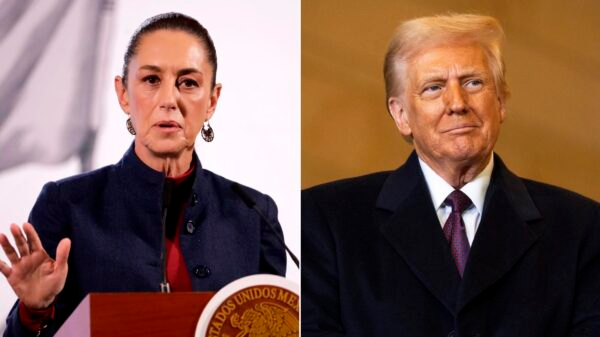
President-elect Donald Trump expressed strong discontent over the fees imposed by Panama for the use of its iconic canal, a vital global trade route, during a statement on Saturday night. Trump suggested that if these tariffs are not reconsidered, he may push for U.S. oversight—or even control—of the waterway upon returning to office.

“The fees Panama is charging are outrageous, especially considering the immense support the United States has provided to that country over the years,” Trump posted on Truth Social. “This exploitation of our country will stop immediately.”

The Panama Canal, which connects the Atlantic and Pacific Oceans, imposes charges on vessels based on their size, cargo, and purpose. These fees range from as little as $0.50 to upwards of $300,000.

“If Panama does not respect the moral and legal principles underpinning this historic arrangement, we will demand the canal’s full return to U.S. control without hesitation,” Trump added, addressing Panamanian officials directly.

The U.S. is the canal’s most frequent user, making its operation critical to American commerce and military logistics. Control of the canal was formally handed over to Panama in 1999 under the Torrijos-Carter Treaty signed in 1977 by President Jimmy Carter, a decision Trump sharply criticized.

“When Jimmy Carter recklessly handed it over—essentially for a dollar—it was meant for Panama to manage responsibly, not for third parties like China to interfere,” Trump stated.

Trump also accused Panama of overcharging U.S. businesses, the Navy, and other entities dependent on the canal, calling the rates “exorbitant” and “unacceptable.”

The Panama Canal was built under President Theodore Roosevelt starting in 1904, heralded as a monumental engineering feat and a cornerstone of U.S. foreign policy. Trump emphasized the canal’s strategic and economic significance, calling for its security to remain a priority for the United States.

“The Panama Canal is essential to our national security and economic stability. We will never allow it to fall into the wrong hands,” he declared. “It was given as a symbol of cooperation, not as a tool to exploit the United States unfairly.”

Trump’s remarks reignited debates over the U.S.’s historical involvement with the canal and its current geopolitical implications. Whether his administration would pursue concrete actions to revisit the canal’s governance remains to be seen.

spot_img

Latin Parties in San Francisco for Christmas – Registration open for the San Francisco Children’s Choir

by Magdy Zara

If you want to enjoy the Latin rhythm for this Christmas, you are invited to enjoy several shows.

You will be able to delight in a night of music, dancing and joy, with a Colombian touch, there will be live music and the best Christmas atmosphere. The door will be open from 6 p.m., this December 21 at Marvin’s Gardens, Belmont, located at 1160 Old County Rd, Belmont. The cost of admission is $15.

You will also have an afternoon of timba (Cuban salsa) with DJ Juan Love and his group Tumbao.

DJ JuanLove specializes in the Cuban salsa genre known as Timba, which is the most recent and popular dance music to emerge from Cuba.

TUMBAO dance parties take place:

  • Every first Friday of the month at Victory Hall in SF.
  • Second and third Fridays at Slate Bar in SF’s Mission District.
  • Every first Friday of the month at Victory Hall in San Francisco.
  • Every last Saturday of the month at Brooklyn Basin in Oakland.

The Timba party will be starting at 4 p.m., this December 22nd at 135 12th Street Oakland, California. The cost is $10 and includes a Salsa Rueda lesson with Pablo Dinámico.

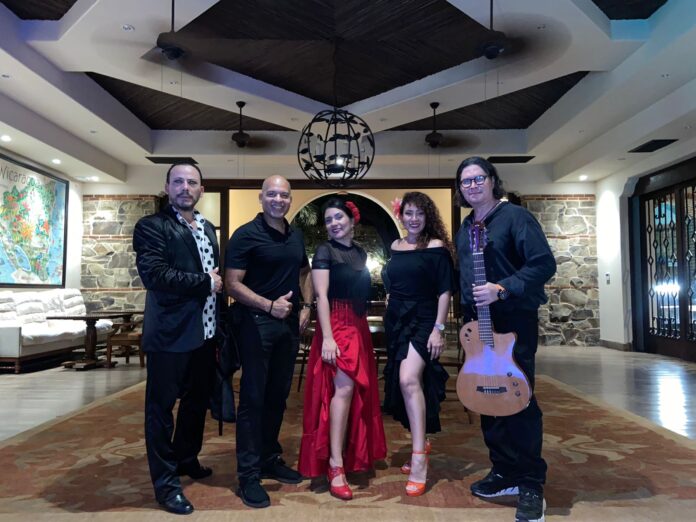
The Spanish Orchestra of Harlem will also be performing, to offer a Christmas night with a touch of spicy salsa, in addition to a Latin jazz band.

The Harlem Orchestra offers two shows, one on Saturday 21st at 7 p.m. and on Sunday, Dec. 22nd at 2 p.m., at the Miner SFJAZZ Center auditorium, located at 201 Franklin Street in San Francisco.

Registration open for the San Francisco Children’s Choir

The San Francisco Children’s Choir opens its doors starting in January to incorporate children to join the choir. Choir programs consist of six levels that provide vocal training, music appreciation, bell training, and age-specific performance experience.

Since 1948, the San Francisco Children’s Chorus has trained children to enjoy music, perform in public, and appear in San Francisco Opera productions.

Children in Pre-K, Kindergarten, 1st Grade, and 5-year-olds do not need a placement appointment and will automatically be accepted into the Junior Choirs on a trial basis and require no experience.

To register to join the Junior Chorus (no audition or experience required) you can do so through www.sfbc.org/sing

Rehearsals are offered in San Francisco, San Rafael, Oakland, and San Mateo.

Additions will be beginning Jan. 11, 2025 at 10 a.m.

spot_img

Clay pots, the traditional ones for making mole

by Mexico Desconocido

Mexican gastronomy is not only a list of ingredients, it is also the way in which food is prepared and even the utensils that are used. All of this results in a unique identity full of aromas, colors and flavors. Without a doubt, one of these elements that cannot be missing from the Mexican culinary imagination are the clay pots, generally used to make the delicious mole (although also many other stews) and in which we imagine traditional cooks stirring for hours with their also traditional wooden spoon.

In Mexico, clay pots have a long history. Pottery made with clay or mud dates back to pre-Hispanic times. However, like almost everything in this country, it also received the artistic wealth of other latitudes, and currently the most popular of these pots are covered with enamel and decorations of New Spanish origin.

How are clay pots made?

In almost all of the country it is common to find clay pots, although they are generally offered in public markets, street markets or in craft shops. They are not mass produced, so their value is truly invaluable, since no piece is the same as another.

The production of clay pots begins with the selection of clay from the mine, which will have to be sifted, kneaded and purged of air bubbles. Later, each pot is made, with its unique shape accompanied by earmuffs; they are also painted with the preferred decoration. The sizes are very variable, since examples can be made for sauce boats or real saucepans that require more than one person to be able to be transported.

The next step is the firing in an oven, where a large number of pieces will be placed so that, after having been dried in the open air, their consistency and color change. The firing of the pieces lasts about five hours. At that same time, the minerals that will become varnish are added.

Where to buy them?

Nowadays, the unique and sturdy clay pots are used less and less. However, their beauty and cultural importance in Mexican gastronomy is undeniable. Despite this, there are privileged places that still produce them with great regularity, such as the municipality of Tlaquepaque in Jalisco, among the Purépecha villages of Michoacán or in different regions of Puebla. Likewise, it is very easy to acquire them in artisan markets such as La Ciudadela or San Ángel in Mexico City.

spot_img

Milei says that free trade with Argentina is on Trump’s agenda

“We want to become the freest country in the world so that capital can move freely,” declared the Argentine president

The Argentine government is going to work to achieve a free trade agreement with the United States. “This, which seemed like a pipe dream,” is also on the agenda of the American president-elect, declared Javier Milei on Thursday at the annual dinner of the Federalism and Liberty Foundation in the city of San Miguel de Tucumán.

“One of the men who works with Donald Trump said that advancing the agenda of freedom with Argentina is on the agenda,” said the Argentine president in reference to the free trade agreement between both nations.

“The truth is that it is not enough for us to occupy the 70th place in the index of economic freedom. And that is why we want to become the freest country in the world, so that capital can move freely in our country and we can be an example of prosperity and growth for posterity,” he said.

Milei pointed out that in order to achieve these goals, there are 3,000 pending reforms to be implemented in the coming years and that the task of “returning freedom to Argentines is not an undertaking free of costs and risks, because it necessarily implies taking away privileges and benefits.” to politics, to his friends and to his clients.”

“Without a doubt, we are going to make the country the freest in the world,” he promised.


Ecuador clarifies that it is not in “negotiations” with Venezuela to grant a safe-conduct to Jorge Glas


The Ecuadorian Presidency stressed that the Noboa Government will not allow “sentenced officials” to evade justice, as occurred in “previous administrations”

The Presidency of Ecuador clarified that it is not in “negotiations” with the Government of Venezuela with the objective of granting a safe-conduct to the former Ecuadorian vice president Jorge Glas, who has been held in a maximum security prison since last April, after being kidnapped by soldiers who assaulted the Mexican Embassy in Quito, where he was protected under asylum conditions.

Through a statement released on Wednesday, the Government of Daniel Noboa indicated that such “negotiations,” on the “alleged proposal” proposed to Quito, “would never have a place” with that Administration.

This position of Ecuador arises as a reaction to the recent statements of the Colombian foreign minister, Luis Gilberto Murillo, who said that the Venezuelan authorities had proposed a safe conduct for Glas and the release of another person, in exchange for Venezuelan opponents who are seeking asylum in the Argentine Embassy in Caracas.

The Ecuadorian Presidency added that the Noboa Government will not allow “sentenced officials” to evade justice, as occurred in “previous administrations”, but rather ensures that impunity is not made impossible.

“Citizen Jorge Glas Espinel, like other people responsible for crimes that have affected Ecuadorian families, will continue to serve their sentence in prison, in strict compliance with what is established by law,” she said.

For her part, the Ecuadorian foreign minister, Gabriela Sommerfeld, told the local press that her country is not “in favor of impunity” or “corruption” and that it is not an ally of the Venezuelan Government.

“There are three principles that are clear for Ecuador,” said Sommerferld, and pointed out that the aforementioned proposal has been discarded for Quito and that it had been proposed between August and September of this year. “There was a proposal from Venezuela. Colombia and Brazil transmitted it. They wanted to be intermediary countries,” said the minister.

spot_img

Let’s defend our “Merry Christmas”: A cry for our culture and faith

por Marvin Ramírez

During this December season, it is impossible to ignore a phenomenon that has gained strength in recent years: the transformation of “Merry Christmas” into the generic “Happy Holidays” or “Felices Fiestas.” This seemingly inclusive practice has been driven by an agenda that seeks to dilute Christian values and reduce Christmas to a mere commercial event, stripping it of its divine essence. This change is not accidental; it reflects a society that, under the influence of atheistic revolution and materialism, attempts to erase our cultural and religious roots. Now more than ever, we must reclaim the greeting “Merry Christmas” as a declaration of faith, identity, and cultural resistance.

Christmas, as its name indicates, was conceived to commemorate the birth of Jesus Christ, the foundation of the Christian faith. Saying “Merry Christmas” is not just a greeting; it is an acknowledgment of that historical and spiritual event that has profoundly marked our Western civilization. By replacing it with a generic term like “Happy Holidays,” we are conceding ground to a narrative that seeks to strip this holiday of its original meaning, reducing it to a period of shopping, lights, and empty parties.

How did we get to this point? The answer lies in an agenda promoted by various sectors, especially governmental and educational, advocating for the absence of God in the public sphere. In many schools, for instance, it is prohibited to speak openly about Jesus Christ or about Christmas in its religious sense. This silencing is not innocent; it is part of a movement that seeks to replace spiritual values with superficial materialism. We are taught that there is no supreme being, that everything is the result of chance, and that happiness is found in consumption and possessions.

This narrative has also generated a feeling of fear or shame in openly expressing our faith. Saying “Merry Christmas” has become, for some, an almost subversive act, as if we were imposing our beliefs on others. But who is really bothered by such a greeting, full of good wishes and meaning? The answer is clear: those who seek to erase our roots and confuse us with ideologies foreign to our culture.

Western civilization, to which we belong as Hispanics, is grounded in Christian culture. It was Christianity that shaped our laws, our morals, and our sense of community. Through the centuries, this faith became integrated into our identity as a people, giving us a unique language and a sense of belonging. Today, that identity is being attacked by an entertainment industry that promotes empty values and a television that glorifies the superficial and ephemeral. Hollywood, with its productions, sells us a distorted version of reality, where what matters is not the soul, but the appearance and consumption.

In this context, the greeting “Merry Christmas” becomes an act of resistance. It is a reminder of who we are and where we come from. It is a declaration that we are not willing to abandon our faith or our cultural identity. By saying “Merry Christmas,” we are affirming our connection with our roots, with our parents and grandparents, who professed this faith with pride and passed it on as a precious legacy.

As Hispanics, we have a special responsibility in this regard. We are a great family, united by language, culture, and faith. If we allow these values to be taken from us, we will be letting them weaken us as a people. We cannot allow external ideologies to divide us or social pressure to make us ashamed of our faith. On the contrary, we must strengthen our traditions and pass them on with pride to future generations.

It is true that we live in a diverse society, where people of different creeds and cultures coexist. This diversity is a richness, but it should not be an excuse to dilute our own beliefs. Respecting others does not mean renouncing who we are. We can live in harmony, recognizing and celebrating our differences, without needing to erase our identity. Saying “Merry Christmas” is not an act of exclusion; it is an expression of our faith and our sincere desire to share the joy of this holiday.

“Merry Christmas” is more than a greeting; it is an affirmation of faith, culture, and identity. It is a reminder of our roots and an act of resistance against a society that tries to empty our traditions of meaning. I urge all Hispanics to say “Merry Christmas” with pride and courage. Let’s not allow them to steal this cultural and spiritual treasure from us. Let’s defend our faith, our history, and our identity, and celebrate together the birth of Jesus Christ, the true reason for this beautiful holiday. Merry Christmas to all.

spot_img

Col. Macgregor: Trump should not let Israel lead the US into war with Iran after Syria’s fall

by Col. Douglas Macgregor and James W. Carden

Fri Dec 20, 2024 – 1:56 pm EST (The American Conservative) — Peace is not at hand in the Middle East, and Israel’s Prime Minister Benjamin Netanyahu remains determined to expand the war.

Syria’s de facto partition into Israeli and Turkish territories is the prelude to wider war with Iran. As the Times of Israel reported last week, the Israeli Air Force (IAF) has “continued to increase its readiness and preparations” for “potential strikes in Iran.”

Netanyahu’s top priority is the destruction of Iran before Russia wraps up its victory in Ukraine and Syria becomes a new battleground for Turks and Israelis. It’s not simply the end of Washington’s “rules-based international order.” It’s the onset of chaos.

Israeli forces and Turkish auxiliaries (i.e. the Islamist terrorists who sacked Syria) are already staring at each other across a demarcation line that runs east–west just south of Damascus. Netanyahu harbors no illusions about the conflict between Ankara’s long-term strategic aims in the region and Jerusalem’s determination to claim the Syrian spoils of war.

In addition to serious financial trouble and societal discontent on the home front, President-elect Donald Trump now confronts the dangerous distraction of wars he did not start, wars that will bring his administration and his country no strategic benefit. America’s underwriting of Netanyahu’s expanding war in the Middle East will endanger U.S. national security and guarantee that Washington, its armed forces, and the U.S. economy will be hostage to whatever strategic direction Netanyahu decides to take.

Starting the war sooner, rather than later, is critical for Netanyahu. War with Iran presents Trump with a strategic fait accompli. In case Trump decides to distance the United States from another bloodbath in the Middle East, Israel’s ongoing conflict with Iran and Turkey’s potential confrontation with Israel will make disengagement impossible.

American policy planners need to understand the larger context in which this is all unfolding – and why a war on Iran will ultimately bring us and our alleged Israeli friends to grief. The principal aim of U.S. foreign policy planners ought to be the adaptation of the American economy and military establishment to the multipolar world and the development of new markets, not new enemies. Washington’s refusal to acknowledge the fundamental shifts in power and wealth lie at the heart of much of the Biden administration’s foreign policy failure.

successful management of change would avoid a conflict with Iran; it would peacefully reconcile competing claims to regional hegemony, as the Chinese recently did with their brokering of the historic rapprochement between the Kingdom of Saudi Arabia and the Islamic Republic of Iran. It would revitalize such multilateral organizations as the U.N. Security Council and the Organization for Security and Co-operation in Europe.

These actions would cultivate the emergence of new constellations of power along the lines of Metternich and Castlereagh’s 1815 Concert of Europe. Just as no question of strategic security in Europe can be solved without Russian participation, Washington cannot create stability in the Middle East by unconditionally backing Israel’s territorial ambitions.

Netanyahu believes he has the wind at his back: emboldened by the collapse of the Assad regime, he will turn his attention to Lebanon, southern Syria, and the West Bank. One predictable consequence of an attack on Iran will be a solidifying of the Chinese-brokered Iran-Saudi rapprochement – and a hardening of the blocs in the Greater Middle East, which will see Iran, backed by Russia, China, Saudi Arabia, set against a temporary Israel-Turkish bloc backed by Washington and its European vassals.

Iran is not Iraq: at 90 million people, it is double Iraq’s population, has a more developed economy, and has more powerful allies than Saddam Hussein ever did. Contrary to neoconservative expectations, there are no cake-walks in the greater Middle East.

The only certainty amid the chaos is that, thanks to the connivance of Biden, Netanyahu, and Erdogan, a wider war in the greater Middle East is only just beginning. It is one we will come to regret.

Reprinted with permission from Col. Douglas Macgregor.

spot_img

RFK Jr. says there are ‘too many abortions’ during meeting with Republican senators

RFK Jr. made promises to reenact several positive pro-life policies from the first Trump term, while also picking pro-life deputies to assist him at Health and Human Services

by Matt Lamb

Robert F. Kennedy Jr. reportedly said he believes there are “too many abortions in the world,” while meeting with Republican Senators as he works to build support for his nomination to lead the Department of Health and Human Services.

He also reportedly made promises that the Trump administration would reinstate pro-life policies from its first term and suggested he opposes efforts to include “gender identity” in federal healthcare law and mandate medical professionals provide transgender drugs and surgeries.

“I think there’s too many abortions in the world, let’s just start there,” he reportedly said. The quotes come from Senator Markwayne Mullin (R-OK) who rehashed the conversation to The Daily Wire.

“It’s not that I don’t value life, I value life, I just look at it a little bit different in certain circumstances, what we’ve been through as a family,” Mullin reported RFK Jr. saying.

RFK Jr. has drawn interest from some conservatives for his support for medical freedom when it comes to vaccines, his criticism of Big Pharma, and his pledge to “Make America Healthy Again” by taking on unsafe foods and chronic diseases. At the same time, he has held a variety of positions on abortion, most recently settling on what he called the “emerging consensus” that killing babies should be limited to the first 15 weeks or so. This would only protect about 7 percent of babies from abortion, according to Centers for Disease Control and Prevention data.

Sen. Mullin, recounting his conversation, asked RFK Jr. specifically for his position, saying he had been “all over the map on it.”

President Donald Trump has also signaled he does not see a role for the federal government in enacting legislative protections for preborn life. He also recently reiterated that he supports keeping in place President Joe Biden’s policy of allowing dangerous chemical abortion drugs to be mailed across the country with minimal oversight. The abortion drugs are responsible for about 60 percent of abortions today.

However, he reportedly plans to defund Planned Parenthood, reinstate a ban on taxpayer funding of foreign abortions (the Mexico City Policy), and ensure conscience protections for pro-life medical professionals. Defunding Planned Parenthood has been endorsed by both Vice President-elect JD Vance and Speaker of the House Mike Johnson.

RFK also “supports reinstating the bar on Title X funds going to organizations that promote abortion,” according to Sen. Josh Hawley (R-MO), who laid out the HHS secretary’s promises in a thread on X (formerly Twitter).

“He pledged to reverse the Biden Admin’s Section 1557 rule and also said all of his deputies at HHS would be prolife,” Hawley wrote. Section 1557 is an Obamacare regulation that would force healthcare providers to go along with a gender-confused person’s declared gender, despite it being incongruent with biological sex.

The Missouri Senator also reiterated the comments the nominee gave to Sen. Mullin. “He told me he believes there are far too many abortions in the US and that we cannot be the moral leader of the free world with abortion rates so high.”

Kennedy also reportedly told Mullin:

I’m serving at the will of the President of the United States, and it’s his policies that I will put forth. And so we may not agree on every single issue, but we agree 100 percent, we shouldn’t even be having abortions in this world anyways. But my policies are not what I’m pushing forward, it’s the president’s, and I think the country knows where the president is on that, and so therefore, that’s my position.

Sen. James Lankford (R-OK) said Kennedy “was very clear, President Trump is pro-life, and he’s gonna have this as a pro-life HHS.” He mentioned Trump’s “three exceptions” for rape, incest, and life of the mother, a view Trump mistakenly attributes to President Ronald Reagan.

Pro-lifers, however, stress that each child is deserving of protection from abortion, no matter their circumstances of conception or potential health problems. Furthermore, medical experts have confirmed that direct abortion is never necessary to save the life of a mother.

Some pro-life groups responded positively to the news of Kennedy meeting with Republican senators.

“There is ample room for the incoming administration to advance the pro-life movement incrementally over the next four years!” Americans United for Life CEO John Mize wrote on X.

“The next administration is poised to be the most protective and compassionate for pregnant women and their children in history,” Chelsey Youman, public policy director for Human Life Coalition, wrote on X.

However, commentator David Harsanyi criticized Hawley for supporting Kennedy, saying the HHS nominee “has a record of supporting [abortion] without any restriction until crowning,” alluding to his past opposition to any federal limits on abortion.

spot_img

California launches $4B youth mental health initiative

by Selen Ozturk

With youth mental health worsening, California has launched a new initiative to help kids access free treatment.

The over $4 billion Children and Youth Behavioral Health Initiative (CYBHI), part of Governor Newsom’s Master Plan For Kids’ Mental Health announced in 2022, aims to fight the youth mental health crisis through free telehealth apps offering peer support, health care system navigation aid and connection to local providers.

Between 2019 and 2021, about 1 in 3 California adolescents aged 12 to 17 reported symptoms that met the criteria for serious psychological distress, according to a statewide survey.

National estimates suggest that 1 in 2 adolescents are affected by a mental health disorder, with nearly half of these first appearing before 14 years of age.

As these numbers rise, youth statewide are not getting the care they need.

Of the 284,000 youth diagnosed with depression in California, for instance, 66% did not receive treatment during adolescence.

Meanwhile, suicide rates for Californian youth aged 10 to 18 increased 20% between 2019 and 2020.

The initiative

“To help kids get the help they need — and to address a nationwide shortage of providers that often cause long wait times — we’ve launched two mental health apps, BrightLife Kids and Soluna, offering free support to parents, caregivers and kids living in California, regardless of insurance status,” said Autumn Boylan, Deputy Director of the Office of Strategic Partnerships at the California Department of Health Care Services (DHCS), at a Tuesday, December 10 state-held briefing on the initiative.

BrightLife Kids offers free support to families with kids up to age 12 including coaching for sleep issues, anxiety, social skills and family caregiving coordination through live one-on-one video chats, direct messaging and on-demand content.

Coaches are bilingual in English and Spanish, and caregiver users have access to translation up to over 17 languages.

For Californians aged 13 to 25, Soluna offers multilingual one-on-one text and video chats with user-selected coaches, with a one-minute average wait time; peer discussion forums; interactive journaling, breathwork, mood log and goal-setting tools; mental health quizzes, videos and articles; health care system navigation support, including dental and vision; and even help in finding other resources like local food banks, housing aid, transportation and even cooling centers.

The free resources are currently state-funded through June 30, 2027 and available for download on the App Store and Google Play, requiring an in-state zip code for signup.

“When my own child was experiencing mental health challenges, it was tricky navigating a complicated health system alone,” said Boylan. “And when we were talking to young people leading up to the launch of these apps, we heard clearly that they don’t necessarily want to talk to a licensed practitioner right away, but to peers and near-peers that can understand their lived experience.”

“So it made sense to offer upstream, early-intervention support to youth who may not necessarily have a mental health diagnosis, but who need skills to cope with everyday-life stressors and let them know they’re not alone … which would also take some pressures off understaffed practitioners statewide. Then, for kids who need more support, we connect them to these practitioners through these apps,” she added.

Community stories

“I’ve worked with Dr. Diana, a family physician and mother who was completely skeptical about this program, but signed up because her child was dealing with tantrums and aggressive behavior like biting,” said Brando Menjivar, a senior coach for BrightLife Kids. “Through coaching to support her child, not only did his behavior improve, but so did communication with her husband about their best parenting approach.”

“The more I work with caregivers and kids, the more I realize that sometimes we fight our emotions. The first step is labeling these emotions so we can be aware of them and identify their triggers … and accept that experiencing, say, grief or stress isn’t bad. It becomes bad when we don’t manage it, and it just sits there and turns into something worse,” he continued.

Most standard medical textbooks attribute 50% to 80% of disease to stress-related origins.

“The concept I love to teach kids dealing with big emotions is of being the surfer who swims toward the big wave to ride it, rather than swimming away,” Menjivar added. “Toward the end of our coaching, Dr. Diana said ‘Nobody teaches you how to be a parent in med school.’ She had all this physical knowledge, but didn’t know how to connect the dots so she and her child could make space to accept their emotions.”

“I grew up in a pretty traditional Latino household, so mental health was a taboo subject. It was rarely talked about,” said Yasmin, a Soluna coach. “And as a teenager, I experienced a lot of traumatic events and felt really alone in my suffering. For the longest time, I just questioned why I was going through it. It wasn’t until I learned about the peer support model in college when it clicked — all the emotional challenges I went through were so that I could help other people.”

“I share my story because it’s one that all our peer support specialists have. We all have lived mental health struggles that fuel us to support other people,” she continued. “And our coaching sessions are goal-based, so whether our users want to have 10 sessions, or just come in for one single session, all our coaches have a solution-focused approach to help create actionable steps for change.”

Describing the need for these services, Moa Kim, a counselor at Koreatown Youth Community Center in Los Angeles, said “I have a Korean American fifth grade student, born and raised in Koreatown, who comes for rehab services, and he and his mom come in for therapy as their relationship has been strained, because they feel like they can’t communicate well with each other, especially when they’re angry.”

“She’s very overworked from her job, and her husband is often unavailable due to his job, and he expects her to be the primary caretaker for their son, so she’s struggling with their child’s emotional outbursts, and then she frequently loses her temper, which only worsens the situation, and she feels too drained to practice peaceful parenting or prioritize self-care,” she continued.

“So her son, who is very sensitive and bright, has turned to gaming as a coping skill. So now, every time he and his mom fight, he shuts himself in his room. And his mom recognizes the need to spend more quality time with her son, but feels too overwhelmed to make those changes,” Kim explained. “We’ve been providing help and parenting tips, but can only meet them once a week — so she feels unsupported.”

“This is just one example of countless youth and families with similar struggles throughout California that this initiative is going a long way to help,” she added. “To deal with these mental health issues, kids need help learning to communicate them … that’s what these apps are here for.”

spot_img

Rediscovering happiness: The truth behind artificial stimulants

by Marvin Ramírez

Alcohol and drugs have historically been associated with fun and happiness. For many, consuming them at social events seems to be the only way to enjoy life. However, that happiness is based on an illusion created by substances that alter perception. The question is: is it really the only way to be happy? The answer is no.

The cycle of the search for artificial happiness
From a young age, many people believe that the only way to experience a “good time” is through alcohol, marijuana, or stronger drugs. At first, it seems harmless: a marijuana joint, a few drinks with friends. What begins as a fleeting experience slowly turns into a repeated habit every time they socialize. The brain becomes conditioned to associate fun with the effects of substances, transforming what was once a form of enjoyment into a constant need to rely on an external stimulant.

The Trap of the subconscious
The real danger lies in how the brain adapts. Every time a “good time” is sought, substances are automatically turned to. This behavior becomes an alteration of emotional balance, where the body’s natural energy is replaced by an external impulse. Activities like dancing, listening to music, or having conversations become difficult without the help of a stimulant. What seems like empowerment is, in reality, an illusion, as the substances mask true emotions. Those who depend on them do not realize that they are no longer genuinely enjoying the experiences.

The destruction of natural happiness
Substances not only affect the body physically but also destroy the ability to enjoy life naturally. Alcohol, for example, has devastating effects on the body: it dehydrates the brain, affects memory, reduces decision-making ability, and, over time, destroys vital organs. The most dangerous part is that it robs a person of their ability to generate happiness from within. Life becomes an empty cycle, where emotions are perceived as fleeting, and people become slaves to the need for an artificial “high.”

Breaking the cycle: Reclaiming control
Breaking this cycle requires awareness. The happiness provided by substances is false and fleeting. True joy comes from connecting with oneself and the environment in an authentic way. It is possible to break free from dependence with determination and support. A first step is to seek professional help or join support groups. There are many ways to experience happiness without resorting to drugs or alcohol: meditation, exercise, music, art, or a sincere conversation with a friend.

The Power of will: Living fully
Breaking free from stimulant dependence requires willpower. It is not just a matter of abstaining but restructuring the way life is lived, focusing on genuine sources of pleasure that can be found in the simplest aspects of life. Living without dependence allows one to experience true happiness, which comes from inner connection and not from a temporary “high.”

It is time to free ourselves from the trap that has made us believe happiness depends on the artificial. True freedom and well-being lie in living naturally, harnessing our internal energy to fully enjoy life.

spot_img