Friday, October 16, 2026
spot_img
Home Blog Page 80

Sheinbaum dirige su mirada hacia América Latina en la cumbre de la CELAC en Honduras

La presidenta Sheinbaum pasó parte del miércoles en la cumbre de la Comunidad de Estados Latinoamericanos y Caribeños (CELAC) en Tegucigalpa, Honduras. (Presidencia/Cuartoscuro) - President Sheinbaum spent part of Wednesday at the summit of the Community of Latin American and Caribbean States (CELAC) in Tegucigalpa, Honduras.

por Mexico News Daily

La presidenta Claudia Sheinbaum instó el miércoles a una mayor integración económica regional durante un discurso pronunciado en una reunión de líderes latinoamericanos y caribeños en Tegucigalpa, Honduras.

“Hoy les tengo una propuesta”, dijo Sheinbaum a los presidentes y primeros ministros en la cumbre de la Comunidad de Estados Latinoamericanos y Caribeños (CELAC) en la capital hondureña.

“Los invito, CELAC, a convocar una ‘Cumbre para el Bienestar Económico de América Latina y el Caribe’ para hacer realidad una mayor integración económica regional”, afirmó.

Sheinbaum abogó por una mayor integración económica entre países como México, Brasil, Chile, Guatemala, Honduras y Jamaica, basada en la “prosperidad compartida y el respeto a nuestras soberanías”. Su discurso en la cumbre del bloque de 33 naciones del hemisferio occidental, con 14 años de existencia, se produjo en un momento en que Estados Unidos es percibido cada vez más como un socio comercial impredecible y poco confiable.

La semana pasada, el presidente estadounidense, Donald Trump, impuso aranceles recíprocos generalizados, en algunos casos muy elevados, a decenas de países, para luego anunciar el miércoles una pausa inmediata de 90 días y una reducción sustancial del arancel recíproco durante este período, del 10 por ciento para numerosos países, a la vez que aumentó el arancel estadounidense sobre los productos chinos al 125 por ciento.

En su discurso, Sheinbaum informó a sus homólogos latinoamericanos y caribeños que se están produciendo cambios profundos en el comercio mundial que afectan a nuestros países.

“Cada uno de nosotros busca legítimamente lo mejor para nuestros pueblos y naciones”, afirmó. “Sin embargo, creo que hoy, más que nunca, es un buen momento para reconocer que América Latina y el Caribe necesita la unidad y la solidaridad de los gobiernos y sus pueblos para fortalecer la integración regional, siempre en el marco del respeto mutuo y la observancia de la soberanía e independencia de nuestros países y de los acuerdos comerciales que cada uno tenga”, afirmó Sheinbaum.

México tiene tratados de libre comercio con Chile y Colombia, y forma parte de la Alianza del Pacífico con estos dos países y Perú. Sin embargo, no existe un pacto comercial que abarque a todos los países de la CELAC.

Sheinbaum afirmó que “una región más unida es una región más fuerte, capaz de articular soluciones y propuestas concretas para la integración regional y acciones de cooperación en comercio, educación, ciencia, desarrollo tecnológico, energías limpias y conservación de la biodiversidad, con la visión de construir siempre sociedades más igualitarias”.

“Ningún país de América Latina y el Caribe debe quedar atrás, ningún niño o niña de América Latina y el Caribe debe quedar atrás, ningún hombre o mujer de América Latina y el Caribe debe quedar atrás”, añadió.

Nuestra gente es “todavía joven”, nuestra tierra “todavía fértil”

Sheinbaum destacó que la población combinada y “todavía joven” de América Latina y el Caribe “alcanza los 663 millones de personas”, mientras que el PIB de la región ronda los 6.6 billones de dólares.

“Somos el principal exportador neto de alimentos del mundo”, añadió.

“Nuestra tierra aún es fértil… Contamos con más del 30 por ciento de los bosques primarios del planeta, el 33 por ciento de su agua dulce, casi el 20 por ciento de las reservas mundiales de petróleo, al menos el 25 por ciento de las reservas minerales estratégicas, y somos capaces de construir un desarrollo con justicia y cuidado del medio ambiente”, afirmó Sheinbaum.

“…Los pueblos latinoamericanos y caribeños estamos unidos por la historia, la cultura y la geografía de un continente que se extiende sobre dos hemisferios y entre dos océanos. El comercio y el intercambio económico nos han unido durante siglos”, afirmó.

“…La historia de América Latina y el Caribe, desde la lucha por nuestra independencia, se ha caracterizado por la solidaridad y el apoyo mutuo. Hoy no debería ser la excepción. Son tiempos de mayor voluntad para promover el progreso y el bienestar de nuestros pueblos”, concluyó Sheinbaum. Sheinbaum y Lula sostienen conversaciones bilaterales en la CELAC

Entre los jefes de Estado presentes en la cumbre de la CELAC, organizada por la presidenta hondureña Xiomara Castro en Tegucigalpa, se encontraban el presidente colombiano Gustavo Petro, quien asumió la presidencia del bloque regional; el presidente cubano Miguel Díaz-Canel; el presidente guatemalteco Bernado Arévalo; y el presidente brasileño Luiz Inácio Lula da Silva.

Sheinbaum y Lula, líderes de las dos mayores economías de América Latina, mantuvieron una reunión bilateral en el marco de la cumbre.

“Me reuní esta mañana con la presidenta de México @Claudiashein”, escribió Lula en redes sociales.

“Conversamos sobre la situación económica en América Latina y el Caribe, y en el mundo. Decidimos fortalecer aún más las relaciones entre nuestros países mediante la promoción de reuniones periódicas entre nuestros gobiernos y los sectores productivos de la industria de Brasil y México”, afirmó.

El comercio bilateral entre México y Brasil superó los 16,000 millones de dólares en 2023, según el Ministerio de Economía. Brasil vendió más de 12 mil millones de dólares en bienes a México, mientras que las exportaciones mexicanas al país más grande de Sudamérica totalizaron poco más de 4 mil millones de dólares.

En septiembre pasado, las autoridades brasileñas y mexicanas abogaron por la revisión del acuerdo comercial vigente entre ambos países para fortalecer los lazos bilaterales.

Un pacto comercial entre México y Brasil, firmado a principios de la década de 2000, “establece la exención o reducción de aranceles de importación para unos 800 tipos de productos”, informó Reuters.

El ministro de Economía, Marcelo Ebrard, declaró en septiembre pasado que “el crecimiento de nuestra relación ya ha superado ese acuerdo”.

“Necesitamos actualizarlo”, añadió.

spot_img

Luisa González and Daniel Noboa end their campaigns in Guayaquil ahead of Ecuador’s presidential runoff

por el equipo de El Reportero

Los dos aspirantes a la Presidencia de Ecuador, Luisa González y el actual mandatario Daniel Noboa, pusieron punto final a sus campañas electorales este jueves, a tan solo días del balotaje que se celebrará el domingo 13 de abril. Ambos eligieron Guayaquil, en la provincia de Guayas, como escenario para sus últimos actos proselitistas.

De acuerdo con el calendario del Consejo Nacional Electoral (CNE), la campaña electoral debía finalizar oficialmente a las 23:59 horas de este jueves, tras lo cual inicia el período de silencio electoral, durante el cual queda prohibida la difusión de propaganda, encuestas o cualquier contenido que pueda influir en la decisión del electorado.

Cierre de campaña con música y política

Luisa González, representante del movimiento Revolución Ciudadana (RC), optó por cerrar su campaña en la tradicional avenida 9 de Octubre de Guayaquil. La jornada incluyó presentaciones musicales de artistas nacionales como Jombriel, Los Diamantes, Hellen Eu, Jhonathan Luna y Gerardo Morán, en un evento que mezcló espectáculo y política.

Por su parte, Daniel Noboa, auspiciado por el movimiento Acción Democrática Nacional (ADN), eligió el Coliseo Voltaire Paladines Polo para su evento de cierre. Según su equipo, la velada contaría con la participación de los cantantes puertorriqueños Tito El Bambino y Darell. No obstante, esta decisión podría suscitar controversia, ya que la legislación electoral ecuatoriana —específicamente el artículo 330, numeral 4 del Código de la Democracia— prohíbe la contratación de artistas internacionales para eventos políticos durante el proceso electoral.

Actos previos en Quito

Un día antes del cierre en Guayaquil, ambos candidatos llevaron sus mensajes a Quito. González encabezó un mitin en el sector de Turubamba, al sur de la capital, donde expresó su optimismo: “Vamos a votar con alegría, con ilusión y con la esperanza de un futuro digno para todos los ecuatorianos”. También subrayó la alianza de su movimiento con sectores indígenas y empresariales.

Mientras tanto, Noboa se dirigió a sus simpatizantes desde el Coliseo Rumiñahui. “La batalla final será este domingo”, declaró, agradeciendo el respaldo de los ciudadanos de Quito, Pichincha y otras provincias que lo han acompañado en su corta pero intensa gestión presidencial.

Una elección histórica en puerta

La elección del próximo domingo genera gran expectativa. En la primera vuelta, celebrada el 9 de febrero, ambos candidatos obtuvieron resultados muy parejos: González obtuvo el 44% de los votos (4,510.860), mientras que Noboa alcanzó el 44,17 por ciento (4,527.606), con una mínima diferencia de apenas 16,746 sufragios.

González, que se presenta con Diego Borja como compañero de fórmula, busca convertirse en la primera mujer elegida por voto popular para presidir Ecuador. Si lo logra, marcará un hito, ya que aunque el país tuvo brevemente a Rosalía Arteaga como presidenta en 1997, su mandato fue de solo cinco días y no fue producto de una elección.

Por su parte, Noboa aspira a consolidar su mandato con un periodo completo de cuatro años. Su actual gestión, iniciada en noviembre de 2023, concluirá en mayo de este año, pues surgió de elecciones extraordinarias tras la activación del mecanismo constitucional de “muerte cruzada” por parte del entonces presidente Guillermo Lasso.

spot_img

Request for Qualifications-Proposals

The Peralta Community College District (PCCD) is requesting the submittal of qualifications/proposals from qualified firms to provide Support Services for Project Planning & Submittal Services to the State Chancellor’s Office (RQF-P No. 24 25/10). Qualificatoins-Proposals are to be delivered to the PCCD Purchasing Department, electronically (via Plaent Bids) District Current Solicitations | Planet Bids, by 2pm, by April 30, 2025.

The Peralta Community College District is seeking well qualified firms to provide Support Services for Project Planning & Submittal Services to the State Chancellor’s Office. No pre-proposal conference will be held.

Copies of the project documents may be obtained by clicking on the following link: District Current Solicitations | Planet Bids Purchasing Department, 333 8th Street, Oakland, California, 94606, Phone (510) 466-7225.

Governing Codes:

GC 53068

EC 81641 El Reportero

spot_img

Mexico launches an ‘alternative to the Panama Canal’: Monday’s mañanera recapped

by Mexico News Daily

After a weekend trip to Baja California and Sonora, President Claudia Sheinbaum held her Monday morning press conference in the National Palace in Mexico City.

A milestone in the operation of the railroad across the Isthmus of Tehuantepec, a National Electoral Institute ruling and her ever-soaring popularity were among the issues she spoke about.

‘It’s an exceptional project — it provides an alternative to the Panama Canal’

Sheinbaum acknowledged that a maiden shipment of vehicles — 900 Hyundai cars from South Korea — was transported across the Isthmus of Tehuantepec by train over the weekend.

She said that “some products” had already been transported across the isthmus between Salina Cruz, Oaxaca, and Coatzacoalcos, Veracruz, but it was the first time that vehicles were taken across the 308-kilometer-long modernized railroad between the two ports.

The modernized railroad is the centerpiece of the Interoceanic Corridor of the Isthmus of Tehuantepec (CIIT) infrastructure project.

The docking of the Hyundai Glovis cargo ship in Salina Cruz on Friday was dubbed the “first arrival at the Interoceanic Corridor” in a banner unfurled at the port. The trans-isthmus shipment of the Hyundai vehicles was described as “the launch of a groundbreaking new route.”

Sheinbaum said that the port in Salina Cruz is “still being developed” with public and private investment. Even so, “larger ships” have begun docking there thanks to the breakwater built during the presidency of Andrés Manuel López Obrador, she said.

Sheinbaum added that a grain storage terminal will be built at the Salina Cruz port and “other actions” will be undertaken to “strengthen the port.”

She was effusive in her praise of the CIIT, which is also slated to include a chain of 10 industrial parks.

“It’s an exceptional project — it provides an alternative to the Panama Canal,” Sheinbaum said.

“And when the port of Salina Cruz is finished, it will have a lot more activity,” she said.

According to the Oaxaca Ministry of Economic Development, the shipment of Hyundai cars is destined for the east coast of the United States. Transporting the cars from Korea to their final destination via Salina Cruz and Coatzacoalcos — where they are re-loaded onto a ship — reduces the total shipping time by five days in comparison with a voyage that includes traversing the Panama Canal, according to the ministry. It said that total logistics costs are 15% lower, and highlighted that it takes nine hours to transport the vehicles across the isthmus by rail.

Former Navy Minister José Rafael Ojeda Durán asserted in 2023 that Mexico would become a “world shipping power” thanks to the construction of the trade corridor between the Pacific Ocean and the Gulf of Mexico across the Isthmus of Tehuantepec.

Sheinbaum to challenge INE ruling against promotion of judicial elections 

Sheinbaum told reporters that her government has not yet been formally notified of the  decision by the National Electoral Institute (INE) to prohibit federal, state and municipal governments, public institutions and individual officials from promoting Mexico’s first ever judicial elections.

“We haven’t been notified yet,” she said, adding that such a rule only takes effect after notification of those affected.

The judicial elections will be held on June 1 thanks to a controversial judicial reform approved by Congress last September. The official campaign period for candidates for judgeships, including Supreme Court justice positions, began on Sunday.

Sheinbaum said that her government has simply been reminding people that the elections are coming up, not campaigning on behalf of any candidates.

She made it clear that she doesn’t agree with the INE’s ruling, and on both Sunday — when the ban took effect — and Monday when she didn’t comply with it.

“We’re not going to promote voting for one person or another, but simply participation [in the elections],” Sheinbaum emphasized.

She told reporters that the federal government will challenge the INE’s decision at the Federal Electoral Tribunal “because we believe it’s important that the executive power and the legislative power, without directing [citizens to vote for] one person or another, … participate in the dissemination of this transformational event that will take place in Mexico on June 1.”

Sheinbaum and other federal officials say that the election of judges is necessary to rid the judiciary of corruption and other ills such as nepotism.

Critics of the judicial elections argue that the election of judges will erode the independence of Mexico’s judiciary because it will come to be stacked with judges sympathetic to the ruling Morena party’s agenda, thus removing a vital check on executive power.

Another poll, another sky-high approval rating for the president 

A reporter noted that a poll conducted for the El País newspaper and W Radio detected an approval rating of 82% for Sheinbaum in March, up from 80% in January.

The president — as she invariably does when flattering poll results are mentioned at her mañanera — thanked the people of Mexico for their support.

She added that her government will “never betray the people.”

Sheinbaum said that the high levels of support she enjoys reflect a “very different” reality in Mexico to that perceived or promoted by “the famous commentariat of intellectuals from the past linked to the regime of the past — that before 2018.”

López Obrador took office in late 2018, marking the commencement of the so-called “fourth transformation” of public life in Mexico, of which the current president says she is building “el segundo piso,” or second story.

spot_img

El Reportero: 35 years of commitment to the community

Marvin Ramírez, editor

by Marvin Ramírez

El Reportero proudly celebrates its 35th anniversary, marking more than three decades of independent journalism serving the Hispanic community in the San Francisco Bay Area. Since its founding in the Journalism Department at San Francisco State University (SFSU), this bilingual outlet has been a tireless voice, informing, educating, and defending the interests of Latinos in the United States.

In a world where digital technology has transformed the way people consume information, El Reportero has maintained its commitment to the written word, remembering that history and laws are forged with ink on paper. In an era where algorithms dictate what people read and think, this newspaper has fought to preserve the essence of real journalism, one that informs without selling its soul to political tendencies or interests outside the community. El Reportero has not only witnessed the evolution of the Hispanic community in the Bay Area, but has also played an active role in defending its rights. It has denounced injustices, given a voice to the voiceless, and served as a cultural bridge between generations of immigrants and their descendants. Through its pages, stories of struggle and overcoming difficulties have been told, initiatives for social welfare have been promoted, and a love of reading and truthful reporting has been cultivated.

Maintaining an independent newspaper for 35 years has not been an easy task. It has been a labor of love and resilience, facing economic, technological, and social challenges. In times when print journalism has declined, El Reportero has persevered thanks to its roots in the community and the support of its loyal readers. It has not been seduced by interests that compromise its editorial independence and has resisted the pressure of digital immediacy, which often sacrifices the depth and analysis of its reporting. This newspaper has not only reported on politics, economics, culture, and civil rights, but has also celebrated Latin American traditions, music, literature, and art. It has provided a platform for writers, poets, and journalists committed to truth and the preservation of Hispanic identity.

El Reportero has demonstrated that, in a society saturated with rapid and ephemeral information, a medium that offers in-depth analysis, rigorous research, and a space for critical thinking remains vital. Its work has not only consisted of informing, but also of educating and encouraging the habit of reading, especially among younger generations, at a time when the digital world threatens to alienate people from print.

This anniversary is an opportunity to remember Hispanics who have achieved the American dream by establishing their own businesses, demonstrating that part of the strength of a community is the existence of its own press. A press that spreads and promotes culture and information that the conventional or mainstream media are not interested in covering. It’s also a time to highlight the few Latinos who have managed to earn journalism degrees and create our own press, refusing to work for media conglomerates that don’t serve our interests. To these Hispanic entrepreneurs, we remind you that no one pays for our news articles, but the distribution and printing costs require the support of you, the merchants. Contributing to the print media is essential for the benefit of the new Latinos who are emerging.

Celebrating 35 years of El Reportero is a celebration of the perseverance, passion, and conviction that free and independent journalism is a fundamental pillar of democracy and social development. It is a reaffirmation that information should not be a product manipulated by external interests, but a right at the service of the people. It is, ultimately, a testament to the fact that the written word continues to have transformative power and that the fight for an honest and committed press must continue. Today, with renewed enthusiasm, El Reportero looks to the future with the same mission with which it was founded: to be the voice of the community, keep the tradition of print journalism alive, and continue to be a beacon of truthful, quality information for present and future generations. Happy 35 years, El Reportero! May there be many more to come.

spot_img

Canelo’s Saudi Gold Rush: Mikey Garcia on Alvarez’s $400M Goal, Titles, Crawford

by Tim Compton

Mikey Garcia says Canelo Alvarez is going to make $400 million soon and double his net worth as he heads into his May 3rd undisputed super middleweight championship bout against William Scull in Riyadh, and then Terence Crawford in September.

Garcia feels that Canelo (62-2-2, 39 KOs) has achieved it all, doesn’t care about titles anymore, and is only fighting for money. The only reason Alvarez is facing IBF super middleweight champion William Scull is that the Saudis want the undisputed championship to be on the line for the Crawford fight when he faces him.

Canelo’s $400 Million Goal

“He’s going to make $400 million. You know, he’s worth $200 million right now, maybe more. Maybe $300 million. Those extra $200 million will set you up for an even bigger life in the next years, not just for himself but for his generation. That’s what keeps him motivated,” said Mikey Garcia to Little Giant Boxing about Canelo Alvarez.

“He can do whatever he wants with his $300 million right now. That extra $200 million or $400 million he’s going to make is going to set up his generations. It’s going to set up his grandkids. So, that’s why he’s doing it. He doesn’t care about the titles any more. He cares about the money. He already accomplished everything. It’s not about the title no more. It’s about the money.”

If Canelo re-ups with Riyadh Season for a new contract when his current one expires, he’s got an excellent chance of increasing his net worth to $400 million. He would have to take much riskier fights than 38-year-old Terence Crawford to make that kind of money, though. The Saudis would likely want Alvarez to run the gauntlet through these fighters to get him to a half billion in net worth: – Dmitry Bivol – Artur Beterbiev – David Benavidez.

spot_img

MACLA Holds Its 4th Latin Art Exhibition

by Magdy Zara

The Latin American Art and Culture Movement’s annual auction exhibition has been scheduled, and it showcases the best of contemporary Latinx art from the Bay Area.

Featuring more than 30 artists with works ranging from sculptures and paintings to mixed media, the exhibition celebrates the diversity of Latinx art and culture and reflects current themes and perspectives.

The exhibition culminates with a live art auction, one of Macla’s signature charity events.

The exhibition will feature works by: Abby Aceves, Stephanie Baraja, Jesus Barraza, Irene Berrones Kolb, Ruby Bloo, Athena Calvillo, Irene Carvajal, Melanie Cervantes, Houyee Chow Jimenez, Arleene Correa Valencia, Yvonne Escalante.

You can experience the best of contemporary Latin art from the Bay Area, free of charge, at the Macla gallery located at 510 South 1st Street, San Jose, during gallery hours: Wednesday through Friday, 12 p.m. to 7 p.m.

Latin Jazz with Mission Varrio Project

Experience a free pizza and wine tasting set to the best Latin jazz in the Bay Area by the Cuban musical group Mission Varrio Project.

This will be a fabulous afternoon of food, wine, and music by the trio MVP, who will delight you with traditional Cuban Latin jazz, funk, rap, and raggae. Kai Lyons will play guitar, Kike Maniano will play piano, and Marcus López will sing and play bass.

This MVP performance will be this Saturday, April 5, starting at 3 p.m. at Estatuas Silvestry, located at 2629 Bayshore Blvd. in San Francisco.

Cirque du Soleil’s Big Top Returns to San Jose

Cirque du Soleil returns to San Jose, this time to premiere ECHO, a show driven by the power of change, the hope of youth, and the value of empathy. ECHO follows an inquisitive young woman named FUTURE as she delves into a fantasy world that explores our sacred bond with animals and nature.

Cirque du Soleil’s 20th Big Top show brings bold new visuals and a unique aesthetic to its run. ECHO invites audiences on a journey through a universe of color, wonder, and endless possibilities.

The show is Thursday, April 10, in the Big Top at the Santa Clara County Fairgrounds, starting at 7:30 p.m.

La Mezcla Celebrates Its Anniversary with a Concert

La Mezcla celebrates its 10th anniversary with two performances, commemorating its history of music, resilience, and community.

Teatro Brava is proud to present Concierto La Mezcla. Following a tour of the United States and Mexico, this will be the first full-length concert in the country.

The concert will take place at Teatro Brava, located at 2781 24th St, San Francisco, on Saturday, April 12 at 7 p.m., and on Sunday, April 13 at 4 p.m.

spot_img

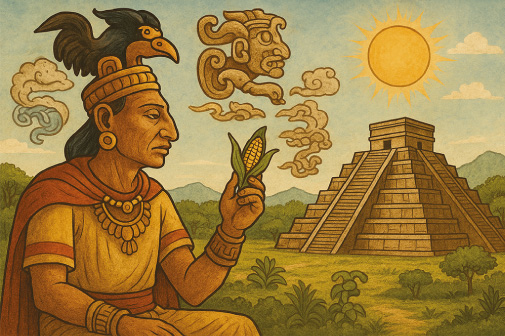
The history of the pre-columbian era in Central America: A journey to its civilizations and deities

by the El Reportero‘s staff

The Central American region, made up of countries such as Guatemala, El Salvador, Honduras, Nicaragua, Costa Rica, and Panama, was home to various pre-Columbian civilizations that flourished thousands of years before the arrival of Christopher Columbus in 1492. These cultures, although sharing certain similarities, also had unique characteristics that distinguished them, such as their religions, customs, social organization, and scientific advancements. Among the most notable are the Mayan, Olmec, and Mesoamerican civilizations, which left a profound legacy in both their architecture and worldview.

The Mayan civilization

The Mayans occupied a large part of what are now Guatemala, Belize, Honduras, and El Salvador. Their civilization reached its peak between 250 and 900 AD, although their influence lasted for centuries longer. The Maya are known for their advanced knowledge of astronomy, mathematics, and architecture, developing a hieroglyphic writing system, an accurate calendar, and monumental pyramids.

Religiously, the Maya had a pantheon of deities associated with the natural elements. One of the most important gods was Itzamná, the creator of the world, associated with the sun and wisdom. Chac, the rain god, was worshipped to ensure harvests. Furthermore, the Maya believed in a cosmic cycle, where life and death were interdependent. Ceremonies of human sacrifice, although controversial, were part of their religious practices, especially to honor the gods and ensure prosperity.

The Olmecs and their influence

The Olmecs, considered the “mother culture” of Mesoamerica, flourished between 1200 and 400 BC in what is now southern Veracruz and Tabasco, Mexico, although their influence reached Guatemala. This civilization left a fundamental legacy, especially in terms of architecture, with its colossal stone heads, and the creation of the first forms of writing and calendar.

In terms of religion, the Olmecs worshipped a series of deities related to nature and the elements. The most prominent figure in their pantheon was the Jaguar, considered a sacred being. They also had a relationship with water, and the god of corn was of great importance. The connection between corn and fertility was reflected in their agricultural and worship rituals.

The cultures of Nicaragua and Costa Rica

In Nicaragua and Costa Rica, pre-Columbian civilizations also developed advanced cultures, albeit with particular characteristics. In Nicaragua, peoples such as the Chorotegas and the Nicaraos were noted for their ceramic work, the hierarchical organization of their societies, and the worship of deities linked to agriculture, such as the god of corn.

In Costa Rica, peoples like the Diquí left an important legacy of stone sculptures, known as stone spheres, which remain a mystery to archaeologists today. Their worldview was centered on the worship of the natural elements, with a strong connection to the earth and the agricultural cycle. Gods associated with rain and the sun were central to their mythology.

Religious worldview and the deification of natural elements

Throughout Central America, deities were closely linked to the natural elements. The sun, the moon, water, and corn were central to the spirituality of pre-Columbian peoples. Corn, in particular, was seen as a symbol of life and rebirth. Many peoples had creation myths in which the gods created humans from corn, symbolizing the profound relationship between humans and the earth.

In short, the history of the pre-Columbian era in Central America is marked by the splendor of civilizations that achieved great advances in architecture, science, and religion. Their deities, many of which were representations of natural elements, reflect the importance of nature in their worldview. The influence of these cultures lives on in the region and continues to be an essential component of the identity of the Central American peoples.

spot_img

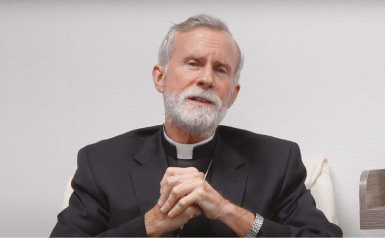
Bishop Strickland publishes open letter to Trump on war in the Middle East

‘If America desires to be a force for good in the world, it must act not with unchecked military aggression, but with justice, prudence, and a sincere pursuit of peace,’ Bishop Strickland urged President Trump

by Bishop Joseph E. Strickland

In the name of Our Lord Jesus Christ, I write to you as a successor to the Apostles, compelled by my duty to speak the truth in charity and justice. The worsening crisis in the Middle East, from the war in Gaza to the growing regional conflicts – including U.S. military actions in Yemen – demands urgent moral reflection. As a shepherd of souls, I cannot remain silent while thousands suffer the consequences of escalating violence.

The Catholic Church upholds the sacred dignity of every human life, made in the image of God. The Catechism teaches us that “actions deliberately contrary to the law of nations and to its universal principles are crimes” (Catechism of the Catholic Church, 2313). This applies to all parties engaged in warfare, whether nations, militant groups, or coalitions. While a nation has the right to defend itself and protect its people, such actions must remain within the bounds of justice, proportionality, and moral law.

In Gaza, the indiscriminate killing of civilians – including women and children – has reached an intolerable scale. The people of Palestine, many of whom have no affiliation with terrorist organizations, suffer immensely. War cannot be waged without regard for the innocent. The same applies to Yemen, where U.S. military actions against the Houthis risk inflaming an already volatile situation. Each missile launched, each bomb dropped, threatens to push the region further into chaos, with untold humanitarian consequences.

The principle of just war is clear: war must be a last resort, waged only in defense, with proportional force, and never targeting civilians. It must aim not at conquest or retaliation but at restoring a just peace. Pope Pius XII warned that war often “creates more serious evils than it eliminates.” Today, as conflicts multiply across the Middle East, I fear we are seeing this tragic truth unfold before our eyes.

I urge this administration to reconsider its path. If America desires to be a force for good in the world, it must act not with unchecked military aggression, but with justice, prudence, and a sincere pursuit of peace. A nation cannot claim the moral high ground while contributing to the escalation of human suffering. I call upon you to seek diplomatic solutions, to demand an immediate end to the destruction in Gaza, and to approach the crisis in Yemen with restraint, lest the fires of war consume even more innocent lives.

The United States has long been shaped by Christian principles, yet it stands at a crossroads. Will it choose the path of justice and peace, or will it allow the cycle of violence to continue unchecked? I pray that our leaders will seek the wisdom of Christ, the Prince of Peace, and work toward a just resolution that respects the dignity of all peoples.

Respectfully in Christ,

Bishop Joseph E. Strickland

Bishop Emeritus


spot_img

US Strikes at Sinaloa Cartel’s Financial Structure

Treasury Secretary Scott Bessent accuses the criminal group of trafficking fentanyl and other lethal drugs from Mexico to the US.

by the El Reportero‘s staff

The US Treasury Department sanctioned and blocked the assets of individuals and companies on Monday allegedly involved in a money laundering network serving the Sinaloa Cartel, one of the most violent and powerful drug trafficking organizations in the world, recently designated a “Foreign Terrorist Organization” by the Trump administration. With this designation, the US government toughens its stance against the cartel, allowing for more severe sanctions and expanding cooperation with international agencies to combat its financial and logistical operations. In a statement, it was reported that the measure was carried out by the Office of Foreign Assets Control (OFAC), in collaboration with the Government of Mexico and its Financial Intelligence Unit, as well as the Attorney General’s Office for the Southern District of California, the Drug Enforcement Administration (DEA), and the FBI, among other US agencies. These actions are part of a broader strategy to stem the flow of illicit money that fuels organized crime operations in both countries.

“Drug trafficking proceeds finance the Sinaloa Cartel’s narco-terrorist activity and are only possible thanks to financial operators like those sanctioned today,” stated Treasury Secretary Scott Bessent. The report also attributes to the criminal group a large portion of the illicit fentanyl and other lethal substances reaching the US, exacerbating the opioid crisis that has devastated entire communities in recent years. The US government has reiterated on multiple occasions that combating this illegal trafficking is a national security priority. Among those sanctioned are six individuals: Alberto David Benguiat Jiménez, Christian Noé Amador Valenzuela, Israel Daniel Páez Vargas, Salvador Díaz Rodríguez, Enrique Dann Esparragoza Rosas, and Alan Viramontes Sesteaga. They allegedly operate in Mexicali, Culiacán, and California, participating in extortion schemes and managing front companies to launder illicit proceeds. These individuals have been identified as key players in the cartel’s financial infrastructure, facilitating the conversion of enormous sums of money into seemingly legitimate assets that are then reinvested in the expansion of its criminal activities.

Likewise, seven companies used for money laundering were identified: Grupo Unter Empresarial, Grupo Vindende, Grupo Zipfel de México, Productions Pipo, Personas Unidas Hoas, Scatman & Hatman Corp, and Tapgas México. According to OFAC, these companies have been used to hide and move money derived from drug trafficking, employing complex international transaction networks to avoid detection by authorities. With these sanctions, the US freezes the assets and property of the aforementioned individuals and companies, even if they are controlled by US citizens. Similarly, any entity in which those implicated own a 50 percent or more stake will be subject to the measure, unless OFAC grants a specific license or exemption. These restrictions significantly hamper the cartel’s access to global financial systems, limiting its ability to move money and continue expanding its illicit operations.

“Today’s action is part of a government strategy to counter the illicit drug crisis in the US, which causes more than 100,000 deaths annually and an untold number of non-fatal overdoses,” the Treasury added. US officials have insisted that this crisis not only represents a public health problem, but also a threat to the country’s social and economic stability. In this context, the Government seeks to strengthen cooperation with Mexico and other nations to dismantle these criminal networks and prevent them from continuing to operate with impunity. With reports by RT.


spot_img