
Tuesday, October 13, 2026
spot_img
Home Blog Page 8

Mexico is eliminating anonymous cellphones. Who will protect citizens from surveillance?

Marvin Ramírez, editor

by Marvin Ramírez

Mexico has embarked on an extraordinary national experiment: every cellphone line in the country is being tied to an identifiable person.

The government calls it a security measure. We believe it raises a much larger question: How much privacy should an entire population surrender in the search for criminals?

The program is no longer theoretical. Mexico’s Comisión Reguladora de Telecomunicaciones (CRT) is enforcing registration according to the final digit of prepaid cellphone numbers. Numbers ending in zero reached their deadline Aug. 15; those ending in one have until Aug. 31, with subsequent numbers following through Dec. 31. Unregistered lines are suspended until their owners identify themselves.

To register, a mobile line must be associated with a person’s identity and CURP. The government says the telephone companies—not the government—retain the identifying information.

President Claudia Sheinbaum says the objective is straightforward: combat telephone extortion and fraud.

And there is no question that Mexico has a serious crime problem.

INEGI’s National Survey of Victimization and Perception of Public Security found that fraud and extortion were among Mexico’s most frequent crimes in 2024. An estimated 33.5 million crimes occurred that year, and 93.2 percent were either never reported or never resulted in a criminal investigation.

Sheinbaum said this month that approximately 80 percent of extortion comes through telephone calls. She described the investigative problem: when someone reports an extortion number, authorities may ask the carrier who owns it, only to discover that an anonymous prepaid SIM was purchased at a convenience store.

That is a legitimate problem.

But a legitimate problem does not automatically make every proposed solution legitimate, necessary or proportionate.

The government is effectively reasoning that because criminals exploit anonymous telephone lines, anonymity must disappear for everybody.

That deserves scrutiny.

The central question should be whether the government has demonstrated that identifying virtually every mobile subscriber is necessary to stop criminals—or whether the state has chosen the broadest possible instrument because it makes investigation easier.

There is also an obvious weakness: criminals adapt.

Eliminating anonymous Mexican SIM cards does not eliminate anonymous criminal communication. Criminal organizations can attempt to exploit internet-based communications, foreign services, stolen identities, compromised accounts and other technologies. Registration may make one avenue more difficult, but it cannot make criminals incapable of concealing themselves.

The ordinary citizen, meanwhile, cannot simply evade the requirement. If that citizen wants normal mobile service, he or she must become identifiable.

That produces an uncomfortable paradox: the sophisticated criminal will search for another method, while the law-abiding citizen remains permanently inside the identification system.

The government insists this is not a surveillance program.

Sheinbaum explicitly rejected accusations that the registry is designed so the government can spy on citizens. She says carriers hold the subscriber information and authorities obtain it when necessary for an investigation.

We should acknowledge that distinction. Registration does not mean that a government employee is sitting behind a computer watching the movements of every Mexican citizen. Nor does registering a SIM, by itself, give authorities unrestricted access to every conversation or location.

But that does not settle the issue.

Civil liberties are not protected merely by assurances about what today’s government intends to do.

Governments change. Presidents change. Prosecutors change. Laws change. Political circumstances change.

And technology built for one purpose can later be used for another.

That is why the proper question is not simply: Do we trust the current government?

It is: What power are we creating that a future government could inherit?

Imagine an administration years from now that is less respectful of political opposition, investigative journalists, activists, whistleblowers or protesters. A telecommunications environment in which every ordinary mobile number has been deliberately connected to an identity could become extremely valuable to authorities interested in much more than extortion.

That is not an accusation that such persecution is occurring through this system today. It is a warning about institutional power.

Democracies are supposed to design safeguards before abuses occur, not after.

There is another question the government should answer: Where is the evidence that universal identification is the least intrusive effective solution?

The existence of telephone extortion proves that Mexico has an extortion problem. The existence of anonymous SIM cards establishes that criminals can exploit anonymity.

But neither fact, standing alone, proves that identifying every cellphone user will substantially reduce the crime.

Even Sheinbaum’s argument is ultimately predictive. She said she is convinced telephone extortion will decline dramatically once numbers are associated with individuals.

Perhaps it will.

If so, the government should publish the results. How many extortion investigations were previously blocked specifically because a SIM was anonymous? After registration, how many suspects are identified because of the new system? How many prosecutions result? How many criminals simply migrate to other technologies?

Those numbers would allow Mexicans to judge whether the loss of anonymity produced a corresponding security benefit.

There are alternatives to treating every citizen as someone whose identity must be established before using ordinary mobile communications.

Authorities can concentrate investigative resources on numbers repeatedly reported for extortion, improve rapid evidence-preservation procedures, trace financial transactions connected to extortion payments, investigate fraudulent bulk activations and strengthen judicial oversight for access to sensitive telecommunications information.

The principle should be simple:

Investigate a person because there is evidence of criminal activity. Do not place an entire population inside an identification system simply because a criminal may be hiding among them.

Security and liberty inevitably require compromises. A government has a responsibility to protect people from extortion, kidnapping, fraud and organized crime.

But it has another responsibility that is just as fundamental: protecting citizens from unnecessary government power.

Mexico’s cellphone registry may have been created with legitimate intentions. It may even help solve crimes.

But intentions are not permanent safeguards.

Once a society creates the technological and legal infrastructure to connect communications systematically with identified human beings, that infrastructure does not disappear when today’s officials leave office.

That is why Mexicans should demand measurable evidence that the system works, strict judicial controls over government access, independent auditing, penalties for misuse, strong data-security protections and transparent reporting about how authorities use subscriber information.

The question is bigger than a SIM card.

It is about the relationship between the citizen and the state.

A free society should pursue criminals without requiring every innocent person to surrender privacy simply to prove that he is not one.


 

spot_img

Mexican cattle exports to U.S. resume through Sonora-Arizona border

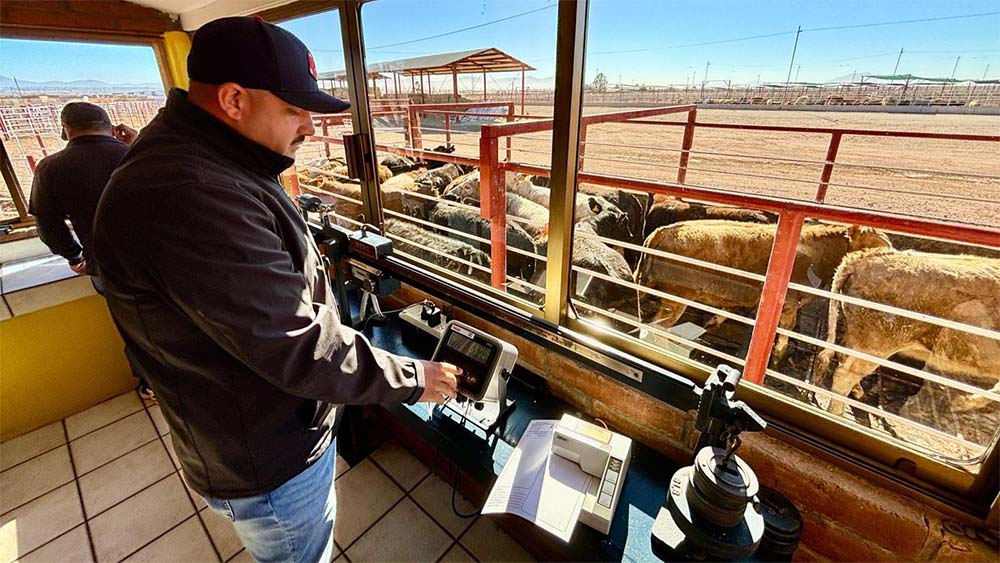
Inspectors monitor Mexican cattle before they enter the United States. Inspectores supervisan el ganado mexicano antes de su ingreso a Estados Unidos.

by Mexico News Daily

Mexican cattle exports to the United States resumed Monday through the Sonora-Arizona border, marking an important step toward restoring agricultural trade between the two countries after a prolonged shutdown prompted by concerns over the New World screwworm.

Mexican cattle wait in Agua Prieta before crossing into the United States.

The Douglas, Arizona, port of entry, across the border from Agua Prieta, Sonora, reopened to Mexican cattle Aug. 24 as part of a phased plan coordinated by Mexican and U.S. agricultural authorities.

Sonora Gov. Alfonso Durazo joined President Claudia Sheinbaum’s Monday morning press conference by video from the quarantine station in Agua Prieta to announce the resumption of exports.

“We’re here at the quarantine station in Agua Prieta with the extraordinary news of the reopening of cattle exports to the United States,” Durazo said.

The reopening is particularly significant for ranchers in northern Mexico, where cattle exports to the United States represent an important source of income and an integral part of the cross-border agricultural economy.

The United States restricted Mexican livestock imports because of concerns over the spread of the New World screwworm, a parasitic fly whose larvae can infest wounds and feed on living tissue of cattle and other warm-blooded animals.

The restrictions caused significant economic losses for Mexican cattle producers. With access to the U.S. market curtailed, more Mexican beef remained in the domestic market.

“There was an economic impact, although, believe it or not, meat production in Mexico increased,” Sheinbaum said.

“While [Mexican beef] wasn’t sold in the United States, it was sold in the domestic market. But the [ban on exports] obviously affected different cattle sectors across the whole country,” she added.

The reopening will be gradual. During the first week, exports through Douglas are limited to 700 head of cattle per day. The limit is expected to rise to 900 per day during the second week and eventually to approximately 1,300 daily.

The resumption of trade comes with stricter sanitary measures. Cattle must carry radio-frequency identification tags in their ears and undergo screening before being permitted to enter the United States. Mexican and U.S. authorities also inspect the animals for evidence of screwworm infection.

Durazo said cattle trade between Agua Prieta and Douglas is resuming with an “enhanced health-screening capacity.”

The U.S. Department of Agriculture has described Douglas as the first port in a phased reopening of the southern border to Mexican livestock. Additional crossings in New Mexico could reopen later depending on animal-health conditions and the effectiveness of safeguards.

Mexico, meanwhile, has intensified efforts to control the parasite, including livestock surveillance, movement controls and the dispersal of sterile flies. The technique involves releasing sterilized male flies that mate with wild females but produce no offspring, gradually reducing the pest population.

The renewed Mexican shipments could also help the U.S. cattle industry. American cattle inventories have fallen to historically low levels, tightening beef supplies and contributing to higher consumer prices.

Mexico traditionally supplies feeder cattle to U.S. ranchers and feedlots, where the animals become part of the American beef-production system. The trade demonstrates how closely connected the livestock industries on both sides of the border have become.

For Mexican ranchers, particularly in northern states such as Sonora and Chihuahua, U.S. buyers provide a market that cannot easily be replaced by domestic sales.

The reopening therefore represents more than the restoration of an export route. It marks the gradual recovery of a longstanding agricultural relationship connecting ranchers, livestock operations and consumers in Mexico and the United States.

Continued access to the U.S. market will now depend on sanitary controls and cooperation between both countries to contain the screwworm while allowing cross-border livestock trade to recover.

spot_img

The whole truth: Why eating an entire avocado daily is key to a healthier diet

Workers harvest avocados in an orchard, bringing one of the world’s most nutrient-dense fruits from tree to table. Photo courtesy of World Avocado Organization. Trabajadores cosechan aguacates en un huerto, llevando del árbol a la mesa una de las frutas más nutritivas.

by Ava Grace

In an era of conflicting nutrition advice and calorie counting, a simple whole-food recommendation is gaining scientific support: eating an avocado every day. Research, including a 2024 Penn State University study, suggests that daily avocado consumption can improve overall diet quality by replacing less nutritious foods without causing weight gain.

For decades, avocados were viewed cautiously because of their high fat and calorie content. A whole fruit can contain roughly 200 to 300 calories. But modern nutrition research distinguishes between different types of fat, and avocados are particularly rich in monounsaturated fats associated with cardiovascular benefits.

A catalyst for a better diet

The Penn State study followed more than 1,000 adults with abdominal obesity for 26 weeks. Half were instructed to eat one avocado daily, while the others maintained their usual limited consumption.

Researchers initially focused on changes in abdominal fat. Although they found no significant reduction, daily avocado consumption did not result in weight gain. More importantly, researchers found that participants eating avocados improved their overall diet quality and adherence to U.S. dietary guidelines.

One explanation was substitution. Participants tended to replace less nutritious foods—including salty condiments, processed snacks and refined grains—with avocado. This helped increase consumption of healthier fats while reducing sodium, refined carbohydrates and added sugars.

Fiber and healthy fats

Avocados provide substantial amounts of fiber, an important nutrient many Americans do not consume in sufficient quantities. Fiber supports digestion and beneficial intestinal bacteria while also helping people feel full longer.

The fruit is also rich in monounsaturated fat. These fats can help improve cholesterol levels by reducing LDL, commonly called “bad” cholesterol, while maintaining healthy HDL cholesterol.

The combination of fat and fiber also slows digestion, potentially helping stabilize blood sugar and reducing hunger between meals. This may explain why adding a calorie-dense avocado does not necessarily translate into weight gain.

Benefits beyond cholesterol

Avocados contain antioxidants and nutrients including vitamins E and C and lutein, which help protect cells from oxidative stress. They also provide potassium and magnesium, minerals important for regulating blood pressure and supporting cardiovascular function.

Research has also found that regular avocado consumption may increase the diversity and abundance of beneficial gut bacteria. Scientists increasingly recognize the gut microbiome as an important factor in digestion, metabolism, immune function and overall health.

Addition and replacement

Eating an entire avocado every day may not be practical for everyone because of cost, taste or individual calorie needs. The broader lesson is not necessarily a rigid one-avocado quota, but rather using nutrient-dense whole foods to replace highly processed alternatives.

Even half an avocado consumed regularly can contribute valuable nutrients. Avocados can be added to salads and soups, mashed onto whole-grain toast, blended into smoothies or used in dressings and other dishes.

This approach reflects a broader change in nutrition science: moving away from judging foods solely by calories or total fat and instead examining their nutritional quality and their effect on the overall diet.

The evidence suggests that fears of avocado-related weight gain have been overstated. Rather than simply adding calories, avocados can help crowd out less nutritious foods while providing fiber, healthy fats, minerals and antioxidants.

In a food environment dominated by processed products, the avocado offers a straightforward example of how adding one nutrient-dense whole food can encourage several healthier choices at once. Food.news.

spot_img

Community Calendar – August 2026

Bay Area communities come together for music, culture, family activities and civic events throughout the season. Las comunidades del Área de la Bahía se reúnen para disfrutar de música, cultura, actividades familiares y eventos cívicos durante toda la temporada.

by the El Reportero staff

Late summer brings a varied lineup of music, culture and civic activities to the Bay Area and Northern California. This week’s calendar ranges from a community candidate forum in the East Bay to salsa on the Sausalito waterfront, Guatemalan music in Santa Rosa and upcoming celebrations of Salvadoran and Spanish culture.

Dublin and Pleasanton Candidate Forum

East Bay voters invited to meet local candidates

CAIR-SFBA, CAIR Action and MCC East Bay will host a community candidate forum featuring candidates running for local offices in Dublin and Pleasanton in the November General Election. The program includes a moderated discussion, community-submitted questions and an opportunity for attendees to meet candidates individually. Candidates for Dublin mayor, city council and school board, as well as Pleasanton City Council, are scheduled to participate.

Sunday, Aug. 23, 2–4 p.m., MCC East Bay, 5724 W. Las Positas Blvd., Suite 300, Pleasanton.

El Poder de Occidente

Guatemalan music comes to Santa Rosa

The 2026 El Poder de Occidente tour arrives in the North Bay with Los Francos and Brisma López for an evening celebrating Guatemalan music and entertainment. The Santa Rosa appearance gives Bay Area Guatemalan families and music fans an opportunity to enjoy the touring performers close to home.

Saturday, Aug. 29, Hacienda del Toro Nightclub, 3660 Stony Point Road, Santa Rosa. Advance tickets are $60.

An Evening with Eric Rangel y América

Salsa musicians gather on the Sausalito waterfront

Percussionist Eric Rangel and Orquesta América headline a Sunday evening of salsa at Sausalito Seahorse. The program features vocalists Carlos Del Sol and Luis Rivera, along with Cheo Concepción and other Bay Area musicians. The gathering combines live salsa, waterfront dining and an opportunity for local music lovers to spend an evening together.

Sunday, Aug. 30, 5–9 p.m., Sausalito Seahorse, 305 Harbor Drive, Sausalito.

Gran Festival Salvadoreño

Salvadoran culture takes center stage in San José

Caravana de la Bahía, presented by Edgar Ortiz, brings the Gran Festival Salvadoreño to San José for a family celebration of Salvadoran music, food and traditions. Orquesta San Vicente headlines the musical program, joined by Roberto Salamanca and entertainer Cocolito. Salvadoran food, a children’s area and a mechanical bull are also planned.

Sunday, Sept. 13, 1–8 p.m., MetaSpace, 2323 McKee Road, San José. Children under 12 are admitted free.

El Flamenco de Jerez

Andalusian artists bring flamenco tradition to Northern California

A visiting ensemble celebrates the cultural heritage of Jerez and Andalusia through dance, vocals, guitar and percussion. Featured performers include Macarena de Jerez, Carmen Herrera, José Mijita, Ismael Heredia and Manuel Vinaza.

Friday, Sept. 25, 7 p.m., Sierra 2 Center for the Arts, Sacramento; Saturday, Sept. 26, 7 p.m., Center for the Performing Arts, Mountain View.

spot_img

Knowing leads to respect: When science transforms fear into curiosity

An experience with sixth-grade students demonstrates how scientific observation can foster respect for biodiversity and help us reflect on our own prejudices

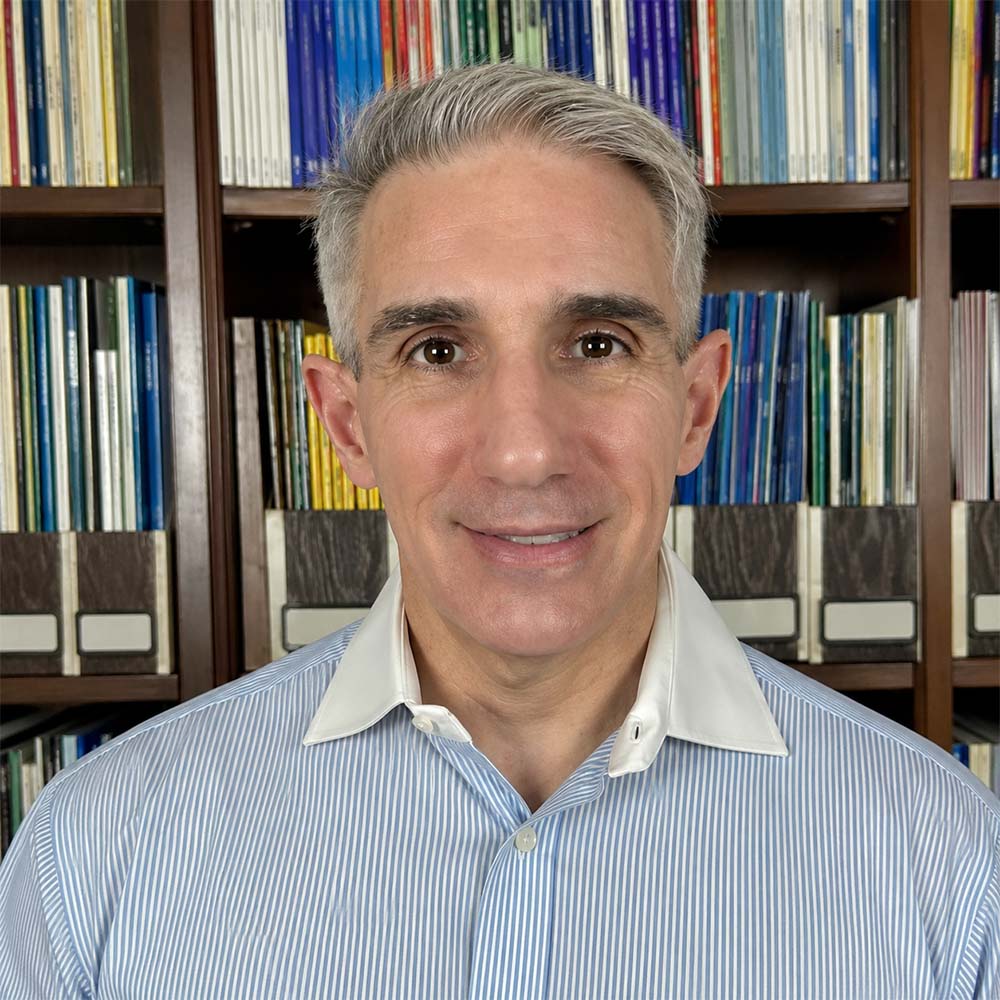
Prof. Sebastian Alberto Chiapella

by Sebastián Alberto Chiapella

Natural Sciences teacher at the Schönthal Institute in Buenos Aires, Argentina

What do many children do when they find a spider, an ant or another small creature in their home? The response is often immediate: kill it. This is not necessarily an act of cruelty. Rather, unfamiliar creatures can provoke fear and be perceived as a threat.

This reaction became the starting point for “Knowing Leads to Respect,” a Natural Sciences workshop conducted with sixth-grade students at the Schönthal Institute in Buenos Aires, Argentina. The experience was designed to teach biology through the direct observation of small arthropods, while also conveying a broader lesson: before rejecting or judging something unfamiliar, we should try to understand it.

Fear before knowledge

Before entering the laboratory, I asked the students what they normally did when they found a “bug” in their homes. Many answered that they killed it because it frightened them or because they assumed it might sting or bite them.

That led to the question that would guide the entire activity: Do we really know these animals? Do we understand how they live, what they eat or whether they truly pose a danger?

The students’ silence revealed that much of their fear did not come from direct experience, but from ideas they had previously acquired. Arthropods therefore offered a familiar example of how people can form opinions before possessing sufficient knowledge.

During the following days, the students searched for small arthropods in gardens and green spaces. Before beginning, they received instructions on how to avoid harming the creatures and how to prepare ventilated containers with appropriate material inside. The activity was supervised and did not include handling potentially dangerous species. Students who were uncomfortable touching the specimens could participate by preparing the containers or assisting their classmates.

The purpose was not to force them to overcome their fears, but to allow each student to participate according to his or her comfort level.

Observing to discover

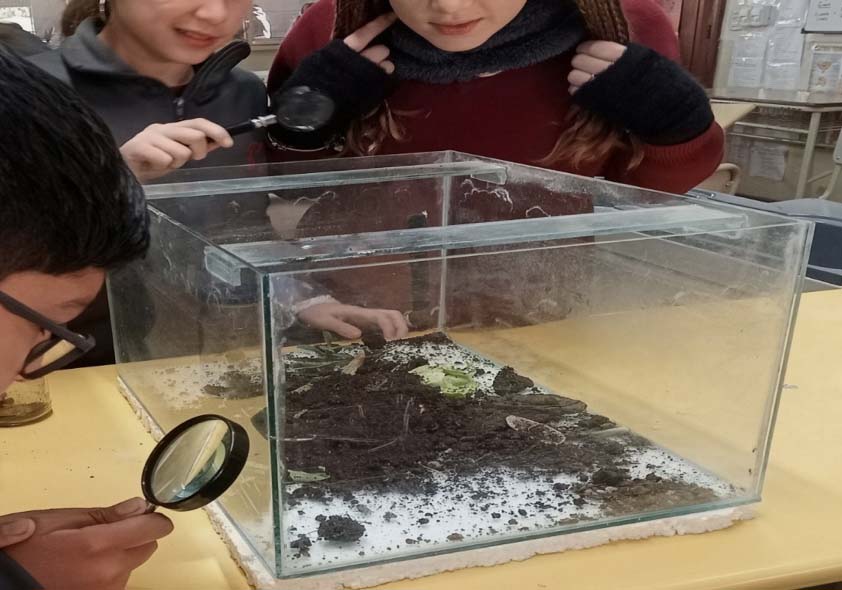
On the day of the workshop, the students arrived at the laboratory carrying the organisms they had collected. The specimens were carefully placed together in a terrarium so the observation could begin.

Using magnifying glasses and small brushes, the students gently moved the soil aside. Questions soon emerged: Why does this animal have antennae? Why does that one have eight legs? Do they all belong to the same group?

Without realizing it, the students had stopped asking whether the creatures should be killed. Now they wanted to know what they were and how they lived. Fear was beginning to give way to curiosity.

The activity continued with the laboratory’s entomological display boxes. There, students compared the organisms they had collected with preserved and identified specimens. What had initially been described simply as a “bug” began to acquire a name and a place within biological classification.

The students counted legs, looked for antennae and learned to distinguish among insects, arachnids and crustaceans. They compared a spider with a scorpion and discovered that the pill bug belongs to the crustacean group, despite living on land.

Biology was no longer merely a list of concepts. It had become a living experience. The students were no longer observing simply because their teacher instructed them to do so; they were observing because they wanted to discover more.

A world revealed through the microscope

The next step was to examine the arthropods with a digital microscope connected to a laboratory television. The enlarged images allowed students to observe legs, eyes, antennae and mouthparts in remarkable detail, further increasing their interest.

By recognizing the differences among the organisms, the students learned that finding an arthropod inside a home does not necessarily mean encountering a danger. Some species require caution, but many others perform important ecological functions and pose no threat to people.

The questions continued: Where do they live? Why do some emerge at night? Why do they hide when exposed to light?

Each answer produced another observation and reinforced the workshop’s central idea: understanding is more valuable than reacting solely out of fear.

The experience also allowed us to examine a common perception. We often think these animals are invading our spaces. However, cities, houses and gardens were built on environments where many species already lived. In numerous cases, arthropods are simply trying to survive and adapt to changes caused by human activity.

From arthropods to people

Estudiantes observando con lupas y colocando los artrópodos dentro del terrario. — Students observing with magnifying glasses and placing the arthropods inside the terrarium.

At the end of the activity, the specimens were carefully returned to the laboratory terrarium, where they could continue living in an appropriate environment. After observing and learning about them, treating them respectfully came naturally to the students.

We then returned to the opening question. The true purpose had not been limited to learning about arthropods. It was also to understand how knowledge can change the way we relate to other forms of life.

From that conclusion, we expanded the discussion to human relationships. We can also reject, criticize or exclude a person without first giving that individual an opportunity to show who he or she is. Some judgments are based on what we truly know, while others originate in our own ideas, fears or prejudices.

This comparison is not intended to equate people with animals. Rather, it highlights a shared principle: approaching, observing, listening and learning can help us overcome reactions rooted in unfamiliarity.

The students returned to their classrooms with new knowledge of the natural sciences, but also with a lesson that extended beyond the laboratory. They began that morning by observing small arthropods and finished by reflecting on respect, empathy and the importance of understanding before judging.

Science education does more than communicate information. When built upon observation, questions and direct experience, it can also help form more curious, thoughtful and respectful people.

References

Allport, G. W. (1954). The Nature of Prejudice. Addison-Wesley.

Musengimana, J., Kampire, E., and Ntawiha, P. (2022). “Effect of Inquiry-Based Learning on Students’ Attitude Toward Biology.” Journal of Baltic Science Education, 21(5), 848–861.

Shahriari-Namadi, M., Sharzad, K., Rezaee, R., and Vazirianzadeh, B. (2018). “Entomophobia and Arachnophobia Among School-Age Children: A Psychological Approach.” Shiraz E-Medical Journal, 19(7).

Soga, M., Gaston, K. J., Yamaura, Y., Kurisu, K., and Hanaki, K. (2016). “Both Direct and Vicarious Experiences of Nature Affect Children’s Willingness to Conserve Biodiversity.” International Journal of Environmental Research and Public Health, 13(6).

spot_img

Medi-Cal is changing. Here’s what to do if you’re worried about coverage

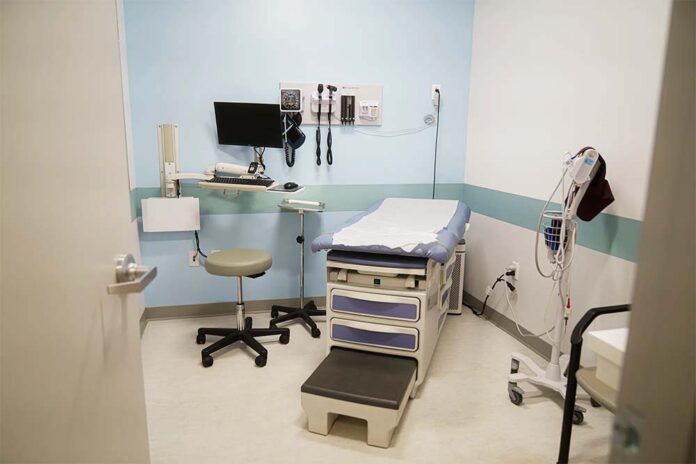
Sala de examen en el Centro de Salud y Acceso Avalon de St. John’s Community Health en Los Ángeles. 7 de febrero de 2026. An exam room at the St. John’s Community Health Avalon Health and Access Center in Los Angeles. February 7, 2026. Photograph by Jules Hotz for CalMatters.

by Kristen Hwang and Ana B. Ibarra

It’s a tumultuous time for healthcare. Federal and state budget cuts are changing the rules for public benefits. Most people with Medi-Cal won’t be affected, but it may be confusing to figure out whether your benefits will change.

Are you on Medi-Cal, or is someone in your family worried about the cuts?

The two most important things to do: Update your contact information with your county benefits office, and keep an eye out for any letters mailed from the county or state.

You can update your information by calling your local county office or online with a BenefitsCal account.

Here are the key changes, what they mean, and where to get help.

Changes for immigrants

Non-citizens — undocumented immigrants, refugees, asylum seekers, and people with pending immigration cases — are the group most affected, even those with a green card. The state has an immigration status chart to help you check whether these changes apply to you. If they do, you’ll get a letter.

Undocumented immigrants

As of Jan. 1, immigrants over age 19 without legal status can no longer apply for Medi-Cal (children remain eligible). Those already enrolled keep benefits if they renew on time. If they miss the renewal deadline and coverage ends, they have three months to reapply. After that window, they cannot sign up again.

Anyone who loses Medi-Cal may apply for emergency services. Those are limited to pregnancy, emergency visits and nursing home care.

Starting Jan. 1, 2027, this group moves to “fee-for-service” Medi-Cal that limits some coverage. Doctors visits, prescriptions, and mental health treatment won’t be affected. Confirm your doctor accepts this Medi-Cal type, or find a new doctor by calling 1-800-541-5555.

Adults ages 19-64 must also prove they are working or volunteering at least 80 hours a month. Students, people with disabilities and parents with young children are exempt from the work requirement. Starting July 1, 2027, adults lose dental coverage. Those 19-59 will also pay a $30 monthly fee. Children and pregnant individuals will remain eligible for Medi-Cal.

Refugees, asylum seekers, some green card holders

Starting Jan. 1, 2027, refugees, asylum seekers, humanitarian parolees, and survivors of domestic violence or trafficking move to “fee-for-service” Medi-Cal. They will still be able to see the doctor, pick up prescriptions and see the dentist, but they will no longer have a health insurance plan. Call 1-800-541-5555 to find a new doctor if your current one does not accept it. Six months later, this group will lose full-scope Medi-Cal and dental benefits, keeping only pregnancy and emergency care.

Promotoras, community health workers and legal aid groups can help answer questions about this.

Adults without children

About 5 million Californians gained Medi-Cal coverage when the Obama administration expanded eligibility to childless adults and those earning slightly above the federal poverty level. Now this group faces stricter requirements in order to keep their health coverage.

Work requirements

Beginning Jan. 1, adults 19-64 and many immigrants must prove at least 80 hours each month of working or volunteering, or half-time schooling. Who’s exempt: children, seniors, pregnant people, those who are disabled or have serious health conditions or addictions, people on Medicare, those recently released from prison, American Indians and Alaska Natives populations and some former foster youth. The state will mail a letter if this applies to you. Most renewal packets come in a bright yellow envelope, but notices may look different. Respond quickly.

More frequent renewals

Beginning next March, the state will check Medi-Cal eligibility every six months for adults ages 19-64 and many immigrants, verifying income, work status, and other requirements. Renewal may happen automatically; if it doesn’t you will receive a letter asking for more information.

Seniors (65+) and people with disabilities

Starting July 1, 2027, seniors (65+) and people with disabilities cannot own more than $21,000 in assets, including savings accounts, cash and property other than a home and a car. For couples it’s $31,000 total. This limit also applies to non-citizens. Your county benefits office or a local legal aid group can clarify what counts; the state also has an FAQ about the new limits.

If you’re afraid of losing coverage, do these things right now

Not everyone will be affected, and some people won’t need to do anything. If you’re required to report work hours or other information, you’ll receive a notice in the mail or through the BenefitsCal online portal if you have an online account: Check both regularly.

The state doesn’t yet have a timeline for initial notices, but advocates say the best move now is simply keeping your information current. This is especially important because the rules keep changing.

“It’s so vital they watch the mail, look out for communications from the county, and are responsive to requests for information,” said Jack Dailey, director of health policy at the Legal Aid Society of San Diego.

If you get a notice: You should have plenty of warning before benefits are terminated – respond promptly to any notice of action.

If you get a notice that your benefits will be cancelled and you disagree with that decision: you can appeal and request a state hearing, which “allows you to temporarily freeze an adverse action and keep your benefits while your appeal is being reviewed,” says Alicia Emanuel, a staff attorney with the National Health Law Program.

If you’ve already lost coverage: You have 90 days to restore benefits without filing a new application. Submit the requested information in that window and, if you still qualify, you shouldn’t see a coverage gap. After 90 days, you’ll need to reapply from scratch.

Where to get free help

Promotoras — community health workers trained through groups like Vision y Compromiso — can meet you in your neighborhood, explain benefits in plain language, and help with Medi-Cal applications. Rosa Lopez, a promotora in Long Beach, said many immigrants worry about losing coverage: “I tell them you don’t have status, don’t worry. The first thing is your health.”

Community clinics often have benefits counselors on staff, and legal aid groups offer free advice for confusing letters — call the Health Consumer Alliance at 1-888-804-3536, email at ContactHCA@lassd.org, or check its website. The state also runs a helpline at 1-800-541-5555 and keeps its website up-to-date.

One more thing worth knowing: Medi-Cal eligibility isn’t just one door — there are several ways to qualify, based on conditions such as income, age, disability, or pregnancy. Before the state can terminate your benefits under one category, it must check whether you still qualify through any of the others. “It’s a really critical protection because sometimes an individual is in fact eligible through a different pathway,” Emanuel said. And by law, Medi-Cal must provide free language assistance for people with limited English proficiency. CalMatters.

spot_img

‘Don’t Flock me’: California, U.S. lawmakers debate license plate reader technology

Una cámara de lectura automática de matrículas de Flock Safety está instalada en un poste a lo largo de Olive Avenue, en Fresno, el 19 de febrero de 2026. A Flock Safety automated license plate reader camera is installed on a pole along Olive Avenue in Fresno on February 19, 2026. Photo by Larry Valenzuela, CalMatters.

by Ryan Sabalow

CalMatters

They’re all over our roads and really good at helping police solve crimes, but do California’s automated license plate readers need limits?

In the past year alone, they’ve helped catch suspected murderers, bank robbers and hit-and-run drivers. They’ve located dozens of stolen cars and helped send a wildland arsonist to prison.

They’re also distrusted and despised by privacy rights activists on the left and on the right. Just last month, police accused a suspect in Monterey County of yanking down three of them with his pickup.z

They’re called automated license plate readers. Every day, untold numbers of Californians drive past the thousands of cameras that at least 230 police and sheriffs’ departments have posted along roadways or installed on their patrol cars. The cameras in real time capture and read plate numbers, then cross-reference them with law enforcement databases of vehicles police want to locate, such as stolen cars, getaway vehicles or those that may be carrying a missing or wanted person.

Since 2019, California Democratic lawmakers have unsuccessfully sought to further restrict how police use the technology. They’re trying again this year with a bill that would add limits on how long police may retain license plate data, how they access it and with whom they share it.

Police agencies and officers’ unions across the state oppose the latest measure, which is similar to a bill Gov. Gavin Newsom vetoed last year.

“This bill is about one simple principle: Protecting the privacy and safety of Californians while ensuring law enforcement tools are used responsibly before it’s too late,” the author of this year’s legislation, Riverside Democratic Sen. Sabrina Cervantes, told the Assembly privacy committee last month. She did not respond to a request for an interview from CalMatters.

Critics of the technology cite high-profile examples of California police using license plate data inappropriately, including to stalk or harass innocent people. As CalMatters reported last year, California officers have repeatedly violated an 11-year-old state law that prohibits sharing the data with federal authorities and others outside the state.

404 Media also reported last year that a Texas cop searched a national license plate database to try to locate a woman who had an abortion, leading to fears that conservative states that criminalize abortion are accessing California’s plate data to hunt down patients or providers.

Cervantes’ bill would generally limit to 30 days the amount of time agencies could keep license plate data, unless it pertains to an active investigation or is part of a search for missing people. It also sets limits around who can access the data and adds training and search-tracking requirements.

Police and sheriffs’ departments would be prohibited from entering into contracts with camera companies that provide default access to plate databases that federal and out-of-state police can search.

That provision is in response to Flock Safety, a prominent license plate reader company that allowed federal authorities to search local license plate data as part of a pilot program, said Tracy Rosenberg of Oakland Privacy, one of the bill’s supporters.

“(Police departments) learned after the fact, like our advocates did,” Rosenberg said. “And we all said, ‘What the …’ You know, pick your four-letter word.”

Flock Safety did not respond to CalMatters’ request for an interview, but the company says on its website that it doesn’t work with immigration agencies and it stopped its federal pilot programs. Local agencies have total control over the data Flock readers collect, the company said.

“By default, sharing with federal agencies is disabled,” the company wrote. “ICE does not have direct access to Flock cameras, systems or data.”

Cámaras automatizadas escanean matrículas mientras California considera nuevas protecciones de privacidad. Automated cameras scan license plates as California evaluates new privacy protections.

Why police are opposed

At least 39 police agencies and officers’ unions oppose Senate Bill 1013. Combined, they have spent at least $5.6 million on legislative campaigns since 2000, according to the CalMatters Digital Democracy database.

Police say the technology has proven invaluable at helping them solve crimes.

Tustin Police Chief Sean Thuilliez, president of the California Police Chiefs Association, said the technology helped clear an innocent man. It also identified a suspected killer when a woman was shot and killed on a street in the Orange County city in May.

The woman had just testified against her ex-husband in a restraining order case, making him a prime suspect, Thuilliez said.

But Thuilliez said that thanks to the city’s 102 license plate readers, eight of which are from Flock, detectives quickly ruled out her ex-husband and were able to apprehend her former boyfriend at the Mexico border. He’s now charged with first-degree murder.

“It’s technology mixed with good investigative work,” he said in an interview. “But within one weekend, we were able to arrest the suspect for this person’s murder.”

The Berkeley Police Department noted similar successes after 52 Flock cameras were installed last year. In a report to the Berkeley City Council, the department noted license plate readers had been used in 121 cases, contributed to 58 arrests and led to the recovery of 37 stolen vehicles.

The department noted its rate for solving robbery cases climbed from 34% in 2024 to 49% the following year, thanks in part to the license plate data.

“The technology has fundamentally improved how officers patrol and how detectives investigate crimes spanning a range of serious offenses including robbery, kidnapping, carjacking, burglary, weapons violations, organized retail theft, stolen property and DUI,” the report said.

Why Newsom vetoed last year’s bill

Such investigative success stories may have helped persuade Newsom to veto last year’s bill, which would have required police to dump their license plate data within 60 days.

In his veto message, he said the restrictions on sharing data and forcing departments to purge it could hinder officers’ ability to solve cold cases and find missing people.

Newsom also said there was no money in the budget to pay for the mandatory California Department of Justice audits last year’s bill would have required.

To address Newsom’s concerns, this year’s proposal allows police to retain data to locate missing people and it makes a state audit program contingent on future funding.

Newsom’s press office declined to say whether he has a position on the latest bill, which has advanced through the Legislature with only Republicans voting against it. The measure is now pending before the Assembly Appropriations Committee.

Meanwhile, at least one Republican lawmaker is taking the issue to Congress. U.S. Rep. Thomas Massie of Kentucky recently shared a meme of a “Don’t Tread on Me” snake wrapped around a camera. The riff on the yellow Gadsden flag says, “Don’t Flock me.”

“I’ll soon be sponsoring a bill to withhold federal money from municipalities and police departments that deploy Flock (and other style) cameras to surveil law-abiding citizens,” Massie wrote on Facebook.

Rosenberg of Oakland Privacy said she understands the cameras’ usefulness to California police, but she thinks they’ve become ubiquitous. Police, she said, also shouldn’t have a permanent pass to keep “mountains” of data for as long as they want.

“There is kind of a balancing act. We as human beings also need some camera-free space,” she said. “We don’t want to be on camera every minute of every single day.”


spot_img

The Mexican peso hits its strongest level against the US dollar in 6 months

MND staff

Mexico’s currency gained 0.12 percent vs the U.S. dollar in Thursday trading, extending its rally to 10 straight days after the central bank left interest rates unchanged at its Aug. 6 monetary policy meeting.

The peso closed Thursday at 17.21 to the US dollar and dipped below 17.14 in early trading on Friday, an additional 0.58 percent gain and its strongest level against the U.S. dollar since Feb. 23.

After closing at 17.21 to the dollar on Thursday, the peso strengthened even further Friday morning, hitting 17.14, its strongest level since Feb. 23, and looked to be continuing that trend into the early afternoon. (Shutterstock).

Forbes México attributed Friday’s early action to a negative U.S. jobs report and said the peso is on pace to appreciate by 1.3 percent by the end of the week.

Mexico’s currency was also boosted by the central bank’s unanimous decision on Thursday to hold its benchmark rate at 6.50 percent for a second consecutive meeting, while hinting that rates would remain at the current level for the foreseeable future.

In a statement, Banxico’s board of governors said, “Headline and core inflation are expected to decline throughout the forecast horizon, albeit more gradually than previously anticipated.”

Headline inflation slowed in July for a fourth consecutive month though the central bank does not expect it to converge to its 3 percent target until late next year.

In a social media post, Gabriela Siller, director of analysis at Grupo Financiero BASE, said the peso is also appreciating “due to the carry-trade,” a strategy whereby an investor borrows money in a currency with a low interest rate and invests those funds into higher-yielding assets or currencies.

Siller said large global investors are borrowing in the U.S. and Japan, then investing in Mexico, indicating that the peso continues to benefit from a wide interest rate differential (Mexico’s 6.50 percent policy rate compares favorably to the U.S. Federal Reserve’s 3.50 percent-3.75 percent target range).

The newspaper El Economista said the U.S. jobs report (which noted that U.S. nonfarm payrolls fell by 23,000 jobs last month, following a downwardly revised increase of 20,000 jobs the previous month) prompted the market to reduce bets that U.S. interest rates will rise.

Monex Grupo Financiero concurred, saying in a statement that the peso’s advance against the dollar is “driven by the weakness of the dollar and a readjustment of expectations on the direction of the Federal Reserve’s monetary policy” at its next meeting in September.

With reports from El Economista and Forbes México.

spot_img

Moderate fish consumption linked to lower mortality risk in landmark study of 90,000 people

by Willow Tohi

  • A 20-year Japanese study involving 90,944 adults found that moderate fish consumption was associated with an 8 percent lower risk of death from all causes among women.
  • Women who consumed omega-3-rich fish showed lower risks of all-cause and cerebrovascular mortality.
  • Men with a higher intake of unsalted fish experienced a 16 percent to 23 percent lower risk of death from cerebrovascular disease.
  • Benefits leveled off at moderate consumption, suggesting that excessive intake provides no additional advantage.
  • Small fish, including sardines and anchovies, provide valuable nutrients with less exposure to environmental toxins.

New research connects fish and longevity

A comprehensive analysis of more than 90,000 Japanese adults found that moderate fish consumption may improve longevity, with benefits varying according to fish type, preparation method and gender. The Japan Public Health Center-based prospective study, published in August 2026, followed participants for an average of 20.8 years.

Researchers analyzed dietary questionnaires completed between 1995 and 1998 by 42,150 men and 48,794 women, then tracked mortality outcomes over three decades. The findings may be especially relevant to Western populations, where average fish consumption remains substantially lower than in Japan.

Benefits differ between men and women

The study found notable differences in how fish consumption affected men and women. Women who ate moderate amounts of fish and shellfish had an 8 percent lower risk of death from any cause compared with those who consumed very little.

Women who regularly ate fish rich in omega-3 fatty acids also showed significantly lower risks of all-cause mortality and death from cerebrovascular diseases, including strokes and other conditions affecting blood flow to the brain.

Men experienced different but significant benefits. A higher intake of unsalted fish and shellfish was associated with a 16 percent to 23 percent lower risk of death from cerebrovascular disease across several consumption groups.

The difference between salted and unsalted fish was particularly important. Researchers noted that the high sodium content in traditionally preserved fish may offset some of its health benefits.

Finding the optimal consumption level

Maximum fish consumption did not produce maximum benefits. Instead, the reduction in mortality risk leveled off at moderate intake levels, suggesting people do not need to eat fish at every meal to obtain health advantages.

Approximately two to three servings of low-mercury seafood per week, or about 8 to 12 ounces total, may represent an appropriate consumption target. This is consistent with dietary recommendations from major health organizations.

Small fish provide major benefits

Related research has highlighted the benefits of smaller fish varieties often overlooked in Western diets. Sardines, anchovies, mackerel, herring and smelt, which are sometimes eaten whole, provide omega-3 fatty acids, absorbable calcium, complete protein, selenium and iodine.

A separate nine-year study involving more than 80,000 Japanese adults found that women who ate small fish one to three times per month had a 32 percent lower risk of premature death and a 28 percent reduction in cancer mortality.

Smaller species also accumulate fewer environmental toxins, such as mercury and PCBs, than larger predatory fish, making them safer choices for regular consumption.

Practical implications for long-term health

Fish provides high-quality protein, vitamin D and selenium. Fatty varieties also contain the omega-3 fatty acids EPA and DHA, which the body cannot produce adequately on its own.

Preparation methods matter. Grilling, baking, broiling or lightly sautéing fish preserves its nutritional value, while heavily salted or processed options may contain enough sodium to reduce the benefits.

For people seeking to improve long-term health, including minimally processed, omega-3-rich fish in weekly meals represents an accessible, evidence-based strategy with potential cardiovascular, cerebrovascular and cognitive benefits.


spot_img

When the unborn child no longer matters

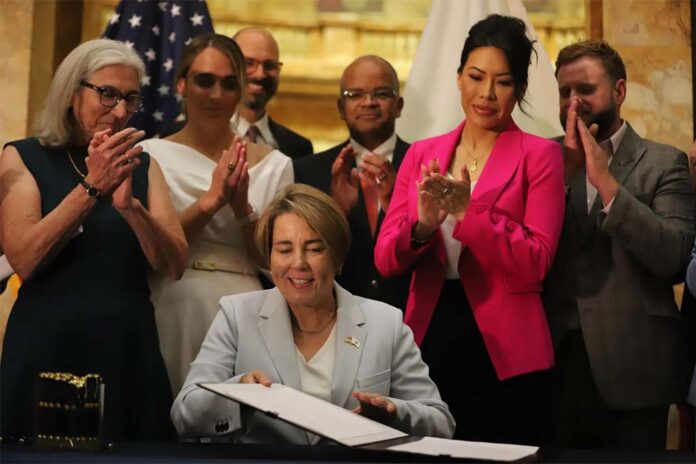
La gobernadora Maura Healey firma la ley que elimina restricciones específicas al aborto después de las 24 semanas.Gov. Maura Healey signs legislation removing Massachusetts’ specified restrictions on abortions after 24 weeks.
Marvin Ramírez, editor

What have we become?

by Marvin Ramírez

On Aug. 10, Massachusetts Gov. Maura Healey signed a law removing the state’s specific restrictions on abortions performed at or after 24 weeks of pregnancy. Under the former law, such abortions were permitted only when necessary to protect the woman’s life or physical or mental health, or when the unborn child had a lethal or grave diagnosis. The new law replaces those defined conditions with the “professional judgment” of a physician.

Supporters describe this as compassion and health care. But compassion for whom? Where is the compassion for the unborn child, particularly one who has reached the point of viability and may be capable of surviving outside the womb?

At 24 weeks, we are not talking about an invisible cluster of cells. The child has a recognizable human face, arms, legs, fingers and toes. The heart has been beating for months. The child moves, responds to sound and continues developing rapidly. By approximately 28 weeks—about three months before full-term birth—the eyes can open and close.

Modern medicine works heroically to save premature babies born at these stages. Doctors and nurses place them in incubators, help them breathe and spend weeks fighting for their survival. Families pray beside them and celebrate every ounce gained. Yet under another set of circumstances, a child at a similar stage of development can be denied the most fundamental protection: the right to continue living.

How can our society hold these two positions simultaneously?

Defenders of the Massachusetts law emphasize that abortions late in pregnancy are uncommon and frequently involve tragic medical complications. Those realities must be acknowledged. Some parents receive devastating diagnoses, and some pregnancies place women in serious danger. They deserve truthful information, excellent medical treatment, emotional support and human compassion.

But difficult cases cannot justify removing clear protections for every viable unborn child. If lawmakers believe abortions after 24 weeks should be allowed only in extraordinary medical emergencies, they should write those exceptions plainly into the law. Instead, Massachusetts eliminated the specified conditions and placed the decision almost entirely within the physician’s discretion.

A civilized society does not make the protection of human life dependent upon how wanted, healthy or convenient that life may be. Nor should a viable child’s future depend on the private judgment of a single professional without meaningful statutory safeguards.

The smiling and applause surrounding the bill signing were especially disturbing. Whatever one’s political position, expanding the legal power to end developing human life should never be treated as a joyful occasion. There is nothing celebratory about abortion. It represents, at minimum, the loss of a developing human being and often leaves grief that political slogans cannot erase.

For many people of faith, the idea of ending the life of a child shortly before birth is not merely misguided; it feels horrifying and even satanic—an inversion in which destruction is presented as mercy and death is called care.

We must also question the cultural conditioning that brought us here. For decades, the public has been told that abortion concerns only a woman’s body, as though the unborn child’s separate heartbeat, DNA and developing organs do not exist. Language has been carefully sanitized. The child becomes “pregnancy tissue,” abortion becomes “care,” and opposition becomes an attack on women.

Repeating those words does not change biological reality.

A woman facing an unexpected or medically complicated pregnancy must never be abandoned. She needs financial assistance, prenatal care, housing, counseling and support after birth. When a diagnosis is fatal, families deserve compassionate perinatal hospice and the opportunity to accompany their child with love. Protecting unborn life must include protecting the mother—not condemning her or leaving her alone.

But compassion cannot require us to pretend there is only one human life involved.

Who speaks for the child who cannot vote, protest, hire an attorney or plead for mercy? Who protects the smallest and most defenseless member of the human family when government withdraws its protection?

The answer should be all of us.

Massachusetts has crossed a frightening moral boundary. Other states should not follow. Americans must demand laws that protect women in medical emergencies while establishing firm and unmistakable safeguards for viable unborn children.

If we cannot defend a child who may be only weeks away from birth, the question is no longer merely what abortion has become. The question is what we have become.

spot_img