Wednesday, July 29, 2026
Home Blog Page 78

Bobbie Kennedy fights against adulterated food to prevent diseases

by Marvin Ramírez and staff

The public health crisis in the United States has reached alarming levels in recent years, with a significant increase in diseases such as depression, diabetes, liver conditions, kidney problems, and pancreatic issues. Many of these conditions, according to experts, are directly related to the consumption of adulterated foods. These food products, which contain artificial colorings, preservatives, and additives, are being blamed as the main culprits behind the rise in these diseases, alongside the growing obesity rate in the country.

Recently, the incoming U.S. Secretary of Health, Bobbie Kennedy, has focused her attention on this issue and declared war on artificial additives in food. Kennedy, who will take office in 2025, has promised to take drastic measures to ensure that the food industry shifts toward producing healthier and more natural foods.

The threat of adulterated food

The issue of adulterated food is not new. For decades, consumers have been exposed to products containing chemical ingredients that are not only harmful to health but also contribute to the development of chronic diseases. Obesity, for example, has increased exponentially over the past 30 years, affecting a significant percentage of both the adult and child population. The consumption of processed foods, which mostly contain artificial colorings, flavorings, and preservatives, has become one of the leading causes of these problems. These ingredients not only alter the taste and appearance of foods but also have negative effects on the body.

“Artificial colorings and preservatives not only affect the taste of our food, but they can also have long-term consequences on our mental and physical health,” Kennedy notes, focusing her campaign on eliminating these ingredients from food products nationwide.

Moreover, foods high in sugar and saturated fats, commonly found in processed products, contribute to the development of metabolic diseases such as diabetes and cardiovascular diseases. As Kennedy explains, “The real problem is not just obesity, but the invisible effects that processed products have on our body, from the liver to the kidneys.”

Dr. Marta González, a nutritionist specializing in metabolic diseases, adds, “A diet based on fresh, natural foods not only improves physical health, but also positively impacts our mental health. It is crucial that consumers are educated about the risks of processed foods and make more informed decisions to prevent chronic diseases.”

Bobbie Kennedy’s approach

As Kennedy takes leadership in the U.S. Department of Health, her priority is to reduce the population’s exposure to processed foods and promote healthier alternatives. Kennedy has announced she will take severe measures against companies that continue to use artificial additives and colorings in their products. The idea is to encourage a diet based on natural, organic, and non-genetically modified ingredients.

“It is essential for the government to become a protector of public health. Citizens need to know what they are eating and how these products affect their well-being,” Kennedy stated in a recent interview. Her goal is for future generations to grow up in an environment where food is more natural and less processed, thus reducing the risk of chronic diseases.

Solutions for affected individuals

For those already suffering from diseases related to poor diets, the solution is to make changes to their eating habits. Reducing the consumption of processed foods and replacing them with healthier options such as fruits, vegetables, whole grains, and lean proteins can significantly improve health and prevent complications. Reducing the intake of added sugars and saturated fats is crucial to managing conditions like diabetes and heart disease.

“To improve our health, we must make every bite count. This means choosing fresh, unprocessed foods that strengthen our organs and our overall well-being,” Kennedy concluded, urging the population to make more informed decisions about their eating habits.

A path toward a healthier future

Bobbie Kennedy’s approach could be a crucial change for public health in the U.S. Her fight against adulterated foods and the promotion of healthier eating habits has the potential to significantly reduce the burden of chronic diseases and improve the quality of life for millions. However, the implementation of these policies and the commitment of the food industry are essential to ensure these changes are effective and sustainable in the long term.

It’s time for citizens to become more conscious consumers, choosing natural products and avoiding those with artificial ingredients. Only then can we move toward a healthier future, free from diet-related diseases.


spot_img

Pacific Mambo Orchestra in concert

Screenshot

by Magdy Zara

Kick off the year enjoying Latin music with a concert by the renowned Grammy Award-winning Latin Big Band Pacific Mambo Orchestra (PMO), whose repertoire is full of contagious energy and superb musicianship.

The Orchestra has received international praise at prestigious festivals including the Montreux Jazz Festival (Switzerland), the Tempo Latino Festival (France), the Antagonish Jazz Festival (Canada), the 5th Annual Tribute to Salsa in Mexico City, as well as numerous appearances at other top-level festivals such as the Monterey Jazz Festival, the San Francisco International Jazz Festival, the Jacksonville Jazz Festival, the Aspen Jazz Festival and many more.

Latin Big Band Pacific Mambo Orchestra, performs on January 3rd and 4th, 2015, starting at 7pm, at Yoshis restaurant located at 510 Embarcadero West, Oakland.

Tickets range from $33-$65.

Last performance of La Virgen del Tepeyac

La Virgen del Tepeyac, is a dramatization of the four apparitions of the Virgin of Guadalupe to Juan Diego on Tepeyac Hill outside Mexico City in 1531.

This staging is a tradition that has been on stage for more than 50 years.

The play culminates with the miracle of the roses that sealed the conversion of pre-Columbian Mexico to Christianity. The appearance of the Virgin of Guadalupe is a beacon, a ray of light and hope for the indigenous people of the Americas, through centuries of darkness and injustice.

This Christmas performance was adapted from a four-character liturgical drama written by an anonymous Spanish monk in the 18th century.

Artist Luis Valdez reworked the original story to include new characters and scenes, and also introduced music and dance.

Importantly, the piece includes Aztec songs and dances, adding complex layers to this show that encompasses both Catholic and indigenous rituals.

This is recognized as El Teatro Campesino’s longest-running work, and is appreciated by spectators who come from all over the world to see it performed every two years since 1971 in concert with “La Pastorela.”

Performances began on December 19 and conclude on January 11, 2025 at 5 p.m., at the Teatro Campesino located at 705 4th Street, San Juan Bautista.

For tickets visit: www.elteatrocampesino.com

2025 Social and Economic Justice Music Festival

Everything is set for the People’s Congress and the Social and Economic Justice Music Festival that will bring together a wide range of activists, and artists in a call to fight against social and economic injustices.

The Social and Economic Justice Music Festival will feature all genres and styles of music, as well as other art forms besides music. On Saturday there will be three workshop sessions on various topics and on Sunday there will be three sessions of song sharing and shared performances. Both days end with an evening concert.

The Social and Economic Justice Music Festival is scheduled for Saturday, January 25 and Sunday, January 26 starting at 9 a.m., at Mission High School, 3750 – 18th Street, between Dolores and Church streets.

spot_img

Did you reach your financial goal this year? 

Sponsored by JPMorganChase

Eleven months ago, many people set financial goals for the New Year.

Maybe you planned to buy a new home, finance a new vehicle or start a new business. Whether you made New Year’s resolutions, pasted images on a vision board or crunched numbers on an official balance sheet, you had every intention of achieving those goals in 2024.

As the year draws to a close, it’s time to look back on what worked — or where you may have gone wrong financially. Those lessons learned can help you set new goals and better manage your finances in 2025.

JPMorgan Chase offers six dos and don’ts about financial planning and management that can help you achieve a fresh start in 2025 and get closer to reaching your goals.

DO create a budget

One common financial mistake is not having a budget at all. Remaining in the dark about your spending can limit your ability to save for important goals like a car, a home or your retirement. If you don’t know what you’re spending, there’s a good chance you may be spending too much.

  • DON’T leave your budget up to chance 

Using guesswork when trying to allocate your monthly budget can lead to overestimating or underestimating how much to allot toward each budgeting category. This may set you up for failure. Taking a month to assess and identify your spending patterns may help to establish a baseline as you’re setting your budget.

  • DO track your spending

Get to know your spending by creating a monthly budget tracker. You can then review your spending and track it in a monthly budget worksheet. Over time, you can adjust which budgeting categories to cut back spending on. Expenses can fluctuate month to month, so be prepared to shift gears whenever necessary.

  • DON’T put wants and needs in the same category

A common error beginner budgeters can make is mistaking “wants” for “needs.” Needs are essential items like utility bills, rent or mortgage payments, and groceries. These are things you need to live. Wants, on the other hand, are non-essential expenses like dining out or entertainment. It may still be possible to find room in your budget to accommodate a few luxuries, but being honest with yourself about what’s truly necessary may help you avoid this budgeting mishap.

  • DO keep it simple

The idea of listing every single expenditure for a month might seem daunting, but you don’t have to go that far. It can be helpful to create a budget that works for you, which includes making it manageable enough to take on in the first place. If you’re just starting out, create just a handful of budgeting categories to help keep things simple.

  • DON’T skip the emergency fund

Life is unpredictable and having an emergency fund to pay for unplanned expenses may help you during that time. Without it, you may have to dip into long-term savings or use a credit card if the unexpected arises. Creating an emergency funddoesn’t have to be   When you’re making your budget, include a monthly line item for emergency fund contributions. This can help build up your reserves over time. Many bank accounts even let you automate these emergency fund deposits.

The bottom line
Give yourself grace if you fell short of your financial goals this year. As you prepare for 2025, remember that budgeting can be a powerful tool to help you build better financial habits.

Start tracking your spending now to set up your budget for next year and be aware of common budgeting mistakes. It’s never too early – or too late – to get back on the road to financial freedom.

– For informational/educational purposes only: Views and strategies described may not be appropriate for everyone and are not intended as specific advice/recommendation for any individual. Information has been obtained from sources believed to be reliable, but JPMorgan Chase & Co. or its affiliates and/or subsidiaries do not warrant its completeness or accuracy. JPMorgan Chase & Co. and its affiliates are not responsible for, and do not provide or endorse third party products, services, or other content.

Deposit products provided by JPMorgan Chase Bank, N.A. Member FDIC. Equal Opportunity Lender. 

 © 2024 JPMorgan Chase & Co. 

spot_img

Pacific Mambo Orchestra in concert

Pacific Mambo Orchestra

by Magdy Zara

Kick off the year enjoying Latin music with a concert by the renowned Grammy Award-winning Latin Big Band Pacific Mambo Orchestra (PMO), whose repertoire is full of contagious energy and superb musicianship.

The Orchestra has received international praise at prestigious festivals including the Montreux Jazz Festival (Switzerland), the Tempo Latino Festival (France), the Antagonish Jazz Festival (Canada), the 5th Annual Tribute to Salsa in Mexico City, as well as numerous appearances at other top-level festivals such as the Monterey Jazz Festival, the San Francisco International Jazz Festival, the Jacksonville Jazz Festival, the Aspen Jazz Festival and many more.

Latin Big Band Pacific Mambo Orchestra, performs on January 3rd and 4th, 2015, starting at 7pm, at Yoshis restaurant located at 510 Embarcadero West, Oakland.

Tickets range from $33-$65.

Last performance of La Virgen del Tepeyac

La Virgen del Tepeyac, is a dramatization of the four apparitions of the Virgin of Guadalupe to Juan Diego on Tepeyac Hill outside Mexico City in 1531.

Dramatización de la Virgen del Tepeyac. Dramatization of the Virgin of Tepeyac.

This staging is a tradition that has been on stage for more than 50 years.

The play culminates with the miracle of the roses that sealed the conversion of pre-Columbian Mexico to Christianity. The appearance of the Virgin of Guadalupe is a beacon, a ray of light and hope for the indigenous people of the Americas, through centuries of darkness and injustice.

This Christmas performance was adapted from a four-character liturgical drama written by an anonymous Spanish monk in the 18th century.

Artist Luis Valdez reworked the original story to include new characters and scenes, and also introduced music and dance.

Importantly, the piece includes Aztec songs and dances, adding complex layers to this show that encompasses both Catholic and indigenous rituals.

This is recognized as El Teatro Campesino’s longest-running work, and is appreciated by spectators who come from all over the world to see it performed every two years since 1971 in concert with “La Pastorela.”

Performances began on December 19 and conclude on January 11, 2025 at 5 p.m., at the Teatro Campesino located at 705 4th Street, San Juan Bautista.

For tickets visit: www.elteatrocampesino.com

2025 Social and Economic Justice Music Festival

Everything is set for the People’s Congress and the Social and Economic Justice Music Festival that will bring together a wide range of activists, and artists in a call to fight against social and economic injustices.

The Social and Economic Justice Music Festival will feature all genres and styles of music, as well as other art forms besides music. On Saturday there will be three workshop sessions on various topics and on Sunday there will be three sessions of song sharing and shared performances. Both days end with an evening concert.

The Social and Economic Justice Music Festival is scheduled for Saturday, January 25 and Sunday, January 26 starting at 9 a.m., at Mission High School, 3750 – 18th Street, between Dolores and Church streets.

spot_img

Bwana: The legacy of an iconic Nicaraguan band in the 60s and 70s

Original members of Bwana. De izq-der: Charlie Avarena (Chileno), Donaldo Mantilla, Salvador Fernández (r.i.p., congas) , Roberto Martínez (r.i.p.) and Ricardo Palma (r.i.p.).

by Marvin Ramírez

The 60s and 70s were a time of great musical effervescence in Latin America, and Nicaragua was no exception. In that context, Bwana emerged, a band that fused rock, tropical music and indigenous sounds, creating a unique style that reflected the reality and spirit of Managua at the time, known as the “Central American Switzerland.” Although the band had a relatively short career, its legacy lives on in the collective memory and in the history of Latin American rock.

The birth of Bwana

Formed in the late 60s, Bwana was born from the union of young musicians influenced by the Beatles, the Rolling Stones, Santana and Latin jazz. The name “Bwana” evoked power and authority, a term that reflected the ambition of the group, which quickly stood out in the Nicaraguan music scene.

However, the story behind the formation of Bwana is more complex than what has commonly been told. According to Donaldo Mantía, one of the founding members, the group’s core was made up of the following musicians.

“If the group was founded in the early 1970s, the group’s core was made up of: Tony Rodríguez AKA Bugs Bonnie, on bass, Danilo Amador on organ, Cali Alemán as singer, Roberto Martínez (Maguila) on guitar, Salvador Fernández on congas and myself, Donaldo Mantía, on drums,” explained Mantía.

However, Luis Malespín, AKA Luigi Ibarra, who is proud to be the grandson of the creator of the lyrics of the Nicaraguan national anthem, Salomón Ibarra Mayorga.

Malespín mentions that he was the group’s first guitarist, which led them to win a first place award for best group, when Indio Corea was in charge of promoting the band.

In 1970 we went to Costa Rica to record two singles with the first members I mentioned to you,” he added, clarifying some details about the band’s original lineup.

Afterwards, the band members experienced some changes: “Then, we brought in Ricardo Palma and Román Cerna to record the first album, because Danilo Amador came to the United States and Tony didn’t want to continue.” Malespín also went to the US.

For the second album, Bwana incorporated Chilean Charlie Aravena on bass. “As an original member of Bwana, that’s the true story of Bwana, which crossed borders,” said Mantía.

The members of Bwana

Throughout its career, the band underwent some changes in its lineup, but the key members were:

  • Cali Alemán, the charismatic singer, whose distinctive voice marked the band’s sound.
  • Jaime Vanegas, drummer whose unique style shaped Bwana’s rhythm.
  • Donaldo Mantía (‘El Picudo’), drummer and timbalero, contributed a special sound to the compositions.
  • Salvador Fernández (q.e.p.d.), (‘Shava’), recognized as one of the best conga players in Nicaragua.
  • Ricardo Palma (q.e.p.d.), keyboardist, guitarist and vocalist, contributed to the group’s versatility.
  • Román Cerpa, bassist and percussionist, whose presence on stage was key in the formation of Bwana’s sound.
  • Roberto Martínez (q.e.p.d.), guitarist and vocalist, who enriched the band’s repertoire with his melodies.

Sadly, Roberto Martínez recently passed away in November due to lung problems that “began in Nicaragua, since he had gone to live there. But they brought him back to Los Angeles to receive treatment, since in Nicaragua he did not have medical insurance,” explained the Nicaraguan singer and rock icon, Janet Barnes, to El Reportero. “He had a cough that wouldn’t let him breathe,” said Barnes, who was saddened by the musician’s passing.

The legacy of its music

Bwana was not only distinguished by his international rock influences, but also by the integration of Latin and Caribbean rhythms. Songs such as “La Jurumba” and “La Patada” reflected the social reality and experiences of Nicaraguan youth. “La Jurumba” in particular became an anthem that evoked life in the barrios of Managua and the figure of the National Guard, a symbol of the repressive power of the Somoza regime.

In a comment from a follower, it is mentioned: “Bwana’s La Jurumba is an emblematic song of old Managua. We remember the Nissan, the car that the Managua Police used to patrol and imprison people, the Garand on the ribs (the weapon used by the National Guard in Nicaragua), the streets of the barrios of Sto. Domingo, Campo Bruce and all of old Managua.” These words evoke the turbulent times of the country, but also the moments of freedom and tolerance, which existed, despite the Somoza regime.

The band achieved great popularity after recording their first album around 1973 or 1974 in Costa Rica. This material consolidated their name in the region, and songs such as “Chapumbambe”, “Motemba” and “Todo es Real” demonstrated their ability to fuse different musical styles with a strong Nicaraguan identity.

Dissolution and exile

The earthquake of 1972 and the civil war that culminated with the fall of Somoza in 1979 marked the end of Bwana as a band. Many of its members went into exile, and the band was never able to reunite in its original form. However, their music lives on in the memories of those who lived through that time. The testimonies of admirers such as Rafael Gaitán reflect the nostalgia for those times: “They were wonderful times. An era that only remains in memory.”

Although the members of Bwana currently live outside of Nicaragua, in the United States, others have already passed away, and those who remain are enjoying their senior years with children and grandchildren, but some continue trying to revive the band, continue playing or creating music in their homes with their own studios. However, resentment has arisen among them, since Roberto Martínez (RIP), without the authorization of the rest, patented the name and songs of the group for his own benefit, which has created conflicts, Mantía explained to El Reportero. Despite the attempts to recreate it, it has not been possible to materialize, and only the dream of reviving it remains.

In a recent interview, Mantía, who was an integral part of the band as a drummer and timbalero, shared his version of some of the internal conflicts that contributed to the dissolution of the group.

“I left the group at the end of ’73 because this Maguila (Roberto Martinez) was stealing from me and I took my drums and went to Matagalpa to study the drums more with methods and I developed deeply and I also studied music at the conservatory after the earthquake; I’m not into noise, that’s why I’ve maintained a good level. Finally, Maguila was the one who sullied the name of Bwana,” said Mantía, clarifying his perspective on the problems within the group.

The legacy endures

Although the members live outside their homeland, the legacy of Bwana continues to be fundamental in the history of Latin rock. Their music remains a reminder of Managua in the 60s and 70s and of the bravery of a band that, through its art, challenged the political and social norms of its time.

Watch Bwana video.

spot_img

Trump promises to designate Mexican cartels as terrorist organizations: Sheinbaum responds

by Mexico News Daily

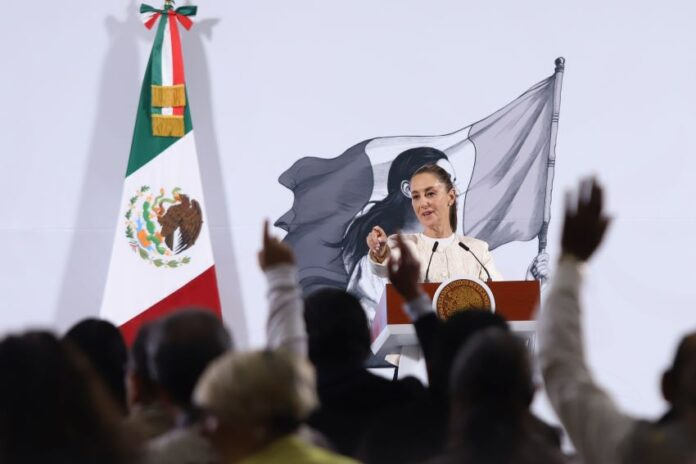
After U.S. President-elect Donald Trump declared he would designate Mexican cartels as foreign terrorist organizations on his first day in office, Mexico’s President Claudia Sheinbaum told reporters Mexico would never accept any interventionist actions.

“We will collaborate with and coordinate with the United States,” Sheinbaum said in response, “but we will never subordinate ourselves.”

During a Sunday speech to conservative supporters, Trump — who takes office on Jan. 20, 2025 — said he would address illegal drugs on his first day in office, according to the newspaper El País.

“All foreign gang members will be expelled and I will immediately designate the [drug] cartels as foreign terrorist organizations,” Trump said, adding that every cartel “operating on American soil will be dismantled, deported and destroyed.”

Trump also mentioned his November phone call with Sheinbaum, after he had threatened to levy 25% tariffs on Mexico unless more is done to solve the problems of immigration and drug trafficking.

Calling Sheinbaum “a lovely woman,” Trump told the AmericaFest crowd that he was very tough on Mexico, saying he insisted the Mexican president must do more to address the drug trade.

Trump floated the idea of a terrorist designation during his first term in office back in 2019, but set plans aside at the request of Sheinbaum’s predecessor, Andrés Manuel López Obrador, who sought to cooperate in the fight against drug gangs, instead of considering intervention.

For several years, hard-liners in the United States have demanded that organizations such as the Sinaloa Cartel and the Jalisco Nueva Generación Cartel be labeled as terrorist groups. These supporters would also back targeted attacks on cartel operations in Mexico in violation of international law, El País reported.

Officially designating cartels as terrorist organizations would legally permit the United States to send its military into Mexico to fight the crime gangs, the newspaper El Universal reported. Some U.S. officials believe such a measure would damage relations with Mexico and hinder the Mexican government’s fight against drug trafficking.

After saying she would defend Mexico’s sovereignty against any interventionist actions, Sheinbaum restated her government’s position on the drug war.

“The drugs are consumed [in the United States], the guns [the cartels use] come from there, and lives are lost down here,” she said. “But … we don’t accept interference in our country.”

Sheinbaum added that her administration is working to re-establish peace in Mexico by addressing the root causes of violence so that the country’s youth do not become involved in crime.

With reports from Por Esto, Reuters, El Universal, El País and Reforma

spot_img

Antojitos Patry: A link between San Francisco and Nicaragua

La Familia Rocha de la empresa Antojitos Patry: Casandra, Laura Patricia y Johny

by Marvin Ramírez

Located in the heart of Mission Street, San Francisco, Antojitos Patry has established itself as a reference for the Nicaraguan and Central American community. This family-run business not only offers traditional products and essential services, but has also created a space that connects local residents with the cultural roots of Nicaragua.

Run by Patricia Lissetth Rocha, a Nicaraguan entrepreneur, Antojitos Patry was born out of a desire to share the traditions of her home country. What began as a small street stand has grown into a vibrant store offering a wide range of products, from pinolillo and rosquillas to traditional clothing and household items. Patricia emphasizes: “We bring Nicaragua to San Francisco,” highlighting the speed and security of their parcel services.

The driving force behind this growing company is not only Patricia, but her entire family. From her children and husband to the children’s grandmother, everyone is an active part of the business. The family is involved in every aspect of the store, from customer service to product selection. The grandmother is often the first to greet customers at the door, ready to help them with whatever they need to reconnect with their country. “It’s a team effort, and each member of the family has a fundamental role to make everything work well,” says Patricia, who highlights the importance of the family unit in the success of Antojitos Patry.

Antojitos Patry is not only a place to find traditional products, but also a center for essential services for the community. Among its main offerings are money transfers through Western Union, package transport to Nicaragua, and tax filing (Income Tax Services). The store has become a trusted place for those who need to send packages or carry out financial procedures safely.

The products available in the store are carefully selected by Patricia, who frequently travels to Nicaragua to bring the best of her homeland. Among the most popular items are old-fashioned cookies, handicrafts, and other typical products that evoke the nostalgia of those who have left their country but wish to keep the connection with their culture alive.

Over the years, Antojitos Patry has managed to strengthen its bond with the Nicaraguan community in San Francisco, becoming an emblematic place. The store not only meets the needs of customers, but also offers a space where warmth and hospitality are felt in each visit.

Antojitos Patry is located at 2847 Mission Street, San Francisco, California, and has established itself as a key place for those seeking to reconnect with their cultural roots. For more information about its products and services, interested parties can call 415-757-0154 or 415-571-1904.

Antojitos Patry is not just a business, but a bridge between Nicaragua and San Francisco, where tradition and service come together to offer the community a piece of their homeland in the heart of the city.

spot_img

  The impact of “Safe Routes” policies on urban parking for drivers

La imagen muestra cómo los conductores enfrentan los desafíos de estacionamiento debido a las políticas de "rutas seguras", resaltando la tensión entre la sustentabilidad y la necesidad de estacionamiento accesible". -- The image shows how drivers face parking challenges due to “safe routes” policies, highlighting the tension between sustainability and the need for accessible parking.

The image shows how drivers face parking challenges due to ‘safe routes’ policies, highlighting the tension between sustainability and the need for accessible parking.”

Let’s urge voters to compel the City to restore all parking spaces removed over the past 20 years, build multi-level parking structures and require all new developments to include parking spaces

Marvin Ramírez, editor

by Marvin Ramírez

The year 2025 will bring significant changes to urban transportation policies, with many cities focusing on expanding “safe routes” initiatives. These policies prioritize pedestrians and cyclists by limiting vehicle access, adding bike lanes, and creating pedestrian-only zones. While these changes aim to reduce car dependence and promote sustainable mobility, they also present challenges for drivers, especially those who rely on their vehicles for daily activities. Parking restrictions, a key part of these projects, are expected to impact residents and businesses, forcing them to navigate an increasingly complex parking situation.

A major concern is the growing number of parking restrictions. As cities reduce car usage, they often remove parking spaces to create bike lanes or widen sidewalks. This burdens residents, especially in neighborhoods with already limited parking, where people depend on their cars for commuting, errands, and appointments. The loss of parking spaces disproportionately affects those without reliable public transportation or those who cannot afford alternatives like taxis or rideshare services.

What exacerbates this issue is that many “safe routes” initiatives do not come with adequate parking alternatives. Bike lanes and pedestrian zones are often implemented without considering residents’ daily needs. This leads to alienation and frustration among drivers, who are forced to park farther from their homes or businesses, sometimes in areas with high fees or inadequate spaces. This lack of coordination between city planners and car-dependent residents creates a conflict between sustainable development and practical urban needs.

The introduction of higher parking fines for violations in restricted areas only adds to the discontent. As access to parking spaces becomes more restricted, many drivers risk fines or spend long periods searching for available spots. In areas with high parking demand, this becomes a daily struggle. Local businesses that rely on foot traffic also suffer, as customers have difficulty finding parking, leading to decreased economic activity and further frustration for both residents and business owners.

One way to mitigate these challenges is for local authorities to reconsider their approach to “safe routes” initiatives. Parking removal should be paired with alternative solutions that allow drivers to access their homes and businesses easily. One option is the creation of multi-level parking structures or the introduction of more efficient parking management systems that better distribute parking spaces. Local governments could also work with businesses and residents to identify spaces that could be shared or repurposed for parking without undermining the goals of the “safe routes” initiatives.

If these changes are not made voluntarily by the city, the removal of parking spaces and the negative impacts of these policies could become a pressing issue that demands a broader public response. If current trends continue without regard to the daily needs of people, a citywide ballot measure might be necessary to address the issue. This measure could call for the restoration of removed parking spaces and a more balanced approach to ensuring mobility and parking are available for all residents, regardless of their preferred mode of transportation. A public vote could allow the community to shape the future of urban mobility and parking policies, ensuring that local government actions align with the interests of those most affected.

And, while “safe routes” initiatives are a step toward more sustainable and eco-friendly cities, they must not come at the expense of the residents who rely on their cars. As cities plan for 2025, it is essential that these initiatives consider the realities of urban living, including the need for accessible and sufficient parking. The city must balance promoting sustainable transportation with meeting drivers’ practical needs. If parking removal continues unchecked, the solution may lie in the hands of voters. By placing the issue on the ballot, cities can ensure all residents have a say in how their neighborhoods are shaped, guaranteeing a fair and balanced approach to urban mobility.

spot_img

World War III would be fought with drones, not humans or robots

by James Corbett

The image of mechanized drones filling the skies during the next major war is not a distant, hypothetical threat. Many countries are already developing military drone swarms.

If you were unsettled by the sight of thousands of drones lighting up the skies at the 2023 Dragon Boat Festival in Shenzhen, China, you’re more attuned to the future of warfare than if you found it “beautiful.” The rise of drone warfare is becoming a significant concern for humanity’s future. While robots like Boston Dynamics’ Spot are often showcased, they are still too large, slow, and clumsy for modern combat. Instead, the real threat lies in swarms of small, agile drones, already being weaponized by the military-industrial complex.

Drones have long been used by criminals for illicit activities like harassment and drug smuggling, leading law enforcement to push for more control, including surveillance powers. This creates a cycle of expanding control, and militaries are using similar rhetoric to justify the development of drone armies. The U.S. Navy, for example, is interested in creating swarms of thousands of small drones, while companies like Anduril are racing to build drone swarm technology, eagerly eyeing lucrative military contracts.

The U.S. is not alone in this arms race. China is also advancing its own drone swarms for future conflict. Russia, under attack from Ukrainian drones, has deployed its own swarms to strike Ukraine’s energy grid. Meanwhile, Israel has used drones in its ongoing conflicts with Palestinians and Lebanese forces, and Azerbaijan has employed Turkish-made drones in the Nagorno-Karabakh conflict, crediting them with destroying billions of dollars in Armenian military assets.

The drone wars of the future aren’t speculative—they’re happening right now. Countries around the world are racing to develop military drone swarms. In a potential World War III scenario, warfare will look nothing like the conflicts of the past. Gone are the days of human-piloted robots on battlefields. Instead, drones, capable of precision strikes and mass destruction, will dominate the skies.

These drone swarms won’t just be tools of large-scale warfare—they could also be used as instruments of terror, spreading fear on a global scale. The use of drone swarms could drastically change how wars are fought, not just in terms of physical battles but also in how psychological manipulation, such as terrorism, shapes public opinion and political power. Terrorism doesn’t only involve physical attacks—it thrives when technology and media combine to manipulate the public into a constant state of fear.

The use of drones to control or oppress populations is already evident in regions like Syria and Ukraine. These systems could be used by powerful governments to suppress dissent and tighten their control. The real threat isn’t just military aggression—it’s the manipulation of fear to justify global power dynamics and further control.

What can we do about this? While conventional firearms might protect us from certain threats, drones render them largely ineffective against governments armed with advanced technology. The answer may lie in developing counter-drone technologies, such as jammers, to defend against military drones. However, escalating the drone war on a personal level won’t solve the broader problem of how dangerous and destructive this technology can be.

Ultimately, we need to understand the implications of drone warfare and begin preparing for a future where these systems dominate the battlefield. Without awareness, we risk being caught off guard when the next war arrives—not on the ground, but in the skies above.

– Adapted from The Corbett Report, this is a short version. The full article is available at www.elreporteroSF.com in the column section.

spot_img

Mexico loses GM corn trade dispute with US

Imagen que refleja los aspectos nocivos del maíz genéticamente modificado (GM), destacando sus impactos sobre la salud y el medio ambiente. -- Image reflecting the harmful aspects of genetically modified (GM) corn, highlighting its impacts on health and the environment.

The harmful side of genetically modified corn they don’t tell you

by the El Reportero‘s wire services

A three-member USMCA dispute resolution panel has handed Mexico a big defeat by ruling against the country’s restrictions on genetically modified (GM) corn imports, citing a lack of scientific basis for the measures.

The panel found that Mexico’s policies were in violation of its obligations under the U.S.-Mexico-Canada Agreement (USMCA), most notably in regard to market access.

The U.S. Trade Representative’s (USTR) office said the panel ruled in favor of all seven U.S. legal claims in the long-running case, “handing the Biden administration a major trade victory in its final weeks,” according to Reuters.

Announced on Friday, the decision comes after years of escalating tensions since Mexico’s initial 2021 decree to phase out GM corn for human consumption — starting with bans against the use of GM corn in tortillas and dough, with a possible future ban on GM corn for livestock, as well.

Mexico has been importing GM corn from the U.S. for years, buying about US $3 billion worth annually. That corn is mainly used to feed livestock.

The United States Department of Agriculture (USDA) notes that more than 90% of corn in the U.S. is produced using genetically engineered varieties, according to a fact sheet produced by the Washington, D.C.-based Wilson Center.

In general, genetic modifications made to plants introduce traits such as resistance to pests, tolerance to herbicides such as Roundup, better nutritional content or faster growth.

While genetically modified organisms (GMOs) remain a subject of debate, the widely used but controversial herbicide Roundup has been classified as a “probable carcinogen,” by the World Health Organization (WHO).

The USTR hailed last week’s ruling, stating it upheld USMCA principles and protected U.S. farmers — as Mexico is the largest market for U.S. corn exports.

According to the Foreign Agriculture Service (FAS), an agency within the USDA, Mexico imported US $4.25 billion of corn from the U.S. from January through September of this year, a period in which U.S. corn exports totaled US $10.76 billion.

Mexico’s Ministry of Economy said in a statement on Friday that it does not agree with the ruling, but “will respect the determination, since the USMCA dispute resolution system is a key part of the treaty.” The ministry’s statement stressed that Mexico’s GMO measures were designed “to protect public health and Indigenous rights.”

Over the weekend, Mexican President Claudia Sheinbaum said she also disagrees but will now work on promoting reform to the GMO decrees issued under former President Andrés Manuel López Obrador.

“We are going to reverse this decision, because very soon, in February, [Mexico’s Congress is] going to legislate, I am sure, that transgenic corn cannot be planted [in Mexico starting in 2025] and that Mexico’s biodiversity must be protected,” Sheinbaum said.

Both the Chamber of Deputies and the Senate are in recess, returning Feb. 1.

In addition to citing unfair trade restrictions, the U.S. argued that Mexico’s restrictions were not grounded in science and that Mexico failed to properly conduct and document its risk assessments on GM crops.

The panel’s final report gave Mexico 45 days to adjust its policies or face potential retaliatory tariffs.

Experts say the GM corn dispute could strain Mexico-U.S. relations as the USMCA faces renegotiation under the incoming Trump administration.

Despite the ruling, Mexico is still planning a gradual transition away from GM corn, though it remains a contentious issue. Analysts predict prolonged debates over the environmental and health implications of biotechnology as Mexico seeks to balance trade obligations with domestic goals.

Part of the equation going forward could be “short corn,” which Bayer, the owner of Monsanto, has been studying in Mexico with hopes of revolutionizing the global corn industry.

With reports from AP, Reuters and CNN en Español.

Additional information searched by El Reportero:

The harmful side of genetically modified corn they don’t tell you

Genetically modified (GM) corn has been heralded for its ability to resist pests, increase yields, and tolerate harsh climates. However, mounting evidence suggests that its widespread use comes with significant health and environmental risks. Critics argue that the potential dangers of GM corn are often downplayed or ignored entirely.

One major concern is the health impact of consuming GM corn, particularly strains engineered to produce their own pesticides, like Bt corn. Dr. Gilles-Eric Séralini, a molecular biologist, warns, “The consumption of GM crops with pesticide residues over the long term has not been adequately studied, but available evidence suggests significant risks.” Similarly, research published in Environmental Sciences Europe highlights that glyphosate, widely used on GM crops, is a “probable carcinogen with links to liver and kidney damage.”

On the environmental front, GM corn threatens biodiversity by promoting monoculture farming, which reduces soil fertility and harms beneficial insects. Dr. Vandana Shiva, an environmental activist, states, “Monocultures of GM crops destroy the resilience of ecosystems and traditional farming methods.” Additionally, GM corn has contributed to the rise of “superweeds” and “superpests,” forcing farmers to use stronger chemicals.

While proponents argue that GM corn helps address global food security, it is essential to weigh these benefits against the potential risks. Greater transparency, stricter regulations, and independent research are vital to understanding its true impact.

spot_img