Saturday, August 29, 2026
Home Blog Page 63

Transit woes ahead for San Francisco: Muni cuts service amid budget crunch

by the| El Reportero staff

San Francisco’s public transit system is bracing for some bumpy rides this summer, as the city’s looming budget constraints now officially extend to the San Francisco Municipal Transportation Agency (SFMTA). Starting June 21, Muni riders will see notable service reductions and route changes—adjustments that city officials say are necessary to plug a $50 million shortfall in the coming fiscal year.

While these service trims may rattle daily commuters, especially those dependent on key lines, there’s a sigh of relief for residents in the Mission District, Bernal Heights, and the Excelsior. Most routes serving these neighborhoods will remain intact—for now. The same can’t be said for other parts of the city, where reroutes, stop eliminations, and reduced hours are on the horizon.

According to city transit officials, the changes aim to align service with available resources while trying to preserve reliability and safety. “Nobody likes cuts,” one Muni planner stated during a recent community forum. “But this is about preventing even deeper service slashes next year.”

What’s Changing Starting June 21

Several of Muni’s most familiar bus lines will undergo major changes, particularly those that extend past Market Street. Among them:

  • The 5 Fulton, 9 San Bruno, and 31 Balboa routes will now turn back at Market Street during weekdays, no longer continuing through downtown. Riders must transfer at Market Street to reach the city’s core. Muni promises connections every 2–4 minutes on Market, thanks to combined bus and Muni Metro services.
  • The 5R Fulton Rapid and 9R San Bruno Rapid routes will still operate outside of early mornings and late evenings. When those rapid lines are offline, the standard routes will temporarily continue through Market as usual.
  • The 31 Balboa will stop short at 5th & Market both weekdays and weekends. Passengers heading south of Market can hop on the 30 Stockton, 45 Union/Stockton, or the T Third light rail line.
  • Two beloved routes, the 6 Haight-Parnassus and 21 Hayes, will be merged into a new hybrid: the 6 Hayes-Parnassus. This route will operate from 5 a.m. to midnight daily, running every 20 minutes. The new line will turn around at Civic Center Station and serve different legs of the former 6 and 21 routes, depending on where riders are boarding.

To support these modifications, Muni has updated transfer maps on its website for all affected lines.

Neighborhood Impact: Relief for Some, Frustration for Others

Mission District commuters can breathe easy. Their regular routes, such as the 14 Mission and 49 Van Ness-Mission, are left untouched by this service reduction—likely a decision influenced by high ridership numbers and vocal community feedback. The Excelsior and Bernal Heights areas also came out relatively unscathed, with minimal changes to local routes like the 52 Excelsior and 67 Bernal Heights, save for minor stop relocations designed to improve safety and visibility.

Still, the ripple effect of the changes could be felt citywide, especially downtown, where more transfers and more waiting might now be part of the daily grind.

For riders like Theresa López, a home healthcare worker who lives near Outer Richmond, the re-routing of the 5 Fulton is more than a nuisance. “This is going to make my trip to Civic Center take longer,” she said. “I already work two jobs. I can’t afford delays.”

Why the Cuts Are Happening

The city’s transportation budget is under immense pressure, and Muni is not immune. The agency projects a $322 million budget gap in the near future as COVID-era federal and state relief funds dry up. Officials say the current 2 percent service cut is a preemptive move to save $7 million, in hopes of avoiding steeper reductions down the line.

Funding sources like fare revenue, parking fees, and contributions from the city’s General Fund are all trending downward—some due to changing commuter habits, others because of a still-recovering local economy. Despite previous cost-saving moves like slower hiring and stricter fare enforcement, the budget still comes up short.

According to an SFMTA spokesperson, the cuts were the least damaging among three plans floated earlier this year. Community input helped scale down the proposed cuts from 4 percent to 2 percent, sparing many high-ridership routes and avoiding more aggressive system-wide rollbacks.

Not All Changes Are About the Budget

While budget constraints dominate the headlines, not every modification is money-related. Several stop relocations and route refinements are aimed at improving safety, traffic flow, and accessibility. For example:

-The 9 San Bruno’s outbound stop at 228 Bayshore is being shifted away from a dangerous traffic merge zone.

-New stops are being added to the 15 Bayview-Hunters Point Express to better serve local housing areas.

-The 28R 19th Avenue Rapid gains a new stop at Lincoln Way to ease crowding.

-The 67 Bernal Heights will avoid tight turns by rerouting along Folsom instead of Ripley.

These upgrades are part of an ongoing effort to modernize the transit system and make it safer for everyone—especially in areas with steep hills and narrow intersections that have historically caused issues for large buses.

Fare Hikes? Yes, But Not Too Painful

Along with service changes, Muni is nudging fares upward. While the increases weren’t detailed in the public memo, sources suggest that most single rides will increase by 25 to 50 cents. Monthly passes may also see a slight bump. City officials argue that the hikes are “modest” and won’t interfere with “everyday necessities”—like, as one city staffer joked, “your weekly burrito budget.”

Discount programs for seniors, youth, and low-income riders will remain in place.

How to Stay Informed or Get Help

SFMTA is offering several ways for residents to stay informed or ask for assistance:

-Email: MuniCuts@SFMTA.com
-Phone: 415-646-2005 – at 311 if you’re at a location and don’t know what bus will take you to a particular location.
-Website: SFMTA.com/ServiceChanges

Additional resources include multilingual presentations, online maps, and an upcoming podcast episode explaining the changes.

spot_img

The Street Culture Festival is here

by Magdy Zara

The Street Culture Festival is a celebration of Latin American arts and culture. This week is a week of vibrant events and performances.

You can’t miss the Street Culture Festival, as it’s the perfect opportunity to share with family, with music and dance from the diverse cultures of Latin America, completely free of charge.

This festival is organized by the Lesher Center and the Diablo Regional Arts Association as part of their Cultural Festival program.

It begins this Saturday, June 14, at 7 p.m., at the Lesher Center for the Arts, located at 1601 Civic Drive, Walnut Creek, California.

La Gente SF kicks off its US tour

LA GENTE SF kicks off its 2025 summer tour across the United States, with two performances in San Francisco.

As you may recall, the group La Gente SF was born in San Francisco and currently resides in Madrid, Spain. This time, they’re back to delight their audiences with their unique music, combining cumbia, reggae, salsa, and reggaeton.

The event is this Saturday, June 14th, in Mountainview at the Cuesta Park Festival, starting at 6 p.m. The suggested donation is $10-$20. Attendees are welcome to bring their own drinks and food.

There will also be a performance on Friday, June 20th at the Music On The Square Festival in Redwood City at 6 p.m.

Give Smiles to Children This Summer 2025

The toy drive for the farmworker caravan for this summer 2025 has already begun.

Farmworker caravans in San Francisco are social or humanitarian events held by organized groups seeking to improve working conditions or the rights of farmworkers. Caravans sometimes include live music and giveaways.

The toy drive concludes this Sunday, June 15, and the collection centers are:

*CATHOLIC CHARITIES (GILROY)

South County Annex c/o Farmworker Caravan

9300 Wren Avenue, Gilroy.

*SACRED HEART PARISH (SARATOGA)

13716 Saratoga Ave, Saratoga.

*WASHINGTON UNITED YOUTH CENTER (SAN JOSE)

921 South First Street, Suite B, San Jose, CA

Behind the Latin American Library.

Pacific Commons Summer Concerts Return

The Pacific Commons shopping center offers the Fremont community an excellent shopping and dining experience in an outdoor setting. In addition, there is a free summer concert series scheduled starting this June.

The first will be this June 27th, featuring The Cheeseballs (Funk, Soul, and R&B).

July 25th, Fleetwood Macrame (Fleetwood Mac tribute band).

August 22nd, Patrón Ritmos Latinos (Latin Rock Fusion).

September 26th, Foreverland (Michael Jackson Tribute).

Location: Block Plaza near Koja Kitchen, from 7:00 p.m. to 9:00 p.m.

spot_img

Teachers and Trees: Living Pillars of the Nicaraguan Soul

Children plant trees while teachers and park rangers look on during a Teachers' Day event somewhere in Latin America. -- Niños siembran árboles mientras maestros y guardaparques observan durante acto por el Día del Maestro en algún lugar de latinoamérica.

by Marvin Ramírez

In Nicaragua, the month of June blossoms with two celebrations that invite us to profound reflection on the soul and roots: Teachers’ Day, celebrated on June 29, and Tree Day, commemorated on the last Friday of the month. Both dates, although distinct in essence, share a vital truth: without them, knowledge and life itself would have no sustenance.

After the first lessons we learn at home—that babble of love, boundaries, and customs—it is the teacher who takes over. With chalk, patience, and voice, they open paths that do not end at school, but that accompany us forever. The teacher not only teaches us to read, write, or add: they also teach us to imagine, to question, to think. They are artisans of the spirit. Celebrating teachers in Nicaragua also means paying tribute to those who, even with limited resources, never leave the classroom. They are guardians of popular and formal wisdom, of living history, and of the future yet to be written. In the towns, cities, and rural areas, their voice resonates as an echo of justice, education, and example.

And alongside this essential figure is the tree, another symbol of life and generosity. On Arbor Day, the country slows down to remember its silent vitality. Generations rest under its shade; families feed on its fruit; homes are built from its wood. Yet, how much do we care for it? The great Rubén Darío, that universal poet from Matagalpa, captured the sensitivity of trees with painful beauty in his poem “Lo Fatal”:

“Blessed is the tree, which is barely sensitive,

and even more so the hard stone, because it no longer feels…”

In these verses, Darío not only reveals the fragility of living beings, but also the enormous dignity of a tree: it suffers, but gives. It lives, but remains silent. And often, it falls due to our need—economic or practical—without us measuring the loss.

In these times when climate change and deforestation threaten the country’s biodiversity, Arbor Day is more than a reminder; it is an alarm. We must plant more trees than we cut down. We must teach—here comes the teacher again—respect for the earth as part of the daily curriculum.

Thus, June becomes a month of double homage: to the one who teaches and to the one who sustains life. Teachers and trees share an endearing quality: both are planted, nurtured, and leave a mark. Both are roots and branches of the soul of Nicaragua. And both remind us, as Darío wrote, that being mindful also means knowing how to care for what cares for us.

Celebrating them is not a symbolic gesture. It is an act of justice, love, and conscience.

spot_img

A Father’s Day with History and Love

Periodista José Santos Ramírez Calero 1916 - 2004.
Marvin Ramírez, editor

by Marvin Ramírez

When I write, when I publish El Reportero, and you, my readers, see it, read it, savor the articles we present in the newspaper, know that all of this requires talent, feeling, and inspiration. But, above all, it was all born—yes—from an inspiration.

And that inspiration was my father, journalist José Santos Ramírez Calero. Since I was a child, I clearly remember walking hand in hand with him through the streets and seeing how people admired him. That quiet, yet deeply respected figure, shaped my life without saying many words.

My grandmother, Juana María Calero Espinoza, used to tell me that at 10 years old, my father was already playing at being a journalist. With a toy printing press she gave him, he would print his friends’ jokes in a homemade newsletter. Of course, his friends sometimes got so angry they wanted to hit him, but he kept printing. And thus, his vocation was born.

Years later, he worked at the newspaper La Noticia—one of the most credible newspapers in Nicaragua’s history—where he worked as an editor for 45 years. At the same time, he founded El Nuevo Demócrata, an independent, critical, and courageous newspaper with a format similar to that of this very Reportero.

In 1945, he emigrated to the United States and, without abandoning his vocation, continued publishing his newspaper in San Francisco, selling it on the famous Market Street for just 10 cents. Today I still have copies of those editions, true treasures that bear witness to his legacy.

Yes, I can say that journalism runs in my blood. My father’s father, José Santos Ramírez Estrada, was also a journalist. He founded the magazine El Field, through which he promoted the professionalization of baseball in Nicaragua. Thanks to his idea of ​​closing open fields and charging admission, the first professional league was organized between the Boer and the US Marines during the American occupation of the 1920s. This event was recorded in La Prensa Literaria, and I have a copy of the article that confirms it.

The day my father went to the bosom of the Lord was one of the hardest of my life. Seeing him in his coffin was like facing true loss. I had never wept so deeply as I did in that funeral home, nor felt so empty as when I saw him descend to his final resting place.

He didn’t speak much, but when he did, he did so with the wisdom of someone who knows that words are not wasted. His short sentences were profound, and many of them continue to guide me today. He was a man who loved with his actions, who inspired with his example, and whose legacy drives me every day I write these pages. This Father’s Day, beyond the usual gifts, barbecues, or hugs, I invite you to celebrate it with history. Because Father’s Day isn’t just a commercial holiday: it’s an opportunity to recognize that man who left his mark on us, for better or worse.

The celebration of Father’s Day in the U.S. has its roots in 1910, when Sonora Smart Dodd, the daughter of a Civil War veteran raising her six children alone, proposed dedicating a special day to fathers. In 1972, President Richard Nixon officially made it a national holiday.

In Latin America, Father’s Day was slowly adopted, with variations depending on the country. In Mexico, for example, it is celebrated on the third Sunday of June, as in the U.S., while in other countries like Nicaragua and Honduras, it is celebrated on June 23. Although the dates differ, the purpose is the same: to honor the father, the one who was there, the one who tried, the one who perhaps failed, but who can be transformed with love.

Because we all have a story with our father. Some of gratitude, others of pain, others of redemption. Not all fathers are perfect. There are absent fathers, harsh fathers, fathers who didn’t know how to love. But there are also fathers who learned, who grew with us, who shaped their character over time. And if anything can change a man, it’s the love of his children.

That’s why I say: all fathers deserve love. Because love is a transformative force. And it’s by loving those who least deserve it that it is sown most deeply in the soul. No father is impossible to redeem when he is looked upon with compassion.

Today I want to honor mine. But I also invite you, the reader, to think about your father. Write your story. And if you can, share it. Perhaps, as happened to me, that story will become your greatest inspiration.

spot_img

Mexico responds to ice raids in Los Angeles amid protests and rising tensions

by the El Reportero staff

Mexico’s foreign minister confirmed that U.S. Immigration and Customs Enforcement (ICE) conducted two immigration raids in Los Angeles on Friday, detaining Mexican nationals. One raid occurred at a Home Depot in Paramount, while the other took place at a textile factory identified as Ambiance Apparel, a clothing manufacturer, importer, and wholesaler located in the city’s Fashion District.

According to NBC News, citing Bill Essayli, U.S. Attorney for the Central District of California, Ambiance Apparel was among several locations targeted by federal agents during these operations.

In response, Mexican consular officials quickly visited immigration detention centers in Los Angeles to identify the detained Mexican nationals, offer them legal assistance, and contact their families. Mexico is now analyzing each case individually to determine the appropriate next steps.

“We immediately deployed our consular protection teams,” said Foreign Minister De la Fuente. “Relatives have been contacted by our consular personnel, and we are following up on each case.”

He also noted that, under instructions from Mexico’s president, officials reached out to both U.S. Ambassador to Mexico Ron Johnson and Mexico’s Ambassador in Washington Esteban Moctezuma, who helped ensure that consular agents could access the detention facilities and provide assistance.

Ambassador Johnson emphasized a cooperative approach, stating on social media, “The violent protesters in LA do not represent the proud and hardworking Mexican people we know and respect. Our actions protect all communities and uphold the rule of law. Mexico is our partner — and the ties between our nations run deep.”

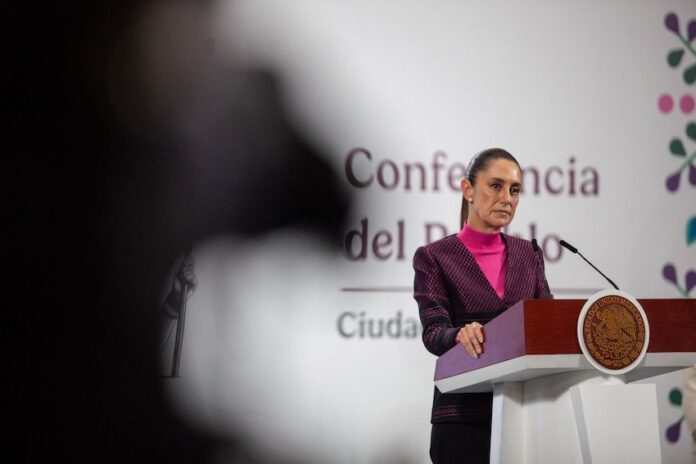
Echoing President-elect Claudia Sheinbaum, De la Fuente urged the Mexican community in the U.S. to remain calm and peaceful in their reactions. “We need to remain calm. We need all expressions [of protest] to be peaceful,” he said.

On Saturday, Mexico’s Ministry of Foreign Affairs issued a statement expressing “deep concern” over the immigration enforcement actions, particularly in Los Angeles.

Protests and Violence in Los Angeles

The ICE raids have sparked widespread protests across Los Angeles, including in the Paramount area, where the Home Depot raid occurred, and in downtown. Demonstrators have voiced outrage over the aggressive immigration actions and detentions.

However, some protests have turned violent. Police cars and other vehicles have been set ablaze, and protesters have thrown bottles and rocks. In response, law enforcement has deployed tear gas and rubber bullets. Dozens of people have been arrested amid escalating confrontations.

California Governor Gavin Newsom has sharply criticized President Donald Trump for exacerbating the situation by deploying 2,000 National Guard troops to California. The governor accused Trump of stoking unrest for political gain and announced legal action.

“Donald Trump is putting fuel on this fire,” Newsom wrote. “Commandeering a state’s National Guard without consulting the Governor of that state is illegal and immoral. California will be taking him to court.”

He urged Angelenos to reject Trump’s provocations:
“Los Angeles: don’t take Trump’s bait. Trump wants chaos and he’s instigated violence. Those who assault law enforcement or cause property damage will risk arrest. Stay peaceful. Stay focused. Don’t give him the excuse he’s looking for.”

Trump, who has intensified his focus on mass deportations, claimed victory for deploying the National Guard, writing on Truth Social, “We made a great decision in sending the National Guard to deal with the violent, instigated riots in California. If we had not done so, Los Angeles would have been completely obliterated.”

Stephen Miller, a key Trump advisor and deputy White House chief of staff, inflamed tensions further by calling Los Angeles “occupied territory” in a post on X, referring to the numerous foreign — particularly Mexican — flags seen during protests.

The Symbolism of the Mexican Flag

The New York Times highlighted the growing presence of Mexican and other Latin American flags as symbols of protest and unity in Los Angeles. In an article titled “The Mexican Flag Becomes a Potent L.A. Protest Symbol,” the Times reported that the Trump administration has viewed the waving of foreign flags at protests as unpatriotic or even subversive.

“Trump officials have cast flag wavers as insurrectionists and implied that they are not U.S. citizens,” the Times noted. However, for many protesters — including American citizens — waving the Mexican flag expresses pride in their heritage and solidarity with immigrants facing deportation.

“It’s about standing with our families, our neighbors,” one protester told reporters. “The flag is not a threat — it’s our identity.”

Ongoing Tensions

As protests continue and immigration enforcement ramps up, tensions between local officials and the federal government have intensified. The Mexican government remains deeply concerned, continuing diplomatic and legal efforts to protect its citizens.

“We are working closely with both U.S. and Mexican officials to ensure that the rights of our people are respected,” De la Fuente emphasized. “This situation requires calm, coordination, and firm but peaceful action.”

With escalating political rhetoric and legal battles looming, the immigration issue once again underscores the complex and often volatile relationship between federal enforcement policies and immigrant communities in the United States.

– With reports from Reforma and Infobae.


spot_img

Expanded Access: More PG&E Customers Eligible for 18 Percent Electricity Discount Under New Support Program Guidelines

Customers Encouraged to Check Their Eligibility and Apply for the Monthly Electricity Discount

by Corporate News

Oakland, California — An estimated 150,000 additional Pacific Gas and Electric Company (PG&E) customers are now eligible for an 18 percent discount on their electric rates.

The Family Electric Rate Assistance (FERA) program is being expanded to include one- and two-person households. Under previous eligibility guidelines, only households of three or more people were eligible.

The discount does not apply to gas rates.

Eligibility is based on income and household size. For example, a one- or two-person household earning up to $52,875 per year could qualify for assistance. A complete list of guidelines and information on how to apply for the monthly discount can be found here. Customers can also call the FERA program at 1-877-660-6789 or email CAREandFERA@pge.com.

In 2024, more than 39,000 PG&E customers enrolled in the FERA program received discounts totaling $21 million. Customers saved an average of more than $45 per month on their electric bills.

“Expanding the criteria for FERA discounts can offer significant savings to more households,” said Vincent Davis, PG&E Senior Vice President of Customer Experience. “We encourage our customers to apply for monthly assistance and notify other customers who may qualify.”

In 2024, the California State Legislature passed Assembly Bill 1130, which revised the eligibility guidelines, eliminating the requirement for households of three or more people to qualify for FERA. PG&E and other California investor-owned utilities are also required to report to the California Public Utilities Commission on efforts to enroll customers in the program.

Assistance Programs for Income-Eligible Households

  • California Alternate Rates for Energy (CARE): Offers a monthly discount of 20 percent or more on gas and electric bills. Qualifying income levels are lower than those for the FERA program.
  • Relief for Energy Assistance through Community Help (REACH): Offers a one-time bill credit of up to $300 for eligible customers based on income and past-due balance.
  • Low-Income Home Energy Assistance Program (LIHEAP): A federally funded, state-supervised assistance program that offers a one-time payment of up to $1,500 on past-due bills to help low-income households pay for heating or cooling their homes. Payments may vary by location and funding availability.
  • Energy Savings Assistance Program (ESA): Offers free energy-saving upgrades.
  • Arrearage Management Plan (AMP): A debt forgiveness plan for eligible residential customers.

Other programs include Medical Baseline, which offers bill reductions for customers who rely on energy for certain medical needs.

Energy Efficiency Toolkit

Did you know you can lower your energy bills and save money by building an energy efficiency toolkit? By investing in energy-efficient materials, customers can save hundreds of dollars a year.

To learn more ways to manage their monthly bills, customers are encouraged to find the best rate plan for their homes, use the new Savings Finder tool, enroll in the Budget Billing program, or visit pge.com/billhelp.

spot_img

Pacquiao to pause training for Hall of Fame induction

By the El Reportero staff

The 2025 Boxing Hall of Fame weekend in Canastota will have a unique highlight as Filipino legend Manny Pacquiao—still an active boxer—joins the ranks of inductees. Preparing for his July 19 bout against WBC welterweight champion Mario Barrios, Pacquiao will briefly pause training to attend the ceremony and leave his handprints as a symbol of his legacy.

Though he retired after his 2021 loss to Yordenis Ugás, the three-year eligibility window has now opened the doors for his Hall of Fame induction. At 46, Pacquiao remains the only fighter to win world titles in eight weight divisions. His career continues to defy norms, even as he’s honored among boxing’s greats.

Pacquiao will share the stage with fellow inductees Vinny Paz and Michael Nunn. On the women’s side, honorees include Yessica Chávez, Anne Sophie Mathis, Mary Jo Sanders, and Cathy Davis. Other recognitions go to figures outside the ring: referee Kenny Bayless, cutman Al Gavin, referee Harry Gibbs, journalist Randy Gordon, and TV producer Ross Greenburg. Rodrigo Valdez and Owen Swift will be honored posthumously.

This weekend marks a celebration of both legacy and ongoing ambition. Seeing Pacquiao, Paz, and Nunn together symbolizes different eras of greatness. As Canastota becomes, once again, boxing’s center stage, fans look ahead: Can Pacquiao triumph in his return, or will history repeat itself, as it did for Sugar Ray Leonard, who lost to Héctor Camacho after his own post-induction comeback?

So far, Pacquiao appears to be in peak form. His speed, conditioning, and drive seem undiminished. July 19 will test that readiness. But this weekend belongs to recognition, celebration, and reflection—on a career filled with unforgettable nights, global triumphs, and a fighter who united nations through the power of his fists.

Pacquiao’s story isn’t finished just yet. His presence in Canastota is more than symbolic—it’s a reminder that greatness doesn’t always end with retirement. Fans around the world will watch closely as a living legend takes his place in history, while still daring to chase one more victory in the ring.


spot_img

Harp Concert at SJMA

by Magdy Zara

The Silicon Valley Youth Harp Ensemble offers a beautiful evening concert of harp music, which will be the perfect complement to your visit to the museum.

The harp is recognized for its elegant combination of form and function. Harps date back to ancient Egypt and produce expressive, soothing, and peaceful sounds.

The San Jose Museum of Art supports the Silicon Valley Youth Harp Ensemble Success Program (also known as YES), which aims to provide a friendly, musically fun social environment that encourages students to learn and share. Playing in an ensemble inspires students to continue their commitment to music. The YES Program is designed to offer sequential and practical objectives for students to develop performance skills and musical appreciation. The concert will take place this Saturday, June 7, starting at 2 p.m. at the SJMA, located at 110 South Market Street in San José. Admission is free with museum admission.

Wepa Fest Celebrates Puerto Rican Culture

San José comes together to celebrate Puerto Rican culture and heritage with Wepa Fest 2005, a show organized jointly by the Latin American Art and Culture Movement and San José Jazz.

For the second consecutive year, Wepa Fest is a free, family-friendly celebration that brings together Puerto Rican and Caribbean citizens to celebrate the music, culture, and food of this country.

Last year, it featured three renowned salsa bands: Latin Rhythm Boys, Orquesta Taino, and La Mixta Criolla.

This free event will offer top-notch musical performances based on Puerto Rican culture, including salsa, bomba, and plena, complemented by hands-on art activities for families, and Caribbean food and drinks. This will be a free, family-friendly event, taking place on June 13th, starting at 4 p.m., in Pobladores Park, located in front of MACLA, 510 S 1st St, San José.

RhythmALlogy: A New Children’s Program

The RhythmALlogy children’s program is an event created and directed by percussionist Aaron Kierbel. RhythmALlogy is an innovative interactive program for children that combines movement, body percussion, and group percussion.

Each of these sessions is specially designed to cultivate and unleash the rhythmic potential of children under 10 years old, who will experience irrepressible bursts of dancing, laughter, a unique sense of connection with others, and a temporary relief from self-criticism.

ALlogy draws on his talent to encourage children to explore and share their rhythmic spirit.

This children’s program has two performances on Friday, June 13th, one from 11 a.m. to 1 p.m. and another at 12 p.m.

The event will be held at the Yerba Buena Gardens Children’s Garden, located at 799 Howard St, San Francisco.

La Moderna Tradición Orchestra in Concert

If you’re looking to enjoy classical Cuban music and dance salsa and timba, don’t miss the La Moderna Tradición Orchestra concert, which exudes the sweet and powerful sound of the Afro-Cuban charanga.

This concert features violins and wind instruments with Afro-Cuban rhythms. It will also feature Tregar Otton, Eduardo Herrera, Michael Spiro, Maru Pérez-Viana, Jason Moen, Pablo Caro, Ayla Dávila, Carlitos Medrano, John Calloway, and Sandy Poindexter.

The event is on June 18th at Yoshis located at 510 Embarcadero West in Oakland.

spot_img

Mexico’s Museum of Anthropology wins prestigious Princess of Asturias Award for Concord

by the El Reportero‘s news services

La Piedra del Sol Mexica es un artefacto icónico que es imperdible ver en el museo principal de la Ciudad de México.

The National Museum of Anthropology (MNA) in Mexico City has won the 2025 Princess of Asturias Award for Concord, as the foundation recognized on Wednesday the museum’s contribution to preserving Mexico’s anthropological heritage.

The Princess of Asturias Foundation, a prestigious Spanish non-profit private institution that promotes scientific, cultural and humanistic values, lauded the MNA as “heir to a long-standing tradition of defending and preserving an essential part of humanity’s anthropological heritage (that) simultaneously expresses the hallmarks of a great nation, signs of identity to which its people genuinely relate.”

The MNA opened in Chapultepec Park in 1964 with a design by Pedro Ramírez that was immediately viewed as a valuable example of modernity and the avant-garde. Its mission to research, conserve, exhibit and disseminate Mexico’s most important archaeological and ethnographic collections has made it one of the most important museums in Latin America and the most popular in Mexico City, attracting 3.7 million visitors in 2024.

The Concord Award, announced on Wednesday, is “aimed at recognizing the work of defending and advancing human rights, as well as of promoting and protecting peace, freedom, solidarity, world heritage and, in general, the progress of humanity.”

The foundation has seven other categories of awards: the Arts, Literature, Social Sciences, Communication and Humanities, Technical and Scientific Research, International Cooperation and Sports.

Winners of the Concord Award receive a prize fund of €50,000 (1 million pesos/US $56,900) and a sculpture created by the Catalan artist Joan Miró (1893-1983).

The MNA recently invested 45 million pesos (US $2.2 million) in the construction of five new rooms housing almost 6,000 archaeological, ethnographic and artisanal pieces from the pre-conquest section to an area showcasing Mexico’s contemporary cultural traditions, which opened in January.

Previous MNA distinctions include the Government of the Federal District’s 1808 Medal and the United Mexico Foundation 2010 “For the Excellence of What is Ours” Award.

The award comes a day after the museum had to close early on Tuesday, citing a shortage of security personnel.

Other National Institute of Anthropology and History (INAH) institutions, such as the Templo Mayor Museum, the Museo del Carmen and the Museum of Interventions, were also closed to the public.

The closure followed a Sunday announcement that the INAH changed its security from the Mexico City Auxiliary Police to a private company.

With reports from Expansión and El Universal

spot_img

California bill could raise car dealer fee cap to $500

by the El Reportero staff

California lawmakers are considering a bill that would significantly increase the amount car dealers can charge to process vehicle sales documents.

Currently capped at $85, the fee could jump to $500 under Senate Bill 791, which is set for a vote in the full state Senate. The bill, authored by Sen. Dave Cortese (D-San Jose), would allow dealers to charge up to 1 percent of a vehicle’s purchase price, with a $500 maximum.

Supporters, including the California New Car Dealers Association, argue that dealers deserve compensation for the administrative burden of processing sales. However, consumer advocates say the bill would hurt buyers.

Rosemary Shahan, president of Consumers for Auto Reliability and Safety, called it a “huge giveaway” to large corporations like Tesla and CarMax. “Some dealers, like Carvana, don’t charge these fees at all,” she said.

Shahan noted that California currently has one of the most consumer-friendly caps in the nation. If the bill passes, it would reverse that trend and make buying a car more expensive for residents.

Cortese did not respond to a request for comment by deadline, though he has previously stated the bill aims to cover actual dealer costs.

Scam warnings issued for Medicare Fraud Prevention Week

Medicare loses $60 billion to $80 billion a year to fraud and this year, for Medicare Fraud Prevention Week, your local Senior Medicare Patrol has good advice on how to spot a con.

During Medicare Fraud Prevention Week, experts are warning seniors to stay alert for scams that cost the program up to $80 billion each year.

Karen Joy Fletcher with California Health Advocates said many scams begin with fake calls claiming to verify Medicare numbers. “They want to steal your information to bill for services you’ll never get,” she said.

Fletcher also warned of fraud involving unsolicited medical equipment or people offering free services in parking lots. These are often schemes to bill Medicare fraudulently.

One particularly harmful scam involves enrolling people into hospice care without consent. Once in hospice, Medicare may limit access to needed surgeries or treatments. MyMedicare.gov.

To guard against fraud, Fletcher urged people to regularly check their Medicare statements at MyMedicare.gov. “It’s the best way to catch suspicious charges early,” she said.

Caregivers should also monitor for unexpected deliveries or medical claims. If something doesn’t look right, contact the local Senior Medicare Patrol for help.

“Awareness is the best defense,” Fletcher said. “These scams are preventable if we stay


spot_img