Wednesday, October 14, 2026
spot_img
Home Blog Page 56

How to pay when buying from someone you don’t know: Keep these tips in mind to help avoid scams

Sponsored by JPMorganChase

Credit cards, debit cards, cash, checks, wires or sending money to others using a P2P (person-to-person) payment app are examples of the many ways consumers can pay for everyday transactions. To help protect their money from scammers, it’s important for people to understand that how they pay matters, especially when buying something from someone they don’t know or trust.

We sat down with Chase Bank where they outlined some examples of common scams impacting payment types:

Checks:

Although declining in usage, many people still regularly use checks, particularly for business transactions. Check fraud can happen in various ways, such as writing bad checks, stealing and altering someone else’s check, forging a check, or depositing the same check twice (once through a mobile app and again at a branch).

  • Here’s What You Can Do: Never make checks out to “cash.” Use permanent ink, and write the amount in numbers and Don’t leave a check book unattended and always send a check directly from the post office or through secured mailboxes; don’t leave them for pickup in your mailbox at home. When possible, opt for electronic payment methods instead of checks.

Person-to-Person Payments:

Person-to-person payments through services like Zelle® can be quick and convenient ways to send money to others you know and trust (e.g., friends and family or your dogwalker). Don’t use Zelle to buy things online, especially through social media marketplaces or messaging apps. If you send money for something that turns out to be a scam, it’s very unlikely you’ll be able to get it back.

  • Here’s What You Can Do: If you are purchasing goods or merchandise, including things like concert tickets, a credit or debit card that offers purchase protection may be a better option. If at any time you feel pressured, the deal seems too good to be true, or you otherwise suspect it’s a scam, don’t proceed with the purchase.

Credit and Debit Cards:

When you pay with a credit or debit card, you are not responsible for unauthorized charges if your card is lost, stolen or fraudulently used, as long as you report unauthorized charges promptly. Use your card’s security features to help keep it safe.

  • Here’s What You Can Do: Two-factor authentication can help block anyone who gets your banking information from using it, and setting up credit monitoring helps you know if your card is used fraudulently. Keep your card safe. If you misplace it or think it is lost or stolen, contact your bank immediately, and lock your card from additional charges.

Scammers may try to get you to send a payment to them to pay for something (like concert tickets) that you then never receive. Credit and debit cards may offer some protections that can help you get your money back for purchases you make if you don’t receive what you paid for. If you pay with a credit card, your bank will likely reimburse you for your payment if you don’t receive the goods. If you paid with a debit card, your bank will try to get your money back from the scammer’s bank, but if the scammer has disappeared with your money, they won’t be able to get the funds back, and your bank is not required to reimburse you.

  • Here’s What You Can Do: Watch out for sellers who require forms of payment that do not provide purchase protection. Before you pay, always ask yourself: “Am I sure this is not a scam?” Always remember: If you’re unsure, walk away.

Wire Transfers:

Wire transfers are convenient and secure, and they work like cash. Only send a wire when you know the details of the recipient and never feel pressured or urged to send one. Wire transfers are a target for scammers because they are often used for high dollar transactions—like homes or cars—and once sent, they cannot be reversed. Scammers can impersonate companies, banks, and government agencies to quickly receive your hard-earned money, move it to another account and disappear.

  • Here’s What You Can Do: Never provide your bank account details to unfamiliar or suspicious individuals and avoid wiring money to people or businesses you are unfamiliar with, especially if prompted by suspicious phone calls or emails.

In a world of growing payment options, it’s important that people make informed choices about how to pay for purchases, especially when buying from a person or business you aren’t familiar with, to help keep their money safe.

Learn more about protecting your finances at chase.com/digital/resources/privacy-security

For informational/educational purposes only: Views and strategies described in this article or provided via links may not be appropriate for everyone and are not intended as specific advice/recommendation for any business. Information has been obtained from sources believed to be reliable, but JPMorgan Chase & Co. or its affiliates and/or subsidiaries do not warrant its completeness or accuracy. The material is not intended to provide legal, tax, or financial advice or to indicate the availability or suitability of any JPMorgan Chase Bank, N.A. product or service. You should carefully consider your needs and objectives before making any decisions and consult the appropriate professional(s). Outlooks and past performance are not guarantees of future results. JPMorgan Chase & Co. and its affiliates are not responsible for, and do not provide or endorse third party products, services, or other content.

Deposit products provided by JPMorgan Chase Bank, N.A. Member FDIC. Equal Opportunity Lender.

 © 2025 JPMorgan Chase & Co.

spot_img

Maccla celebrates Latino Heritage Month 2025

by Magdy Zara

With the theme “Here We Are and We Will Not Leave, Sustained by Our Roots,” the Mission Cultural Center for the Latino Arts’ art exhibition is being held in honor of Latino Heritage Month.

Maccla proudly displays this year’s exhibition, which features the powerful work of more than 30 local visual and performing artists whose creativity and voices embody resilience and culture. “The invitation is open to celebrate our culture, honor our roots, and elevate the artists who keep our traditions alive,” stated one of the organizers.

The exhibition opened on September 12 and concludes on October 11, with a closing reception from 6 to 8 p.m.

Gallery hours are Tuesday through Friday, 2:00 to 8:00 PM, and Saturdays, 11:00 AM to 4:00 PM.

The Mission Cultural Center for Latino Arts is located at 2868 Mission St., San Francisco.

Viva Nicaragua 2025 Festival Celebrates Its 10th Annual

The largest Nicaraguan festival in the United States celebrates its 10th annual event, offering all attendees an afternoon of tradition, culture, and music.

The Viva Nicaragua Festival will feature La Cuneta, Carlos Mejía Godoy, Banda Blanca, and Marimba Flor de Pino.

The invitation is extended to the entire Nicaraguan community of Northern California in the San Francisco Bay Area. This will be a family-friendly event, taking place this Sunday, September 28th, from 10:30 a.m. to 7 p.m., at Swiss Park, 5911 Mowry Ave.

Tickets range from $30 to $100. For more information, please call 415-424-8809.

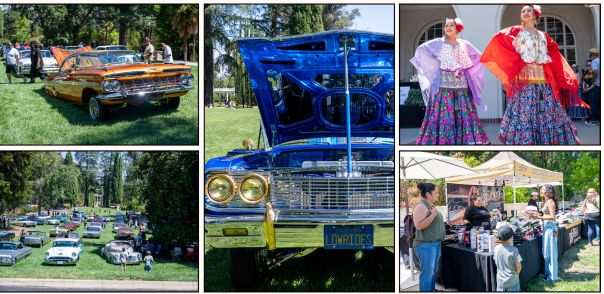
Third Annual Lowrider Exhibit at the Montalvo Art Center

Due to popular demand for the last exhibit, this year the third annual Lowrider Art Exhibit was organized in conjunction with the United Lowrider Council of San Jose (ULCSJ) and Local Color SJ.

This event will utilize the historic grounds of Montalvo and the trails of Santa Clara County Park to offer a fun afternoon for the whole family. It will feature a fleet of impressive lowrider vehicles on the Great Lawn. as well as art-making and painting demonstrations in the gardens, local artists and vendors, a DJ and dancing, and delicious options from local food vendors.

This exhibit will take place next Sunday, October 5th, starting at 1 PM, at the Montalvo Arts Center, 15400 Montalvo. Free admission.

spot_img

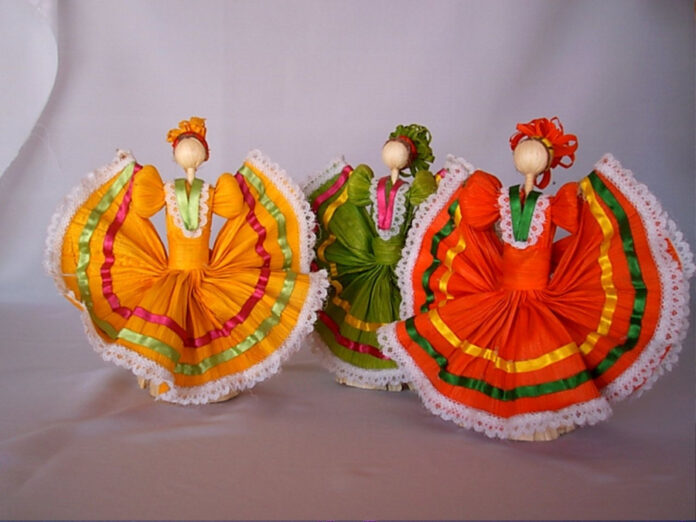
Corn husk dolls: Mexican crafts that preserve tradition and memory

Corn husk dolls are a Mexican craft steeped in symbolism. Discover their origin, production, and cultural value

by Mexico Desconocido

Corn husk dolls are a clear example of how the simplest elements of nature can be transformed into pieces filled with symbolism and beauty.

This Mexican craft, which survives in various communities across the country, is a reminder of popular creativity and how corn remains present not only in the kitchen but also in Mexico’s cultural life.

Origin and Symbolism of Corn Husk Dolls

The use of corn husks to make handicrafts dates back to pre-Hispanic times. Native peoples took advantage of this flexible and abundant material to make both utensils and figures with a ritualistic character.

Over time, the tradition merged with the creation of simple toys for girls and boys, who found in these dolls a form of play and companionship.

Beyond their playful nature, these pieces evoke fertility, life, and a connection to the earth. Like the ears of corn hanging in kitchens, the dolls are also a symbol of cultural continuity.

How are corn husk dolls made?

The production process begins with the collection of dried corn husks, known as totomoxtle. These husks are moistened to make them more manageable and then folded, braided, and tied to shape the dolls’ bodies.

The artisans often use natural fibers or colored threads to tie the pieces and mark details such as the waist, arms, or head. Some dolls are adorned with small dresses also made of dyed corn husks, while others maintain the natural tone of the totomoxtle, highlighting the simplicity of the material.

Each piece can take between one and several hours of work, depending on the level of detail and the decorative finishes added.

Regions where they are preserved

Corn husk dolls are made mainly in rural communities in central and southern Mexico, in states such as:

  • Puebla and Tlaxcala, where they are sold at craft fairs and markets.
  • The State of Mexico, especially in municipalities with a strong agricultural tradition.
  • Oaxaca, where artisans combine them with other plant fibers and natural dyes.
  • Michoacán, as part of the artisanal production linked to corn and local festivities.

In all these regions, the dolls are not only tourist souvenirs but also part of community celebrations and traditional offerings.

Dolls with Cultural Value

Today, these crafts have transcended their role as children’s toys to become decorative and collectible pieces. Many families place them on Day of the Dead altars, at corn markets, or as souvenirs from weddings and other festivities.

Their permanence demonstrates that the corn husk, beyond wrapping tamales or protecting grains, also envelops stories, traditions, and memories. In this sense, the dolls are a living testament to Mexican folk ingenuity.

spot_img

Brian ‘BoMac’ McIntyre believes canelo has two to four fights left, starting with Jermall Charlo

by Jeepers Isaac

Trainer Brian ‘BoMac’ McIntyre says he doesn’t want to see Canelo Alvarez retire after his loss to Terence Crawford last Saturday night.

BoMac’s Path for Canelo

‘BoMac’ states that Canelo (63-3-2, 39 KOs) “has earned the fight” to do what he wants. He’d like to see him fight Jermall Charlo next, and stay around in the sport for another two to four contests before retiring. However, if Canelo loses to the 35-year-old Jermall, he might need to consider retiring.

Canelo fighting Jermall (34-0, 23 KOs) would interest older fans who remembered when Charlo was one of the dominant fighters at 154 and 160. He captured world titles at junior middleweight and middleweight in 2015 and 2019.

Jermall abruptly stopped fighting in 2021 and didn’t return to the ring until November 2023, when he beat Jose Benavidez Jr. by a 10-round unanimous decision. Charlo recently knocked out Thomas LaManna in the sixth round earlier this year on May 25. Before that, Jermall had been inactive for 18 months. He’s currently ranked #2 WBA, #3 WBC at super middleweight.

“I’d love to see Canelo fight again. If he wants to continue two or three more fights, just let him go ahead and do it. He’s earned the right to do what he wants to do. He fought some of the best fighters of his era, and when you get to that stage, it’s in his blood,” said trainer Brian ‘BoMac’ McIntyre to Fight Hub TV when asked if Canelo Alvarez should continue fighting following his loss to Terence Crawford.

The Retirement Question

Canelo doesn’t need ‘BoMac’ to tell him what to do. He’s got two fights left on his contract with Turki Alalshikh. Alvarez is unlikely to want to retire and walk away with the money he has left on his multi-fight contract. Whether Canelo continues fighting after his contract ends will depend a lot on how well he performs in those last two fights. If he wins both and looks good, it’s possible that he’d continue. He’s only 35.

McIntyre’s Recommendation

“Go ahead, Canelo. Fight again. Two times, three times, four times, however many times you want. I think Charlo just put something out there, something about, ‘My division. I’m on my way back.’ So, fight Charlo,” said ‘BoMac’ when asked who Canelo should fight next. “Then, he might have to consider retirement,” said Brian on what happens if Alvarez loses to Jermall Charlo.

Canelo has a big decision to make in determining who he should fight next. While Jermall would be a good choice to interest older fans, it would do nothing for the younger ones who have never seen him fight before. Jermall has been too inactive in the last four years for the younger fans to know of him.

Alvarez would be better off choosing someone fans have heard of and care about. These would be good options for Canelo: Hamzah Sheeraz, Chris Eubank Jr., and Conor Benn.

spot_img

National Hispanic Heritage Month: 2025

by Marvin Ramírez

National Hispanic Heritage Month celebrates the contributions of people in the United States with roots in Spain, Mexico, Central America, South America, and the Spanish-speaking countries of the Caribbean. In 1968, Congress designated a week for this celebration, and two decades later expanded it to a full month: from September 15 to October 15.

The choice of these dates is not coincidental. September 15 marks the anniversary of independence for five Central American countries: Costa Rica, El Salvador, Guatemala, Honduras, and Nicaragua. Mexico and Chile celebrate their independence on September 16 and 18, respectively, reinforcing the symbolism of this period for Hispanic communities across the continent.

According to official estimates, the Hispanic population in the United States reached 68 million as of July 1, 2024, representing 20% of the nation’s total population. In addition, 15 states have one million or more Hispanic residents, including California, Texas, Florida, New York, and Arizona. In California, the impact of the Hispanic community is particularly visible, in everyday life as well as in politics, the economy, education, and culture.

In the San Francisco Bay Area, the celebration of Hispanic Heritage Month is an opportunity to highlight the cultural richness of a diverse community that has been an essential part of the region’s social and cultural fabric. Over the coming weeks, various cities and community organizations will host events, workshops, and festivals that honor the traditions, histories, and achievements of Latino communities.

In San Francisco, the Mission Cultural Center for Latino Arts will host a series of art exhibitions, film screenings, and musical performances focused on the Indigenous and Afro-Latino roots of Latin America. In Oakland, the Latino Heritage Month Festival returns to the Civic Center on Saturday, September 28, with live music, folkloric dance, traditional food stands, and activities for the whole family.

Meanwhile, the city of San José will hold its traditional Hispanic Heritage Parade on Sunday, October 6, followed by a community festival at Plaza de César Chávez Park. There will also be bilingual readings, storytelling, and art workshops in public libraries throughout Santa Clara County.

The median age of the Hispanic population in 2024 is 31.2 years, underscoring a young and vibrant community with a promising future. This month represents an opportunity to learn, connect, and recognize the many ways Hispanic culture has shaped national identity and continues contributing to the development of the country.

For more information on local events, visit your city’s website or check the social media pages of Latino cultural centers in your area.


spot_img

Threats of violence cancel ‘Grito’ celebrations in Sinaloa and Michoacán 

by the El Reportero‘s wire services

Mexico is gearing up for its traditional two-day celebration of Independence Day, in which this year, a woman president will deliver the traditional “Grito” in the capital for the first time ever.

However, while President Claudia Sheinbaum emulates Padre Miguel Hidalgo’s 1810 Cry for Independence on Monday night and presides over Tuesday’s military parade in the capital, several Mexican cities have decided to cancel local ceremonies.

For the second consecutive year, cartel violence has forced the cancellation of Independence Day celebrations in Sinaloa’s state capital.

On Sunday, Governor Rubén Rocha called off all public festivities — concerts, fireworks displays, the “Grito” — planned for Monday and Tuesday. In a social media post, Rocha did not specify the reasons for canceling the events, only saying that he was “exercising the responsibility [of his office] of safeguarding the security and well-being of the population.”

The announcement comes a week after residents of Culiacán, the state capital, staged a massive march calling for peace amid an unrelenting wave of increased cartel violence that has plagued the state since Sept. 9, 2024. The outbreak of the cartel fighting prompted Rocha to cancel last year’s celebrations.

Rocha said that, like last year, his office would instead observe Mexico’s Independence Day by hosting a simple private ceremony to which leaders of the state and local congresses and representatives of the armed forces would be invited.

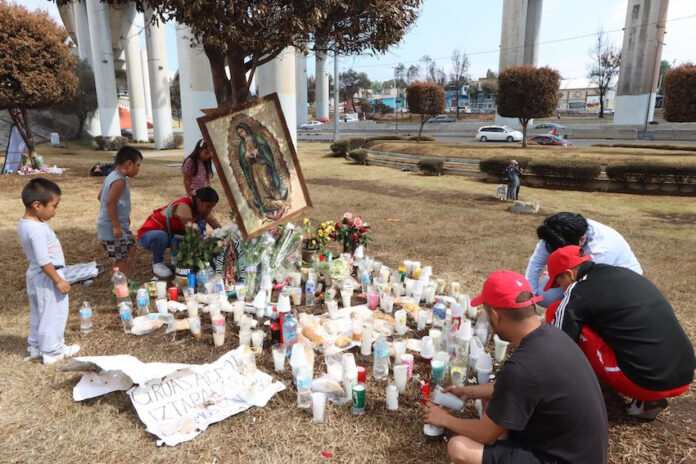
The mayor of Iztapalapa, Mexico City’s sprawling eastern borough of more than 1.8 million residents, also canceled local Independence Day festivities in the aftermath of the gas tanker explosion that has claimed the lives of 14 people.

With 40 victims still hospitalized, Mayor Aleida Álvarez announced that the traditional celebrations would be replaced with “a respectful and reserved ceremony” during which protocol would be solemnly observed.

In the western state of Michoacán, three municipalities called off their celebrations citing security concerns.

Officials in Zinepécuaro canceled festivities after Saturday’s incident during which members of organized crime blockaded highways and set fire to vehicles to prevent the authorities from carrying out a drug bust.

The mayor of Periban called off the local Grito and parade after a criminal gang released a video in which they threatened to “stir things up.”

Residents of Uruapan will also be deprived of holiday celebrations after local officials canceled the festivities in response to Sunday’s attack on police headquarters that left one officer dead.

The Michoacán state capital of Morelia is also on high alert after a video threat made by a masked man calling himself “Comandante Arango,” who claimed to be a leader of the “Purépecha Army.”

Local officials increased security measures, including the institution of a “No-fly Zone” for drones, declaring that they are taking the threat seriously. On Sept. 15, 2008, eight people were killed and dozens were injured when two grenades were thrown into a crowd during Morelia’s Independence Day festivities.

On Friday, President Sheinbaum reiterated a warning issued by the Foreign Affairs Ministry, cautioning Mexican nationals in the U.S. to be careful when celebrating Independence Day due to the risk of immigration raids.

Earlier this month, organizers of “El Grito Chicago” canceled the city’s two-day Independence Day festival, citing fears of heightened immigration enforcement.

With reports from Milenio, Aristegui Noticias and El Sol de Morelia

spot_img

In first ‘Grito’ as president, Sheinbaum honors Mexico’s heroines of Independence

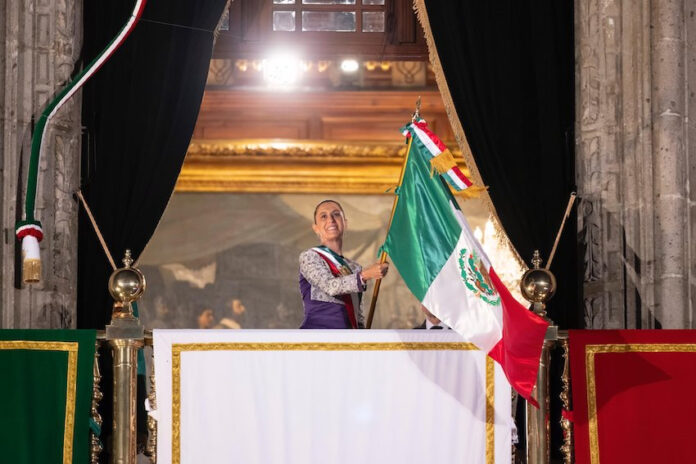
The flag Sheinbaum fervently waved was given to the highly-popular president "for the first time in history" by military women from Mexico's Heroic Military College, the president's office said in a statement. (@Claudiashein/X)

by Peter Davies

Mexico News Daily

President Claudia Sheinbaum made history on Monday night, becoming the first female president of Mexico to deliver the national Cry of Independence as she continued a long-running tradition on the eve of Mexico’s Independence Day.

With Mexico City’s central square, the Zócalo, filled to the brim, Sheinbaum appeared on the central balcony of the National Palace at 11 p.m. to pay homage to the original “Grito de Dolores” (Cry of Dolores), a call for revolt against Spanish rule issued by priest Miguel Hidalgo y Costilla in Dolores, Guanajuato, on Sept. 16, 1810.

“Mexicanas, mexicanos,” she began, giving symbolic precedence to the female citizens of the country.

“Long live independence! Long live Miguel Hidalgo y Costilla!” Sheinbaum bellowed on the eve of the 215th anniversary of the start of the Mexican War of Independence.

With the presidential sash draped over her torso, the Mexican flag in her left hand and her husband and three female military cadets standing behind her, the president went on to wish long life to various other Mexican independence heroes, including four women.

Josefa Ortiz Téllez Girón (Sheinbaum used the maiden name of the woman more commonly known as Josefa Ortíz de Domínguez), Leona Vicario, Gertrudis Bocanegra and Manuela Molina were all included in the presidential Grito de Independencia, witnessed also by a small group of high-ranking officials gathered on another National Palace balcony.

In keeping with her oft-repeated “It’s time for women” message, Sheinbaum also wished long life to the “anonymous heroines” of Mexico, the heroines (and heroes) who “gave us a homeland” and the country’s “Indigenous women,” recognition that was especially fitting given that 2025 is the “Year of the Indigenous Woman” in Mexico.

The prominence of women in the inaugural Cry of Independence (Grito de Independencia) delivered by a female president was a historic and important milestone in a notoriously macho country, an act that no doubt inspired millions of Mexican women, and, perhaps even more importantly, the nation’s girls.

In additional nods to the current times, Sheinbaum also wished long life to “our migrant sisters and brothers” — amid an immigration crackdown in the United States — and to a “free, independent and sovereign Mexico.”

The emphasis on Mexico’s independence and sovereignty was particularly apt given the pressure the Mexican government has faced from the Trump administration and the ongoing speculation that the United States could take military action against Mexican drug cartels on Mexican soil, something that Sheinbaum is vehemently opposed to.

The “dignity of the people of Mexico” and freedom, equality, democracy and justice also got their due before the president’s Grito reached its crescendo with three passionate cries of “¡Viva México!”

An estimated 280,000 revelers responded in kind, roaring “Viva!” in unison to offer their full endorsement of the president’s message.

Sheinbaum subsequently rang the Campana de Dolores — the same bell that Hidalgo rang 215 years ago — waved the Mexican flag to the mass of patriots and joined in an especially patriotic rendition of Mexico’s national anthem.

An elaborate fireworks display followed, bringing yet more color, and noise, to the Zócalo — the beating heart of Mexico.

More history is made 

The flag Sheinbaum fervently waved was given to the highly-popular president “for the first time in history” by military women from Mexico’s Heroic Military College, the president’s office said in a statement.

The president, the statement noted, “resumed a tradition started by former president Andrés Manuel López Obrador, by mounting an Honor Guard during her tour of the Gallery of Presidents at the National Palace,” which preceded the delivery of the Grito.

Walking through the National Palace, Sheinbaum and her husband, Jesús María Tarriba, paused in front of a portrait of Leona Vicario — an “historic event,” according to the president’s office, as the portrait of a woman had been placed in the main gallery of the National Palace for the first time.

Zócalo works up to fever pitch 

There was a jovial, but calm atmosphere in the Zócalo when Mexico News Daily arrived at around 7 p.m. The facade of the adjacent National Palace veritably glowed in the national colors of red, green and white.

Babies, toddlers, children and elderly citizens in wheelchairs were among the throng of people waiting patiently but eagerly to hear the Grito de Independencia of the first female president the nation has had in the more than two centuries since Mexico became an independent country.

Tacos de canasta, tamales, doraditas and impossibly-heaped chicarrones preparados were all on offer across the vast expanse of the Zócalo, sating the appetites of the citizens of one of the world’s great, and rightfully proud, food countries.

Roving vendors hawked patriotic penachos (headdresses) and sarapes, and cigarettes and candy as well.

The ambience gradually became more exuberant as time passed. The commencement of live music — i.e. the warm-up acts — turned things up another notch, or three. It soon became evident that a not insignificant number of revelers had smuggled their favorite festive beverages into Mexico’s premier national gathering place — beer, canned tequila cocktails, the odd flask of stronger stuff. Despite the family atmosphere, marijuana smoke lingered in the air, but overall the crowd was well-behaved.

When La Arrolladora Banda El Limón de René Camacho — a band from Sinaloa — started playing, the energy in the Zócalo became palpable. Plenty of people knew all the words of the songs performed by the Latin Grammy award-winning regional music banda, and weren’t at all shy to show it. As 11 p.m. approached, the national party — in the Zócalo and across Mexico — was in full swing. Fever pitch had arrived.

As the vast crowd awaited the appearance of Sheinbaum and the delivery of the Grito, cries of “Claudia!” and “¡presidenta!” broke out and spread across the central square. When she finally appeared, the president was a distant figure on the National Palace balcony for many, but her voice was heard loud and clear:

“Viva México libre, independiente y soberano! ¡Viva México! ¡Viva México! ¡Viva México!”

spot_img

FOOD AS THY MEDICINE: 10 foods to curb sugar cravings, live holistically healthy

by S.D. Wells

There’s a reason that one out of every three Americans is suffering from a preventable disease like obesity, Type 2 diabetes, cancer, heart disease or dementia. Junk food and junk medicine are marketed heavily and come with boatloads of misinformation and disinformation, leading consumers and patients off a steep health cliff. You can resist. You can overcome. You can heal. It’s time to live holistically and sustainably, and all you need is to put these ten simple strategies in place daily. Here we go.

– Fiber- and protein-rich foods curb cravings: Options like berries, chickpeas, oats and chia seeds provide slow-digesting carbs, complete proteins, and gut-supporting fiber that balance blood sugar and reduce hunger-driven sugar cravings.

– Healthy fats help with satiety: Foods such as avocados, pistachios and olives deliver monounsaturated or polyunsaturated fats that promote fullness, regulate glucose-insulin balance, and support long-term health.

– Micronutrients and bioactive compounds play a role: Sweet potatoes (carotenoids), spirulina (vitamins, minerals, appetite control), and berries (polyphenols) influence brain chemistry, inflammation, and dopamine regulation to counter sugar addiction.

– Protein-packed swaps prevent binges: Unsweetened Greek yogurt and pistachios provide high-quality protein that supports neurotransmitter function, increases satiety, and reduces reliance on quick sugar fixes.

Eat these 10 foods to crush cravings

Cutting back on sugar can feel nearly impossible, especially when cravings strike. But according to research in nutrition and food science, certain whole foods can naturally help the body resist those urges. By targeting satiety, balancing blood sugar, and supporting gut and brain health, these foods act as tools to overcome sugar dependence. Here are ten nutrient-rich options you can find in any supermarket that science shows can reduce cravings.

– Berries
Unlike higher-sugar fruits, berries are low on the glycemic index, rich in fiber, and hydrating. They create a gentle insulin response while delivering antioxidants and polyphenols that decrease gut inflammation, a factor often linked with sugar addiction. Enjoy them in sauces, teas, or yogurt bowls.

– Avocados
Avocados combine fiber and healthy monounsaturated fats, which enhance satiety. Clinical trials show that meals containing avocado boost satiety hormones more effectively than carb-heavy meals, leaving you less likely to reach for sweets. They can be blended into smoothies, pestos, or dressings for versatility.

– Pistachios
These protein-packed nuts supply amino acids that support neurotransmitter balance, which reduces addictive cravings. Studies link pistachio consumption with improved heart health, weight management and lower sweet intake. A handful or homemade trail mix can be a satisfying alternative to candy.

– Chia Seeds
Chia seeds are complete plant proteins rich in omega fatty acids. Their lipid profile helps stabilize blood sugar and sustain energy, making them an excellent choice for long-term craving control. Add them to oatmeal, toast toppings or puddings.

– Chickpeas
A staple legume in many healthy diets, chickpeas are high in both soluble and insoluble fiber, which support a diverse gut microbiome. Since gut bacteria influence cravings via the gut-brain axis, chickpeas help regulate hunger signals while adding plant-based protein to meals.

– Oats
This whole grain provides both fast- and slow-digesting carbs, preventing fatigue-driven sugar cravings. Oats are also rich in beta-glucan fiber, which reduces blood glucose spikes and cholesterol levels. They can replace refined flours in recipes or bulk up meals.

 – Olives
Olives supply polyunsaturated fatty acids that support glucose-insulin balance, critical for reducing cravings tied to insulin resistance. They also promote cardiovascular health. Use them in tapenades, salads, or cheese boards for flavor and function.

– Sweet Potatoes
Beyond their fiber content, sweet potatoes are rich in carotenoids, including precursors of vitamin A, that support cognitive function and help regulate dopamine release. Since sugar spikes dopamine, sweet potatoes can rebalance brain chemistry while providing slow-digesting energy.

– Greek Yogurt
Unsweetened Greek yogurt offers complete proteins that keep you fuller longer. Research shows high-protein meals reduce appetite and support healthy weight management, reducing late-night sugar binges. Swap it for sour cream or use it in dips and snacks.

– Spirulina
This nutrient-dense algae contains essential vitamins and minerals and has been shown in controlled studies to reduce appetite and improve lipid levels. Adding even small amounts to smoothies or spreads can suppress cravings while boosting nutrition.

Let’s wrap this up without chemicals, junk science or junk medicine

Overcoming sugar addiction doesn’t require deprivation — it requires strategy. By choosing foods that regulate appetite, stabilize blood sugar, and nurture gut and brain health, cravings naturally diminish. These ten everyday foods prove that science-backed nutrition can help rewire the body away from sugar dependence toward long-term health.

Tune your food news frequency to FoodSupply.news and get updates on more junk science food stuff, like high fructose corn syrup, that corporate America loads the grocery store shelves with to drive up chronic diseases and disorders so Big Pharma can take your money. food.news.

spot_img

Supreme Court allows immigration agents to resume ‘roving patrols’ in LA, siding with Trump

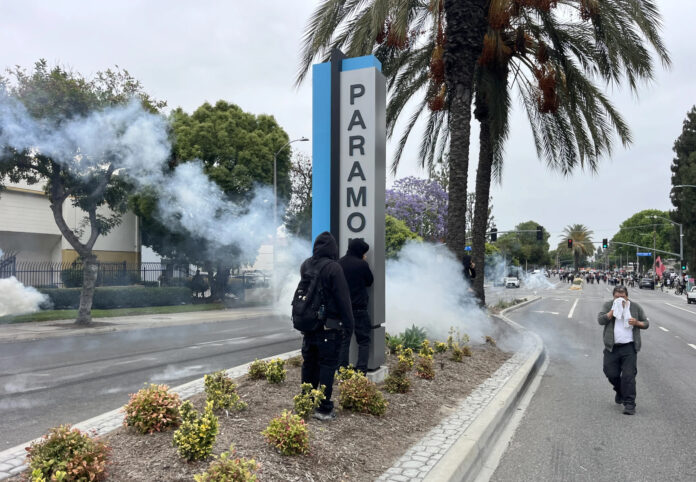
Supreme Court allows immigration agents to resume ‘roving patrols’ in LA, siding with Trump-- Personas se alejan de los gases lacrimógenos durante protestas contra ICE y las redadas migratorias en Paramount.

Congress has cut federal funding for public media — a $3.4 million loss for LAist. We count on readers like you to protect our nonprofit newsroom. Become a monthly member and sustain local journalism.

by Wendy Fry, Sergio Olmos | CalMatters

The U.S. Supreme Court today granted the Trump administration’s emergency request to lift a temporary restraining order barring federal immigration officials from conducting “roving patrols” and profiling people based on their appearance in Los Angeles and Southern California.

The case is likely to have an enormous impact, not just for Los Angeles but across the country, several experts told CalMatters. It means immigration agents can legally resume aggressive street sweeps that began in early June in Los Angeles, the epicenter for President Donald Trump’s mass deportation campaign.

The Supreme Court, by a 6-3 majority, agreed with the Trump administration that federal immigration officers can briefly detain and interrogate individuals about whether they are lawfully in the United States and that they can rely on a “totality of circumstances” standard for reasonable suspicion. That means everything the officer knew and observed at the time of the stop.

The U.S. Supreme Court took the case through its emergency docket, also known as the shadow docket, which is used for cases that are handled speedily with limited briefing and typically no oral argument.

Justices do not have to publish an opinion when they act from the emergency docket. Justice Brett Kavanaugh, nonetheless, wrote a concurring opinion explaining his reasoning in lifting restrictions on Los Angeles immigration sweeps.

“Here, those circumstances include: that there is an extremely high number and percentage of illegal immigrants in the Los Angeles area; that those individuals tend to gather in certain locations to seek daily work; that those individuals often work in certain kinds of jobs, such as day labor, landscaping, agriculture, and construction, that do not require paperwork and are therefore especially attractive to illegal immigrants; and that many of those illegally in the Los Angeles area come from Mexico or Central America and do not speak much English,” he wrote.

“To be clear,” he continued, “ethnicity alone cannot furnish reasonable suspicion; under this Court’s case law regarding immigration stops, however, it can be a ‘relevant factor’ when considered with other salient factors.”

The three justices appointed by Democratic presidents dissented from the majority, stressing that they objected to the court lifting limitations on immigration sweeps without oral argument and through the emergency docket, which the Trump administration used extensively this year.

The Supreme Court has sided with Trump in at least 17 cases in a row now.

“That decision is yet another grave misuse of our emergency docket,” Justice Sonia Sotomayor wrote in the dissent. “We should not have to live in a country where the Government can seize anyone who looks Latino, speaks Spanish, and appears to work a low wage job.”

Los Angeles and dozens of other Southern California municipalities wrote in an amicus brief supporting the restraining order that, because of the population makeup that “half the population” of the region meets the federal government’s criteria for being stopped and questioned about their immigration status.

Gov. Gavin Newsom in a written statement condemned the decision and said the state would “continue fighting these abhorrent attacks on Californians.”

“Trump’s hand-picked Supreme Court majority just became the Grand Marshal for a parade of racial terror in Los Angeles. This isn’t about enforcing immigration laws — it’s about targeting Latinos and anyone who doesn’t look or sound like Stephen Miller’s idea of an American, including U.S. citizens and children, to deliberately harm California’s families and small businesses,” Newsom said, referring to Trump’s deputy chief of staff.

The ruling means the Border Patrol can resume the aggressive tactics a district federal judge said violated people’s Fourth Amendment constitutional rights against unreasonable search and seizure. It means officers can rely on little more than a person being in the parking lot of a Home Depot and speaking Spanish to question someone about their immigration status.

In a brief asking justices to remove restrictions on immigration stops, Trump’s Department of Homeland Security wrote that the lower-court injunction interfered with agents’ efforts to remove unauthorized immigrants.

“The injunction raises the specter of contempt for every stop in the district, threatening agents with sanctions if the court disbelieves that they relied on additional factors in making any particular stop. It chills the exercise of Executive authority and usurps the President’s Article II powers to enforce our immigration laws,” attorneys for the Trump administration wrote.

Why courts paused ‘roving patrols’

The district court found, based on a “mountain of evidence,” that the government engaged in a pattern of conducting stops without reasonable suspicion—relying solely on traits like race or ethnicity, speaking Spanish or accented English, the location a person is in, and the type of work a person does.

The 9th Circuit Court of Appeals had upheld the lower court’s ruling, chiding the Trump administration for misrepresenting the restraining order in their appeal.

“If, as the Defendants suggest, they are not conducting stops that lack reasonable suspicion, they can hardly claim to be irreparably harmed by an injunction aimed at preventing … stops not supported by reasonable suspicion,” the three-judge panel from the 9th Circuit wrote.

A coalition of civil rights, immigrant rights, and local government agencies, including the American Civil Liberties Union and the United Farm Workers, sought the order, arguing the LA-area raids have violated people’s rights by allowing federal immigration agents to stop people who simply appear to be Latino, including U.S. citizens.

“The federal government is seeking to detain individuals solely because they are not white, speak Spanish or speak accented English. That idea is anathema to everything the United States stands for, and it should be rejected,” a group of cities in Los Angeles County wrote in amicus brief supporting restrictions on immigration agents. They wrote that this summer’s raids had “sown terror” in their communities.

LA immigration sweeps continued

Despite the previous order barring profiling, agents have continued an aggressive enforcement blitz in the nation’s second-largest city.

About 40 agents hit a Westlake Home Depot on Aug. 28, using tear gas and pepper pellets to disperse a crowd before detaining eight people, a Border Patrol official confirmed Friday. That’s the same location where agents previously made a hype video set to rap music of themselves hiding in a Penske rental truck before bursting out to detain day laborers in a raid dubbed Operation Trojan Horse.

Under Operation-At-Large Chief Gregory Bovino, the Border Patrol has detained Latino daylaborers, swarming Home Depots and carwashes across the nation’s second largest city. Bovino has vowed to bring similar tactics to cities across the country.

Kevin R. Johnson, the director of Aoki Center on Critical Race and Nation Studies at UC Davis School of Law said the federal government’s racial profiling has consequences beyond immigration enforcement. He wrote to CalMatters and also in a paper for the SMU Law Review that “race-based immigration enforcement undermines Latina/o sense of belonging in the national community for generations.”

“Importantly, the Trump administration’s campaign against people of color goes well beyond immigration law and immigrants. As exemplified by the administration’s war on diversity, equity, and inclusion, the President has sought to eliminate programs that seek to promote the full integration of racial and other minorities into U.S. society,” Johnson wrote.

spot_img

Hispanic Heritage Month: Joyful celebrations shadowed by fear

Marvin Ramírez, editor

by Marvin Ramírez

Every September, Latin America bursts into celebration. From Mexico to Central America, and across parts of South America, independence days are honored with parades, traditional music, folkloric dances, and national costumes that showcase the rich tapestry of each country’s cultural heritage. Here in the United States, these celebrations are no less vibrant. Communities from Los Angeles to Houston, Chicago to New York, and especially here in San Francisco, come alive with festivals that blend national traditions into one larger Latin American mosaic. These gatherings remind us that our shared identity is not bound by borders, but by culture, history, and the deep desire to honor the sacrifices of those who fought for freedom.

Yet, beneath the music and the joy, there is an undeniable shadow that haunts this season of celebration. Millions of Latino immigrants—many of them undocumented—now live in fear. Families who have built lives here for decades suddenly find themselves at risk of deportation. These are people who arrived seeking the prosperity their home countries could not provide, drawn to the promise of economic stability in the United States, the most powerful economy in the hemisphere. For years, they have worked quietly, paying taxes, buying cars and homes, raising children who know no other country but this one. And now, after contributing to the very fabric of American society, they are told they do not belong.

This contradiction strikes deeply during Hispanic Heritage Month, when the nation officially recognizes the contributions of Latinos to its culture, economy, and history. It is a time meant to honor traditions, highlight achievements, and celebrate diversity. Yet how can these celebrations feel complete when so many members of our community are afraid to step out of their homes, to attend the parades, or to join the festivals? For many, what should be a moment of pride and joy is clouded by anxiety and uncertainty.

The truth is that the United States has long relied on the labor and dedication of immigrants, particularly Latinos – with documents or without them. They pick the fruits and vegetables that line supermarket shelves, construct the buildings that shape skylines, clean the offices where business is conducted, and care for children and the elderly. They are not merely participants in the economy; they are pillars of it. Every paycheck they earn, every dollar they spend, fuels businesses large and small. Without them, entire industries would falter. To deny their contributions is to ignore the reality of American prosperity.

Moreover, these families are not temporary visitors. They are part of the American story. Their children sit in classrooms alongside everyone else’s children, pledge allegiance to the same flag, and dream of futures filled with opportunity. For many, returning to their countries of origin is not even an option. Their roots are here now, in the neighborhoods, schools, and workplaces of the United States. To uproot them is not only cruel, it is shortsighted.

That is why these independence celebrations carry a bittersweet tone this year. They remind us of the resilience of our people, the joy of our traditions, and the beauty of our cultures. But they also underscore the contradictions in a nation that depends on immigrant labor while threatening immigrant lives. The music plays, but for some, the fear is louder.

Businesses, too, feel this tension. Many small shops, restaurants, and services thrive because of Latino consumers, including those who are undocumented. Their absence in public spaces is felt not only in the silence of the streets but in the economic health of local economies. To lose them is to lose part of the lifeblood of countless communities.

And yet, despite the challenges, one truth endures: the Hispanic presence in the United States is unshakable. No matter how much policy shifts or how many deportation orders are issued, the cultural and economic impact of Latinos cannot be erased. Our music, our food, our languages, our traditions—they are woven into the fabric of this nation. America without Latinos is not America.

The hope, then, is that opportunities for legal pathways will expand. We have seen examples of those who, after leaving voluntarily, were able to return through work visas, bringing stability to their families and contributing once again to the economy they helped build. Such pathways should be the norm, not the exception. If the United States is serious about honoring Hispanic Heritage Month, it must also be serious about protecting the lives and futures of Hispanic families.

From San Francisco, El Reportero wishes all our readers a joyful Hispanic Heritage Month. May the music, colors, and traditions uplift us. And may this nation, built by immigrants, finally extend to them the dignity and recognition they deserve – with or without documents.


spot_img