Friday, October 16, 2026
spot_img
Home Blog Page 439

Seven mistakes that could worsen chronic fatigue

[Author]by Cindy L.[/Author]

Sufferers of chronic fatigue often find themselves both frustrated and helpless. Many of them have tried explaining their condition to their doctors, but they are either not taken seriously or not given much useful advice on the cause(s) or effective treatment(s) of this ailment.

With little help coming from conventional doctors, some sufferers decide to take things into their own hands and start adopting some general healthy living tips in the hope of alleviating their condition. While they may encounter some improvements, the gains may be short-lived or limited.

These are the mistakes they may be making:

1. Not getting enough sleep

Research suggests that most adults require about 8 hours of sleep each night for physical and emotional well-being. But the average American gets only about 6.7 hours of sleep each night. This means that many Americans are chronically sleep-deprived. Consequently, their fatigue could simply be a signal from their bodies to get more sleep.

2 . Feeding their hunger with refined sugars and flour

Consuming refined sugars and flour (in confectionery products, sweetened beverages, processed snacks, etc.) can cause wide fluctuations in one’s blood-sugar levels. That is why, after a sugar high from consuming refined foods, many people suffer an energy crash. If they attempt to counter it by consuming more “energizing” sugary or floury foods, they actually create a vicious cycle, which worsens their chronic fatigue.

3. Trying to get away with poor nutrition

Many alternative health practitioners are recognizing nutritional deficiencies as one of the major causes of chronic fatigue. This is because the body is not provided with many essential nutrients, such as iron, magnesium, potassium and germanium, as well as vitamins B, C and D (amongst others), which it requires to produce energy. Sometimes, the body is loaded with substances that actually deplete its important nutrients (e.g., sugar metabolism depletes B vitamins). It is thus no wonder that the body simply does not function as it is supposed to.

4. Using coffee to perk themselves up

To counter fatigue caused by poor nutrition, chronic stress and lack of sleep, many people resort to downing loads of coffee every day, making matters worse. This is because coffee stimulates the already overworked adrenal glands to produce more adrenaline to perk the body up, leaving the body even more overworked. The root issues are not resolved, and a vicious cycle is established.

5. Thinking that their amalgam filling has nothing to do with their fatigue

According to experts like Edward Arana, D.D.S., President of the American Academy of Biological Dentistry, California, one of the problems that mercury amalgam fillings bring is chronic fatigue. This is because mercury poisoning is linked to conditions like inability to concentrate, confusion and depression, which are also symptoms of chronic fatigue.

6. Using antibiotics frequently to deal with common infections

The rampant use of antibiotics upsets the micro- floral balance found in the intestinal tract, leaving users more susceptible to systemic infections like candidiasis and parasite overgrowth. And such infections are found to be major contributors to chronic fatigue, as the immune system becomes exhausted from fighting infections that have gone out of control.

7. Thinking that there is one single cause for their fatigue

Medical researchers and doctors often look for the solution of chronic fatigue in a single place (e.g., treating a specific infection). Such efforts, however, often end in poor treatment outcomes.

On the other hand, when alternative health practitioners take a multidisciplinary approach and help patients address their specific health issues, they have better success in dealing with the problem. This means that, when it comes to chronic fatigue, there is no simple answer — a holistic approach is a must.

Sources for this article include: Trivieri, Jr., Larry, and Anderson, John W. Alternative Medicine: The Definitive Guide. 2nd ed. New York, USA: Celestial Arts, 2002. Print. Larson, Joan Mathews, PhD. Depression-Free, Naturally: 7 Weeks to Eliminating Anxiety, Despair, Fatigue, and Anger from Your Life. NY, USA: Ballantine Books, 1999. Print. By Natural News.


spot_img

The many health benefits of milk thistle even herbalist may not know

[Author]by Reuben Chow[/Author]

Milk thistle is most well-known and widely-studied for its benefits on liver health. However, milk thistle also has numerous other proven health benefits not many know about.

Milk thistle boosts overall liver function and health, protecting the liver from damaging toxins, detoxifying it, regenerating its cells, and giving it a glutathione boost.

Research has also shown milk thistle helps with various liver conditions, including cirrhosis, poisoning, hepatitis (viral or alcoholic, B or C), sluggish liver, liver congestion, fatty liver, jaundice, and other liver issues related to drug use and alcoholism.

Boosting the liver results in other benefits:

Milk thistle’s positive effects on liver health have a direct impact on a number of bodily functions and health conditions.

• It helps those attempting to recover from substance addiction, including drugs and alcohol.

• By boosting the liver’s ability to deal with environmental triggers, milk thistle can help those suffering from chronic allergies, especially multiple-chemical sensitivity.

• Milk thistle increases bile production by the liver, which then helps the body to remove via bowel movements the testosterone by-products that cause acne. Further, by boosting liver function, milk thistle helps to remove harmful toxins in the blood which can cause skin flare-ups. Along the same vein, this makes milk thistle also helpful for other skin conditions like chronic rashes, eczema and psoriasis.

• Increased bile production helps to relieve constipation.

• The additional bile helps to protect the intestinal lining, which then aids in alleviating Crohn’s disease symptoms.

• Milk thistle also helps to relieve intestinal inflammation, and it has been used for inflammatory bowel disorders.

• By protecting the liver, milk thistle protects the body against the potential harmful effects of long-term prescription medication use and harmful toxins in the workplace.

• This herb has been successfully used against deathcap mushroom poisoning.

• Traditionally, naturopathic physicians and herbalists have used milk thistle to help deal with hemorrhoids and varicose veins. A clogged or sluggish liver does not process blood very well, and that tends to cause blood to back up in the leg veins and rectum. Thus, with a healthier liver, these conditions can be improved.

• A cleaner and better functioning liver is better able to process and deal with various hormones in the body, promoting better hormonal balance.

• This makes milk thistle helpful for premenstrual syndrome and prostate enlargement.

• Some healing modalities, eg. Traditional Chinese Medicine and French folk medicine, see the liver as closely tied to emotional well being. This makes sense because the liver metabolizes neurotransmitters and hormones and thus has great influence on the overall biochemistry of the human body. A toxic or unhealthy liver can cause emotional discomfort, frustration, anger and even depression. By detoxifying and improving the health of the liver, milk thistle can thus help with emotional issues.

Other benefits:

Silymarin in milk thistle is a potent antioxidant, while milk thistle can also increase the levels of superoxide dismutase (SOD) and glutathione, other strong antioxidants. Other health benefits of milk thistle include helping to:

• stabilize blood cholesterol levels, reducing total cholesterol levels and helping to convert LDL cholesterol to HDL cholesterol.

• stabilize blood sugar levels; used to help with type 2 diabetes.

•improve appetite and digestion, including fat digestion.

• improve gallbladder disorders, including dealing with gallstones.

• boost immunity.

• alleviate some symptoms of Parkinson’s disease, including heartburn and constipation; increased glutathione levels also help slow the disease’s progress.

• improve adrenal disorders.

• prevent altitude sickness.

• prevent and/or fight against certain types of cancer.

• slow atherosclerosis development by preventing plaque formation on artery walls.

Sources for this article include:

Stengler, Mark, ND. The Natural Physician’s Healing Therapies: Proven Remedies Medical Doctors Don’t Know. New York, NY: Prentice Hall Press, 2010. Print.
Balch, Phyllis A., CNC. Prescription for Herbal Healing: An Easy-to-Use A-to-Z Reference to Hundreds of Common Disorders and Their Herbal Remedies. New York, NY: Avery, 2002. Print.

Bratman, Steve, Dr. Complementary & Alternative Health: The Scientific Verdict on What Really Works. London, UK: Collins, 2007. Print.

Gaby, Alan R., MD. The Natural Pharmacy: Complete A-Z Reference to Natural Treatments for Common Health Conditions. 3rd ed. New York, NY: Three Rivers Press, 2006. Print.

Murray, Michael, ND. The Pill Book Guide to Natural Medicines: Vitamins, Minerals, Nutritional Supplements, Herbs, And Other Natural Products. New York, NY: Bantam Books, 2002. Print. http://www.insights-on-health.com

About the author: Reuben Chow has a keen interest in natural health and healing as well as personal growth.

Subscribe to his natural health newsletter or follow his health websites on Facebook.

His main health websites Insights on Health and All 4 Natural Health focus on being healthy naturally, while his other health websites cover topics such as cancer, depression, holistic depression help, as well as omega 3 fatty acids. He also owns self improvement and inspirational websites like Inspiration 4 Living, allinspiration.com, Life Changing Quotes, and 101 Inspirational Ideas. Through his network of sites at The Journey of Life, he hopes to help improve people’s lives. Natural News.

spot_img

San Francisco Cinco de Mayo celebración returns to the Mission

[Author]Compiled by El Reportero’s staff[/Author]

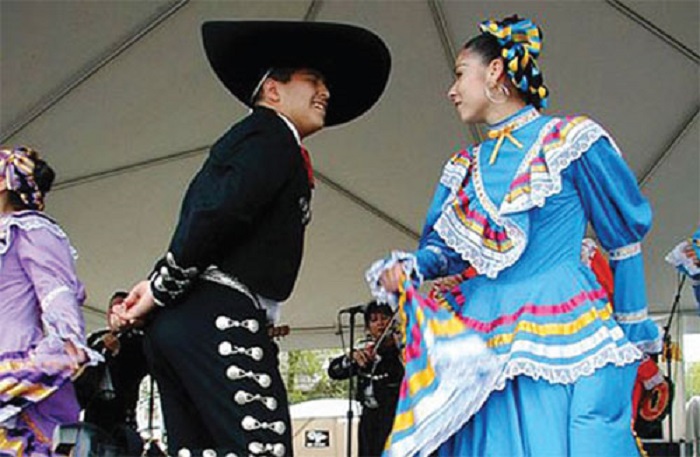
The San Francisco Cinco de Mayo celebration will return to the heart of the Mission District on Valencia Street. Mission Neighborhood Centers’ 10th annual Cinco de Mayo, an alcohol-free, family friendly celebration is being planned on one of the Mission’s new trendy, main thoroughfares, occupying Valencia Street.

The celebration will showcase the very best of Mexican and Latin American cultures with a diverse array of Mexican and Latino foods, music, dance and artistry for the entire family to enjoy. Attendees will enjoy rich cultural experiences and activities focused on retaining cultural traditions in its community.

Over 75 vendors will participate providing their delicious, diverse foods, showcasing their arts and crafts and empowering the multi-cultural community through greater awareness of their products and services.

Proceeds from the event benefit Mission Neighborhood Centers, who has been providing multi-generational, multi-cultural safety-net services to children, youth, seniors and families throughout San Francisco for over fifty-five years.

The event takes place from 10 a.m. to 6 p.m. and is within walking distance from the 24th Street BART and easily accessible via MUNI.

57th San Francisco International Film Festival Film Competition

Eleven Narrative Features Contend for $10,000 New Directors Prize; eight Documentaries Contend for $15,000 in cash prizes.

The 57th San Francisco International Film Festival runs from April 24 – May 8. For more information and to purchase CineVoucher packages, visit sffs.org.

Latin Dance Fusion with Tika Morgan at Dance Mission Theater Tika’s Latin Dance Fusion brings together the music and basic steps of many Brazilian Dances, Salsa Suelta, Reggaetón and more into an accessible, high energy class. Experience the depth, beauty and power of these culturally rich movements founded in the African Diaspora. Class begins with body alignment, isolation’s, and stretching. You will learn choreography as you move by working in half time and through repetition. This class doesn’t stop and is a workout for the body and soul! YOU WILL SWEAT! Open Level – Shoes Optional. On Tuesdays 6:30 – 7:45 p.m., May 6 – June 10. Only 6 classes! All Levels $13/class or $60 for all six (class passes accepted).

CCSF presents special guest artist, on trumpet from New York: Eddie Allen

City College Of San Francisco Music Department and Concert and Lecture Series present “The Spring Jazz Concert” Featuring the Advanced Jazz Band And The Jazz/Rock Improvisational Workshop Directed by David Hardiman, Jr., Master of Ceremonies, David Hardiman Sr.

On T uesday, May 13, 2014, 8 p.m. – 10 p.m. at City College of San Francisco’s Diego Rivera Theater, Ocean Campus, at 50 Phelan Avenue San Francisco, Free!! Open to the public.

spot_img

New voices in Latin American Cinema at 57th SF International Film Festival

[Author]Compiled by El Reportero’s staff[/Author]

The San Francisco International Film Festival this year specially features the program New Voices in Latin American Cinema, which brings stories from different corners of the world (All About the Feathers from Costa Rica and Bad Hair from Venezuela) to screen in San Francisco.

All About the Feathers: An impoverished security guard struggles to care for his new fighting rooster. Slyly absurdist and quietly observational.

Bad Hair: A 10-year-old boy’s desire to straighten his kinky hair causes outsized conflict with his unemployed, harassed single mother.

All About the Feathers: BAM/Pacific Film Archives, Berkeley. April 25, 6:30 — Sundance Kabuki Cinema, San Francisco. April 27, 8:45 and April 29, 6:15. Bad Hair: Sundance Kabuki Cinema, San Francisco. May 1, 9:15— New People Cinema, San Francisco. May 4, 6:15— BAM/Pacific Film Archives, Berkeley. May 7, 6:30.

Buy tickets online at: festival.sffs.org. Win 2 Tickets: Send name, phone #, & preferred film & screening time to programming@SFLatinoFilmFestival.com.

Open call for: Entries for next yr’s festival: Accepted through May 10.

Open Call for: Volunteers & interns volunteers@SFLatinoFilmFestival.com.

Please consider: A monthly tax-deductible gift to the community, which may be matched by your employer to double your contribution.

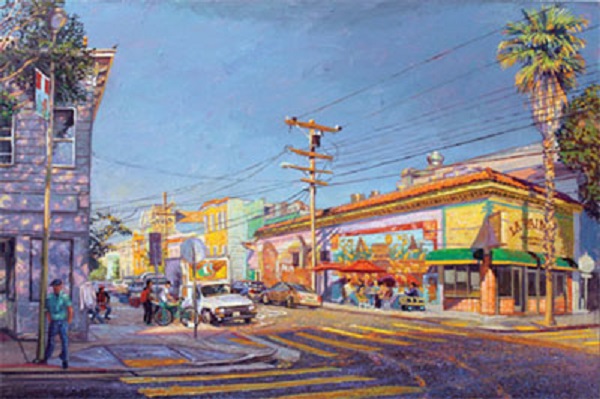
Our rainbow-streaked streets: The Mission District Series art exhibition at Alley Cat

Anthony Holdsworth has made it his mission to depict the Mission— the colorful streets and personality of the people— in vibrant portraits of paint.

Stop by the exhibition at Alley Cat Books Gallery, 3036 24th Street, S.F. now to April 28.

San Francisco Cinco de Mayo Celebration returns to the heart of the Mission District

The San Francisco Cinco de Mayo celebration will return to the heart of the Mission District on Valencia Street. Mission Neighborhood Centers’ tenth annual Cinco de Mayo, an alcoholfree, family friendly celebration is being planned on one of the Mission’s new trendy, main thoroughfares, occupying Valencia Street.

The celebration will showcase the very best of Mexican and Latin American cultures with a diverse array of Mexican and Latino foods, music, dance and artistry for the entire family to enjoy. Attendees will enjoy rich cultural experiences and activities focused on retaining cultural traditions in its community.

Over 75 vendors will participate providing their delicious, diverse foods, showcasing their arts and crafts and empowering the multi-cultural community through greater awareness of their products and services. Proceeds from the event benefit Mission Neighborhood Centers, who has been providing multi-generational, multi-cultural safetynet services to children, youth, seniors and families throughout San Francisco for over fifty-five years. The event takes place from 10 a.m. to 6 p.m. and is within walking distance from the 24th Street BART and easily accessible via MUNI.

At Valencia Street between 21st and 24th Streets, San Francisco. May 5, 10 a.m. to 6 p.m.

spot_img

Águila or Sol (Head or Tail): A celebration of art and good fortune

[Author]Compiled by the El Reportero’s staff[/Author]

A retrospective exhibition by Yvette Fuentes resulting from 15 years of artistic efforts that aims to provide the viewer with a feast of color and movement.

Yvette Fuentes presents a variety of artworks in media that ranges from indian ink to sophisticated mixed media and from figurative to abstract art. “Aguila o Sol” (Heads or Tails) is a phrase that expresses Yvette Fuentes’s artistic philosophy and her perception of the art world. “Aguila o Sol” refers to the notion that artists and their work are subject to whims of Lady Fortune.

As long as artists are able to transform their creative energy into works of art they will be rewarded. “Believing in hard work, and believing in ourselves is the best way to achieve our goals”, she asserts, adding “I am not good with words, let my paintings speak for me.”

At SOMArts Cultural Center, 934 Brannan Street (at 9th St.), San Francisco. April 18, 6:00 p.m. to 10:00 p.m. – April 20, 12:00 p.m. to 5:00 p.m. For more info contact http://yvettefuentes.com/.

A Cuban Musical Celebrationebration with Orquesta Aragón of Cuba and more

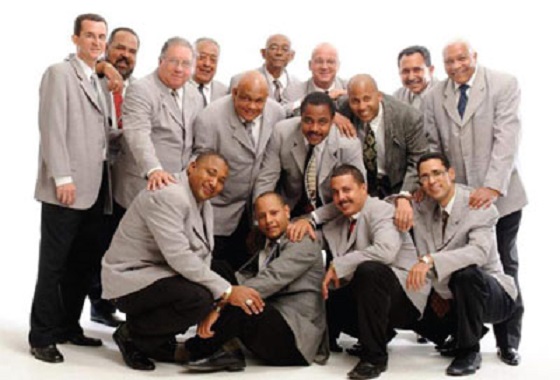
The San Francisco International Arts Festival (SFIAF) is joining with the School of Music & Dance at San Francisco State University to present an exclusive Bay Area engagement with the legendary Cuban music ensemble Orquesta Aragón from Havana. Aragón brings the musical genius of generations of musicians to the Bay Area dedicated to sharing their rich musical heritage with both young and old music fans throughout the world.

In addition to the Sunday night performance, on Monday April 21 Aragon will lead a musical master class for SF State music students, while the Latina/o Studies Dept will conduct a special symposium on U.S. Cuba relations to coincide with the visit.

SFIAF director, Andrew Wood said of the engagement, “It has been over a decade since I was complicit in a U.S. tour by the great Aragón, so it is wonderful to have them back in town again. Music and Latina/o faculty member John Calloway, who directs the University’s Afro-Cuban ensemble, said the visit by one of Cuba’s most beloved cultural ambassadors demonstrates the ongoing connection the university has had with Cuban music and culture over the last 10 years. Also featuring the Afro-Cuban Ensemble of SFSU & the City College of San Francisco Charanga Orchestra.

Sunday April 20, 6 p.m. Pre-performance reception with the Artists 4 p.m. At SF State, McKenna Hall, San Francisco, 1600 Holloway Road, San Francisco. Reserved Seating: $40 – $60. Pre-Performance Artist Reception $20.

King & Queen Competition for Carnaval 2014 Who will lead the 2014 Carnaval Grand Parade?

Watch King and Queen contestants compete in a 3-minute dance in Carnaval costumes, sometimes accompanied by other dancers and musicians.

Although primarily a dance competition, performers can also play instruments and sing. The winners are selected based on many criteria, such as performance ability, authenticity of cultural form, choreography, costume, and audience reaction. Saturday, April 26, 7 p.m., Open to all ages. At the Brava Theater, 2781 24th St, S.F., Admission $15, under 16, $10.

spot_img

Boxing

Boxeo


The Sport of Gentlemen


Saturday, May 24 – Montreal, Canada –

Light heavyweights: Adonis Stevenson (23-1, 20 KOs) vs. Andrzej Fonfara (25-2, 15 KOs).

Saturday, May 25 — at Montreal, Canada

WBC light heavyweight title: Chad Dawson vs. Jean Pascal.

Saturday, May 25 — at London, United Kingdom

WBA super middleweight title: Carl Froch vs. Mikkel Kessler.

Saturday, May 31

– Macao, China – featherweights: Simpiwe Vetyeka (26-2, 16 KOs) vs. Nonito Donaire (32-2, 21 KOs).

spot_img

Musical based on life of Gloria Estefan to debut on Broadway in 2015

[Author]by the El Reportero’s news services[/Author]


The musical based on the life of Gloria Estefan will debut on Broadway in 2015 and will be preceded by a TV show to choose the actresses who will play the Cuban-American singer.

“It’s going to be daunting, but I have no doubt whatsoever that we are going to be able to do it and so much fun to be a part of the processes,” Estefan told the New York Daily News.

The musical entitled “On Your Feet” will reflect the life of the singer and her husband, the musician, producer and entrepreneur Emilio Estefan.

The project will be preceded by a television program that will search the world for actresses to play the singer in the different stages of her life.

The bilingual musical will focus on Estefan’s first years in Miami and her recovery from the almost fatal accident she suffered in 1990.

Gloria Estefan, with seven Grammy Awards, several Billboards and more than 100 million albums sold, won fame with hits like Conga, The Rhythm is Going To Get You and 1, 2, 3, among others.

Emilio Estefan, for his part, not only managed his wife’s career, but those of other Latin music stars like Shakira, Ricky Martin, Jennifer Lopez, Marc Anthony and Jon Secada.

Cuban musician and band leader Juan Formell dies at 71

Cuban musician Juan Formell, leader and founder of Los Van Van, died in Havana, state television reported. He was 71.

His son, drummer Samuel Formell, told Efe that his father died from complications of a liver disease that kept him hospitalized for the past week.

“His liver was really not functioning well, there was bleeding and a low hemoglobin count,” Samuel, one of the artist’s six children, said.

“I still can’t believe it – yesterday (Wednesday) afternoon he was listening to music with me, but then he got worse,” the late musician’s son said, Misiónadding that his father’s remains will be cremated.

Juan Formell was a composer, double-bass player and guitarist with a long artistic career.

Juan FormellJuan Formell
Born on Aug. 2, 1942 in Havana, Formell first studied music with his father Francisco, a flutist, pianist and arranger, after which he continued to learn as a self-taught student.

In his studies as a composer and guitarist he was guided by such musicians as Felix Guerrero, Rafael Somavilla, Armando Romeu, Antonio Taño and Orestes Urfe.

After 8 Year Absence Tenor Jose Carreras Make Triumph Return in Spain

Spanish tenor Jose Carreras has made a triumphant return to opera in “El Juez” by Austrian composer Christian Kolonovits.

The 67-year-old Carreras, known as one of The Three Tenors, thrilled opera fans from Bilbao and 15 countries Saturday night at the Teatro Arriaga.

The Spanish tenor showed the power of his voice, hitting notes across the musical range in a masterful performance.

More than 1,200 people packed into the Teatro Arriaga for the world premiere of the work, which deals with the theft of children during Spain’s Franco regime.

Carreras, who had not performed in a full opera in more than eight years, carried the Kolonovits work, with a libretto by Austrian playwright Angelika Messner, for two and one-half hours.

The Barcelona-born tenor played the judge consumed by his role in covering up the scandalous theft of children.

Carreras was joined in the cast by Italian bass Carlo Colombara and Spanish singers Jose Luis Sola, Sabina Puertolas and Ana Ibarra.

“El juez (Los niños perdidos),” co-produced by Teatro Arriaga and Kupfer Kultur & Media, will be staged again on Tuesday and Friday.

The opera will be performed in Austria at the international festival in Tyrol in August.

spot_img

Mexico passes bill to try soldiers in civilian courts

[Author]By the El Reportero[/Author]

Mexico’s Chamber of Deputies has approved changes to the military code of justice, unanimously passing a bill that requires soldiers implicated in crimes against civilians to be tried in civilian courts.

The bill, passed unanimously by the Senate last week, is part of steps taken by Mexico to comply with a 2009 Inter-American Court of Human Rights ruling.

Once President Enrique Peña Nieto signs the bill into law, cases involving alleged crimes by soldiers against civilians will no longer be under military jurisdiction.

These changes are “reforms that guarantee human rights and comply with new international criteria regarding military jurisdiction,” lawmaker Ricardo Mejia, deputy coordinator of the center-left Citizens’ Movement party, said.

Military police will conduct investigations under the direction of civilian prosecutors and be required to offer assistance to victims and protection to witnesses.

They also will be tasked with arresting military suspects and immediately turning them over to civilian prosecutors.

In cases of alleged crimes against military discipline, the military police officers will be authorized to conduct personal inspections of the detainee and collect items in his or her possession. Armed forces members who have committed crimes against civilians may be held in pretrial detention in military lockups when military authorities deem it necessary to protect their rights.

In such cases, military authorities will cooperate with the civilian courts to ensure the accused appears before the judicial authorities when summoned. Mexico’s Supreme Court limited military jurisdiction in July 2011, but that ruling did not set a binding legal precedent in the country’s justice system.

Half of Mexican minors impoverished

Even as the Day of Mexican Children is being celebrated, more than half of those 40 million children are living in poverty.

Further more, 4.7 million of them are living in extreme poverty, reports the La Jornada daily newspaper.

In Mexico’s indigenous communities, the situation is particularly alarming, due to eight of 10 children under age 17 living in poverty, while one in three is experiencing extreme poverty.

The daily reported these figures coming from a summary prepared jointly by the United Nations Fund for Children and the National Council for the Evaluation of Social Development Policy. The fact that poverty is more pronounced among children than in the whole of society is significant.

La Jornada adds that the data contained in the document Poverty and Social Rights of Children and Adolescents in Mexico 2010-2012, highlights the consequences of the economic policies imposed in the country three decades ago.

Under the official economic policies implemented by country’s neoliberal governments, poverty and inequality have increased.

spot_img

17 facts to show to anyone who believes that the U.S. economy is just fine

[Author]by Michael Snyder
Analysis Economic Collapse[/Author]

No, the economy is most definitely not “recovering”. Despite what you may hear from the politicians and from the mainstream media, the truth is that the U.S. economy is in far worse shape than it was prior to the last recession.

In fact, we are still pretty much where we were at when the last recession finally ended. When the financial crisis of 2008 struck, it took us down to a much lower level economically. Thankfully, things have at least stabilized at this much lower level. For example, the percentage of working age Americans that are employed has stayed remarkably flat for the past four years. We should be grateful that things have not continued to get even worse. It is almost as if someone has hit the “pause button” on the U.S. economy. But things are definitely not getting better, and there are a whole host of signs that this bubble of false stability will soon come to an end and that our economic decline will accelerate once again. The following are 17 facts to show to anyone that believes that the U.S. economy is just fine…

#1 The homeownership rate in the United States has dropped to the lowest level in 19 years.

#2 Consumer spending for durable goods has dropped by 3.23 percent since November. This is a clear sign that an economic slowdown is ahead.

#3 Major retailers are closing stores at the fastest pace that we have seen since the collapse of Lehman Brothers.

#4 According to the Bureau of Labor Statistics, 20 percent of all families in the United States do not have a single member that is employed. That means that one out of every five families in the entire country is completely unemployed.

#5 There are 1.3 million fewer jobs in the U.S. economy than when the last recession began in December 2007. Meanwhile, our population has continued to grow steadily since that time.

#6 According to a new report from the National Employment Law Project, the quality of the jobs that have been “created” since the end of the last recession does not match the quality of the jobs lost during the last recession…

• Lower-wage industries constituted 22 percent of recession losses, but 44 percent of recovery growth.

• Mid-wage industries constituted 37 percent of recession losses, but only 26 percent of recovery growth.

• Higher-wage industries constituted 41 percent of recession losses, and 30 percent of recovery growth.

#7 After adjusting for inflation, men who work full-time in America todaymake less money than men who worked full-time in America 40 years ago.

#8 It is hard to believe, but 62 percent of all Americans make $20 or less an hour at this point.

#9 Nine of the top ten occupations in the U.S. pay an average wage of less than $35,000 a year.

#10 The middle class in Canada now makes more money than the middle class in the United States does.

#11 According to one recent study, 40 percent of all Americans could not come up with $2000 right now even if there was a major emergency.

#12 Less than one out of every four Americans has enough money put away to cover six months of expenses if there was a job loss or major emergency.

#13 An astounding 56 percent of all Americans have subprime credit in 2014.

#14 As I wrote about the other day, there are now 49 million Americans that are dealing with food insecurity.

#15 Ten years ago, the number of women in the U.S. that had jobs outnumbered the number of women in the U.S. on food stamps by more than a 2 to 1 margin. But now the number of women in the U.S. on food stamps actually exceeds the number of women that have jobs.

#16 69 percent of the federal budget is spent either on entitlements or on welfare programs.

#17 The number of Americans receiving benefits from the federal government each month exceeds the number of full-time workers in the private sector
by more than 60 million.

Taken individually, those numbers are quite remarkable. Taken collectively, they are absolutely breathtaking. Yes, things have been improving for the wealthy for the last several years. The stock market has soared to new record highs and real estate prices in the Hamptons have sky rocketed to unprecedented heights.

But that is not the real economy. In the real economy, the middle class is being squeezed out of existence. The quality of our jobs is declining and prices just keep rising. This reality was reflected quite well in a comment that one of my readers left on one of my recent articles…

It is getting worse each passing month. The food bank I help out, has barely squeaked by the last 3 months. Donors are having to pull back, to take care of their own families. Wages down, prices up, simple math tells you we can not hold out much longer. Things are going up so fast, you have to adopt a new way of thinking. Example I just had to put new tires on my truck. Normally I would have tried to get by to next winter. But with the way prices are moving, I decide to get them while I could still afford them. It is the same way with food.

I see nothing that will stop the upward trend for quite a while. So if you have a little money, and the space, buy it while you can afford it. And never forget, there will be some people worse off than you. Help them if you can.

And the false stock bubble that the wealthy are enjoying right now will not last that much longer. It is an artificial bubble that has been pumped up by unprecedented money printing by the Federal Reserve, and like all bubbles that the Fed creates, it will eventually burst.

None of the long-term trends that are systematically destroying our economy have been addressed, and none of our major economic problems have been fixed. In fact, as I showed in this recent article, we are actually in far worse shape than we were just prior to the last major financial crisis. Let us hope that this current bubble of false stability lasts for as long as possible. That is what I am hoping for.

But let us not be deceived into thinking that it is permanent. It will soon burst, and then the real pain will begin.

spot_img

Hispanic college enrollment up, but not by enough

[Author]
by Irene Flórez
New America Media[/Author]

Recent data show that nationwide Hispanic/Latino and Chicano college admissions are on the rise, with Hispanic figures now outpacing white enrollment at some schools. But Hispanic education experts say the numbers are not high enough.
Patricia Gandara, research professor and co-director of The Civil Rights Project at UCLA, and and commissioner with the White House Initiative on Educational Excellence for Hispanics calls the numbers “disastrous.”

“We can’t sustain an economy this way,” she said, noting that only 11 percent of Hispanic adults in California have a bachelor’s degree. “Very soon half of the graduating class [in California] will be of Hispanic origin. If they are only getting degrees at a rate of 11 percent, we are heading in the wrong direction. It is disastrous for the community and disastrous for the state.”

The Rise

Latinos continue to gain more degrees year after year. As of 2012, there were 2.4 million Hispanic 18- to 24-year-olds enrolled in college, representing 19 percent of all college students, compared to 12 percent in 2008. From 2001 to 2011, the number of Hispanics with a bachelor’s degree rose from 11.1 percent to 14.1 percent.

But, the rise isn’t limited to Hispanic students. In the last twenty years, Whites, Blacks, Asians/Pacific Islanders and Hispanics have all seen improvements in bachelor degree attainment rates. Nationwide, up to 60 percent of Asians/Pacific Islanders obtain at least a bachelor’s degree, compared to 40 percent for Whites, 23 percent for Blacks and 15 percent for Hispanics.

Another area of concern is the fact that in states like California and Texas, completion rates for first-time, full-time Latino freshman – 15 percent and 17 percent, respectively – continue to lag behind other groups.

Moving Forward

According to Excelencia in Education, a non-profit focusing on Latinos in higher education, for the United States to regain the top global ranking for college degree attainment, Latinos will need to earn 5.5 million more degrees by 2020.

That would go a long way toward boosting the nation’s economic and political vitality, according to one study by the Washington-based think tank Center for American Progress.

The study, which outlines the benefits enjoyed by those with at least a bachelor’s degree, shows college graduates earn more, access more opportunities, show greater rates of civic engagement and have a higher quality of life overall. The authors note that in 2006 the average annual income for a college graduate was $56,897 compared to $30,072 for a high school graduate. And that gap continues to widen for those with masters degrees versus those who hold only a bachelors.

Hans Johnson, co-director of research for the Public Policy Institute of California and author of Closing the Gap: Meeting California’s Need for College Graduates, says that California still has a long way to go. The state needs many more college graduates before it can meet labor market demands.

“When we look at Latino attainment levels we see strong progress in the first generation but that progress still leaves US-born Latinos far short of other groups in terms of college completion,” he said.

In California, Hispanics surpass white enrollment

California is home to a third of the nation’s Hispanic population. As of March of this year, California Latinos now represent 39 percent of the state population, making them the single largest ethnic group in the state.

And for the first time, the state’s premier public institution of higher education, The University of California, announced in April that it had accepted more Hispanic/Chicano students than white students. (This number was an aggregate of all Hispanic, Latino and Chicano students.) Last year Latinos made up 27.6 percent of those admitted for the freshman class. This year, Latinos made up 28.8 percent of the 61,120 Californians admitted for this fall’s freshman class across the UC system’s nine undergraduate campuses. In total, nearly one thousand more Hispanic and Chicano students were admitted this year compared to last year.

Next year, the University of California will have even more data available about Hispanic admissions, thanks to the addition this year of more ethnic designations to their freshman application.

As of 2014, UC’s application has 69 categories including Caribbean, Cuban American, Latin American Latino, Mexican American Chicano, Puerto Rican, Other Black and Other White Caucasian.

As California goes, so goes the nation

Still, experts say that the latest increase in Hispanic admissions at the University of California isn’t a surprise, and that it’s more a reflection of changing demographics already underway.

“Increasing numbers of students admitted to UC is good news but it’s also what you’d expect given the demography [and] high school graduation rates in the state,” said Johnson, of the Public Policy Institute of California. According to Excelencia in Education, in California, Hispanic students make up over half of the K-12 population; in Texas it’s just under half. In Florida, 22 percent of children in K-12 are Hispanic. Nationally, Latino youth represent 22 percent of the K-12 public school population.

The numbers say it all

Mark Hugo López, Director of Hispanic Research at PEW Research says that Hispanic college admission gains are a reflection of trends. There are more college-age Latinos and the share of Latinos finishing high school and choosing to go to college is also growing.

“These changes are more amplified when you look at young people,” he said. “Nationwide Hispanics make up 17 percent of the population, but among 18- 29 year olds they make up 21 percent of the population.” Given those numbers, Gandara says more change needs to happen to make Hispanic enrollment a more accurate reflection of the growth of the population.

spot_img