Saturday, October 17, 2026
spot_img
Home Blog Page 435

The U.S.-Mexico border: A Constitución free zone

[Author]by David Bacon[/Author]


Under the Fourth Amendment, the people of the United States are not supposed to be subject to random and arbitrary stops and searches. But within 100 miles of a U.S. border, these rules don’t apply.


Last July, a worker phoned Alejandro Valenzuela, a young staff member at the Southside Workers Center in Tucson, Arizona. The police were at his home, the worker said, and were detaining him for deportation. Valenzuela and a friend drove over to observe – “to make sure his rights were being respected.” Over the next half hour the police grew increasingly hostile, demanding identification from Valenzuela, despite the fact that he was not driving the car, which was parked at the curb. They then detained Valenzuela and the worker.

Police then drove the two to Border Patrol headquarters. Neither was ever arrested or accused of a crime. Valenzuela was detained and intensively questioned for five hours, and finally released only when he could show he qualified for Deferred Action, which allows undocumented young people (DREAMers) to apply for deferred deportation and work authorization. The worker was eventually deported.

“On the street we get stopped and questioned because of the way we look,” Valenzuela charges. “It’s racial profiling.” On his behalf the ACLU filed the first challenge to section 2B of Arizona’s infamous SB 1070 “Show me your papers” law, which went into effect in September 2012. It authorizes police to enforce immigration law, and the ACLU argues it “unconstitutionally authorizes and encourages illegal police practices … the South Tucson police officers’ actions amounted to false arrest, violated Alex’s right to equal protection of the law and trampled his right to be free from unreasonable seizures.”

Tucson is 60 miles from the Mexican border, within a 100-mile zone where immigration authorities say important due process rights can be suspended. “SB 1070 interacts with this 100-mile area to enable these rights violations,” explains James Lyall, ACLU staff attorney in Tucson.

“It’s easy for police to stop people on a pretext, detain them longer than permitted, and turn them over to the Border Patrol.” The Valenzuela suit was one of the first actions taken by the ACLU Border Litigation Project, launched to document and litigate civil and human rights cases on the U.S. Mexico border.

Enforcing the “Zone”

Outside of communities like Tucson, the existence of a 100-mile “Constitution-free zone” is not well known. “There, the longstanding view [established in court rulings] is that the normal rules do not apply,” according to the ACLU. “For example, the authorities do not need a warrant or probable cause to conduct a ‘routine search.’” As of 2008, the zone potentially covered a staggering 197.4 million people-two-thirds of the U.S. population, including nine of the country’s 10 largest cities.

In Arizona, the impact is magnified by Federal enforcement and state legislation. Isabel Garcia, Legal Defender for Pima County (which includes Tucson), explains, “In Arizona we’ve become a laboratory for every kind of anti-immigrant, anti-human [rights] piece of legislation.” She points to Proposition 100 that amended the state constitution in November 2006 to permit the detention without bail of any undocumented immigrant accused of a felony. Under state legislation, a felony now includes using a fictitious document or a Social Security number belonging to another person.

The Project has documented other instances of immigration-related police misconduct beyond the 100-mile zone. They include an elderly Latino citizen jailed by Mesa police after picking a bottle from a trashcan, a passenger in a car stopped for a broken taillight taken to immigration authorities by Casa Grande police, a woman interrogated about immigration status after calling Tucson police about domestic violence, and a legal resident questioned about his status by Phoenix police while picking up his impounded car.

The ACLU of Arizona made 20 recommendations for changes in Tucson’s police practices. The most basic were to prohibit police “from questioning crime victims and witnesses about their immigration status,” from “extending any stop or detention solely to await a U.S. Customs and Border Protection (CBP) or ICE response,” requiring officers to contact their supervisors before questioning people about immigration status, and to document “the reasons such questioning is believed necessary.” According to Arizona Public Media, the council unanimously approved council member Regina Romero’s motion to ask police to put public safety above checking immigration status.

Detained and Demeaned

In October, the ACLU demanded an investigation of the Border Patrol, citing five examples of unlawful stops by roving patrols within the 100-mile zone. Although U.S. Customs and Border Protection (CBP) claims broad authority to conduct searches here, the ACLU complaint responds that “the Fourth Amendment’s protection against unreasonable searches and seizures extends to protect against unlawful investigatory stops.” Some of the documented mistreatment clearly exceeds this standard.

In May, Clarisa Christiansen was stopped by the Border Patrol n the desert west of Tucson, 40 miles north of the border, while driving her five- and seven-year-old children home from school. All are citizens, yet she was threatened with a Taser and knife, forced from her vehicle, interrogated, and left beside the road with a slashed tire.

In April, a American Indian woman was tailgated by a Border Patrol vehicle, dragged from her pickup, threatened and manhandled, interrogated and ridiculed, and detained for over an hour on the Tohono O’odham reservation. Other Native Americans have told her of similar treatment.

In March, a tourist from Oregon was threatened, detained and falsely accused of drug possession after hiking at the Fort Bowie Historical Site. A drug-sniffing dog did hundreds of dollars of damage to his car, but when his insurance company sought reimbursement, the CBP claimed the Federal Tort Claims Act “bars recovery for property damaged by CBP employees while the property is under detention.”

In May, a Latino citizen farmer was followed and detained on his property by Border Patrol agents holding automatic weapons. Agents trespass frequently, the family complains.

Two years ago, Suzanne Aldridge was stopped just outside of Bisbee, Arizona, 30 miles from the border, dragged from her car, handcuffed, and groped by a Border Patrol agent. Ten vans of agents, police and sheriffs searched her car with a drug-sniffing dog without her consent. She tried to file a complaint, but was given the runaround by CBP representatives.

In September, the ACLU of Washington and the Northwest Immigrant Rights Project settled a lawsuit challenging CBP’s roving patrols on the Olympic peninsula, which lies within the 100-mile zone. As in Arizona, the Border Patrol conducted arbitrary vehicle stops, prolonged detentions and other forms of mistreatment. Fourth Amendment protections still apply, the settlement says.  “Border Patrol officially agreed to follow the Constitution and not racially profile Latinos and other minorities … People should not have to fear that they could be stopped and questioned without reason any time they drive or are passengers in cars,” said Sarah Dunne, legal director of the ACLU-WA?

The ACLU testimony made seven recommendations for humane reform. They include increasing CBP oversight, preventing excessive use of force, reducing the high number of border crossing deaths, increasing detention standards and inspections, discouraging local and state authorities’ involvement in immigration enforcement, abolishing the Operation Streamline court, and reducing CBP’s “zone of authority” from 100 miles to 25 miles from the border.

Let Them Go!

In December, Tucson Congressman Raul Grijalva was one of 27 signing a letter to President Obama opposing mass deportations. “Criminalizing American families or giving local law enforcement the responsibility to choose who stays and who goes is not the right option,” they said. Whether in court, in Congress or in the streets, the denial of rights in Arizona is being challenged and that challenge is growing.

Three facts about the Constitution-Free Zone

Fact 1

In the “Constitution-free zone,” Border Patrol agents don’t need a warrant or probable cause to conduct a “routine search.” All travelers crossing a border are assigned a risk assessment score that will be retained for 40 years.

Fact 2

The Border Patrol can put a checkpoint anywhere in the Constitution-free zone (think Fifth Avenue!). “One hundred air miles is still, technically, the border,” says Leslie Lawson from the Nogales Border Patrol Station. Everyone at a checkpoint must answer questions about citizenship status.

Fact 3

The Constitution-free zone extends 100 miles from any U.S. border. Two-thirds of the U.S. population (197.4 million in 2008) lives within this zone, which includes nine of the 10 largest metropolitan areas, and the entire populations of: Connecticut, Delaware, Washington, D.C., Florida, Hawaii, Maine, Massachusetts, Michigan, New Hampshire, New Jersey and Rhode Island; and over 90 percent of: California, Maryland, New York, Vermont and Washington.

spot_img

Mission Neighborhood Center receives multimillionaire grant

[Author]by Santiago Ruíz
MNC Executive Director[/Author]

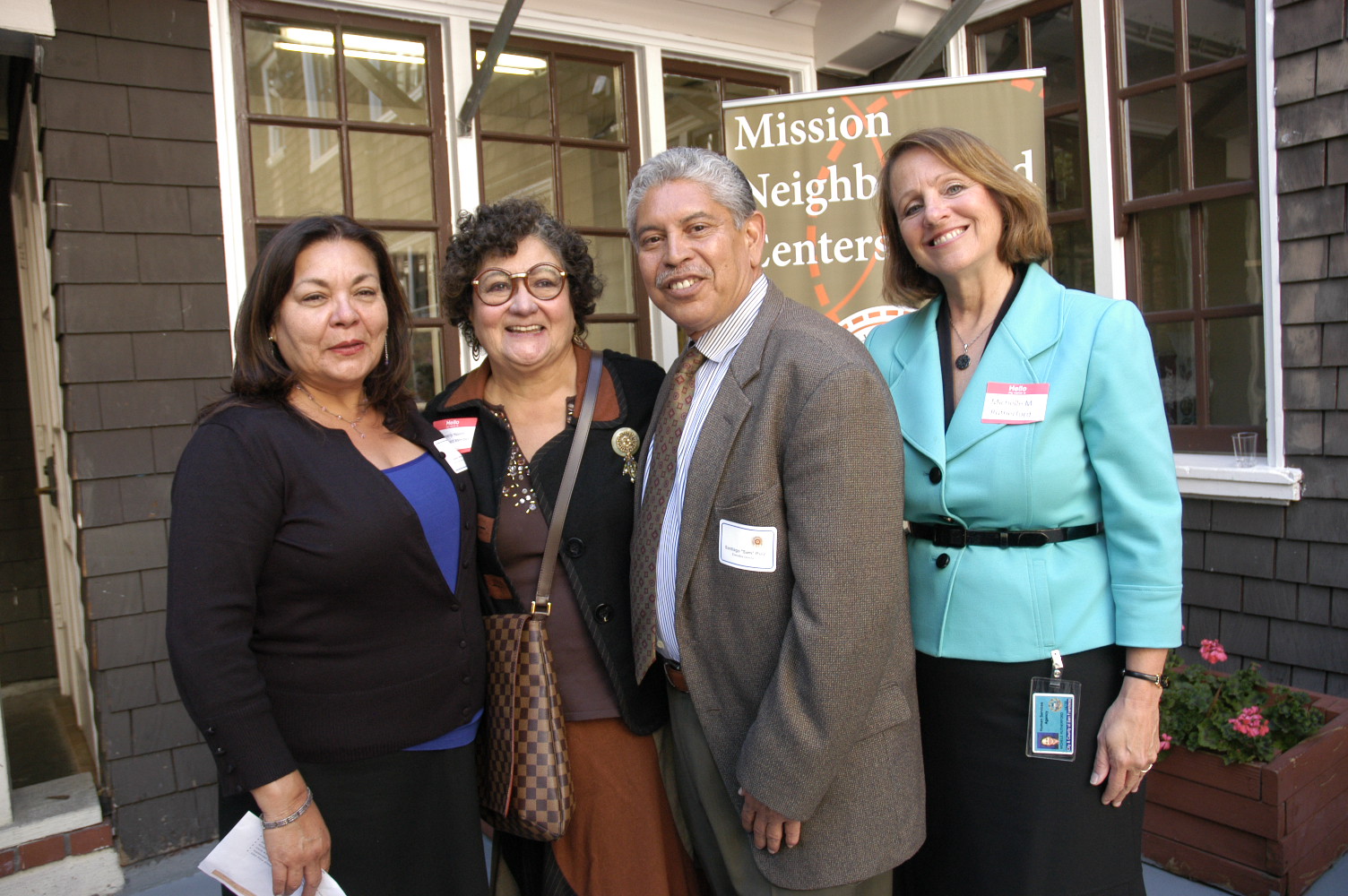
Mission Neighborhood Centers, Inc. (MNC) is excited to share with the community, media, non-profit partners and government officials, that on Wednesday, June 4, they officially announced that Mission Neighborhood Centers, Inc. received a Notice of Award (NOA) from the Department of Health & Human Services, awarding them a Head Start and Early Head Start Grantee contract for five years. Head Start is a national program for low-income families that promotes school readiness by enhancing the social and cognitive development of children through the provision of education, health, nutrition, disabilities support, parent engagement and other services to enrolled children and their families. Twenty-five percent of infants, toddlers and preschoolers nationwide live in families with incomes below the official poverty line. These children are at risk for a social delay or developmental disability.
As a community and an agency that works to serve the most marginalized sectors of families, MNC is committed to the continued opportunity to serve its community.
As leaders in the early childhood field for 40 plus years, with a relentless insistence on quality and adherence to rigorous high standards, Mission Neighborhood Centers-Head Start gets results for the neediest children. Its track record reflects capacity, quality, and a dedication to service delivery.
Decades of research show that a high-quality, pre-kindergarten program experience has lasting positive effects, particularly for the most at-risk children. MNC supports children in their preschool experience, and prepares them for school and a life-time of learning.
“By linking high-quality, coordinated health, social, community and educational support into its daily operations, MNC’s innovative bilingual social services in this diverse community has created a much needed pathway for success from cradle to career.” – Congresswoman Nancy Pelosi
The total contract award of over $4 million, will include base funding, to expand and serve 365 (3-5 year olds) and 48 Infants and Toddlers (3 months to 36 months) for a total of 413 children at a minimum of 10 facilities. “MNC accepts with great pride and joy this award and recognizes the tremendous assets our families offer to this community. It is our work to ensure that our families share in the thriving economy as well as ensuring their children sees continued success in high performing schools.” – Santiago Ruiz, MNC Executive Director

spot_img

After a lot of effort, a humanitarian young woman sees her reward in 2014

[Author]by the El Reportero’s staff and Yaiza Rubio[/Author]


The Santiago-Bermúdez family had more than one happiness this year. But one of its greatest satisfactions was when their pretty daughter Nicole Marie Santiago, obtained her Bacherlor’s Degree in Humanities during this year of graduations at San Francisco State University. Her hard work and sacrifice was rewarded.

Nicole, a very exceptional young woman of 22, who has suffered family tragedies and has learned to overcome economic obstacles and adversities to keep on advancing in her studies, graduated with honors and was written on the University’s Dean’s List as an outstanding student.

She was honored with a special dinner at her home by her beloved family and closest friends. She will now take a leave from school to work and help her parents before starting her Master’s Degree in Screen Writing.

The daughter of Israel Santiago, a native of Puerto Rico, and of Adriana Santiago de Bermúdez, of Nicaragua, Nicole is an excelled student born in San Francisco, 2009 it obtained her high school diploma from the Christian School of San Francisco.

Since the age of 12, Nicole began to worry about the most disadvantageous, which is one of her many qualities that makes her an exceptional people.

She traveled to Nicaragua with his mother to provide meals, clothes and Bibles to the inmates. Her mother is so proud of her.

“ Nicole has worked hard and helps us in everything, she has worked since the age of 15. Frequently she tells me that I should not be working anymore … that she will work and make enough… ”, her mother said.

She also worked helping the elderly, the children in the local community at her local church, taking them to the park and joining them in art projects. America is a part of the tutorial program Count of America, which gives classes to low income children.

For all this the staff of El Reportero congratulates Nicole for all her achievements, and hopes that all her dreams be fulfilled along her life.

spot_img

A dialogue on how technology can enrich our lives

[Author]Compiled by the El Reportero’s staff[/Author]

Marie Jobling, Executive Director of the Community Living Campaign, will lead a dialogue about how the Internet – and computers that fit in our pockets – can enrich our lives (and drive us crazy).

Ms.Jobling will highlight existing resources for free, or low-cost internet access, as well as for basic training, and one-to one-tutoring.

She will also include quick demos of Facebook, Skype and other internet and social media sites. Lastly, and importantly, she will share how technology is helping those of us with vision and hearing loss and other disabilities stay connected and engaged in our world.

Participants will get a chance to try out various tablets as well as other tools for access. There will be something for everyone, whether you love or hate this new world of on-line connections.

Audience discussion welcome!

Saturday, June 28, 2014 — 10 a.m.-12 noon. Flood Building, 870 Market St., Room 1185. Handicap accessible; all invited; donations accepted. At OWL SF – 870 Market Street, #905, San Francisco. For info call 415-989-4422. www.owlsf.org


Mojado: Unsung American Heroes

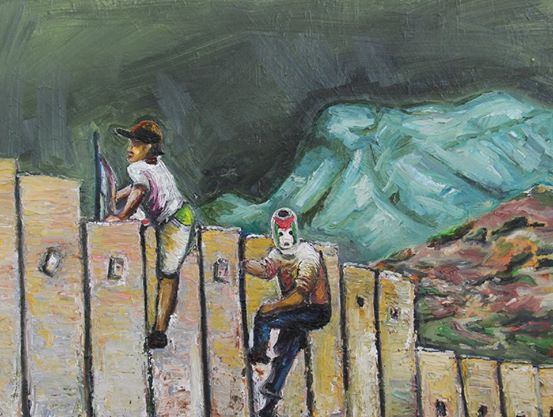
Galeria Beso Maya is proud to present Mojado: Unsung American Heroes, Adrian Delgado’s first solo exhibit. This specific series speaks truth to the struggle of obtaining the American Dream. These images tell the story of those often forgotten, Mojado: Unsung American Heroes, and how they are willing to work jobs most Americans refuse to.

This series of paintings is set out to reflect and express the construction of identity, what it means to be alienated based on “legal status,” and most importantly to shed light on the lives of those that are often forgotten but are truly the force that drives our American economy and society.

Opening reception: Saturday, June 21 at 12 p.m., exhibit Saturday, June 21 and Sunday, July 6. Admission free– donations accepted. Galeria Beso Maya, 3224 Fruitvale Ave., Oakland, California.


Night of music of mariachi

Named the Best Mariachi of the World, Mariachi Vagas de Tecalitlán will be playing their repertory accompanied by the special guest, Yolanda del Río. The event includes the presentation of ballet folklórico, grupo Los Mestizos de San Jose.

On Saturday, June 28 at 8 p.m., at the City National Civic, San Jose, California. Ticket at Ticketmaster or 408-792-4111.


Joe Baaan is still here, and will be live in SF

Those who still remember the legendary Joe Bataan, he will bring his old tunes and new taste to the Great American Music Hall on Saturday, July 19 at 8 p.m.

At 859 O’Farrell St., San Francisco. Tickets $45, dinner & show: $69.95. Buy yours by calling 415-285-7719 or at

gamhtickets.com/events/421609/joe-bataan.


spot_img

Judge orders Marc Anthony to double child support payments

[Author]by el servicio de noticias de El Reportero[/Author]

A California judge on Friday ordered singer Marc Anthony to double the child support he pays ex-wife Dayanara Torres, according to the TMZ Web site.

Torres went to court in May to demand more money from the artist to maintain the two children they had together – he has been paying her $13,000 a month but the judge boosted the amount to $26,000.

The increase is far from the more than $100,000 requested by Torres, who says that Anthony’s fortune is larger than he says it is and that he spends $330,000 a year on his family, girlfriends and pals.

Anthony refused to increase the monthly sum that Torres receives on grounds that providing more money for the kids would “spoil them rotten.”

Besides the $26,000 a month in child support, the court improved the yearly vacation allowance that Torres gets from Anthony, which jumped from $6,000 to $12,000 a year.

In 2008, Torres, a former Miss Universe, published a book entitled Married To Me: How Committing To Myself Led to Triumph After Divorce,” in which she related her experiences during her separation from Anthony, whose marriage to her in 2000 survived just four years.

In an interview with Efe just before the book was launched, Torres said she had “good relations” with Anthony and that they had put the divorce behind them.

Marc Anthony was also married to Jennifer López between 2004 and 2011.


American actress Eva Longoria to receive humanitarian award

American actress, director and producer Eva Longoria will receive the Women in Film organization’s Norma Zarky Humanitarian Award on Wednesday evening, joining a list of past honorees including George Lucas, Jeffrey Katzenberg, Ted Turner, Whoopi Goldberg, Robin Williams and Elizabeth Taylor.

Created in 1979, the award is bestowed on individuals who “have demonstrated enlightened support for the advancement of equal opportunity for all and devotion to the improvement of the human condition,” the organization says on its Web site.

The gala dinner will be held at Los Angeles’ Hyatt Regency Century Plaza and raise funds for different educational and philanthropic programs and initiatives.

Since 1977, Women in Film “has annually honored exemplary women in the entertainment industry – women who lead by example, who are creative, groundbreaking, and who excel at their chosen fields,” the organization said in a press release in March.

The other honorees in Wednesday night’s Crystal + Lucy Awards ceremony are Cate Blanchett, Kerry Washington, Jennifer Lee and Rose Byrne.

“The women we are honoring this year represent the best, the brightest and the bravest among us,” Women in Film, Los Angeles President Cathy Schulman said in a statement.

“These five women have distinguished themselves both as artists and as responsible citizens of the world,” Iris Grossman, president emeritus of WIF LA, said. “They inspire us and we in turn are honored to recognize them for all they have given.”

Longoria’s foundation works with women in the Hispanic community, helping girls attend university and adults start their own businesses.

She founded the San Antonio-based Eva’s Heroes organization, which benefits developmentally disabled adolescents, and also is a national spokesperson for Parents Against Cancer, a non-profit group that provides interpreters at hospitals and grocery vouchers to families.

spot_img

The use of racial and religious slurs used as mind control

[Author]By: Jon Rappoport
wwww.nomorefakenews.com[/Author]


Call it programming, operant conditioning, entrainment, thought control, mind control, emotion control.

The war of back-and-forth competing racial and religious slurs has a planned aspect. It’s a form of propaganda, and it begins with a heavy overemphasis on politically correct speech.

This sets the stage. It establishes an “official level” of sensitivity to language, and promotes the notion that words which exceed this level are uniformly damaging to defined groups.

The program has two goals: inflame feelings to create discord and animosity, and limit, in wide-ranging ways, what a person will permit himself to say or think.

Create an overall sense of caution that goes beyond the racial and religious.

Notice that this objective is the also Surveillance State’s objective. The two programs work hand in glove.

“We’re watching you all the time.” “There are many things you shouldn’t think or say.”

The engendered and encouraged discord between races and religions is ramped up to split society, split it into major groups—not individuals.

We live in an increasingly collectivist nation, and to guide its devolution, leading it into deeper levels of slavery, clearly defined groups must work off their frustrations by attacking each other.

The eventual goal is enlisting everyone in groups, up to their eyeballs.

Thus, an individual’s sense of himself as independent is lost.

This is the program.

It seeks to erase the individual.

Of course, this operation is not merely top-down. People buy in. They identify completely with their groups.

This identification has been the way of the world since the dawn of time.

In recent history, to see government’s role in defining groups and exacerbating tensions among them, consider the blizzard of US hate-crime laws.

The Violent Crimes Control and Law Enforcement Act of 1994; the Matthew Shepard and James Byrd, Jr. Hate Crime Prevention Act of 2009; two laws (1990 and 1997) that established requirements for reporting hate-crime statistics, at the federal level and on college campuses; and the 45 state laws defining hate crimes.

These laws create and enforce “protected groups” and attempt to elevate penalties for crimes committed against them. They are “special circumstance” laws.

They officially harden barriers between groups of Americans and set the stage for acrimonious arguments about what criminal suspects were thinking at the time they attacked their victims.

However, the whole import and basis of law in society is: a crime is a crime is a crime. Reading a defendant’s intention of no part of that. Laws apply to everyone, perpetrator and victim, across the board. “Equal protection under the law.”

The above hate-crime legislation did not introduce “new crimes.” They were already on the books. They already existed. They already could be prosecuted.

Hate-crime laws did create greater distance and new conflicts between groups. Society was further fractured. That goal was achieved.

These laws highlighted “bad intentions” toward race, nationality, religion, gender, ethnicity, sexual orientation, and disability.

Could any program of legislation invent more disharmony?

Hate-crime laws, filtering down, have had major cultural implications: “Well, I’m part of a federally protected group. So now I can be on the lookout for any slight, slur, sign of intimidation against my group. And when I see one, I can demand redress of wrongs. To make sure I remain protected, I can even invent imaginary slights and actions. The ends (protection) justify the means. I can commit crimes and avoid prosecution…”

In the homogenized every-day culture, “wrong thought and wrong intent” become divorced from violent crime. People pick up the clue: they need to police themselves, their thoughts, their ideas, their emotions.

There is a difference between decentralized political power (for example, state nullification of unconstitutional federal actions) and racial, ethnic, and religious groups walling themselves off from the rest of society and claiming special status. The melting pot doesn’t melt anymore. It devolves into collectives hating other collectives.

And ultimately, the individual is on the outside looking in at a nightmare. The best ideas of the original flawed Republic go begging. The ideal of the free and independent individual drowns in cultural propaganda, aimed at dragging us back to an earlier time, when George Washington found it necessary to warn Americans to stay clear of entangling foreign alliances.

Well, those words now have new and strange meaning. America is now being recreated as a series of separate enclaves, in which all competing groups are psychologically foreign to each other, on domestic soil.

A Republic limits the power of government, and what power government legitimately possesses is supposed to be in service of freeing the individual to pursue his goals.

That agenda has been attacked since its inception.

Group consciousness=group separation=mutual group hostility is a major aspect of the attack.

Governments favor this equation. They use it every day:

“We are the peacemakers. We will resolve these differences…as we encourage and stimulate them.”

(Jon Rappoport is the author of three explosive collections, The Matrix Revealed, Exit From The Matrix, and Power Outside The Matrix).


spot_img

TV: Mind control programming is dangerous to your health

[Author]NOTE FROM THE EDITOR: Marvin Ramirez[/Author]

Dear readers, A couple days ago I met a lovely French woman, Marie, at a café in the SF Mission. She said she arrived in SF just about five days ago. What’s interesting about this meeting was that she said she is studying for her Ph.D in some type of humanitarian science. That she wanted to help people to wake up and be happy, for which she plans to create a website where she will congregate the people in the world to spread peace and happiness.

The World Cup was on the TV screen on the wall, above us, playing Honduras vs. Ecuador, to which occasionally I gave a glance. I am not a TV watcher. I haven’t watched TV since April 2009. So I mentioned to her in a few words that one of the causes of discord in the world can be blamed, in great part, to that, and pointed at the TV screen showing the WC. I found the following article, which explains the reasons of why I do not watch TV, and hope that the rest of the world, too, will turn it off for good.

[Author]By The Health Coach[/Author]

Truly, the HDTV (aka the Television or TV) and all the purposeful programming that goes with it should come with a warning label that reads like this: CAUTION: Mind Control Programming Is Extremely Dangerous To Your Health

For those of us who have been privy to the true intentions and hidden purposes behind the proliferation of the television set, one common understanding became perfectly clear. As follows:

The TV has been transformed into the ultimate Weapon of Mass Deception.

So, there you have it. Now, do you still want to turn that idiot box on while you’re eating… napping… reading or exercising… sleeping or …?

Let us make one very serious qualification before we continue this health coaching ‘rant’. For those who are not addicted, and who truly are able to exercise self-control about what to watch, when to watch it, how long to watch, etc. have at it.
We know that in those cases the TV is only turned on when necessary — to check out inclement weather; to get details on a calamity that has affected friends, family or business associates; to watch a spiritual movie or informative piece on real history, among many other wholesome and good reasons to engage this medium.

In our experience, very, very few know how to exercise the discrimination necessary to shield themselves from the pap and piffle, which dominate the TV-waves. This becomes especially critical when young, impressionable children are involved, as they often are.

Reality Check:
Much like the political realm, the integrity of television media can be described as follows: “They’re lying whenever their lips are moving.”
Said another way: “If they’re moving their lips, you can be sure they’re not telling the truth.”

There goes all the news programs, news channels, talking head shows, TV guest interviewers, etc. Just knocked a LOT out of the box, didn’t we?!

What’s left? Infotainment!

Infotainment represents visual and audio pablum of the highest degree. Only those who are really bored with life would waste their time … and energy … and psychic space being entertained by such nonsensical programming.

Now what’s left? Watching and hearing the inside of the American version of the coliseum? Listening to the crash of collisions of the modern-day gladiators (football, basketball, baseball games) from the safe 10 foot distance on your couch? Do you have any idea how deeply ingrained the unhealthy and divisive competitiveness throughout all of American society has become … even among the grandmas and grandpas?

Even the young children are immersed in this inordinately mind-controlled frame of mind known as “win at all cost”. Whether it’s on the football field or fields of Iraq, all that ever seems to matter is winning.

So strong is this facet of the mind control programming process that many of our strongest and sincerest young adults are stampeded into any war that’s been made to appear fashionable. This has been made very easy after herding so many in front of the TV set for generations. So, what remains of television fare after those aforementioned have been sufficiently exposed for what they truly are and do … to our minds, our emotions, our bodies and our souls?!

“TELEVISION AND THE HIVE MIND”

Now for the real juicy stuff about TV.
If ever there was a defining piece written about TV and what it’s really all about that would be TELEVISION AND THE HIVE MIND written by Mack White back in 2003. Just a rudimentary understanding of the concepts which are advanced in this highly revelatory article ought to be sufficient enough to scare you off the couch for the rest of your lifetime. If they don’t, you’ve simply watched one to many sitcoms. Which means there’s only one antidote. (See “Humorous, But Serious Health Coaching Advice” below.)

There are two very interesting allegations about TV frequencies which have been circulating in certain circles for many years. There was a study posted on the internet many years ago exposing this quite sophisticated facet of the “TV Mind Control Program” agenda, but it has since disappeared along with the author. As follows:

I. Those who control TV frequencies at the point of origination can also beam through the wires and cables ELF (Extremely Low Frequencies) some of which are designed to target specific sites in the colon that quite predictably stimulate the urge to buy and impulse to spend. It doesn’t take very much imagination to understand how those advertisers, who keep the whole television industry afloat, would be well served by such a frequency manipulation, does it?!

II. Many of us initiated into the realm of ‘occult’ TV quite purposefully keep our TV unplugged when we are NOT watching it because the device can serve as a two way transmitter, not necessarily in the way that you receive reception, but in other much more clandestine and harmful ways. Also, in spite of the TV being turned off, those who control the frequencies can beam in whatever they want into your home without your knowledge as long as the TV is plugged in. As to what type of frequencies they are able to send into your home, we wonder ….?

How would you feel if someone was beaming energy into your living space without your consent and full understanding of the purpose?!

Conclusion:
The television set should always be unplugged when not being watched. The TV should only be watched when there is truly inspired, uplifting, informative programming available. Particular discretion should always be observed the younger the child. TV does not help the socialization process of children; on the contrary, it impedes the normal development of a healthy conscience, ethical behavior, and appropriate response to the challenges of life.

For many single people the TV has become a companion, a distraction, or familiar voice that chases away loneliness. In this way it can serve a vital purpose, but as always the type of programming selected should be seriously considered before hitting the remote.

The constant din of TV in the background at the airports, banks, restaurants, and especially homes represents an unfortunate social calamity which has plagued Western society for decades. Unplugging yourself from this ongoing catastrophe is really essential if you are to find peace. Because true peace can only be found in silence – silence within is more easily attained when there is silence without. Getting to that point does require that we cultivate a quiet living environment and wherever we go, work or play.

May you enjoy great health! The Health Coach

spot_img

Top five foods to eat to avoid belly fat

[Author]By: Aurora Belb
                        Natural News[/Author]

Studies have linked excess belly fat to high blood pressure, heart disease and even premature death, yet millions of Americans remain overweight, packing on pounds and inches each year. (1) While getting adequate exercise is certainly a key component in keeping belly fat at bay, there are dietary changes that you could — and should — be making to help hit fatty deposits with a one-two punch. Here are the top five foods to eat to help get rid of excess belly fat:

Cabbage, kale, broccoli and other cruciferous veggies

These vegetables contain natural chemicals called phytonutrients — specifically, indole-3-carbinol, or I3C. This particular phytonutrient helps counteract the effects of xenoestrogens, which essentially are chemicals that we consume that act like estrogen. Xenoestrogens derive from a wide variety of sources, including plastics, air pollutants, pesticides, herbicides — even meat from animals that have consumed hormones as part of their “fattening-up” diets. Once in the body, they can cause an overload of estrogen that can play a pivotal role in the development of belly fat. I3C works as a kind of industrial scrubbing system, helping to counteract and detoxify xenoestrogens so they can’t cause harmful effects. Eating lots of cruciferous vegetables naturally increases your levels of I3C to boost your body’s ability to protect itself against the harmful effects of xenoestrogens and help avoid belly fat from forming. (2)

Avocados

Avocados are full of healthy fats, and pretty much everyone knows that that’s good news for your heart. But they also help satisfy food cravings for fatty foods, helping avoid “sugar swings” that can result in binging and unhealthy snacking. The fatty content of avocados also helps manage the hormones that control your appetite and help you feel full longer, lowering your appetite overall. Finally, their high vitamin and fiber contents make them ideal for those trying to lose weight, ensuring that you get the nutrients you need to stay healthy. (3)

Lentils

Lentils are one of a group of foods that contain digestion-resistant starches. These are starches that resist being broken down and absorbed by the body, which means that they confer all the benefits of a high-fiber diet, including better digestion, without the potential downsides of other types of starches that wind up being stored as fat. And because they’re not absorbed, they help you feel full longer, decreasing your appetite.

Especially for first time users, consuming large quantities of lentils (and many other legumes and beans) may make you think that you’re actually gaining belly mass. That’s because, taken in larger quantities, lentils can cause bloating associated with gas. Most modern diets don’t include a large amount of high-fiber foods. As a result, our bodies “forget” how to break down fiber efficiently and quickly, and a buildup of gas occurs. To avoid this gassy reaction, start out consuming these high-fiber foods in smaller amounts, increasing the amount you eat over time as your body ramps up its natural ability to break down fiber more efficiently. If lentils and beans aren’t your cup of tea, chickpeas, bananas and even potatoes contain resistant starches too.

spot_img

Proposed legislation would grant New York’s inmigrants state “citizenship”

[Author]By: the El Reportero’s wire services[/Author]

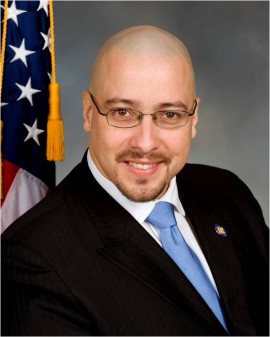
A group led by New York state Sen. Gustavo Rivera launched Monday a campaign that proposes awarding state “citizenship” to the estimated 2.7 million immigrants who live in the Empire State, regardless of their immigration status.

“We have failed with immigration reform nationally and what we want is to provide an opportunity for the almost 3 million people who live and contribute to the public treasury in our state to take part in its political, civic and economic life,” Rivera told Efe Monday before introducing the bill.

Dubbed the New York Is Home Act, the bill contemplates granting citizenship to immigrants who can show they have lived in the state and paid their taxes for the past three years, and who promise to obey state laws,and agree to serve on a jury.

Immigrants who fulfill these requisites will receive a new document allowing students to pay in-state tuition and receive financial aid to attend state universities, be eligible for healthcare under Medicaid, obtain a driver’s license, have the right to vote in local and state elections and even run for public office.

“We’re starting out here in New York but the idea is to extend this movement across the country to other states like California, Illinois and Texas, and to treat our fellow workers, students and store owners as they deserve,” Rivera said.

The campaign that kicked off Monday at Manhattan’s Battery Park, with the Statue of Liberty in the background, has the backing of political and religious leaders of the region, along with the support of organizations like the Center for Popular Democracy, Make the Road New York and the Benjamin N. Cardozo School of Law.

Juan Manuel Santos re-elected to second term as Colombia’s president

Juan Manuel Santos was re-elected over the weekend to a second term as Colombia’s president, winning with the support of the left and grassroots organizations that backed his agenda of continuing the peace process with guerrillas and achieving social justice.

Santos received 50.95 percent of the vote in Sunday’s runoff election, while challenger Oscar Ivan Zuluaga got 45 percent of the ballots cast, the national elections commission said.

Tough eviction laws in Venezuela dries up rental market Venezuela’s rental market has dried up, with owners reluctant to rent properties three years after enactment of a law that makes it extremely difficult to evict tenants.

Thousands of would-be renters are finding it nearly impossible to rent an apartment, Venezuelan Real Estate Association president Aquiles Martini Pietri told Efe.

“Today, it’s practically impossible to rent” in Venezuela, Martini said.

“Once you rent your property, it becomes practically impossible to get it back,” Martini said.

The Law for the Regulation and Control of Rental Housing was one of a series of measures enacted by the government in 2011 to protect tenants.

The government enacted the law in response to a study that found that Venezuela had a shortage of 3 million rental units.

The law, among other provisions, gave tenants the right to acquire a dwelling after paying rent for 20 years and expanded government control over landlord-tenant relations.

“Ten years ago, renting accounted for 30 percent of housing options and 10 years later … the rental market accounts for just 1 percent of the real estate market,” Urban Property Owners Association, or Apiur, president Roberto Orta told Efe.

The National Rental Housing Administration, or Sunavi, is currently handling about 20,000 eviction cases and has resolved just two cases, Apiur figures show.

Leftist lawmaker Claudio Farias disputed the figures, saying that just 20,000 eviction cases were in Sunavi’s pipeline and 15 had been resolved.

spot_img

A second chance at practicing medicine for doctors graduated abroad

[Author]By: Christina Johnson
                                     UC Newsroom[/Author]

Thousands of well-educated foreign-trained physicians in California face daunting barriers to becoming doctors here, and UC San Diego School of Medicine physicians are trying to help – out of altruism and to improve patient care in San Diego County.

A group of doctors in the UC San Diego Department of Family and Preventive Medicine recently hosted a forum for approximately 50 local foreign-trained doctors, during which they explained and fielded questions about the U.S. primary health care system and its residency acceptance criteria.

It’s hoped the event, “An Evening with UCSD Family Medicine Doctors,” will plant the seed for greater UC San Diego involvement in re-training international medical school graduates, and that sustained involvement in such an effort will eventually help supply the county’s growing immigrant and refugee communities with much-needed multi-lingual, “culturally competent” family doctors.

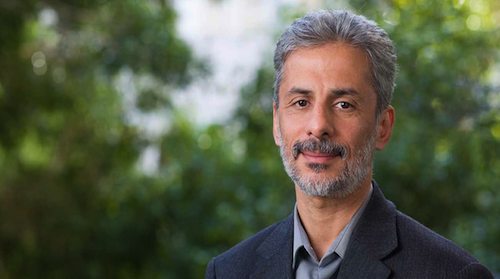
“We hear these heartbreaking stories of people who were heads of departments and are now almost ashamed in front of their families about being unemployed,” said Dr. Wael Al-Delaimy, professor and chief of the Division of Global Health in the Department of Family and Preventive Medicine and the forum’s moderator. “These people’s stories are so compelling, but we also need and are in short supply of people with their training and cultural reference points.”

Studies show that patients fare better when they are treated by physicians who speak their language and have shared cultural backgrounds.

“We know that cultural competency is a huge piece of the racial and ethnic divide in health care outcomes,” said Gail Patterson, a project manager at Welcome Back Center, a non-profit at Grossmont-Cuyamaca Community College District that offers educational programs to internationally trained health care professionals and co-sponsored the forum.

There is also evidence, she said, that foreign-trained doctors who become licensed in California are more likely to become primary care physicians in underserved communities.

This has particular relevance for patient care in San Diego County, which has become a major hub for refugee resettlement.

More refugees arrived in San Diego County than any other county in the state between October 2008 and September 2013 – an estimated 15,308 refugees, compared with 9,611 refugees in Los Angeles County, the second highest county. In comparison, over the same five-year period, just four refugees resettled in Santa Cruz County, seven in San Luis Obispo County and 11 in Santa Barbara County.

San Diego’s refugee community is populous and also educated, in large part because of the high proportion of Iraqi refugees, who fled the country’s sectarian violence and were disproportionally part of the country’s cultural elite. By one estimate (PDF), 63 percent of all recent Iraqi refugees in America are college-educated. About 30 percent of Americans older than 25 hold bachelor’s degrees, according to the U.S. Census Bureau.

“After World War II, the term was ‘brain drain,’ but there is a new phrase, ‘brain waste,’” Patterson said. “I know a neurosurgeon who is driving a cab. The stories go on and on.”

The path to becoming medically licensed in the U.S. is long and difficult for a reason – to protect and maintain the quality of the nation’s health care. Some doctors and immigrant advocates, however, say the standards are duplicative, outdated and unduly expensive.

Fahima Nadi, a refugee from Afghanistan who completed seven years of medical school and a year of residency training in Kabul before fleeing the country in 2009, can attest to the cost of re-establishing herself professionally. She says she has spent about $1,200 to have her diplomas and transcripts verified and to take the first of three exams required to obtain medical licensure in the U.S.

Her biggest fear, though, is failing to get matched into a medical residency program. “I will become a doctor and help people no matter where they are from,” said Nadi, who attended the doctors’ forum. “The only concern is I hear people saying that they give priority to U.S. medical graduates.”

All doctors, no matter what their status abroad, unless they are from Canada, must complete a 3-plus-year residency program at an American academic health system. During this residency period, doctors are trained in their medical specialty, before going on to take medical licensing boards.

Nadi’s concerns about being placed into a residency program are grounded in statistical reality, as foreign medical graduates are about half as likely to land a residency as those from U.S. medical schools. This year, for example, 49.5 percent of foreign-trained immigrant doctors were matched in a U.S. residency program, compared with 94.4 percent of U.S. medical school seniors.

Al-Delaimy, an Iraqi native who came to the U.S. from New Zealand to accept a post-doctoral position at Harvard, said that “our plan is to develop a structured academic-community partnership to retrain highly selected candidates and offer them curricular material about the U.S. health system, patient-doctor relationship, case studies and simulated patients, as well as financial support to sit for the qualifying exams.”

One of the main benefits of a structured program would be that the foreign doctors would be able to formally network with UC San Diego doctors and obtain letters of recommendation for medical residency training. “This would be a huge step forward for foreign doctors,” he said.

He and colleagues believe that society cannot afford to let the refugees’ medical training go to waste, especially in light of the growing shortage of family doctors in some underserved communities.

“A newly graduating medical student costs around $250,000 to educate, while retraining a skilled international graduate might not cost more than $25,000,” Al-Delaimy said. “We are looking at a win-win situation if they get licensed.”

spot_img