Saturday, October 17, 2026
spot_img
Home Blog Page 433

Four foods that truly deserve the title of ‘superfoods’

[Author]by Michael Ravensthorpe
[/Author]
Let’s face it: The word superfood has become overused. This title, which was originally intended for foods whose nutritional value considerably exceeded that of the average fruit or vegetable, seems to be attached to almost any natural food these days. Mainstream health magazines are particularly guilty of this abuse, often preferring to use superfood as a marketing term rather than an objective declaration of nutritiousness.

That said, there are a small number of foods that truly deserve to be called superfoods. These tend to be exotic foods that are seldom found in the average Westerner’s home, but which are packed with so many naturally occurring, bioavailable nutrients that they put most multivitamin supplements to shame. This article lists four of the best of them.

Moringa oleifera

Arguably the king of superfoods is Moringa oleifera, a fast-growing Himalayan tree whose leaves are bursting with so much goodness that researchers have nicknamed it “The Miracle Tree” and “The Tree of Immortality.” Moringa leaves contain over 90 different types of nutrients in high quantities, including seven times the vitamin C of oranges, four times the vitamin A of carrots, four times the calcium of milk and three times the potassium of bananas. The leaves are also a complete protein source, since they contain all eight essential amino acids. Given this nutritiousness, it’s unsurprising that studies have linked Moringa consumption to the treatment of diabetes, anti-inflammatory diseases, cancer and much more.

Moringa powder is easy to purchase online, and makes an excellent natural vitamin and mineral supplement. You might also like to try Ben oil, a sweet-tasting oil made from the tree’s pods that is rich in disease-fighting antioxidants.

Wheatgrass

Wheatgrass is a gluten-free food prepared from the young shoots of the wheat plant. It was popularized in the 1930s by the American chemist Charles L. Schnabel, who claimed that 15 pounds of wheatgrass is equal in nutritional value to 350 pounds of regular garden vegetables! While this claim is now considered to be exaggerated, it is true that wheatgrass is one of the most nutrient-dense foods known to science.

According to spectral analysis, a mere 4 grams of wheatgrass powder supplies us with 1,600 percent of our recommended daily allowance (RDA) of vitamin E, 7,000 percent of our RDA of manganese, 15,293 percent of our RDA of riboflavin, 413 percent of our RDA of zinc and similarly astounding concentrations of other essential nutrients. It is also one of the world’s finest sources of chlorophyll, a powerful blood builder and cleaner. This makes wheatgrass a potent detox food as well as a superb nutrient supplement.

Chlorella and spirulina

Chlorella and spirulina are two single-celled algae that thrive in the sunniest parts of freshwater bodies. Though both of them probably qualify as superfoods individually, they become something truly special when consumed together. This is because chlorella and spirulina possess complementary rather than identical nutrient profiles. For example, chlorella tends to contain more chlorophyll and iron than spirulina. Chlorella is also better at chelating heavy metals from the body than spirulina and at repairing cell damage due to its unique growth factor. Spirulina, on the other hand, contains more protein, gamma-linoleic acid (a beneficial fat that is essential for brain function) and cancer-fighting phycocyanin than chlorella. Consequently, consuming these two foods together supplies our bodies with an extremely well-rounded infusion of nutrients – far more than the average fruit or vegetable could possibly provide!

spot_img

Central American ministers anaylize child emigration to the U.S.

[Author]by the El Reportero’s wire services[/Author]


Foreign ministers of El Salvador, Guatemala and Honduras met in the Salvadoran capital to analyze the actions their countries should take in the case of children traveling illegally to the United States, officials said Saturday.

The meeting behind closed doors began at 9:00 a.m. in San Salvador, a spokesperson for the Salvadoran Foreign Ministry told Efe without specifying the place or giving any further details.

The meeting was called to review the actions taken up to now by the three countries and to find new ways to protect emigrant children, the same source told Efe.

It will also serve to launch a campaign aimed at raising awareness about the danger of minors emigrating to the United States.

The results of the meeting will be announced in a communique, the source said.

Around 90 unaccompanied children cross the U.S. border from Mexico every day.

Over the past nine months, some 52,000 minors have been detained after entering the United States illegally, mostly coming from Mexico, Guatemala, El Salvador and Honduras, according to official U.S. figures.


Nicaragua Tourism Grew 8.3 Percent So Far in 2014

Nicaragua welcomed 545,174 foreign visitors in the first five months of this year, which represents a growth of 8.3 percent over the same period in 2013, according to figures released by the Nicaraguan Tourism Institute, or Intur.

Between January and May 2013, Nicaragua received 503,077 foreign tourists, which means that in the same period this year there was “a substantial increase” of 8.3 percent, the executive president of Intur, Mayra Salinas, told reporters.

The official said that 25 percent of all foreign tourists who entered the country in the first five months of this year were from North America, though the greatest number, whose percentage she did not specify, came from Central America.

Salinas said that Nicaragua is positioned as a tourist destination worldwide.

She said that in the first five months of this year some 29 cruise ships sailed to the Central American country with at least 52,796 foreign tourists, of whom 37,000 visitors disembarked.

Nicaragua expects to take in some $440 million in foreign currency from tourism this year and greet 1.31 million tourists.

In 2013, the country received 1.23 million tourists, who spent some $417 million in foreign currency in the country, according to official figures.

spot_img

Coordinated care for those nearing life’s end – but does it save money?

[Author]by April Dembosky

KQED California Report/New America Media
[/Author]
SAN FRANCISCO–Bob Martínez has been in the hospital so many times, the surgical staff treats him like a regular at a coffee shop.

“They all know me!” he says. “If I go in there today, they’d say, ‘How’re ya doing Mr. Martínez?’”

Martínez is 81, a long-retired life insurance salesman. In the last few years, he’s had more than a dozen surgeries on his right leg, including a foot amputation, a casualty of severe diabetes. His heart disease has warranted almost a half-dozen heart procedures. After one of his recent operations, he said he’d had enough.

“I’m so sick and tired of being in hospitals,” he says shaking his head. “I don’t want to go back no more. I said, God, no more. No more.”

That’s when hospital staff told him about a program through Sutter Health that would send people to take care of him at home, the Advanced Illness Management program (AIM) designed for people like Martínez with multiple chronic illnesses.

Keeping Patients Out of Hospitals

It’s not hospice. That’s for people doctors say have six months or less to live. This program is for the pre-hospice population, people estimated to be in the last 18 months of life. The AIM program assigns a team of doctors, nurses and social workers to help patients transition home after hospital stays, manage medication, and carefully coordinate care, at home and over the phone, to help keep patients out of the hospital.

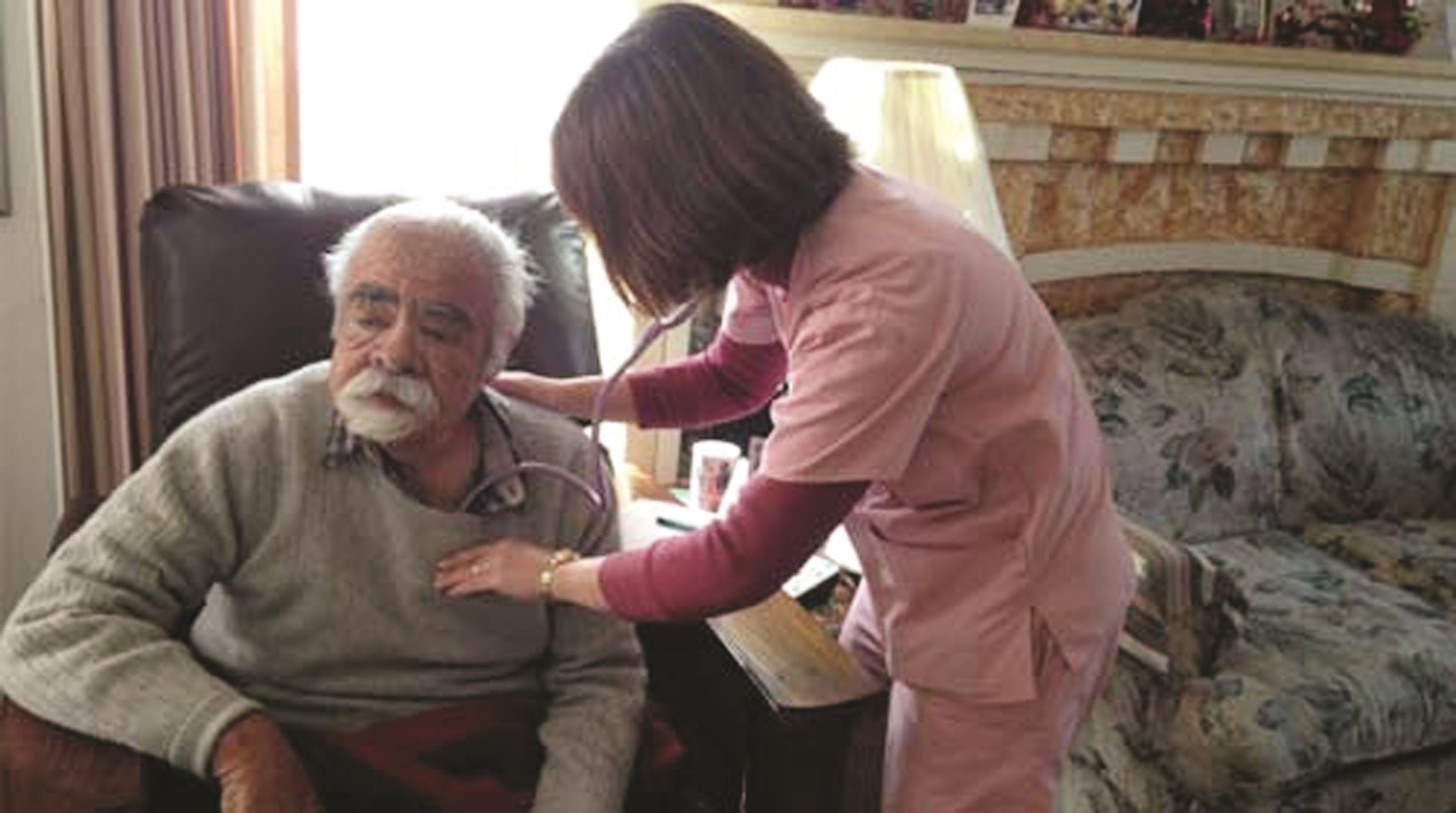
Martínez’ nurse Aileen Capuyan and social worker Ally Chu come to his home in Oakland once a week.

“Are you coughing? Do you have any shortness of breath,” Capuyan asks as she listens to Martínez’ lungs?

He sits in the brown leather armchair in his living room while she takes his temperature and checks his blood pressure. Meanwhile, Chu is in the kitchen talking with Martínez’s son Jimmy, who takes care of him. Jimmy is making tamales. Then Capuyan and Chu switch, so each can spend time with both men.

Most of the visit is spent talking: about the pain in Martínez’ leg, how his dominoes game is going at the senior center, and about more sensitive things, like what happens when his health gets worse – what kind of care he wants at the end-of-life and what care he doesn’t want.

“I don’t want to be resuscitated,” Martínez says. “When my time comes –- let it go.”

The founders of the AIM program hope that these ongoing visits build the kind of trust where patients can fully explore these questions. Chief program executive Betsy Gornet says this avoids rushed decisions that don’t capture a person’s real values.

“Spending 15 minutes in a doctor’s office or in an ICU in a crisis isn’t necessarily the way to do advanced care planning,” she says. “We do know that a dialogue over time does help foster the right kind of information.”

She says that means patients get the kind of care they want, and get help before their conditions reach a crisis level.

“We’ve been able to track very consistently, a 30 percent reduction in emergency room visits by these patients, 70 to 80 percent reduction in ICU days, 50 percent reduction in hospitalizations,” she says.

That in turn has saved money.

“We’ve seen the total cost of care go down anywhere from $3,600 to $5,000 dollar per patient over the course of 90 days,” she says.

“The Death of Death Panels”

This is the kind of talk that has sparked fiery debates in Washington. Back in 2009, the idea of doctors even talking to their patients about their end-of-life wishes spurred fears of “death panels” rationing care.

But today, the tone is shifting, according to health policy lobbyist Andrew MacPherson.

“We’re seeing a death of the death panels,” he says. “We’re in a totally new place today.”

He says lawmakers are having real bipartisan discussions about overhauling the American way of death, especially now that more and more politicians are shepherding their own parents through the end-of-life.

“It’s personal stories,” MacPherson says. “People’s personal stories about their mother, about their father are really what bring folks to table to say look, we need to have a health care system that is responsive to patients’ values and preferences and wishes when they’re really seriously ill.”

He says officials in Washington are keeping an eye on the Sutter program as a model that might be replicated across the country. The Medicare program, which pays for health care for people over 65, gave the AIM program a $13 million grant from a fund created under the Affordable Care Act (Obamacare). In return, they want to see the program generate savings for Medicare of at least $29 million.

“The big question is whether or not it will pan out,” says Suzanne Delbanco, executive director of the nonprofit group Catalyst for Payment Reform.

The Medicare grants are one way the government is trying to move away from paying for health care on a fee-for-service basis, which Delbanco says incentivizes doctors to order more tests and procedures to drive up their revenues. Instead, interest is growing to develop more holistic payment models –- things like “care management fees,” “bundled payments” and “shared savings” –- that reward doctors based on the overall care they provide and outcomes where their patients ultimately get better.

“It’s almost as if we’re going from an a la carte menu to a pre-fixe meal where you pay a set amount for all your courses,” Delbano says.

Two Big Unknowns

But there are two big unknowns.

First, it’s not clear if these new models of care really will cost less in the long run. “We don’t know for sure whether or not financially it will end up being beneficial in an effort to curtail our health care costs,” Delbanco says.

Second, Sutter has to find a way to operate the AIM program that works for its own bottom line. When Sutter saves money for Medicare, by reducing hospitalizations and ER visits, it takes a financial hit on its own revenues. Many of the new services it provides to achieve those savings –- the telephone coordination, some home care, and some social work services –- are not reimbursed under Medicare’s current payment system.

Sutter declined to reveal operation costs or budget figures for the AIM program, though the federal Agency for Healthcare Research and Quality reports it costs about $900 monthly, for each patient, on average.

AIM chief executive Betsy Gornet says the program does operate at a loss in some regions and has stayed afloat so far through foundation grants and investments from Sutter. But its goal this year, as part of the government grant, is to become self-sustaining, and to propose a new payment model for Medicare that balances savings for the government and still keeps its own program in business.

“We want to get the right care to the right patient at the right time,” Gornet says. “That will help save everybody’s resources.”

Gornet says the ultimate goal is to keep patients like Bob Martínez as comfortable and vibrant as possible until he reaches the end of his life.

Martínez says he’s been thinking about death a lot lately, especially since his wife, Josie, died two years ago — at home, with her husband at her side.

“God’s got a plan for everybody, different plans” Martínez says. “Some die at home. Some die in a hospital. I want to be home like she was. If it comes to that. But anyway, I’ll take it anyway. I just want to be with her now.”

Martínez died in May. He was at home, in his living room, surrounded by family.

April Dembosky produced this report for KQED’s “California Report” with support from the MetLife Foundation Journalists in Aging Fellowships, a program of New America Media (NAM) and the Gerontological Society of America. Visit KQED’s website to hear her radio report.

For more on end-of-life care, also see NAM’s special “Palliative and Hospice Care” website, sponsored by the California Health Care Foundation.


spot_img

Study: People would rather electrocute themselves than think for 15 minutes

[Author]Attention spans are… whatever, ooo Facebook


by Steve Watson
[/Author]
A shocking (pun intended) new study provides salvo for those who argue that the attention span of the general population is slowly eroding away to non-existence, finding that people would rather self administer electric shocks than just sit in an empty room thinking for fifteen minutes.

The argument that electronic devices, gadgets, and the allure of tools such as Facebook and Twitter, are causing our attention to dwindle and making us become more easily distracted is a common one.

Academics at Harvard and the University of Virginia began the study, entitled Just think: The challenges of the disengaged mind, by placing subjects into an empty room for between six and fifteen minutes, telling them to do nothing other than think to themselves.

When the allotted time was up the researchers asked the people if they had enjoyed the quiet time. Around 50 percent said they had not enjoyed it, and that they had found it difficult to concentrate on anything, finding that they could not focus on a particular subject without their mind wandering.

When the experiment was repeated, but within people’s own homes, the subjects noted that they enjoyed the process even less, with a third of them admitting that they had simply given up and checked their phones or started surfing the internet.

Taking the experiment to a new level, the researchers sat the subjects in a room with nothing other than a machine for administering small electrical shocks, once again instructing them to just have a think about things for a few minutes. Those involved had been subjected to the shock experience, and most said they loathed it and would actually pay money not to experience it a second time.

The results of the test were startling. Almost two thirds of the male subjects gave themselves one or more electrical shocks out of pure boredom, seemingly unable or unwilling to spend a short amount of time exploring their own minds.

According to the data, in a 15-minute spell, one man administered 190 shocks to himself rather than just sit quietly with nothing to do. That data was removed from the final tally of results. Almost a quarter of the women involved also gave themselves a shock. On average, each person gave themselves a shock 1.47 times during the 15 minute period.

“Being alone with their own thoughts for 15 min[utes] was apparently so aversive that it drove many participants to self-administer an electric shock that they had earlier said they would pay to avoid,” the authors noted.

The research, made up of more than 11 separate studies involving over 100 people from all walks of life, found that age, education, income or the amount people use smartphones or social media had little bearing on the fact that most people now do not like thinking to themselves.

“The mind is designed to engage with the world,” said the lead researcher Tony Wilson. “Even when we are by ourselves, our focus usually is on the outside world. And without training in meditation or thought-control techniques, which still are difficult, most people would prefer to engage in external activities.”

According to the authors, the subjects “enjoyed doing mundane external activities much more” than thinking, leading to the conclusion that “most people seem to prefer to be doing something rather than nothing, even if that something is negative.”

The authors also noted that analytical and critical thinking defines us as humans and is an essential skill when deliberating the future or recalling the past, and that it underlies all of art and literature. The notion that a startlingly high number of individuals seemingly now cannot or will not engage in the practice will be disturbing to many.

“Research has shown that minds are difficult to control, however, and it may be particularly hard to steer our thoughts in pleasant directions and keep them there.” the study suggests. “This may be why many people seek to gain better control of their thoughts with meditation and other techniques, with clear benefits. Without such training, people prefer doing to thinking, even if what they are doing is so unpleasant that they would normally pay to avoid it. The untutored mind does not like to be alone with itself.”

Some have noted that the study recalls a quote from the French scientist and philosopher Blaise Pascal: “All human evil comes from a single cause, man’s inability to sit still in a room.”

(Steve Watson is a London based writer and editor for Alex Jones’ Infowars.com, and Prisonplanet.com. He has a Masters Degree in International Relations from the School of Politics at The University of Nottingham, and a Bachelor Of Arts Degree in Literature and Creative Writing from Nottingham Trent University.)  Infowars.com.

spot_img

Inside the FDA mafia

[Author]by Jon Rappoport

www.nomorefakenews.com
[/Author]
I post this piece now and then to show how personal things can get inside a terminally corrupt government agency.

It’s not all about remote decisions made from a great height.

These decisions can come about through the rank intimidation the Mafia exercises with a member who wants to leave the mob and go straight.

As in: “We know where your wife and kids are.”

This article is based on a Truthout interview of a man who did drug reviews for the FDA. He examined applications to approve new medical drugs for public consumption.

Pharmaceutical companies must have their new drugs certified as safe and effective before they can enter the market, before doctors can prescribe them. The FDA does this certification. Thumbs up or thumbs down. The drug is okay or it isn’t.

Here’s the story:

In a stunning interview with Truthout’s Martha Rosenberg, former FDA drug reviewer, Ronald Kavanagh, exposes the FDA as a relentless criminal mafia protecting its client, Big Pharma, with a host of mob strategies.

Kavanagh: “…widespread racketeering, including witness tampering and witness retaliation.”

“I was threatened with prison.”

“One [FDA] manager threatened my children…I was afraid that I could be killed for talking to Congress and criminal investigators.”

Kavanagh reviewed new drug applications made to the FDA by pharmaceutical companies. He was one of the holdouts at the Agency who insisted that the drugs had to be safe and effective before being released to the public.

But honest appraisal wasn’t part of the FDA culture, and Kavanagh swam against the tide, until he realized his life and the life of his children were on the line.

What was his secret task at the FDA? “Drug reviewers were clearly told not to question drug companies and that our job was to approve drugs.” In other words, rubber stamp them. Say the drugs were safe and effective when they were not.

Kavanagh’s revelations are astonishing. He recalls a meeting where a drug-company representative flat-out stated that his company had paid the FDA for a new-drug approval. Paid for it. As in bribe.

He remarks that the drug pyridostigmine, given to US troops to prevent the later effects of nerve gas, “actually increased the lethality” of certain nerve agents.

Kavanagh recalls being given records of safety data on a drug—and then his bosses told him which sections not to read. Obviously, they knew the drug was dangerous and they knew exactly where, in the reports, that fact would be revealed.

We are not dealing with isolated incidents of cheating and lying. We are not dealing with a few isolated bought-off FDA employees. The situation at the FDA isn’t correctable with a few firings. This is an ongoing criminal enterprise, and any government official, serving in any capacity, who has become aware of it and has not taken action, is an accessory to mass poisoning of the population.

Fourteen years ago, the cat was let out of the bag. Dr. Barbara Starfield, writing in the Journal of the American Medical Association, on July 26, 2000, in a review titled, “Is US health really the best in the world,” exposed the fact that FDA-approved medical drugs kill 106,000 Americans per year.

In interviewing her, I discovered that she had never been approached by any federal agency to help remedy this tragedy. Nor had the federal government taken any steps on its own to stop the dying.

Ronald Kavanagh’s story, exposed in Truthout, never jumped the rails and made it into the mainstream press as the explosive revelation it was.

Too hot to handle. Too many bodies buried. Too many media outlets bought off by pharmaceutical advertising money. Too close to bought-off government officials. Too likely to shake the pillars of the medical cartel. Too real.

It was the kind of story that could actually wake people up from their mind-controlled slumber.

It still is.

(Jon Rappoport is the author of three explosive collections, The Matrix Revealed, Exit From The Matrix, and Power Outside The Matrix.)

spot_img

Secrets of Skull and Bones secret society blown wide open

[Author]FROM THE EDITOR:[/Author]

Dear readers, this week I bring you an article that deals and explains some of the in and out one of the exclusive club/organizations that include as its members some or most of the most powerful and society influential men within the powerful governing elite. The article, which partially is covered by investigative journalist, Paul Joseph Watson, arises from the interview he conducted with the daughter of one of its members. The article was written over two years ago, but it is pretty relevant to the present.


Daughter of Bonesman Charlotte Iserbyt lifts the veil on the mysterious secret society


[Author]by Paul Joseph Watson

Prison Planet.com[/Author]


In an exclusive Prison Planet.tv interview, Charlotte Iserbyt, former Senior Policy Advisor in the U.S. Department of Education under Ronald Reagan, blows wide open the mystique behind the enigmatic Skull and Bones secret society, drawing on her father and grandfather’s first hand knowledge of the Yale fraternity as Bonesmen themselves to provide a revealing insight into the history of the organization.

As a former high-level education official, Iserbyt exposes how Skull and Bones was instrumental in changing education into a form of operant condition that more closely resembled animal training than real intellectual advancement, by implementing experimental psychology techniques brought over from Germany. The aim was to abolish free thinking and free will, molding each person into a “valueless cog of the state”.

She also lifts the lid on how “sensitivity training” is used to impose collectivist, Communist-style thought control, ensuring that people can be easily manipulated into forming their opinions based on group-think and that any shred of individuality or thinking that contradicts the status quo is frowned upon.

Iserbyt reveals the secret Skull and Bones member list that was supposed to remain private, and how it was connected to the effort by elites in America to build up the Soviet Union during the cold war. Iserbyt touches upon the research of Anthony Sutton to reveal how Bonesmen protected each other when they were faced with questions from the House Committee on Un-American Activities concerning their support for Communists.

Iserbyt relates how she and Sutton came to the conclusion that the men contained on the secret membership list were almost completely responsible for American foreign policy as well as education policy during the time they were in power.

Iserbyt also talks about her Skull and Bones grandfather clock which her father always ordered be set five minutes ahead of time to symbolize the fact that Bonesmen were always one step ahead of the rest of society.

Paul Joseph Watson is the editor and writer for Prison Planet.com. He is the author of Order Out Of Chaos. Watson is also a regular fill-in host for The Alex Jones Show.


More background of this malefic secret society


The origin of the Skull and Bones Society, once known as The Brotherhood of Death, in the U.S. begins at Yale when a group of men established an organization for the purpose of drug smuggling. Indeed, many American and European fortunes were built on the China (opium) trade. [The Secret Origins of Skull & Bones] The society’s alumni organization, which owns its properties and oversees all the organization’s activity, is known as the Russell Trust Association (R.T.A.), and is named after one of Bones’ founding members.

It still exists today only at Yale and has evolved into more an organization dedicated to the success of it’s members after leaving the collegiate world. The shape of that success can only be left to speculation. The Skull & Bones Society has been described as the most secretive organization in the world.

Some of the world’s most famous and powerful men alive today are “bonesmen,” including George H.W. Bush and his son George W. Bush, Senator John Kerry, Austan Goolsbee (Chairman of President Obama’s Council of Economic Advisers), Nicholas Brady, and William F. Buckley. Other bonesmen include ex U.S. President William Howard Taft, Morrison R. Waite (Chief Justice of the Supreme Court), Henry Luce (Time-Life), Harold Stanley (founder of Morgan Stanley), Frederick W. Smith (founder of Fedex), John Daniels (founder of Archer Daniels Midland), Henry P. Davison (senior partner Morgan Guaranty Trust), Pierre Jay (first chairman of the Federal Reserve Bank of New York), Artemus Gates (President of New York Trust Company, Union Pacific, TIME, Boeing Company), Senator John Chaffe, Russell W. Davenport (editor Fortune Magazine), the first presidents of the University of California, Johns Hopkins University, and Cornell University, and many others.

All have taken a solemn vow of secrecy.

America’s Secret Establishment, by Antony C. Sutton, 1986, page 5-6, states: “Those on the inside know it as The Order. Others have known it for more than 150 years as Chapter 322 of a German secret society. More formally, for legal purposes, The Order was incorporated as The Russell Trust in 1856. It was also once known as the “Brotherhood of Death”. Those who make light of it, or want to make fun of it, call it ‘Skull & Bones’, or just plain ‘Bones’.

Above all, The Order is powerful, unbelievably powerful. If the reader will persist and examine the evidence to be presented – which is overwhelming – there is no doubt his view of the world will suddenly come sharply into focus, with almost frightening clarity.

It is a Senior year society which exists only at Yale. Members are chosen in their Junior year and spend only one year on campus, the Senior year, with Skull & Bones. In other words, the organization is oriented to the graduate outside world. The Order meets annually – patriarchies only – on Deer Island in the St. Lawrence River.

The Old Line American families and their descendants involved in the Skull & Bones are names such as: Whitney, Perkins, Stimson, Taft, Wadsworth, Gilman, Payne, Davidson, Pillsbury, Sloane, Weyerhaeuser, Harriman, Rockefeller, Lord, Brown, Bundy, Bush and Phelps.

spot_img

Congratulations to Mila Turcios in her 70th birthday

[Author]by Marvin Ramírez[/Author]


A big homage to Mila Turcios was celebrated in the distinguished Patio Español of San Francisco this past June 22 to celebrate her proud 70 years of life.

People from many places came to celebrate and to bring happiness to Mila, who has become a relic within the Nicaraguan community in San Francisco.

A good number of invitees came from distant places out of SF and the state to accompany this distinguished lady who has been able to gain the fondness of her friends.

Mila, who arrived in San Francisco on Feb. 1, 2000, from Managua, Nicaragua, received 140 people, many who came from every where in the Bay Area cities, and as far as Los Angeles, Arizona, Las Vegas, and with special mention from New York, René A. Solórzano.

It was a party that also distinguished itself for the participation of many known personalities and merchants such as Dr. Maritza Rosales, the owners of the popular Restaurant The Tinajas, Alí Castillo of AC Auto body, who came with his beautiful wife, the ex boxing champion Mike Galo – who danced the first sone with Mila, among others, and the elegance of the banquet served by the personnel of the aristocratic Patio Español.

But the party was even more special with the presence of the well-known radio and television personality, Luis Echegoyén, who directed the artistic acts that took place at the birthday party, and who wrote and recited a pretty poem to Mila.

Darío DJ, two child dancers, children of Ernesto and Maria Taleno, who danced the Tapatío of Mexico, and Cumbia Chinandegana of Nicaragua, and the group composed by Dr. Noemí Balladares and here two daughters, Yara and Dara, who danced cumbias and rock ‘ n roll of the 60s, turned the event into something unforgettable.

“ I am very grateful to all for their presence, I felt happy to be among my friends and relatives ’, said a moved Mila.

The personnel of El Reportero, who was also present at the act, wish many more years of life mila Turcios.

spot_img

Drum talk with professor John Santos

[Author]Compiled by the

El Reportero’s staff[/Author]


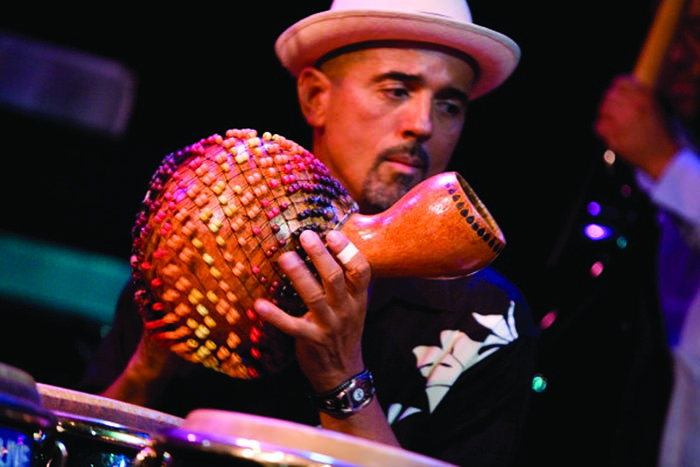
Drum Talk is a unique, two-week intensive percussion residency, as part of the California State University Summer Arts Program. John will be co-presenting with Mario Pam, director of the world-renowned percussion powerhouse group from Bahia Brazil, Ile Aiyé.

This will be the maestro’s first time to the Bay Area! We will be exploring the roots, commonalities and evolution of the drumming traditions of Cuba and Brazil with daily classes, lectures and a culminating performance by the participants. 3 units of transferable college credit!  Scholarships available. (The May 2nd application deadline was extended). For info call (562) 951-4060, csusummerarts.org or visit:

http://blogs.calstate.edu/summerarts/index.php/courses/drum-talk-rhythms-from-cuba-and-brazil/

Through July 13th, 2014, at Cal State University at Monterey Bay.

— Also with John Santos, a Latin Jazz lecture. At the San Francisco Heritage and the SF Latino Historical Society. Latin Kazz in the San Francisco Bay Area: A Retrospective.

At the Mission Cultural Center, 2868 Mission St., San Francisco, on Thursday, July 17, 2014, at 6:00 p.m. www.sfheritage.org. or at ldominguez@sfheritage.org.


SF Symphony performs annual free outdoor concerts at the Stern Grove Festival

The annual San Francisco Symphony free outdoor concerts return to the Stern Grove Festival Sunday, July 6 and San Francisco’s Civic Center Plaza Sunday, July 27 as part of the Orchestra’s Summer & the Symphony concert series,

These annual free community concerts are a perfect opportunity to bring a picnic lunch and spend a Sunday afternoon listening to the San Francisco Symphony with friends and family, enjoying great music in the beautiful settings of two of San Francisco’s most treasured outdoor spaces.

On Sunday, July 6 at 2 pm, the Orchestra returns to the Stern Grove Festival for its annual free concert in the Sigmund Stern Grove, a beautiful outdoor amphitheater located at 19th Avenue and Sloat Boulevard in San Francisco. Guest soloist, Japanese pianist Makoto Ozone, performs with the SFS improvising on Ravel’s well-known classical pieces Bolero and Pavane pour une infant défunte. The concert includes musically diverse styles from the jazz of Leonard Bernstein and Henry Mancini, to Richard Rodgers’ Broadway sound, to music by American composers Morton Gould, Raymond Scott, and Howard Hanson.

On Sunday, July 27 at 2 pm, the SF Symphony performs at San Francisco’s Civic Center Plaza following the Orchestra’s wildly successful 100th Anniversary Celebration there in the fall of 2011. Violinist Benjamin Beilman takes center stage in Mendelssohn’s Violin Concerto in E minor, Opus 64 and the Orchestra performs additional short classical pieces by Tchaikovsky and Mozart. Food and beverage vendors from Off the Grid, booths and free giveaways add to the festivities.

spot_img

Jenni Rivera’s family releases 2nd CD of her final show

[Author]by the El Reportero’s news services[/Author]


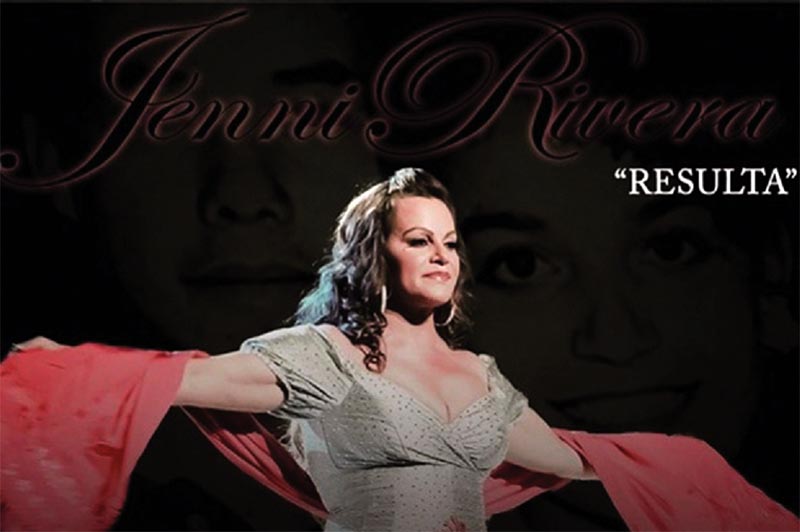
The family of late singer Jenni Rivera is marking what would have been her 45th birthday with the release of a second disc documenting the Diva de la Banda’s final concert.

“I gave myself the job of promoting my sister’s new production, on which I worked hundreds of hours,” Juan Rivera said in an interview with Efe coinciding with Tuesday’s release of 1969 – Siempre, En Vivo Desde Monterrey Parte 2.

Accompanied by a DVD, the disc includes additional songs from the Dec. 9, 2012, performance in the northern Mexican city.

Rivera, who was born July 2, 1969, died in a plane crash a few hours after the concert.

“It was not a recording my sister planned. To tell the truth, it was accidentally recorded by one of the (sound) engineers,” Juan Rivera said.

When the engineer informed the family he had recorded the show, Juan listened to the recording and polled the singer’s children and other family members to determine whether the recording was “a treasure to be guarded or shared,” he recounted.

“The whole family decided that Jenny would have wanted to share it,” Juan Rivera said.

Part Three of the Monterrey concert is tentatively set for release next year, he said.

The family is also at work on a screenplay for a film about the star’s life and has already talked to several directors.

“Jenni had planned to make her own movie and she left us lots of ideas,” Juan Rivera told Efe. “But after what happened, the story is a little different.”


Puerto Rico and Dominican Republic to work together to boost film industry in region

Organizers of the San Juan International Film Festival will hold in October its first forum on Puerto Rico-Dominican Republic coproductions as a step toward boosting the moviemaking potential of these two Caribbean neighbors.

Their idea is to “promote the development of the film industry in both countries and in that way help expand the regional market,” the executive director of the long-running Puerto Rican festival, Jose Artemio Torres, told Efe.

“The time has come. For years, the festival has been talking about promoting this movie market to stimulate local industry while increasing production in many parts of the Americas,” Torres said.

The 1st Puerto Rico-Dominican Republic Coproduction Meeting is scheduled for Oct. 23-25 and will be coordinated by Dominican producer Tanya Valette, Torres said.

This first edition of the forum seeks to be a catalyst for promoting film coproductions by Puerto Rico and the Dominican Republic, creating bridges of communication and collaboration between audiovisual producers and professionals of the two islands, in order to make the most of possible synergies and “to join forces,” Torres said.

Possibilities to be discussed at the forum include creating a virtual network of the various components of the sector, as well as a catalogue of producers, technicians, distributors and exhibitors in both countries.

Ten feature films will be screened at the meeting, five from each of the island nations, to be chosen from a submission of entries starting Tuesday and ending Aug. 15.

spot_img

Inadequate vitamin C levels boost risk of most deadly type of stroke by 50 percent

por John Phillip

Natural Noticias


Cada año en los EE.U.U., más de 800,000 personas sufren los efectos devastadores de un derrame cerebral, y 150,000 morirán como consecuencia de la cuarta causa de mortalidad. La parte triste de esta historia es que muchas de estas muertes se pueden prevenir mediante la alteración de los hábitos de estilo de vida y la adhesión a una dieta que elimina los alimentos altamente procesados ​​a favor de las frutas y verduras, que venden como naturales.

La presión arterial elevada y una cascada de malas elecciones de estilo de vida se combinan para causar rigidez arterial con la edad, lo que aumenta considerablemente el riesgo de un evento isquémico fatal.

Aumentar  la actividad física es una estrategia bien conocida para bajar la presión arterial y una dieta que incluya la ingesta de vitamina C y  ahora no se diga por su capacidad para mejorar la elasticidad arterial, que mejora el riesgo de sufrir un derrame cerebral.


Investigadores del Hospital Universitario Pontchaillou en Francia darán a conocer los resultados de un estudio de la Academia Americana de Neurología que muestra cómo el consumo de alimentos que contengan vitamina C, como naranjas, pimientos, fresas, papaya y el brócoli, puede estar relacionado para reducir el riesgo de accidente cerebrovascular hemorrágico.

El accidente cerebrovascular hemorrágico es una causa menos común de la enfermedad en comparación con un accidente cerebrovascular isquémico, pero es más mortal y se produce cuando un vaso sanguíneo debilitado de sangre en el cerebro se rompe y permite que se filtre en el cerebro y alrededor de este.

La vitamina C y suplementos en la dieta mejoran la elasticidad vascular el riesgo de enfermedad cardíaca y accidente cerebrovascular menor

Para realizar este estudio, los miembros del equipo analizaron 65 pacientes que habían sufrido un accidente cerebrovascular hemorrágico y contrastadas con la edad-y-salud comparable a un grupo de 65 individuos sanos.

El autor principal, Dr. Stephane Vannier señaló: “Nuestros resultados muestran que la deficiencia de vitamina C debe ser considerado un factor de riesgo para este tipo de accidente cerebrovascular grave, al igual que la hipertensión arterial, el consumo de alcohol y el sobrepeso en nuestro estudio.” Después de un análisis de los niveles en sangre de vitamina C, los científicos encontraron que el 41 por ciento de todos los participantes tenían niveles normales, el 45 por ciento había agotado los niveles, y el 14 por ciento tenía niveles tan bajos que se consideraron deficientes en vitamina C.

Después de seguir al grupo de participantes en el transcurso de 10 años, los investigadores determinaron que los participantes que habían sufrido un derrame cerebral habían agotado los niveles, mientras que los que no habían tenido un ataque presentaban niveles normales de la vitamina C en la sangre.

En apoyo de sus conclusiones, el equipo observó que la Universidad de Cambridge en un estudio en 2008 encontró que las personas con niveles altos de vitamina C redujeron su riesgo de accidente cerebrovascular en un 42 por ciento. También citaron un estudio en 2012 que indica que el consumo de chocolate puede reducir el riesgo de cualquier accidente cerebrovascular. Esa investigación reveló que los hombres que consumían las mayores cantidades de chocolate de tenían un riesgo 17 por ciento menor de accidente cerebrovascular que los hombres que nunca o muy rara vez comian.

Catherine Paddock, PhD, escribió en Medical News Today, Una forma que la  vitamina C podría reducir el riesgo de accidente cerebrovascular podría ser mediante la reducción de la presión arterial, y añade que la vitamina C tiene otros beneficios, como ayudar a producir colágeno, una proteína que da estructurar a la piel, los huesos y el tejido”. La mayoría de las frutas cítricas y verduras proporcionan cantidades saludables de vitamina C a la dieta, y la mayoría de los estudios han encontrado que los suplementos con vitamina C (1,500 a 3,000 mg al día) reduce drásticamente el riesgo de enfermedades vasculares como la enfermedad cardíaca y accidente cerebrovascular.

spot_img