Saturday, October 17, 2026
spot_img
Home Blog Page 431

Chilean pop singer Francisca Valenzuela brings the enchilada to SF

[Author]by the El Reportero’s staff
[/Author]
Francisca Valenzuela was recently invited as the only national [Chilean] artist to perform in Shakira´s Popfest, in Santiago, Chile. She opened the Lollapalooza Festival, in its first international version in Santiago–performing in one of the two main stages. In addition, she was the only artist invited to sing with U2 during their tour performance in March, in Santiago. Francisca joined Bono on stage to sing One Tree Hill.

Don’t miss this great opportunity to see the performance of this artist great here in the SF Bay.

Wednesday, August 6, at The New Parish, 1743 San Pablo Avenue, Oakland. https://www.youtube.com/watch?v=PmYGHQlsPuA


MEX I AM – live it to  believe it:

A Festival Showcasing The Cultural Greatness & Influence Of Mexico

The Consulate General of Mexico in San Francisco, Conaculta and Yerba Buena Center for the Arts are pleased to introduce MEX I AM: live it to believe it a first-of-its-kind festival showcasing the best of Mexico with a multidisciplinary array of inspiring leaders from the performing arts and academia. The celebratory weekend of music, dance, theater and ideas.

MEX I AM will explore the best of contemporary Mexican culture, arts and ideas. Over the course of four days, the multidisciplinary festival will feature some of the most innovative Mexican performers from various genres and disciplines from opera to Latin jazz and from ballet to folk dance and more. MEX I AM will also feature Ideas: North & South of the Border a line-up of scientists, humanists and game changers that personify Mexico’s innovative spirit and leadership. From July 31 – Aug. 3 at Yerba Buena Center for the Arts.

Exhibition features powerful Latino poster art of the 70s

Serigrafía, a traveling exhibition featuring 30 influential silkscreen prints created by the best of California’s Latino/a printmaking community,

The exhibition features poster art from the 1970s to the present, including works of Bay Area artists Juan R. Fuentes, Jos Sances, Favianna Rodríguez, Esther Hernández, Yolanda López and other California artists.

Emerging in concert with the civil rights movement and activism for political and social justice for marginalized groups, these prints confront political, economic, social, and cultural issues on both a personal and a global level.

The art, which explores such subjects as the United States embargo on Cuba, and the Occupy Wall Street Movement, was conceived to provoke, protest, and praise.

From the iconic Sun Maid by Esther Hernández, who combined the familiar Sun Maid girl with the calavera (the satirically costumed skeletons) to bring awareness about the use of pesticides, fungicides, and other toxic chemicals in raisin production, to works by emerging printmakers like Gilda Posada, whose print Libertad was created to show the relationship between liberation movements for human rights in Palestine and in Mexico, this exhibition is varied in subject matter but rooted in a long heritage of California printmaking.

Many graphic artists called on the iconography of their pre-Columbian past, such as in Xavier Villamontes’ Boycott Grapes, which depicts a powerful Aztec warrior crushing handfuls of grapes that drip with the blood of exploited and injured farmworkers. When strikes, marches, and legislation failed to improve conditions in the fields, through posters like this one, the United Farms Workers Union (UFWA) asked the public to boycott grapes, wine, and lettuce in order to pressure growers.

Will be on view in the San Francisco Main Library’s Jewett Gallery, July 26 – Sept. 7, 2014. Opening discussion with curators Juan R. Fuentes and Jos Sances.

Related events:

Voice on Ink/Voz en Tinta, poetry event with San Francisco Poet Laureate Alejandro Murgía on Aug. 7, at 6:30 p.m., at the Main Library, Latino Hispanic Community Room.

spot_img

Cuba welcomes Dalí exhibit for first time

[Author]by the El Reportero’s news services[/Author]


A selection of works by Salvador Dali (1904-1989) will be shown in Cuba for the first time in the “Memories of Surrealism” exhibition, which will open at the National Museum of Fine Arts in Havana on July 24, local media said.

The Universal Art building of the 100-year-old institution will show 95 works by Dali, the icon of international surrealism, whose work as a painter is well known in Cuba, but not his etchings, such as will be seen here, the National Museum’s specialist, Maximo Gomez Noda, said.

The works belong to the series “Fantastic Journey” (1965), “Dali Interprets Currier and Ives (1971), “The Twelve Tribes of Israel” (1973), “The Divine Comedy” (1960), “The Songs of Maldoror (1934), and “Memories of Surrealism” (1971), the latter providing the name for the exhibition.

The curator of the exhibition, New York expert Alex Rosenberg, says in the catalogue that the mishaps and difficulties these works went through over the years reminded him that the series “The Twelve Tribes of Israel” was finished in record time by Dali, who said it took him 30 years to create it and “just five days to execute it from all I had learned.”


Eva Longoria hosts charity events while on vacation in Spain

Eva Longoria organized two events this weekend for the Global Gift foundation in the southern Spanish resort city of Marbella, where the actress is vacationing with relatives.

Global Gift held a charity golf tournament Saturday at the La Quinta club.

Longoria and her sister hit the spa with their mother to help her celebrate her 70th birthday.

The 39-year-old actress wrapped up her beauty treatment in time to make the post-tournament luncheon and awards ceremony.

Longoria will be attending the 500-euro ($676) per person Global Gift gala on Sunday at Marbella’s Don Pepe Hotel.

“All the money raised will go completely” to the Eva Longoria Foundation, the Bertin Osborne Foundation and Global Gift, Maria Bravo, founder and main moving force behind Global Gift, said.


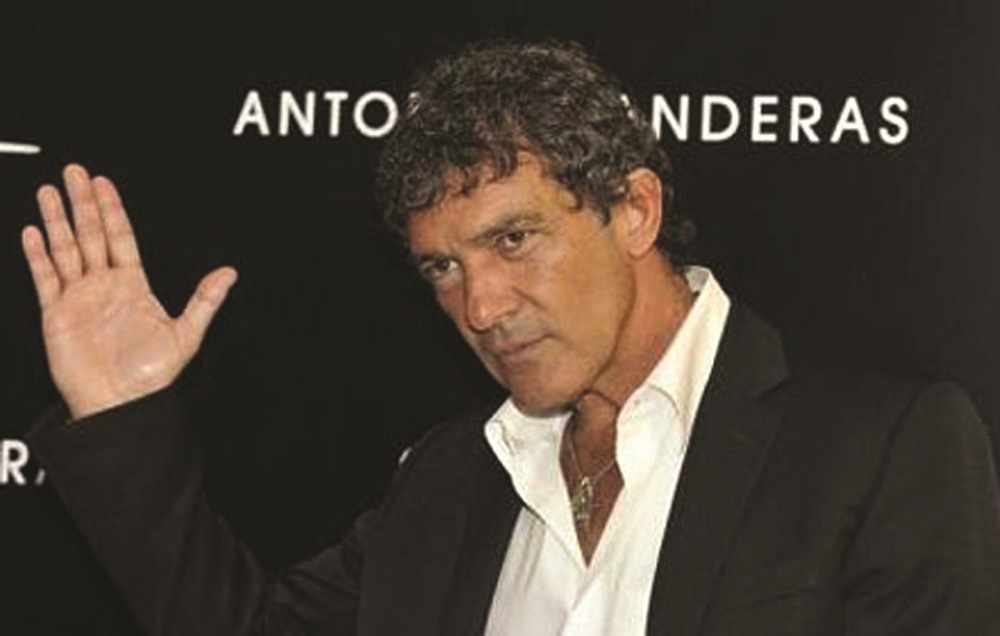
Antonio Banderas Takes Part in Peruvian Religious Festival

Spanish actor Antonio Banderas has been visiting the Peruvian city of Cuzco this week, from where he went to take part in a famous religious festival of region and on Friday was expected to walk the Inca Trail to the citadel of Machu Picchu.

Banderas, who visited Lima two months ago to take part in a charitable event, attended the Cuzco region’s Virgen del Carmen (Our Lady of Mount Carmel) Festival this week in the town of Paucartambo, local media said.

The star of “El Zorro” visited Paucartambo’s colonial church and briefly joined in the traditional procession of dancers to the cemetery in that town, but withdrew when he saw that several of the faithful on hand had recognized him.

During his visit two months ago, Banderas said he wanted to return to Peru to visit Cuzco with his daughter Stella del Carmen.

The Facebook page of a Cuzco restaurant confirmed the presence of the Spanish actor, who arrived Wednesday, with a posted photo in which he appears with staff members of the establishment.

Local media said the actor was going to set off Friday on the Inca Trail, a three-day walk to the fa mous citadel of Machu Picchu, though when asked by Efe, cutural authorities in the Cuzco region were unable to confirm that information.

spot_img

Standing together for the children of Central America – and Chicago

[Author]by Phillip Agnew and

Isabel Sousa-Rodríguez

The Root[/Author]


Last week The Root’s Keli Goff wrote about the child refugees fleeing violence and poverty in Central America and seeking refuge at our border. Unfortunately, she argued that we shouldn’t protect these brown children and supports deporting them—while claiming that we have our own black children to care about first, citing recent violence in the streets of Chicago.

Well, we are those black and brown children she’s talking about.

One of us—Phillip—grew up in the same Chicago that Goff says she wants to protect, while the other—Isabel—is a young immigrant who came to this country as an undocumented child fleeing violence in Colombia. And in our life journeys seeking justice for all young people, we have committed ourselves to building united social movements that fervently proclaim, “Our lives matter.”

Every one of our lives matters, whether we are black, white or brown, queer or straight; whether we crossed the border or our ancestors came here as indentured servants or on slave ships.

We reject the notion that black lives should matter to our president and policymakers while the lives of the unaccompanied child refugees fleeing devastation in Central America shouldn’t. Because in both cases, they’re surviving or fleeing violence rooted in our own failed policies, like the so-called war on drugs.

In fact, young people across this country are suffering because most of our politicians do not act as if any of our lives matter. If they did, education would be a primary investment over the failed foreign and domestic policies that have only contributed to our criminalization. If our lives mattered, America’s immigration policy would prioritize family safety and unity instead of prioritizing border militarization and profits for the private prison industry.

In the 1980s, families fleeing Central American civil wars between guerrillas and U.S.-backed dictators landed in cities like Los Angeles. Youths who had just witnessed the horrors of war in their home countries now faced the reality of America’s streets during the height of the war on drugs. Many joined gangs feeling that they had no other recourse to protect themselves.

Instead of being treated as if their lives and their trauma mattered, these young people were deported back to countries where the only people they knew were other young gang members. As a number of researchers have observed, the U.S. deportation regime helped turn two small street gangs started by young refugees into transnational criminal organizations operating across Central America with partners in the U.S., eventually creating the ripples of refugees we continue to see today.

The story of young African Americans on the South Side of Chicago is not that different. Since the early 1900s, black families had fled the lynching and racial violence of the Jim Crow South, only to be met with redlining, unemployment and refined racial segregation in Chicago. Without adequate jobs and political power, many young people who had witnessed the horrors of Jim Crow also began forming gangs to protect themselves from the violence of a society that continued to degrade them as either criminal or cheap labor.

Instead of being offered adequate education and opportunities to thrive, these young people were subject to mass incarceration. The criminal-justice system, also fueled by the war on drugs, turned Chicago’s small street gangs into national organizations by releasing inmates into a society with no adequate infrastructure for their reintegration and rehabilitation.

Both of these groups—and youths across this nation—rely on policymakers and our president to prove to them that their lives do, in fact, matter.

And as José Luis Vilson, writing for The Root, also noted last week, deporting child refugees who are victims of the same failed policies will never reopen even one of the 50 schools that the president’s former chief of staff, and current Chicago mayor, Rahm Emanuel has closed. Believing this lie only caters to the whims of pandering politicians.

As young people who have grown tired of politicians pitting us against each other, we stand together here in Florida to build up our collective power. Our communities are not pawns to be picked up and maneuvered whenever it fits political strategy. Our work and our vision are not anchored to the politics of scarcity that are perpetuated by those who live in abundance.

We will not be divided. We will continue fighting together—from Chicago’s South Side to the Gaza Strip to Central America’s Northern Triangle—holding accountable all who help to line the pockets of those who profit from our suffering.

Phillip Agnew is executive director of Dream Defenders, and Isabel Sousa-Rodriguez is youth organizer for the Florida Immigrant Coalition.

The Root aims to foster and advance conversations about issues relevant to the black Diaspora by presenting a variety of opinions from all perspectives, whether or not those opinions are shared by our editorial staff.

spot_img

Who do the police work for? not for you

[Author]FROM THE EDITOR:


Dear readers:[/Author]

The following article, written by William N. Grigg, with Pro Liberate, is about what is the police and how and when it was created. A so important organization in our daily lives I find the police military force so intriguing, of why they can have so much power and kill us when ‘in their line of duty,’ they do, and why most of the time they get away with it.

I found the following article online, and after I finished reading it, I thought that I should share it with my readers. El Reportero is known for publishing controversial articles, and that is because I believe, as alternative and independent media, that we should bring to you what the mainstream media fails to cover or mention. FIRST PART OF A SERIES OF 3.


Law enforcement is a “product” we are forced to buy


by William N. Grigg

Pro Libertate


Someone said, “the police are worthless. I don’t know what we’re paying them for.”

That familiar, despairing lament was voiced by a friend here in Payette after his family had lost $20,000 worth of property a burglary. The crime was solved before the police intervened: Some of the pilfered property was still in possession of the suspects, who admitted that it didn’t belong to them. Working on their own initiative, my friend and his adult daughter — the primary victim — tracked down more of the stolen goods at local yard sales and garage sales.

A phone call to the Payette PD led to a visit by an officer who was courteous, professional, and who provided no practical help of any kind. He did arrest one suspect, a mentally deficient man who readily admitted to the officer that he had taken the property because an unspecified “they” had told him it was “all right” to do so.

Neither the responding officer, nor the colleague who took over the case when the first officer went on vacation, expended any effort to identify who “they” were, or to press charges against the accomplices. The case was closed with the arrest of a solitary man — a registered sex offender — who “became somewhat upset [because] he was the only one who was going to be in trouble for the thefts that occurred, because he was honest,” as an investigative report summarized.

“The police wouldn’t bother to fingerprint my stolen property,” Elizabeth Puckett, the owner of the property, recounted to me. “When I asked why, the officer said, `Well, we’re not CSI.’” It shouldn’t be assumed that the Payette PD is consistently insouciant about the collection of forensic evidence. A few years ago, Puckett recalls, she received a visit from the Animal Control officer (an official with whom I’ve had some experience) after the department received a report that “we had a dog that looked like a pit bull.”

A county ordinance enacted several years ago during a spasm of civic alarm forbids residents to “own, possess, keep, exercise control over, maintain, harbor, transport, buy or sell” pit bulls or “dangerous dogs” displaying pit bull characteristics. Those who owned such dogs prior to enactment of the ban were required to register them with the police (who were exempt from the ordinance, of course), “keep $1 million liability insurance, have a microchip ID … implanted in the dog, and pay an annual pit bull license fee.” Dogs owned by people not in compliance with the edict “are subject to impoundment and destruction.”

“The officer told us that if we were going to keep it we would have to have a blood test,” Elizabeth recalled. “So I would have had to pay $100 for a blood test, and still could lose the dog if it displayed the wrong `characteristics.’ So I just let the dog go.”

The same Payette Police Department that couldn’t help Elizabeth recover her stolen property was diligent intaking her property, even though she had done no injury to anybody else. This is because the Payette PD, like every other agency of its kind, is involved in law enforcement, rather than the protection of persons and property. It defines its role in terms of what its officers can do to people, rather than what they are required to do for people.

No, Police Don’t Work for You

When a disgusted citizen tells an abusive police officer that he pays the officer’s salary, the victim is committing a category error. Those of us who constitute the productive sector don’t pay the police; they are paid by the people who plunder our property at gunpoint. Once it is understood that police employed by the people who commit aggression against our property, we shouldn’t be surprised that police are of practically no value in terms of protecting property against criminal aggression. Police are properly seen as retail-level distributors of violence on behalf of the coercion cartel.

Law enforcement is a “product” we are forced to buy, and severely punished — through summary application of torture, or even by death — if we refuse. Since law enforcement operates as a monopoly, rather than through the market, there is no legitimate pricing mechanism to guide rational allocation of resources, and no way to measure “customer” satisfaction — although using the term “customer” in this context is a bit like using the term “girlfriend” to describe a rape victim.

Indeed, the institutional response of law enforcement to public dissatisfaction is to expand and escalate the behavior that inspired the discontent, and treat persistent criticism as evidence of criminal intent. Witness recent developments in Albuquerque, where outrage over serial police homicides — including the death squad-style murder last March of James Boyd, an unarmed homeless man — generated a substantial organized protest movement.

After infuriated protesters took control of a city council meeting to place the defiant APD Chief Gorden Eden “on trial,” the city government’s reaction was not to cashier the official who had instigated the outrage, but rather to impose new restrictions on citizen participation in city council meetings.

When protesters held a subsequent public “mock trial” of Chief Eden at a peaceful public demonstration, the gathering was infiltrated by a several undercover police officers, including a detective who had shot a 20-year-old in the stomach during a drug sting in 2010. As public frustration and discontent continue to rise in Albuquerque, the APD has responded to the growing dissatisfaction of its “clientele” by spending $350,000 to purchase 350 AR-15 rifles – the same type that were used to slaughter Boyd in the foothills outside the city just a few weeks earlier.

The Albuquerque Police Department, like dozens of others nation-wide, has displayed what the Justice Department calls a “pattern and practice” of excessive force. If it were a private corporation, it would be the target of lawsuits and, most likely, criminal prosecution. Unlike a private entity, however, a police department is protected by the fiction of “sovereign immunity,” and its employees are shielded from personal accountability through “qualified immunity.”

While exceptionally corrupt police departments are occasionally disbanded, their “markets” are quickly captured by other agencies that will provide the same “service.” Individual police officers who distinguish themselves through abusive and criminal behavior — which, given the competition, is a significant accomplishment — sometimes find themselves briefly unemployed. However, they often become “gypsy cops” and find employment elsewhere as state-licensed purveyors of violence.

spot_img

Optimal sulfur levels can reverse chronic disease

[Author]by Jonathan Landsman[/Author]


Are you unable to lose excess weight? Do you have a family member at risk of dying from an “incurable” disease? According to a growing community of health experts, medical professionals need to consider the danger of sulfur deficiencies in the body and their impact on human health.

Sulfur deficiencies create serious health consequences. On the next Natural News Talk Hour, Stephanie Seneff, Ph.D. — Senior Research Scientist at MIT — will deliver a powerful message, to every healthcare provider, about the danger of sulfur deficiency. If you want to avoid disease — don’t miss this program.

Modern farming practices are creating the epidemic rise in mineral deficiencies

Sadly, thanks to conventional nutritional wisdom, most people are led to believe that a “balanced diet” will provide all the essential vitamins and minerals needed to enjoy a healthy life. Unfortunately, monocropping, the heavy use of herbicides and the deployment of genetically engineered foods have dramatically reduced the quality of our food supply and its nutritional value.

And let’s not forget the damage caused by highly processed, denatured foods — which are so depleted in essential nutrients that food producers are forced to “fortify” the products with synthetic substances not found in nature. We must wake up the sleeping masses and warn them about the health dangers associated with eating nutrient-depleted foods.

On the next Natural News Talk Hour, you’ll discover the hidden truth about disease, why sunlight and sulfur production are critically important, how sulfur helps to detoxify the body plus much more.

A lack of sulfur promotes the creation of cancer cells

To prevent cancer, we often hear about the value of chemical avoidance, consuming lots of antioxidant-rich foods plus the need for supplements like vitamin C and D. But few people ever hear about the importance of sulfur — one of the most abundant minerals found in the human body. This essential mineral is responsible for cellular respiration, regeneration and detoxification, and it functions as a precursor to the utilization of amino acids.

Simply put, if we want to avoid cancer, we must eat sulfur-rich foods like grass-fed meats and organically raised fruits and vegetables. But, more importantly, we must avoid toxic chemicals found in personal care products, household cleaners and industrialized food products — which are loaded with cancer-causing substances that inhibit the absorption of sulfur plus other essential nutrients.

The widespread deficiency in sulfur — due to modern food production techniques — coupled with the proliferation of harmful chemicals in our environment must end for us to eliminate the growing threat of chronic disease in our society.

On the next Natural News Talk Hour, find out how sulfur can improve heart function, reduce inflammation, prevent autism and Alzheimer’s disease plus much more. http://www.naturalhealth365.com

This week’s guest: Stephanie Seneff, Ph.D. — MIT Senior Research Scientist

Every healthcare professional needs to hear this program about sulfur

Stephanie Seneff is a Senior Research Scientist at MIT’s Computer Science and Artificial Intelligence Laboratory. She has a Bachelor’s Degree from MIT in Biology with a minor in Food and Nutrition, and a Ph.D. in Electrical Engineering and Computer Science, also from MIT.

Her research has focused on understanding the effects of certain environmental toxicants, such as aluminum and glyphosate, on human physiology. She proposes that a low-micronutrient, high-carbohydrate diet, combined with excess exposure to environmental toxicants, and insufficient sunlight exposure to the skin and eyes, play a crucial role in many modern conditions and diseases, including heart disease, diabetes, gastrointestinal problems, Alzheimer’s disease and autism.

Without sulfur — there is no life. Sulfur plays a crucial role in cellular regeneration and oxygen transportation. So, if you’re interested in natural ways to prevent premature aging, detoxify the body and reverse disease symptoms — don’t miss our next show. Natural News.

spot_img

Texas plan to deploy National Guard at border worries Mexico

[Author]by the El Reportero’s wire services
[/Author]
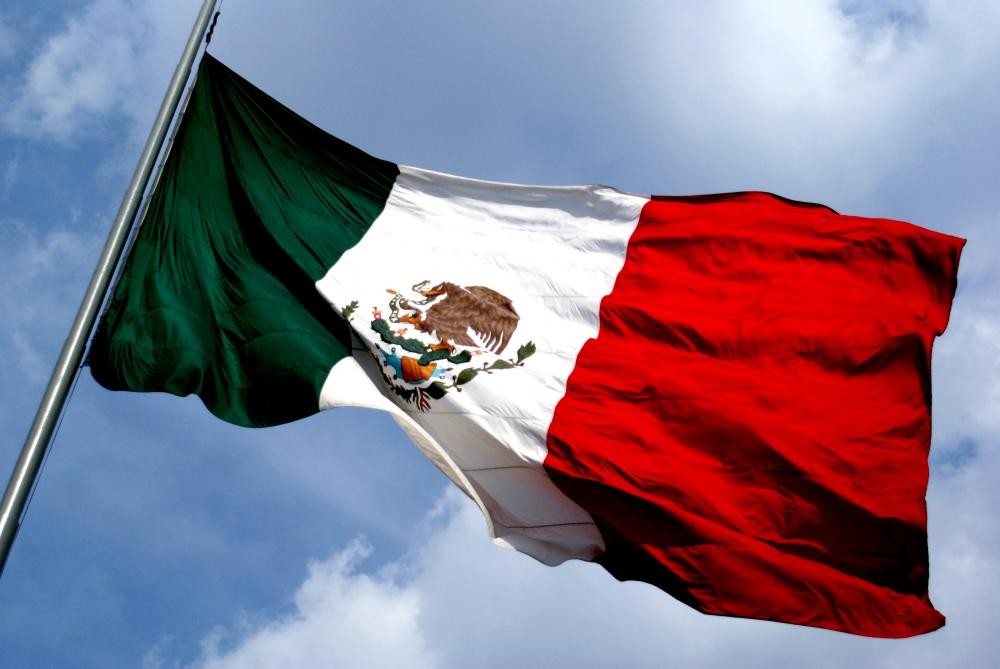
The Mexican government on Tuesday expressed its “concern” over the decision by Texas authorities to send 1,000 National Guard troops to the border to help stem the massive arrival of undocumented child migrants from Central America.

“Attention to the immigration phenomenon must be paid from a long-term regional perspective and based on the principles of good neighborliness and shared responsibility,” the Foreign Relations Secretariat said in a statement.

“The strategy for responding in an effective and humane manner to this phenomenon includes the necessary shared responsibility among the countries of origin, transit and destination of migration flows,” the statement continued.

The secretariat declared its commitment to the protection of the migrants’ human rights and the orchestration of “specific actions directed at the most vulnerable, including unaccompanied children and teenagers.”

The secretariat emphasized that Mexico had opted for a strategy favoring dialogue and cooperation, and it is working “with the countries of Central America to improve conditions in the medium and long term that contribute to the development of that region and strengthen its prosperity.”

More than 57,000 unaccompanied immigrant minors have entered the United States via the border with Mexico over the past 10 months, most of them coming from Central America, a situation that has spurred the governments of the region to try and halt what has been described as a humanitarian crisis.


192 arrested in U.S. crackdown on human smuggling

As part of the U.S. Government’s aggressive campaign to respond to the recent rise in illegal migration into South Texas, federal government officials targeted human smuggling networks in the Rio Grande Valley.

On June 23, the Department of Homeland Security (DHS) surged personnel to the RGV as part of HSI’s efforts to target and dismantle human smuggling operations across the southwest border. Less than a month into this operation, 192 smugglers and their associates have already been arrested on criminal charges, more than 501 undocumented immigrants have been taken into custody and more than $625,000 in illicit profits have been seized from 288 bank accounts held by human smuggling and drug trafficking organizations.


Honduras criticized for its harassment of journalists

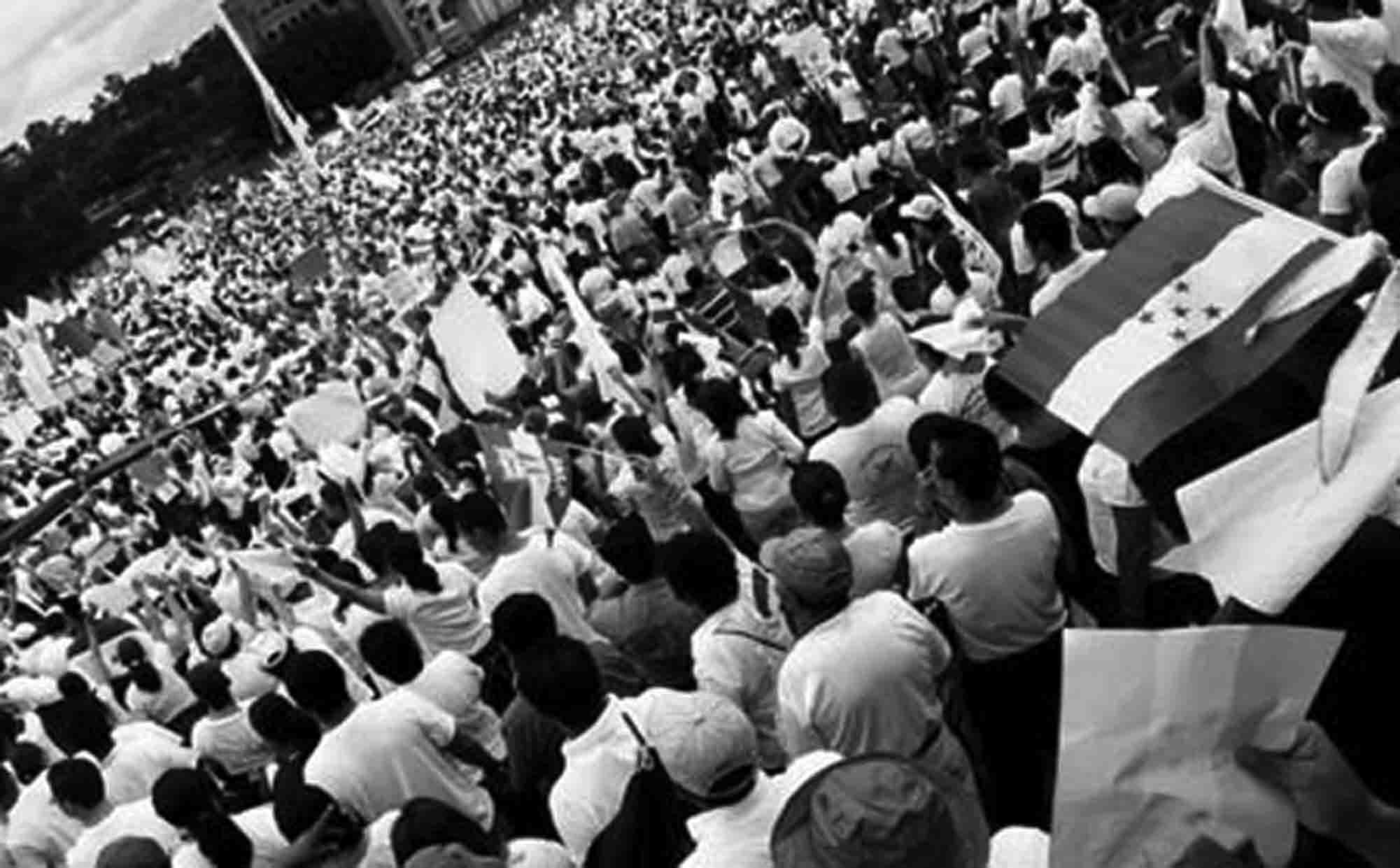
Reporters Without Borders denounced Tuesday the judicial harassment of news professionals in Honduras, asserting that journalists are being prosecuted for giving voice to minorities and reporting on subjects the authorities want to keep hidden.

The Paris-based watchdog group known by the French initials RSF pointed to the sedition case involving 36 members of the Honduran Civic Council of Popular and Indigenous Organizations, or COPINH.

Among those facing charges are Radio Progreso journalist Albertina Manueles Pérez and a number of correspondents of COPINH-affiliated community radio stations.

In the majority of cases, RSF said in a statement, they are accused of inciting protests and undermining the internal security of the state, though many of those reporters have in fact covered corruption scandals and other subjects the government finds inconvenient.

“This judicial harassment of ‘social communicators’ and civil society organizations is indicative of a desire on the part of the authorities to restrict free speech,” the head of RSF’s Americas desk, Camille Soulier, said.

“We call for the withdrawal of all the charges in this case,” she added.

The case opened against the COPINH group comes amid this week’s abduction and murder of Honduran television journalist Herlyn Espinal, RSF noted.

“Reporters Without Borders urges the authorities to do everything possible to shed light on Espinal’s murder,” Soulier said. “A thorough, independent investigation must be carried out as quickly as possible, as it should with all the other media workers murdered in Honduras.”

Honduran authorities’ “dangerous tendency to rule out any link with the victim’s work makes it easier to silence critics with complete impunity,” she said.

spot_img

Child refugees: The consequences of the 2009 coup in Honduras

[Author]by Hector Luis Alamo, Jr.,

LatinoRebels.com

News Analysis
[/Author]
If we’re going to discuss the root causes of the current Honduran refugee crisis, let’s get a few things straight.

First, the U.S. government has and continues to fund, orchestrate and support coups across Latin America.

Most Americans who know anything about Latin American history will readily highlight Guatemala in 1954, Chile in 1972 and Nicaragua in the 1980s as prime examples of the United States’ antidemocratic tendencies in the region. A few might even mention Panama in 1903 and 1989, Honduras in 1911, Haiti and the Dominican Republic under Wilson, Nicaragua in 1934, El Salvador in 1944, Cuba in 1961, Brazil in 1964, the D.R. again in 1965, Uruguay in 1973 and Venezuela in 2002.

There are countless other instances. I’ve just picked the least disputed.

Yet how many people would cite the most recent U.S.-backed coup in Latin America?

In the early morning hours of June 28, 2009, soldiers stormed Palacio “José Cecilio del Valle” in Tegucigalpa, detained the democratically elected president of Honduras, Manuel Zelaya (still in his pajamas) and put him on a plane to Costa Rica. Within hours the National Congress accepted Zelaya’s letter of resignation and voted to make the president of the Congress and next in line, Roberto Micheletti, interim president—though the deposed president later called the letter dated June 25 a complete fabrication. The military was deployed to secure the streets of the capital city, killing at least 12 people following a severe crackdown. Lines of communication were cut, public transportation halted and a curfew imposed.

While I could point to several circumstances showing how what transpired that summer amounted to nothing less than a military coup, I merely need cite the report released by the Honduras Truth and Reconciliation Commission two years after the fact. Reviewing the events leading up to and following Zelaya’s removal from power, the commission concluded that, while Zelaya broke the law by ignoring a Supreme Court ruling against a referendum on a potential constitutional convention, and while the Honduran Constitution lacks provisions for dealing with such a conflict, the National Congress overstepped its authority by removing Zelaya from power.

A cable from the U.S. State Department’s own embassy in Tegucigalpa dated July 2009 put it even more plainly:

“Regardless of the merits of Zelaya’s alleged constitutional violations, it is clear from even a cursory reading that his removal by military means was illegal, and even the most zealous of coup defenders have been unable to make convincing arguments to bridge the intellectual gulf between ‘Zelaya broke the law’ to ‘therefore, he was packed off to Costa Rica by the military without a trial.’”

While President Obama was dragging his feet on whether to continue funding the Honduran military police or not, State Department officials agreed that “there is no doubt that the military, Supreme Court and National Congress conspired on June 28 in what constituted an illegal and unconstitutional coup.”

The United Nations, the Organization of American States, the European Union and the presidents of Brazil, Argentina, Chile, Venezuela and Cuba, among others, all called for the immediate restoration of Zelaya’s presidency—all of whom were ignored by the Honduran government.

President Obama paid lip service to democracy by verbally condemning the coup, but his administration didn’t go so far as calling it a military coup, a distinction which would’ve automatically forced the U.S. government to freeze all aid to the regime.

The reasons behind U.S. support for the results of the coup, if not its means, have been quite clear to this day.

Zelaya, elected on the center-right Liberal Party ticket, attracted the ire of Washington when he defected from the neoliberal camp and began buddying up with the Castros in Cuba and the late Hugo Chávez in Venezuela, eventually having Honduras join the Bolivarian Alliance for the Americas in 2008.

Other sins leading to his ouster included raising the minimum wage 60 percent, providing free education to all children (including free lunch to the poorest children), reducing poverty by 10 percent during his first two years in office and considering an expansion of the reproductive rights of women. Only weeks before the coup, Zelaya had agreed to review the land title claims of the campesinos living in the Aguan Valley, where currently security forces controlled by a rich landowner are engaged in a campaign of severe repression against the same campesinos.

The rich landowner in question is Miguel Facussé, a known narcotrafficker and coup supporter who met with U.S. State Department officials before and after the coup. His security forces conduct their operations in tandem with the Honduran military police, which in term receive its funding and training from (you guessed it) the U.S. government.

The coup regime continues its rule over Honduras to this day in the form of Lobo’s successor, Juan Orlando Hernández. And, again, outspoken criticisms from the likes of Prof. Frank have proven invaluable in their insight, showing how the violence, corruption and impunity already endemic to Honduras before the coup were only inflamed by the coup and the regime that came to power.

For 100 years the U.S. government and its business interests have preserved their little banana republic in Honduras while the American people have hardly taken notice. When they did notice, it was to mock Honduras’ political prostration, dipping so low as to name a clothing store after it. Even now you can Google the term “banana republic” and the first thing you’re confronted with are ads for polos and chinos instead of discussions on U.S. imperialism in Latin America.

To their credit, some members of Congress have voiced their concern over what’s happening in Honduras, even before 13,000 Honduran children seeking asylum showed up at the Rio Grande.

Still, it’s clear that the current refugee crisis was made possible only by the complete and willful ignorance of the American people. I say “willful” because most Americans have purposefully avoided learning anything about Central America, much less Honduras. The military coup came and went, and most Americans viewed it as they do disturbances in Sub-Saharan Africa — being of no importance or consequence to the United States and its way of life.

That’s how much of American foreign policy operates: out of sight, out of mind.

Now that conditions in Honduras have placed the country directly in sight of most Americans, suddenly everyone’s deeply concerned, wondering why and how. Now every newspaper and talk show is decrying the tragedy that is Honduras.

Which brings me to the last issue that needs to be cleared up.

Take it from the son and grandson of Honduran immigrants, the people of Honduras are not “backward.” That’s not why their government is evil, why violent gangs control their neighborhoods, and why women and children are fleeing by the tens of thousands. If Honduras seems “backward,” it’s only because it’s been kept back by the U.S. government and U.S. business interests, which have overthrown the sovereign will of the Honduran people whenever promising reforms were on the horizon.

Between the U.S. government, the American people and the Honduran government, I place the least amount of blame on the “thugocrats” in Tegucigalpa, because as the coup and the United States’ increased aid and training have shown, the Honduran government is only capable of doing what the U.S. government allows it to do.

And the U.S. government is only capable of doing what the American people allow it to do. If not, then the current state of democracy in the United States is no better than it is in Honduras.

But if the U.S. government is still answerable to the American people, then shame on them for looking the other way while their government subverted democracy in Honduras for so long.

And shame on them if they even consider turning their backs now on the children they’ve left nationless.

(Hector Luis Alamo, Jr. is a Chicago-based writer. You can connect with him @HectorLuisAlamo).

spot_img

U.S. Military seeks to brainscan troops for “signs of betrayal”

[Author]Could brain scan become standard procedure to see which troops might commit insider attacks?


by The Sleuth Journal[/Author]


The massive investment in neuroscience undertaken by the U.S.BRAIN project and its sister initiative the Human Brain Project is increasingly taking a turn toward the examination of mental health.

In fact, hundreds of European scientists working on the project are threatening a boycott because of this direction. In their view, the initial directive was to be more focused on repairing organic injuries and disorders such as Parkinson’s, Alzheimer’s and physical brain damage sustained in accidents. Post Traumatic Stress Disorder would be one area that might involve the military.

However, there is a disturbing trend developing in law enforcement and medicine to use what has been learned about the human brain in order to adopt pre-crime systems and predictive behavior technology.

But could a brain scan become standard procedure to see which troops might be inclined to commit insider attacks?

Troops overseas have been working alongside Iraqi and Afghan troops for years, but a new interest is being taken in evaluating potential extremists who are infiltrating to kill from within.

The numbers of these incidents are statistically low as reported by Defense One, which cites the inside killing of “several troops in recent years.” But a former Army counterintelligence agent sees the opportunity to apply new technology that presumably can screen people for mal-intent. The system is called HandShake.

Here’s how the HandShake system works: A U.S. soldier would take, say, an Iraqi officer and outfit the subject with a special helmet that can pick up both electromagnetic signals (EEG) and perform functional near-infrared imaging (fNIRs) which images blood flow changes in the brain. The soldier would put the subject through a battery of tests including image recognition. Most of the pictures in the tests would be benign, but a few would contain scenes that a potential insider threat would remember, possibly including faces, locations or even bomb parts. The key is to select these images very, very carefully to cut down on the potential false positives.

When you recognize a picture that’s of emotional significance to you, your brain experiences a 200 to 500 microsecond hiccup, during which the electromagnetic activity drops, measurable via EEG. The reaction, referred to as the P300 response, happens too fast for the test subject to control, so the subject can’t game the system.

The fNIR readings back up the EEG numbers. Together, they speak to not only whether or not a subject is a traitor but how likely an individual is to act on potentially criminal or treasonous impulses. The system then runs all the data through what Veritas calls a Friend or Foe Algorithm. The output: the ability to pinpoint an insider’s threat potential with 80 to 90 percent accuracy, according to the company.

It’s obviously ironic that this system is intended to be used on people who never should have encountered the U.S. military in the first place, since the U.S. military arrived based on lies. Moreover, to those flagged by such a system, they are clearly open to being tortured under the policies that have been established in the War on Terror world in which we live.

This system comes at an expense in excess of $1 million dollars to deploy and $500,000 per month thereafter, per site, according to the company’s founder. Both the monetary cost and the ethical costs should ensure that this technology never sees the light of day. However, the military-industrial complex has a provable track record of caring very little about either.

Note: The article linked below demonstrates how the biometric identification system in Afghanistan already has trickled down to the streets of America. If brain scanning technology is successful overseas, it is guaranteed to show up inside the United States. It’s already been proposed for air travel and other applications under theFAST system (Future Attribute Screening Technology). Additionally, with the increased war on whistleblowers, this would be a wonderful tool for employers to weed out those whose desire is not to undermine, but simply to expose criminality.

It’s obviously ironic that this system is intended to be used on people who never should have encountered the U.S. military in the first place, since the U.S. military arrived based on lies. Moreover, to those flagged by such a system, they are clearly open to being tortured under the policies that have been established in the War on Terror world in which we live.

This system comes at an expense in excess of $1 million dollars to deploy and $500,000 per month thereafter, per site, according to the company’s founder. Both the monetary cost and the ethical costs should ensure that this technology never sees the light of day. However, the military-industrial complex has a provable track record of caring very little about either.

Note: The article linked below demonstrates how the biometric identification system in Afghanistan already has trickled down to the streets of America. If brain scanning technology is successful overseas, it is guaranteed to show up inside the United States. It’s already been proposed for air travel and other applications under theFAST system (Future Attribute Screening Technology). Additionally, with the increased war on whistleblowers, this would be a wonderful tool for employers to weed out those whose desire is not to undermine, but simply to expose criminality.


Real-Time Facial Recognition Offered to Police in New Program


by Nicholas West

Activist Post


The San Diego Police Department is reporting their involvement in the largest facial recognition program to date. It is something straight out of theaters of war, but is set to hit the streets of America in the very near future if all goes according to plan.

Facial recognition technology, and the databases that catalog and store the results, is advancing at a pace that is difficult to contain. In 2006, the performance of face recognition algorithms were evaluated in the Face Recognition Grand Challenge (FRGC). High-resolution face images, 3-D face scans, and iris images were used in the tests. The results indicated that the new algorithms are 10 times more accurate than the face recognition algorithms of 2002 and 100 times more accurate than those of 1995. Some of the algorithms were able to outperform human participants in recognizing faces and could uniquely identify identical twins. (Source) And that was 2006.

One of the latest military-grade systems can now scan 36 million faces per second, or every face in the U.S. within 10 seconds. It is a technology that has trickled down from use in war zones like Afghanistan to catalog potential terrorists, to U.S. border control applications for combating illegal immigration, to FBI crime detection, to post-riot analysis, and right on down to establishing personal ID for a wide range of private companies.

One of the more troubling aspects of what the San Diego PD is looking to implement is that it will be used on the presumably innocent until proven guilty.

We reported in August that the new iPhones had an embedded code for a biometric kit including a fingerprint censor among other features.

spot_img

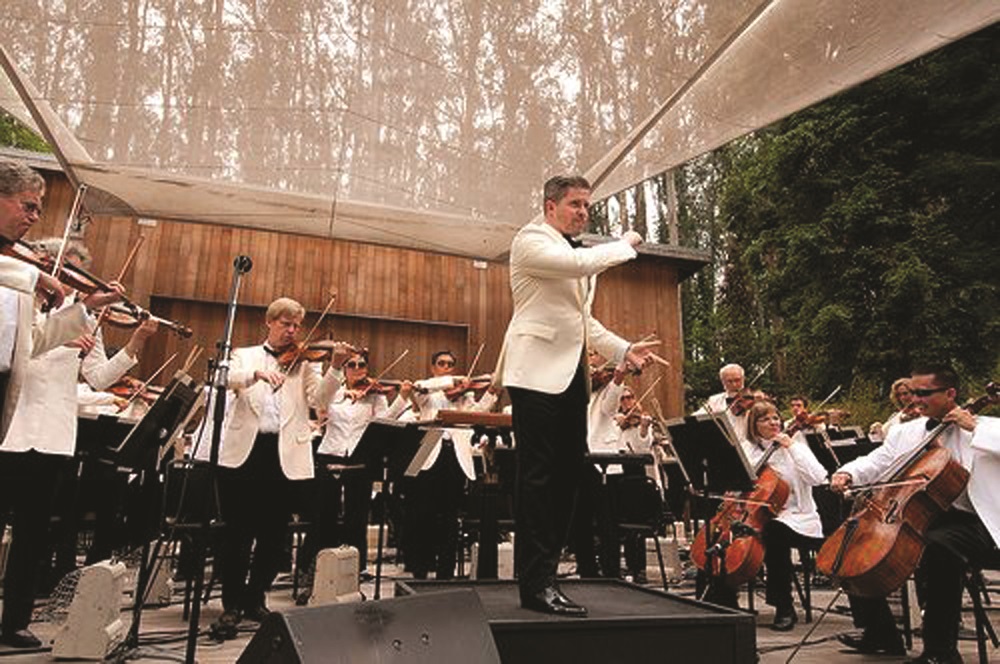
SF Symphony performs annual free concerts a the Stern Festival

[Author]by the El Reportero’s staff[/Author]


The annual San Francisco Symphony free outdoor concerts return to San Francisco’s Civic Center Plaza, as part of the Orchestra’s Summer & the Symphony concert series.

These annual free community concerts are a perfect opportunity to bring a picnic lunch and spend a Sunday afternoon listening to the San Francisco Symphony with friends and family, enjoying great music in the beautiful settings of two of San Francisco’s most treasured outdoor spaces.

The SF Symphony performance the Orchestra’s wildly successful 100th Anniversary Celebration there in the fall of 2011. Violinist Benjamin Beilman takes center stage in Mendelssohn’s Violin Concerto in E minor, Opus 64 and the Orchestra performs additional short classical pieces by Tchaikovsky and Mozart. Food and beverage vendors from Off the Grid, booths and free giveaways add to the festivities.

On Sunday, July 27 at 2 pm, at the San Francisco Civic Center.


MEX I AM – live it to believe it:

A Festival Showcasing The Cultural Greatness & Influence Of Mexico

The Consulate General of Mexico in San Francisco, Conaculta and Yerba Buena Center for the Arts are pleased to introduce MEX I AM: live it to believe it a first-of-its-kind festival showcasing the best of Mexico with a multidisciplinary array of inspiring leaders from the performing arts and academia. The celebratory weekend of music, dance, theater and ideas.


MEX I AM will explore the best of contemporary Mexican culture, arts and ideas. Over the course of four days, the multidisciplinary festival will feature some of the most innovative Mexican performers from various genres and disciplines from opera to Latin jazz and from ballet to folk dance and more. MEX I AM will also feature Ideas: North & South of the Border a line-up of scientists, humanists and game changers that personify Mexico’s innovative spirit and leadership. From July 31 – Aug. 3 at Yerba Buena Center for the Arts.


Exhibition features powerful Latino poster art of the 70s

Serigrafía, a traveling exhibition featuring 30 influential silkscreen prints created by the best of California’s Latino/a printmaking community,

The exhibition features poster art from the 1970s to the present, including works of Bay Area artists Juan R. Fuentes, Jos Sances, Favianna Rodríguez, Esther Hernández, Yolanda López and other California artists.

Emerging in concert with the civil rights movement and activism for political and social justice for marginalized groups, these prints confront political, economic, social, and cultural issues on both a personal and a global level.

The art, which explores such subjects as the United States embargo on Cuba, and the Occupy Wall Street Movement, was conceived to provoke, protest, and praise.

From the iconic Sun Maid by Esther Hernández, who combined the familiar Sun Maid girl with the calavera (the satirically costumed skeletons) to bring awareness about the use of pesticides, fungicides, and other toxic chemicals in raisin production, to works by emerging printmakers like Gilda Posada, whose print Libertad was created to show the relationship between liberation movements for human rights in Palestine and in Mexico, this exhibition is varied in subject matter but rooted in a long heritage of California printmaking.

Many graphic artists called on the iconography of their pre-Columbian past, such as in Xavier Villamontes’ Boycott Grapes, which depicts a powerful Aztec warrior crushing handfuls of grapes that drip with the blood of exploited and injured farmworkers. When strikes, marches, and legislation failed to improve conditions in the fields, through posters like this one, the United Farms Workers Union (UFWA) asked the public to boycott grapes, wine, and lettuce in order to pressure growers.

Will be on view in the San Francisco Main Library’s Jewett Gallery, July 26 – Sept. 7, 2014. Opening discussion with curators Juan R. Fuentes and Jos Sances.

Other related events:

Voice on Ink/Voz en Tinta, poetry event with San Francisco Poet Laureate Alejandro Murgía on Aug. 7, at 6:30 p.m., at the Main Library, Latino Hispanic Community Room.

spot_img

Plácido Domingo brings his music to the World Cup

[Author]by the El Reportero’s news services[/Author]


Spanish tenor Placido Domingo returned to Rio de Janeiro and, two days before the World Cup final, again delighted fans after 20 years away from the Brazilian city.

The time and place of his Friday concert were not scheduled by chance by this lifelong soccer fan and Real Madrid supporter. Domingo wished to associate his music once more with a World Cup and so chose the city where Argentina will face off against Germany on Sunday for the soccer championship at Maracana Stadium.

In a tribute to the country that welcomed him with a full house after such a long absence, the tenor chose not to perform solo but surrounded himself with local musical talent including Paula Fernandes, the Brazilian Symphony Orchestra and the Brazil Opera Chorus, to bring the crowd at the HSBC Arena-Rio theater an unforgettable show.

Also accompanied, as on other occasions, by Puerto Rican soprano Ana Maria Martinez and U.S. orchestra conductor Eugene Kohn, the Spaniard captivated an audience that had longed to see him again, with a combination of opera, Spanish music, American musical comedy, operetta and typical Brazilian songs.

The duos by Domingo and Martinez were so charged with power and elegance they gave spectators the shivers and were some of the truly memorable moments of the night.

This was the fifth time the singer has given a concert in a World Cup context, after initiating the custom in Rome in 1990, where he teamed up with Jose Carreras and Luciano Pavarotti.

The tenor went on to conquer the public in the United States in 1994, in France in 1998, in Korea/Japan in 2002, and in Germany in 2006, and no way was he going to miss the chance of a repeat in Rio de Janeiro.


Come meet aspiring Latino muralists from Rosemont

Youth with an avid interest in the arts were selected from the Rosemont community, located 20-miles outside of Chicago, to participate in a unique project promoting the ancient art of muralism. And now you have the opportunity to meet and support their efforts. The group includes Guillermo Echeverria, Juana García Ramírez, Andrea García Chávez, Fabián Garcia, Francisco García, Felipe Rodela Trujillo, Luis García and María Hernández.

This group was given the incredible opportunity to work along side professional muralist Rahmaan Statik Barnes to conceptualize and create murals representative of their community.

When the project is completed there will be three murals, each 100 feet long by 15 feet tall, adorning wall space in the Rosemont Recreation Center located on Barry Street.

Murals have a long and revered history in Latin America and some of the greatest muralists were from Mexico including Diego Rivera and David Alfaro Siqueiros. Mexican muralism traces its roots to pre-Columbian times with murals often seen as the ideal way to inspire and celebrate community. The budding muralists were employed by Rosemont to work on every aspect of mural creation from thematic development to sketching to painting.

The “It’s Art Here” event was launched on Friday July 11 from 5-9 p.m. and the entire community weas invited to help kick off this initiative by painting a portion of the murals.

Rosemont Mayor Brad Stephens noted, “This project is remarkable for the benefits it brings to Rosemont. These benefits include the invaluable hands-on learning and arts experience these Rosemont students will gain through their creation of the murals.”

spot_img