Wednesday, October 14, 2026
spot_img
Home Blog Page 43

When women in Iran bleed, western feminism falls silent

by Marvin Ramírez

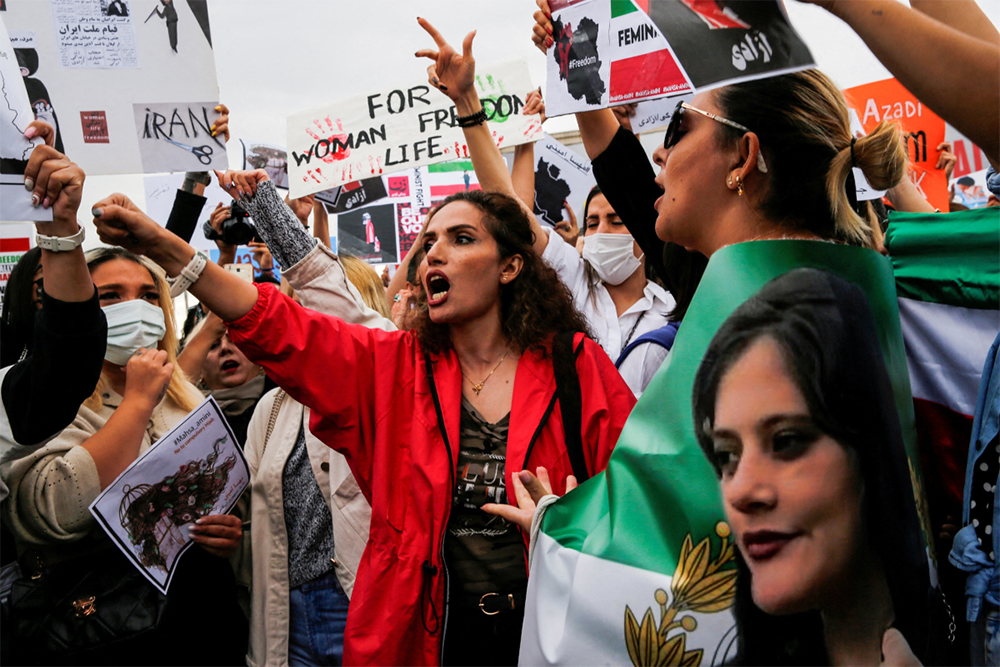
Iran is burning — not because of a foreign war, but because of a national uprising against a religious dictatorship that has driven the country into economic, social, and moral collapse. What began as protests over the collapse of the national currency has turned into an open rebellion against a regime that uses religion as a tool of total control.

For two weeks, demonstrations have spread across the country. In response, the government has done what it always does when it feels threatened: cutting off the internet, blocking phone lines, shutting down media outlets, and unleashing brutal repression. The regime wants the world not to see what is happening. It wants to kill in the dark.

But the truth is leaking out.

Iranian women are being beaten, arrested, and killed for daring to demand the most basic thing: freedom — the freedom to choose how to dress, how to speak, how to live.

The scale of the crackdown is becoming clear through testimonies that manage to escape the blackout. Faranak Amidi’s, an Iranian-American woman living in Los Angeles, wrote on her Facebook account this morning:

“I am in contact with protesters in Tehran via Starlink. They are reporting a heavy security presence and a high number of killings and arrests. Two protesters told me they have seen people being killed by snipers.”

These are not isolated disturbances. This is a state firing on its own people.

And this is where the uncomfortable question arises:
Where are the feminists?

In Iran, women are not asking for corporate board quotas or inclusive language. They are fighting not to be imprisoned, beaten, or executed for defying religious rules imposed by armed men.

Commentator Elisabet Ortega captured this hypocrisy with brutal clarity on her Instagram account:

“How curious, isn’t it? Women imprisoned for not wearing a veil, beaten for protesting, murdered for wanting to be free — and suddenly the feminist left falls silent. No signs, no hashtags, no demonstrations. It must be that when the oppressor is not Western, feminism takes a break. Because when an Islamist regime controls a woman’s body, it’s no longer ‘sexism,’ it’s called ‘cultural context.’

And it’s very simple: either you defend women’s freedom always, or you are not a feminist — you are selective. Freedom does not belong to any ideology.”

The silence is deafening.

The same movements that flood the streets in the West when a politician says something offensive disappear when women are being murdered by a theocratic regime. Because this time, the oppressor is not a Western man — it is an Islamist system, and that seems to make many activists uncomfortable.

In Iran, religion is not a private belief. It is a tool of power. It controls the currency, the police, the courts, and daily life — and above all, it controls women’s bodies.

Iranian women are confronting a real system of religious enslavement. They are risking their lives in the streets while the world’s loudest gender-equality movements look the other way.

That silence speaks louder than a thousand speeches.

Because if feminism only defends women when it is politically convenient, then it is not a liberation movement — it is a selective ideology.

The women of Iran are paying in blood.

And the world that claims to be “progressive” is watching in silence.

– https://www.youtube.com/watch?v=0HlH8p0tvOo.

spot_img

CA schools get new rules in 2026 on ICE, cellphones and more

All California schools will be required to limit cellphone use by students, starting next summer. (Syda Productions/Adobe Stock). Todas las escuelas de California estarán obligadas a limitar el uso de teléfonos celulares por parte de los estudiantes a partir del próximo verano

by Suzanne Potter

Jan 5, 2026 – New California laws going into effect in 2026 are intended to bring positive change to schools on a range of issues.

One bill requires schools to notify parents when immigration officers come onto a campus. Another prohibits the disclosure of student or parent data without the family’s consent unless ICE has a judicial warrant.

Yasmine-Imani McMorrin, director of education equity for the Children’s Defense Fund of California, said the changes are welcome.

“What is important is ensuring that our school campuses are safe, and that information is getting out to parents,” McMorrin emphasized. “We are checking information and ensuring that everyone is following the rules.”

Assembly Bill 1454 would adjust reading curricula to improve literacy, particularly among English language learners. Assembly Bill 3216 requires all K-12 schools to have a policy to limit or ban student use of cellphones during the school day by July 1.

McMorrin also applauded Senate Bill 640, which directs the Cal State University system to automatically admit qualified high school graduates without them having to apply.

“The more supports that we have for our young folks to be successful and the more resources that we are allocating towards that, the better,” McMorrin contended.

Assembly Bill 1264 takes effect in 2026, requiring school districts to revamp their menus to remove the “most harmful” ultra-processed foods from school lunches by 2035.

In other California news:

Californians brace for higher costs as ACA subsidies expire

2026 is here, and it brings a big jump in health-insurance premiums for almost 90% of the 1.9 million people on CoveredCA plans, now that the COVID-era enhanced subsidies to help pay those premiums have expired. The state has allocated $190 million to help people afford their premiums, but that will only shield the lowest-income families.

Anne Sunderland, senior communications officer for the California Health Care Foundation, said many middle-income families on CoveredCA will see premiums rise by hundreds or even thousands of dollars a month.

“Think of an individual making more than, say, $63,000 a year, or a family of four earning more than $130,000,” she explained. “They’re returning to the days where they got no federal subsidies. Those are the folks who might see their premiums double, or sometimes even more than double.”

CoveredCA estimates that hundreds of thousands of residents will not be able to afford the increases and will drop coverage altogether. This affects everyone, as hospitals are expected to raise prices to cover costs of more uninsured people who end up in the hospital Emergency Department.

Last summer, Republicans in Congress decided not to extend the subsidies while slashing Medicaid and SNAP benefits as part of what was known as the “One Big Beautiful Bill Act.” They opted to use the savings for immigration enforcement and extending tax cuts to wealthy families and corporations.

Sunderland said for those facing hefty premium hikes, the most important thing is to call CoveredCA or talk with a certified enrollment counselor.

“Everyone’s situation is different, and you want to explore all your options, including all of the federal or the state assistance you may qualify for,” she continued. “So, be educated about your choices so you can make the right one for your family.”

People still have time to sign up for a plan on the CoveredCA marketplace – open enrollment ends on January 31.

spot_img

Papers, permissions, and the architecture of submission

Marvin Ramírez, editor

by Marvin Ramírez

Every era has its illusion of safety. In ours, it is called “verification.”

As 2026 unfolds, the public is saturated with distraction—wars, political theater, collapsing regimes, energy crises. These spectacles perform an essential function: they keep people emotionally exhausted while the machinery of control is quietly upgraded. Power does not usually arrive wearing boots. It arrives wearing forms, apps, and compliance deadlines.

Across Europe and now unmistakably in the United States, governments are tightening their grip on identity. Not with mass arrests or declarations of emergency, but with policies presented as neutral, technical, inevitable. Identification systems are expanding. Cash is disappearing. Digital credentials are becoming prerequisites for participation in ordinary life. The message is always reassuring: this is about security, convenience, modernization. That message should not be trusted.

In the United Kingdom, proposed digital ID systems have sparked backlash for good reason. A digital identity is not merely a card. It is an access key. When identity is centralized, digitized, and required to work, travel, rent, bank, or receive services, it becomes a mechanism of discipline. Compliance is rewarded with access. Resistance is punished with exclusion. This is not science fiction. It is administrative reality.

The parallel push toward cashless economies makes the danger explicit. Cash is anonymous. Cash cannot be switched off. Cash does not require permission. Digital money does. When physical currency disappears, every transaction becomes conditional. Every purchase becomes traceable. Every individual becomes auditable. Power no longer needs to imprison people. It can simply deny them functionality.

Citizens are told this fear is exaggerated. That no government would abuse such systems. That safeguards exist. That trust is required for society to function. These arguments are insultingly naïve. Governments are not moral actors. They are structures of power influenced by money, ideology, and self-preservation. Political campaigns are financed by elites. Media narratives are filtered through advertising. Policy outcomes consistently favor those with leverage. Expecting restraint from such systems is not optimism; it is denial.

In the United States, REAL ID is the domestic expression of this global trend. Passed in 2005 and enforced beginning in 2025, the REAL ID Act standardized state-issued identification for federal purposes. On paper, it is limited. Supporters rush to emphasize this. REAL ID does not revoke citizenship. It does not create a single national database. It does not track political beliefs. Americans may still use passports or passport cards to travel. Legal residents and foreign nationals can use valid passports from their home countries. These facts are true—and beside the point.

The mistake is focusing on the present form instead of the precedent. Power does not reveal its end state at the beginning. It proceeds incrementally, normalizing each step before advancing to the next. What matters is not what REAL ID does today, but what it teaches people to accept: that access is conditional, movement is permissioned, and identity must be constantly proven to authority.

Communities that have experienced surveillance, discrimination, and bureaucratic cruelty do not need lectures about trust. Immigrants know what it means to live under documentation regimes. Working-class families know what it means to be denied services due to paperwork errors. Marginalized groups know that “neutral” systems are never enforced neutrally. When verification expands, vulnerability expands with it.

The real threat is not dramatic erasure or cinematic tyranny. It is quiet suffocation. Accounts flagged without explanation. Travel delayed by “system issues.” Benefits suspended pending review. Appeals lost in automated loops with no human accountability. In a fully digitized identity environment, a technical failure can immobilize a life. A policy change can isolate a dissenter. A centralized system can quietly punish without ever declaring guilt.

This is not about airports. It is about obedience.

A society that must constantly prove its identity is a society being trained to submit. A population that accepts access as a privilege rather than a right is already halfway controlled. The architecture being built today does not require bad intentions to become dangerous. It only requires future leaders less restrained than those currently in office. History suggests that is not a remote possibility.

Calling this concern “conspiracy” is a strategy, not an argument. It delegitimizes dissent while insulating power from scrutiny. A free society does not mock skepticism. It depends on it.

The question is no longer whether identification systems will expand. They will. The question is whether citizens will demand hard limits, enforce decentralization, and refuse to trade autonomy for convenience. Or whether they will wake up one day to discover that participation itself now requires permission.

Control does not arrive suddenly. It arrives politely, incrementally, and legally. By the time it feels heavy, it is already normal.

spot_img

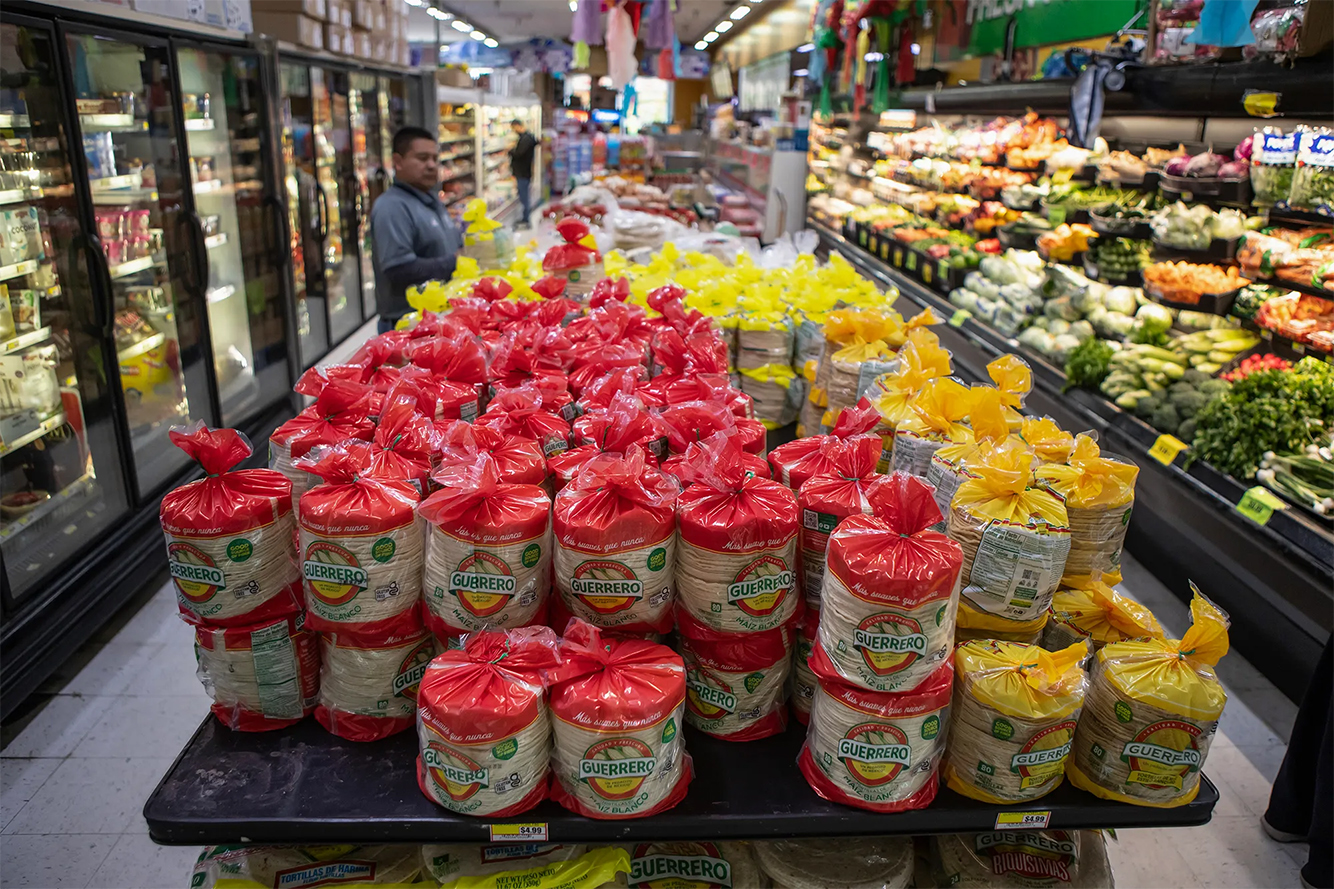
A new California law requires tortillas to include an extra ingredient. Here’s why

Montones de paquetes de tortillas en un supermercado en Fresno el 9 de abril de 2024. Stacks of tortilla packages at a supermarket in Fresno on April 9, 2024. Photo by Larry Valenzuela, CalMatters/CatchLight Local.

by Ana B. Ibarra

Tortillas sold in California are going to have a new ingredient, one that’s intended to help nurture healthy infants. Starting Jan. 1, a new law will take effect requiring most tortillas and corn masa products sold in the state to contain folic acid, a vitamin that’s important to infant health.

Latinas in California are far less likely than other women to get enough folic acid early in pregnancy — a gap that can lead to life-altering birth defects.  State data show that, between 2017 and 2019 – the latest years for which state data is available – about 28 percent of Latinas reported taking folic acid the month before becoming pregnant. White women took the vitamin at a higher rate, with 46 percent of them reporting consuming folic acid,  according to the California Department of Public Health.

This puts Latinas at higher risk of having a baby born with neural tube defects — defects of the brain and spinal cord. Some examples of that are conditions like spina bifida and anencephaly.

Research has shown that folic acid can reduce birth defects by up to 70 percent. That’s why it’s found in prenatal vitamins. But because women may not find out they are pregnant until weeks or months after, public health has long recommended that folic acid also be added to staple foods.

In 1998, the U.S. required manufacturers to fortify certain grain products with folic acid, such as pasta, rice, and cereals, to help women of reproductive age get the necessary amounts. Since that rule took effect, the rate of babies born with neural tube defects dropped by about a third, according to the Centers for Disease Control and Prevention.
But even with the addition to these foods, birth defect rates among babies born to Latinas have been consistently higher. In search of a more culturally appropriate addition, in 2016, the federal government allowed makers of corn masa to add folic acid to their foods – but didn’t require it. Joaquin Arambula, a Democrat from Fresno, who authored the law said leaving folic acid out of corn masa products, used in many Latino staple foods, was a “real oversight.”  Now, with the implementation of Assembly Bill 1830, California is the first state to require folic acid in corn masa products. The law requires manufacturers that do business in the state to add 0.7 milligrams of folic acid to every pound of flour and to list the addition in their nutrition labels. The law makes exemptions for small batch producers like restaurants and markets that might make their own tortillas from scratch. Months after California’s law was signed, Alabama passed its own version. Its law goes into effect in June 2026.

Some large manufacturers have already been adding folic acid to their products for years. Gruma, the parent company of Mission Foods, said it started fortifying its foods back in 2016, when the federal government first allowed it. A company spokesperson said Gruma “has a longstanding commitment to supporting legislative fortification initiatives” and supports the new laws in California and Alabama.

Supported by the California Health Care Foundation (CHCF), which works to ensure that people have access to the care they need, when they need it, at a price they can afford. Visit www.chcf.org to learn more.
In other California laws:

Get up to speed fast on the new California laws that might change your life in 2026 New California laws taking effect on Jan. 1, 2026 expand coverage for in vitro fertilization, regulate artificial intelligence, protect renters and more Most of the hundreds of new California laws that are set to take effect on the first day of the new year won’t change your life. They’re adjustments to existing laws and directions to state agencies to follow up on past priorities. But some of them might have a profound effect on you or a loved one.
Know someone who’s struggling to conceive? One new law requires more insurers to cover in vitro fertilization.  How about someone who’s thinking about what to do after high school? Another new law compels more California State University campuses to offer automatic admission to seniors who meet their requirements. Some new California laws are meant to confront some of the major questions of the moment, including how to regulate artificial intelligence and whether the state’s Democratic leaders can contest the Trump administration’s aggressive immigration enforcement.

In all, lawmakers passed 917 bills in 2025 and Gov. Gavin Newsom vetoed 123 of them. Most of the ones he signed take effect on Jan. 1. CalMatters reporters describe some of the noteworthy new laws in the stories listed below. We’ll update this list as we publish more stories over the next few days.

spot_img

How different cooking methods and added ingredients transform potatoes, a nutritional staple

by Willow Tohi

  • Potatoes are naturally nutritious, but their health impact is determined almost entirely by cooking method and added ingredients.
  • Boiling and steaming are the healthiest methods, preserving nutrients without adding excess fat.
  • Deep-frying, pan-frying in unstable oils and methods that submerge potatoes in fat (like confit) are the least healthy, introducing harmful compounds.
  • Popular preparations like chips, hash browns and dauphinoise potatoes are high in calories, unhealthy fats and salt, making them occasional treats.
  • To boost health benefits, keep skins on, use unsaturated oils sparingly and flavor with herbs and spices instead of salt, butter and cream.

For centuries, the potato has been a dietary cornerstone, yet it remains trapped in a nutritional paradox. Britons consume over two million tonnes annually, enjoying them fried, baked, mashed and roasted. However, experts now clarify that the potato itself is not the villain of the dinner plate; instead, its health value is dramatically reshaped in the kitchen. The consensus from nutritionists is clear: the cooking method and accompanying ingredients determine whether this versatile tuber is a healthful foundation or a vehicle for excess fat, salt and harmful compounds.

From nutrient powerhouse to calorie bomb

At its core, the potato is a “naturally nutritious” food, low in fat and a good source of fiber, potassium, vitamin C and vitamin B6. A medium baked potato with its skin provides more potassium than a banana. The healthiest preparations are those that preserve these innate qualities without introducing detrimental elements. Boiling, steaming and microwaving top the list, as they require little to no added fat. Conversely, methods that involve submerging potatoes in fat—such as deep-frying for chips or the French confit technique—transform them into calorie-dense items with diminished nutritional returns. These processes can create harmful trans-fats and acrylamides, compounds linked to inflammation and chronic disease.

The topping trap and the oil equation

For conventional diets, even cooking methods can be undermined at the serving stage. A baked potato is a nutrient-dense choice, but piling on butter, full-fat cheese and sour cream quickly escalates its saturated fat and calorie count. Nutritionists recommend healthier swaps like Greek yoghurt, cottage cheese, or a drizzle of olive oil. The type of fat used in cooking is equally critical. While roasting or air-frying can be reasonable options, using oils with low smoke points or saturated fats like goose fat at high temperatures can degrade the oil’s quality and generate unhealthy byproducts. Experts advocate using unsaturated oils like olive or rapeseed oil sparingly, and techniques like parboiling before roasting to achieve crispiness with less oil absorption.

Processed forms and the hyper-palatable problem

The least healthy ways to eat potatoes are often the most convenient and craveable. Shop-bought hash browns, frozen chips and especially potato chips are frequently deep-fried, high in refined oils and heavily salted. Beyond their poor nutritional profile, these hyper-palatable, processed forms are engineered to override the body’s natural satiety signals, making overconsumption easy. While homemade versions baked or air-fried with minimal oil offer a slightly better alternative, they remain foods best enjoyed occasionally. Elaborate, restaurant-style preparations like dauphinoise or thousand-layer potatoes, which involve copious cream, cheese and fat, fall into the same indulgent category.

A return to simple foundations

The historical journey of the potato, from a New World staple to a sometimes-maligned carbohydrate, reflects our evolving—and often contradictory—relationship with food. The modern lesson is a return to simplicity. By choosing cooking methods that highlight the potato’s natural assets and being mindful of additions, this humble vegetable can securely reclaim its place as a wholesome component of a balanced diet. The key is recognizing that the potato is a blank canvas; its ultimate health impact is painted by the choices made in its preparation.


spot_img

SalsaCrazy mondays brings dancing to Clement Street

by Alex Silva
With contributions from Magdy Zara

SalsaCrazy offers a welcoming space for those who want to learn salsa and enjoy a night of dancing every Monday.
This weekly event combines dance classes with an open dance floor, featuring salsa and bachata music. No partner or prior experience is needed, so it’s open to everyone.
Known for being a long-standing part of the Bay Area dance community, SalsaCrazy Mondays fosters movement, connection, and confidence on the dance floor in a relaxed atmosphere.
This public event is held every Monday; the next one will take place on January 12th in San Francisco, at 406 Clement Street, at the Neck of the Woods nightclub. The event will run from 6:30 p.m. to 11:30 p.m. For any questions: https://golatindance.com/event/salsacrazy-mondays-salsa-classes-and-dance-lessons-salsa-bachata-dancing/2026-01-12/

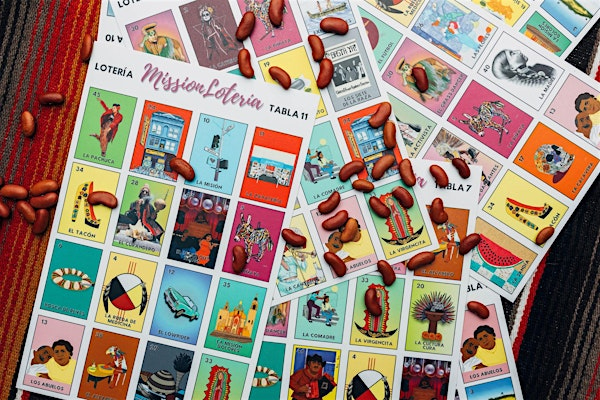
Game Night at Tacolicious: Valencia
This lottery game night event brings together exquisite food, games, and community, with a unique twist on the traditional Mexican game.
Attendees are offered the chance to win small prizes throughout the evening.
This entertaining night takes place on the first and third Thursday of each month, which is January 1st and 15th.
The invitation is open to families at the Tacolicious restaurant in San Francisco, located at 741 Valencia Street, starting at 6 p.m. For more information: https://www.eventbrite.com/e/game-night-at-tacolicious-valencia-tickets-1645436678399?aff=ebdssbdestsearch

Mission Gráfica: The Voice of the Public at KALW
Mission Gráfica is organizing an art exhibition titled “The Voice of the Public.” Through the Latino Art Center, which highlights art history with posters from the Bay Area, the exhibition shows how artists have addressed social issues.
The exhibition features posters about civil rights, housing, and community. These themes demonstrate how art has been used to express ideas and support causes.
The exhibition will be open until January 30th in San Francisco, at the KALW event complex, located at 220 Montgomery Street, from 12 p.m. to 6 p.m. For more information: https://downtownsf.org/do/mission-grafica-the-publics-voice-exhibition

Rose B. Simpson presents her exhibition Lexicon
The Indigenous mixed-media artist Rose B. Simpson, from Santa Clara Pueblo, New Mexico, will present “Lexicon,” an exhibition that combines cultural ceramics and classic cars.
Featuring vintage vehicles: a 1985 Chevy El Camino and a 1964 Buick Riviera, representing a collection of modes of transportation with designs inspired by Pueblo traditions. These vehicles are treated as objects rather than functional machines.
Together, the exhibition reflects how Indigenous art has evolved within contemporary public spaces.
This exhibition is open to the public from Aug. 2025 to Aug. 2, 2026, at the de Young Museum in Wilsey Court, located in Golden Gate Park, 50 Hagiwara Tea Garden Drive in San Francisco, Tuesday through Sunday from 9:30 a.m. to 5 p.m.

spot_img

How Nicolás Maduro’s capture unfolded

by El Reportero staff

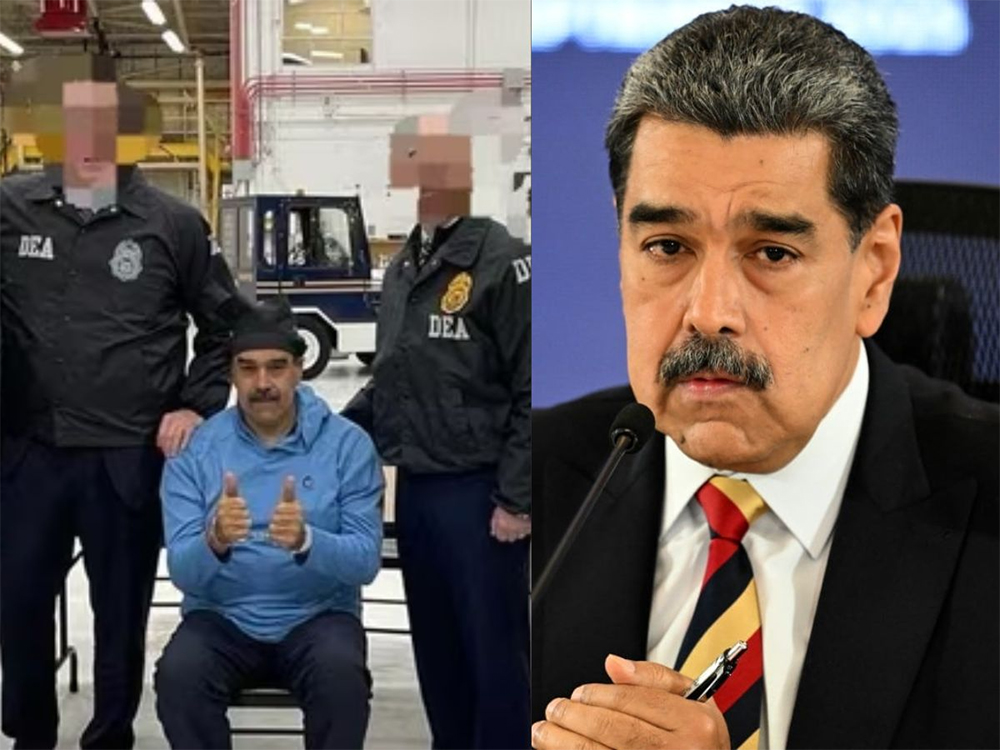
At 10:46 p.m. Eastern Time on Friday night, a short message from Donald Trump set one of the most dramatic military operations in recent U.S.–Latin American history into motion: “Good luck and godspeed.” Within hours, that order launched a massive, tightly coordinated raid that ended with Venezuelan leader Nicolás Maduro in U.S. custody, blindfolded aboard an American warship, and Venezuela’s political future thrown into deep uncertainty.

According to public statements from Trump and Joint Chiefs Chairman Dan Caine, as well as interviews with officials familiar with the planning, the operation had been months in the making. Roughly 150 aircraft were mobilized from more than 20 land- and sea-based locations, while U.S. special forces rehearsed on a full-scale replica of Maduro’s heavily fortified residence. Behind the scenes, the CIA built an extensive intelligence picture of Maduro’s movements, habits, and security protocols.

The night of the operation

Just after midnight, helicopters carrying an extraction team of U.S. special forces and FBI agents flew barely 100 feet above the Caribbean Sea. Overhead, fighter jets, bombers, and drones provided cover, neutralizing air defense systems as the aircraft approached Maduro’s compound. Power to the area was cut, plunging the site into darkness.

As the helicopters entered the target zone, they came under fire. One aircraft was struck but remained operational. At 1:01 a.m., U.S. forces touched down. The team advanced using real-time intelligence feeds from assets on the ground and in the air, closing in on the compound where Maduro was believed to be sheltering.

From Mar-a-Lago, Trump monitored the raid via live video alongside Caine, Secretary of State Marco Rubio, Defense Secretary Pete Hegseth, and CIA Director John Ratcliffe. Trump later said the extraction team faced heavy gunfire but successfully breached resistance and entered the compound.

Maduro and his wife, Cilia Flores, attempted to flee to a steel-reinforced safe room. The team had trained extensively for that scenario, even preparing to cut through reinforced doors if necessary. In the end, force was not required. Both were apprehended before reaching the safe room.

Extraction and aftermath

With Maduro secured, the focus shifted to withdrawal. Additional helicopters arrived as fighter jets and drones provided suppressive fire. Caine described multiple self-defense engagements during the pullout. No U.S. personnel were killed, though Trump acknowledged several were wounded. Venezuelan casualties have not been confirmed.

By 3:29 a.m., the force had cleared Venezuelan airspace over open water. Less than an hour later, at 4:21 a.m., Trump announced the operation’s success on social media. The White House subsequently released an image of Maduro blindfolded aboard the USS Iwo Jima.

Months of preparation

Officials say the groundwork began as early as August, when a small CIA team intensified surveillance of Maduro’s routines. “We knew where he lived, where he traveled, what he ate, even his pets,” Caine said, underscoring the depth of intelligence collected.

Special forces simultaneously trained on a detailed mock-up of Maduro’s residence, complete with steel doors and reinforced rooms. The mission was nearly launched earlier in the week but postponed due to weather conditions.

For much of that period, Trump advisers maintained that the preferred outcome was a voluntary exit by Maduro. Trump himself said he spoke with Maduro multiple times, urging him to surrender. Negotiations stalled when Maduro refused to leave the country, prompting Trump to authorize the operation.

How tensions escalated

The road to Friday’s raid traces back nearly a year. Even before returning to office, Trump signaled that Maduro’s removal was a priority. Pressure escalated through economic and military measures: expanded bounties tied to drug trafficking आरोप, increased naval deployments near Venezuela, seizures of oil shipments, and a renewed embargo.

Rubio’s long-standing opposition to the Venezuelan government and its alliance with Cuba helped shape the administration’s stance. Another key influence was Deputy Chief of Staff Stephen Miller, who pushed for a stronger U.S. military presence in the Caribbean. In the weeks before the operation, senior officials held near-daily discussions refining both military and intelligence planning.

What comes next

While the military execution was precise, political planning remains less clear. Trump said the United States would temporarily oversee Venezuela’s transition, though details remain undefined. Attention has turned to Vice President Delcy Rodríguez, who spoke with Rubio shortly after the raid but later publicly declared Maduro the legitimate president and rejected foreign control.

U.S. forces will remain on heightened alert, officials said, as Washington weighs next steps. The embargo will stay in place, maritime interdictions will continue, and consultations with oil executives are planned to assess Venezuela’s production capacity.

As for Maduro, U.S. officials say he will be transferred to stand trial in the United States, where, in Trump’s words, he will “face American justice.” – With reports by The Frank.

spot_img

Bradley says Dalton Smith has never faced a fighter like Matias

by the El Reportero’s staff

Saturday’s junior welterweight title fight at Barclays Center represents unfamiliar territory for Dalton Smith, at least in the eyes of former two-division champion Tim Bradley. Assessing the matchup this week, Bradley suggested the undefeated Brit is stepping into a level of competition he has yet to encounter as a professional.

Bradley believes Subriel Matias brings a combination of volume, pace, and physical pressure that distinguishes him from the opposition Smith has previously faced. In Bradley’s assessment, Matias stands as the first elite contender Smith will meet at 140 pounds, making the bout a defining test rather than a routine title opportunity.

Smith’s career has been guided largely through domestic and European matchups under the Matchroom banner, a developmental route common among UK-based fighters. Bradley acknowledged the logic behind that progression but argued it has shielded Smith from the sustained intensity often produced by fighters emerging from the United States, Mexico, and Puerto Rico.

That contrast, Bradley noted, becomes critical against a pressure fighter like Matias, whose style forces opponents to work continuously. According to Bradley, counter-punchers who rely on timing and economy often struggle when they are unable to slow the pace or control distance.

Matias enters the contest following a recent adverse analytical finding for Ostarine, an issue reviewed by the New York State Athletic Commission. The commission ultimately ruled that the amount detected was below the level required for disciplinary action, clearing Matias to proceed with the defense.

Bradley offered a blunt prediction regarding how the fight is likely to unfold. He dismissed the likelihood of a full twelve rounds, pointing to Matias’ history of overwhelming opponents with output until resistance fades.

“This isn’t going 12 rounds,” Bradley said, reiterating that Matias’ ability to consistently out-throw rivals has proven decisive throughout his career.

The bout marks the first defense of Matias’ second junior welterweight title reign, which began last July with a decision victory over Alberto Puello. Smith arrives unbeaten but without wins over established contenders at 140 pounds, with names such as Jamaine Ortiz, Ernesto Mercado, Keyshawn Davis, and Puello absent from his record.

Matias and Smith headline Saturday’s card in Brooklyn with the WBC junior welterweight title on the line. Tickets remain available ahead of fight night.

– With reports by Michael Collins.

spot_img

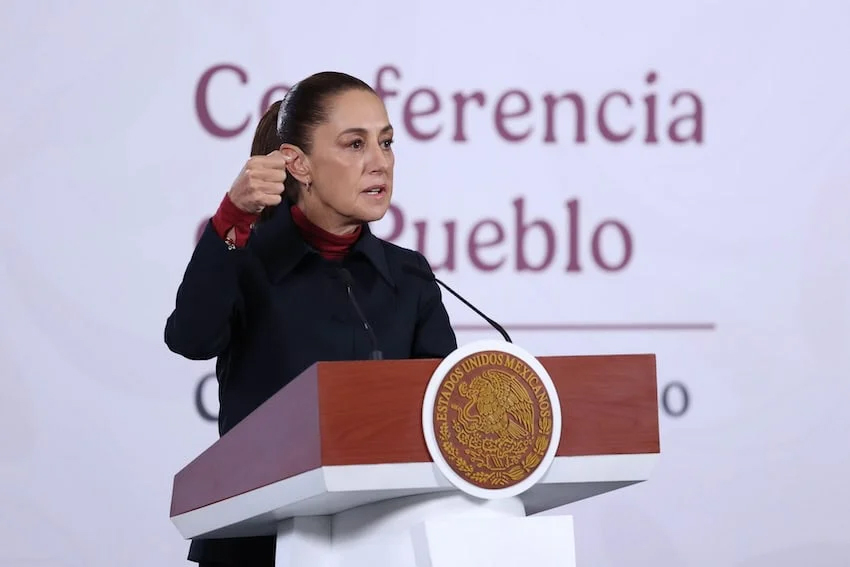
President Sheinbaum calls on US to ensure ‘fair trial’ for Maduro

by Mexico News Daily

President Sheinbaum on Tuesday called on the United States to guarantee that Venezuelan President Nicolás Maduro receives a fair trial in New York, while reiterating her belief that the military operation that captured him in Caracas on Jan. 3 was illegal and should never have taken place.

“What we ask for is a fair trial; that’s what we must demand, for everyone and under any circumstances, and in this particular case, there must be … justice,” she said.

Maduro, accused of drug trafficking, pleaded not guilty on Monday in his first appearance in a federal courtroom in Brooklyn, New York, and claimed he had been kidnapped at his home by U.S. military personnel.

Speaking during her daily press conference on Tuesday morning, Sheinbaum again rebuked the U.S. military operation and said Mexico is fiercely opposed to “a powerful nation forcibly removing (another country’s) president.”

“We can never agree with one country invading another, especially outside the framework of the United Nations Charter, even if he were guilty of the charges against him,” she said, adding that “it’s a matter of the sovereignty of the Venezuelan people, just as it is for Mexico or any other country in the world.”

Sheinbaum also addressed opponents of the Maduro regime.

“President Maduro’s position is very interesting (…) especially considering all the propaganda against Venezuela or those who disagree with the Maduro regime or Chavismo in Venezuela … that’s one thing; but it is very different from being in favor of an intervention,” Sheinbaum said. “That cannot be approved, regardless of one’s opinion.”

Chavismo is the left-wing populist political ideology, named after former President Hugo Chávez, which Maduro has professed since taking over for Chávez in 2013. It blends socialism, anti-imperialism and Bolivarianism to promote social welfare, state control of key industries (particularly oil) and greater Latin American integration.

Sheinbaum reiterated her belief that the U.S. will not intervene militarily in Mexico, while insisting that the U.S. “do more” to combat organized crime, especially after drugs reach groups in the U.S. that distribute, sell and launder money. She also criticized the U.S. for not seriously addressing arms trafficking and not attending to the root causes of drug use among young Americans.

With reports from Reforma, El Economista and El Financiero.

spot_img

Puerto Rico officially recognizes unborn children as ‘natural persons’

‘Legal personhood for the preborn is not only consistent with science and human dignity but is the foundation upon which a culture of life can flourish,’ a pro-life spokesperson said

by Jonathon Van Maren

On December 21, Governor Jenniffer González of Puerto Rico signed Senate Bill 504 into law, recognizing pre-born children as “natural persons” by amending Puerto Rico’s Civil Code. It states: “Every human being is a natural person, including the conceived child at any stage of gestation within the mother’s womb.”

While the law does not impact abortion laws in the American territory, abortion activists are warning that SB504 is a significant step in that direction. Senator Maria de Lourdes Santiago of the Puerto Rican Independence Party called it “another step on the path towards making the women’s right to decide illegal.”

Father Carlos Pérez Toro, pastor of Santa Rosa de Lima Church and civil lawyer graduate of Inter American University of Puerto Rico School of Law, celebrated the bill’s passage.

“It is recognized that the human being in gestation is a natural person from the first moment of conception; using a legal term that only applied when a human being was born, it is said that he or she has legal personality and capacity from the first moment of conception,” he said.

SB504 was written by Senate President Thomas Rivera Schatz of the New Progressive Party (NPP) and co-sponsored by Sens. Joanne Rodríguez Veve (Independent), Brenda Pérez (NPP-Arecibo), and Wilmer Reyes (NPP-Guayama). It grants pre-born children inheritance rights, including the ability to be named as a beneficiary or heir, and states explicitly that it does not impact a woman’s legal “right” to abort her pre-born child.

“Rather than radical, the law reflects a growing acknowledgment that legal systems cannot indefinitely avoid the scientific reality that human life begins at conception,” wrote Vianca Rodriguez. “By naming that reality directly, Puerto Rico chose honesty over ambiguity and placed the value of unborn life firmly within its legal framework, reinforcing long-standing principles of human dignity and the protection of life recognized in both Puerto Rico’s and the United States’ constitutional traditions.”

Despite that, the move to legally recognize fetal personhood has infuriated Puerto Rico’s abortion activists. According to press reports, they are “are mobilizing against a new law recognizing the unborn as a natural person, warning it could threaten abortion rights despite privacy protections.”

Alondra del Mar Hernández of Aborto Libre Puerto Rico called the law “a tool of manipulation” and “a mechanism of control” that could lead to the criminalization of abortion; Patricia Otón of the same group compared it to similar laws “particularly in the South, where abortion laws are most restrictive.”

Carol Tobias of National Right to Life, on the other hand, called SB504 a “landmark achievement for the pro‑life movement”:

Puerto Rico’s clear and courageous recognition of preborn babies as persons reflects a deep respect for life and provides a powerful example for lawmakers throughout the United States. Legal personhood for the preborn is not only consistent with science and human dignity but is the foundation upon which a culture of life can flourish.

Kelsey Pritchard of Susan B. Anthony Pro-Life America concurred, calling the law “a historic victory for babies and moms across the island and a powerful example for lawmakers throughout the United States.”

“Thank God we have achieved clear recognition in Puerto Rico that the human being in gestation is a natural person with all rights, as if he or she had been born,” Father Carlos Pérez Toro said. “Imagine what that means for the mother who now has a new instrument to defend her child.”


spot_img