Saturday, October 17, 2026
spot_img
Home Blog Page 420

Investigation: Big food corporations committing massive organic fraud

by Julie Wilson
naturalnews

Expected to reach an estimated $35 billion in profits this year, the organic market has become attractive to food companies on all sides of the spectrum, opening up the door for potential abuses.
Under-the-table financial contributions to politicians in Washington have allowed Big Food companies to hijack the organic industry by selling products blatantly in violation of strict organic standards set by the U.S. Department of Agriculture (USDA).
The USDA fails to prosecute violators due to giant corporations’ lobbyists pressuring the agency to “favor their preferred industrial model of food production,” according to Mark Kastel, the Senior Farm Policy Analyst at The Cornucopia Institute.
Considered one of the “largest fraud investigations,” the Wisconsin-based farm policy research group has worked diligently to uncover persistent violations, filing formal legal complaints against livestock operations producing milk, meat and eggs, accusing them of fraudulently marketing such products as organic.
Big Food selling organic products derived from animals kept in confinement, blatantly violating USDA organic standards
Federally mandated organic standards state that living conditions for livestock must “accommodate the health and natural behavior of… animals,” meaning that chickens and cows absolutely must have year-round access to green pastures for grazing, shade, sunlight and fresh water and live unconfined.
Widely distributed brands like Horizon (owned by Dean Foods), have been caught violating these standards, prohibiting “legitimate grazing” and restricting animals’ access to the outdoors.
Horizon (White Wave), the largest selling organic milk brand, was purchased in 2004 by Dean Foods, a giant agribusiness raking in an estimated $11 billion in sales. Dean Foods also happens to be the biggest conventional dairy marketer in the country. The corporate-owned Idaho farm that supplies milk for the Horizon label was originally a conventional factory-dairy that was converted into an organic production; however, cows were given no access to pastures for grazing as legally mandated.
A complaint filed by Cornucopia was closed without a USDA regulator ever visiting the dairy facility. However, the group’s efforts didn’t stop there. After years of inaction by the USDA, Cornucopia contracted aerial photography in nine states, from West Texas to New York and Maryland, to investigate some questionable practices by “organic” branded companies.
Their suspicions were confirmed upon discovering “a systemic pattern of corporate agribusiness interests operating industrial-scale confinement livestock facilities providing no legitimate grazing, or even access to the outdoors, as required by federal organic regulations,” reports Corncucopia.org.
“The federal organic regulations make it very clear that all organic livestock must have access to the outdoors and that ruminants, like dairy cows, must have access to pasture,” said Kastel. “The vast majority of these massive, industrial-scale facilities, some managing 10,000-20,000 head of cattle, and upwards of 1 million laying hens, had percent of their animals confined in giant buildings or feedlots.”
Ariel photos of several livestock operations reveal plenty of land for grazing; however, the animals are nowhere to be found, as they’re all being confined indoors.
Big Food tricks and misleads consumers with their faux “organic” products
“Shoppers, who passionately support the ideals and values represented by the organic label, understandably feel betrayed when they see photos of these massive CAFOs (concentrated animal feeding operations) masquerading as organic,” explains Kastel.
Luckily, thanks to diligent research, Cornucopia has created “organic brand scorecards,” allowing consumers to choose from the many organic brands that “truly deliver on the promise of better environmental stewardship, humane animal husbandry, and economic justice for the families who produce organic food.”
“Many of our dairy farmer-members have animals, they truly care for, that have names, not numbers,” said Kastel.
The battle to force the USDA to hold factory farms masquerading as “organic” accountable has had its ups and downs over the years. One of their successes includes the decertification of the Horizon label, and the USDA placing sanctions against Aurora Dairy, a private-label organic milk producer for stores like Walmart, Target and Costco.
Both White Wave and Aurora are still being investigated for improprieties.

spot_img

Obama sets bold new course on Cuba

by the El Reportero’s news services

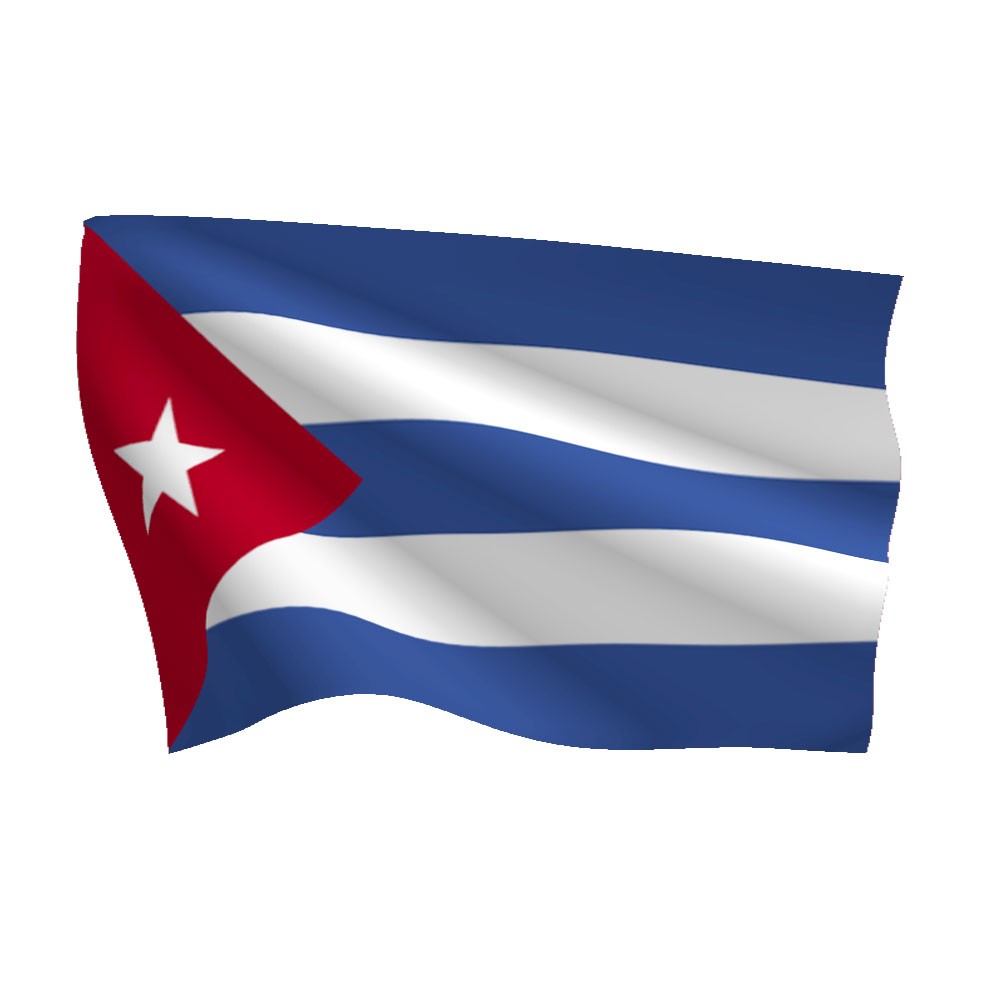
Barack Obama has made history – and cast his legacy – by becoming the first US President to make a decisive move to end the last Cold War anachronism in the Americas. On 17 December President Obama used his executive powers to decree a major change in US-Cuba policy, paving the way for the restoration of diplomatic relations after 53 years. “These 50 years have shown that isolation has not worked,” Obama said. “It’s time for a new approach.”

Venezuelan president recalls death of Bolivar, 184 years ago
Venezuelan president, Nicolás Maduro, remembered today the 184th anniversary of the death of Liberator Simon Bolivar (1783-1830), father of Independence who vowed for Latin American and Caribbean unity.
One hundred 84 years of his passing away, your lightning keeps on driving away darkness and awakening peoples to independence of nothing, he wrote in his Twitter account.
For executive vicepresident, Jorge Arreaza, now the libertarian notions of the hero are more alive in the conscience, heart and hopes of Venezuelans.
Simon Bolivar was born in Caracas on July 24, 1783 and with his struggle for independence from then Spanish metropolis, he founded the bases for union and sovereignty of the peoples of Venezuela, Colombia, Ecuador, Peru, Panama and Bolivia

Peruvians protest against new labor law for young Peruvians
LIMA – The main labor unions and youth and student organizations called for a concentration today in rejection of a youth employment law that affects the rights of these sectors.
At the same time, the government and political conservatives redoubled efforts to convince that the law, in force from today, seeks to promote youth employment and gives them a minimum of formality and protection against a total lack of rights they are facing.
The General Confederation of Workers, the Single Confederation of Workers and youth groups will reject, however, the law at a meeting to be held today in the central Plaza San Martin and argue that it violates universal standards of employment of the International Labor Organization.
The law, enacted by the government two days ago, states that the young Peruvians of 18-24 years can be hired for three years with the official minimum wage and rights cut, as just 15 days vacations, half of normal.
The leader of the General Confederation of Workers Olmedo Auris warned that entrepreneurs are the beneficiaries of the law and not the youth, as surely they will lay off workers over 24 years to recruit young people with fewer wages.
The First Lady and head of the Nationalist Party, Nadine Heredia, said the law opens the possibility of employ about 850,000 unemployed young Peruvians and noted that the youth unemployment rate is four times the overall rate.
The Prime Minister, Ana Jara, called on the opposition not to make electoral use of the issue and recalled that previous governments adopted similar rules. Prensa Latina.

spot_img

Is Ayotzinapa Mexico’s Furguson?

Protestas por los 43 desaparecidos en México.

by Alfredo Camacho,
South Kern Sol/ New America Media

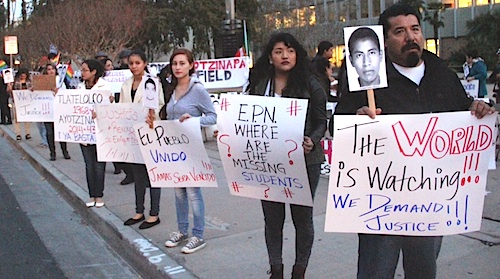
BAKERSFIELD, Calif. — As thousands take to the streets in cities nationwide to express outrage over the police shooting of an unarmed black teenager in Ferguson, Missouri, another protest movement is sweeping through Mexican American and immigrant communities.
Both are aimed at what participants say is state-sanctioned violence against unarmed civilians.
Last month hundreds gathered in mostly-Latino enclaves around California, including Bakersfield, where over 40 people rallied as part of a “Global Day of Action for Ayotzinapa.” That’s where some 43 university students disappeared late September after they were confronted by Mexican police in the sate of Guerrero. Six students died in the ensuing altercation. Many believe the 43 students were handed over to a local drug gang on orders from the city’s mayor.
In the days and weeks since, Mexicans have expressed their outrage in the streets. Now their countrymen across the border in the U.S. – and even around the globe – are doing the same.
“Those students you see in the pictures may as well be my students,” said Cal State Bakersfield sociology professor Dr. Gonzalo Santos, who organized the Bakersfield vigil. The pictures were part of an arrangement of 43 empty school chairs, in reference to the missing students. On each empty chair was placed a burning candle, with a photo and the name of each disappeared student. Towards the end of the ceremony, a rose was laid on each seat.
“I see my students’ faces in their faces,” added Santos. “Imagine coming to class one day and 43 of your students have simply gone missing.”
But Santos said the protest movement in Mexico that flared up in the wake of the revelations could be a key moment in the country’s future.
“What will make the movement in Mexico succeed, I think, is [protestors] need to come up with a program that addresses [Mexican] society’s problems, and that program has to be popularized among those in the movement,” explained Santos.
Esperanza Guzman is one of Santos’ students and attended the vigil. “This event is to let the people know we are united with the people of Mexico in protest of the forty-three students,” she said. “We’re here with people from Bakersfield and nearby towns, Delano, Taft, Arvin, Shafter … who are here to show support.”
Guzman, who has been following the Ayotzinapa developments, said she agrees that this is a historical moment for Mexico. But it will be a long time, she added, before change materializes.
“It takes time, but the people of Mexico are united to speak out and say, ‘We need justice for what’s happened,’” said Guzman. “We’ve got to tell the Mexican state, ‘Enough!’ and … bring these students home.”
Guzman said she thinks more Americans need to show their solidarity with Mexico protestors for the disappeared students.
“We are all human beings, we ought to all support each other no matter where [these things] happen,” said Guzman. “It happened in Mexico, but it could have happened anywhere, here even, and we should be ready to support each other.”
As for the Mexican government, Guzman echoed others at the vigil in calling for more accountability.
“The president and other [officials] need to do their jobs and find these students, that would be justice for their parents and the people,” said Guzman. “They need to root out officials who are working with cartels who are adding to so much of the violence.”
Adriana Utado was also among those in Bakersfield. She came to the U.S. recently from Mexico City, where she studied biology at the Universidad Nacional Autónoma de México (UNAM). “I’m united with this cause because I witnessed and lived many injustices while in Mexico, and it’s the lower classes who always lose out,” said Utado.
Utado receives regular updates on the protests in Mexico from her parents back home, and said people there would need to come together to change the state if it does not reflect the needs of society.
“Silence is not an option for anyone who wants the situation to change,” she said.

spot_img

A full-blown economic crisis has erupted in Russia

The 8th largest economy on the entire planet is in a state of turmoil right now

by Michael Snyder
Economic Collapse

The 8th largest economy on the entire planet is in a state of turmoil right now.  The shocking collapse of the price of oil has hit a lot of countries really hard, but very few nations are as dependent on energy production as Russia is.  Sales of oil and natural gas account for approximately two-thirds of all Russian exports and approximately 50 percent of all government revenue. So it should be no surprise that the fact that the price of oil has declined by almost 50 percent since June is absolutely catastrophic for the Russian economy.  And when you throw in international sanctions, wild money printing by the Central Bank of Russia and unprecedented capital flight, you get the ingredients for an almost perfect storm.  But those of us living in the western world should not be too smug about what is happening in Russia, because the nightmare that is unfolding over there is just a preview of the economic chaos that will soon envelop the whole world.
So far this year, the Russian ruble has fallen nearly 50 percent against the U.S. dollar.  That is a monumental shift.  And as the collapse of the ruble has accelerated in recent days, we are seeing scenes in Russia that are reminiscent of the Weimar Republic.  For example, just consider the following excerpt from an article that just appeared in the New York Times.
Scenes that Russians hoped had receded into the past reappeared on the streets: Currency exchange signs blinked ever-changing digits, and Russians rushed to appliance stores to buy washing machines or televisions to unload rubles.
“We are seeing an economic crisis,” Natalia V. Akindinova, a professor at the Higher School of Economics, said in a telephone interview. “We are seeing a sharp devaluation of the ruble at a time when the central bank doesn’t have the reserves to influence the market, as it did in the past crises.”
In a desperate attempt to stop the bleeding, the Central Bank of Russia made an astounding move.  Last night it raised its key interest rate from 10.5 percent all the way up to 17 percent.
It was hoped that this desperate move would keep the ruble from plummeting any further.
And it did work for a few minutes, but then the collapse of the ruble resumed.  This is how Zero Hedge described the carnage…
For those wondering if the CBR’s intervention in the Russian FX market with its shocking emergency rate hike to 17 percent overnight calmed things, the answer is yes… for about two minutes. The USDRUB indeed tumbled nearly 10 percent to 59 and then promptly blew right back out, the Ruble crashing in panic selling and seemingly without any CBR market interventions, and at last check was freefalling through 72 74, and sending the Russian stock market plummeting by over 15 percent.
So why is this happening now?
Well, the biggest reason for the freefall of the ruble is the fact that the Central Bank of Russia just printed up about 625 billion rubles and gave it to their friends at Rosneft.
Rosneft is an absolutely massive oil company that is controlled by the Russian government.  For months, Rosneft has been asking for a bailout (sound familiar?) to refinance loans that can no longer be rolled over with western banks because of economic sanctions.
And on Friday they got one.
In an attempt to quietly slip this massive injection of new money past everyone, Rosneft issued 625 billion rubles worth of new bonds just before the weekend and the Central Bank of Russia gobbled most of those new bonds up with freshly created money.  Unfortunately for Rosneft and the Central Bank of Russia, the rest of the world took notice.
With the oil giant in a bind, the central bank ruled that it would accept Rosneft bonds held by commercial banks as collateral for loans.
Rosneft issued 625 billion rubles, about $10.9 billion at the exchange rate at the time, in new bonds on Friday. The identities of the buyers were not publicly disclosed, but analysts say that large state banks bought the issue.
When these banks deposit the bonds with the central bank in exchange for loans, Rosneft will have been financed, in effect, with an emission of rubles from the central bank.
So that is what led to the panic selling that we witnessed on Monday.
Meanwhile, money is being pulled out of Russia at an absolutely staggering pace.  As confidence in the ruble and in the Russian financial system disappears, wealthy people are feverishly trying to protect their wealth by moving it somewhere else.  The following is an excerpt from an editorial that Mohamed A. El-Erian recently penned for Business Insider…
Rather than bring in buyers at these substantially cheaper levels, Russian currency weakness is inducing more selling, including by a growing number of worried bank depositors who, instead of holding their savings in ruble, are opting for safer dollars. The larger the extent of this “currency substitution,” the bigger the scope for capital flight out of Russia. This puts even greater pressure on the currency, aggravating the output contraction, imported inflation, and the general sense economic and financial instability.
It has been estimated that total capital outflows for 2015 will reach an astounding $128 billion.
And this could just be the beginning of the economic troubles for Russia.
If the price of oil stays this low or goes even lower, the Russian economy will shrink.  The only question is how much it will contract.
The Bank of Russia said Monday that the country could sink into a deep recession next year if oil prices remain at $60 a barrel. GDP could contract by as much as 4.7 percent in 2015, and then by a further 1.1 percent in 2016 unless oil prices pick up.
Sadly, it isn’t just oil producing nations such as Russia that are going to be devastated by the coming crisis.
Eventually, the entire globe is going to feel the pain.
Last week was the worst week for global financial markets in three years, and so many of the exact same patterns that we witnessed just prior to the great financial crisis of 2008 are happening once again.  We have been living in a false bubble of relative stability for the past couple of years, but now time is running out.  The next great financial crisis is rapidly approaching, and 2015 promises to be the most “interesting” year that we have seen in ages.

spot_img

Obituario

Missis Maria Consuelo Becerra Peña widow of Urzua, died on Nov. 10, 2014 in her hometown in Concepción de Buenos Aires, Jalisco, Mexico. She was 96 years old. She is survived by 13 sons, (two already deceased), 45 grandchildren and 28 great-grandchildren. The staff of El Reportero extends its most sincere condolences to the family, especially to her daughter Luz Maria Urzua and her husband, Peruvian singer, César Anchante.

spot_img

Entrevista a Kuno Becker

El ReporteroTV interviews the Kuno Becker, actor, and writer.
We bring you an advance of the movie Panic 5 Bravo in this exclusive interview to its director and writer, Kuno Becker, on November 17, 2014 at the Haus Coffee shop on 24th Street, Mission District in San Francisco, California.

spot_img

Cantinflas – la pelicula


In this exclusive interview with The ReporteroTV, the Spanish actor Óscar Jaenada reports in depth his experience and its long work that he endured in his aim to personify the greates comedian and actorof all times of Mexico and of the Hispanic world, Mario Moreno ‘Cantinflas’.

spot_img

El Reportero

spot_img

Confronting sugar addiction

[Author]by Mark Hyman, MD[/Author]


Most of us have felt the urge, the unstoppable craving driving us to seek out something sweet and devour it in a flash. That uncontrollable yen for cookies, cake or ice cream or that whole basket of bread calling to us to finish it off. Why do you overeat? Why does that cookie have such power over you, even though you know it will make you fat and sick? Is it an indication of your moral weakness, lack of will power, or is it a powerful hardwired brain response over which you have little control?

Debate has raged recently about whether junk food, the hyper-processed, hyper-palatable food that has become our SAD (standard American diet) is addictive in the same way that heroin or cocaine is addictive. A new study published in the American Journal of Clinical Nutrition suggests that, in fact, higher sugar, higher glycemic foods can be addictive.

David Ludwig, author of Ending the Food Fight, and his colleagues at Harvard, in a very sophisticated study, showed that foods with more sugar, foods that raise blood sugar even more than table sugar such as white flour, white potatoes and refined starch have what is called a high glycemic index, trigger a special region in the brain called the nucleus accumbens that is known to be “ground zero” for conventional addiction, such as gambling or drug abuse.

I stopped by CBS This Morning recently to talk about this groundbreaking study. Watch the interview here.

It appears part of the reason almost 70 percent of Americans are overweight or one in two Americans has pre-diabetes or Type 2 diabetes may not be gluttony, lack of willpower or absence of personal responsibility but plain old, garden variety biological addiction.

Many previous studies have shown how this region of brain, the pleasure center, lights up in response to images or eating sugary, processed or junk food. But many of these studies used very different foods as a comparison. If you compare cheesecake to boiled vegetables, there are many reasons the pleasure center can light up. It tastes better or it looks better. This is interesting data, but it’s not hard proof of addiction.

This new study took on the hard job of proving the biology of sugar addiction. The researchers did a randomized, blinded, crossover study using the most rigorous research design to ward off any criticism (which will inevitably come from the $1 trillion food industry).

They took 12 overweight or obese men between the ages of 18 and 35 and gave each a low sugar or low glycemic index (37 percent) milkshake, and then, four hours later, they measured the activity of the brain region (nucleus accumbens) that controls addiction. They also measured blood sugar and hunger.

Then, days later, they had them back for another milkshake. But this time they switched the milkshakes. They were designed to taste exactly the same and be exactly the same in every way except in how much and how quickly it spiked blood sugar. The second milkshake was designed to be high in sugar with a high glycemic index (84 percent). The shakes had exactly the same amount of calories, protein, fat and carbohydrate. Think of it as a trick milkshake. The participants didn’t know which milkshake they were getting, and their mouth couldn’t tell the difference, but their brains could.

Each participant received a brain scan and blood tests for glucose and insulin after each version of the milkshake. They were their own control group. Without exception, they all had the same response. The high sugar or glycemic index milkshake caused a spike in blood sugar and insulin and an increase in reported hunger and cravings four hours after the shake. Remember — exactly the same calories, sweetness, texture and macronutrient content.

This finding was not surprising and has been shown many times before.

But the breakthrough finding was this: When the high glycemic shake was consumed, the nucleus accumbens lit up like a Christmas tree. This pattern occurred in every single participant and was statistically significant.

This study showed two things.

First, the body responds quite differently to different calories, even if the protein, fat and carbs (and taste) are exactly the same.

And second, foods that spike blood sugar are biologically addictive.

This game-changing study must force a shift in the conversation about obesity in America. There are 600,000 processed foods in the marketplace, 80 percent of which have added hidden sugar. The average American consumes 22 teaspoons of sugar a day, mostly hidden, and the average teenage boy has 34 teaspoons a day (more than two 20 ounce sodas).

One serving of Prego tomato sauce has more sugar than a serving of Oreo cookies. Sweetened yogurts can have more sugar than a can of soda.

Sugar is the core ingredient used by the food industry to make bad ingredients (processed flour and chemicals) taste good. Our consumption has increased from 10 pounds per person in 1800 to 140 pounds per person per year today.

Each year, the average American also consumes 133 pounds of white or wheat flour, which raises blood sugar more than table sugar (sucrose).

When a 12-year-old boy needs a liver transplant after a steady diet of soda and white flour, or when a 2-year-old can’t walk because he is too fat at 50 pounds, we can no longer point to personal responsibility as the solution to our obesity epidemic.

It is time to stop blaming the fat person. Can we really blame our children if we freely give them drugs of abuse in the school lunch line or as after school snacks? Can we really blame the average overweight person? The nutritional landscape in America is a food carnival.

Kelly Brownell from Yale’s Rudd Center for Food Policy and Obesity has created a validated food questionnaire to help you determine if you are a food addict. He recently also published a textbook, Food and Addiction, that lays out the science of how our hyper-processed, hyper-palatable, hyper-sweet industrial food has hijacked our brain chemistry and biology.

Here are five clues you may be addicted to sugar, flour and processed food:

  1. You consume certain foods even if you are not hungry because of cravings.
  2. You worry about cutting down on certain foods.
  3. You feel sluggish or fatigued from overeating.
  4. You have health or social problems (affecting school or work) because of food issues and yet keep eating the way you do despite negative consequences.
  5. You need more and more of the foods you crave to experience any pleasure or reduce negative emotions.

If you are among those whose brain chemistry, taste buds and hormones have been hijacked by the food industry (up to 70 percent of us, including 40 percent of children), then it is time to stop blaming yourself and consider food rehab or a sugar detox

There are resources to help you break your food addiction and stop the cravings.

Now, I would love to hear from you.

Have you experienced uncontrollable cravings for sugar and refined foods?

How has it affected your life?

Have you blamed yourself for your behavior?

Do you think we should change food policy to protect children from marketing of foods proven to be addictive?

To your good health,

Mark Hyman, MD

spot_img

Grand concert of Latin Jazz and dance

[Author]Compiled by the

El Reportero’s staff[/Author]


The elegant 1914 Kohl Mansion will pulse with 2014 Latin rhythms at its 100th anniversary concert !Feliz Cumpleaños! on Sunday, Dec. 14 at 7 p.m. The John Santos Sextet and the VNote Ensemble wrap up the Mansion’s anniversary year with their vibrant offerings of hot Latin Jazz.

The rousing concert, a culmination of year-long anniversary events, will be presented by Music at Kohl Mansion, the Kohl Mansion and Mercy High School and sponsored by the Sam Mazza Foundation and Thomas John Events. Radio station KCSM Jazz 91.1 FM Program Director Melanie Berzon will be the guest emcee.

Audience members will enjoy margaritas and tastes of Latin cuisine for the Gala party. There will be a dance floor for those who just can’t sit still to the irresistible rhythms of the John Santos Sextet and VNote Ensemble.

The Sextet has been called “highly innovative, intimately explosive.” Santos, a 5-time Grammy Award nominee is a Bay Area legend in Latin Jazz, a lecturer, educator and consummate percussionist, and a favorite of Music at Kohl audiences.

Sunday, Dec. 14, 2014, 7 p.m. At the Great Hall, Kohl Mansion – 2750 Adeline Drive, Burlingame. Tickets: $75 / $50 (650) 762-1130 or www.musicatkohl.org


New paintings of the San Francisco Mission District

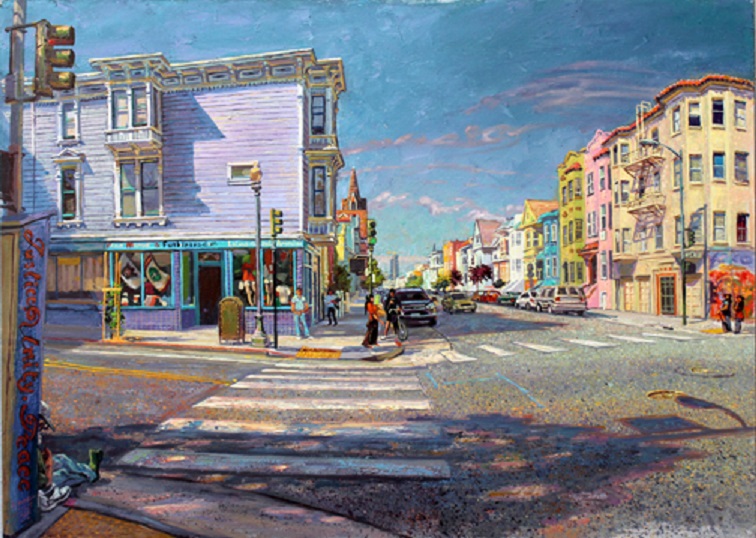
The heart of the Mission District has been and is being painted is such details that one cannot miss the landscape location of Anthony Holdsworth’s oil paiting. Over 30 master piece paintings will have been painted by project end. The whole work is a master piece never been done in the history of the district.

For more information you should attend his receptions. His art work exhibition will be in displayed from Dec. 15 – Jan. 9, 2015 with the two receptions days: Monday Dec. 15, from 6 – 8 p.m., and Friday, Dec. 19, from 6 – 8 p.m., Special guests to be announced.

At Alley Cat Gallery, 3036 24th St, San Francisco. For more info call (415) 824-1761, or visit www.anthonyholdsworth.com.


Children and families have chance to read and play during school break with bingo

In December, the library will distribute cards for its new “Winter Bingo” game, encouraging children in grades K-5, and parents of younger children and babies, to do activities that stimulate literacy and learning. Any child or parent may return a bingo card with five activities marked in a row to any Oakland Public Library between Dec. 18, 2014, and Jan. 31, 2015, to select a free paperback book to keep, as a prize.

Activities include direct reading activities such as “Listen to a story” or “Read about your favorite thing” as well as social activities such as “Make someone laugh,” or “Bring a friend to the library,” and active play such as “Dance” or “Play outside.” Activities for parents to do with babies and preschoolers include “Use a recipe to make a snack,” and “Ask your child to turn the page.” Bingo cards will be available at all library locations and distributed to partner organizations, and are available in Spanish, Chinese, and English.

For more information, please visit www.oaklandlibrary.org or contact Nina Lindsay, Supervising Librarian for Children’s Services, at nlindsay@oaklandlibrary.org, or 510-238-6706.

spot_img