Sunday, September 6, 2026
Home Blog Page 413

Some immigrants relieved to see holiday season end

by Michael Lozano
VoiceWaves/New America Media

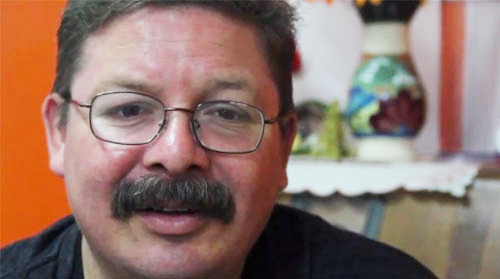
Above: Salvador Paredes Orozco of Long Beach was not able to visit his dying father before he passed away in Mexico last winter.
It’s that time of year when many people are just getting back into their routine after a holiday season spent sharing presents and food, and creating new memories with loved ones. But for many immigrants, the holidays are an unwelcome reminder of just how far away they are from family members on the other side of the border.
“I feel depressed at this time of year. I have the need to see my family, but I can’t because I don’t have papers,” said Long Beach resident Leticia Salazar*, who came to the U.S. about 17 years ago, leaving behind her parents and four siblings in Mexico City.
“I came here without anything, without knowing anyone,” she said in Spanish Salazar felt the pain of separation the most after each of her four children were born. “When I had my first girl, I wanted someone to come visit me at the hospital. I needed someone to be there with me in those moments, to tell them how I felt.”
While an estimated 5 million immigrants in the U.S. are expected to benefit from President Obama’s most recent executive order on immigration — it grants temporary protection from deportation for qualifying individuals, including undocumented parents living in the U.S. whose children are already citizens – the order will not bring relief to families that are already divided due to federal immigration policies.
“Part of the reason that families are separated is because our immigration system is broken,” said Cathleen Farrell, Director of Communications for National Immigration Forum. “We need a solution for that. Currently, there are an estimated 11 million people who are undocumented… many who have family members who are not with them.”
Salazar has siblings in Utah, but she believes that even visiting them for the holidays is too risky. “I’m afraid of raids, of immigration getting us. That’s our biggest fear,” Salazar said.
Many immigrants see the holidays as a harsh reminder of the border that divides them from their families. For some, the mere mention of the topic evokes tears.
“Every year, it’s depressing,” said Long Beach resident Maria Gómez*, who is from Guadalajara, Mexico. “I’m happy because I have my children here, but it’s sad because I don’t have my other family members close,” she said in Spanish.
The wait times and backlogs in processing for visa and permanent residency applications can be frustrating for immigrants hoping to be reunited with family members.
Gómez holds a U Visa, which means she is legally able to stay here but traveling outside of the U.S.

 would require a lengthy and risky process that could even result in her losing her U status. Twenty-five years ago she left behind her parents, sisters, nephews, and “many people that I love.”
“My family has grown,” Gómez said. “I have never met some of them.”
Video chat technology has eased some of the pain, she said, “But it’s not the same as giving them a hug, as feeling them close.”
The pain can drive some immigrants to great lengths to see their family members, especially when one of them is hurt. When Gómez’s father was assaulted and stabbed at his home in 1997, she debated whether to return to Mexico.
“I couldn’t (legally) go. It was a risk for me,” Gómez said. But it was also her younger sister’s fifteenth birthday – her Quinceañera, a big deal in Mexican culture — and it was her dream that Gómez would be there. So she crossed.
To get back into the U.S. she walked through the desert for days, a dangerous journey that has only become more so in the years since her crossing, due to heightened border enforcement and increased cartel-related violence.
“It’s impossible now. I wouldn’t risk it again,” Gómez said.
Not everyone takes the risk to visit ailing family members. When Salazar’s father was sick with cancer, he demanded that she not leave the U.S.
“He kept telling us that if something happened, not to come over there for any reason,” Salazar recalls. “He knows how much suffering there is in getting back into this country.”
To this day, Salazar struggles with the fact that she was not by her father’s side when he passed.
Another local immigrant, Salvador Paredes Orozco, from Tlaxcala, Mexico, is the only person from his family in the U.S. He hadn’t seen his father in two years, when last year they connected online to catch up during the holidays.
“I saw him online for Christmas. Then on January 18 (2014), he died. It was the last time I saw him,”
said Orozco.
In addition to missing his family, Orozco said he misses the cultural traditions in his hometown of Aztama, “a small pueblo where everyone knows each other.”
Christmas there, he said, is celebrated fervently with Las Posadas: nine days of religious festivities, dancing, singing, food, and family. The topic lights up Orozco’s eyes.
“It’s incredible for such a small pueblo to have such a big celebration,” he said. 

“You decorate houses very nicely here but it doesn’t have the magic of our country, where you have Las Posadas, break piñatas, and collect peanuts.”
As for Gómez, she spent this Christmas with her children at their Long Beach home, where she made dinner.
Gómez had a message to tell her family back in Guadalajara: “That I love you all so much, I miss you all. Don’t lose hope that one day, I will be with you to give you that hug.”
*Name was changed at the request of the individual.
VoiceWaves is a youth-led community media website and print publication established by New America Media to serve residents of Long Beach, Calif.

spot_img

For a Cuban smuggler, it’s business as usual

by Louis Nevaer
New America Media

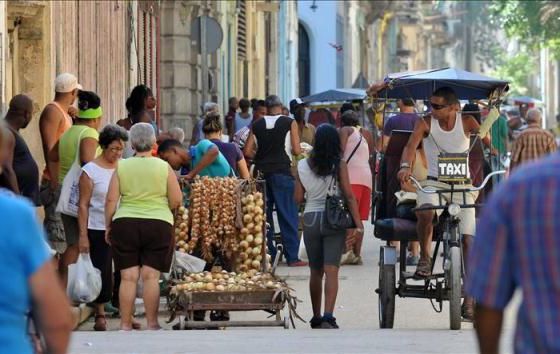
HAVANA – Cubana Airlines flight 154 departs Havana at 12:50 a.m., arriving in Cancun, Mexico less than an hour later. It is one of a handful of flights that, every day, are used by agents of the Cuban government and self-styled “entrepreneurs” to smuggle consumer products onto the island that, due to the U.S. embargo and travel restrictions on most Cubans, would not otherwise be available.
Flight 154 is seldom on time, often departing more than an hour late. It makes no difference to Juan, a thirty-something Cuban who makes this flight multiple times each month.
“Anything they sell at Wal-Mart, Costco, or Comercial Mexicana I can get for anyone in Havana,” he says.
What it takes to become a Cuban entrepreneur whose career it is to circumvent the U.S. economic embargo are three things: A visa from the Cuban government allowing you to travel to Mexico, knowing how bribes work at Havana’s international airport for unfettered entry of consumer goods, and enough capital to cover the initial upfront money to travel to Mexico for a shopping spree.
If during the Cold War the United States operated an airlift to keep Berlin from collapsing, the commercial flights between Havana and Cancun offer a way of releasing pressure in Havana by establishing a mechanism that allows for the flow of consumer goods into Cuba, in turn allowing Cubans with dollars or euros to achieve a higher level of material comfort than would otherwise be possible.
When Flight 154 arrives in Cancun, the airport is almost deserted. Almost all the flights to Europe have departed. The first flights from the U.S., Canada and Mexico City have yet to arrive. Juan finds this pre-dawn arrival inconvenient; it will be hours before Wal-Mart, Sam’s Club, Costco, Comercial Mexicana or Home Depot open their doors.
On occasion, he is met by Mexican friends or business associates who he emails when there is a request too difficult to find in just a few hours. He will often hang out for an hour or so with the Cubana Airlines crew, trading tips on where to get the best deal on this or that. Juan prefers the Wal-Mart on Avenida Coba, since they have a better selection of electronics and domestics. Although for cosmetics, sundries and foodstuff, he says the Mega Comercial Mexicana at the intersection of Tulum and Uxmal Avenues can’t be beaten.
“I wouldn’t be surprised if half the women in Havana weren’t shampooing their hair with something from the Mega,” he says.
Juan says that, when he is well organized, he can shop for everything on his list in a few hours. As a regular client at these stores, salespeople know him; they will set merchandise aside for him, and even pack it for cargo transport.
The prices he charges for the products back in Cuba reflect what he calls the “embargo tax,” which is to say, he triples the price. A stainless steel Hamilton Beach 4-Slice Toaster Oven, that sells for just over $30 USD in Cancun, he sells for $100 USD in Havana. A Suave Professionals Shampoo + Conditioner that sells for $3 USD at Mega Comercial, he will sell for $10 USD in Havana.
“I have to pay between $100 and $200 USD in bribes at the airport in Havana, depending on how much I’m bringing in,” Juan explains. “Plus the cost of the ticket—and this is how I make a living.”
The news that the U.S. and Cuba were to resume diplomatic relations didn’t bother him.
“It will be years before it affects me,” he said with confidence. “The truth is that Wal-Mart could open a store in Havana tomorrow and it wouldn’t make a difference. Why? Because the problem in Cuba is not that there isn’t Coca-Cola, microwave ovens, or shampoo, he explains.
“The problem is that the Cuban people don’t have money to buy things,” he says. “I sell three microwave ovens and 10 toaster ovens a month—but that’s because that’s how few Cubans have the money to buy these things.”
“The only customers I have are government officials—all of whom are corrupt so they have dollars—or Cubans who have access to dollars. And you can get dollars only one of two ways: you have family in Miami that sends you dollars or you work in the tourist industry where tourists give you dollars or euros as tips. That’s it, that’s the entire consumer economy.”
“If the embargo ended tomorrow and Wal-Mart opened… it would be as empty as the Centro Comerical Palco or Galerias Paseo” he says, a reference to two shopping areas located in the heart of Havana, both of which remain largely empty of local customers. “Unless the embargo is going to mean that everyone in Cuba gets a paycheck in American dollars, I’m not going out of business anytime soon.”
After a busy morning of shopping in Cancun, he is ready to head back to the airport. If he’s lucky, there won’t be a problem checking in all his luggage and cargo for the afternoon flight to Havana.
Juan prefers to arrive back in Havana before sunset. That allows him to clear customs—by which he means paying off his regular officials—and head home by evening. When Cubans have money to buy the products, they want instant gratification.
“I’m going to be up until 2 or 3 in the morning,” he explains. “I have to stay up for people to pick up what they ordered.”
As he’s going over his list—as if he were a Cuban version of Santa Claus, he ticks of which items are packed where: toaster ovens; sundries and shampoos; two infant car seats; three Xbox 360 video game consoles, four pairs of Asics Gel-Kahana men’s running shoes, in different sizes; plus three suitcases of children’s, women’s and men’s clothing.
If there are no problems, after costs, he hopes to pocket $250 USD in profits. This is a princely sum, especially in a country where the average worker makes about $25 USD a month.
“Some of my customers have to save for months to buy brand-name shampoo, or a pair of sneakers for their kids,” Juan explains.
With that, the airline ticket agent hands him his boarding pass—and receipts for the luggage he checked in. A moment later, he smiles as he walks to the security checkpoint. Less than an hour after leaving Cancun, he will be back in Havana, where customers will be anxious to get their hands on everything he spent the entire morning securing.

spot_img

La Jefa & Ayahuasca Band, entrevista con El ReporteroTV

E

La naciente cantante estrella de Rock en Español, domiciliada estadounidense y peruana de nacimiento, La Jefa, es entrevistada por el director y productor de TV, Marvin Ramírez, en los estudios del ReporteroTV en el Distrito de la Misión de San Francisco, el viernes, 19 de diciembre de 2014. La Jefa comenzó a tocar la guitarra cuando ella era muy joven, se hizo una bailarina folklórica, estudió medicina y estudió la carrera de dentista en su nativo Perú, tuvo un hijo, se mudó a los Estados Unidos y ahora persigue intensivamente su carrera de cantante mientras está yendo a la escuela a estudiar dentro de la misma de rama dentista.

Su banda musical, que ella llamó, Ayahuasca, incluye a su hermano Rodrigo Meza, como la primera guitarra. Pronto la banda terminará de grabar su primer solo, que ella creó. Estén pendiente.

23 de diciembre de 2014

spot_img

La Jefa & Ayahuasca Band interviews with El Reportero TV

E

Peruvian and U.S. domiciled rising Rock ‘n Español singer star La Jefa interviews with Marvin Ramírez at the El ReporteroTV studios in the San Francisco Mission District on Friday Dec. 19, 2014. La Jefa started playing the guitar when whe was a very young girl, became a folkloric dancer, studied medicine and became a dentist in her native Perú, had a child, moved to the U.S. and now is intensively pursuing her singer career while going to back to school in her same dental field in the San Francisco/San Jose area. Her band, which she named, Ayahuasca, includes her brother as the first guitar. Soon, the band will finish recording ther first single, which she composed.

spot_img

Greet your loved one in Central America with The Caravan of happiness

La Gente Band

Compiled by the
El Reportero’s staff

It started on last Saturday, The Caravan of Happiness radio show, at 1010 AM 990 AM San Francisco and Sacramento. This and every Saturday at 2 p.m. and in El Salvador through National Radio at 4 p.m. at 96.9 FM. Will reach the entire El Salvador and part of Honduras and Guatemala. Send your Christmas greetings via our program, only by THE CARAVAN OF HAPPINESS or listen us at www.rnes.com o www.kiqi1010am.com

New paintings of the San Francisco Mission District
The heart of the Mission District has been and is being painted is such details that one cannot miss the landscape location of Anthony Holdsworth’s oil paiting. Over 30 masterpiece paintings will have been painted by project end. The whole work is a masterpiece never been done in the history of the district.
For more information you should attend his receptions. His artwork exhibition will be in displayed from through Jan. 9, 2015.
At Alley Cat Gallery, 3036 24th St, San Francisco. For more info call (415) 824-1761, or visit www.anthonyholdsworth.com.

La Gente band and others at the Elbo Room – SF
We are proud to announce La Gente will be headlining at The Great American plus Marcus Cohen & The Congress, Emcee Infinite + live painting by Joshua Coffy, & special guests Jorge Molina Jillian Picazo.
Live at The Great American Music Hall, on Saturday at 8 p.m., on Jan. 24 2015, 859 O’Farrell St, San Francisco. Doors. 9:00 Music

Children and families have chance to read and play during school break with bingo
In December, the library will distribute cards for its new “Winter Bingo” game, encouraging children in grades K-5, and parents of younger children and babies, to do activities that stimulate literacy and learning. Any child or parent may return a bingo card with five activities marked in a row to any Oakland Public Library between Dec. 18, 2014, and Jan. 31, 2015, to select a free paperback book to keep, as a prize.
Activities include direct reading activities such as “Listen to a story” or “Read about your favorite thing” as well as social activities such as “Make someone laugh,” or “Bring a friend to the library,” and active play such as “Dance” or “Play outside.” Activities for parents to do with babies and preschoolers include “Use a recipe to make a snack,” and “Ask your child to turn the page.” Bingo cards will be available at all library locations and distributed to partner organizations, and are available in Spanish, Chinese, and English.
For more information, please visit www.oaklandlibrary.org or contact Nina Lindsay, Supervising Librarian for Children’s Services, at nlindsay@oaklandlibrary.org, or 510-238-6706.

spot_img

Illustrious Latino photographer is behind the cameras at Night at the Museum

Elenco de la película Night at the Museum

by the El Reportero’s news services

Guillermo Navarro, one of the more illustrious directors of photography of Hollywood, which came to the meca of the cinema along with his big friend and namesake Guillermo del Toro, is behind the cameras in Night at the Museum: Secret of the Tomb.
It was him who decided the framings in the very respected Cronos, the first movie of the director, when it was already an experienced cinematograph that had been employed at some successes of the Mexican cinema like Head of Cow of Nicolás Echeverría, the movie that represented Mexico in the Oscar and was released commercially in the United States in April, 1992, The love to the turn of the corner and Die in the gulf, and a more extensive number of successful movies.
At the theaters in the U.S. starting on Dec. 19.

Dr. Atl, father of Mexican muralism, honored in Jalisco
The work of painter and writer Dr. Atl, considered the ideologue of Mexican Muralism and teacher of Diego Rivera, is the focus of the Cosmic Rotation exhibition in the western Mexican state of Jalisco, commemorating the 50th anniversary of his death.
Dr. Atl, whose real name was Gerardo Murillo Cornado (1875-1964), is considered of great importance to 20th-century Mexico, not only for his artistic work that includes both the plastic arts and literature, but also for his political and social influence, Carlos Ashida, curator of the exhibition that will remain open until next February, told Efe.
“He had a very particular ideological and philosophic position, and was among the first to make contact with the European avant-garde at the beginning of the century and knew how to adapt it to Mexico,” he said.
The exhibition, presented at the Cabañas Institute in Guadalajara, capital of Jalisco, is composed of paintings, drawings, photos and documents from such Mexican organizations as the National Institute of Fine Arts, the Tlatelolco Cultural Center and the Alfredo Zalce Museum of Contemporary Art, as well as from private collections.
In 1897 on an ocean liner to Europe he changed his name to “Atl,” which in the Nahuatl language means water, and some time later his Argentine poet friend Leopoldo Lugones added the “Dr.,” justified by the Mexican’s doctor of philosophy degree.
In Europe he studied such eminences of thought and literature as Marxism theoretician Antonio Labriola, sociologist Emile Durkheim, and Henri Bergson, Nobel Prize for Literature in 1927.
Winner of a silver medal at the 1900 Exposition Universelle in Paris for a self-portrait, he was deeply influenced by the great artists of Fauvism and Impressionism.
He said that this trend was not born of the Mexican Revolution, but had as its antecedents the mural that Dr. Atl painted in the auditorium of the National Preparatory School as well as the great exposition of 1910.
For the latter occasion, Murillo called on the young artists to counteract the exhibition that then-President Porfirio Diaz had organized with Spanish painters to commemorate the centenary of Mexican independence.
His curiosity led him to create “Atl colors,” a mixture of resin, wax and oil, and the aerial landscape, which consisted of capturing the image of a place from above.
It also led him to conceive what he called “Olinka” (a Nahuatl term for the place movement is created), a Utopia where artists, scientists, poets and philosophers from around the world would come together to plan human evolution, a project that never came into being.
A faithful believer in revolution, his work is little known outside of Mexico due to “certain mistakes,” such as declaring himself a fascist and publicly supporting Adolf Hitler.
“Some people will never forgive him, though his work has the stature of the great ones,” Ashida said.

spot_img

New time. new life and the word ‘create’

by Jon Rappoport
NoMoreFakeNews.com

There are some people who hear the word CREATE and wake up, as if a new flashing music has begun.
This lone word makes them see something majestic and untamed and astonishing.
They feel the sound of a Niagara approaching.
They suddenly know why they are alive.
It happened to me one day in 1949 when I was 11 years old. I was boarding a bus in upstate New York for a full day’s ride back down into New York City. I was sitting by the window as the bus pulled out of a parking lot, and I opened the first page of Ray Bradbury’s Martian Chronicles, a perfect children’s book.
The word CREATE wasn’t on that first page, but I felt it. It sounded like a great bell in my ear, and I knew I was in a different world.
I’ve been writing about the creative life for some time. For me, this life is a far cry from the pallid oatmeal of “peace through avoidance.”
The creative life is not about slogans and systems and intellectual finger food. It is about EXPERIENCE.
It’s about diving in. It’s about a kind of transformation that shreds programming and gets down to the energy of the Fire.
Most people don’t want to travel to that grand arena because they have been trained like pets by some sector of this society to be good little girls and boys.
The truth is, if people want to live the creative existence, they have to be willing to destroy—and the main thing that awaits their destruction is their own illusions and their commitment to the World of Nice where doily power is the only power. Where that tired phrase, “the approval of others,” is the guiding precept and the stick of fear.
The creative life isn’t about little changes done in little penguin steps. It’s about putting your arms and your mind around Deep, Big, and Wide Desire. It’s about making that Desire come to life.
Ninety-nine percent of the world has been trained like rats to adore systems. Give them a system and they’re ready to cuddle up and take it all in. If they have questions, or if they want to argue, it’s about how to tweak the system to make it a little better. And with every move they make, they put another blanket over the Fire Within.
Maybe you once saw something truly free that didn’t care about consequences, and it blew you away and turned on your soul’s electricity for an hour.
Maybe you’re sick and tired of bowing and scraping before a pedestal of nonsense.
CREATE is a word that should be oceanic. It should shake and blow apart the pillars of the smug boredom of the soul.
CREATE is about what the individual does when he is on fire and doesn’t care about concealing it. It’s about what the individual invents when he has thrown off the false front that is slowly strangling him.
CREATE is about the end of mindless postponement. It’s about what happens when you burn up the pretty and petty little obsessions. It’s about emerging from the empty suit and empty machine of society that goes around and around and sucks away the vital bloodstream.
People come to the brink, and then say, “I’m waiting for orders. I’m looking for a sign. I want the signal that it’s okay to proceed.”
People pretend they don’t know anything about imagination, about how “it operates” (as if it were a machine), about what it can do, about where it can go, about how it can take them into new territory. They feign ignorance.
“I want to stay the same, and I’ll do anything to maintain that.”
It’s a test of loyalty. Do you want to remain faithful to an idea that is just a small piece of what you can be, or do you want to take the greater adventure?
The propaganda machines of society relentlessly turn out images and messages that ultimately say: YOU MUST BELONG TO THE GROUP.
The formula is simple. Imagination transcends the status quo. Therefore, belong to the group and avoid the possibility of transformation.
Day after day after day, year after year, the media celebrate heroes. They inevitably interview these people to drag out of them the same old familiar stories. Have you EVER, even once, seen a hero who told an interviewer in no uncertain terms: “I got to where I am by denying the power of the group”?
Have you ever heard that kind of uncompromising statement?
I didn’t think so.
Why not?
Because it’s not part of the BELONGING PROGRAM, the program that society runs on to stay away from the transforming power of IMAGINATION.
Jon Rappoport is the author of three explosive collections, The Matrix Revealed, Exit From The Matrix, and Power Outside The Matrix.

spot_img

The move to depopulate planet Earth

FROM THE EDITOR:
Much has been said about a so-called ‘conspiracy theory’ about the depopulation of the planet. In this article, Stephanie R. Pasco, follows the trails of statements – going back decades -made by world leaders confirming that in fact exists a plan to depopulate the planet Earth. You be the judge, readers. Due to the length of the article, El Reportero will publish in several parts, extending to several weeks. THIS IS PART 5 OF A SERIES.

by Stephanie R. Pasco

It is my intention to give you clips from documents, many from the United Nations that prove there is a plan to depopulate this planet. I will also provide quotes from various people and organizations that further show this agenda is afoot. I pray the guidance of the Lord God Almighty will be with me in this pursuit to warn others of this dark plot against humanity.
Everything written in this paper is easily verifiable. It may take some time and effort, but I took great pains to make this paper as accurate as I possibly could.
The depopulation agenda is based on nature worship, or Gaia worship. In Genesis, God clearly told Adam and Eve, and then Noah and his family to go forth and multiply to fill the earth. Nowhere in the Bible does God rescind that clearly spoken commandment. Therefore man is attempting to supersede the command of the Lord God in heaven: The Creator! I ask you, who knows more about the state of the earth, the created, or the Creator?
The basis for the depopulation agenda is a standard all elitist’s hold dear. This standard is called:
The Hegelian Dialectic:
Problem – Reaction-Solution

Bureau of Land Management Internal Working Document
Human Dimensions of Ecosystem Management Objective/Purpose: “All ecosystem management activities should consider human beings as biological resources…” (Reminiscent of Soylent Green)
This document was brought before Congress. This statement created such an uproar that it was removed. Regardless of its removal, it still serves to prove the mindset of these people; and just because this was removed from a document it does not mean it was removed from the thoughts and the intended goals of those who penned it; or who believe it.
“For the elite to be able to have management of the ecosystem, humans would have no more value than a rock.” – Michael Coffman
UN Biodiversity Treaty UN Global Biological Assessment Sustainable Human Populations:
“Population growth has exceeded the capacity of the biosphere” (i.e. the earth) “It is estimated that an ‘agricultural world’ in which most human beings are peasants should be able to support 5 to 7 billion people.”
Now I feel is an appropriate time to cover some other areas of government, as well as private organizations that would like to see the population of the world decrease at an astounding rate (up to 90 percent). This is a dark, bloody agenda that will cause terrible hardship and pain upon millions of people.
World Wildlife Fund, World Resources Institute International Union for the Conservation of Nature (IUCN):
The IUCN involves the EPA, US Fish & Wildlife Service, the National Park Service, the United States Forest Service, Sierra Club, the Nature Conservancy, the National Wildlife Fund, the National Audubon Society, National Resources Defense Council, UNESCO, the Environmental Defense Fund, the U.N. Environmental Program, etc.
IUCN 1992
Covenant On the Environment and Development:

“Eventually a wilderness network would dominate a region and thus would itself constitute the matrix, with human habitations being the islands. The remaining half of the US would be used as buffer zones.”
“The night before this treaty was ratified, Senator Mitchell withdrew it from the calendar and it was never voted on. It took four men, devoted to God in prayer to stop this treaty. The treaty still waits in the wings. Upon ratification, the US will have no ability to protect its own citizens.”

-Michael Coffman
Henry Kissinger had a similar plan to use food as a weapon in 1974, found in the National Security Study Memorandum 200: Implications of Worldwide Population Growth for U.S. Security and Overseas Interests; which was adopted as official policy by then President Gerald Ford in November of 1975. This Memorandum outlined a covert plan to reduce population growth in lesser-developed countries by means of birth control, and implicitly, war and famine. Brent Scowcroft, who had by then replaced Kissinger as National Security Advisor, (the same post Scowcroft held in the Bush Administration), was put in charge of implementing the plan. CIA Director George H.W. Bush was ordered to assist Scowcroft, as were the Secretaries of State, Treasury, Defense and Agriculture.
This document has never been renounced, only certain portions have been amended, leaving it as the foundational document on population control issued in the U.S. Government.
The major players in the founding of this document are as follows:
Henry Kissinger Richard Nixon Margaret Sanger Paul Ehrlich Werner Fornos Timothy Wirth The United Nations Population Fund The United States Agency for International Development Planned Parenthood Federation of America International Planned Parenthood Federation The Club of Rome UNICEF WHO United Nations World Bank
The document can be read here in its entirety, along with the other organizations and individuals complicit in this abomination:
http://www.usmutes.com/NSSM200.htm
Let it be noted that Adolph Hitler also used food as weapon, stating that food is “a beautiful instrument…for maneuvering and disciplining the masses.” Food has been used as a weapon of war for centuries. Why then would it be outrageous for the elite to use food as a weapon, both a physical and a psychological weapon, in a declared war on overpopulation? It would not be outrageous at all. As has been said time and time again, history repeats itself.
Now we will cover the Earth Charter.
The Earth Charter; A Radical Global Religion, created by Mikhail Gorbachev and Michael Strong: “The Earth Charter initiative reflects the conviction that a radical change in humanity’s attitudes and values is essential to achieve social, economic and ecological well-being in the 21st century… The commission…plans to circulate a final version of the Charter as a People’s Treaty beginning in mid-1998. The Charter will be submitted to the U.N. General Assembly in the year 2000…(where it will) ensure a very strong document that reflects the emerging new global ethics.” This is unprecedented (it is) the first component of an authentic global governance. We are working for dialogue and peace. We are demonstrating our ability to assert control over our fate in a spirit of solidarity to organize our collective sovereignty over this planet, our common heritage.”
The American people were not allowed to see this. Americans as a whole do not want the UN to be the head of a world government. The one thing the majority of this country values, above most everything else, is their freedom. Or the semblance of freedom we have left should I say.
At the Earth Summit in Rio de Janeiro, the Presidential Council on Sustainable Development in 1996 came to the conclusion that the world’s human population should not exceed 500 million people. That is a 93 percent reduction in population!
According to the UN video, “Armed to the Teeth”; and also in the Freedom From War Policy -put into effect by JFK in 1961-general and complete disarmament and US military power was given over, in full, to the UN. This is a loss of the sovereignty of America. (Read this document at http://www.scribd.com/doc/5009662/Freedom From-War).

spot_img

Investigation: Big food corporations committing massive organic fraud

by Julie Wilson
naturalnews

Expected to reach an estimated $35 billion in profits this year, the organic market has become attractive to food companies on all sides of the spectrum, opening up the door for potential abuses.
Under-the-table financial contributions to politicians in Washington have allowed Big Food companies to hijack the organic industry by selling products blatantly in violation of strict organic standards set by the U.S. Department of Agriculture (USDA).
The USDA fails to prosecute violators due to giant corporations’ lobbyists pressuring the agency to “favor their preferred industrial model of food production,” according to Mark Kastel, the Senior Farm Policy Analyst at The Cornucopia Institute.
Considered one of the “largest fraud investigations,” the Wisconsin-based farm policy research group has worked diligently to uncover persistent violations, filing formal legal complaints against livestock operations producing milk, meat and eggs, accusing them of fraudulently marketing such products as organic.
Big Food selling organic products derived from animals kept in confinement, blatantly violating USDA organic standards
Federally mandated organic standards state that living conditions for livestock must “accommodate the health and natural behavior of… animals,” meaning that chickens and cows absolutely must have year-round access to green pastures for grazing, shade, sunlight and fresh water and live unconfined.
Widely distributed brands like Horizon (owned by Dean Foods), have been caught violating these standards, prohibiting “legitimate grazing” and restricting animals’ access to the outdoors.
Horizon (White Wave), the largest selling organic milk brand, was purchased in 2004 by Dean Foods, a giant agribusiness raking in an estimated $11 billion in sales. Dean Foods also happens to be the biggest conventional dairy marketer in the country. The corporate-owned Idaho farm that supplies milk for the Horizon label was originally a conventional factory-dairy that was converted into an organic production; however, cows were given no access to pastures for grazing as legally mandated.
A complaint filed by Cornucopia was closed without a USDA regulator ever visiting the dairy facility. However, the group’s efforts didn’t stop there. After years of inaction by the USDA, Cornucopia contracted aerial photography in nine states, from West Texas to New York and Maryland, to investigate some questionable practices by “organic” branded companies.
Their suspicions were confirmed upon discovering “a systemic pattern of corporate agribusiness interests operating industrial-scale confinement livestock facilities providing no legitimate grazing, or even access to the outdoors, as required by federal organic regulations,” reports Corncucopia.org.
“The federal organic regulations make it very clear that all organic livestock must have access to the outdoors and that ruminants, like dairy cows, must have access to pasture,” said Kastel. “The vast majority of these massive, industrial-scale facilities, some managing 10,000-20,000 head of cattle, and upwards of 1 million laying hens, had percent of their animals confined in giant buildings or feedlots.”
Ariel photos of several livestock operations reveal plenty of land for grazing; however, the animals are nowhere to be found, as they’re all being confined indoors.
Big Food tricks and misleads consumers with their faux “organic” products
“Shoppers, who passionately support the ideals and values represented by the organic label, understandably feel betrayed when they see photos of these massive CAFOs (concentrated animal feeding operations) masquerading as organic,” explains Kastel.
Luckily, thanks to diligent research, Cornucopia has created “organic brand scorecards,” allowing consumers to choose from the many organic brands that “truly deliver on the promise of better environmental stewardship, humane animal husbandry, and economic justice for the families who produce organic food.”
“Many of our dairy farmer-members have animals, they truly care for, that have names, not numbers,” said Kastel.
The battle to force the USDA to hold factory farms masquerading as “organic” accountable has had its ups and downs over the years. One of their successes includes the decertification of the Horizon label, and the USDA placing sanctions against Aurora Dairy, a private-label organic milk producer for stores like Walmart, Target and Costco.
Both White Wave and Aurora are still being investigated for improprieties.

spot_img

Obama sets bold new course on Cuba

by the El Reportero’s news services

Barack Obama has made history – and cast his legacy – by becoming the first US President to make a decisive move to end the last Cold War anachronism in the Americas. On 17 December President Obama used his executive powers to decree a major change in US-Cuba policy, paving the way for the restoration of diplomatic relations after 53 years. “These 50 years have shown that isolation has not worked,” Obama said. “It’s time for a new approach.”

Venezuelan president recalls death of Bolivar, 184 years ago
Venezuelan president, Nicolás Maduro, remembered today the 184th anniversary of the death of Liberator Simon Bolivar (1783-1830), father of Independence who vowed for Latin American and Caribbean unity.
One hundred 84 years of his passing away, your lightning keeps on driving away darkness and awakening peoples to independence of nothing, he wrote in his Twitter account.
For executive vicepresident, Jorge Arreaza, now the libertarian notions of the hero are more alive in the conscience, heart and hopes of Venezuelans.
Simon Bolivar was born in Caracas on July 24, 1783 and with his struggle for independence from then Spanish metropolis, he founded the bases for union and sovereignty of the peoples of Venezuela, Colombia, Ecuador, Peru, Panama and Bolivia

Peruvians protest against new labor law for young Peruvians
LIMA – The main labor unions and youth and student organizations called for a concentration today in rejection of a youth employment law that affects the rights of these sectors.
At the same time, the government and political conservatives redoubled efforts to convince that the law, in force from today, seeks to promote youth employment and gives them a minimum of formality and protection against a total lack of rights they are facing.
The General Confederation of Workers, the Single Confederation of Workers and youth groups will reject, however, the law at a meeting to be held today in the central Plaza San Martin and argue that it violates universal standards of employment of the International Labor Organization.
The law, enacted by the government two days ago, states that the young Peruvians of 18-24 years can be hired for three years with the official minimum wage and rights cut, as just 15 days vacations, half of normal.
The leader of the General Confederation of Workers Olmedo Auris warned that entrepreneurs are the beneficiaries of the law and not the youth, as surely they will lay off workers over 24 years to recruit young people with fewer wages.
The First Lady and head of the Nationalist Party, Nadine Heredia, said the law opens the possibility of employ about 850,000 unemployed young Peruvians and noted that the youth unemployment rate is four times the overall rate.
The Prime Minister, Ana Jara, called on the opposition not to make electoral use of the issue and recalled that previous governments adopted similar rules. Prensa Latina.

spot_img