Sunday, October 18, 2026
spot_img
Home Blog Page 401

How is your summer? Want to step inside for some art?

Compiled by the
El Reportero’s staff

Come see Soad A. Kader newest paintings and see work by 16 other artists in FourSquared at Arc Gallery. On Saturday, Aug. 29, 2015 from 7-9 p.m. At Arc Studios & Gallery, StudioSoad, Arc Studio #101. At 1246 Folsom Street, San Francisco, studio visits by appointment call or text or email 415-606-9875

Feminine voices and poetics at the Cuban Arts Show
We cordially invite you to an exclusive and largest art exhibition of 40 female contemporary artist all of whom live and work in Cuba.
The exhibit are works of art that represent the current trends, concepts and methods of Contemporary Cuban Art. The mediums represented will include painting, engraving, photography, and multi-media from the period between 1990 and 2013.
In collaboration with Innovation Hangar (ihangar.org) a nonprofit organization where innovative minds can inspire the world.
At the Palace of Fine Arts, 3301 Lyon St, San Francisco, Sunday, Sept. 13 at 10 a.m. – 4:30 p.m. For more information please email us to AcostaCabezas@gmail.com or visit us at: www.cubanart.us

Eliana López’s What is the Scandal’s one woman show continues
By popular demand, Eliana López’s One-Woman Show, What is the Scandal? will be presented for a limited run at the Victoria Theater in San Francisco.
Award-winning film, theater, and television actress, Eliana López, returns to the stage to introduce her one-woman show  What is the Scandal?
In her own voice, López explores the human side of the political scandal and the subsequent trial in 2012 against her husband, San Francisco Sheriff Ross Mirkarimi, as a study in politics and media, gender and cultural differences.
Eliana  will play a dozen characters that will take us through the adventures of her youth in her native Venezuela, the culture shock she experienced in moving to the United States, her love story with an elected official with whom she marries and starts a family, and the unexpected twists in their lives as a result of a family quarrel.
On Sunday, Sept. 6., at 8 p.m., Sun 6 p.m. Tickets:  $25 – $35. More Information/Purchase Tickets:  http://www.elianalopez.net/http://www.elianalopez.net

Off the Map, a new art exhibit at Puerto Alegre Restaurant
Six local artists want you to come see their art exhibit at Puerto Alegre Restaurant. They are Jacinto and his sister Lorena Castillo, Amelia Hunter, Doug Rowe, Sally Rodríguez and Mahew Mansanares.
Their art pieces will hang from now through Oct. 13, 2015. Puerto Alegre is one of the most happiest Mexican restaurant and bar in the City.  At 546 Valencia Street, San Francisco. For more info contact one of the artists, Lorena Castillo, who is also the coordinator of the exhibit, at locaworks@gmail.com.

spot_img

Singer Gilberto Santa Rosa played tribute to Dominican merengue

by the El Reportero’s news services

Puerto Rican singer Gilberto Santa Rosa offered a concert on Aug. 21 in this capital to pay tribute to the Dominican Republic genre merengue, reported the producers of the event.
Santa Rosa shared the stage of the amphitheater Nuryn Sanlley with Frank Cruz, Joseito Mateo and Vinicio Franco to sing emblematic songs of the musical genre.
In this concert, the salsa singer will also sing some of his most popular themes like Perdóname (Forgive Me), Que Alguien Me Diga (Someone Tells Me) and Conteo Regresivo (Countdown).
Also known as the Caballero de la Salsa, he has made versions of several songs, including: Caballo Viejo, by Simon Díaz; Dime Por Qué, by Ismael Rivera; and Buenas Noches Don David, by Ricardo Arjona.
Santa Rosa began his career at 12 years by organizing a group of amateur musicians with whom he took his first steps in tropical music. He has produced 20 albums throughout his career.

Cuban singing academy to pay tribute to Rita Montaner
The singing Academy Mariana de Gonitch will dedicate its concert Thursday to the Cuban singer Rita Montaner in the 115th anniversary of her birthday, announced the director of the group Hugo Oslé.
Referring to the tribute, Oslé said the presentation will take place at the Yoruba Cultural Association in this capital, and the audience will hear songs sang immortalized by Montaner as Siboney, Maria la O, Babalu Aye, Oldman River, Cecilia Valdés and La Viuda Alegre.
Through choral singing, the academy founded seven decades ago by the Russian teacher Mariana de Gonitch, will remind one of the greatest artists of Cuba, born in Guanabacoa on Aug. 20, 1900.
Montaner, known also as La única (the only one) left an undeniable mark on the theater, radio and television in this island, and achieved many successes in national and international stages.
After listening to her singing the opera La Gioconda in a duet with Lola de la Torre, the Cuban writer Alejo Carpentier described her exquisite voice as a caress to ears.
Despite her ability to play the piano, which made her win the first place in an international competition, further development of the artist was as an opera singer.
The privileged vocal conditions of Montaner allowed her to play a varied repertoire that ranged from Ay Mamá Inés, by Eliseo Grenet, to La Medium and El teléfono, by Italian Gian Carlo Menotti.

Cubans pay tribute to Benny Moré
With a traditional pilgrimage to his grave, the people in this city, his hometown, paid tribute today to famous Cuban singer Benny Moré, on his 96th birthday anniversary.
Considered the greatest exponent of Cuban popular music in the 20th Century, Benny More mastered most musical expressions like son, rumba, mambo and guaracha, taking them to stages in Mexico, Venezuela, Jamaica, Haiti, Colombia, Panama and the United States.
Of a very humble origin as a grandchild of African slaves, Bartolome Maximiliano More (known as El Benny) boasted an innate talent leading him to the summit of popular music in Cuba.
He died at 43 years of age on Feb. 19, 1963, but left an immortal monumental work that spreads beyond borders.
At his own request, his body was laid to rest at the municipal cemetery of Santa Isabel de las Lajas, and his grave was declared National Monument in November 2009.

spot_img

The Federal Reserve is directly responsible for recessions, depressions

The root cause is central banks’ producing fake money out of thin air

by Thorsten Polleit
Mises.Org

The US Federal Reserve is playing with the idea of raising interest rates, possibly as early as September this year.
After a six-year period of virtually zero interest rates, a ramping up of borrowing costs will certainly have tremendous consequences. It will be like taking away the punch bowl on which all the party fun rests.
Low Central Bank Rates have been Fueling Asset Price Inflation
The current situation has, of course, a history to it. Around the middle of the 1990s, the Fed’s easy monetary policy — that of Chairman Alan Greenspan — ushered in the “New Economy” boom. Generous credit and money expansion resulted in a pumping up of asset prices, in particular stock prices and their valuations.
A Brief History of Low Interest Rates
When this boom-bubble burst, the Fed slashed rates from 6.5 percent in January 2001 to 1 percent in June 2003. It held borrowing costs at this level until June 2004. This easy Fed policy not only halted the slowdown in bank credit and money expansion, it sowed the seeds for an unprecedented credit boom which took off as early as the middle of 2002.
When the Fed had put on the brakes by having pushed rates back up to 5.25 percent in June 2006, the credit boom was pretty much doomed. The ensuing bust grew into the most severe financial and economic meltdown seen since the late 1920s and early 1930s. It affected not only in the US, but the world economy on a grand scale.
Thanks to Austrian-school insights, we can know the real source of all this trouble. The root cause is central banks’ producing fake money out of thin air. This induces, and necessarily so, a recurrence of boom and bust, bringing great misery for many people and businesses and eventually ruining the monetary and economic system.
Central banks — in cooperation with commercial banks — create additional money through credit expansion, thereby artificially lowering the market interest rates to below the level that would prevail if there was no credit and money expansion “out of thin air.”
Such a boom will end in a bust if and when credit and money expansion dries up and interest rates go up. In For A New Liberty (1973), Murray N. Rothbard put this insight succinctly:
Like the repeated doping of a horse, the boom is kept on its way and ahead of its inevitable comeuppance by repeated and accelerating doses of the stimulant of bank credit. It is only when bank credit expansion must finally stop or sharply slow down, either because the banks are getting shaky or because the public is getting restive at the continuing inflation, that retribution finally catches up with the boom. As soon as credit expansion stops, the piper must be paid, and the inevitable readjustments must liquidate the unsound over-investments of the boom and redirect the economy more toward consumer goods production. And, of course, the longer the boom is kept going, the greater the malinvestments that must be liquidated, and the more harrowing the readjustments that must be made.
To keep the credit induced boom going, more credit and more money, provided at ever lower interest rates, are required. Somehow central bankers around the world seem to know this economic insight, as their policies have been desperately trying to encourage additional bank lending and money creation.
Why Raise Rates Now?
Why then do the decision makers at the Fed want to increase rates? Perhaps some think that a policy of de facto zero rates is no longer warranted, as the US economy is showing signs of returning to positive and sustainable growth, which the official statistics seem to suggest.
Others might fear that credit market investors will jump ship once they convince themselves that US interest rates will stay at rock bottom forever. Such an expectation could deal a heavy, if not deadly, blow to credit markets, making the unbacked paper money system come crashing down.
In any case, if Fed members follow up their words with deeds, they might soon learn that the ghosts they have been calling will indeed appear — and possibly won’t go away. For instance, higher US rates will suck in capital from around the word, pulling the rug out from under many emerging and developed markets.
What is more, credit and liquidity conditions around the world will tighten, giving credit-hungry governments, corporate banks, and consumers a painful awakening after having been surfing the wave of easy credit for quite some time.
China, which devalued the renminbi exchange rate against the US dollar by a total of 3.5 percent on August 11 and 12, seems to have sent the message that it doesn’t want to follow the Fed’s policy — and has by its devaluation made the Fed’s hiking plan appear as an extravagant undertaking.
A normalization of interest rates, after years of excessively low interest rates, is not possible without a likely crash in production and employment. If the Fed goes ahead with its plan to raise rates, times will get tough in the world’s economic and financial system.
To be on the safe side: It would be the right thing to do. The sooner the artificial boom comes to an end, the sooner the recession-depression sets in, which is the inevitable process of adjusting the economy and allowing an economically sound recovery to begin.

spot_img

Obama issues 19 classified directives changing laws passed by Congress

FROM THE EDITOR.

Dear readers:

Here I bring to you a great article about secret governing of the United States by our current and pass presidents from both political parties. Written by Joe Wolverton, a Juris Doctor, it will take you into unchartered waters behind the throne. It’s fascinating. Enjoy it!

— Everything secret degenerates, even the administration of justice; nothing is safe that does not show how it can bear discussion and publicity.” — Lord Acton

by Joe Wolverton, II, J.D.
The New American.com

Since being inaugurated in 2009, President Barack Obama has issued 30 Presidential Policy Directives (PPD), 19 of which he has ordered to be kept secret from Congress and the American people.
Barack Obama campaigned for president promising to usher in an era of transparency in government. That promise stands next to “if you like your doctor you can keep your doctor” in the Barack Obama Presidential Hall of Shame.
No less than USA Today called attention to these secret orders in an article published on June 24. The article explained:
Of the 30 PPDs issued by Obama, 19 have not been released. And for 11 of those, the White House has not disclosed even the subject of the order.
“It’s not only the public that doesn’t have copies. It’s also Congress that doesn’t have copies,” Aftergood said. “It’s a domain of largely unchecked presidential authority. It doesn’t mean it’s bad, but it’s lacking in independent oversight.”
But they have the same legal force as an executive order, forming a body of largely secret law, said Harold Relyea, a political scientist who advised Congress on national security directives before retiring from the Congressional Research Service.
“The difference is that while executive orders are public by law — they must be published in the Federal Register to be effective — PPDs are not,” he said. “It is a kind of secret law. People have to obey it. But it’s a directive that can allocate money, direct people or take a course of action.”
Lest anyone believe that the practice of ruling by this particular form of fiat began with the current occupant of the Oval Office, the USA Today provides a bit of historical context for the documents:
What Obama calls PPDs have gone by different names by different presidents back to the Truman Administration. President George W. Bush called them National Security Presidential Directives (NPSDs). President Clinton called them Presidential Decision Directives (PDDs). President Nixon called them National Security Decision Memoranda.
Whatever they’re called, Obama has been less prolific than his predecessors. George W. Bush issued 66 such orders, plus 25 more Homeland Security Presidential Directives. President Reagan issued at least 325.
Some, going back as far as the Lyndon Johnson administration, remain classified.
Even the existence of the latest PPD issued by President Obama was unknown until another document referenced it, perhaps by accident. Again, from the USA Today:
A one-digit correction to President Obama’s directive on hostage policy Wednesday had the effect of disclosing the existence of a previously unknown — and still-secret — Obama order on national security.
The hostage policy was originally released Wednesday as a presidential policy directive numbered PPD-29. When the White House corrected that number to PPD-30, it meant Obama had issued a secret directive as PPD-29 sometime in the past 17 months.
Obama signed PPD-28, an order on electronic eavesdropping in the wake of revelations by Edward Snowden, in January 2014.
So what is PPD-29? No one’s talking. A spokesman for the National Security Council declined to comment of the existence of classified PPDs Wednesday.
One of the most egregious examples of President Obama’s duplicity is the way he and his administration have responded to the roster of revelations that have come from Snowden’s leaks of documents defining the surveillance activities of the National Security Agency (NSA).
As he continues burrowing deeper and deeper into the sands of secrecy, President Obama seems not to realize that soil shifts, and there will always be those committed to digging around until the truth is uncovered.
McClatchy writes:
Mark Jaycox, a policy analyst for the Electronic Frontier Foundation, said he doesn’t expect the administration to change much even amid the intense criticism. This administration, he said, has always held fast against similar criticism. For example, it resisted for years bipartisan pressure to release more information about its top-secret targeted killing program.
“It’s a pattern of the Obama administration,” he said.
Tech Dirt recognizes the problem for the president:
Extreme secrecy may seem like the easier short-term strategy, but it’s just digging an ever deeper hole that the administration is going to have to try to climb out of in the long-term. Hiding reality from a public that’s going to find out eventually is just making the problem worse.
The secret PPD issued earlier this week by President Obama replaced a still-classified directive issued by George W. Bush in 2002.
A look at the list of PPDs issued by Obama reveals that there is much “secret law” that binds the American people without having ever been approved by their elected representatives.
The existence of these documents — along with the scores of executive orders and signing statements — represent a corpus of presidential fiats masquerading as laws. As demonstrated in the history of these directives, for generations, presidents have carried out a plan to consolidate all functions of government into the hands of one “unitary” executive, aggrandizing the office of the president and reducing Congress to mere plaintiffs in lawsuits challenging that all but unlimited authority.
It would do well for Americans concerned about this consolidation to study the words and warnings of our Founding Fathers and their political and philosophical influences regarding the primacy of the separation of powers in a good government.
James Madison, writing as “Publius,” wrote in The Federalist, No. 47: “The accumulation of all powers legislative, executive and judiciary in the same hands, whether of one, a few or many, and whether hereditary, self appointed, or elective, may justly be pronounced the very definition of tyranny.”
Madison himself was restating in his inimitable style, one facet of federalism that was universally considered to be an essential pillar of liberty.
As the venerable French philosopher Baron de Montesquieu wrote in his influential treatise l’Esprit des Lois (The Spirit of the Laws), “When the legislative and executive powers are united in the same person, or in the same body of magistrates, there can be no liberty; because apprehensions may arise, lest the same monarch or senate should enact tyrannical laws, to execute them in a tyrannical manner.”
“Centinel,” the nom de guerre of an anti-Federalist opposed to ratifying the new Constitution, rephrased for his readers what was already, in the 18th century, a well-settled aspect of good government, “This mixture of the legislative and executive moreover highly tends to corruption. The chief improvement in government, in modern times, has been the complete separation of the great distinctions of power; placing the legislative in different hands from those which hold the executive.”
Another anonymous anti-Federalist commented,  “Liberty therefore can only subsist, where the powers of government are properly divided, and where the different jurisdictions are inviolably kept distinct and separate.”
If the opinions of these men are a worthy metric of the size of the impending threat of despotism, then President Obama is filling the shoes of a tyrant heel to toe. And the Presidential Policy Directives issued by him and his predecessors help demolish the walls of history, law, and constitutional enumerations that separate the executive and legislative powers.


spot_img

Benefits of beets documented to defeat cancer

Posted by Jonathan Landsman

Beets have long been known as a healthy source of nutrients, but – now, more than ever – scientific evidence continues to support beets as a natural cure for cancer. Labeled “beet root chemotherapy” by some health experts, actual scientific research reveals the astounding cases of remission in cancer patients who were given high concentrations of beet root.
This root vegetable, best known for its red color, has been enjoyed in various forms for generations as a healthy source of iron, as well as potassium, phosphorus, calcium, sulfur, magnesium, iodine and a number of trace minerals. But, the combination of certain elements found only in specific combinations and concentrations within the beet give this veggie its cancer fighting and disease preventing powers.
Scientific evidence reveals the cancer-fighting power of beets
One of the most-often cited studies of work relating to the benefits of beet juice and cancer-fighting properties of beets is that of Dr. Alexander Ferenczi at the Department for Internal Diseases, Csoma, Hungary, in the late 1950s. Using nothing but raw, red beets, the doctor was able to record amazing results of remission in cancer patients. Decades later, his work would be republished in the Australian International Clinical Nutrition Review.
In one study, a 50-year-old man suffering from a lung tumor, which corresponded clinically to lung cancer, was treated with beet root by Dr. Ferenczi. In just six weeks, the tumor had disappeared and after four months, the man gained back just over 20 pounds. His blood work results corresponded to clinical recovery.
In another study, a prostate cancer sufferer and uterine cancer patient were both admitted to the hospital. At the time of admission, both weighed the same. The man with the prostate cancer received beet root treatment, but the doctor noted that the uterine cancer patient could not take it. Although he had been bedridden with a catheter when admitted, the man was able to have his catheter removed after a month, and soon began walking around and putting back on weight. The female patient, however, continued to lose weight. After just three months, there was a weight difference of over 23 lbs. between the two.
The fact that other iron-rich foods do not have the same effect could mean the benefits of beets and the secret to beet root’s ability to ward off cancer may lie in the red color. Dr. Ferenczi, along with his co-worker Dr. S. Schmidt, believed that the traces of rubidium and caesium were critical.
They also noted that while other foods contained iron, the human body is able to assimilate iron from the beet root more readily than almost any other known food. Researchers suspect some catalyst in the beet root which helps the body more easily use the available iron.
The best way to consume beets to defeat cancer
Because beets are a vegetable and healthy to eat, the biggest advantage to the cancer-fighting benefits of beet juice is that you do not have to worry about harmful side effects from their consumption. To beat cancer, it is best to administer beet root in its most concentrated form. Beet root is available in many different forms, although beet powder is probably the most popular and can be found in most health food stores.
It is believed that one level tablespoonful in 8 fluid ounces of water or juice every morning before breakfast can dramatically improve your resistance to cancer. For those already suffering from some type of cancer, double or triple the amount each day. Just remember to always take this concentrated form of beets with meals and never on an empty stomach.
One word of caution: Be careful not to administer too much of the concentrated beet root at any given time due to its ability to act quickly in breaking down cancer cells. Obviously, cancer patients need to be careful – and work with a qualified healthcare provider – because the effect can result in too many toxins for the body to eliminate. Some advocates for this natural cancer treatment suggest going through a colon and liver detox process prior to the consumption of beet root concentrate – to avoid health issues related to the rapid breakdown of waste products.
Ultimately, to fully heal from a cancer diagnosis, one must regain healthy digestive (and elimination) function; remove unwanted toxins from entering or residing in the body and resolve any emotional issues or other excessively stressful situations like dental problems, systemic infections and overexposure to EMF pollution.

spot_img

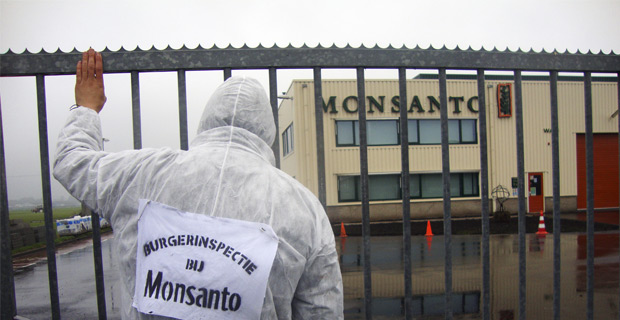
Showdown soon in Los Angeles: Lawsuit against Monsanto

Is charged of roundup false advertising

by Paul Fassa

The labels on retail Roundup containers state in large letters, “Did You Know? Glyphosate targets an enzyme only found in plants and not in humans or animals.”
The reality is quite different of course, and plaintiff attorney T. Matthew Phillips for the truth in advertising lawsuit against Monsanto has the science behind him. Roundup targets the enzyme EPSP synthase, and it is in animals and humans.
EPSP synthase is found in the microbiota (mostly friendly bacteria) that reside in our intestinal tracts (guts). Thus the enzyme is found in humans and animals. It is partly responsible for immunity activation and even helps our guts and our brains communicate with one another.
EPSP synthase is among other beneficial microbes that produce neurometabolites that are either neurotransmitters or modulators of neurotransmission. So the claim on Roundup containers is a total lie, and a dangerous one too.
It contributes to many of the food allergies, digestive illnesses and neurological diseases among Americans lately. Some scientists claim it contributes heavily to autism, in addition to Roundup’s carcinogenicity.
Not only does Roundup’s chemical violence permeate GMO crops; it is used by home gardeners and sprayed on non-GMO grain crops to desiccate them (dry them up) for earlier harvesting.
Prior similar suits involving Roundup
The simplicity of Phillips’ lawsuit is its beauty. Roundup has false safety claims prominently displayed on the containers’ labels. It’s false advertising at its worst. The science is in: EPSP enzymes are IN gut microbes, which all humans do have, or they’D be in really bad shape if not dead.
The adverse consequences don’t have to be proven in court with this legal challenge because only the false advertisement aspect needs to be proven. And as the government officials like to say about vaccines — “the science is in” that valuable, life-supporting human microbes contain EPSP enzymes.
In 1997, New York’s Attorney General (AG) ordered Monsanto to pull ads declaring Roundup “safer than table salt” and “will not wash or leach in the soil” and “will not generally cause unreasonable adverse effects on the environment” and other claims. Monsanto pulled the ads and no fines were levied.
Ten years later, France got 15,000 euros (19,000 USD) from both Monsanto and its French distributor. Monsanto appealed twice, and both appeals were refused by 2009.
A financial slap on the wrist to be sure, but more public exposure on Roundup’s toxicity and Monsanto’s duplicity. Both of those successful legal actions were performed by governments.
Phillips’ lawsuit is the first Roundup truth in advertising lawsuit from a private attorney. And it’s happening within the time frame of the WHO’s worldwide declaration of glyphosate’s carcinogenic toxicity and other revelations of glyphosate’s human health issues.
Phillips anticipates that Monsanto’s attorney, Steven Smerek, will attempt to get the case thrown out at the initial August 10, 2015, hearing in California’s Federal Court on the flimsy pretense that Monsanto can’t be sued for false advertising because, if the EPA approves it, it must be true.
“The government does not have a monopoly on truth,” asserts Phillips, “It doesn’t get more Orwellian than this!” Phillips added, “The ONLY way they can win is by proving that a lawsuit demanding truth-in-advertising conflicts with (a) The Constitution; (b) Federal law; (c) A treaty. They’ll never make it!”
Consider that the 1997 New York AG’s successful lawsuit against Monsanto’s Roundup has set a USA legal precedence. This lawsuit is on a shoe string budget from an individual activist attorney and a small family. You can help out with the lawsuit’s funding page here. (Natural News).

spot_img

The truth about the Federal Drug Administration

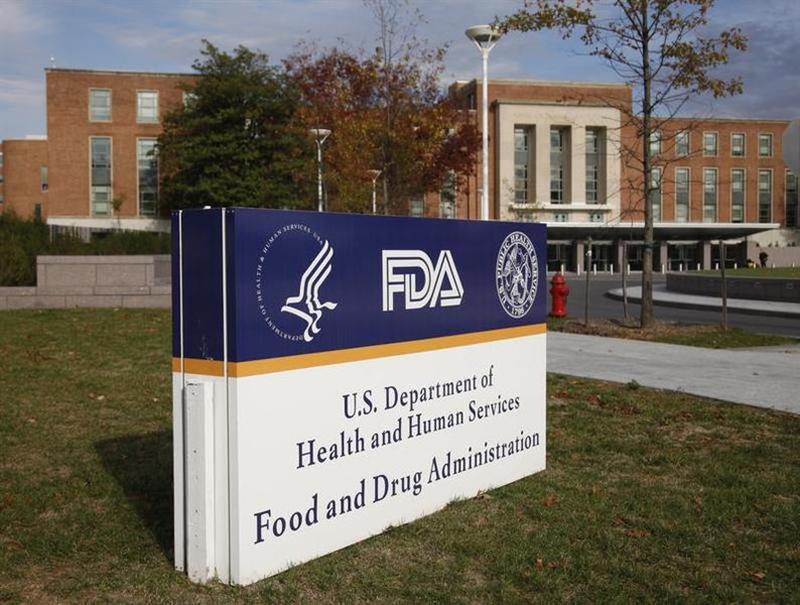
The headquarters of the U.S. Food and Drug Administration (FDA) is shown in Silver Spring, Maryland, November 4, 2009. REUTERS/Jason Reed

Big Pharma following and its secret plan

by Timothy D. Terrell
Mises.Org
Analysis

In this article by economist Jeffrey Sachs, pharmaceutical company Gilead is taken to task for selling its hepatitis C cure, Sofosbuvir (sold as Sovaldi), at a price of $84,000 per course of treatment.
Sachs says that the actual production cost of Sofosbuvir is about $100.
Sachs says that Gilead is “bilking the taxpayer” by charging the government prices far above production costs — and government is probably paying for most of the Sofosbuvir drugs. Sachs further complains that people will die because of Gilead’s refusal to cut the price to something more affordable.
Gilead, Sachs says, bought the patent rights to Sofosbuvir for $11 billion in 2011, and took the drug through the last stages of FDA approval, which came at the end of 2013. Gilead made $12.4 billion in 2014 from Sofosbuvir, and Sachs says that first quarter sales of the drug brought in revenues of $4.6 billion.
Sachs quite rightly points out that patents are relevant to the issue. But he says that patents are “an important tool to incentivize R&D” which have been “abused” by Gilead, and argues that “life and death” patent holders should be subject to price controls by the federal government. He goes on to say that patients who are “denied access” (i.e., can’t afford the drug) should sue Gilead for reckless endangerment. And finally, Sachs suggests “public outrage and activism.”
In an August 6 tweet replying to me and to a physician who had briefly engaged him on this issue, Sachs said, “No way to regard the current arrangements even crudely efficient or equitable. Killing people senselessly.”
Sachs is being somewhat disingenuous in representing the production cost of Sofosbuvir as $100, and the markup as 800 times costs (as he did in an August 7 tweet). There are substantial fixed costs involved in R&D, trials and FDA approval, and the like. Any company incurring those costs expects to recover them by charging an above-marginal cost, and if trade secrets or other features of the market allow them to do so, they will. Sachs’s markup complaint applied elsewhere doesn’t make sense — authors of mass market paperback novels (and maybe Sachs himself, the author of several popular books) would also have to be regarded as terrible price gougers because the marginal cost of printing a paperback book is a few cents, while the retail price is $6 to $10. Of course, writing the manuscript is an extremely costly part of the production process. Once that is done, reproduction can be relatively cheap. This is true of a great number of goods and services for which there is a high up-front cost.
Problems with Patents
There are clearly some problems stemming from the intellectual property rules here. The government will prosecute any firm that competes with Gilead in the production of the particular chemical formula Gilead has acquired. Sachs is right, then, that IP is relevant here. But rather than see IP as part of the problem, he defends patents as basically beneficial and proposes using them as a way for a government to beat a company’s prices down. In contrast to the widespread notion of most of the public and most policy commentators, it is not at all clear that patents are essential to drug innovation. Even where new drugs could be reverse-engineered and copied, innovation could still be rewarded in a world without patent laws. See, for example, this article by Nathan Nicolaisen.

First-mover advantages may be important, as could the inevitable delays in ramping up generic drug production. Nicolaisen mentions a survey of R&D labs and company managers that indicated that they believed trade secrets to be more effective than patents in getting a return on an investment. For a more extensive treatment of a free-market view of IP, see Jacob Huebert’s article here, and for an application to a similar issue involving a life-saving drug, see this article by Stephan Kinsella.
The FDA’s Role in Denying Access to Health Care
Sachs — at least in this article — ignores the role of the FDA in causing death and suffering by keeping drugs off the market. When Gilead bought the patent to Sofosbuvir, it was running the risk that the drug would not be approved, or that approval would be delayed so long that the opportunity cost of its initial $11 billion investment would become quite large. Uncertain but potentially large profits after approval may be quite reasonable, given the risk Gilead took on. The FDA itself injects a politicized uncertainty into the drug research, production, and marketing process, and therefore drives up costs.
These costs can appear as death and suffering as well as dollars. The American public tends to think of the FDA as a protector against dangerous side effects, as we saw with Thalidomide decades ago. But how many Americans have died because of lags in approval? A five-year delay in bringing the antibiotic Septra to the US market may have cost 80,000 lives. A lag in the approval of beta blockers may have cost 250,000 lives.1 The FDA’s ban on advertising aspirin as an effective preventer of first heart attacks may have caused the deaths of tens of thousands of Americans every year. But because it’s easy to identify those harmed by side effects, and difficult to identify who might have been saved by earlier introduction of Septra to the marketplace, the FDA tends to be over-conservative in its regulatory process.
Some Regulation Begets More Regulation
But one of the most interesting features of Sachs’s diatribe against Gilead is how well it tracks with Ludwig von Mises’s explanation of the natural progression of socialism. In “Middle of the Road Policy Leads to Socialism,” Mises points out that a government facing milk shortages from its price controls on milk may add to its initial intervention a second intervention controlling the prices of the factors of production used in milk production, and then — if the government still refuses to acknowledge the fundamental problems of intervention —a third intervention controlling the prices of still other resources. The price system shrinks and is gradually replaced with central planning.
Sachs sees problems with the prices of Gilead’s new drug. And I do too — I don’t think for a minute that the free-market price of Sofosbuvir would be $84,000 per course. But rather than attack the State’s patent laws directly, as well as the costly FDA regulatory process and other interventions, Sachs wants price controls on life-saving drugs. This is a well-traveled path toward socialism, and it does not end well.

spot_img

Guatemala: Baldetti to face trial in December

by the El Reportero’s wire services

A Guatemalan judge set the date for the audience on upcoming December 8, which will define whether former Vice President Roxana Baldetti will face trial, and determined three months for parties to deepen research.
The judge Miguel Angel Galvez said Nov. 25 is the last day the Public Ministry and the International Commission against Impunity in Guatemala (CICIG) will have, to investigate the alleged involvement of Baldetti in a network called La Linea, dedicated to the diversion of millions of dollars in custom offices.
The former vice president must enter the Santa Teresa preventive women’s center in three days.
Santa Teresa is located in the north of the capital.
ccording to the prosecutors, Baldetti was the leader of a corruption structure known as La Linea and regulated the anomalous entry of goods in Puerto Quetzal, Santo Tomas de Castilla and the Central Customs.
The Supreme Court on Tuesday started the preliminary hearing procedure requested by the MP CICIG against former president Otto Perez Molina, and referred the case to Congress, which must designate a commission to determine if the president’s immunity is lifted.

Divorce rates grow in Panama as unmarried unions thrive
Nearly four thousand marriages file for divorce every year in Panama, as unmarried union are gaining popularity, a phenomenon that according to experts respond to a change in the social mindset.
According to sociologist Marcos Gandásegui, young couples prefer unmarried unions to marriages, the latest being more predominant among people with specific interests, mostly form the upper-middle class.
Paradoxically, this group of people also registers an increase in the divorce rate; a marital status that has grown in a 10 percent over the last five years.
A survey conducted by La Estrella de Panama journal and the online marketing firm Feebbo revealed that people get married to have children and safe sex, convenience, peer pressure, fear to loneliness and appearances.
“We should work in order for people in unmarried unions to get married and have the rights that come with it”, said Marylin Vallarino, president of the Family Commission of the National Assembly.

Central America and the Caribbean on agricultural alert
An agricultural alert was decreed by the governments of Central America and the Caribbean, given the effects of the severe drought currently affecting 1.6 million farmers and their families.
The appeal was decided by the ministers of agriculture of the region, to help the victims, to coordinate the cooperation of the international community and technical assistance to offset the damage to crops and livestock.
Along with the warning they issued a statement referring evaluations by each country to implement policies for adapting to climate change, protection of coffee plantations under the onslaught of the rust fungus and the implementation of a plan of family farming in the next six months.
Due to its geographical location, Central America and the Caribbean are affected each year by climate variability generated economic losses.
The Agricultural Council and the Inter-American Institute for Cooperation on Agriculture recently reported that in the Corredor Seco Central food production is affected by the water deficit in the past months, and severe risk conditions for crops are presented.
They also warned that the situation could worsen because the irregularity in the distribution of rainfall, prolonged heat waves and the early withdrawal of the rainy season crops can compromise.
According to figures from the World Food Programme about 1.6 million people have been affected by drought in the corridor due to El Nino has caused the loss of crops, mainly corn, beans and rice, basic in the region.

spot_img

Thousands rally against nuclear weapons on 70th anniversary of Hiroshipa bomb

Compiled by the El Reportero’s staff

Global zero calls Iran deal a key step toward the global elimination of nuclear weapons.
Marking the 70th anniversary of the atomic bombings of Japan, thousands of Global Zero activists in the United States and around the world will call for urgent action to end the nuclear threat, including Congressional approval of the Iran deal as a next step to eliminating nuclear weapons globally.
Demonstrations will include a 7-mile bike ride tracing the thermal blast of a “small” nuclear weapon, highlighting the zone of devastation in which most injuries would be fatal, overwhelming any possible humanitarian relief efforts.
In San Francisco (CA), Global Zero members and bicyclists will meet up at Dolores Park at 3:30pm PT.

Farewell the Elbo Room
I am sure you have heard the sad news: Our favorite San Francisco music venue is closing to make way for more luxury condos. This is a huge blow to the Mission. But LA GENTE is having one last dance party there. They will be joined by Istanbul Connection and members of LoCura, Inspector Gadje, Makru Musica and MWE.
Lets make this a night to remember and celebrate the legacy of this amazing piece of San Francisco history. Friday Aug. 14, at 9:30 p.m. at Elbo Room, 647 Valencia St., SF. $13.

$10,000 winner from Redwood City selected in queen competition
Every year as part of the North Fair Oaks Community, an exciting competition takes place sponsored by the Sheriff Department. Young women are selected from a field of applicants to compete for $23,000 in scholarship awards. The competition is in its ninth year and has awarded $146,000 in scholarships to date. The finalists have raised over $200,000 for youth programs in San Mateo County.
The Queen of the Festival scholarship program promotes community service.
The festival is a multicultural event full of excitement along with free live entertainment, arts and crafts, food and beverages, children’s rides and activities, and a festive parade. Among the many exciting activities that day is one particularly treasured by the community – the crowning of the Festival Queen.
The winner of this year’s competition: Michelle Quintero of Redwood City has been crowned as the 2015 Queen of the Festival and has won a $10,000 scholarship.
Other contenders for Queen of the Festival included: 1st runner-up Monica Orellana of Redwood City, awarded $6,000 and matriculates to San Jose State University; 2nd runner-up Vanessa Murillo of Redwood City, awarded $4,000, headed for University of California, Los Angeles; Mary Robles of Redwood City, awarded $2,000 attending Loyola Marymount University; and Angelica Salto of Redwood City, awarded $1,000 and attending Cal State East Bay.
It is held in conjunction with the 14th Annual North Fair Oaks Community Festival on August 16, 2015, 11 a.m. to 6 p.m., at Middlefield Road, Redwood City, between 1st and 5th Avenue. For more info call 650-368-2497 or visit www.northfairoaksfestival.org

spot_img

Gente de Zona and Marc Anthony lead hit parade in Spain

Compiled by the El Reportero’s staff

Global zero calls Iran deal a key step toward the global elimination of nuclear weapons.
Marking the 70th anniversary of the atomic bombings of Japan, thousands of Global Zero activists in the United States and around the world will call for urgent action to end the nuclear threat, including Congressional approval of the Iran deal as a next step to eliminating nuclear weapons globally.
Demonstrations will include a 7-mile bike ride tracing the thermal blast of a “small” nuclear weapon, highlighting the zone of devastation in which most injuries would be fatal, overwhelming any possible humanitarian relief efforts.
In San Francisco (CA), Global Zero members and bicyclists will meet up at Dolores Park at 3:30pm PT.

Farewell the Elbo Room
I am sure you have heard the sad news: Our favorite San Francisco music venue is closing to make way for more luxury condos. This is a huge blow to the Mission. But LA GENTE is having one last dance party there. They will be joined by Istanbul Connection and members of LoCura, Inspector Gadje, Makru Musica and MWE.
Lets make this a night to remember and celebrate the legacy of this amazing piece of San Francisco history. Friday Aug. 14, at 9:30 p.m. at Elbo Room, 647 Valencia St., SF. $13.

$10,000 winner from Redwood City selected in queen competition
Every year as part of the North Fair Oaks Community, an exciting competition takes place sponsored by the Sheriff Department. Young women are selected from a field of applicants to compete for $23,000 in scholarship awards. The competition is in its ninth year and has awarded $146,000 in scholarships to date. The finalists have raised over $200,000 for youth programs in San Mateo County.
The Queen of the Festival scholarship program promotes community service.
The festival is a multicultural event full of excitement along with free live entertainment, arts and crafts, food and beverages, children’s rides and activities, and a festive parade. Among the many exciting activities that day is one particularly treasured by the community – the crowning of the Festival Queen.
The winner of this year’s competition: Michelle Quintero of Redwood City has been crowned as the 2015 Queen of the Festival and has won a $10,000 scholarship.
Other contenders for Queen of the Festival included: 1st runner-up Monica Orellana of Redwood City, awarded $6,000 and matriculates to San Jose State University; 2nd runner-up Vanessa Murillo of Redwood City, awarded $4,000, headed for University of California, Los Angeles; Mary Robles of Redwood City, awarded $2,000 attending Loyola Marymount University; and Angelica Salto of Redwood City, awarded $1,000 and attending Cal State East Bay.
It is held in conjunction with the 14th Annual North Fair Oaks Community Festival on August 16, 2015, 11 a.m. to 6 p.m., at Middlefield Road, Redwood City, between 1st and 5th Avenue. For more info call 650-368-2497 or visit www.northfairoaksfestival.org

spot_img