Monday, September 7, 2026
Home Blog Page 391

AMAC: Government has grown too fast and too big

Federal regulations outpace new laws originating in Congress at an astounding rate of 15 to one

by AMAC
The Voice of Americans 50+

WASHINGTON, DC – “The Obama Administration has broken all records for establishing federal regulations.  Since the president took office his rule makers have unleashed more than 10 a day.  In less than six years, a total of more than 21,000 regulations have been created, many of which have had the effect of hampering job creation, the economy and the ability of ordinary citizens to keep pace with the rising costs of the new rules,” according to Dan Weber, president of the Association of Mature American Citizens.
Weber noted that regulations governing such things as the operations of public transportation and financial markets, the sale of pharmaceuticals, workplace safety, drinking water, etc. have a practical role to play in our society.  But, he added, “when the government uses its regulatory authority to further social goals, such as the administration’s green energy agenda, without so much as a debate on the issues and a Congressional vote, it is downright wrong-headed.  Not to mention the costs it imposes on American households.”
The Competitive Enterprise Institute estimates that last year the cost of complying with federal regulations amounted to about $15,000 for the average U.S. household.
“The Environmental Protection Agency would decimate the nation’s coal industry with new regulations including a restrictive carbon emission rule, despite the fact that technology exists to allow for the clean use of cheap coal to generate electricity at reasonable costs.  And, despite the fact that the government’s war on coal is bound to have an extremely burdensome impact on us all, but mainly on seniors who simply cannot afford the predicted spikes in the price of electricity that even the president, himself, has predicted,” Weber said.
He said he is concerned that older Americans, particularly those on fixed income, will have to make a choice between keeping warm in winter and cool in summer or putting food on their tables.  But, he added, “it won’t be much of a choice because of the EPA’s new water rules that allow the agency to regulate mud holes on farms and ranches are likely to have an impact on food prices.”
The EPA has redefined the 1972 Clean Water Act to include standing rain water.  Farmers and ranchers, therefore, are required to go through complicated and costly procedures to comply with the law as redefined by the agency.  Lawsuits to block the rule have been filed in a variety of venues across the nation and one federal judge in North Carolina has already ruled that the regulation is unfair.  But, the EPA said it will ignore such decisions and move ahead with enforcement of the regulation.
There is bi-partisan outrage in Congress over the EPA’s “brazen” overreach, Weber said.  He cited a recent Opinion Article signed by Sens. Joe Donnelly, D-Ind., John Barrasso, R-Wyo., Heidi Heitkamp, D-N.D. and Jim Inhofe, R-Okla. challenging the EPA.
“Their message didn’t go far enough, but it is a sign that our lawmakers may be waking up to the fact that government has grown too fast and too big for its britches in recent years.”  Weber hoped that “it is for real this time and not just a political ploy.  The agency needs to be brought to task.  It cannot just create virtual laws, although it is a fact that government regulations outpace new laws originating in Congress at an astounding rate of 15 to one.  The people who write these regulations are hired hands.  They are supposed to be working for us, not against us.”
ABOUT AMAC
The Association of Mature American Citizens [http://www.amac.us] is a vibrant, vital senior advocacy organization that takes its marching orders from its members.  We act and speak on their behalf, protecting their interests and offering a practical insight on how to best solve the problems they face today.  Live long and make a difference by joining us today at http://amac.us/join-amac.

spot_img

In Defense of Humanity – Part 2 and Last

NOTE FROM THE EDITOR

Dear Readers: The following article, first published by AntiCoruption Society, interestingly expands on previous articles published by the El Reportero on the subject of how corporations have been taking over our society, our country and our lives – and have, by corporate laws – given artificial life to corporations and treated as living creatures, in their effort to dehumanize and replace humans with robots. – Marvin Ramírez. This is 2 of two parts

First published by the Anticorruption Society

In 1970 a wise and intelligent Mom, Dorothy Law Nolte, created a relatively simple list of instructions for child rearing – which if followed would enhance the development of all of our children’s natural and innate qualities:  Children Learn What They Live. Of course the global-controllers would hate for this to catch on; as Ms Nolte’s instructions would help return humankind to their natural state of creativity and empowerment.

Note: In the first part of this article we published items 1-9. We now continue with 10 to 12.

10) Humans are capable of random acts of kindness and perform them daily. Many of these acts are done quite casually and get very little recognition. However, they can actually help transform someone’s ‘bad day’ into a good one. They are generally unpredictable and always welcome. In fact, random acts of kindness can actually undermine the controller’s game plans, which are built on computerized behavior models and their “game theory”. [See Part One of the BBC Documentary The Trap, title “F*** You Buddy”.] These models are built on human selfishness, which they can predict, not individual human generosity which they cannot.
11) Human DNA and genes are brilliantly designed to adapt to Earth’s environment. This info was discovered during recent genome studies. Our genetic adaptation is linked to our belief systems. Unlike other species the survival of the ‘fittest’ does not mean the physically strongest. Our beliefs are far more complex than other species and far more important for our survival. [See microbiologist Bruce Lipton’s Biology of Belief.]
12) Humans are a part of an amazing biocommunication network that links them to other life forms on Earth. This phenomena was discovered by Cleve Backster in 1967. While his discoveries got very little recognition from academia and the media, they were astounding and based on solid science. Humans have the ability to communicate across the universal network some call the aether without wires, or any type of machine assistance.  The hundred monkey syndrome applies to humans as well.
Quotes from Human DNA can be influenced and reprogrammed by words and frequencies, by Grazyna Fosar and Franz Bludorf, Russian DNA Discoveries
” . . . Human DNA is a biological internet and superior in many aspects to the artificial one. The latest Russian scientific research directly or indirectly explains phenomena such as clairvoyance, intuition, spontaneous and remote acts of healing, self healing, affirmation techniques, unusual light/auras around people (namely spiritual masters), mind’s influence on weather patterns and much more. In addition, there is evidence for a whole new type of medicine in which DNA can be influenced and reprogrammed by words and frequencies WITHOUT cutting out and replacing single genes.”
“Hypercommunication in the new millennium means something quite different: Researchers think that if humans with full individuality would regain group consciousness, they would have a god-like power to create, alter and shape things on Earth! AND humanity is collectively moving toward such a group consciousness of the new kind. Fifty percent of today’s children will be problem children as soon as the go to school. The system lumps everyone together and demands adjustment. But the individuality of today’s children is so strong that that they refuse this adjustment and giving up their idiosyncrasies in the most diverse ways.”
Conclusion
Only the dimwitted or severely damaged cannot recognize that the attributes, qualities and capabilities of homo sapiens with Free Will cannot be replaced or duplicated by machines (robots).  If the global-controllers (war mongers) had gotten out of our  way – and ceased with their ‘social engineering’, Psywars and exploitation – can you imagine the fabulous and peaceful world we would have created?
Since “Researchers think that if humans with full individuality would regain group consciousness, they would have a god-like power to create, alter and shape things on Earth! And humanity is collectively moving toward such a group consciousness of the new kind.” we need to accept and understand that we can create the future we all want. We can do it by collective positive imaging. Let’s image families and their progeny – in perpetuity – enjoying Earth’s healthy meadows, forests, ocean beaches and mountains!
Final comment
I intentionally left God out of this discussion because he/she/it (the universe) is defined quite differently by humans across the globe.  And even those that don’t quite ‘get’ God, should be able to recognize how truly amazing and wondrous humans are capable of being! Sadly many religions still teach the idea of ‘original sin’ that was inserted into the bible by Emperor Constantine and his buddies of the Nicean Council. Original sin = toxic (unwarranted) guilt. It is much easier to manipulate humans who feel ashamed and inadequate than to manipulate those who know they are both biologically and spiritually amazing – truly wondrous!

spot_img

Navajo Nation removes tax on healthy produce

Raises tax on junk food in public health effort

by Amy Goodrich

In December, Berkeley, California, became the first city in the U.S. to pass a soda tax. Navajo Nation, however, is taking this one step further. After almost four years of legislative battle and several attempts, Navajo Nation will become the first place to implement a 2 percent tax on junk food or food items with “minimal-to-no-nutritional value”. The tax will expire and be revised in 2020.
Last year, Navajo implemented an amendment that removed the 5 percent tax on the sale of fresh fruits and vegetables.
For the Dine Community Advocacy Alliance (DCAA), a group made up of volunteers grievously concerned about diabetes and obesity rates on the reservation, the tax is another major achievement.
According to the Navajo-area Indian Health Service, about 10 percent of Navajo Nation residents have diabetes, and another 30 percent are pre-diabetic. In some age groups, obesity rates spike to almost 60 percent.
Junk food tax advocates believe the law will make a positive change and help people to be more mindful about what they put into their mouths. The tax will generate an estimated $1 million a year, which can be used to support health and wellness projects such as the creation of greenhouses, local farmers markets, community gardens, and cooking classes.
Are the people of Navajo as pleased with the tax as the DCAA? The nation is a 27,000-square-mile area where almost half of the population lives under the poverty line. According to the DCAA, there are only ten grocery stores to be found in the entire area, leading many people to turn to gas stations and convenience stores for food shopping.
“Less money for fruits is nice, but it doesn’t even out,” Ann Neagle, who lives on the reservation, told the Los Angeles Times. “For people on a fixed income, we can’t afford things to get more expensive.”
The Los Angeles Times also reported that for one bag of apples, a customer will pay around $7. This could also buy him 30 boxes of Maruchan Ramen Noodles or seven frozen Banquet Value Meals.
Most Navajos understand the relationship between food and health, but many of them simply have no other choice.
“It’s not going to do anything except make it more expensive,” said Preston Yazzie, 20, in the Los Angeles Times. “I’ll still buy chips or whatever. But maybe it’ll help some people.”
The USDA has called the region a “food desert” based on how hard it is to get fresh fruits and vegetables compared to the availability of processed or junk food. Even those who live close to a grocery store do not necessarily have access to healthy food.
In one survey, the DCAA found that approximately 80 percent of a random store’s inventory would fall into the group of junk food or food with “minimal-to-no-nutritional value.”
Denisa Livingston, a spokeswoman for the DCAA who is also a community health advocate and Navajo tribe member, says that she hopes that the removal of tax on fruit and vegetables will increase the demand, which will hopefully improve the availability of fresh, whole foods in local markets and grocery stores.
“This is the start of making people aware that we are living in a food desert – something that’s not normal,” says Livingston. “If you [compare] the Bashas’ grocery store on the reservation and in Phoenix, looking at the layout, you see they have much more healthy foods available in Phoenix compared to here.”
Navajo is the first ever to implement such a tax, and it is unclear what the future will bring. The biggest challenge will be making the shift from convenient, cheap, processed junk food to fresh, affordable produce available to all people living in Navajo. Natural News.

spot_img

The people in the tents say yes

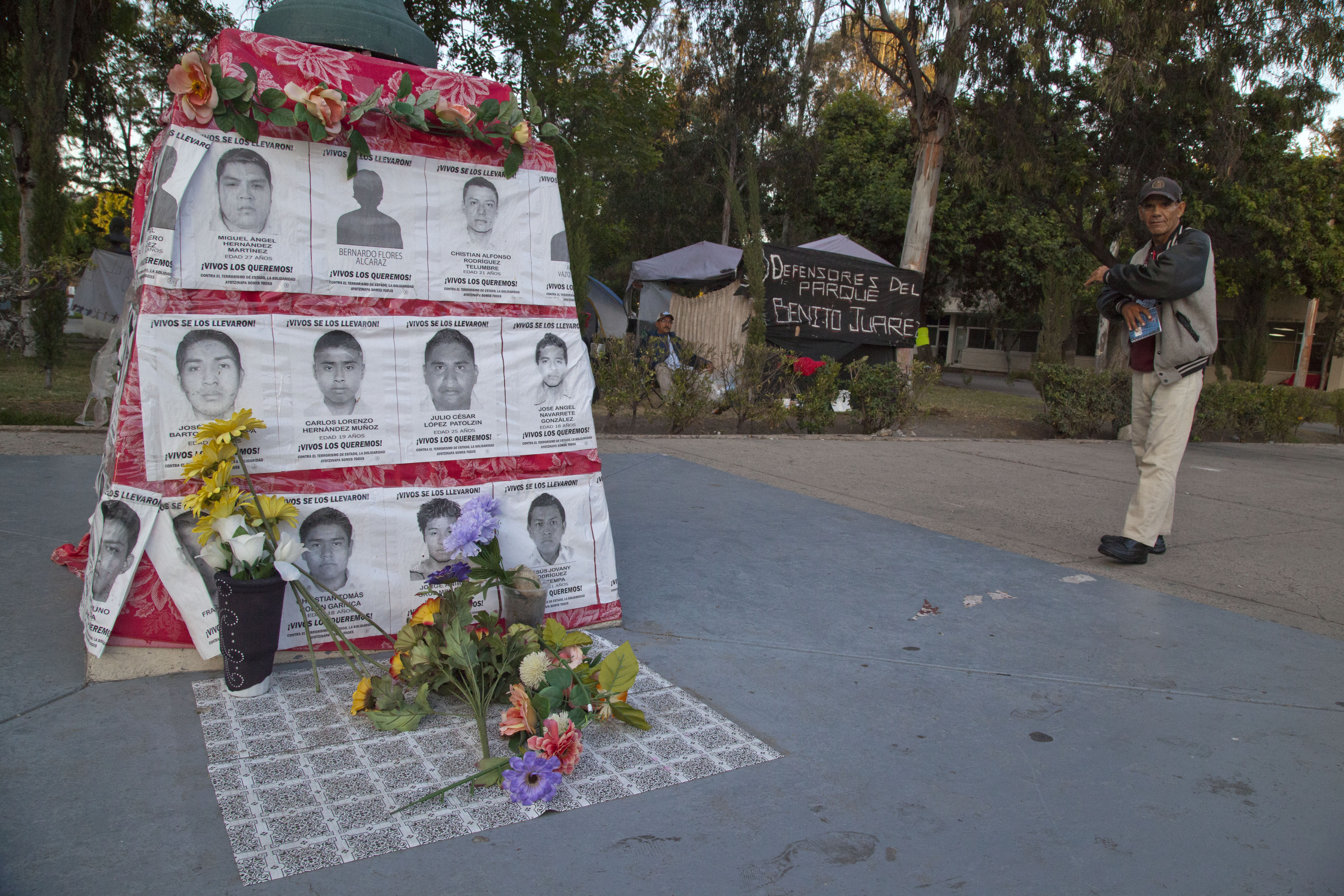
TIJUANA, BAJA CALIFORNIA NORTE, MEXICO - 2JUNE15 - Homeless people have set up a camp in the Benito Juarez Park, next to Tijuana's City Hall. They say they are defending the park from a plan by the city government to privatize it and cut down most of its trees. The encampment has been there for five years. Three years ago the police tried to evict them, but failed. Daniel Taramayateca is a poet living in the encampment. He and other residents have made a memorial to the 43 students kidnapped at the Ayotzinapa teachers training school in Guerrero. Copyright David Bacon

Story and photo by David Bacon

When Ruben Beas says he’s been living in a tent in a public park for five years, anyone might wonder why, especially since he says he’s not homeless, but staying there as a matter of principle. “I will not leave,” he declares. “This park belongs to the people of Tijuana. We will defend it.”
He’s not the only one. Half a dozen others live there too. A few more, like Fernando Méndez, come to cook meals for the occupiers, and then go home elsewhere to sleep. Beyond them stretches a wider network of activists who show up when they hear the police might be coming to run the protesters off again.
Why are people in Tijuana so angry that they’ve organized one of the longest and most determined occupations of public space in either Mexico or the United States?
By comparison, Occupy Tijuana (in the city’s Zona Rio business district) lasted a day before the cops arrived, arresting everyone in sight on the street median where activists had set up tents. Even Occupy Wall Street and other U.S. occupations were much shorter.
It’s not that the police haven’t tried to evict people from Benito Juárez Park. They have. But, each time, the occupiers and their supporters return.
The first tents went up in 2010. Soon, sky-blue and pastel-green nylon tarps stretched over a network of ropes, festooned with hand-lettered signs and banners. The largest declares the community’s name to passersby, in white letters on a black field: “Defensores del Parque Benito Juárez”-”Defenders of Benito Juárez Park.”
In the early morning janitors and office workers troop in to their jobs in the two large buildings that frame the open space. One is the ayunta- miento-Tijuana’s city hall. The other houses offices of the state government for Baja California Norte. As the day wears on, people arrive seeking permits, or trying to satisfy one or another of the many bureaucratic requirements Tijuana and Baja California make of their citizens.
Emiliano Zapata and José María Morelos, and even one of Luis Donaldo Colosio, the supposed reformer of the old ruling party, the PRI, assassi- nated in Tijuana during his presidential campaign in 1994, at the start of the NAFTA era.
In other words, Parque Benito Juárez is an urban park. It gives Tijuanenses a respite from city stress. The United Nations has a recommendation for open parks in urban areas-eight square meters of green space per inhabitant. Tijuana, according to architecture critic Rene Peralta, has one square meter per person. Given the city’s demographics, it’s very much a working-class park and a political space. That’s why it’s being defended so ferociously. City activists have set up a memorial to the 43 students kidnapped and disap- peared last fall from the Ayotzinapa teachers’ college in Guerrero. This spring, striking farm workers from the San Quintín Valley assembled under the park’s trees, after caravanning to Tijuana to demonstrate.
The lack of green space is a product of the same headlong rush to build factories that also forgot to plan housing for the workers arriving in the city. In the 1960 census, before Mexico instituted the Border Industrialization Program (BIP) in 1964, Tijuana’s population was around 166,000. The BIP promoted construction of the first maquilado- ras on the U.S.-Mexico frontier. Three decades of factory building followed, much of the production moving from the United States.
Meanwhile, the industrial areas get pavement, electricity, water, and sewers. And of course, they get workers. At the heart of Tijuana’s growing populace are the women who pass through the doors of the city factories every shift change. About 155,000 people work in 589 maquiladoras. The biggest is Foxconn, with 4500 workers making televisions and monitors. This plant belongs to the same Taiwanese corporation that owns a huge factory in China, which became notorious for such harsh conditions that several workers committed suicide. Each of the next five largest factories has over 3,000 employees, assembling TVs or medical equipment. Almost half the maquiladora workforce labors in these two industries. More than half work for U.S. corpora- tions, and another quarter for Asian companies.
So a public park, even if it’s downtown, away from the neighborhoods, is important. It’s a sym- bol that the private sector doesn’t just get every- thing it wants. That was the spark that lit the occu- pation’s fire-a proposal to build a huge complex of stores, galleries, a theater, and a plaza, all on top of a 2000-space parking garage. In the process of building it, a private developer would cut down over a thousand trees and Parque Benito Juárez would disappear.
Developers called it Zócalo 11 de Julio-the date chosen in honor of the founding of Tijuana in 1889. It was originally set to cost 900 million pesos (around $55.4 million), but the price tag soon bal- looned to 1.2 billion ($74 million)-a quarter of the city’s annual budget.

The project’s board presi- dent, Carolina Aubanel, is the ex-wife of the former mayor, Carlos Bustamante. A rude cartoon of her decorates a wall of Felipe Gómez’ tent.
To stop the destruction of the park, the occupiers have demanded an inventory of the plant life and an assessment of potential environmental destruction. A federal decree from 1975 says the Tijuana and Baja California governments can’t change the park’s land use. This spring the defenders succeeded in getting yet one more in a series of injunctions blocking con- struction. Their lawyer, José Peñaflor Barron, said the court acted “because the construction endangers the environment, and the existence of the park itself.”
But the law isn’t everything, especially in Tijuana, where developers and industrialists are politically powerful. Laws guaranteeing the freedom to organize in factories are unenforced, while police help owners break strikes. In the park, the occupiers have faced arrest and expulsion, despite court orders protecting their right to public space.
The latest raid came on March 18, when state police drove the occupiers out of areas near the stalled construction. Protest leader Sabino Arellano Soriano said he had to flee to avoid arrest. “The police were asking for me, where I was, what clothes I was wearing,” he charges. “City workers warned us before police arrived, in solidarity with us.”
By the end of the decade, Tijuana’s population will reach two million. The city will continue to grow as an industrial powerhouse. But will its workers, its artists, and its political activists still have these benches to sit on, under trees almost as old as the city itself? Will Cimatl Óscar Rodríguez still have a space to rehearse his budding Aztec dancers in the soft evening after work?
The people in the tents say yes.

spot_img

Honduras: Drug trafficking and prevention in antidrug agenda

by the El Reportero’s wire services

The 25th meeting of Heads of National Drug Law Enforcement Agencies in Latin America and the Caribbean continues today in San Pedro Sula and the main topics are prevention and drug trafficking.
“We must translate this issue to a simple language: prevention, so that our people understand that we have to stand together”, said at the event the Honduran President, Juan Orlando Hernández.
Sponsored by the United Nations’ Commission on Narcotic Drugs, the meeting is attended by delegations from 44 countries and several international organizations.
During his speech, Honduran President Orlando Hernández emphasized the problems caused by the violence due to drug trafficking in the country, and acknowledged the need to continue moving forward on this issue.
“Hondurans must believe that we can restore security”, he added.
As on previous occasions, the President stressed the need of seeking solutions to the challenge of drug trafficking, and analyze it with a more regional approach.
Honduras is one of the most violent countries in the world, with a homicide rate in 2014 of 68 per 100,000 inhabitants, the equivalent of about 16 deaths per day.
The Government acknowledged that most of the homicides are linked to drug trafficking in the territory.

Guatemala landslide kills 186
Guatemala raised today the death toll to 186, confirmed by a recent landslide that buried a community near the capital and where there are still nearly 300 missing.
The Public Prosecutor updated the data after the morgue received more bodies recovered in the last hours by rescue teams of the country and Mexican brigades.
According to the State Coordinator for Disaster Reduction, crews continue to search for the missing with the support of canine units, but with no hope of finding any survivors.
A huge landslide buried last Thursday El Cambray II locality, located at 15 kilometers from the Guatemalan capital and where the ground was saturated by the rains of the previous days.

Most Mexicans feel insecurity in residence places
Sixty-eight percent of the Mexican population older than 18 years old, feels insecure in their respective cities, according to the National Survey for Urban Public Safety (ENSU) announced Wednesday.
With information data from last September, the polled population showed that in the last three months, they have listened or seen in the surroundings of their houses situations, such as consumption of alcohol in the streets (73.2 percent), thefts or assaults (66,6 percent) and vandalism (57.6 percent).
They are all followed by the sale or consumption of drugs (42.1 percent), violent bands or pandillerismo (34.3 percent) and frequent shots with weapons (32 percent).
Regarding the expectation on the public safety, 34.9 percent thinks that it will be still equal, while 29.8 states that it will deteriorate. Only 12.9 percent thinks that it will improve.
Sixty-five point eight percent showed that it modified its habits, with regard to taking valuable objects, like jewels, money or credit cards and 58.5 percent did it with regard to allowing their younger sons to go out of the house.
The survey was spread by the National Institute of Statistics and Geography.

spot_img

Binational policy forum on migration and global health

Compilted by the El Reportero’s staff

The XV Binational Health Week (BHW), an annual weeklong series of health promotion and health education activities that include workshops, insurance referrals, and medical screenings, has become one of the largest mobilization of the continent that aims to improve the health and wellbeing of the immigrant Latinos living in the United States.
During the BHW, federal, state and local government agencies, together with community-based organizations and thousands of volunteers work hand in hand to bring a number of health education activities, including workshops, insurance referrals and medical screenings for the most disadvantaged and vulnerable people, especially to those without medical coverage.
Over 400 participants will discuss immigrants’ health opportunities and challenges. Topics to be addressed: Chronic diseases, infectious diseases, violence from the public health perspective, occupational health, and access to healthcare.
The calendar of events in Northern California can be found in:
http://consulmex.sre.gob.mx/sanfrancisco/index.php/comunidadhttp://consulmex.sre.gob.mx/sanfrancisco/index.php/comunidad.
The inaugural event will take place on Monday Oct. 5 de at 10:30 a.m., at the The California Endowment, 1111 Broadway 7th Floor, Oakland.

The Library welcomes Kindie Rockers for 7th Annual Tricycle Music Fest
October is here and everyone knows it’s time to break out your dancing shoes for some Tricycle Music Fest fun.
Each week in October will feature a different performer, offering their brand of Kindie Rock!
Frances England will bring her Kindie Rock music to Parkside and Mission Bay Branches. From October sun on Friday, Oct. 9th at 4:30 p.m. at Mission Bay Branch. Then she will perform her toe tapping beats at the Parkside Branch on Saturday, Oct. 10 at 3:30 p.m.
Our third weekend of performances will be performed by none other than the Grammy and Emmy winning team of Lucky Díaz and the Family Jam Band. With their new featured album, Adelante!, they will be sure to get the crowd jumping, dancing and singing along. The Richmond Branch will be hosting them at outdoor family fun day on Friday, Oct. 16 at 3:30 p.m. On Saturday, Oct. 17 at 3 p.m., the band will be performing at Bernal Heights Branch.

Los Cenzontles (The Mockingbirds) Mexican roots, cross cultural, songs of conscience
Los Cenzontles, a group of musicians and dancers that digs deeply into their Mexican cultural roots to promote tradition, pride and cultural awareness. Through research, performance, media production and collaborations, the group has played a leading role in the roots revival in the U.S. and Mexico since 1989.
The groupo performs rancheras, boleros and many varieties of Mexican son including those from the traditional mariachi of Jalisco, pirekuas of Indigenous Michoacán and son Jarocho of Veracruz, and composes new music in traditional and cross-cultural styles that promote socially conscious messages of cultural awareness. They have released 23 CDs, three full-length documentaries and hundreds of digital videos, and will perform songs from the new release.
On Saturday, Oct. 17, at the Freight & Salvage Coffeehouse, 2020 Addison Street, Berkeley, Doors open at 7 p.m., the Show starts at 8 p.m., $23 adv / $25 door.

spot_img

Cuban singer Pablo Milanés dedicates concert to Gabo

by the El Reportero’s news services

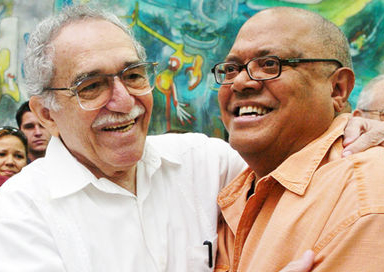
Cuban singer-songwriter, Pablo Milanés, founder of the Nueva Trova Movement, will perform today in Colombia to pay tribute to Gabriel García Márquez, during the festival dedicated to the famous writer, coordinators confirmed.
Gabo came to my house in Havana, he liked to investigate my work, but much more than that, he loved to ask about what I composed and played my friends, the things I had not heard and ended fascinating him, and a close friendship was born, more musical than literary, the singer said.
In the concert organized in Medellín, as part of the festival that bears his name, I will launch an album he could not hear, entitled Renacimiento, with songs also influenced by Baroque and mixed with Cuban rhythms, the singer said in statements posted by El Colombiano website.
According to the author of the emblematic song Yolanda and El breve espacio en que no estás, the recent album includes songs in the style of changui, danzón, conga, jazz and son, maximum expression of the popular music in the island.
Milanés’ free performance in the Antióquia capital will be sponsored by the New Ibero-American Journalism Foundation, founded by García Márquez, who was recognized in life with the 1982 Nobel Prize for Literature.

Julieta Venegas gets two nominations in Latin Grammys 2015
Mexican singer Julieta Venegas said she felt very happy and surprised with the two Grammys nominations she has when it will take place on Nov. 19.
‘ In reality I am very happy and it was a total surprise, I was hoping for one nomination because the song Ese Camino got selected but not the record, to have two nominations was kind of a shock”.
The former San Diego/Tijuana singer-songwriter Julieta Venegas was nominated for her song, Ese Camino. She has one Grammy Award and five Latin Grammy Award wins to her credit.
Venegas, 44, is a former member of the pioneering Baja punk-rock band, Tijuana No.

Uruguayan film competes for Oscar Award
The Uruguayan film Una noche sin luna (A moonless night), which tells three parallel stories, is competing for the next Oscars, today confirmed the film producer Raindogs Cine.
German Tejeira’s film , starring Uruguayan actors Marcel Keroglian and Roberto Suarez and Argentine musician Daniel Melingo, is among several works competing for Best Foreign Film.
Tejeira began writing the script in 2006 and said: ‘I know how complex the way is, but is one of those things that may happen. We are in competition’.
The film is about three lonely characters that in the New Year’s Eve come to a small town in the Uruguayan countryside, where they have an opportunity to twist their destiny, informed the producers.
The film won last year the award for best feature film at the 10th edition of the Zurich Film Festival.

spot_img

People who call over text are more laid-back

by John Haltiwanger

I have a confession: I’m terrible at responding to text messages.
If anyone reading this has sent me a text in the past couple of years and I still haven’t answered, I apologize. Please don’t take it personally, I’ll try to get back to you as soon as possible.
Truthfully, I’d much rather talk on the phone, but the caveat is I rarely feel like I’m in the right place or it’s the right time.
For that reason, I’ve often resorted to texting instead of calling, even though I prefer the latter.
Talking on the phone in public feels rude (and is often barred in many places), and with family and friends dispersed across the world in different time zones, it’s difficult to find an appropriate hour to speak.
Texting is far more convenient in this sense. It allows you to keep a conversation private and on your schedule.
Even still, I’m just not good at it. Sometimes I respond to texts days later, well after they’re relevant.
There’s no sense of urgency with texts, they leave things too open. It’s yet another sign we’ve turned into a society of procrastinators. We can push texts aside and answer them whenever we feel like.
But when I receive a call, I can’t help but answer it. I have to know why that person is reaching out — it’s exciting and even unnerving at times.
I feel a strange sense of nostalgia for the days I picked up my parents’ landline phone and called friends to catch up or make plans.
Over the course of high school and college, this ritual morphed into sending text messages, an impersonal exchange involving high frequencies of “yo,” “what’s good,” “lol,” “ttyl” and so on.
Yes, texting is admittedly far more efficient than calling in most cases, but it’s also pretty robotic and antisocial.
I’d rather actually speak to someone because I can get a truer sense of how that person is feeling. It’s hard to read emotions via text messages, even if there are emoji involved.
Tragically, society is working against me and anyone else who prefers the dying art of a good phone conversation.
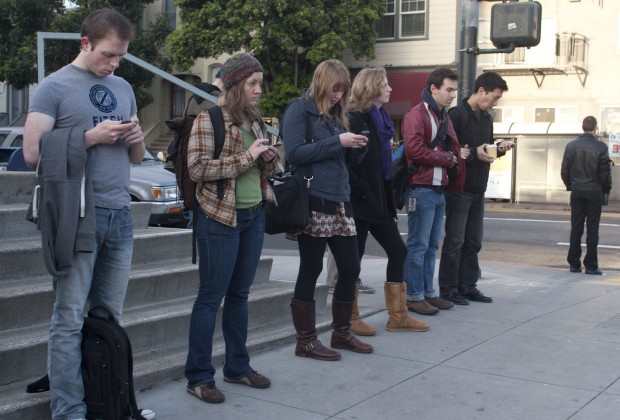
Americans are texting decidedly more often than calling, particularly when compared to other countries. As the Chicago Tribune puts it:
US smartphone users are sending and receiving five times as many texts compared with the number of phone calls each day, according to the International Smartphone Mobility Report by mobile data tracking firm Infomate.
In total, Americans spend about 26 minutes a day texting. That compares to spending about six minutes a day on voice calls.
Correspondingly, recent data from Pew Research Center shows smartphone owners use their phones for texting more than anything else.
Pew also found 80 percent of teens say texting is one of their top three ways of communicating with their closest friends, compared to 69 percent who said the same thing about calling.
Indeed, it seems people, particularly teens, are avoiding phone calls like the plague. Texting is now the way of the world.
As noted above, this seems to be tied to a desire for control, and it may have broader social implications. Some theorize the reliance on texting is damaging people’s interpersonal skills.
In other words, by texting instead of actually conversing, we’re becoming increasingly socially awkward.
Conversation is a skill that has to be cultivated. When you communicate digitally more than verbally, you avoid conversation and become less adept at it.
Sherry Turkle is an MIT psychologist and expert on technology and communication.
In her words:
The complexity and messiness of human communication gets shortchanged [with texting]. Those things are what lead to better relationships.
Simply put, one could argue those who call instead of text are better with people and develop stronger relationships.
They’re less socially awkward because they don’t fear conversation, given they’re well-practiced at it.
As Turkle explained to NPR, young people told her they preferred not to talk on the phone because “you can’t control what you are going to say, and you don’t know how long it’s going to take or where it could go.”
This suggests they feel anxious about phone calls and are generally more uptight. From this perspective, one could say there is something more laid-back about preferring calls to texts — it’s more spontaneous.
No one is arguing if you prefer texting you’re a socially-awkward control freak. But there is definitely something to be said for hearing someone’s voice and being confronted by the emotion infused in it.
Laughter is far more powerful and contagious than “lmao.” Sarcasm is far more detectable when it’s spoken.
Anger is way more discernible in someone’s tone than in passive aggressive messages.
Verbal communication is one of the human race’s greatest advantages, strengths and gifts — it’s vital to our survival.
We are an inherently social species and depend on the bonds we form to carry us through the trials and tribulations of life.
There’s nothing wrong with texting, but we were granted the ability to speak for a reason and it shouldn’t be wasted.

spot_img

In Defense of Humanity – Part 1 of two parts

NOTE FROM THE EDITOR

Dear Readers: The following article, first published by AntiCoruption Society, interestingly expands on previous articles published by the El Reportero on the subject of how corporations have been taking over our society, our country and our lives – and have, by corporate laws – given artificial life to corporations and treated as living creatures, in their effort to dehumanize and replace humans with robots. – Marvin Ramirez. This is 1 of two parts

First published by the Anticorruption Society

Here are some of the reasons why humanity is amazing and wondrous and can never be replaced by The Corporation’s robots (machines) or any other bizarre ‘pseudo-form’ of Post-Human. [See Aaron Frantz’s documentary The Age of Transitions.]

1) Humans have an infinite capacity for love throughout their entire lives. The ‘love list’ can be quite long: parents, siblings, spouses, children, friends, pets, nature, music, poetry, and art et cetera et cetera. It is our unlimited ability to love that saves us and brings us back to life when we’ve suffered a severe loss. [See Love is Just a Series of Actions.]

Since the globalists, like the Rockefellers and their corporations (who are funding Transhumanism) love money and power above all else, they have no clue what an infinite capacity for love is or even looks like.
2) Humans (who haven’t been severely damaged) can easily empathize with others, including plants and animals. This ability to empathize is the basis of The Golden Rule and has been recognized by nearly all religions.  Kindness grew out our ability to empathize and even the ‘rules of etiquette’ were written as a way to make people feel valued and respected.
3) Humans are amazingly creative. We are continually inventing music, art, literature, and even advanced technology.

In fact, humans are so creative it is very difficult to hold us back. There are literally millions of websites, blogs and facebook pages on the internet today; each one representing human creativity. This was a problem for the robber barons at the beginning of the industrial revolution, as Scott Noble’s documentary Human Resources so brilliantly explains.  They have put a lot of time and money into transforming humans into ‘human resources’. But new ideas, including ones for free energy, are being invented all the time despite the fact the would-be global energy controllers keep suppressing them.
4) Humans can express extraordinary beauty with both their voices and their bodies. These qualities have been with us for millennia. Both song and dance ‘bubble’ out of so many humans from within their spirit (soul), it is obvious they are innate qualities in our species. They are many times a direct expression of joy that comes from deep within our hearts.  Have you ever watched a small child do a ‘happy dance’? It is obviously innate.
5) Humans are funny. Humor can just bubble up from our spirit (soul) and come out of our mouths in seconds. When humans gather together, laughter always accompanies us, even when it seems inappropriate. We can’t help it, it is a part of who we are.
6) Humans are both fascinating and dear due to our uniqueness, our inconsistencies, our idiosyncrasies, and our relative unpredictability. It fact, it is impossible to predict when human inconsistencies will surface. People can claim to dislike all things in a category, but there will almost always be an exception. And, how many times have we said: “I knew I shouldn’t have done it, but I did it anyway.” How many times have we all missed the forest for the trees? How many times have we changed our minds? No matter how hard the ‘controllers’ try to depict humanity as the ‘masses’, we are all unique, both spiritually and physically.
7) Humans are capable of self-sacrifice . . . in fact we do it all of the time. Mothers give up sleep to tend to their children, fathers work at jobs they hate to put a roof over their family’s heads, people take in their elderly parents who can no longer care for themselves, firefighters risk their lives to save people in burning buildings, soldiers fight and risk death to protect their ‘countries’ [who, at the moment are not worth these soldier’s sacrifices], people with very little give money to aid others in need, and the list goes on and on.
8) Humans never stop learning, whether we want to or not. Each and every day we are exposed to new information and expand our knowledge, even if only in small ways. This process never stops as we all have an infinite ability to learn.
9) Humans have wisdom and common sense which grows exponentially over the course of our lives.  Here is some evidence of extraordinary wisdom by Nicholas Gordon, author of the Poems for Free website:
Wisdom is Based in Human Nature
The principles of wisdom are not only discernible by reason but engraved upon the heart. This is because wisdom is part of human nature, which has evolved over millennia and is in all people the same.
One may ask, then, why all are not wise. The answer is that all are wise to varying degrees, just as all are to varying degrees intelligent, dexterous, creative, curious, and so on.
Wisdom guides our behavior so as to enable the species to survive. It does this in two ways. First, since society is the principal means of human survival, wisdom enables us to live with one another in relative peace. Second, since reason and will offer us uniquely the alternative of suicide, wisdom enables us to attain happiness and survive despair.
If experience were food, wisdom would be taste, enabling us to distinguish good from bad. And although all are endowed with taste, the education of taste enables one to make subtler distinctions and finer judgments.
Similarly with wisdom: the principles are inborn, but their application is much enhanced by upbringing, schooling, reading, conversation, the cultivation of good habits, and the emulation of the wise.
We are born with a taste for beauty and goodness, finding in them our deepest and most lasting pleasure. This is our gift as humans, though because of varying endowment and education we enjoy this gift to varying degrees. TO CONTINUE NEXT WEEK.

spot_img

Big Pharma in death throes?

Drug companies jack up prices as economically strained Americans seek affordable alternatives

by L.J. Devon

People are tired of being used as pawns in a rigged economy. They’re sick of a medical system that abuses them for everything they’re worth. People are beginning to abandon the rules of the game, exiting a complicated medical system that has played them for a fool. People no longer want to be moved around like chess pieces by the master hands of pharmaceutical companies that only add new side effects to their life while draining their finances. They are tired of being played by competing pharmaceutical companies, which play for checkmate, not for healing.
The American medical system is full of caring people, but from the top down, pharmaceutical economics are set up to keep people sick and dependent. The evil in the pharmaceutical industry is beginning to show more than ever.
Drug’s price goes from $13.50 to $750 as maniacal sociopath takes charge
The most recent example of Big Pharma’s evil comes from Turing Pharmaceuticals. Founder and chief executive of the new startup, Martin Shkreli, took ownership of a 62-year-old drug called Daraprim and raised the price of each tablet from $13.50 to $750. A few years ago, Daraprim cost only $1 a tablet, but as new pharmaceutical companies acquired its marketing license, its price rose sharply. Now, under the command of 32-year-old Shkreli, the pill costs 750 times what it used to cost a few years ago. Sales of the drug in 2010 were $667,000. By 2011, sales jumped to $6.3 million, even as prescription numbers stayed the same at around 12,700.
For several decades, Daraprim has been used to treat toxoplasmosis, which is a parasitic infection that can be passed on to a baby born from an already infected mother. It’s a rare infection but is still observed in AIDS patients who have compromised immune systems.
The Infectious Diseases Society of America and the HIV Medicine Association wrote to Turing Pharmaceuticals, blasting them for price gouging that is “unjustifiable for the medically vulnerable patient population” and “unsustainable for the health care system.”
Staying true to his arrogance, Shkreli replied, “This isn’t the greedy drug company trying to gouge patients, it is us trying to stay in business. This is still one of the smallest pharmaceutical products in the world,” he said. “It really doesn’t make sense to get any criticism for this.”
When he was in his 20s, Shkreli also drew ire while piloting MSMB Capital, a hedge fund company. He was caught trying to convince the FDA to approve certain drugs made by the companies his stocks were shorting.
Big Pharma committing suicide as greed bleeds through
Turing Pharmaceutical’s outrageous price increases are not the only signs of the pharmaceutical industry imploding in on itself. In fact, many pharmaceutical companies now buy up old drugs, give them new marketing appeal, and then jack up their price as if they are some “specialty” drugs.
When Rodelis Therapeutics acquired the drug Cycloserine, they jacked up the price of 30 pills from $500 to $10,800.
When Valeant Pharmaceuticals bought up an old heart drug called Isuprel, the company quickly raised the price by 525 percent, ultimately drawing a Congressional investigation led by Vermont Independent Bernie Sanders and Maryland Representative Elijah E. Cummings. Sanders and Cummings found out that the drug’s price had already been quintupled by the previous Big Pharma buyer. They also found out that an antibiotic called Doxycycline shot up from $20 a bottle in October 2013 to $1,849 by April 2014!
The pharmaceutical industry is masquerading as a system that promotes healt,h but all it really does is dominate people’s lives through price gouging and unwanted side effects. The more people begin to see this, the more they will turn to the actual answers that promote holistic healing. Big Pharma is committing suicide as its greed bleeds through. The manipulative climate of pharmaceutical economics is not conducive for healing. The more people realize that, the more they will seek answers outside of the pill bottle. Natural News.

spot_img