Sunday, August 2, 2026
Home Blog Page 354

The Hug of the Serpent film draws attention in Venezuela

by the El Reportero’s news services

The award-winning Colombian film El Abrazo de la Serpiente drew the attention in the 9th Latin American Film Festival in Venezuela, which includes 22 films from the region. El Abrazo de la Serpiente, the first Colombian film nominated for the Oscar awards, also has some 30 awards at festivals around the world.

Based on the diaries written by early explorers traveling the Amazonia in the early 20th century, Ciro Guerra’s film shows in black and white the immensity of the jungle.

The river is a kind of common thread of the story that to show the intricacies of Latin American indigenous cultures uses the meeting of shaman Karamakate with German ethnologist Theodor Koch-Grunberg and US biologist Richard Evans Schultes.

El Abrazo de la Serpiente was mostly filmed in regions of Mitu, capital city of the Colombian department of Vaupes, where 27 native ethnic groups live.

The festival, running from Sept. 1st to 22nd, includes films from Argentina, Brazil, Chile, Colombia, Costa Rica, Cuba, Guatemala, México, Panama, Peru and Uruguay.

Juan Gabriel ashes to arrive Saturday to Juarez, Mexico

The ashes of Mexican singer Juan Gabriel were conserved in Ciudad Juárez, Chihuahua, Mexico, stated on Sept. 2 Governor César Duarte.

El Divo de Juárez, whose original name was Alberto Aguilera, was born in Parácuaro, state of Michoacan, on Jan. 7, 1950. Juan Gabriel died last Sunday in Santa Monica, California, at 66 years of age due to a heart attack.

With the arrival of his ashes on Saturday in Juárez, the author of Abrazame muy Fuerte, returns to the city where he lived, worked and took his first steps as a creator and artist.

The urn, transported by his family members, arrived at the airport in El Paso, Texas, getting to Mexican territory through Santa Fe Bridge. It was then transported to his 16 de Septiembre Avenue home.

According to the program, it was offered a mass with the participation of the town people and subsequently a cultural evening.

Mexico City will Host International Festival of Short Films

The capital prepares to host the 11th edition of the International Festival of Shorts Mexico, which will screen over 350 short films of 35 countries, from Sept. 1 thru 8. The challenge was to resort to short formats to project an idea in the big screen without trespassing the frontier of 30 minutes, expressed Jorge Magaña, director of the festival.

Alejandro Galindo, of the National Cinematheque, announced the Festival will have 28 venues in cultural centers of the capital.
After a work of selection among two thousand short films received, the jury decided to screen 354 films of which 155 are from abroad.

Meanwhile, Hugo Villa, president of the Commission of Films of the Secretary of Culture of the federal district, said that ‘the short film is not a minor gender, but a film format in which the same effort is put’.

As every year, the event present the competition in different categories.

The jury is made up by 33 personalities of the film industry.

When ending the exhibition in the City of Mexico, the event will make a tour to 14 states and after that it will travel abroad with a special selection of Mexican short films.

spot_img

Why in heaven’s name aren’t teeth part of our health

by Susan Sered
The Conversation

When we talk about the successes and shortcomings of the Affordable Care Act, and health care in the U.S. in general, little attention is given to dental care. While the ACA defines dental coverage as an essential benefit for those under 18, insurers aren’t required to offer dental coverage for adults. Medicare, the nation’s largest insurer, doesn’t cover routine dental work. And coverage for adults through Medicaid varies from state to state.

It is estimated that 108 million Americans have no dental insurance, and that one in four nonelderly Americans has untreated tooth decay.

Oral health isn’t just about nice teeth. As the surgeon general noted in a 2000 report, oral health is intimately connected to general health and can be implicated in or exacerbate diabetes, heart disease and stroke, and complications during pregnancy.
The absence of comprehensive dental care exacts a toll on millions of Americans in terms of poor health, pain and the social stigma associated with bad teeth.

People desperately need dental care.

In 2003 and 2004 (pre-Obamacare), I conducted a national study of uninsured Americans in southcentral Illinois, northern Idaho, the Mississippi delta, the Rio Grande Valley of Texas and in eastern Massachusetts.

I asked nearly 150 interviewees: “If President Bush were to declare universal health care for everyone starting tomorrow, what is the first problem you would take care of?” The most common answer by a landslide echoed this respondent’s: “I’ll be waiting outside the dentist’s office at 5:00 in the morning waiting for it to open.”

Many of the people I interviewed lived with untreated diabetes, asthma or even cancer, yet their oral health problems presented the greatest challenges to their quality of life.

Recently I returned to these communities to re-interview the people I’d met over a decade earlier. Very little has changed. While the majority of the people I interviewed now had health care coverage of some sort (for nearly 20 percent of them, it was as a consequence of becoming sufficiently disabled to be eligible for Social Security), very few had managed to secure dental coverage.

Then and now, people told me about visiting emergency rooms in hopes of alleviating pain or using addictive pain medications to make it through the day. People even told me that they had resorted to pulling out their own teeth.

Take Misty, for instance. When I met her 12 years ago in Mississippi, she was a “dirt poor” (her words) married mother of five, and she was living with diabetes, domestic violence and excruciating headaches. Despite all of these quite serious problems, she told me that she was more troubled by her bad teeth than by anything else. In fact, Misty told me that she’d had such bad toothaches that she pulled her own teeth. When I asked her how she can face the pain of pulling out her own teeth, she said:
[the infected tooth] hurts so bad… it’s a relief just to get it out of there.… I’ve gone two weeks with just being able to eat soup, because they are just so bad.

By 2016 Misty had left her abusive husband, moved to Arkansas and was accepted onto disability (SSD), which allowed her to get health care coverage through Medicaid. Still, however, she suffered because of her teeth.

It can be very hard to find dentists who accept Medicaid, and when Misty finally did, she had the rest of her teeth—25 in all—pulled in one day.

Misty’s situation isn’t uncommon. I have met women and men of various ages who, like Misty, have pulled their own teeth. I’ve also met people who were able to get part of their dental needs taken care of during brief periods of Medicaid coverage but then were left with unfinished treatment when the coverage ended.

Insurance stops at the teeth

Even though the link between dental health and overall health is clear, insurance plans tend to ignore teeth.

As health insurance began to appear to appear in the U.S.—initially in the 1920s and then more widely during World War II and in the postwar era—dentistry wasn’t part of the standard package of covered services.

As the nation’s largest insurer, Medicare plays an important role in shaping health care coverage norms. Medicare does not cover dental care. Today, according to government estimates, 70 percent of seniors lack dental coverage.

Since Medicare doesn’t cover dental, Dr. David Kroll, senior program officer at the Robert Wood Johnson Foundation, argues that this “inertia spilled over into the ACA.”

Americans who purchase dental plans typically find that the plans aren’t cheap, and often don’t cover much beyond routine preventative care. Plans often require hefty copays for procedures beyond preventative care and no or very limited coverage for dentures, bridges or periodontic work.

And, in recent years, the cost of dental care has increased faster than the cost of other medical care. For those without dental insurance, there are few low-cost services available.

The ACA provided for an expansion of Medicaid eligibility, though not all states accepted the offer of federal funding to expand Medicaid coverage. Even in the states that expanded Medicaid under the ACA, strict limits on oral health care remain for most low- and moderate-income Americans.

There is one bright spot: children’s dental coverage is a required benefit included on all ACA compliant plans, and Medicaid as well. According to national calculations of the Health Policy Institute and the American Dental Association, dental care utilization among Medicaid-enrolled children increased from 35.3 percent in 2005 to 48.3 percent in 2013.

Oral health isn’t just about nice teeth

In the absence of coherent oral health services, too many Americans end up like Gina, a young Idaho woman who holds her hand in front of her mouth while she talks so that no one will see her rotted teeth. She can’t even get a job as a telemarketer because she cannot speak distinctly enough to be hired.

Many Americans incorrectly assume that rotten teeth are the product of bad decision-making; if someone had just brushed and flossed then they’d have nice teeth. But routine dental care—think of the twice-yearly checkups that are routine for people with dental insurance—keeps teeth healthy and can catch problems when they are easy to treat.

The reality is that tooth decay signifies poverty in pernicious ways. Without expanding insurance to cover oral health, millions of Americans will continue to live with pain, stigma and the risks of systemic diseases that could be averted through an accessible and integrated system of dental care.

spot_img

The Illusion of freedom – Part 2

For very long time I hadn’t read a so such clear and exact description of our reality as people living in our current society under the current government and system. I am so thrilled to share it with our readers. The Illusion of Freedom, authored by Chris Hedges, is definitely a powerful article that every political conscientious person who likes to challenge the status quo and to contemplate new ideas and visions for humanity that everyone must read. SECOND OF A 2-PART SERIES.

The Illusion Of Freedom

by Chris Hedges

Who funds and manages our elections? Who writes our legislation and laws? Who determines our defense policies and vast military expenditures?

The essential component of totalitarian propaganda is artifice. The ruling elites, like celebrities, use propaganda to create false personae and a false sense of intimacy with the public.

— The emotional power of this narrative is paramount. Issues do not matter. Competency and honesty do not matter. Past political stances or positions do not matter. What is important is how we are made to feel. Those who are skilled at deception succeed. Those who have not mastered the art of deception become “unreal.” Politics in totalitarian societies are entertainment. Reality, because it is complicated, messy and confusing, is banished from the world of mass entertainment. Clichés, stereotypes and uplifting messages that are comforting and self-congratulatory, along with elaborate spectacles, replace fact-based discourse.

“Entertainment was an expression of democracy, throwing off the chains of alleged cultural repression,” Neal Gabler wrote in “Life: The Movie: How Entertainment Conquered Reality.” “So too was consumption, throwing off the chains of the old production-oriented culture and allowing anyone to buy his way into his fantasy. And, in the end, both entertainment and consumption often provided the same intoxication: the sheer, endless pleasure of emancipation from reason, from responsibility, from tradition, from class and from all the other bonds that restrained the self.”

The more communities break down and poverty expands, the more anxious and frightened people will retreat into self-delusion. Those who speak the truth—whether about climate change or our system of inverted totalitarianism—will be branded as seditious and unpatriotic. They will be hated for destroying the illusion. This, as Gabler noted, is the danger of a society dominated by entertainment. Such a society, he wrote, “… took dead aim at the intellectuals’ most cherished values. That theme was the triumph of the senses over the mind, of emotion over reason, of chaos over order, or the id over the superego. … Entertainment was Plato’s worst nightmare. It deposed the rational and enthroned the sensational and in so doing deposed the intellectual minority and enthroned the unrefined majority.”

Despair, powerlessness and hopelessness diminish the emotional and intellectual resilience needed to confront reality. Those cast aside cling to the entertaining forms of self-delusion offered by the ruling elites. This segment of the population is easily mobilized to “purge” the nation of dissenters and human “contaminants.” Totalitarian systems, including our own, never lack for willing executioners.

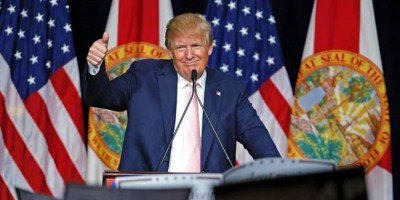
Many people, maybe even most people, will not wake up. Those rebels who rise up to try to wrest back power from despotic forces will endure not only the violence of the state, but the hatred and vigilante violence meted out by the self-deluded victims of exploitation. The systems of propaganda will relentlessly demonize those who resist, along with Muslims, undocumented workers, environmentalists, African-Americans, homosexuals, feminists, intellectuals and artists. The utopia will arrive, the state systems of propaganda will assure its followers, once those who obstruct or poison it are removed. Donald Trump is following this script.

The German psychoanalyst and sociologist Erich Fromm in his book “Escape From Freedom” explained the yearning of those who are rendered insignificant to “surrender their freedom.” Totalitarian systems, he pointed out, function like messianic religious cults.
“The frightened individual,” Fromm wrote, “seeks for somebody or something to tie his self to; he cannot bear to be his own individual self any longer, and he tries frantically to get rid of it and to feel security again by the elimination of this burden: the self.”

This is the world we live in. The totalitarian systems of the past used different symbols, different iconography and different fears. They rose up out of a different historical context. But they too demonized the weak and persecuted the strong. They too promised the dispossessed that by subsuming their selves into that of demagogues, or parties or other organizations that promised unrivaled power, they would become powerful. It never works. The growing frustration, the ongoing powerlessness, the mounting repression, leads these betrayed individuals to lash out violently, first at the weak and the demonized, and then at those among them who lack sufficient ideological purity. There is, in the end, an orgy of self-immolation. The death instinct, as Sigmund Freud understood, has a seductive allure.

History may not repeat itself. But it echoes itself. Human nature, after all, is constant. We will react no differently from those who went before us. This should not dissuade us from resisting, but the struggle will be long and difficult. Before it is over there will be blood in the streets.

spot_img

10 powerful benefits of drinking moringa every day

by Brenda Godinez

Moringa plant is beginning to gain more popularity as a new “superfood” for its highly nutritious profile and powerful anti-inflammatory, antioxidant, and tissue-protective properties.

Moringa oleifera, also known as horseradish tree, ben tree, or drumstick tree, is a small tree from India, Pakistan, and Nepal that has been used for generations in Eastern countries to treat and prevent diseases such as diabetes, heart disease, anemia, arthritis, liver disease, and respiratory, skin, and digestive disorders.

Moringa has become popular as a leaf powder supplement, although the pods, roots, bark, flowers, seeds, and fruits are also edible.

It’s used as a traditional remedy for many ailments, and here are 10 scientifically backed benefits of consuming it:

1. It’s nutrient-packed

Moringa is rich in vitamins, minerals, and amino acids. It contains significant amounts of vitamins A, C, and E; calcium; potassium; and protein.

2. It fights free radicals

Antioxidants fight free radicals, molecules that cause oxidative stress, cell damage, and inflammation.

Moringa contains antioxidants called flavonoids, polyphenols, and ascorbic acid in the leaves, flowers, and seeds.

A study found that leaf extracts had higher antioxidant activity, free-radical-scavenging capacity, and higher inhibition of lipid, protein, and DNA oxidation than flowers and seeds.

This means it prevents the damage and degradation that free radicals cause in the cells of different organs in the body, keeping them healthy and functioning at their best.

3. It fights inflammation

Inflammation can lead to chronic diseases like diabetes, respiratory problems, cardiovascular disease, arthritis, and obesity. Moringa reduces inflammation by suppressing inflammatory enzymes and proteins in the body, and moringa leaf concentrate can significantly lower inflammation in the cells.

4. It helps reduce some diabetes symptoms

Moringa leaf powder has been effective at reducing lipid and glucose levels and regulating oxidative stress in diabetic patients, which means it lowers blood sugar and cholesterol and improves protection against cell damage.

5. It protects the cardiovascular system

Moringa leaf powder has heart-healthy benefits, particularly in blood lipid control, the prevention of plaque formation in the arteries, and reduced cholesterol levels.

6. It supports brain health

Moringa supports brain health and cognitive function because of its antioxidant and neuro-enhancer activities. It’s also been tested as a treatment for Alzheimer’s disease with favorable preliminary results.

Its high content of vitamins E and C fight oxidation that leads to neuron degeneration, improving brain function. It’s also able to normalize the neurotransmitters serotonin, dopamine, and noradrenaline in the brain, which play a key role in memory, mood, organ function, responses to stimulus such as stress and pleasure, and mental health, for example in depression and psychosis.

7. It protects the liver

Moringa contains high concentrations of polyphenols in its leaves and flowers that protect the liver against oxidation, toxicity, and damage.

Moringa can reduce liver damage and fibrosis and reverse oxidation in the liver. Moringa oil can also restore liver enzymes to normal levels, reducing oxidative stress, and increasing protein content in the liver.

The liver is responsible for blood detoxification, bile production, fructose metabolism, fat metabolism, and nutrient processing, and it can only fulfill these functions with the aid of liver enzymes, so it’s vital they stay at normal levels. For instance, lower levels of hepatic enzymes can impair its ability to filter the blood.

8. It contains antimicrobial and antibacterial properties

Moringa has antibacterial and anti-fungal properties that fight infections. It’s been effective against types of fungi that cause infections on skin and strains of bacteria responsible for blood and urinary tract infections and digestive problems.

9. It enhances wound healing

Moringa has blood-clotting properties in its leaves, roots, and seeds that enhance wound healing and can reduce clotting time, which means it reduces the time it takes for scratches, cuts, or wounds to stop bleeding.

How to use it

You can add moringa powder to your smoothie or drink it as a tea. The leaf powder was deemed safe in human studies, even in larger doses than normal. The powder has a mild flavor, so it makes for a light tea with a slightly earthy taste.

But you might want to stay clear of seed extracts, as they have shown a level of toxicity in immune cells.

Moringa can have laxative effects in large quantities, so a safe dose to introduce it into your diet and avoid digestive problems is ½ to 1 teaspoon per day.

spot_img

No other way to struggle

BURLINGTON, WA - 11JULY15 - Farm workers and their supporters march to the office of Sakuma Farms, a large berry grower where they went on strike in 2013. They are demanding that the company bargain a contract with their union, Familias Unidas por la Justicia. They have organized a boycott of Driscoll's, the giant berry distributor, accusing it of being responsible for the violation of their labor rights at Sakuma, since the company buys all the Sakuma blueberries the workers pick. The workers are indigenous migrants from Oaxaca, in southern Mexico. Copyright David Bacon

The farmworker-led boycott of Driscoll’s berries

by Felimon Piñeda
Interviewed by David Bacon

Felimon Piñeda is vice president of Familias Unidas por la Justicia, the independent farm workers union in Washington State. He was one of the original strikers when the union was organized in 2013. The union, together with the union of striking farm workers in Baja California, Mexico, has organized a boycott of Driscoll’s Berries, the world’s largest berry company.

They demand that Driscoll’s take responsibility for the conditions and violations of labor rights by the growers whose berries they sell. Piñeda describes the life of a farm worker producing Driscoll’s berries, and his own history that brought him into the fields of Washington State. He told his story to David Bacon during an interview in Linden, Washington.

Our town in Oaxaca is Jicaral Coicoyan de las Flores. We speak Mixteco Bajo. I am 33 years old, but I left at a very young age. In 1996 I got to San Quintin [in Baja California] with my older brother. After four nights in Punta Colonet, we found a place to stay in a camp. There were a lot of cabins for people and we stayed there for six months. We planned to go back to Oaxaca afterwards, but when we’d been there for six months we had no money. We were all working — me, my sister, my older brother and his wife and two kids — but we’d all pick tomatoes and cucumbers just to have something to eat. There was no bathroom then. People would go to the bathroom out in the tomatoes and chiles. The children too.

Another man living there, who spoke another dialect of Mixteco, rented us a little house. It was one room, very small. We were there a year. We were getting home at five in the evening and the children were all eating their food cold because we couldn’t make the stove work. Then my brother said we should buy a plot between all of us, to give us a place to live. So we paid one payment, and then another. My brother is still living there, and his children are grown up now. His oldest son is 22 or 23. My niece now has kids.

In Punta Colonet life was very hard. Work was always badly paid. You had to work a lot for very little. In 1996 the wage was 45 pesos. In 2002 I worked three months there again, and in 2005 I worked almost a year. The bosses paid about 100 pesos. But the food was cheaper then. Maseca [corn flour] cost 55 [pesos]. We were not living well, but earning enough to afford it. A soda then cost five pesos. Now it costs 12 pesos.

I lived in Punta Colonet two years, and then, because of our great need, I had to begin coming to the US. I worked in the tomatoes in Florida, where it was very hot. It was very hard work, because they have a trailer for the tomatoes, and I’m short. You have to lift the bucket full of tomatoes to about nine feet. The person on the trailer grabs it and empties it, and then hands it back. I couldn’t do it, and I had to stand on something, and the bucket weighs more than 30 pounds. It was very hard, and I did that work for a year-and-a-half. In San Quintin I picked tomatoes too, but it wasn’t as hard.

Recently, we’ve seen the movement grow in San Quintin — the Alianza de Organizaciones Nacional Estatal y Municipal por la Justicia Social. They’re defending the people. To me, it’s very important that there’s someone willing to defend people. The political parties aren’t interested in what’s happening to us at work. I don’t know how the Alianza got started, but I hear they’re suffering a lot from threats by the companies, threats from the government. The rich and the bosses have bought the government. They pay the police, who then shoot at the people. It doesn’t matter if they’re women or children. That’s the worst thing I’ve seen in the San Quintin Valley.

At some point in the future, I’ll be going back to Mexico. With the threats they received, that could affect me too. For that reason I’m very grateful for the movement they’ve organized. For my part, I want to send my greetings to all the leaders in San Quintin. In 2013 Sakuma Brothers here in Washington state threatened us also, because of the movement we organized. They threatened us with the police and hired consultants and guards. Their purpose was to get rid of our union. Thanks to the union we’ve organized here, Familias Unidas por la Justicia, we stayed firm, and the company wasn’t able to get rid of us. We continue to struggle.

That’s why I’m so interested in the struggle going on in the San Quintin Valley. When I heard they’d gone out on strike I spoke with my brother and asked him for the phone number of the radio station there. Then I spoke with them and got the number of Bonifacio Martinez from the Alianza, so that we could communicate with the leaders.

It seems they arrived at an agreement on the wages. But after they got an answer from the government last year, I understand that the governor went back on his word, and so did the bosses. So then they started a boycott of Driscoll’s, the company that distributes a lot of berries from San Quintin. It’s been hard to keep in communication, but we haven’t lost touch. To read the complete article, visit:
http://davidbaconrealitycheck.blogspot.com/2016/08/no-other-way-than-to-struggle.html.

spot_img

Obama attends final economic summit amid concerns of cronyism, corruption

by Fred Lucas

President Barack Obama went to China on Friday to participate in his final G-20 leaders summit—marking a legacy critics say has left America weaker on the global economic front.

While still the world’s largest economy, the United States has experienced weak growth since the Great Recession because of policies that make America less competitive, said James Amos, president and CEO of the National Center for Policy Analysis, a free-market think tank.

“The president has used one crisis after another to transform from a free enterprise system to a large social context that government can fix all our problems,” Amos, a former CEO who also was chairman of the International Franchise Association, told The Daily Signal in a phone interview. “If the private sector is working to support the public sector, we are not going to be competitive internationally.”

Nevertheless, Amos said he believes the summit of G-20 leaders could benefit both the U.S. and global economy.

“It is a giant photo op, but business gets done through relationships,” Amos said. “It’s a question of showing leadership, whether you are talking about the G-20 or other areas.”

The economy has underperformed for the entire Obama presidency, said James Roberts, a research fellow for economic freedom and growth at The Heritage Foundation.

But, Roberts said, there is little the U.S. or other countries could learn from G-20 policies.

“The G-20 has become a mini-U.N., with cronyism and corruption and promoting policies of spending more and taxing more,” Roberts told The Daily Signal.

The G-20, or Group of 20, is made up of representatives of rich and developing nations. Its members are the European Union and these 19 countries: Argentina, Australia, Brazil, Britain, Canada, China, France, Germany, India, Indonesia, Italy, Japan, Mexico, Russia, Saudi Arabia, South Africa, South Korea, Turkey, and the United States.

A White House press release says the president will use his final G-20 economic summit to advance “strong, sustainable, and balanced global economic growth.”

A more precise focus should be doing away with trade barriers by confronting Chinese protectionism, promoting cybersecurity, and opposing wasteful and corrupt state-owned enterprises, said Roberts, who edits portions of Heritage’s annual Index of Economic Freedom.

Writing in the “2017 Global Agenda for Economic Freedom,” a Heritage report released this week, Roberts called for expanding the G-7 to include more market-based democracies and downgrading the G-20.

China will host the summit in the city of Hangzhou.

White House press secretary Josh Earnest has said Obama will discuss many key issues—particularly with Chinese President Xi Jinping. Earnest cited climate change as an issue on which Obama has worked well with his Chinese counterpart, and said more work is needed on cybersecurity.

“The United States welcomes that peaceful rise, and we welcome the kind of corresponding investment in international institutions and international norms that have presented a hospitable environment for China’s rise,” Earnest told reporters Tuesday, adding:
That will be the nature of a lot of the kinds of discussions that President Obama will have, not just with President Xi but with other countries in the Asia Pacific that are a little uneasy right now about the questions that have been raised about China’s commitment to those kinds of international norms, international institutions.

Chief among those concerns has been the South China Sea.

Last month, a judicial panel in The Hague ruled that China had no legal claim to most of the South China Sea, which carries about $5 trillion in annual trade. The panel also faulted China for building artificial islands for military purposes. The Chinese government hasn’t accepted The Hague’s decision.

The South China Sea poses a significant security and economic issue for the United States, Amos said.

“A balance or lack of it in China would mean enormous amounts of money for U.S. trade, so this is a significant issue for U.S. business,” Amos said.

Meanwhile, China has agreed to international standards on cyberespionage, even as questions remain about the country’s behavior.
Obama is scheduled to have a bilateral meeting Saturday with Xi, then participate in the G-20 summit Sunday and Monday.
The G-20 was established after the 1997 Asian financial crisis for finance ministers and central bank governors, but not for heads of state. Heads of state began attending the annual meeting after the global financial crisis in 2008.

Heritage’s “2017 Global Agenda for Economic Freedom” suggests downgrading the G-20 meetings by returning to this original intent. For the U.S., this would mean sending the Treasury secretary and Federal Reserve chairman, but not the president.

The Heritage report also argues that Russian President Vladimir Putin’s policies on the economy and military fronts are enough reason to downgrade the G-20.

Further, it says, the G-20 promotes heavy taxation and spending policies as a means to stimulate individual economies.

“Yet rather than concentrating on reducing the need for more taxation by cutting government spending, G-20 leaders usually seem to concentrate on policies to fight tax avoidance, ‘base erosion and profit shifting,’” Roberts writes in the report. “In other words, G-20 leaders think about creative new ways to tax so they can continue spending.”

Organizations within the G-20 show their political leanings, such as the G-20 Green Finance Working Group and the G-20 Employment Working Group, the report argues.

G-20 organizers also decide which companies, labor unions, and other private entities participate in the meetings—giving them special access to world leaders.

“That is practically a definition of cronyism,” the Heritage report says. “It is all the more ironic since one of the many subjects covered in the G-20 process is corruption.”

spot_img

Oposition takes Caracas

by the El Reportero’s wire services

Thousands of Venezuelans gathered on the streets of Caracas on Sept. 2 to demand authorities permit a recall referendum against President Nicolás Maduro this year. The demonstration, dubbed “the taking of Caracas,” was the largest this year. Protesters filled up more than 10 miles of eastern Caracas, according to the Wall Street Journal. The Miami Herald said there were hundreds of thousands of protesters.

The buildup this week was tense: the government detained a few opposition leaders, accusing them of planning violence, and deported several international journalists planning to cover the protests.

Ahead of the protest, police set up roadblocks to enter the capital and interrogated people seeking to enter about their motives, reports the New York Times. The lines at the city’s main highway entrances stretched for miles, and several subway stations were closed, notes the WSJ. Caracas Chronicles has images of people entering the city on foot.

The image was one of a national strike, with shops and businesses closed to allow their employees to participate, according to the Miami Herald.

But citizens responded peacefully to the government’s hardball, reports Efecto Cocuyo. That in and of itself is important news, emphasized the opponent oriented Caracas Chronicles.

Opposition leaders promised to maintain an agenda of demonstrations in coming weeks.

More than 13,000 Hondurans Deported from the US

Tegucigalpa, Sep 2 (PL) More than 13,600 Honduran citizens were deported from the United States towards this Central American country from January until August this year, governmental organizations reported today governmental organisms.

According to a report of the Center of Attention to Returned Migrants the biggest number of returned migrants corresponds to the masculine sex, a total of 12,265.

Every year approximately 100,000 Hondurans tackle the migratory route towards the northern country, although a big part does not manage to arrive to this territory, said the organization.

Also Mexico, a country that from the year 2014 implements the program called South Border to prevent the increasing Central American migration, expelled thousands of Hondurans from its national territory.

Among the causes of the exodus in Honduras there are the absence of employment and economic and social opportunities, the extreme violence and the desire of familiar reunification, human rights organisms pointed out.

México reiterated that it won’t pay for the border wall

In the muddled aftermath of Republican presidential nominee Donald Trump to Mexico, the Mexican government reiterated that the country will not pay for the border wall that features prominently in the candidate’s campaign, reports Reuters. The visit was widely seen as a political defeat for President Enrique Peña Nieto, reports the Wall Street Journal.

Bolivia o strengthen controls over the country’s mining cooperatives

Bolivia’s government moved to strengthen controls over the country’s mining cooperatives after violent strikers last week beat a high-level government official to death, reports the Wall Street Journal. The presidential cabinet approved five emergency decrees regulating their operations, including forcing them to comply with labor regulations, including the right of workers to form unions, and report their annual earnings to authorities, reports the Wall Street Journal. The moves also outlaw the use of dynamite in protests, a common practice.

spot_img

The Illusion of freedom – FIRST OF A 2-PART SERIES

NOTE FROM THE EDITOR:

For very long time I hadn’t read a so such clear and exact description of our reality as people living in our current society under the current government and system. I am so thrilled to share it with our readers. The Illusion of Freedom, authored by Chris Hedges, is definitely a powerful article that every political conscientious person who likes to challenge the status quo and to contemplate new ideas and visions for humanity that everyone must read. FIRST OF A 2-PART SERIES.

The Illusion of Freedom

by Chris Hedges

The seizure of political and economic power by corporations is unassailable. Who funds and manages our elections? Who writes our legislation and laws? Who determines our defense policies and vast military expenditures? Who is in charge of the Department of the Interior? The Department of Homeland Security? Our intelligence agencies? The Department of Agriculture? The Food and Drug Administration? The Department of Labor? The Federal Reserve? The mass media? Our systems of entertainment? Our prisons and schools? Who determines our trade and environmental policies? Who imposes austerity on the public while enabling the looting of the U.S. Treasury and the tax boycott by Wall Street? Who criminalizes dissent?

A disenfranchised white working class vents its lust for fascism at Trump campaign rallies. Naive liberals, who think they can mount effective resistance within the embrace of the Democratic Party, rally around the presidential candidacy of Bernie Sanders, who knows that the military-industrial complex is sacrosanct. Both the working class and the liberals will be sold out. Our rights and opinions do not matter. We have surrendered to our own form of wehrwirtschaft. We do not count within the political process.

This truth, emotionally difficult to accept, violates our conception of ourselves as a free, democratic people. It shatters our vision of ourselves as a nation embodying superior virtues and endowed with the responsibility to serve as a beacon of light to the world. It takes from us the “right” to impose our fictitious virtues on others by violence. It forces us into a new political radicalism. This truth reveals, incontrovertibly, that if real change is to be achieved, if our voices are to be heard, corporate systems of power have to be destroyed. This realization engenders an existential and political crisis. The inability to confront this crisis, to accept this truth, leaves us appealing to centers of power that will never respond and ensures we are crippled by self-delusion.

The longer fantasy is substituted for reality, the faster we sleepwalk toward oblivion. There is no guarantee we will wake up. Magical thinking has gripped societies in the past. Those civilizations believed that fate, history, superior virtues or a divine force guaranteed their eternal triumph. As they collapsed, they constructed repressive dystopias. They imposed censorship and forced the unreal to be accepted as real. Those who did not conform were disappeared linguistically and then literally.

The vast disconnect between the official narrative of reality and reality itself creates an Alice-in-Wonderland experience. Propaganda is so pervasive, and truth is so rarely heard, that people do not trust their own senses. We are currently being assaulted by political campaigning that resembles the constant crusading by fascists and communists in past totalitarian societies. This campaigning, devoid of substance and subservient to the mirage of a free society, is anti-politics.

No vote we cast will alter the configurations of the corporate state. The wars will go on. Our national resources will continue to be diverted to militarism. The corporate fleecing of the country will get worse. Poor people of color will still be gunned down by militarized police in our streets. The eradication of our civil liberties will accelerate. The economic misery inflicted on over half the population will expand. Our environment will be ruthlessly exploited by fossil fuel and animal agriculture corporations and we will careen toward ecological collapse. We are “free” only as long as we play our assigned parts. Once we call out power for what it is, once we assert our rights and resist, the chimera of freedom will vanish. The iron fist of the most sophisticated security and surveillance apparatus in human history will assert itself with a terrifying fury.

The powerful web of interlocking corporate entities is beyond our control. Our priorities are not corporate priorities. The corporate state, whose sole aim is exploitation and imperial expansion for increased profit, sinks money into research and development of weapons and state surveillance systems while it starves technologies that address global warming and renewable energy. Universities are awash in defense money but cannot find funds for environmental studies. Our bridges, roads and levees are crumbling from neglect. Our schools are overcrowded, decaying and being transformed into for-profit vocational centers. Our elderly and poor are abandoned and impoverished. Young men and women are crippled by unemployment or underemployment and debt peonage. Our for-profit health care drives the sick into bankruptcy. Our wages are being suppressed and the power of government to regulate corporations is dramatically diminished by a triad of new trade agreements—the Trans-Pacific Partnership, the Transatlantic Trade and Investment Partnership and the Trade in Services Agreement. Government utilities and services, with the implementation of the Trade in Services Agreement, will see whole departments and services, from education to the Postal Service, dismantled and privatized. Our manufacturing jobs, sent overseas, are not coming back. And a corporate media ignores the decay to perpetuate the fiction of a functioning democracy, a reviving economy and a glorious empire. IT WILL CONTINUE NEXT WEEK.

spot_img

First evidence that natural essential oils counteract inflamation caused by polluted air

by George Zapo

Certain ingredients in essential oils made from plants could provide a natural treatment of liver and lung conditions caused by air pollution.  They may also help in counteracting inflammation.

This recent study evaluated the value of using specific essential oil compounds — like fennel, anise, ylang ylang, and cloves — to treat inflammation caused by the fine particles found in hazy, polluted air known to be carcinogenic.

This new study is the first of its kind.

Different Organic Compounds in Essential Oils

Plants naturally contain a variety of essential oils that consist of different compounds. Some of these compounds have antioxidant value.  They may also be able to fight inflammation.

The essential oils in some plants have a group of organic compounds called phenylpropanoids — possible anti-inflammatory substances.  A few of these substances are estragole (found in basil), eugenol (which occurs in clove bud oil), trans-anethole, (a flavor component of anise and fennel), and isoeugenol (contained in ylang ylang).

Laboratory Tests Discover Essential Oil

Lead author of this new study, Miriana Kfoury and her team of researchers, collected air pollutant samples containing fine particles.  Laboratory test samples were then introduced to human cell cultures of cancer derived hepatic cells and normal bronchial epithelial cells.

The fine particle matter induced inflammation in the cells.  They started to secrete the pro-inflammatory cytokines IL-6 and IL-8 — substances that are secreted during infections and tissue damage. Cytokin levels normally increase when our body’s immune system fights specific infections.

Next, the researchers established that the trans-anethole, estragole, eugenol, and isoeugenol all have cytotoxicity — which means that they might cause cell death when exposed to comparatively high concentrations.

Evaluation of Oil Compound Properties

In their evaluation, the researchers were able to determine the level of cytotoxicity of these oil compounds. This was important in order to establish the maximum dose that should be selected in the next step — specifically, the assessment for anti-inflammatory properties.

In the second round of laboratory testing, the researchers introduced the four compounds to the combination of cell lines and air pollutants to see whether the natural essential oil compounds could protect lung and liver cells damaged by fine particles found in air pollution.

The researchers discovered that the essential oil compounds tested decrease the levels of the two types of cytokines in the samples. The levels of cytokine IL-6 decreased up to 96 percent, and the leve ls of cytokine IL-8 by 87 percent.

First Evidence of Essential Oils Counteracting Inflammation

Lead author Miriana Kfoury, of the Unité de Chimie Environnementale et Interactions sur le Vivant, Université du Littoral Côte d’Opale in France and the Lebanese University in Lebanon, offers a brief comment about this new study’s findings.

“The findings provide the first evidence that natural essential oil components counteract the inflammatory effects of particulate matter, such as that contained in polluted air.”

Kfoury and her colleagues published their recent study titled, “Essential oil components decrease pulmonary and hepatic cells inflammation induced by air pollution particulate matter,” in Springer’s journal Environmental Chemistry Letters. Natural News.

spot_img

Blood in the textbooks

Mexico’s striking teachers stand firm against state repression

by David Bacon

OAXACA- Since the killing of eleven demonstrators at a street blockade in the Oaxacan town of Nochixtlán on June 19, Mexico has been in an uproar over the use of force against teachers resisting corporate education reform. As the Mexican school year is starting, teachers and supporters in four states have refused to return to classes until there is a negotiated agreement to change the government’s program, and until the perpetrators of the Nochixtlán massacre are held responsible.

The government says it will not negotiate, and Mexico’s corporate leaders are demanding that the government use force to suppress the teachers and reopen the schools. The danger of further bloody confrontation is greater than ever.

The resisting teachers are concentrated in a highly organized network, the National Coordination of Education Workers (CNTE), within the National Union of Education Workers (SNTE), the largest union in Latin America. The CNTE now controls the union in four states: Oaxaca, Guerrero, Chiapas, and Michoacán. In other states, especially Mexico City, it has a large base of support.

Teachers in assemblies in those four states voted on August 18 not to start classes on the 22. As of August 23, the government was claiming that over 90 percent of schools had opened. The CNTE says that over half of the schools in Oaxaca and Chiapas remain closed. Adelfo Gómez Alvarez, of the Chiapas teachers’ union, told the Mexico City daily La Jornada that “there were strikes and demonstrations in 28 states, including in Mexico City itself.”

Mexican President Enrique Peña Nieto declared: “There will be no more dialogue if we don’t guarantee beforehand that children can receive an education in their classrooms, which today are closed. First education, then dialogue.” Enrique Enriquez Ibarra, general secretary of Sección 9, Mexico City’s teachers union, responded that for a year teachers had tried negotiating with the government while continuing to stay in their classrooms, but the government didn’t budge. “Today we no longer believe in classes first and then dialogue. The teachers strike will continue,” he warned.

Mexican business interests began proposing changes to the country’s education system over a decade ago, as part of a series of economic reforms that have privatized much of the country’s economy and rolled back rights and protections that workers and farmers won decades ago. Supported by education reform groups in the United States and by the US Agency for International Development, these corporate reforms concentrate on standardized testing for students, and especially teachers. Testing is then used to eliminate educators’ job security and punish militant resistance.

“The real goal is privatizing education,” said Tranquilino Lavariega, a classroom teacher and general secretary of his union chapter in Santa Cruz Ocotlán, in Oaxaca. “These corporations see education as a business. And because our union has been part of the opposition to their growing power in Mexico, they see us as a political threat.”

Heading the push for corporate education reform is Claudio X. González, scion of one of Mexico’s wealthiest and most powerful families. He heads Mexicanos Primero (Mexicans First), the voice of the country’s right-wing ed-reform lobby, whose program for reform was pushed through the Chamber of Deputies three years ago.

Last year, as the government began implementing the tests, thousands of teachers refused to take them. In limited job actions, many refused to report to classes. When resistance mounted, the government began arresting CNTE leaders. (For more on how the conflict developed this past spring, see Bacon, “Why Are Mexican Teachers Being Jailed for Protesting Education Reform?”).

Adding fuel to the indignation were demands by González that the teacher-training schools, or “normals,” be abolished and replaced with private institutions (fresh in the memory of Mexicans is the disappearance, and probable murder, of 43 students at a normal in Ayotzinapa, Guerrero, two years ago). On March 22, Education Secretary Aurelio Nuño Mayer proposed a measure that would eventually fulfill González’s goal of eliminating them.

“The students in these schools come from poor families,” Lavariega explains, “so of course they are very critical toward the government and want to fight for their rights. That’s why the government wants them to disappear-those students are a threat too. Nuño Mayer went to private schools. He thinks any professional can teach-that there’s no need for a school to teach anyone to do it.”

After the two top leaders of the union in Oaxaca were arrested, police fired on demonstrators at the blockade in Nochixtlán, killing eleven and wounding dozens. People in Oaxaca and throughout Mexico reacted with outrage. A protest march in Mexico City, organized by the left-wing MORENA party (National Regeneration Movement), headed by former mayor Andrés Manuel López Obrador, drew over 100,000 participants. More streets were blockaded, especially (but not only) in the four states, and plantóns (occupy-style encampments) sprang up in commercial centers targeting big enterprises like Wal-Mart, Bimbo, and Coca-Cola.
IT WILL CONTINUE NEXT WEEK.

spot_img